Originally published: 29/01/2025 14:29
Publication number: ELQ-18837-1
View all versions & Certificate
Publication number: ELQ-18837-1
View all versions & Certificate

EV Charging Station Financial Model 20 Years PAYG & Subscription Version
A comprehensive editable 20-year 3-statement, MS Excel spreadsheet for tracking an EV Charging Stations finances.
 by AllFinancialModels
AllFinancialModels offer a curated selection of high-quality yet financial model templates designed to support a wide range of business needs.Follow
electric vehicleev chargingev charging stationfinancial modelfinanceexcelspreadsheettemplatebattery vehicle charging
Description
Here’s a 20-Year 3-Statement Financial Model for an EV Charging Station, incorporating various revenue streams and a tiered subscription model:
Structure of the ModelThe model is built on the following statements:
Tier Structure
1. Basic Membership
Target Audience: Infrequent users or casual EV drivers.
Target Audience: Regular but non-intensive EV users.
Target Audience: Daily EV users who value speed and convenience.
Target Audience: Households with multiple EVs or shared family vehicles.
Target Audience: Companies with small EV fleets for delivery or employee use.
Target Audience: High-income EV users or early adopters who prioritize exclusivity.
This 6-tier model caters to various user profiles, from first-time EV drivers to power users and businesses, ensuring revenue diversification and customer satisfaction.
Metrics for Subscription Model
Here’s a 20-Year 3-Statement Financial Model for an EV Charging Station, incorporating various revenue streams and a tiered subscription model:
Structure of the ModelThe model is built on the following statements:
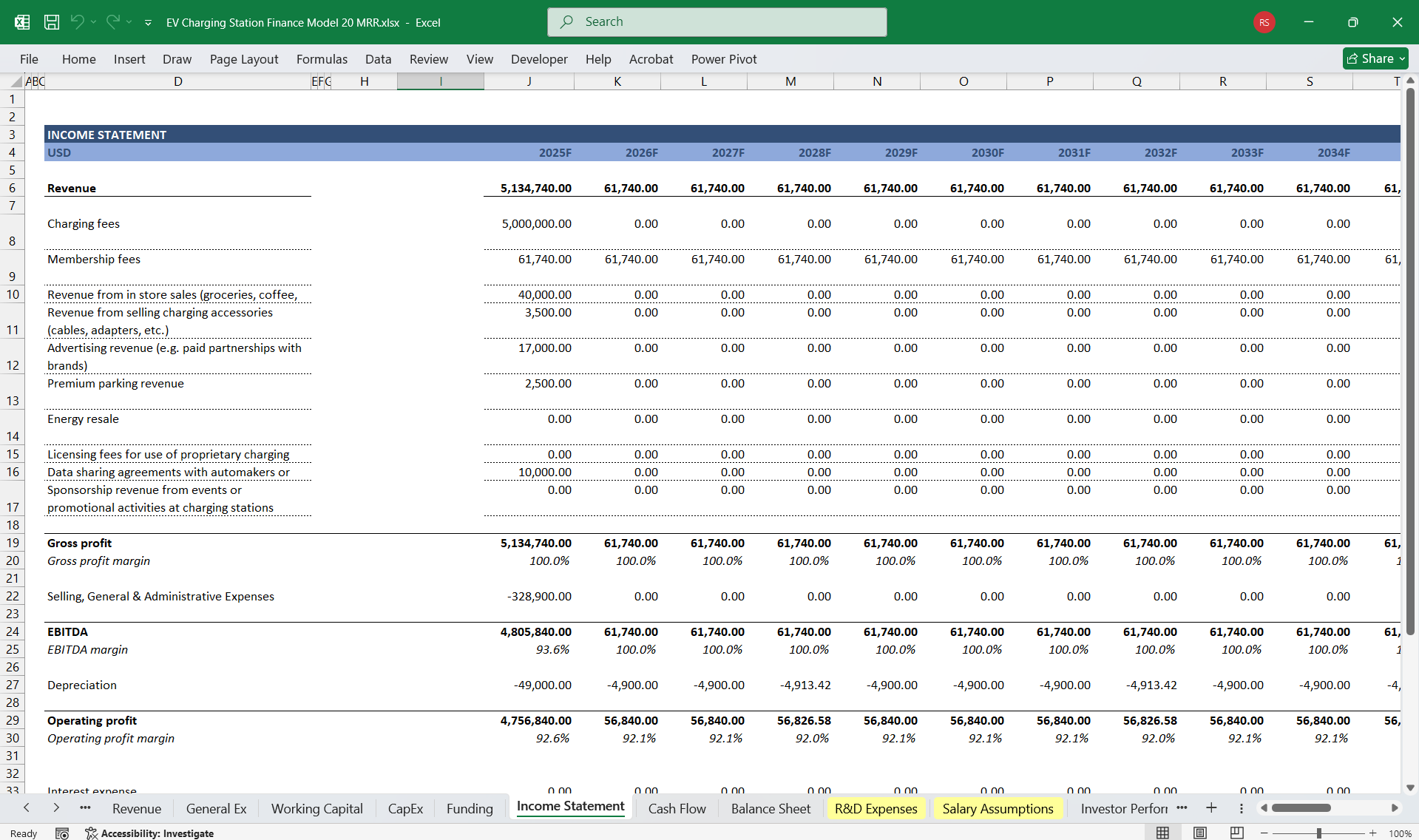
- Income Statement – Tracks revenues, cost of sales, and profitability.
- Cash Flow Statement – Monitors cash inflows and outflows to ensure liquidity.
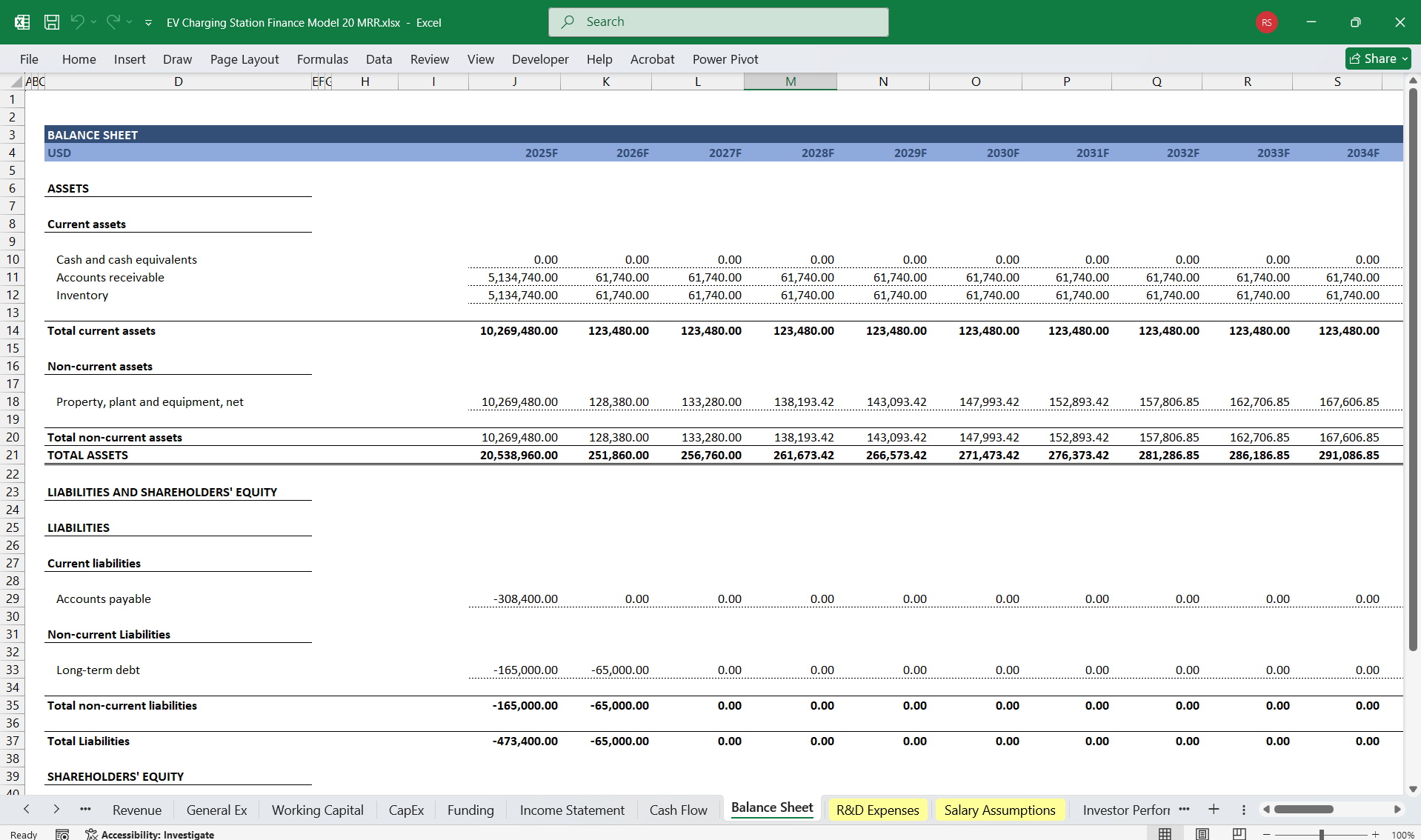
- Balance Sheet – Reflects the company’s assets, liabilities, and equity at any point in time.
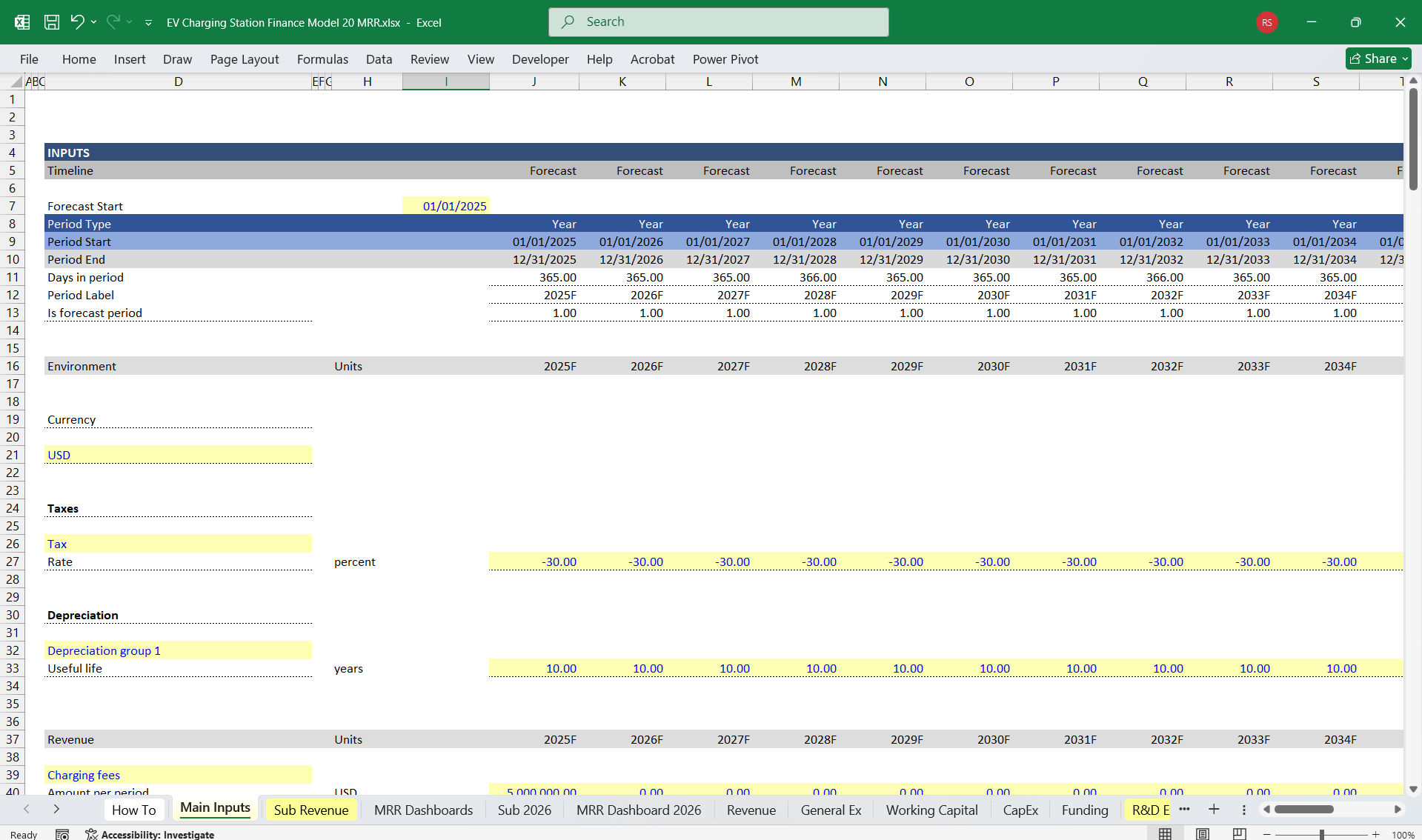
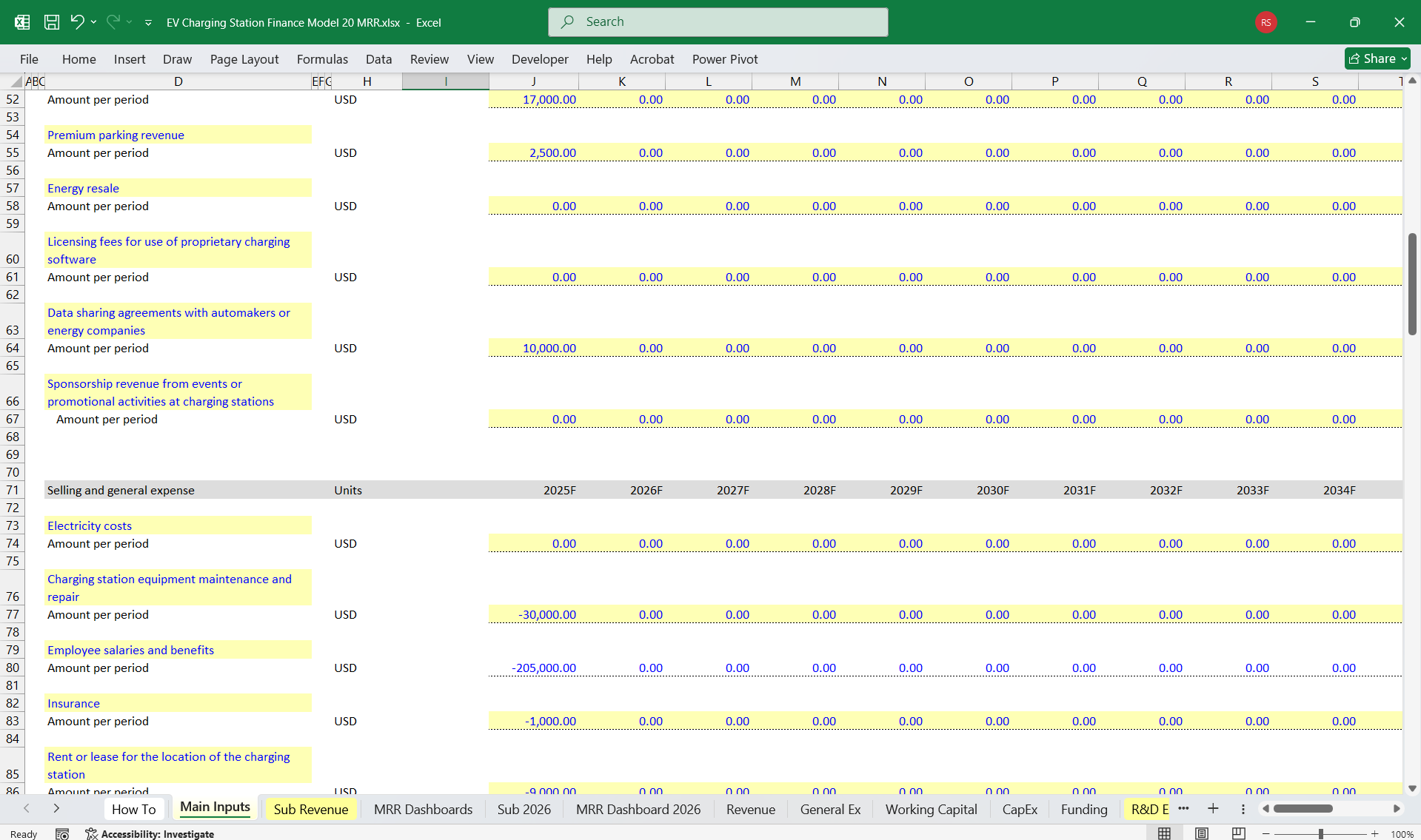
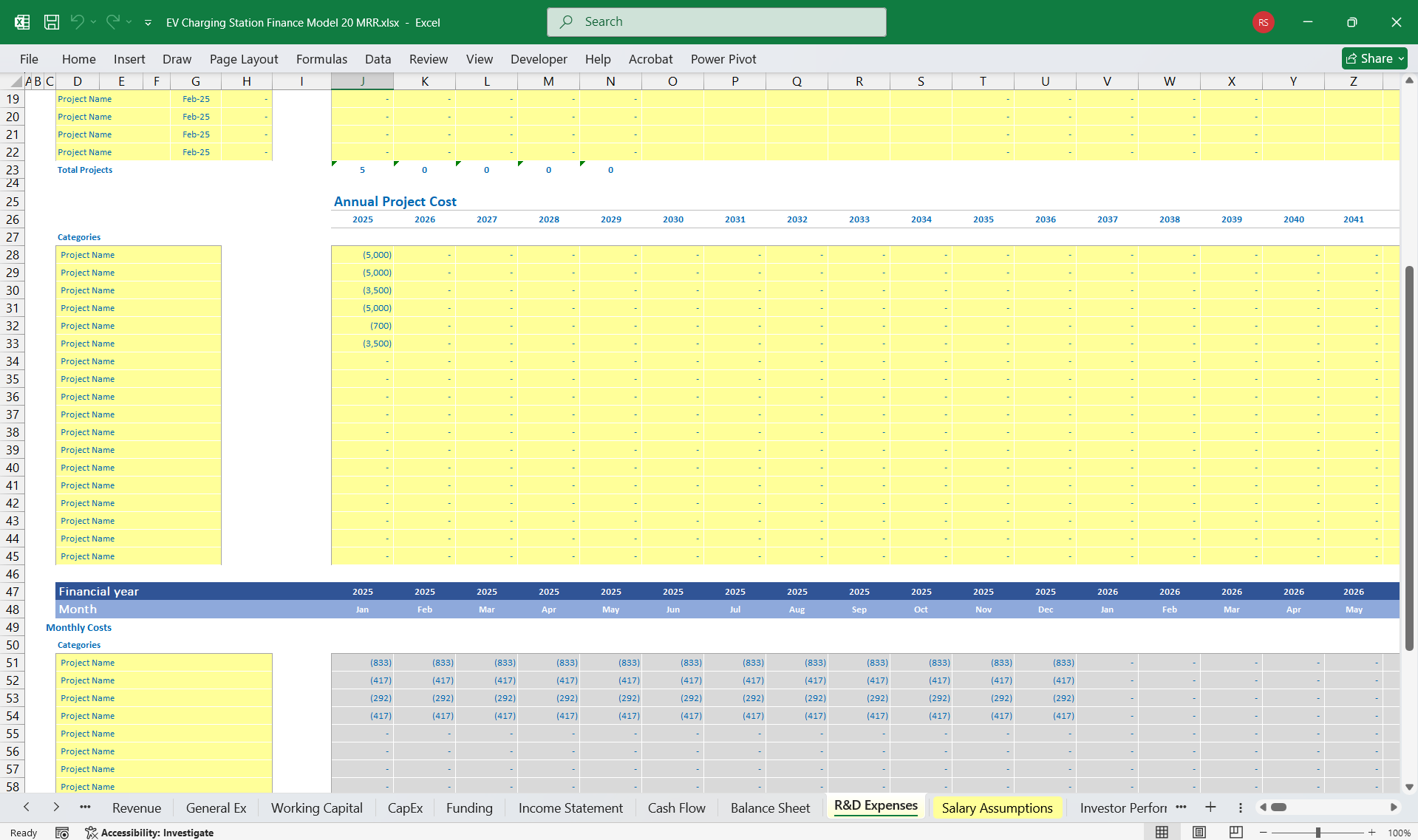
- Detailed assumptions and input sheets.
- Separate sections for key revenue streams.
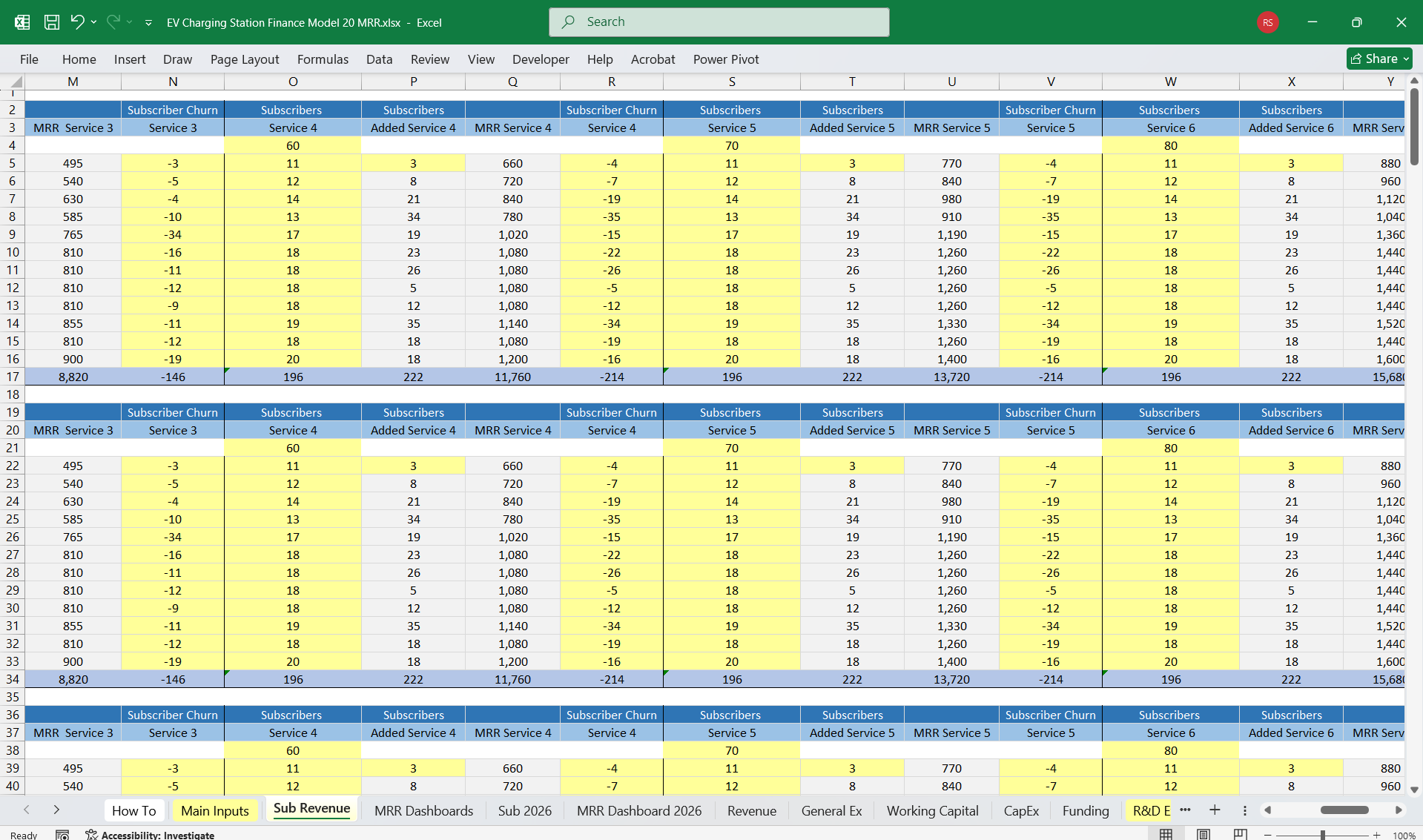
- A breakdown for subscription tiers.
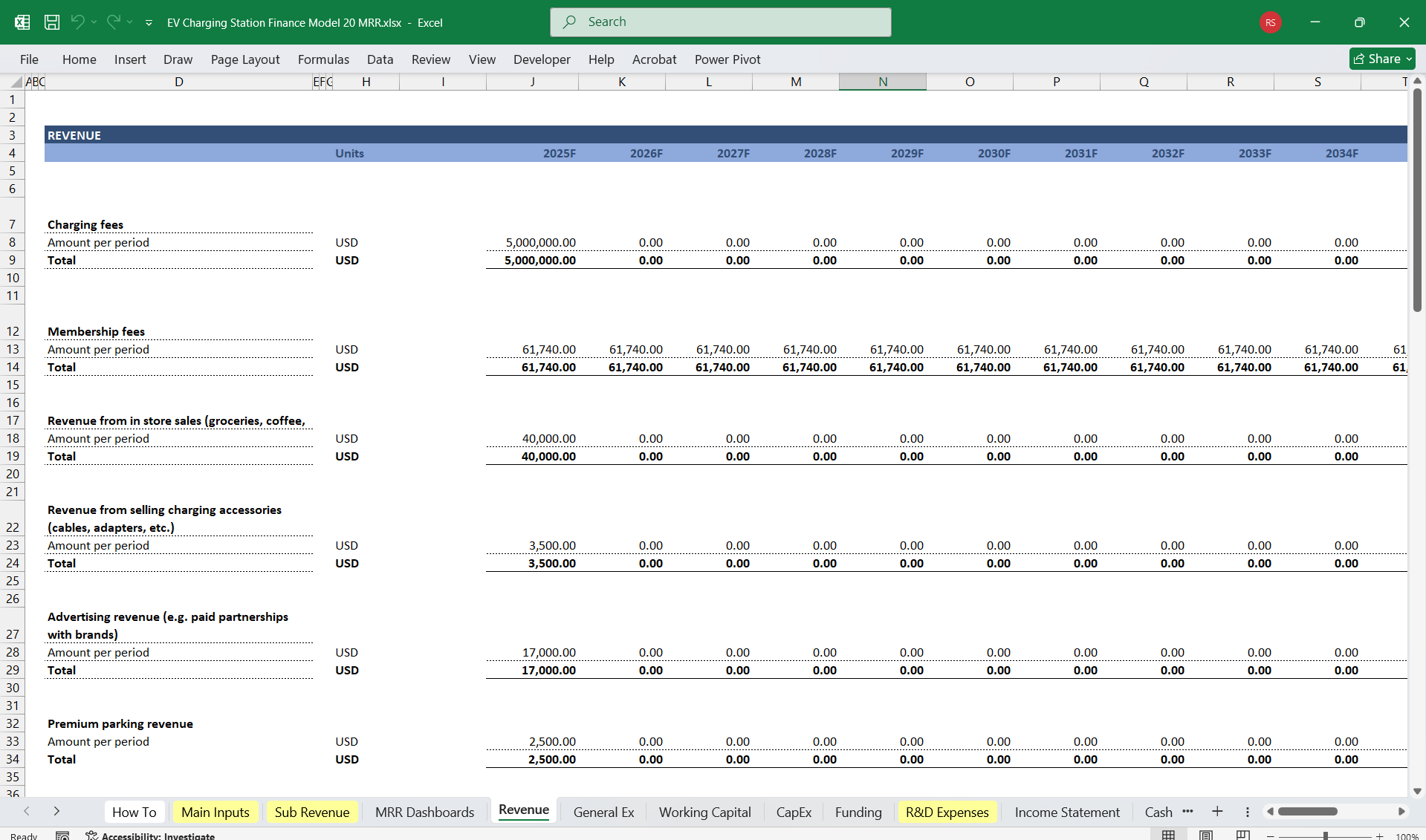
- Charging Fees:
- Revenue generated from pay-per-use charging by non-members and members at variable rates.
- Assumptions for revenue:
- Number of charging sessions/day, utilization rates of chargers, average session duration, and per kWh fee.
- Growth in EV adoption rates over 20 years.
- Membership Fees:
- 6 Tiered subscription model (details below).
- Projections based on the percentage of users opting for membership and monthly/annual pricing tiers.
- In-Store Sales (Groceries, Coffee, etc.):
- Revenue from refreshments and general store sales at the charging stations.
- Assumptions: average spend per customer and percentage of visitors utilizing the store.
- Charging Accessories:
- Revenue from selling branded cables, adapters, and portable chargers.
- Includes volume of units sold, pricing, and replacement frequency for accessories.
- Advertising Revenue:
- Generated via partnerships with EV-related brands displayed on chargers, in-store displays, or via apps.
- Growth assumptions based on reach, impressions, and ad placement cost escalation.
- Premium Parking Fees:
- Additional fees for users reserving prime parking spots equipped with chargers or quicker chargers.
- Energy Resale:
- Revenue from selling surplus energy back to the grid or to local businesses.
- Based on energy purchase costs and demand in the region.
- Licensing Fees:
- Generated from proprietary charging software licensed to other businesses.
- Energy Costs:
- Includes wholesale energy purchasing costs and transmission losses.
- Costs vary based on utilization rates.
- Store Inventory Costs:
- Direct costs associated with in-store sales and accessory merchandise.
- Software Development and Licensing Costs:
- Operational costs to maintain and upgrade the proprietary charging management platform.
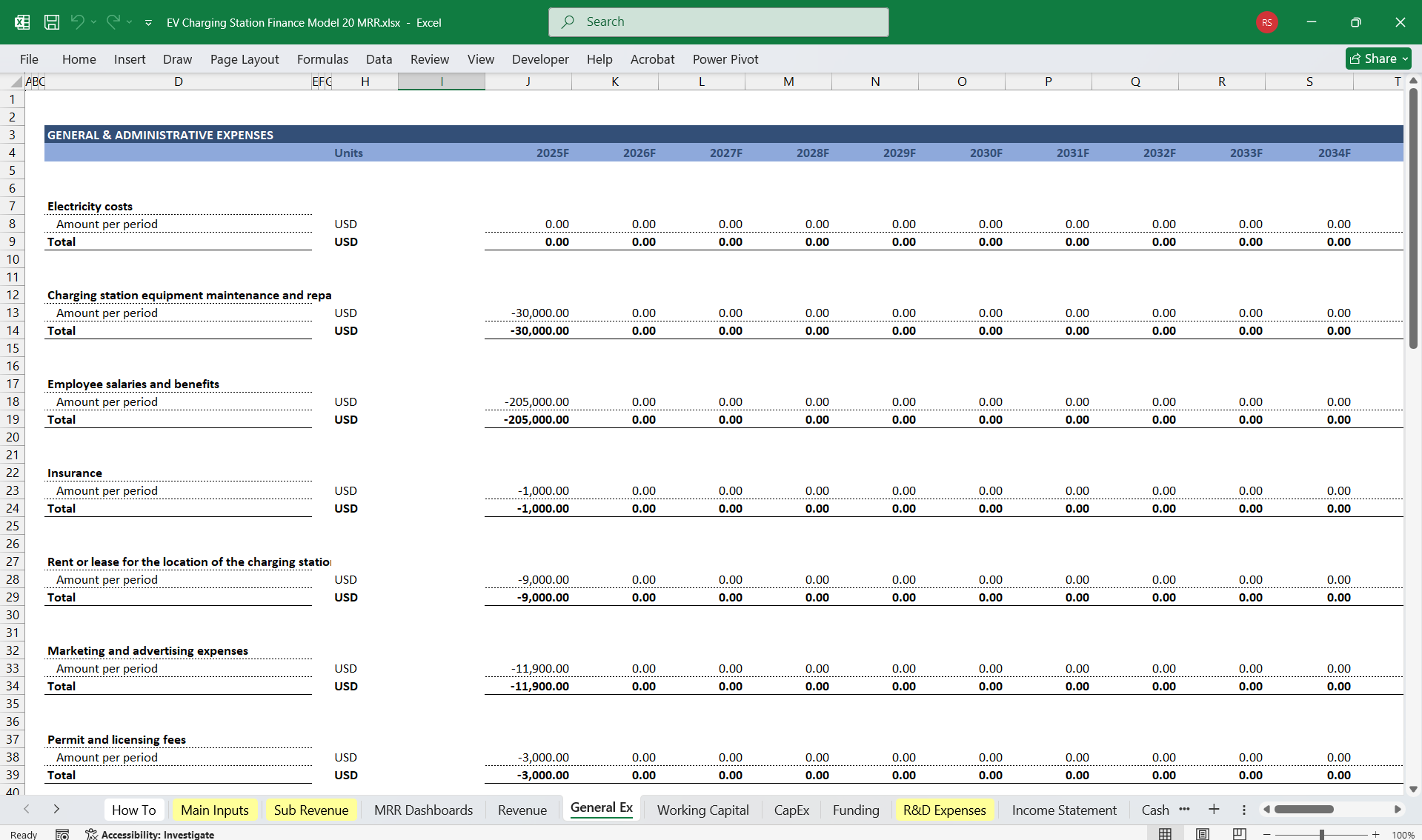
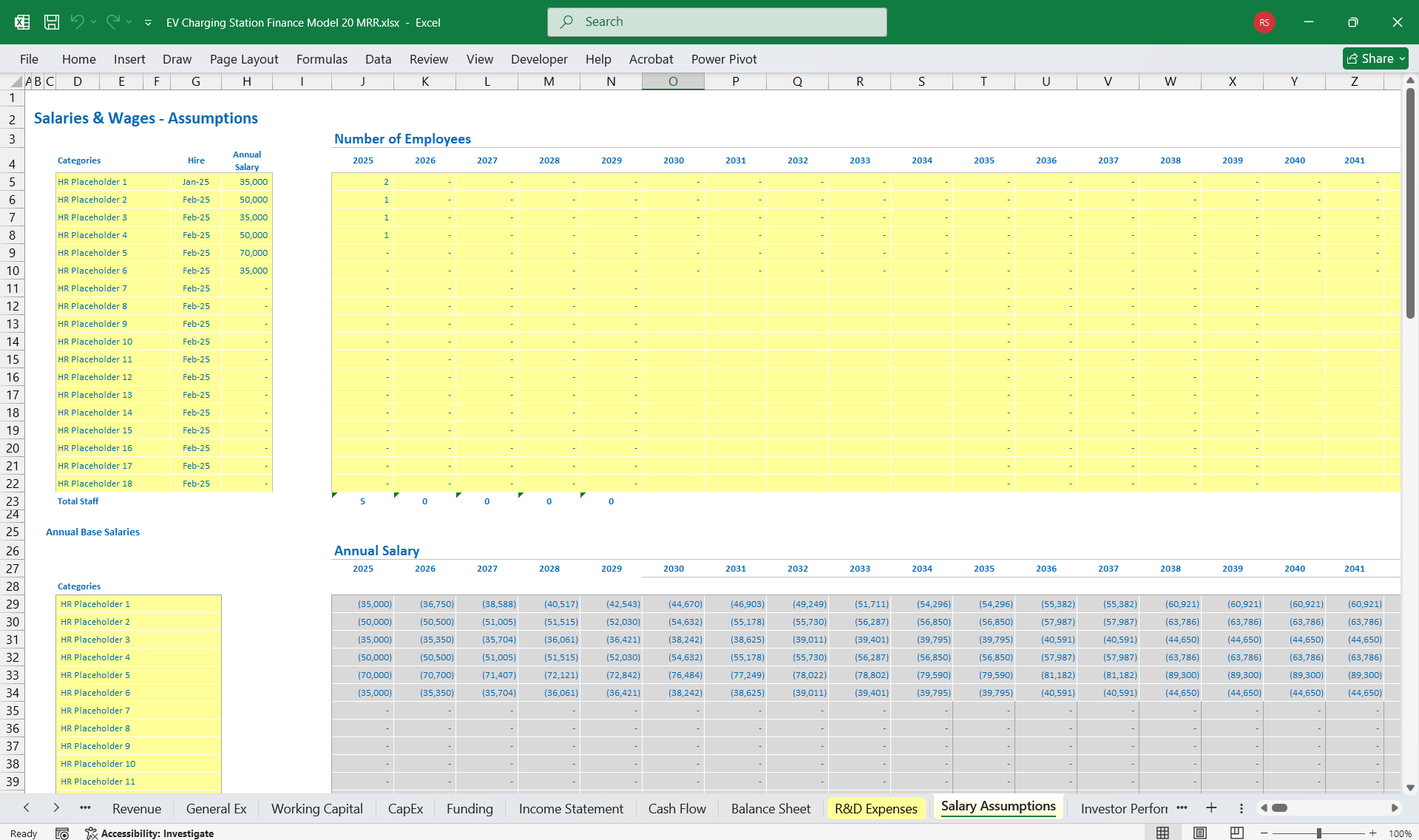
- Salaries and employee benefits (managers, technicians, in-store staff).
- Rent and utilities for charging station locations.
- Marketing and promotions, including tiered subscriptions.
- Maintenance costs for chargers and infrastructure.
- Gross revenue minus COGS and operating expenses.
- Includes detailed schedules for depreciation (chargers, store interiors) and amortization (software development).
- Operating Cash Flows:
- Detailed schedules for cash generated from operating revenues like charging fees and in-store sales.
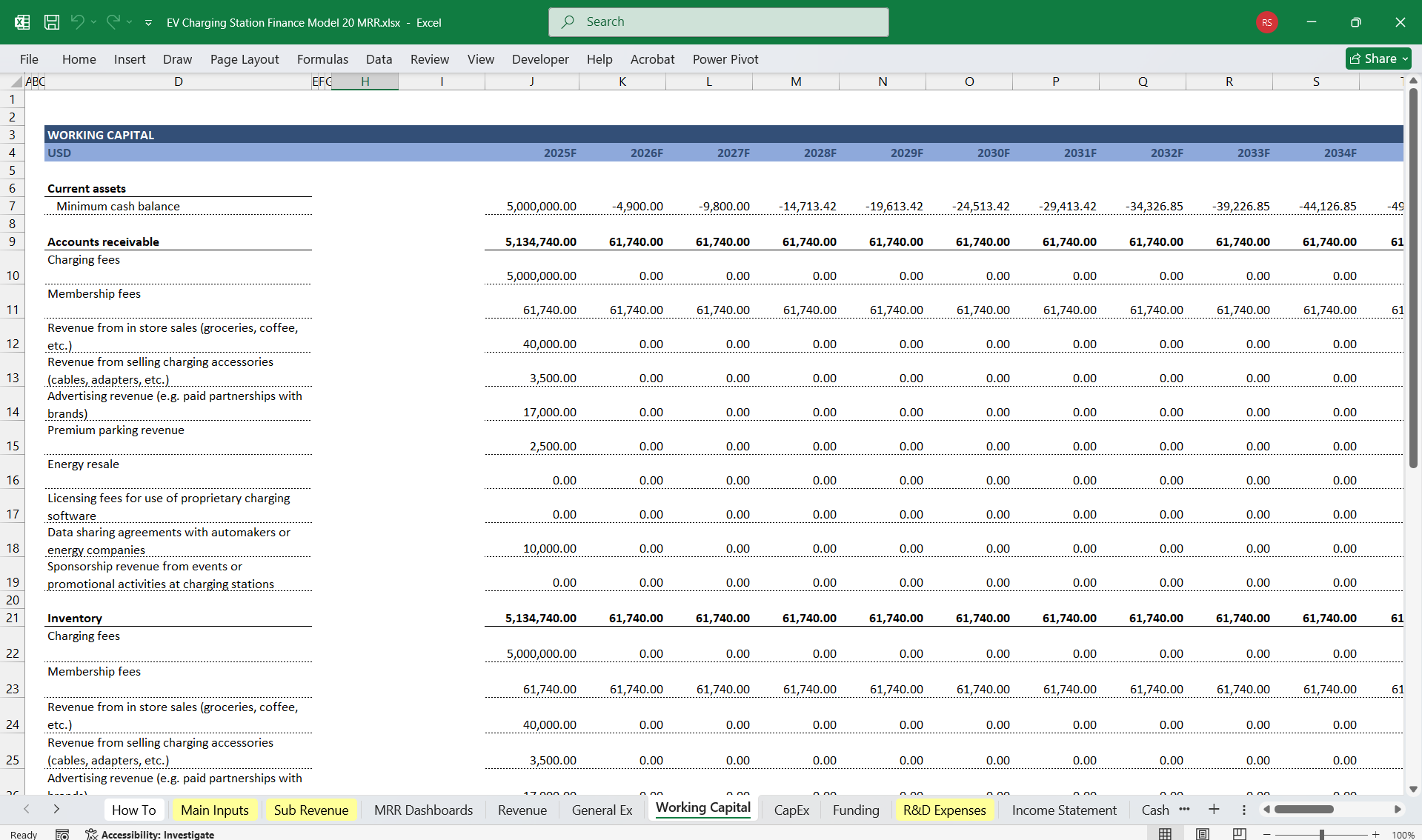
- Adjustments for working capital (inventory, payables, receivables).
- Investing Cash Flows:
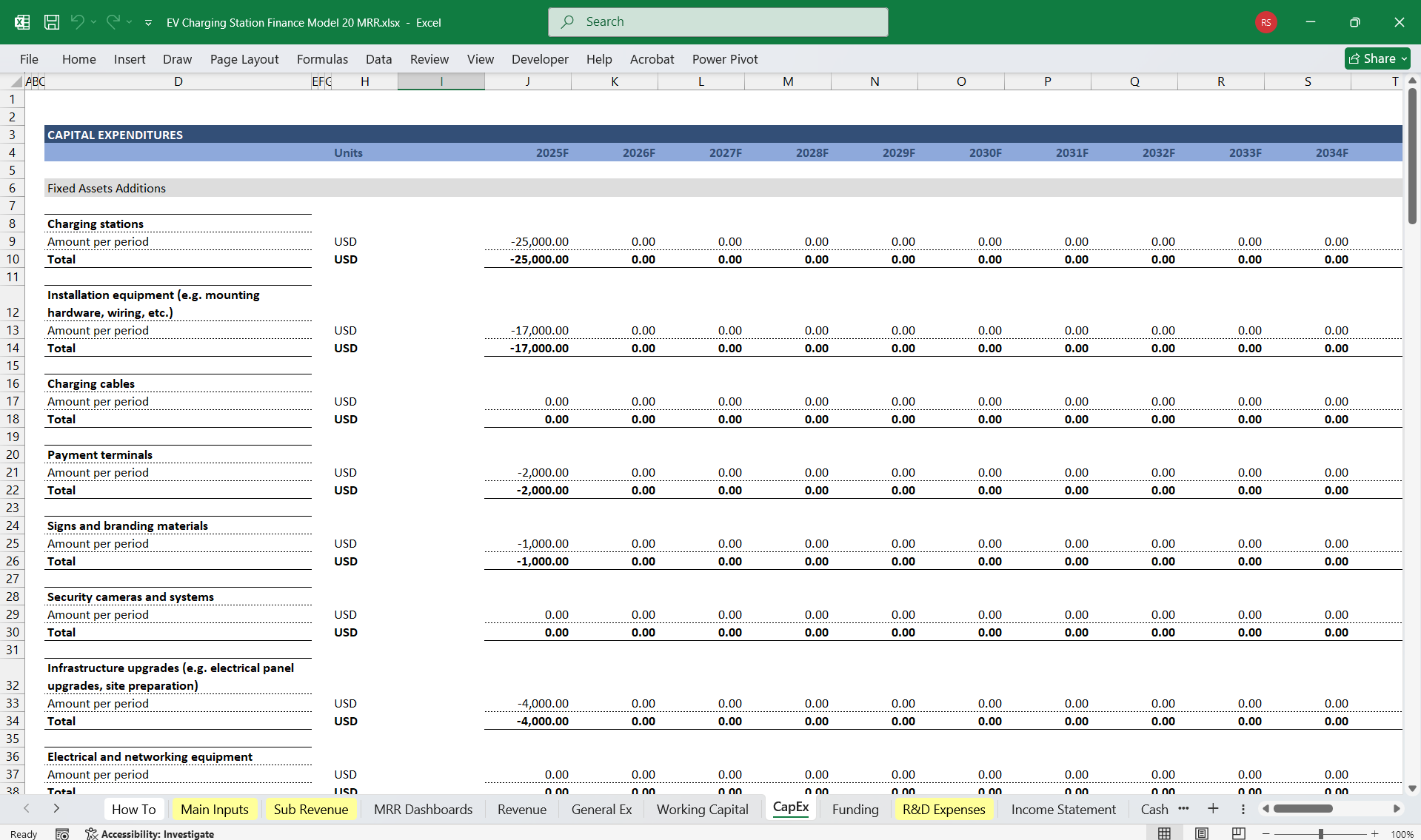
- Initial and recurring investments in EV chargers, battery storage systems, and real estate leases.
- Capital expenditure schedules include technology upgrades every 5 years.
- Financing Cash Flows:
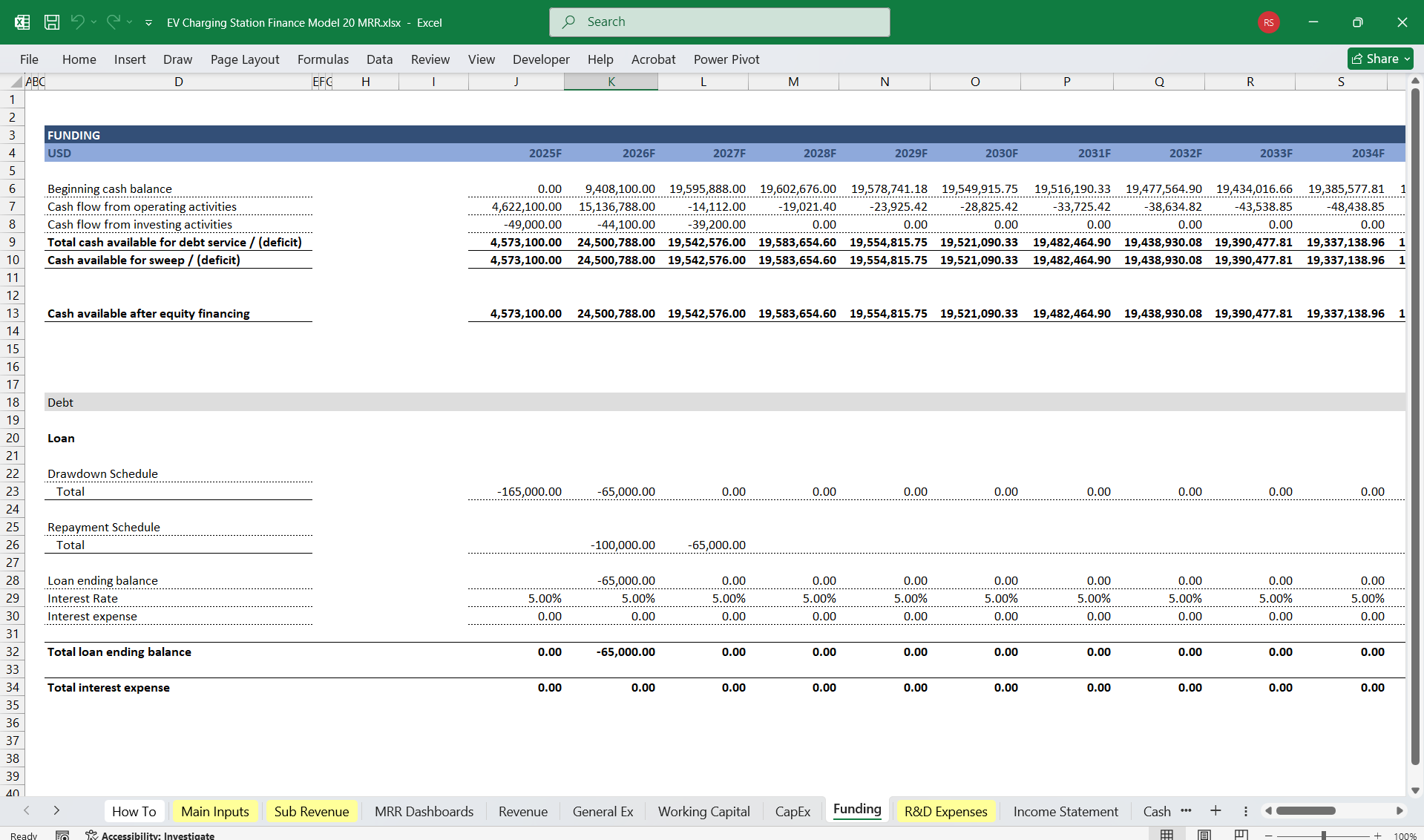
- Debt and equity financing schedules.
- Projected repayments, dividends, or reinvestments.
- Net Cash Flow & Balances:
- Projects cumulative cash flow over 20 years to maintain liquidity and achieve sustainable expansion.
- Assets
- Fixed Assets:
- EV charging infrastructure, land, store fittings, software development capitalized.
- Current Assets:
- Cash and equivalents.
- Inventory (store and accessories).
- Receivables from partnerships or delayed fees.
- Fixed Assets:
- Liabilities
- Short-Term Liabilities:
- Accounts payable for energy purchase and inventory.
- Long-Term Liabilities:
- Loan schedules for initial and expansion capital.
- Short-Term Liabilities:
- Equity
- Paid-up capital and retained earnings over the model’s duration.
Tier Structure
1. Basic Membership
Target Audience: Infrequent users or casual EV drivers.
- Features:
- Flat monthly/annual fee.
- 5% off charging fees and store items.
- Basic app access for viewing charging locations and availability.
- No discounts or perks.
- Use Case:
- Attract new customers and provide flexibility to occasional users.
Target Audience: Regular but non-intensive EV users.
- Features:
- Affordable monthly/annual fee (e.g., $9.99/month or $100/year).
- 10% discount on charging fees.
- Access to standard chargers (not high-speed).
- 5% discount on in-store items.
- In-app charging session tracking.
- Use Case:
- Ideal for commuters with predictable charging patterns.
Target Audience: Daily EV users who value speed and convenience.
- Features:
- Moderate monthly/annual fee (e.g., $19.99/month or $200/year).
- 20% discount on charging fees.
- Access to fast chargers with priority reservations.
- 10% discount on in-store items and charging accessories.
- Complimentary access to app features like charging analytics and route optimization.
- Basic roadside assistance (flat battery charging).
- Use Case:
- Designed for drivers with higher daily mileage or time-sensitive schedules.
Target Audience: Households with multiple EVs or shared family vehicles.
- Features:
- One membership fee (e.g., $39.99/month or $400/year) covers up to 4 vehicles.
- 20% discount on charging fees for all covered vehicles.
- 15% discount on in-store items and charging accessories.
- Shared usage reports for family members.
- One reserved parking spot per session.
- Use Case:
- Encourages family adoption of EVs by making it cost-effective and convenient.
Target Audience: Companies with small EV fleets for delivery or employee use.
- Features:
- Monthly fee based on fleet size (e.g., $99.99/month for 5 vehicles, $199.99/month for 15 vehicles).
- Up to 30% discount on charging fees for fleet vehicles.
- Dedicated fleet manager portal for managing usage and costs.
- Priority access to chargers during peak hours.
- On-site charger installation discounts for fleet parking.
- Use Case:
- Supports businesses in adopting EVs for operational cost reduction and sustainability.
Target Audience: High-income EV users or early adopters who prioritize exclusivity.
- Features:
- High monthly/annual fee (e.g., $99.99/month or $1,000/year).
- Unlimited charging at any station in the network.
- Exclusive access to ultra-fast chargers and luxury lounges at select locations.
- Reserved premium parking spots at all locations.
- Complimentary energy usage report and vehicle diagnostics.
- Free roadside assistance, including towing and replacement chargers.
- Discounts on partner services (e.g., auto insurance, car washes).
- Use Case:
- Designed for users who want a VIP experience and prioritize convenience.
- Idle Fee Waiver:
- Users can pay extra to waive penalties for exceeding charging time limits.
- Carbon Offset Contribution:
- Voluntary fee to offset the carbon footprint of electricity usage.
- Enhanced Support:
- Premium customer service with faster response times for urgent issues.
This 6-tier model caters to various user profiles, from first-time EV drivers to power users and businesses, ensuring revenue diversification and customer satisfaction.
Metrics for Subscription Model
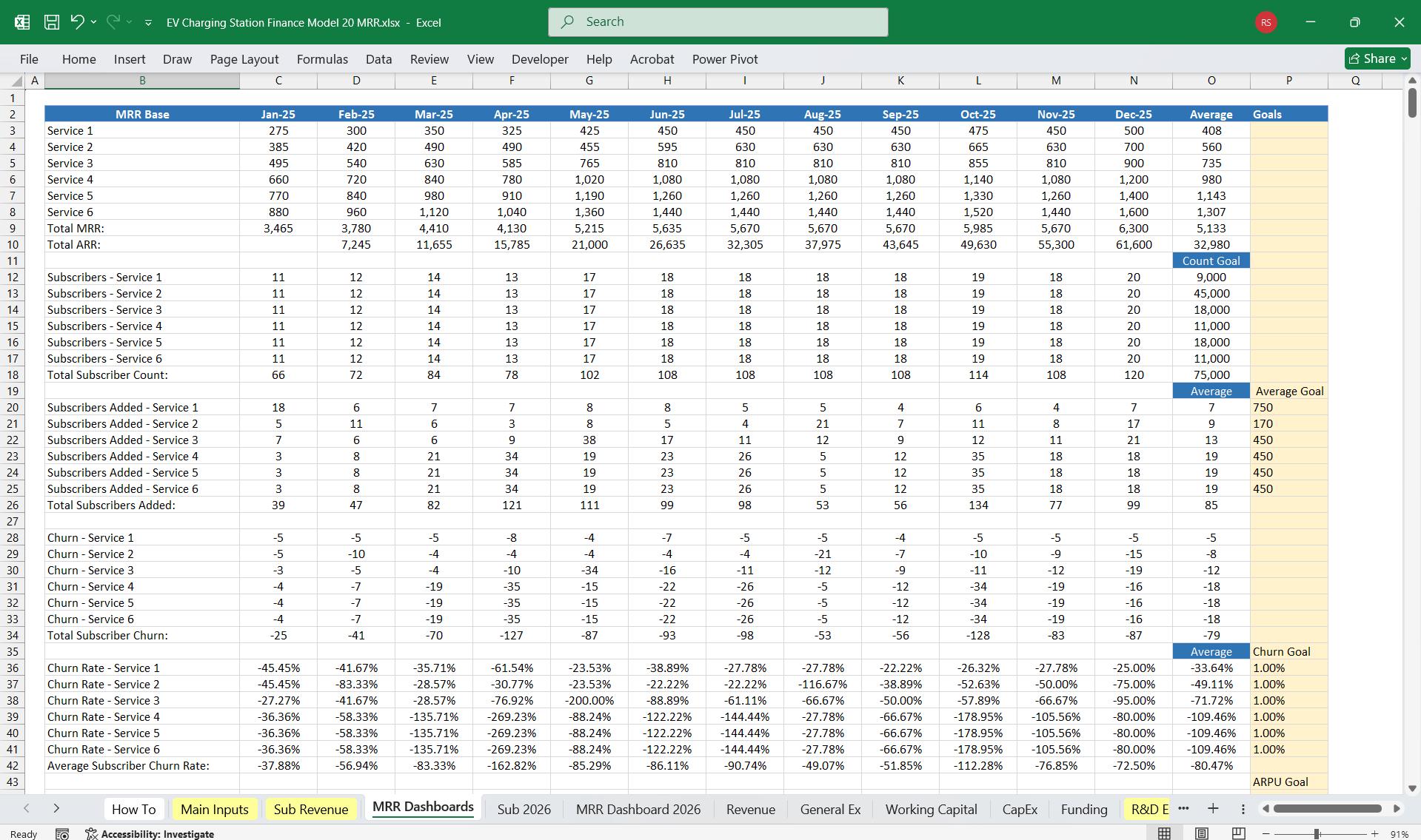
- Total users, churn rate, acquisition costs, ARPU (Average Revenue Per User).
- Target market penetration over 20 years, broken into segments.
- Excel Model Structure:
- Assumptions, Input, and Summary Sheets.
- Separate schedules for each revenue and cost component.
- Scenario analysis for low, medium, and high EV adoption rates.
- Dynamic Outputs:
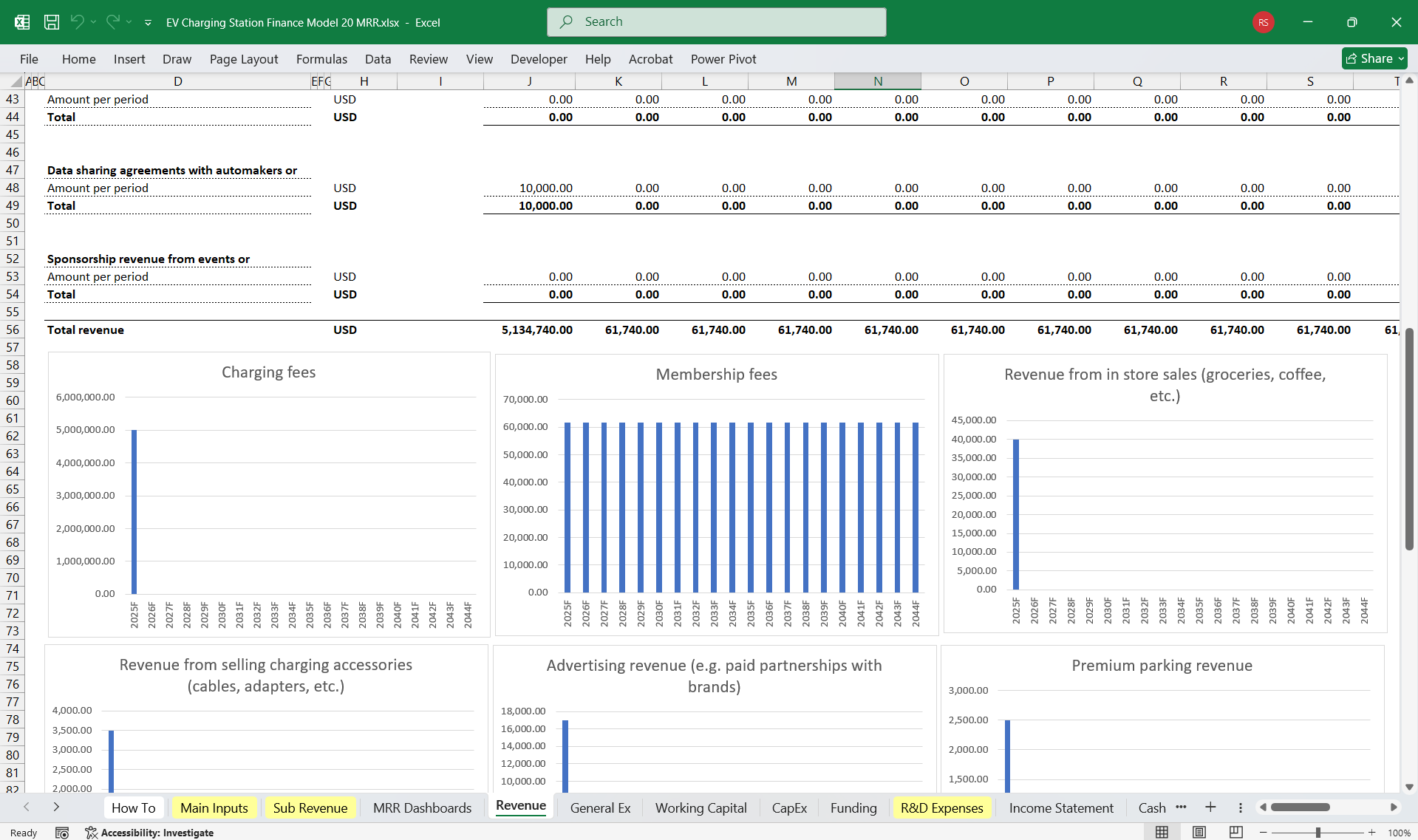
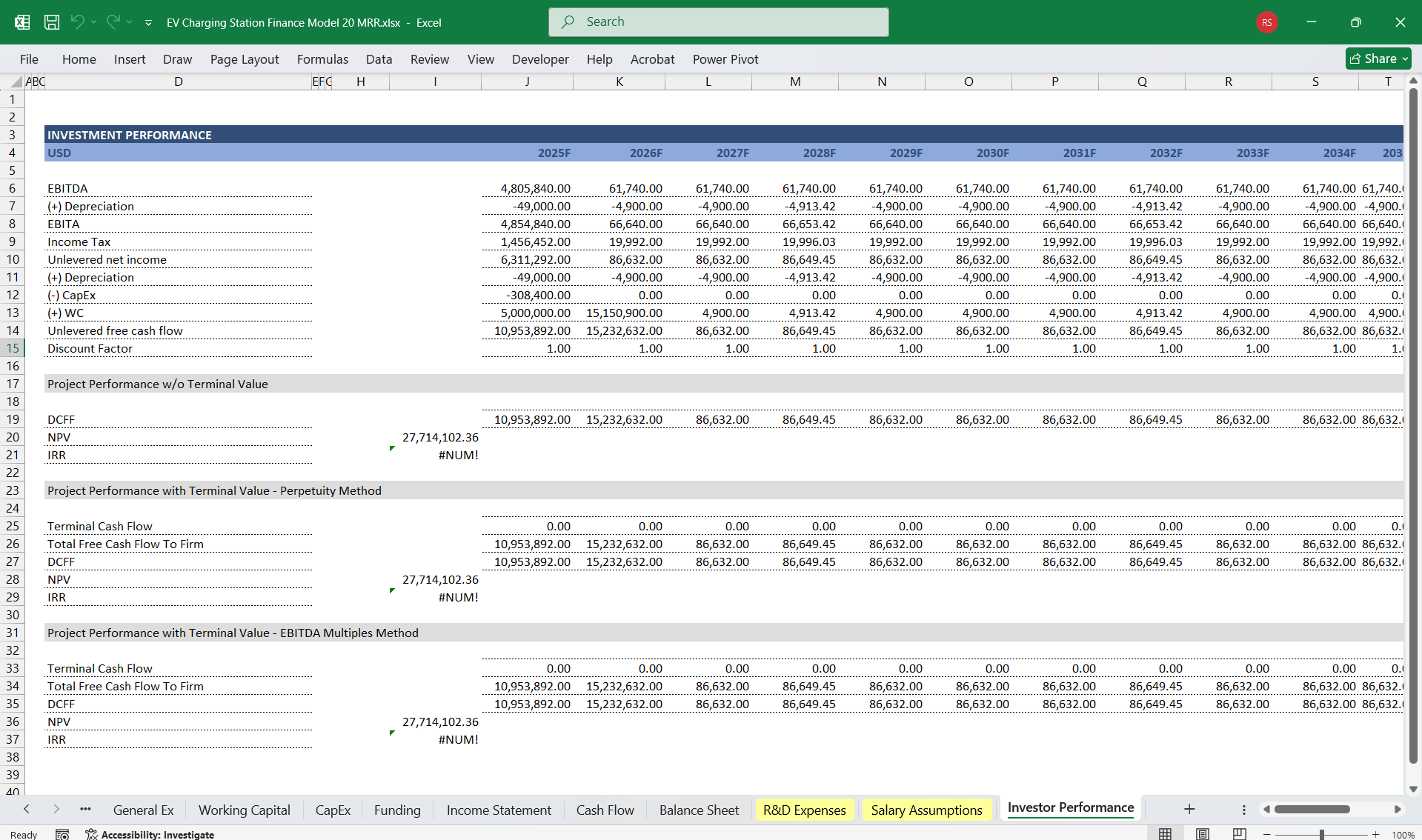
- Graphs for EBITDA margins, Net Profit trends, and cumulative cash flow.
- Break-even analysis to gauge capital efficiency.
- Key KPIs:
- ROI on infrastructure, revenue-per-session, membership growth rates, gross and net profit margins, and operating expense ratios.
This Best Practice includes
1 Excel Financial Model
Further information
Eliminates the need to create a financial model from scratch and includes all common EV Charging Station finance actual and projection components.