Originally published: 19/08/2026 15:55
Publication number: ELQ-85602-1
View all versions & Certificate
Publication number: ELQ-85602-1
View all versions & Certificate

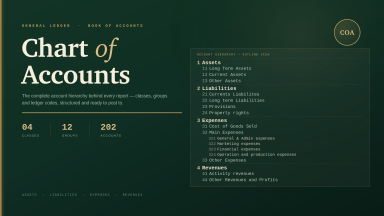
Chart of Accounts Excel Template for ERP
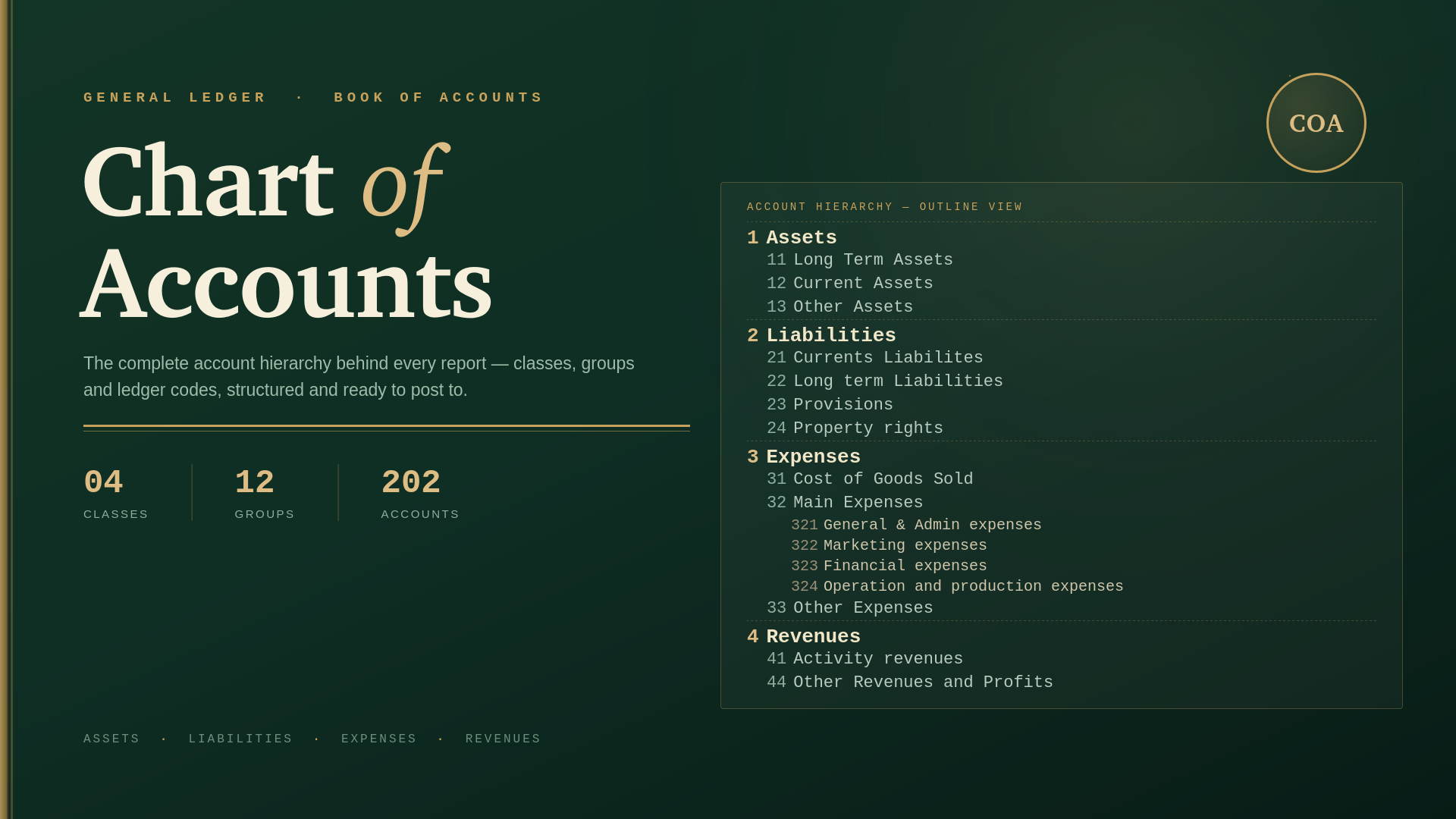
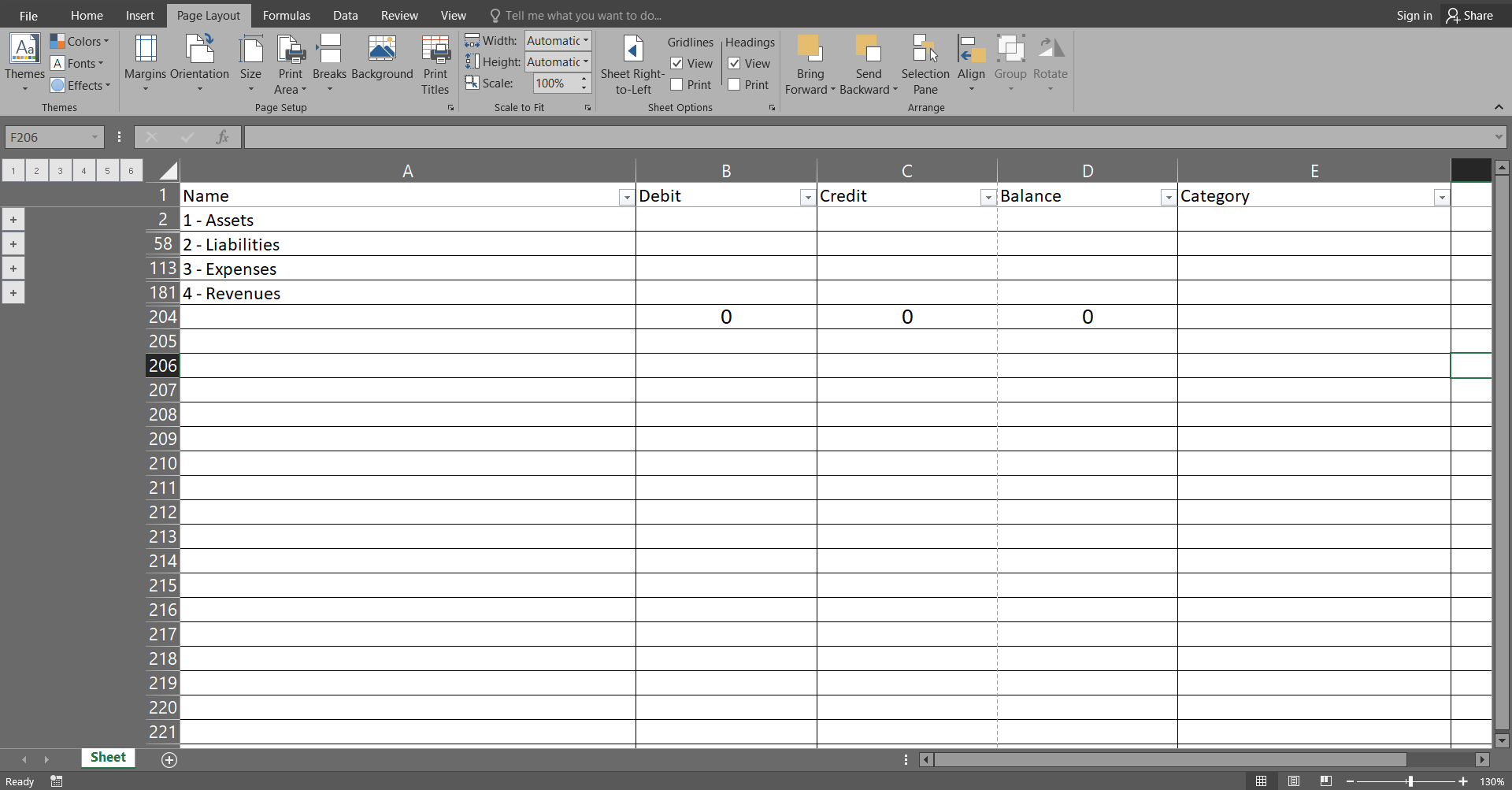
A structured, ready-to-use chart of accounts covering 4 major classes (Assets, Liabilities, Expenses, Revenues)
Description
Chart of Accounts Excel Template for ERP systems to directly import from.
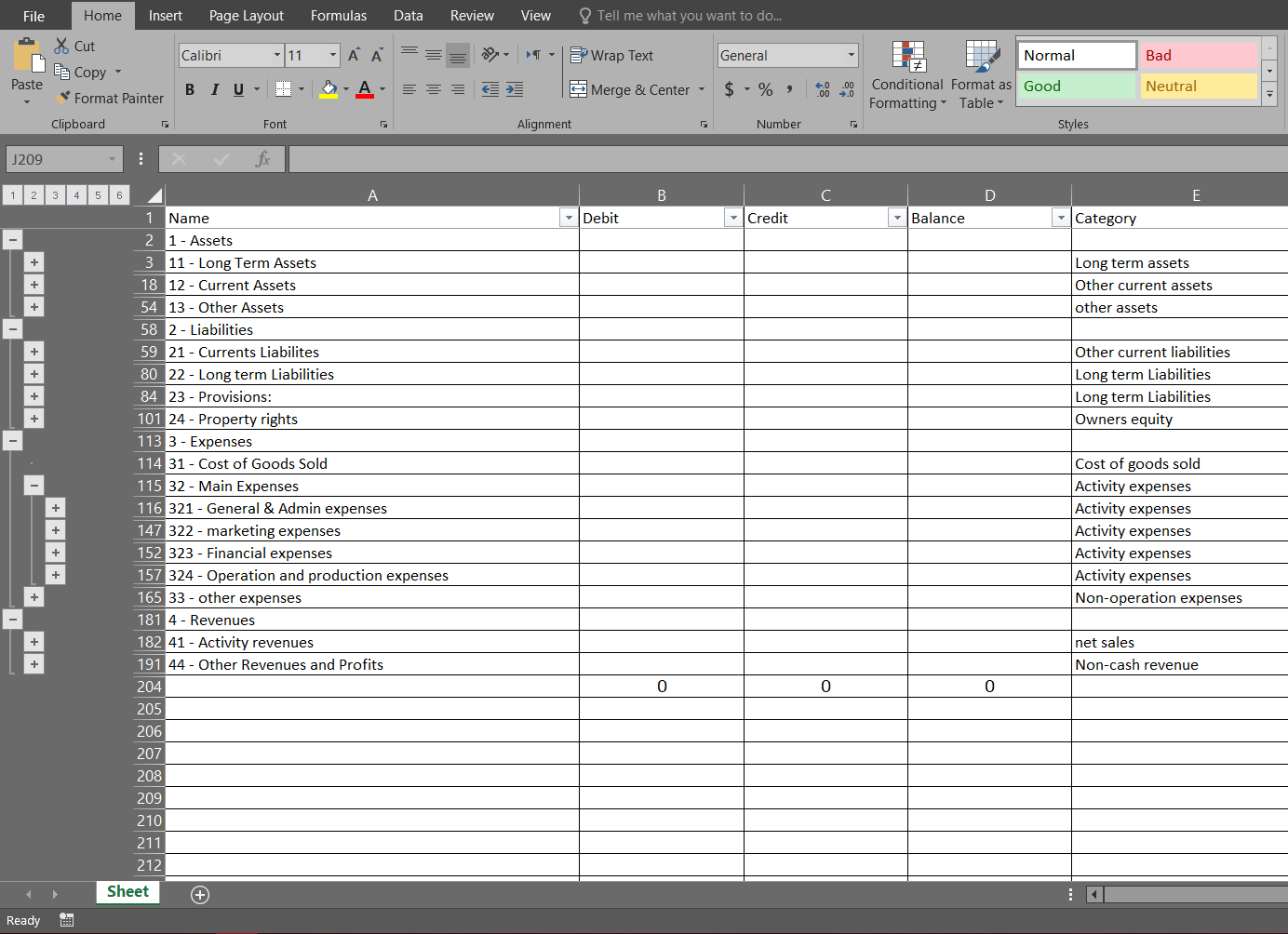
1. Structure and Columns
The expenses included are organized into four main categories:
1. Cost of Goods Sold (COGS)
Chart of Accounts Excel Template for ERP systems to directly import from.
1. Structure and Columns
- Name: Contains the hierarchical account codes and names (e.g., 1 - Assets, 11 - Long Term Assets, 1111 - Land).
- Debit / Credit / Balance: Columns set up to track the financial balances or transaction totals for each account (currently showing placeholder or zero values).
- Category: Classifies each account into specific financial categories for reporting purposes (such as balance sheet or income statement items).
- Assets: Long-term assets (Fixed assets, Land, Machinery), Cash & cash equivalents, Debtors (Accounts Receivable), and Other current assets (Stocks, Investment bonds).
- Liabilities: Creditors (Accounts Payable, Vendors), Other current liabilities (Due salaries, VAT, Customs authority), and Long-term liabilities.
- Equity: Owners' equity accounts.
- Revenue: Activity revenue, Net sales, Non-cash revenue, and Non-operation revenue.
- Expenses: Cost of goods sold (COGS), Activity expenses, Non-cash expenses, and Non-operation expenses.
The expenses included are organized into four main categories:
1. Cost of Goods Sold (COGS)
- 31 - Cost of Goods Sold
- General & Administrative Expenses (321):
- Material, fuel, and spare parts (Fuel and Oils, Spare Parts and Gears, Electricity & water)
- Petty expenses (Telephones, Mobiles & Internet, In/Out-of-office Expenses, Administrative tips, Stationery)
- Wages and benefits (Cash Wages, Social Insurance, Transportation expenses, Sales Rep Salaries)
- Professional fees (Legal and Accounting fees)
- Other Administrative Expenses (Purchased Services, Maintenance Expenses, Advertising/Publicity/PR, Transportation & Communication, Fixed Assets Rent, Government agency services)
- Financial items (Interests, Real Estate Rent, Real Estate Taxes, Indirect Tax)
- Marketing Expenses (322): Publicity and Advertising, Marketing Gifts and Samples, Tenders Specifications, and Sales Rep & Marketer Commissions.
- Financial Expenses (323): Bank expenses, LG expenses, Bank Expenses and Commissions, and Bank statement expenses.
- Operation and Production Expenses (324): Operating Salaries, Operating Expenses, Operation Depreciation Expenses (tools & equipment), Maintenance and repair expenses, Operating expenses with others, Operating transportation expenses, and Rent Expenses for Operation Tools and Equipment.
- Fixed assets depreciation and Intangible Assets/Capital Expenses Amortization
- Inventory Adjustment Differences
- Bad debts
- Asset sale losses (Waste Sale Losses, Raw material/Material/Spare Parts Sale Losses)
- Provisions (other than depreciation)
- Securities Sale Losses
- Miscellaneous burdens and losses (Compensations and Penalties, Donations and Aids)
- Exchange rate losses
- Previous Years Expenses
- Capital losses
- Financial adjustment differences
- Income Taxes
This Best Practice includes
1 excel file