Originally published: 06/02/2025 11:35
Publication number: ELQ-56631-1
View all versions & Certificate
Publication number: ELQ-56631-1
View all versions & Certificate

Craft Manufacturer Financial Model 80 Product Lines 5-Year 3-Statement
A comprehensive editable 5-Year 3-Statement, MS Excel spreadsheet for tracking a Craft Manufacturer's finances.
 by AllFinancialModels
AllFinancialModels offer a curated selection of high-quality yet financial model templates designed to support a wide range of business needs.Follow
crafthand craftpotterycraft productionmanufacturingmanufacturercraft manufacturerfinancial modeltemplatespreadsheet
Description
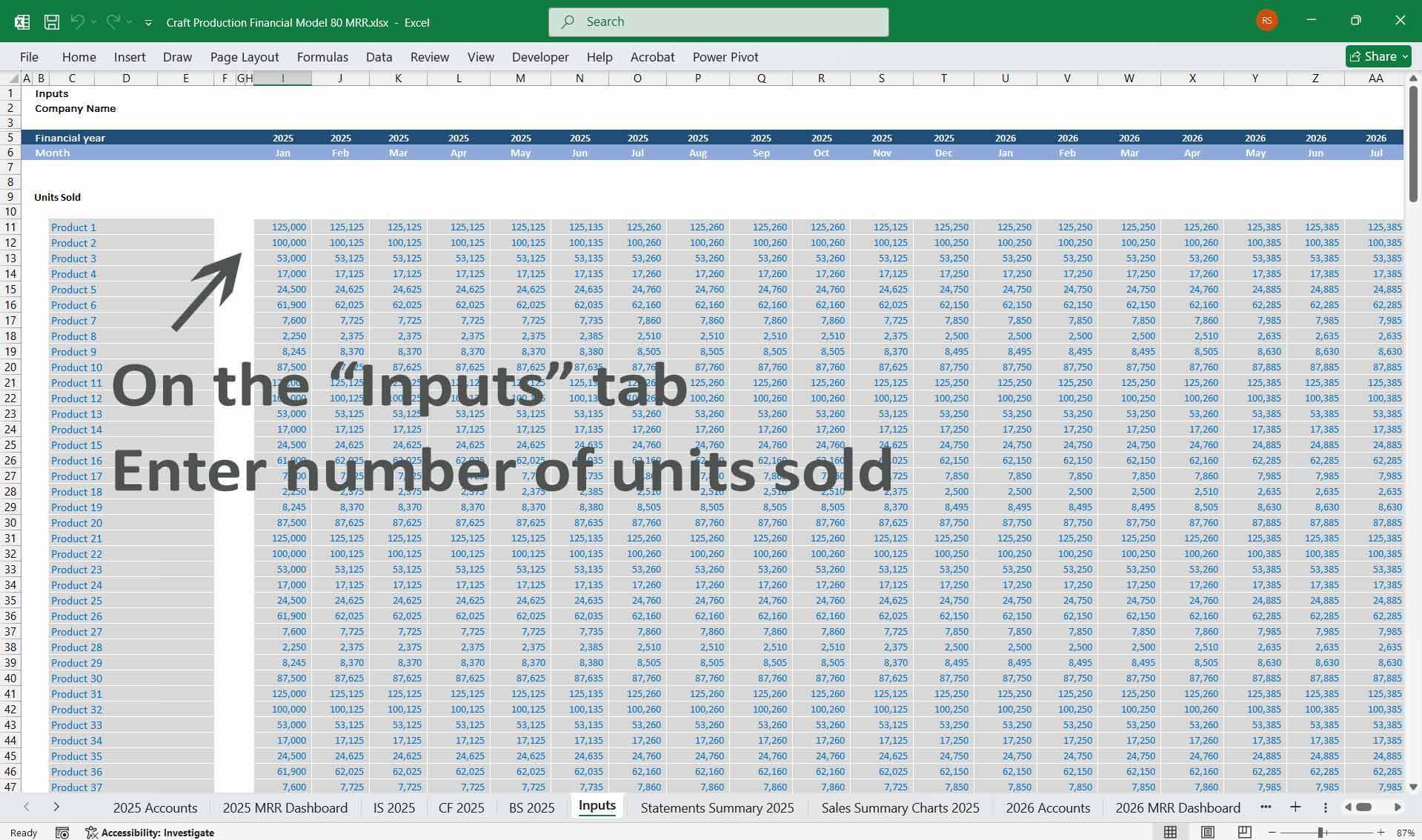
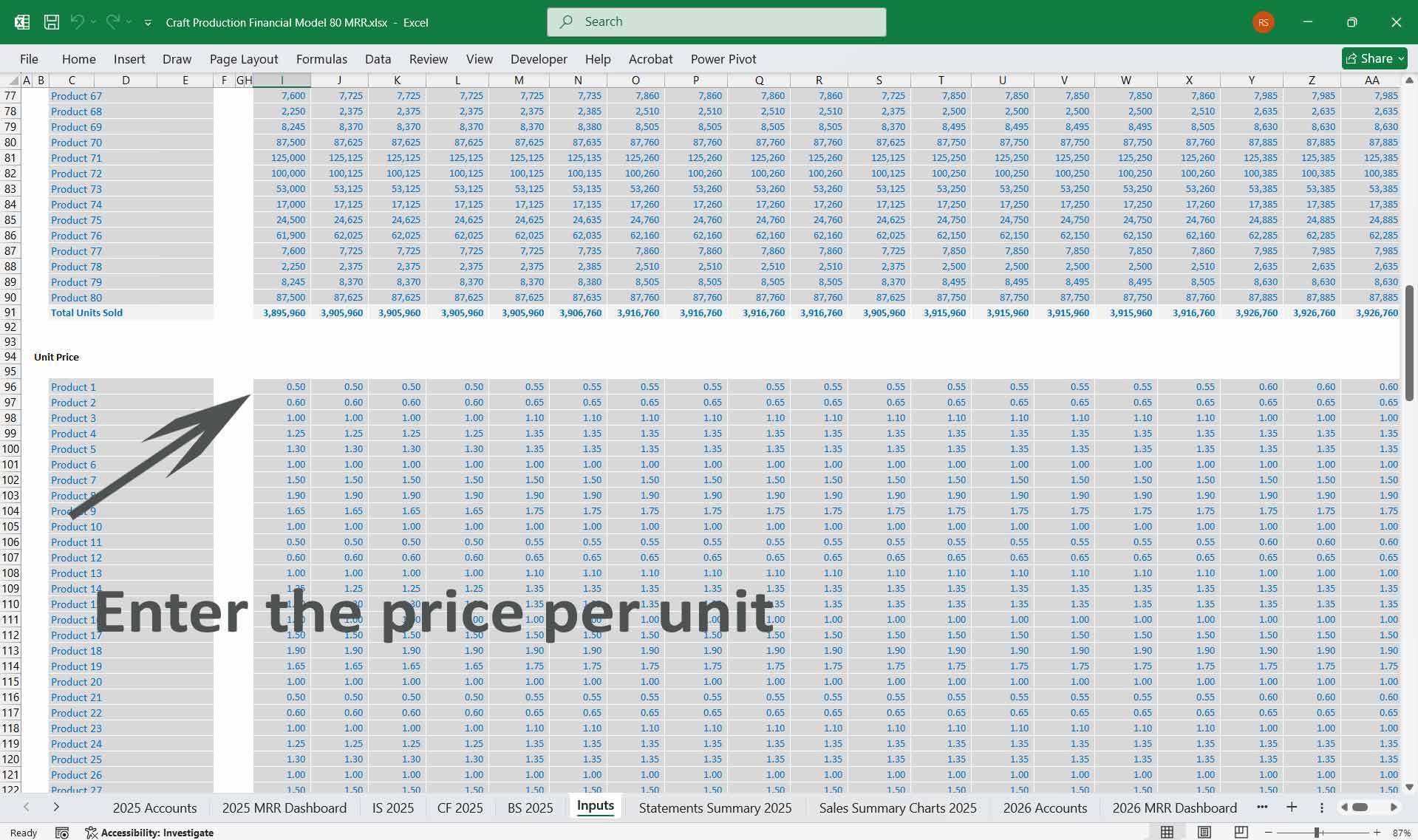
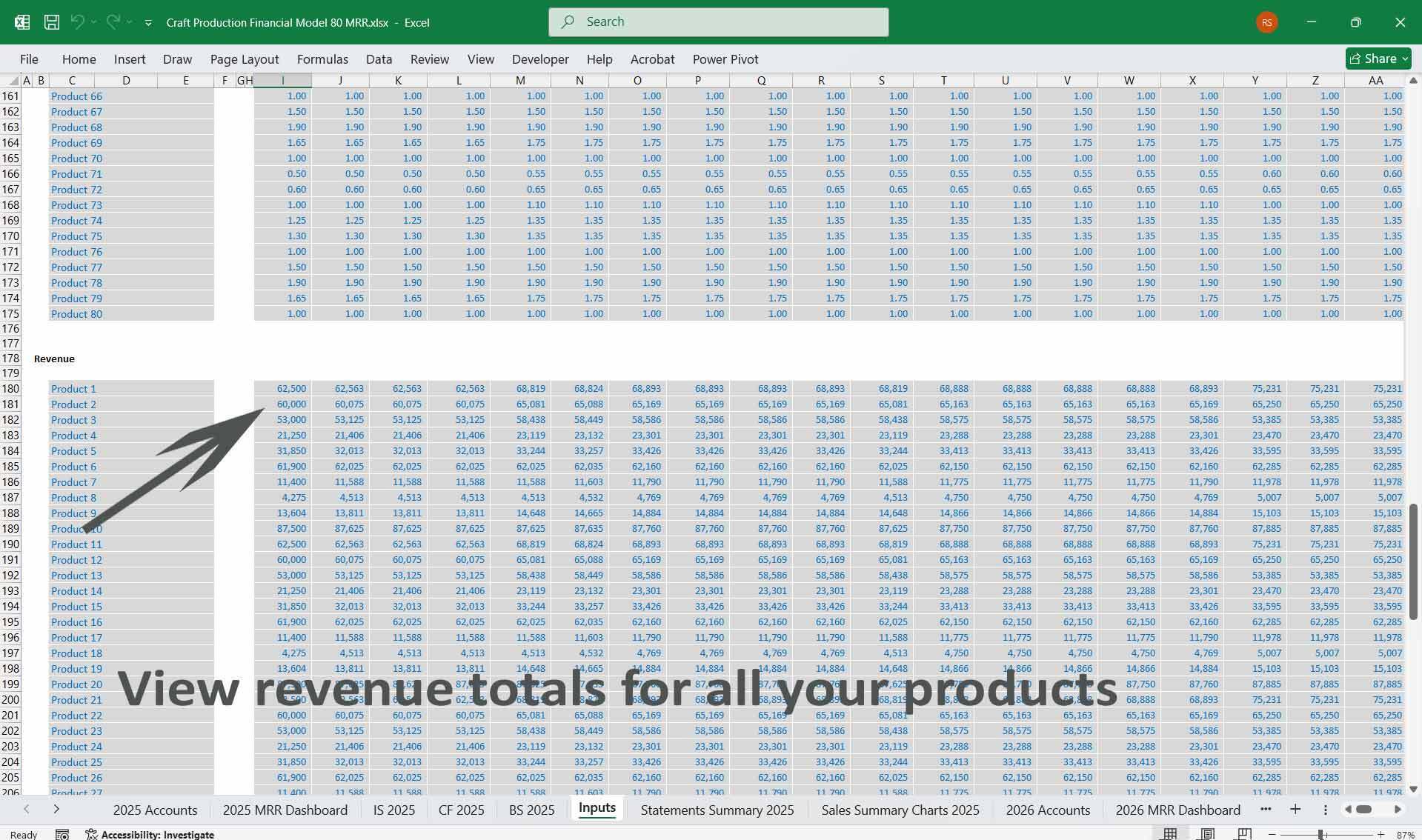
3-Statement Financial Model for a Craft Manufacturer with 80 Product LinesThis financial model integrates the Income Statement, Cash Flow Statement, and Balance Sheet for a craft manufacturer with 80 product lines across various categories. The model also includes a 6-Tier Subscription Add-on revenue stream.
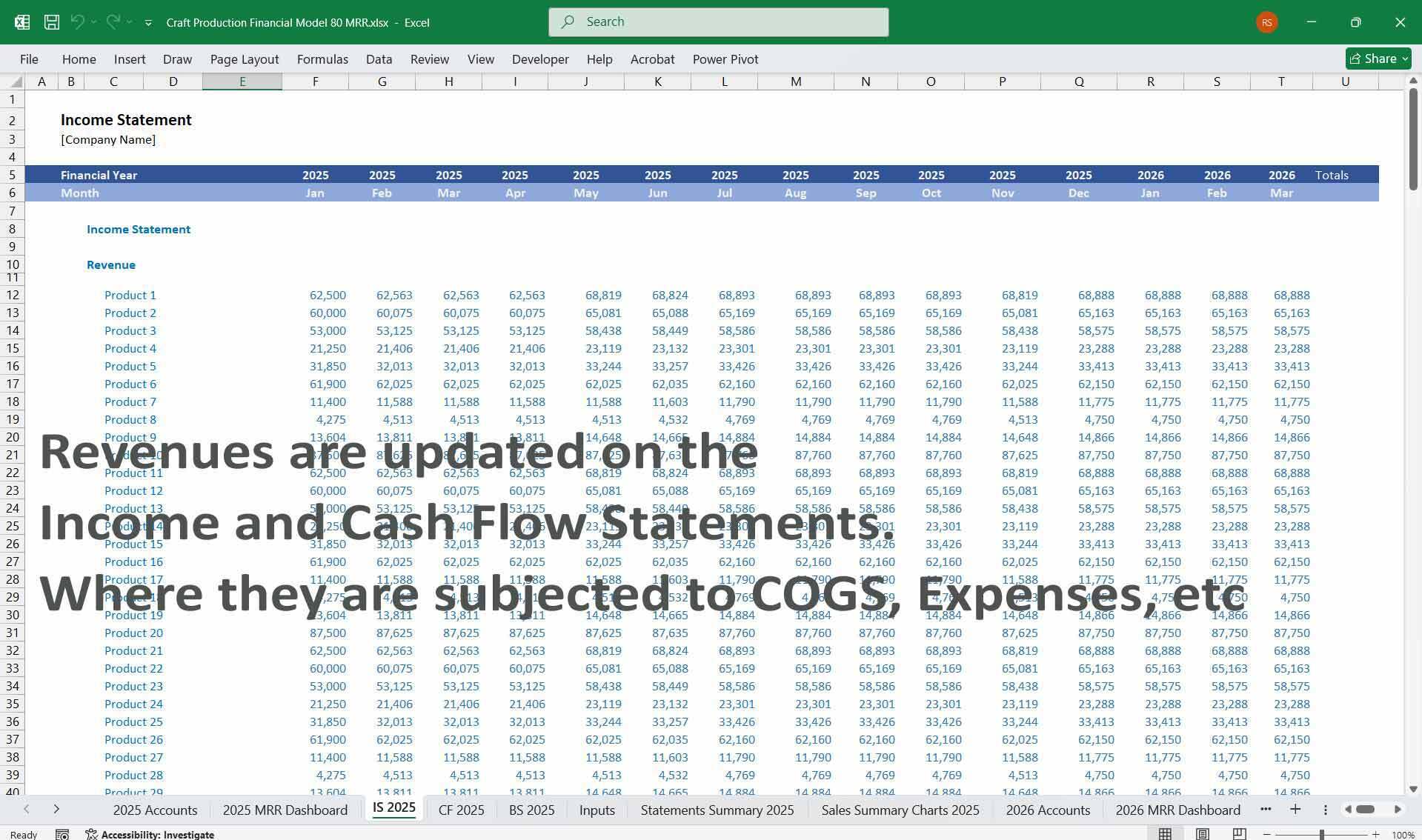
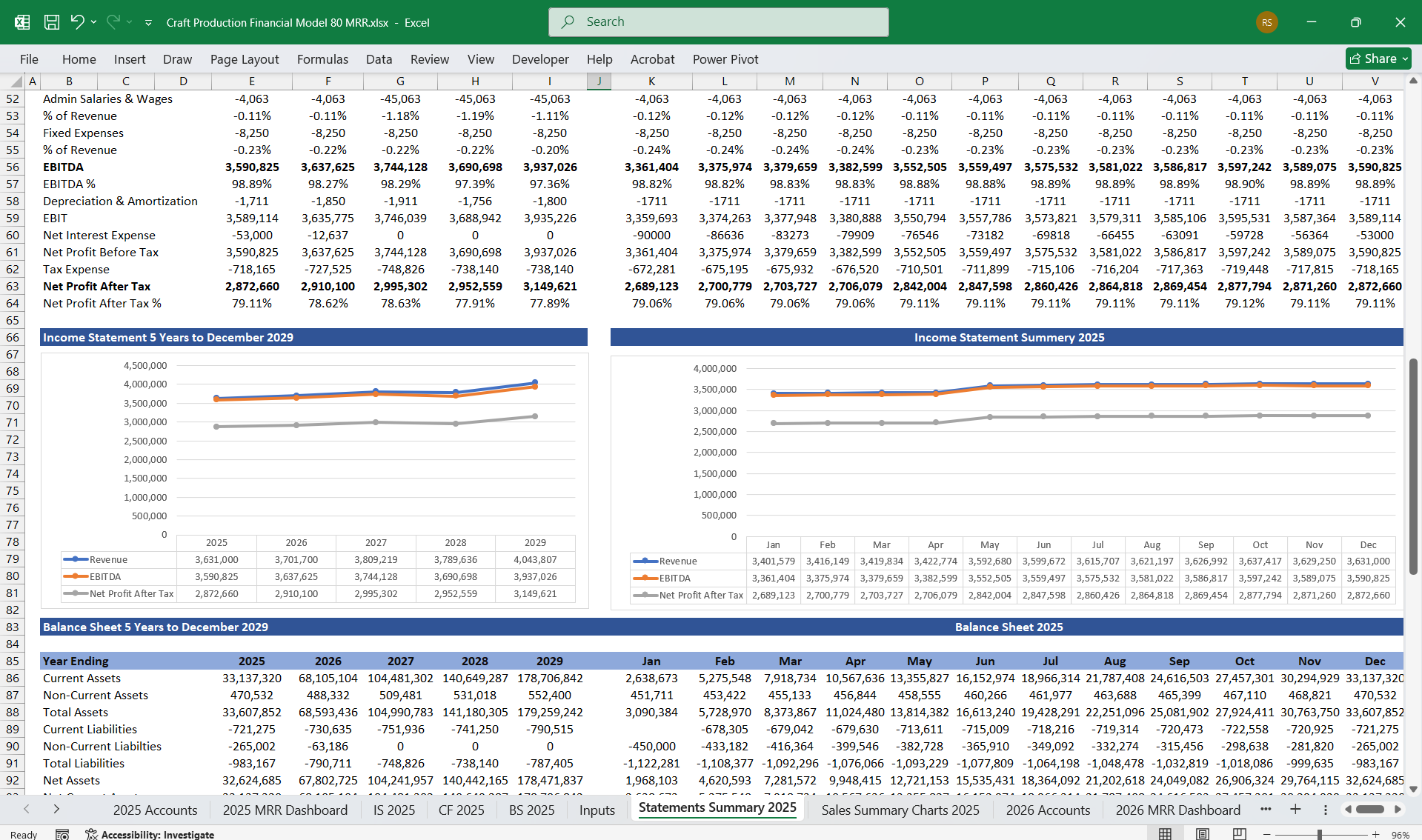
1. Income StatementThe Income Statement captures revenue, costs, and profitability for the craft manufacturer. It is broken down by product lines and subscription tiers.
Revenue Streams
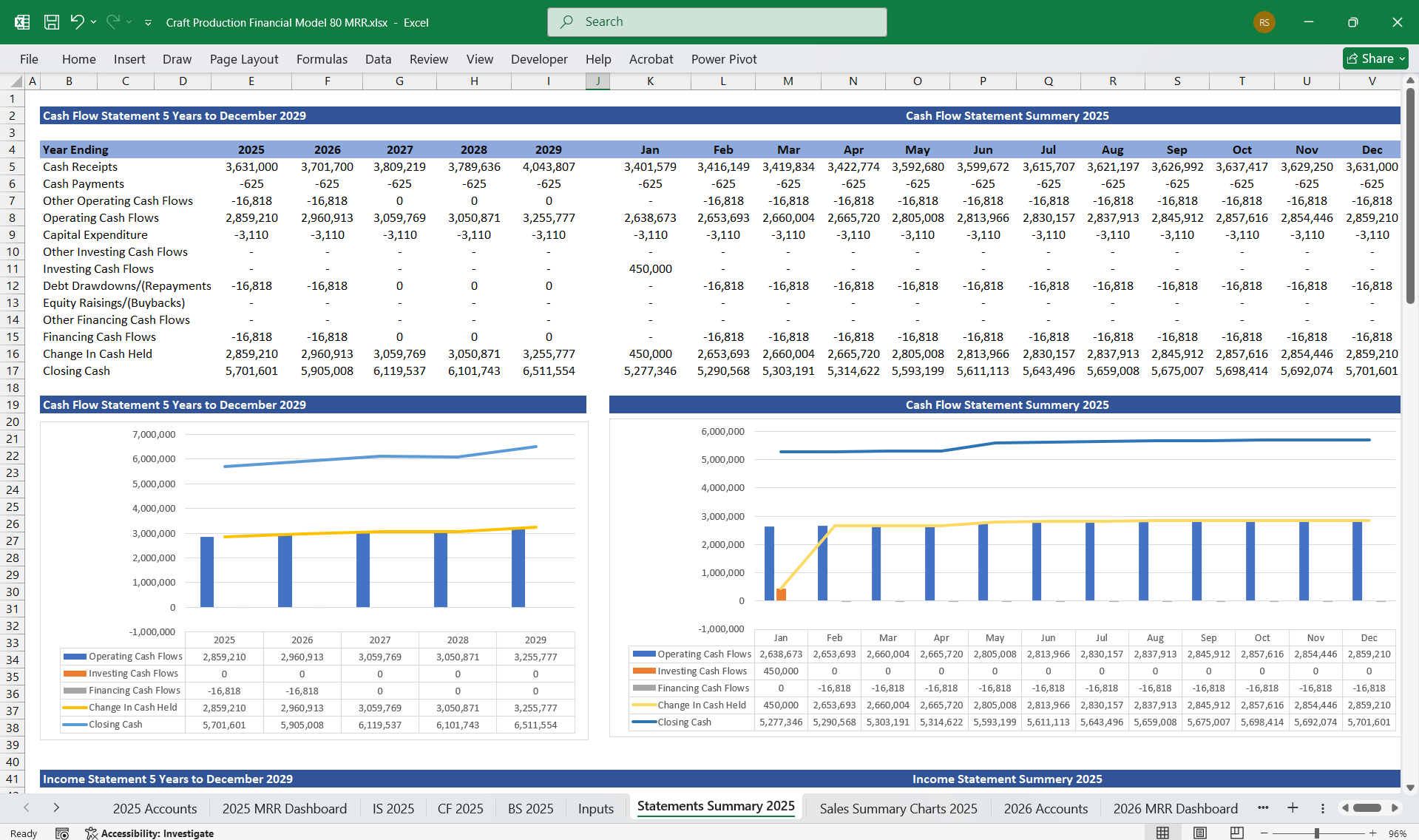
2. Cash Flow StatementThe Cash Flow Statement tracks cash inflows and outflows, ensuring liquidity for operations and growth.
Cash Flow from Operating Activities
3. Balance SheetThe Balance Sheet provides a snapshot of the company’s financial position at a specific point in time.
Assets
3-Statement Financial Model for a Craft Manufacturer with 80 Product LinesThis financial model integrates the Income Statement, Cash Flow Statement, and Balance Sheet for a craft manufacturer with 80 product lines across various categories. The model also includes a 6-Tier Subscription Add-on revenue stream.
1. Income StatementThe Income Statement captures revenue, costs, and profitability for the craft manufacturer. It is broken down by product lines and subscription tiers.
Revenue Streams
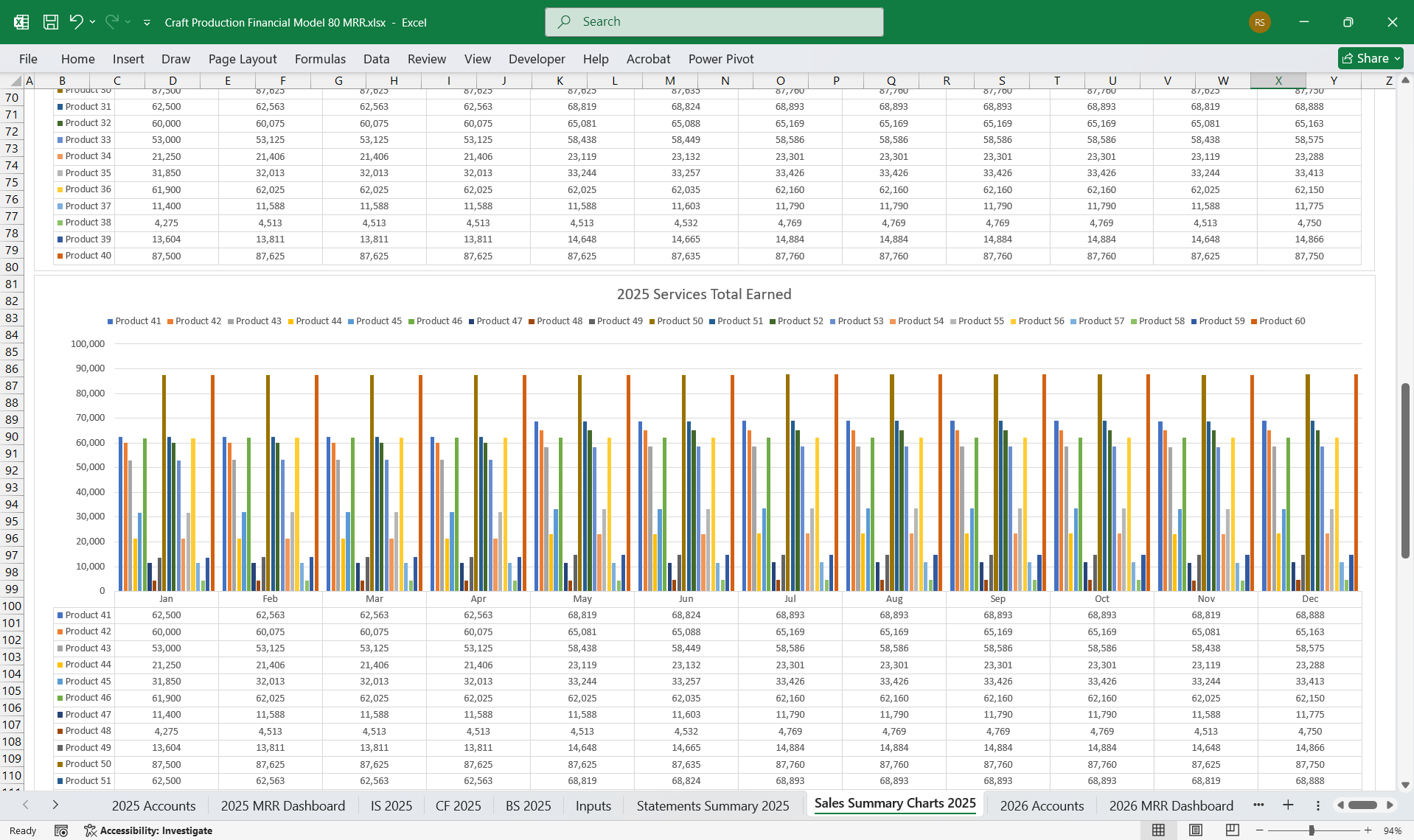
- Product Sales Example (80 Product Lines):
- Baking, Confectionary, & Décor: Revenue from baking tools, confectionary molds, and edible décor products.
- Knitting & Quilting: Revenue from yarn, needles, quilting fabrics, and patterns.
- Pottery & Ceramics: Revenue from clay, pottery wheels, glazes, and kilns.
- Glassblowing: Revenue from glass rods, blowpipes, and furnaces.
- Leather Goods: Revenue from leather hides, tools, and finished goods like bags and wallets.
- Jewelry: Revenue from beads, wires, pliers, and finished jewelry.
- Metalwork: Revenue from metal sheets, welding tools, and finished metal art.
- Woodworking: Revenue from lumber, carving tools, and finished wooden items.
- Baking, Confectionary, & Décor: Revenue from baking tools, confectionary molds, and edible décor products.
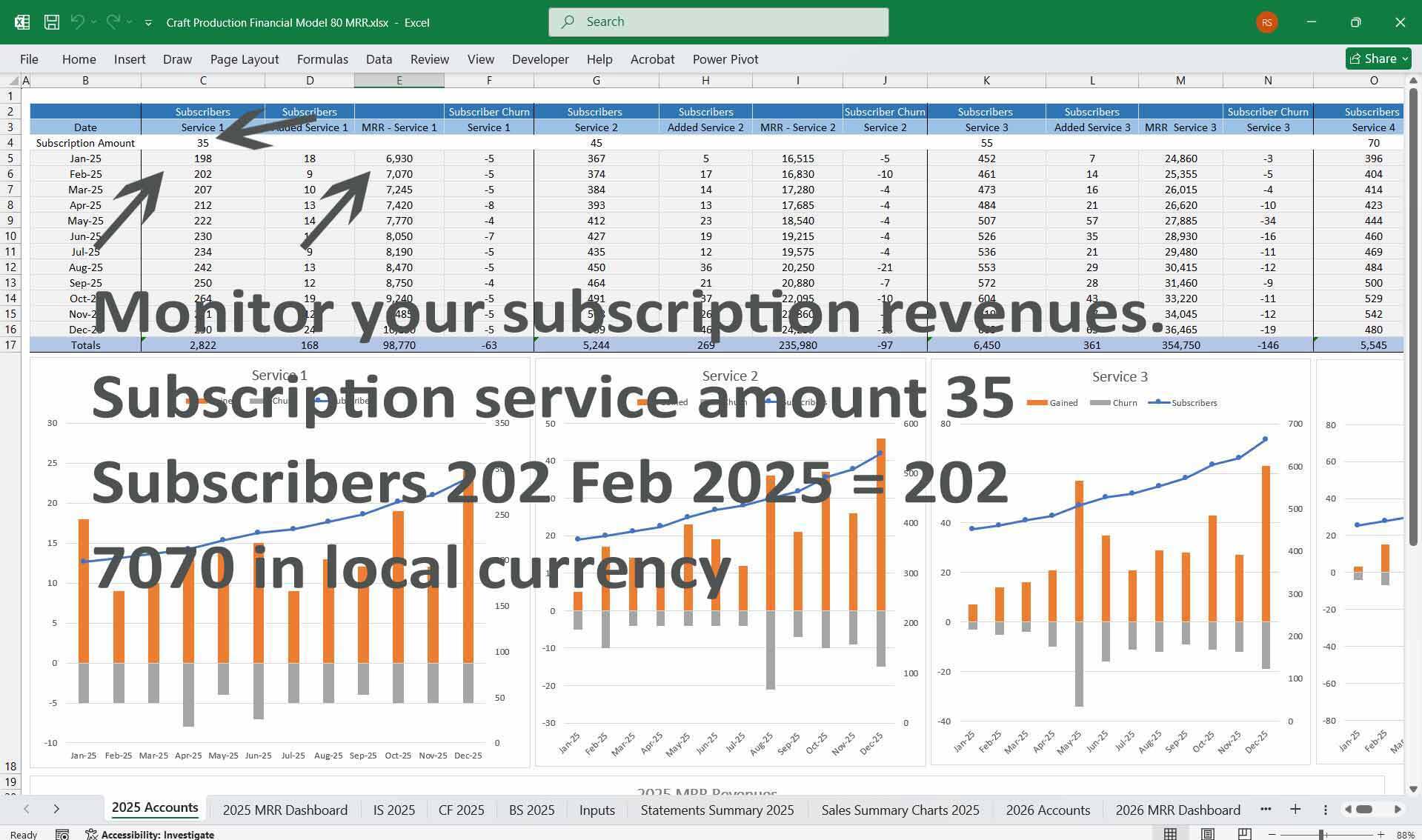
- 6-Tier Subscription Revenue:
- Tier 1 (Basic): Access to beginner tutorials and patterns.
- Tier 2 (Intermediate): Access to intermediate tutorials, patterns, and monthly webinars.
- Tier 3 (Advanced): Access to advanced tutorials, exclusive patterns, and live Q&A sessions.
- Tier 4 (Pro): Access to all tutorials, patterns, and discounts on products.
- Tier 5 (Master): Access to all content, personalized coaching, and early access to new products.
- Tier 6 (Enterprise): Custom solutions for businesses, including bulk discounts and tailored content.
- Tier 1 (Basic): Access to beginner tutorials and patterns.
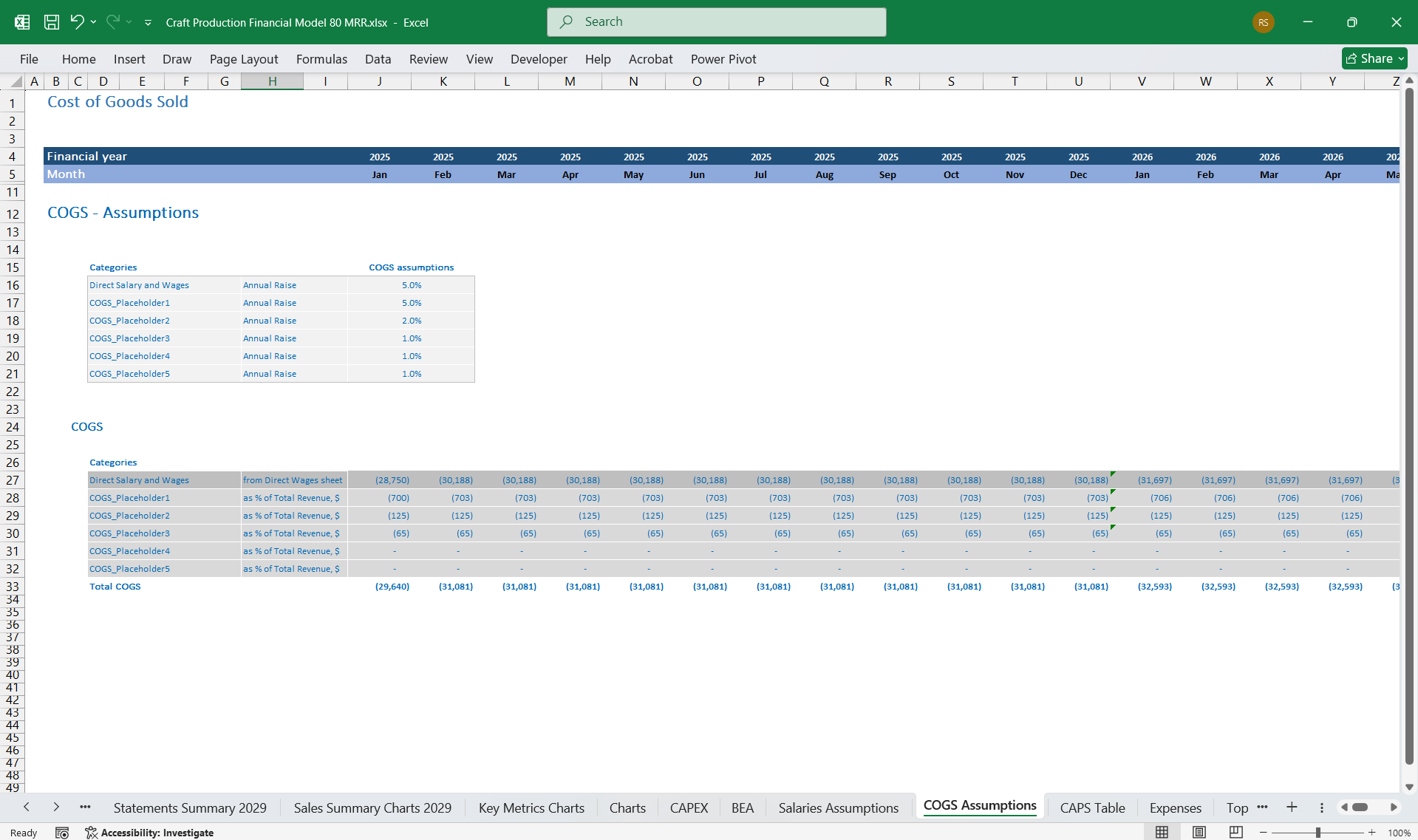
- Raw materials for each product line (e.g., clay, yarn, leather).
- Labor costs for production.
- Packaging and shipping costs.
- Marketing and advertising.
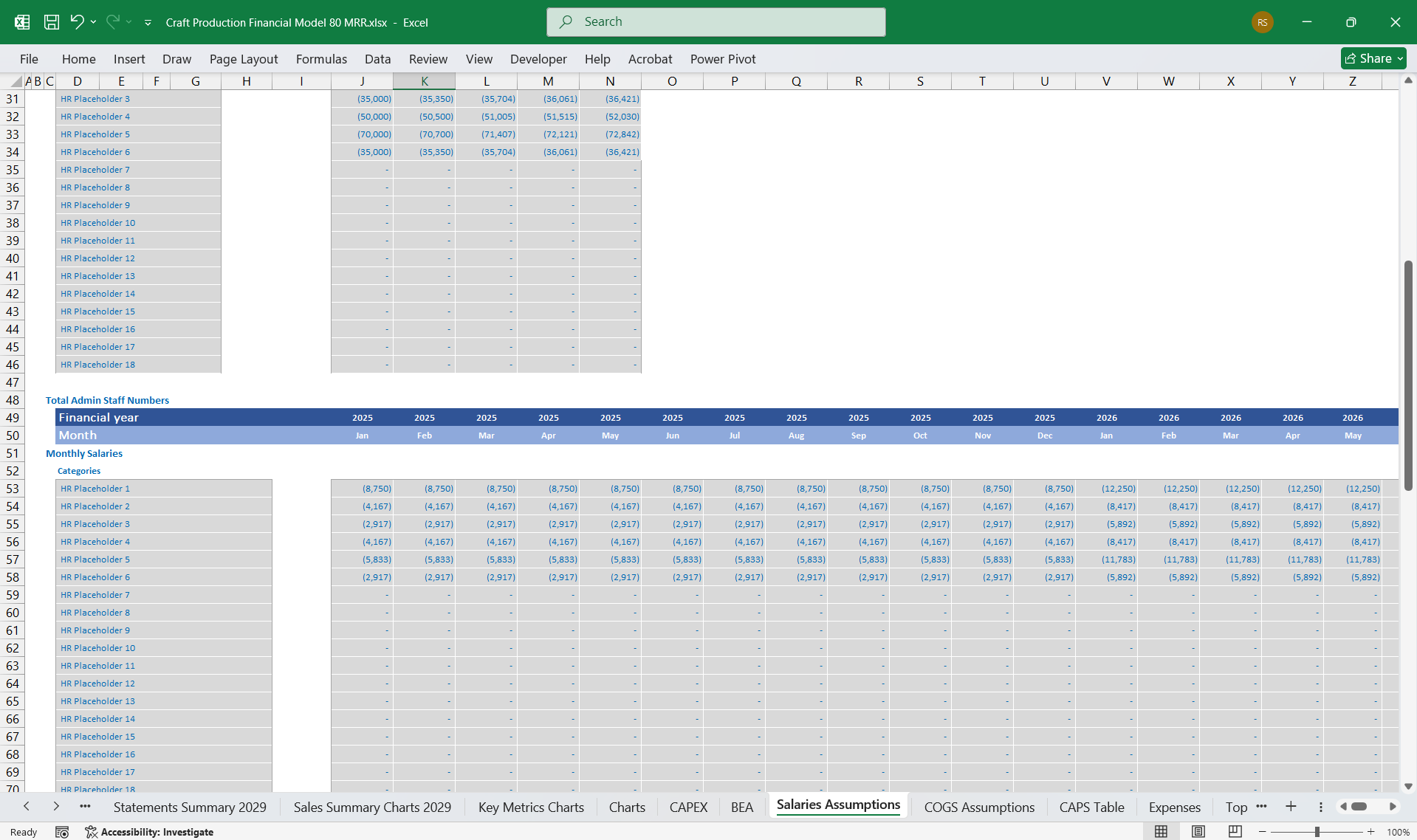
- Salaries for administrative staff.
- Subscription platform fees.
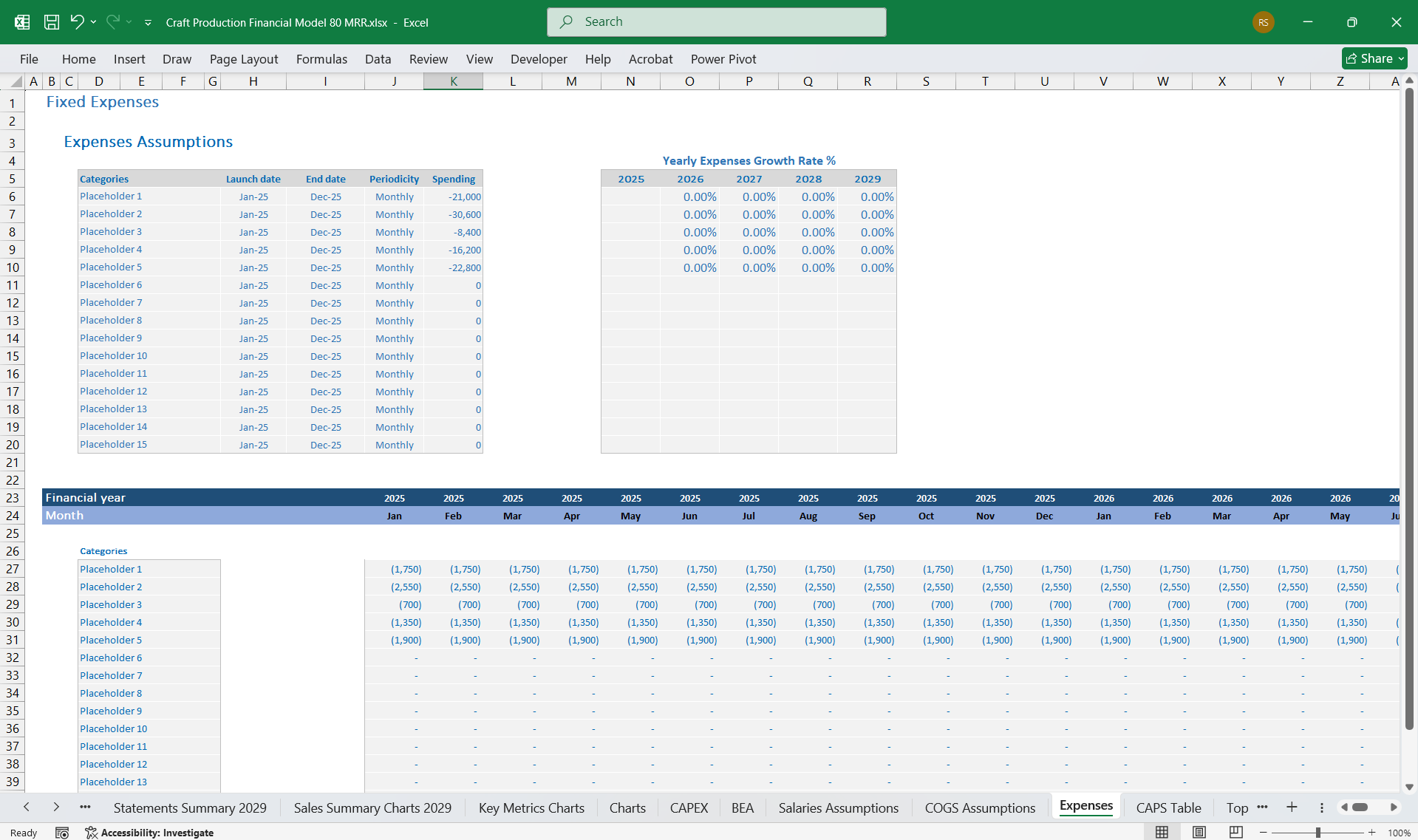
- Rent and utilities for manufacturing facilities.
- Gross Profit: Revenue - COGS.
- Operating Income: Gross Profit - Operating Expenses.
- Net Income: Operating Income - Taxes and Interest.
2. Cash Flow StatementThe Cash Flow Statement tracks cash inflows and outflows, ensuring liquidity for operations and growth.
Cash Flow from Operating Activities
- Cash received from product sales and subscriptions.
- Cash is paid for raw materials, labor, and operating expenses.
- Capital expenditures (e.g., new pottery wheels, glassblowing furnaces).
- Investments in technology for subscription platforms.
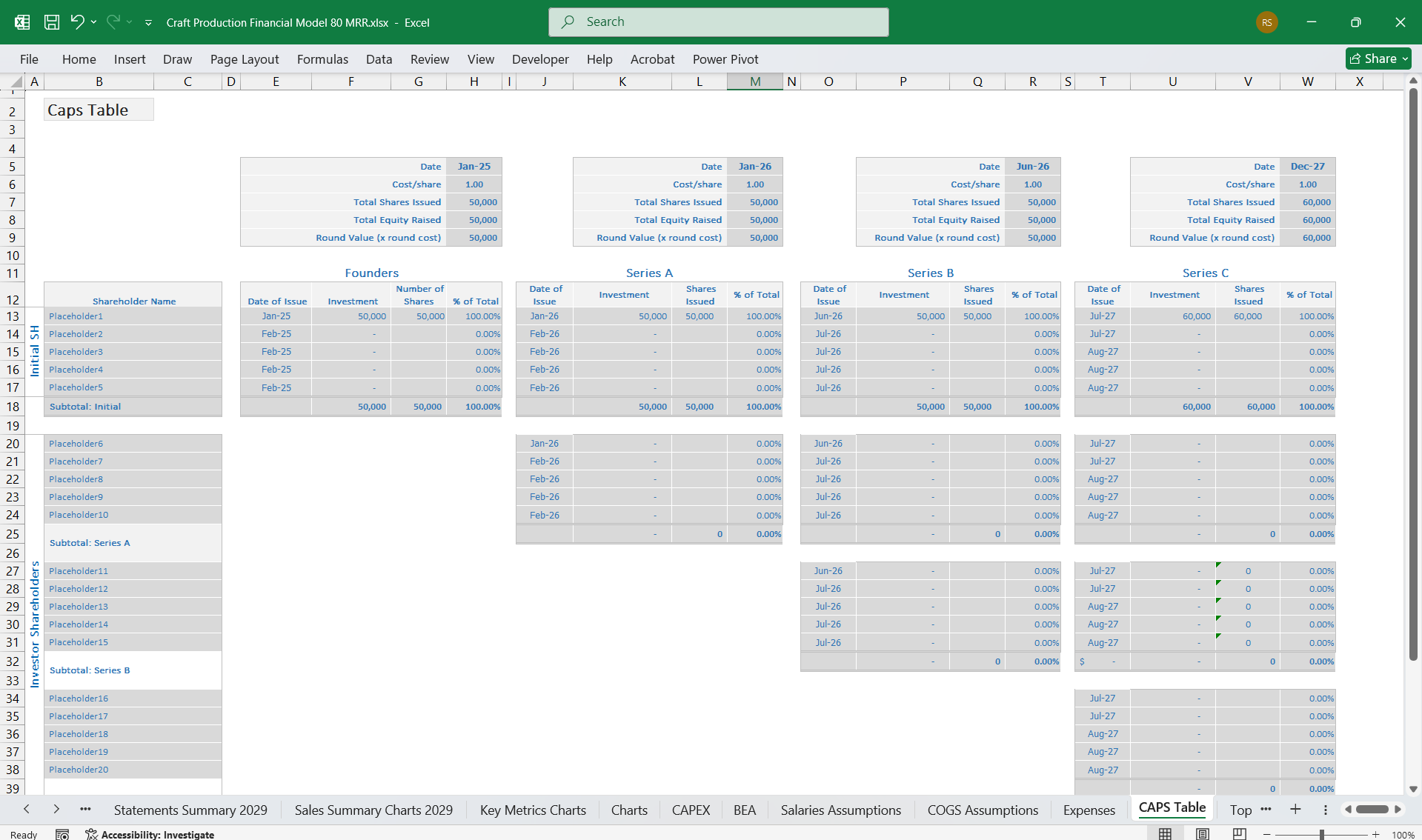
- Proceeds from loans or equity financing.
- Dividends paid to shareholders (if applicable).
- Sum of cash flows from operating, investing, and financing activities.
3. Balance SheetThe Balance Sheet provides a snapshot of the company’s financial position at a specific point in time.
Assets
- Current Assets:
- Cash and cash equivalents.
- Accounts receivable (from product sales and subscriptions).
- Inventory (raw materials and finished goods for all product lines).
- Cash and cash equivalents.
- Non-Current Assets:
- Property, plant, and equipment (e.g., kilns, furnaces, tools).
- Intangible assets (e.g., brand value, subscription platform software).
- Property, plant, and equipment (e.g., kilns, furnaces, tools).
- Current Liabilities:
- Accounts payable (to suppliers).
- Short-term debt.
- Subscription liabilities (unearned revenue from prepaid subscriptions).
- Accounts payable (to suppliers).
- Non-Current Liabilities:
- Long-term debt.
- Deferred tax liabilities.
- Long-term debt.
- Common stock.
- Retained earnings (accumulated profits over time).
- Revenue: Sales of baking tools, molds, and edible décor.
- COGS: Cost of ingredients, packaging, and labor.
- Inventory: Flour, sugar, molds, and decorative items.
- Revenue: Sales of yarn, needles, and fabrics.
- COGS: Cost of raw materials and labor.
- Inventory: Yarn, quilting fabrics, and patterns.
- Revenue: Sales of clay, pottery wheels, and glazes.
- COGS: Cost of clay, glazes, and labor.
- Inventory: Clay, glazes, and finished pottery.
- Revenue: Sales of glass rods, blowpipes, and furnaces.
- COGS: Cost of glass rods and labor.
- Inventory: Glass rods and finished glassware.
- Revenue: Sales of leather hides, tools, and finished goods.
- COGS: Cost of leather and labor.
- Inventory: Leather hides and finished goods.
- Revenue: Sales of beads, wires, and finished jewelry.
- COGS: Cost of beads, wires, and labor.
- Inventory: Beads, wires, and finished jewelry.
- Revenue: Sales of metal sheets, tools, and finished art.
- COGS: Cost of metal sheets and labor.
- Inventory: Metal sheets and finished art.
- Revenue: Sales of lumber, tools, and finished items.
- COGS: Cost of lumber and labor.
- Inventory: Lumber and finished wooden items.
- Monthly or annual subscription fees are recognized as revenue over the subscription period.
- Content creation (tutorials, patterns, webinars).
- Platform maintenance and hosting fees.
- Customer support for subscribers.
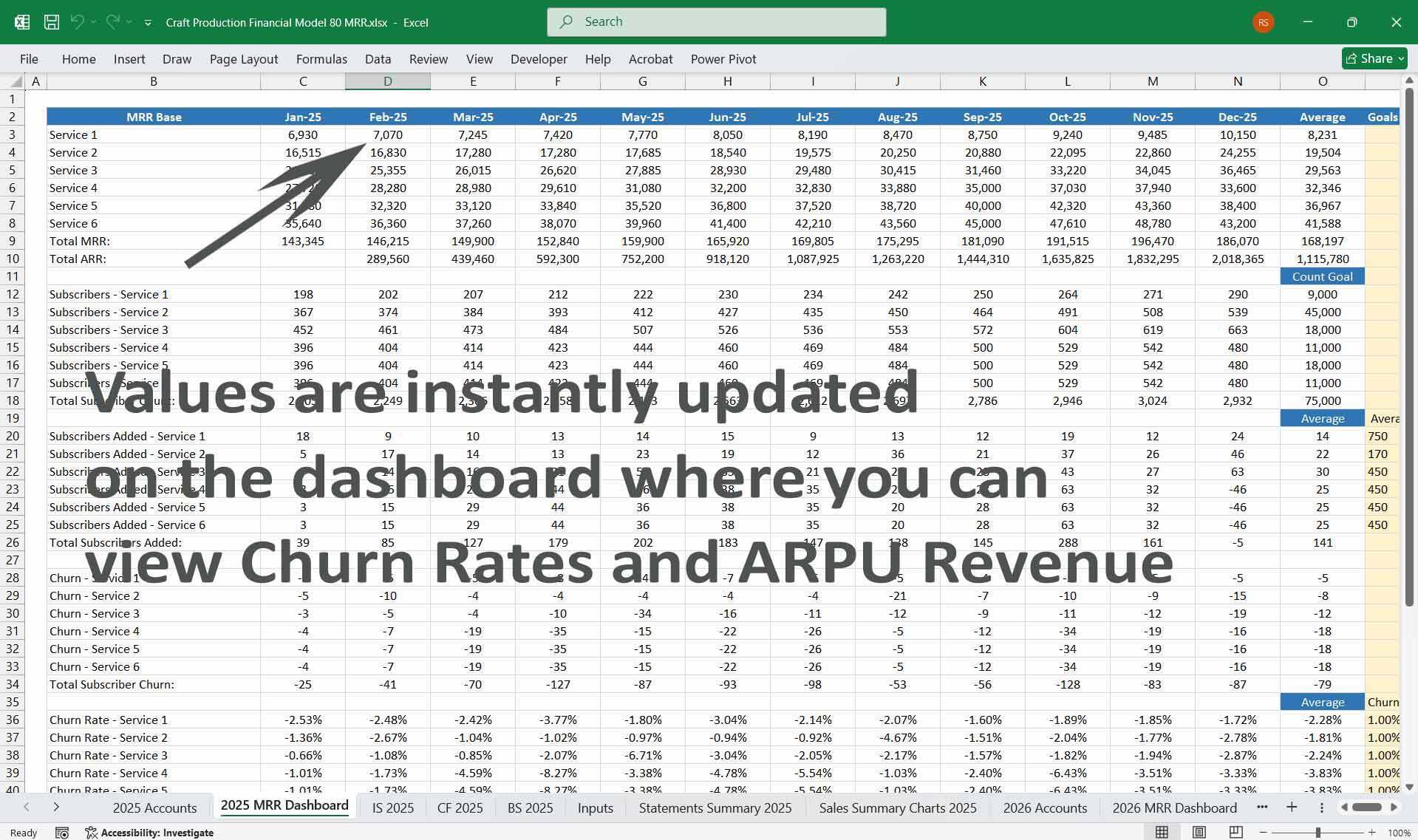
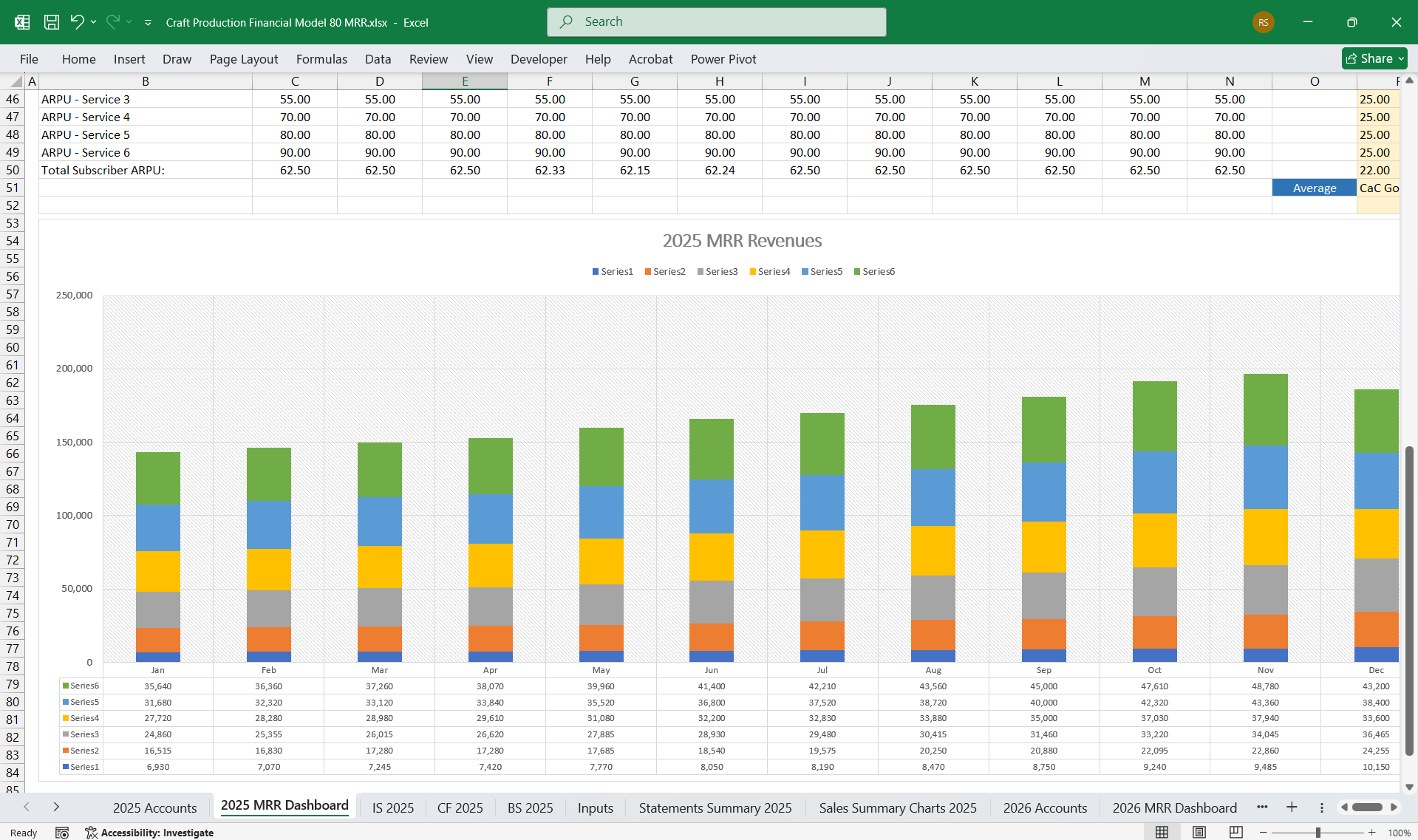
- Monthly Recurring Revenue (MRR).
- Customer Acquisition Cost (CAC).
- Churn Rate (percentage of subscribers who cancel).
- Income Statement to Cash Flow:
- Net income flows into the Cash Flow Statement as the starting point for operating activities.
- Net income flows into the Cash Flow Statement as the starting point for operating activities.
- Cash Flow to Balance Sheet:
- Changes in cash flow impact the cash balance on the Balance Sheet.
- Changes in cash flow impact the cash balance on the Balance Sheet.
- Balance Sheet to Income Statement:
- Depreciation of assets (e.g., kilns, furnaces) is recorded as an expense on the Income Statement.
- Depreciation of assets (e.g., kilns, furnaces) is recorded as an expense on the Income Statement.
This Best Practice includes
1 Excel Financial Model
Further information
Provides thorough oversight, tracking, and reporting of Craft Manufacturing finances, including budget utilisation and projections updates.