Home Automation Services Financial Forecast Model
Originally published: 26/05/2025 11:33
Publication number: ELQ-59579-1
View all versions & Certificate
certified

Home Automation Services Financial Forecast Model

Financial model for Home Automation Services with 5-year forecasts, revenue by service type, cost assumptions, staffing, and cash flow projections.

Description
A Home Automation Services company specializes in delivering customized smart technology solutions for residential and commercial properties. Utilizing cutting-edge IoT devices and certified installation practices, these businesses focus on enhancing convenience, energy efficiency, security, and entertainment through integrated automation systems. Services typically include smart lighting installation, home security systems, climate control setup, audio-visual automation, voice assistant integration, networking solutions, and system programming.


This financial model is meticulously designed to analyze and forecast the financial performance of a home automation business, capturing key revenue and cost drivers specific to the smart technology installation industry. It focuses on revenue generation from on-site service activities, segmented by service categories.


The model delivers a 5-year forecast horizon (60 months) starting from the first forecast month defined in the assumptions tab and includes placeholders for up to 36 months of historical financial data. Designed specifically for home automation service providers, the model incorporates operational variables such as the number of automation technicians, billable hours, service mix, and days to operations commencement.


This financial model serves as an essential resource for internal planning, pricing strategies, investment presentations, and financing applications tailored to home automation businesses.


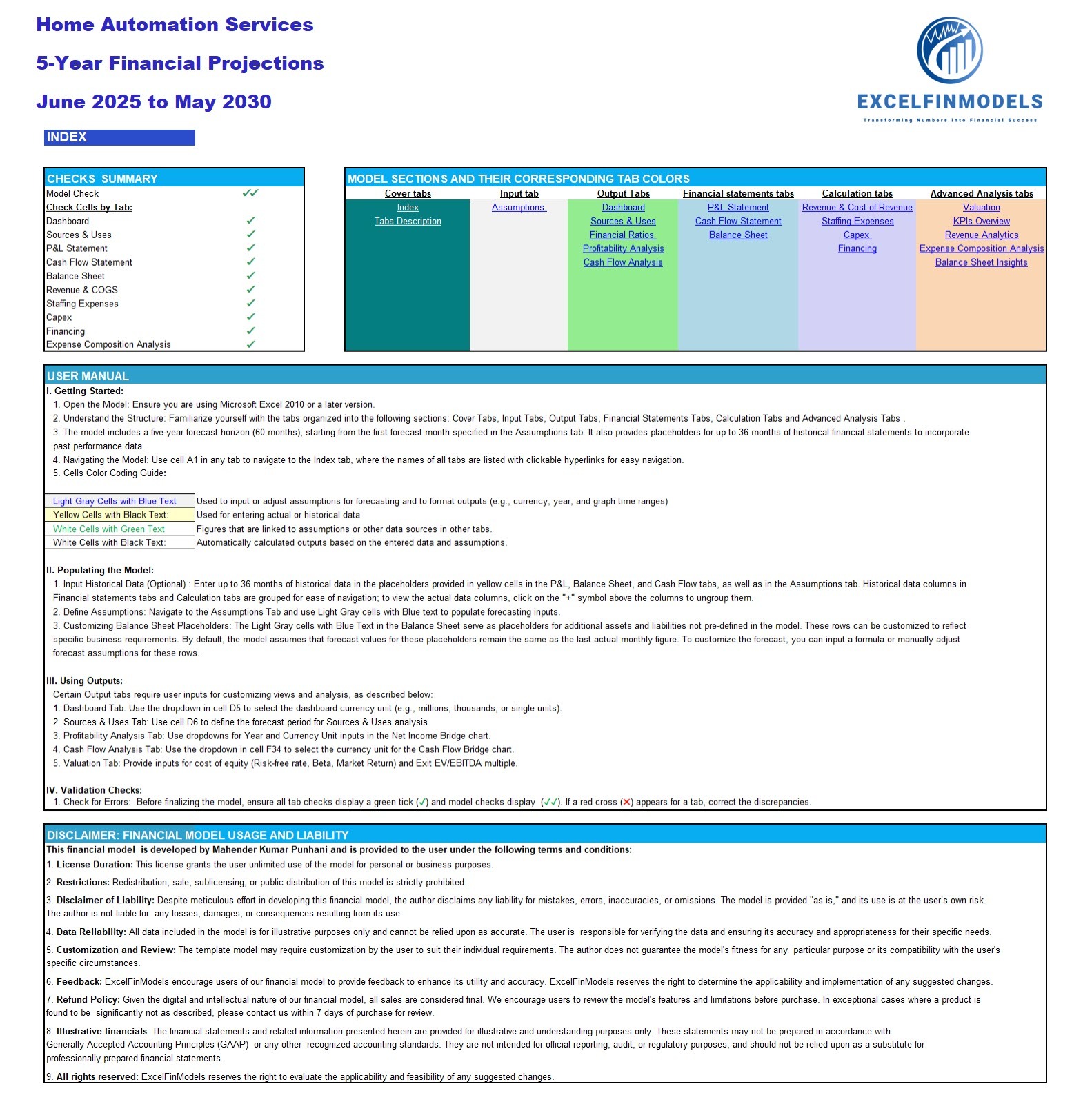
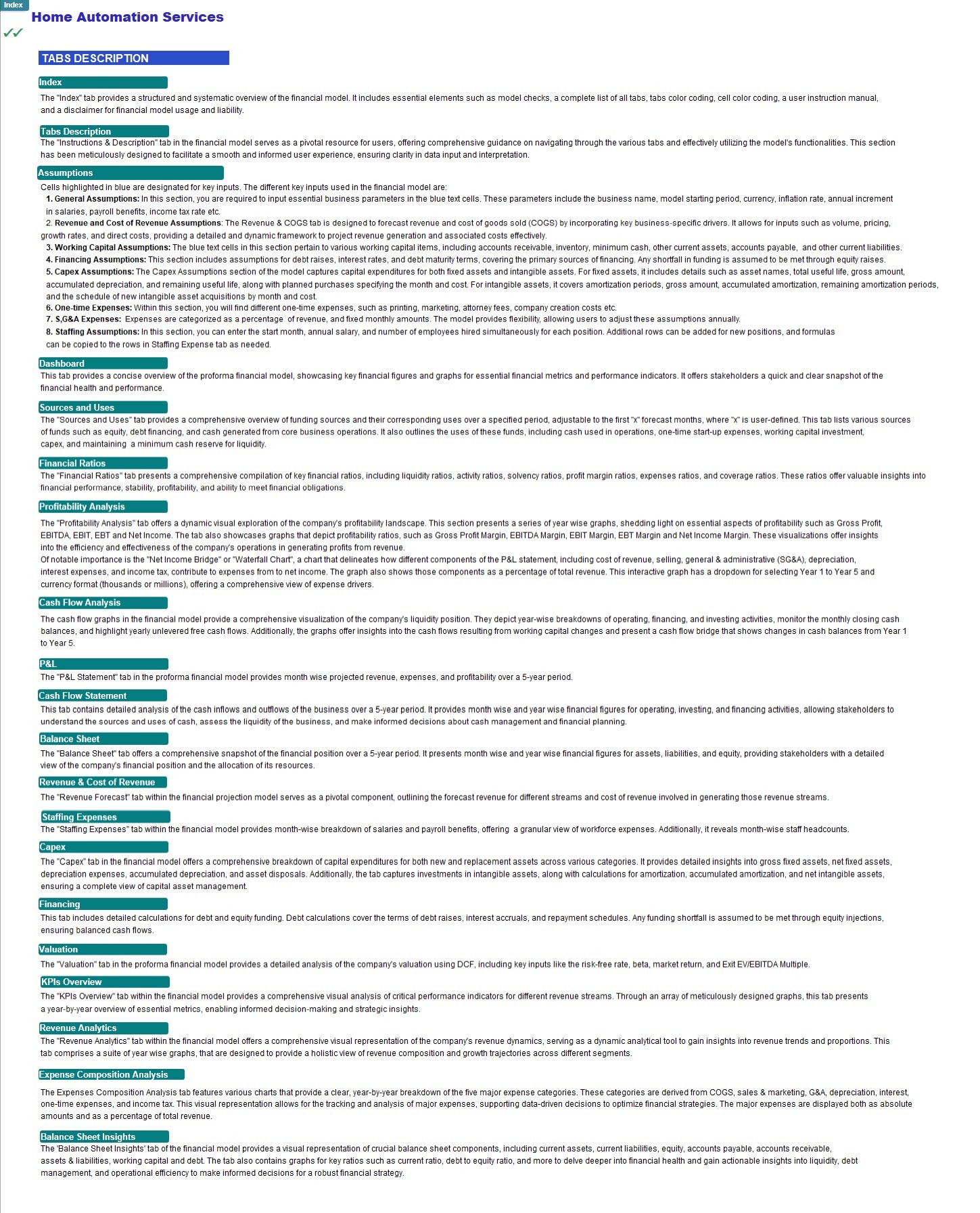
Financial Model Structure
The model is organized into the following six core sections:
1. Cover Tabs
  • Navigation and instructional guidance to help users navigate the model efficiently.


2. Input Tabs
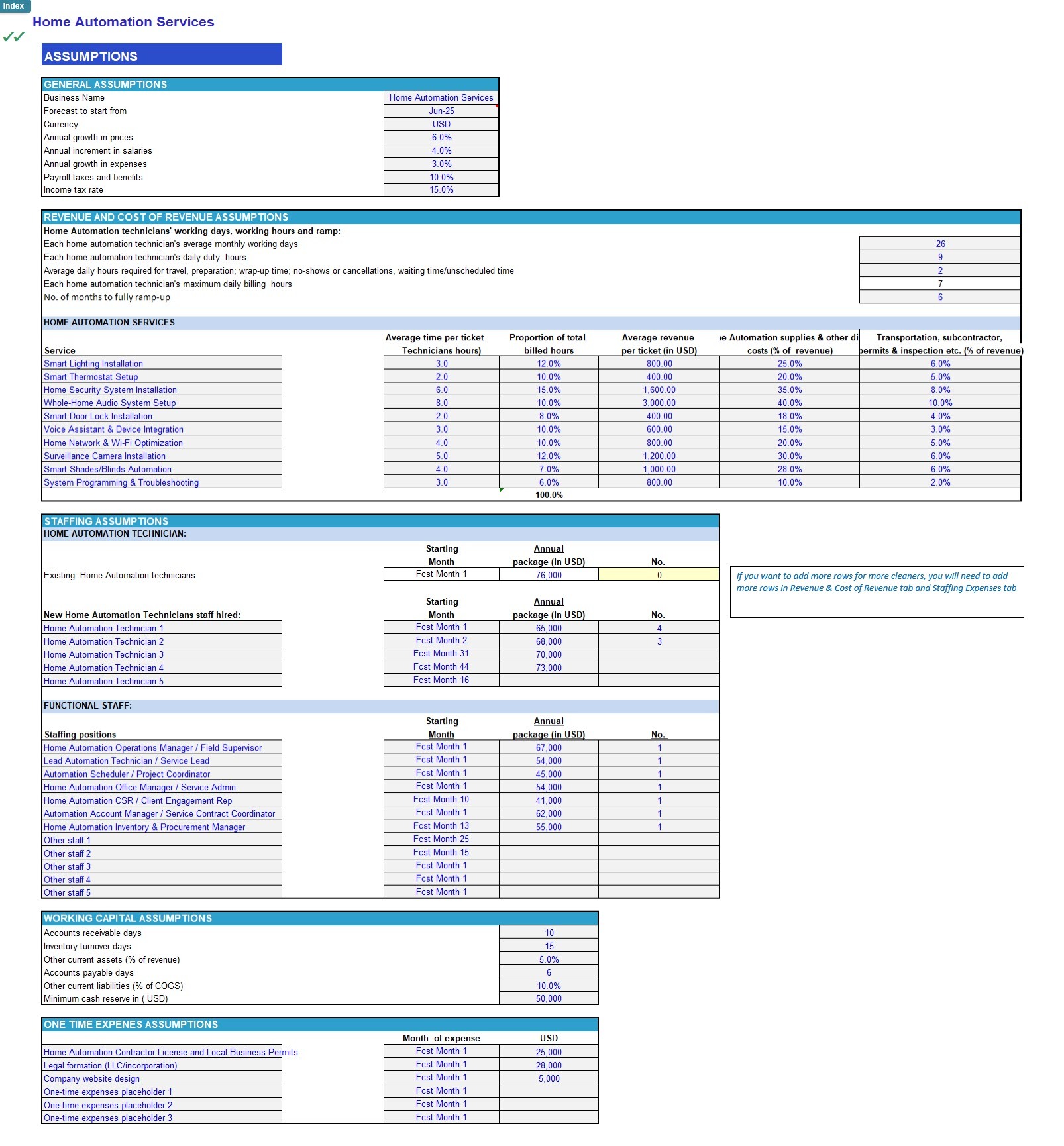
Revenue Assumptions
  • Number of home automation technicians
  • Billable hours per technician per day
  • Operating days per month
  • Service categories (e.g., smart lighting installation, home security setup, AV automation, thermostat & climate control, voice assistant integration, networking & Wi-Fi optimization, system programming)
  • % of total billed hours allocated to each service type
  • Average fee per service type
General Assumptions
  • Company name, start date, currency
  • Inflation rate, payroll tax, corporate tax
Direct Cost Assumptions
  • Cost of home automation devices, supplies, and installation tools per service type
  • Transportation and subcontractor costs
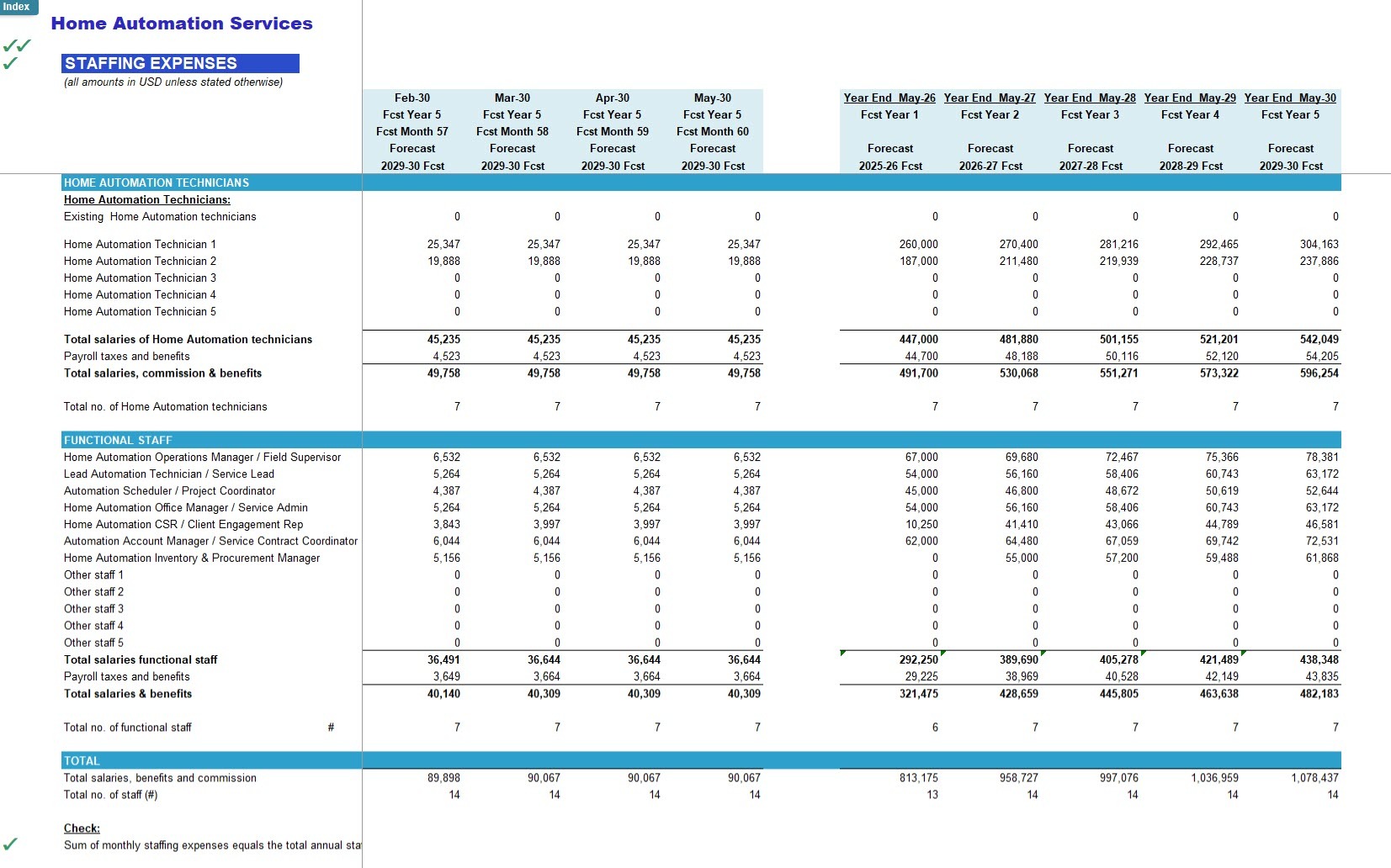
  • Salaries for technicians, supervisors, and support staff
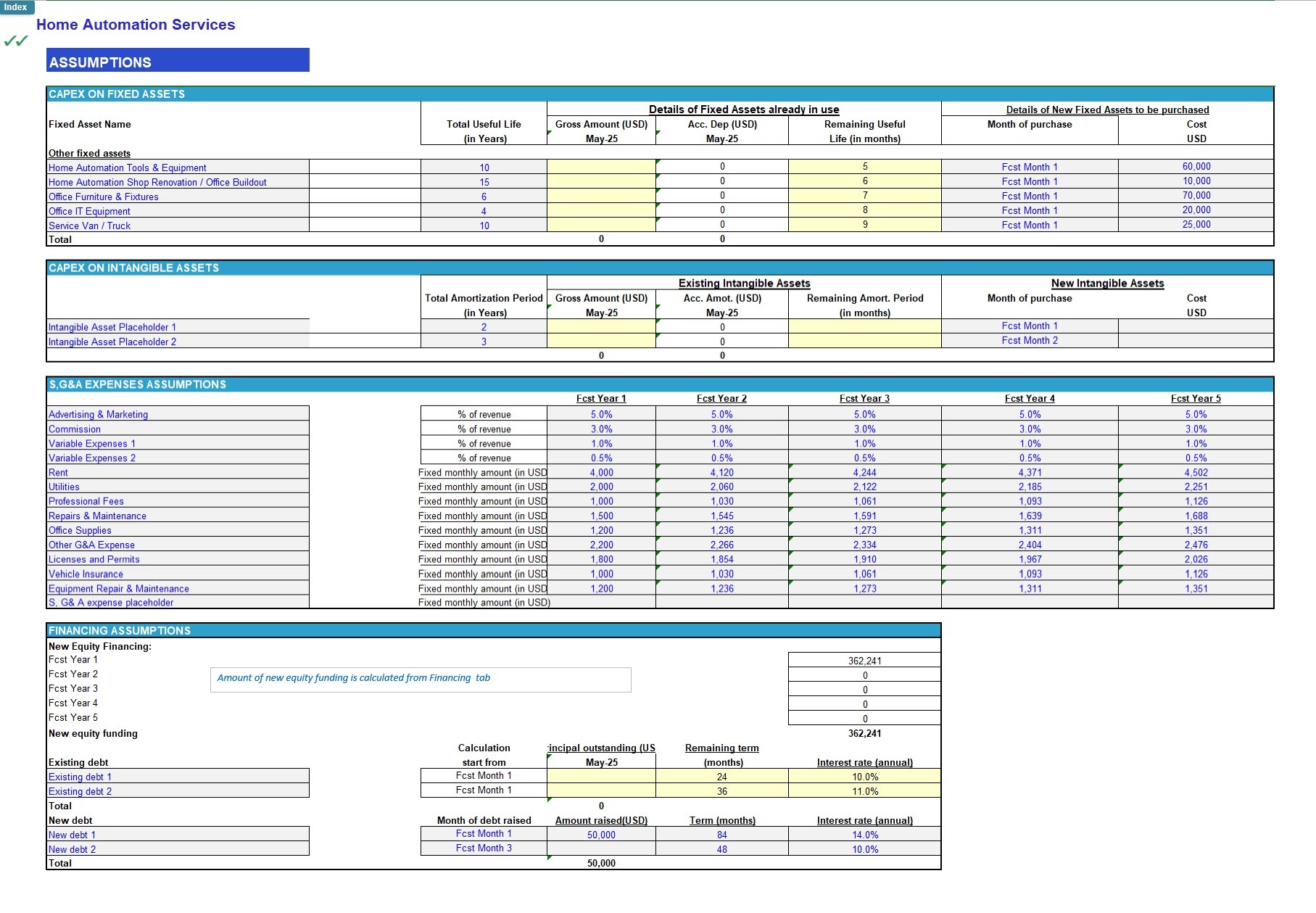
S,G&A Expenses
  • Fixed and variable expenses including rent, utilities, administrative payroll, and marketing
CapEx Assumptions
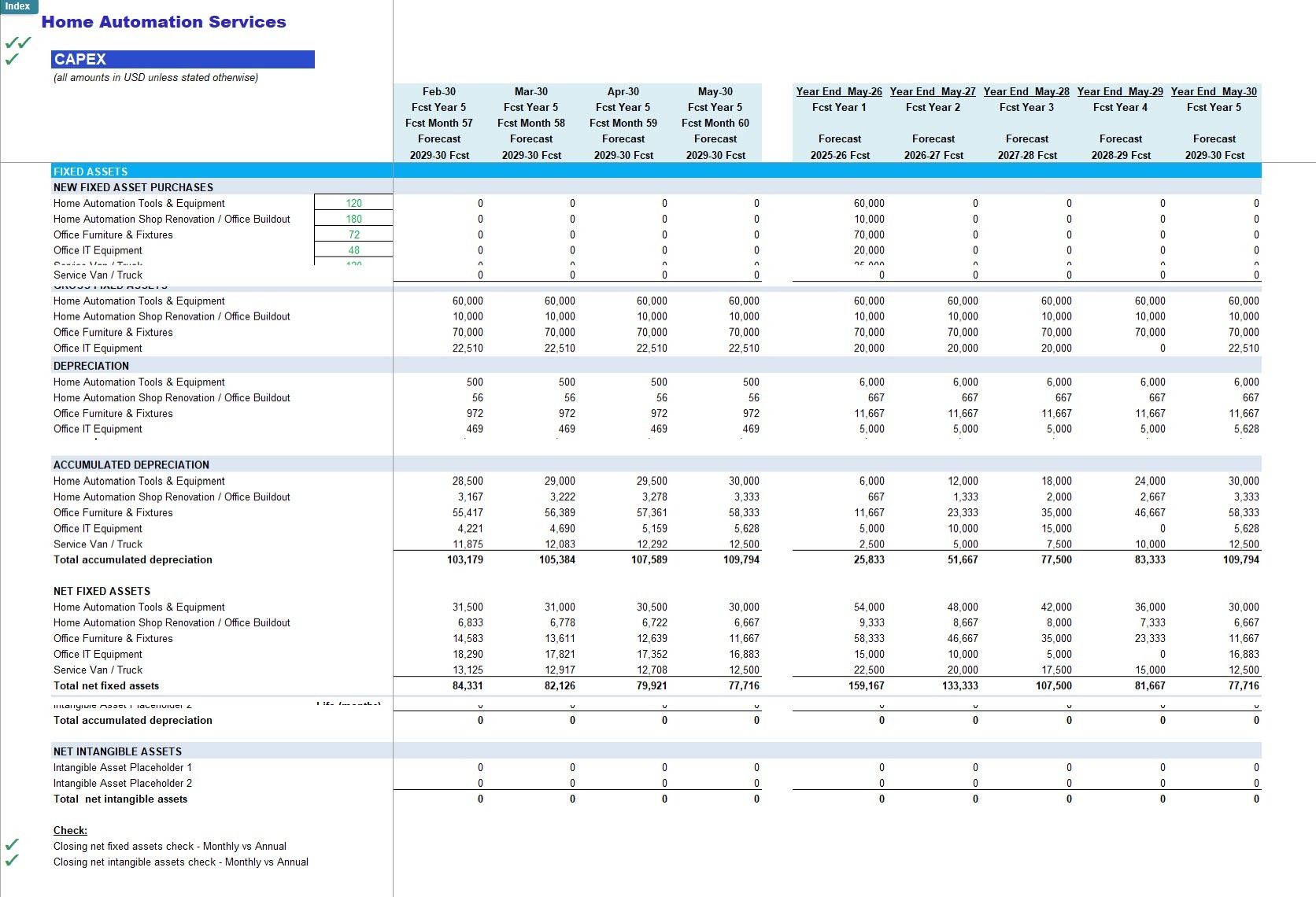
  • Capital expenditures for installation equipment (e.g., testers, programming tools), service vehicles, furnishings, and office setup
  • Depreciation schedules for fixed assets
Working Capital Assumptions
  • Inventory turnover assumptions (smart devices and equipment)
  • Accounts receivable/payable cycles
  • Minimum cash buffer
Financing & One-Time Expenses
  • Loan details, fundraising assumptions
  • Initial setup costs (licensing, branding, launch marketing)
3. Output Tabs
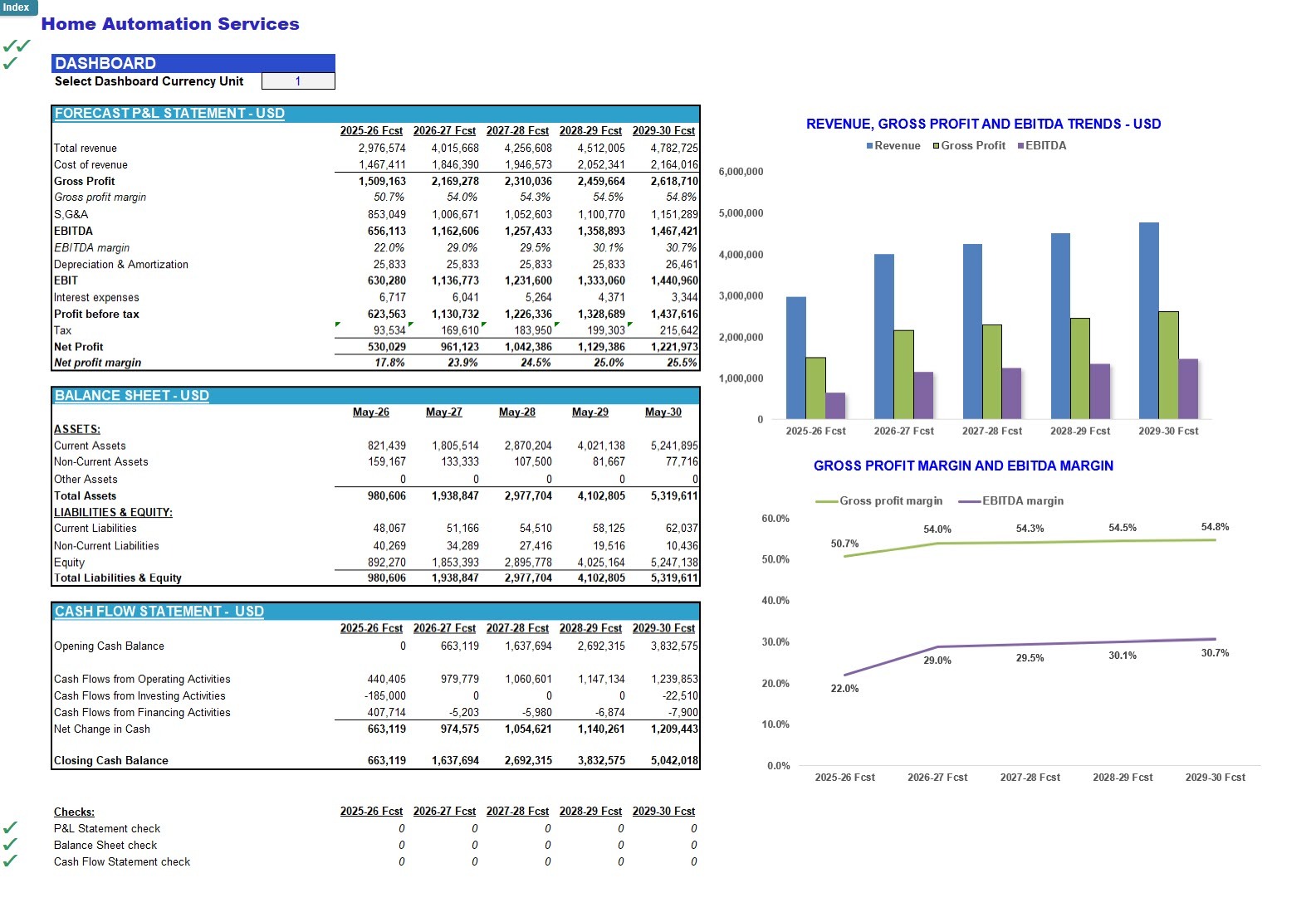
  • Financial Dashboard
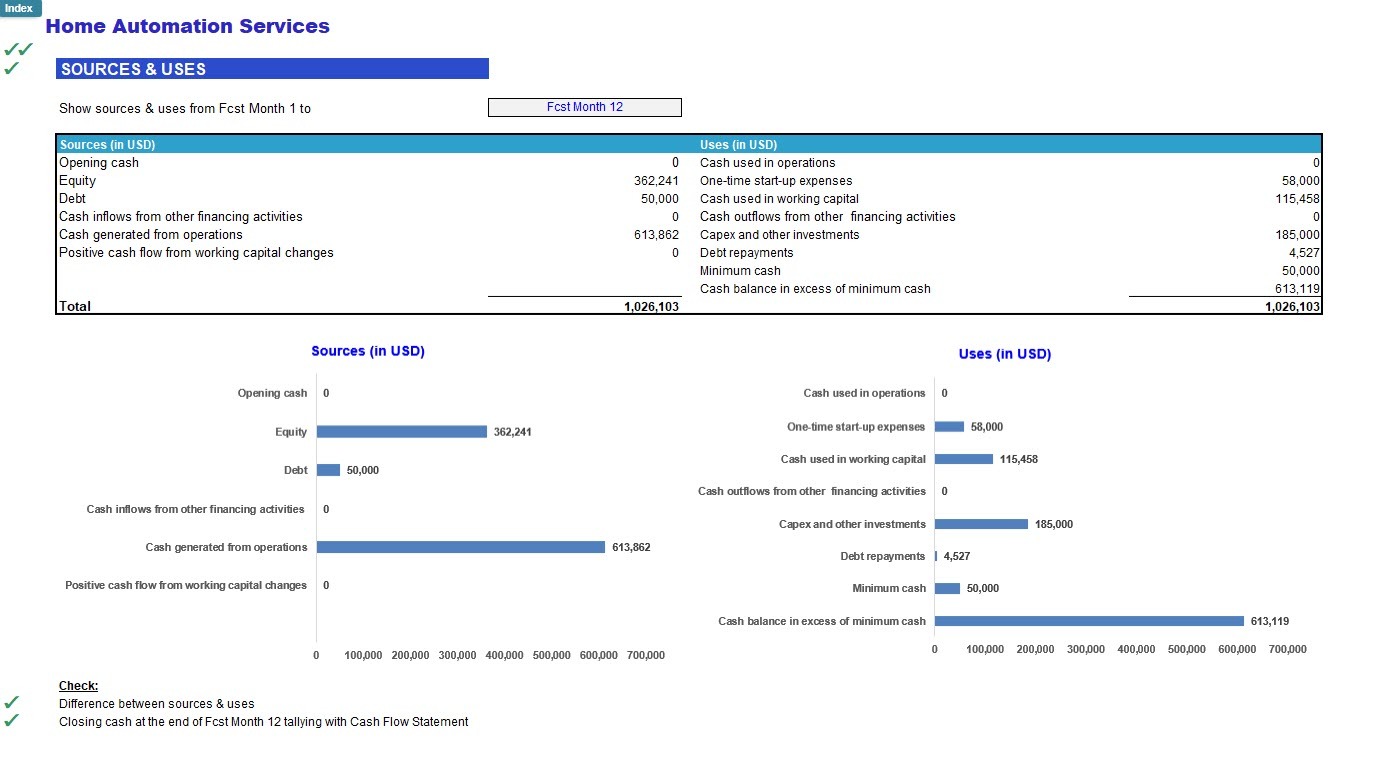
  • Sources and Uses of Funds
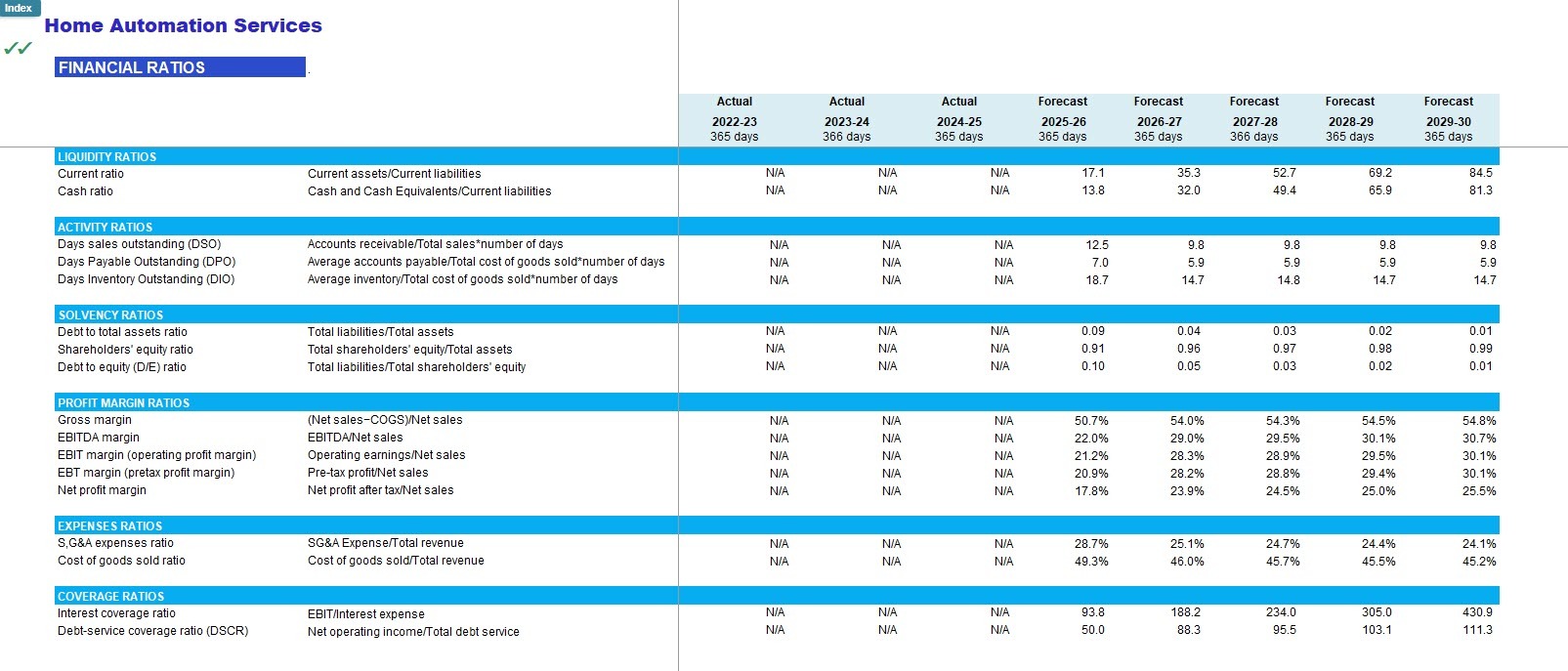
  • Financial Ratios
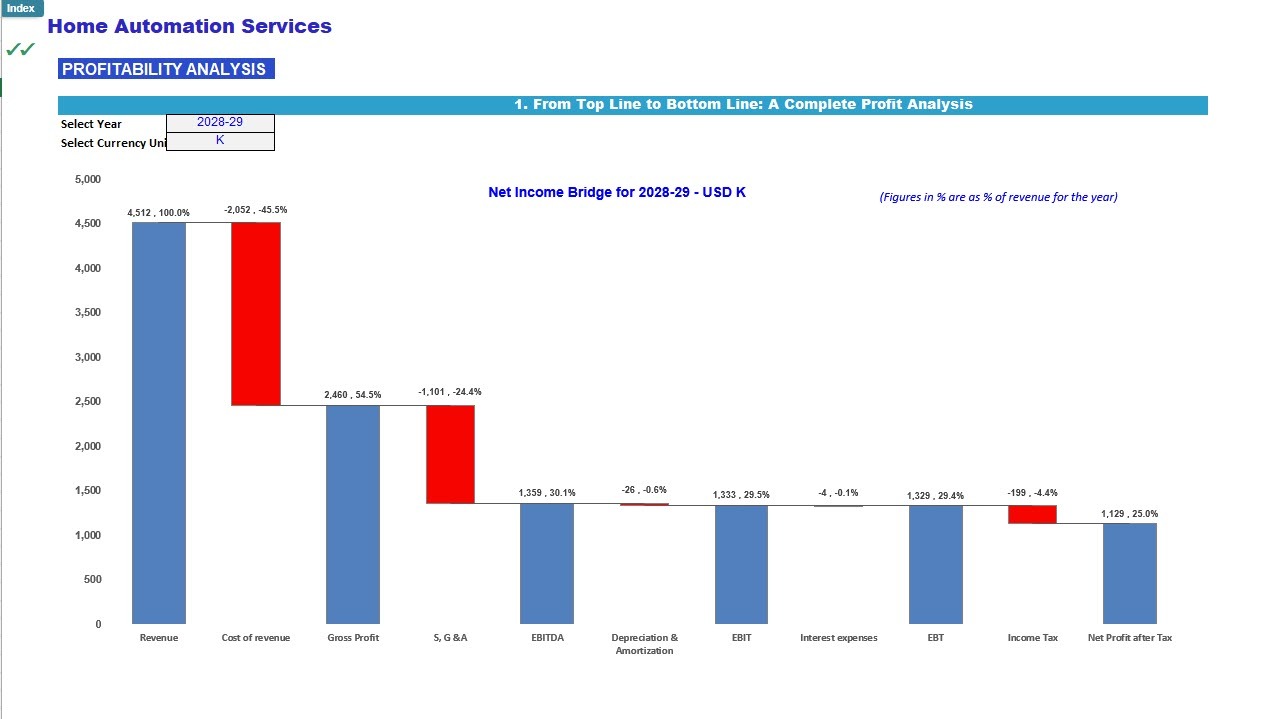
  • Profitability Analysis
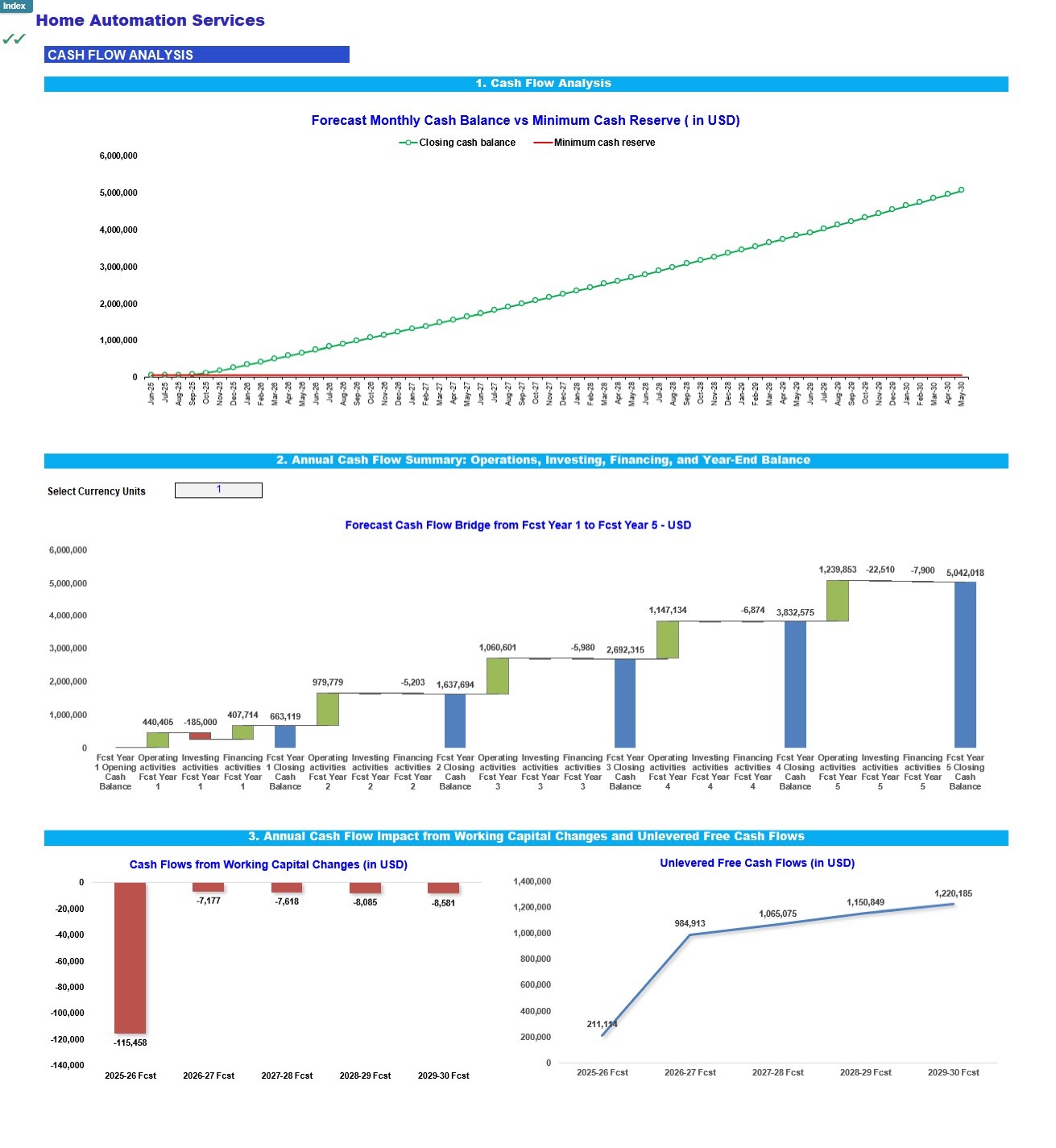
  • Cash Flow Analysis
4. Financial Statements Tabs
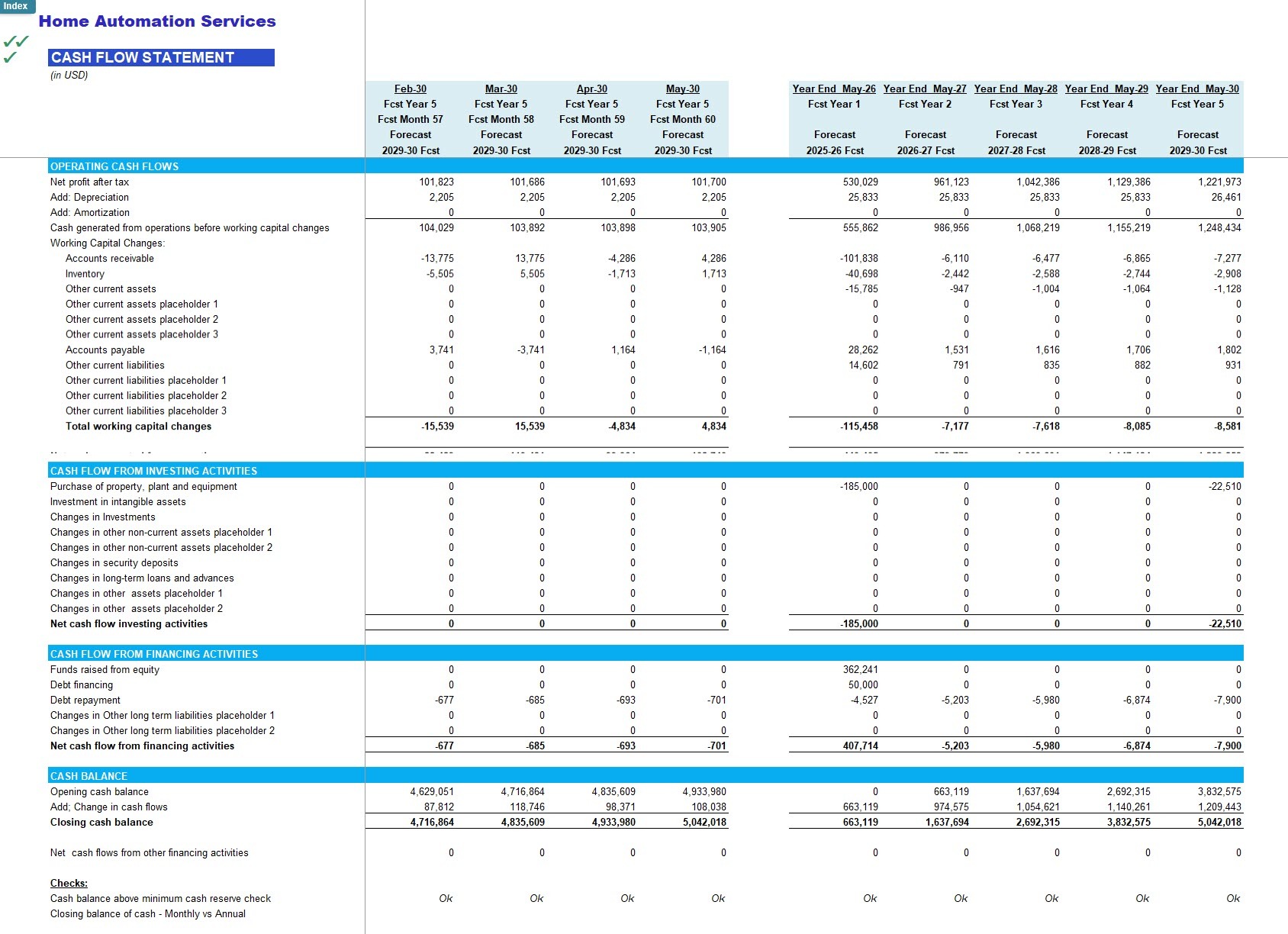
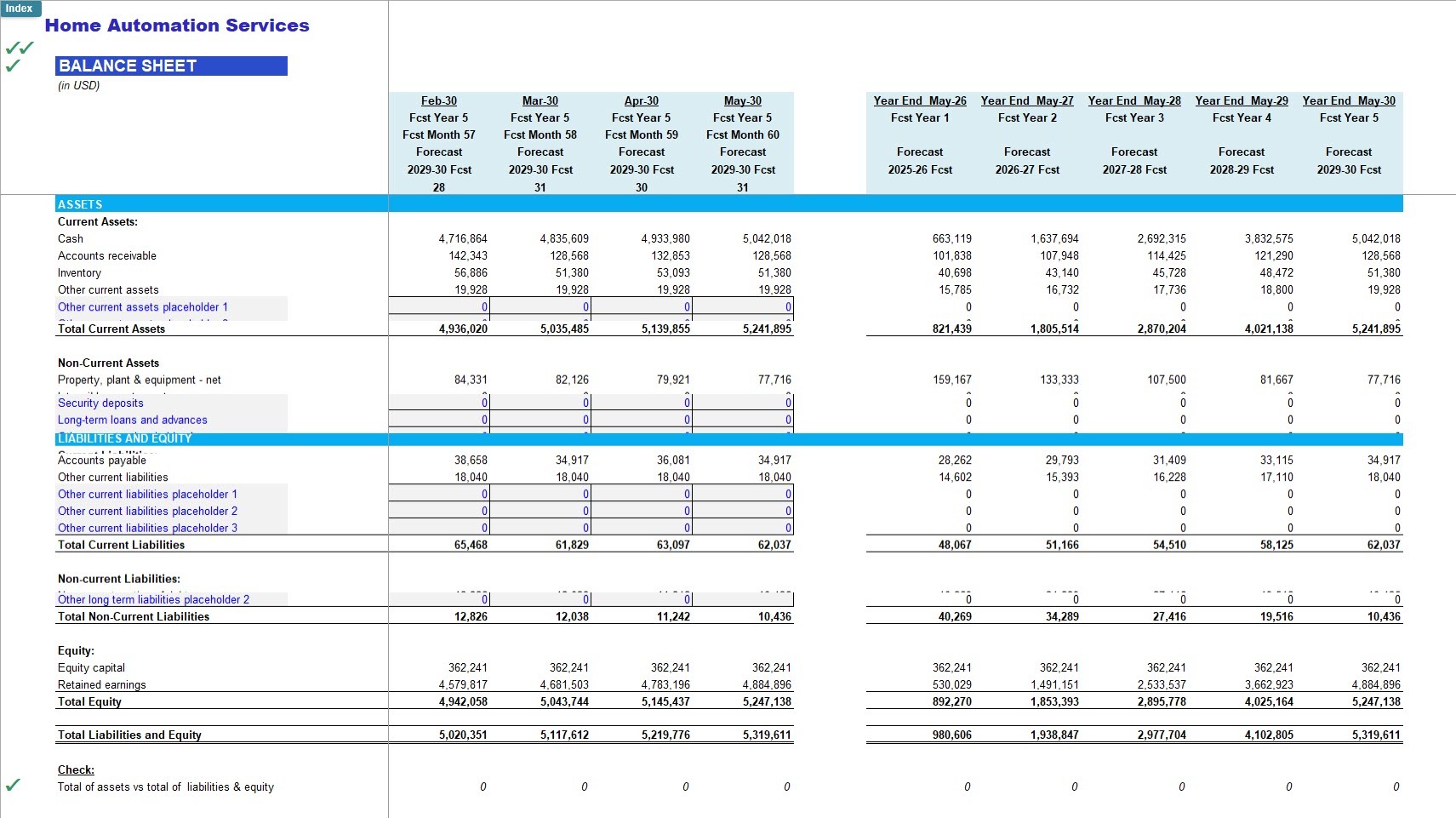
  • Monthly and annual projections for:
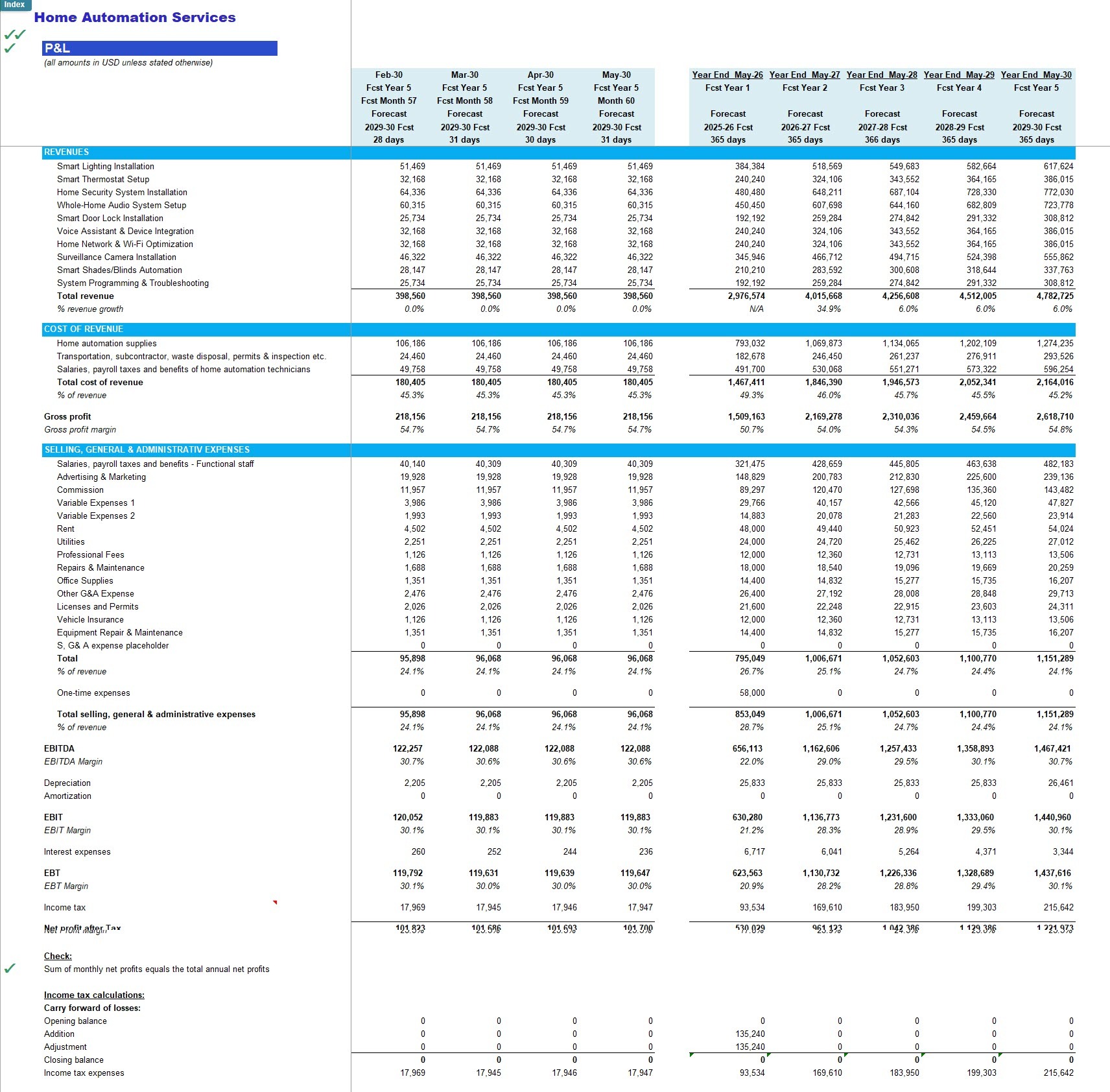
    • Profit & Loss Statement
    • Cash Flow Statement
    • Balance Sheet
5. Calculation Tabs
  • Detailed forecasting of:
    • Revenue and cost of services
    • Staffing-related expenses
    • Capital expenditures
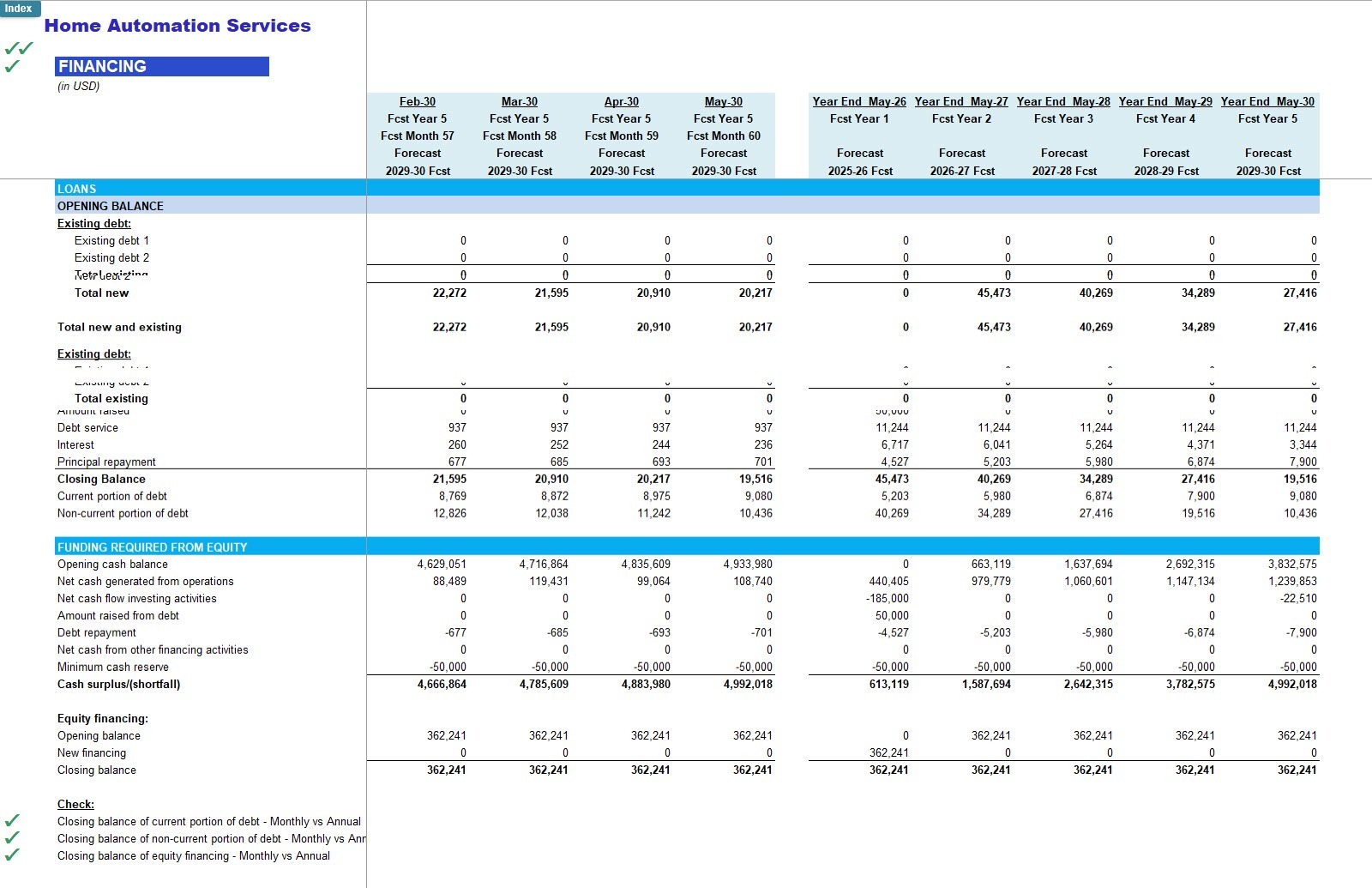
    • Financing and debt servicing
6. Advanced Analysis Tabs
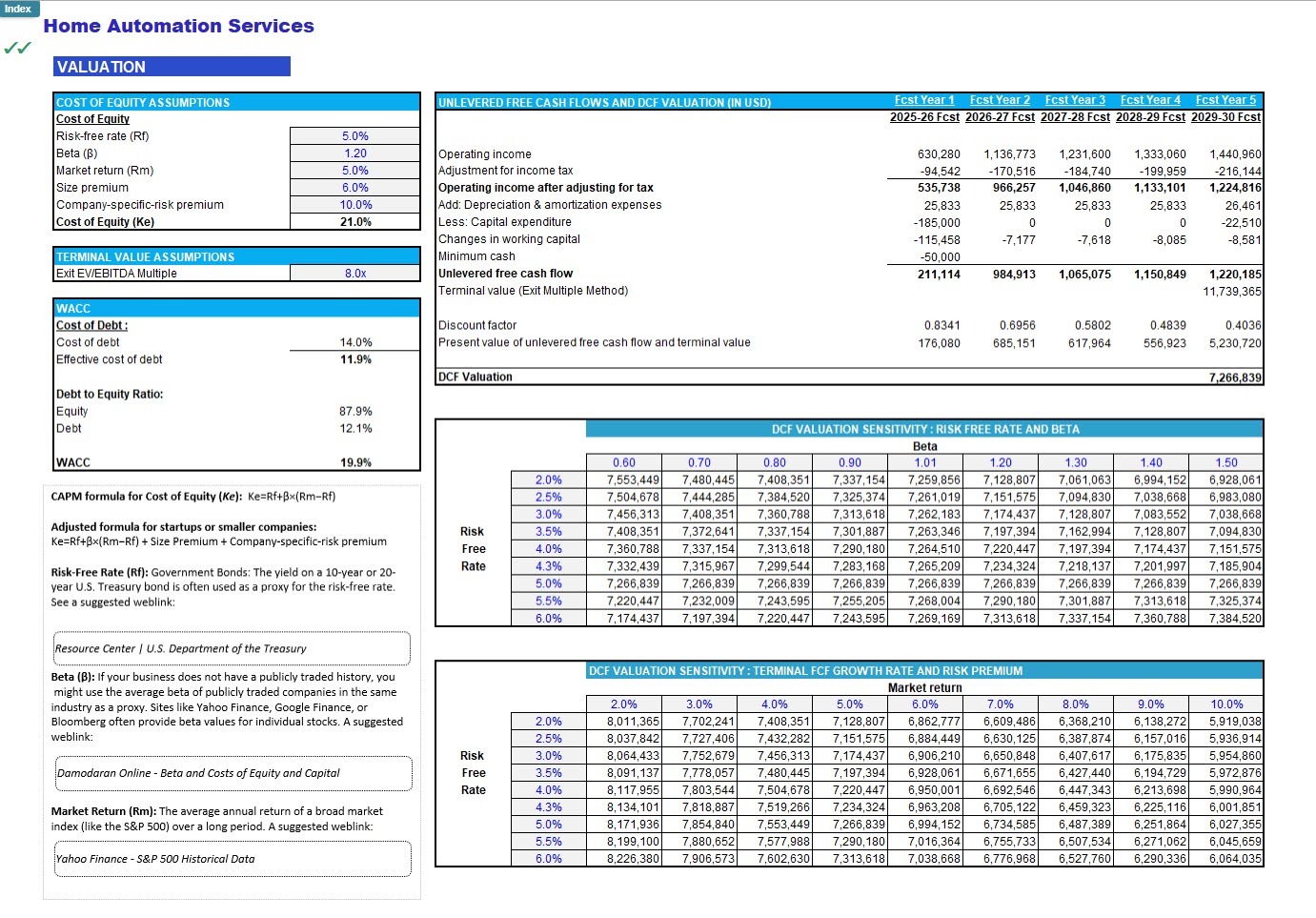
  • Valuation Model
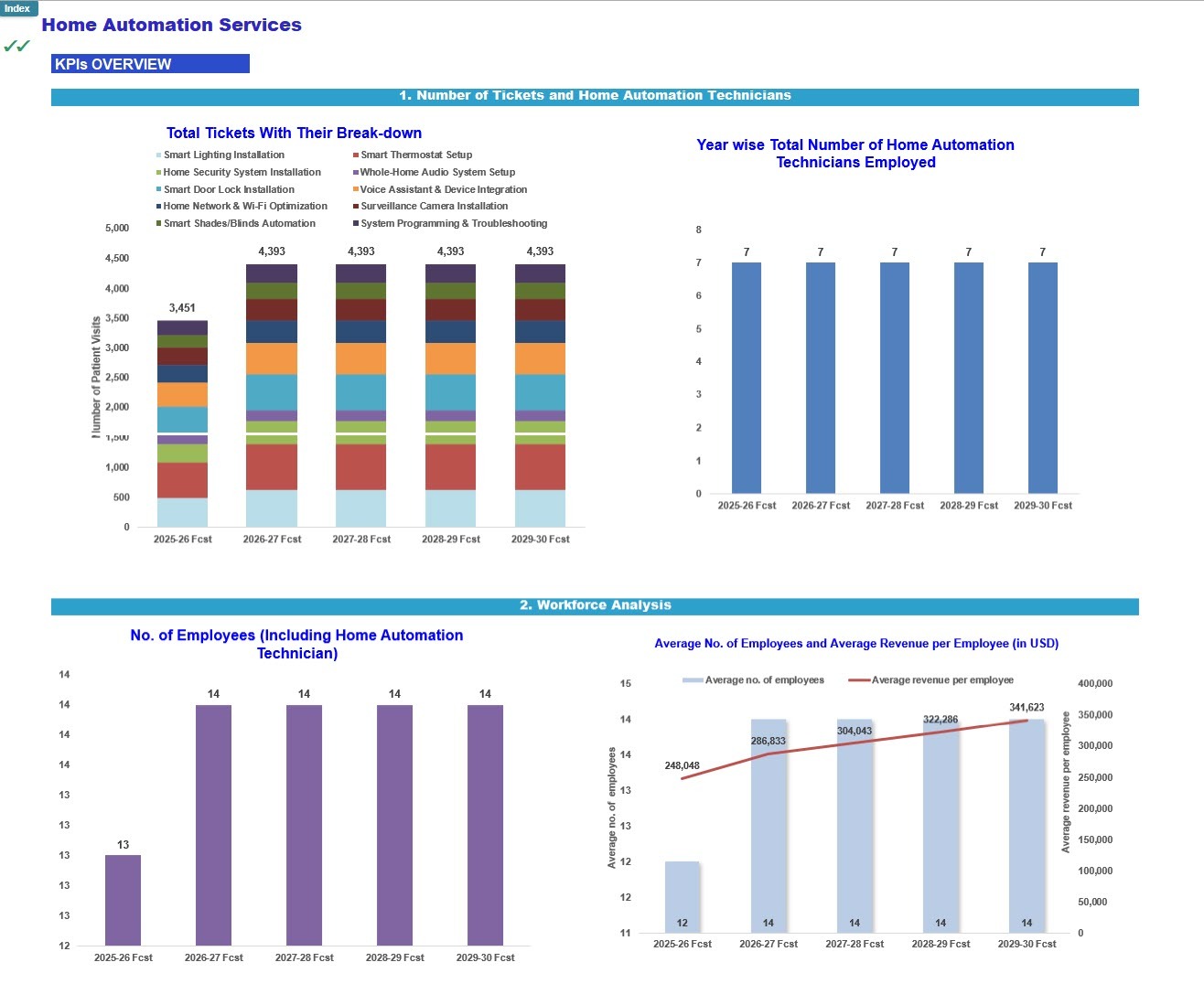
  • Key Performance Indicators (KPIs)
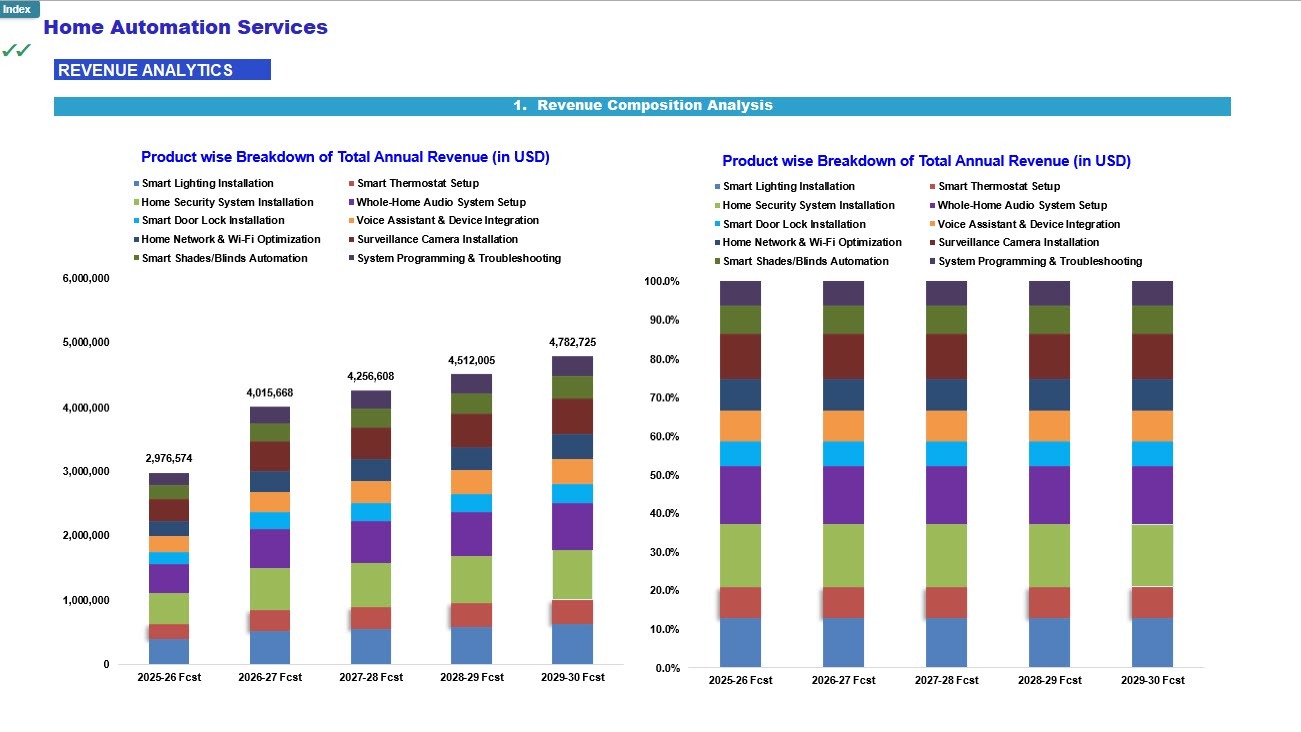
  • Revenue analytics
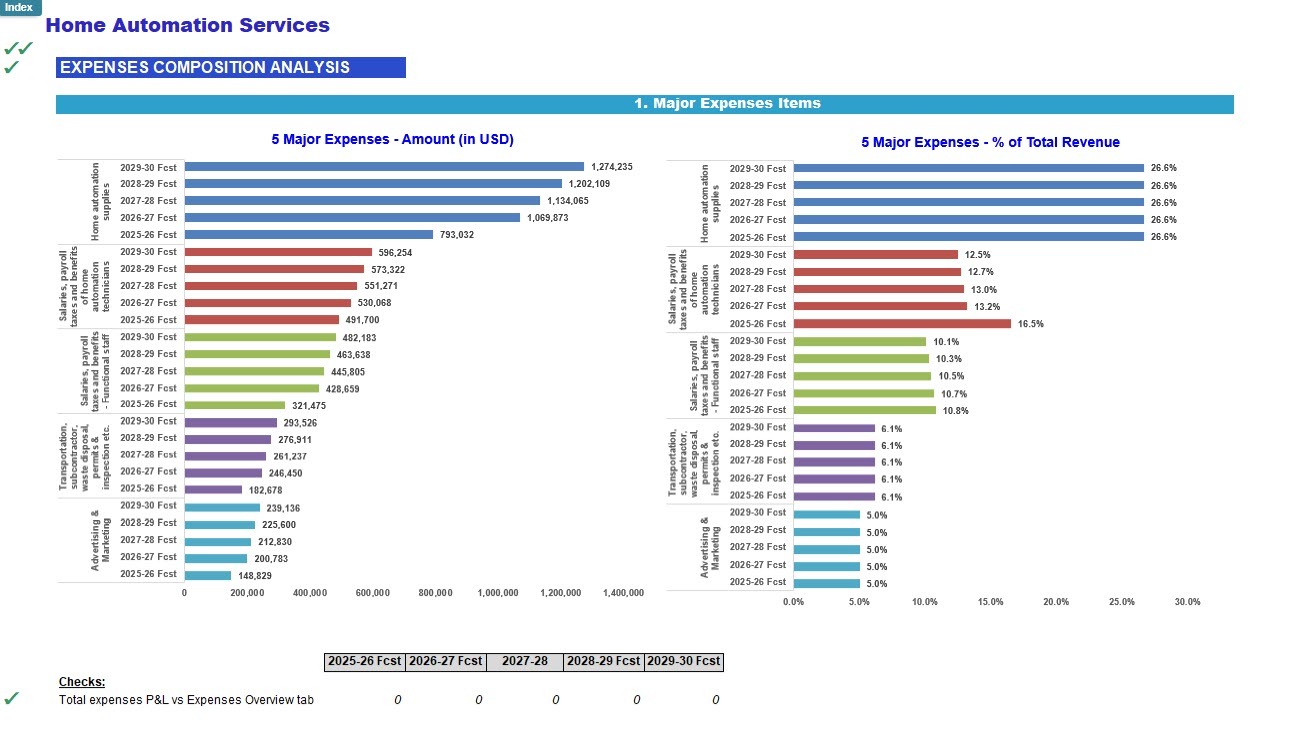
  • Expense breakdowns
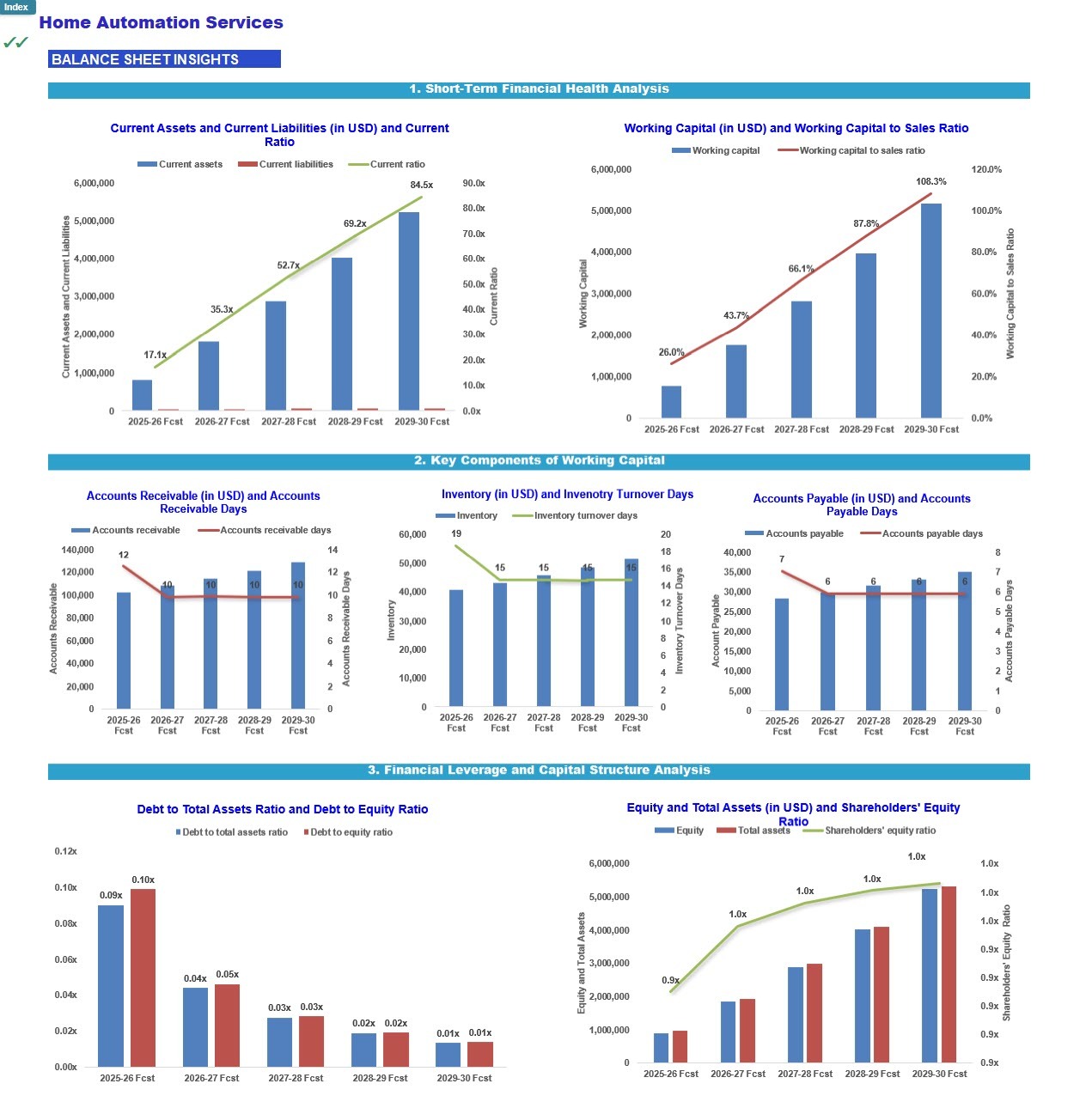
  • Balance Sheet insights
Technical Specifications
  • No VBA or Macros: Ensures maximum compatibility
  • Circular Reference-Free: Clean and stable calculations
  • Excel Compatibility: Fully functional with Excel 2010 and newer versions
Validation Checks
The model includes automated validation tools:
  • Green ticks (✓) confirm valid and complete inputs
  • Red crosses (✗) highlight missing data or structural errors
Why Choose This Model?
This financial model is specifically designed for home automation service businesses, offering comprehensive tools for financial planning, investor communications, and strategic growth execution. It adapts to the unique characteristics of the automation services industry—including labor-intensive delivery, customizable service packages, and evolving smart tech hardware/software integration.


Whether you're launching, fundraising, or scaling your business, this model provides clarity, financial control, and operational insight.


For customizations or professional support, our team is available to help tailor the model to your unique business setup and strategic goals.

This Best Practice includes
1 Excel Sheet

Acquire business license for $89.00

Add to cart

Add to bookmarks

Discuss

Further information

The objective of this downloadable best practice is to provide a robust, Excel-based financial model tailored for Home Automation Services businesses. It enables users to forecast revenue, manage costs, assess profitability, and support strategic planning, investment presentations, and funding applications with data-driven insights.

This downloadable best practice applies best to entrepreneurs, consultants, or small business owners planning to launch or scale a Home Automation Services business. It is ideal for project-based service providers offering on-site smart device installations, system integration, or home tech upgrades without recurring revenue streams.


0.0 / 5 (0 votes)

please wait...