

Originally published: 06/02/2025 11:31
Publication number: ELQ-60609-1
View all versions & Certificate
Publication number: ELQ-60609-1
View all versions & Certificate

Pet Insurance Financial Model
A comprehensive editable 5-Year 3-Statement MS Excel spreadsheet for tracking Pet Insurance finances.
 by AllFinancialModels
AllFinancialModels offer a curated selection of high-quality yet financial model templates designed to support a wide range of business needs.Follow
Description
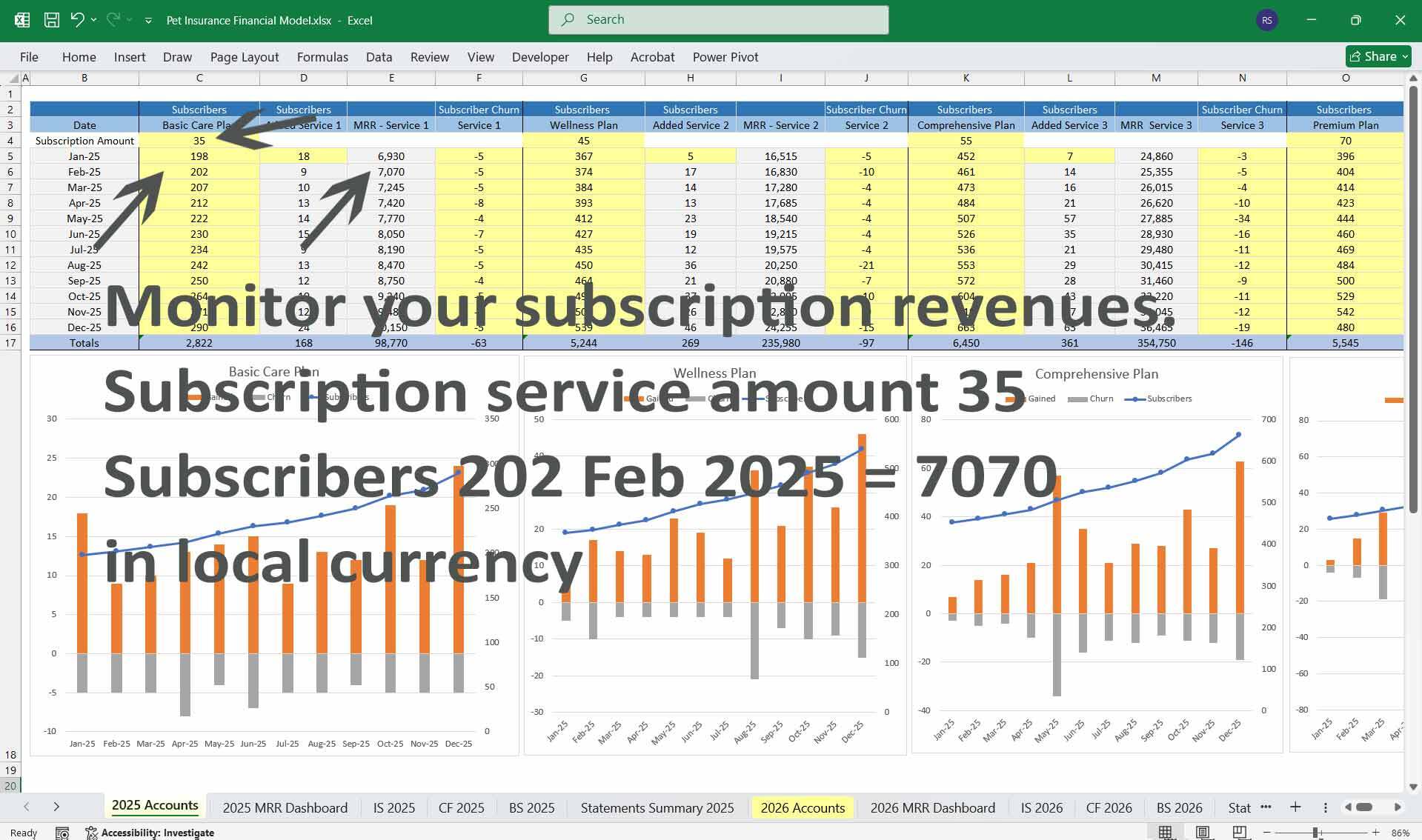
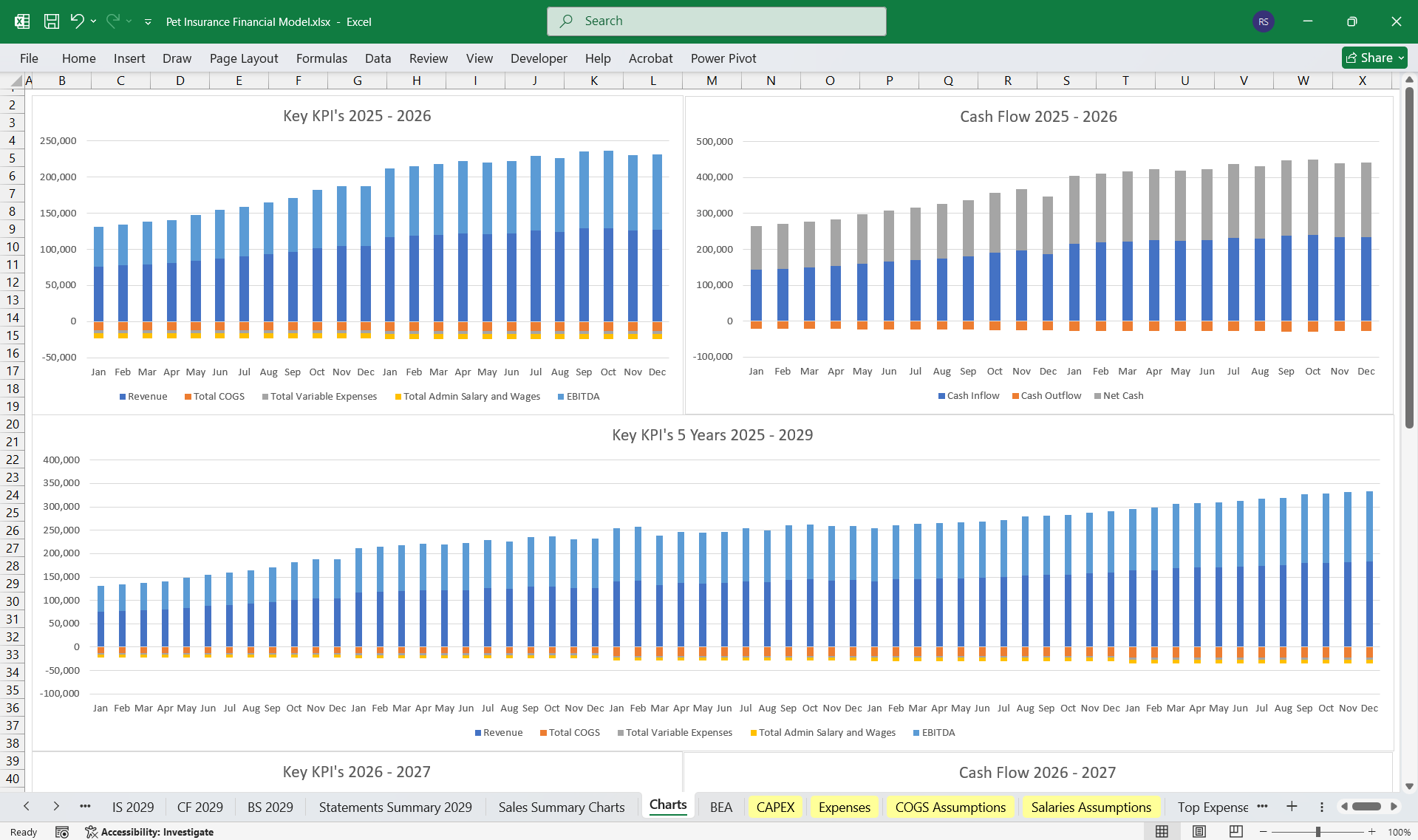
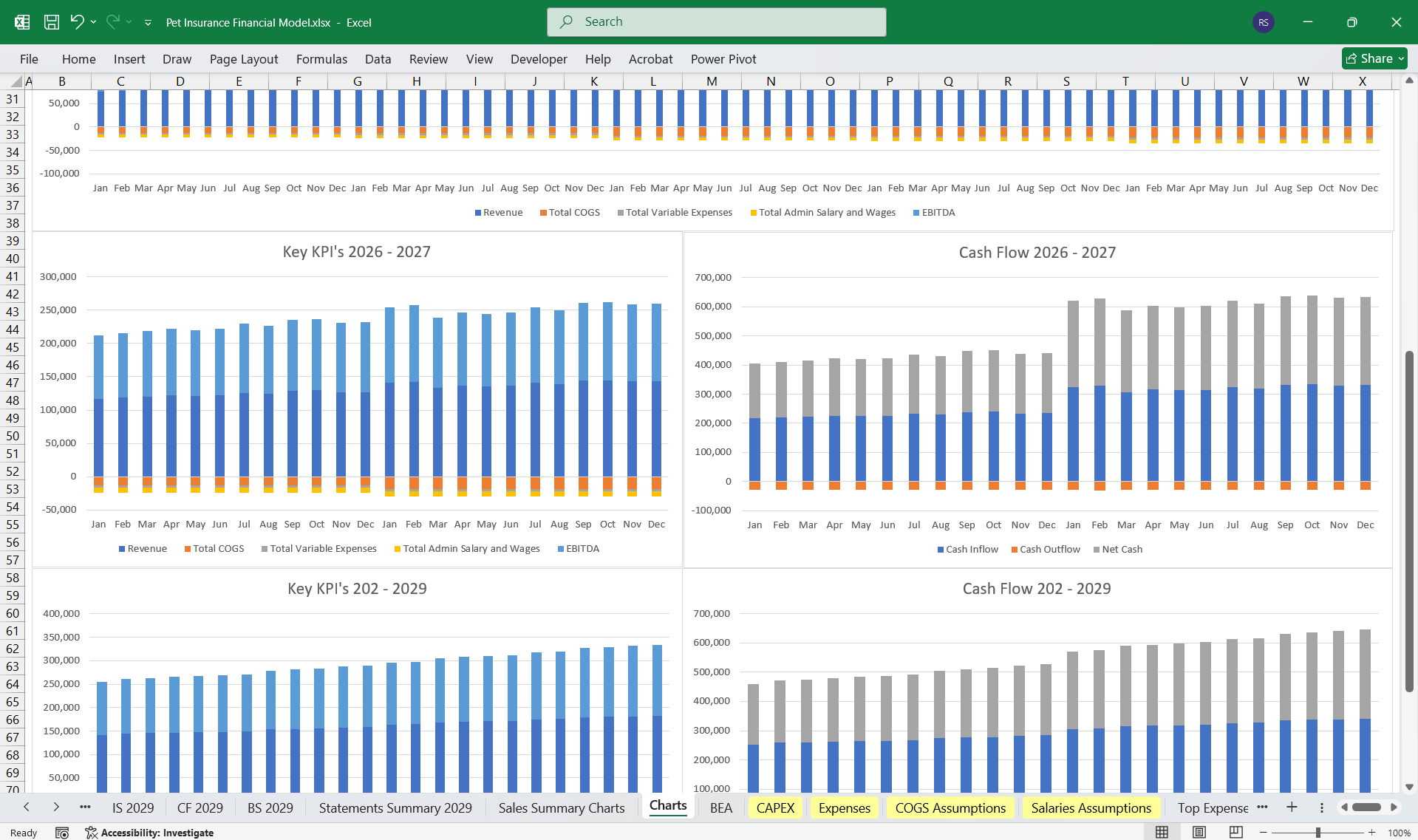
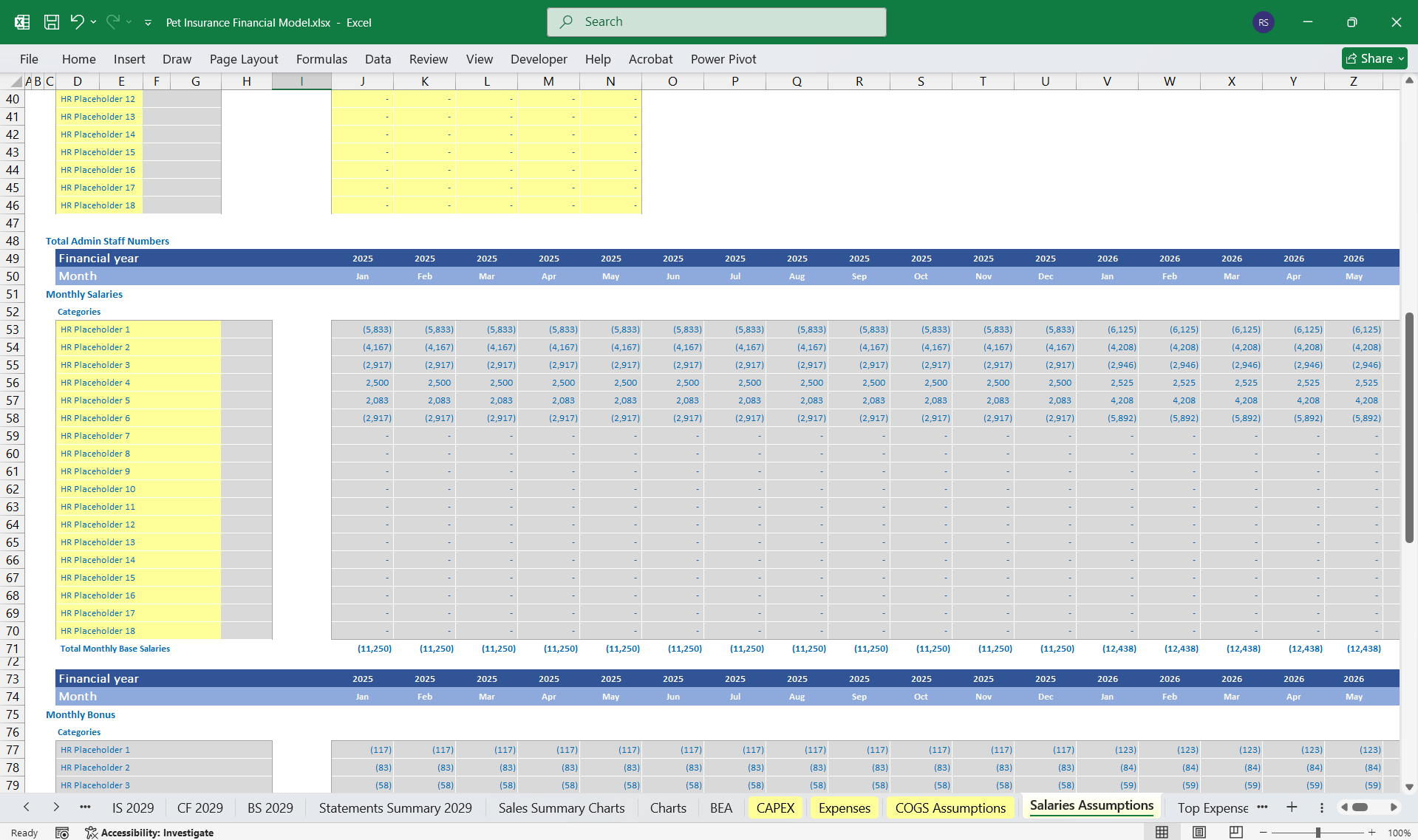
A 3-Statement Financial Model for a Pet Insurance Company integrates the Income Statement, Cash Flow Statement, and Balance Sheet to provide a comprehensive view of the company’s financial performance, cash flows, and financial position. Below is a detailed description of the model, including a 6-tier subscription plan structure.
1. Income Statement
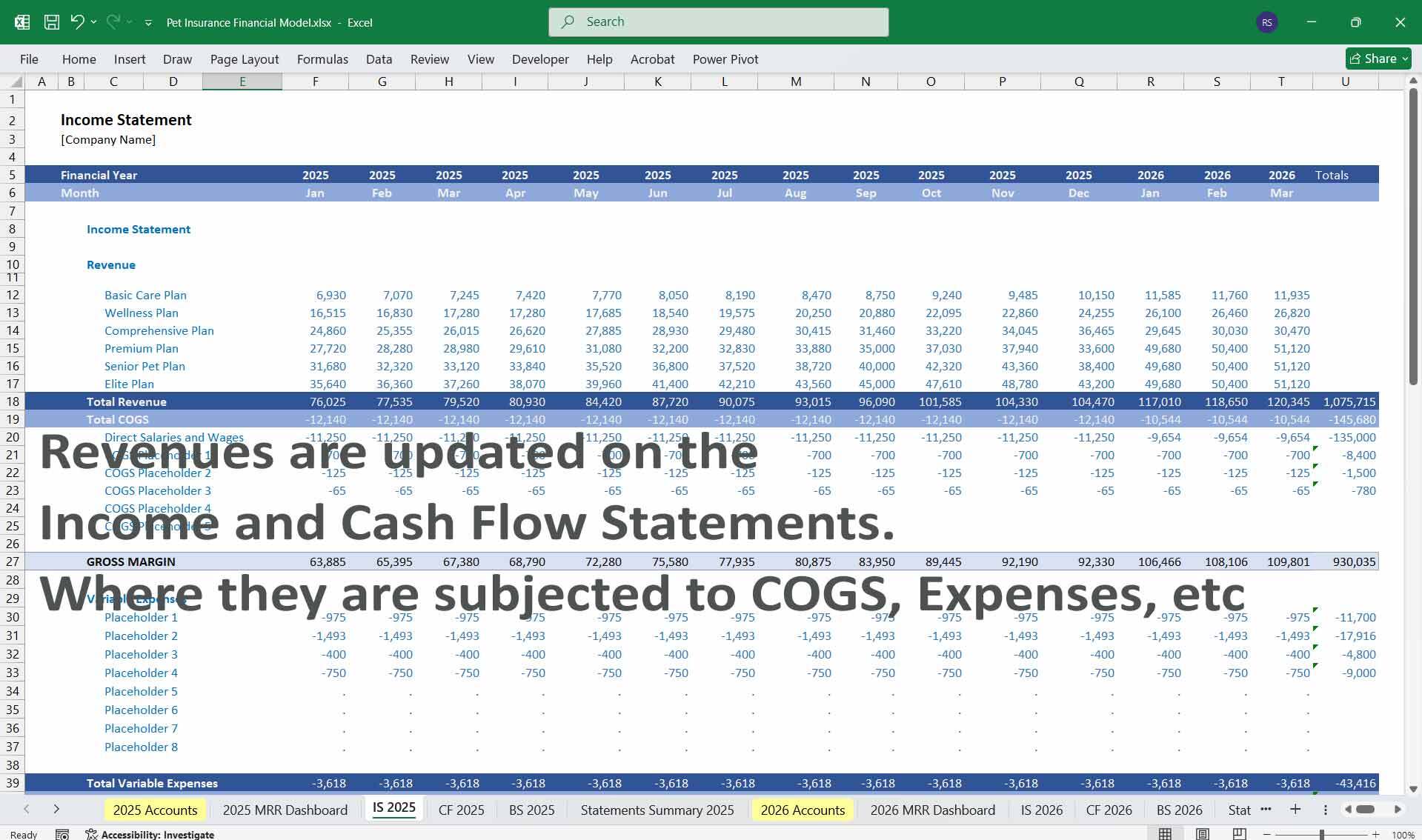
The Income Statement reflects the company’s revenues, expenses, and profitability over a specific period.
Revenue
2. Cash Flow Statement
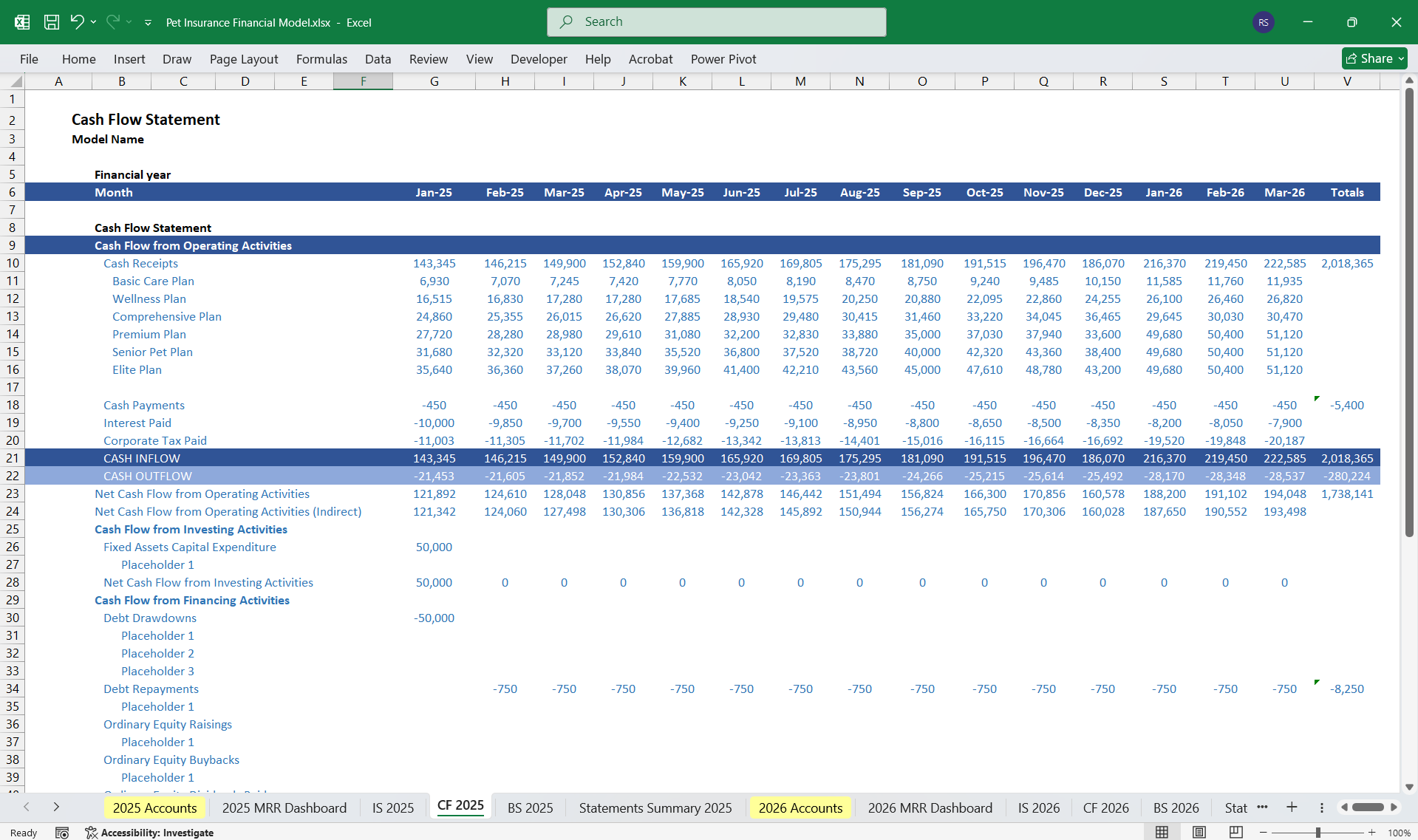
The Cash Flow Statement tracks the company’s cash inflows and outflows, divided into operating, investing, and financing activities.
Operating Activities
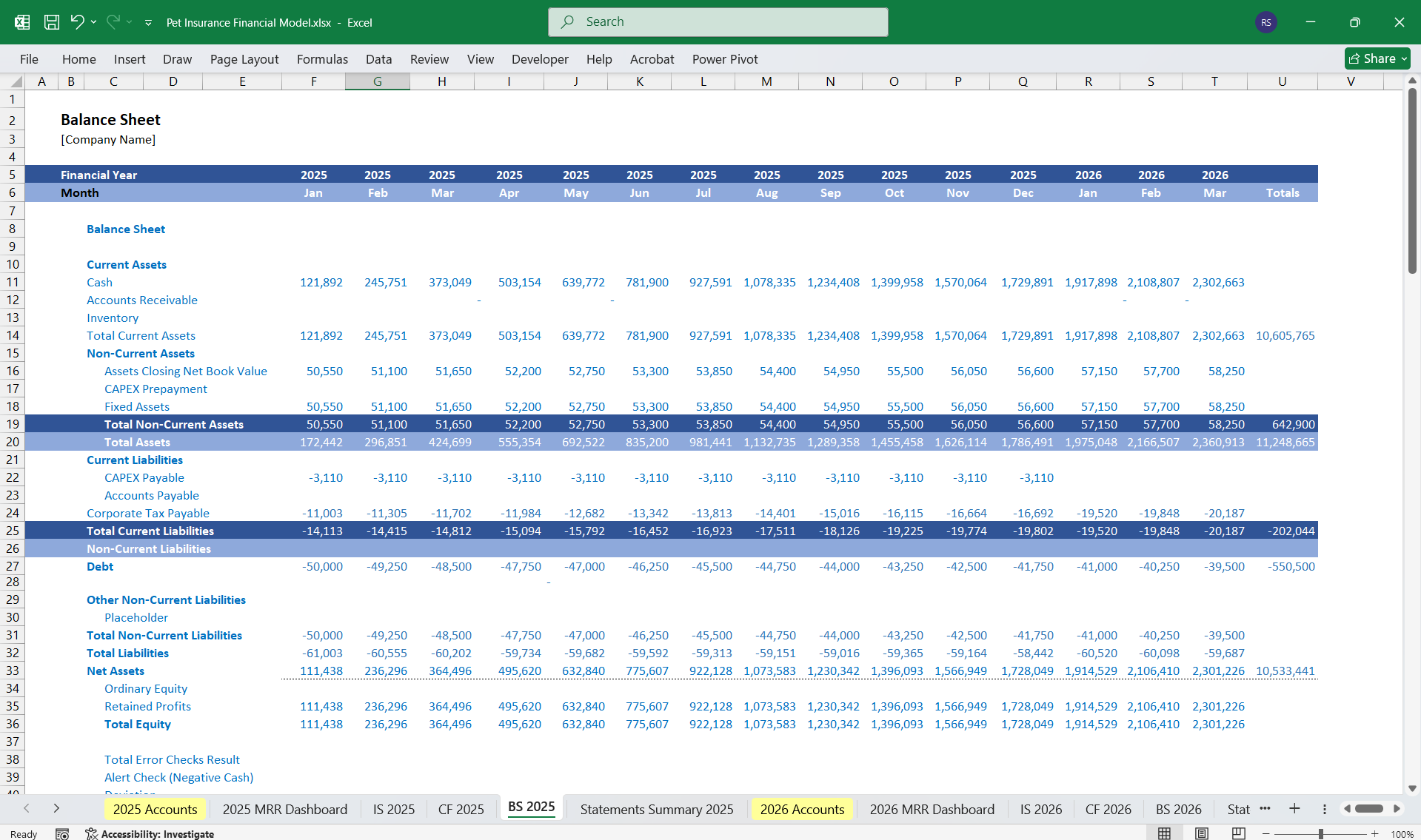
3. Balance Sheet
The Balance Sheet provides a snapshot of the company’s assets, liabilities, and equity at a specific point in time.
Assets
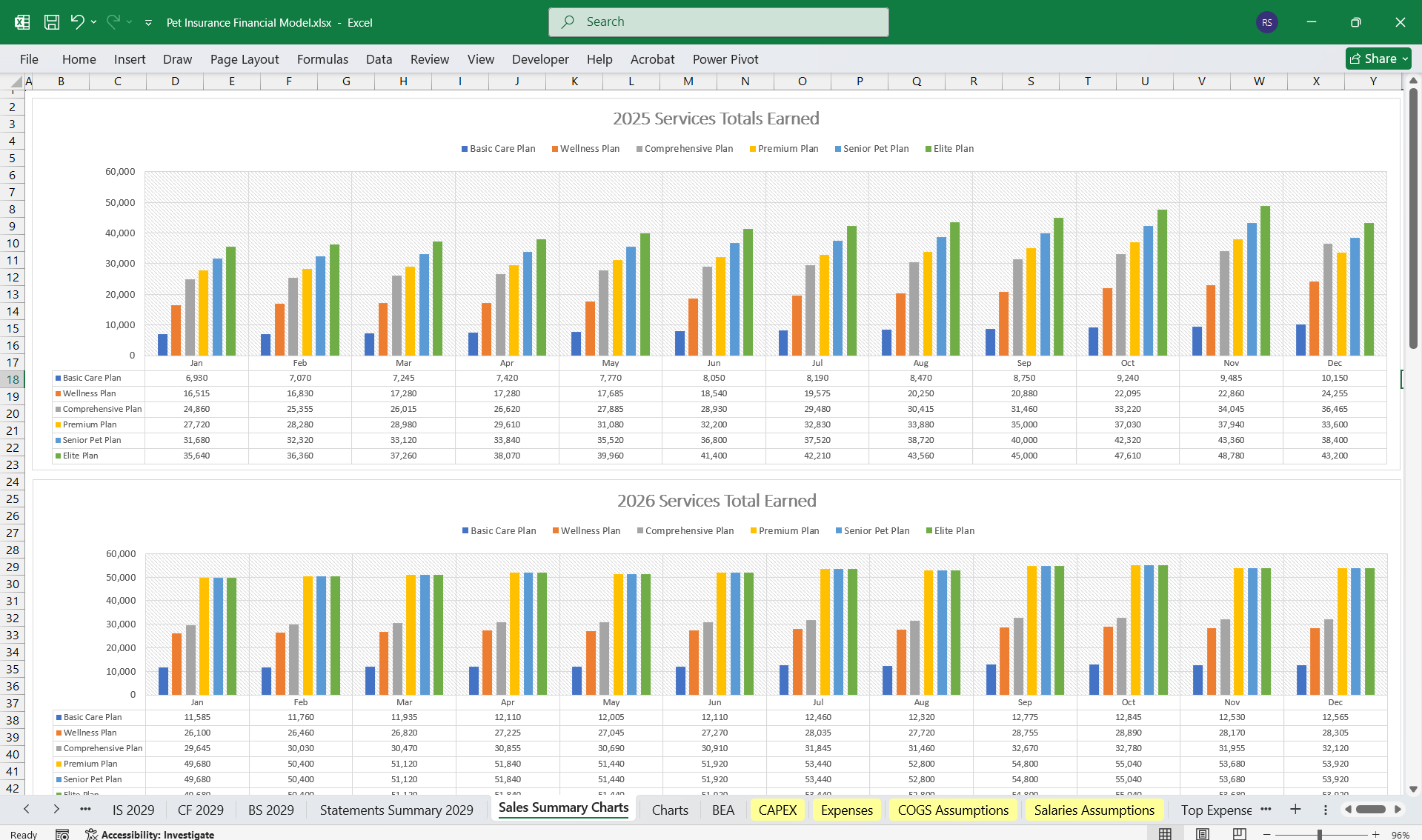
6-Tier Subscription Plan Details
The subscription tiers are designed to cater to different customer segments, offering varying levels of coverage and pricing.
Basic Care Plan
Key Metrics and Assumptions
A 3-Statement Financial Model for a Pet Insurance Company integrates the Income Statement, Cash Flow Statement, and Balance Sheet to provide a comprehensive view of the company’s financial performance, cash flows, and financial position. Below is a detailed description of the model, including a 6-tier subscription plan structure.
1. Income Statement
The Income Statement reflects the company’s revenues, expenses, and profitability over a specific period.
Revenue
- Subscription Revenue:
- Revenue from 6-tier subscription plans (detailed below).
- Recognized monthly or annually based on the billing cycle.
- Example tiers:
- Tier 1 (Basic Care Plan).
- Tier 2 (Wellness Plan)
- Tier 3 (Comprehensive Plan)
- Tier 4 (Premium Plan)
- Tier 5 (Senior Pet Plan)
- Tier 6 (Elite Plan)
- Tier 1 (Basic Care Plan).
- Revenue from 6-tier subscription plans (detailed below).
- Additional Revenue:
- One-time enrollment fees.
- Late payment fees.
- Revenue from add-ons (e.g., wellness plans, multi-pet discounts).
- One-time enrollment fees.
- Claims Paid:
- Cost of reimbursing customers for veterinary expenses.
- Claims = Number of claims × Average claim amount.
- Cost of reimbursing customers for veterinary expenses.
- Underwriting Costs:
- Costs associated with assessing risk and setting premiums.
- Costs associated with assessing risk and setting premiums.
- Customer Acquisition Costs (CAC):
- Marketing and sales expenses to acquire new subscribers.
- Marketing and sales expenses to acquire new subscribers.
- Marketing and Advertising:
- Digital ads, partnerships, and promotions.
- Digital ads, partnerships, and promotions.
- Salaries and Benefits:
- Compensation for employees (e.g., customer service, claims processors).
- Compensation for employees (e.g., customer service, claims processors).
- Technology and Software:
- Costs for maintaining the subscription platform, CRM, and claims management systems.
- Costs for maintaining the subscription platform, CRM, and claims management systems.
- General and Administrative (G&A):
- Office rent, utilities, and other overhead costs.
- Office rent, utilities, and other overhead costs.
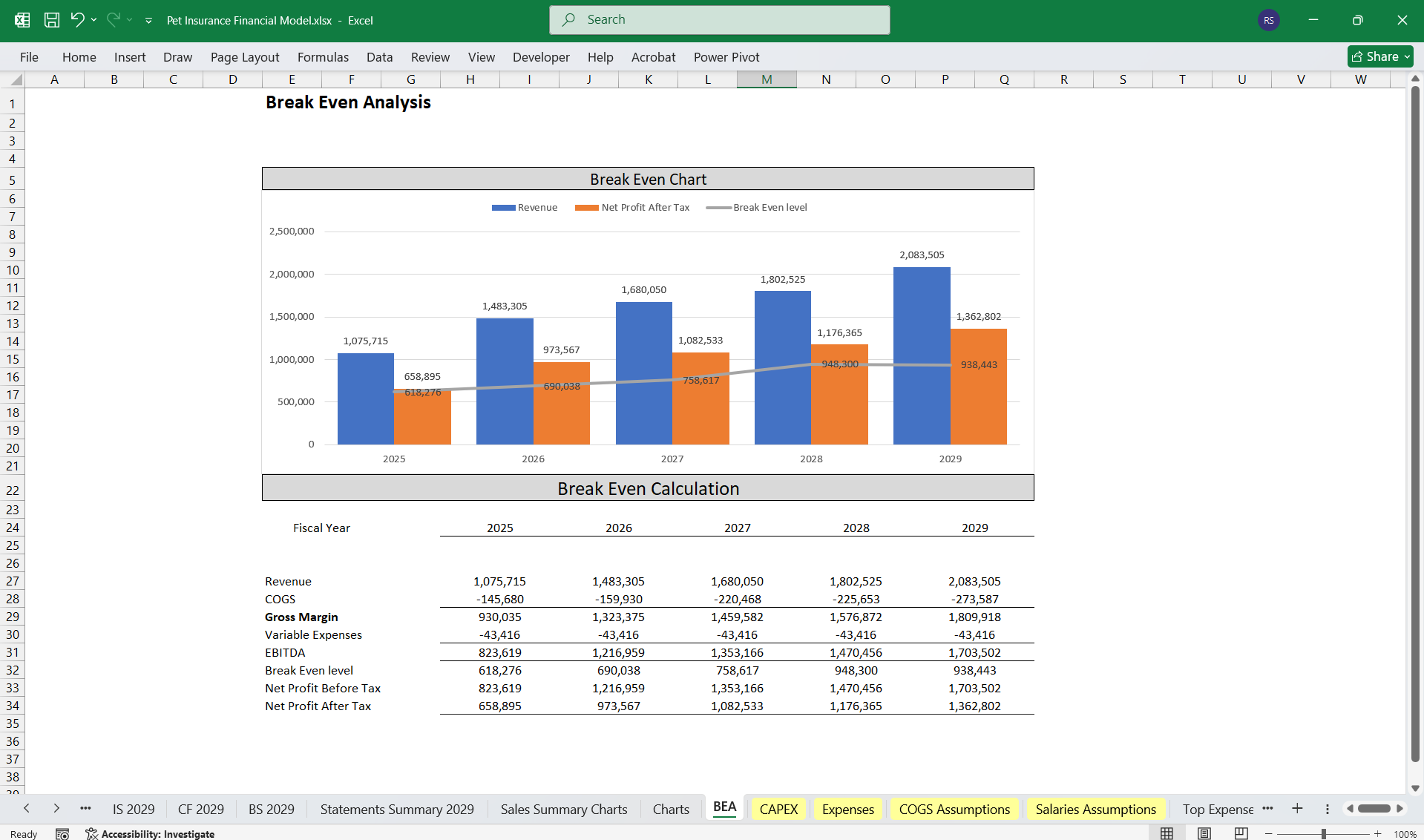
- Gross Profit = Revenue - Cost of Revenue.
- Operating Income = Gross Profit - Operating Expenses.
- Net Income = Operating Income - Interest and Taxes.
2. Cash Flow Statement
The Cash Flow Statement tracks the company’s cash inflows and outflows, divided into operating, investing, and financing activities.
Operating Activities
- Cash Inflows:
- Subscription payments from customers.
- One-time fees and add-ons.
- Subscription payments from customers.
- Cash Outflows:
- Claims paid to policyholders.
- Payments for marketing, salaries, and other operating expenses.
- Claims paid to policyholders.
- Cash Outflows:
- Investments in technology (e.g., platform upgrades).
- Purchase of office equipment or software.
- Investments in technology (e.g., platform upgrades).
- Cash Inflows:
- Sale of assets (if applicable).
- Sale of assets (if applicable).
- Cash Inflows:
- Proceeds from equity financing or debt issuance.
- Proceeds from equity financing or debt issuance.
- Cash Outflows:
- Dividend payments (if applicable).
- Repayment of debt.
- Dividend payments (if applicable).
- Net Cash Flow = Cash from Operating Activities + Cash from Investing Activities + Cash from Financing Activities.
3. Balance Sheet
The Balance Sheet provides a snapshot of the company’s assets, liabilities, and equity at a specific point in time.
Assets
- Current Assets:
- Cash and cash equivalents.
- Accounts receivable (e.g., unpaid subscription fees).
- Prepaid expenses (e.g., annual subscriptions paid upfront).
- Cash and cash equivalents.
- Non-Current Assets:
- Property, plant, and equipment (e.g., office space, computers).
- Intangible assets (e.g., software licenses).
- Property, plant, and equipment (e.g., office space, computers).
- Current Liabilities:
- Accounts payable (e.g., unpaid vendor invoices).
- Accrued expenses (e.g., salaries, claims payable).
- Deferred revenue (e.g., subscription fees collected in advance).
- Accounts payable (e.g., unpaid vendor invoices).
- Non-Current Liabilities:
- Long-term debt (if applicable).
- Long-term debt (if applicable).
- Shareholder’s Equity:
- Common stock.
- Retained earnings (accumulated net income).
6-Tier Subscription Plan Details
The subscription tiers are designed to cater to different customer segments, offering varying levels of coverage and pricing.
Basic Care Plan
- Target Audience: Budget-conscious pet owners.
- Coverage:
- Accident-only coverage (e.g., injuries, poisoning, broken bones).
- Emergency vet visits.
- 24/7 telehealth support for basic pet health questions.
- Accident-only coverage (e.g., injuries, poisoning, broken bones).
- Perks:
- Discounts on pet wellness products.
- Access to a pet health resource library.
- Discounts on pet wellness products.
- Price: Low monthly fee.
- Target Audience: Pet owners focused on preventive care.
- Coverage:
- Routine check-ups and vaccinations.
- Flea, tick, and heartworm prevention.
- Annual dental cleaning.
- Routine check-ups and vaccinations.
- Perks:
- Discounts on pet food and supplements.
- Free annual wellness exam.
- Discounts on pet food and supplements.
- Price: Moderate monthly fee.
- Target Audience: Pet owners seeking balanced coverage for accidents and illnesses.
- Coverage:
- Accident and illness coverage (e.g., surgeries, cancer treatments, infections).
- Diagnostic tests (X-rays, blood work, etc.).
- Prescription medications.
- Accident and illness coverage (e.g., surgeries, cancer treatments, infections).
- Perks:
- Access to a network of preferred veterinarians.
- Behavioral therapy coverage.
- Access to a network of preferred veterinarians.
- Price: Mid-to-high monthly fee.
- Target Audience: Pet owners who want extensive coverage and peace of mind.
- Coverage:
- Full accident, illness, and wellness coverage.
- Alternative therapies (e.g., acupuncture, chiropractic care).
- Hereditary and congenital condition coverage.
- Full accident, illness, and wellness coverage.
- Perks:
- 24/7 emergency vet hotline.
- Coverage for boarding fees if the owner is hospitalized.
- 24/7 emergency vet hotline.
- Price: Higher monthly fee.
- Target Audience: Owners of older pets.
- Coverage:
- Age-related conditions (e.g., arthritis, diabetes, kidney disease).
- Chronic illness management.
- End-of-life care (euthanasia, cremation).
- Age-related conditions (e.g., arthritis, diabetes, kidney disease).
- Perks:
- Discounts on senior-specific pet food and supplements.
- Access to geriatric pet care specialists.
- Discounts on senior-specific pet food and supplements.
- Price: Moderate-to-high monthly fee.
- Target Audience: High-income pet owners who want tailored coverage.
- Coverage:
- Fully customizable options (e.g., add-ons for exotic pets, travel insurance, or grooming).
- Unlimited annual coverage with no caps.
- Coverage for pre-existing conditions (with limitations).
- Fully customizable options (e.g., add-ons for exotic pets, travel insurance, or grooming).
- Perks:
- Concierge vet service (at-home visits).
- Priority claims processing.
- Luxury pet care perks (e.g., pet spa discounts, personalized pet ID tags).
- Concierge vet service (at-home visits).
- Price: Premium monthly fee.
Key Metrics and Assumptions
- Customer Acquisition Cost (CAC): Cost to acquire a new subscriber.
- Customer Lifetime Value (CLTV): Total revenue expected from a subscriber over their lifetime.
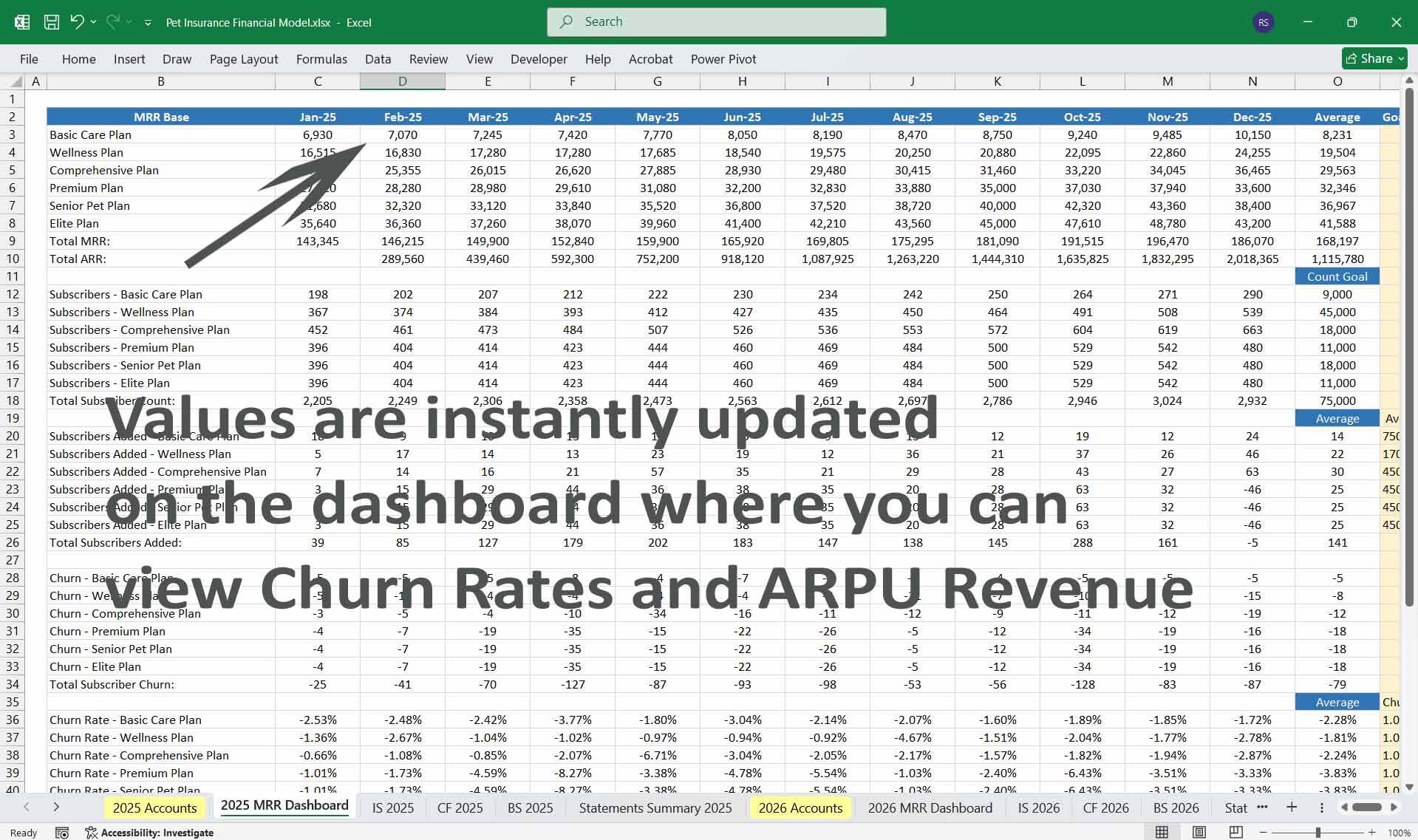
- Churn Rate: Percentage of subscribers who cancel their plans.
- Claims Ratio: Claims paid as a percentage of subscription revenue.
- Average Claim Amount: Average cost of a claim.
- Subscribers: 10,000 total (Tier 1: 2,000, Tier 2: 3,000, Tier 3: 2,500, Tier 4: 1,500, Tier 5: 800, Tier 6: 200).
- Monthly Revenue: $290,000 (calculated as sum of subscribers × tier price).
- Annual Revenue: $3.48 million.
- Claims Paid: 70% of revenue (industry standard for pet insurance).
- Net Income: Revenue - Claims - Operating Expenses.
This Best Practice includes
1 Excel Financial Model
Further information
Provides thorough oversight, tracking, and reporting of Pet Insurance finances, including updates on budget utilisation and projections.