Publication number: ELQ-54507-1
View all versions & Certificate

Risk Governance for construction
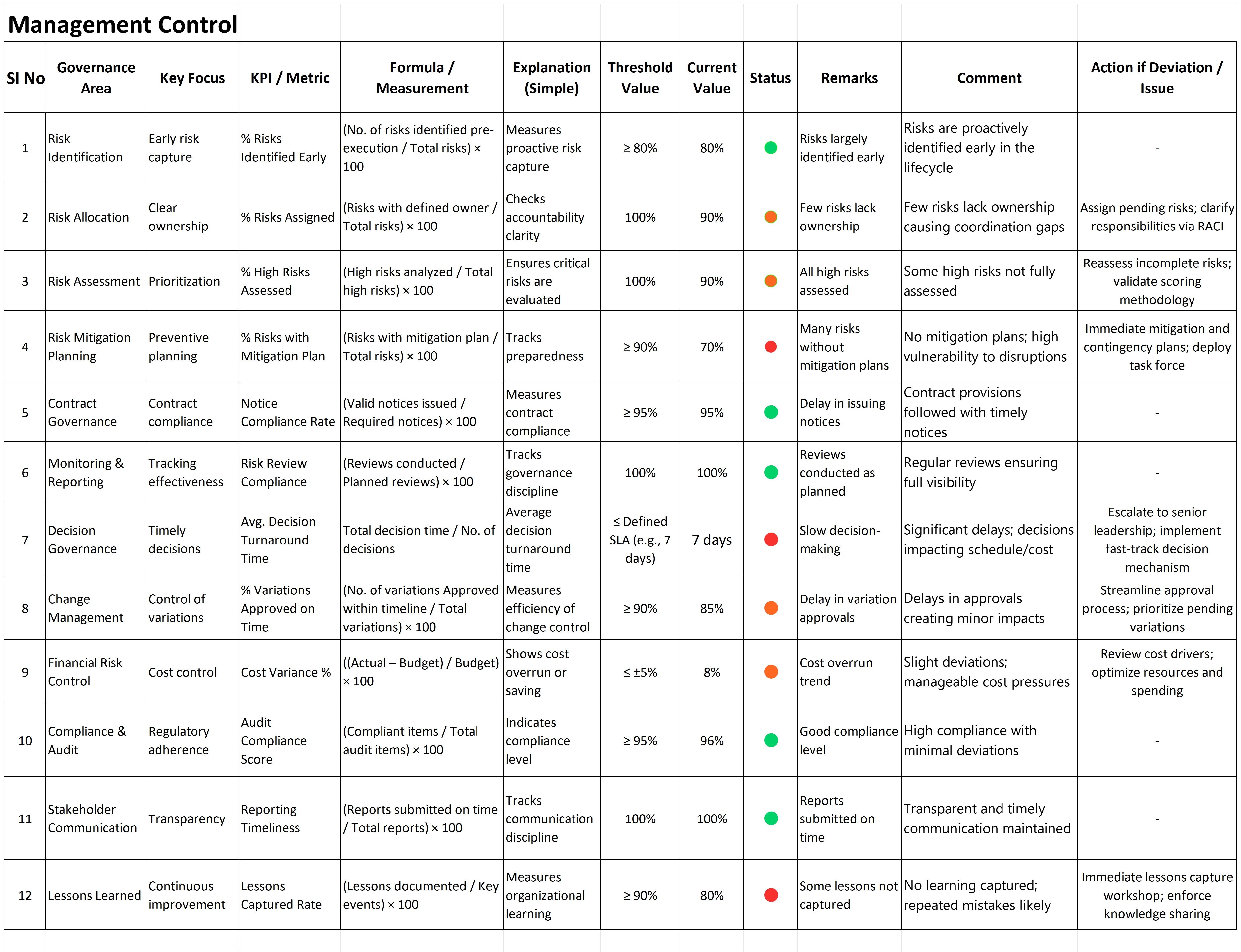
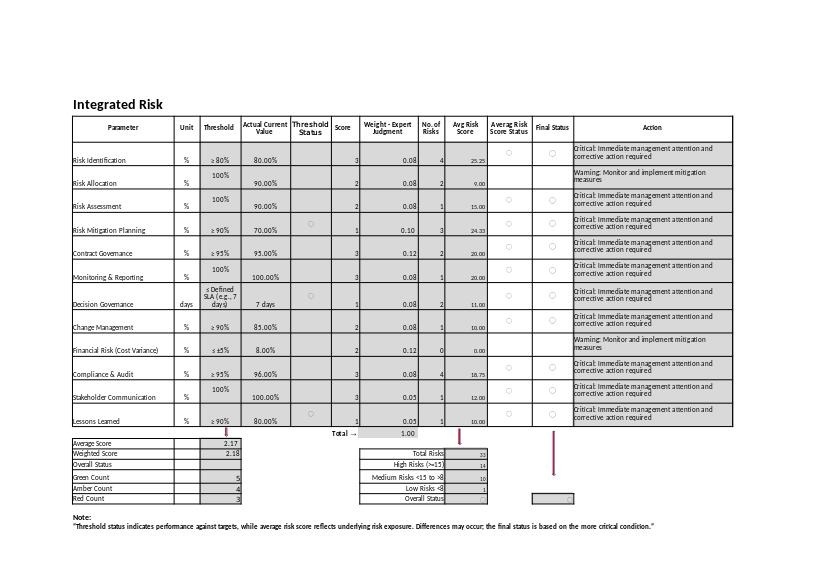
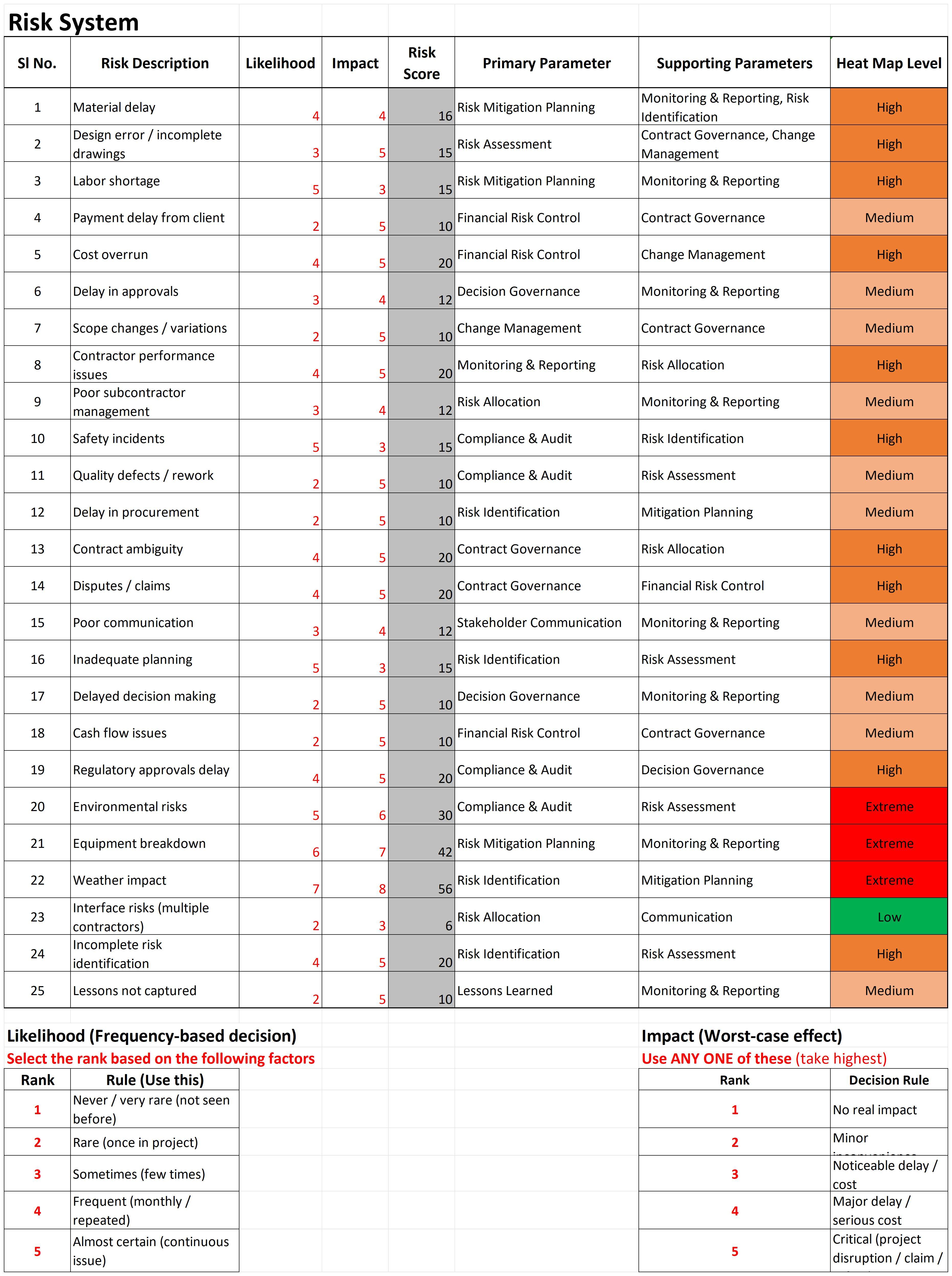
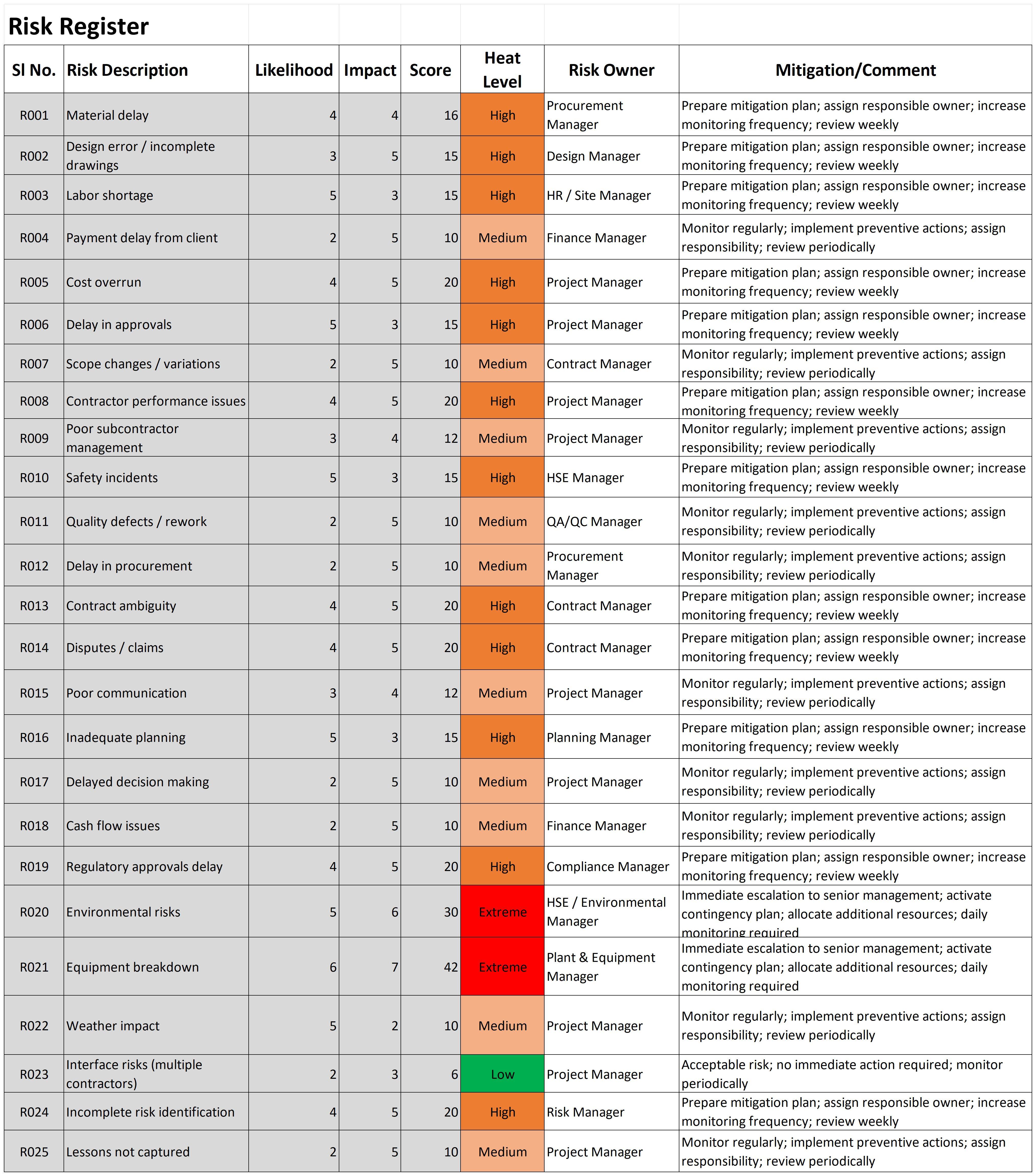
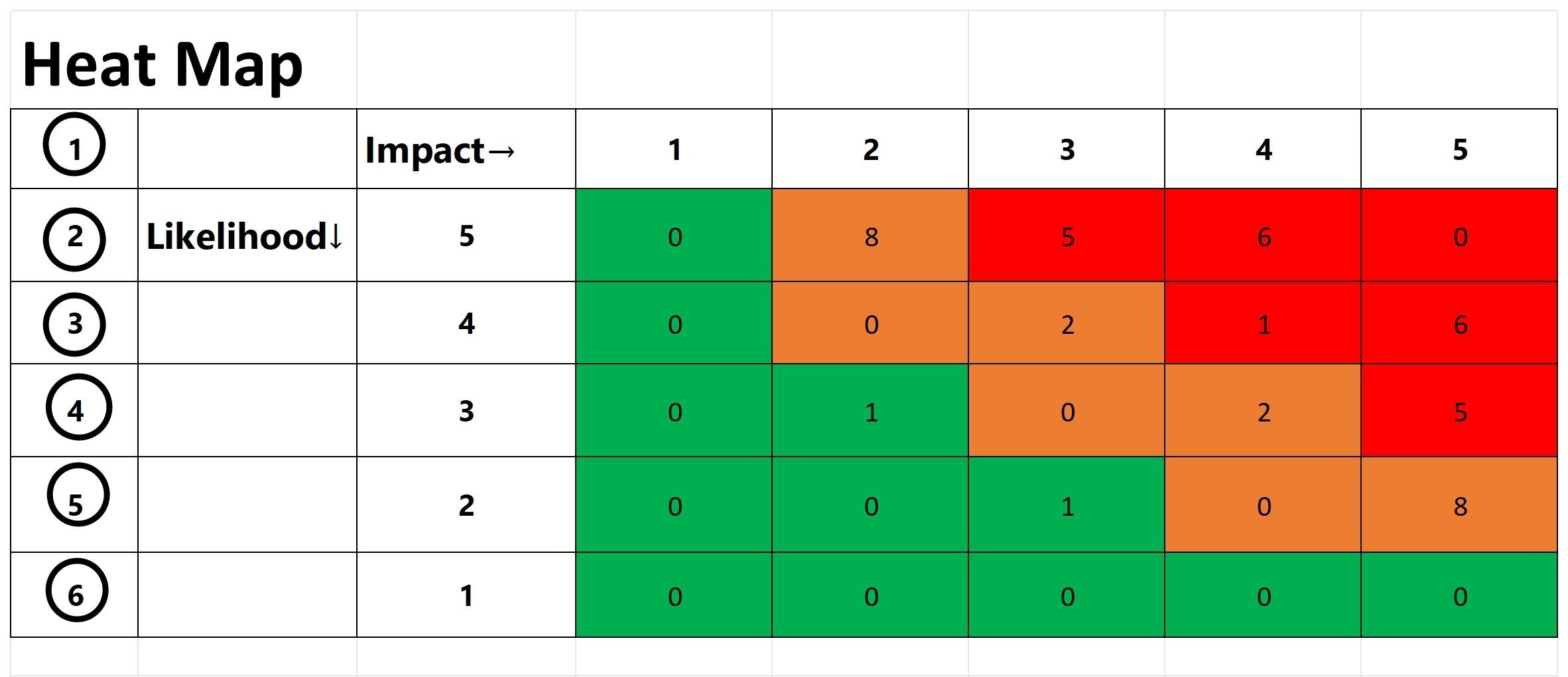
Risk governance in construction ensures risks are identified, assessed, allocated and monitored within the contract to protect time, cost, quality and safety.
 by Abdul Ghafur BE MD CCM PMP PBA
Project Management Professional | Board-Level Dashboard Expert Project Dashboard ExpertFollow
Further information
Objectives of the Dashboard
To provide a single source of truth for project performance
To enable real-time monitoring of key project parameters
To support informed decision-making at leadership level
To identify risks and issues early for timely action
To ensure alignment with contract requirements
To improve transparency and accountability among stakeholders
To track progress against time, cost, quality, and safety targets
To facilitate proactive management rather than reactive control
Conditions for Downloads
Only authorized users are permitted to download the dashboard or reports
Downloads must be used strictly for official project purposes
Data should be current and verified before downloading
Users must ensure confidentiality and data security at all times
Any modification to downloaded data must not alter original records
Version control must be maintained to avoid use of outdated information
Sharing of downloaded files is restricted to approved stakeholders only
All downloads should comply with contractual and organizational policies
Conditions Where This Downloadable Best Practice May Not Apply
When contract provisions override the recommended practices
In projects with unique contractual, legal, or regulatory requirements
Where project scale or complexity requires customized management approaches
In cases of incomplete, outdated, or unreliable input data
When client-specific procedures or systems differ from this framework
During emergency or exceptional situations requiring immediate decisions outside standard processes
Where stakeholder agreements mandate alternative methods or reporting formats