

Originally published: 20/01/2025 08:08
Publication number: ELQ-82346-1
View all versions & Certificate
Publication number: ELQ-82346-1
View all versions & Certificate

Content Creation (Writing) Company Financial Model
A comprehensive editable, 5 Year 3 statement MS Excel spreadsheet for tracking Content Creation Company finances
 by AllFinancialModels
AllFinancialModels offer a curated selection of high-quality yet financial model templates designed to support a wide range of business needs.Follow
Description
#### **1. Overview**
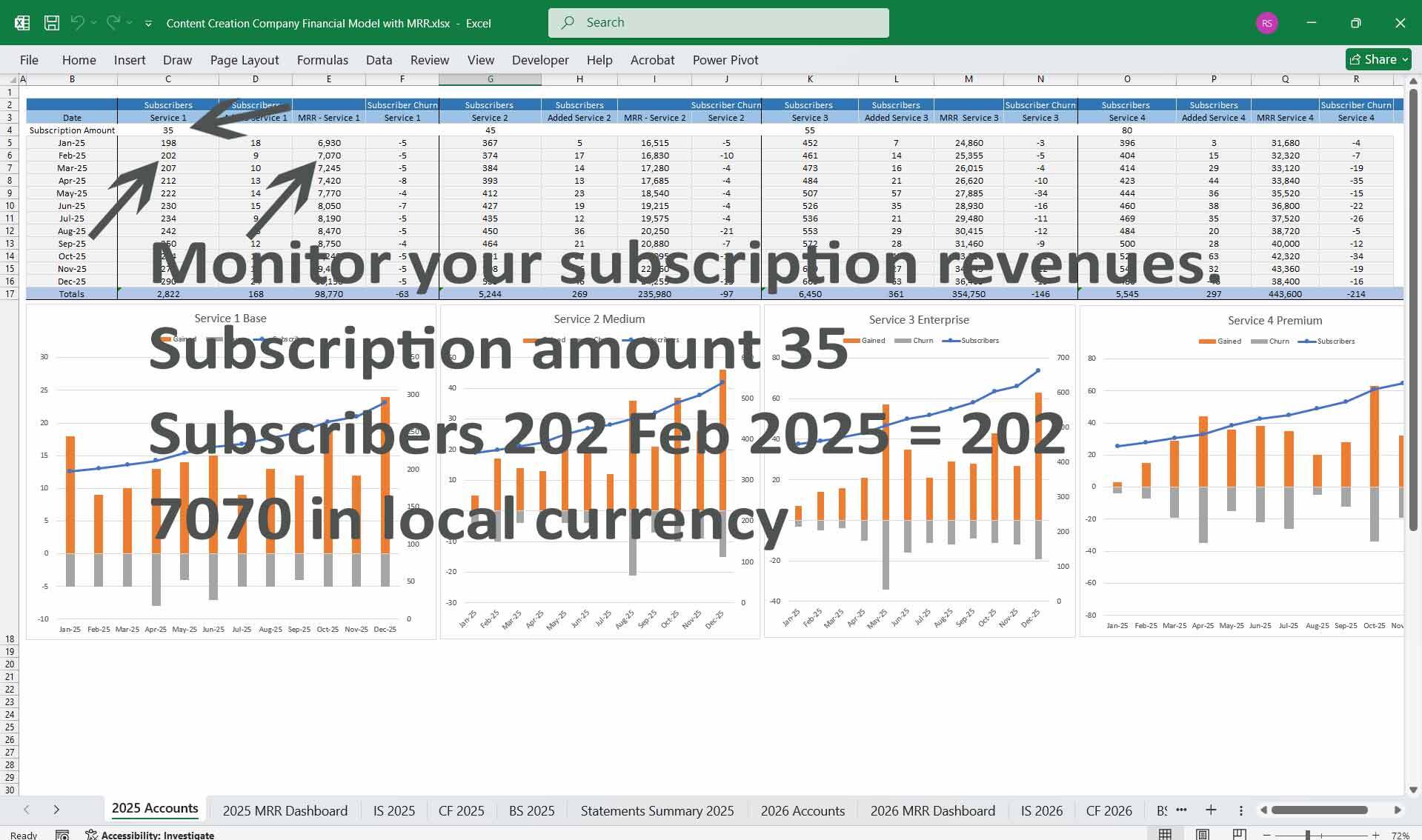
This financial model provides a comprehensive structure for evaluating a content creation company's financial health and potential. The model focuses on key revenue streams, operational expenses, cash flow dynamics, and asset-liability management. The subscription component, a critical feature, offers detailed sections for **6-tier subscription plan**, reflecting diverse customer segments.
---
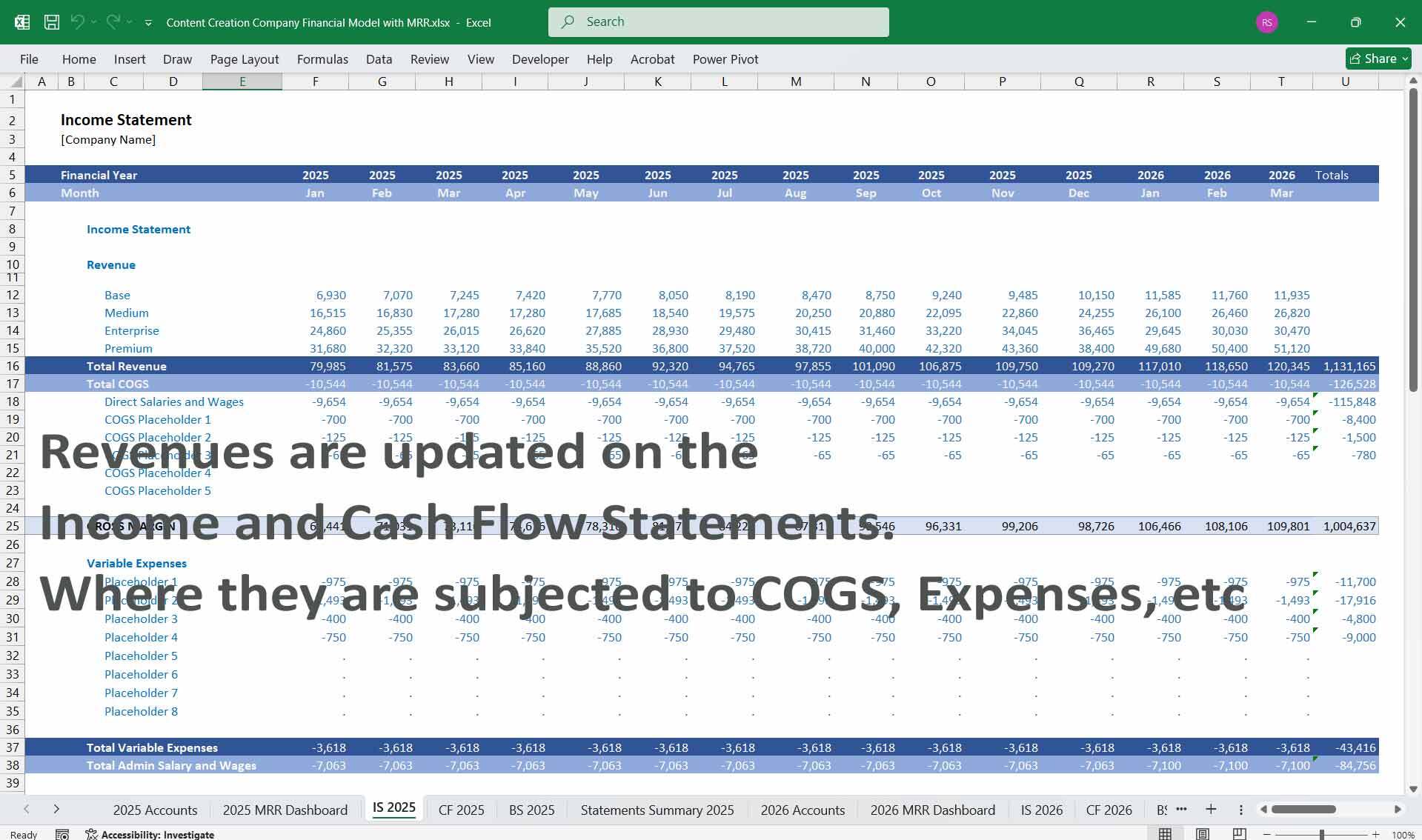
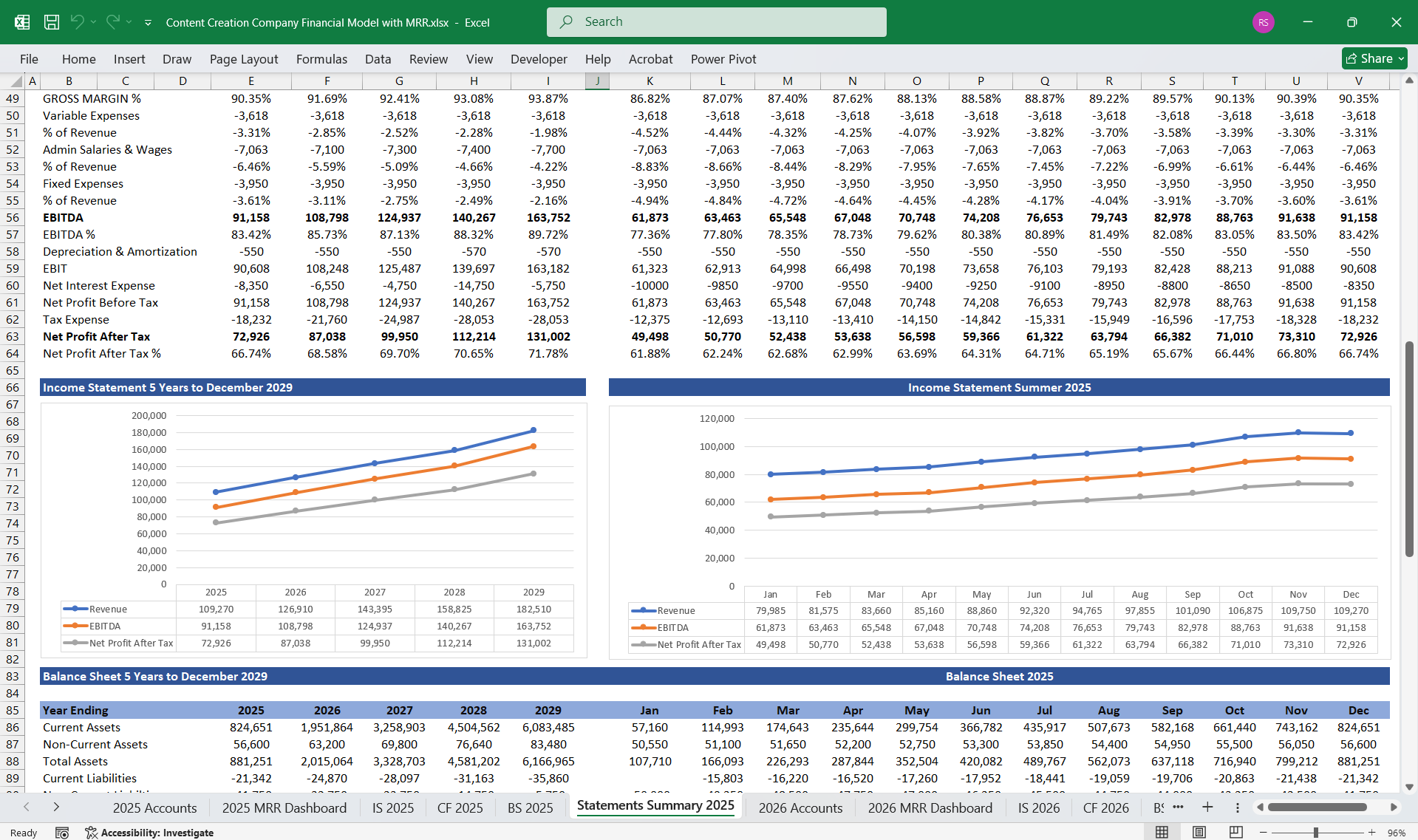
### **2. Income Statement**
#### **Revenue Streams**
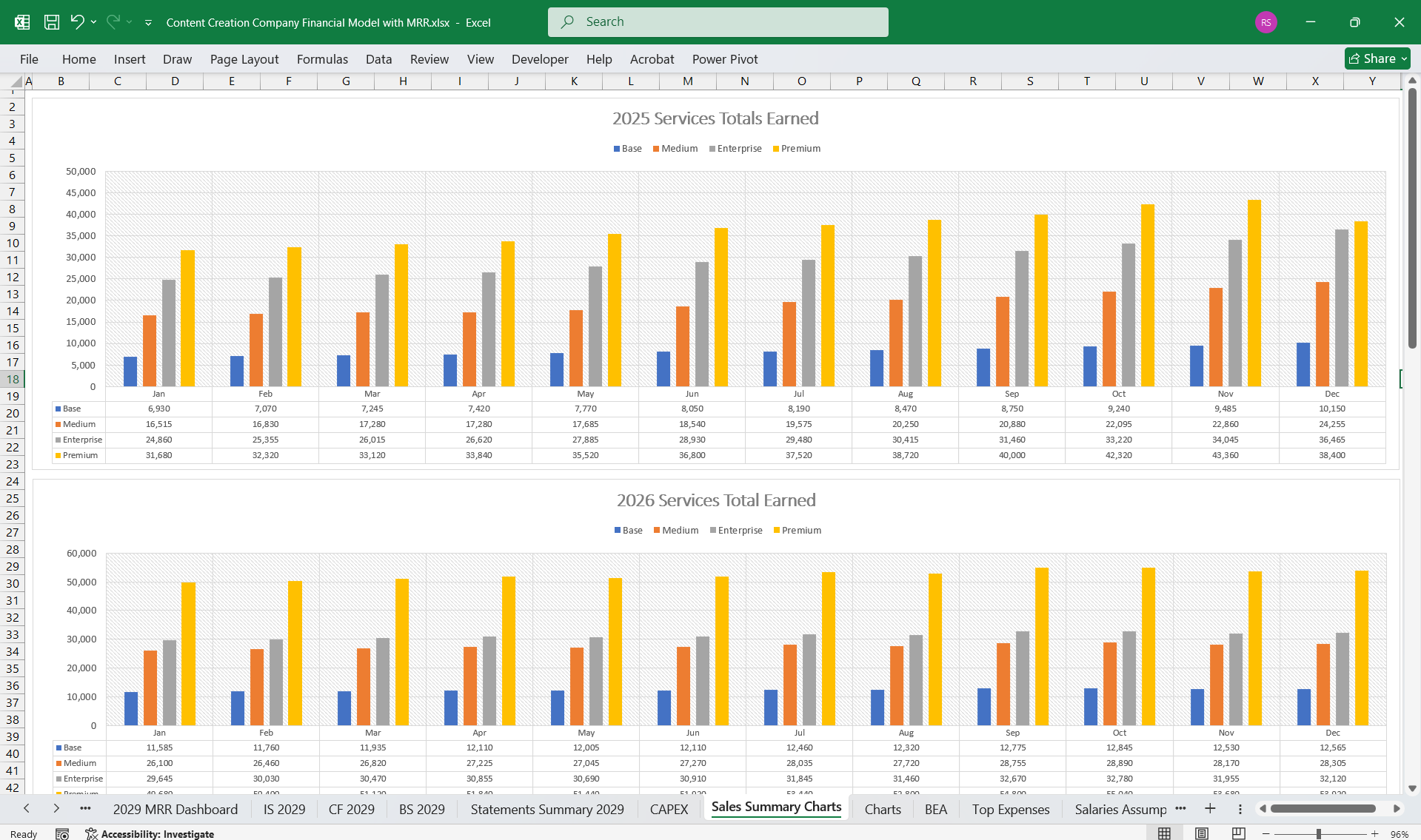
1. **Subscription Monthly Recurring Revenue (MRR):**
- Revenue from subscription plans offered to clients for access to content, creative tools, or services.
- **4-Tier Subscription:**
- **Base:** Entry-level, low-cost plan with limited access.
- **Medium:** Intermediate plan with enhanced features.
- **Enterprise:** Higher-tier plan with features catering to teams and small businesses.
- **Premium:** Premium plan with custom services for large organizations.
- **6-Tier Subscription:**
- **Free (Freemium):** Free access to limited features (generates upsell opportunities).
- **Starter:** Introductory paid plan for individuals or small users.
- **Growth:** Enhanced tier for semi-professionals.
- **Business Premium:** Advanced tools for professional use by larger teams.
- **Agency:** Custom offerings for agencies managing multiple clients.
- **Enterprise Plus:** Highest tier for large corporations or institutional clients.
**Key Inputs for Both 6-Tier Plan:**
- Subscription price per tier.
- Number of active subscribers in each tier.
- Churn rate (percentage of customers leaving per month).
- Growth rate (percentage of new subscribers per month).
2. **One-Time Sales or Licenses:**
- Revenue from individual content licenses, one-time projects, or templates sold to clients.
3. **Advertising and Sponsorship:**
- Revenue generated from sponsored content or ads embedded in digital media.
4. **Custom Projects and Consulting:**
- Revenue from custom content creation projects or consulting services.
- **Key Inputs:**
- Number of projects per month.
- Average project fee.
5. **Affiliate Income:**
- Commission earned from partnerships for referrals or promoting other products/services.
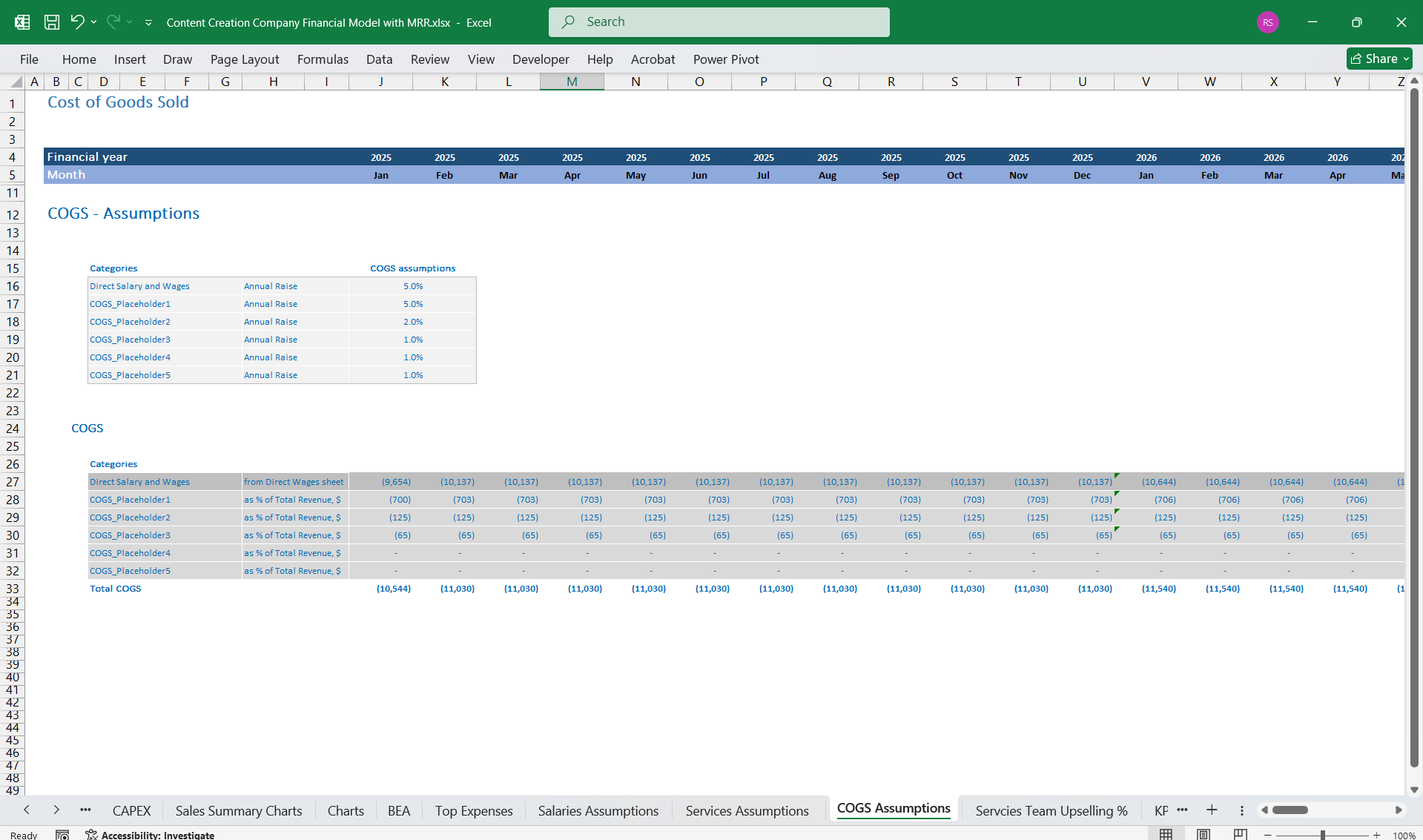
#### **Cost of Goods Sold (COGS):**
- Direct costs tied to delivering the service.
**Components:**
- Content creation costs (tools, software licenses, freelancer payments).
- Hosting and platform expenses (for SaaS-based offerings).
- Payment processing fees for subscriptions and transactions.
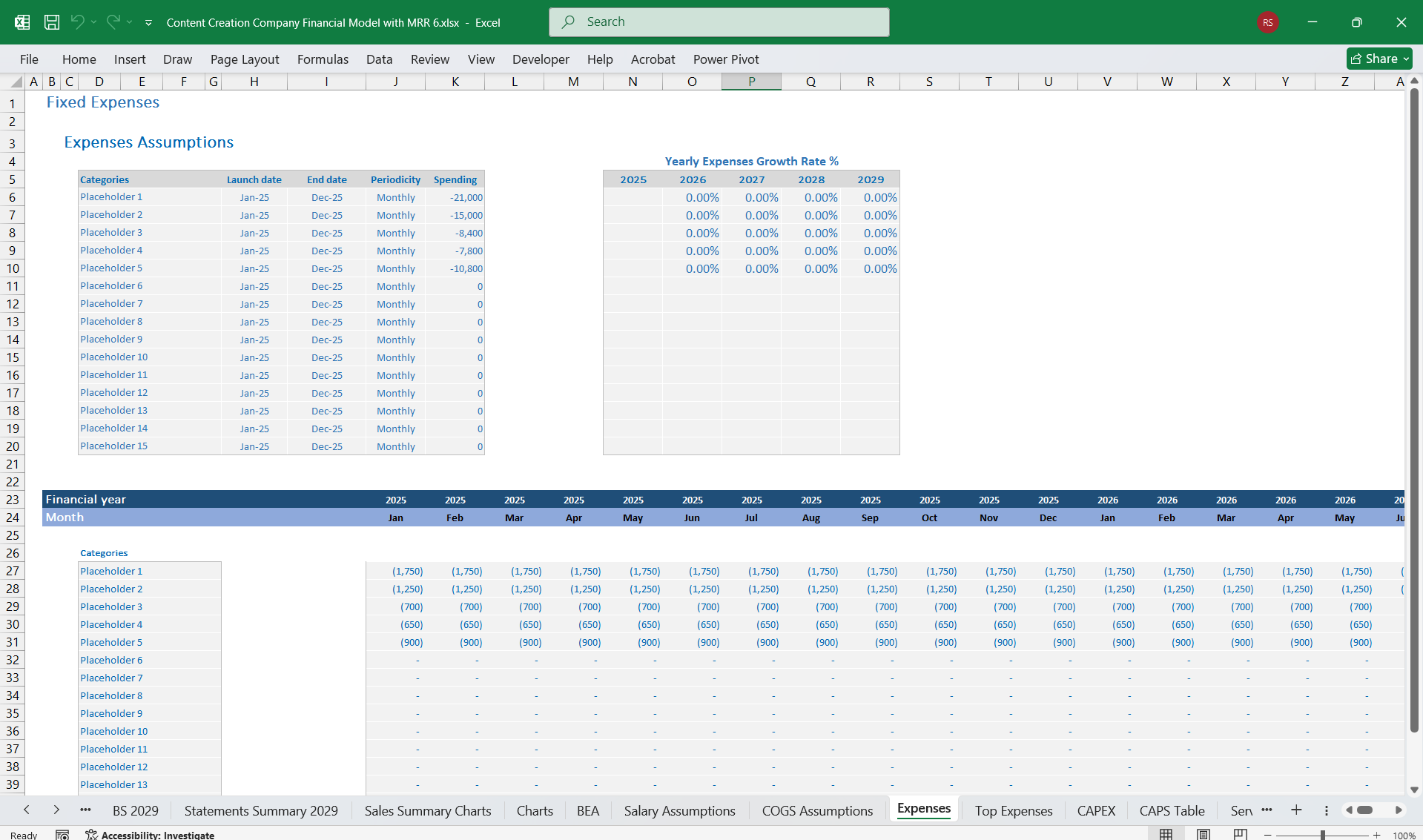
#### **Operating Expenses:**
- Fixed and variable costs necessary to operate the business.
**Categories:**
- **Marketing:** Customer acquisition costs, ad campaigns, and SEO investments.
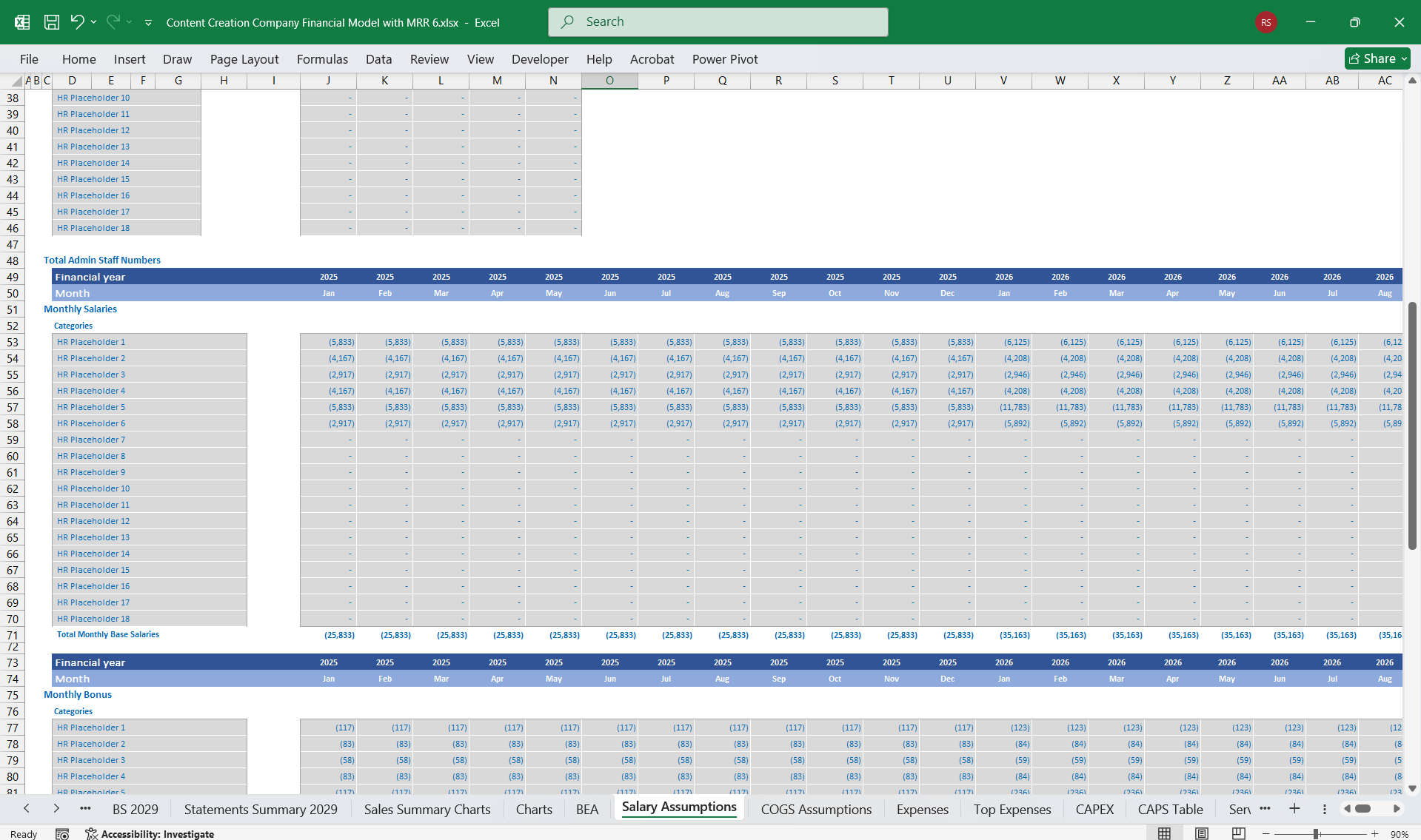
- **Salaries:** Full-time staff including content creators, designers, and developers.
- **R&D Expenses:** Investments in software, platform upgrades, and user experience enhancements.
- **Office/Admin:** Rent, utilities, and administrative overheads.
- **Software & Tools:** Editing suites, project management tools, CRM systems.
#### **Profitability Metrics:**
- **Gross Profit** = Revenue - COGS.
- **Operating Profit** = Gross Profit - Operating Expenses.
- **Net Profit** = Operating Profit - Taxes & Interest.
---
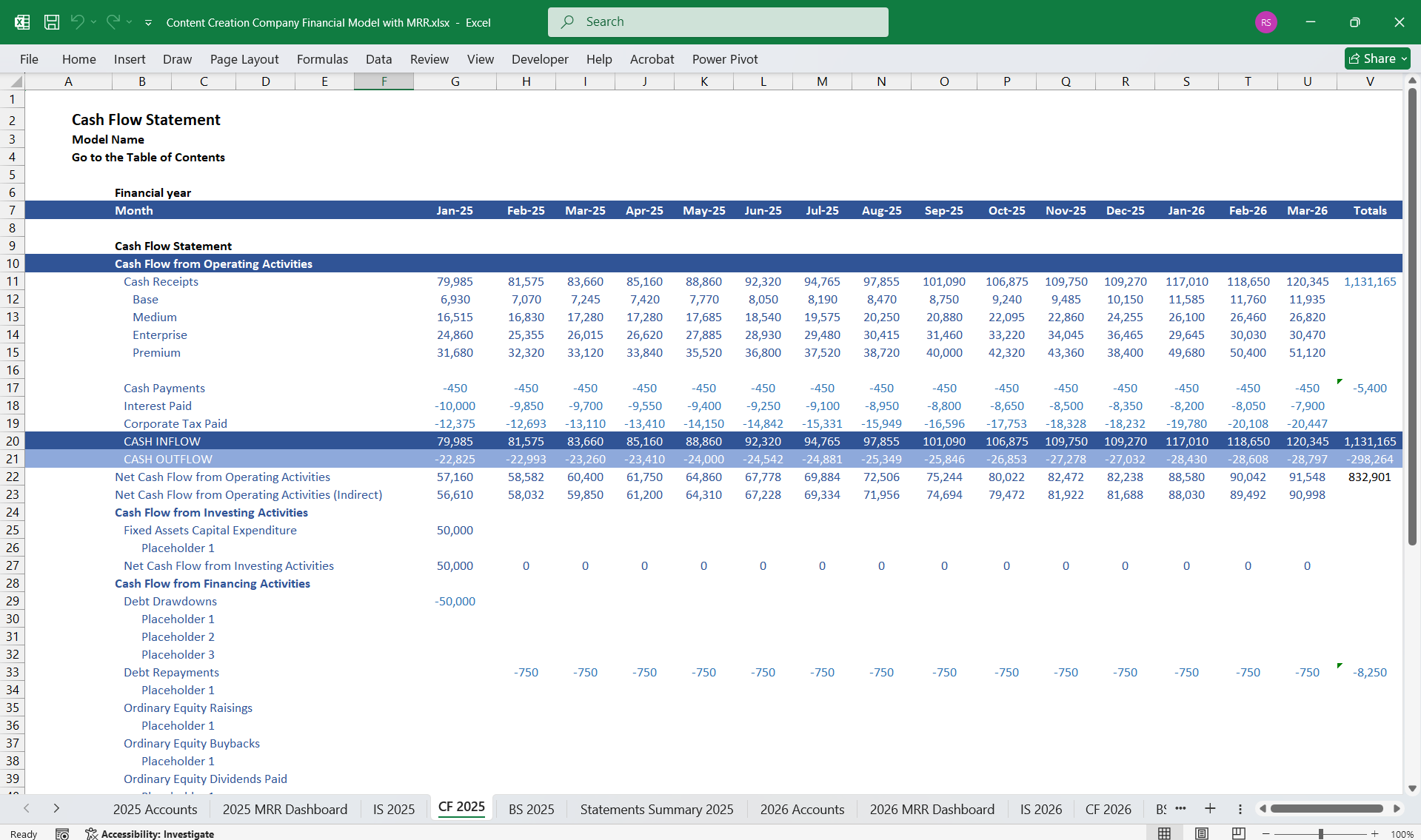
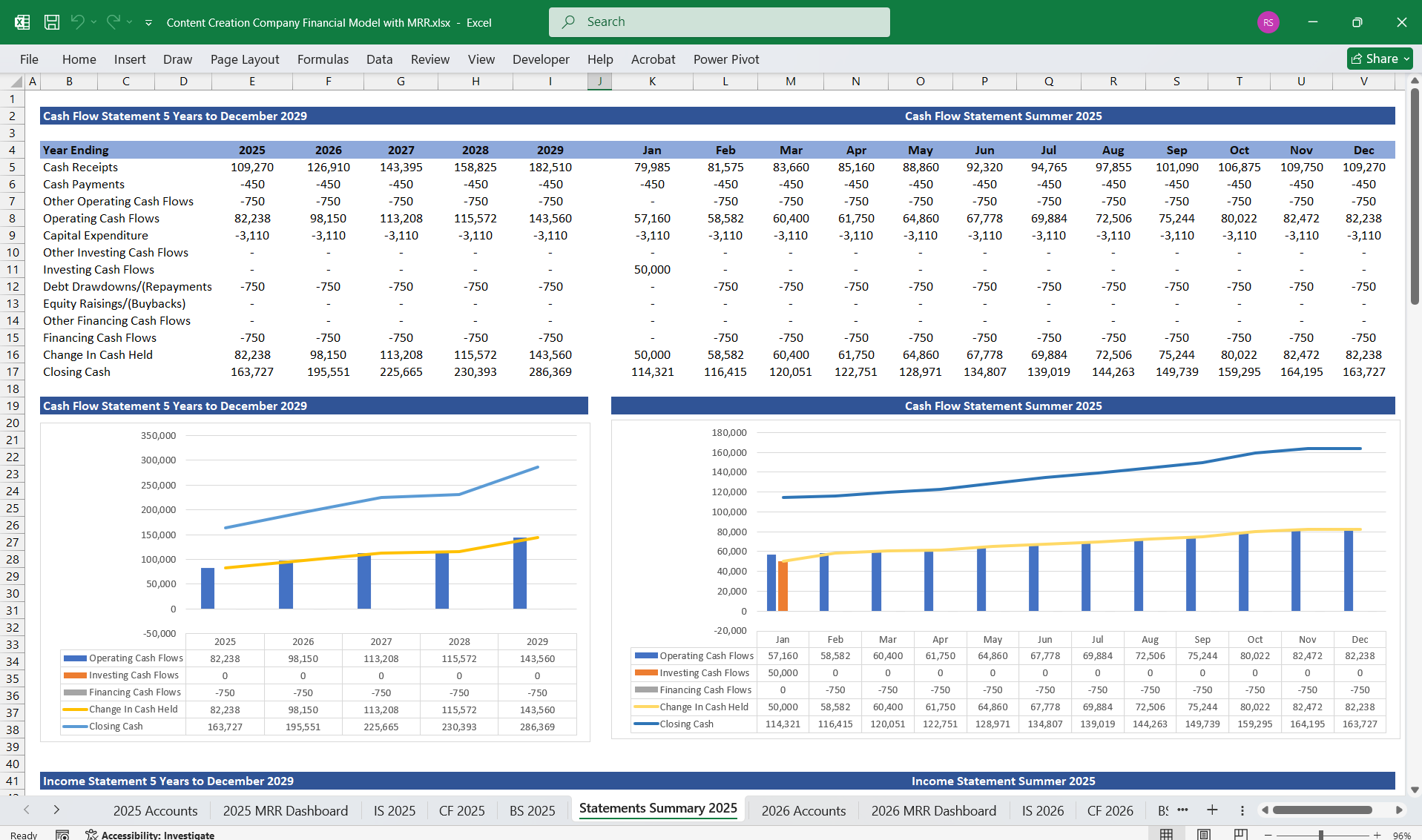
### **3. Cash Flow Statement**
#### **Cash Inflows:**
- Monthly subscription payments.
- Payments for one-time sales and custom projects.
- Affiliate commissions and sponsorship payouts.
- External funding or loan disbursements (if applicable).
#### **Cash Outflows:**
- Operational Expenses:
- Salaries and marketing.
- Subscription tools and software.
- Capital Expenditures (CapEx):
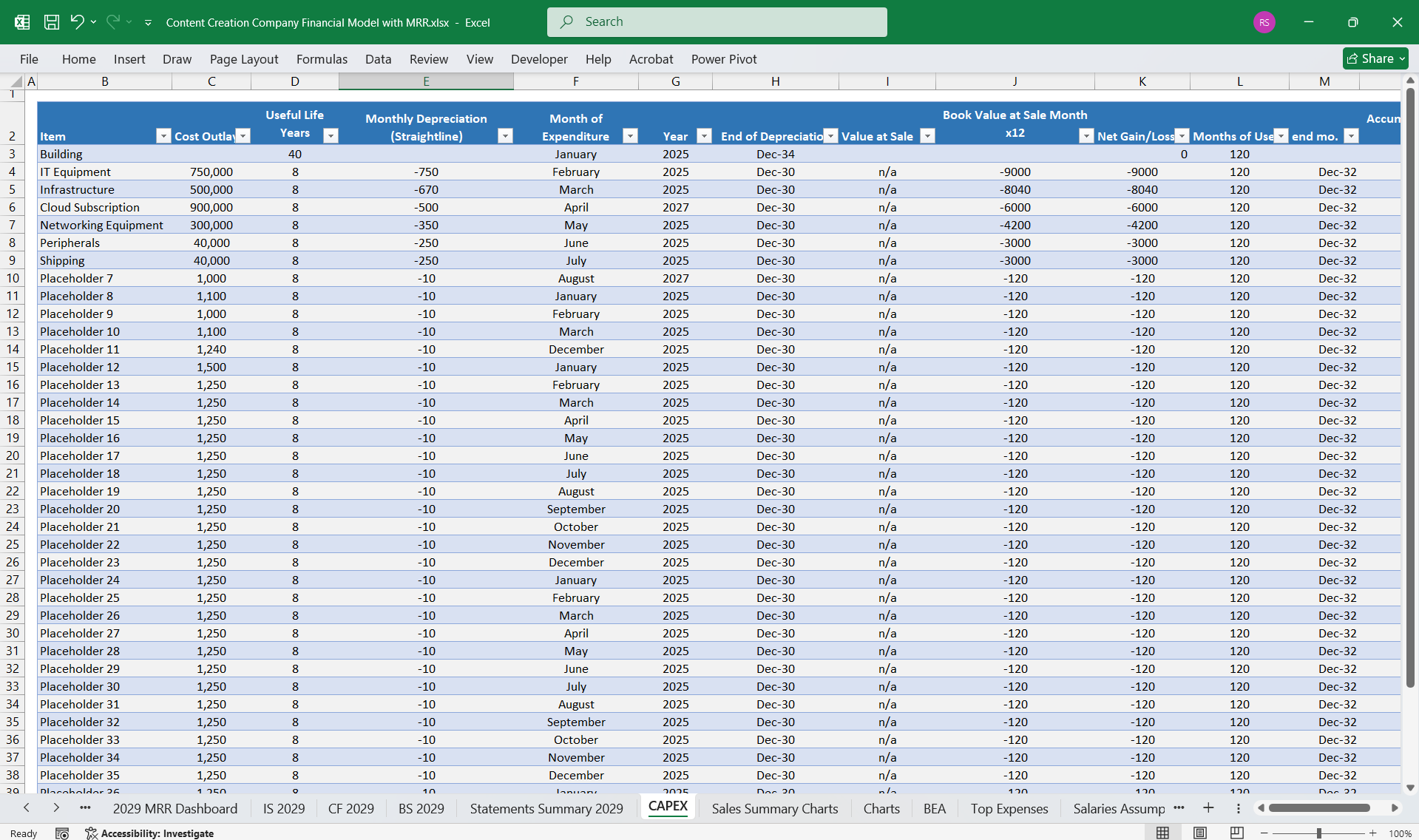
- Investments in hardware or proprietary software.
- Loan Payments:
- Principal and interest repayments.
- Taxes:
- Corporate tax payments.
#### **Net Cash Flow:**
- **Net Cash Flow** = Total Inflows - Total Outflows.
#### **Key Metrics:**
- Free Cash Flow (FCF) = Net Cash Flow - CapEx.
- Cash Flow Coverage Ratio = Cash Flow from Operations ÷ Debt Obligations.
---
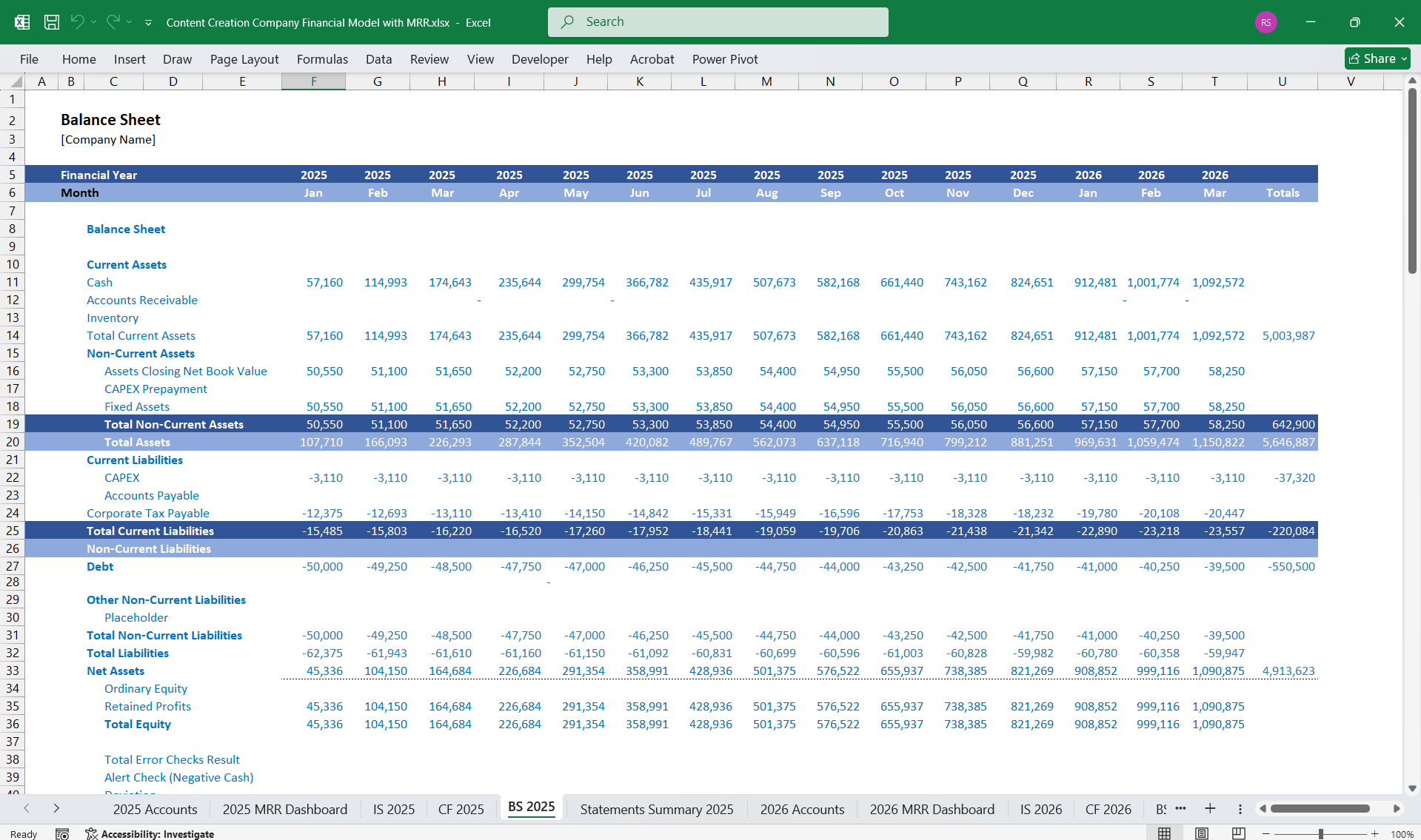
### **4. Balance Sheet**
#### **Assets:**
1. **Current Assets:**
- Cash and cash equivalents.
- Accounts receivable (pending payments from clients).
- Prepaid software subscriptions or advertising credits.
2. **Non-Current Assets:**
- Intangible assets (copyrighted content, brand recognition).
- Platform development costs (capitalized over time).
- Office equipment (computers, cameras, audio equipment).
#### **Liabilities:**
1. **Current Liabilities:**
- Accounts payable (freelancer/vendor fees).
- Deferred revenue (prepaid but undelivered subscriptions).
- Short-term debt or credit lines.
2. **Non-Current Liabilities:**
- Long-term loans for capital investments.
- Lease obligations for office space (if applicable).
#### **Equity:**
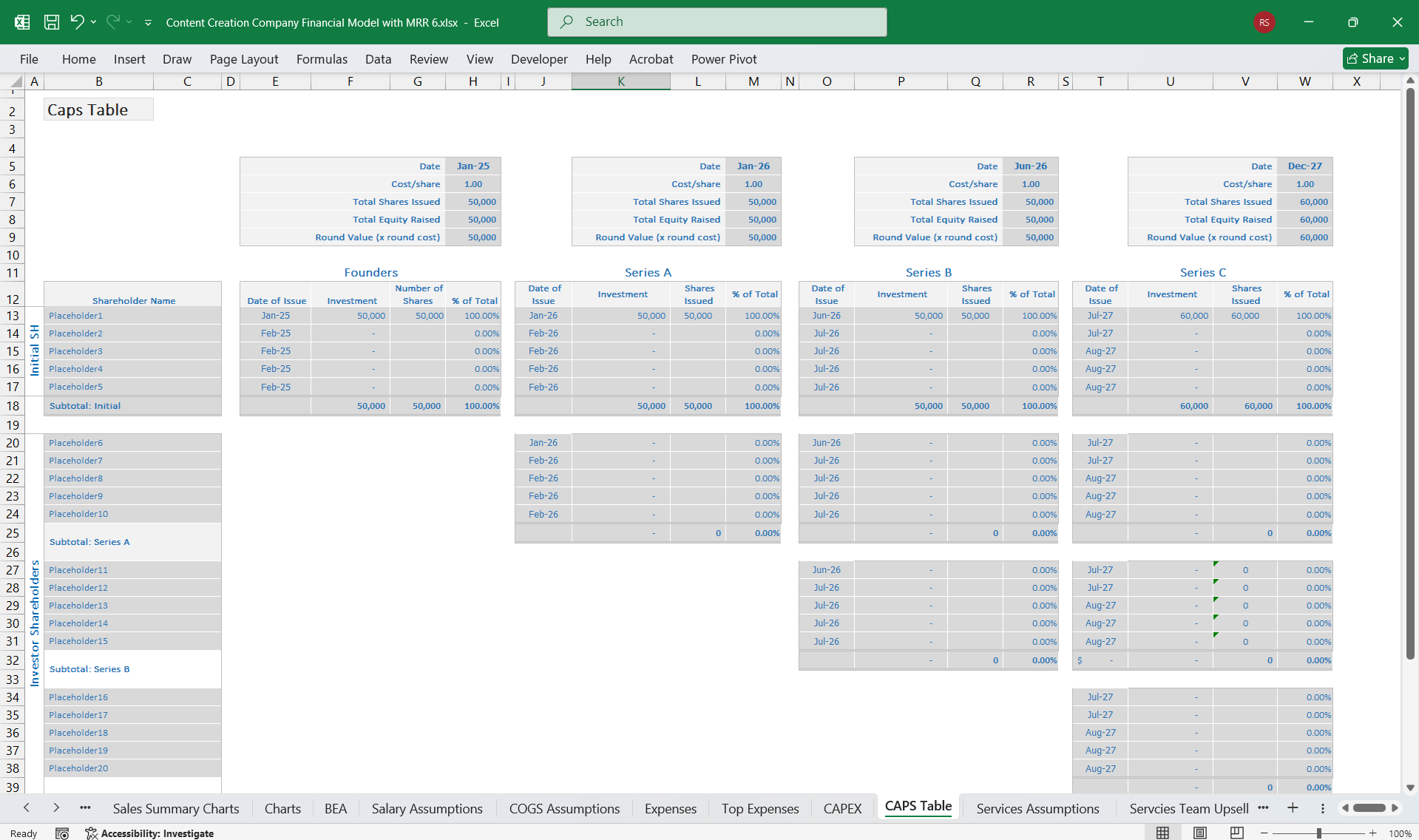
- Owner’s equity (capital injections + retained earnings).
- Retained earnings (accumulated reinvested profits).
---
### **5. Subscription MRR Model**
#### **6-Tier Subscription Breakdown Suggestion**
1. **Freemium (Free Tier):**
- Free access to basic features.
- Aim to convert users to paid plans.
2. **Starter Tier:**
- Entry-level plan priced for early adopters.
3. **Growth Tier:**
- Targeted at expanding users needing professional tools.
4. **Business Premium:**
- Feature-rich, priced higher for large user bases.
5. **Agency Tier:**
- Designed for agencies managing multiple clients.
6. **Enterprise Plus Tier:**
- Premium with advanced customization and support.
**Key Metrics for 6-Tier Model:**
- Conversion Rate from Free to Paid.
- Upgraded MRR: Revenue gains from tier migrations.
- Customer Lifetime Value (CLV) = (Average Subscription Fee × Average Months Retained).
---
### **6. Scenario Analysis**
#### **Scenarios:**
1. **Best Case:** Rapid growth in subscriptions across tiers, low churn, successful upsell campaigns.
2. **Base Case:** Steady growth with predictable churn and operational expenses.
3. **Worst Case:** Higher churn, slow subscription growth, rising acquisition costs.
#### **Key Sensitivities:**
- Effect of churn rate on revenue projections.
- Pricing adjustments on customer acquisition and retention.
- Marketing ROI: Impact of ad spend on MRR growth.
---
### **7. KPIs and Dashboards**
#### **Key Performance Indicators:**
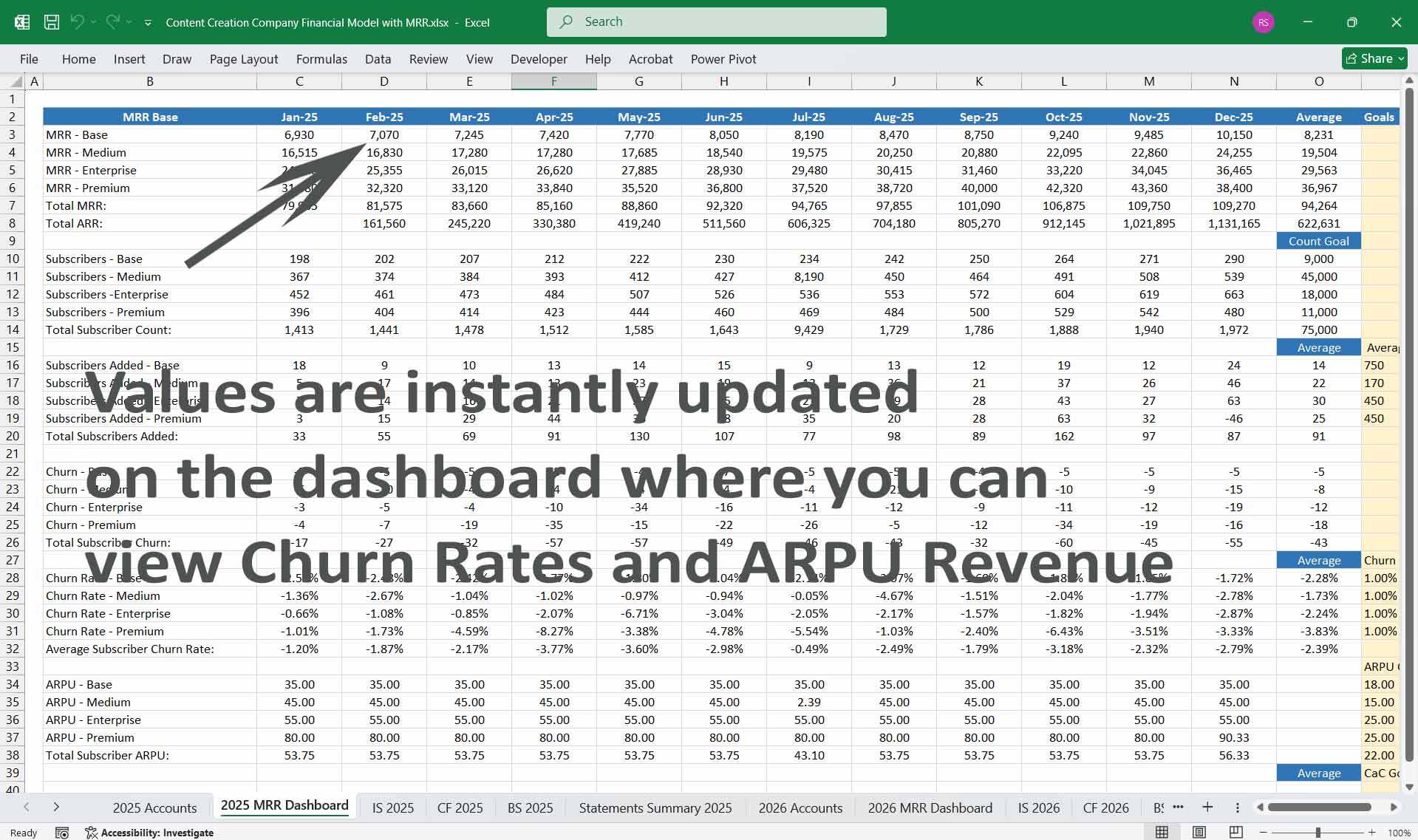
- MRR Growth and Churn Rate.
- LTV to CAC Ratio (Customer Lifetime Value to Customer Acquisition Cost).
- Gross Margin and Net Margin.
- Subscriber Tier Distribution and Revenue Contribution by Tier.
- Engagement Metrics: Active users and feature usage.
#### **Dashboards:**
- Revenue breakdown by subscription tier.
- Subscriber growth trends.
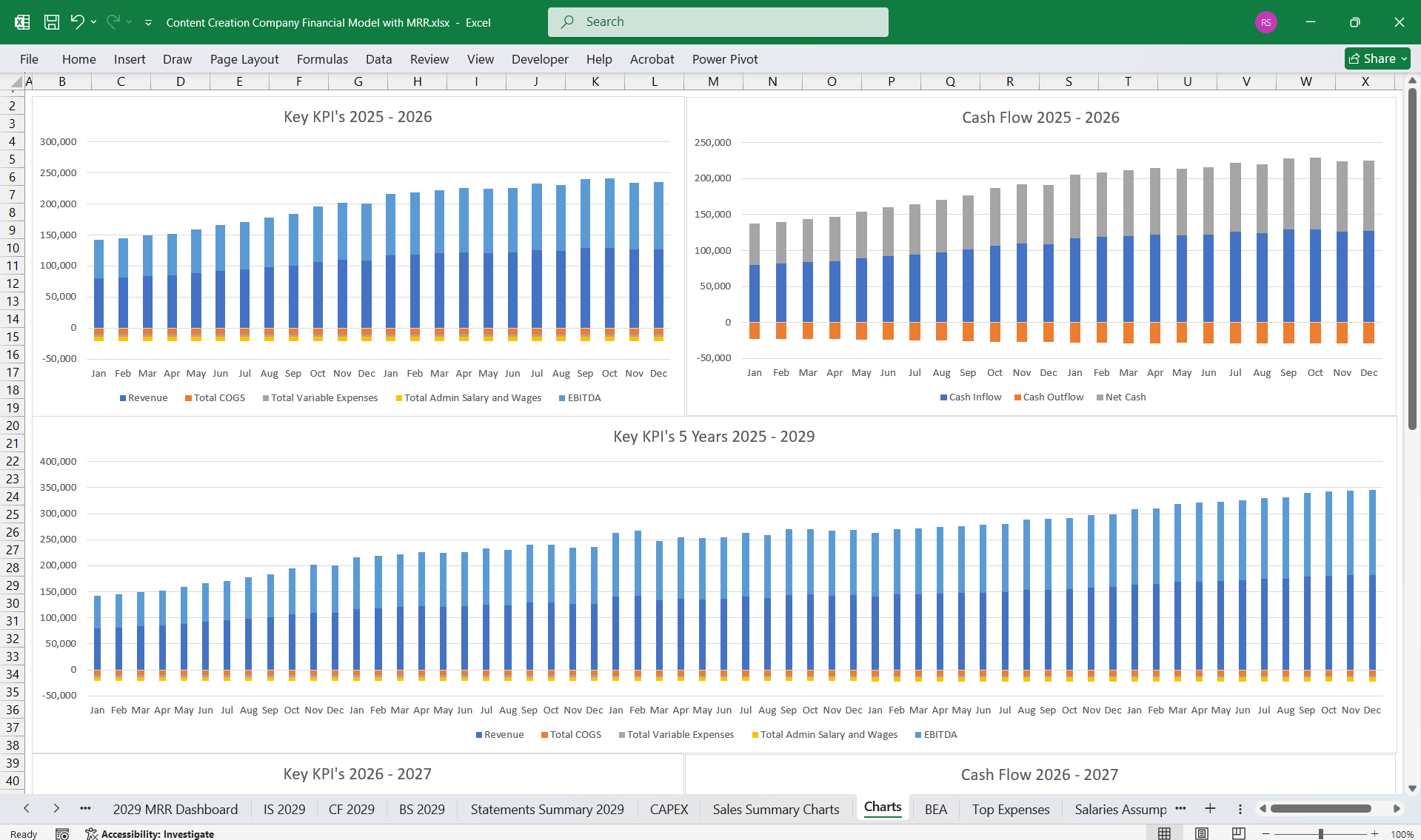
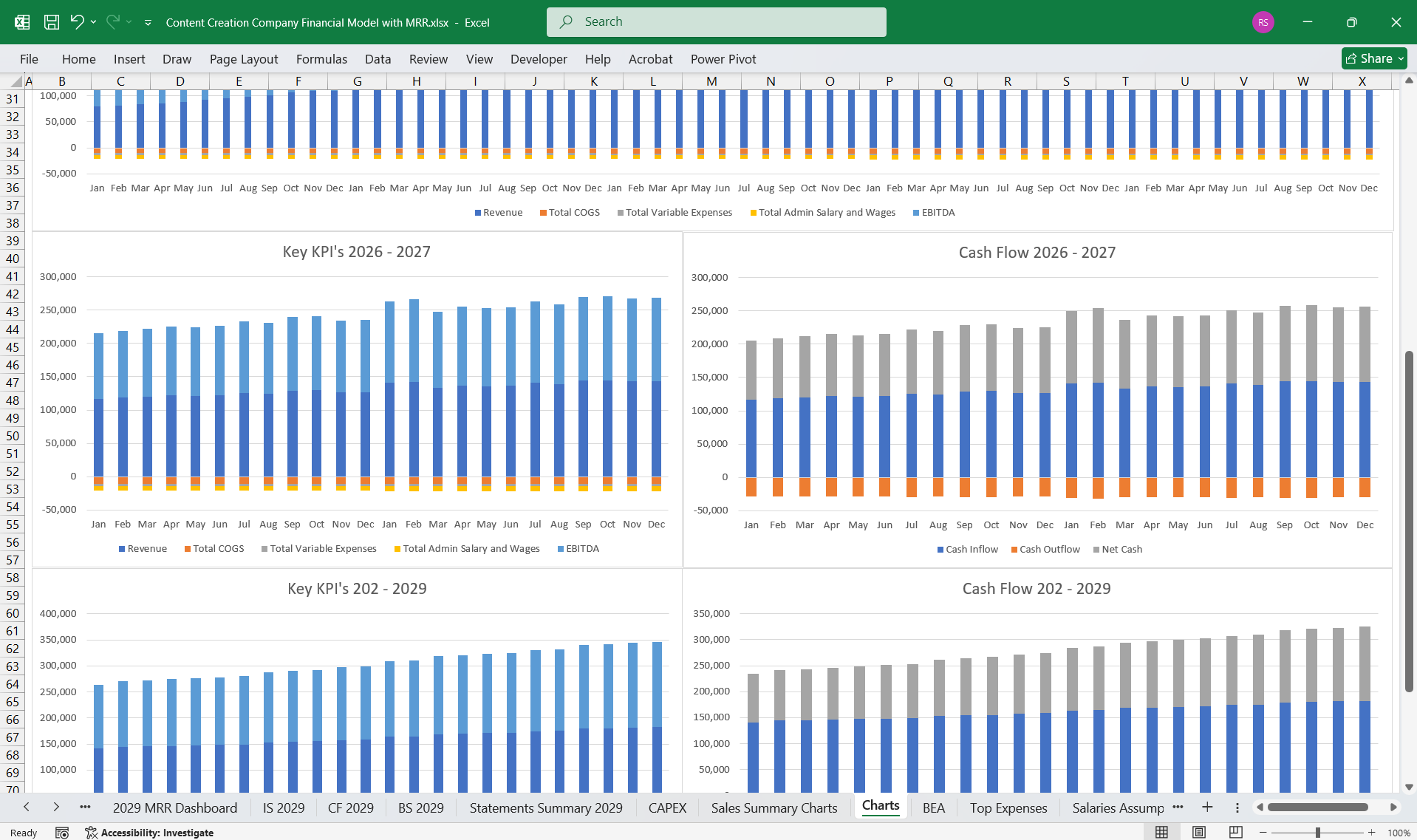
- Real-time profitability and cash flow tracking.
This model can be designed dynamically using spreadsheet software or financial modelling tools, incorporating user inputs, real-time adjustments, and scenario testing. Let me know if you’d like to start building it!
#### **1. Overview**
This financial model provides a comprehensive structure for evaluating a content creation company's financial health and potential. The model focuses on key revenue streams, operational expenses, cash flow dynamics, and asset-liability management. The subscription component, a critical feature, offers detailed sections for **6-tier subscription plan**, reflecting diverse customer segments.
---
### **2. Income Statement**
#### **Revenue Streams**
1. **Subscription Monthly Recurring Revenue (MRR):**
- Revenue from subscription plans offered to clients for access to content, creative tools, or services.
- **4-Tier Subscription:**
- **Base:** Entry-level, low-cost plan with limited access.
- **Medium:** Intermediate plan with enhanced features.
- **Enterprise:** Higher-tier plan with features catering to teams and small businesses.
- **Premium:** Premium plan with custom services for large organizations.
- **6-Tier Subscription:**
- **Free (Freemium):** Free access to limited features (generates upsell opportunities).
- **Starter:** Introductory paid plan for individuals or small users.
- **Growth:** Enhanced tier for semi-professionals.
- **Business Premium:** Advanced tools for professional use by larger teams.
- **Agency:** Custom offerings for agencies managing multiple clients.
- **Enterprise Plus:** Highest tier for large corporations or institutional clients.
**Key Inputs for Both 6-Tier Plan:**
- Subscription price per tier.
- Number of active subscribers in each tier.
- Churn rate (percentage of customers leaving per month).
- Growth rate (percentage of new subscribers per month).
2. **One-Time Sales or Licenses:**
- Revenue from individual content licenses, one-time projects, or templates sold to clients.
3. **Advertising and Sponsorship:**
- Revenue generated from sponsored content or ads embedded in digital media.
4. **Custom Projects and Consulting:**
- Revenue from custom content creation projects or consulting services.
- **Key Inputs:**
- Number of projects per month.
- Average project fee.
5. **Affiliate Income:**
- Commission earned from partnerships for referrals or promoting other products/services.
#### **Cost of Goods Sold (COGS):**
- Direct costs tied to delivering the service.
**Components:**
- Content creation costs (tools, software licenses, freelancer payments).
- Hosting and platform expenses (for SaaS-based offerings).
- Payment processing fees for subscriptions and transactions.
#### **Operating Expenses:**
- Fixed and variable costs necessary to operate the business.
**Categories:**
- **Marketing:** Customer acquisition costs, ad campaigns, and SEO investments.
- **Salaries:** Full-time staff including content creators, designers, and developers.
- **R&D Expenses:** Investments in software, platform upgrades, and user experience enhancements.
- **Office/Admin:** Rent, utilities, and administrative overheads.
- **Software & Tools:** Editing suites, project management tools, CRM systems.
#### **Profitability Metrics:**
- **Gross Profit** = Revenue - COGS.
- **Operating Profit** = Gross Profit - Operating Expenses.
- **Net Profit** = Operating Profit - Taxes & Interest.
---
### **3. Cash Flow Statement**
#### **Cash Inflows:**
- Monthly subscription payments.
- Payments for one-time sales and custom projects.
- Affiliate commissions and sponsorship payouts.
- External funding or loan disbursements (if applicable).
#### **Cash Outflows:**
- Operational Expenses:
- Salaries and marketing.
- Subscription tools and software.
- Capital Expenditures (CapEx):
- Investments in hardware or proprietary software.
- Loan Payments:
- Principal and interest repayments.
- Taxes:
- Corporate tax payments.
#### **Net Cash Flow:**
- **Net Cash Flow** = Total Inflows - Total Outflows.
#### **Key Metrics:**
- Free Cash Flow (FCF) = Net Cash Flow - CapEx.
- Cash Flow Coverage Ratio = Cash Flow from Operations ÷ Debt Obligations.
---
### **4. Balance Sheet**
#### **Assets:**
1. **Current Assets:**
- Cash and cash equivalents.
- Accounts receivable (pending payments from clients).
- Prepaid software subscriptions or advertising credits.
2. **Non-Current Assets:**
- Intangible assets (copyrighted content, brand recognition).
- Platform development costs (capitalized over time).
- Office equipment (computers, cameras, audio equipment).
#### **Liabilities:**
1. **Current Liabilities:**
- Accounts payable (freelancer/vendor fees).
- Deferred revenue (prepaid but undelivered subscriptions).
- Short-term debt or credit lines.
2. **Non-Current Liabilities:**
- Long-term loans for capital investments.
- Lease obligations for office space (if applicable).
#### **Equity:**
- Owner’s equity (capital injections + retained earnings).
- Retained earnings (accumulated reinvested profits).
---
### **5. Subscription MRR Model**
#### **6-Tier Subscription Breakdown Suggestion**
1. **Freemium (Free Tier):**
- Free access to basic features.
- Aim to convert users to paid plans.
2. **Starter Tier:**
- Entry-level plan priced for early adopters.
3. **Growth Tier:**
- Targeted at expanding users needing professional tools.
4. **Business Premium:**
- Feature-rich, priced higher for large user bases.
5. **Agency Tier:**
- Designed for agencies managing multiple clients.
6. **Enterprise Plus Tier:**
- Premium with advanced customization and support.
**Key Metrics for 6-Tier Model:**
- Conversion Rate from Free to Paid.
- Upgraded MRR: Revenue gains from tier migrations.
- Customer Lifetime Value (CLV) = (Average Subscription Fee × Average Months Retained).
---
### **6. Scenario Analysis**
#### **Scenarios:**
1. **Best Case:** Rapid growth in subscriptions across tiers, low churn, successful upsell campaigns.
2. **Base Case:** Steady growth with predictable churn and operational expenses.
3. **Worst Case:** Higher churn, slow subscription growth, rising acquisition costs.
#### **Key Sensitivities:**
- Effect of churn rate on revenue projections.
- Pricing adjustments on customer acquisition and retention.
- Marketing ROI: Impact of ad spend on MRR growth.
---
### **7. KPIs and Dashboards**
#### **Key Performance Indicators:**
- MRR Growth and Churn Rate.
- LTV to CAC Ratio (Customer Lifetime Value to Customer Acquisition Cost).
- Gross Margin and Net Margin.
- Subscriber Tier Distribution and Revenue Contribution by Tier.
- Engagement Metrics: Active users and feature usage.
#### **Dashboards:**
- Revenue breakdown by subscription tier.
- Subscriber growth trends.
- Real-time profitability and cash flow tracking.
This model can be designed dynamically using spreadsheet software or financial modelling tools, incorporating user inputs, real-time adjustments, and scenario testing. Let me know if you’d like to start building it!
This Best Practice includes
1 Excel Financial Model
Further information
Provides thorough oversight, tracking, and reporting of Content Creation Company finances, including updates on budget utilisation and projections.