Originally published: 10/02/2025 11:01
Publication number: ELQ-26356-1
View all versions & Certificate
Publication number: ELQ-26356-1
View all versions & Certificate

Photography Studio Financial Model
A comprehensive editable, 5-Year 3-Statement MS Excel spreadsheet for tracking your Photography Studio's finances.
 by AllFinancialModels
AllFinancialModels offer a curated selection of high-quality yet financial model templates designed to support a wide range of business needs.Follow
photographyphoto studiophotography studiocameravideofinancefinancial modelexcel spreadsheettemplatespreadsheet
Description
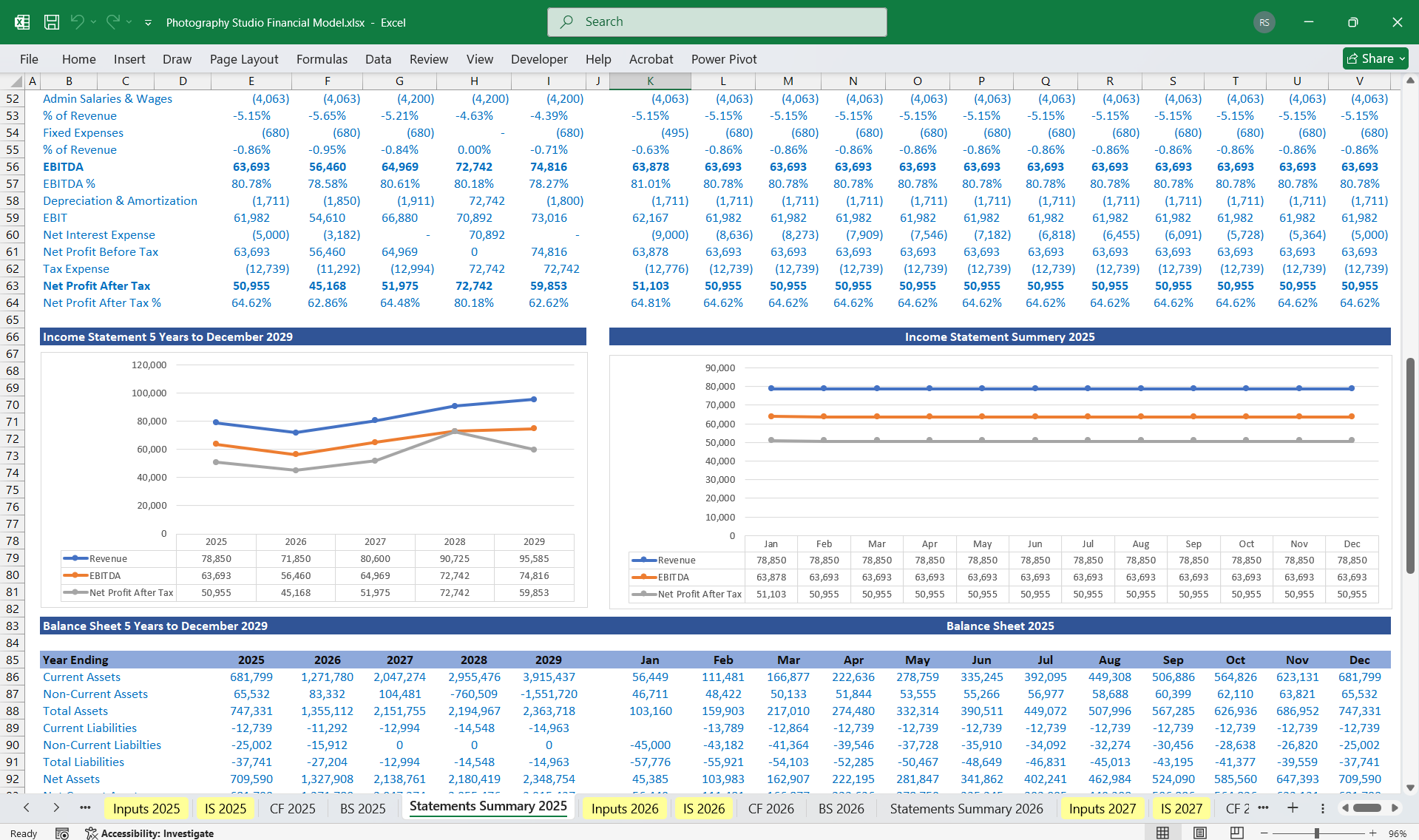
A 3-Statement Financial Model for a Photography Studio integrates the Income Statement, Balance Sheet, and Cash Flow Statement to provide a complete financial overview of the business.
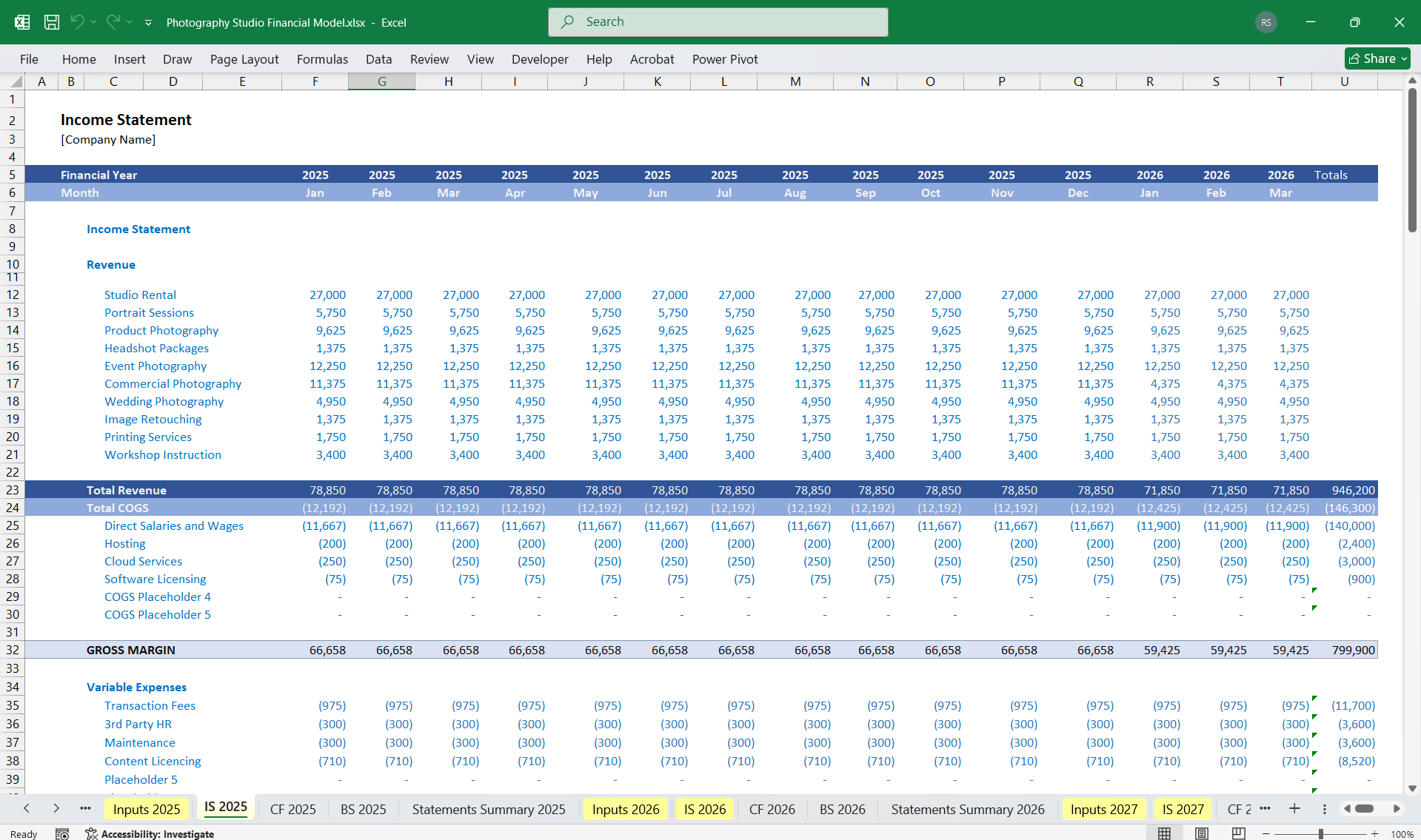
1. Income StatementThe Income Statement summarizes the studio’s revenues, expenses, and profits over a given period.
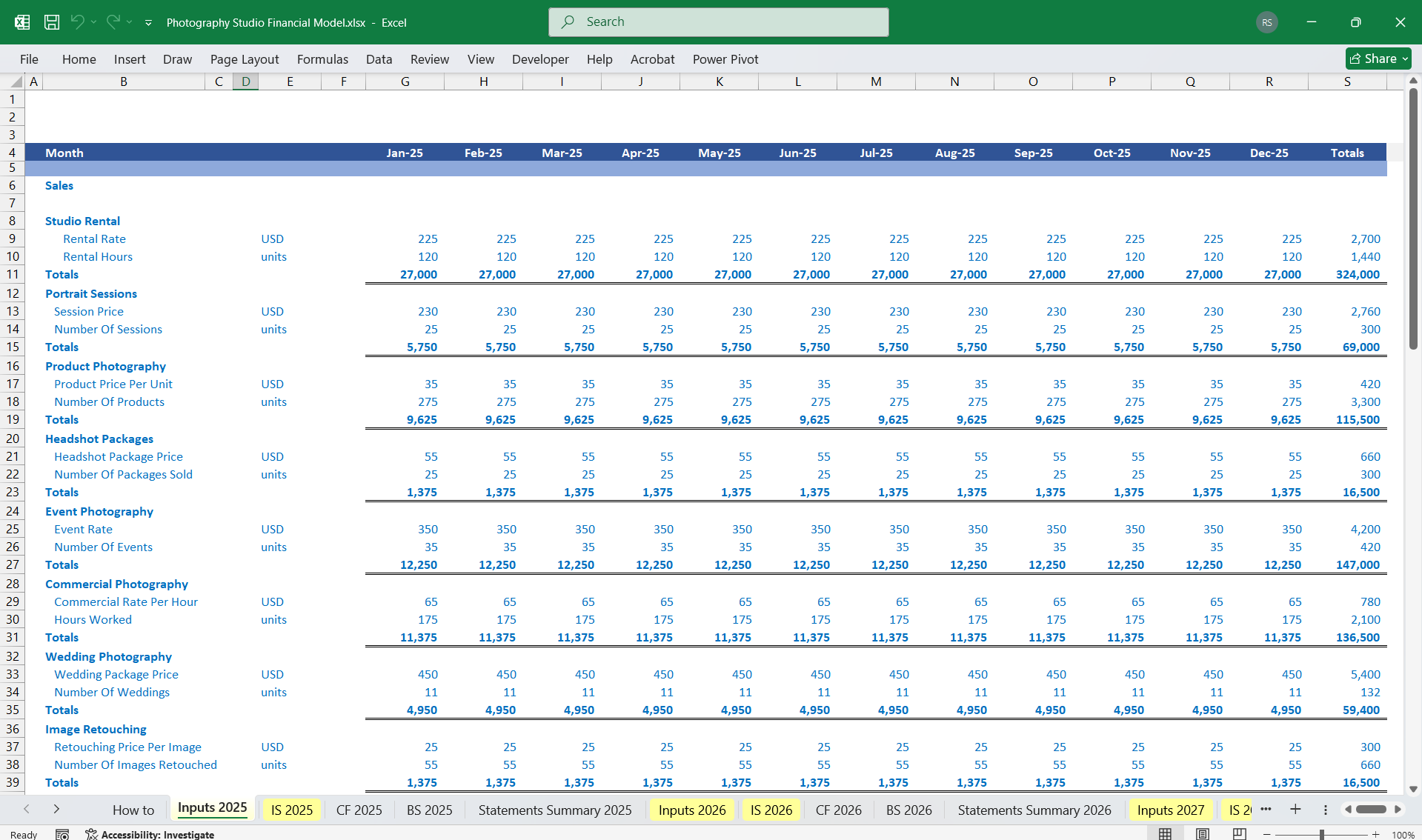
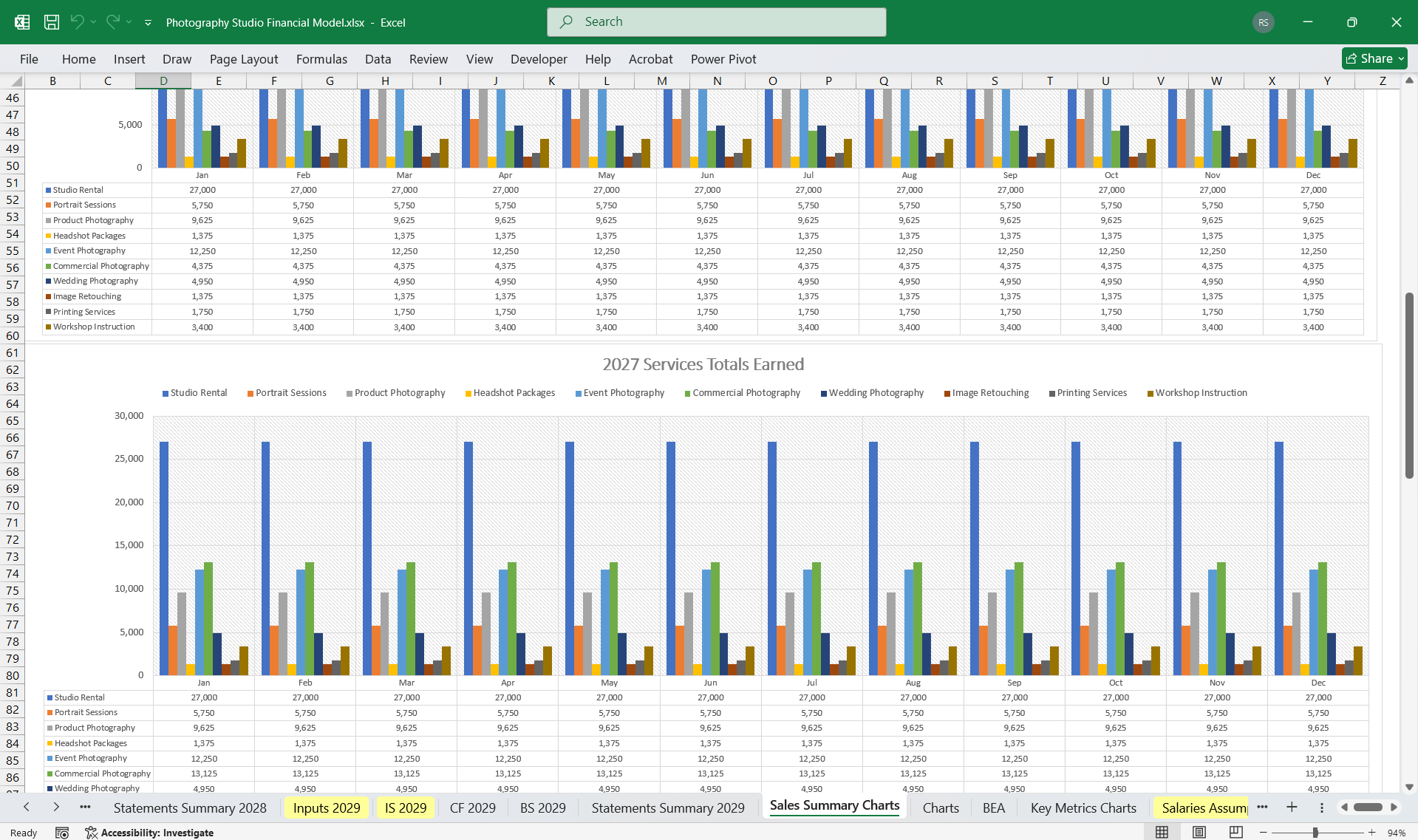
Revenue InputsRevenue sources are derived from different photography-related services:
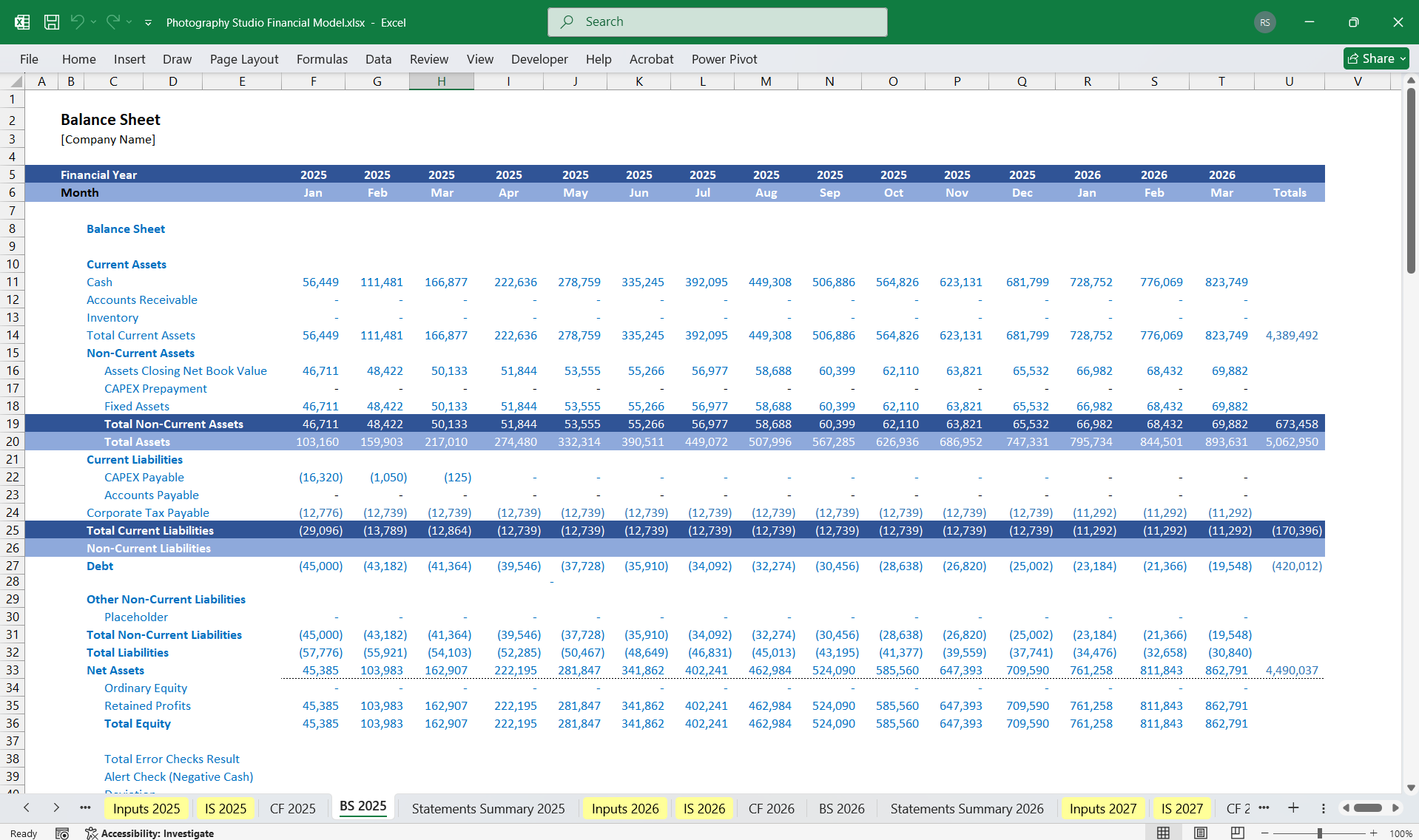
2. Balance SheetThe Balance Sheet provides a snapshot of the studio’s financial position at a given time. It consists of Assets, Liabilities, and Equity.
Assets
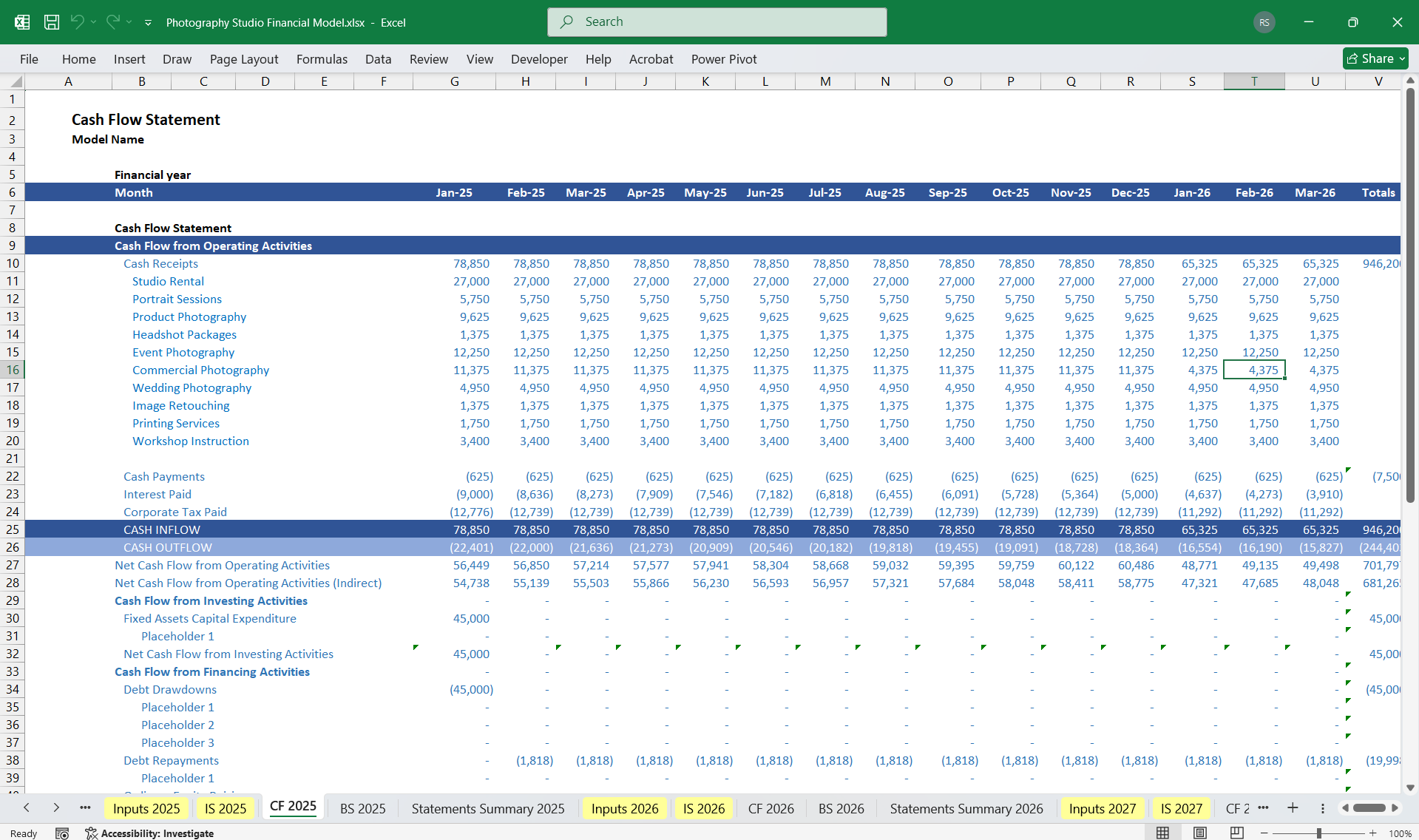
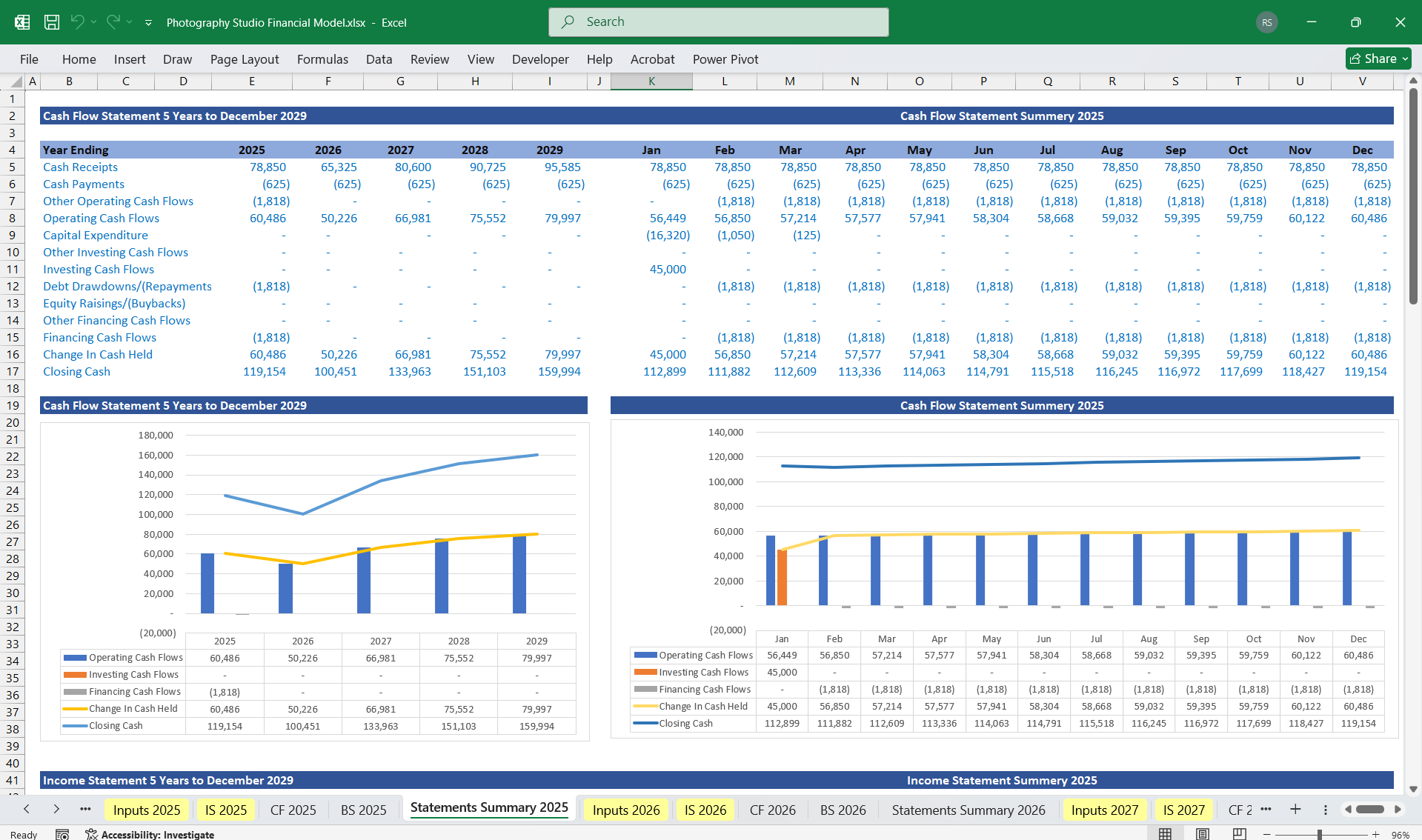
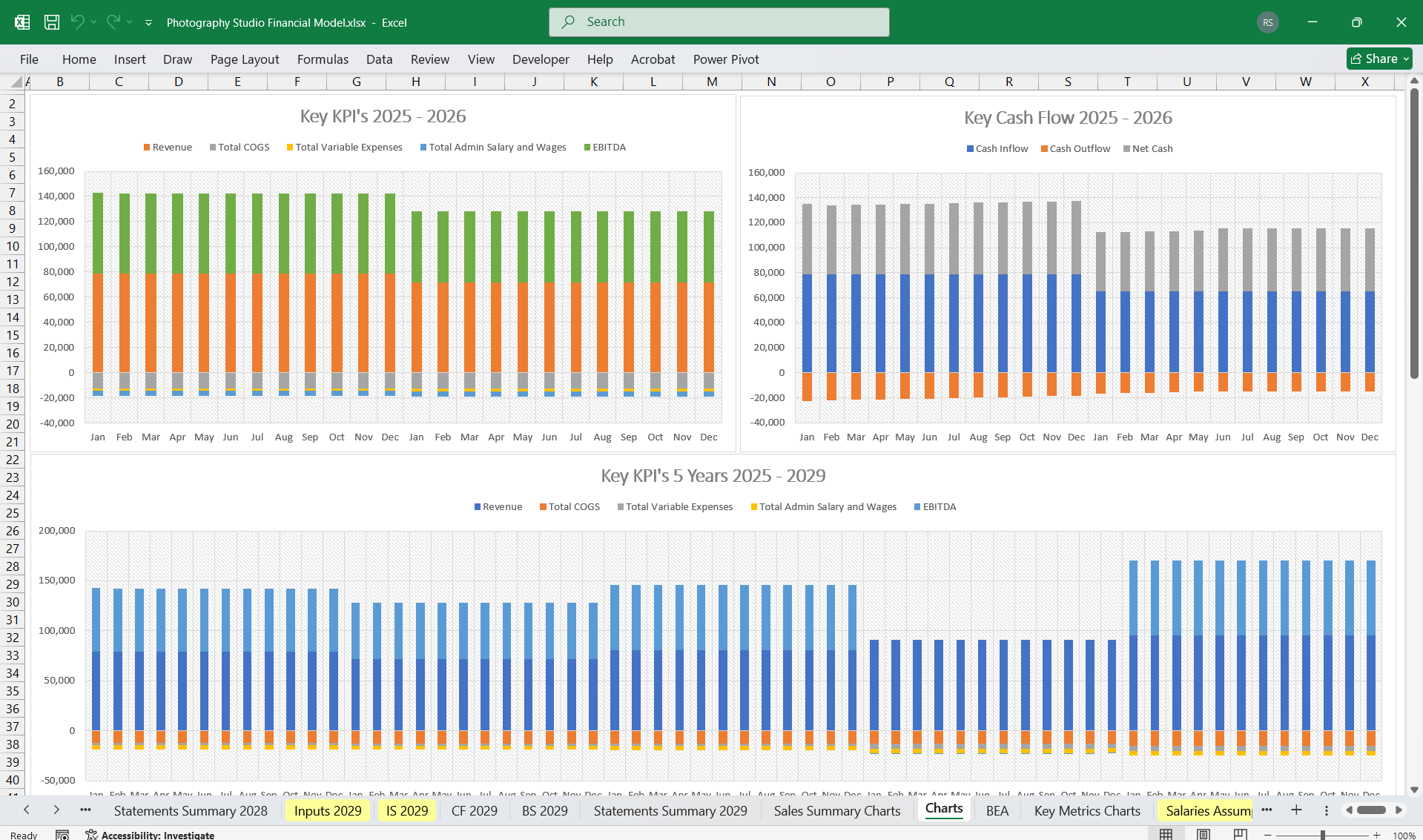
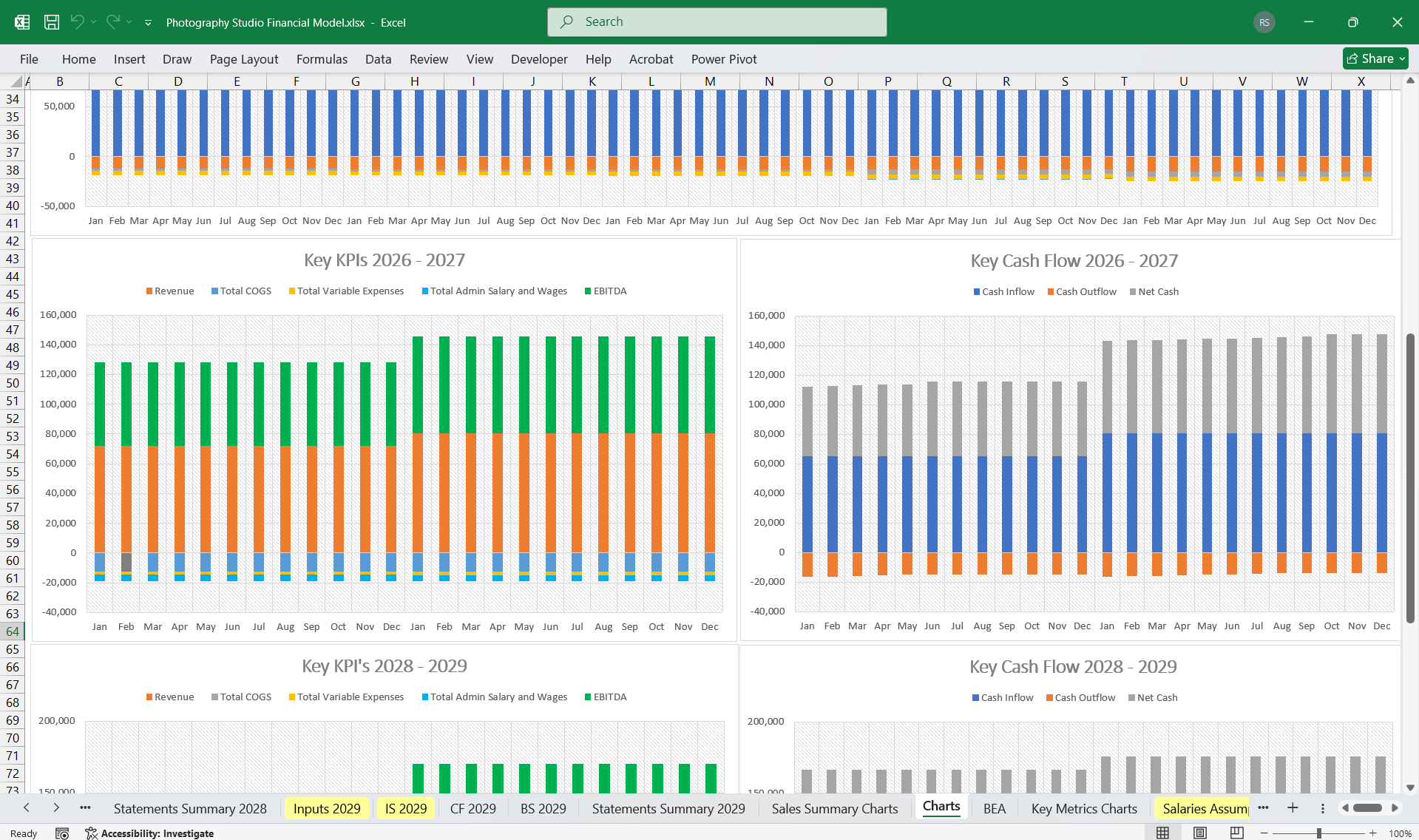
3. Cash Flow StatementThe Cash Flow Statement tracks how cash moves through the business across three activities: Operating, Investing, and Financing Cash Flows.
Operating Cash Flow (Day-to-Day Business)
If operating cash flow is positive, the business is generating enough cash to sustain itself.
Financial Model IntegrationA 3-statement financial model links these together:
A 3-Statement Financial Model for a Photography Studio integrates the Income Statement, Balance Sheet, and Cash Flow Statement to provide a complete financial overview of the business.
1. Income StatementThe Income Statement summarizes the studio’s revenues, expenses, and profits over a given period.
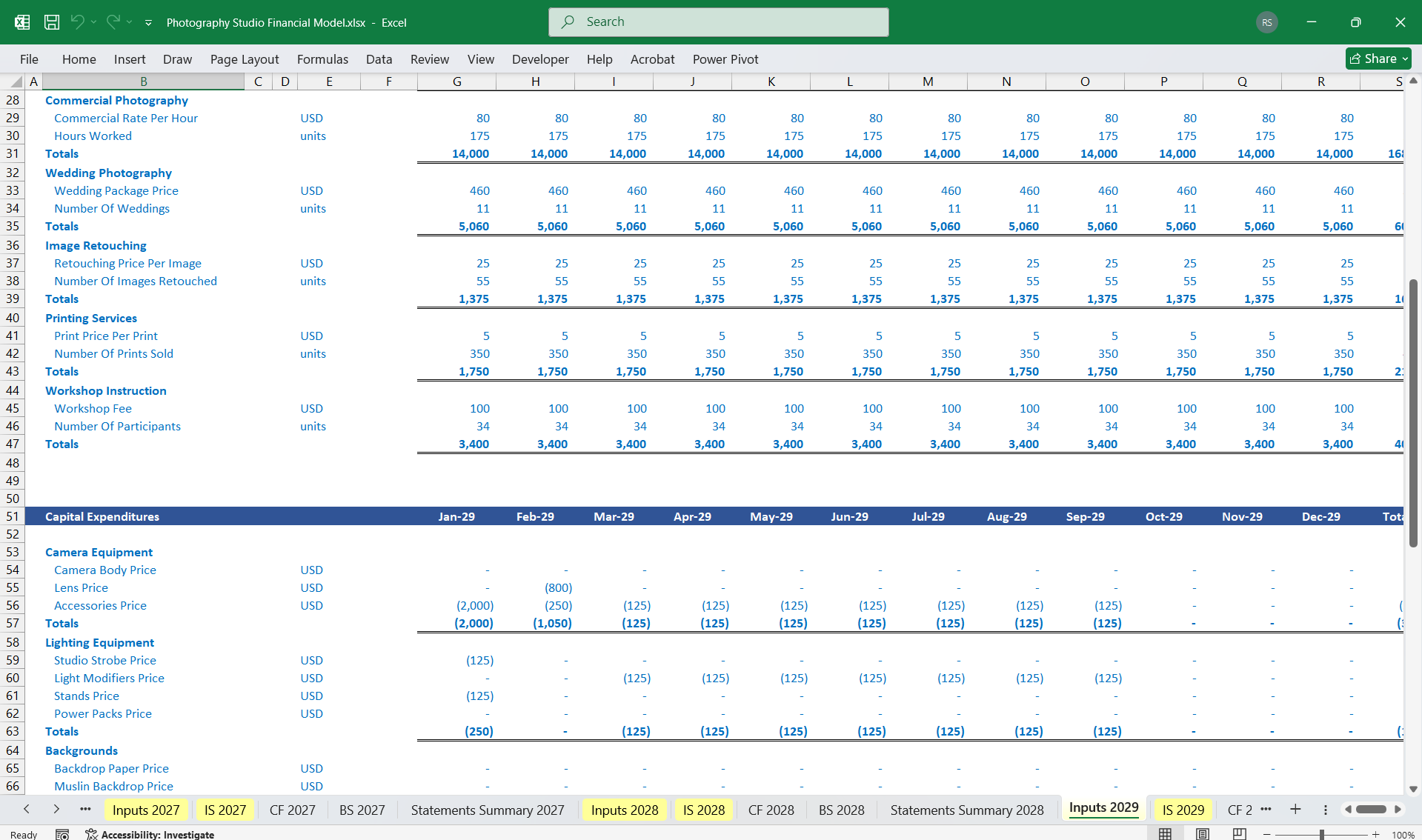
Revenue InputsRevenue sources are derived from different photography-related services:
- Studio Rental Revenue: Income from renting the studio space to other photographers or videographers.
- Portrait Session Revenue: Income from personal or family portrait photography.
- Product Photography Revenue: Revenue from photographing products for e-commerce, advertising, or catalogs.
- Headshot Photography Revenue: Income from professional headshots for corporate or personal branding.
- Event Photography Revenue: Income from covering events such as birthdays, conferences, or corporate events.
- Commercial Photography Revenue: Revenue from photography for brands, magazines, and advertising campaigns.
- Wedding Photography Revenue: Income from wedding photography packages.
- Image Retouching Revenue: Earnings from editing and post-processing services.
- Printing Services Revenue: Revenue from printing services, such as photo books and framed prints.
- Studio Rental Costs: Utilities, maintenance, and property rental costs.
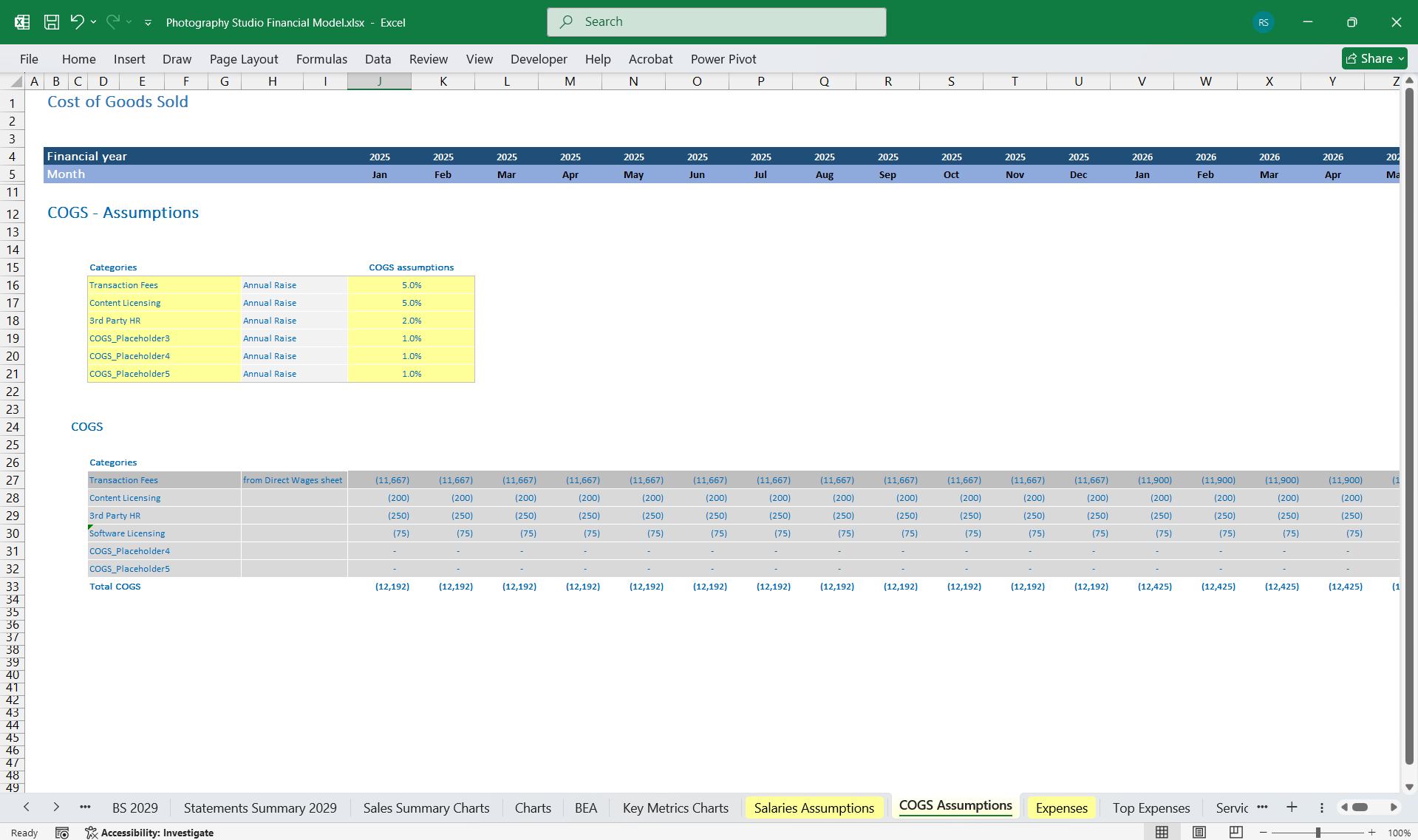
- Editing & Post-Production Costs: Software licenses (Adobe Photoshop, Lightroom), freelance retouchers.
- Printing Costs: Paper, ink, outsourcing printing services.
- Event Travel Costs: Transport, accommodation for on-location shoots.
- Equipment Costs: Depreciation, repairs, and replacement of cameras, lenses, and lighting.
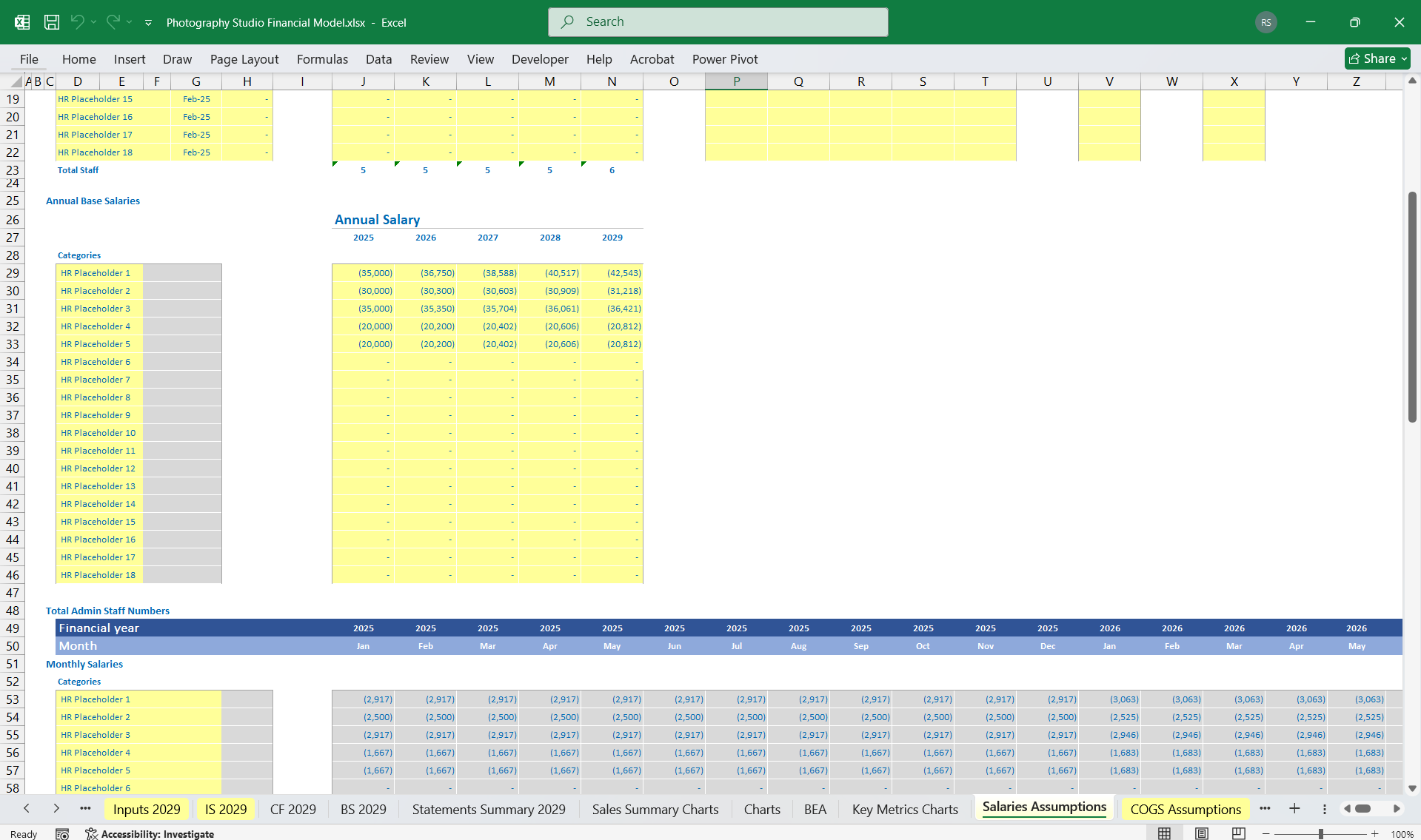
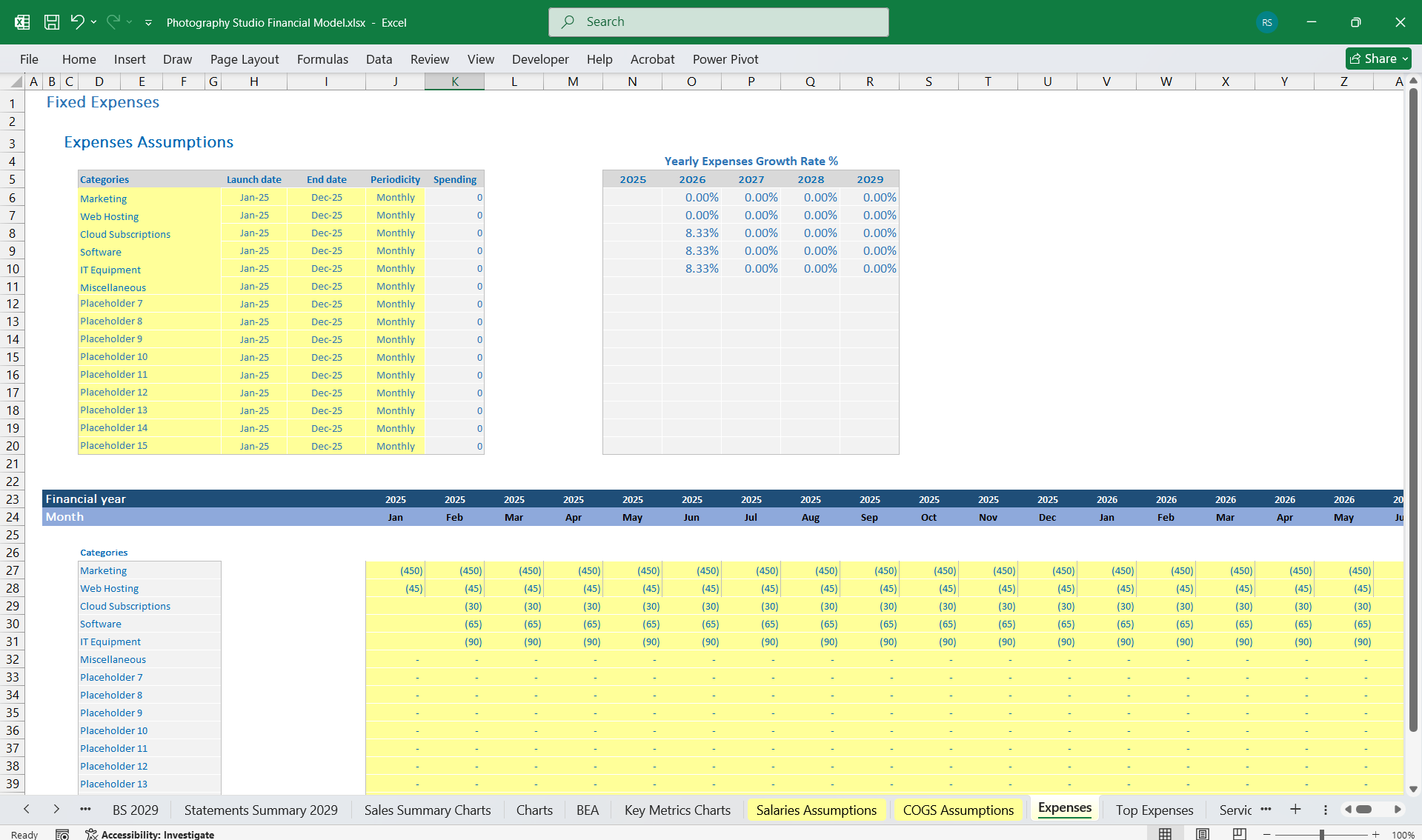
- Salaries & Wages: For employees and contractors.
- Marketing & Advertising: Online ads, SEO, promotions.
- Utilities & Internet: Studio utilities, internet, and phone bills.
- Insurance: Business and equipment insurance.
- Software Subscriptions: Cloud storage, CRM, and editing software.
- Office & Studio Supplies: Props, backdrops, and other consumables.
- Legal & Accounting Fees: Business registration, tax filings.
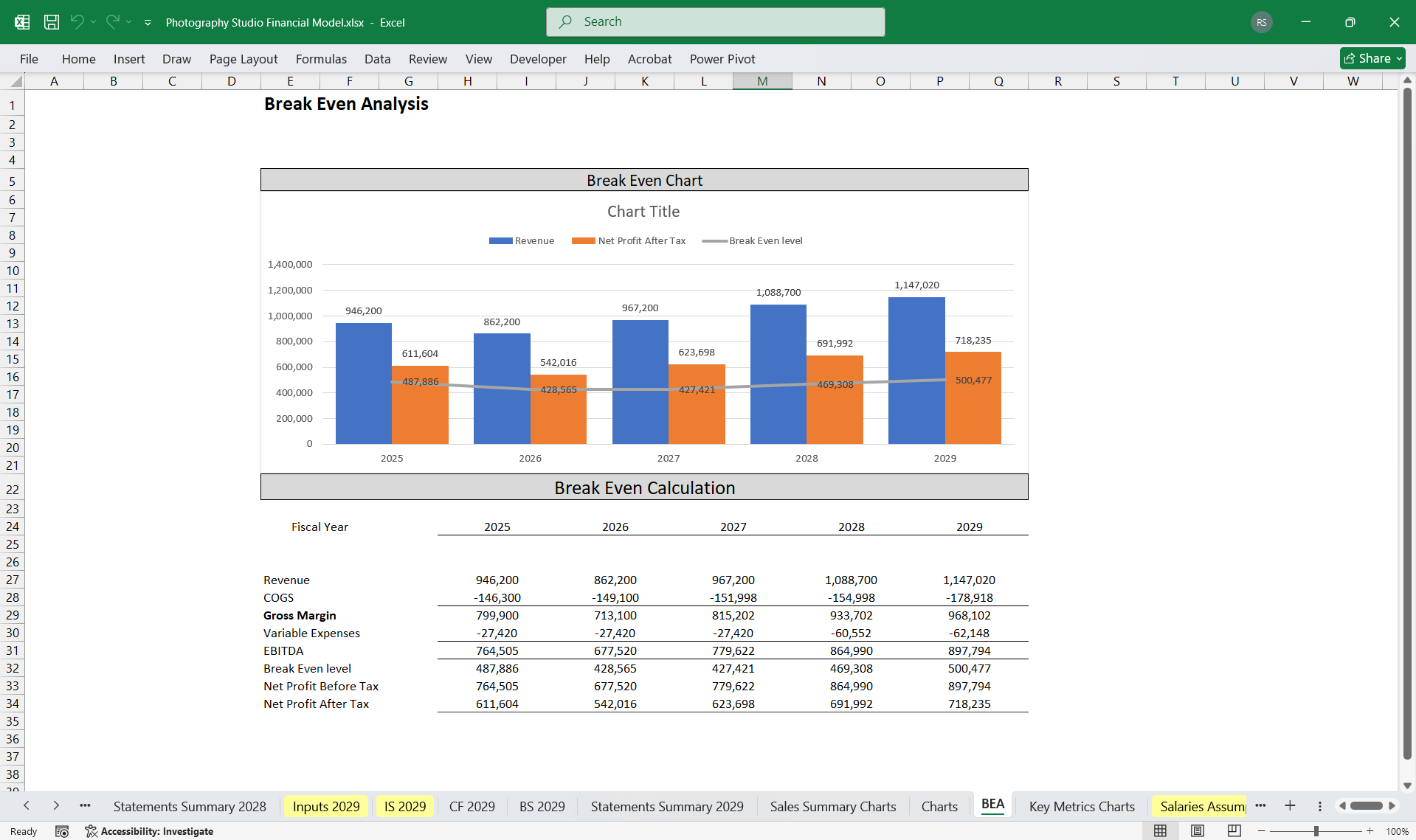
- Gross Profit = Revenue - COGS
- Operating Profit = Gross Profit - Operating Expenses
- Net Profit = Operating Profit - Taxes & Interest
2. Balance SheetThe Balance Sheet provides a snapshot of the studio’s financial position at a given time. It consists of Assets, Liabilities, and Equity.
Assets
- Current Assets
- Cash & Bank Balances: Studio’s available cash.
- Accounts Receivable: Payments due from clients.
- Inventory: Printing supplies, frames, and pre-purchased props.
- Non-Current Assets
- Photography Equipment: Cameras, lenses, lighting gear (less depreciation).
- Studio Furniture & Fixtures: Sofas, desks, decor.
- Intangible Assets: Brand value, domain names.
- Current Liabilities
- Accounts Payable: Amounts owed to suppliers, freelancers.
- Short-Term Loans: Any credit lines or small business loans.
- Long-Term Liabilities
- Business Loans: Long-term financing for studio space or equipment.
- Owner’s Capital: Initial investment by the owner.
- Retained Earnings: Accumulated profits reinvested into the business.
3. Cash Flow StatementThe Cash Flow Statement tracks how cash moves through the business across three activities: Operating, Investing, and Financing Cash Flows.
Operating Cash Flow (Day-to-Day Business)
- Cash Inflows:
- Revenue from studio rentals, photography sessions, and printing services.
- Payments received from clients.
- Cash Outflows:
- Rent, utilities, and salaries.
- Equipment maintenance and software subscriptions.
- Marketing and advertising expenses.
- Cash Outflows:
- Purchasing new photography gear, computers, or studio upgrades.
- Cash Inflows:
- Selling old equipment.
- Cash Inflows:
- Business loans or investments from owners.
- Cash Outflows:
- Loan repayments and interest payments.
If operating cash flow is positive, the business is generating enough cash to sustain itself.
Financial Model IntegrationA 3-statement financial model links these together:
- The Income Statement determines the net profit.
- Net profit flows into the Balance Sheet as retained earnings.
- The Cash Flow Statement shows how profit translates into cash available.
This Best Practice includes
1 Excel Financial Model
Further information
Provides thorough oversight, tracking, and reporting of your Photography Studio's finances, including updates on budget utilisation and projections.