

Originally published: 29/01/2025 14:30
Publication number: ELQ-19333-1
View all versions & Certificate
Publication number: ELQ-19333-1
View all versions & Certificate

Fitness Gym Financial Model 5 Year 3 Statement
A comprehensive editable 5-year 3-statement MS Excel spreadsheet for tracking a Fitness Gym's finances.
 by AllFinancialModels
AllFinancialModels offer a curated selection of high-quality yet financial model templates designed to support a wide range of business needs.Follow
Description
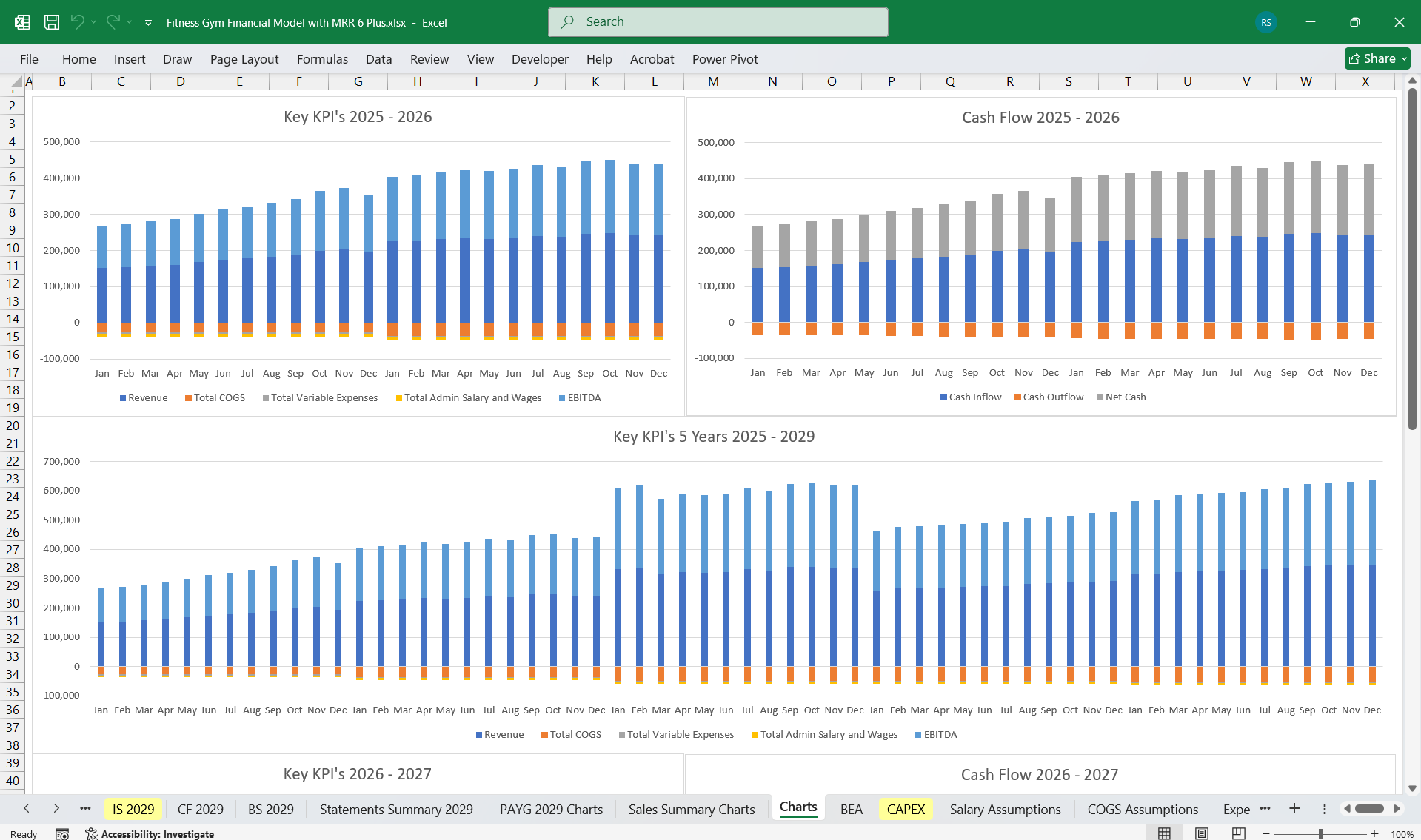
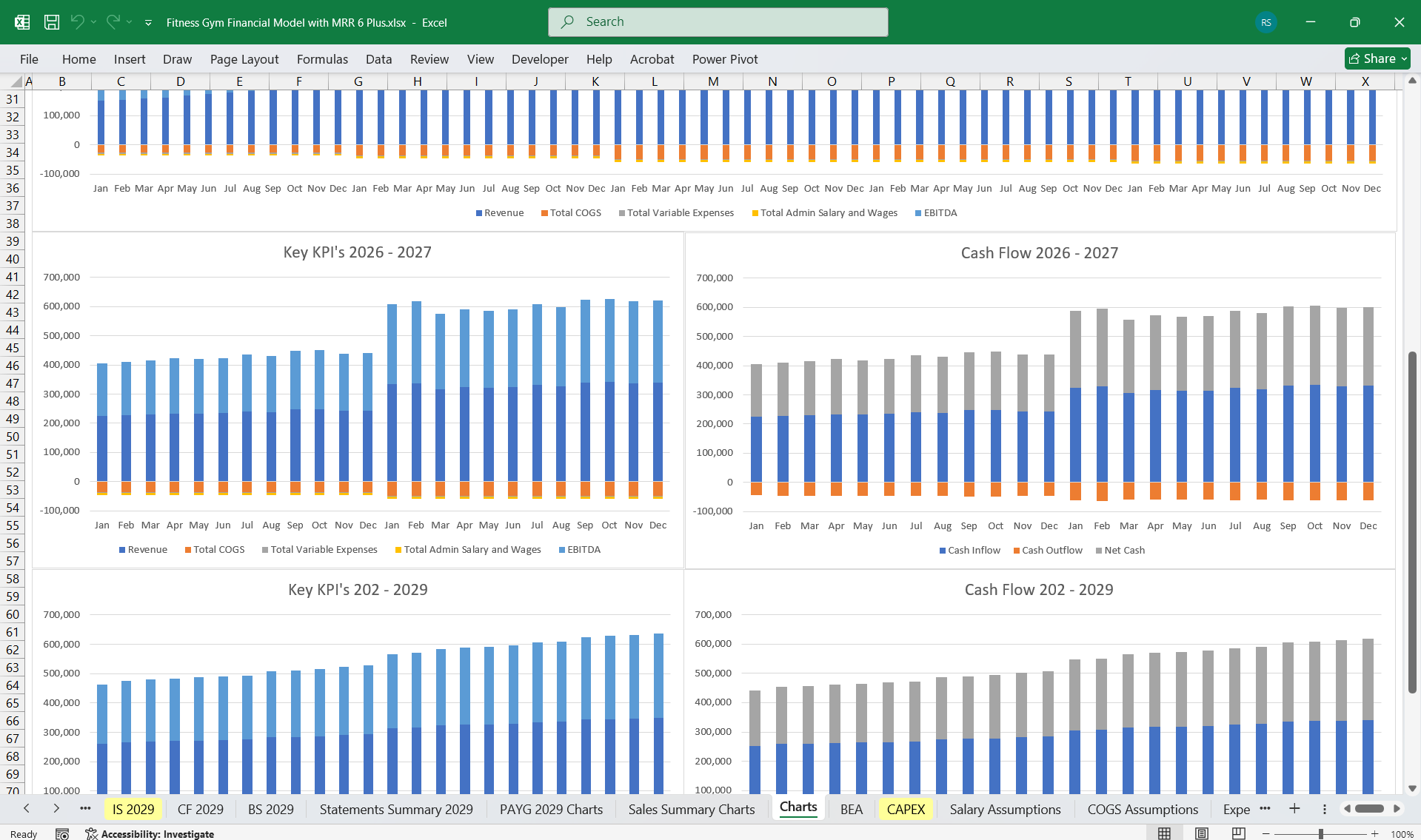
This 5-Year, 3-Statement Financial Model for a Fitness Gym includes detailed projections for the Income Statement, Cash Flow Statement, and Balance Sheet, along with assumptions for revenue, expenses, financing, and growth. Below is a comprehensive breakdown, including a 6-Tier Subscription Model for revenue generation.
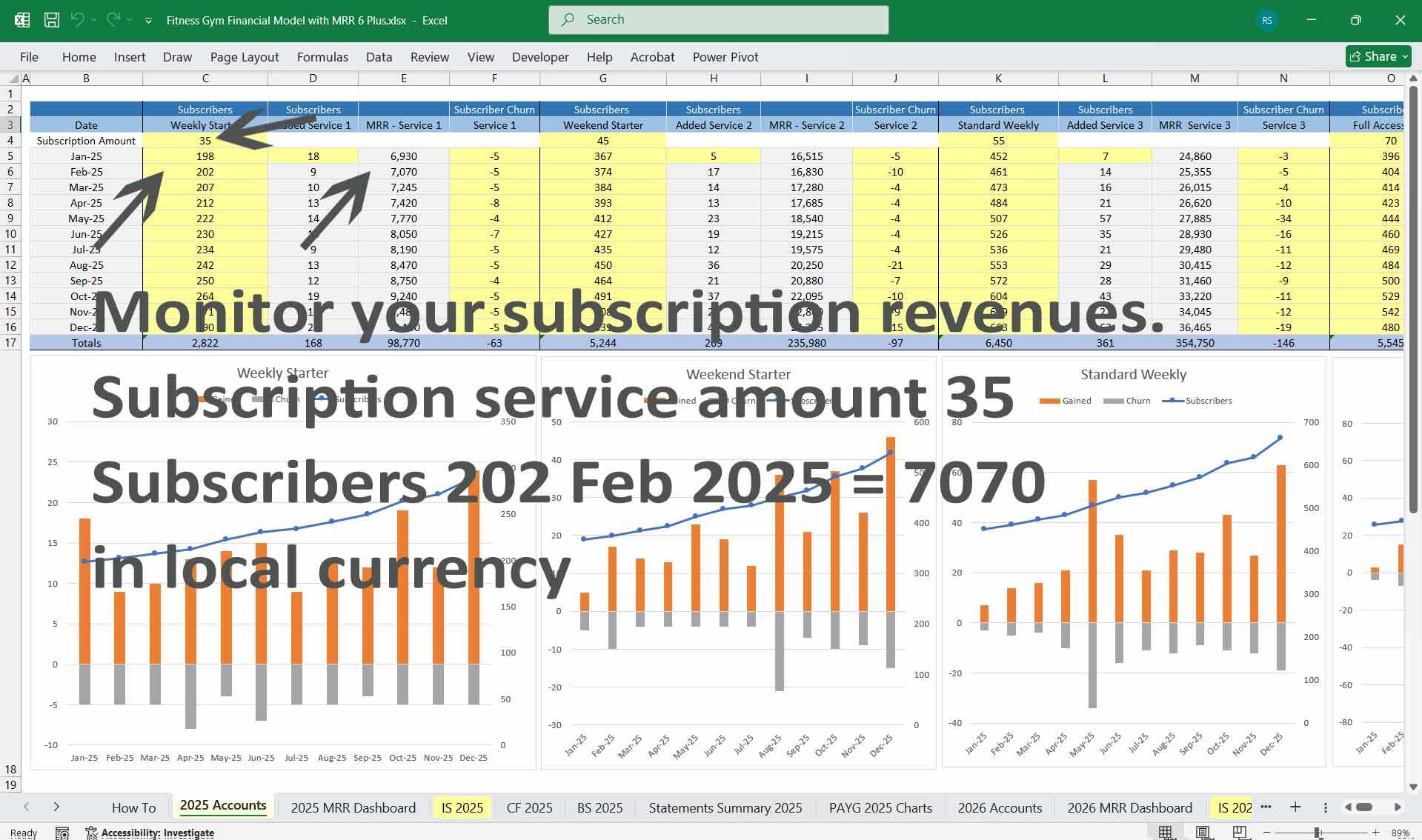
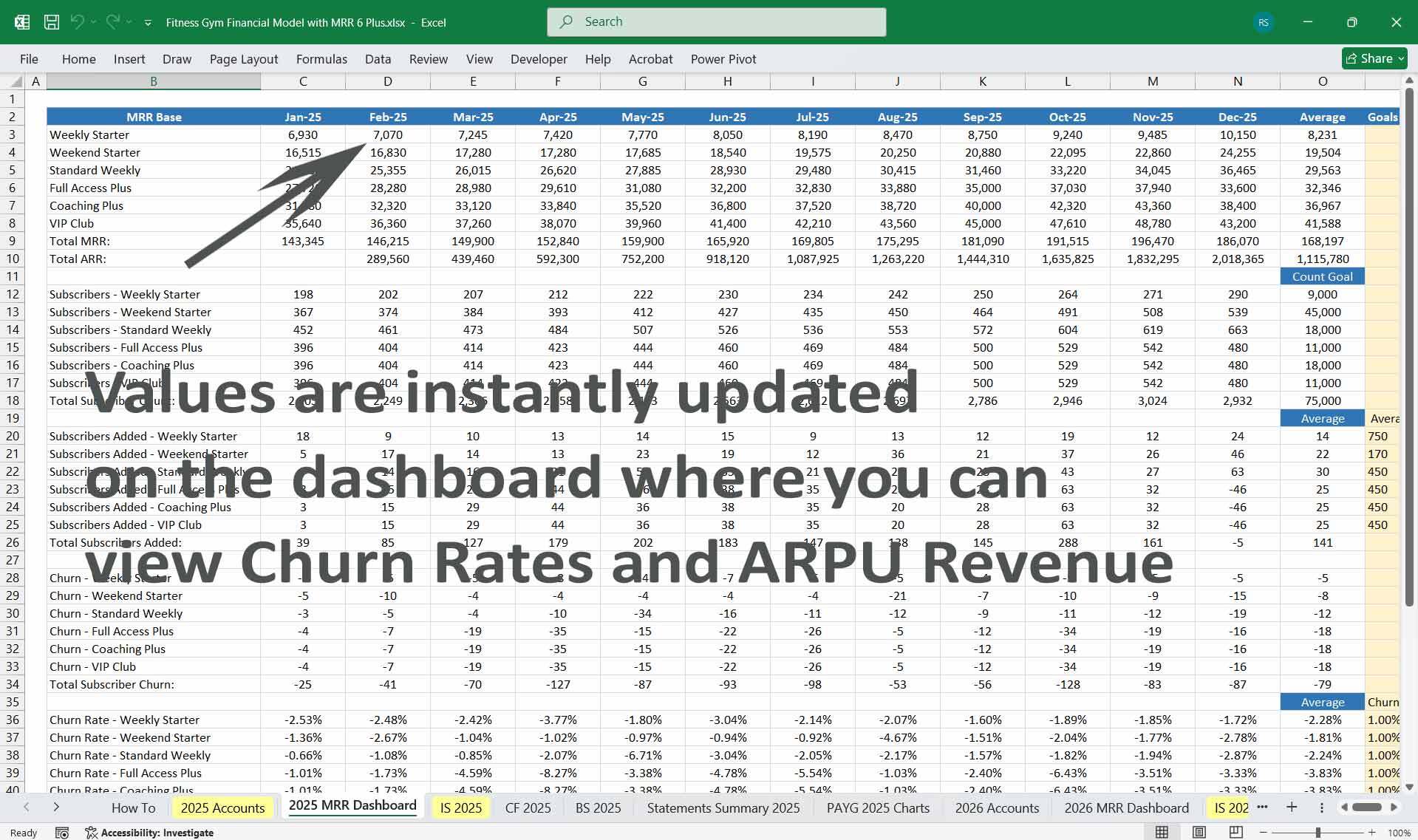
5-year financial model with 13 PAYG revenue inputs and 6 Subscription Tiers (All editable).
1. Revenue Model: 6-Tier Subscription PlanThe gym generates revenue primarily through memberships. A 6-tier pricing structure offers different benefits:
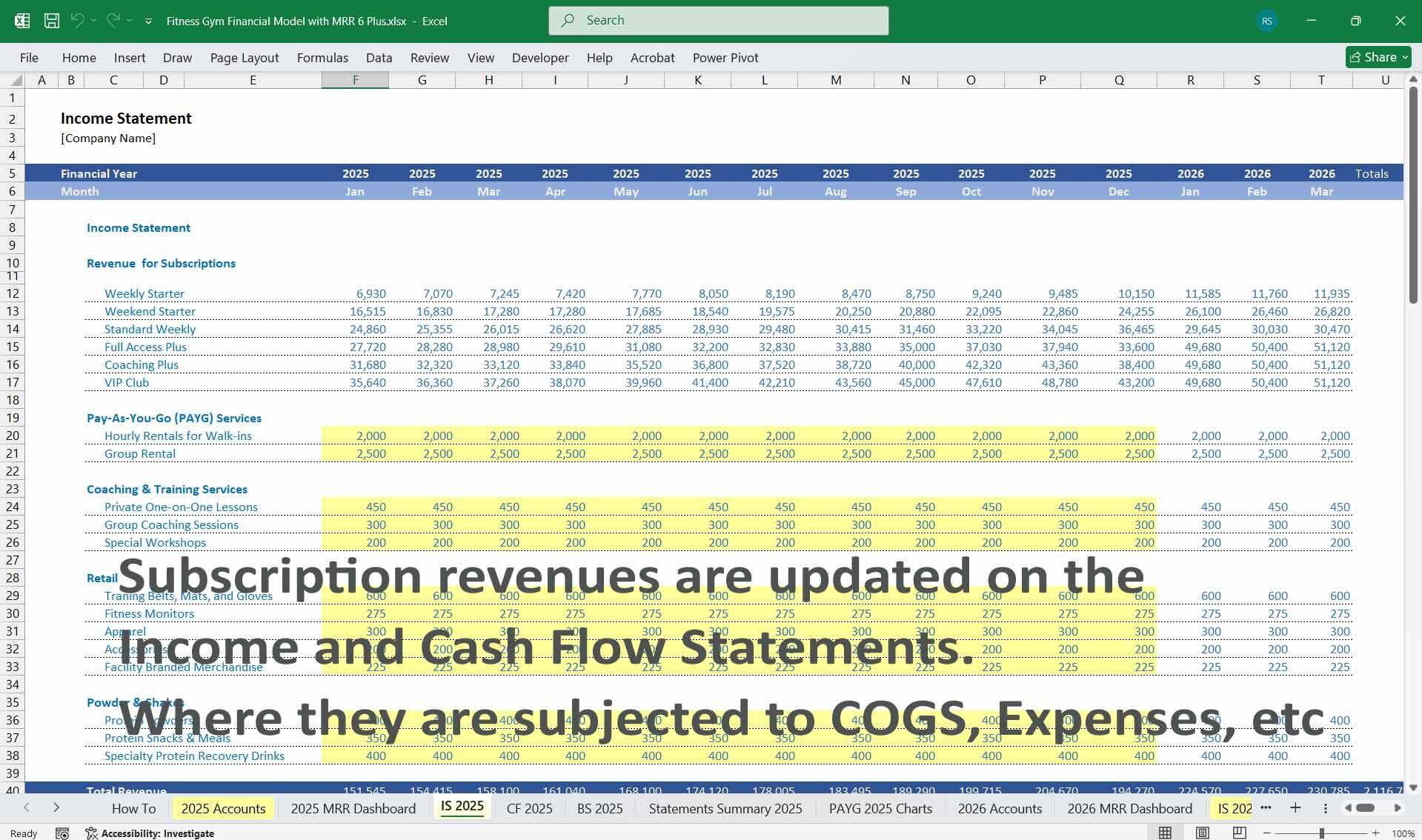
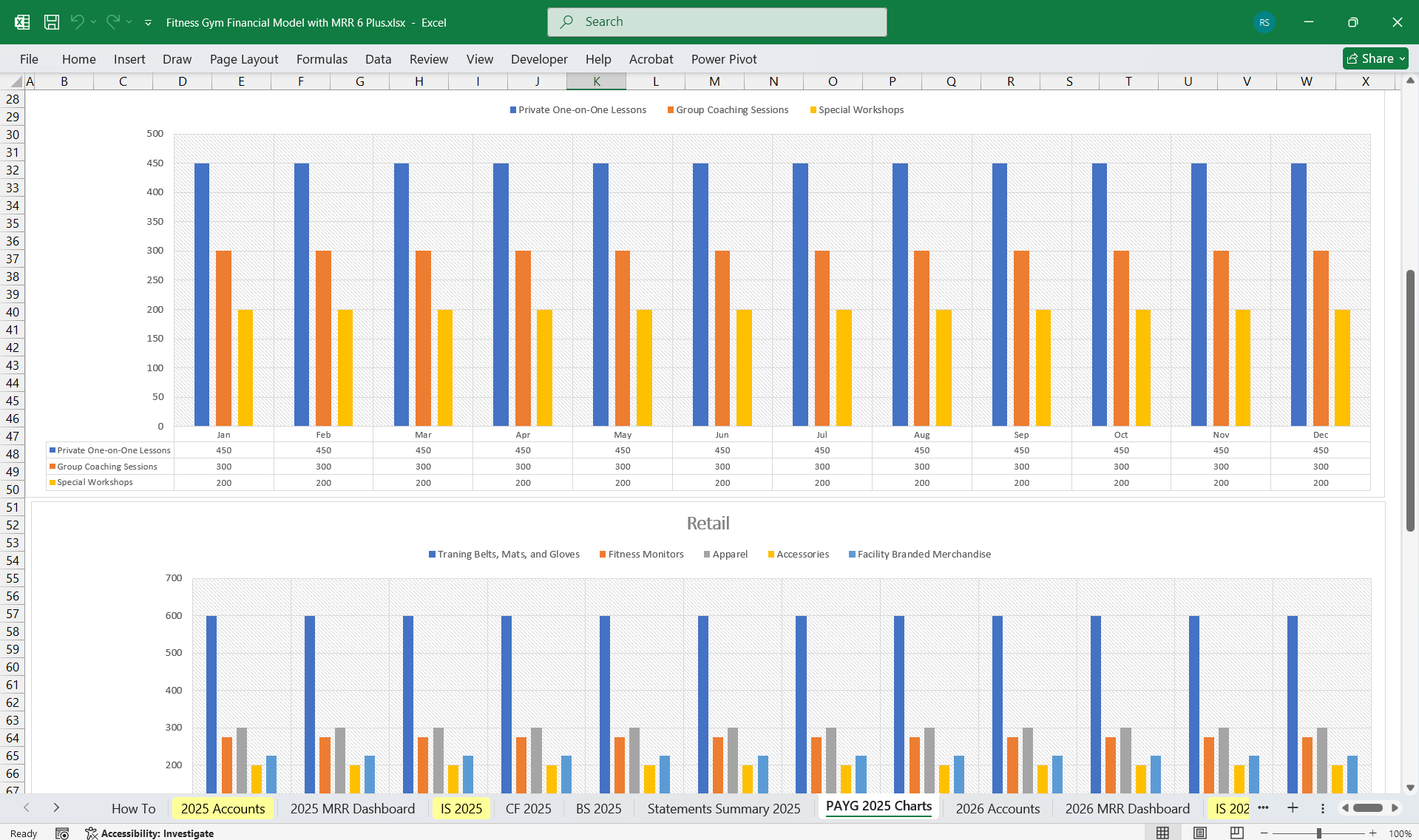
Additional PAYG Revenue Streams: (All editable)
2. Three-Statement Financial ModelThis model integrates revenue, costs, financing, and projected profitability.
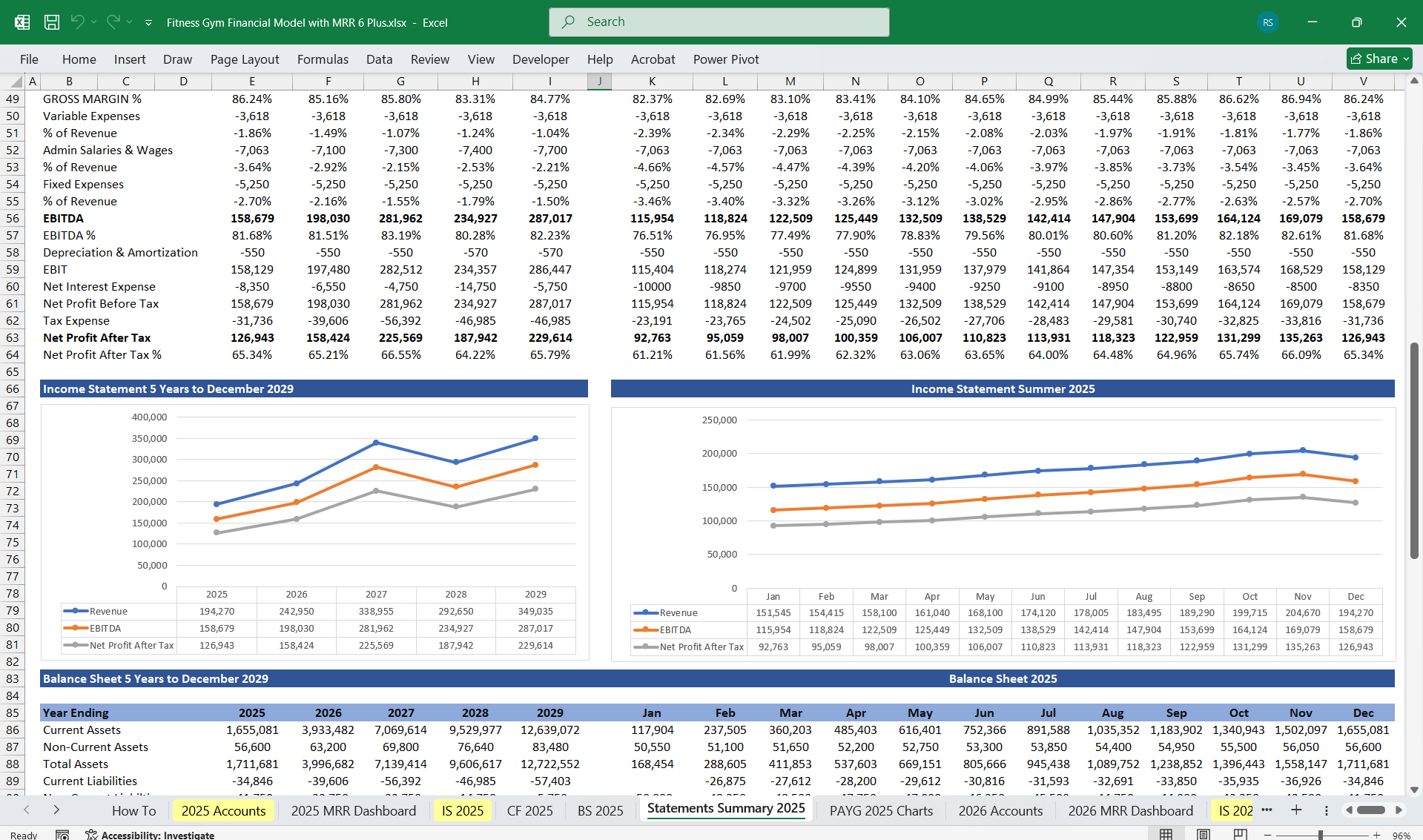
A. Income Statement (Profit & Loss Statement)This captures the revenue and expenses over five years to project profitability.
Revenue:
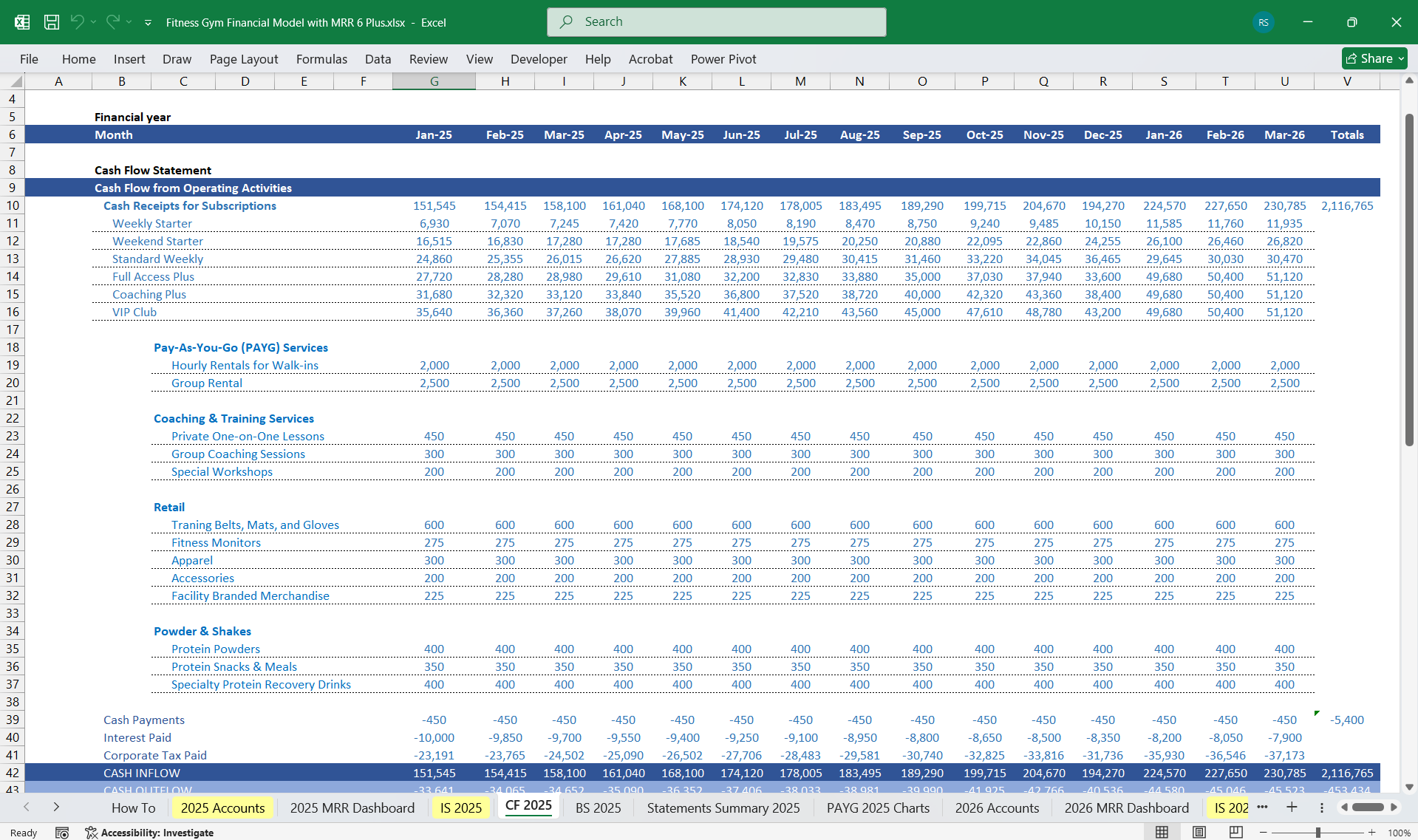
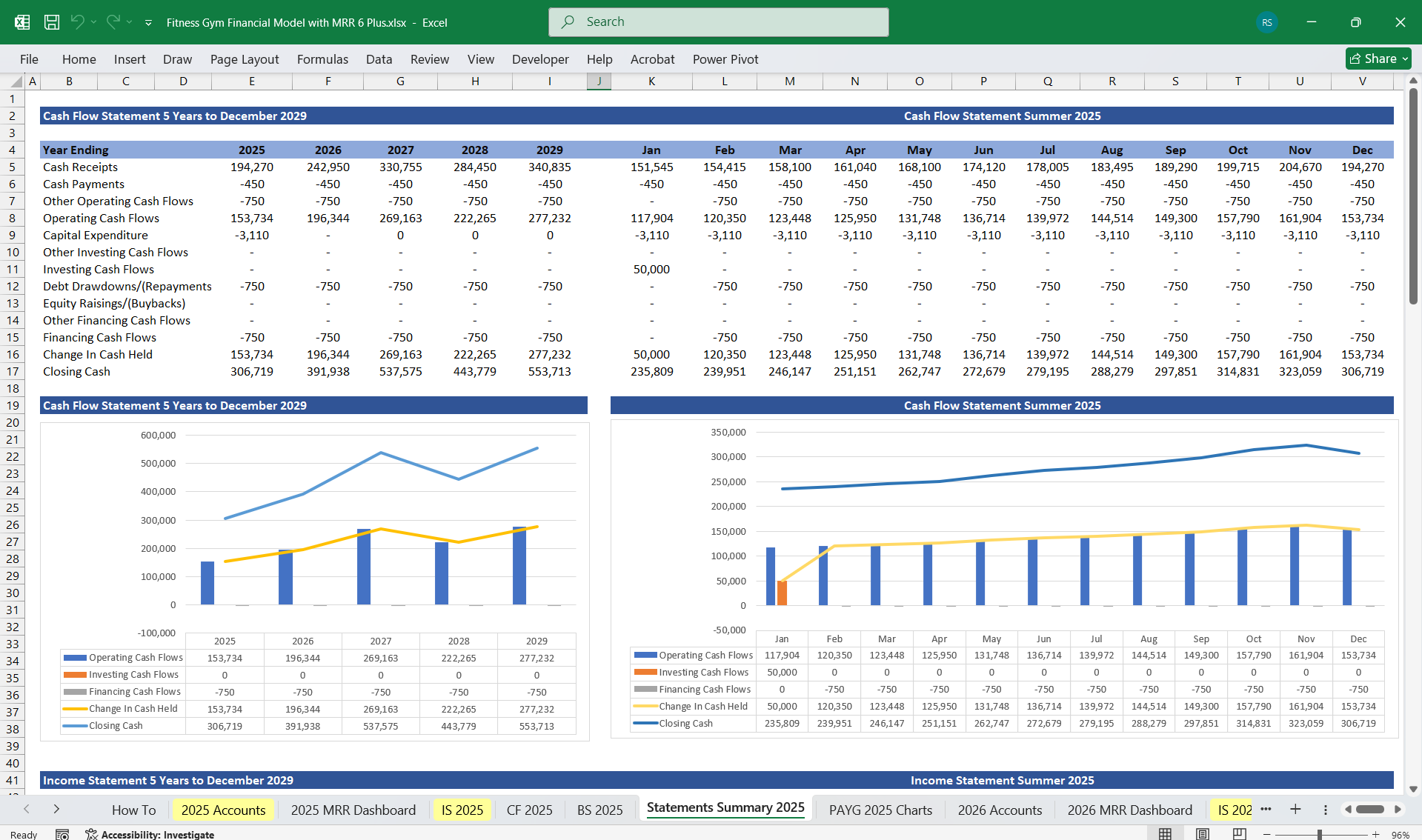
Cash Inflows:
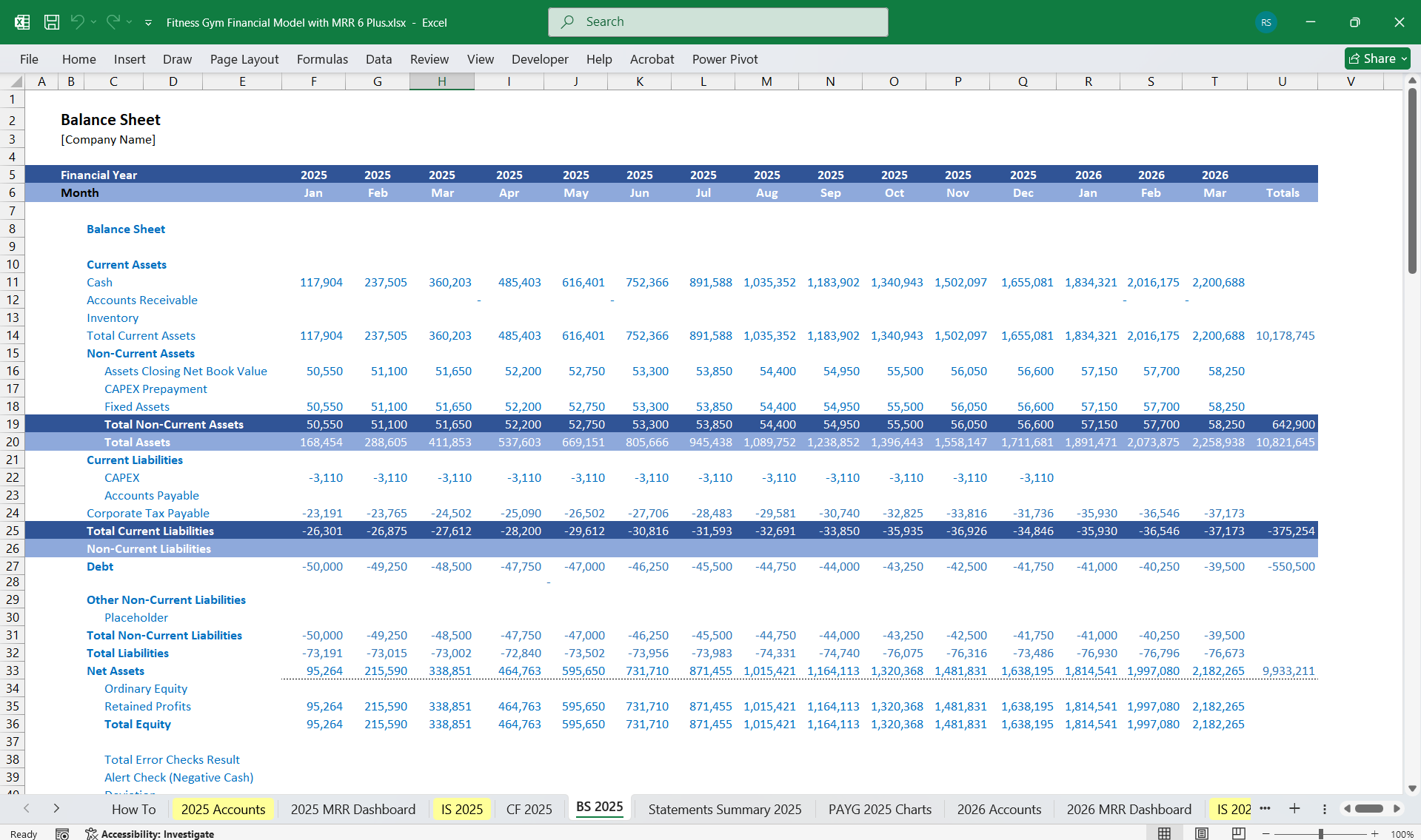
C. Balance SheetReflects the financial position at any given time.
Assets:
Assets = Liabilities + Equity (Ensures balance)
3. Additional Features for Financial Modeling
This 5-Year, 3-Statement Financial Model provides a comprehensive look at revenues, costs, and financial stability for a fitness gym. The 6-Tier Subscription Plan allows flexibility for different customer segments, ensuring strong cash flow and profitability over time.
This 5-Year, 3-Statement Financial Model for a Fitness Gym includes detailed projections for the Income Statement, Cash Flow Statement, and Balance Sheet, along with assumptions for revenue, expenses, financing, and growth. Below is a comprehensive breakdown, including a 6-Tier Subscription Model for revenue generation.
5-year financial model with 13 PAYG revenue inputs and 6 Subscription Tiers (All editable).
1. Revenue Model: 6-Tier Subscription PlanThe gym generates revenue primarily through memberships. A 6-tier pricing structure offers different benefits:
- Weekly Starter
- Weekend Starter
- Standard Weekly
- Full Access Plus
- Coaching Plus
- VIP Club
Additional PAYG Revenue Streams: (All editable)
- Hourly Rentals for Walk-ins
- Group Rental
- Coaching & Training Services
- Private One-on-One Lessons
- Group Coaching Sessions
- Special Workshops
- Retail
- Training Belts, Mats, and Gloves
- Fitness Monitors
- Apparel
- Accessories
- Facility Branded Merchandise
- Powder & Shakes
- Protein Powders
- Protein Snacks & Meals
- Specialty Protein Recovery Drinks
2. Three-Statement Financial ModelThis model integrates revenue, costs, financing, and projected profitability.
A. Income Statement (Profit & Loss Statement)This captures the revenue and expenses over five years to project profitability.
Revenue:
- Membership Fees (Based on the 6-tier plan)
- Add-ons (Personal training, merchandise, etc.)
- Corporate Memberships
- Day Passes
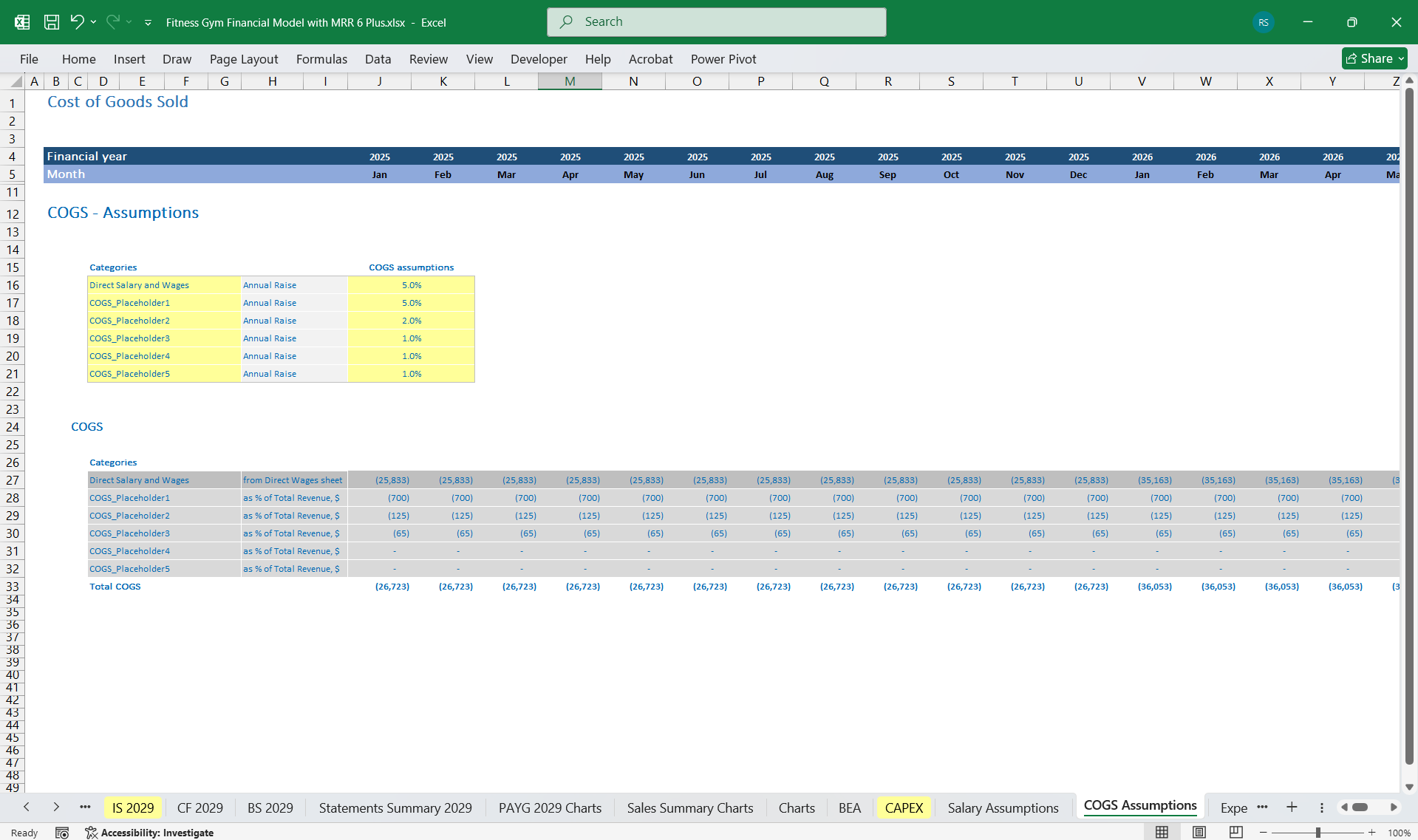
- Trainer Wages (For classes & personal training)
- Merchandise Cost
- Supplements & Beverages
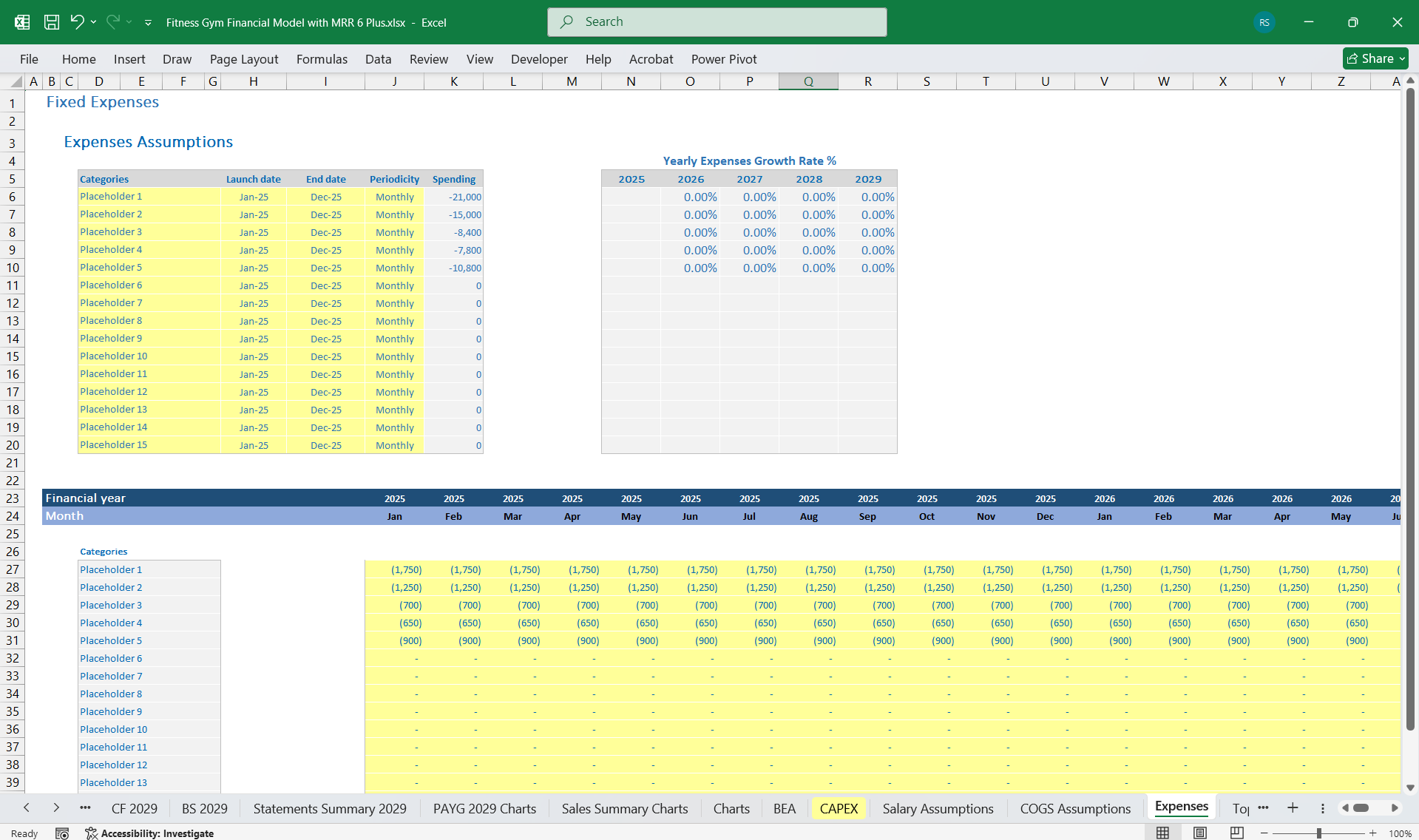
- Rent & Utilities (Lease payments for gym space)
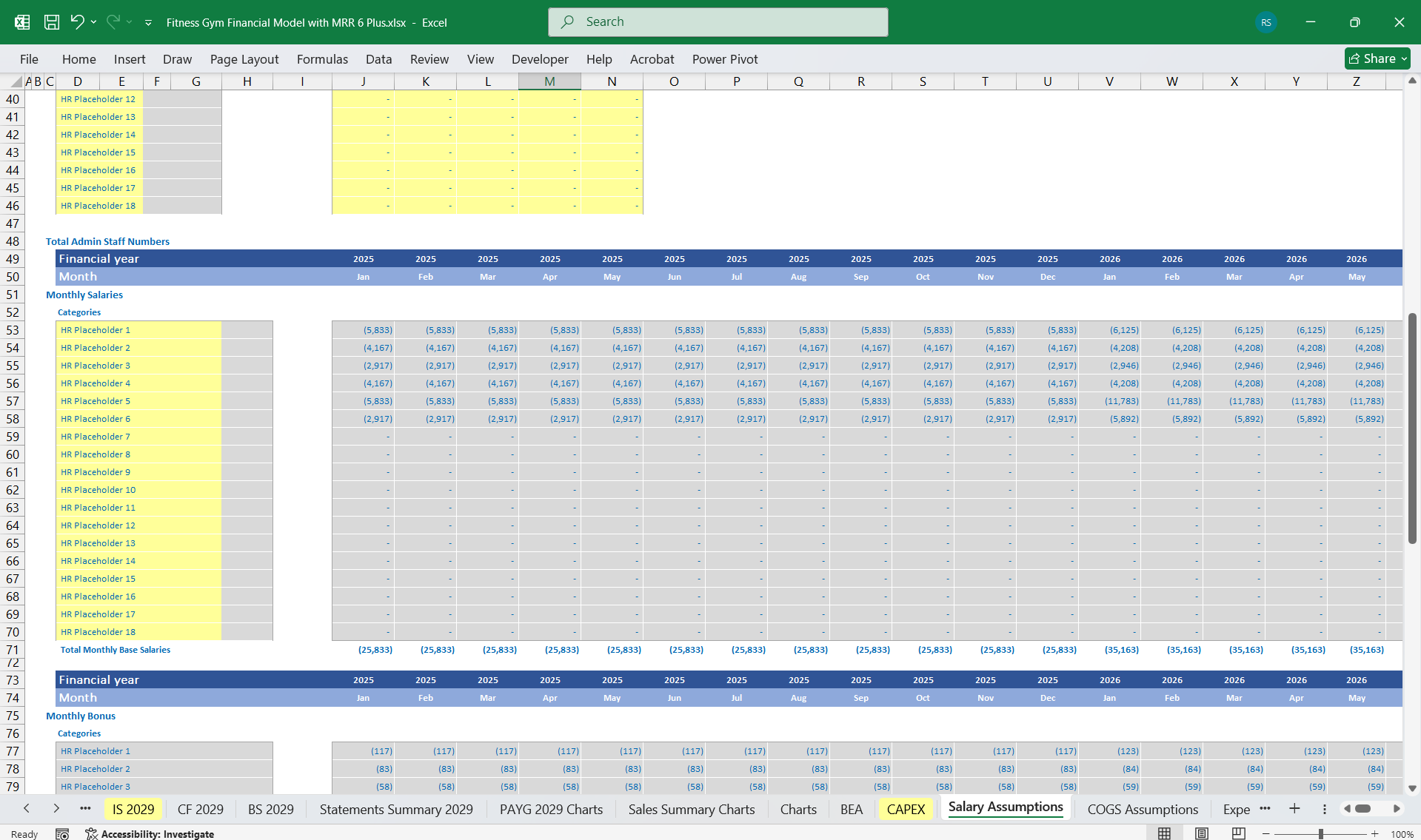
- Salaries (Front desk staff, cleaners, admin, manager)
- Equipment Maintenance & Replacements
- Insurance (Liability, property, employee health)
- Marketing (Social media, online ads, local sponsorships)
- Software & Subscription Fees (CRM, scheduling software)
- Legal & Accounting
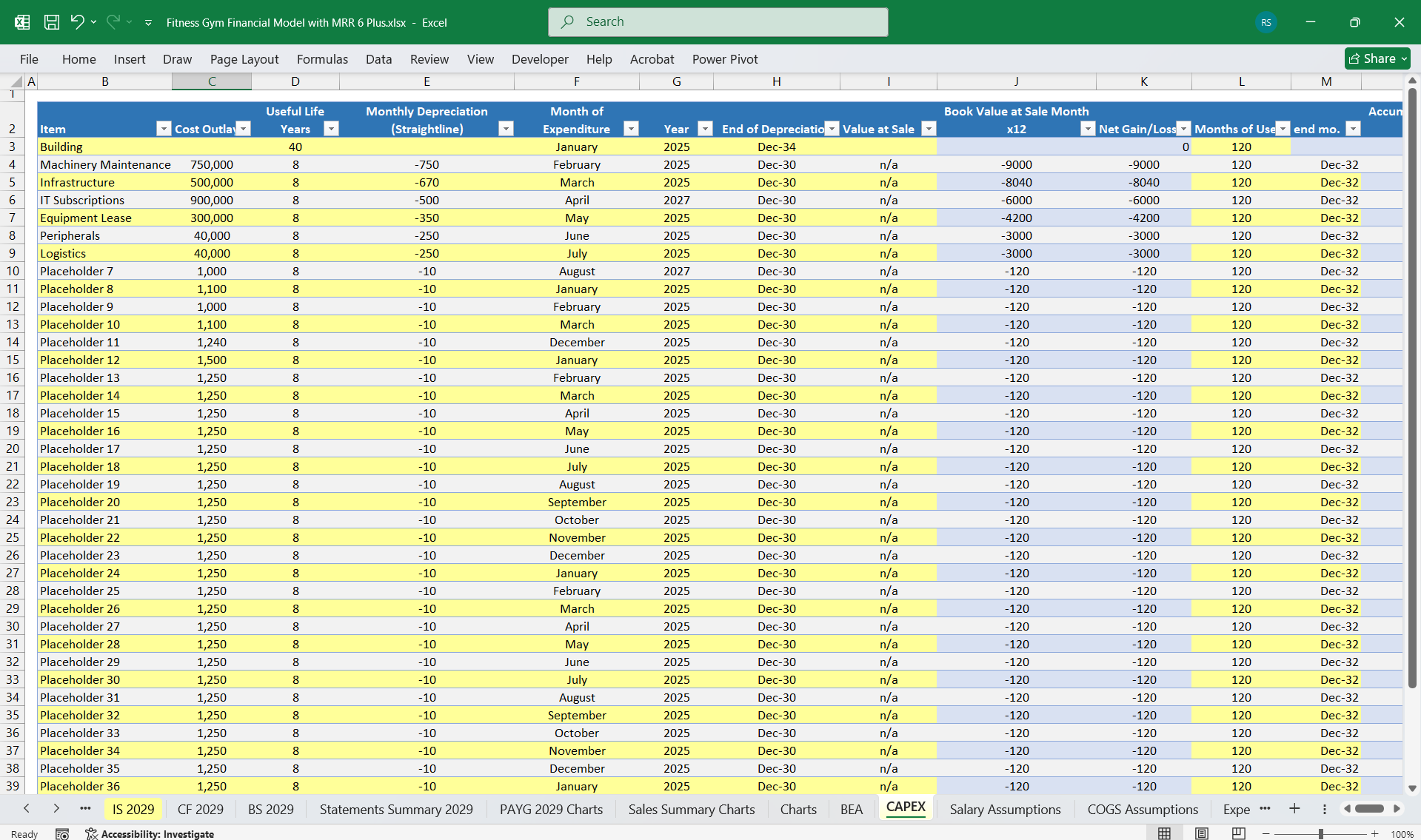
- Gym equipment, leasehold improvements
- Gross Profit = Revenue - COGS
- EBITDA = Gross Profit - Operating Expenses
- EBIT (Earnings Before Interest & Taxes) = EBITDA - Depreciation & Amortization
- Net Income = EBIT - Interest - Taxes
- Year-over-year growth of 10-15% in memberships
- Increase in personal training & merchandise sales
- Operating profit margins improve as fixed costs are absorbed
Cash Inflows:
- Monthly Membership Payments
- Personal Training Fees
- Merchandise Sales
- Loans (if applicable)
- Rent & Utilities
- Payroll & Wages
- Loan Payments
- Equipment Purchases & Maintenance
- Marketing
- Taxes
- Software Subscriptions
- Operating Cash Flow (OCF) = Net Income + Depreciation + Changes in Working Capital
- Investing Cash Flow (ICF) = Equipment purchases & leasehold improvements
- Financing Cash Flow (FCF) = Loan payments, owner distributions
C. Balance SheetReflects the financial position at any given time.
Assets:
- Current Assets:
- Cash
- Accounts Receivable (from corporate clients, if applicable)
- Inventory (Merchandise & supplements)
- Fixed Assets:
- Gym Equipment
- Leasehold Improvements
- Intangible Assets:
- Brand & goodwill
- Current Liabilities:
- Accounts Payable
- Wages Payable
- Short-term Debt
- Long-Term Liabilities:
- Long-term Loans (If applicable)
- Equipment Financing
- Owner’s Equity = Initial Investment + Retained Earnings
Assets = Liabilities + Equity (Ensures balance)
3. Additional Features for Financial Modeling
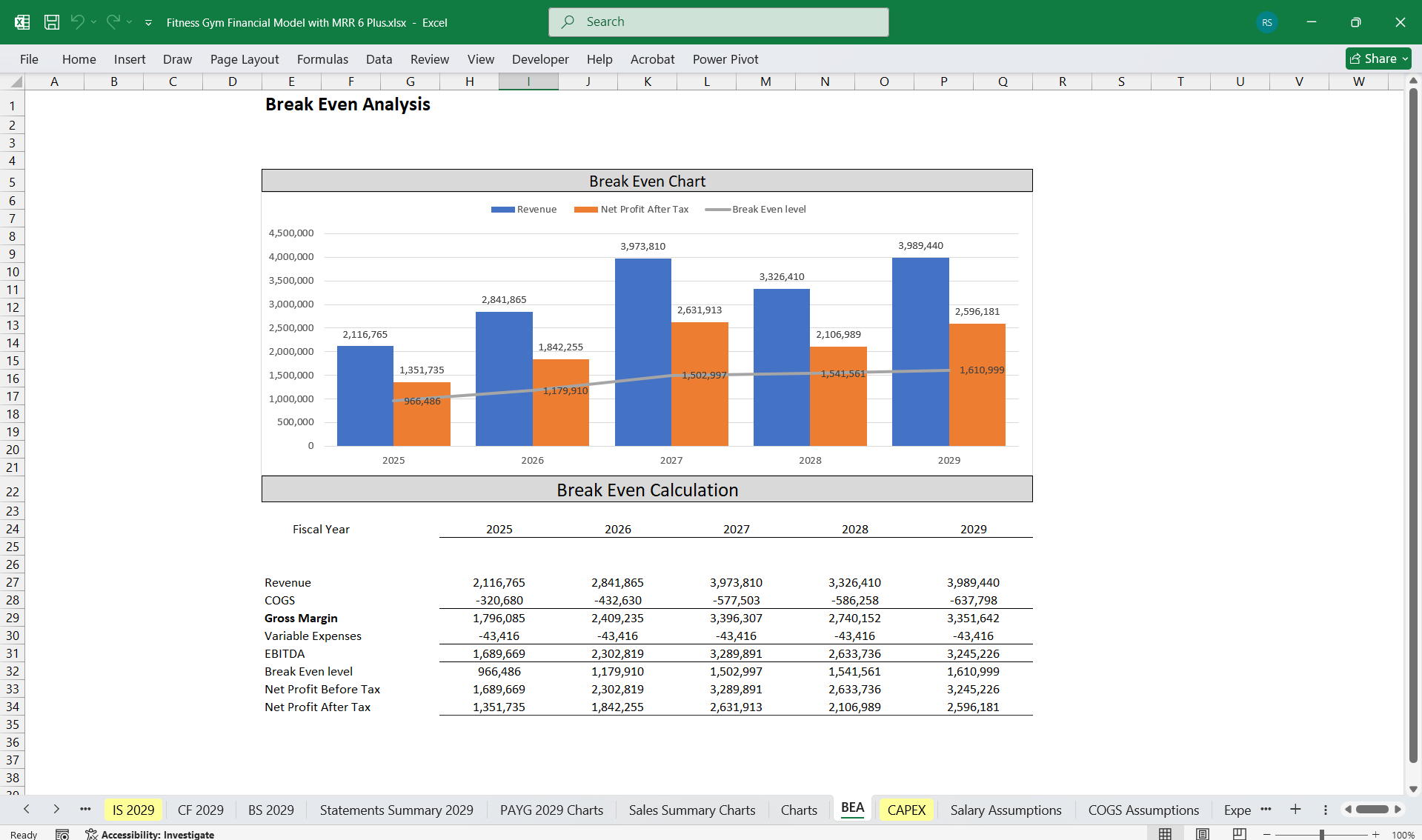
- Break-Even Analysis:
- Fixed Costs / (Price per unit - Variable cost per unit)
- Determines how many memberships are needed to cover costs.
- Sensitivity Analysis:
- Impact of changes in membership pricing
- Effect of increased expenses (rent, payroll)
- Growth Assumptions:
- Membership Growth = 10% YoY
- Personal Training Revenue Growth = 15% YoY
- Equipment Reinvestment every 3 years
- Bootstrapped (Owner funds, no external investment)
- Bank Loan (5-7 year repayment, 5-6% interest)
- Investor Funding (Offering a percentage stake in exchange for capital)
- Gym Setup: Leasehold improvements, equipment
- Marketing: Pre-launch campaign, local ads
- Working Capital: Covering early months before break-even
This 5-Year, 3-Statement Financial Model provides a comprehensive look at revenues, costs, and financial stability for a fitness gym. The 6-Tier Subscription Plan allows flexibility for different customer segments, ensuring strong cash flow and profitability over time.
This Best Practice includes
1 Excel Financial Model
Further information
Provides thorough oversight, tracking, and reporting of a Fitness Gym's finances, including updates on budget utilisation and projections.