

GloBE Pillar Two Global Minimum Tax Model
Originally published: 31/08/2026 08:22
Publication number: ELQ-88921-1
View all versions & Certificate
certified

GloBE Pillar Two Global Minimum Tax Model

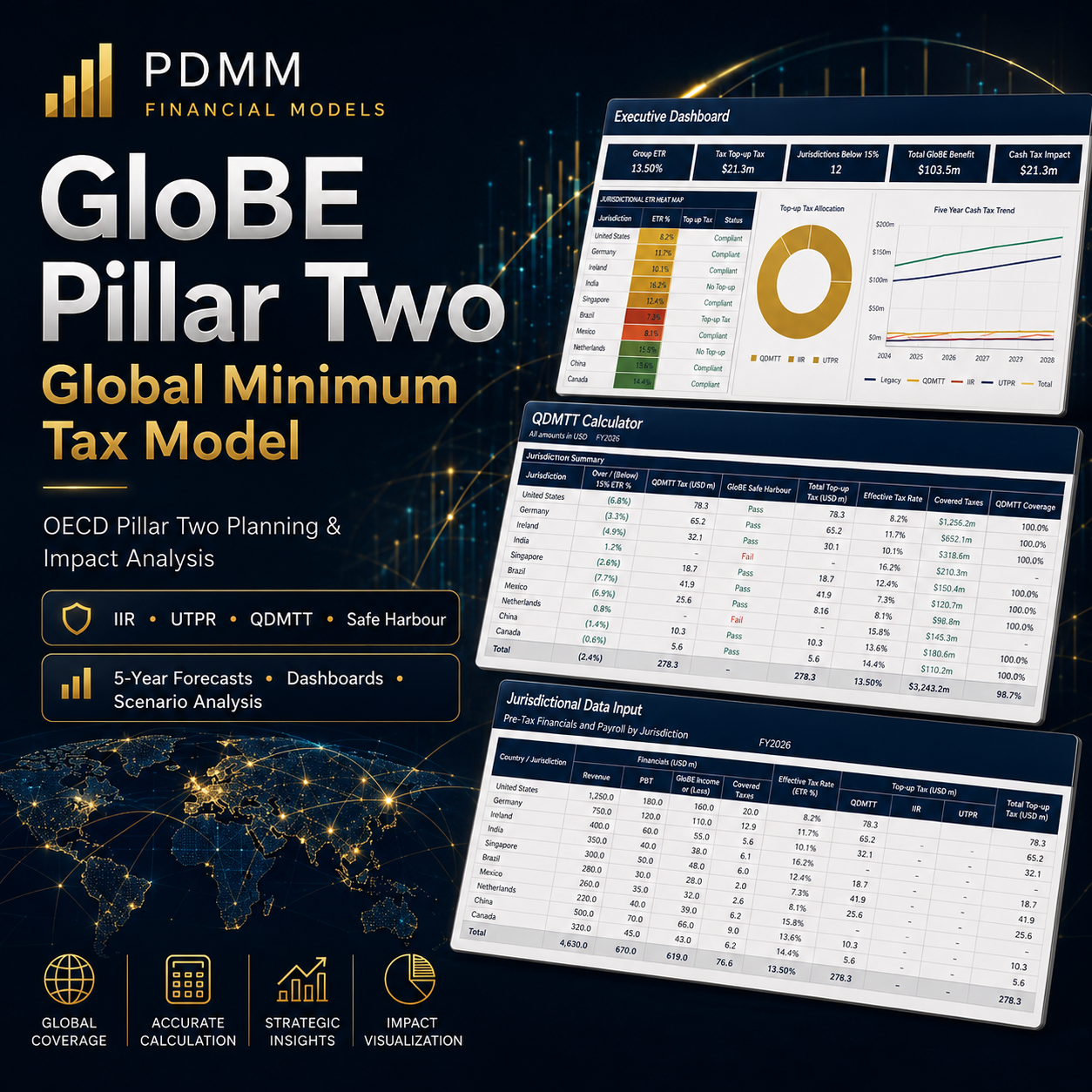
30-module Pillar Two Excel model for ETR, QDMTT, IIR, UTPR, safe harbours, cash tax, EPS/FCF, dashboards and audit checks.

Description

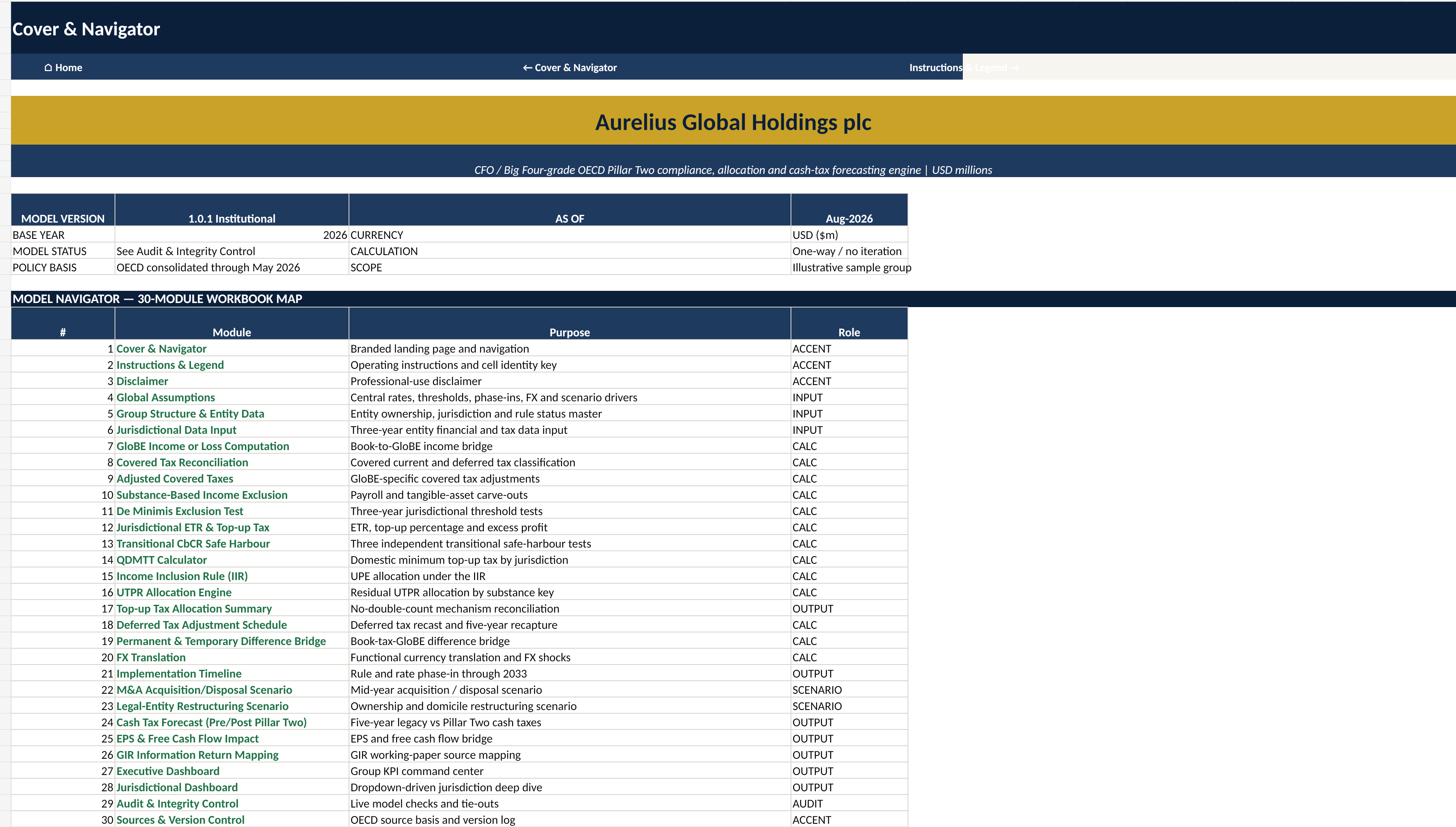
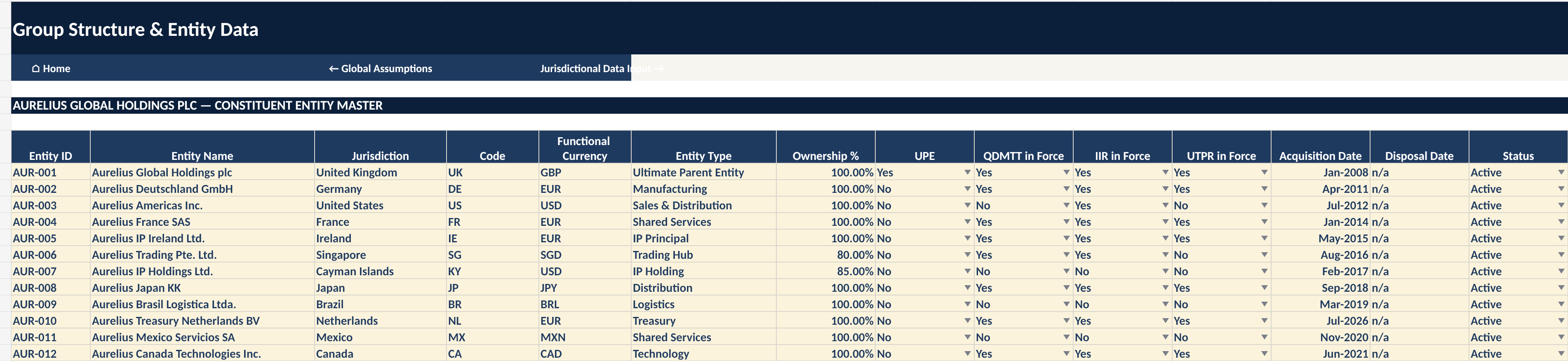
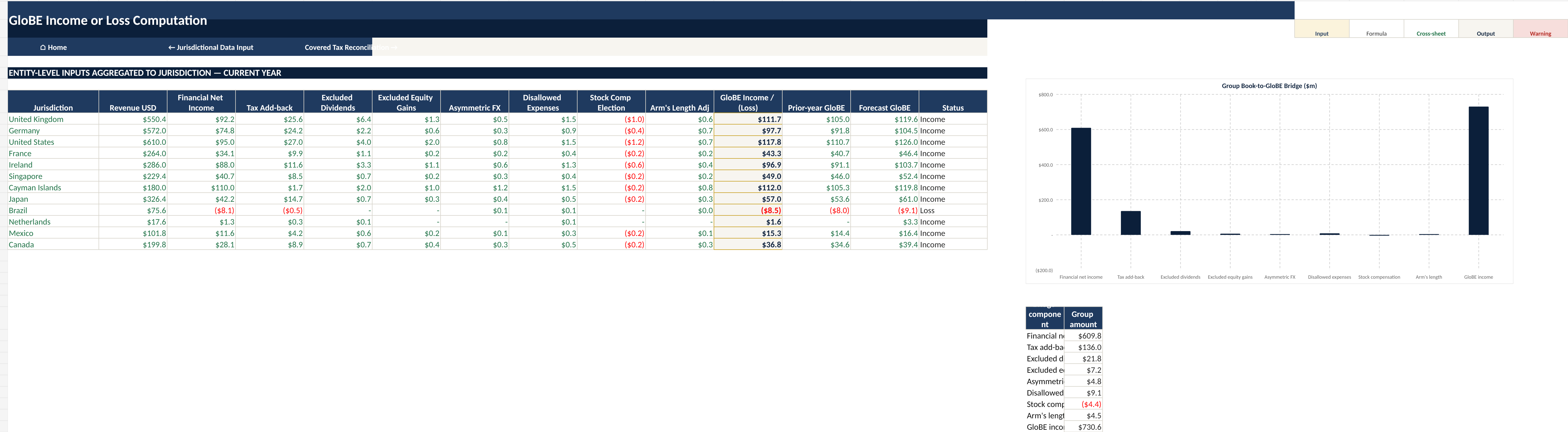
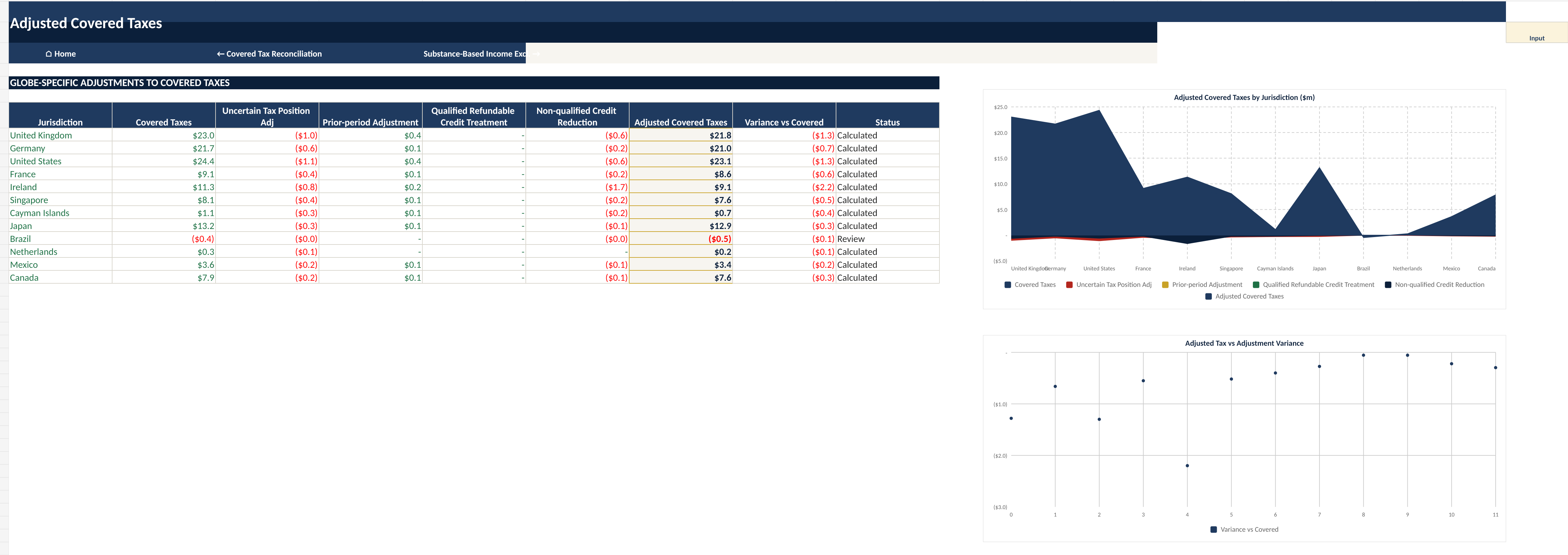
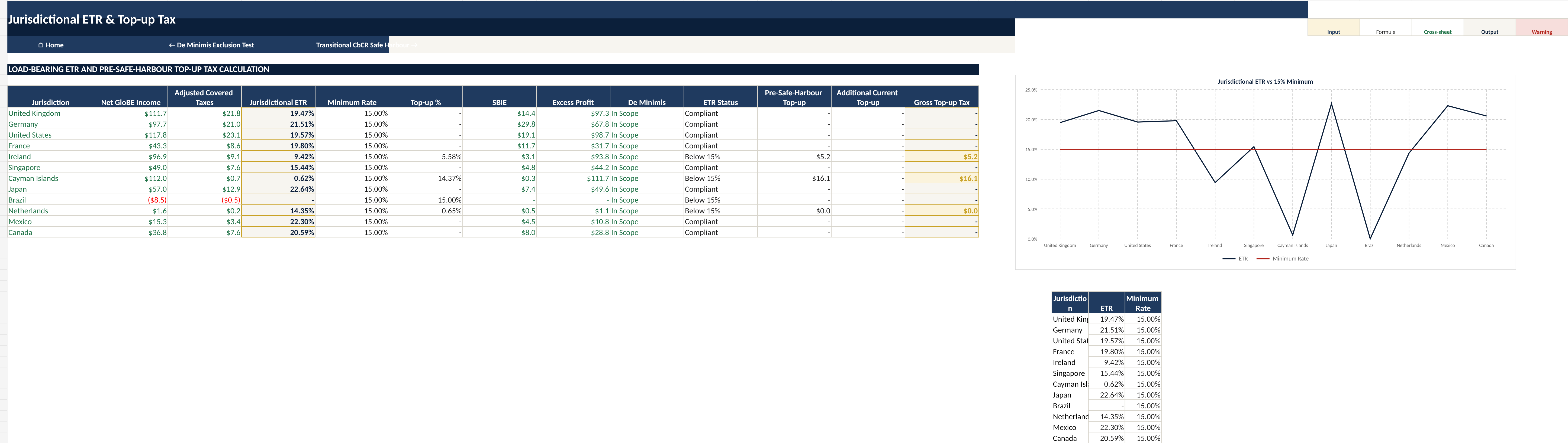
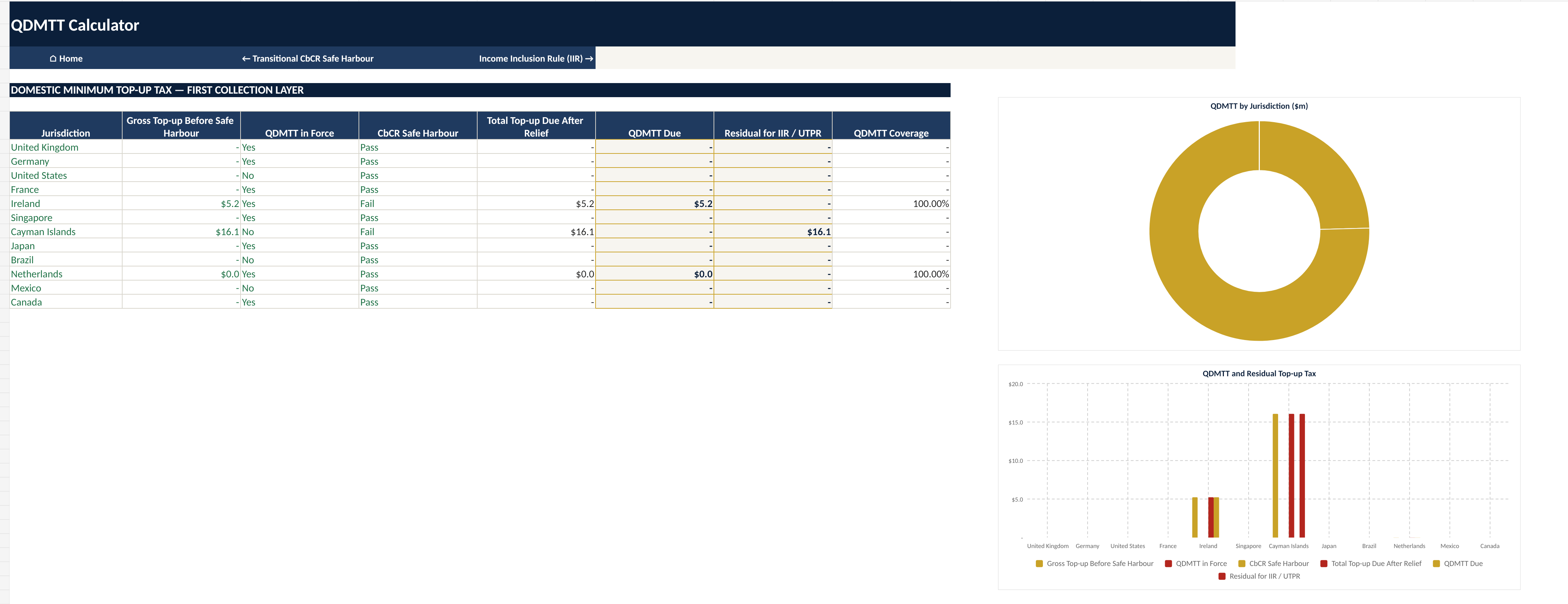
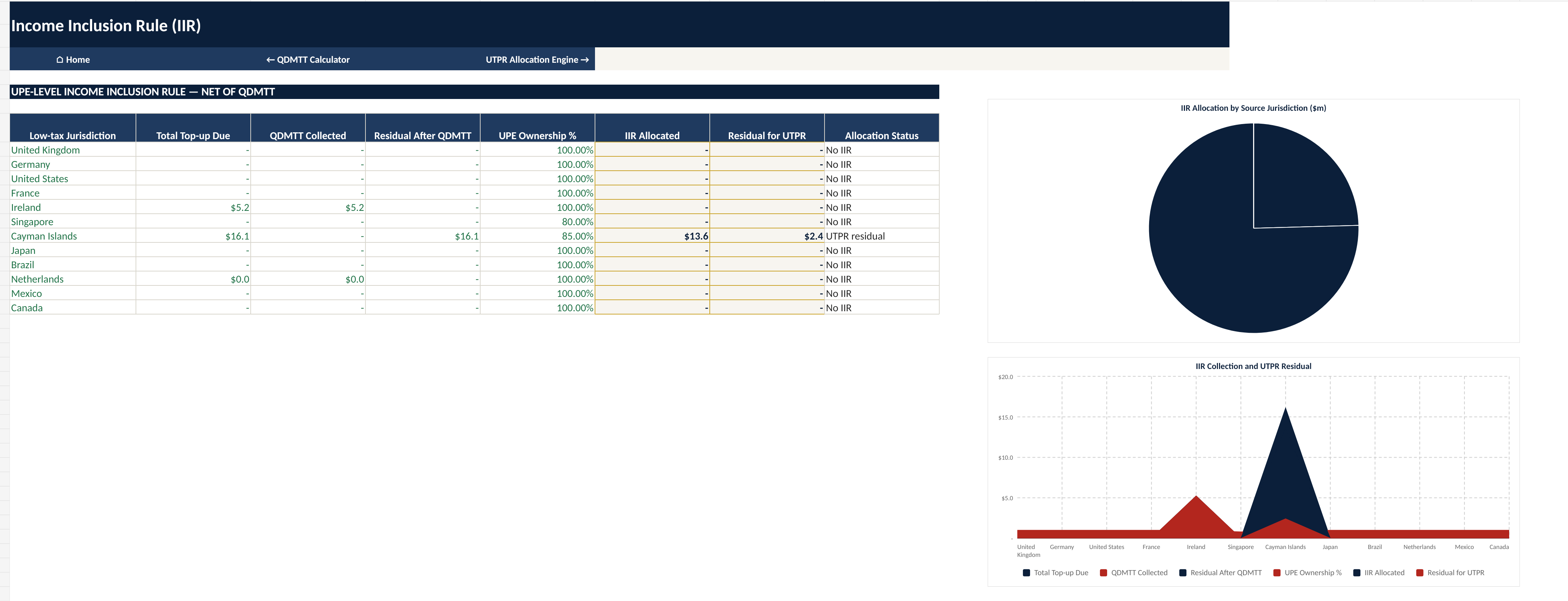
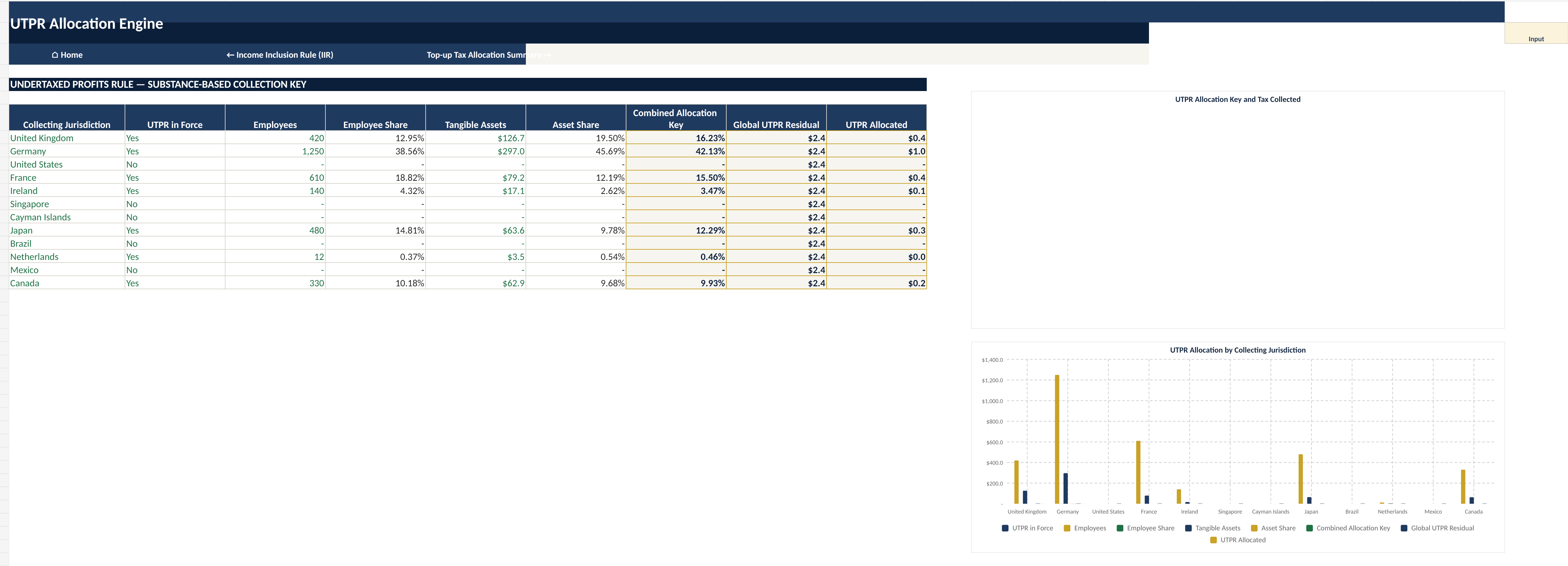
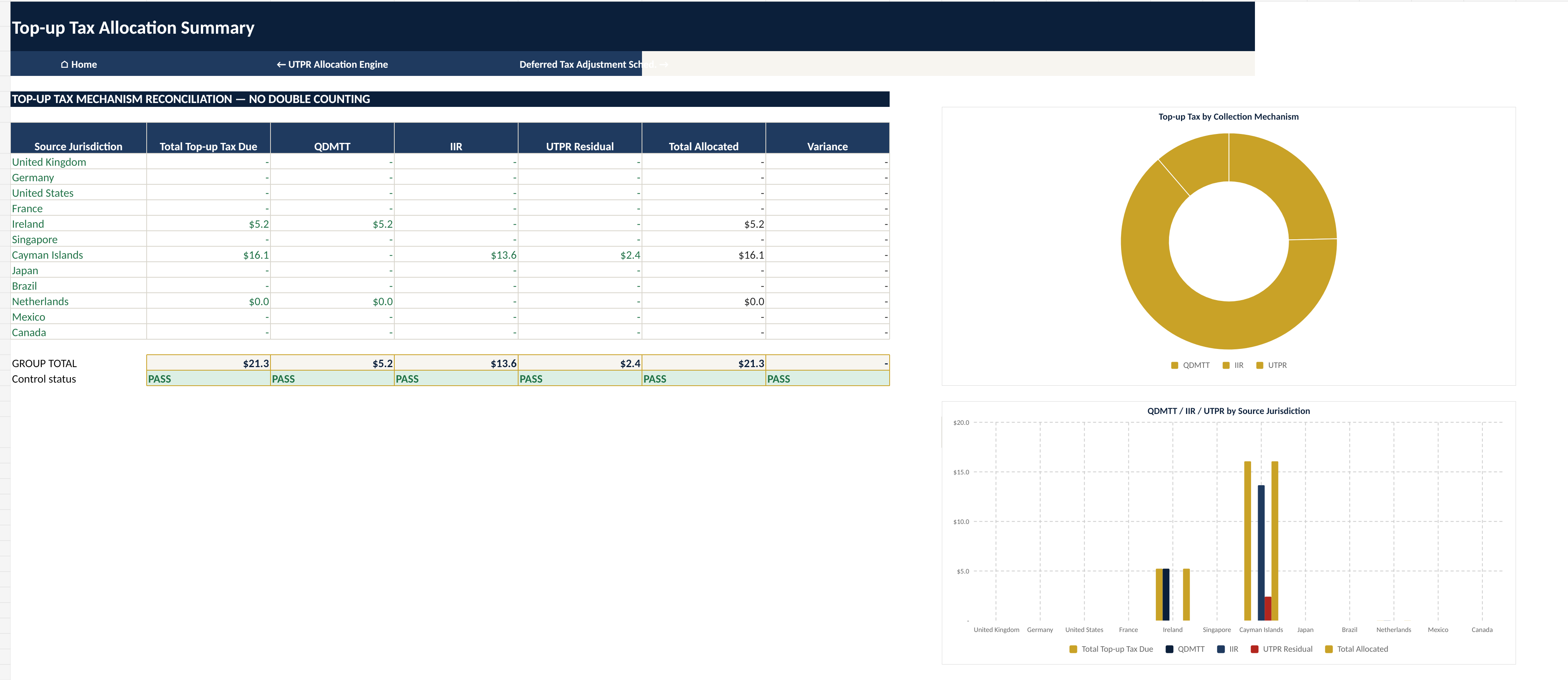
The GloBE Pillar Two Global Minimum Tax Model is a 30-module editable Excel workbook for structured analysis of multinational exposure under the OECD Pillar Two framework. It is designed as a connected working model: users review central assumptions, replace the illustrative entity and jurisdictional data, calculate GloBE income and adjusted covered taxes, test exclusions and safe harbours, determine jurisdictional ETR and top-up tax, and then allocate the resulting tax through QDMTT, IIR, and UTPR mechanisms.

The workbook contains modules for:

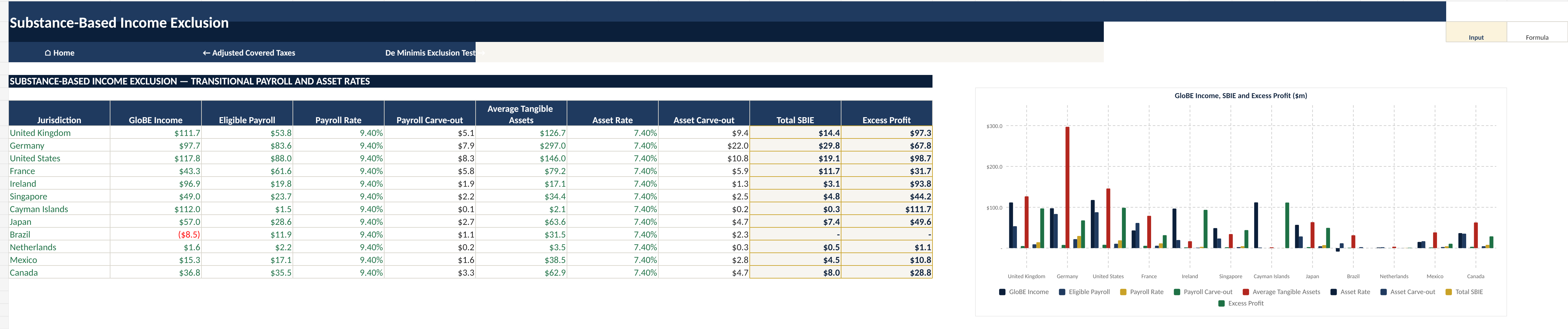
  • Substance-Based Income Exclusion

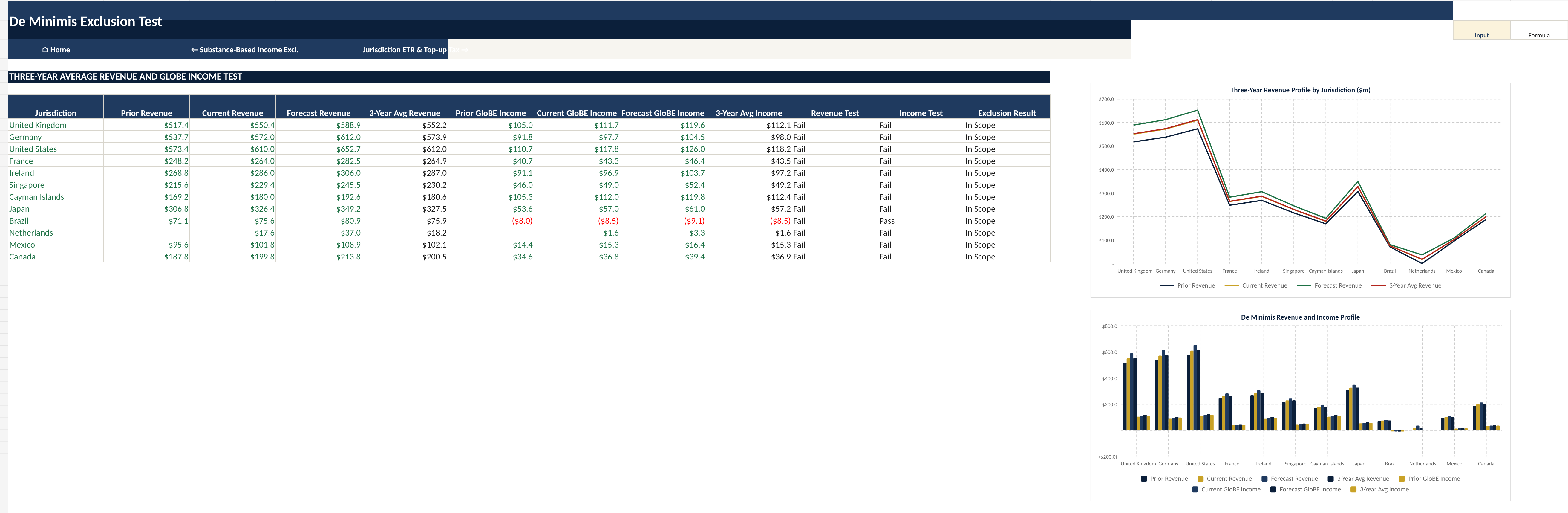
  • De minimis testing

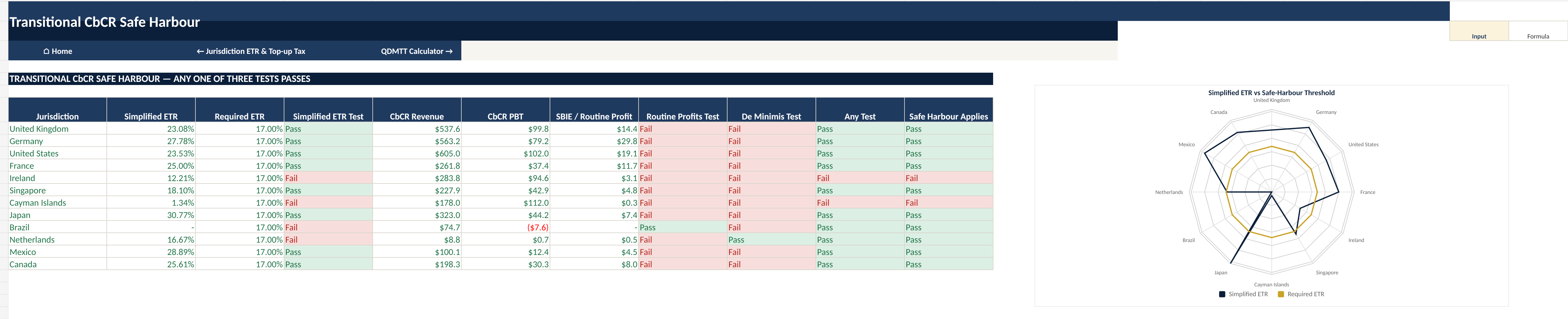
  • Transitional CbCR Safe Harbour

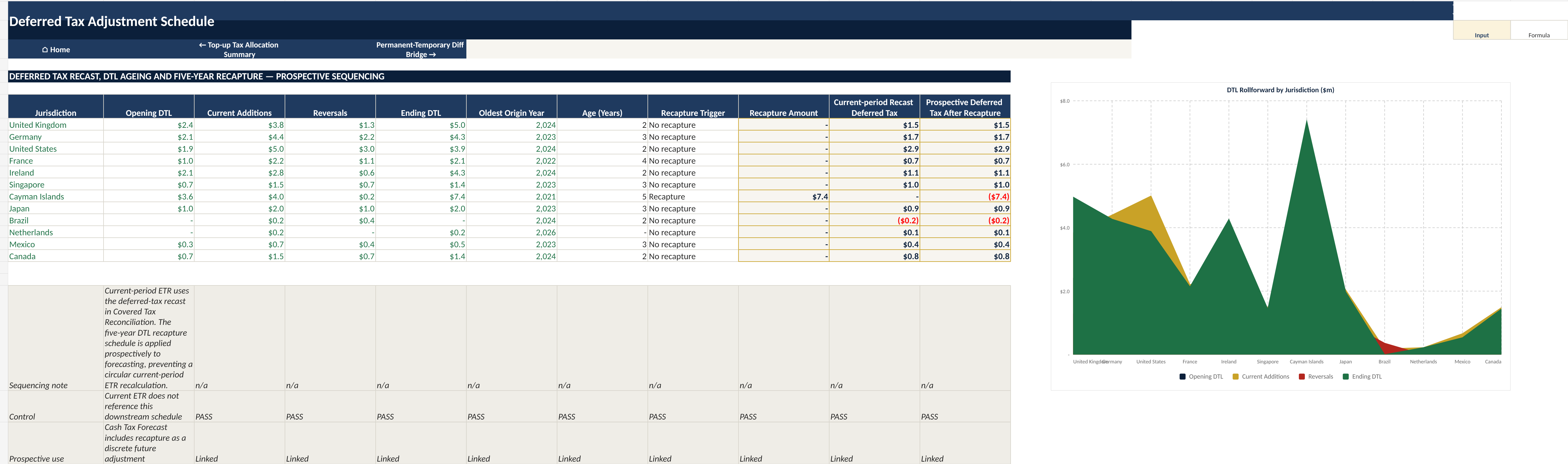
  • Deferred tax adjustments and five-year recapture

  • Permanent and temporary differences

  • FX translation

  • Implementation timing

  • Mid-year acquisition or disposal

  • Legal-entity restructuring

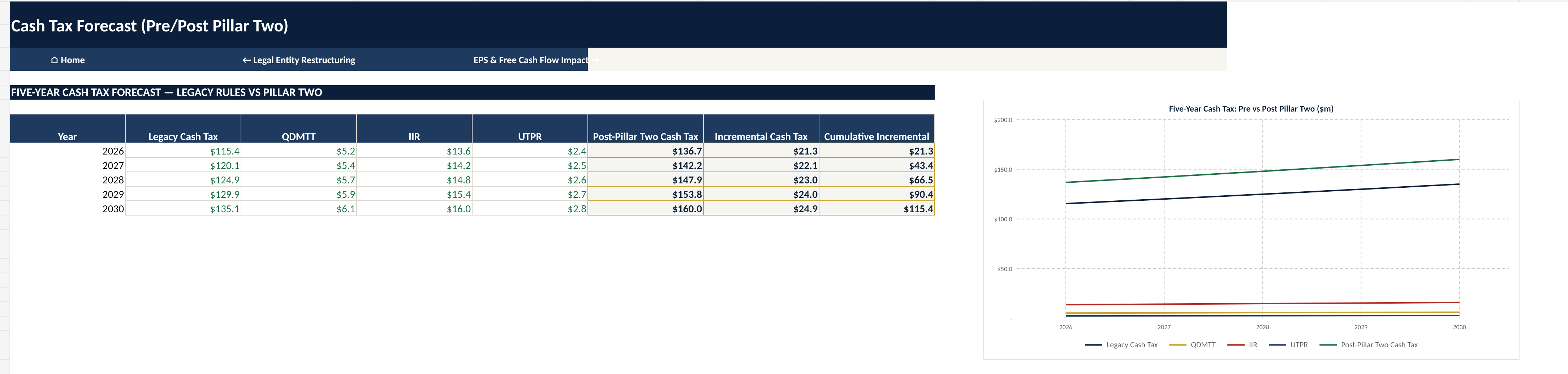
It also converts the Pillar Two results into a five-year cash tax forecast and a diluted EPS and free cash flow impact schedule.

For review and reporting, the model includes:

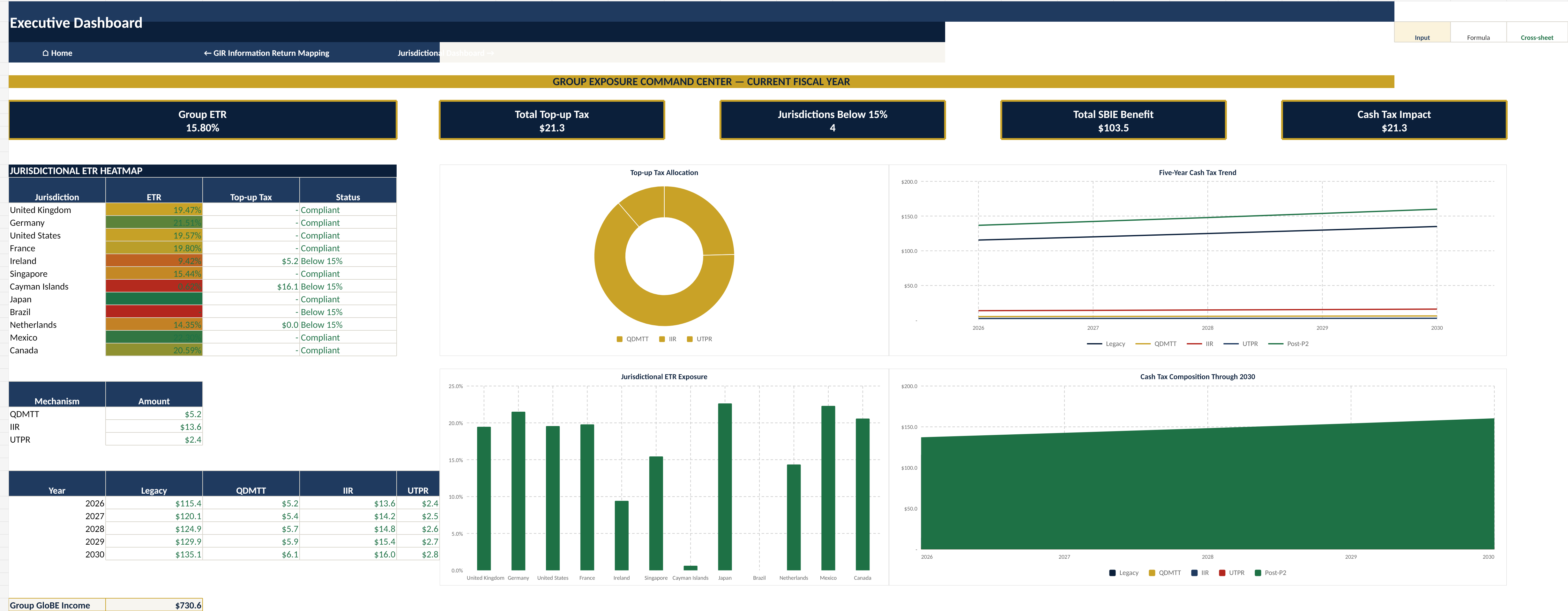
  • An Executive Dashboard

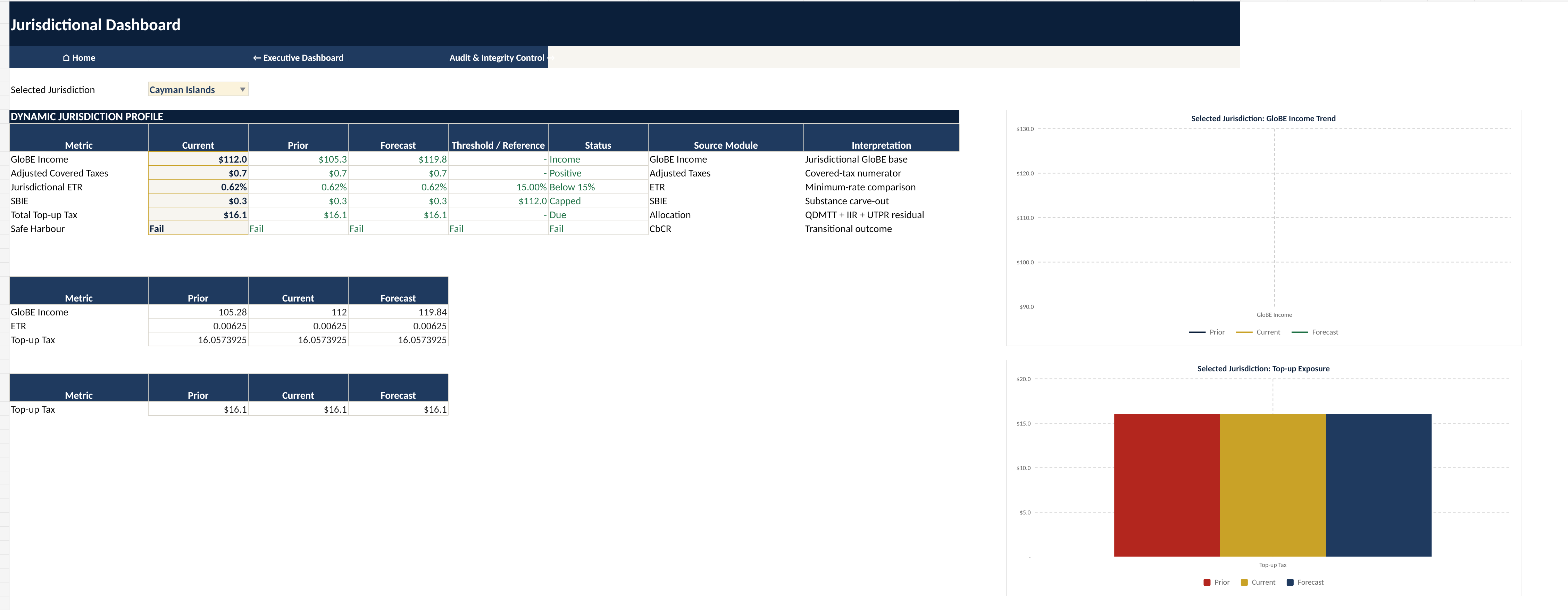
  • A selected-jurisdiction dashboard

  • A GloBE Information Return working-paper mapping schedule

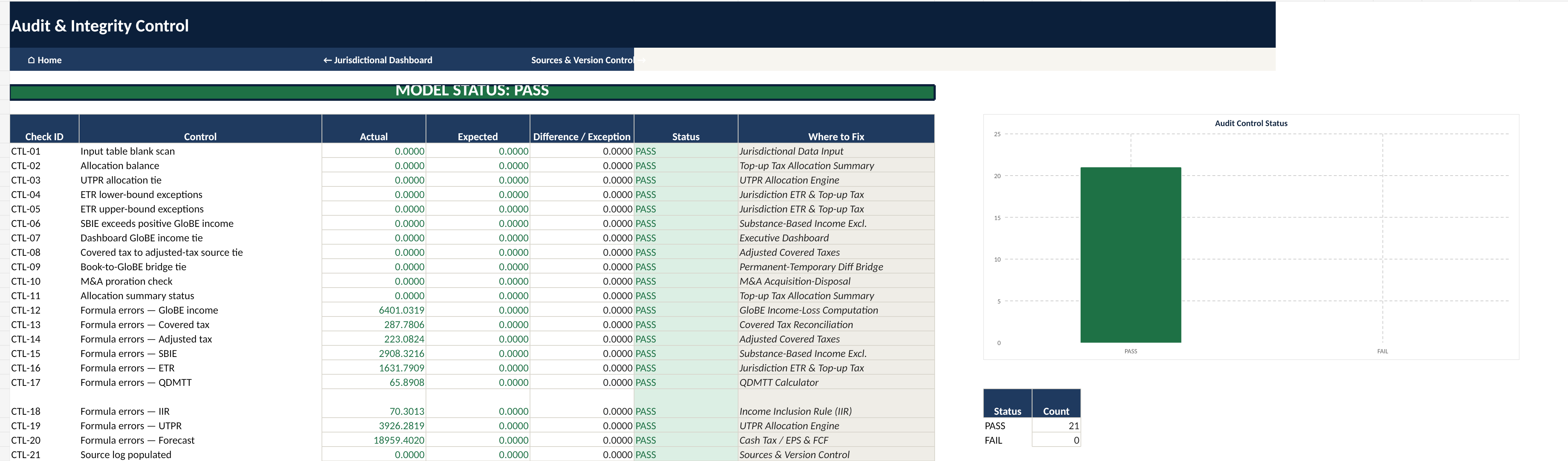
  • An Audit and Integrity Control with 21 checks

  • An OECD source/version log

The structure is intended to make the calculation sequence transparent and traceable from inputs to management outputs.

Objectives

Use the workbook to:

  • Identify jurisdictions below the minimum rate

  • Quantify top-up tax

  • Understand the collection layer

  • Compare legacy and post-Pillar-Two cash tax

  • Assess EPS and free cash flow effects

  • Test transaction or restructuring scenarios

  • Create a consistent management review workflow

Suits Best When

The model suits:

  • Multinational tax teams

  • CFO and finance functions

  • Advisers

  • Consultants

  • Accounting firms

  • Analysts

  • Transaction teams

  • Internal reviewers

that want a transparent Excel working model rather than a black-box calculation. It is particularly useful when jurisdiction-level data is available and users need traceable schedules, dashboards, and integrity controls.

Does Not Suit Best When

The workbook is not an:

  • XML filing engine

  • Automated tax return submission tool

  • Substitute for local legal and tax advice

It uses an illustrative sample group that must be replaced with actual data. The policy basis is OECD material consolidated through May 2026, so current local enactment, qualified-rule status, filing requirements, and administrative guidance should be independently confirmed, and the workbook customized where required.

This Best Practice includes
One fully editable Microsoft Excel workbook. 30 model worksheets. One 30-page PDF preview. 19 detailed preview images.

Acquire business license for $149.00

Add to cart

Add to bookmarks

Discuss

Further information

Use the workbook to identify jurisdictions below the minimum rate, quantify top-up tax, understand the collection layer, compare legacy and post-Pillar-Two cash tax, assess EPS and free cash flow effects, test transaction or restructuring scenarios, and create a consistent management review workflow.

The model suits multinational tax teams, CFO and finance functions, advisers, consultants, accounting firms, analysts, transaction teams, and internal reviewers that want a transparent Excel working model rather than a black-box calculation. It is particularly useful when jurisdiction-level data is available and users need traceable schedules, dashboards and integrity controls.

The workbook is not an XML filing engine, automated tax return submission tool, or substitute for local legal and tax advice. It uses an illustrative sample group that must be replaced with actual data. The policy basis is OECD material consolidated through May 2026, so current local enactment, qualified-rule status, filing requirements and administrative guidance should be independently confirmed and the workbook customized where required.


0.0 / 5 (0 votes)

please wait...