Originally published: 16/01/2025 13:46
Publication number: ELQ-23186-1
View all versions & Certificate
Publication number: ELQ-23186-1
View all versions & Certificate

Paper Products Manufacturer Financial Model Excel Template
A comprehensive 5-year 3-statement editable, MS Excel spreadsheet for tracking a Paper Products Manufacturer's finances.
 by AllFinancialModels
AllFinancialModels offer a curated selection of high-quality yet financial model templates designed to support a wide range of business needs.Follow
paperpaper manufacturermanufacturingpaper industryexcelfinancefinancial modelpaper products manufacturerindustrymanufacturer
Description
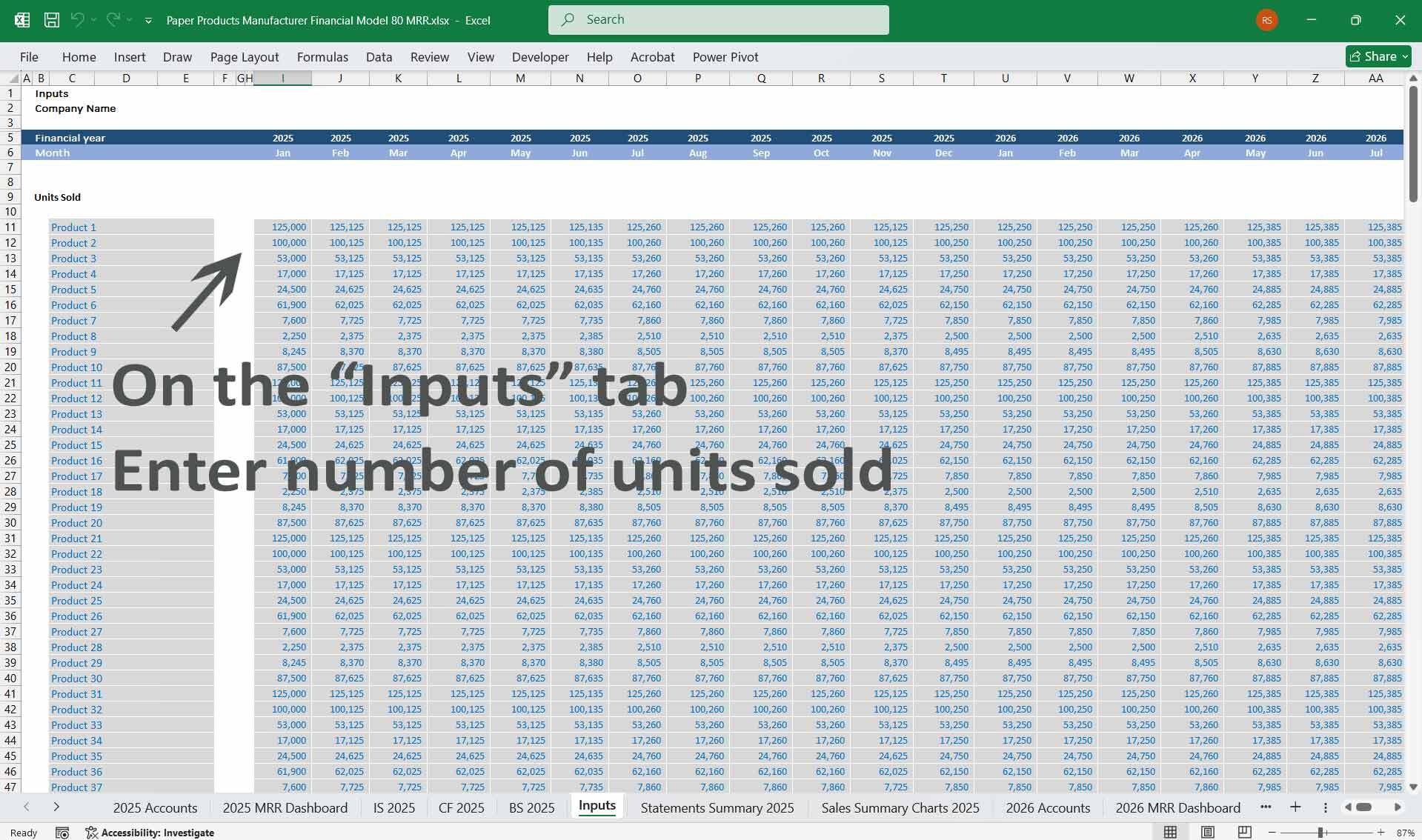
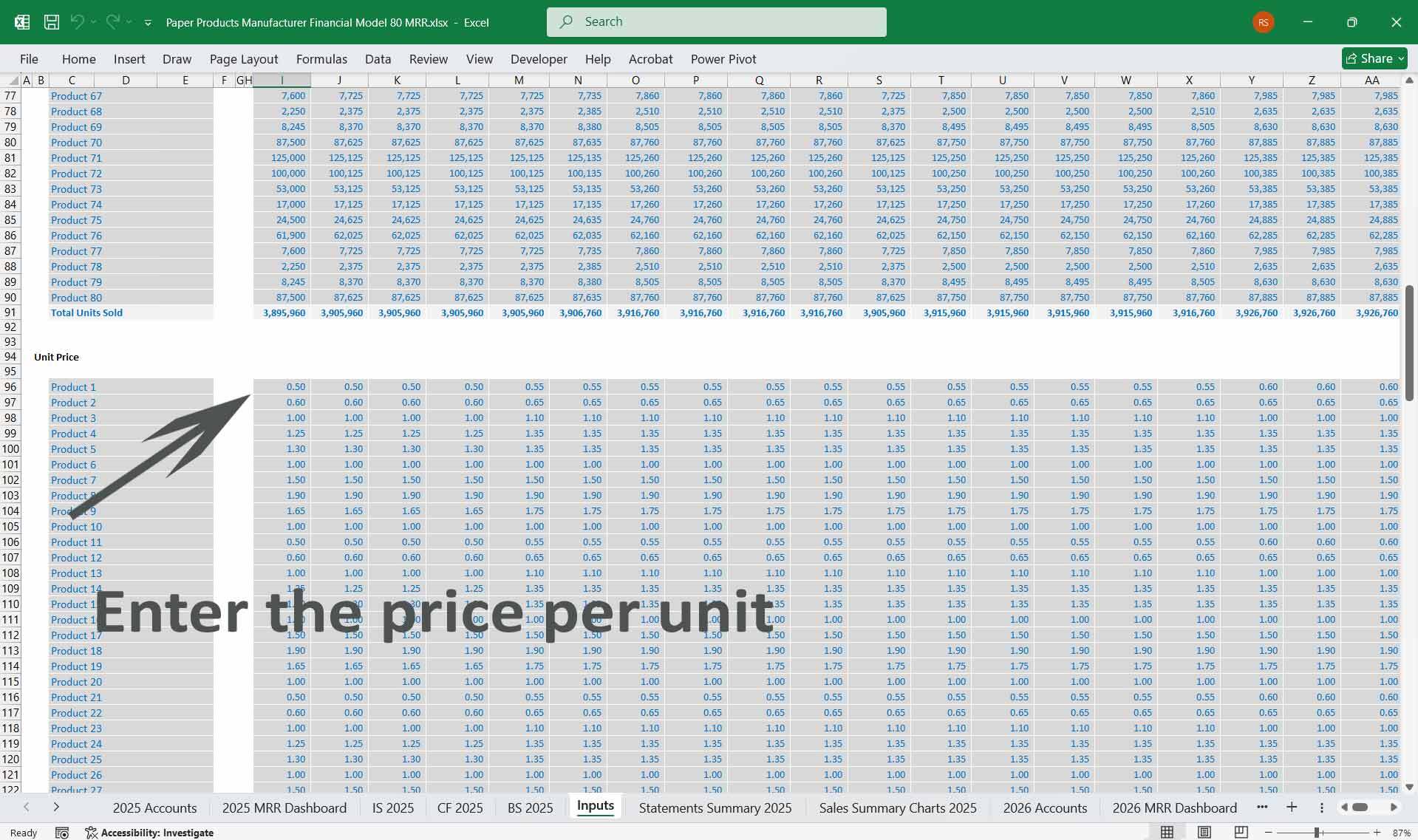
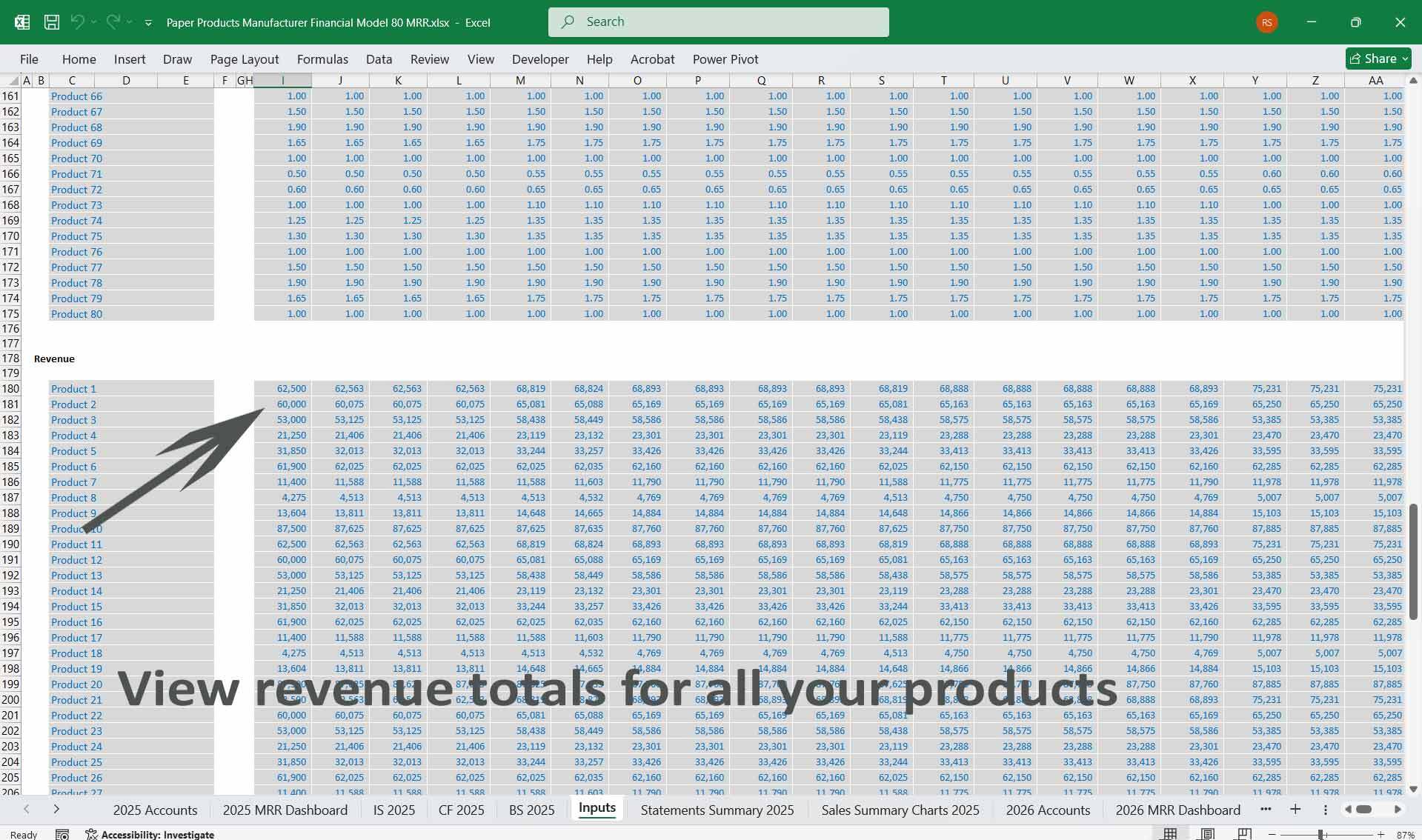
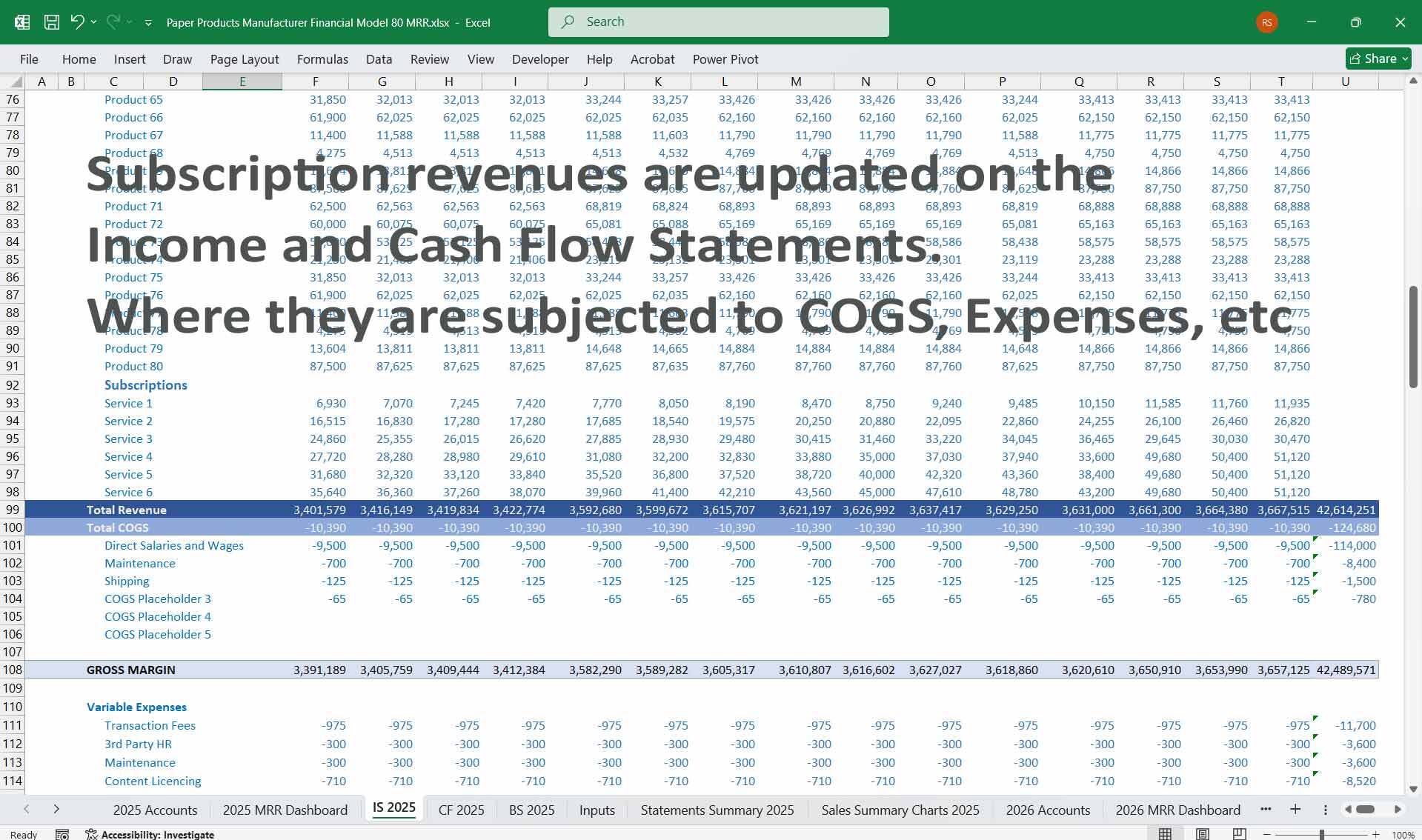
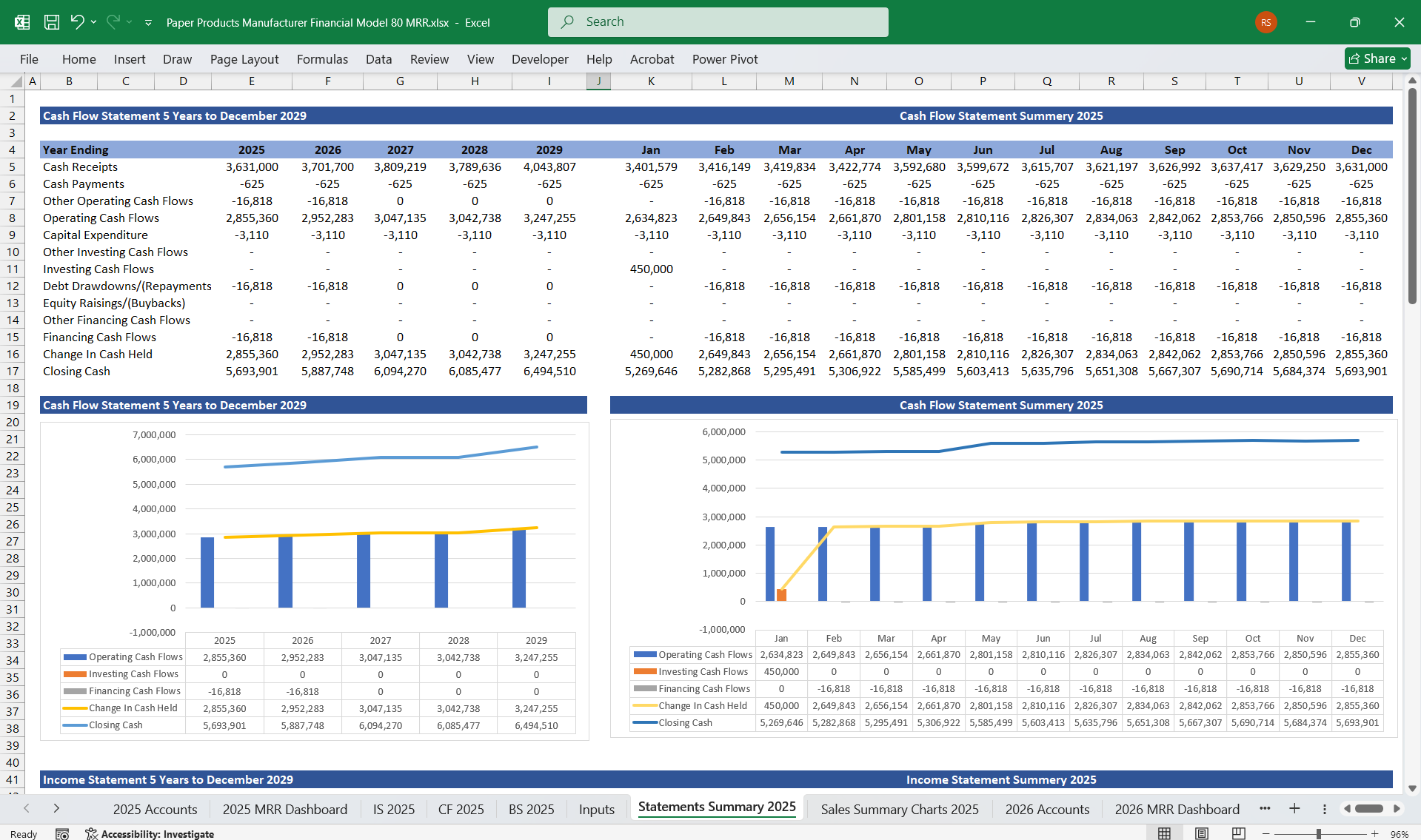
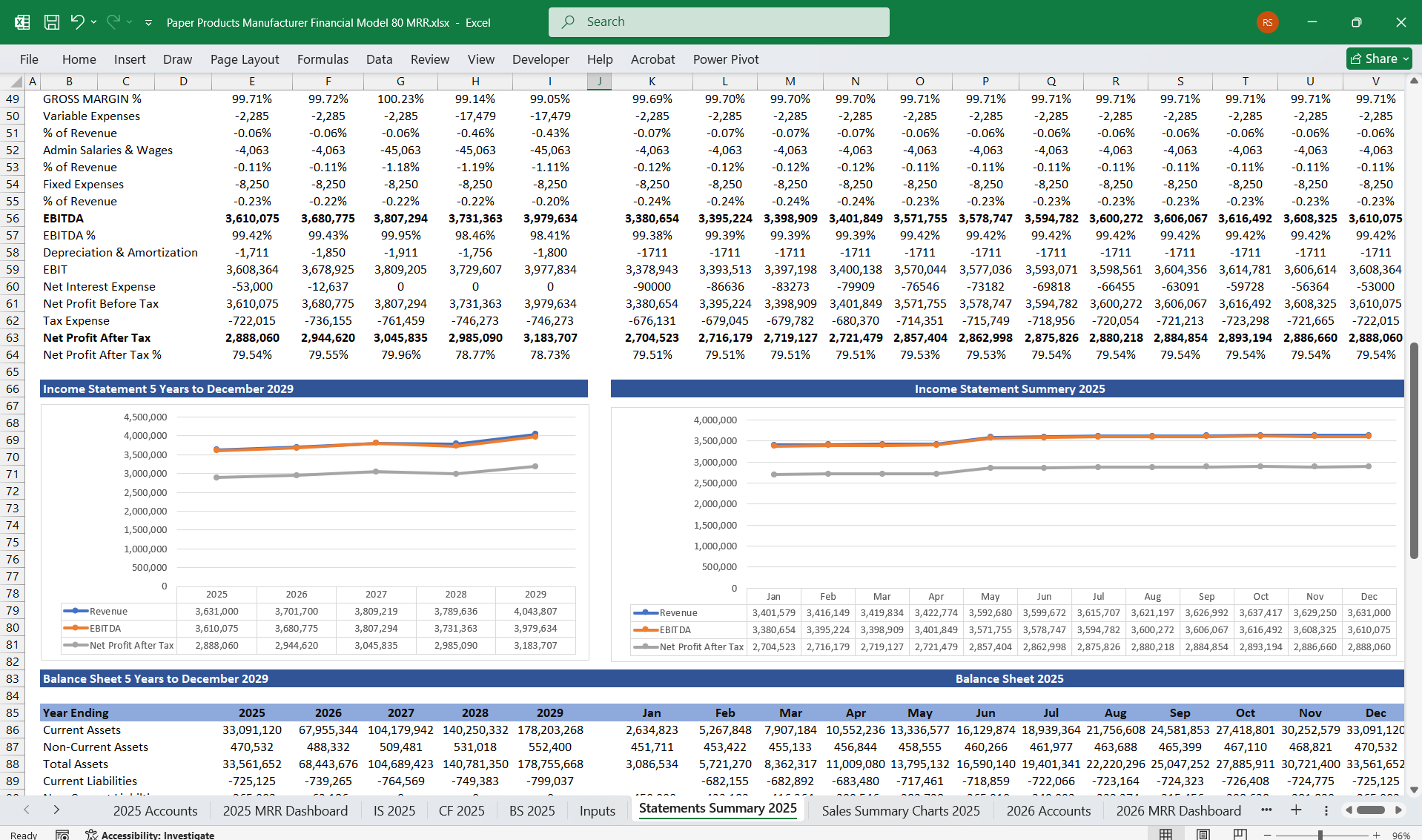
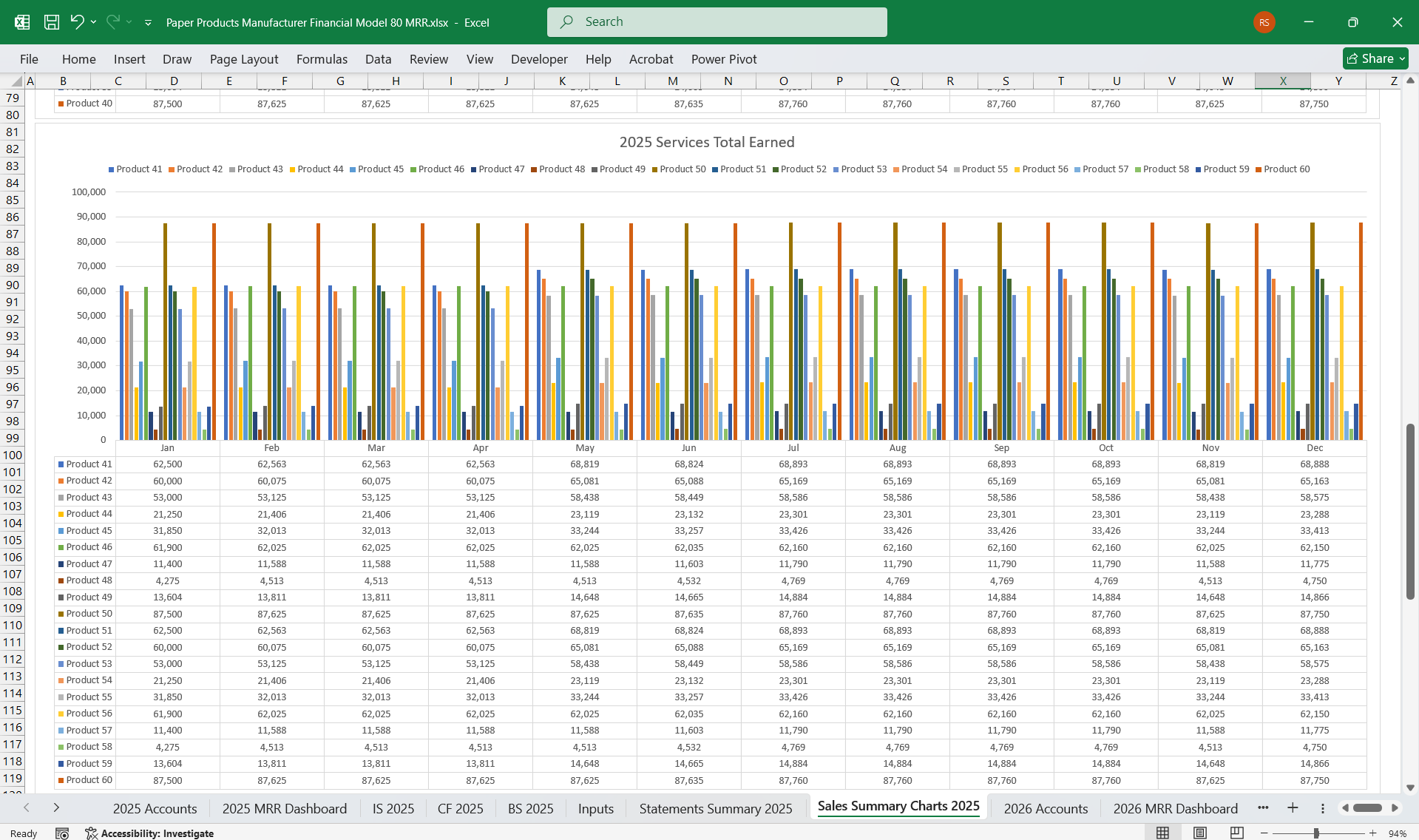
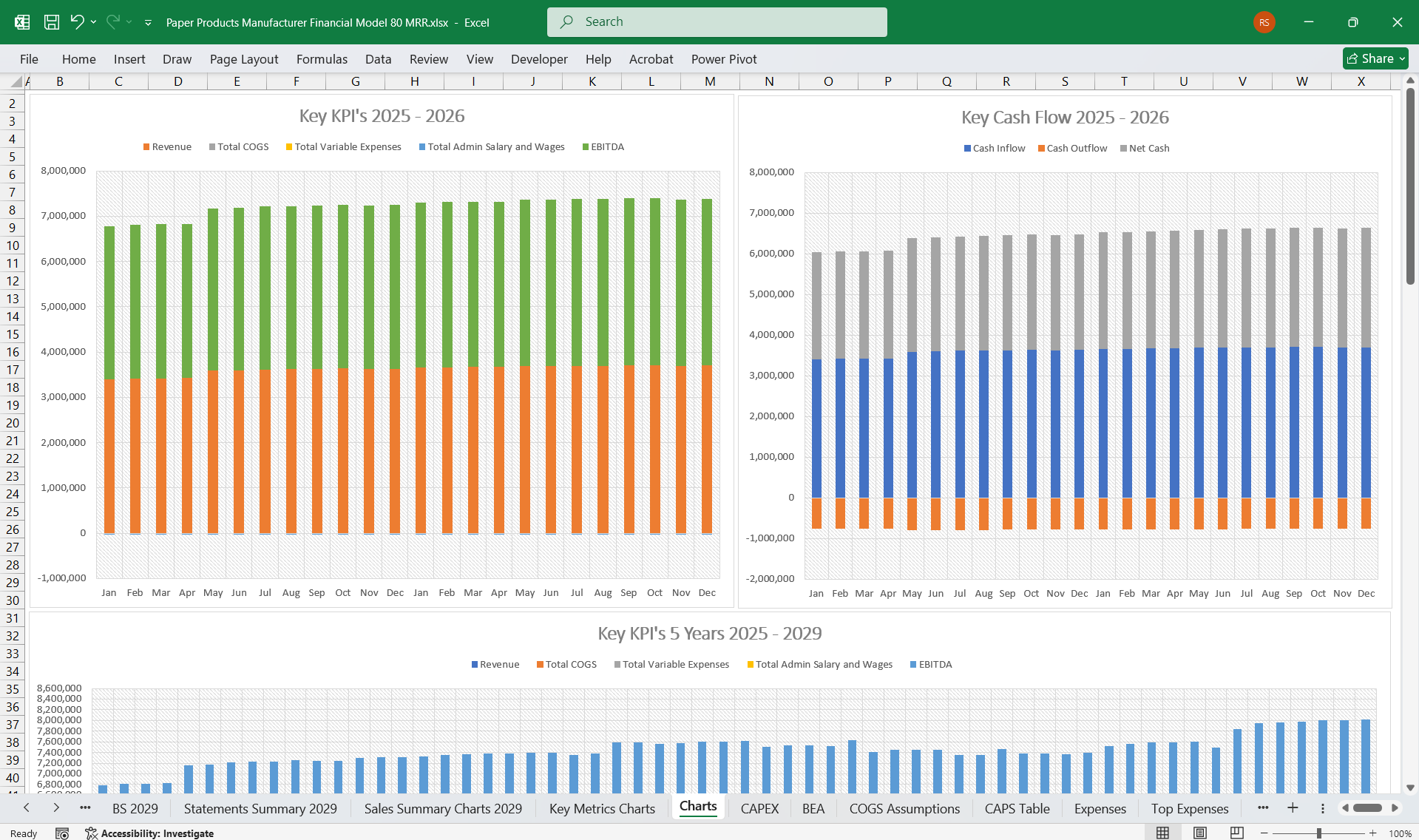
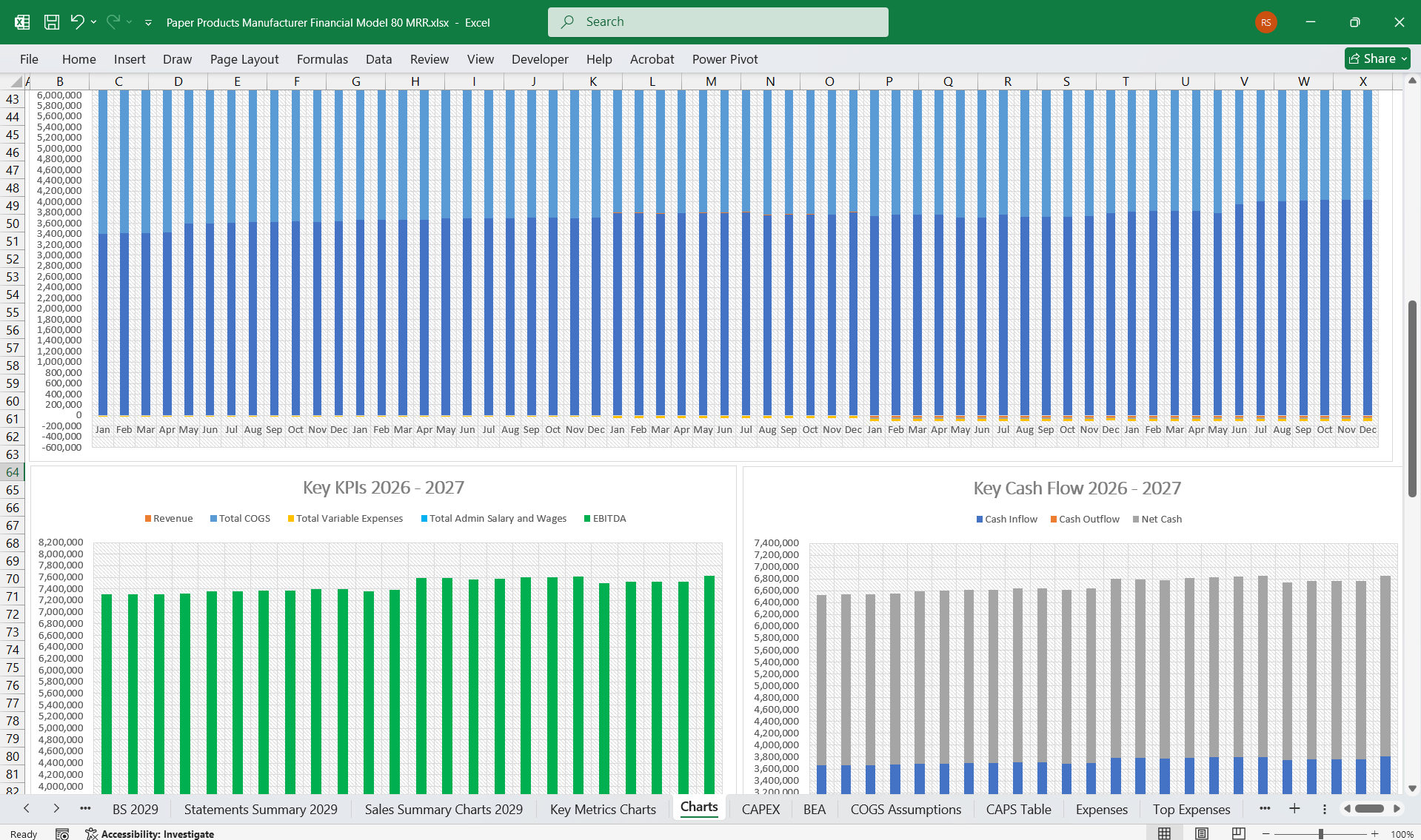
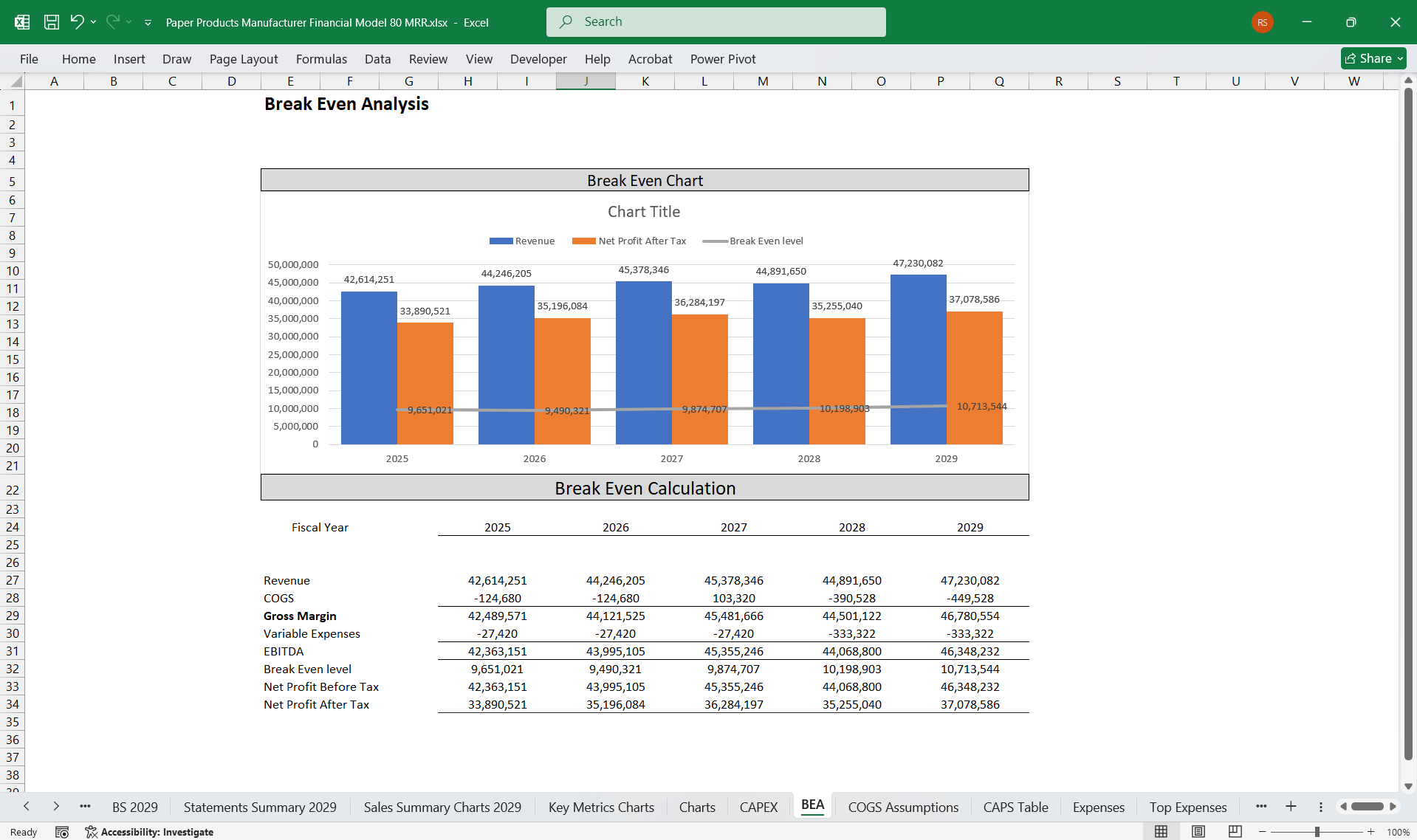
Financial Model for a Paper Products ManufacturerThis financial model outlines the financial dynamics of a Paper Products Manufacturer, emphasizing key components like revenue, expenses, and profitability while addressing scaling scenarios. It includes sections for Income Statement, Cash Flow Statement, and Balance Sheet, tailored to 80 product lines and incorporating a 6-Tier Subscription Model Add-on to drive recurring revenue.
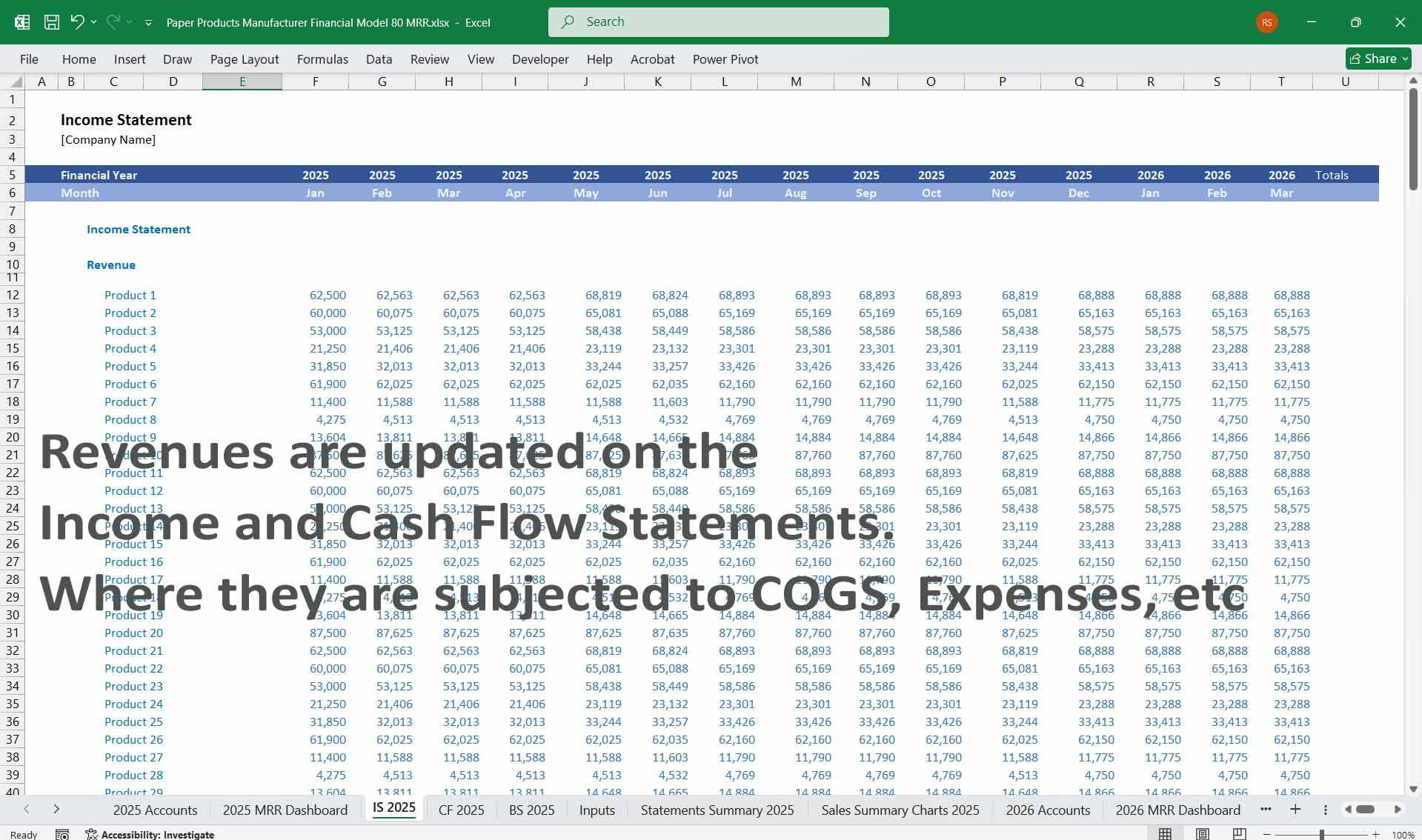
1. Income StatementRevenue Streams
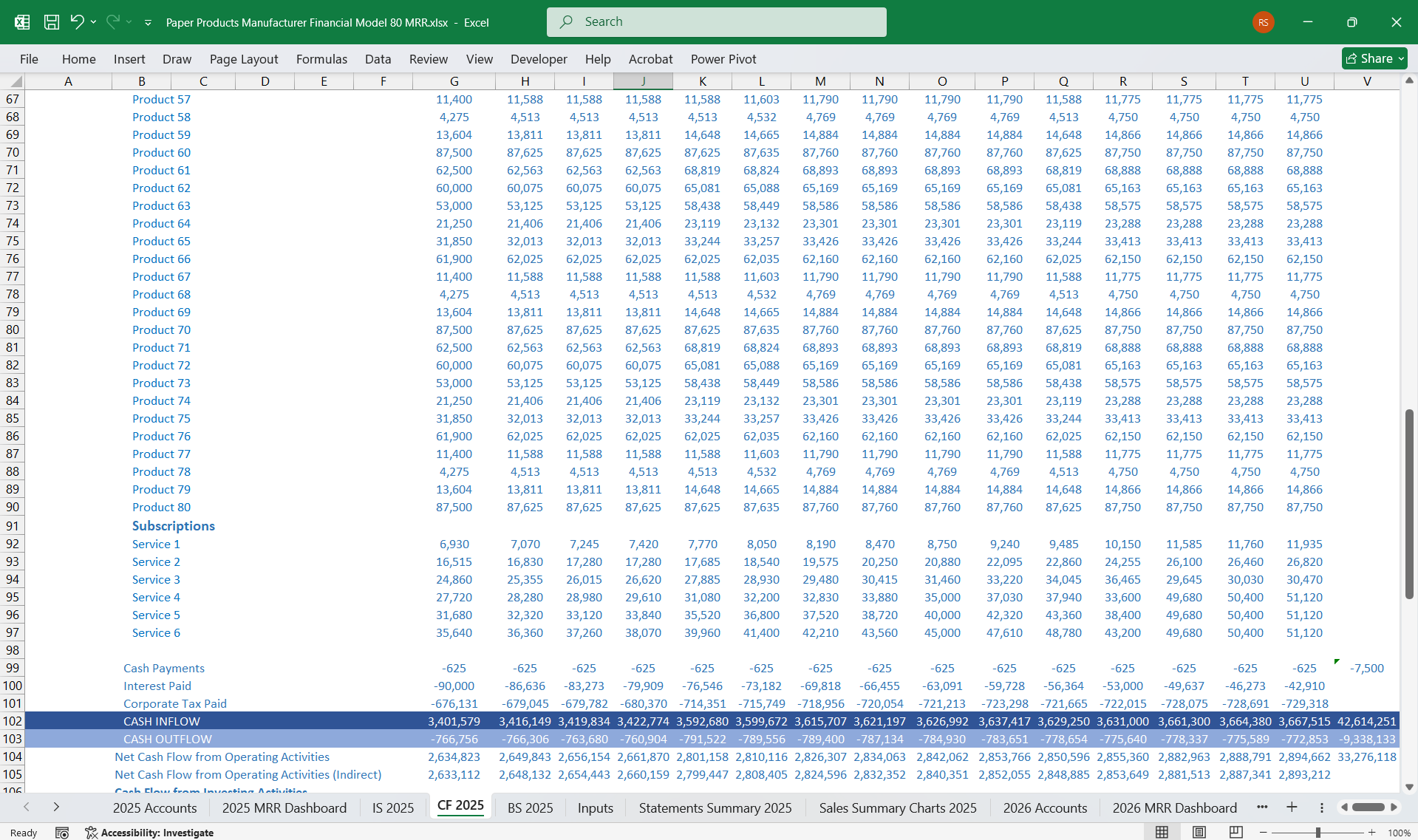
2. Cash Flow StatementOperating Activities
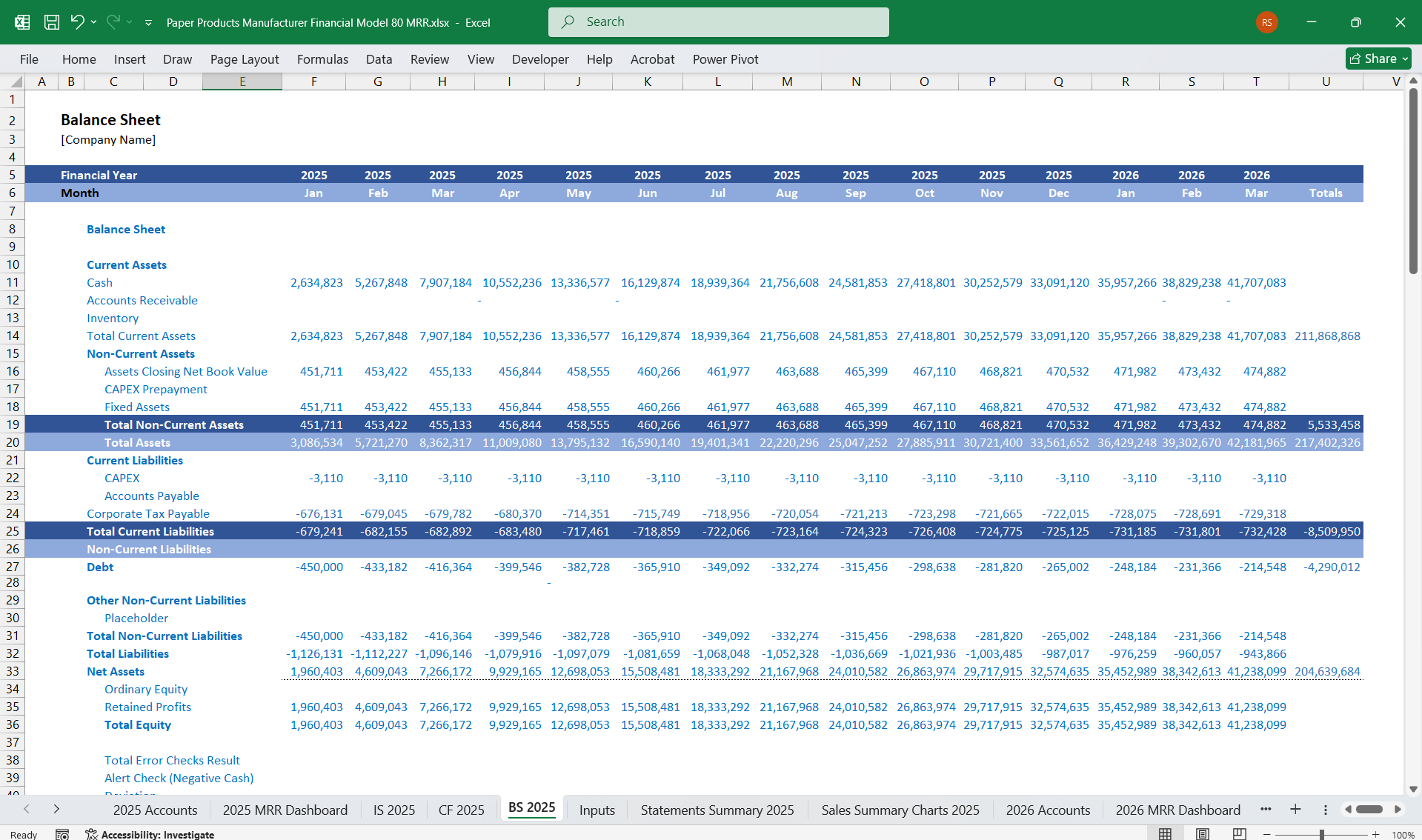
3. Balance SheetAssets
Tier Structure
Financial Model for a Paper Products ManufacturerThis financial model outlines the financial dynamics of a Paper Products Manufacturer, emphasizing key components like revenue, expenses, and profitability while addressing scaling scenarios. It includes sections for Income Statement, Cash Flow Statement, and Balance Sheet, tailored to 80 product lines and incorporating a 6-Tier Subscription Model Add-on to drive recurring revenue.
1. Income StatementRevenue Streams
- Product Sales:
- Consumer Products: Thermal Paper, 450gsm, Paper towels, tissue rolls, napkins, and printer papers.
- Industrial Products: Packaging materials, industrial wipes, and kraft paper.
- Specialized Lines: Recyclable or eco-friendly products.
- Private Label Contracts: Manufacturing for retail brands.
- B2B Sales: Partnerships with wholesalers, retailers, schools, and offices.
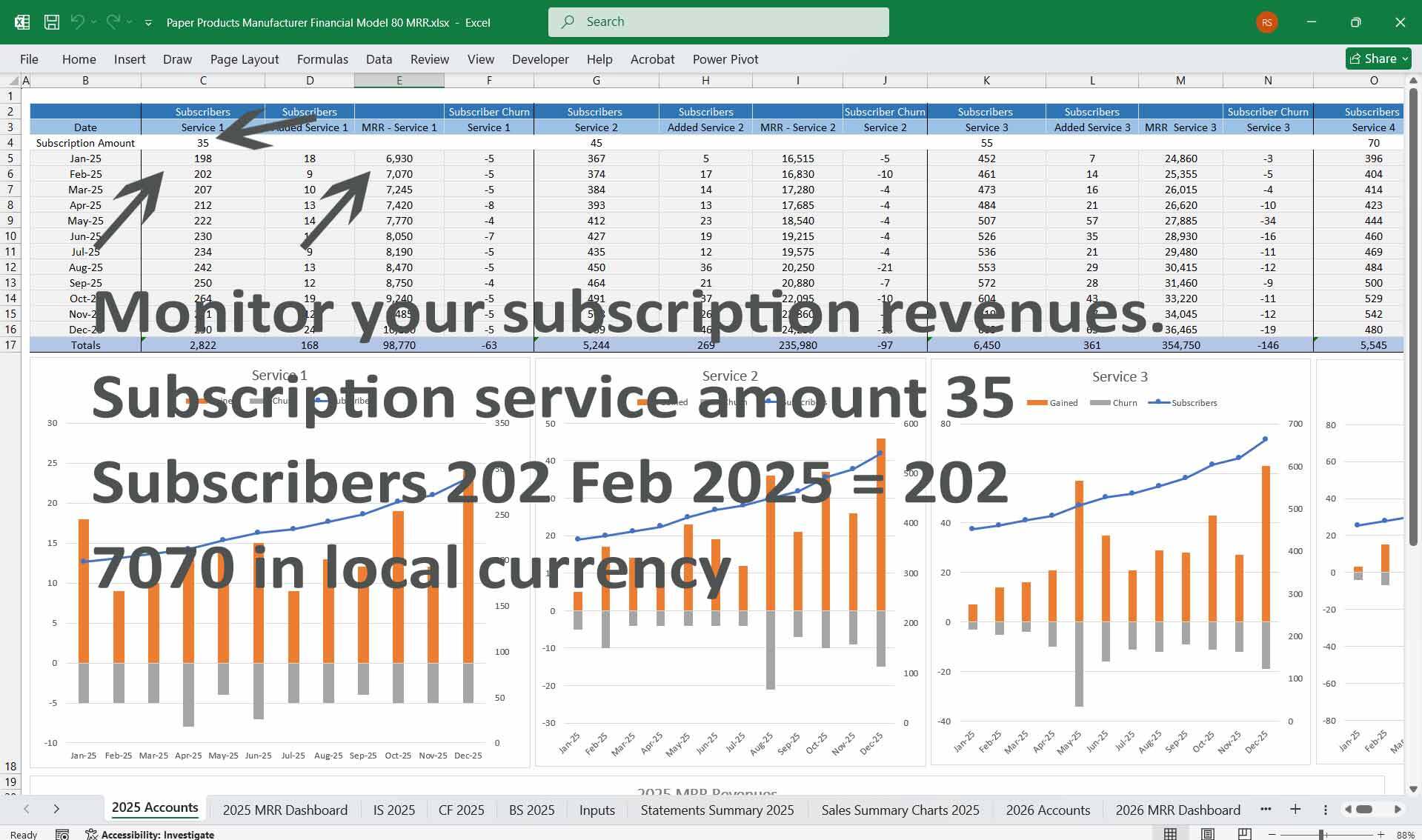
- Subscription Model Revenue: Monthly or annual recurring revenue for large-scale clients (see Section 5).
- Recycling Revenue: Selling reclaimed paper materials for reuse.
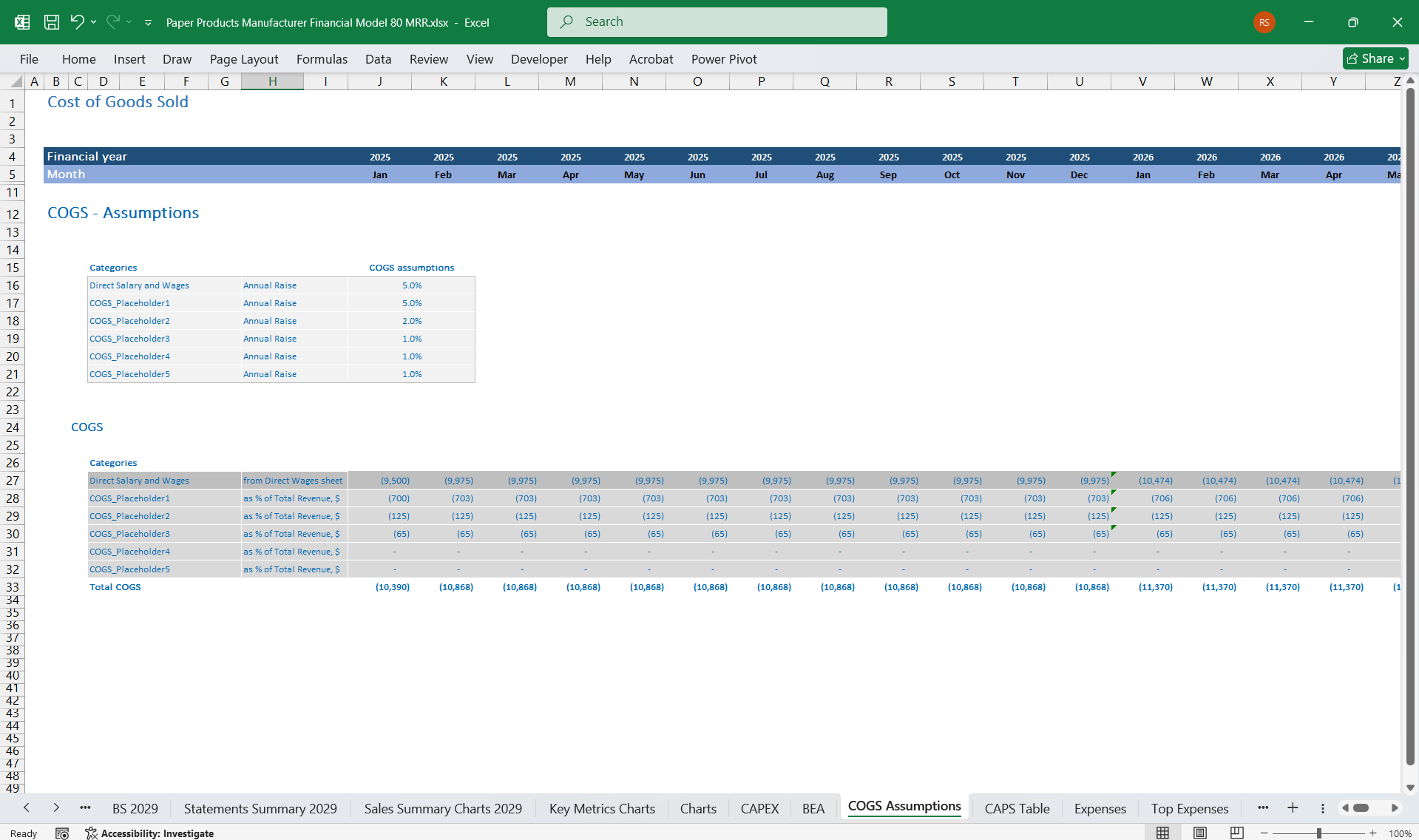
- Cost of Goods Sold (COGS):
- Raw Materials: Wood pulp, recycled paper, and chemical additives.
- Labor: Factory operators, machine maintenance staff.
- Overheads: Power and water for heavy-duty machinery.
- Operating Expenses:
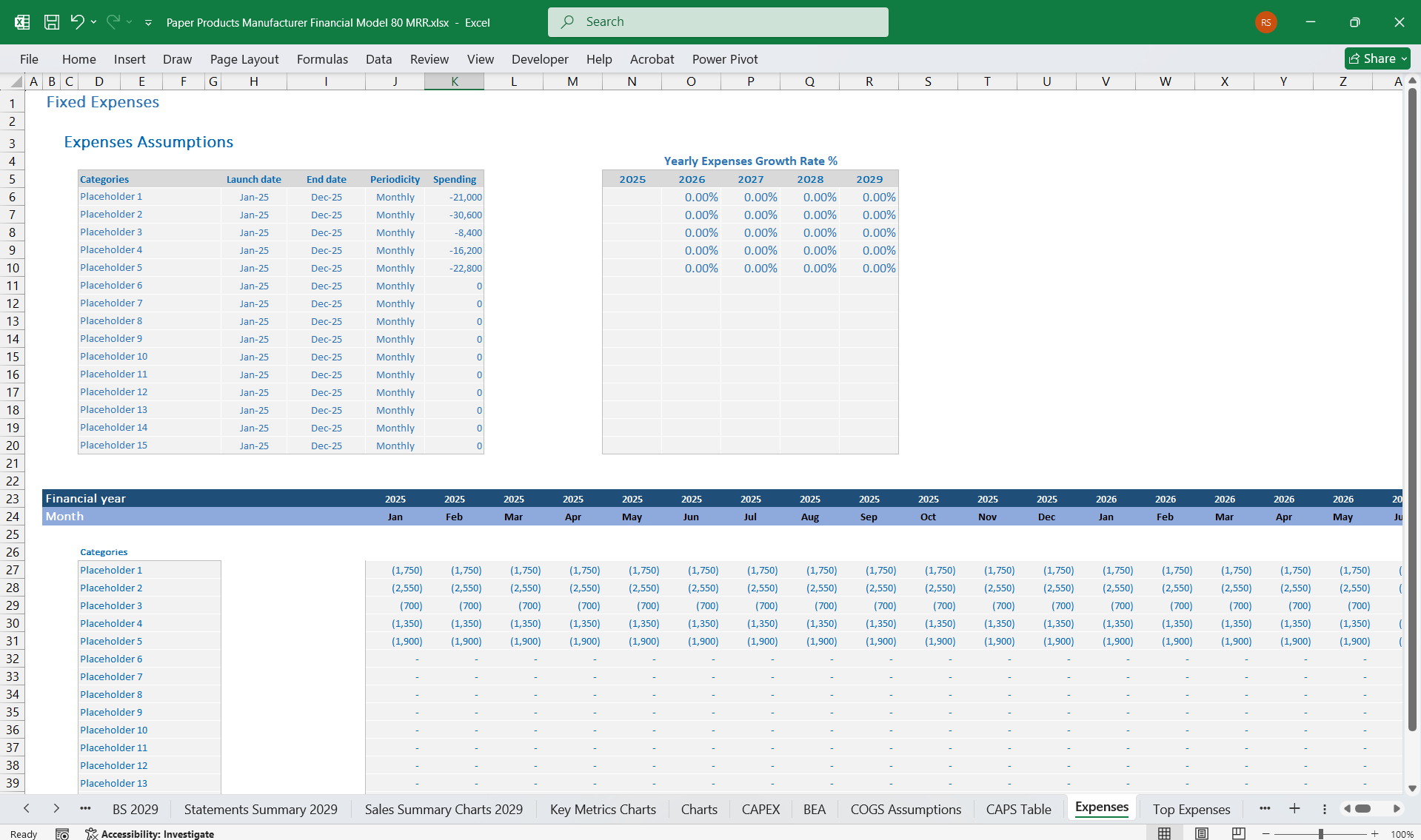
- Sales, marketing, and distribution costs.
- Administrative expenses: Office operations, software.
- R&D: Development of sustainable paper technologies.
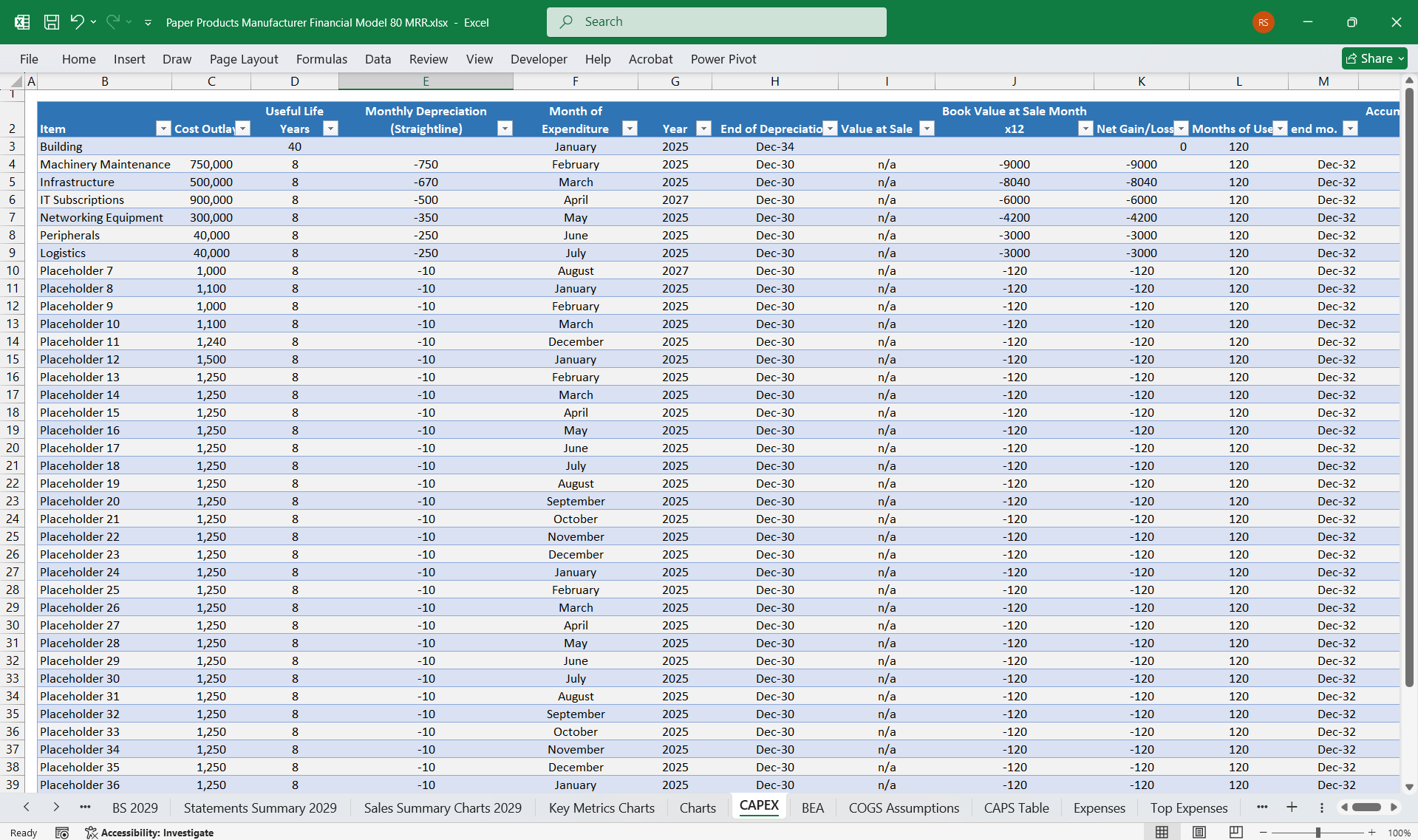
- Depreciation and Amortization: Equipment depreciation, especially for recycling and pulp-making machinery.
- Gross Profit: Revenue - COGS.
- Operating Profit (EBIT): Gross Profit - Operating Expenses.
- Net Income: EBIT - Taxes - Interest.
2. Cash Flow StatementOperating Activities
- Inflows:
- Receipts from product sales and B2B contracts.
- Subscription payments from large-scale clients.
- Outflows:
- Procurement of pulp and chemicals.
- Employee wages.
- Facility utilities (e.g., energy-intensive machinery).
- Inflows:
- Proceeds from recycling paper waste.
- Outflows:
- Acquisition of advanced paper processing equipment or machinery for eco-friendly lines.
- Inflows:
- Bank loans for facility upgrades.
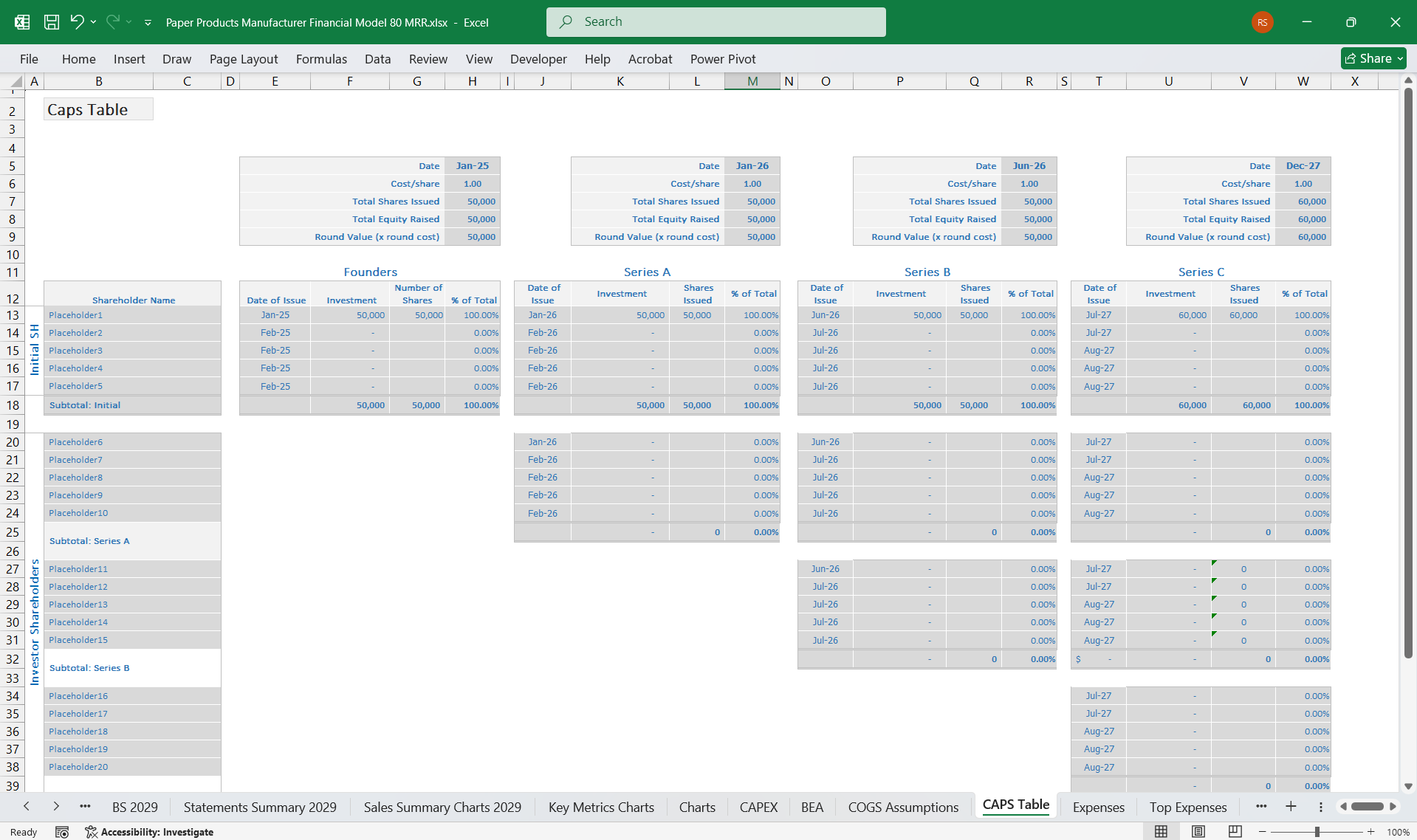
- Equity infusions for sustainability-focused projects.
- Outflows:
- Loan repayments and interest charges.
- Dividend payouts to shareholders.
- Free Cash Flow (FCF): Indicator of cash surplus for investment or shareholder distribution.
- Operating Cash Flow (OCF): Efficiency of core operational activities.
3. Balance SheetAssets
- Current Assets:
- Cash and Equivalents: Day-to-day liquidity.
- Accounts Receivable: Pending payments from wholesalers and retailers.
- Inventory:
- Raw materials: Pulp, recycled paper.
- Finished goods: Packaged paper products.
- Non-Current Assets:
- Machinery: Pulp-making machines, automated cutters, and packaging units.
- Patents for unique eco-friendly technologies.
- Current Liabilities:
- Supplier payables.
- Short-term loans for working capital.
- Non-Current Liabilities:
- Long-term loans for facility expansion or R&D investments.
- Shareholder contributions for green initiatives.
- Retained earnings reinvested for automation and scale-up
- 80 Product Lines
- Revenue Growth:
- Adding eco-friendly lines, custom-designed products, and luxury items.
- Cost Implications:
- Higher costs due to diversified material sourcing.
- More complex inventory management and quality control.
- Profit Margins:
- Gross Margin: ~40-50%.
- Net Margin: ~10-15%.
- Automation is critical for scalability.
- Strategic partnerships for sourcing recycled materials.
Tier Structure
- Tier 1 (Basic Plan):
- Monthly delivery of standard items (e.g., tissue rolls, printer paper).
- Tier 2 (Small Office Plan):
- Supplies for up to 10 employees (e.g., bulk copier paper and hand towels).
- Tier 3 (Medium Business):
- Expanded offerings for businesses with 50 employees.
- Priority customer support.
- Tier 4 (Large Business):
- Premium items (e.g., sustainable lines).
- On-demand adjustments to supply needs.
- Tier 5 (Enterprise):
- Customizable plans for large corporations.
- Discounts on bulk purchases and eco-friendly options.
- Tier 6 (Custom Sustainable Solutions):
- Tailored to eco-conscious businesses.
- Includes sustainability reporting and circular product use programs.
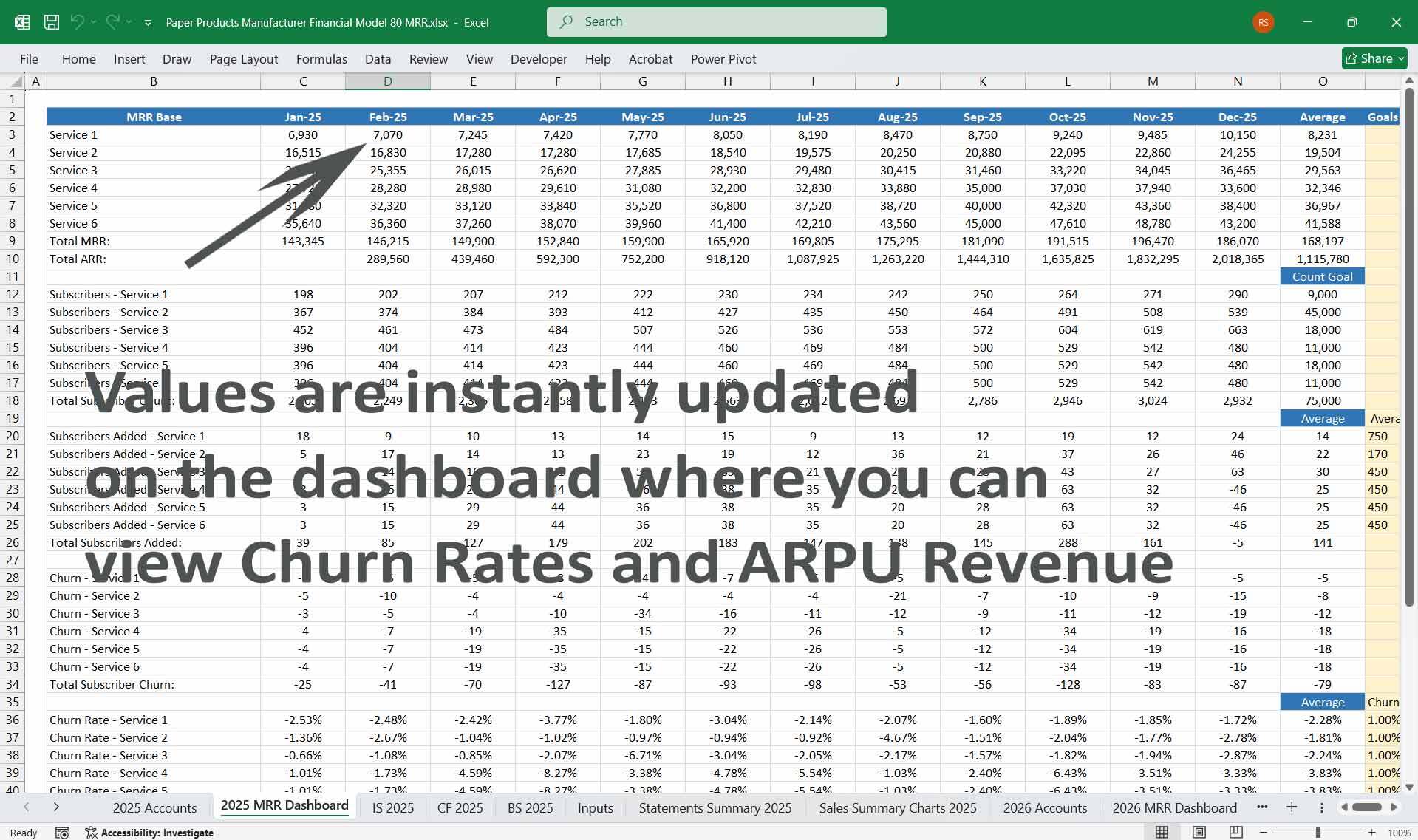
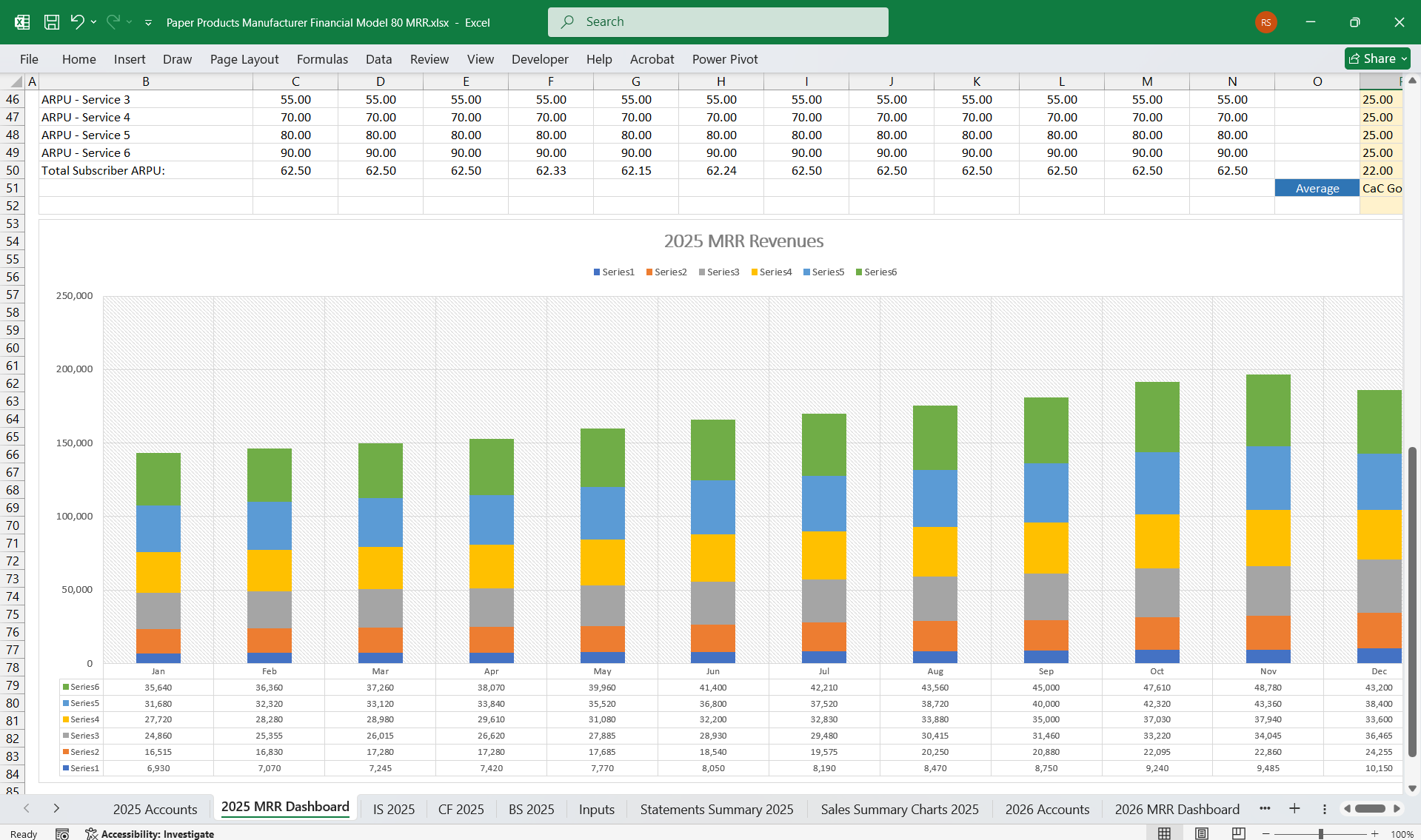
- Monthly Recurring Revenue (MRR): Revenue from active subscriptions.
- Annual Recurring Revenue (ARR): 12x MRR.
- Churn Rate: Monitors loss of subscribers.
- CAC and LTV: Balance acquisition cost against subscriber lifetime value.
- Factory Utilization Rate: Measures production efficiency.
- Raw Material Cost Trends: Tracks pulp and recycled material pricing.
- Inventory Turnover: Efficiency of stock usage and sales.
- Tier-wise ARPU (Average Revenue per User).
- Retention rates for various subscription tiers.
- Growth projection scenarios with or without subscription models.
This Best Practice includes
1 Excel Financial Model
Further information
Provides thorough oversight, tracking, and reporting of Paper Products Manufacturer finances, including budget utilisation and projections updates.