Event Planning & Management Financial Model
Originally published: 03/04/2026 08:27
Publication number: ELQ-45539-1
View all versions & Certificate
certified

Event Planning & Management Financial Model

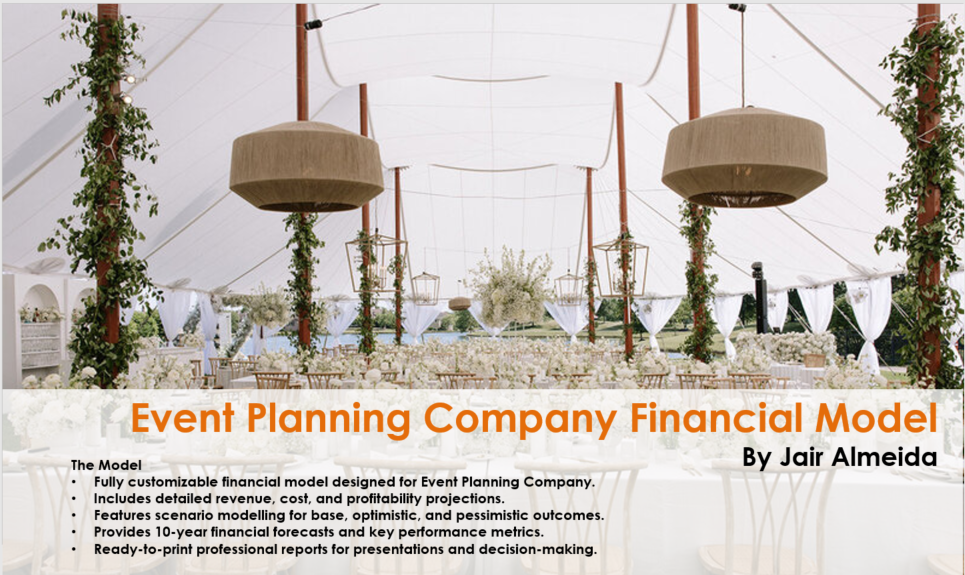
This comprehensive, fully integrated financial model evaluates the feasibility, operational scalability, and investment return of an Event Planning business

Description
Overview:


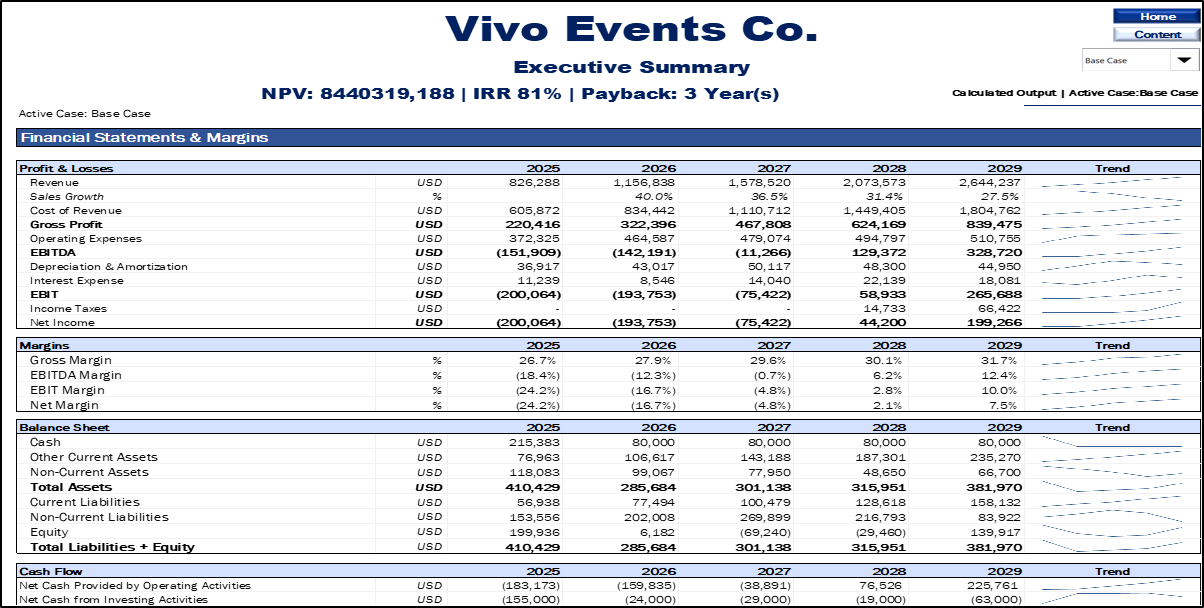
This comprehensive, fully integrated financial model evaluates the feasibility, operational scalability, and investment return of an Event Planning business. Built using financial modeling best practices, it provides a dynamic 10-year planning horizon covering corporate events, social celebrations, conferences, and private functions. Whether you are seeking funding, managing a growing agency, or analyzing strategic pivots, this model delivers clear, investor-ready insights through automated three-statement financials, DCF valuation, and visual dashboards.


Key Features & Capabilities:
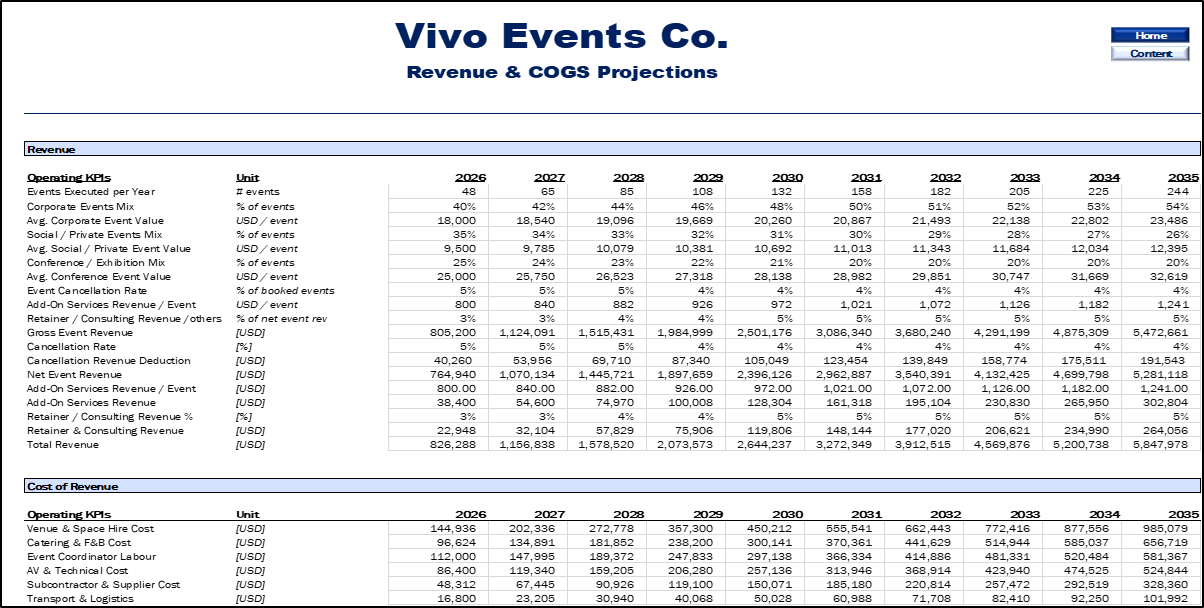
1. Dynamic Revenue & COGS Build-Up
  • Granular Volume Drivers: Forecast event volumes across multiple categories (Corporate, Social/Private, and Conferences).
  • Detailed Pricing & Margin Control: Adjust the average event value, event cancellation rates, and add-on services revenue (e.g., catering, AV & tech, retainers).
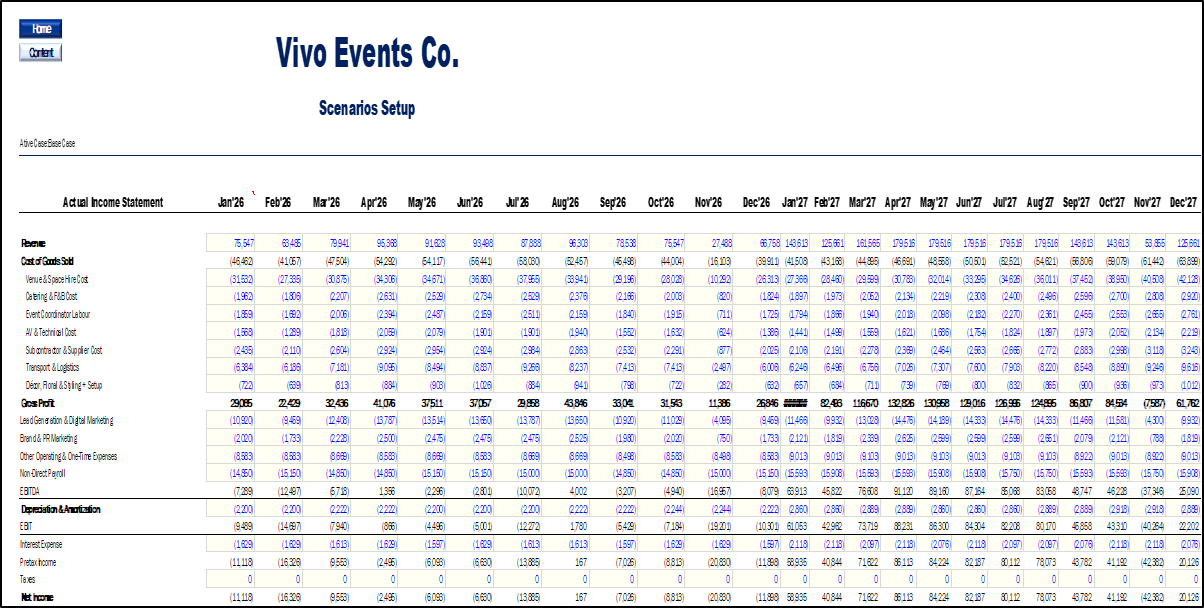
  • Direct Cost Modeling: Automatically calculates Cost of Goods Sold (COGS) based on venue costs, catering constraints, logistics, and event coordinator labor requirements.
2. Robust Scenario Analysis
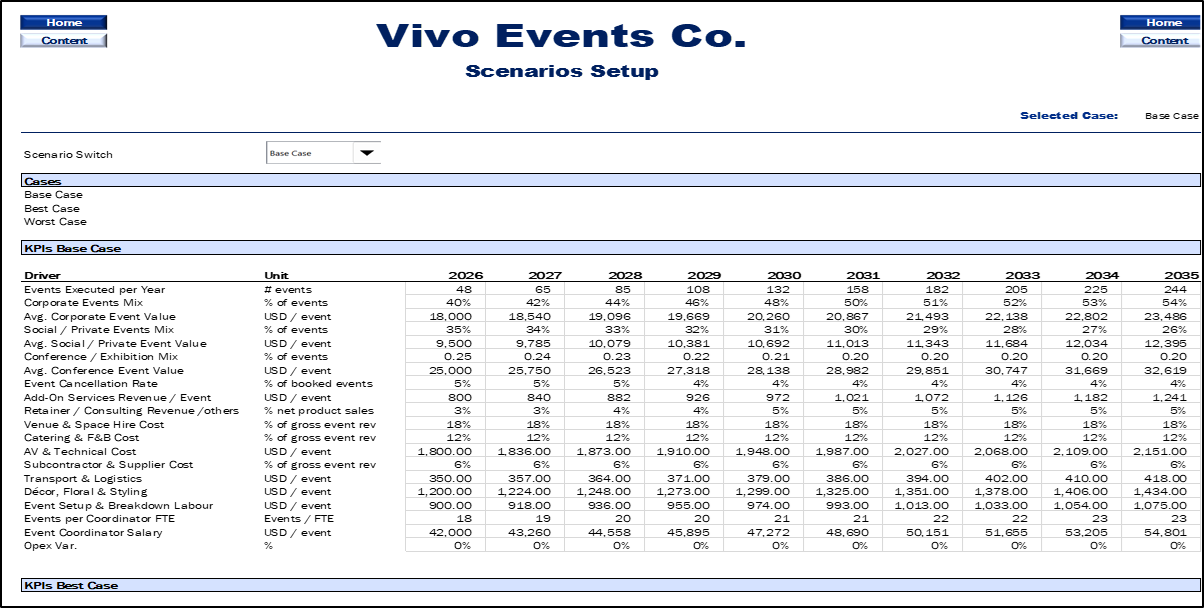
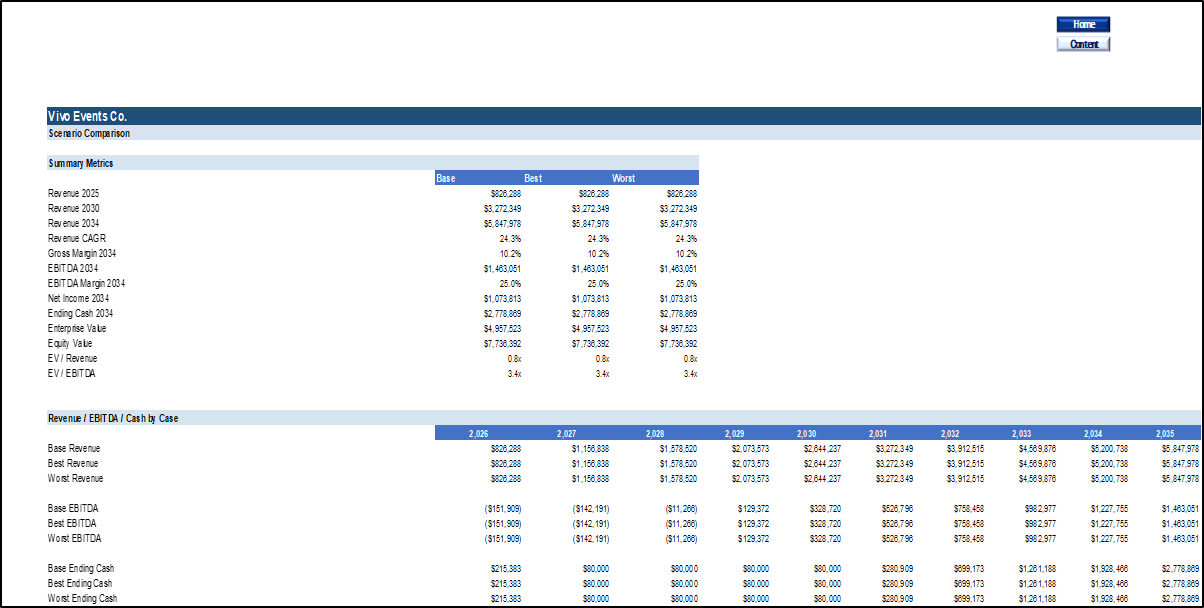
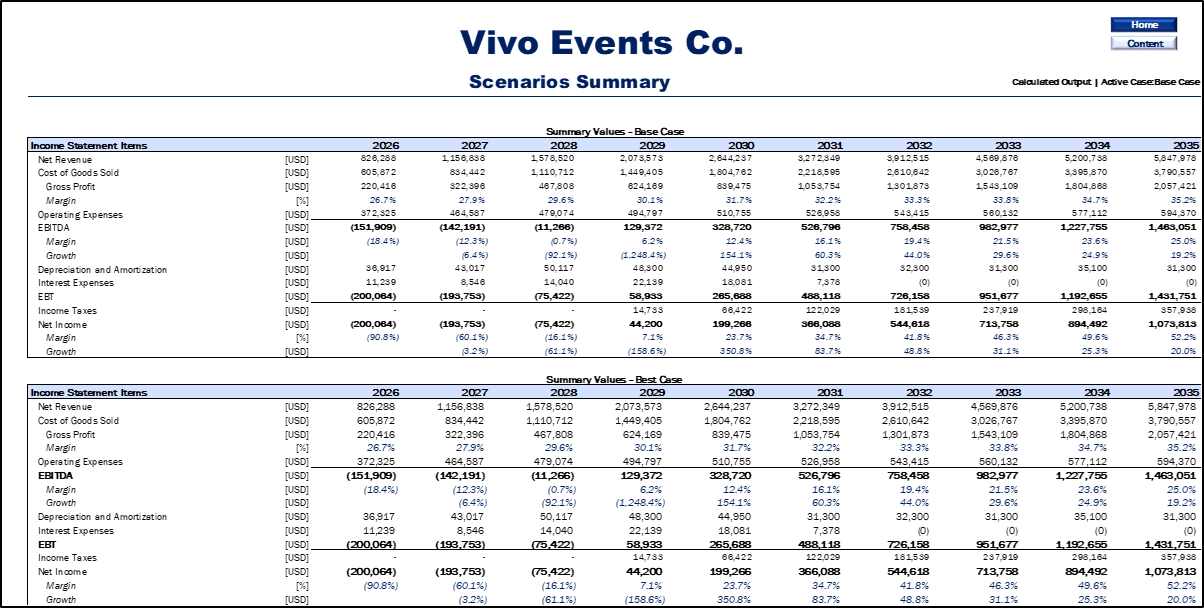
  • Live Base / Best / Worst Case Toggles: Instantly switch between scenarios on the control panel to see how variations in pricing, order volume, and operating costs impact overall profitability.
  • Scenario Comparison Dashboard: A dedicated module that analyzes KPIs side-by-side, giving management and investors a transparent view of risk and upside potential.
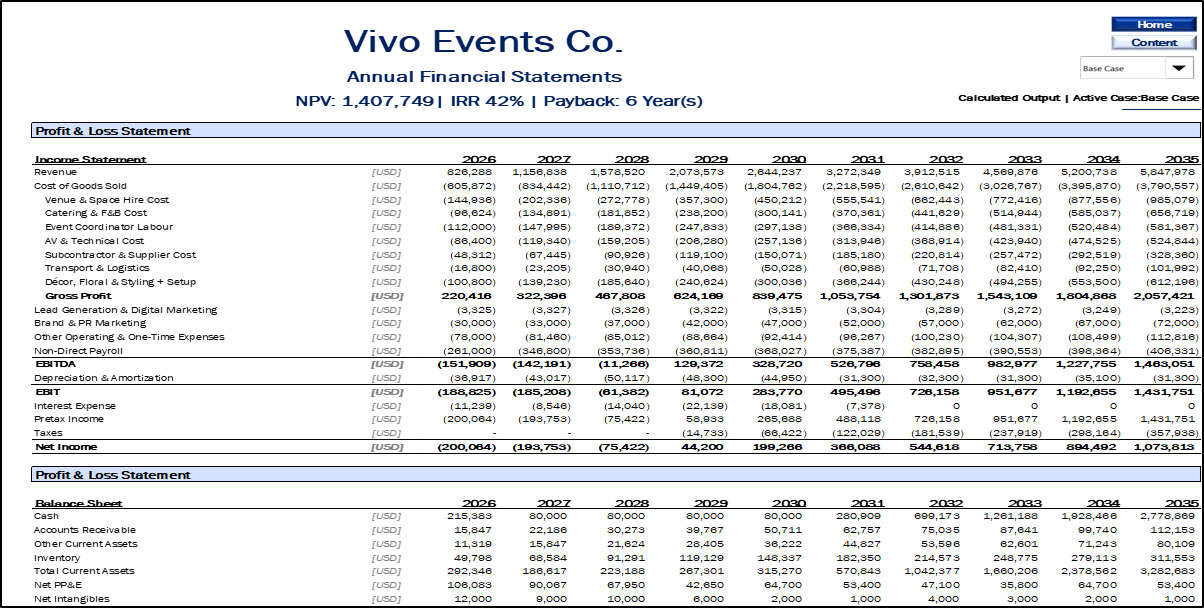
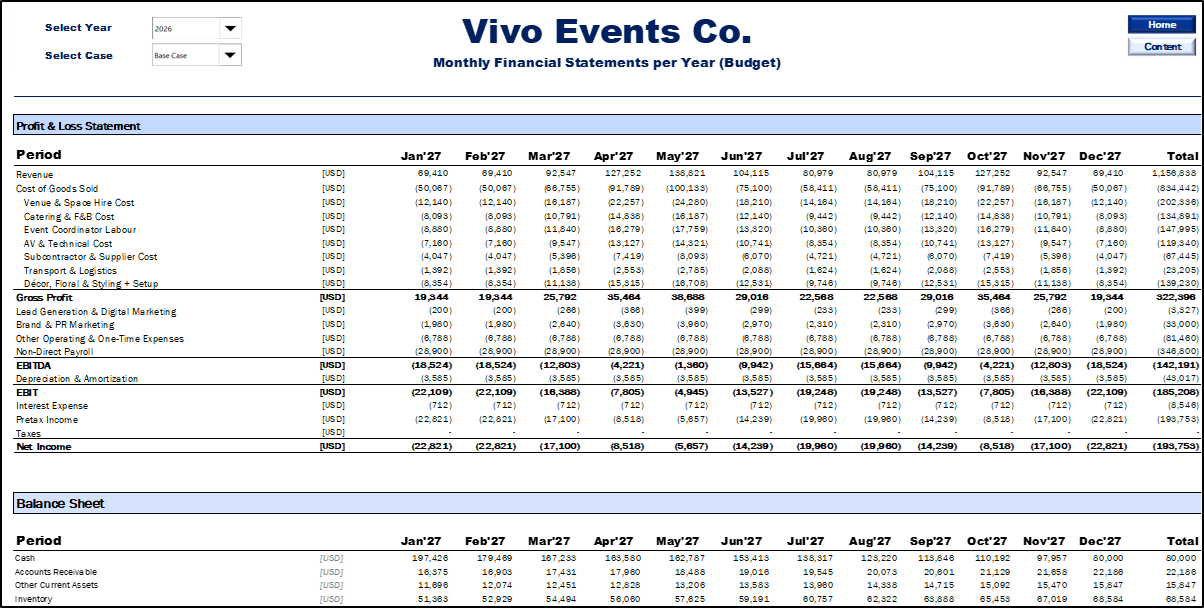
3. Integrated 3-Statement Financials
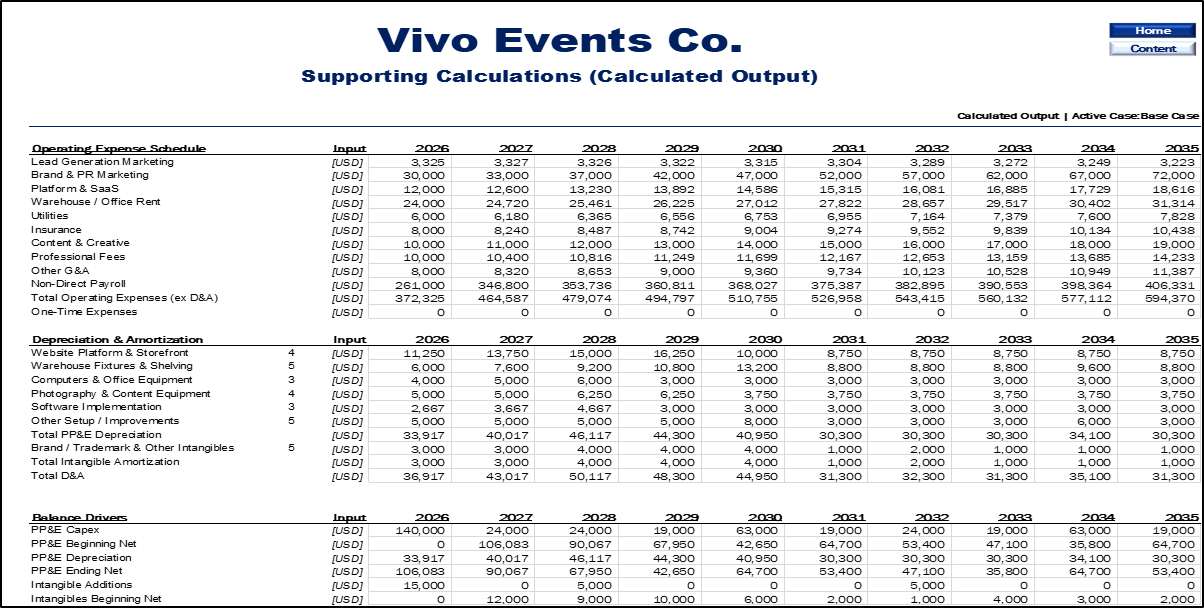
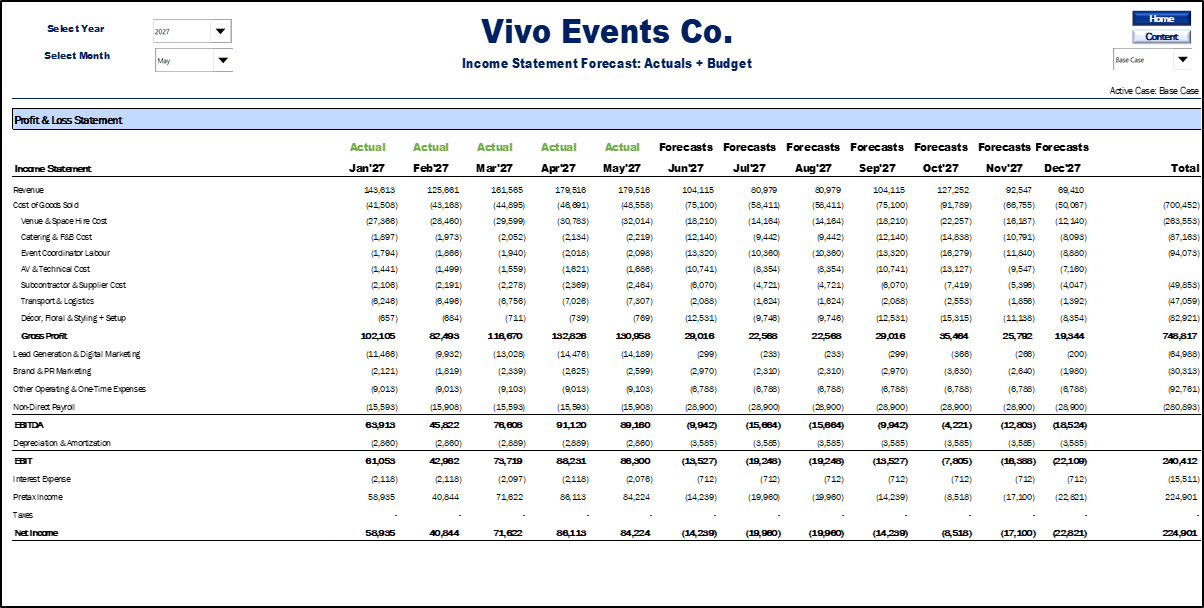
  • Monthly & Annual Views: Seamlessly rolls up monthly cash flows, income statements, and balance sheets into 10-year annual summaries.
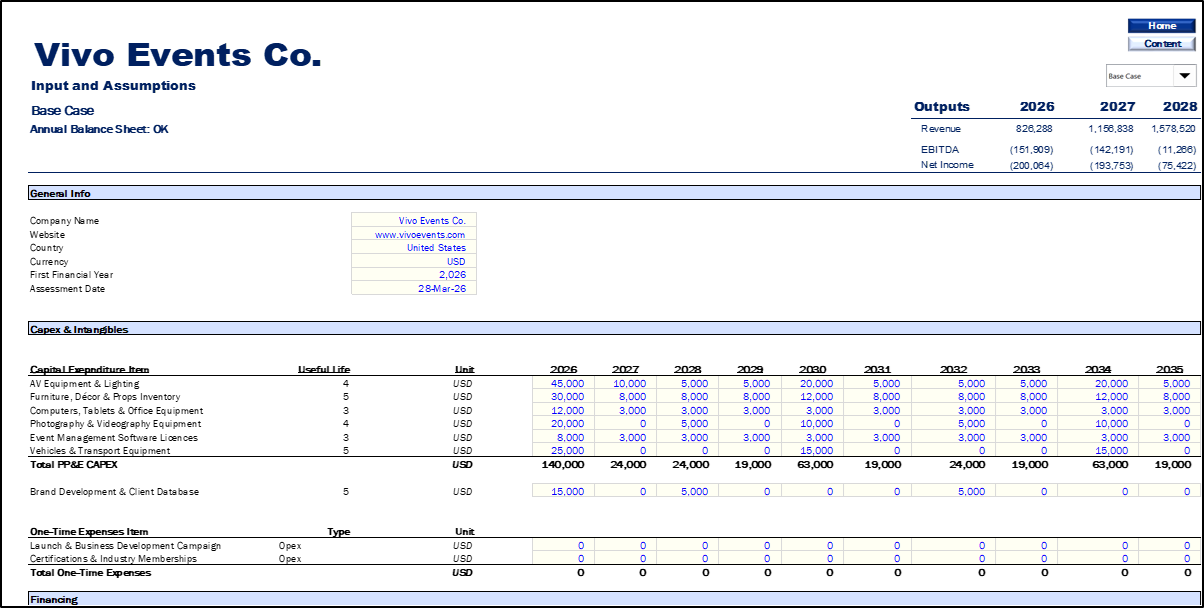
  • Working Capital & Capex: Tracks accounts receivable, inventory, deferred revenue, and capital expenditure depreciation with precise, circular-reference-free logic.
4. Performance Tracking (Actuals vs. Budget)
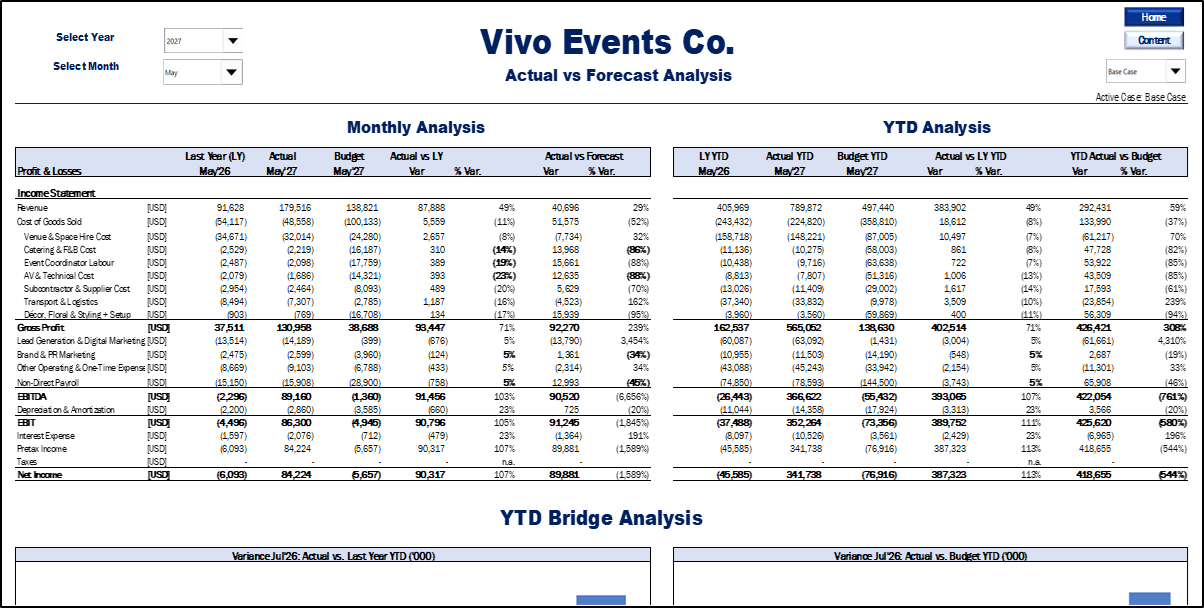
  • Variance Analysis: Import historical actuals to automatically compare against budgeted forecasts. Track Year-to-Date (YTD) progress and evaluate year-on-year financial performance to keep operational execution aligned with strategic goals.
5. Advanced Valuation & Returns Analysis
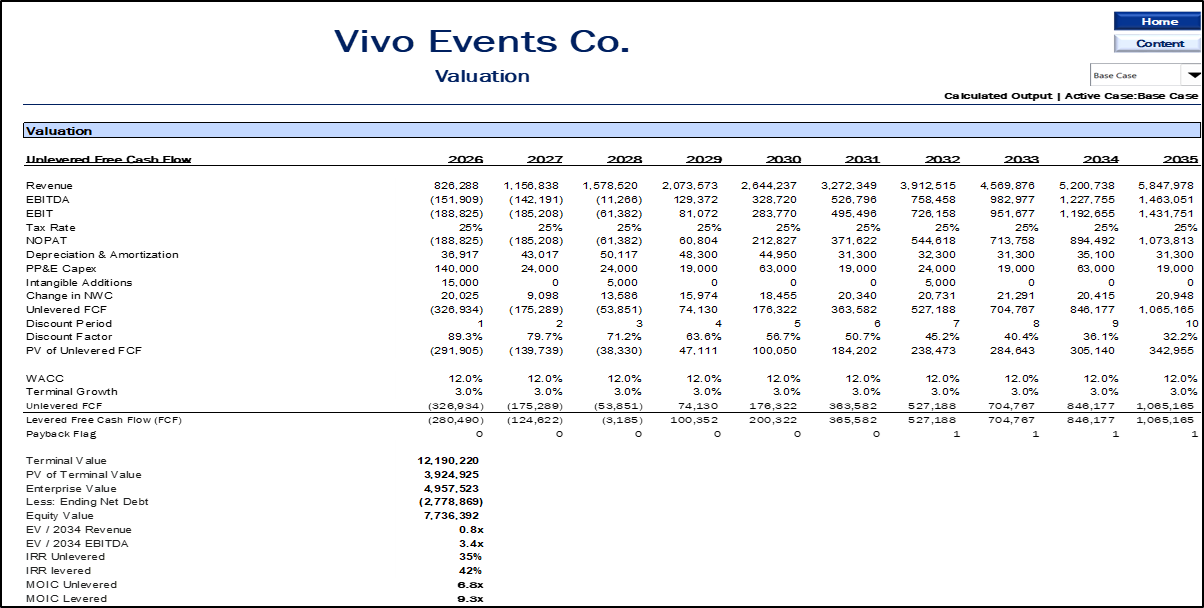
  • Discounted Cash Flow (DCF): Calculates Unlevered Free Cash Flow, Terminal Value, Enterprise Value, and Equity Value.
  • Return Metrics: Automatically computes the Internal Rate of Return (IRR), Weighted Average Cost of Capital (WACC), Multiple on Invested Capital (MOIC), Net Present Value (NPV), and Payback Period.
6. Automated Debt & Personnel Schedules
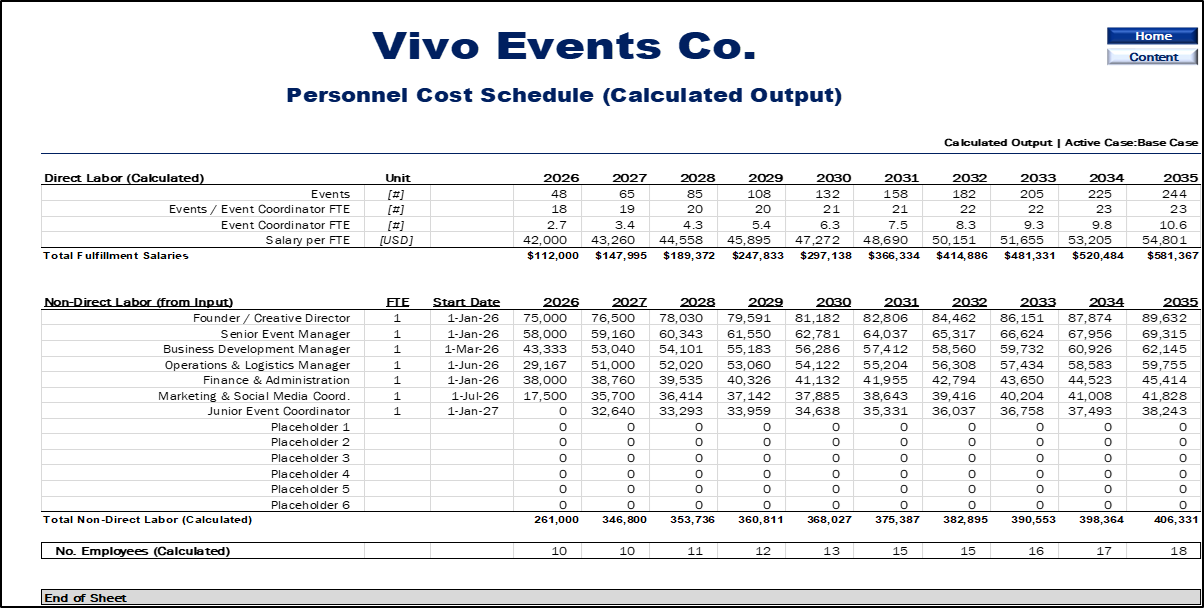
  • Dynamic Headcount Planning: Outline staffing structures, direct labor scaling based on event volume (FTE calculations), salaries, and payroll tax assumptions.
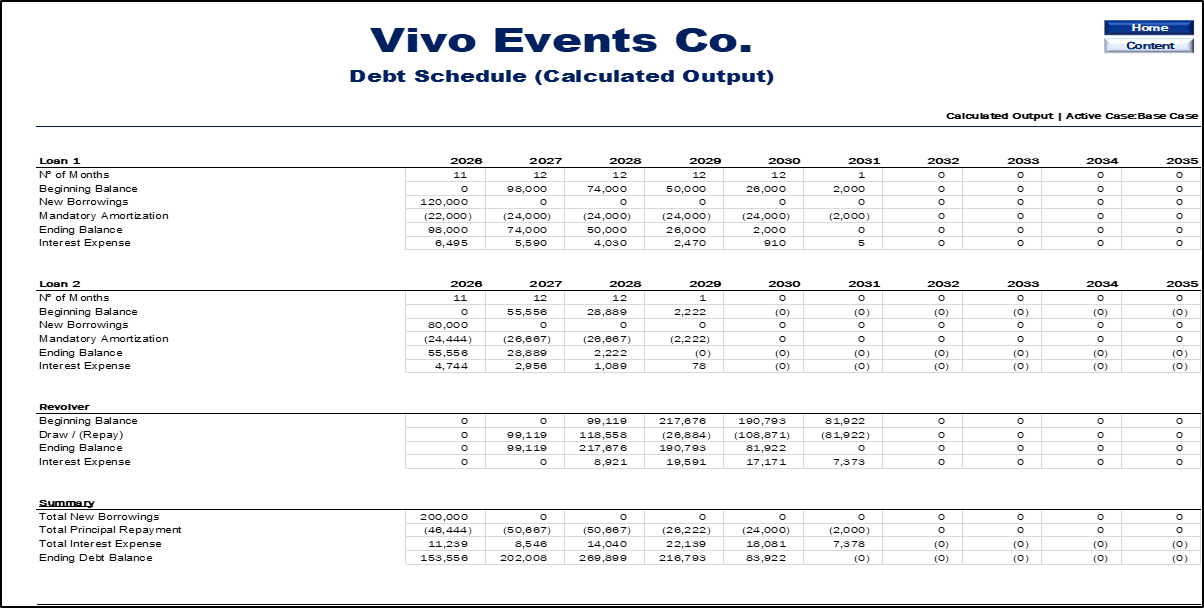
  • Debt Amortization: Track multiple loan tranches, detailing beginning balances, drawdowns, mandatory amortizations, and interest expense.
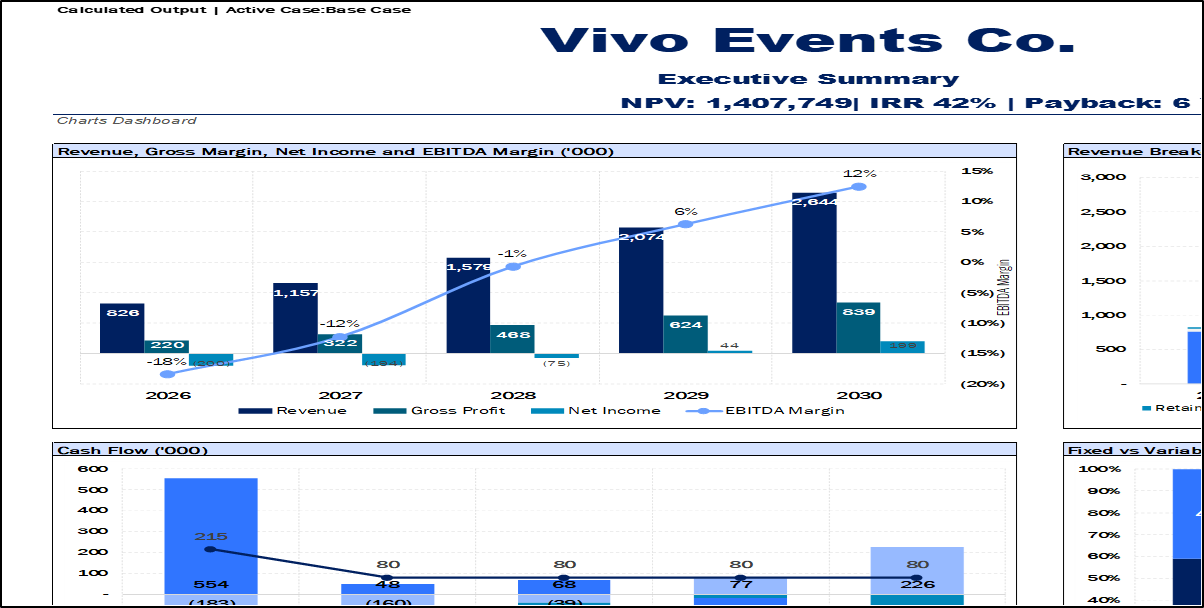
7. Executive Dashboards & Visualizations
  • Investor-Ready Outputs: A highly polished "Executive Summary" tab showcasing sales growth, EBITDA margins, break-even analysis, and return on equity.
  • Comprehensive Charting: Visual representations of cash flow trajectories, fixed vs. variable cost breakdowns, and revenue unit economics, optimized for easy export into pitch decks.

This Best Practice includes
1 excel Template

Acquire business license for $60.00

Add to cart

Add to bookmarks

Discuss

Further information

The model’s objective is to provide a comprehensive 10-year financial forecast for an event planning company, incorporating detailed monthly and annual projections for revenue streams (event fees, vendor commissions, sponsorships, and ancillary services), operating costs, cash flows, and balance sheets. It supports strategic decision-making by analyzing breakeven points per event and overall operations, tracking key performance indicators (such as event profitability, client acquisition cost, and utilization rates), and assessing the company’s valuation through discounted cash flow analysis.


0.0 / 5 (0 votes)

please wait...