

Originally published: 10/02/2025 11:02
Publication number: ELQ-69147-1
View all versions & Certificate
Publication number: ELQ-69147-1
View all versions & Certificate

Model (Modelling) Agency Financial Model
A comprehensive editable 5-Year 3-Statement, MS Excel spreadsheet for tracking a Model Agency's Financials.
 by AllFinancialModels
AllFinancialModels offer a curated selection of high-quality yet financial model templates designed to support a wide range of business needs.Follow
model agencymodellingmodelingfinancefinancial modelmodel agency spreadsheetmodel agency finance modelexcel spreadsheetexcel templatemodelling agency
Description
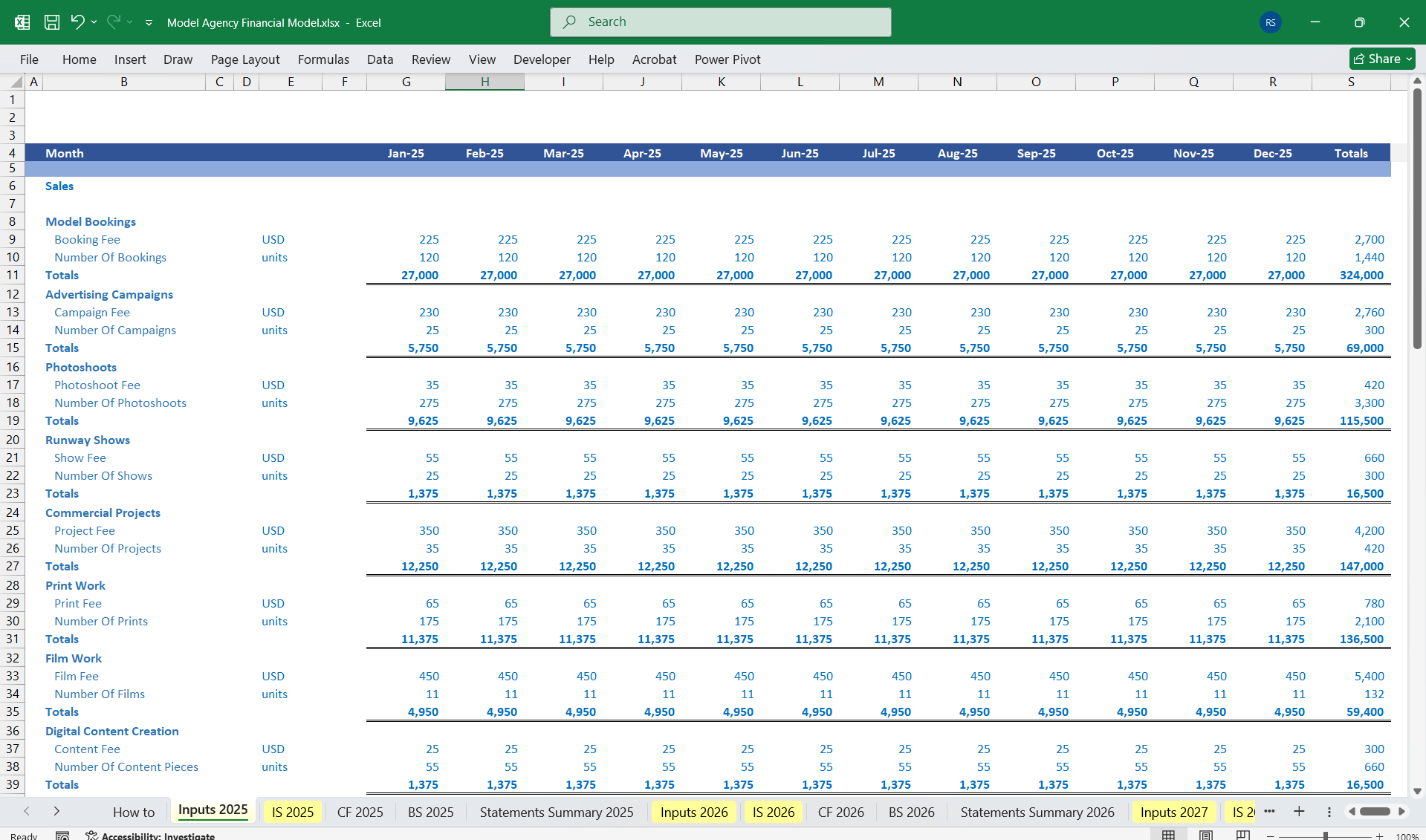
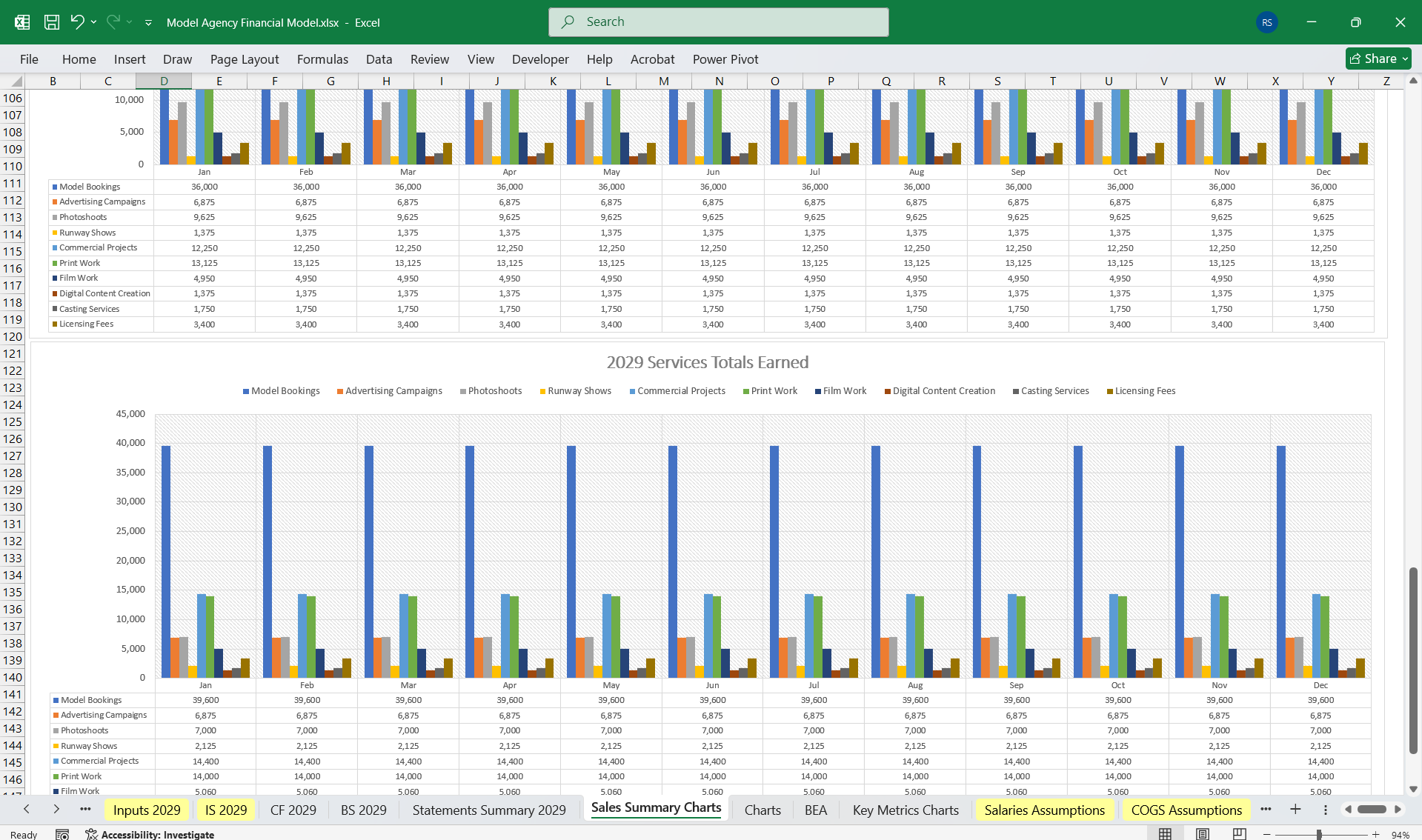
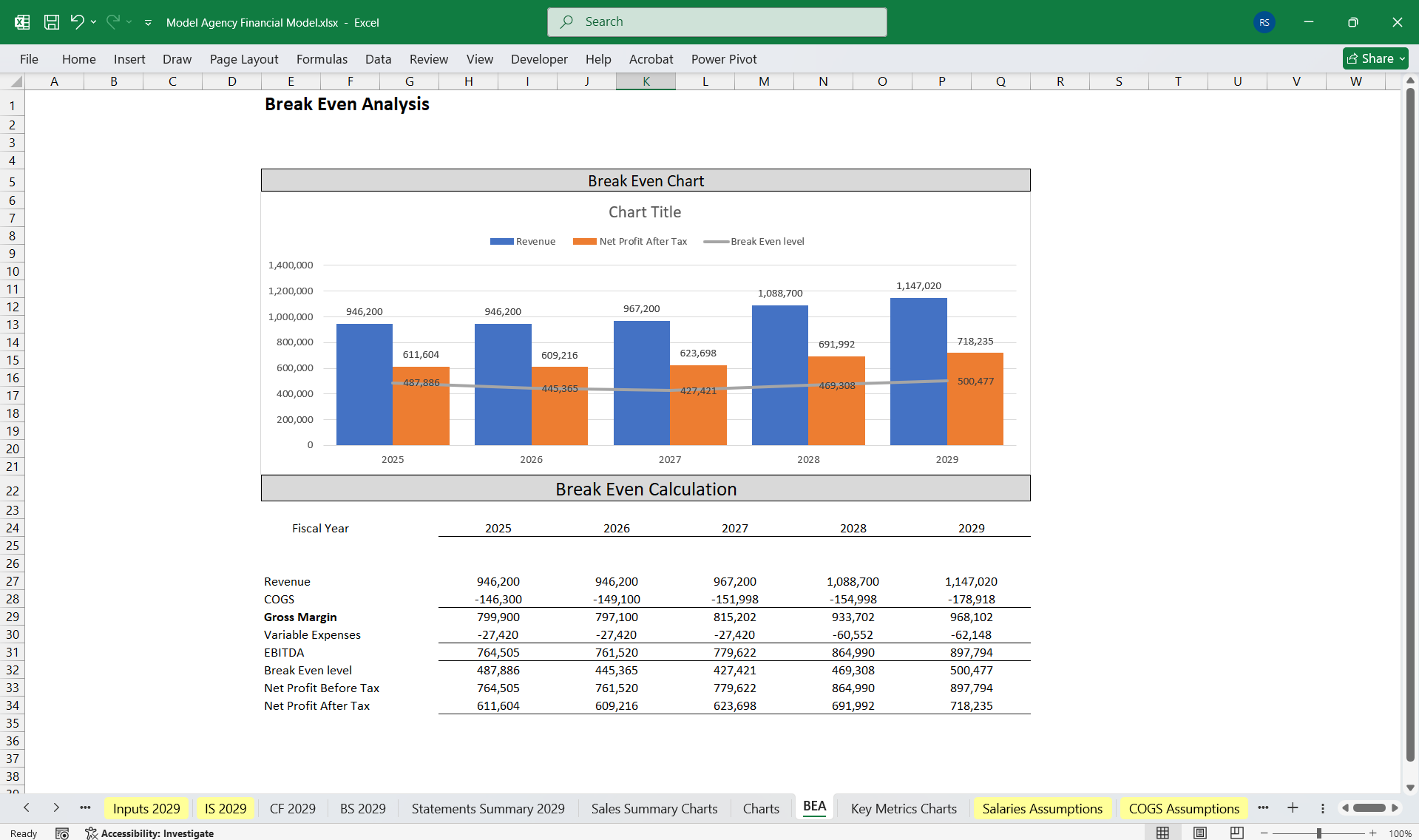
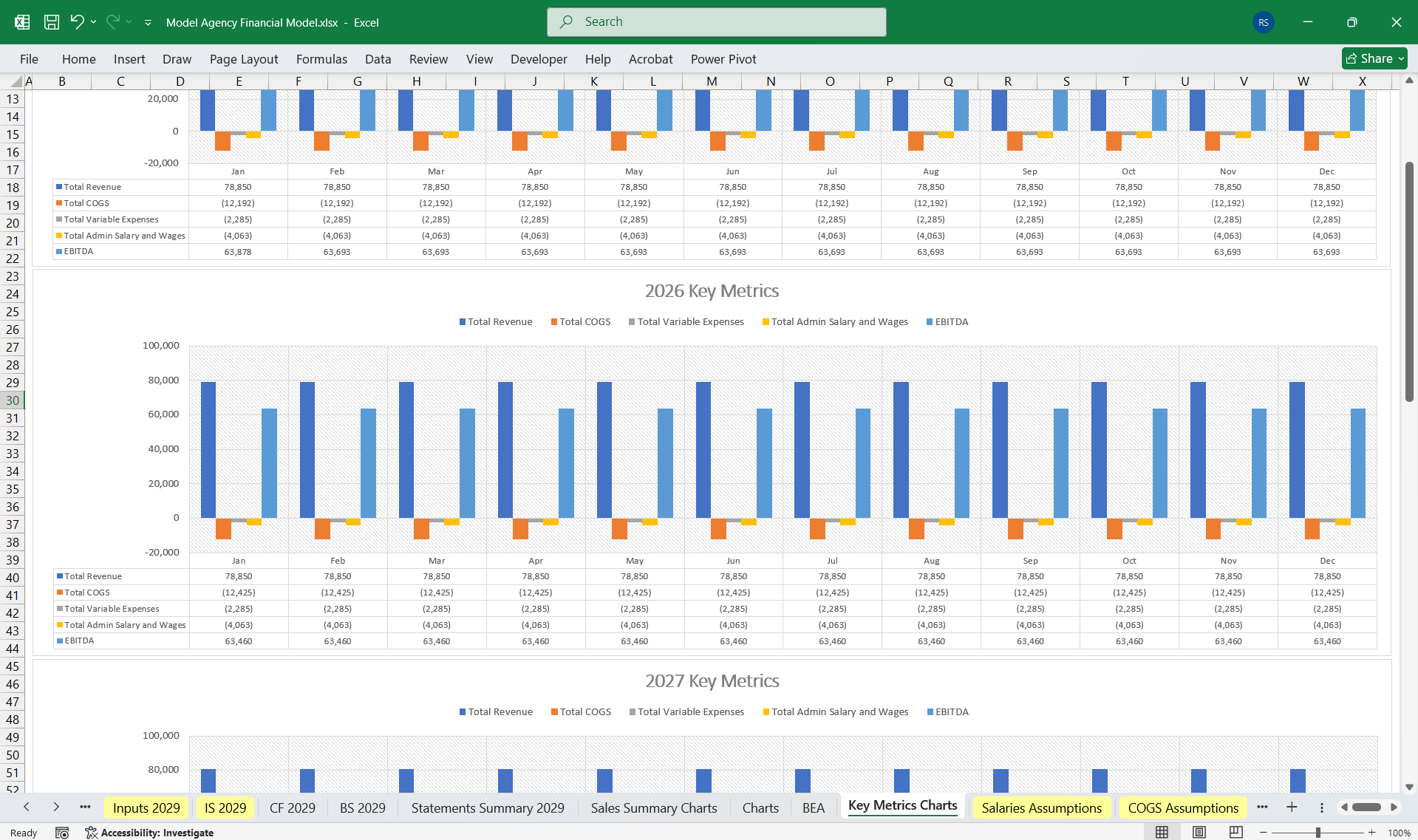
This 3-Statement Financial Model for a Model Agency consists of the Income Statement, Balance Sheet, and Cash Flow Statement, which are interconnected to provide a comprehensive view of the agency's financial health. Below is a detailed breakdown of each section, incorporating revenue streams from Model Bookings, Photo Shoots, Runway Shows, Commercial Work, Print Work, and Casting Services.
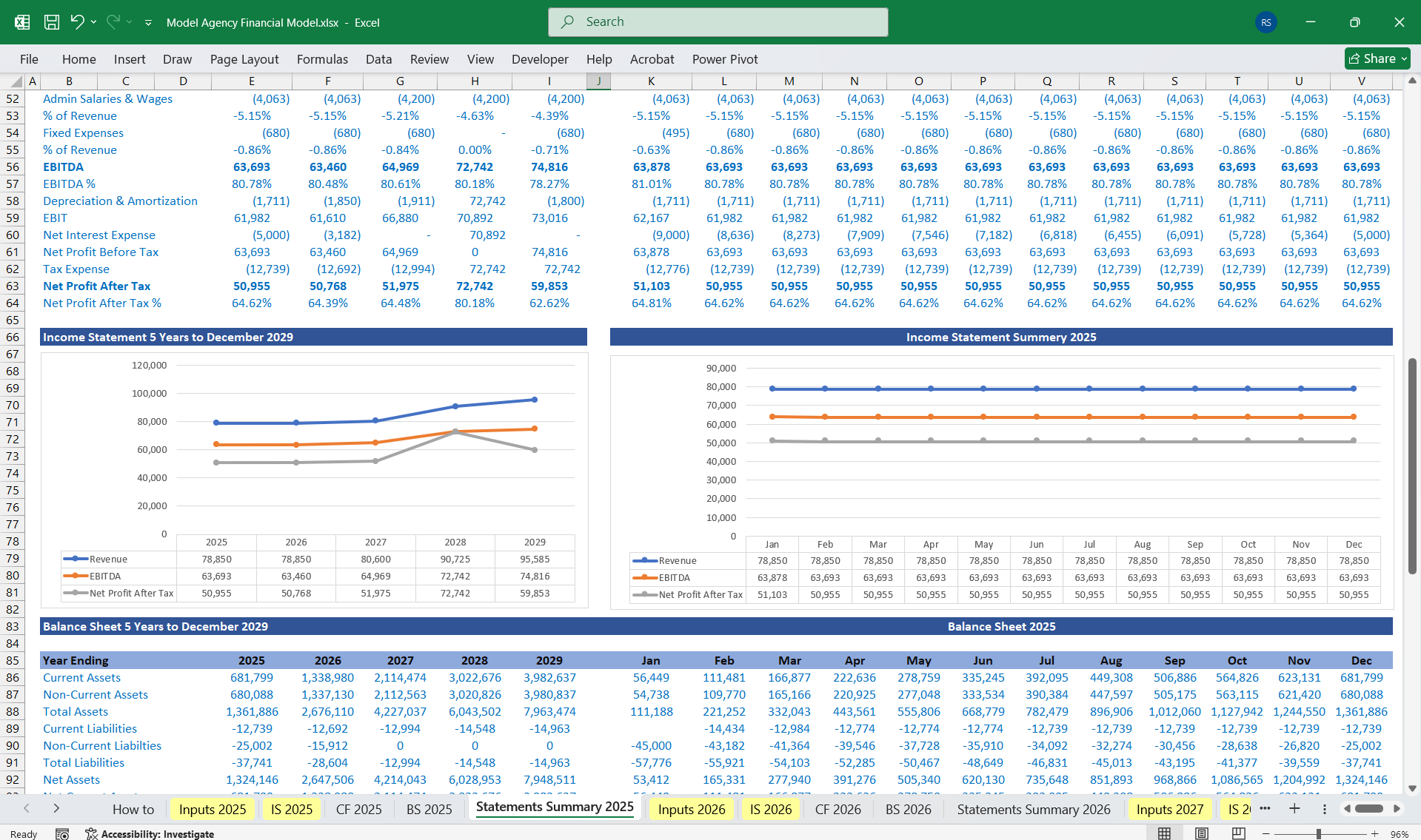
1. Income Statement (Profit & Loss Statement)The Income Statement tracks the revenue, expenses, and profitability over a specific period.
10 Example Revenue Streams include:
Expenses:
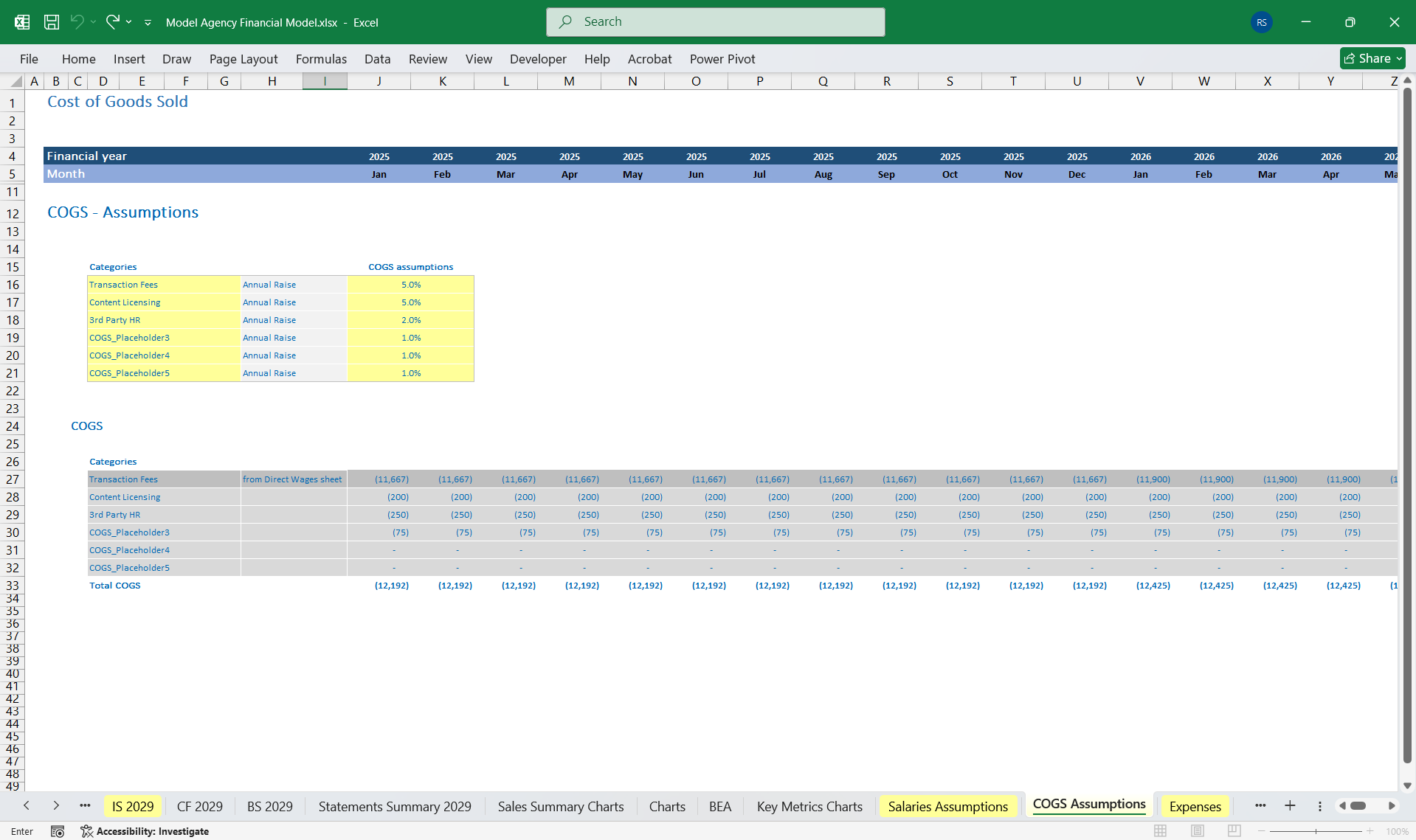
Direct Costs (Cost of Goods Sold - COGS)
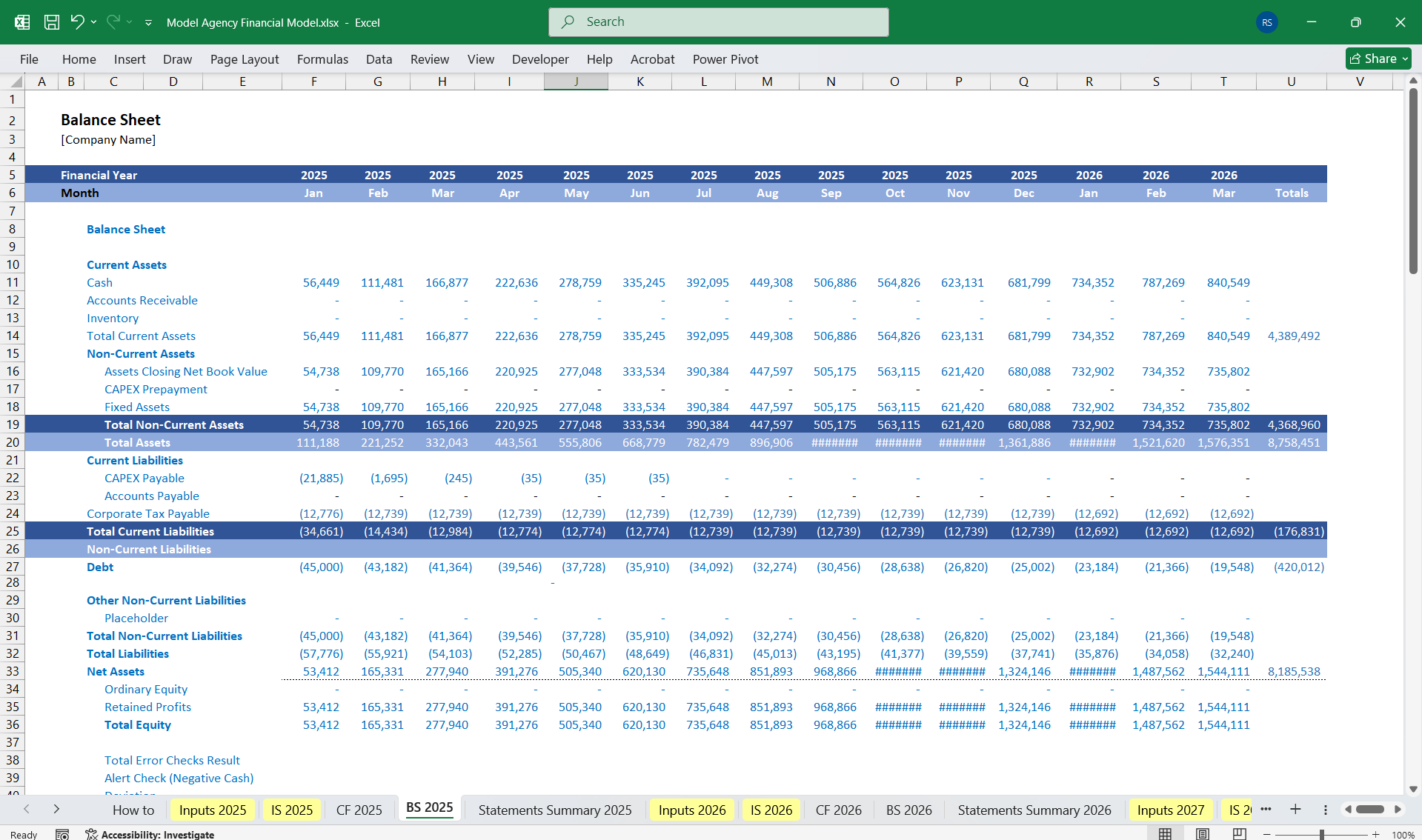
2. Balance SheetThe Balance Sheet provides a snapshot of the agency’s financial position at a given time, divided into Assets, Liabilities, and Equity.
Assets:
Current Assets
Current Liabilities
Assets=Liabilities+Equity\text{Assets} = \text{Liabilities} + \text{Equity}Assets=Liabilities+Equity
3. Cash Flow Statement
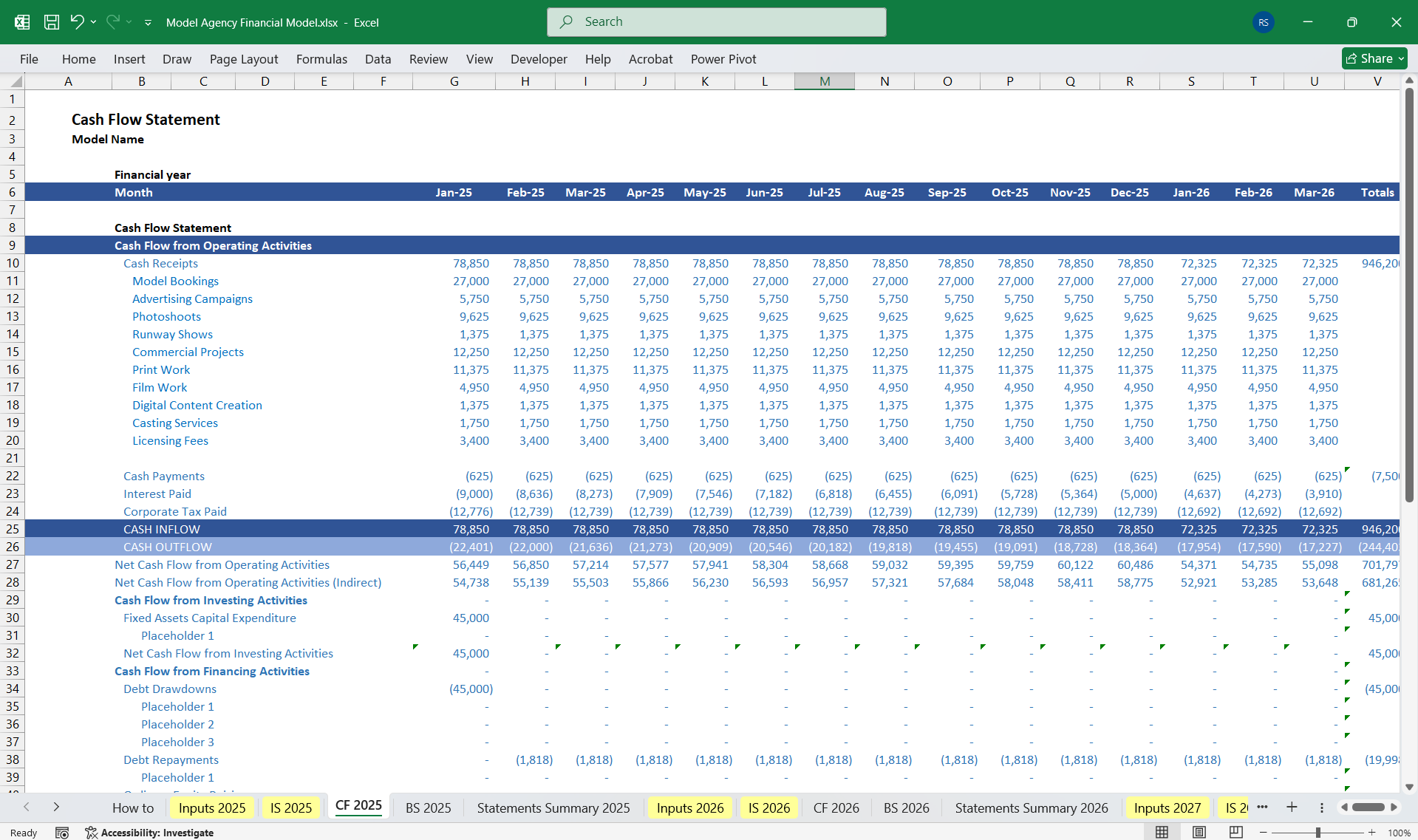
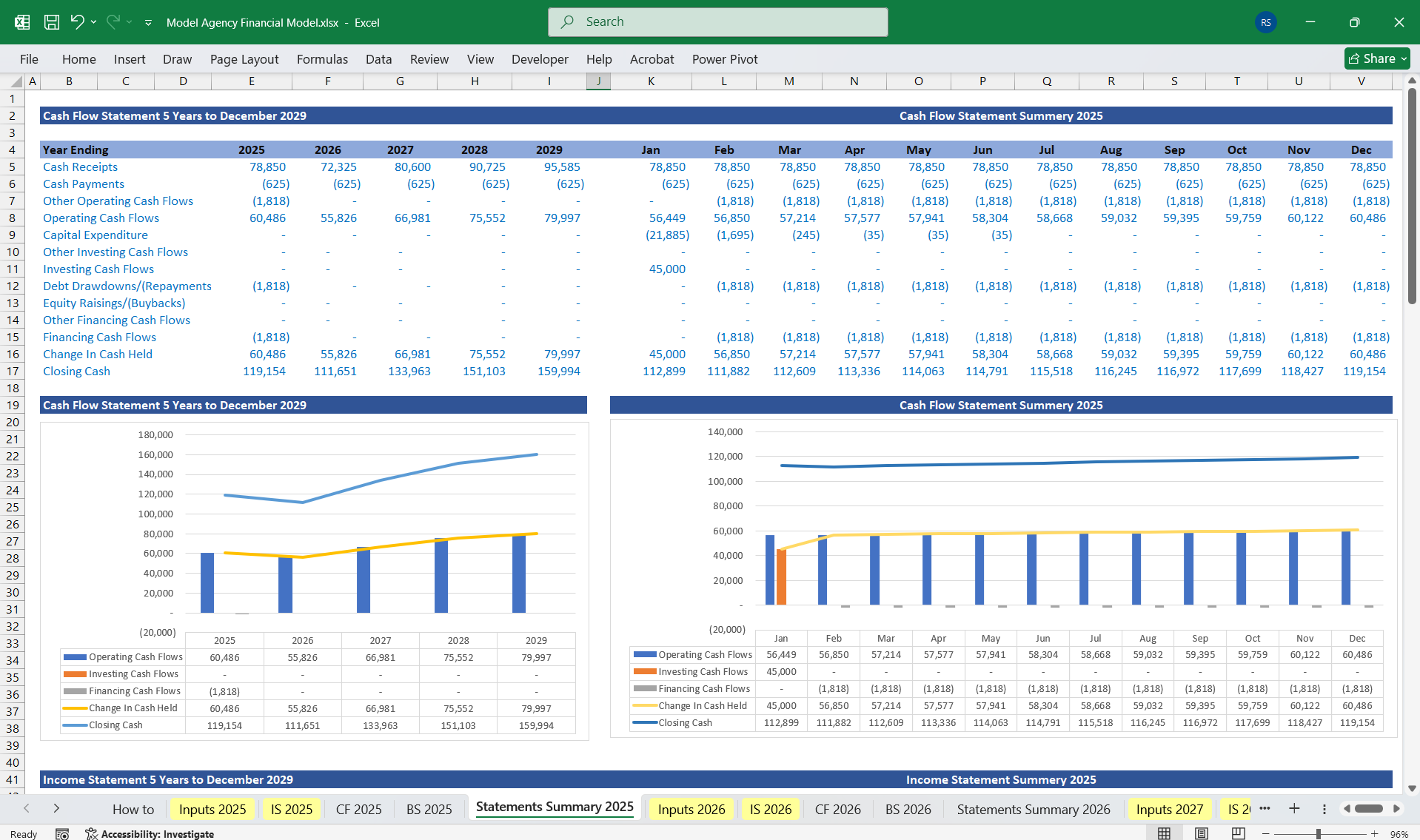
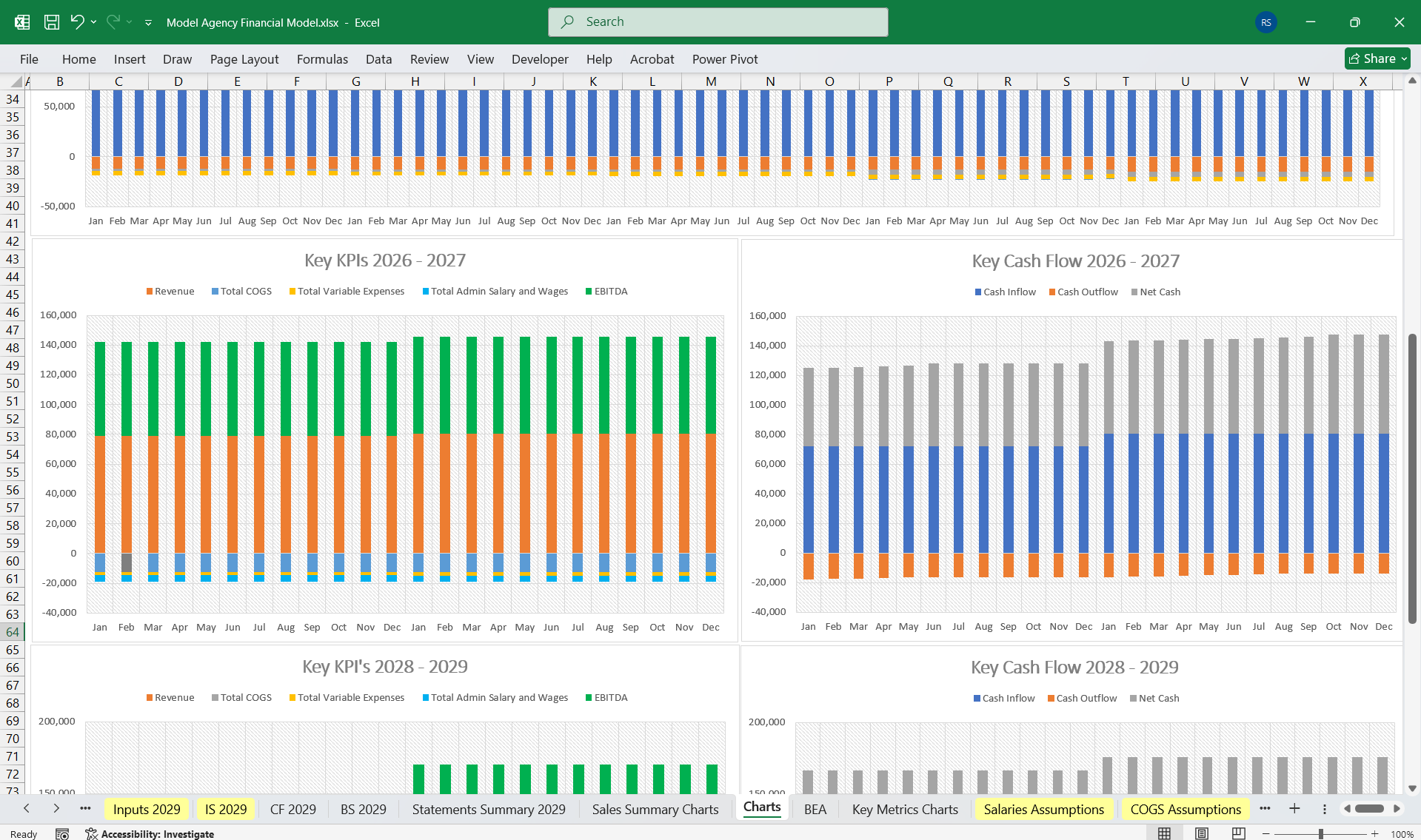
The Cash Flow Statement tracks cash inflows and outflows, divided into Operating, Investing, and Financing Activities.
Operating Cash Flow (CFO)
Operating Cash Flow=Net Income+Non-Cash Expenses−Changes in Working Capital\text{Operating Cash Flow} = \text{Net Income} + \text{Non-Cash Expenses} - \text{Changes in Working Capital}Operating Cash Flow=Net Income+Non-Cash Expenses−Changes in Working Capital
Investing Cash Flow (CFI)
Financial Model Interconnections
ConclusionThis 3-Statement Financial Model for a Model Agency helps tracks financial performance, cash flow, and financial stability.
By forecasting revenue from examples Model Bookings, Photo Shoots, Runway Shows, Commercial Work, Print Work, and Casting Services, and managing expenses, working capital, and financing, the agency can make data-driven decisions to scale and optimize operations.
This 3-Statement Financial Model for a Model Agency consists of the Income Statement, Balance Sheet, and Cash Flow Statement, which are interconnected to provide a comprehensive view of the agency's financial health. Below is a detailed breakdown of each section, incorporating revenue streams from Model Bookings, Photo Shoots, Runway Shows, Commercial Work, Print Work, and Casting Services.
1. Income Statement (Profit & Loss Statement)The Income Statement tracks the revenue, expenses, and profitability over a specific period.
10 Example Revenue Streams include:
- Model Bookings – Revenue from models booked for various assignments.
- Photo Shoots – Revenue from professional photoshoots arranged by the agency.
- Runway Shows – Revenue earned when models participate in fashion shows.
- Commercial Work – Income from TV commercials, brand endorsements, and online promotions.
- Print Work – Revenue from magazine shoots, advertising campaigns, and catalogs.
- Casting Services – Fees earned by providing casting services to brands and production houses.
Expenses:
Direct Costs (Cost of Goods Sold - COGS)
- Model Payments (percentage of bookings paid to models)
- Photographer & Makeup Artist Fees (for in-house shoots)
- Studio & Equipment Rental
- Casting Expenses (venue, logistics, software, etc.)
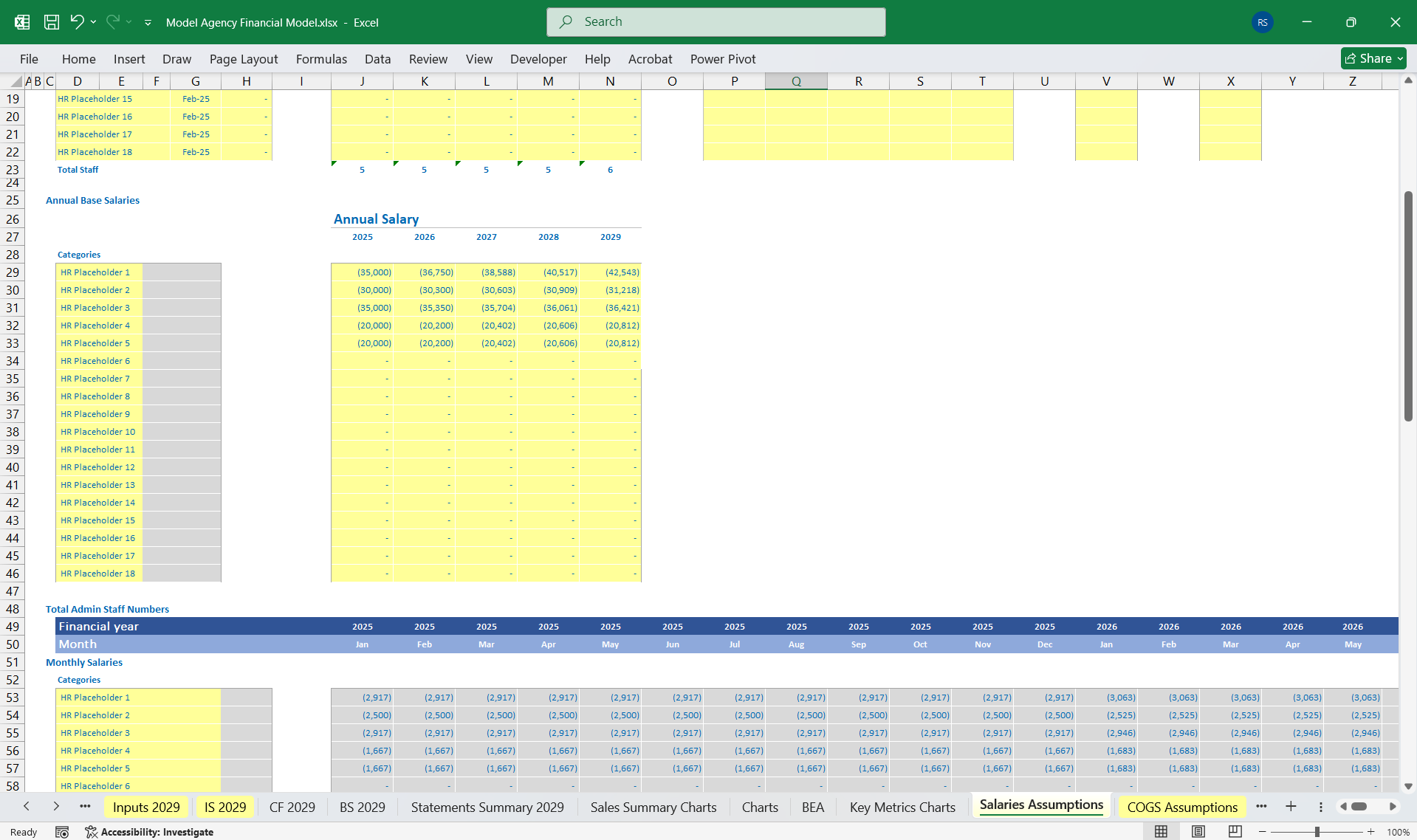
- Salaries (agency staff, bookers, managers)
- Office Rent & Utilities
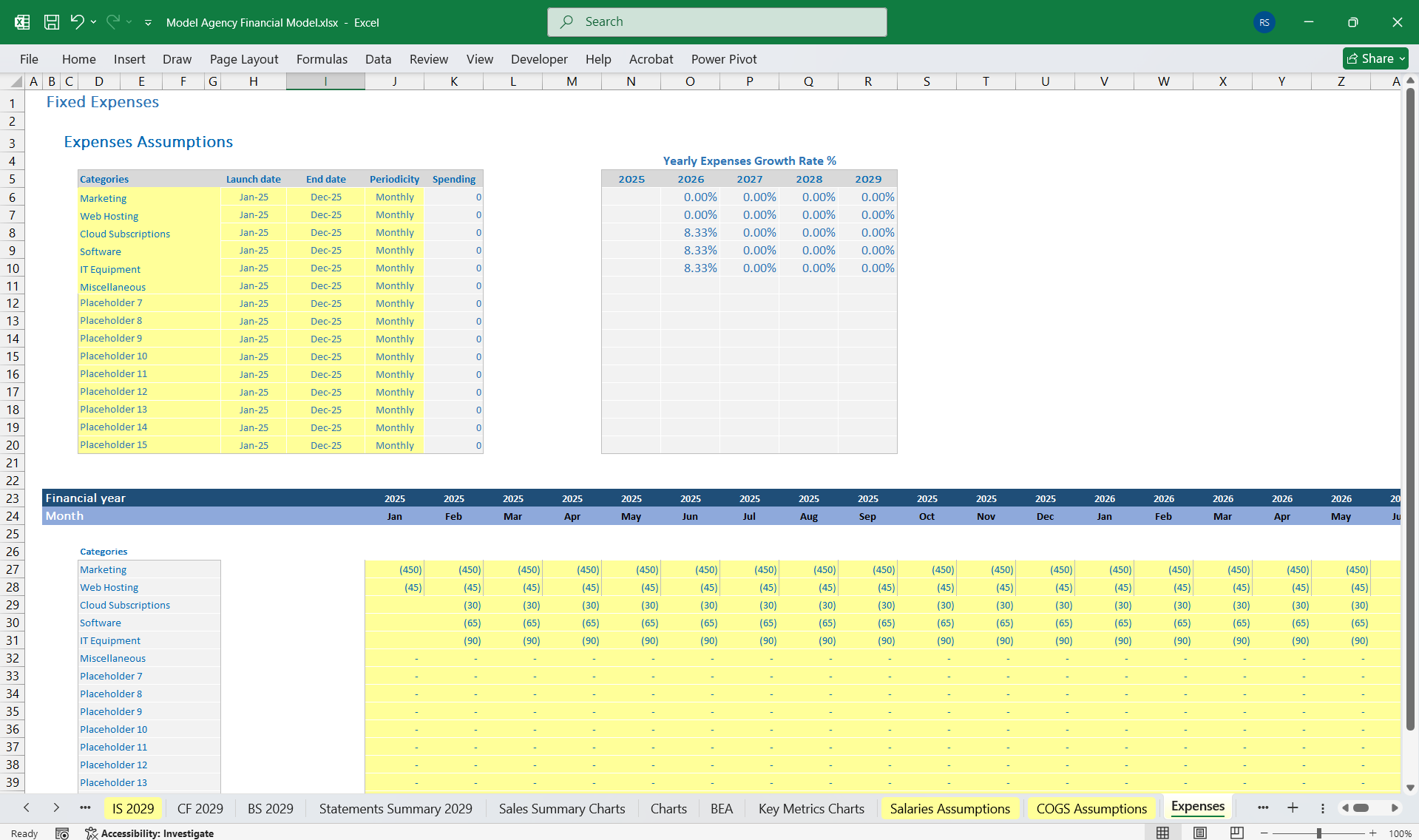
- Marketing & Promotion Costs
- Technology & Software (booking platforms, CRM, etc.)
- Travel & Accommodation (for models or staff on assignment)
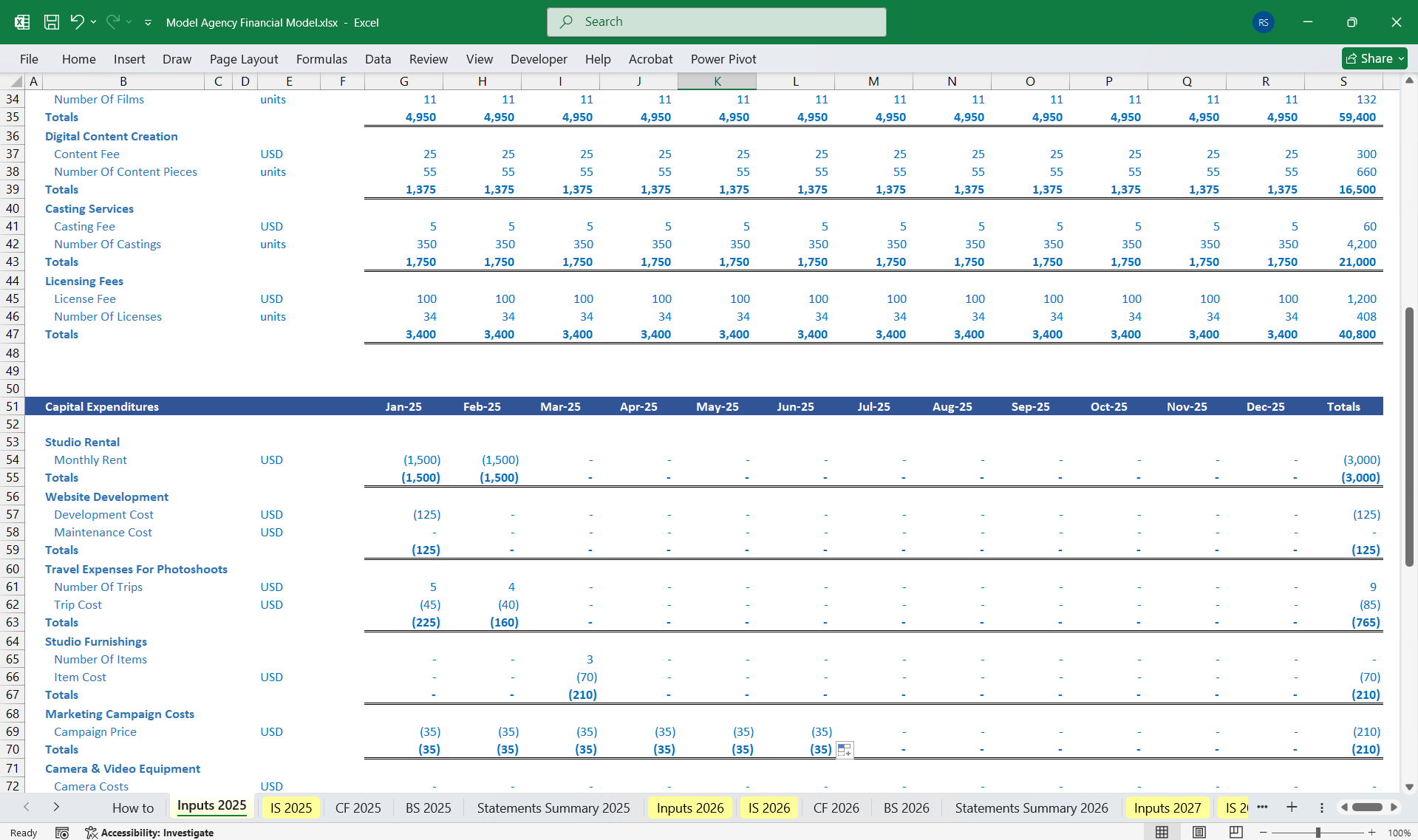
- Office equipment
- Studio gear
- Website & software development costs
- Legal & Compliance Fees (contracts, licensing, insurance)
- Bad Debt Expenses (unpaid model bookings)
- Gross Profit:Gross Profit=Revenue−COGS\text{Gross Profit} = \text{Revenue} - \text{COGS}Gross Profit=Revenue−COGS
- Operating Profit (EBIT):EBIT=Gross Profit−Operating Expenses\text{EBIT} = \text{Gross Profit} - \text{Operating Expenses}EBIT=Gross Profit−Operating Expenses
- Net Profit:Net Profit=EBIT−Taxes−Interest\text{Net Profit} = \text{EBIT} - \text{Taxes} - \text{Interest}Net Profit=EBIT−Taxes−Interest
2. Balance SheetThe Balance Sheet provides a snapshot of the agency’s financial position at a given time, divided into Assets, Liabilities, and Equity.
Assets:
Current Assets
- Cash & Cash Equivalents – Available funds.
- Accounts Receivable – Outstanding payments from clients.
- Prepaid Expenses – Office rent, software subscriptions, etc.
- Work in Progress (WIP) – Ongoing contracts with clients.
- Office Equipment – Computers, photography gear.
- Studio Space (if owned)
- Software & Website Development Costs
- Intangible Assets – Agency’s branding, goodwill.
Current Liabilities
- Accounts Payable – Payments due to models, photographers, vendors.
- Short-Term Debt – Loans, credit lines for working capital.
- Accrued Expenses – Unpaid salaries, office rent.
- Long-Term Loans – Loans taken for expansion.
- Deferred Taxes – Tax liabilities owed in future periods.
- Retained Earnings – Profits reinvested into the business.
- Owner’s Equity – Initial and additional investments by owners.
Assets=Liabilities+Equity\text{Assets} = \text{Liabilities} + \text{Equity}Assets=Liabilities+Equity
3. Cash Flow Statement
The Cash Flow Statement tracks cash inflows and outflows, divided into Operating, Investing, and Financing Activities.
Operating Cash Flow (CFO)
- Cash Inflows:
- Revenue from Model Bookings, Shoots, Shows, etc.
- Payments received from clients.
- Deposits or advance payments.
- Cash Outflows:
- Model payments, photographer fees.
- Office rent, salaries, marketing expenses.
- Taxes, insurance, legal costs.
Operating Cash Flow=Net Income+Non-Cash Expenses−Changes in Working Capital\text{Operating Cash Flow} = \text{Net Income} + \text{Non-Cash Expenses} - \text{Changes in Working Capital}Operating Cash Flow=Net Income+Non-Cash Expenses−Changes in Working Capital
Investing Cash Flow (CFI)
- Cash Inflows:
- Sale of equipment or office space.
- Sale of investments.
- Cash Outflows:
- Purchase of new office equipment, and software.
- Investment in studio expansion.
- Acquisition of competitor or branding assets.
- Cash Inflows:
- New debt raised (loans, credit lines).
- Equity funding from investors.
- Cash Outflows:
- Loan repayments.
- Dividend payments (if applicable).
- Buyback of shares.
Financial Model Interconnections
- Net Income from the Income Statement flows into Retained Earnings in the Balance Sheet.
- Changes in Balance Sheet accounts (e.g., Accounts Receivable, Payables) affect the Cash Flow Statement.
- Depreciation & Amortization (from the Income Statement) is added back to Operating Cash Flow (since they are non-cash expenses).
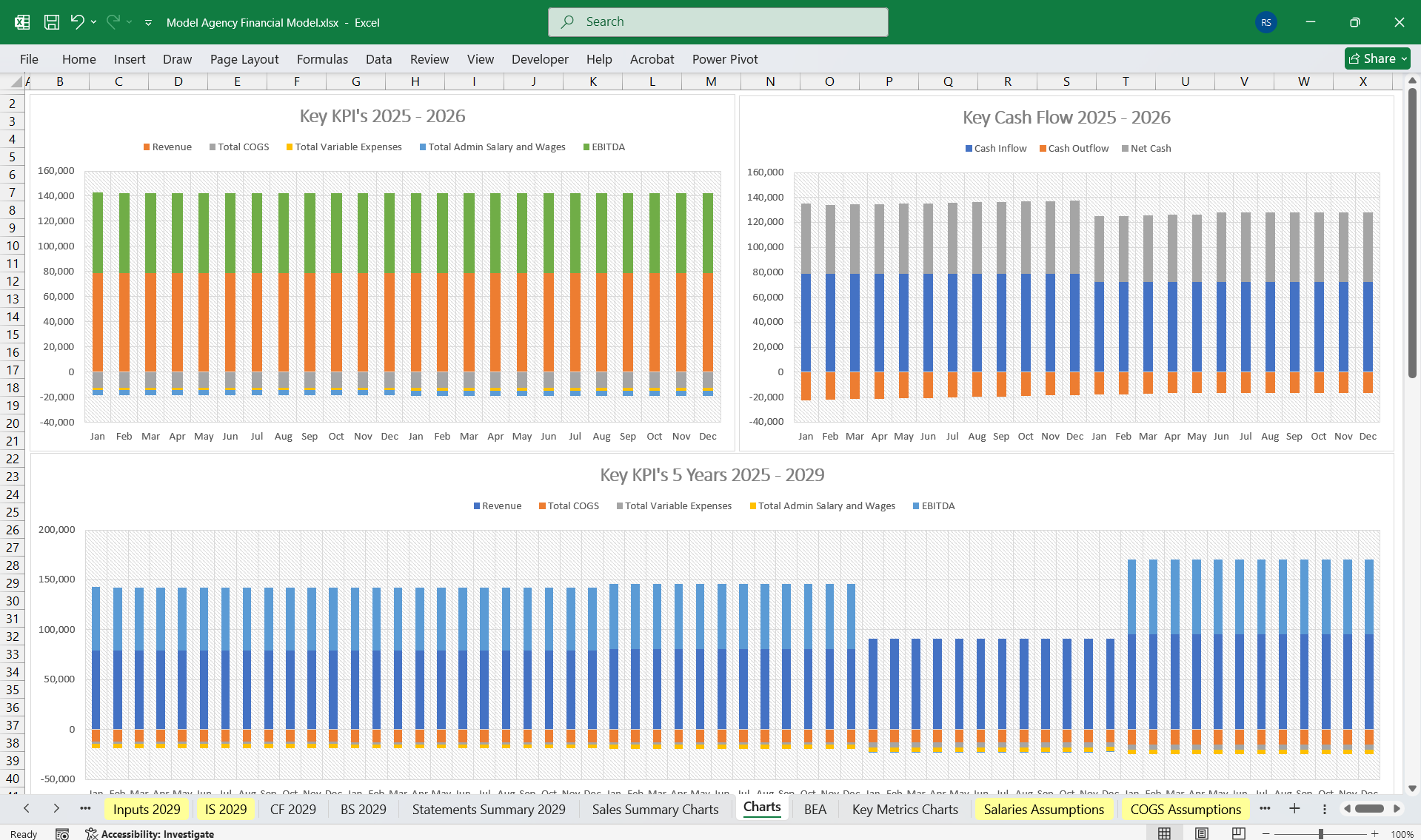
ConclusionThis 3-Statement Financial Model for a Model Agency helps tracks financial performance, cash flow, and financial stability.
By forecasting revenue from examples Model Bookings, Photo Shoots, Runway Shows, Commercial Work, Print Work, and Casting Services, and managing expenses, working capital, and financing, the agency can make data-driven decisions to scale and optimize operations.
This Best Practice includes
1 Excel Financial Model
Further information
Provides thorough oversight, tracking, and reporting of a Model Agency's Finances, including updates on budget utilisation and projections.