Publication number: ELQ-99671-1
View all versions & Certificate

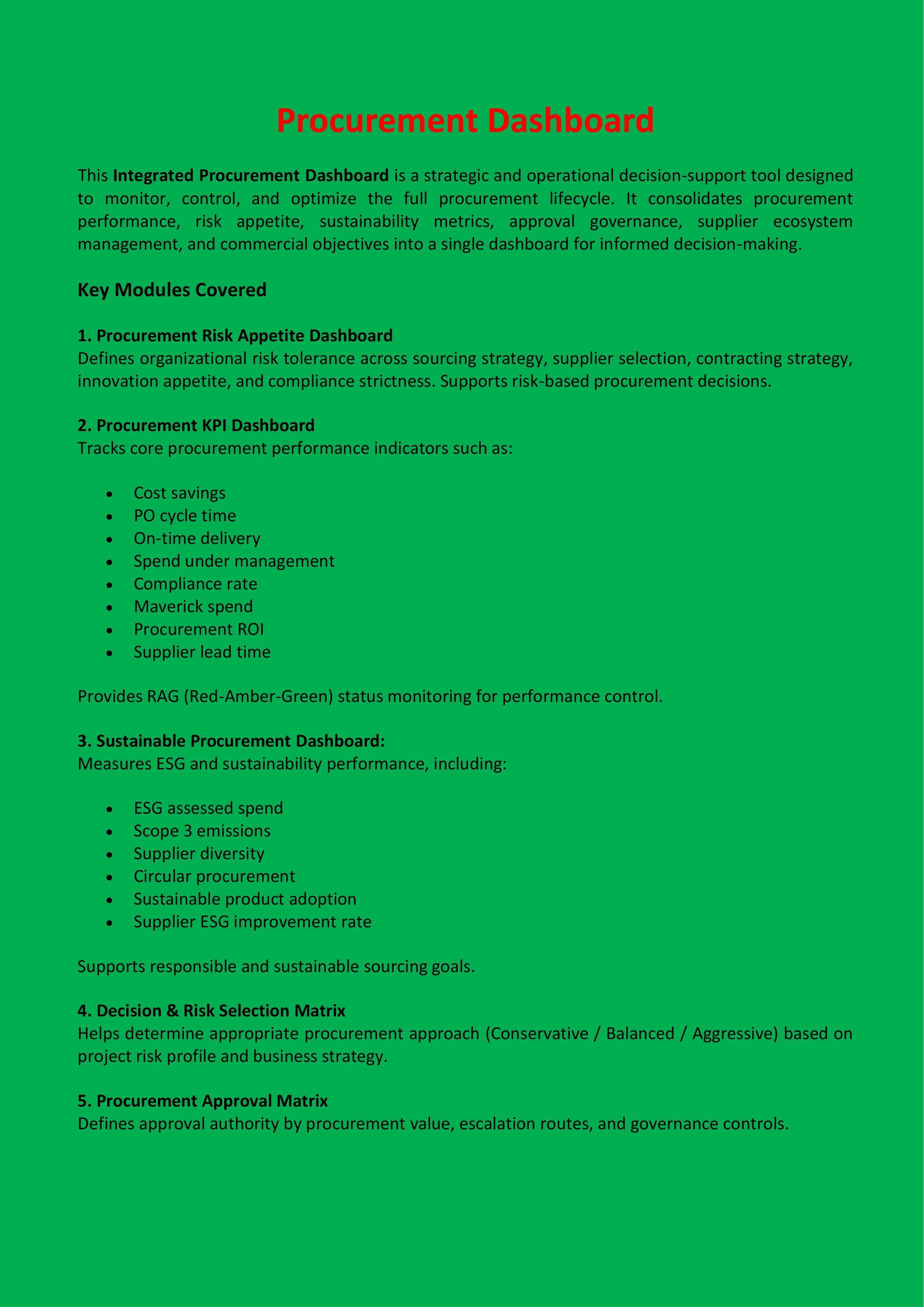
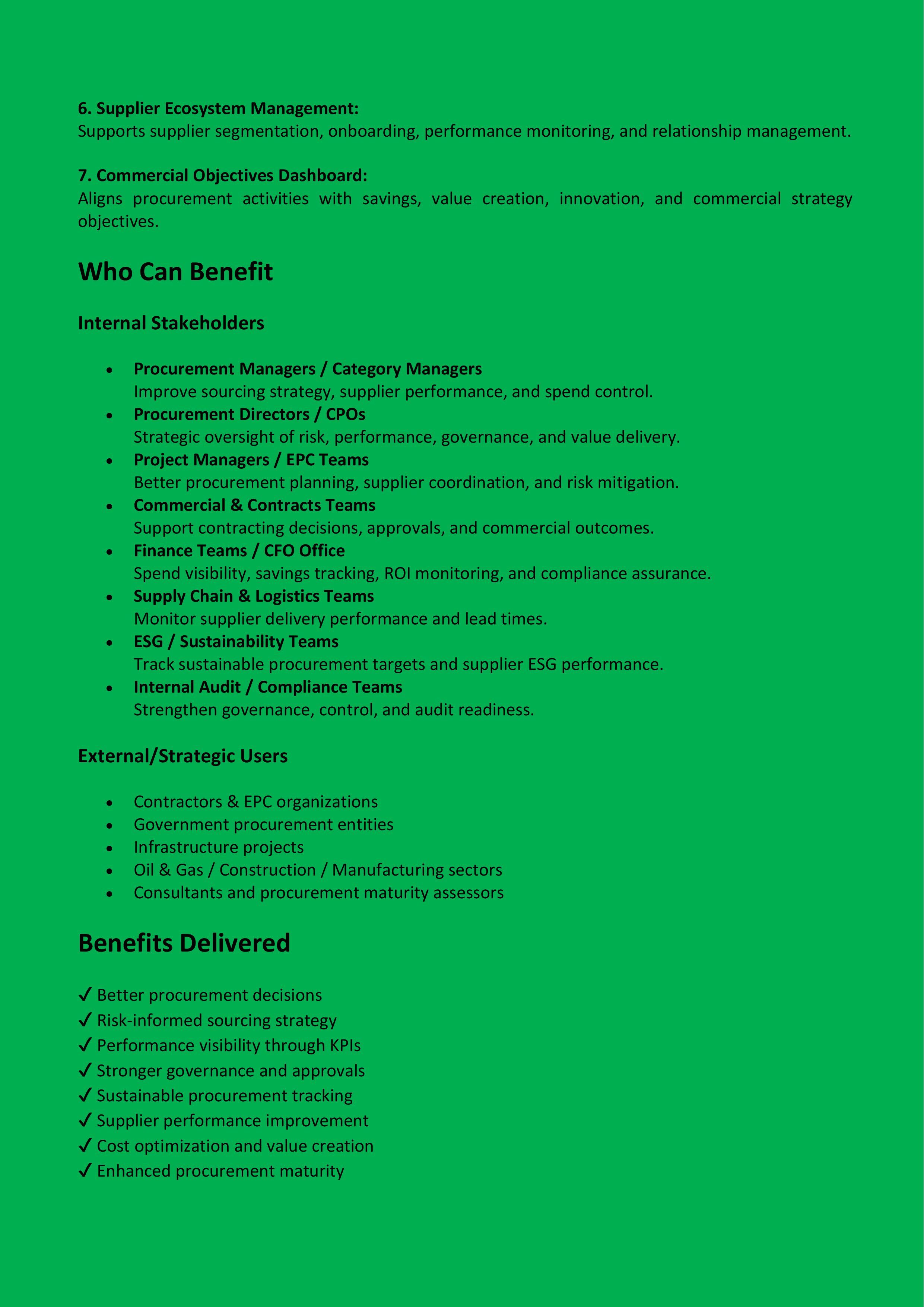
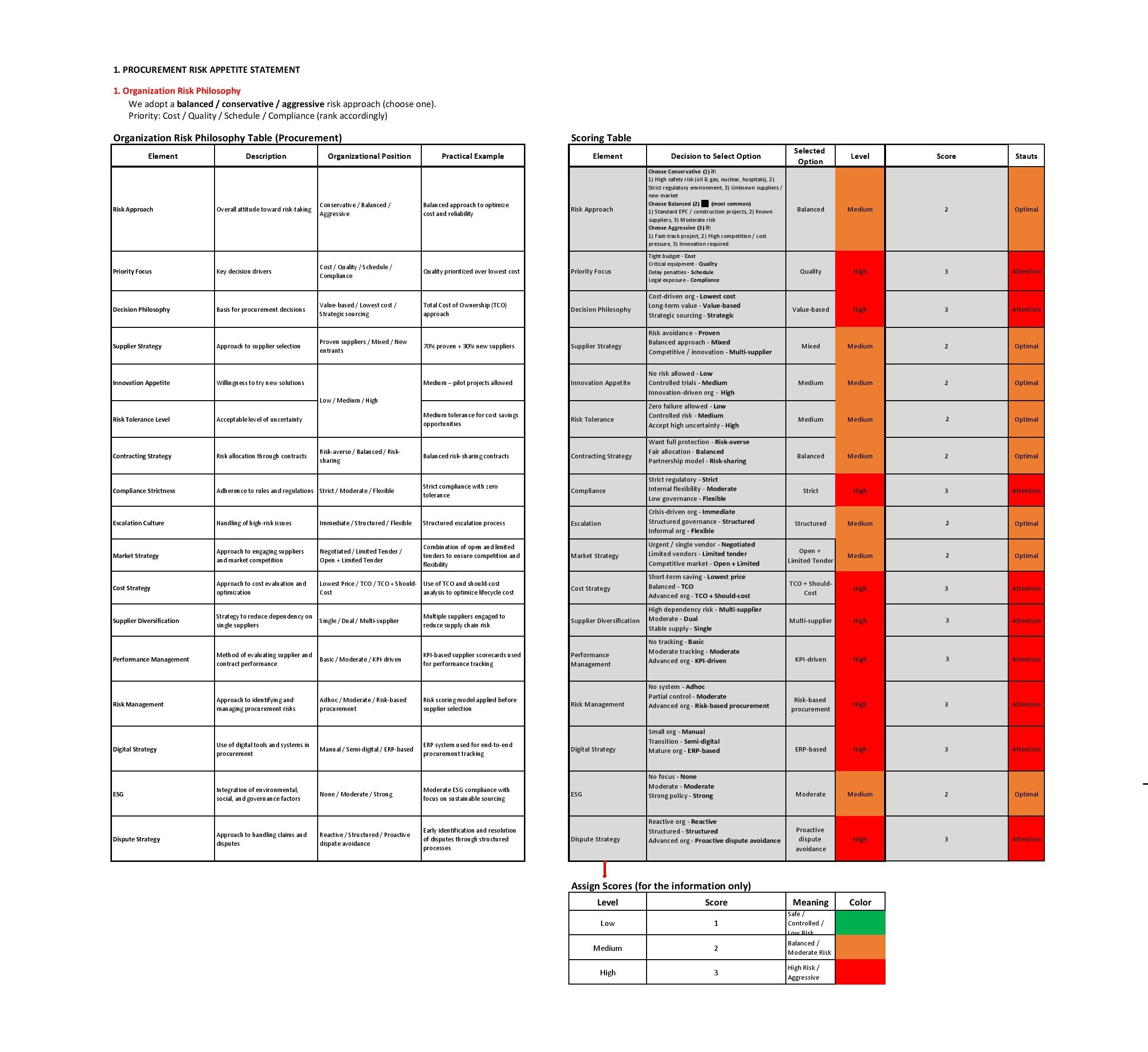
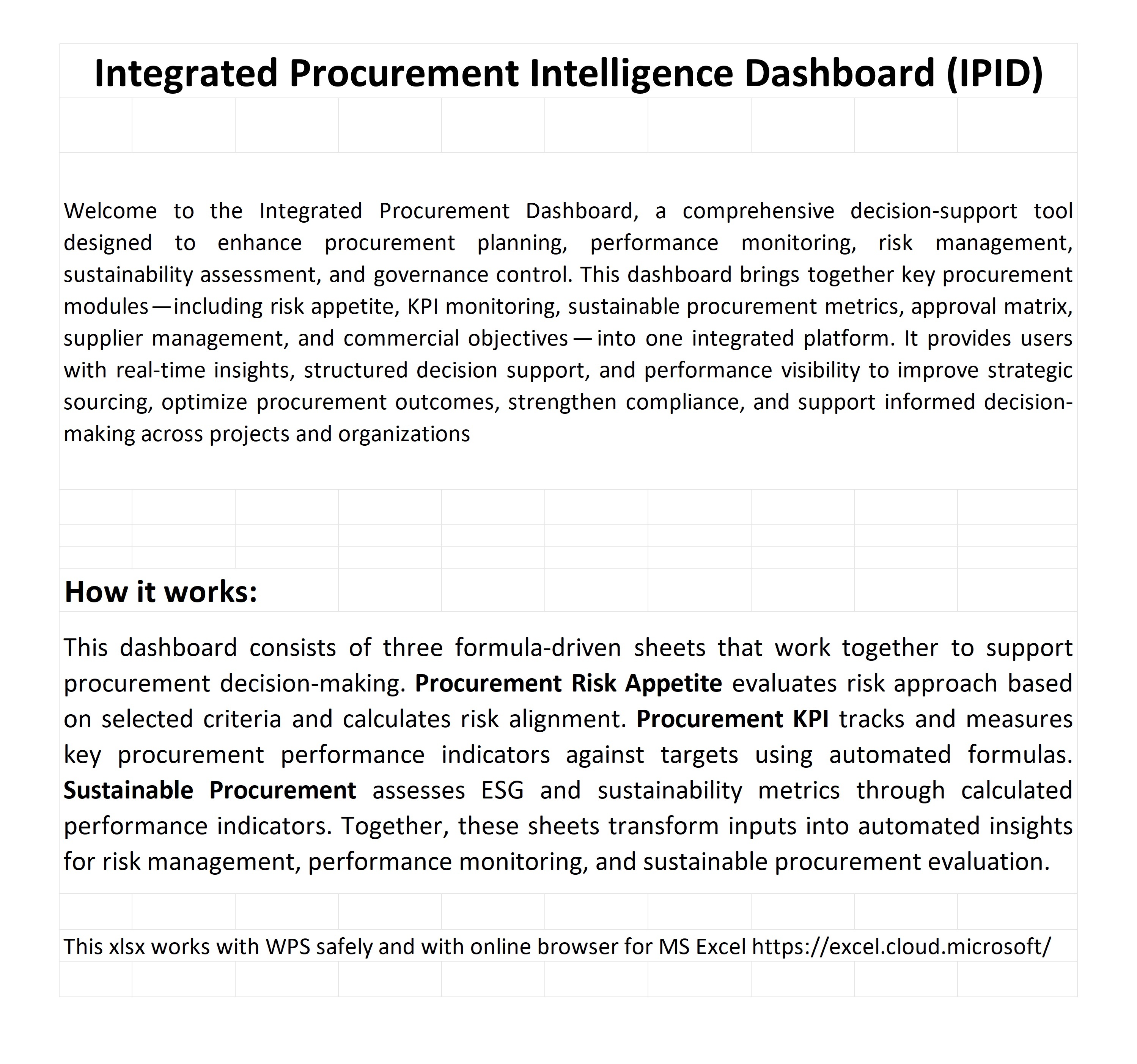
Integrated Procurement Intelligence Dashboard (IPID)
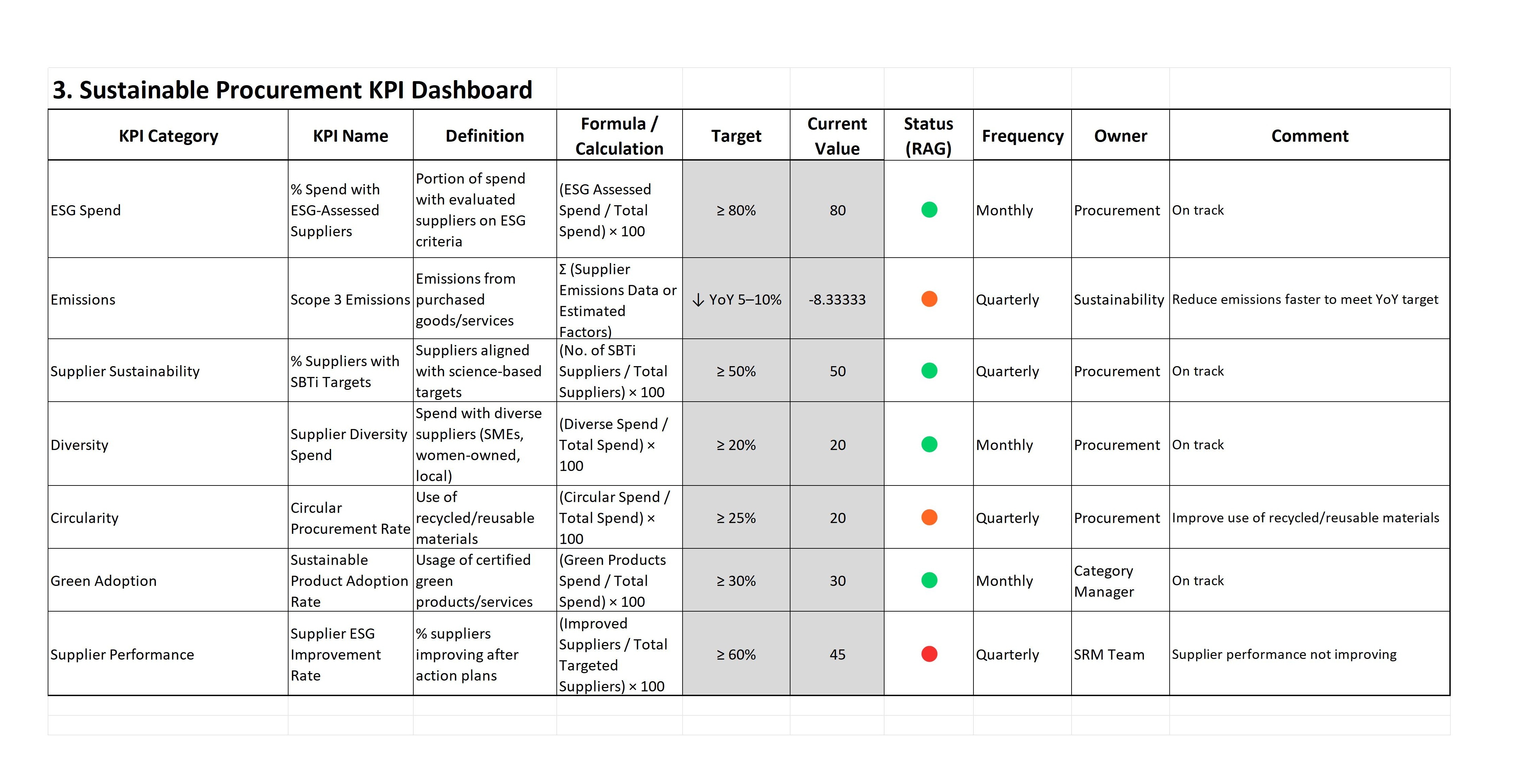
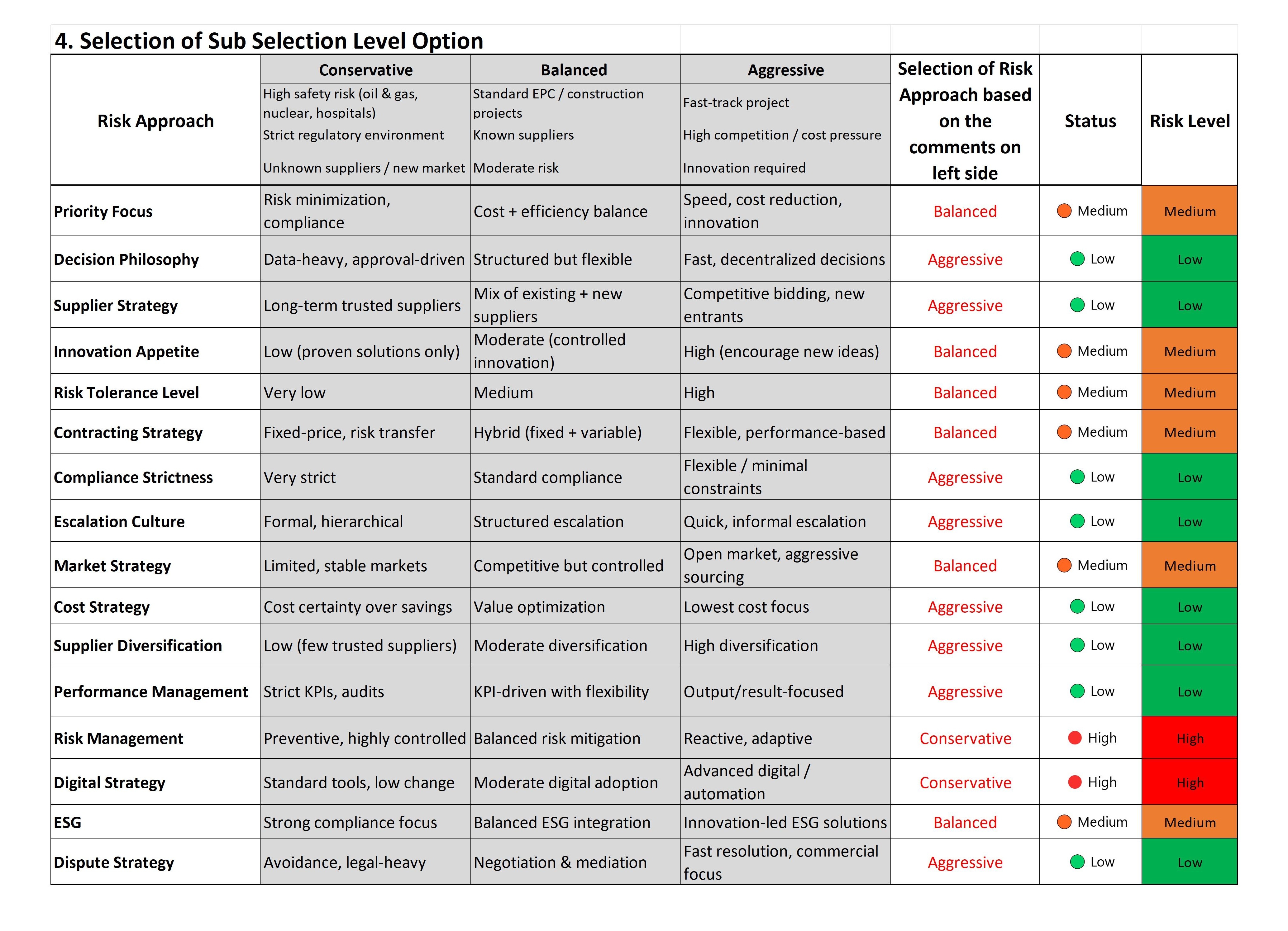
Global construction productivity library with benchmark rates, adjustment factors, and quantity intelligence for project planning.
 by Abdul Ghafur BE MD CCM PMP PBA
Project Management Professional | Board-Level Dashboard Expert Project Dashboard ExpertFollow
Further information
The objective of Downloadable Best Practice is to provide a centralized repository of proven procurement methodologies, standard procedures, templates, checklists, and lessons learned that can be easily accessed and applied by users. It aims to support knowledge sharing, improve consistency in procurement practices, and promote the adoption of industry-recognized best practices across projects and organizations.
It also seeks to enhance decision-making by providing practical tools, benchmarks, and guidance that support efficient planning, sourcing, contract management, and supplier performance improvement. By making best practice resources downloadable and readily available, it enables users to apply tested solutions to real procurement challenges and improve operational effectiveness.
Another key objective is to strengthen compliance, risk management, and continuous improvement by encouraging standardized approaches, reducing errors, and supporting informed and sustainable procurement decisions. Ultimately, Downloadable Best Practice serves as a knowledge and capability-building resource that drives procurement excellence, innovation, efficiency, and long-term value creation.
Downloadable Best Practice applies best in environments where organizations seek standardized procurement processes, improved consistency, and access to proven methods for decision-making and execution. It is particularly effective in complex projects, multi-stakeholder environments, and organizations requiring structured guidance for procurement planning, sourcing, contract management, and supplier performance management.
It is most suitable when there is a need for knowledge sharing, process improvement, compliance support, and practical reference materials to address recurring procurement challenges. It also applies well in projects facing resource constraints, capability gaps, high-risk procurement activities, or where lessons learned and benchmark practices are needed to improve efficiency and reduce errors.
This approach is especially beneficial in organizations pursuing procurement excellence, digital transformation, sustainability objectives, and continuous improvement initiatives, where users can adapt downloadable tools, templates, and best practice guidance to support informed decisions and consistent procurement outcomes.
Downloadable Best Practice may not apply ideally in highly unique, rapidly changing, or emergency procurement situations where standard practices and predefined templates may not suit project-specific requirements or urgent decision-making needs. It is less effective where procurement conditions require highly customized solutions, immediate responses, or innovative approaches beyond established best practices.
It may also be unsuitable in organizations with low digital readiness, limited data availability, weak process discipline, or where users lack the capability to interpret and apply the guidance effectively. In highly confidential, sensitive, or specialized procurements, generic best practice resources may not adequately address specific technical, legal, or strategic considerations.
Additionally, it is less applicable where rigid reliance on standard practices could limit flexibility, innovation, or adaptive decision-making needed to respond to evolving market, contractual, or project risks.