Publication number: ELQ-51224-1
View all versions & Certificate

13-Week Cash Flow Forecast in Excel | Treasury & Liquidity Management | CFO Dashboard
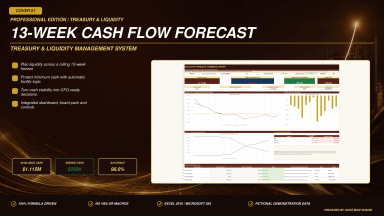
Professional 13-week cash flow forecasting and treasury management system with direct-method liquidity planning, scenarios, variance analysis and CFO dashboards
 by Hafiz Moiz Shahid
Finance Professional | Excel ERP Developer | Cost Accounting Specialist | Financial Modeling SpecialistFollow
Further information
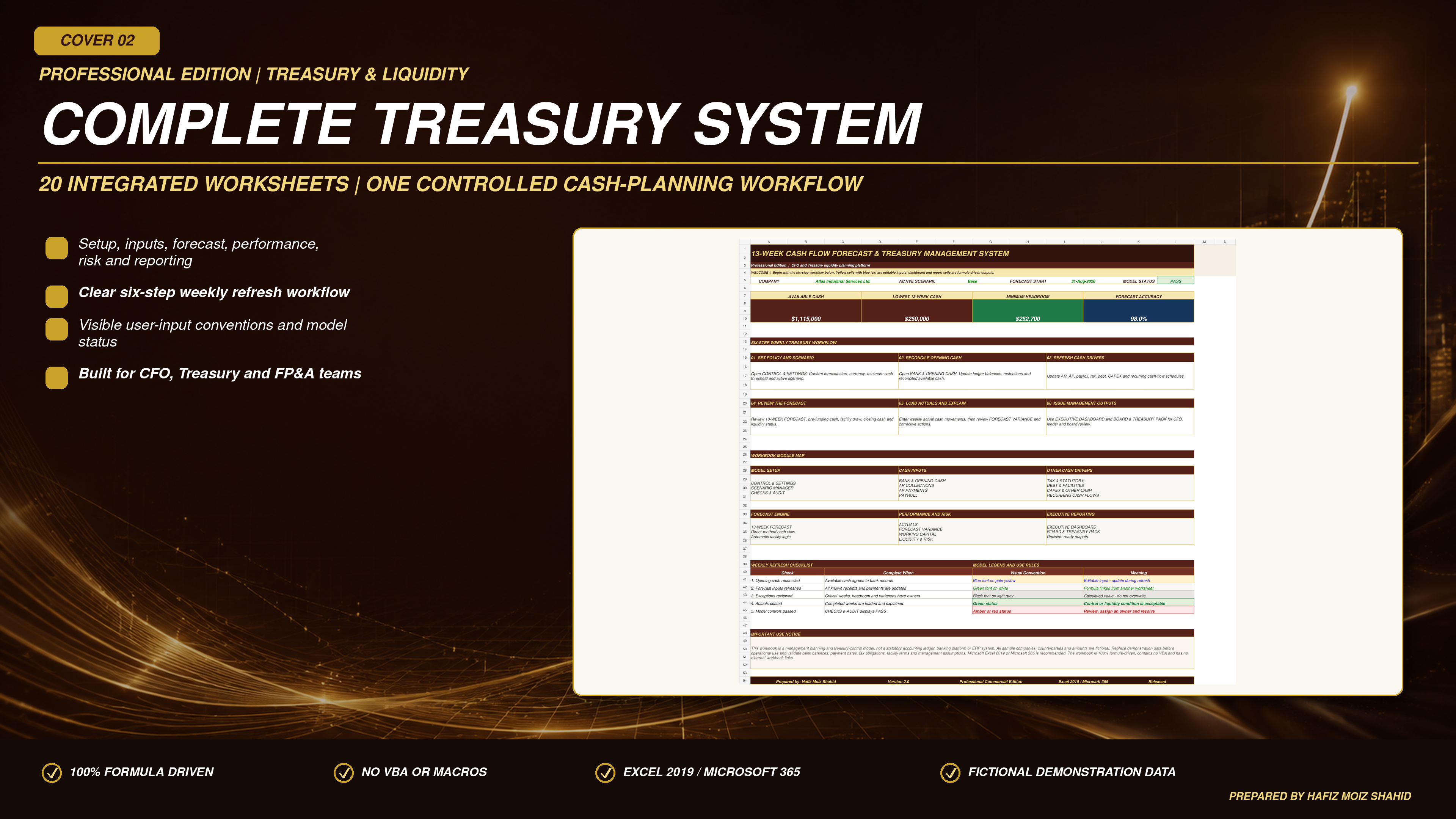
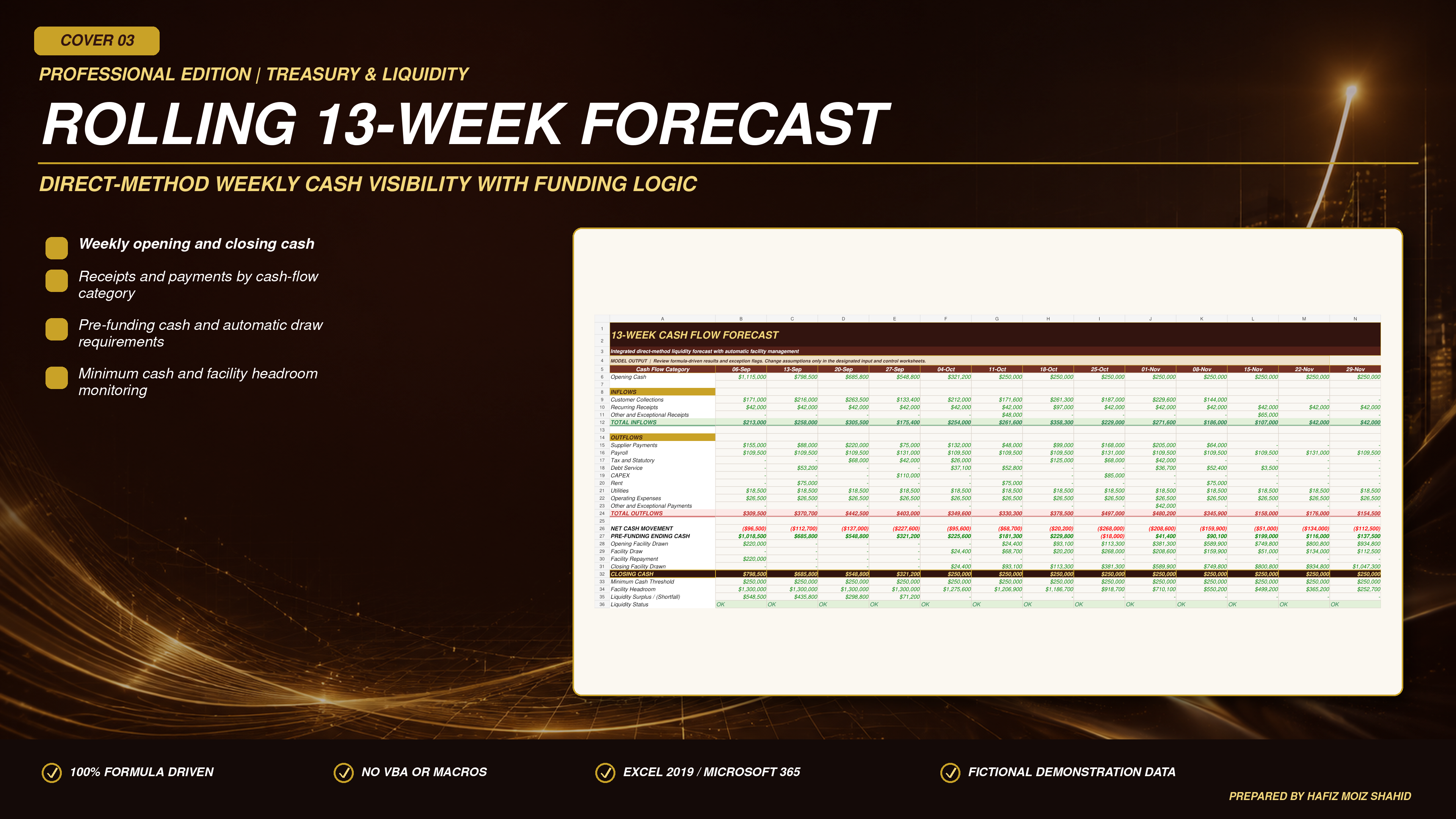
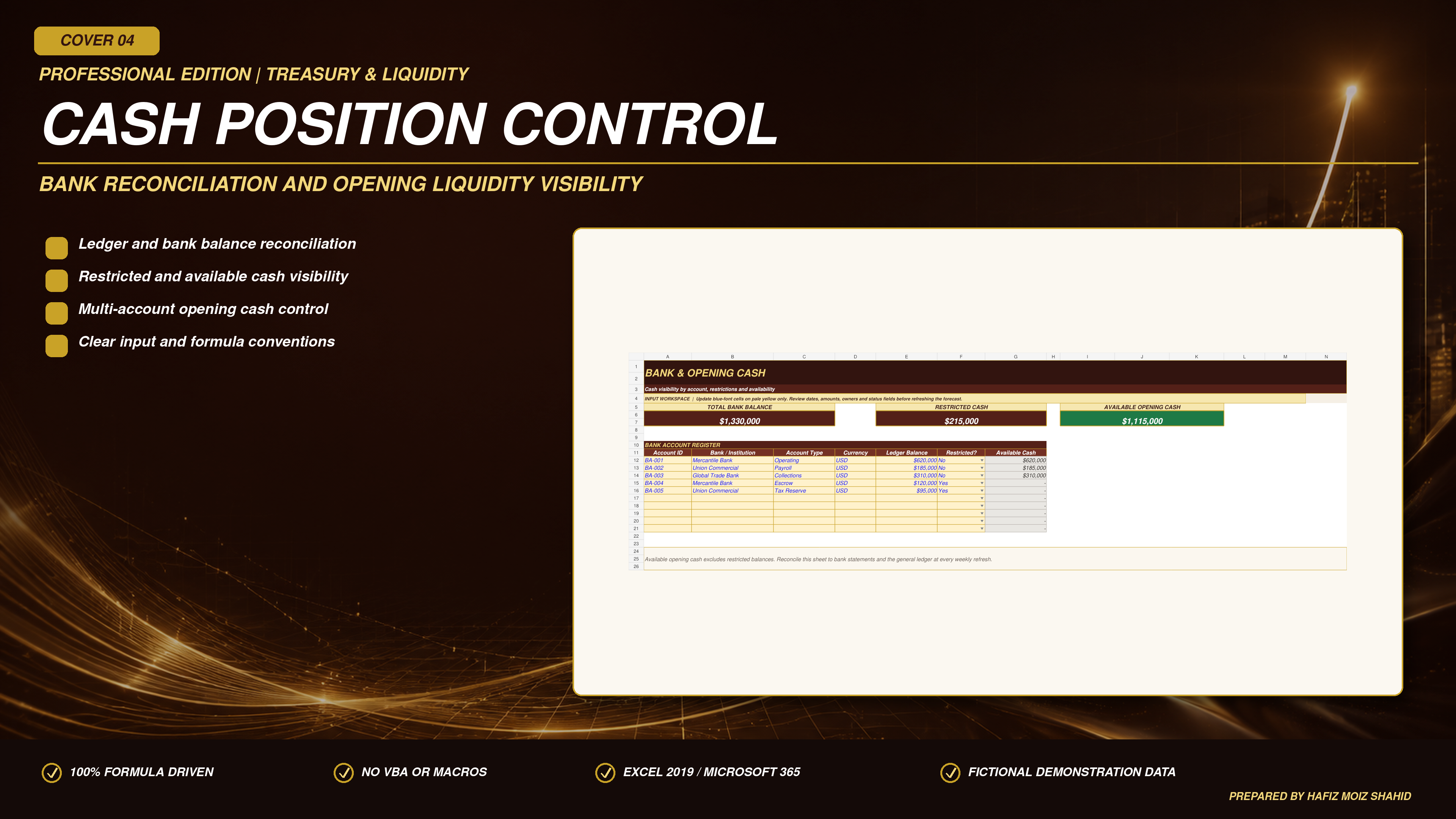
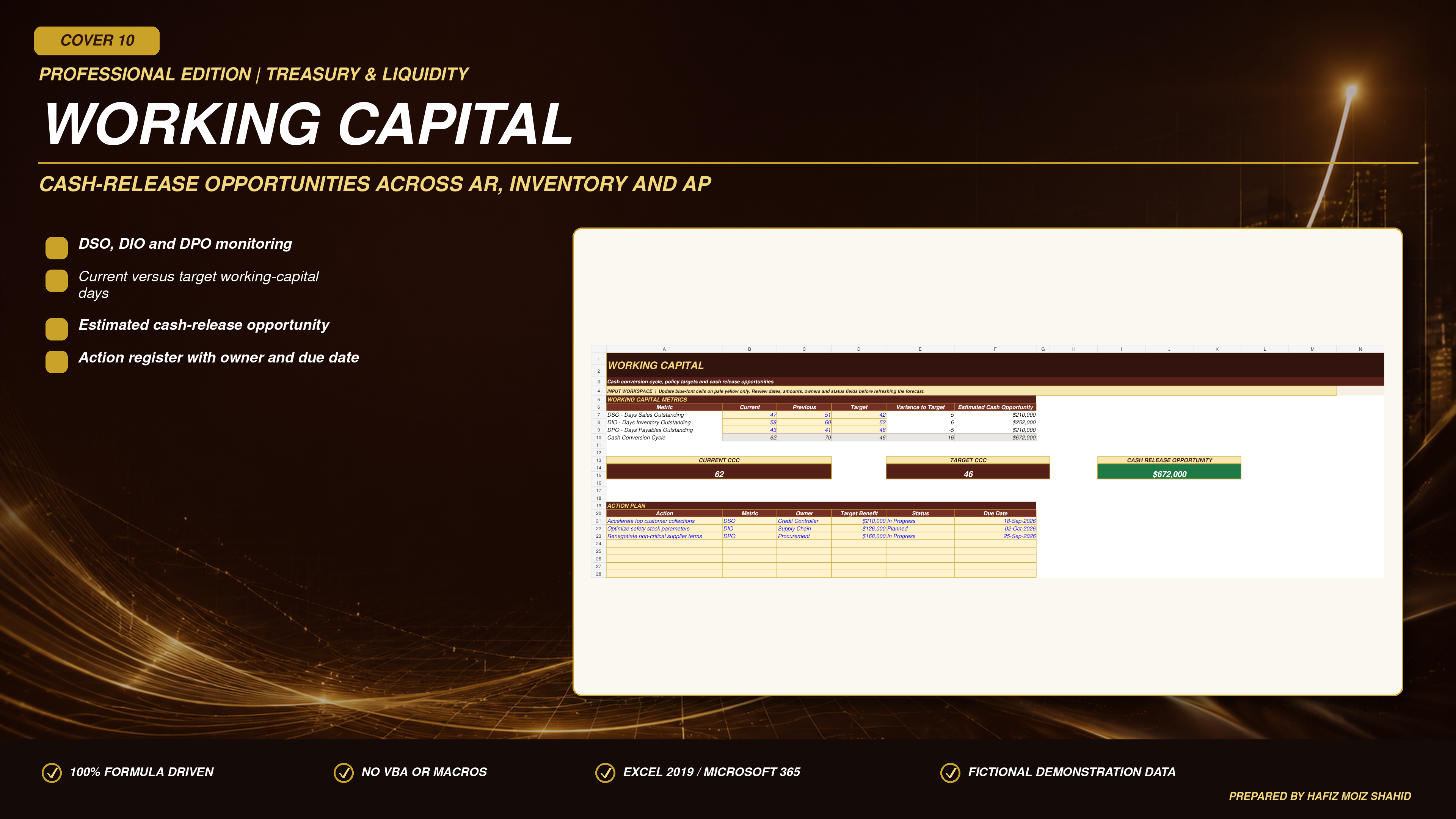
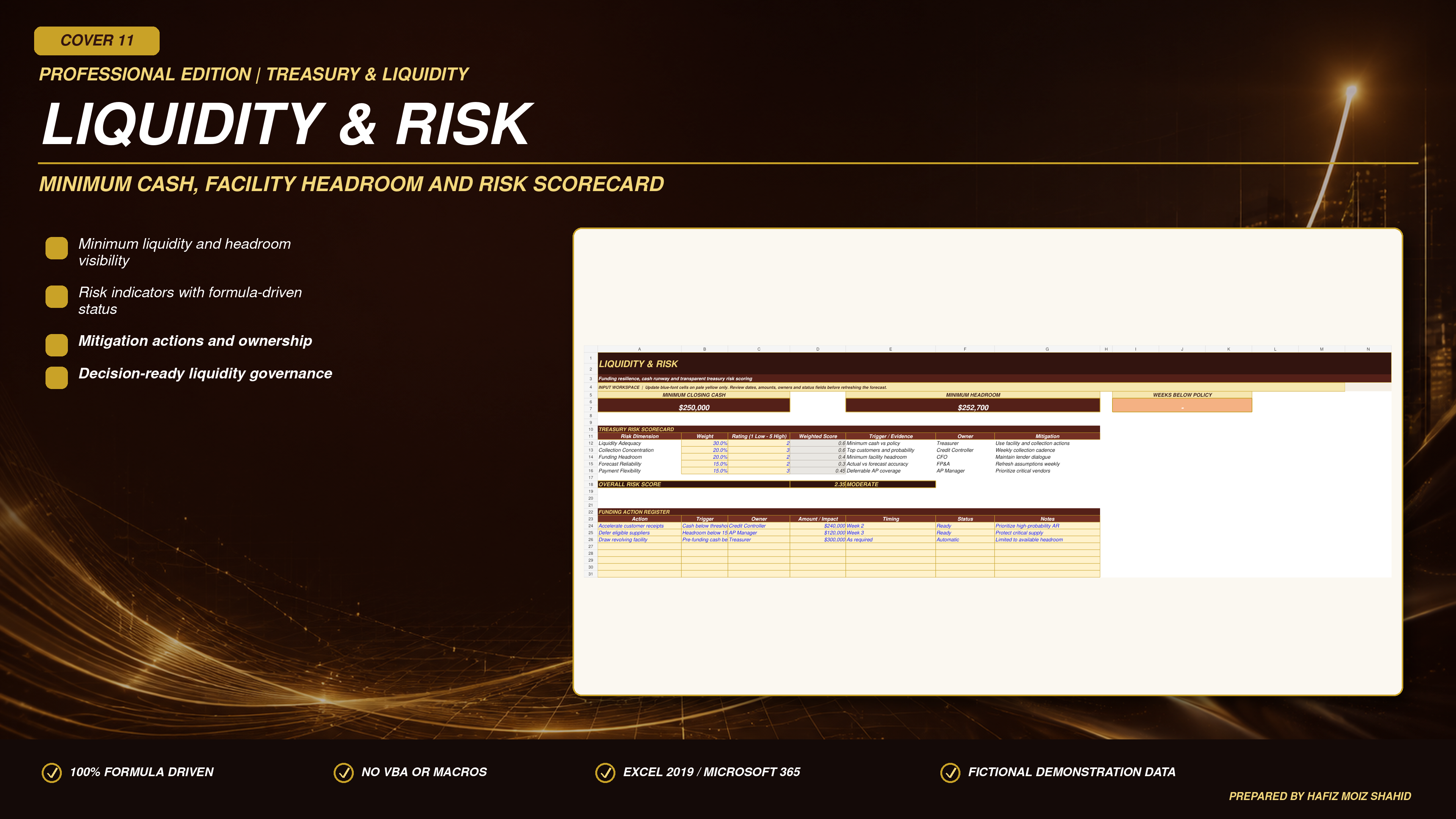
This Downloadable Best Practice is designed to help finance and treasury teams prepare a reliable rolling 13-week cash flow forecast, improve short-term liquidity visibility, identify potential funding gaps, monitor minimum cash requirements and evaluate available facility headroom.
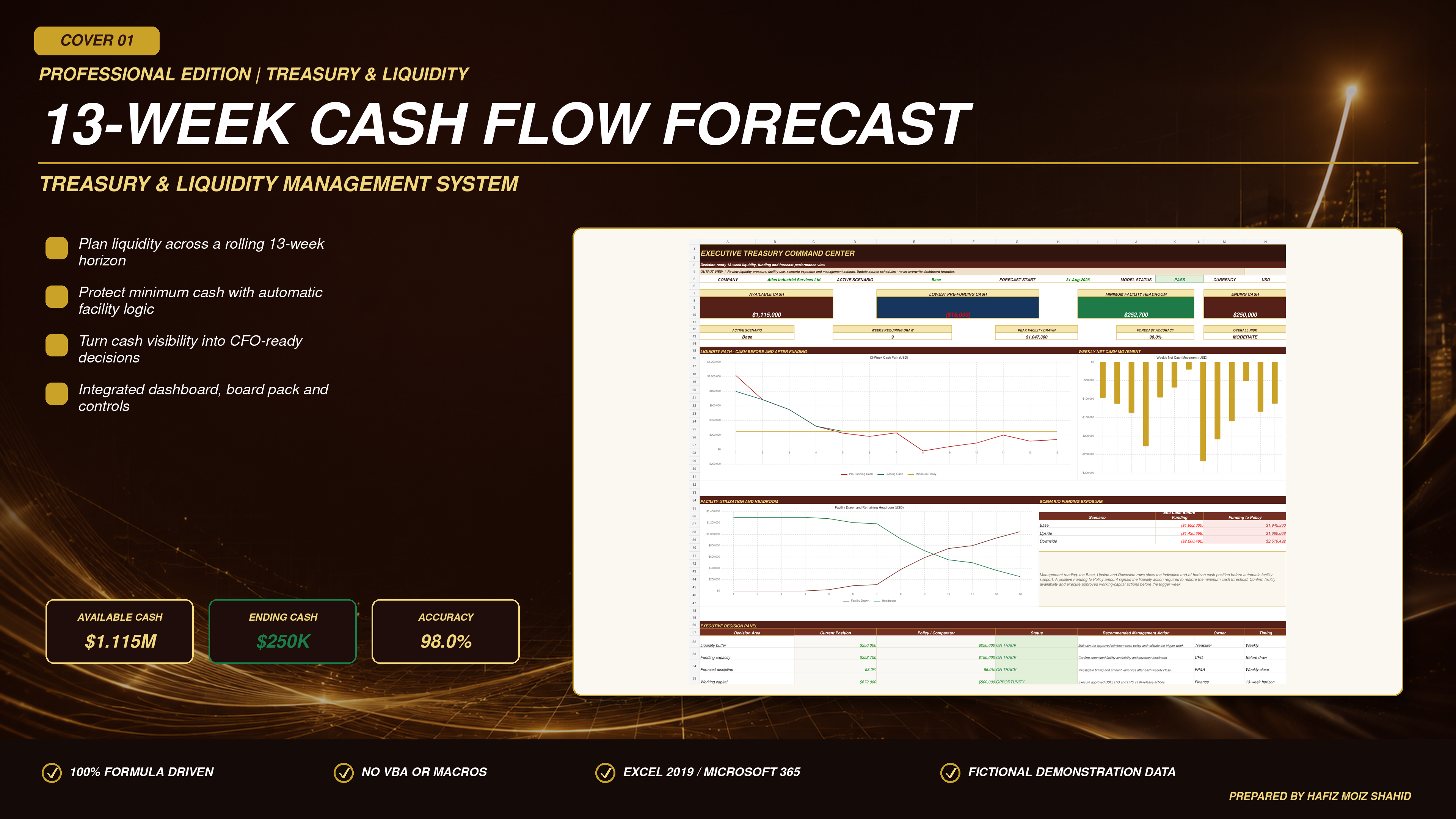
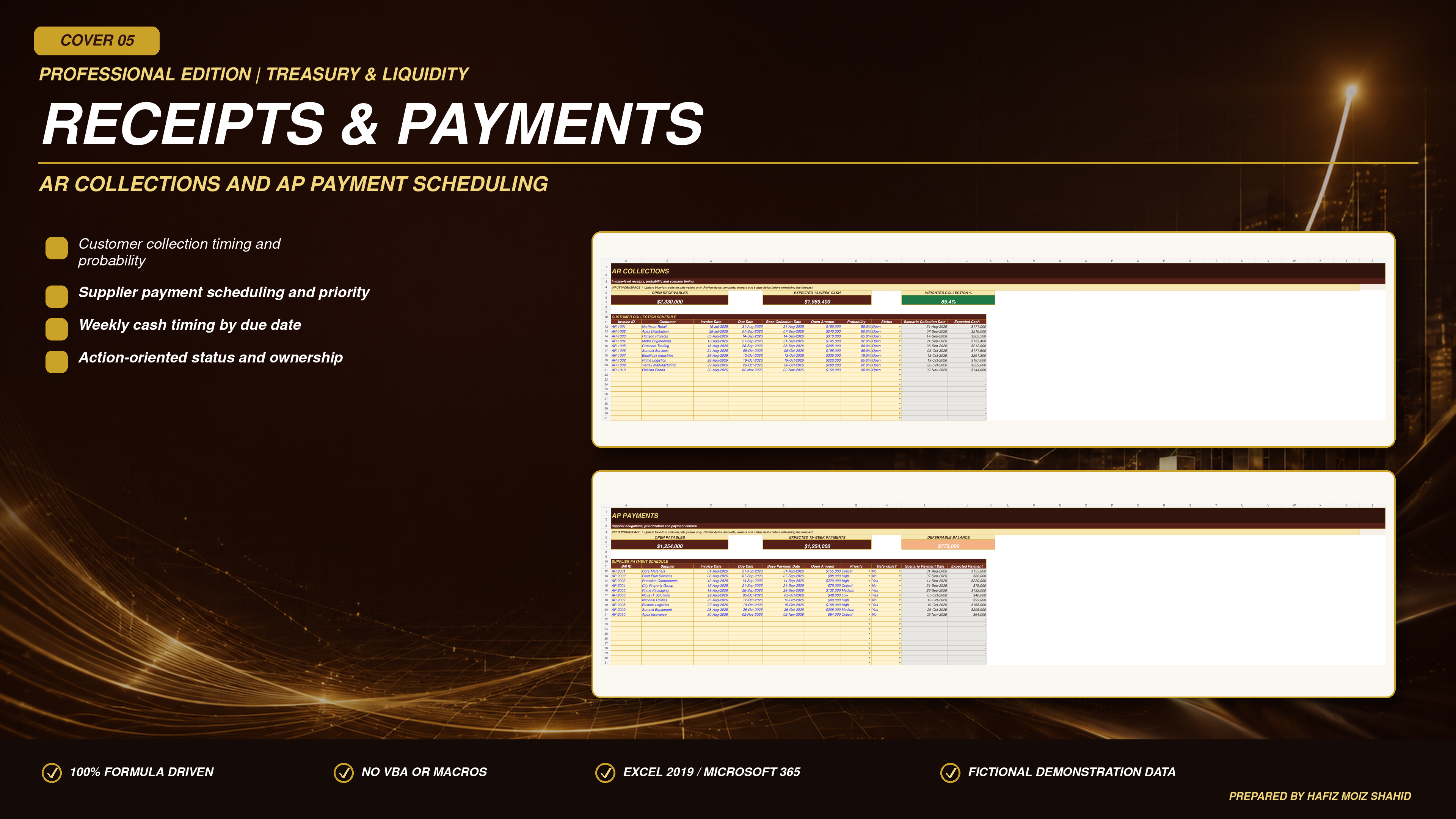
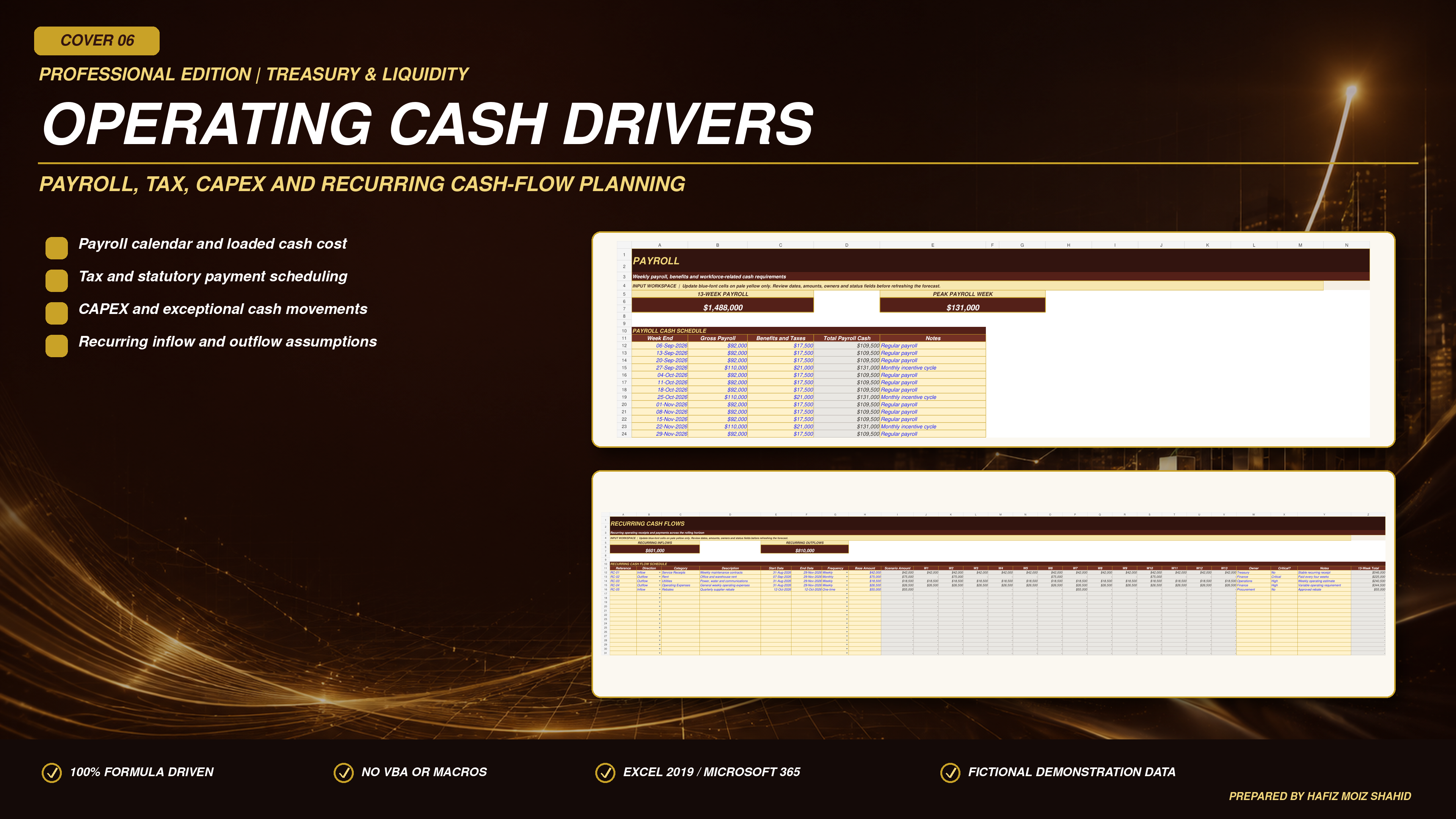
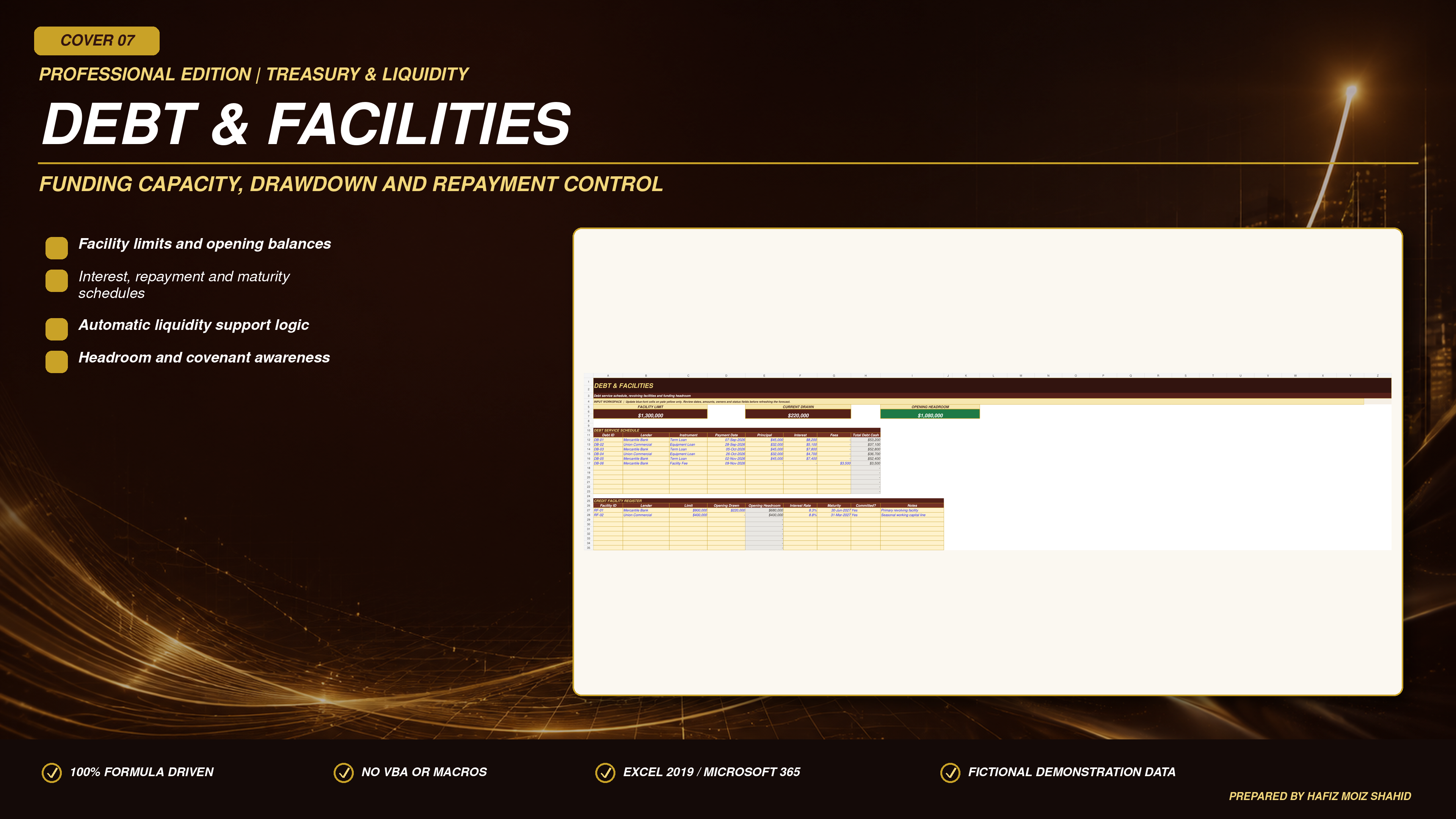
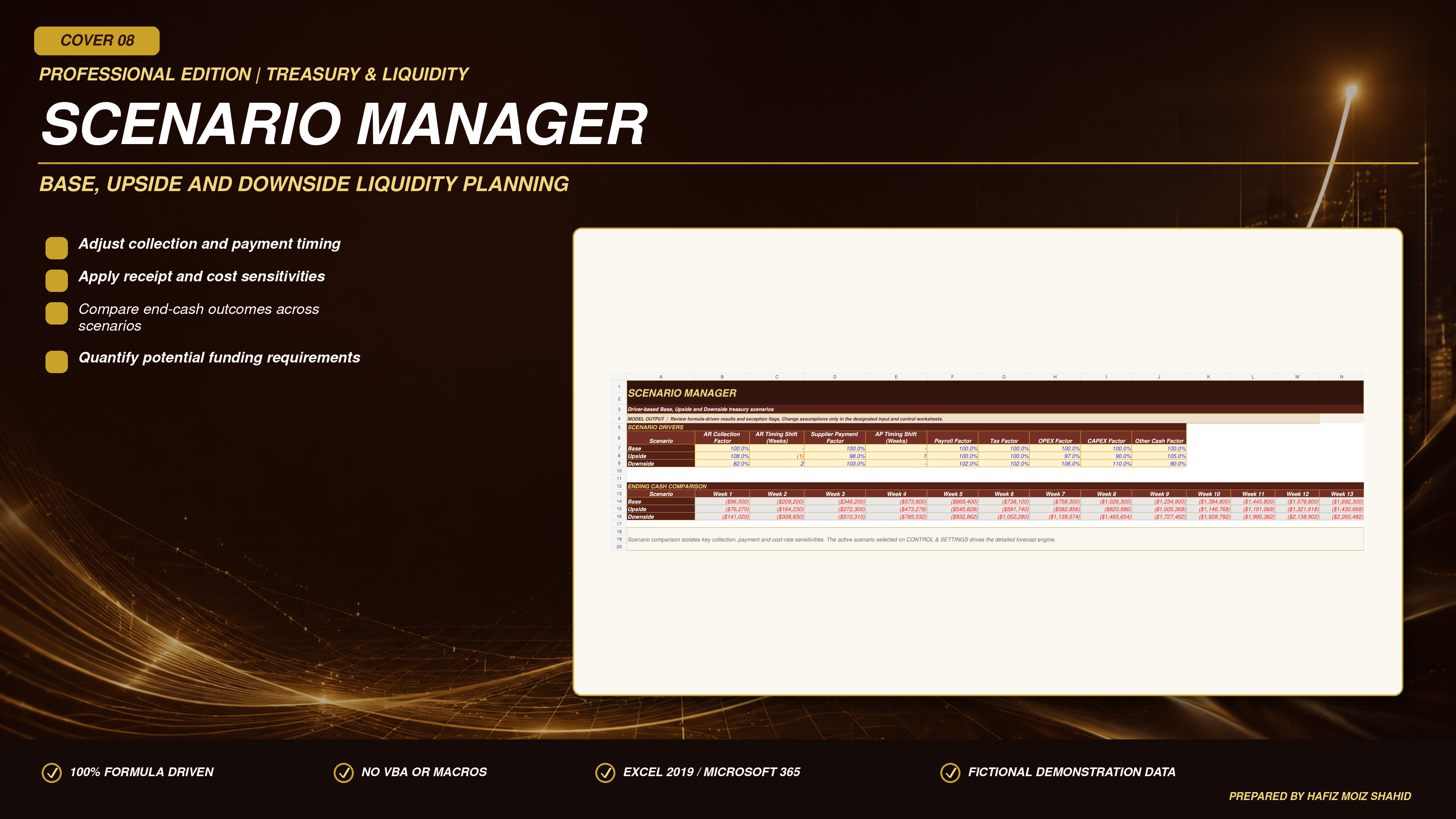
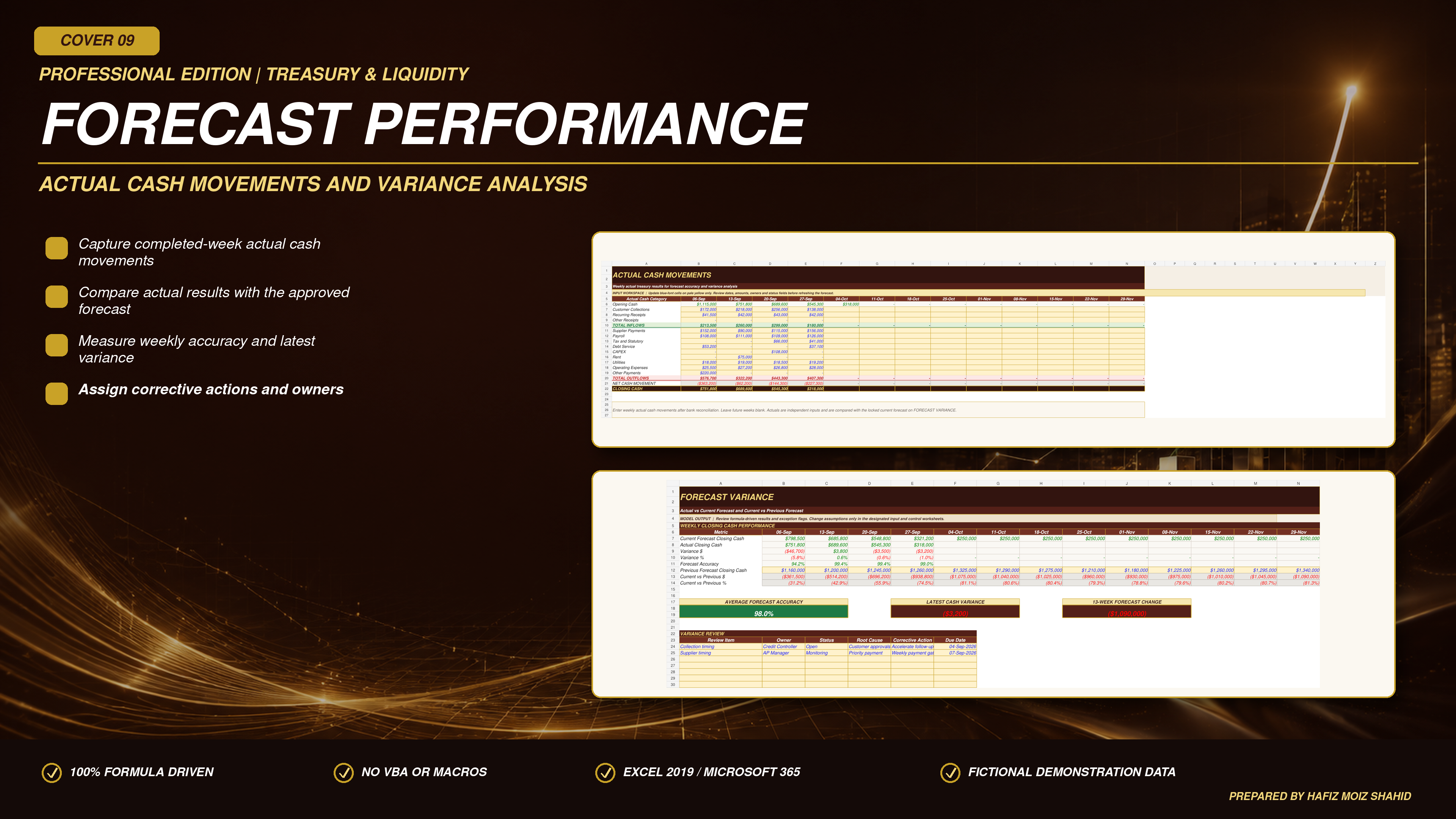
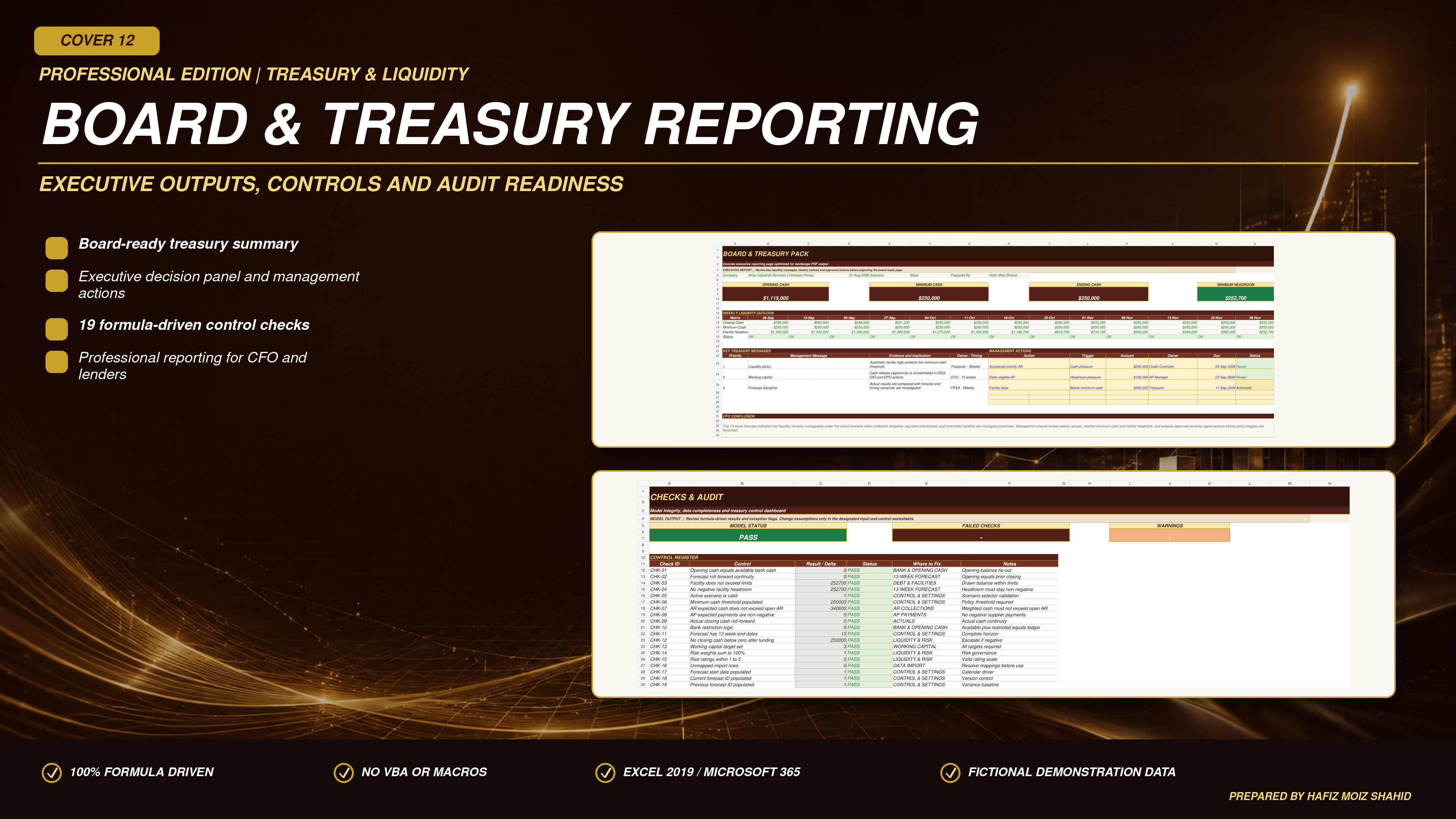
It connects operating cash-flow drivers with bank balances, customer collections, supplier payments, payroll, taxes, debt servicing, capital expenditure and recurring cash flows. It also enables users to compare scenarios, monitor actual-versus-forecast performance, explain cash variances and produce decision-ready executive and board-level treasury reporting.
This model applies best to businesses that manage weekly cash receipts and payments and require structured short-term liquidity planning. It is particularly suitable for established companies, growing businesses, manufacturing organizations, distributors, service companies, multi-project businesses and finance teams that maintain reliable bank, receivable, payable, payroll, tax, debt and CAPEX information.
It is best used by CFOs, treasurers, finance managers, FP&A professionals, controllers, accountants, consultants and business owners who understand their organization's cash-flow drivers and can update the model through a regular weekly forecasting process.
This model is not ideally suited to personal budgeting, household cash management, transaction-level bookkeeping or businesses that cannot provide reliable weekly cash-flow information.
It should not be treated as a banking platform, ERP system, statutory accounting ledger, tax-calculation system or automated bank-reconciliation application. The workbook does not replace professional treasury judgment, accounting policies, financing agreements or internal controls. Organizations requiring live banking integrations, multi-user workflow approvals or transaction-level ERP processing will need additional systems or customization.