

Originally published: 06/02/2025 11:34
Publication number: ELQ-27806-1
View all versions & Certificate
Publication number: ELQ-27806-1
View all versions & Certificate

Personal Care Products Manufacturer Financial Model
A comprehensive editable 5-Year 3-Statement, MS Excel spreadsheet for tracking a Personal Care Products Manufacturer's finances.
 by AllFinancialModels
AllFinancialModels offer a curated selection of high-quality yet financial model templates designed to support a wide range of business needs.Follow
personal carehair and beautynail salonspreadsheettemplatefinancial modelfinanceexcelmanufacturermanufacturing
Description
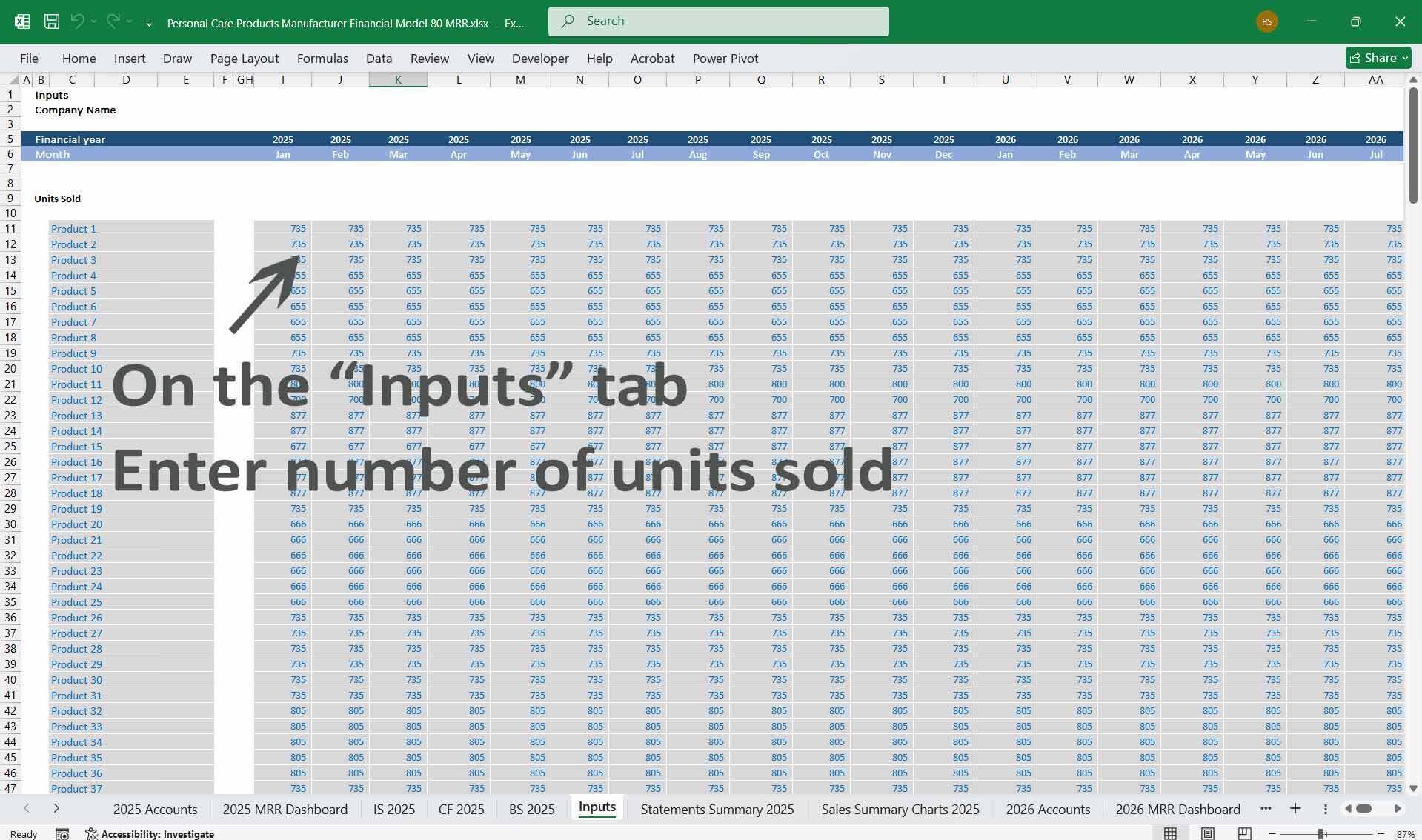
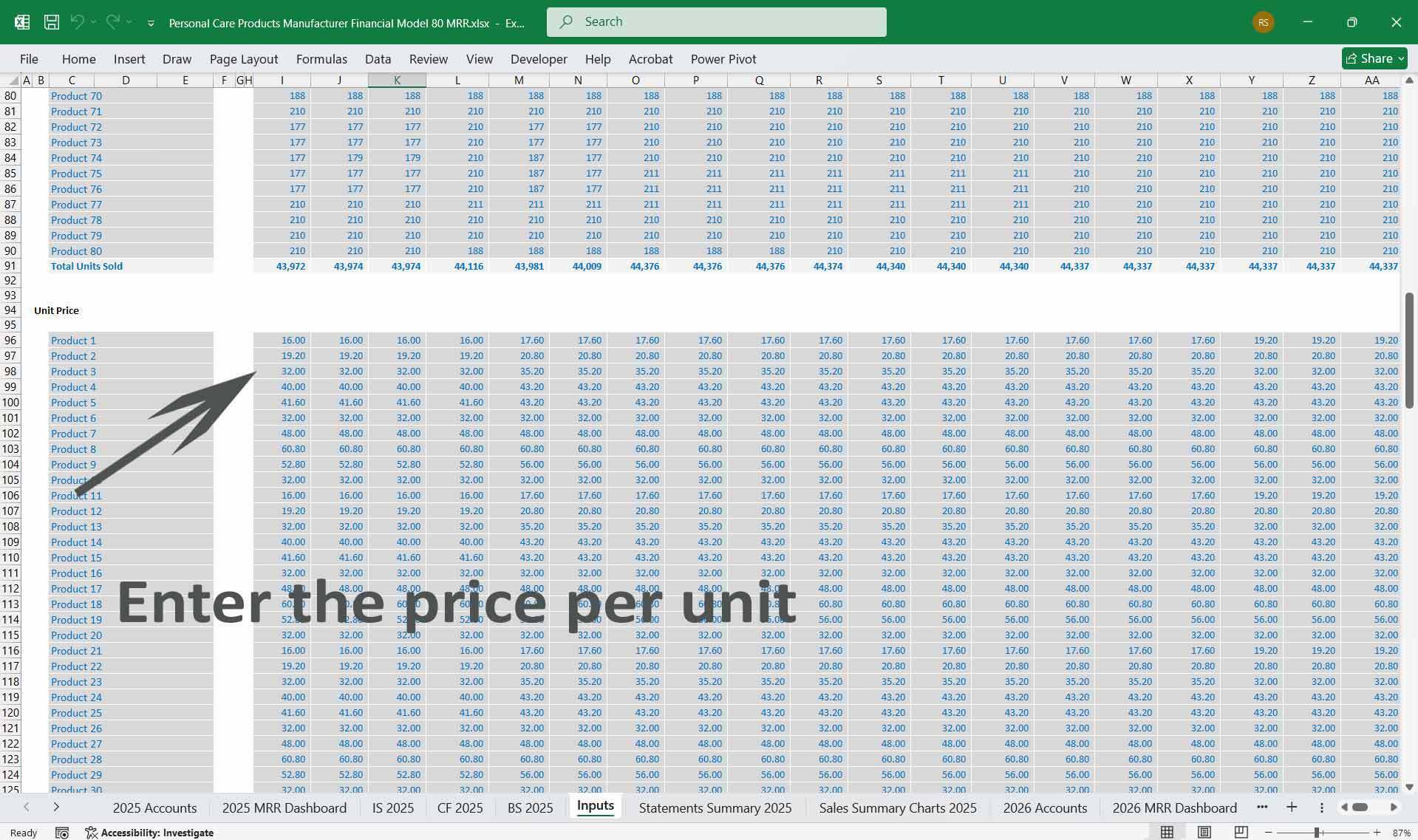
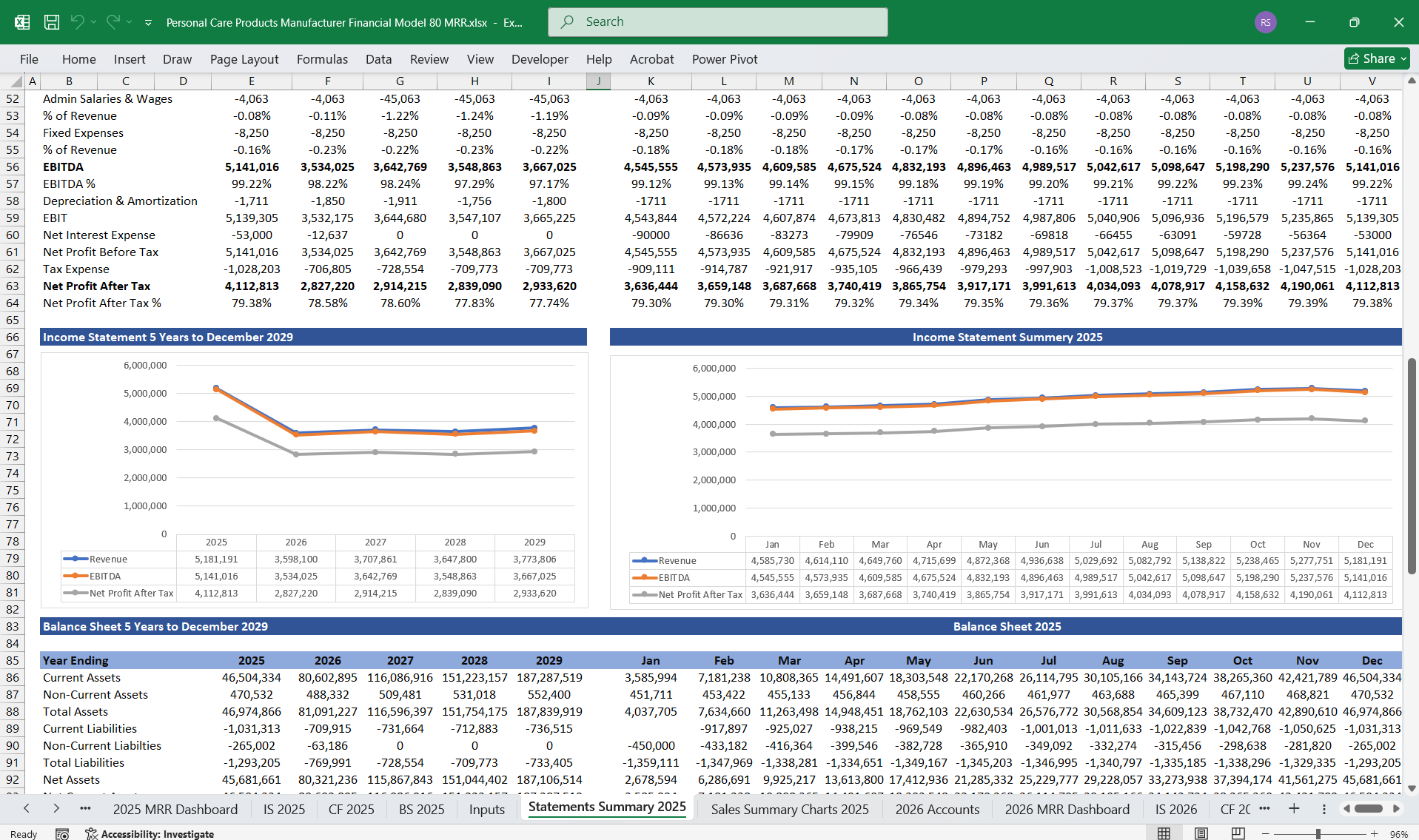
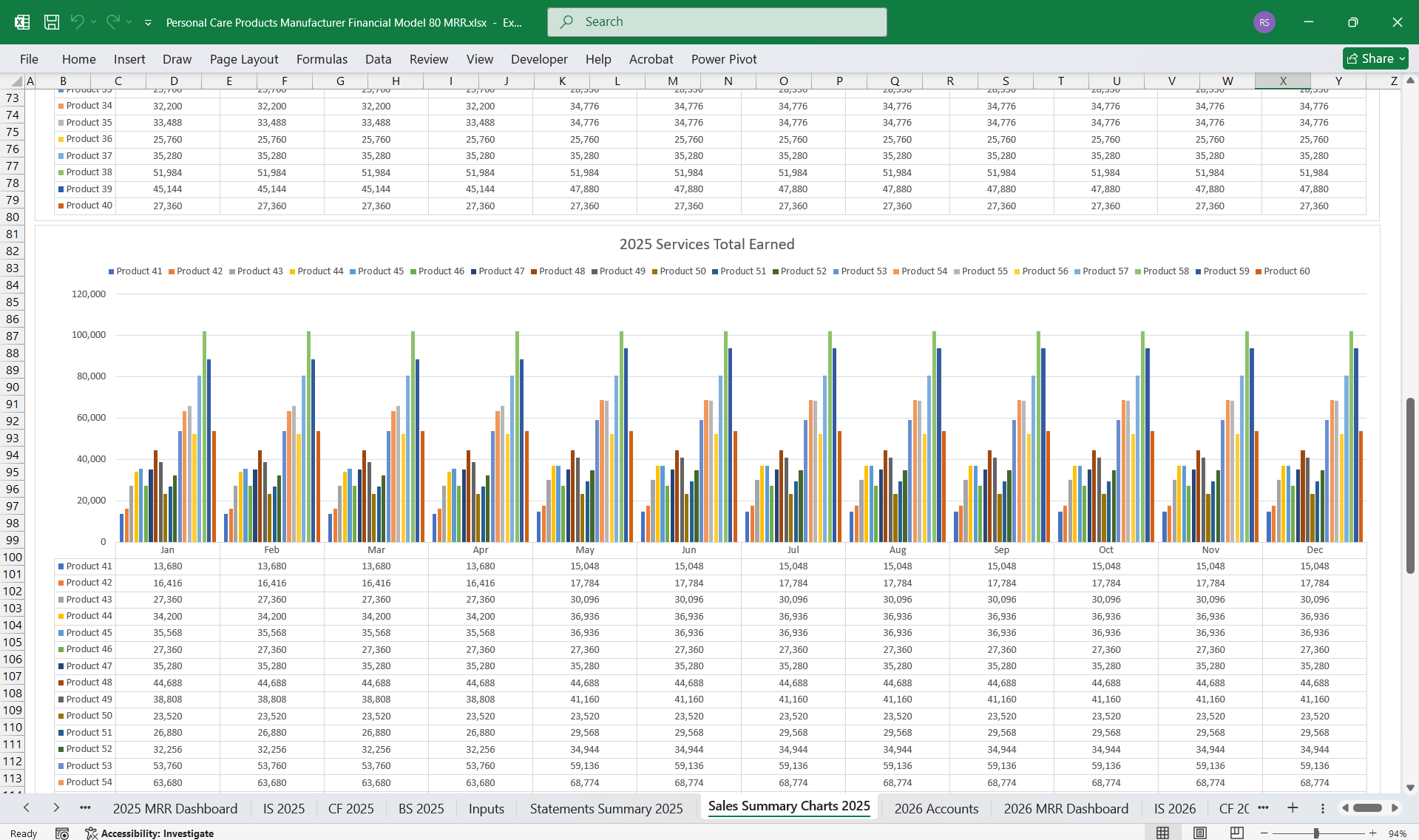
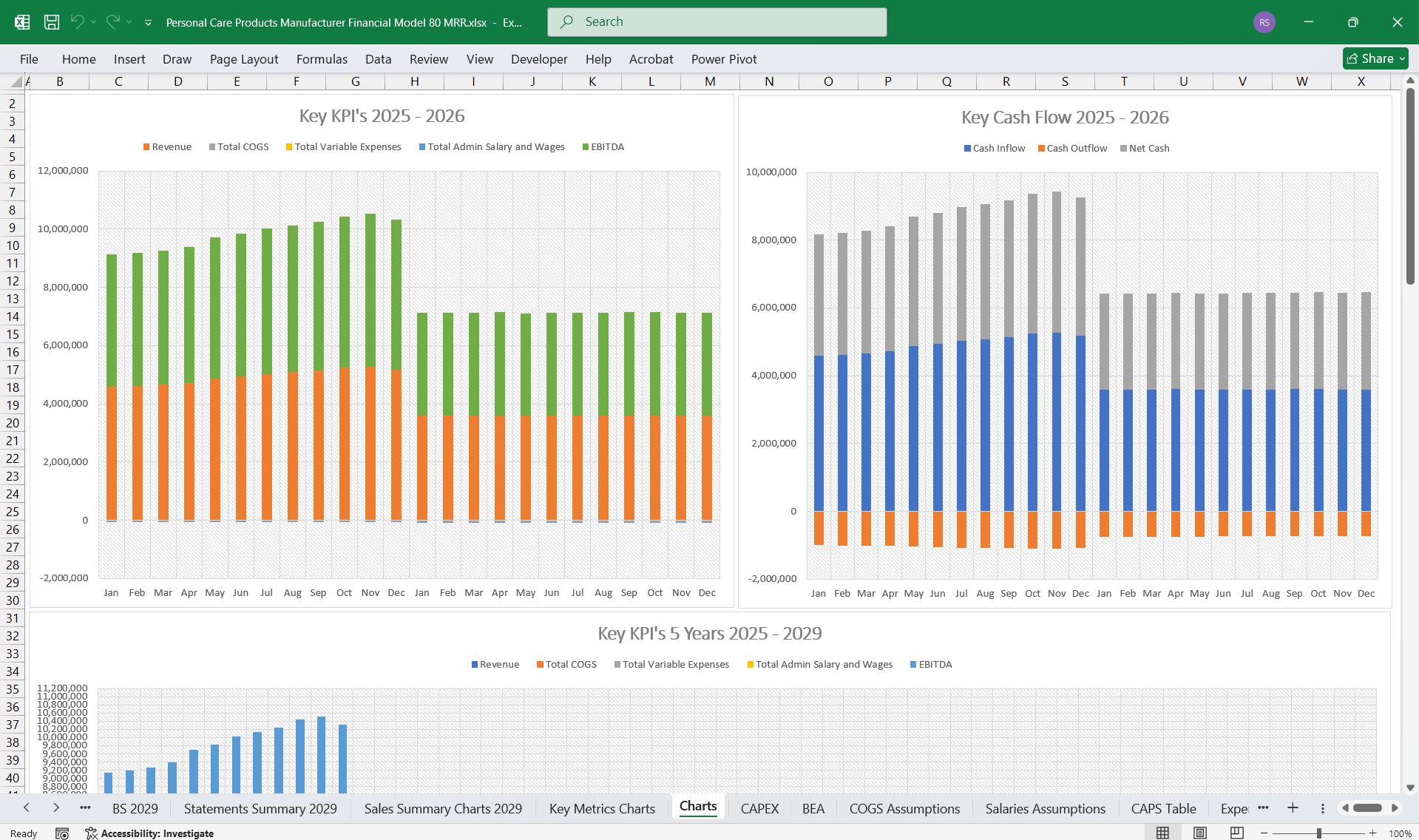
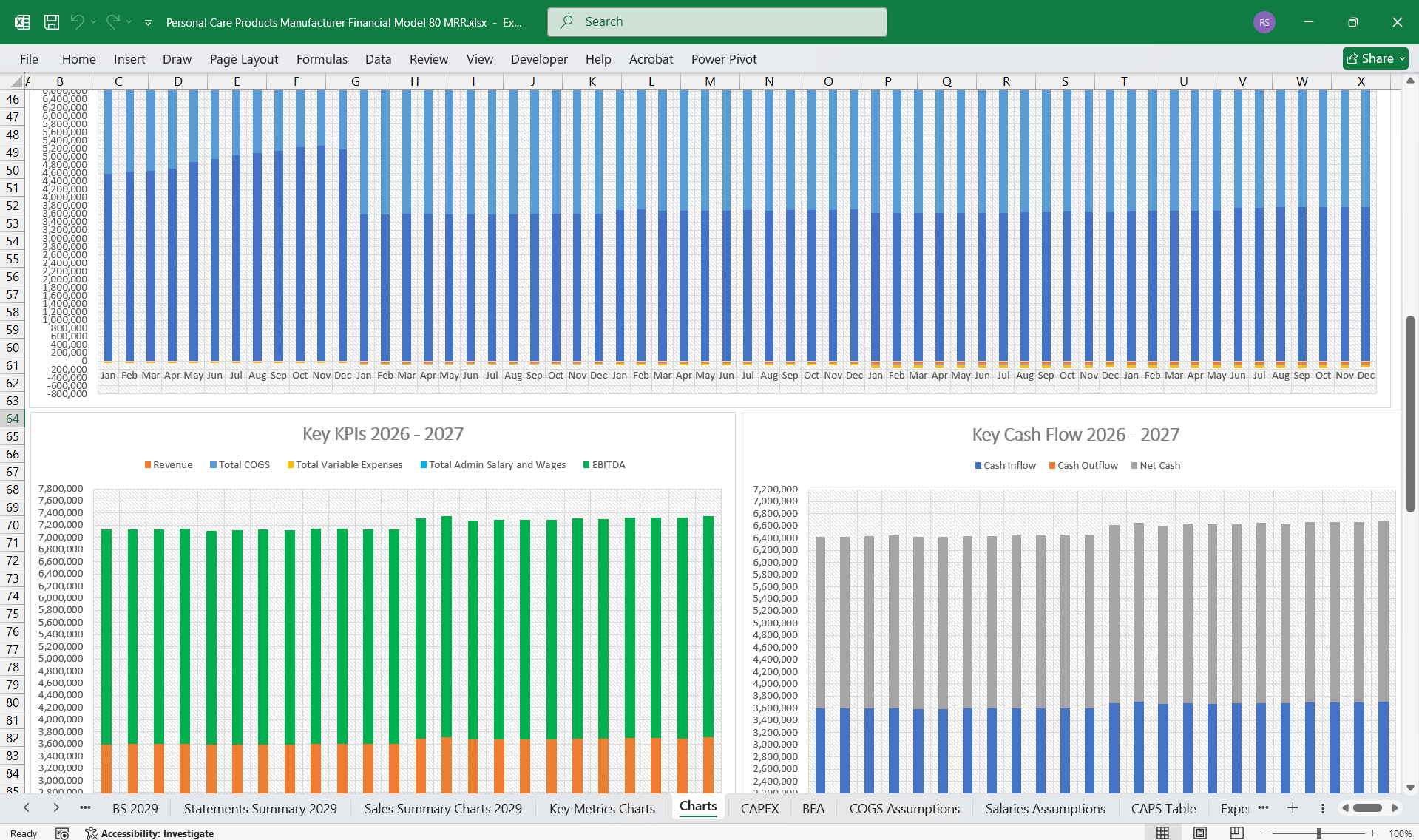
A 3-Statement Financial Model for a Personal Care Products Manufacturer with 80 product lines and a 6-Tier Subscription model add-on is a comprehensive tool to project the company's financial performance, cash flows, and financial position. Below is a detailed breakdown of the model, including the Income Statement, Cash Flow Statement, Balance Sheet, and the 6-Tier Subscription section.
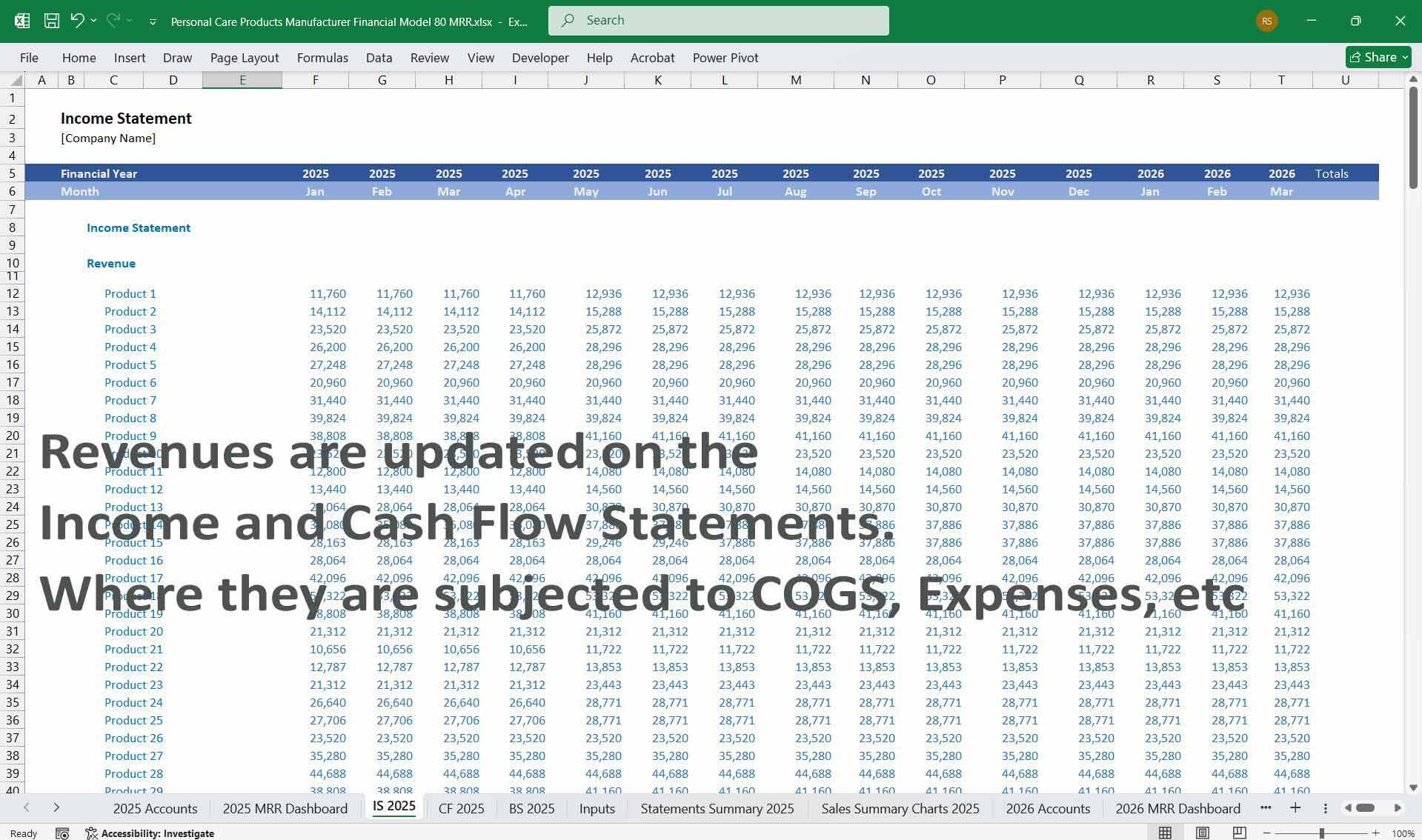
1. Income StatementThe Income Statement projects revenues, costs, and profitability over a specific period (monthly, quarterly, or annually).
Revenue Section
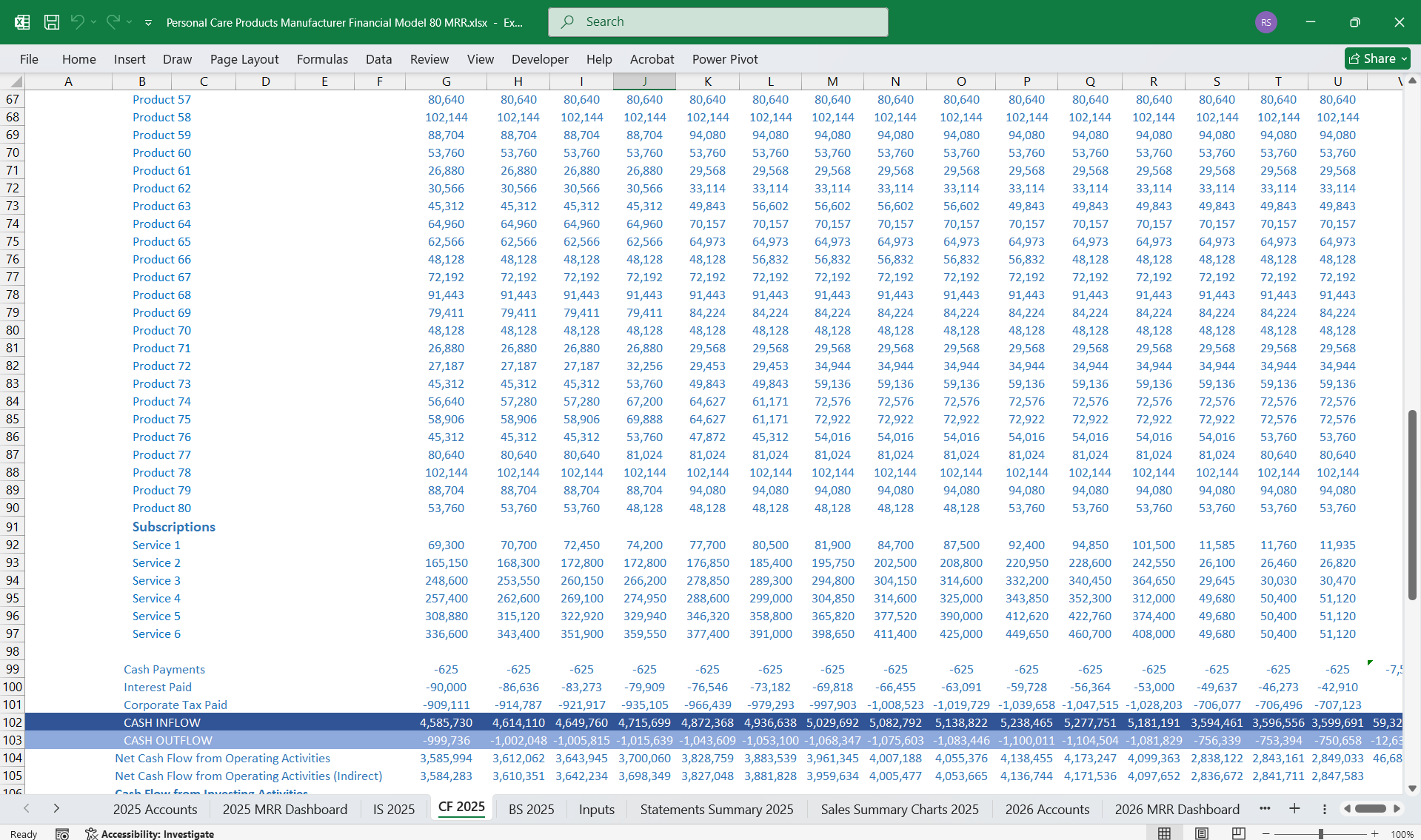
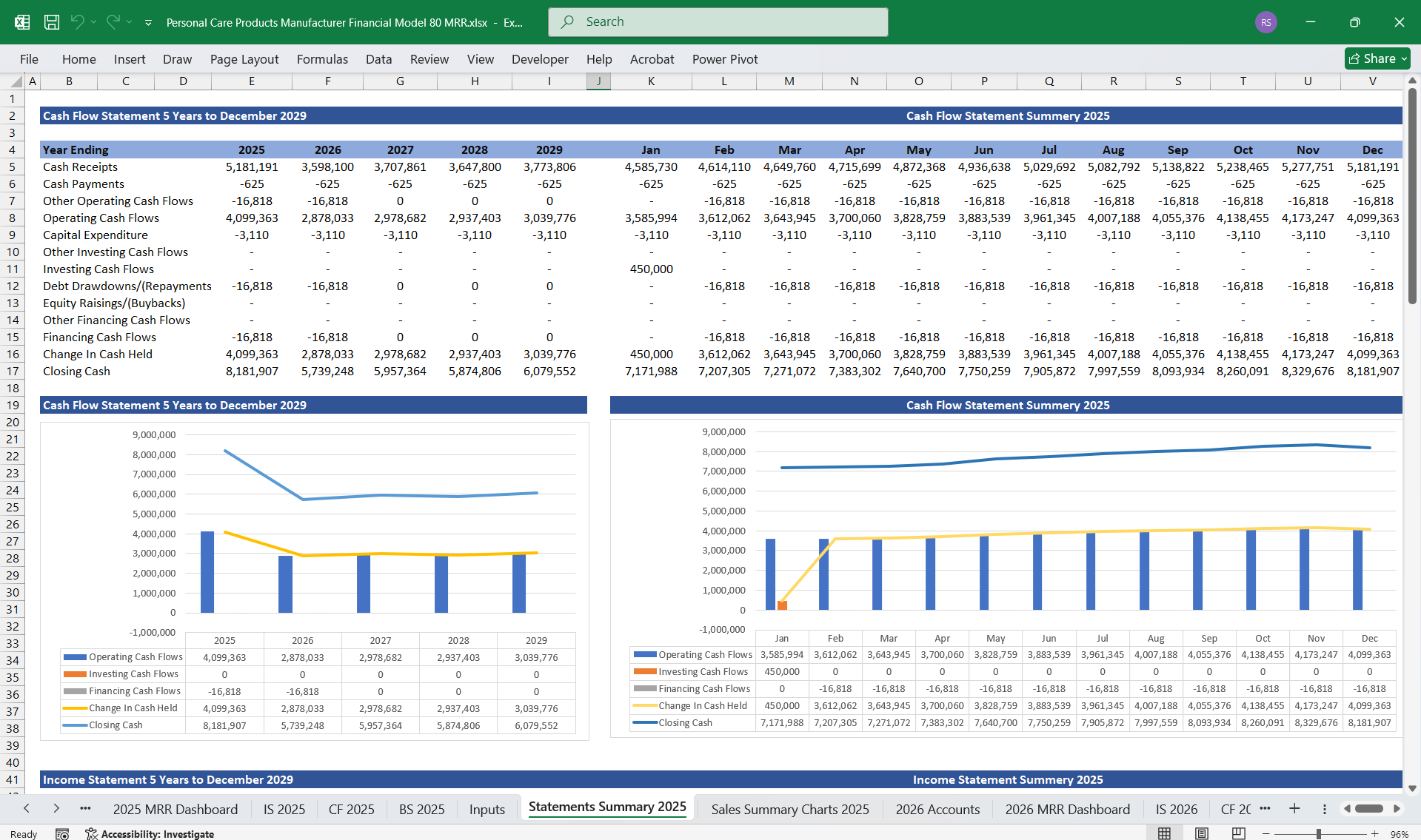
2. Cash Flow StatementThe Cash Flow Statement tracks cash inflows and outflows, divided into operating, investing, and financing activities.
Operating Activities
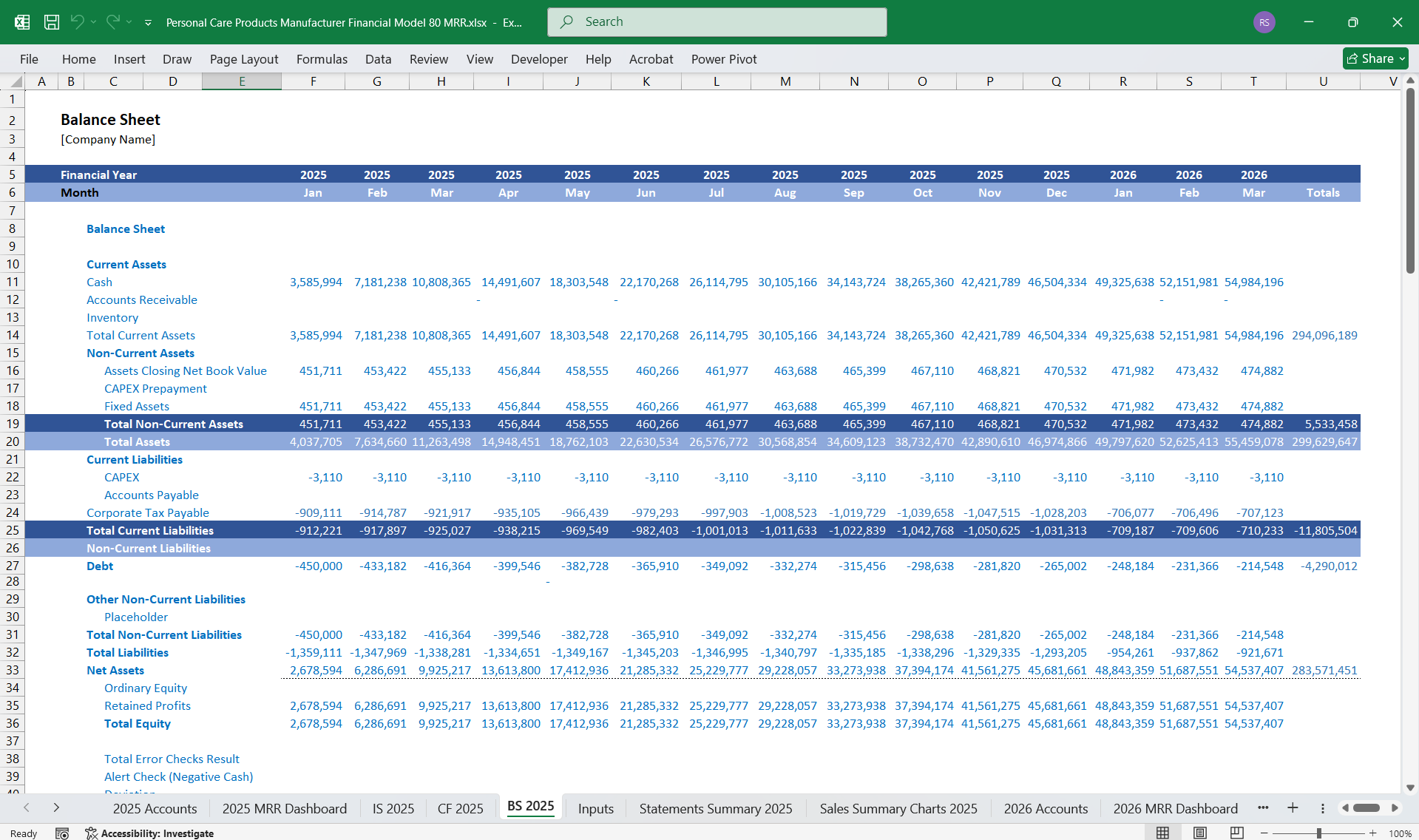
3. Balance SheetThe Balance Sheet provides a snapshot of the company’s financial position at a specific point in time.
Assets
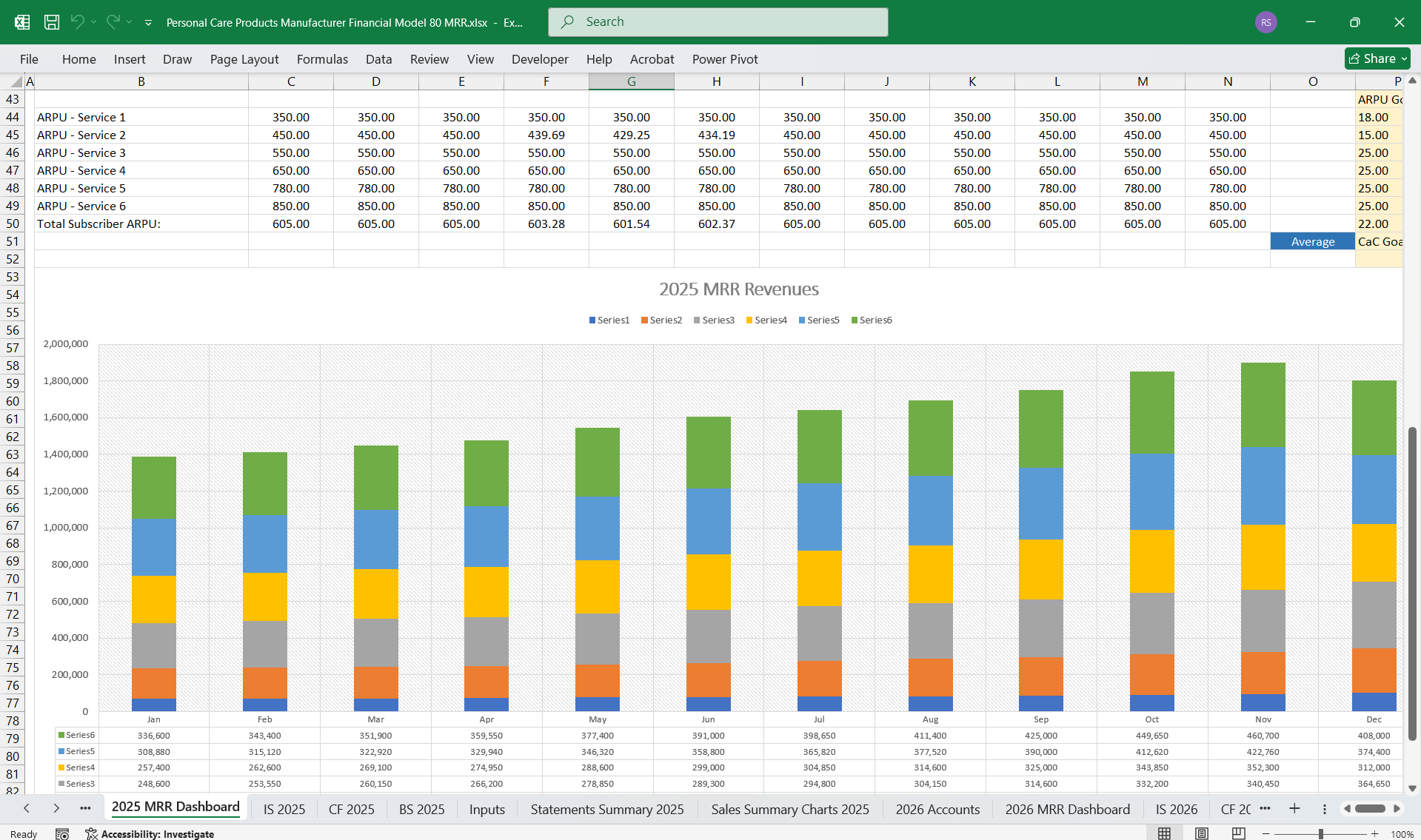
4. 6-Tier Subscription Model Add-onThe subscription model is a recurring revenue stream that complements product sales. Each tier offers different benefits and pricing.
Tier Structure
This detailed 3-Statement Financial Model provides a holistic view of the Personal Care Products Manufacturer's financial performance, cash flows, and balance sheet, while incorporating the dynamics of a 6-Tier Subscription model. It serves as a powerful tool for strategic decision-making, fundraising, and operational planning.
A 3-Statement Financial Model for a Personal Care Products Manufacturer with 80 product lines and a 6-Tier Subscription model add-on is a comprehensive tool to project the company's financial performance, cash flows, and financial position. Below is a detailed breakdown of the model, including the Income Statement, Cash Flow Statement, Balance Sheet, and the 6-Tier Subscription section.
1. Income StatementThe Income Statement projects revenues, costs, and profitability over a specific period (monthly, quarterly, or annually).
Revenue Section
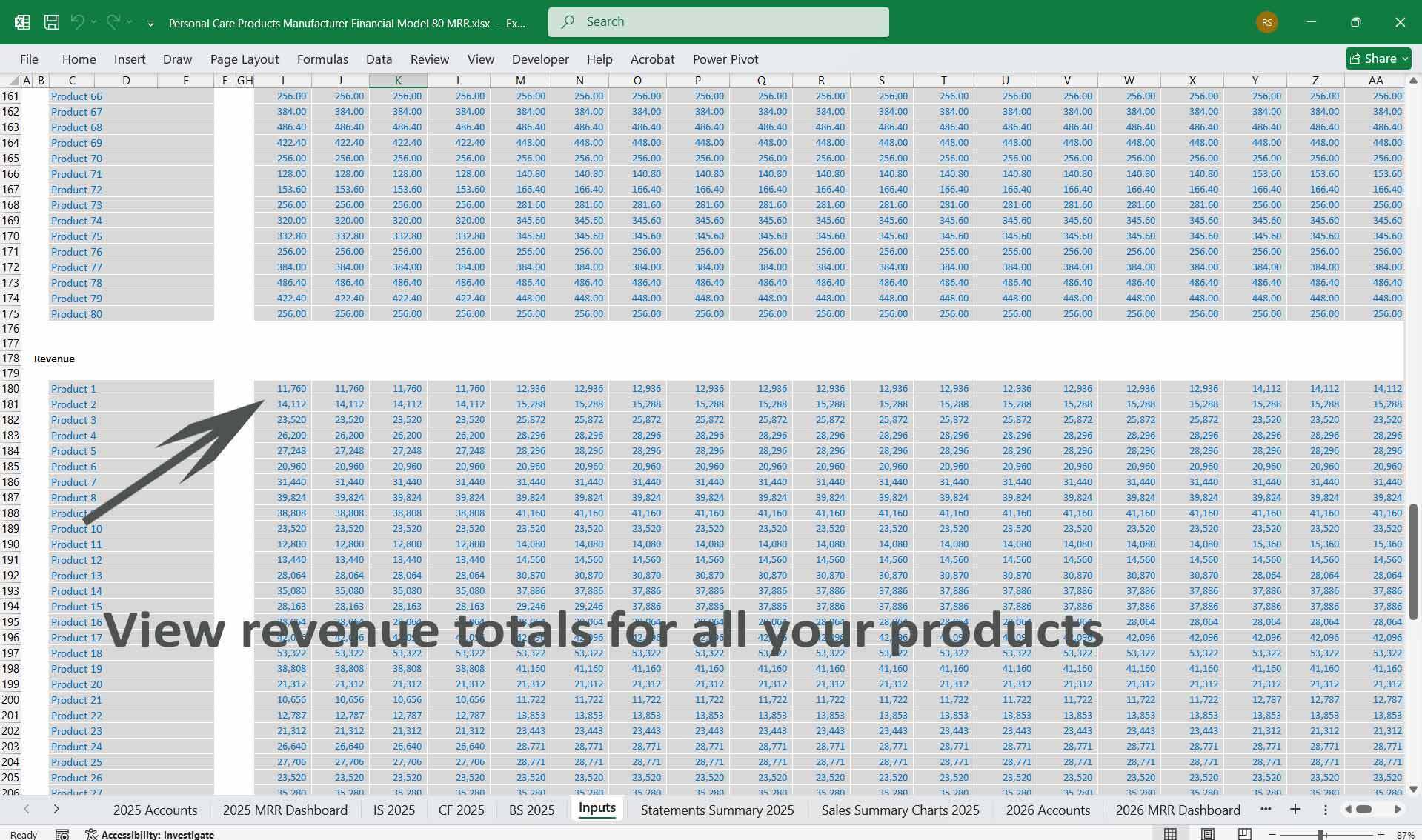
- Product Revenue: Revenue from 80 product lines, categorized by product type (e.g., skincare, haircare, oral care, etc.).
- Unit sales volume × Average selling price (ASP) per product.
- Growth assumptions for each product line based on market trends, seasonality, and marketing efforts.
- Unit sales volume × Average selling price (ASP) per product.
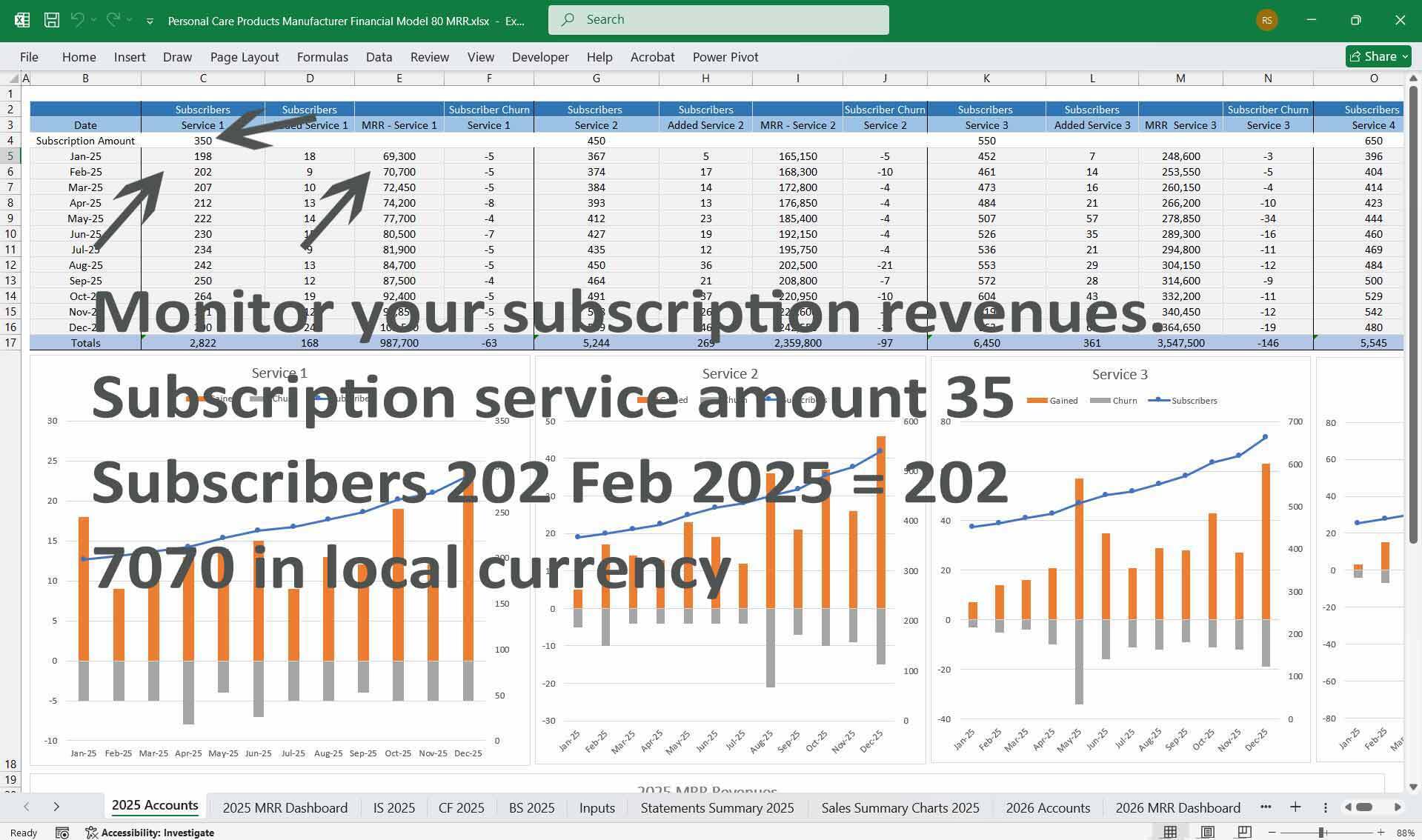
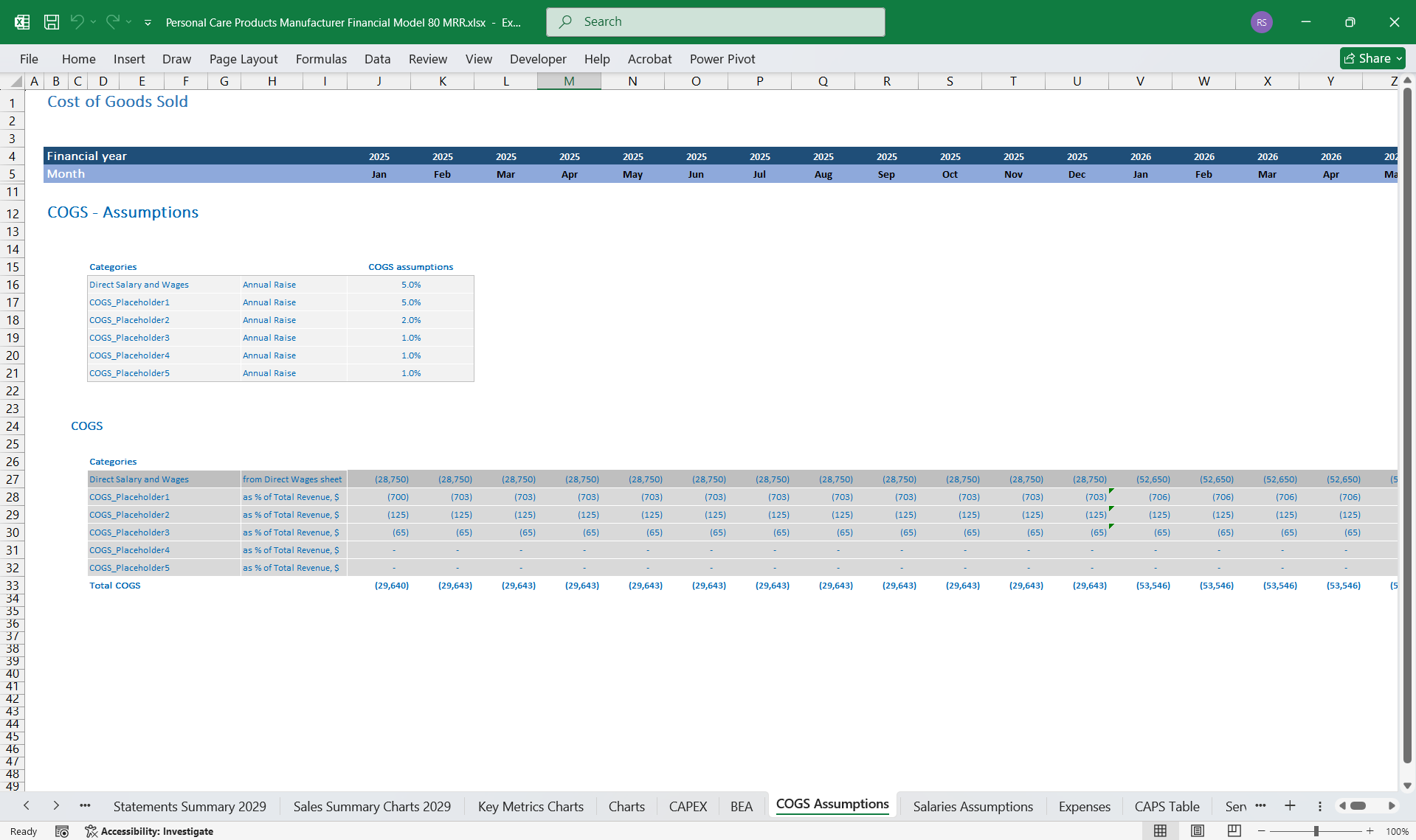
- Subscription Revenue: Revenue from the 6-Tier Subscription model (detailed below).
- Number of subscribers × Subscription fee per tier.
- Churn rate and customer acquisition rate assumptions.
- Number of subscribers × Subscription fee per tier.
- Other Revenue: Ancillary revenue streams (e.g., licensing, partnerships, or affiliate sales).
- Direct costs associated with producing the 80 product lines:
- Raw materials, packaging, labor, and manufacturing overhead.
- COGS per unit × units sold.
- Raw materials, packaging, labor, and manufacturing overhead.
- Variable costs for subscription services (e.g., packaging and shipping subscription boxes).
- Sales & Marketing: Advertising, promotions, influencer partnerships, and digital marketing.
- Research & Development (R&D): Product innovation and formulation costs.
- General & Administrative (G&A): Salaries, rent, utilities, and other overhead costs.
- Subscription-Specific Costs: Customer support, subscription platform fees, and fulfillment costs.
- Gross Profit = Revenue - COGS.
- Operating Income = Gross Profit - Operating Expenses.
- Net Income = Operating Income - Interest & Taxes.
2. Cash Flow StatementThe Cash Flow Statement tracks cash inflows and outflows, divided into operating, investing, and financing activities.
Operating Activities
- Cash received from product sales and subscription fees.
- Cash paid for COGS, operating expenses, and taxes.
- Changes in working capital (e.g., accounts receivable, inventory, accounts payable).
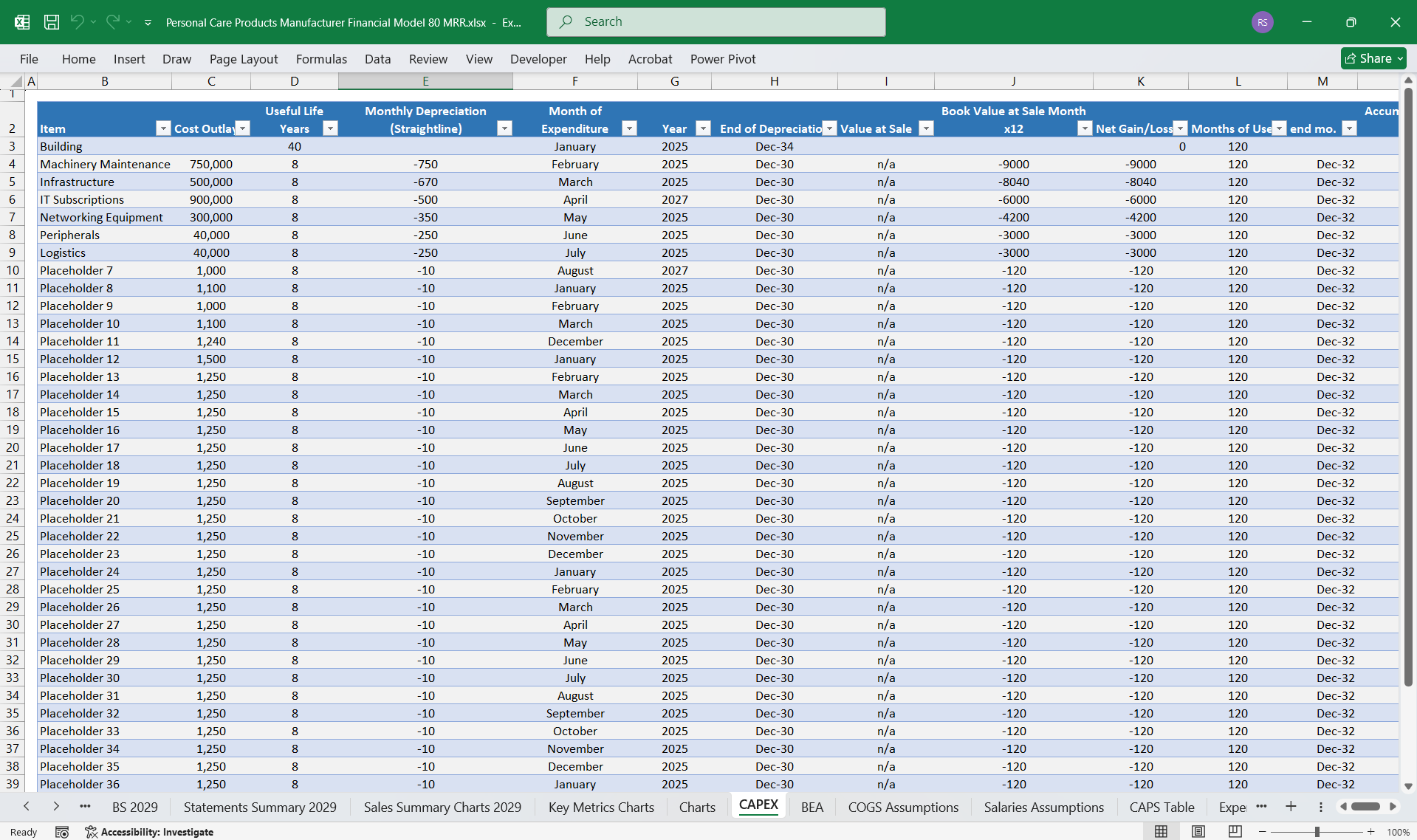
- Capital expenditures (CapEx) for manufacturing equipment, R&D facilities, or technology.
- Investments in new product lines or subscription infrastructure.
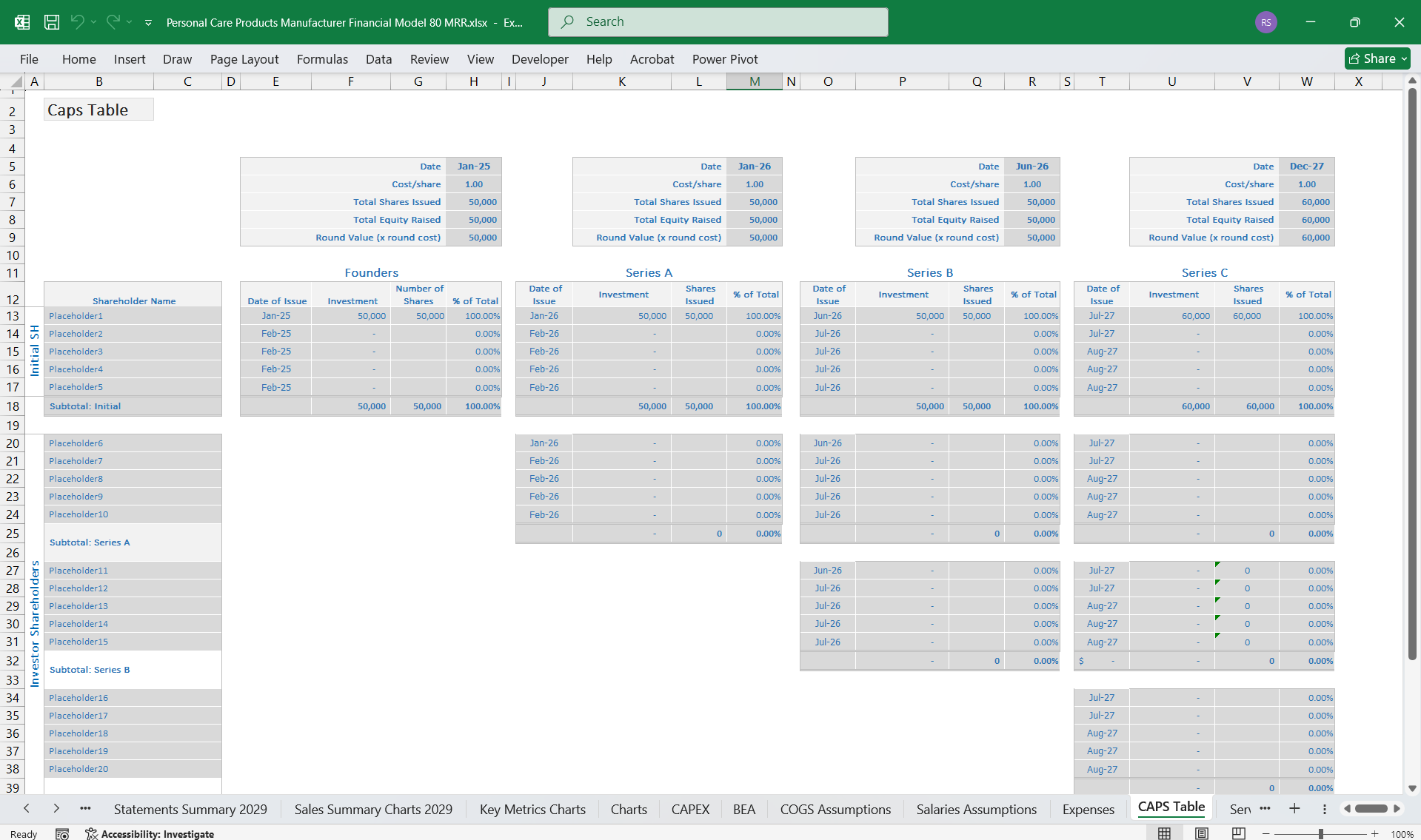
- Proceeds from debt or equity financing.
- Repayment of debt principal.
- Dividends or distributions to shareholders.
- Net change in cash position = Cash from Operating Activities + Investing Activities + Financing Activities.
3. Balance SheetThe Balance Sheet provides a snapshot of the company’s financial position at a specific point in time.
Assets
- Current Assets:
- Cash and cash equivalents.
- Accounts receivable (outstanding payments from customers).
- Inventory (raw materials, work-in-progress, and finished goods for 80 product lines).
- Cash and cash equivalents.
- Non-Current Assets:
- Property, plant, and equipment (PP&E) for manufacturing facilities.
- Intangible assets (e.g., patents, trademarks).
- Property, plant, and equipment (PP&E) for manufacturing facilities.
- Current Liabilities:
- Accounts payable (outstanding payments to suppliers).
- Accrued expenses (e.g., wages, taxes).
- Deferred revenue (subscription fees received in advance).
- Accounts payable (outstanding payments to suppliers).
- Non-Current Liabilities:
- Long-term debt.
- Lease obligations.
- Long-term debt.
- Shareholder equity = Total Assets - Total Liabilities.
- Retained earnings (accumulated net income over time).
4. 6-Tier Subscription Model Add-onThe subscription model is a recurring revenue stream that complements product sales. Each tier offers different benefits and pricing.
Tier Structure
- Basic Tier:
- Price: $10/month.
- Benefits: Access to exclusive content, discounts on select products.
- Price: $10/month.
- Standard Tier:
- Price: $20/month.
- Benefits: Basic Tier benefits + free shipping on orders over $50.
- Price: $20/month.
- Premium Tier:
- Price: $30/month.
- Benefits: Standard Tier benefits + monthly product samples.
- Price: $30/month.
- Elite Tier:
- Price: $50/month.
- Benefits: Premium Tier benefits + early access to new product launches.
- Price: $50/month.
- Pro Tier:
- Price: $75/month.
- Benefits: Elite Tier benefits + personalized product recommendations.
- Price: $75/month.
- VIP Tier:
- Price: $100/month.
- Benefits: Pro Tier benefits + one-on-one consultations with skincare/haircare experts.
- Price: $100/month.
- Customer Acquisition Cost (CAC): Cost to acquire a new subscriber.
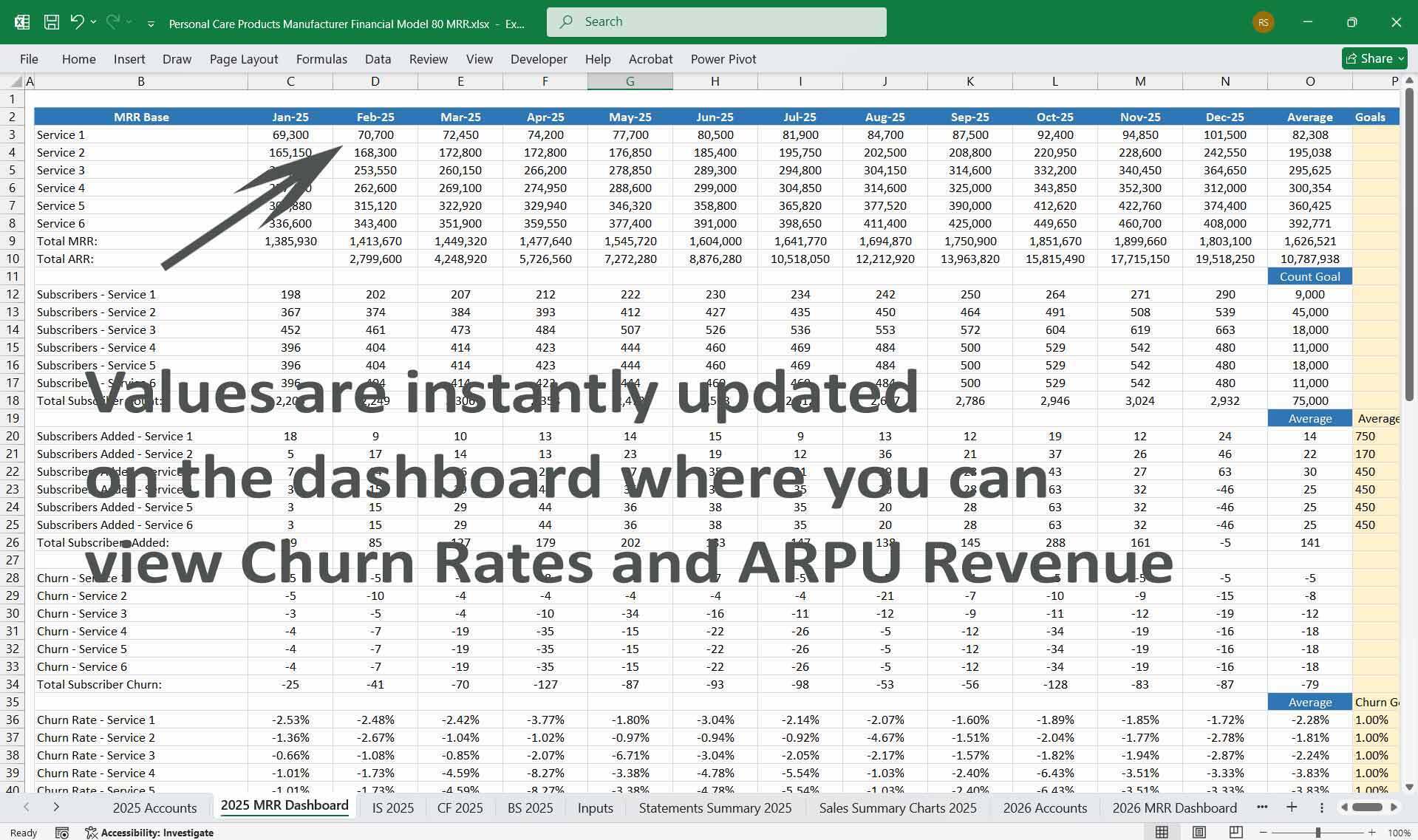
- Churn Rate: Percentage of subscribers who cancel their subscriptions.
- Lifetime Value (LTV): Total revenue generated per subscriber over their lifetime.
- Retention Rate: Percentage of subscribers who renew their subscriptions.
- Monthly Recurring Revenue (MRR) = Number of subscribers × Average revenue per user (ARPU).
- Annual Recurring Revenue (ARR) = MRR × 12.
- Fulfillment costs for subscription boxes.
- Customer support and engagement costs.
- Platform fees for subscription management software.
- Income Statement:
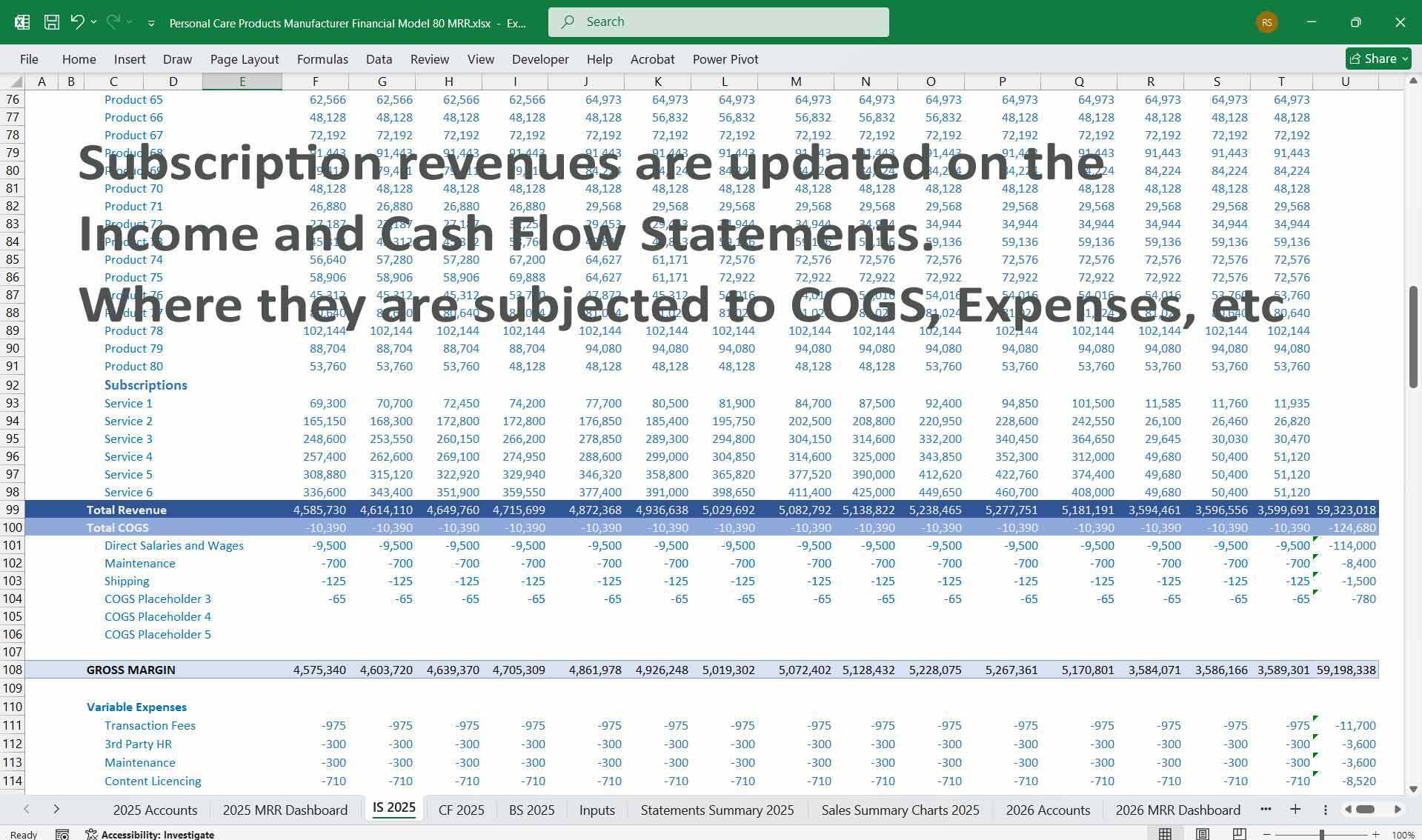
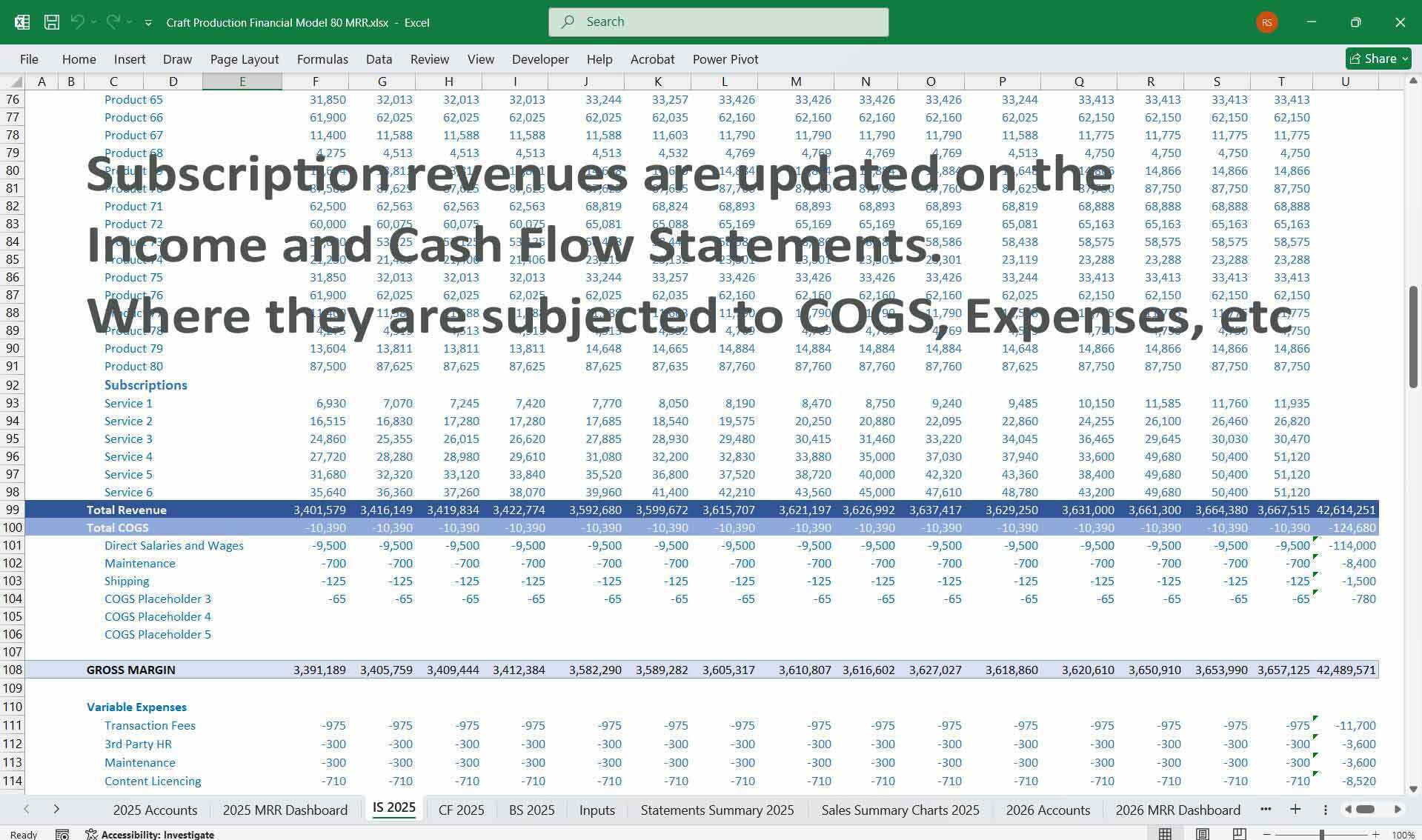
- Subscription revenue is included in total revenue.
- Subscription-specific costs are included in COGS and operating expenses.
- Subscription revenue is included in total revenue.
- Cash Flow Statement:
- Cash inflows from subscription fees are included in operating activities.
- Cash outflows for subscription fulfillment and support are included in operating activities.
- Cash inflows from subscription fees are included in operating activities.
- Balance Sheet:
- Deferred revenue (unearned subscription fees) is recorded as a liability.
- Inventory for subscription boxes is recorded as a current asset.
- Deferred revenue (unearned subscription fees) is recorded as a liability.
- Product Line Growth: Assumptions for sales growth, pricing, and market penetration for each of the 80 product lines.
- Subscription Growth: Assumptions for subscriber acquisition, churn, and tier migration.
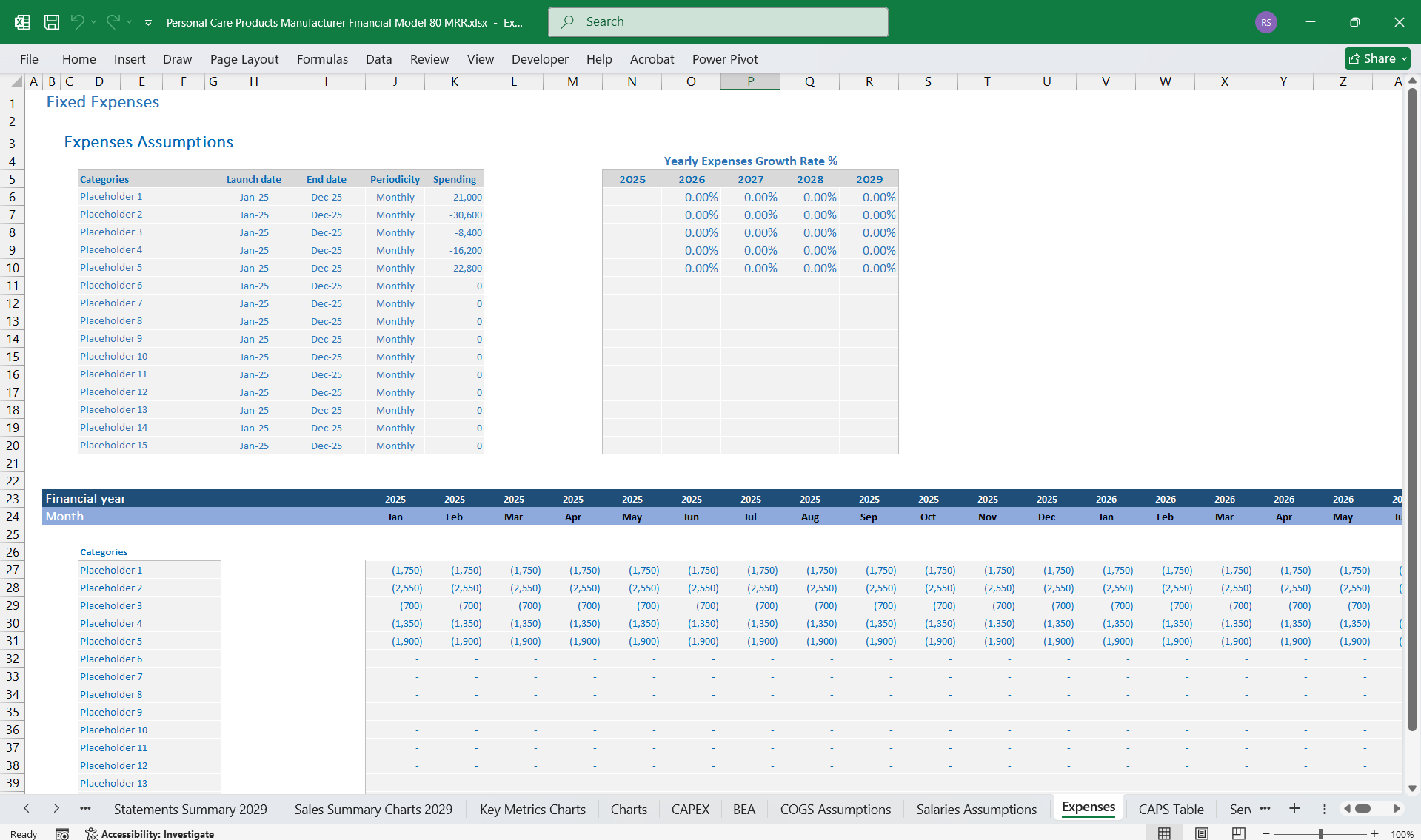
- Cost Structure: Fixed and variable costs for manufacturing, fulfillment, and operations.
- Working Capital: Assumptions for inventory turnover, accounts receivable, and accounts payable.
This detailed 3-Statement Financial Model provides a holistic view of the Personal Care Products Manufacturer's financial performance, cash flows, and balance sheet, while incorporating the dynamics of a 6-Tier Subscription model. It serves as a powerful tool for strategic decision-making, fundraising, and operational planning.
This Best Practice includes
1 Excel Financial Model
Further information
Provides thorough oversight, tracking, and reporting of Personal Care Products Manufacturer finances, including updates on budget utilisation and projections.