Publication number: ELQ-28942-1
View all versions & Certificate

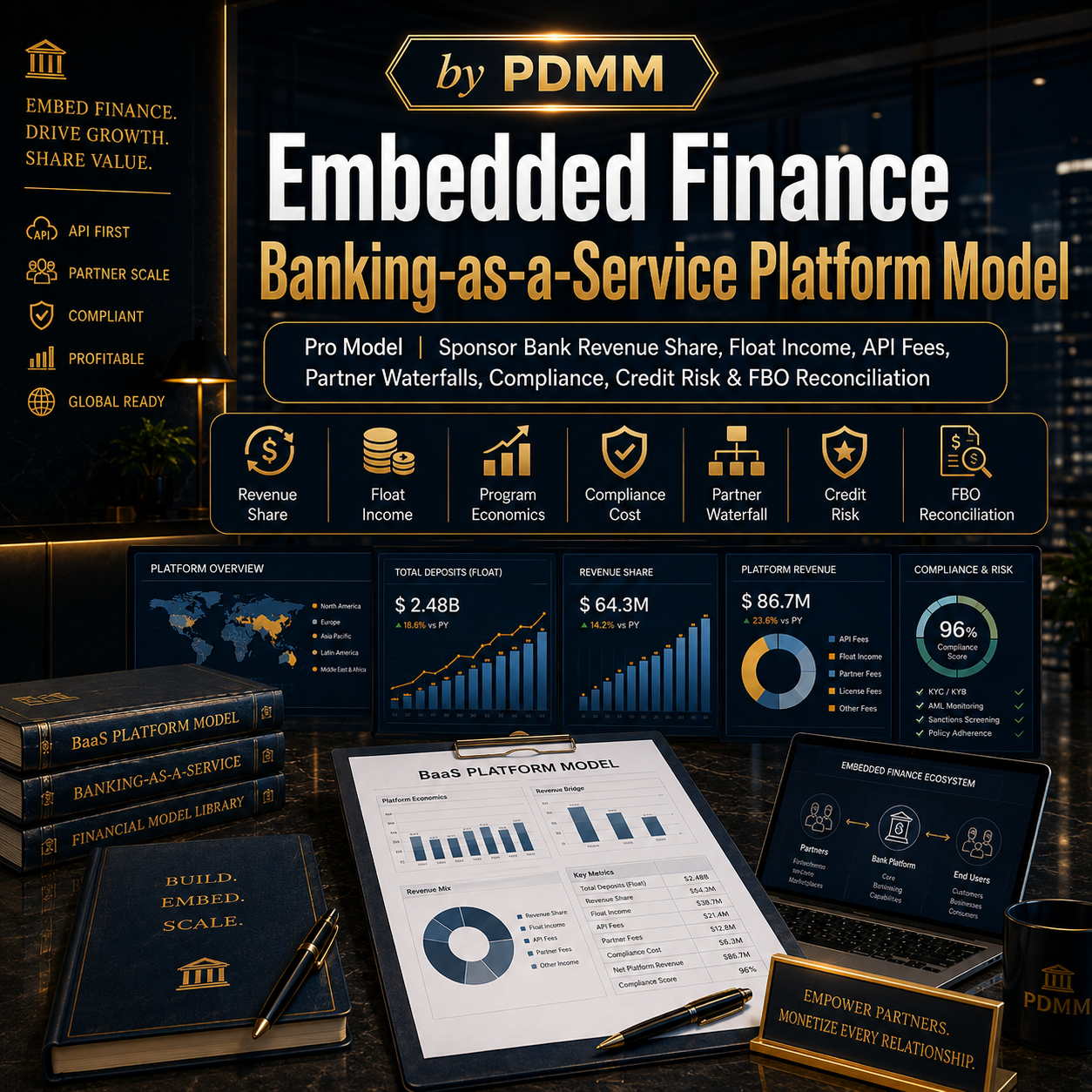
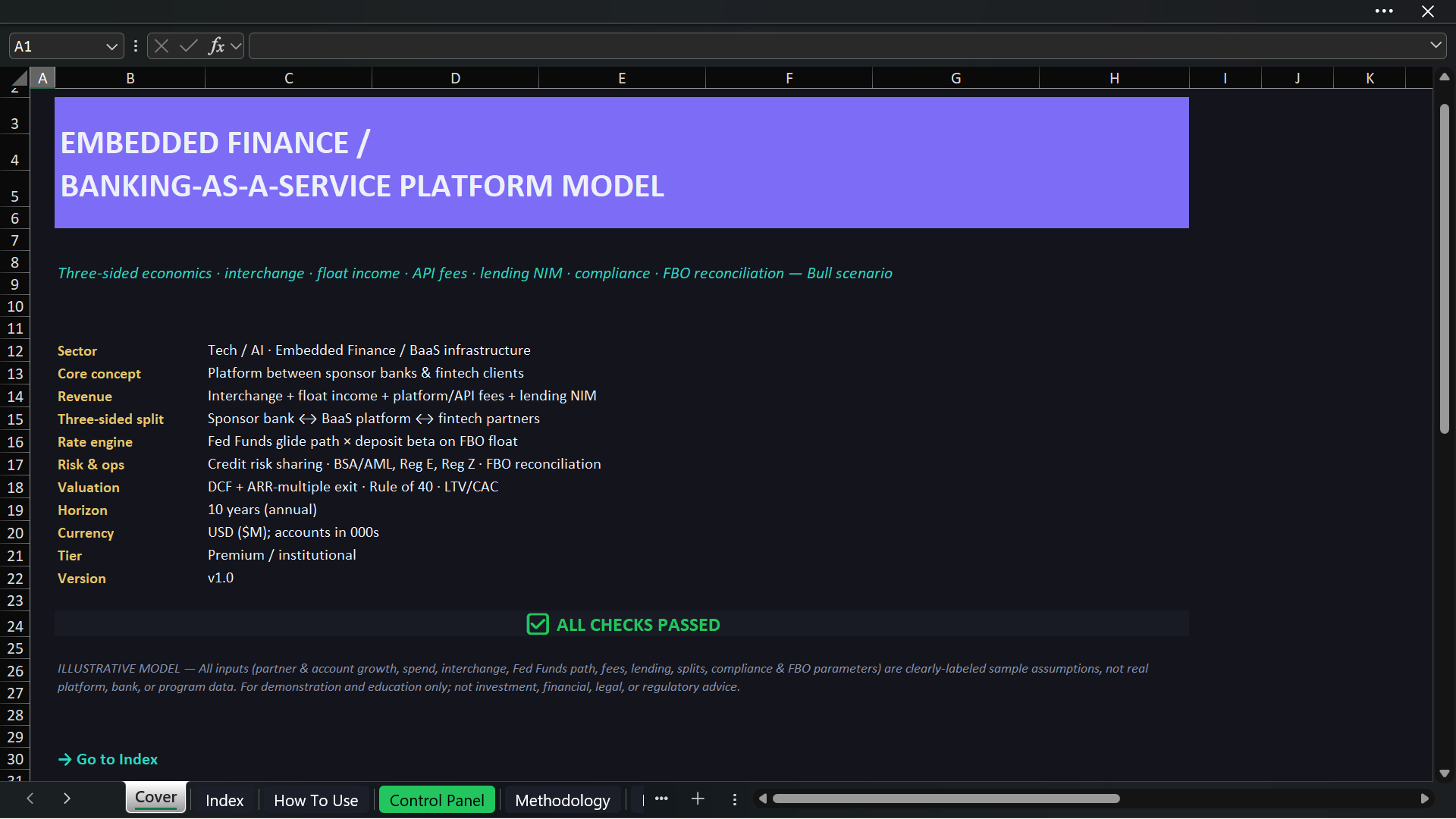
Embedded Finance & Banking-as-a-Service Platform Financial Model
Premium Embedded Finance and BaaS model covering revenue share, float income, API fees, compliance, credit risk, FBO reconciliation and valuation.
Further information
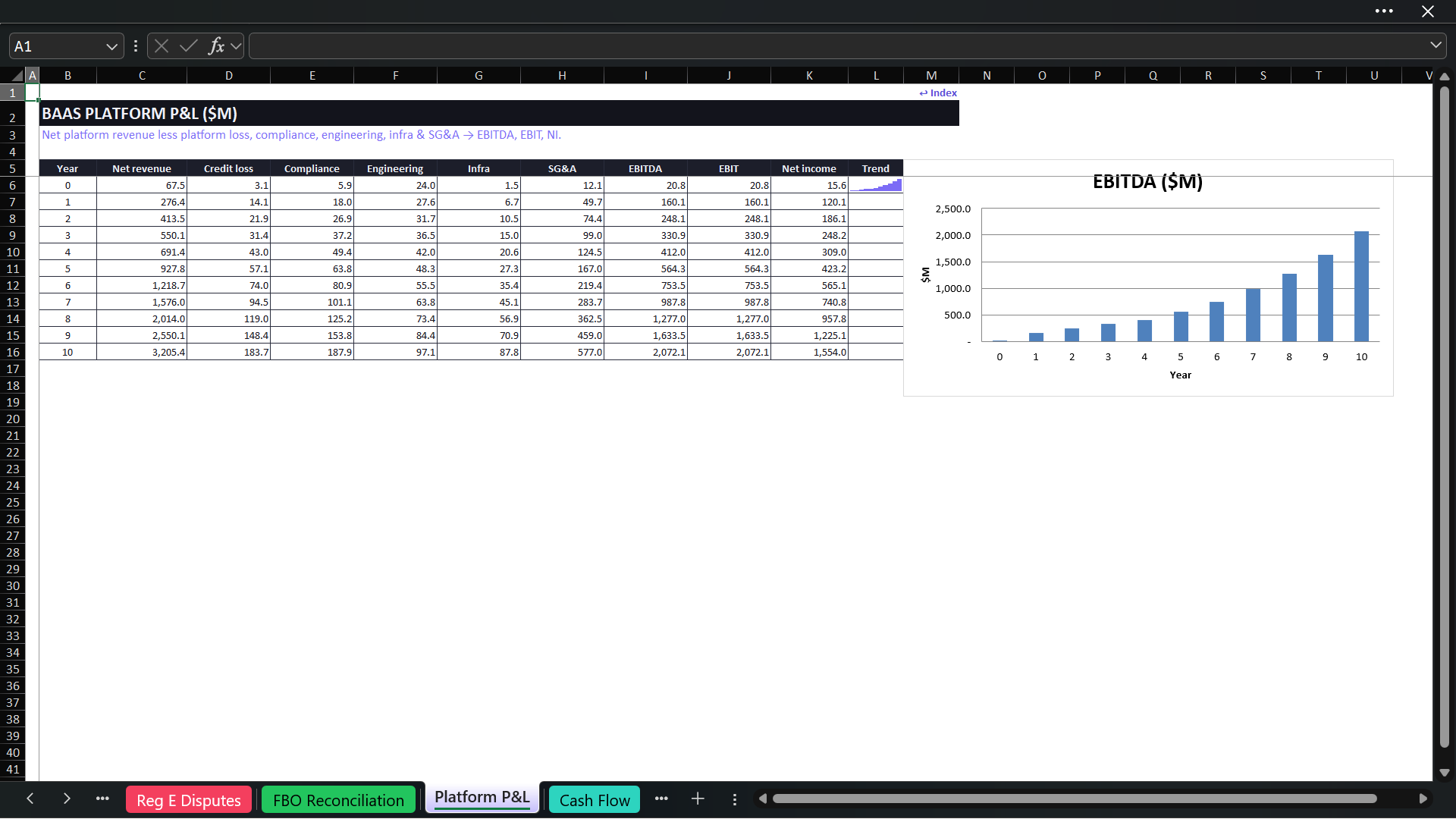
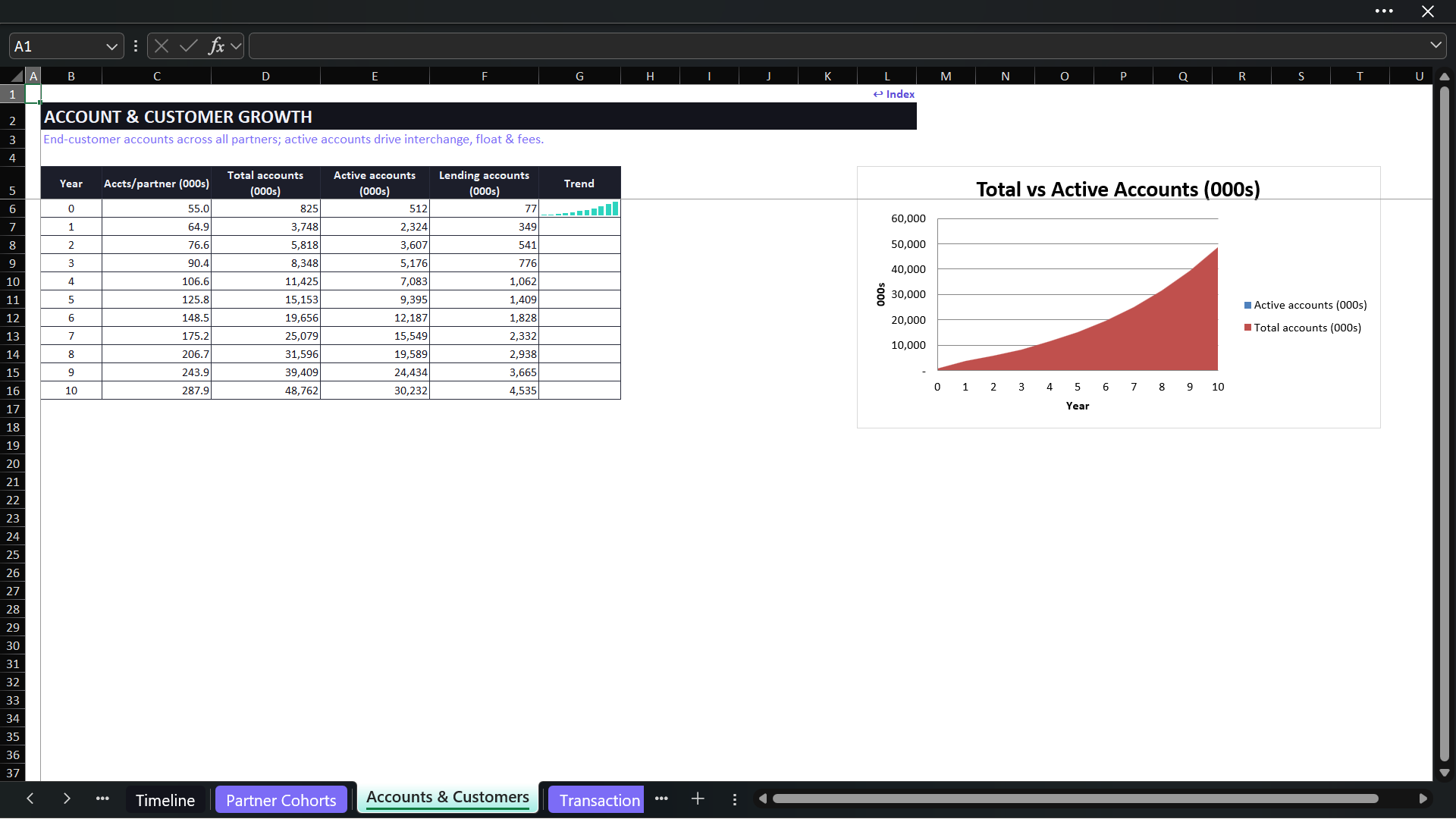
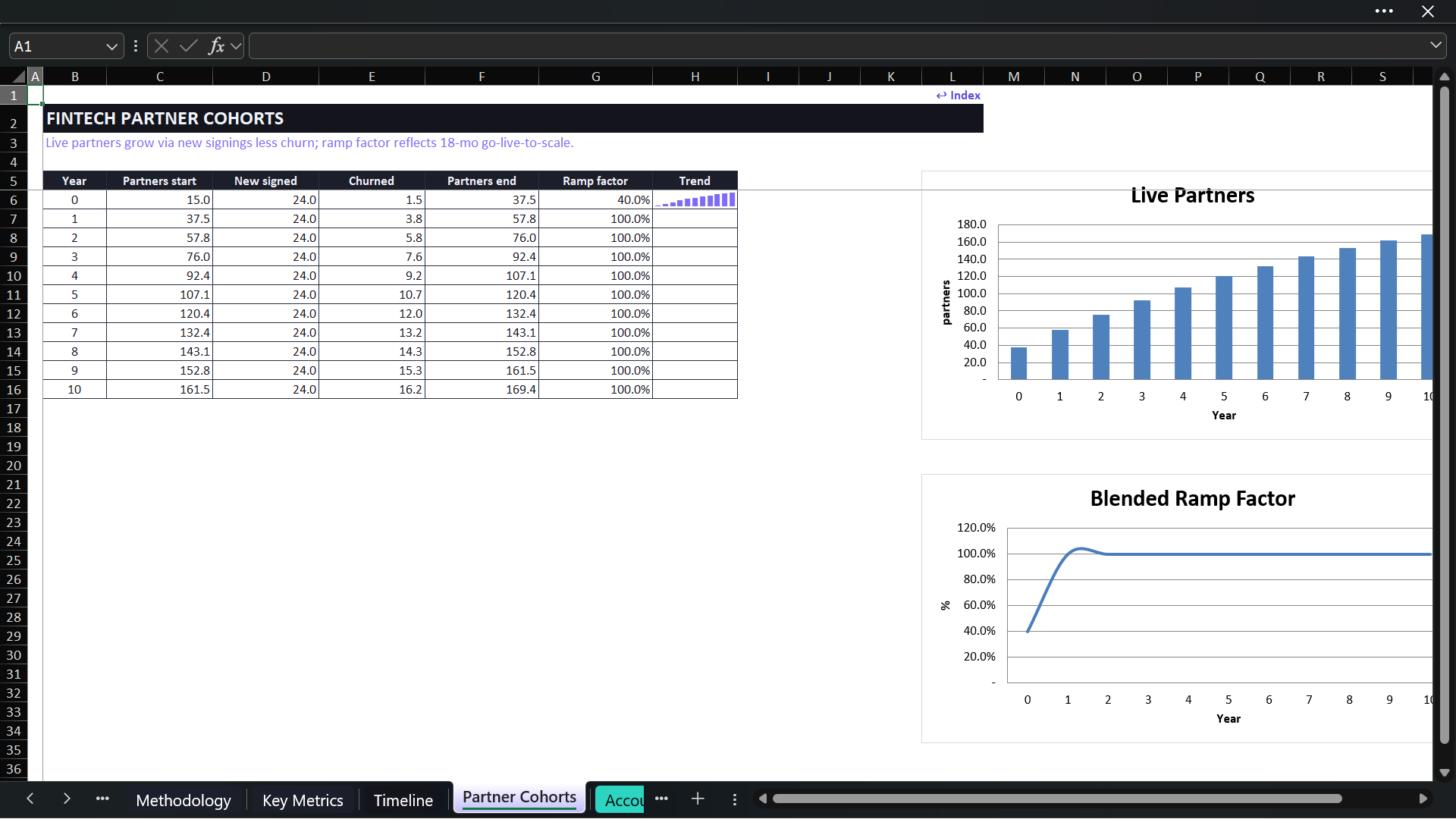
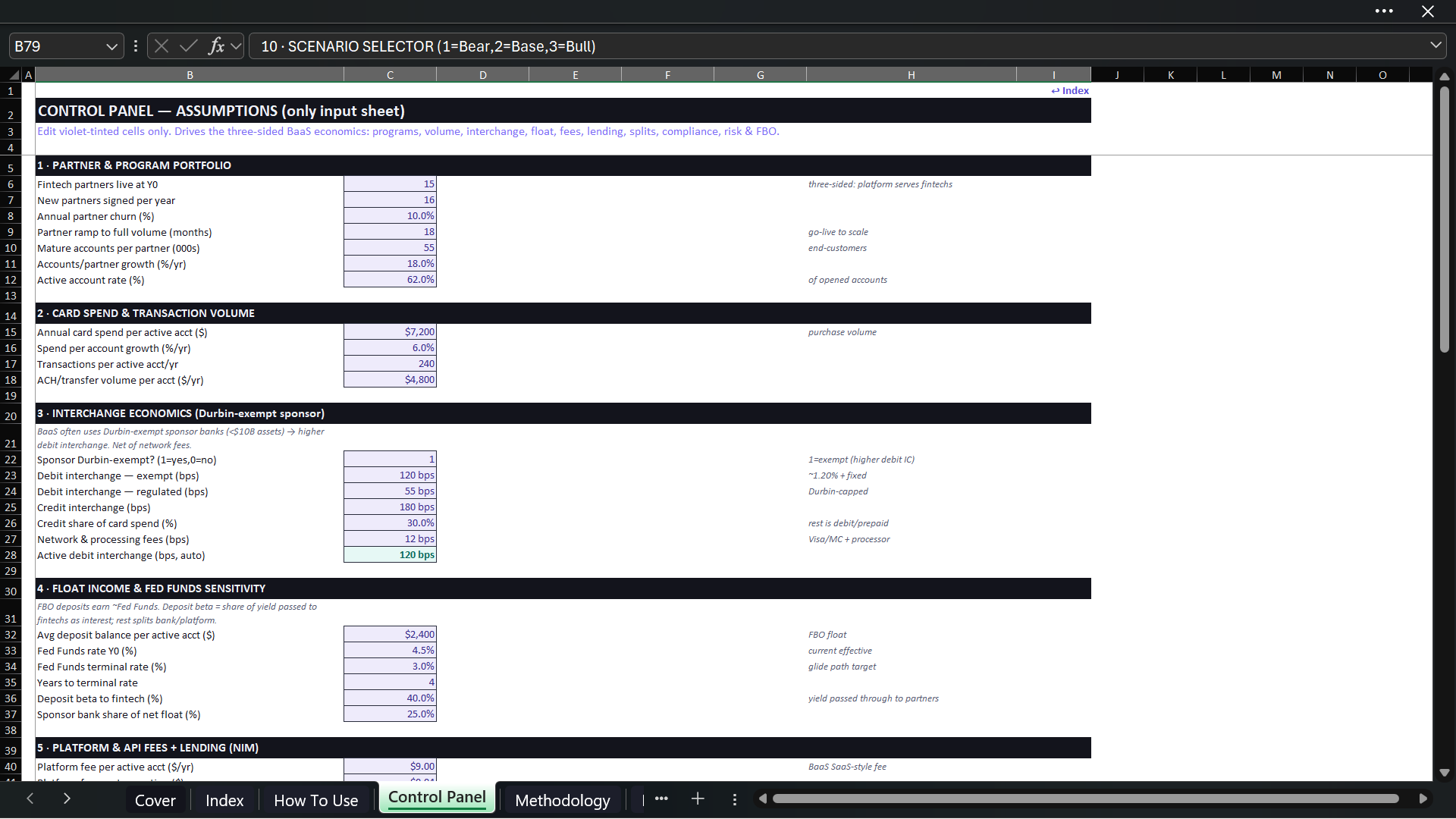
Forecast the full 10-year financial performance of an embedded finance / BaaS platform.
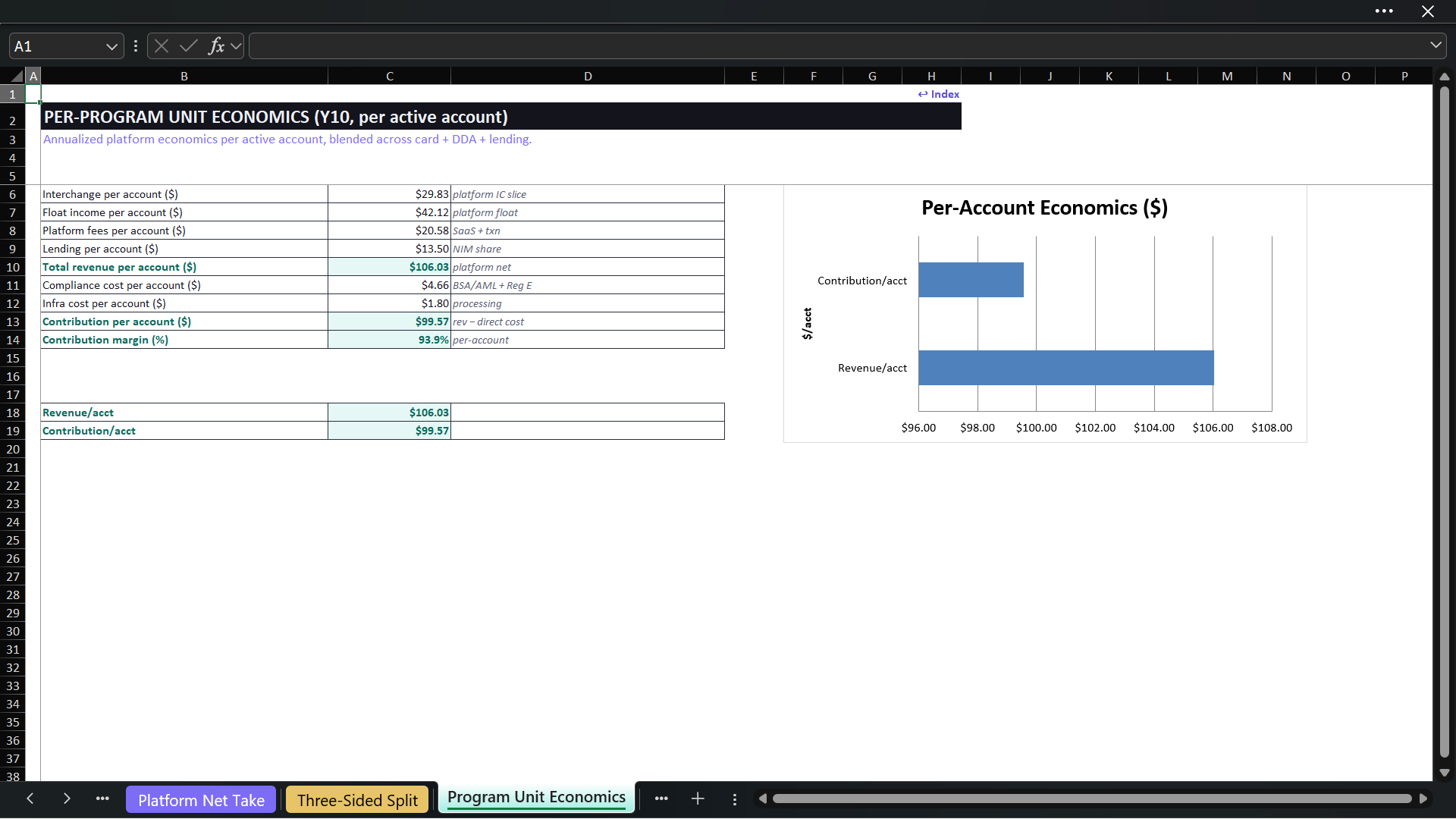
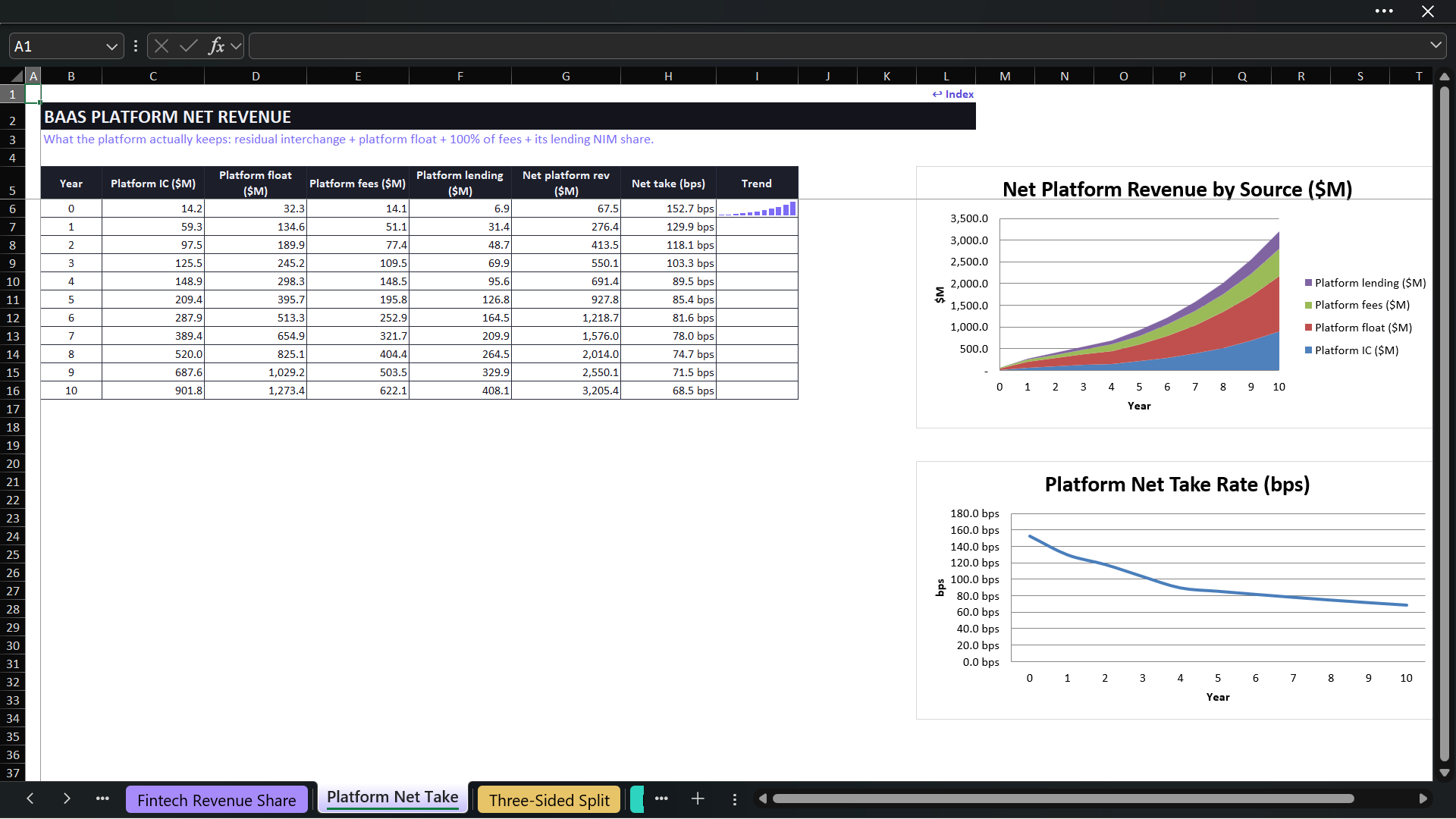
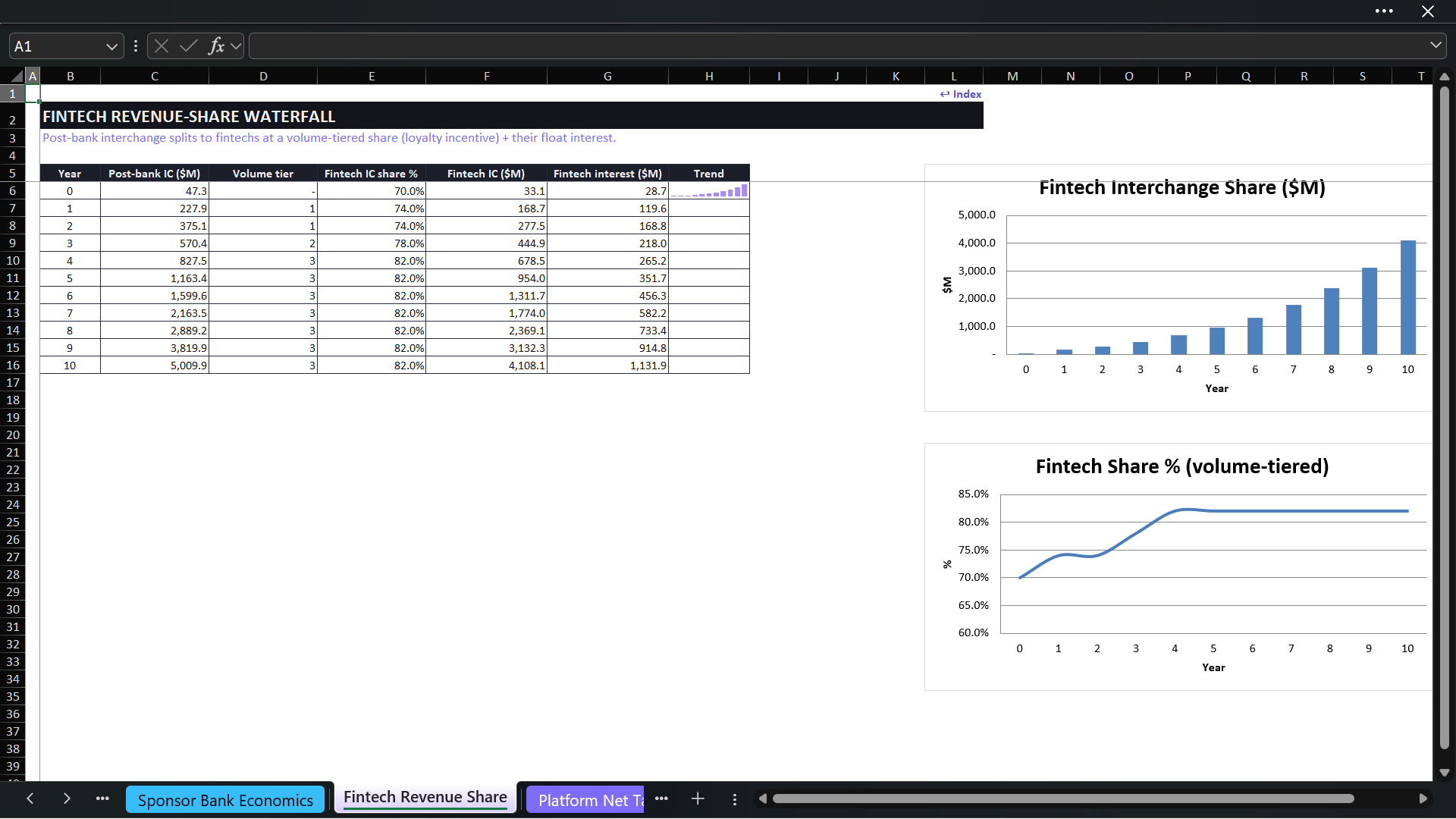
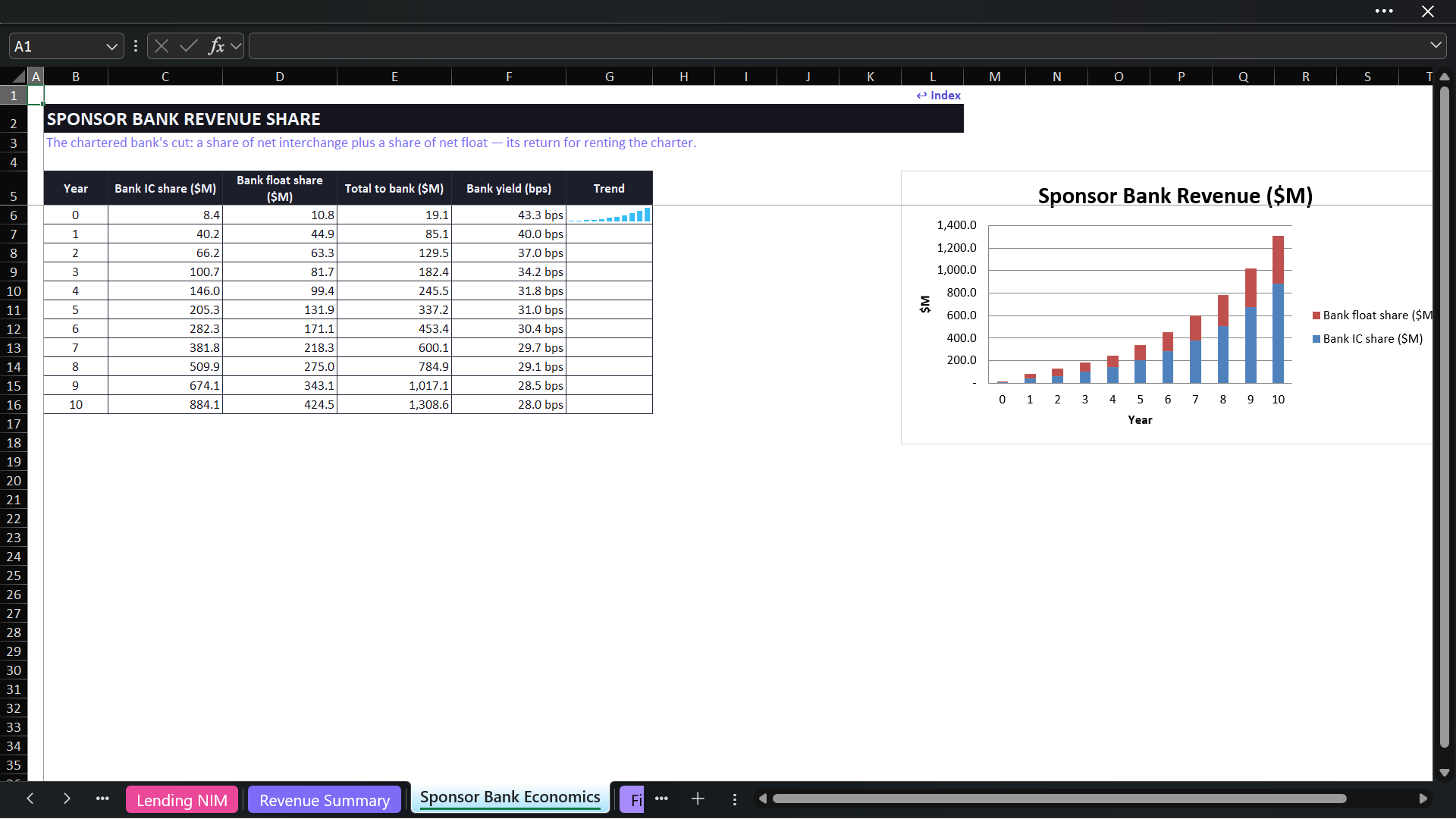
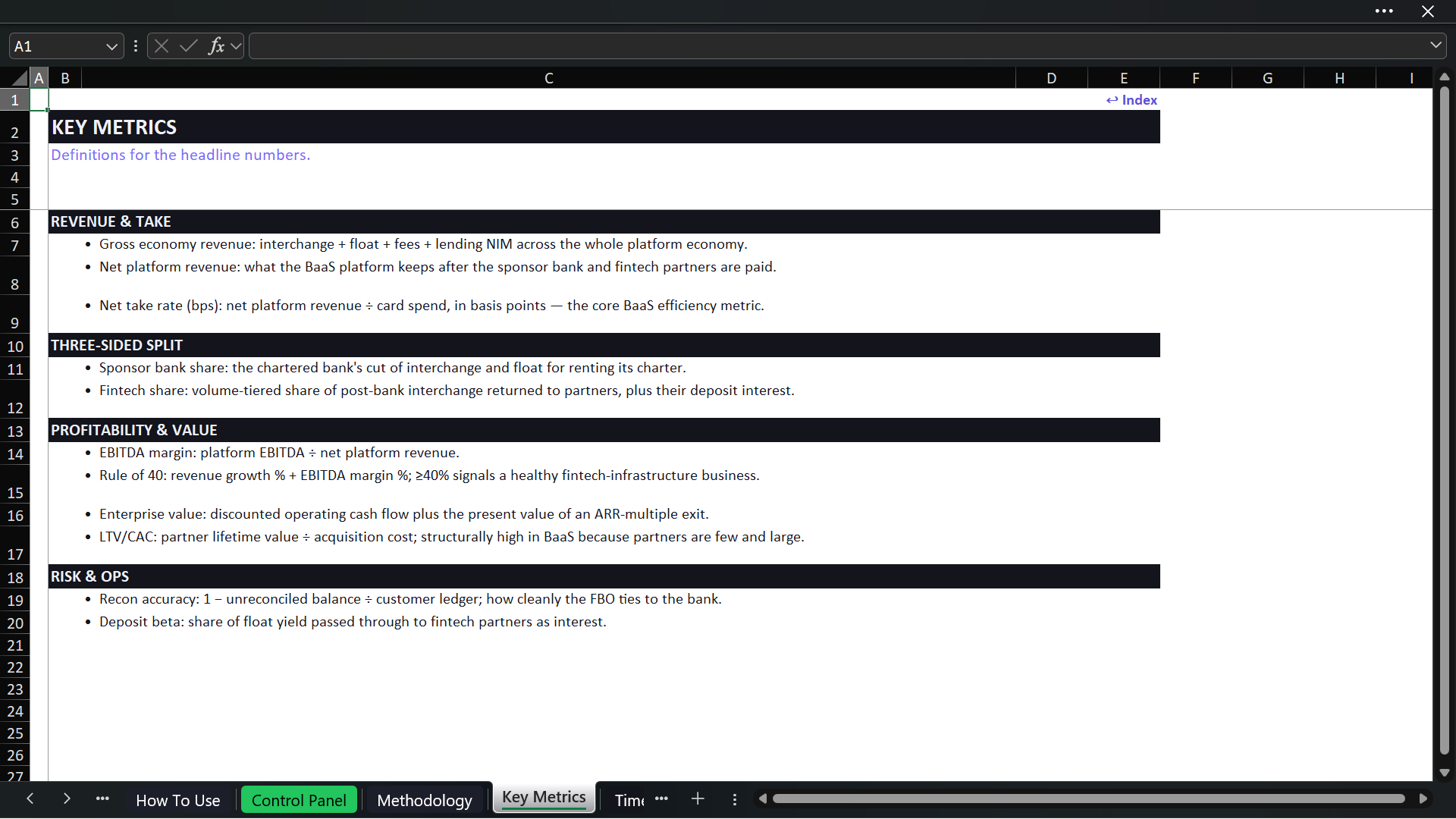
Model sponsor bank revenue share, fintech partner incentives, and platform net take.
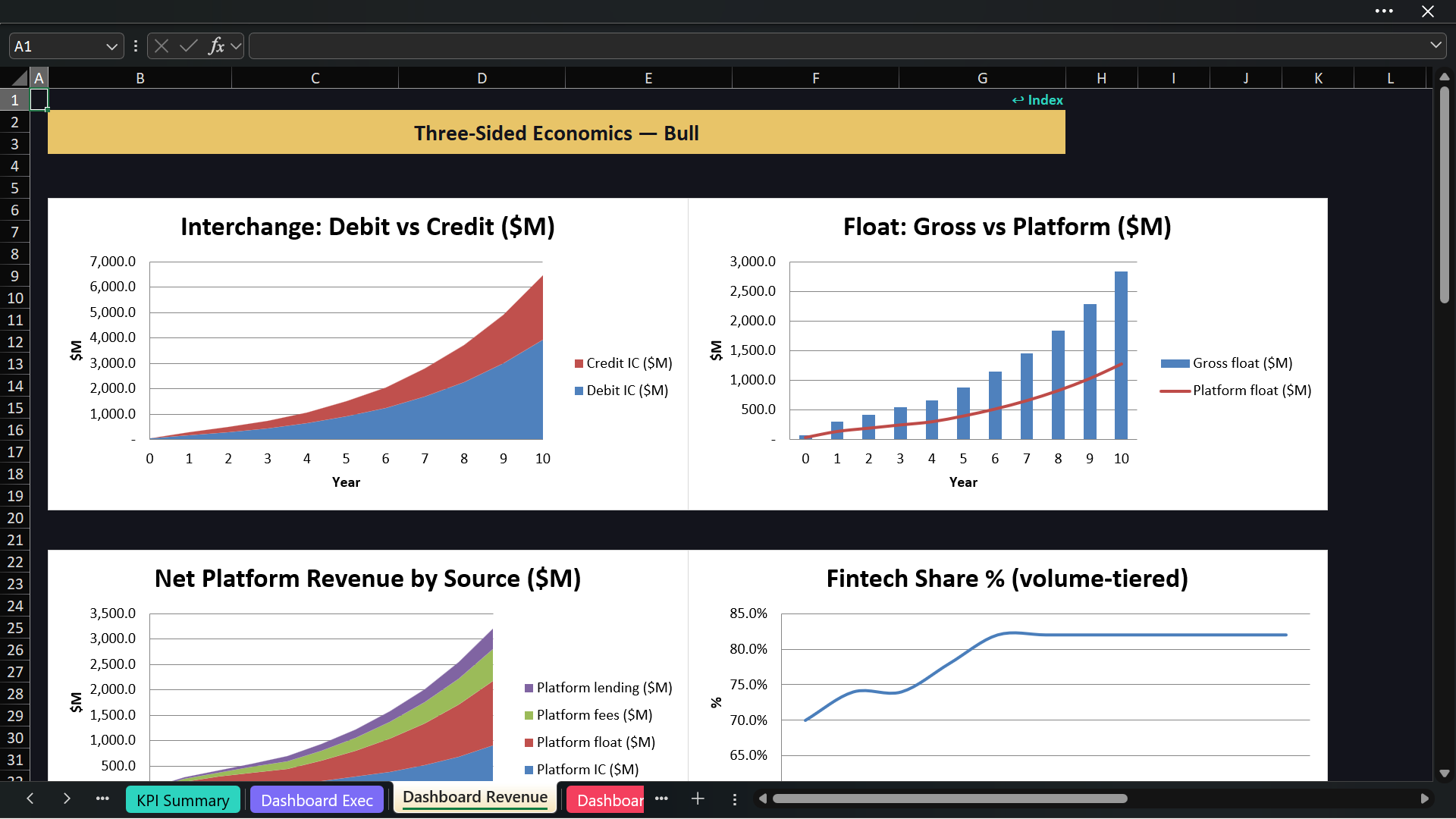
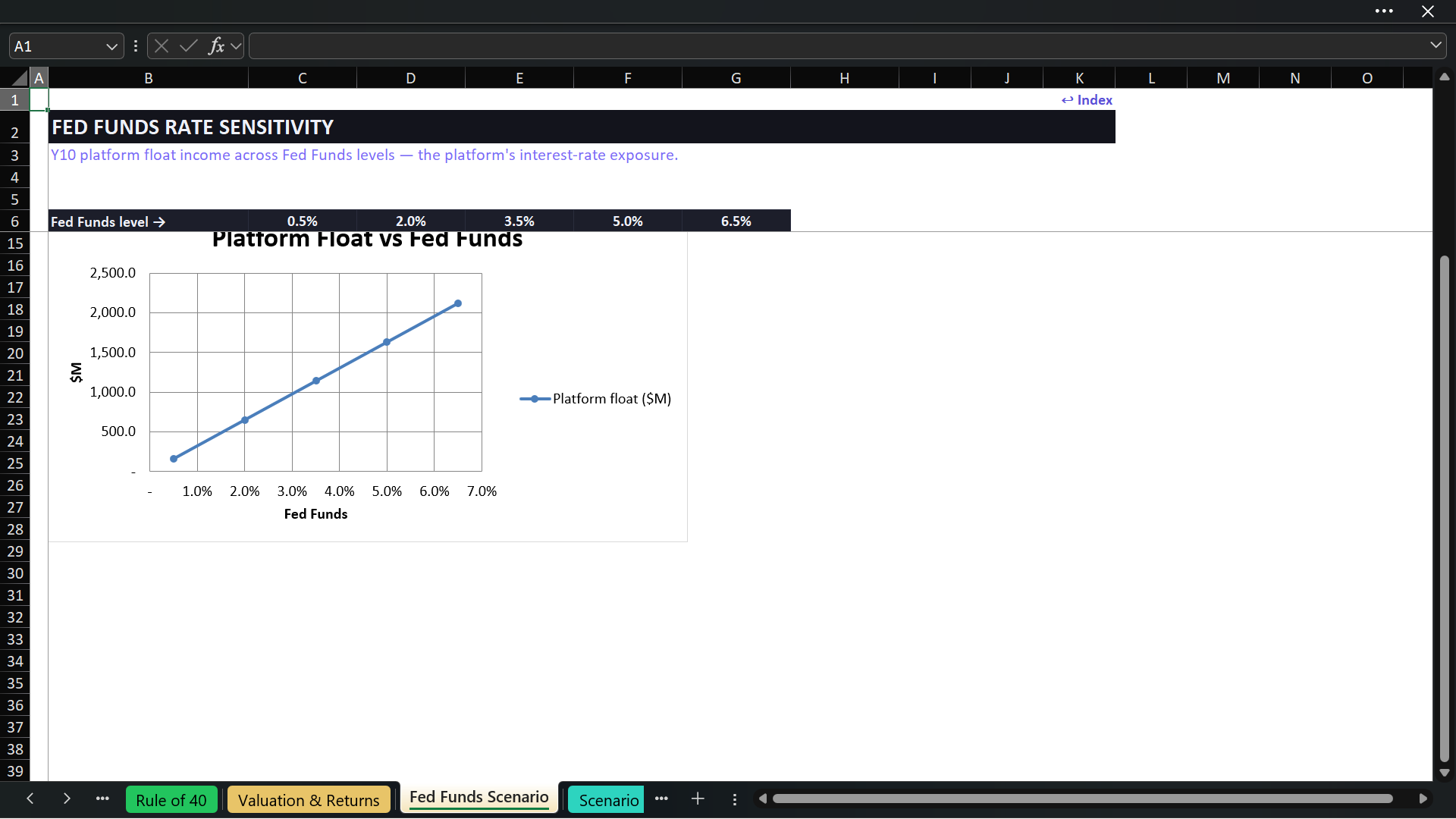
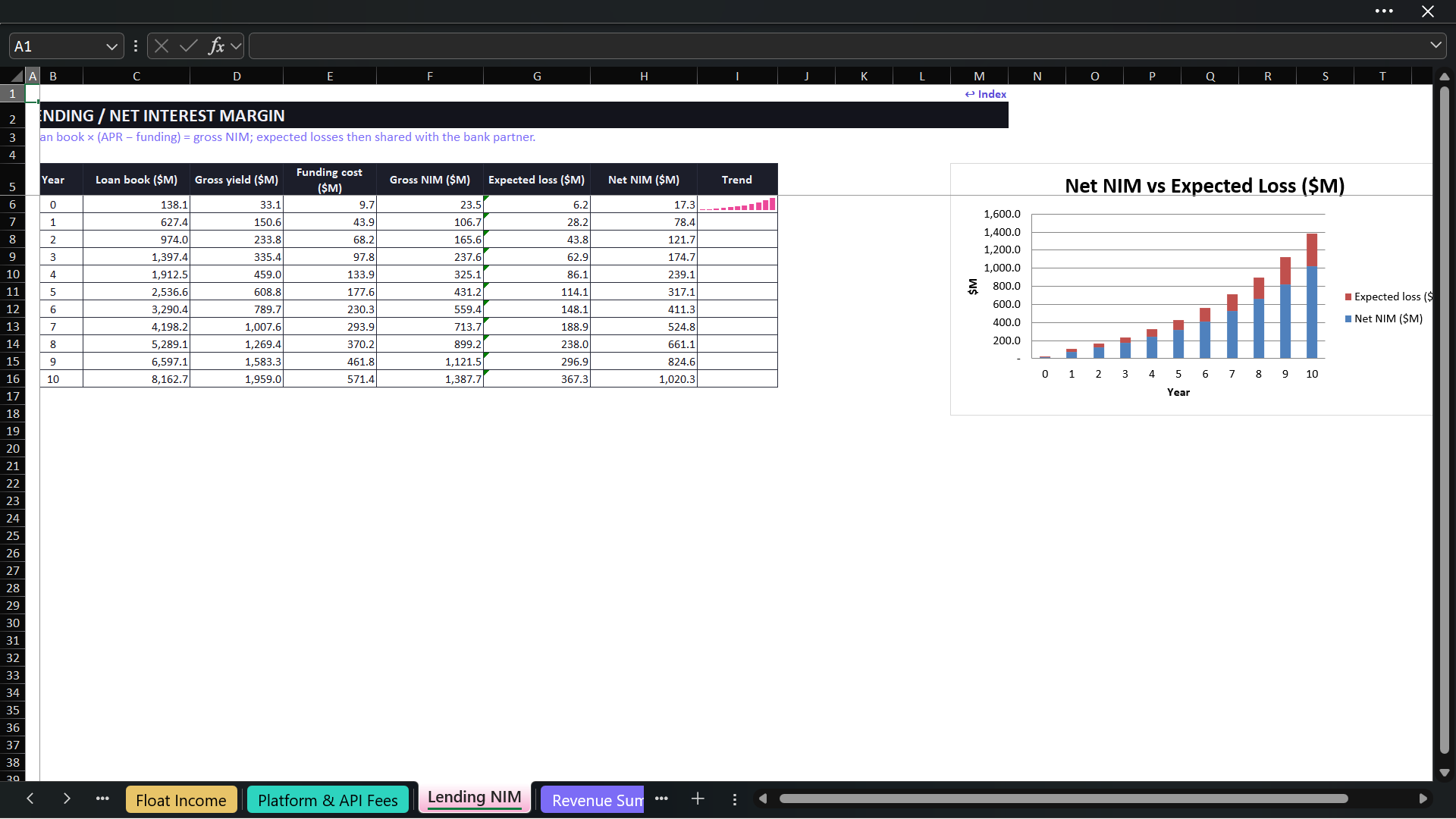
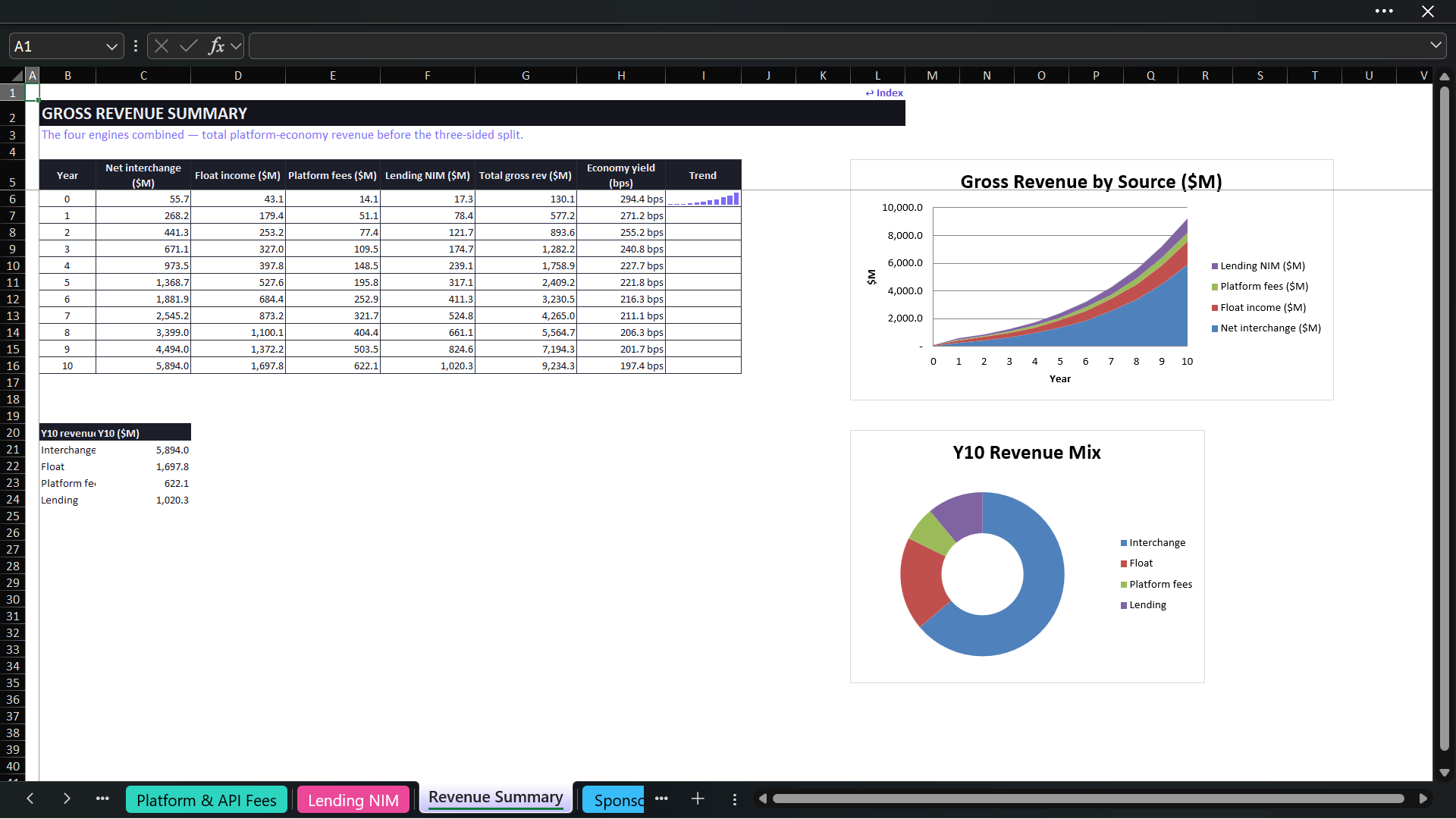
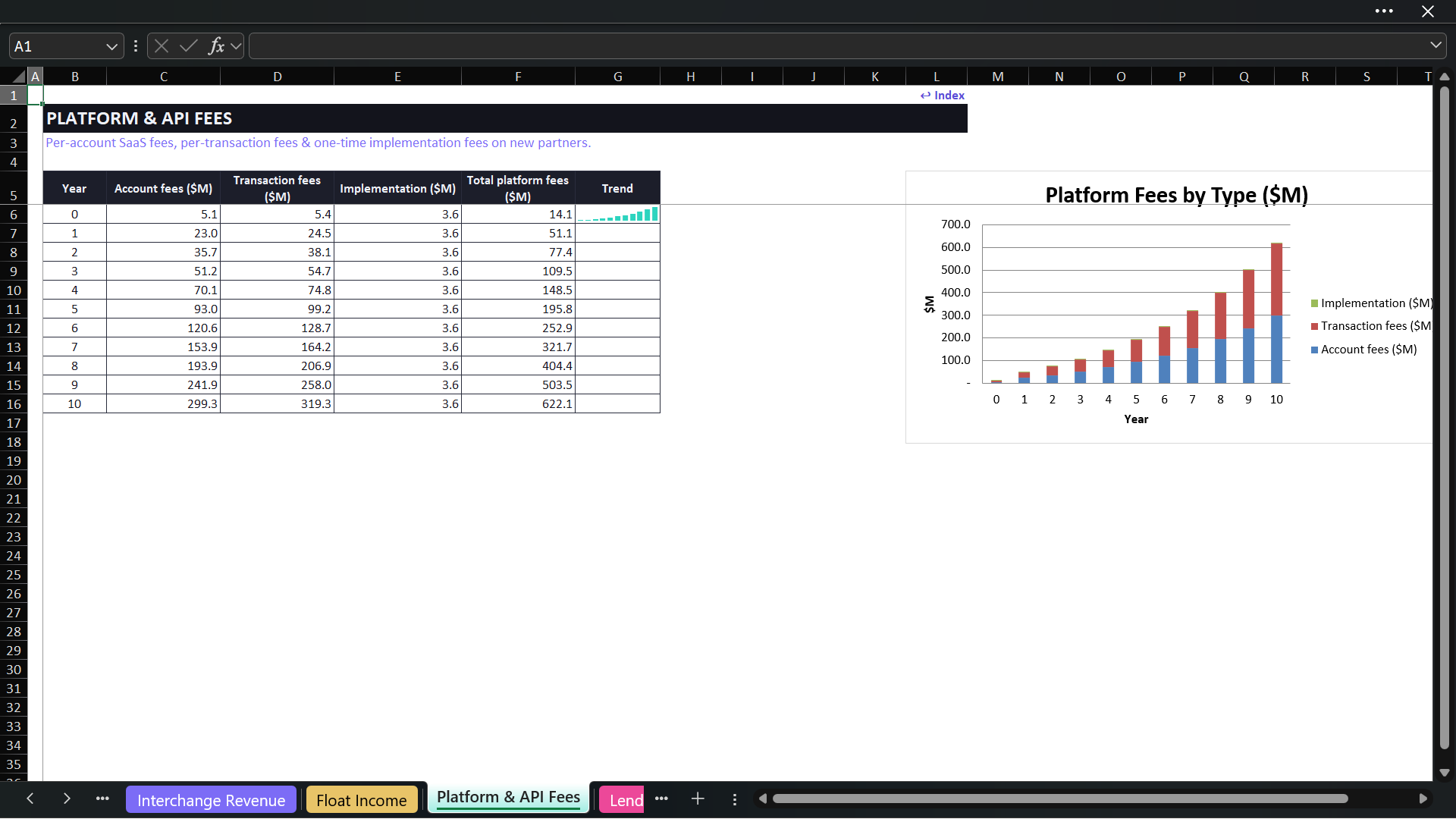
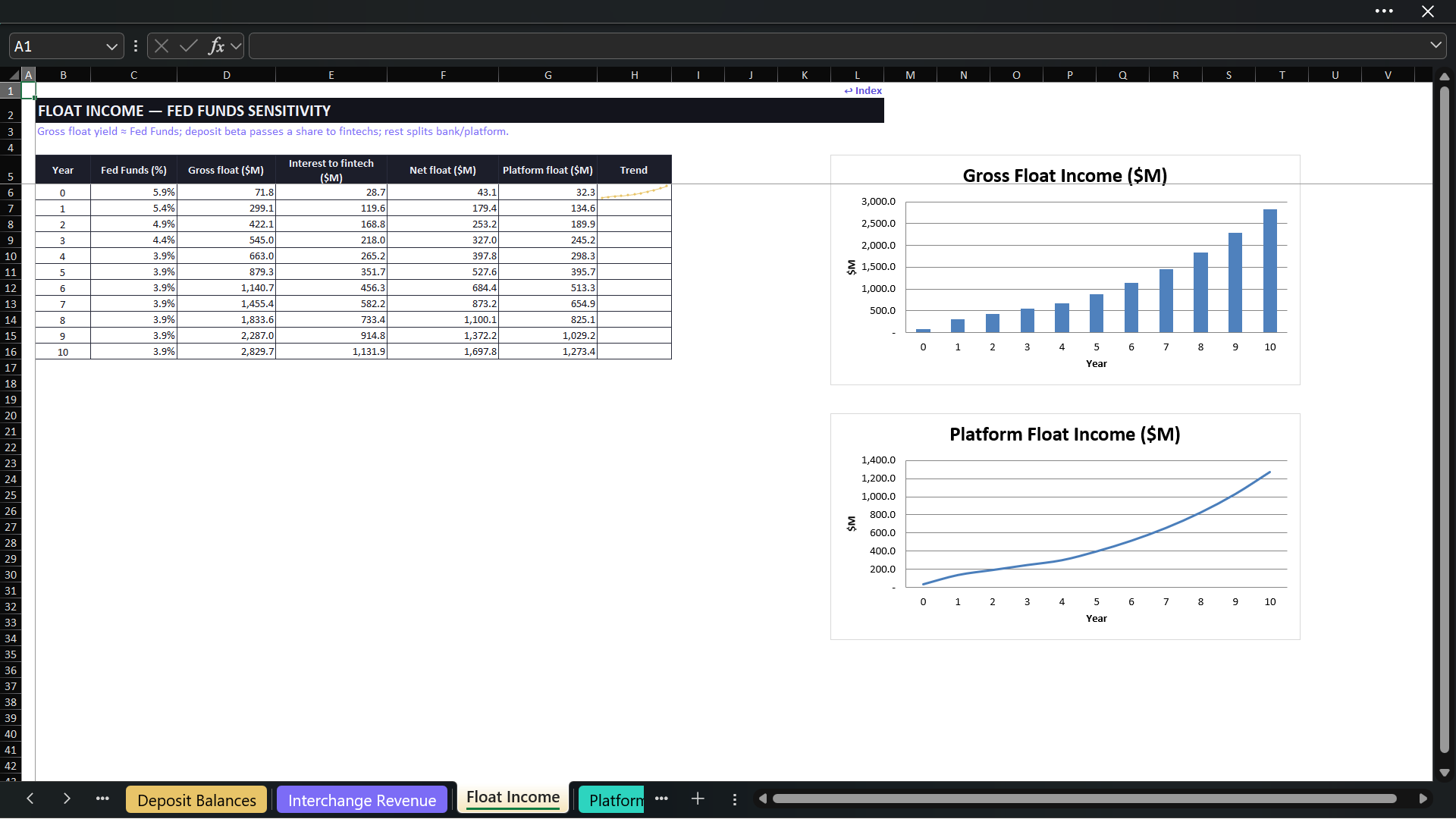
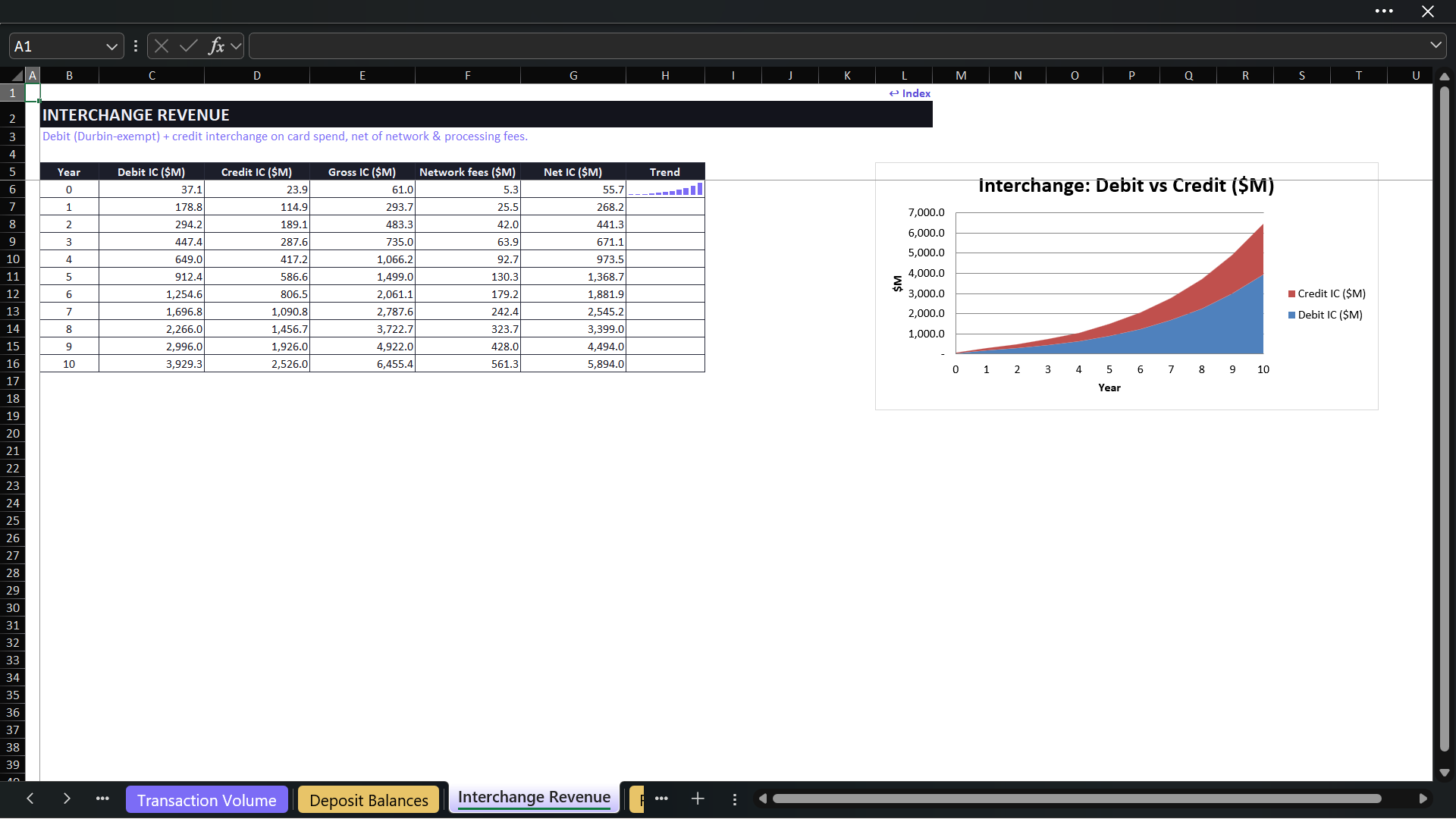
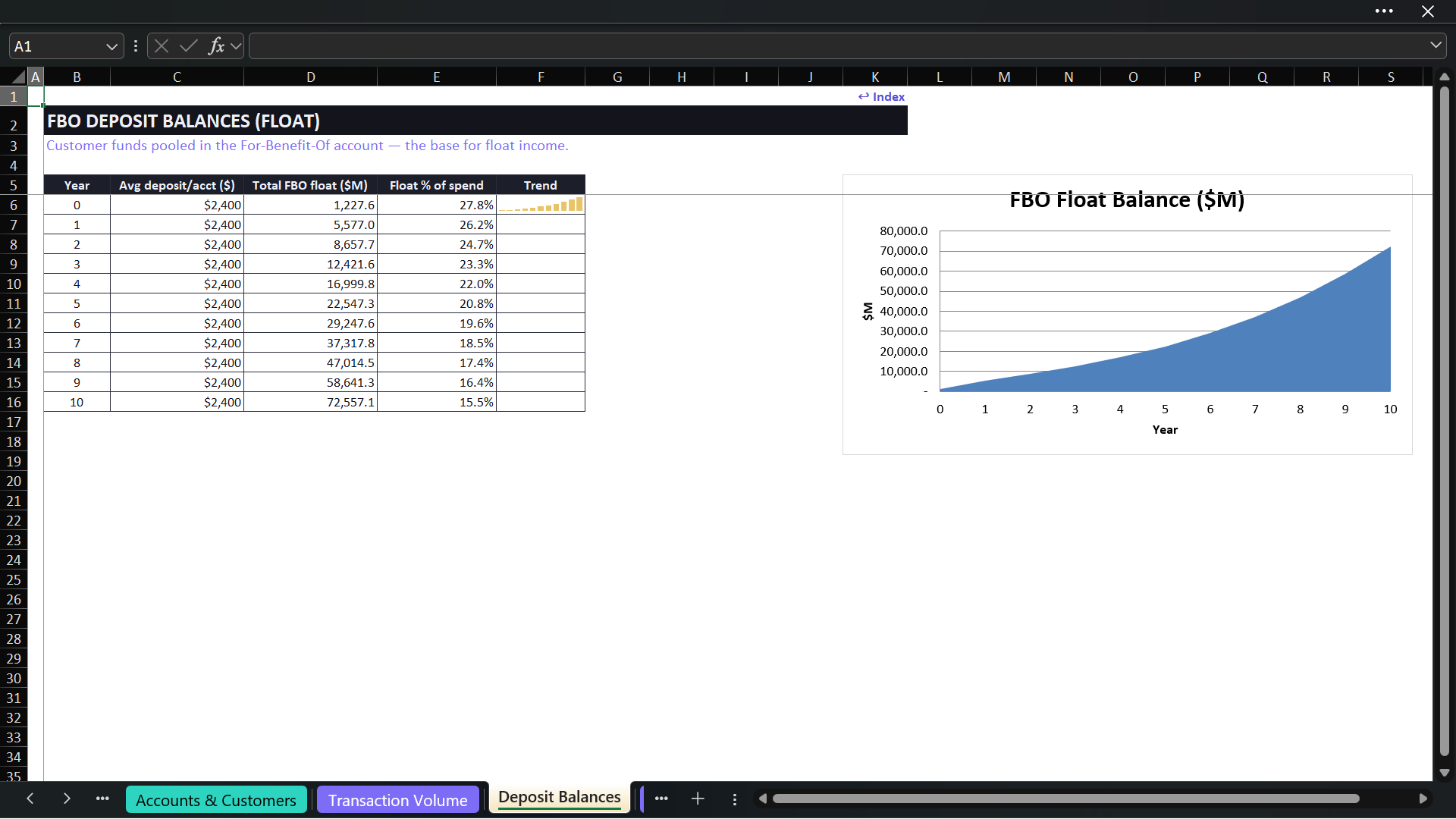
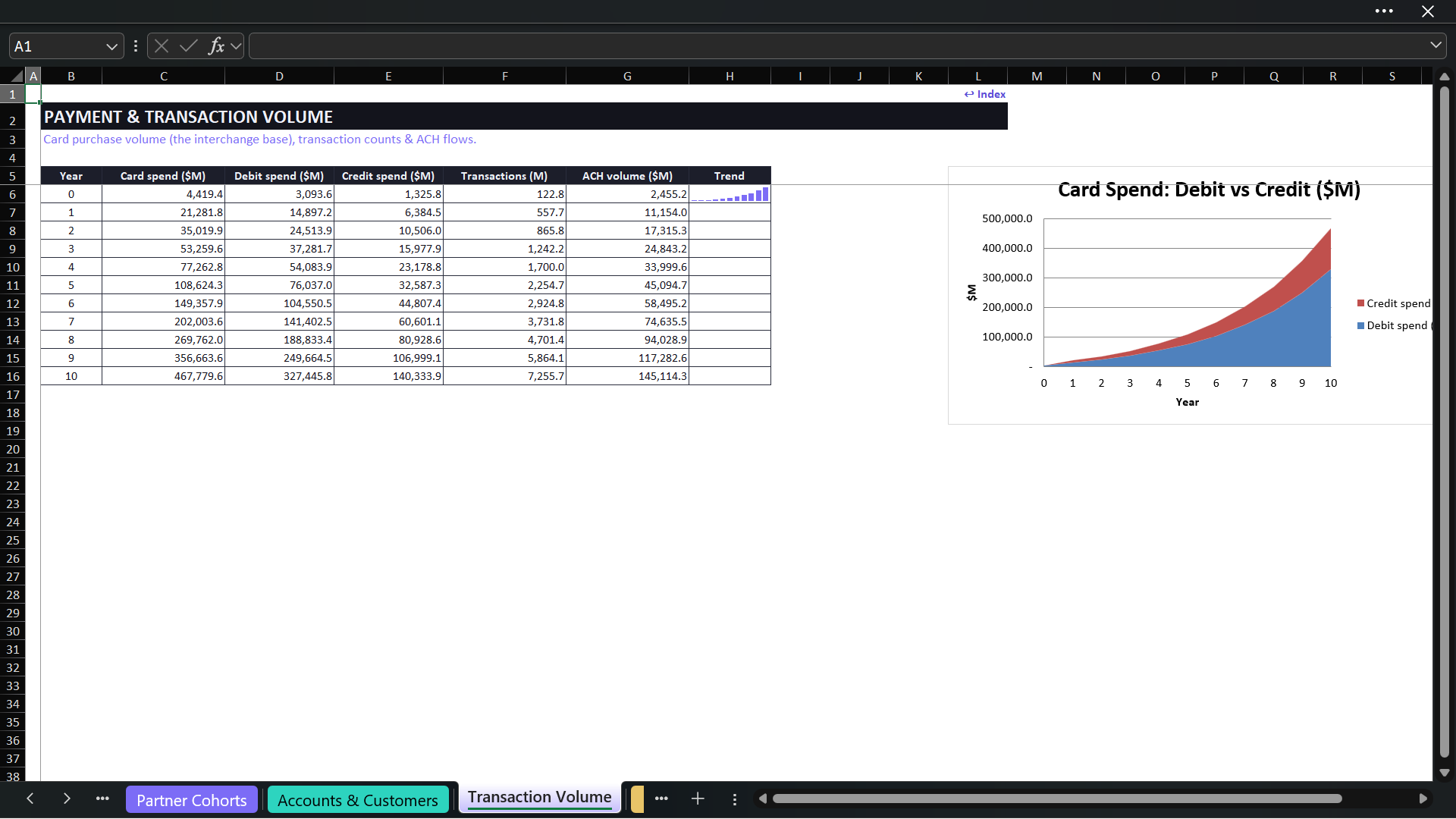
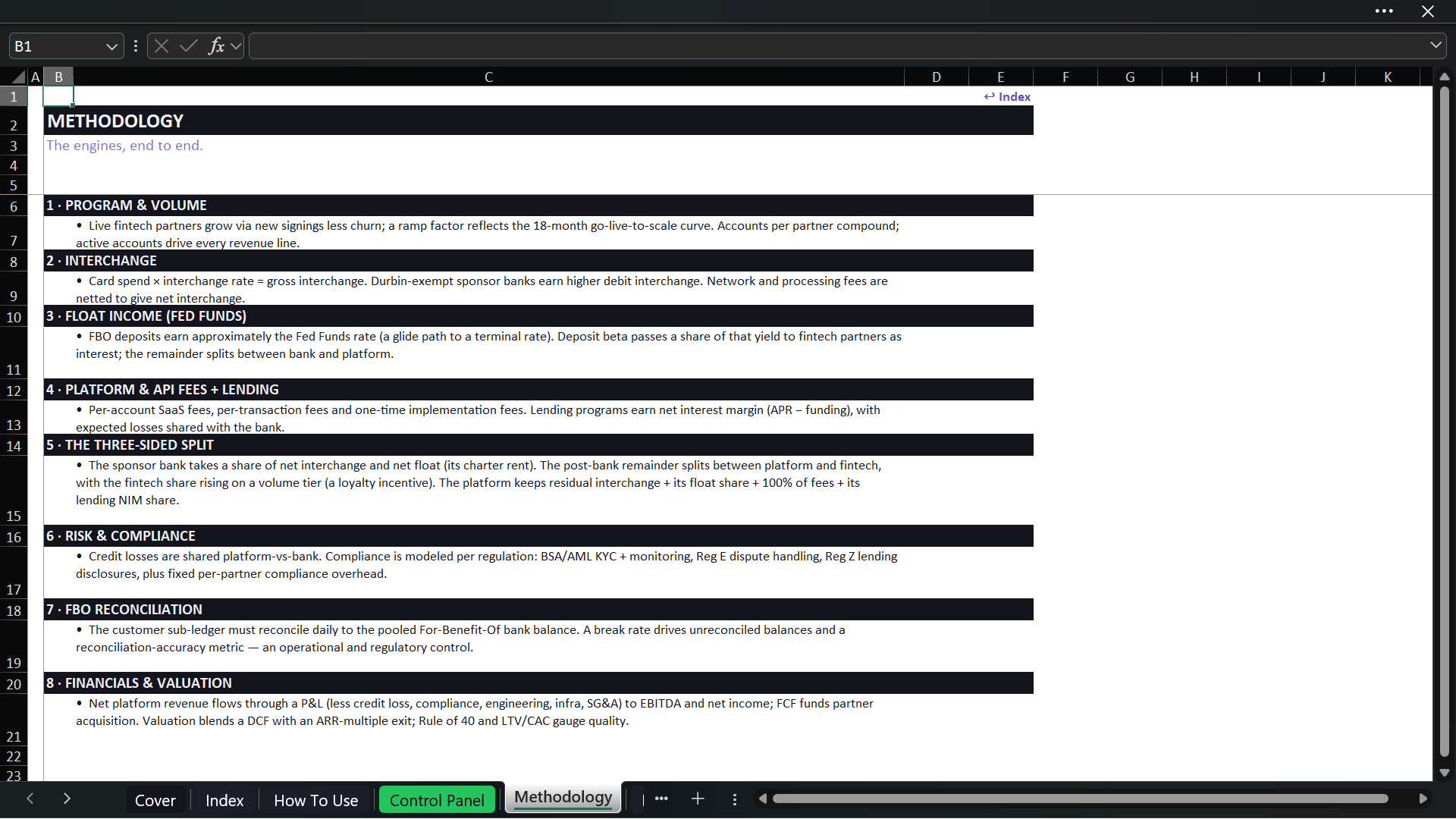
Analyze interchange, float income, API fees, implementation fees, and lending NIM.
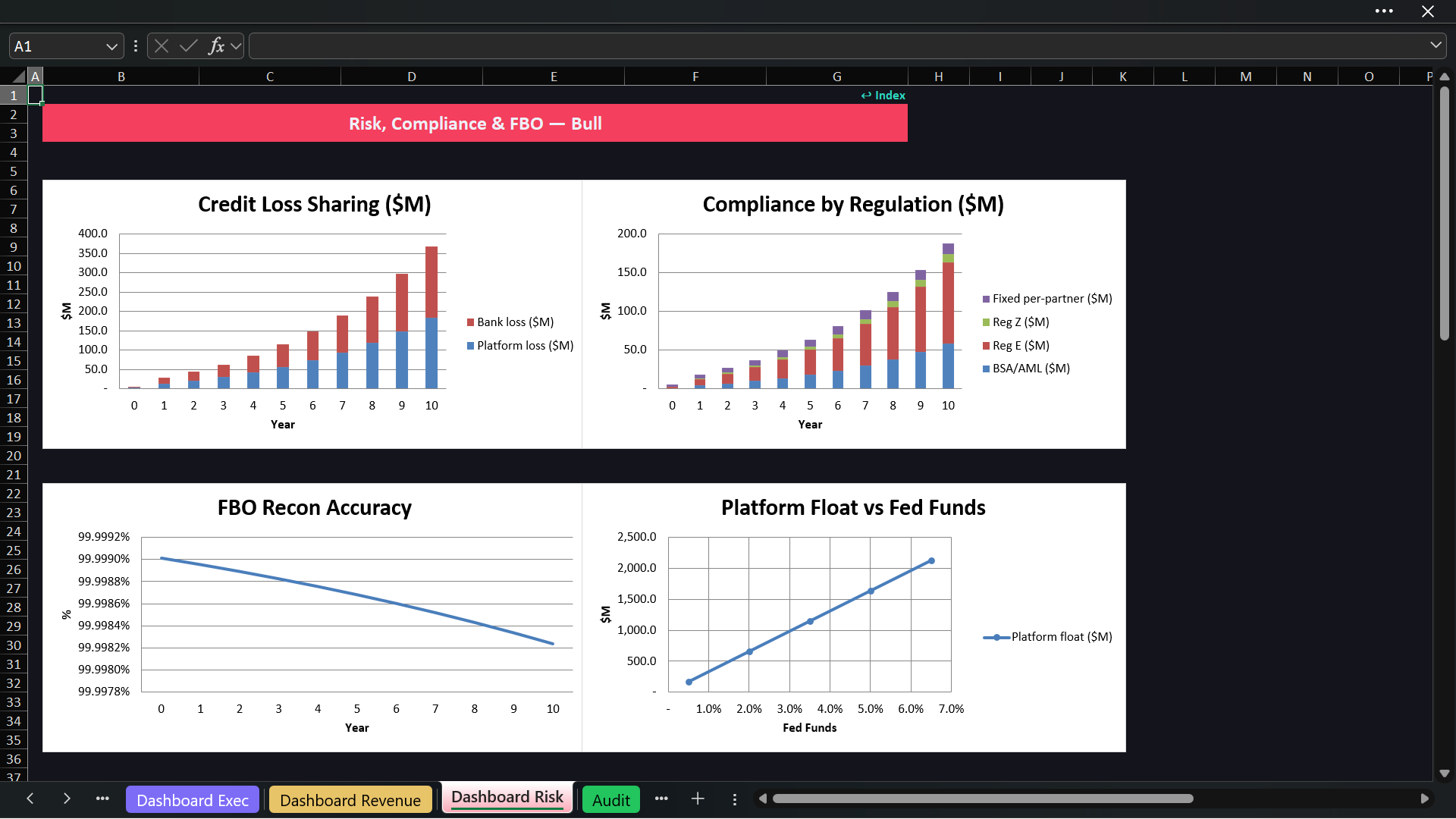
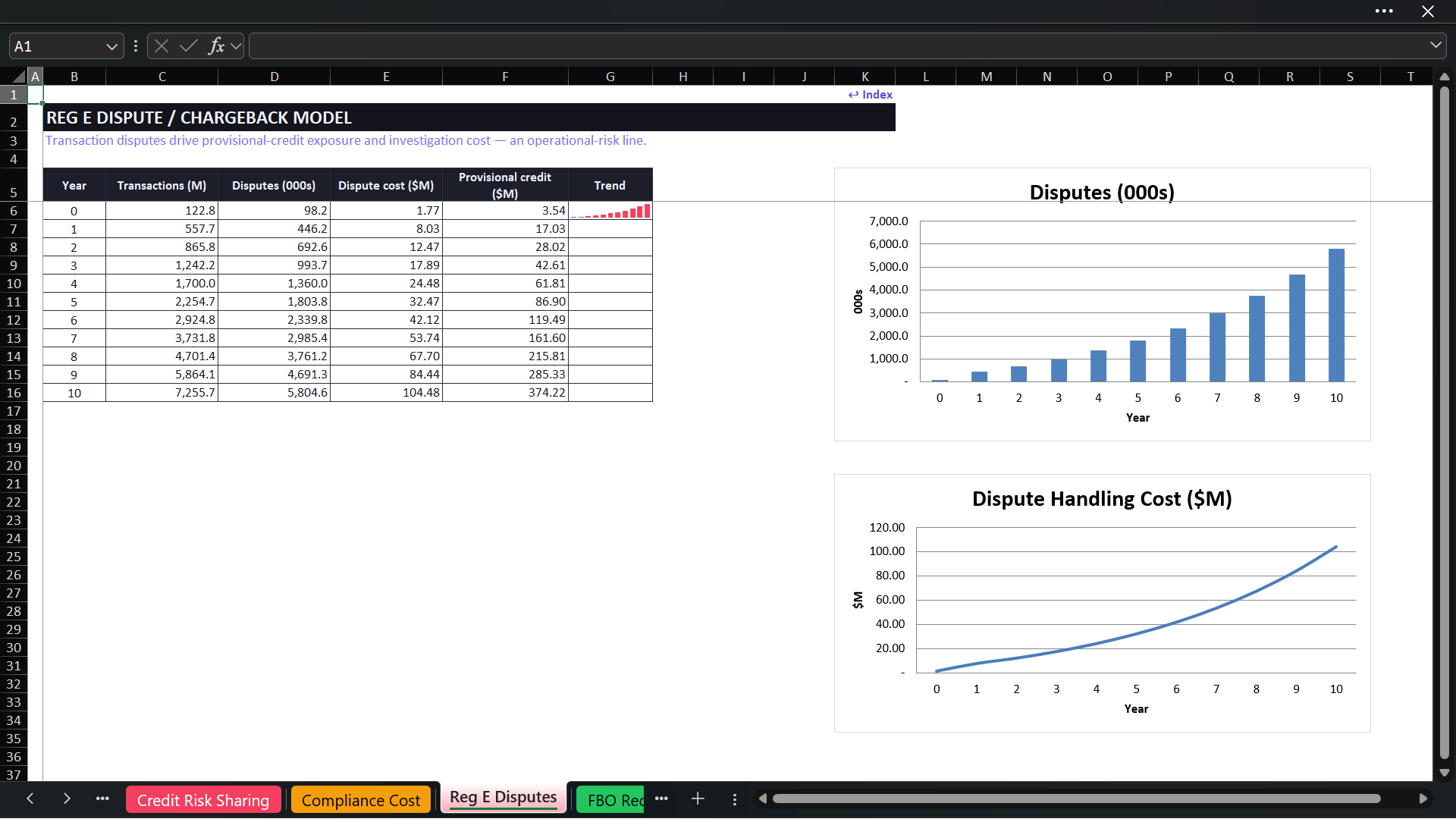
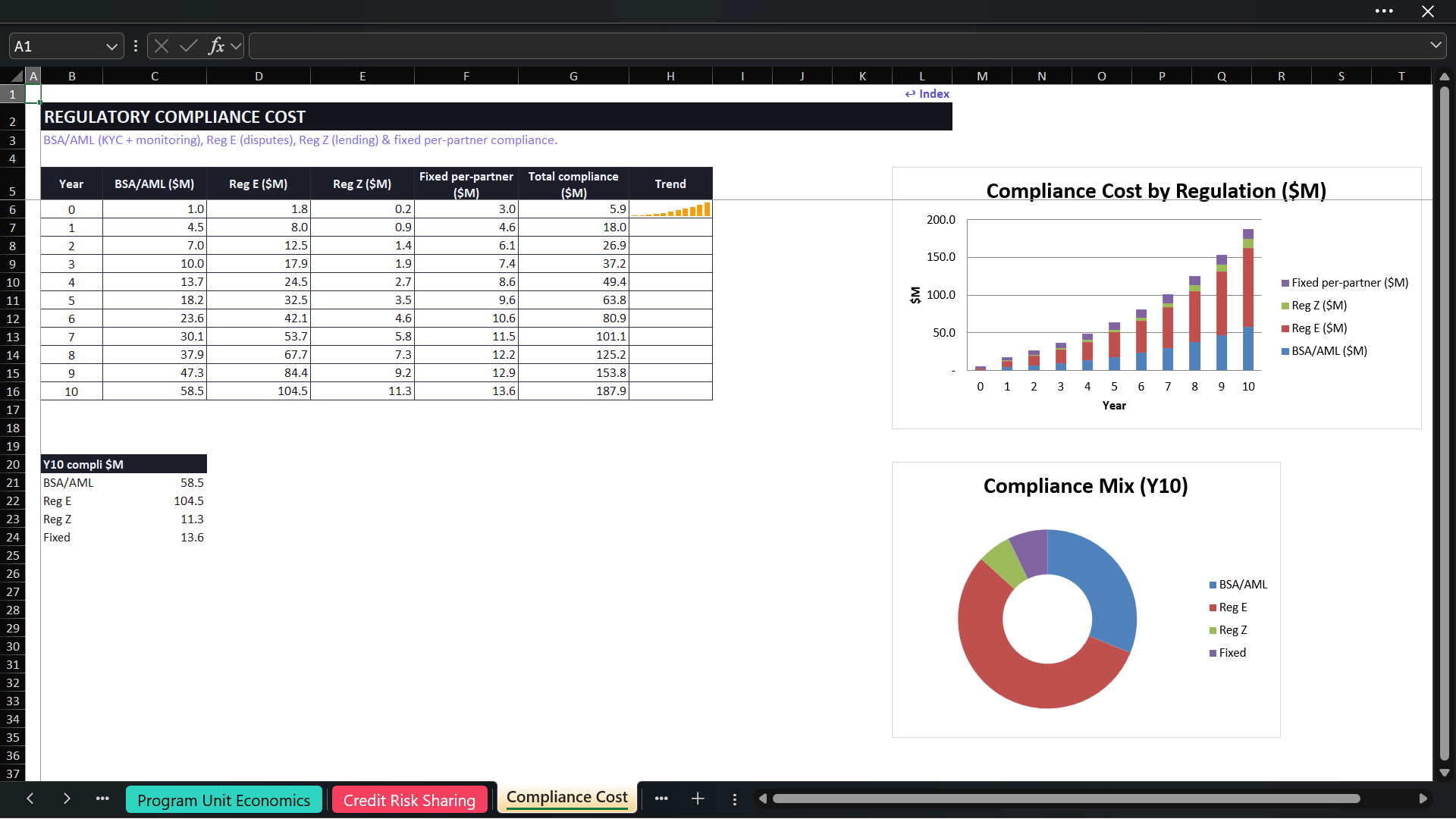
Estimate BSA/AML, Reg E, Reg Z, and fixed per-partner compliance cost.
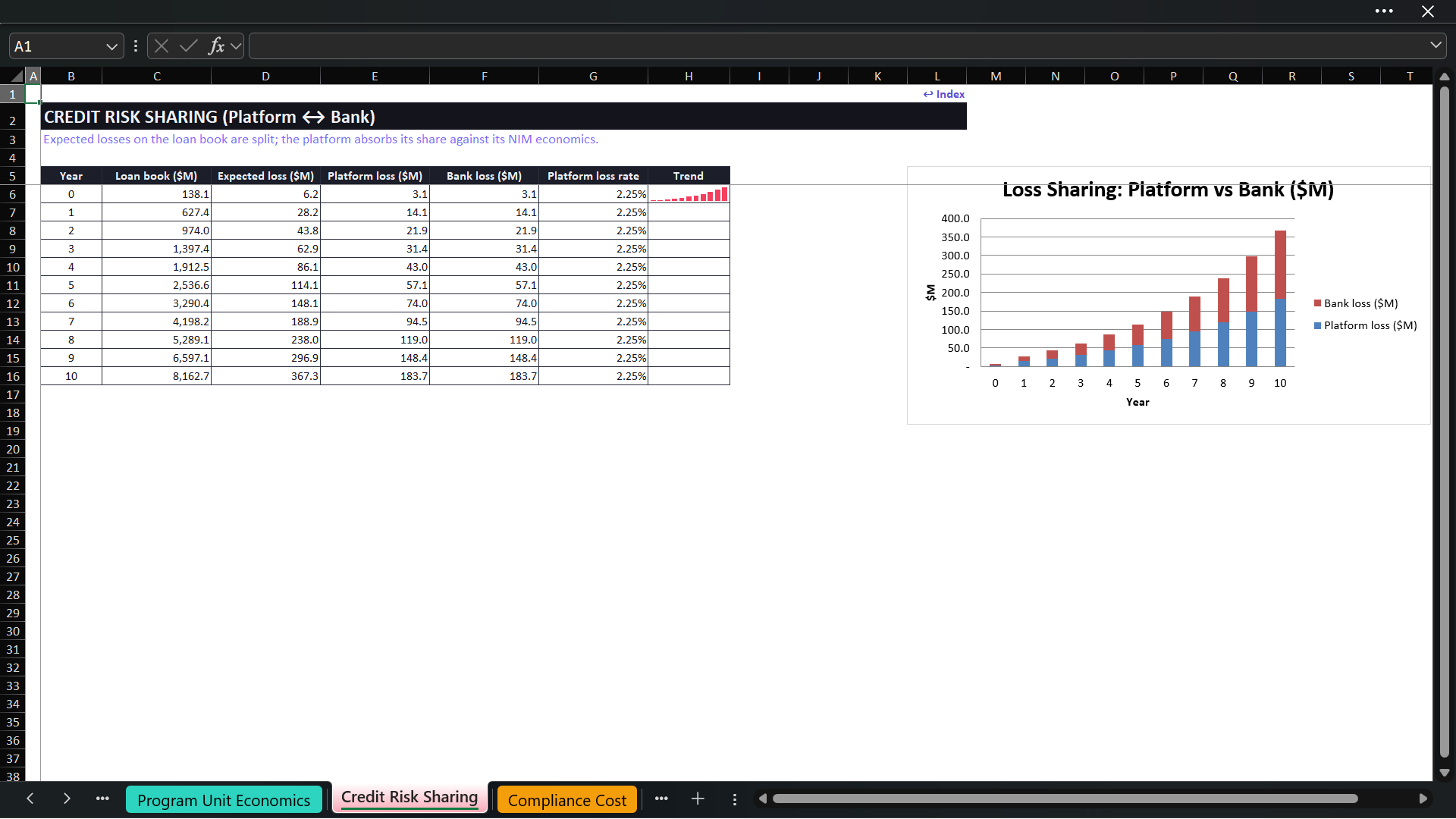
Model credit risk sharing between the BaaS platform and sponsor bank.
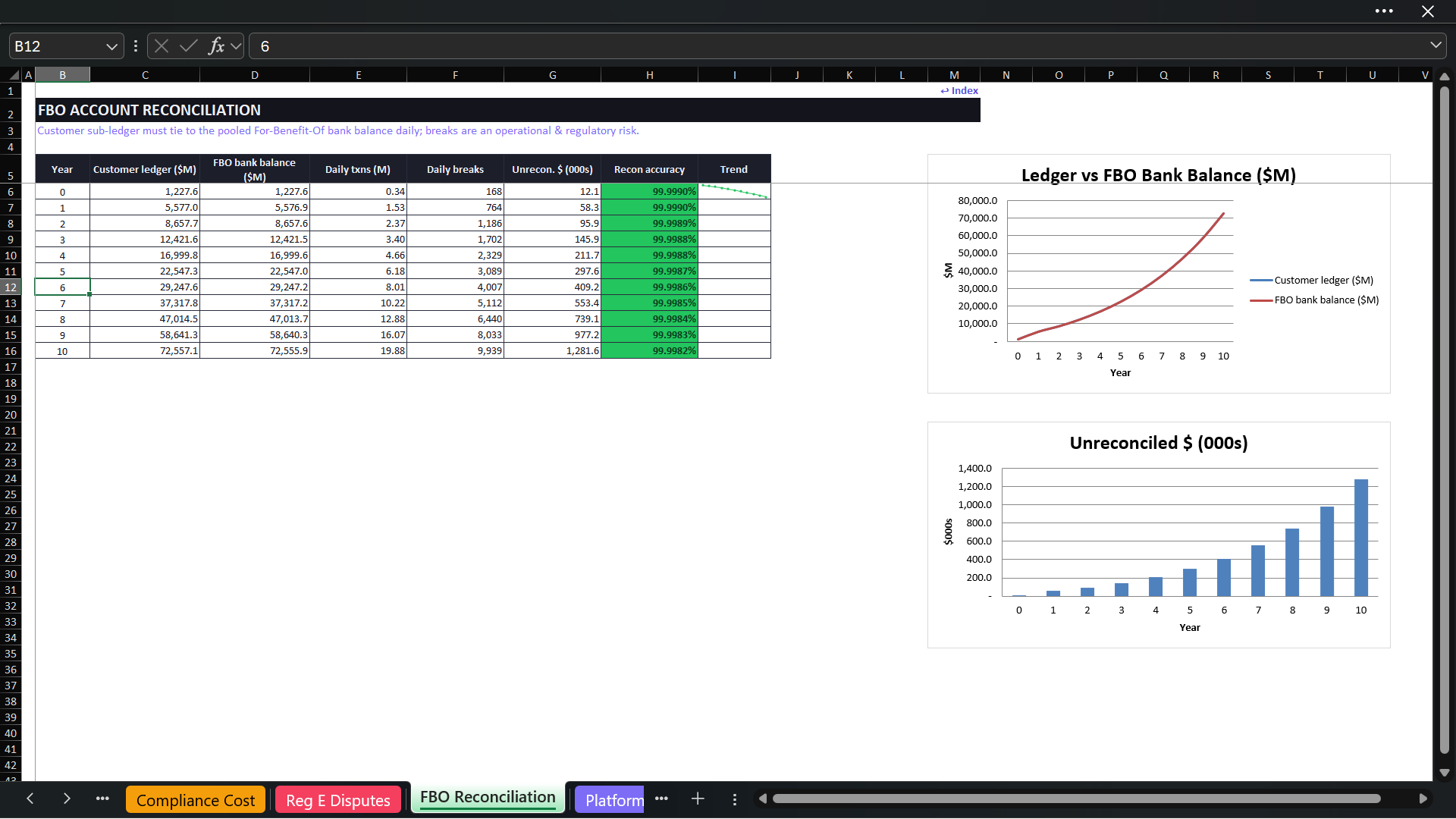
Evaluate FBO ledger reconciliation, daily breaks, unreconciled balances, and reconciliation accuracy.
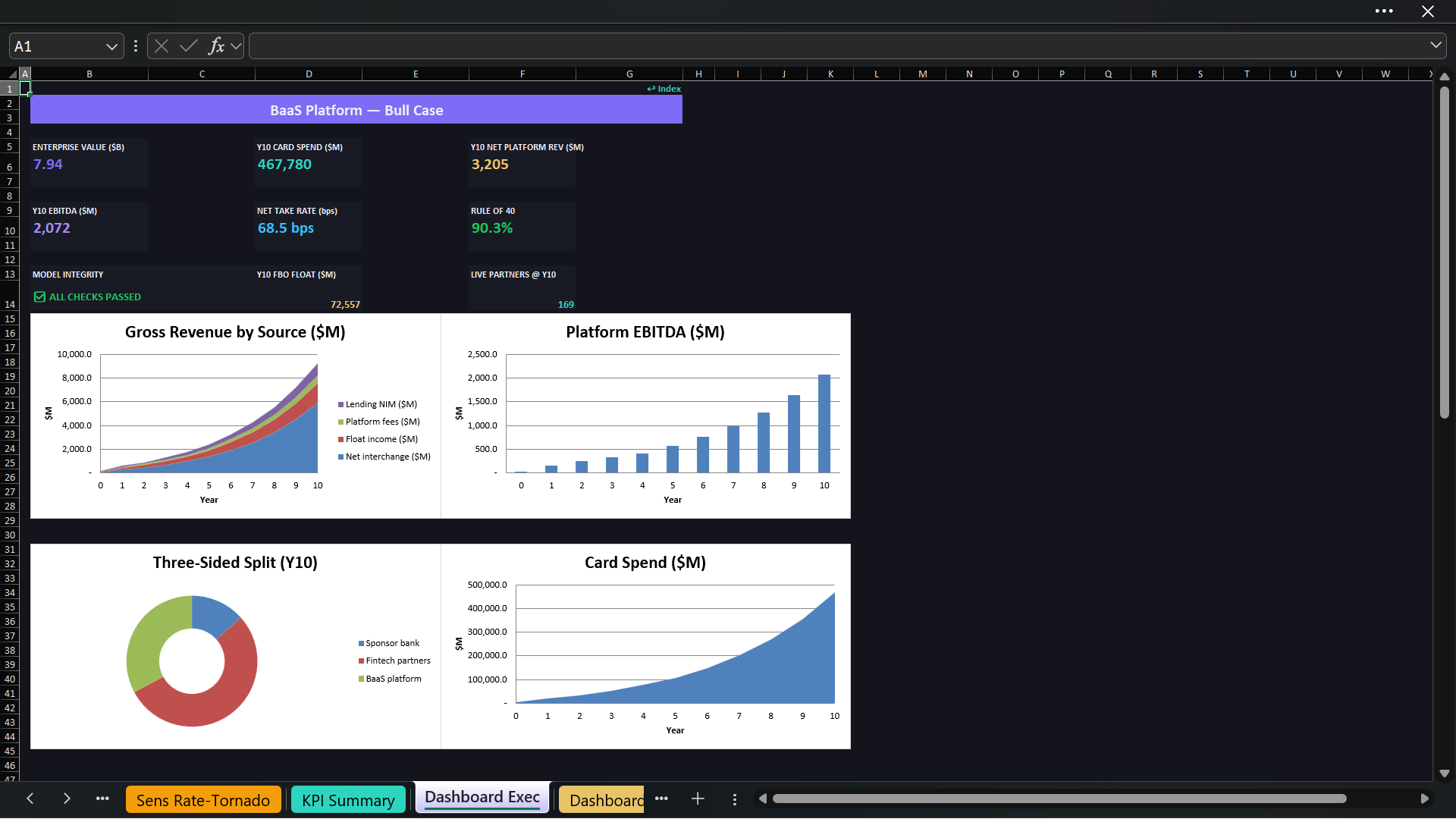
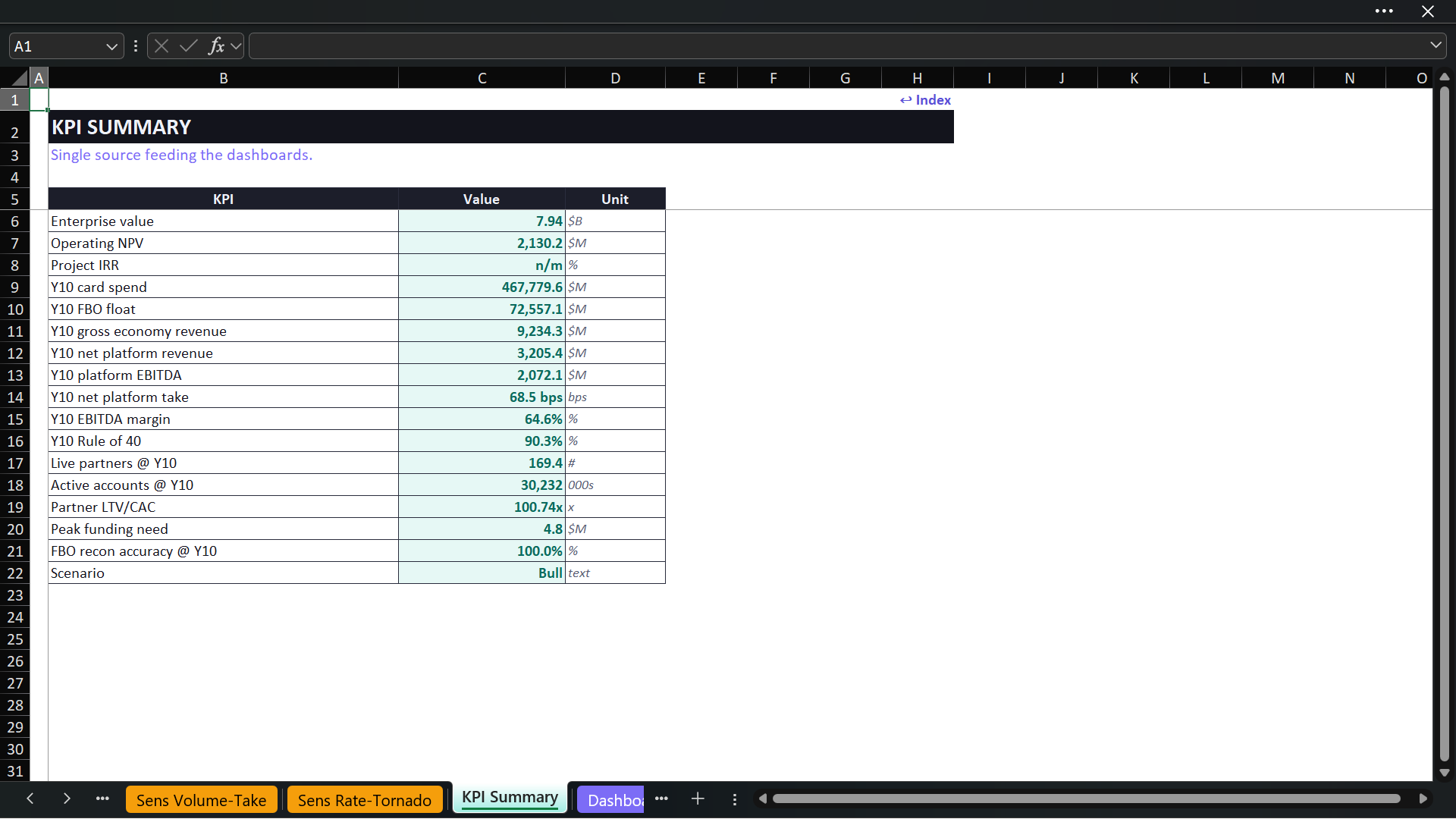
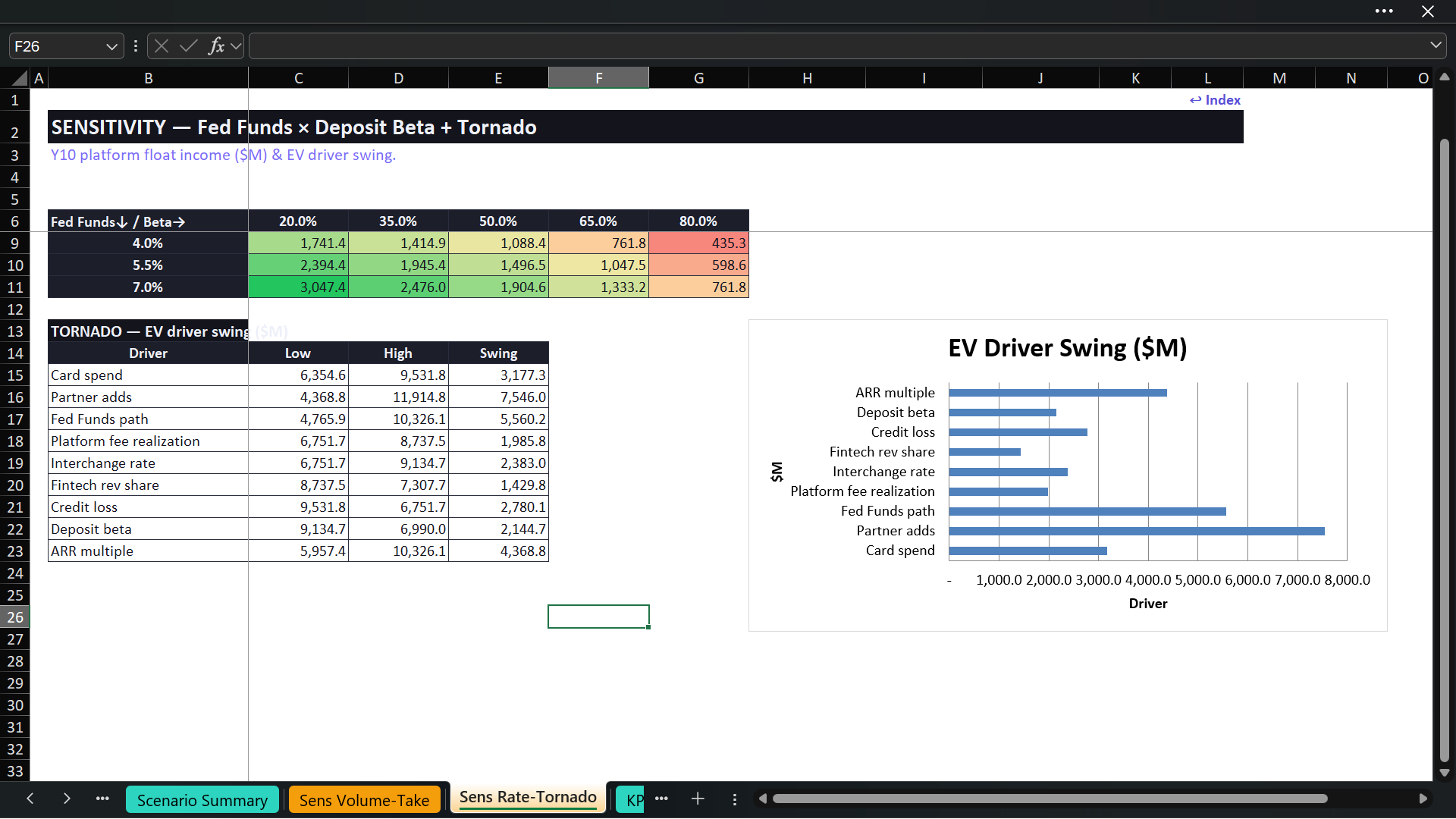
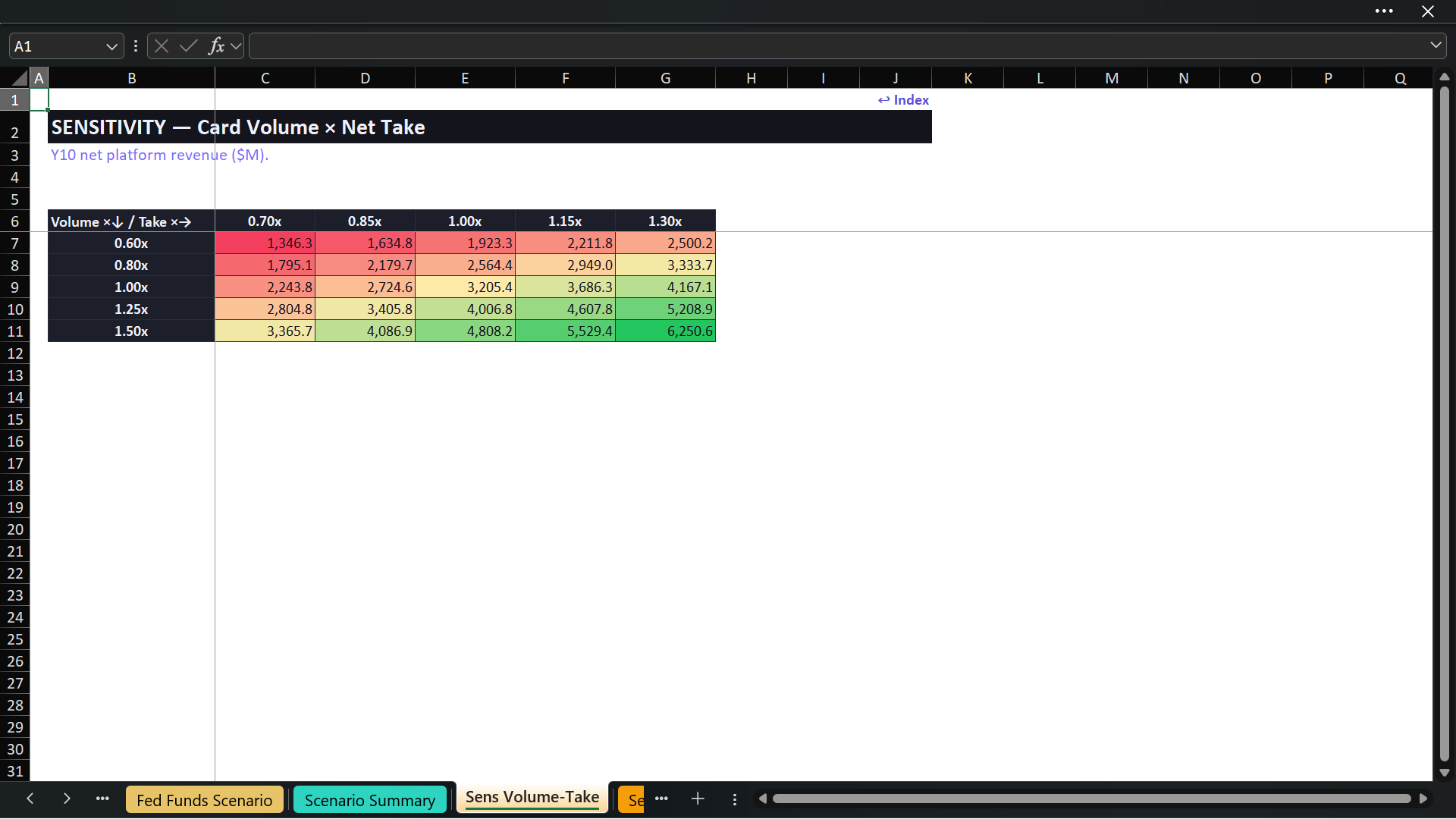
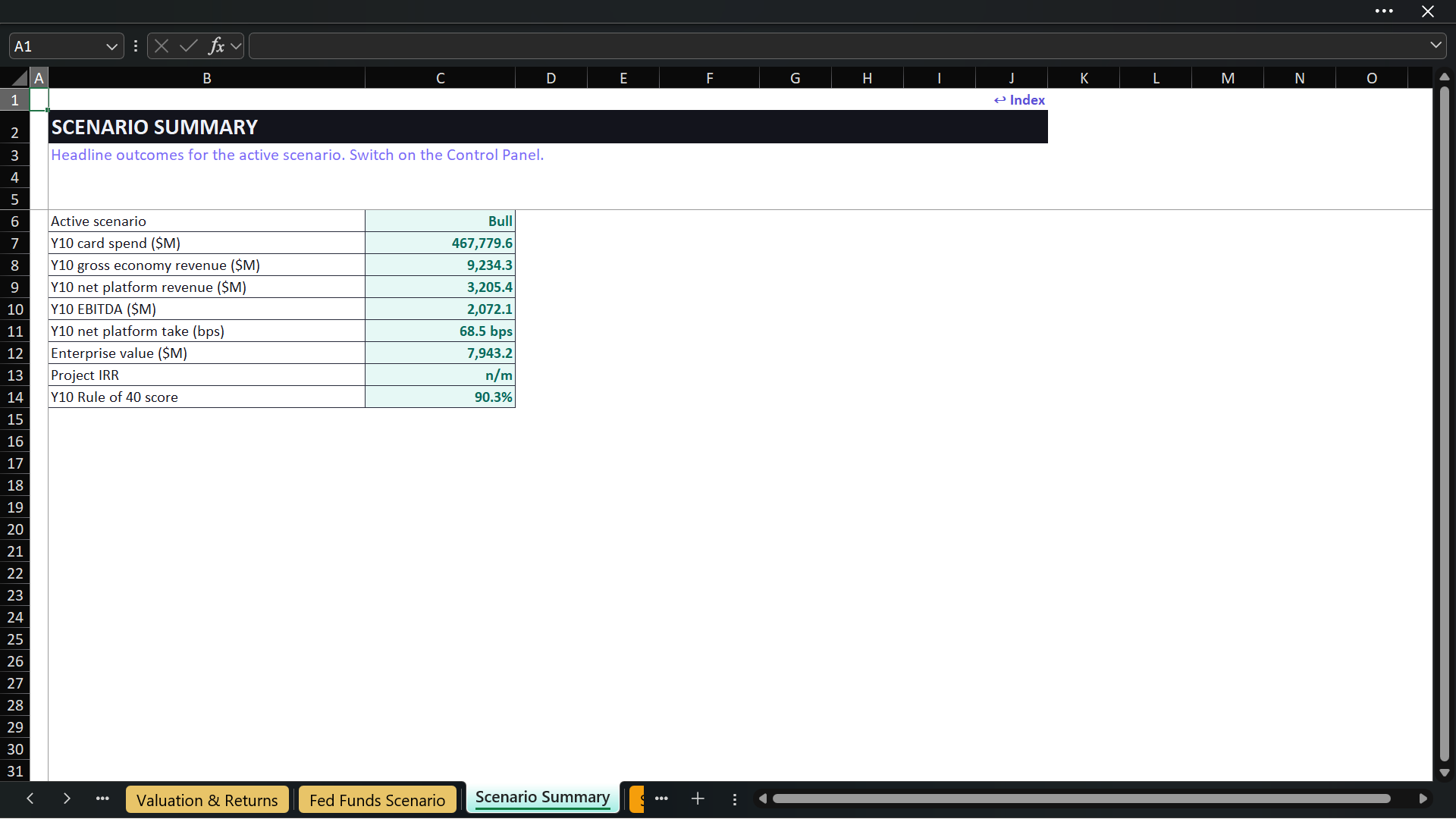
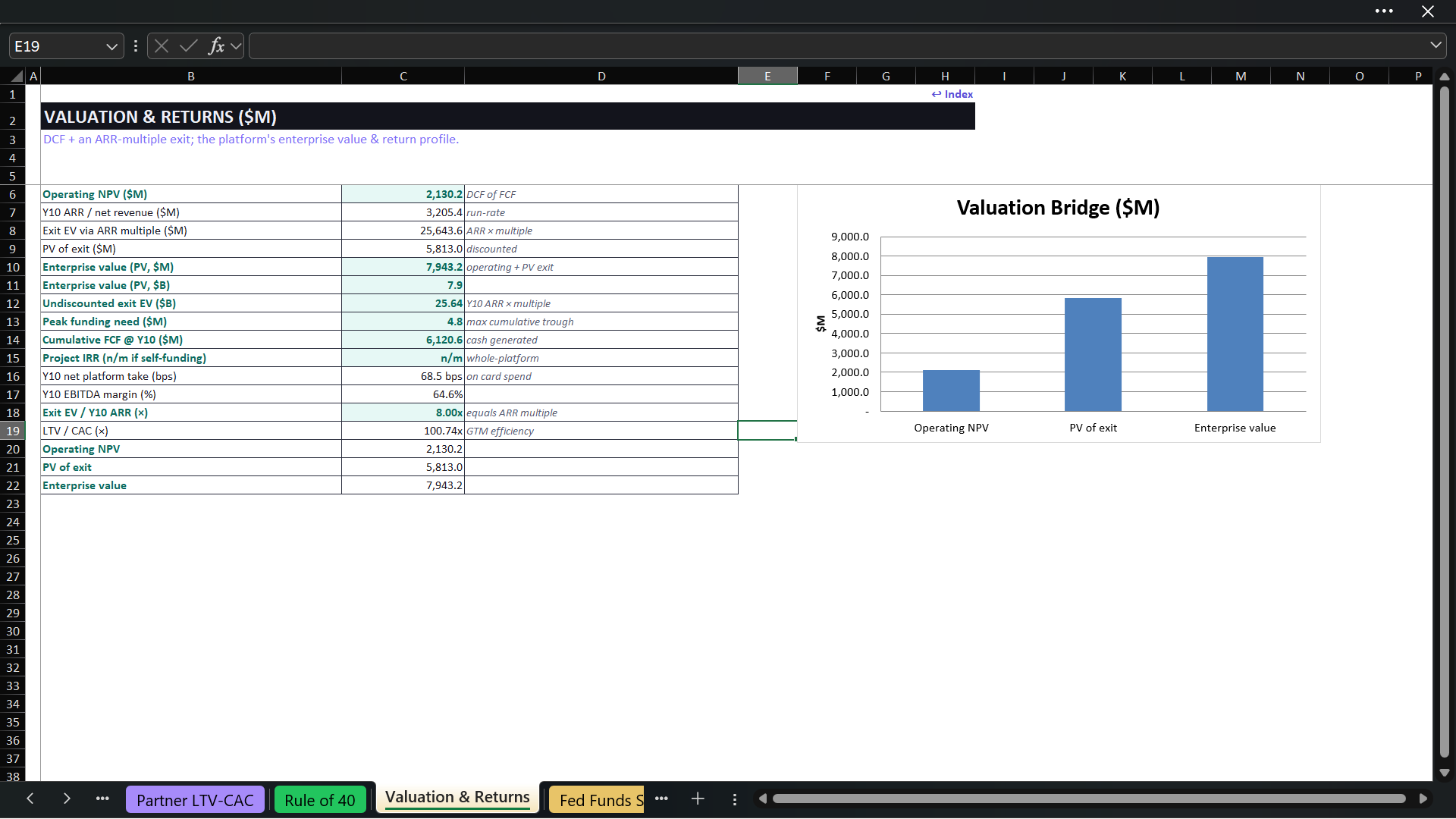
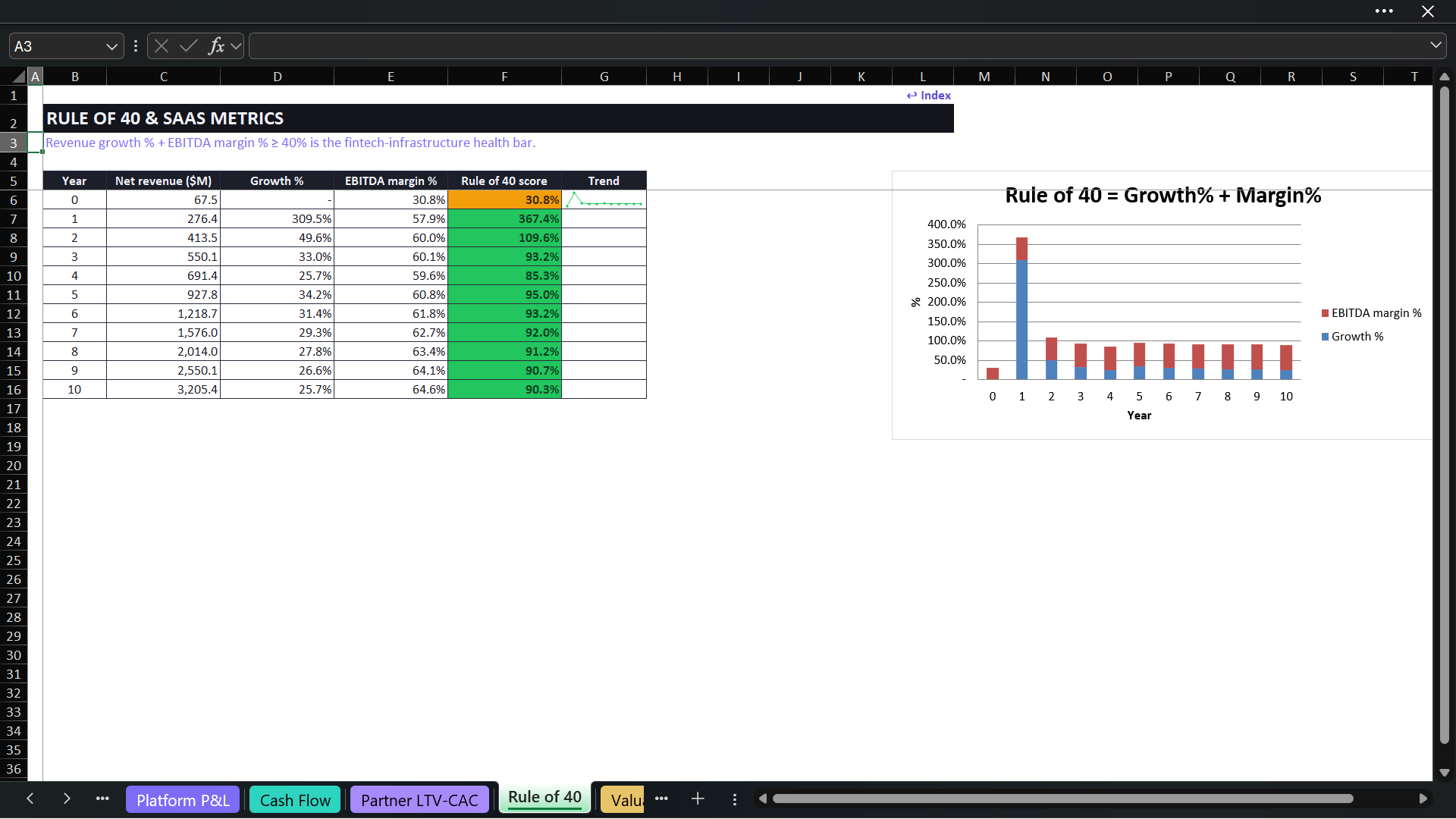
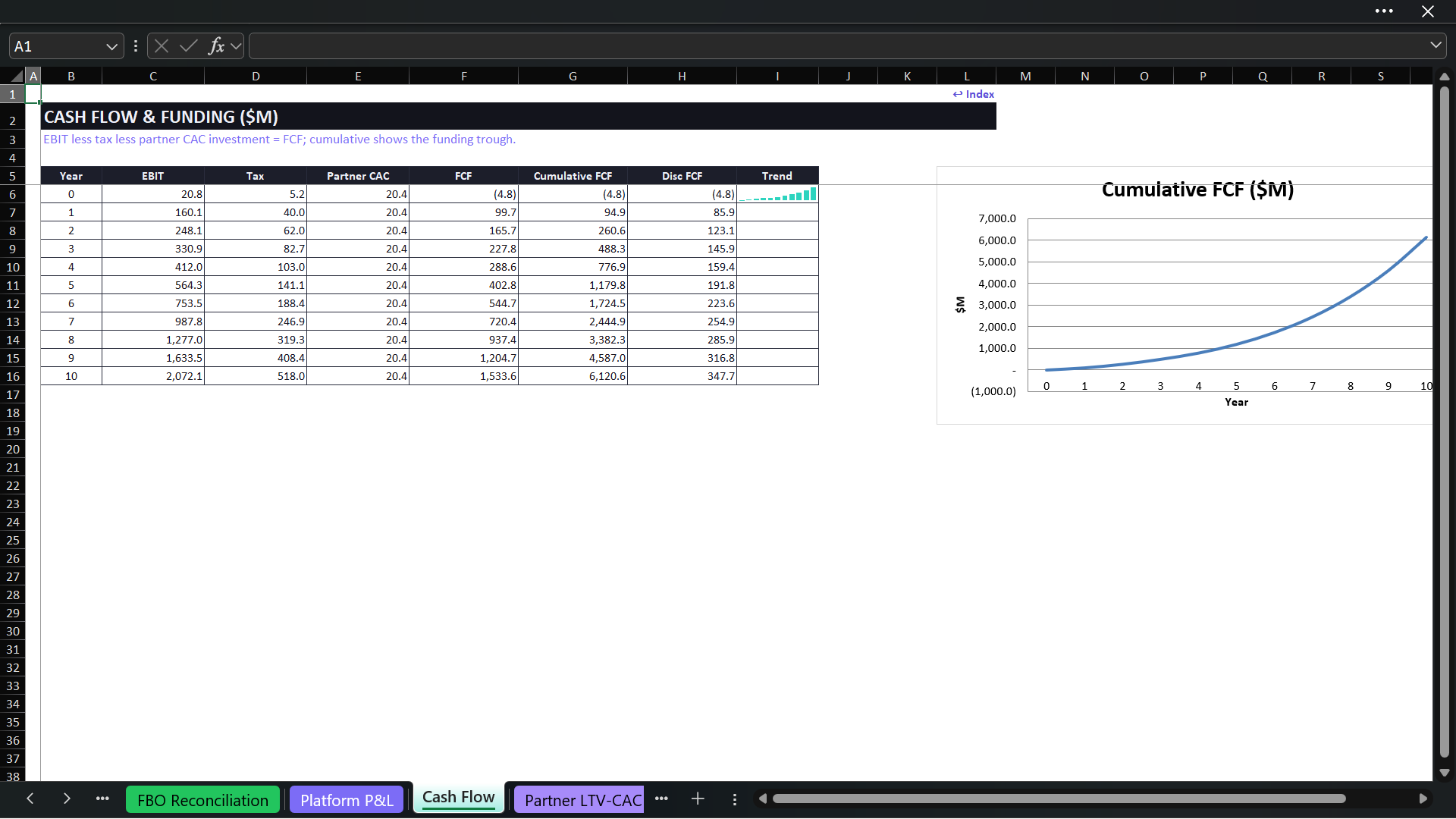
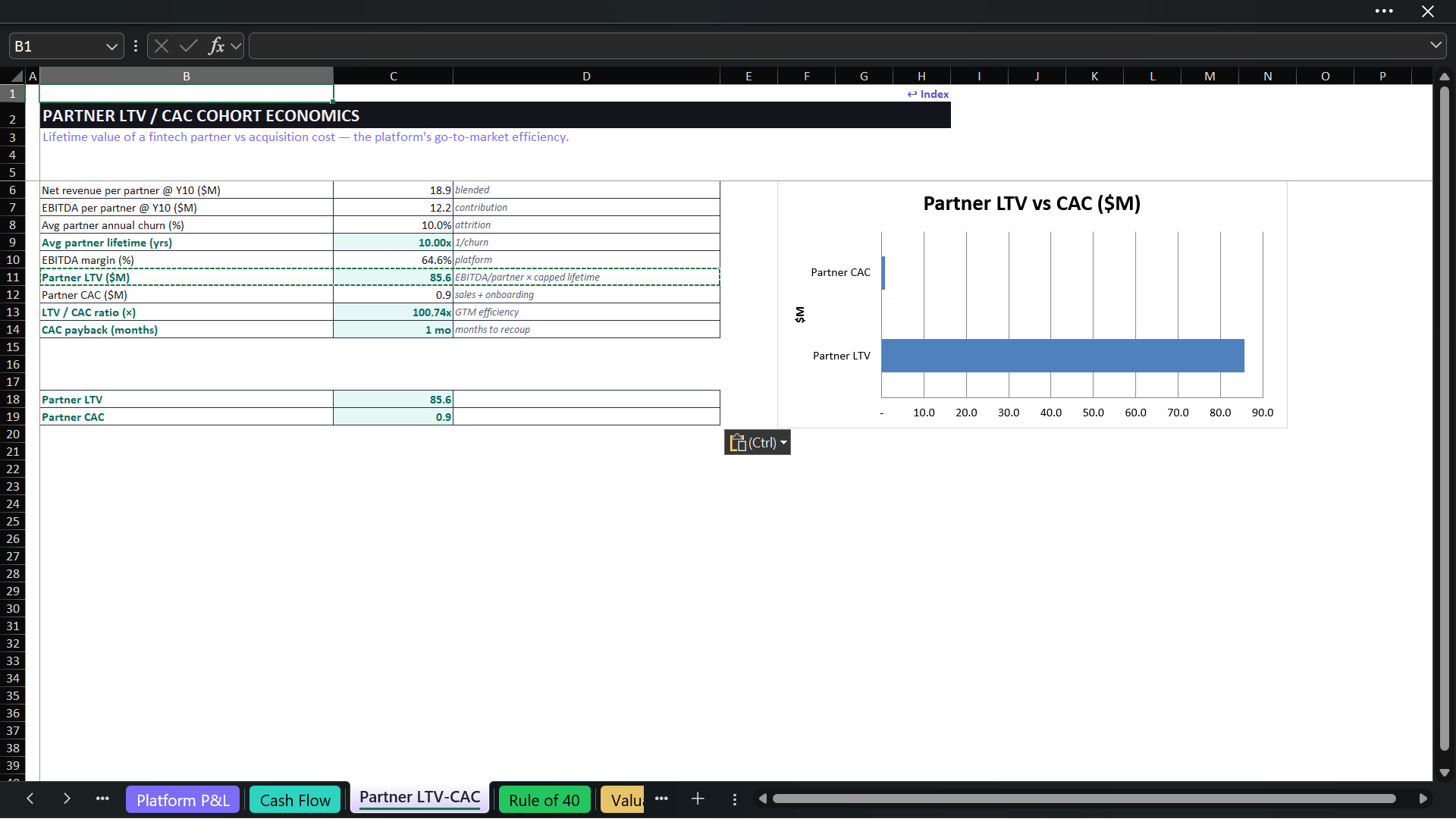
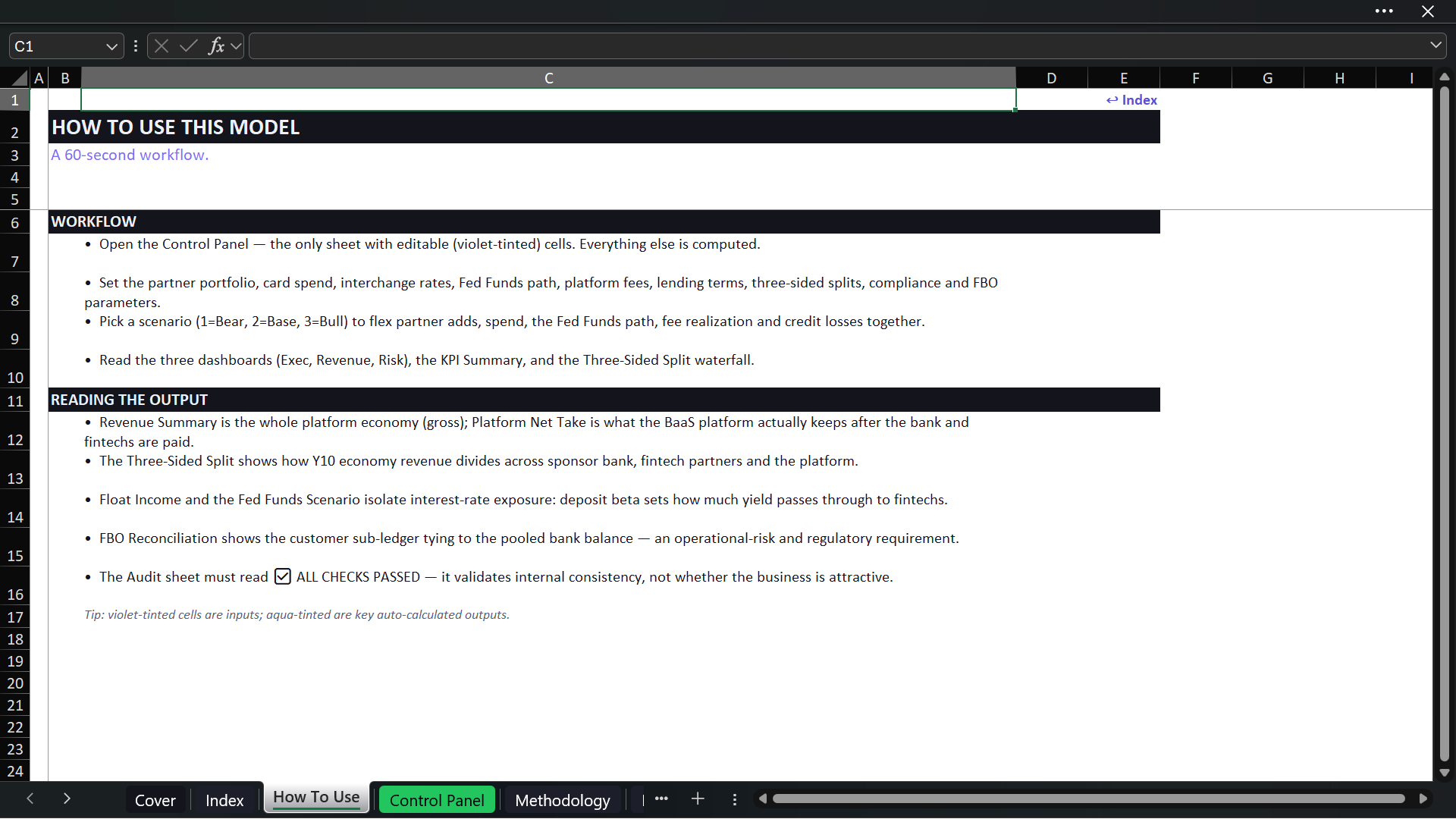
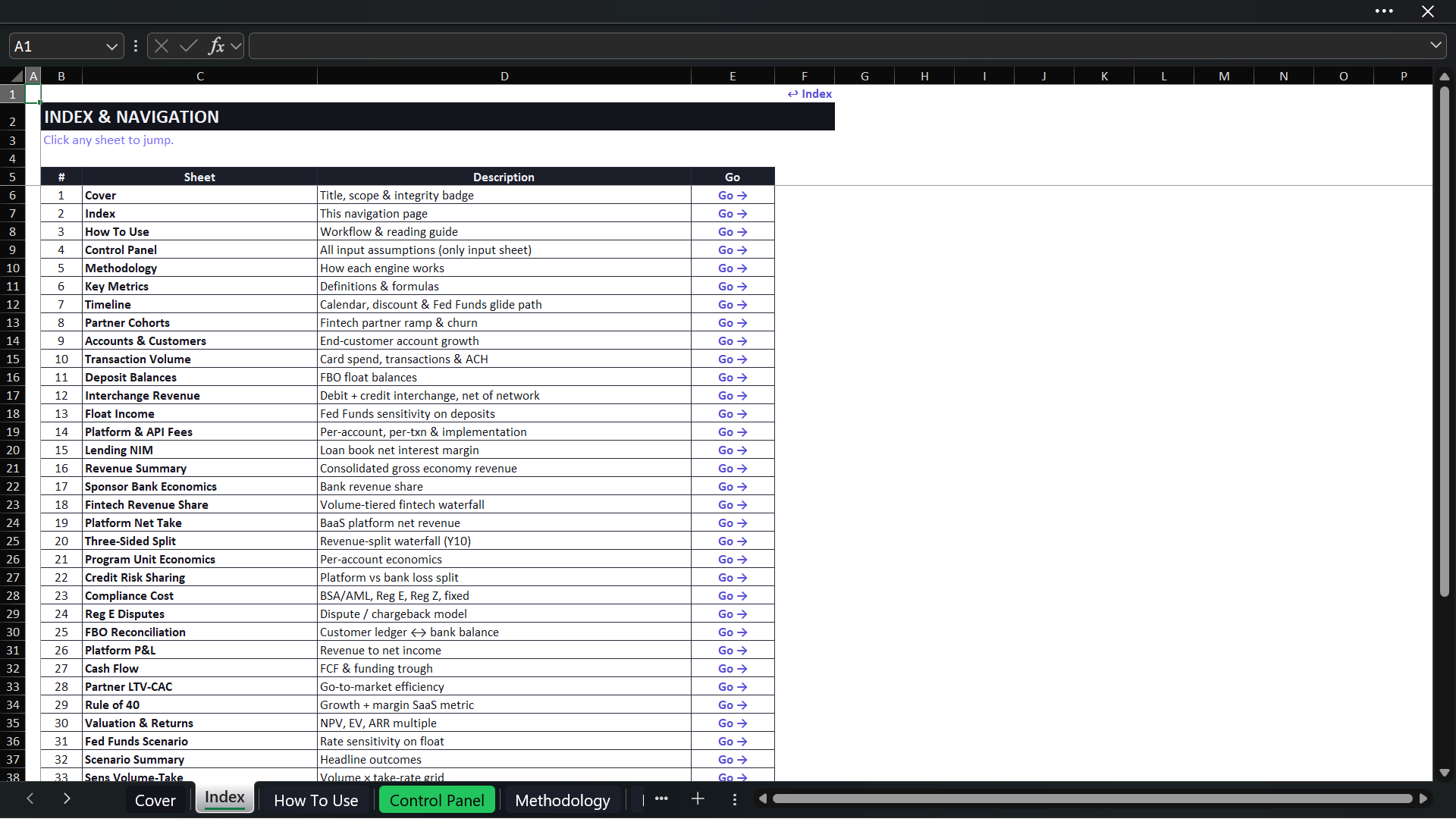
Produce dashboards, KPI outputs, scenario analysis, sensitivity analysis, cash flow, and valuation outputs.
You are analyzing a Banking-as-a-Service platform or embedded finance business.
You need to forecast a sponsor-bank partnership model.
You want to model card issuing, DDA/account products, lending programs, or API-led fintech infrastructure.
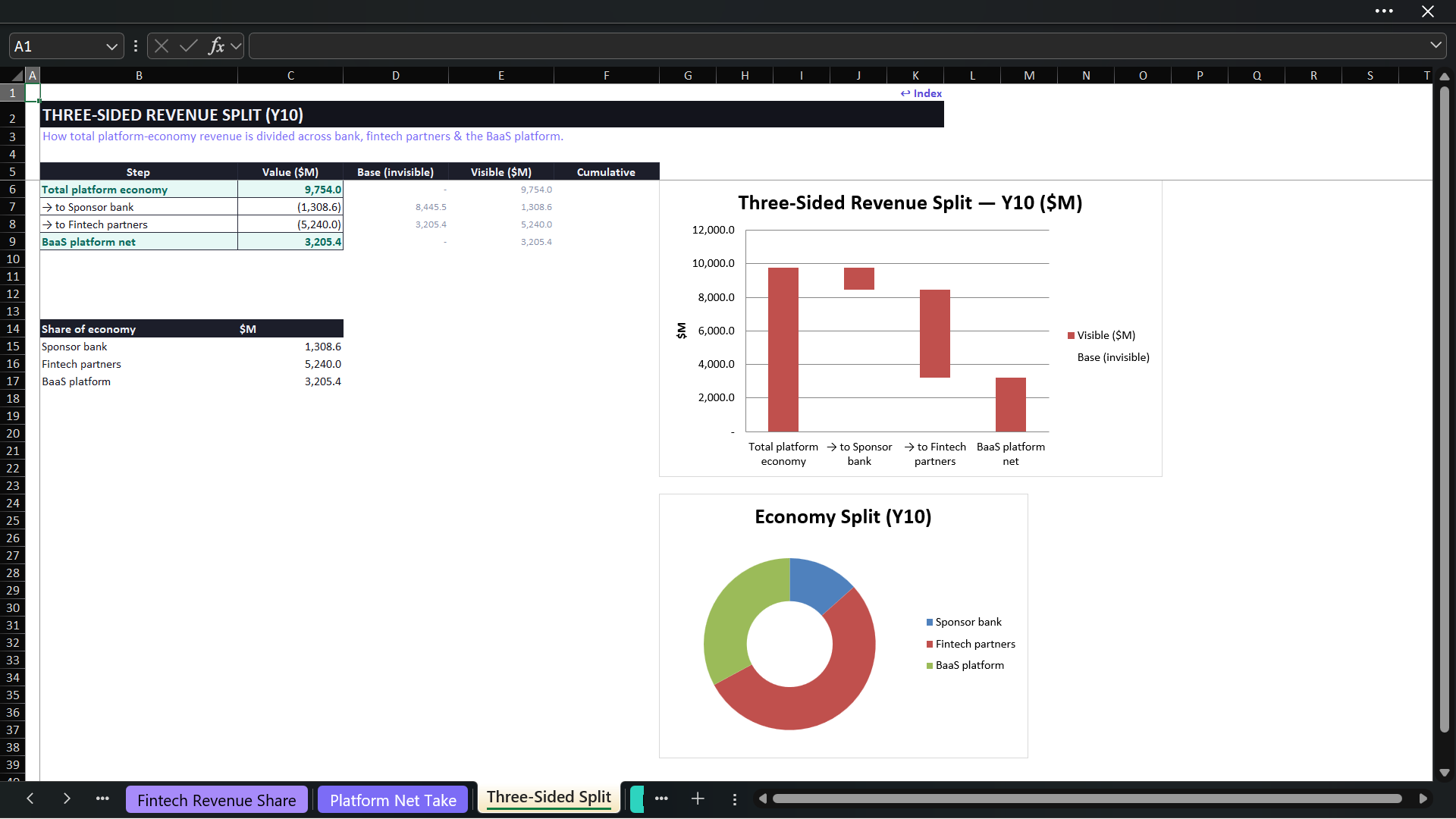
You need a revenue waterfall that separates sponsor bank share, fintech partner share, and platform economics.
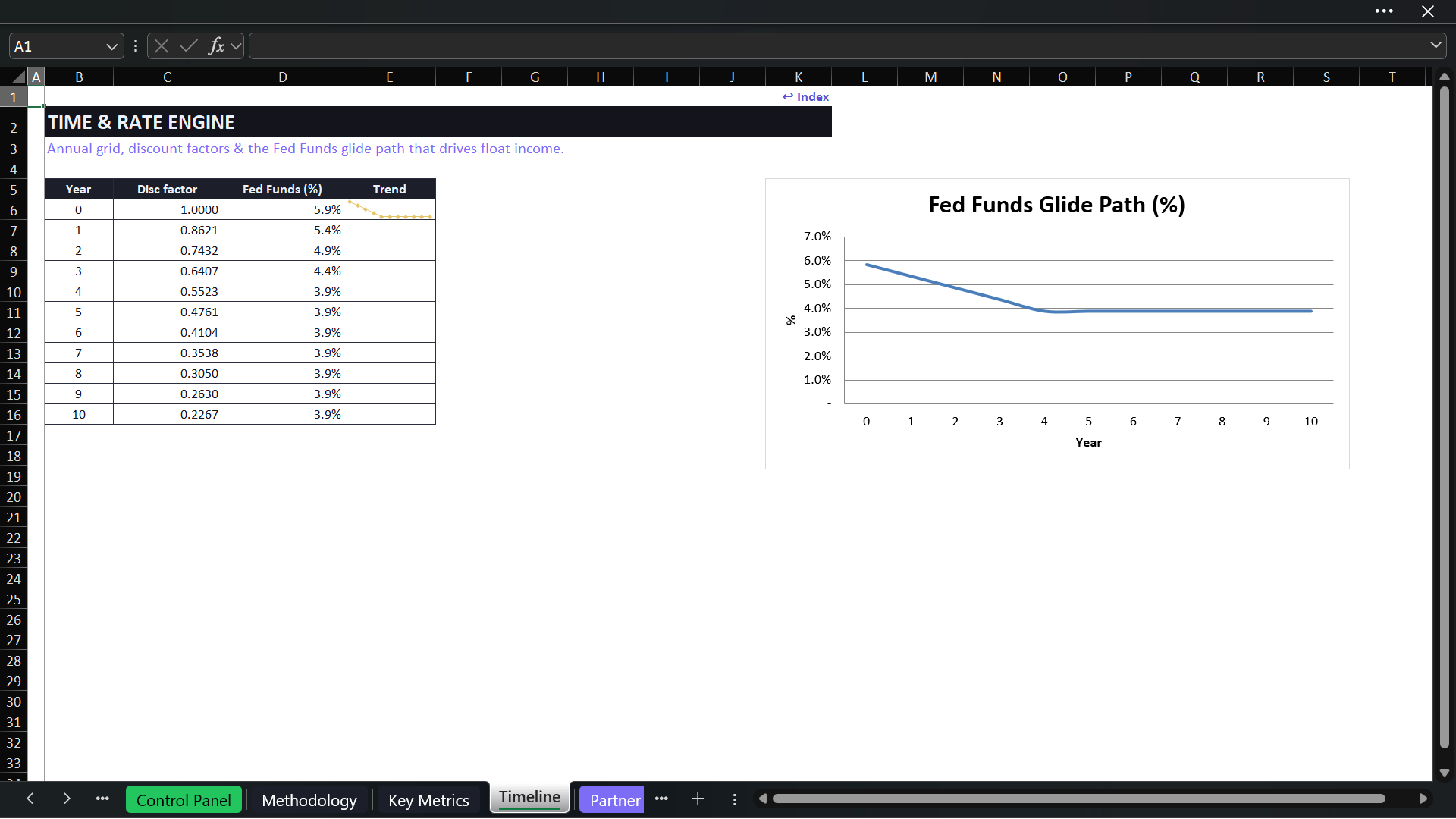
You want to evaluate float income sensitivity to Fed Funds rates and deposit beta.
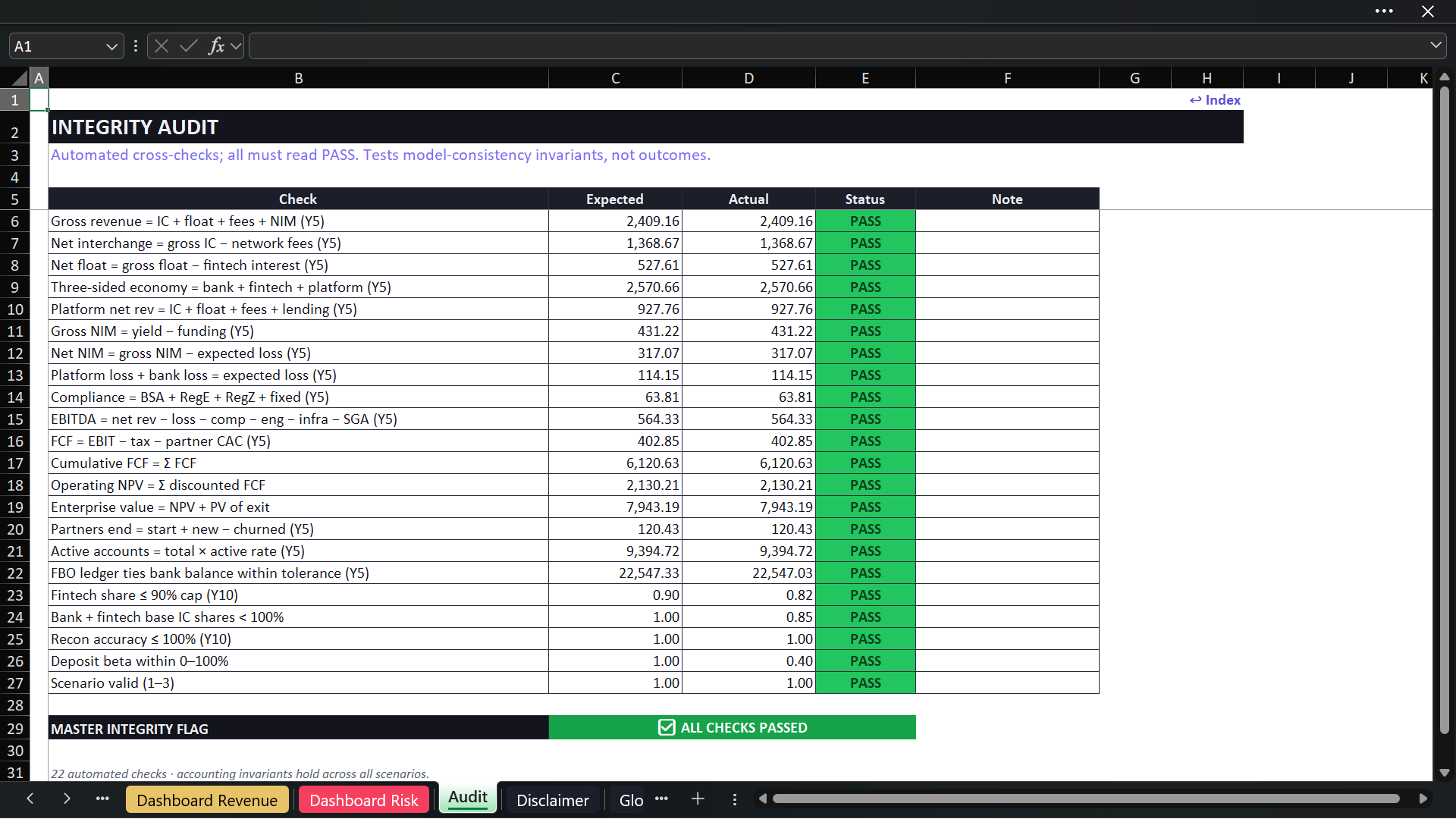
You want to include compliance costs, credit losses, and FBO reconciliation in the same model.
You are preparing investor discussions, internal strategy, startup planning, M&A screening, or consulting analysis.
You need a simple one-page startup calculator with minimal assumptions.
You are modeling a traditional commercial bank with branch deposits, regulatory capital, full banking balance sheet, and Basel capital schedules.
You are modeling only a consumer lending company without partner, sponsor bank, interchange, or FBO mechanics.
You require legal, banking, regulatory, tax, or accounting advice.
You need real market data, proprietary sponsor bank contracts, or actual customer ledger data already embedded in the workbook.
You want a monthly operating model instead of a 10-year annual strategic model.