





EU CBAM Importer Cost, Pricing & Supplier Strategy Model
Originally published: 31/08/2026 08:22
Publication number: ELQ-15963-1
View all versions & Certificate
certified

EU CBAM Importer Cost, Pricing & Supplier Strategy Model

Excel model for EU CBAM importer costs, cash timing, supplier switching, pricing pass-through, EBITDA impact, scenarios, sensitivities, and dashboards.

Description

EU CBAM Importer Cost, Pricing & Supplier Strategy ModelOverview

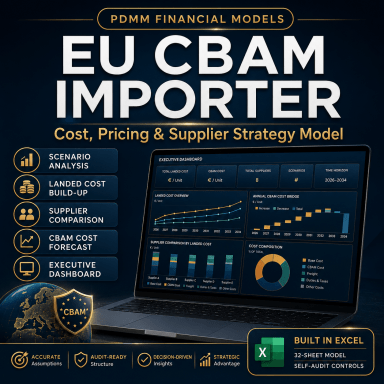
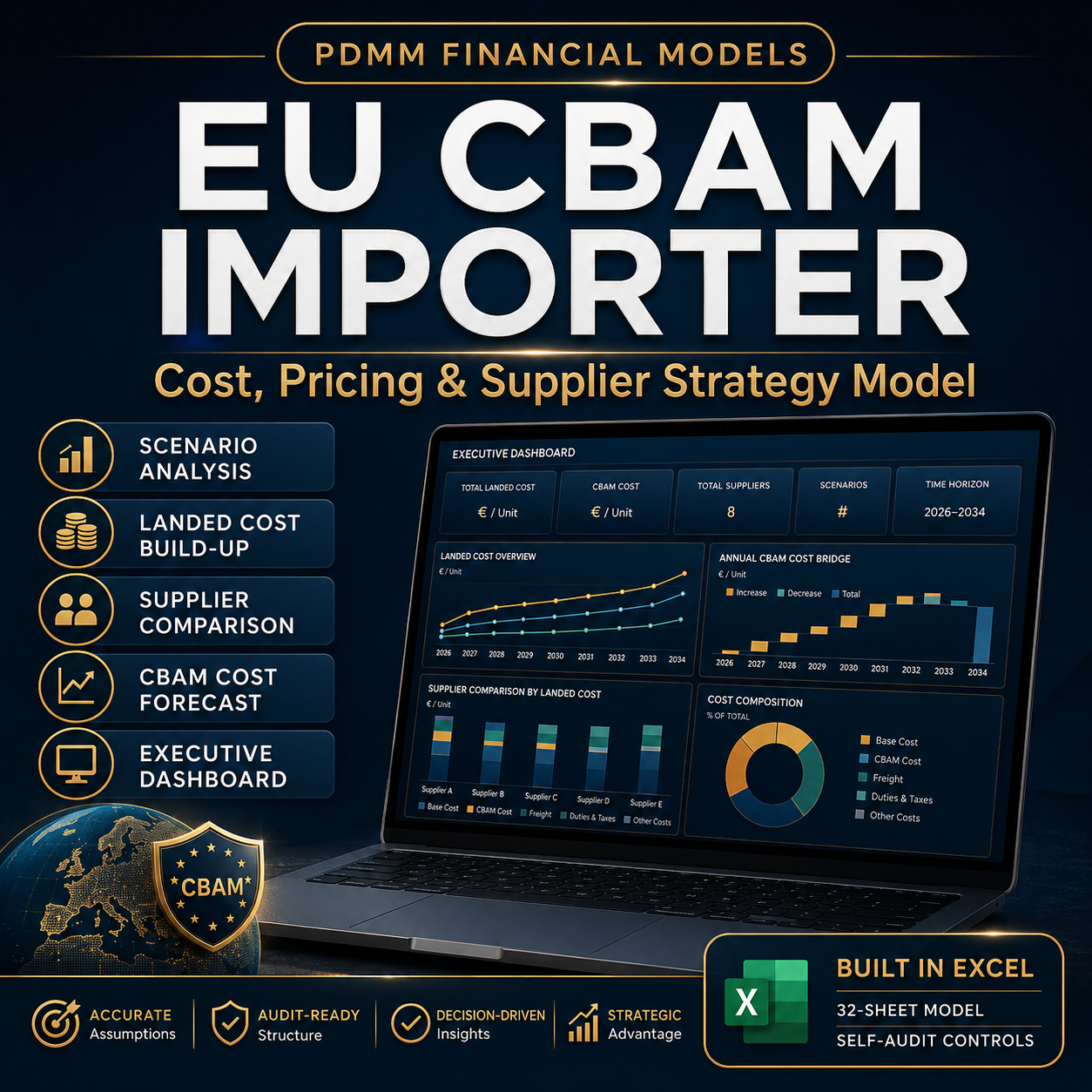
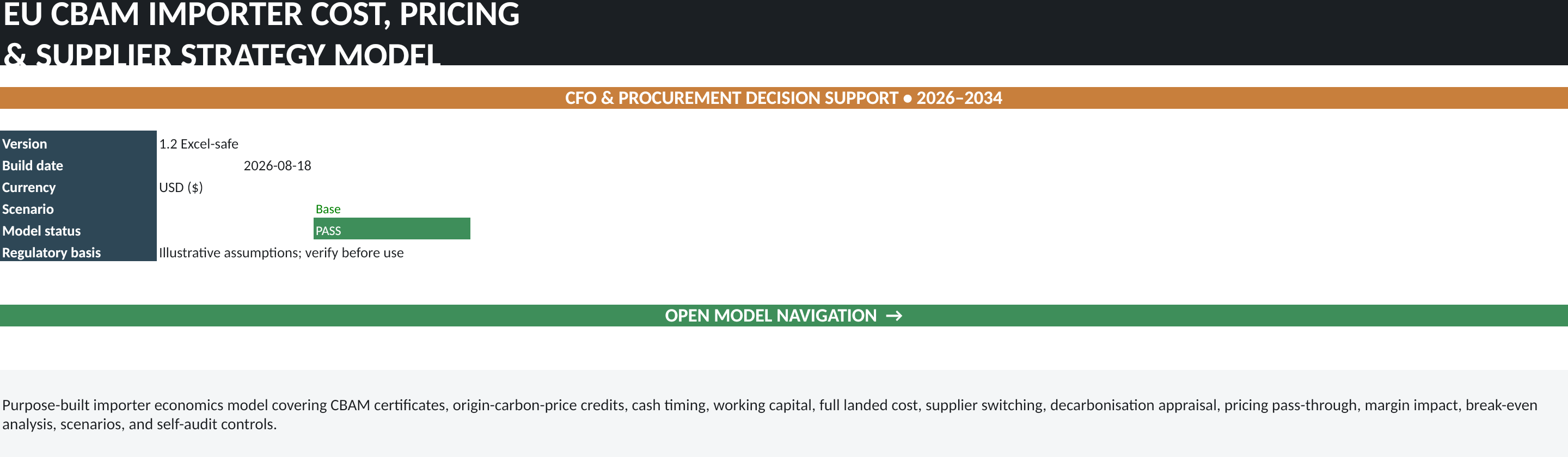
The EU CBAM Importer Cost, Pricing & Supplier Strategy Model is an editable 32-sheet Excel decision model for evaluating the importer-side financial and procurement implications of the EU Carbon Border Adjustment Mechanism across 2026-2034.

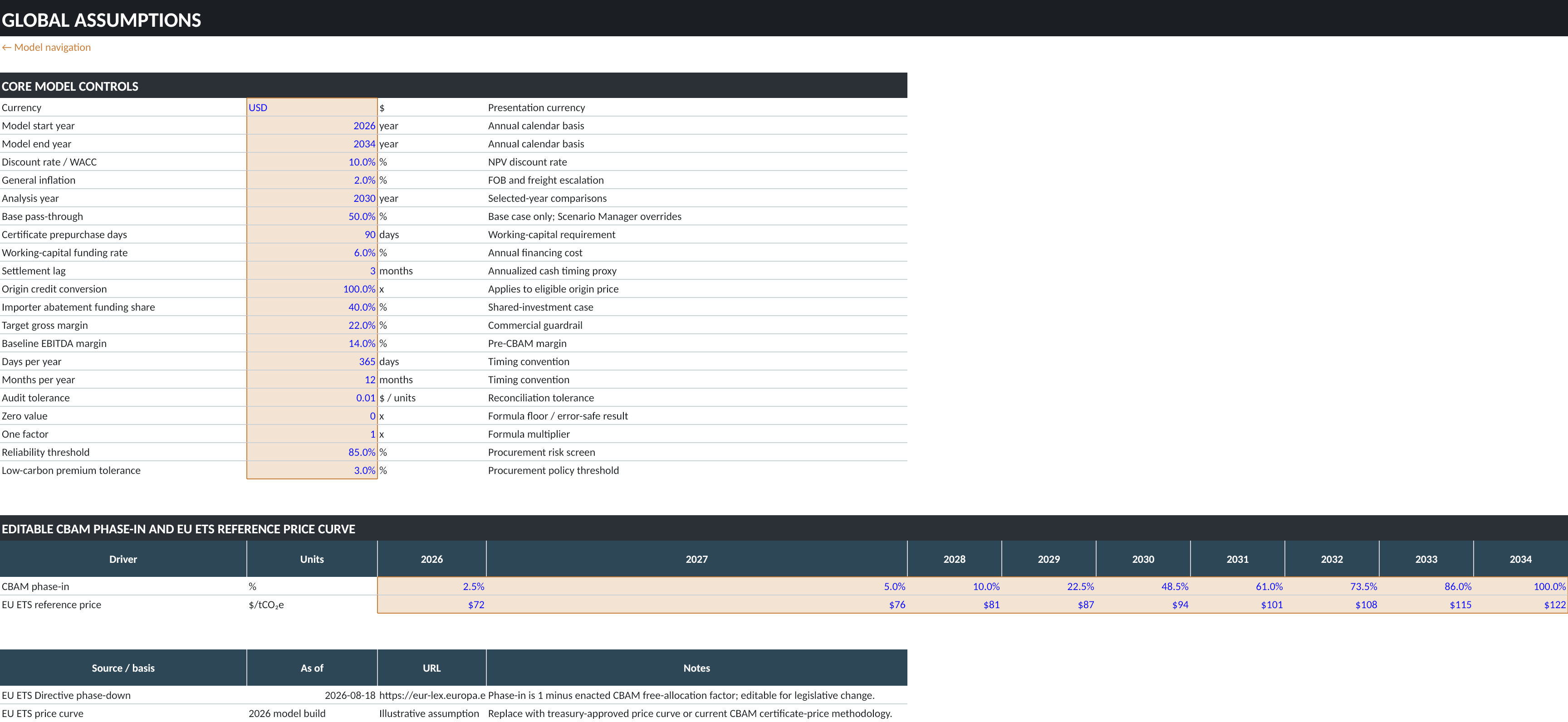
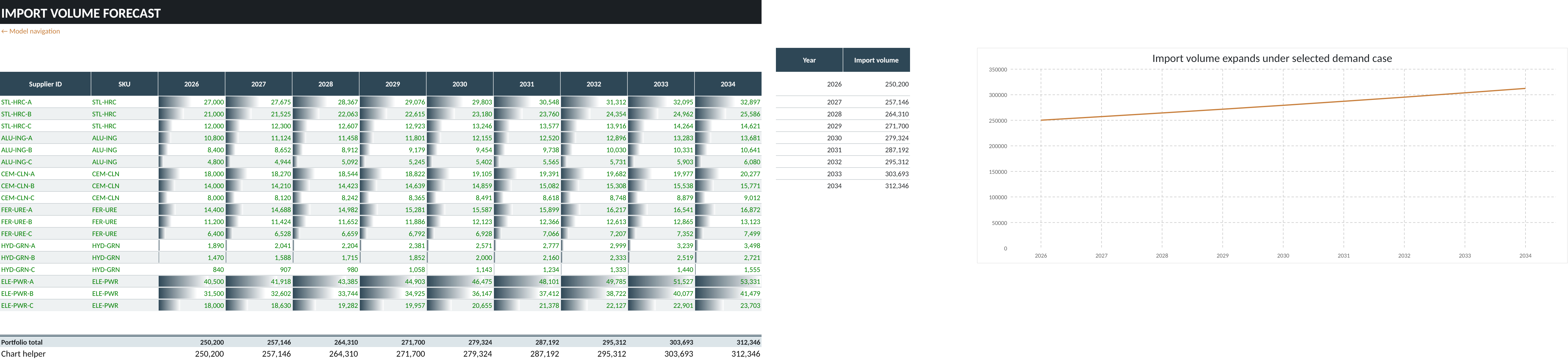
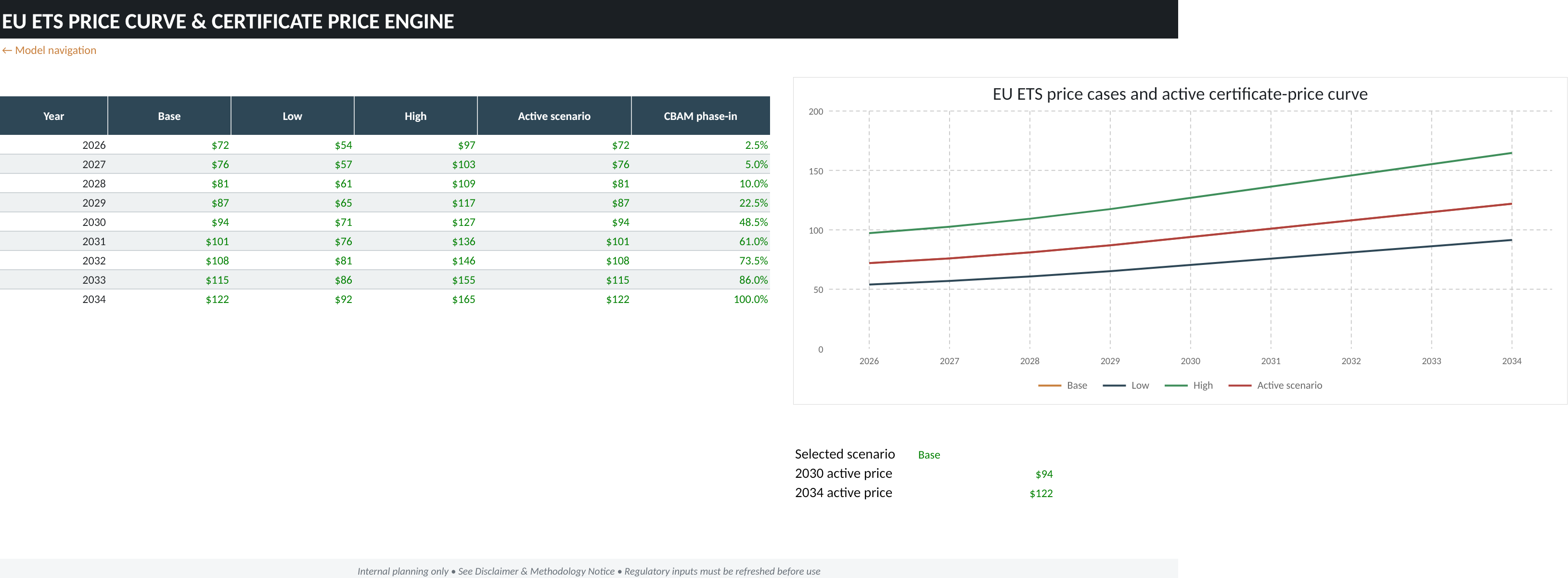
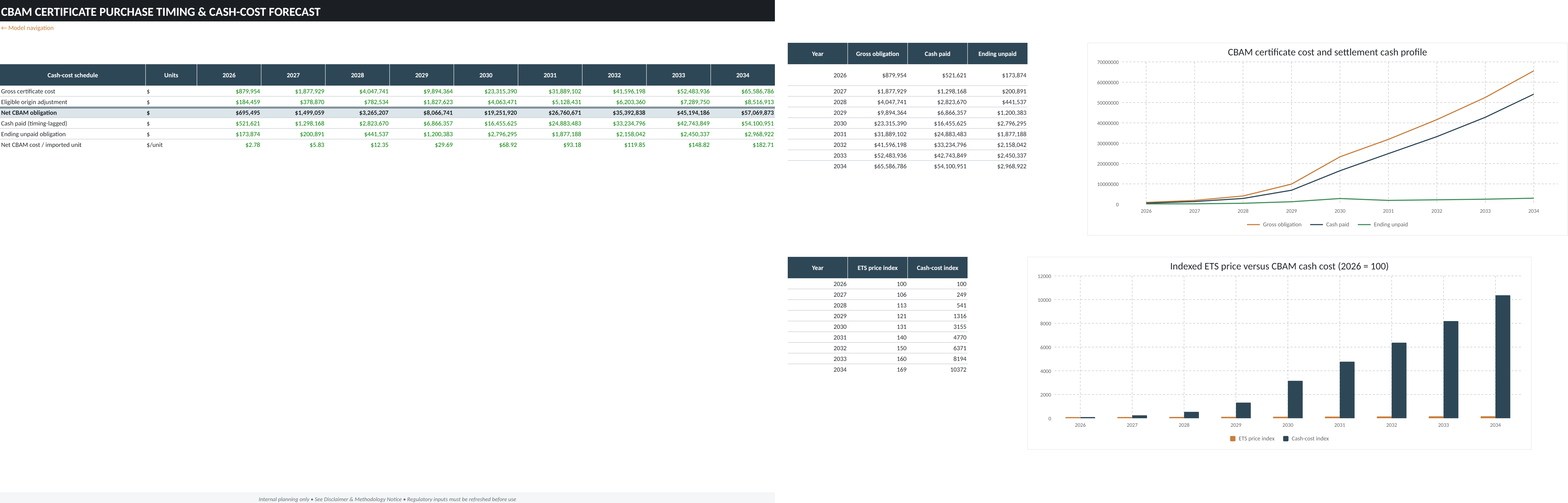
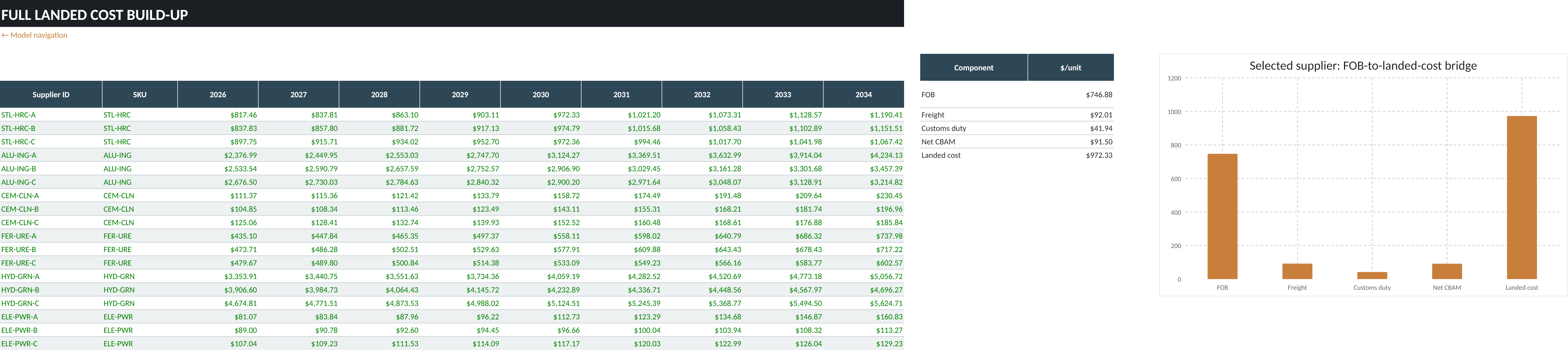
It connects import volumes, supplier embedded emissions, EU ETS/CBAM price assumptions, eligible origin carbon-price adjustments, cash timing, working capital, freight, customs duty, and full landed cost.

The workbook goes beyond a simple carbon-cost calculator. It includes:

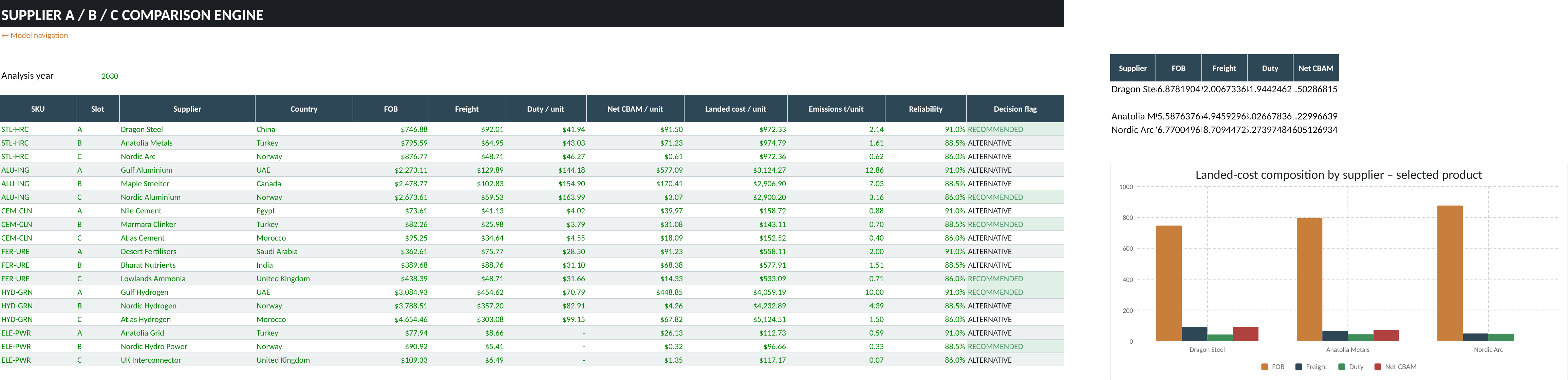
  • Supplier A/B/C comparison

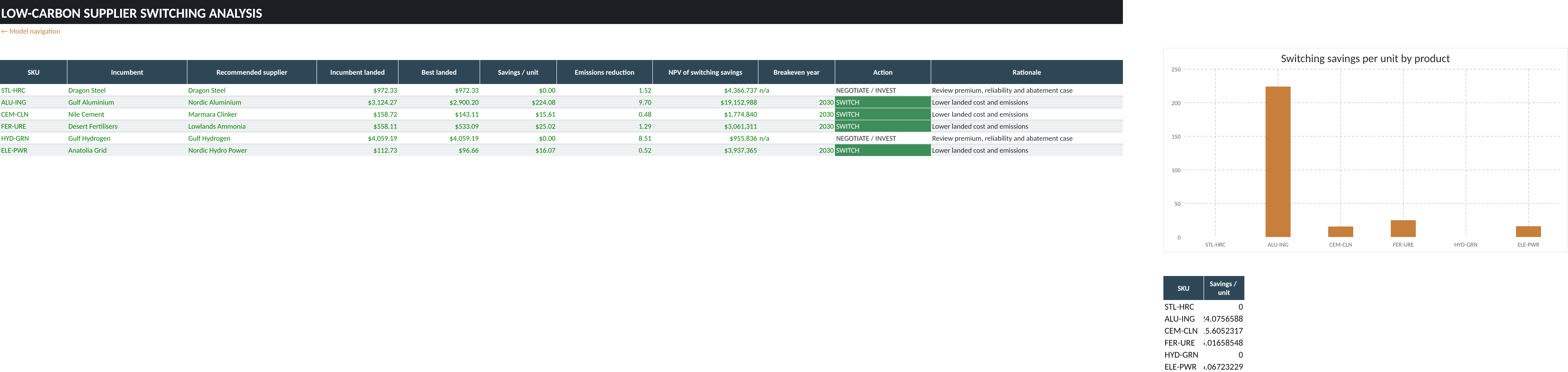
  • Low-carbon supplier switching economics

  • Supplier decarbonisation investment appraisal

  • Customer pricing and pass-through

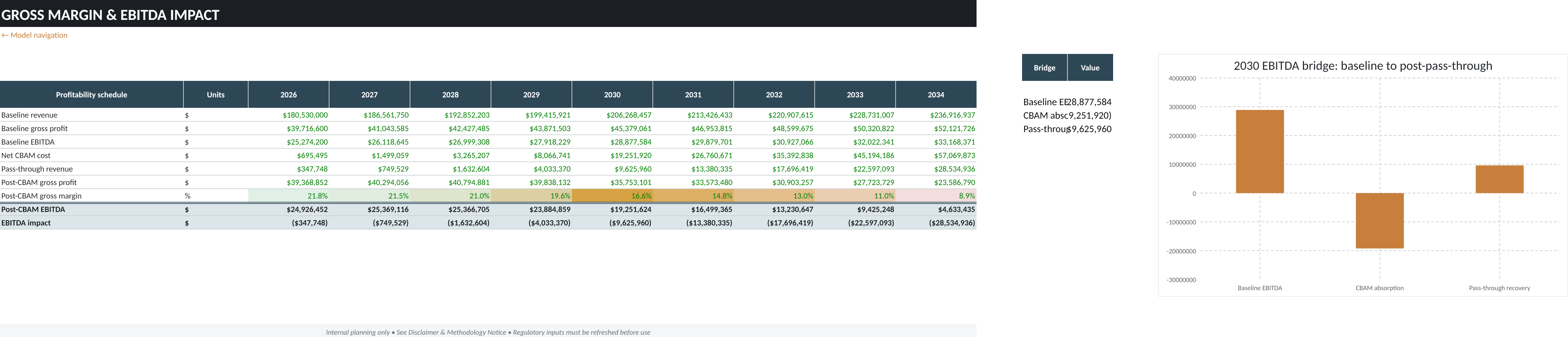
  • Gross-margin and EBITDA impact

  • Break-even carbon intensity

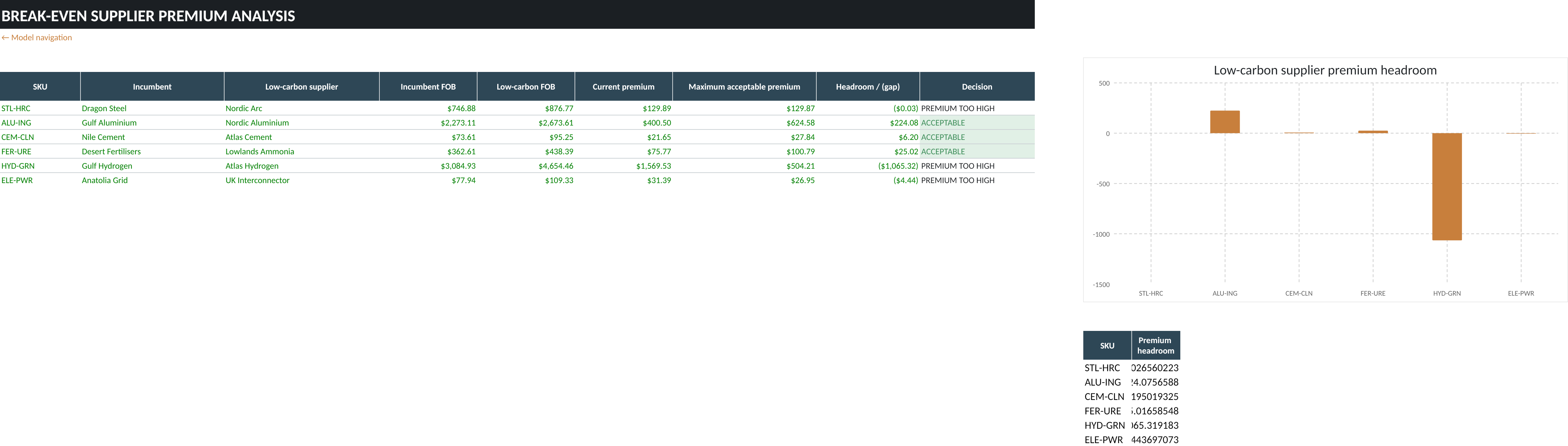
  • Break-even supplier premium

  • Scenario analysis

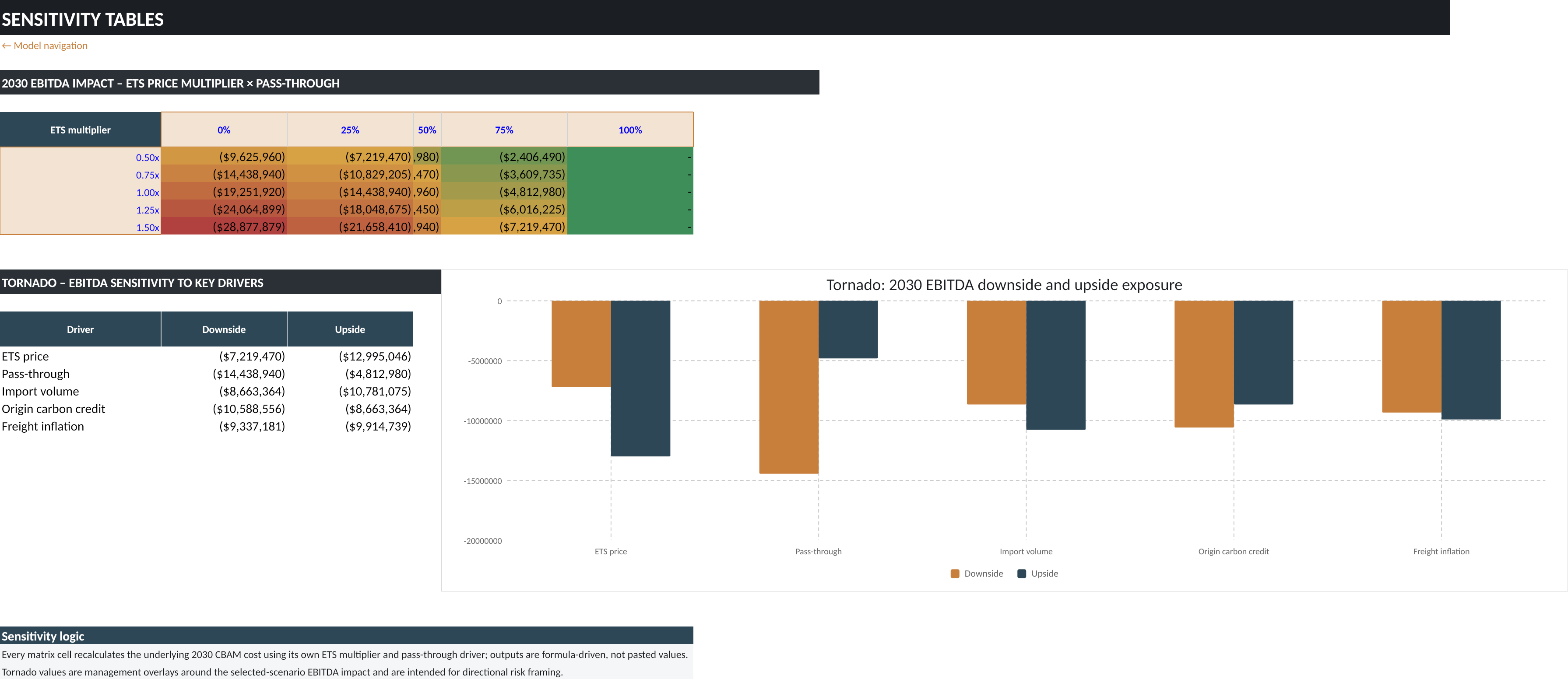
  • Sensitivity analysis

  • Executive dashboards

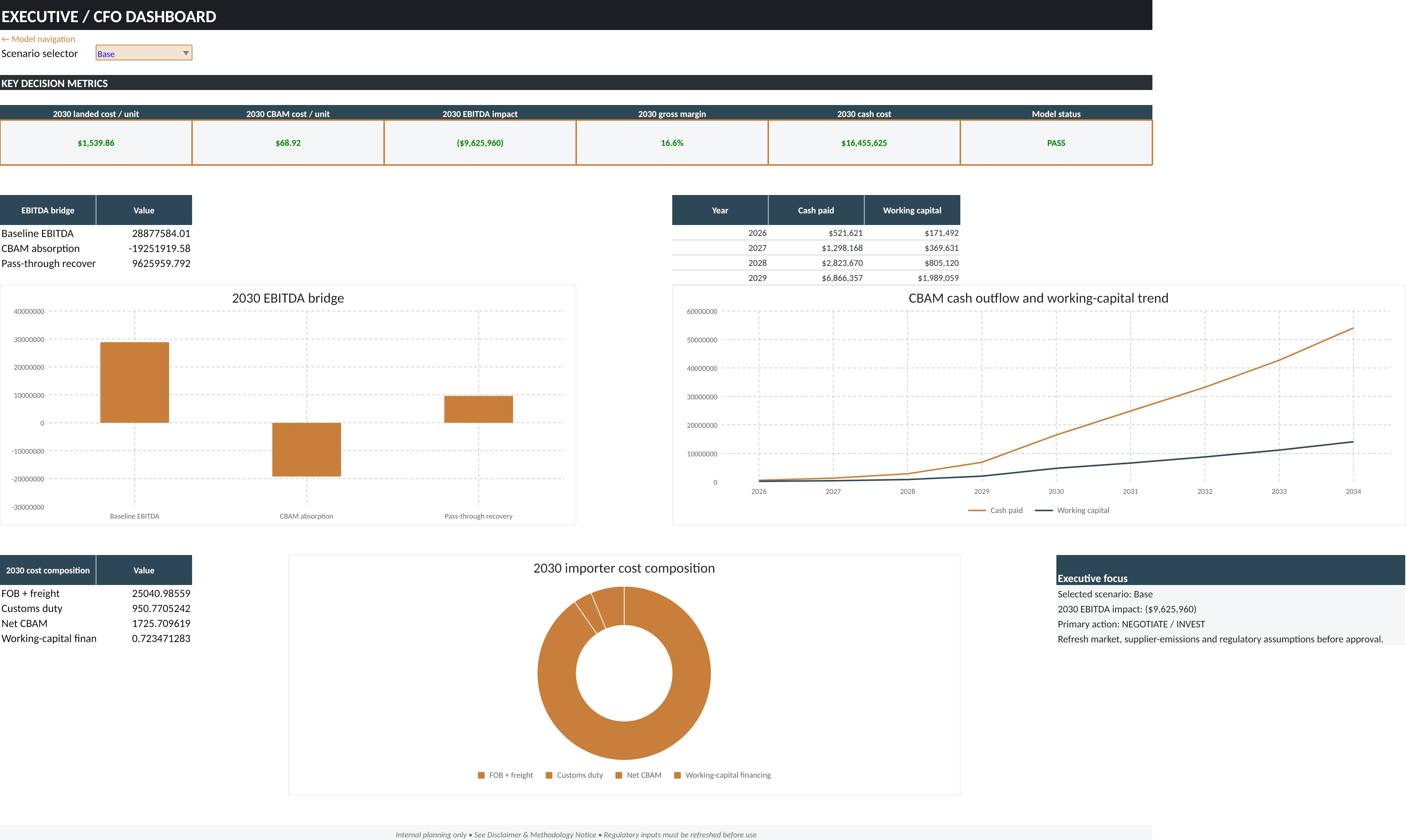
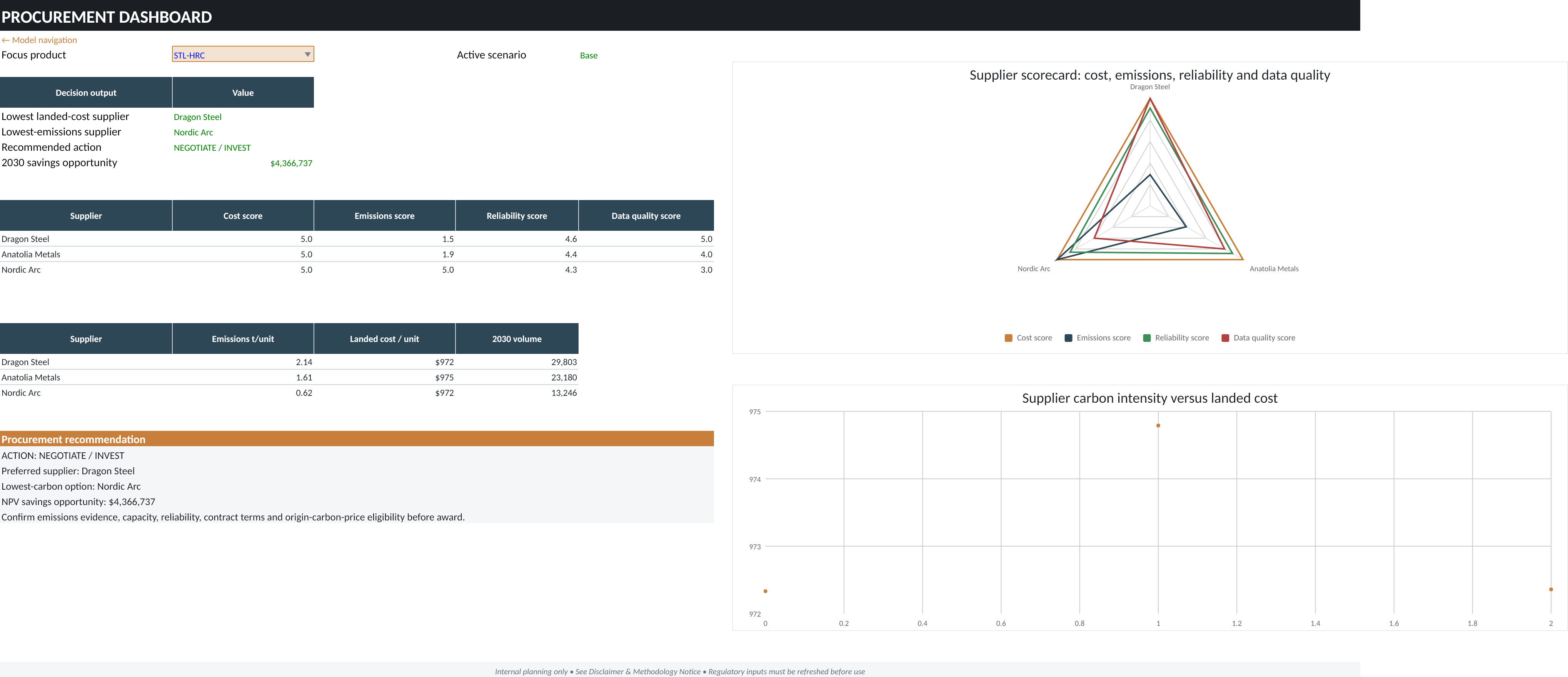
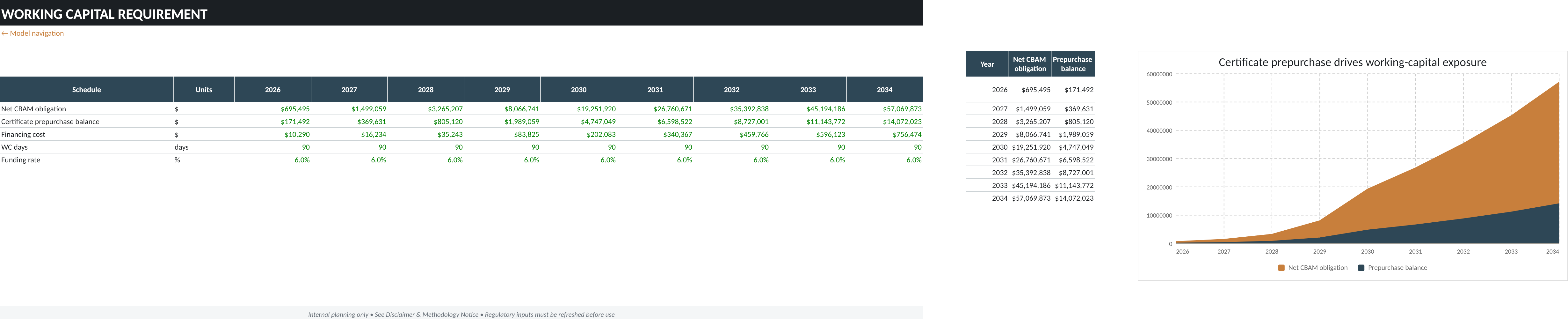
A single Low/Base/High scenario selector on the Executive CFO Dashboard controls the active ETS, demand, and pass-through assumptions. The CFO dashboard highlights CBAM cost, landed cost, EBITDA impact, gross margin, cash exposure, and working capital, while the Procurement Dashboard compares supplier actions, cost, emissions, reliability, and switching opportunities.


The model also contains:

  • Live Audit & QA controls

  • Instructions

  • Clickable navigation

  • Methodology notes

  • Version history


The included sample data cover steel, aluminium, cement, fertiliser, hydrogen, and imported electricity. The workbook clearly identifies regulatory and emissions-related assumptions as illustrative and requires users to refresh or verify them before real-world decisions.

Objectives

Use the model to:

  • Estimate CBAM certificate requirements and cash exposure

  • Plan working-capital needs

  • Compare supplier landed costs

  • Assess origin carbon-price credits

  • Evaluate low-carbon supplier switching

  • Test supplier decarbonisation investments

  • Estimate customer pass-through

  • Understand margin and EBITDA effects

  • Calculate break-even thresholds

  • Stress-test key assumptions

Suits Best When

The model suits:

  • Importers

  • CFO/FP&A teams

  • Treasury teams

  • Procurement and sourcing professionals

  • Consultants

  • Management teams

that need an integrated Excel framework for CBAM cost, cash, pricing, and supplier strategy. It is particularly useful when users have or can obtain supplier-level volume, emissions, freight, tariff, country, and commercial data.

Does Not Suit Best When

The workbook should not be used as a substitute for:

  • Customs, legal, tax, accounting, investment, or regulatory advice

It is not best suited to users seeking:

  • An automatically updated regulatory database

  • Live market feed

Sample CN-code mappings, emissions values, origin carbon prices, EU ETS/CBAM curves, and other regulatory assumptions are illustrative and require verification or replacement before commercial decisions.

Company-specific contract structures, tax effects, accounting treatments, or unusually complex supply chains may also require customization.

This Best Practice includes
One fully editable Microsoft Excel workbook. 32 model worksheets. One 32-page PDF preview. 20 detailed preview images.

Acquire business license for $99.00

Add to cart

Add to bookmarks

Discuss

Further information

Use the model to estimate CBAM certificate requirements and cash exposure, plan working-capital needs, compare supplier landed costs, assess origin carbon-price credits, evaluate low-carbon supplier switching, test supplier decarbonisation investments, estimate customer pass-through, understand margin and EBITDA effects, calculate break-even thresholds, and stress-test key assumptions.

The model suits importers, CFO/FP&A teams, treasury teams, procurement and sourcing professionals, consultants, and management teams that need an integrated Excel framework for CBAM cost, cash, pricing, and supplier strategy. It is particularly useful when users have or can obtain supplier-level volume, emissions, freight, tariff, country, and commercial data.

The workbook should not be used as a substitute for customs, legal, tax, accounting, investment, or regulatory advice. It is not best suited to users seeking an automatically updated regulatory database or live market feed. Sample CN-code mappings, emissions values, origin carbon prices, EU ETS/CBAM curves, and other regulatory assumptions are illustrative and require verification or replacement before commercial decisions. Company-specific contract structures, tax effects, accounting treatments, or unusually complex supply chains may also require customization.


0.0 / 5 (0 votes)

please wait...