Airport Financial Model Suite – 10-Year Forecast, Valuation & Feasibility
Originally published: 03/04/2026 08:26
Publication number: ELQ-38665-1
View all versions & Certificate
certified

Airport Financial Model Suite – 10-Year Forecast, Valuation & Feasibility

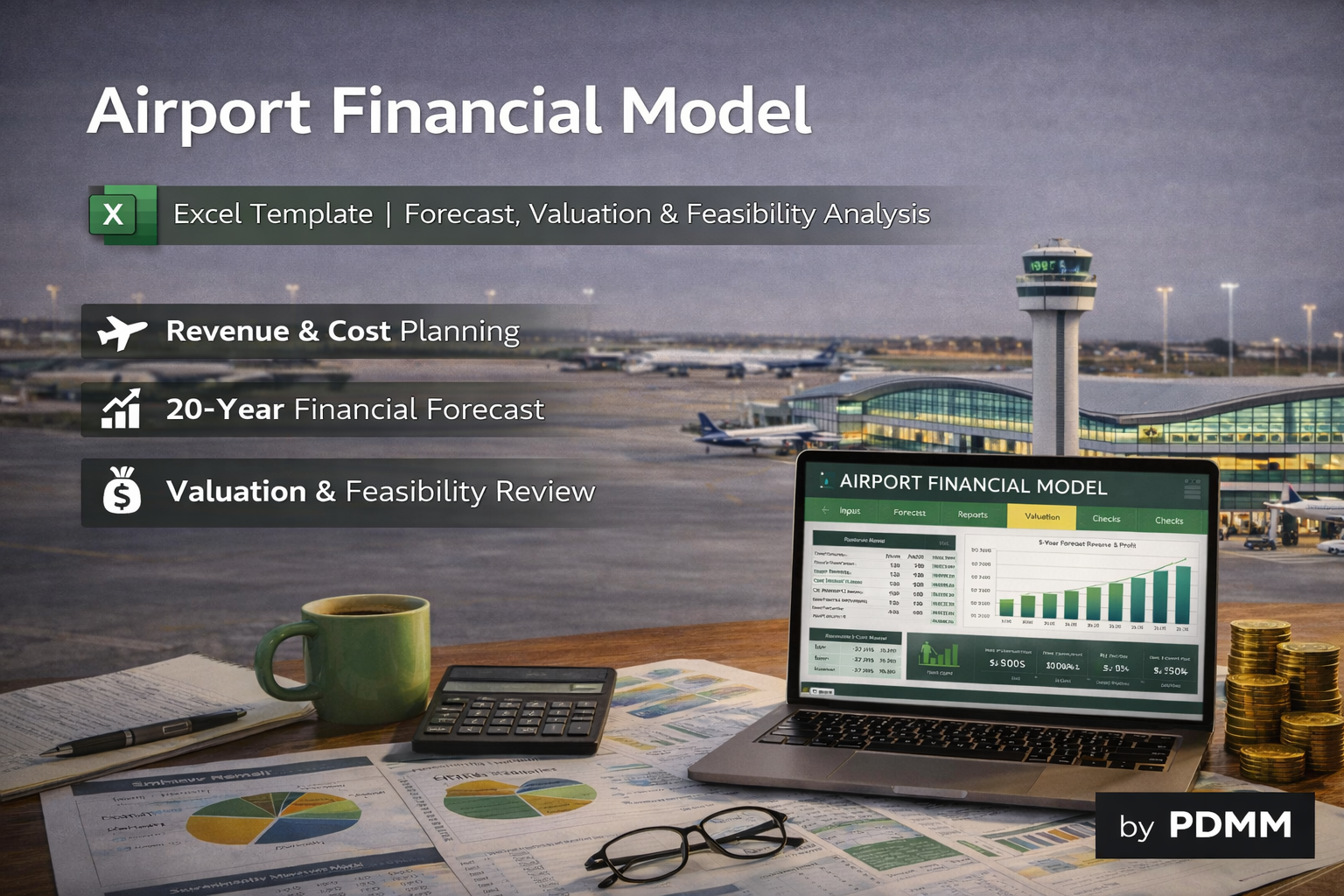
Excel airport financial model suite with 10-year forecasting, traffic, aero/non-aero revenue, opex, capex, debt, valuation and dashboards.

Description

The Airport Financial Model Suite is a professional Excel-based template designed to evaluate the financial performance, feasibility, and valuation of an airport project or operating airport asset over a 10-year forecast period. It is built for investors, developers, airport operators, consultants, analysts, lenders, and project finance professionals who need a structured and practical framework for airport planning and investment analysis.

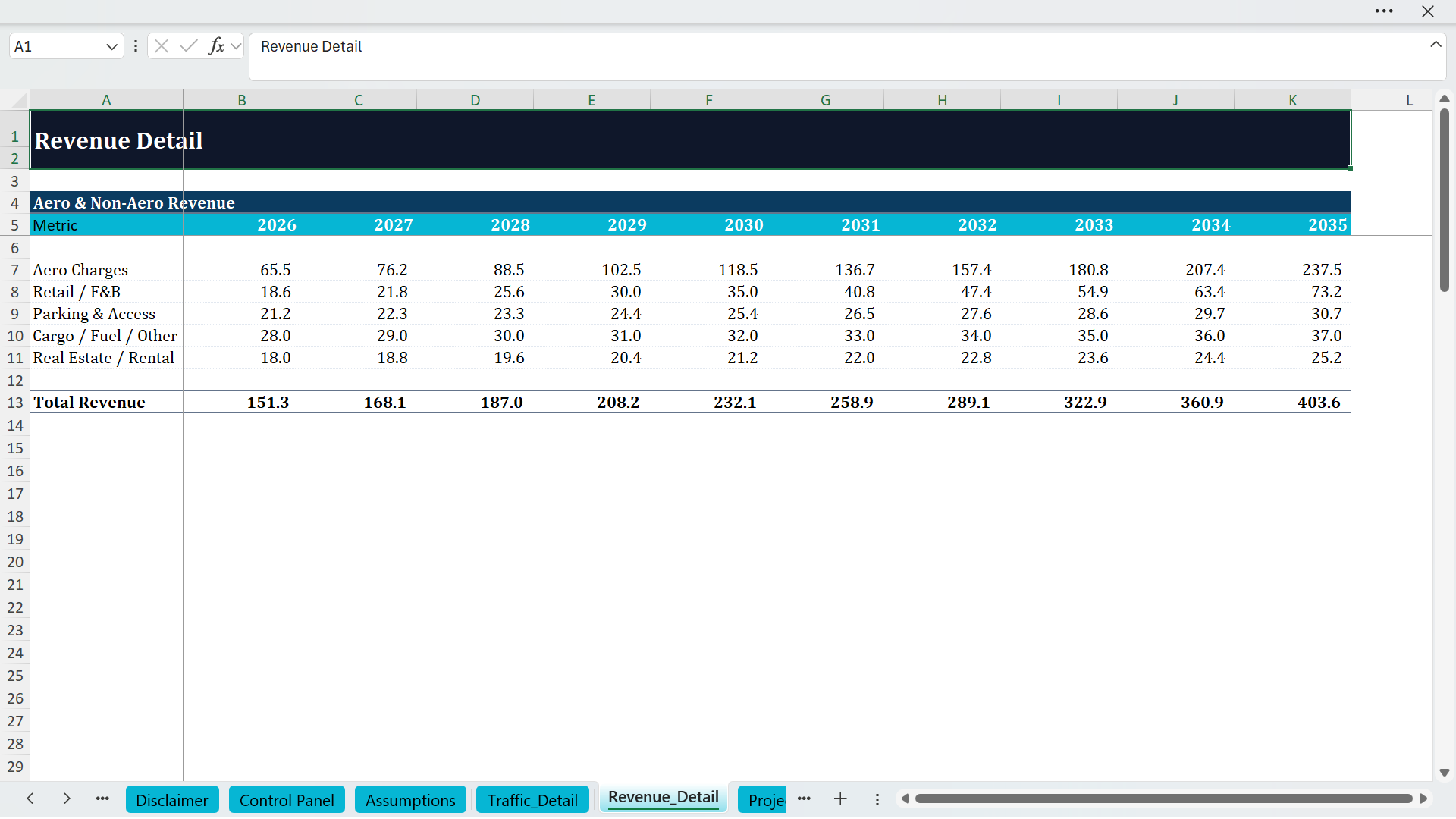
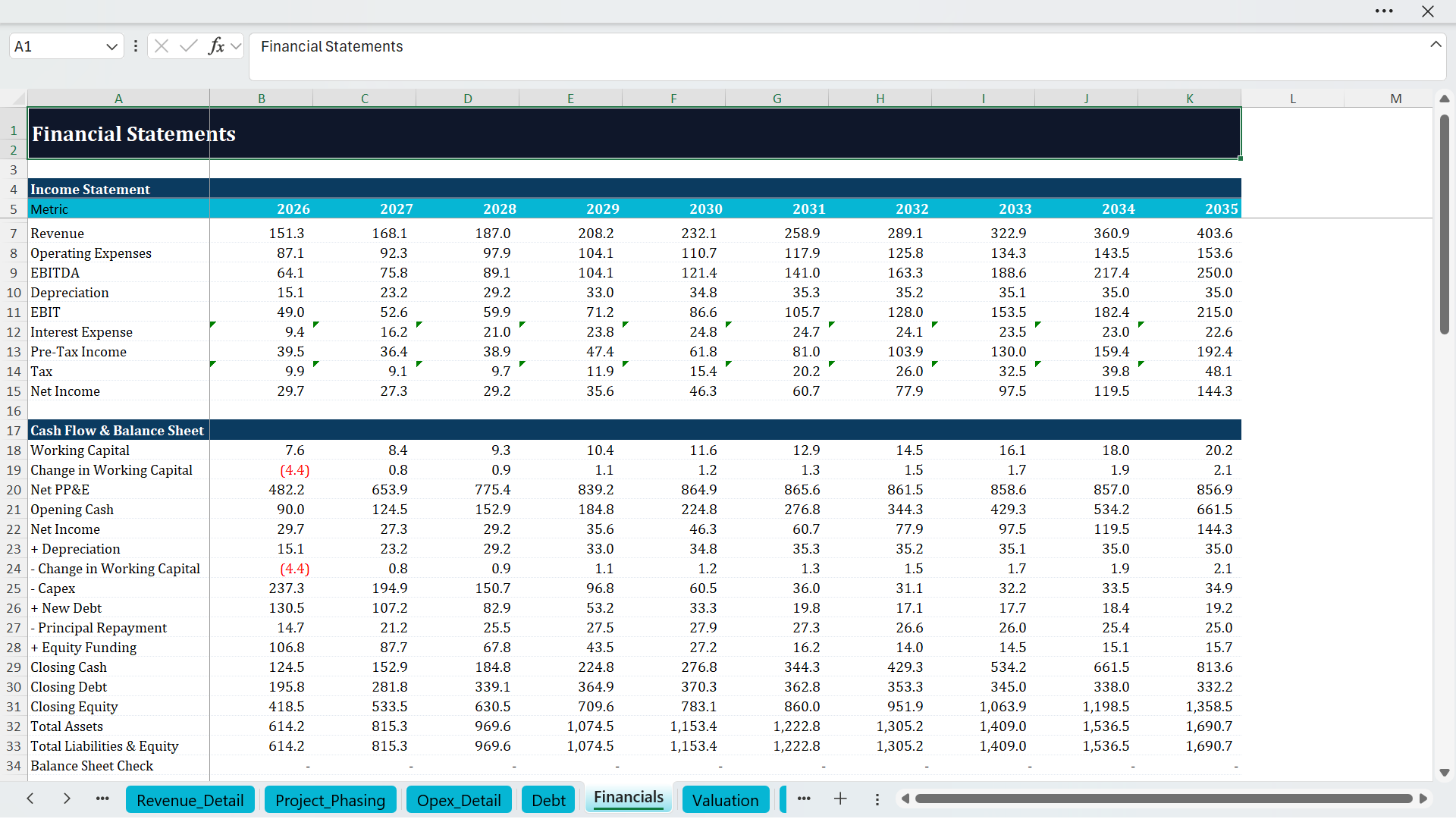
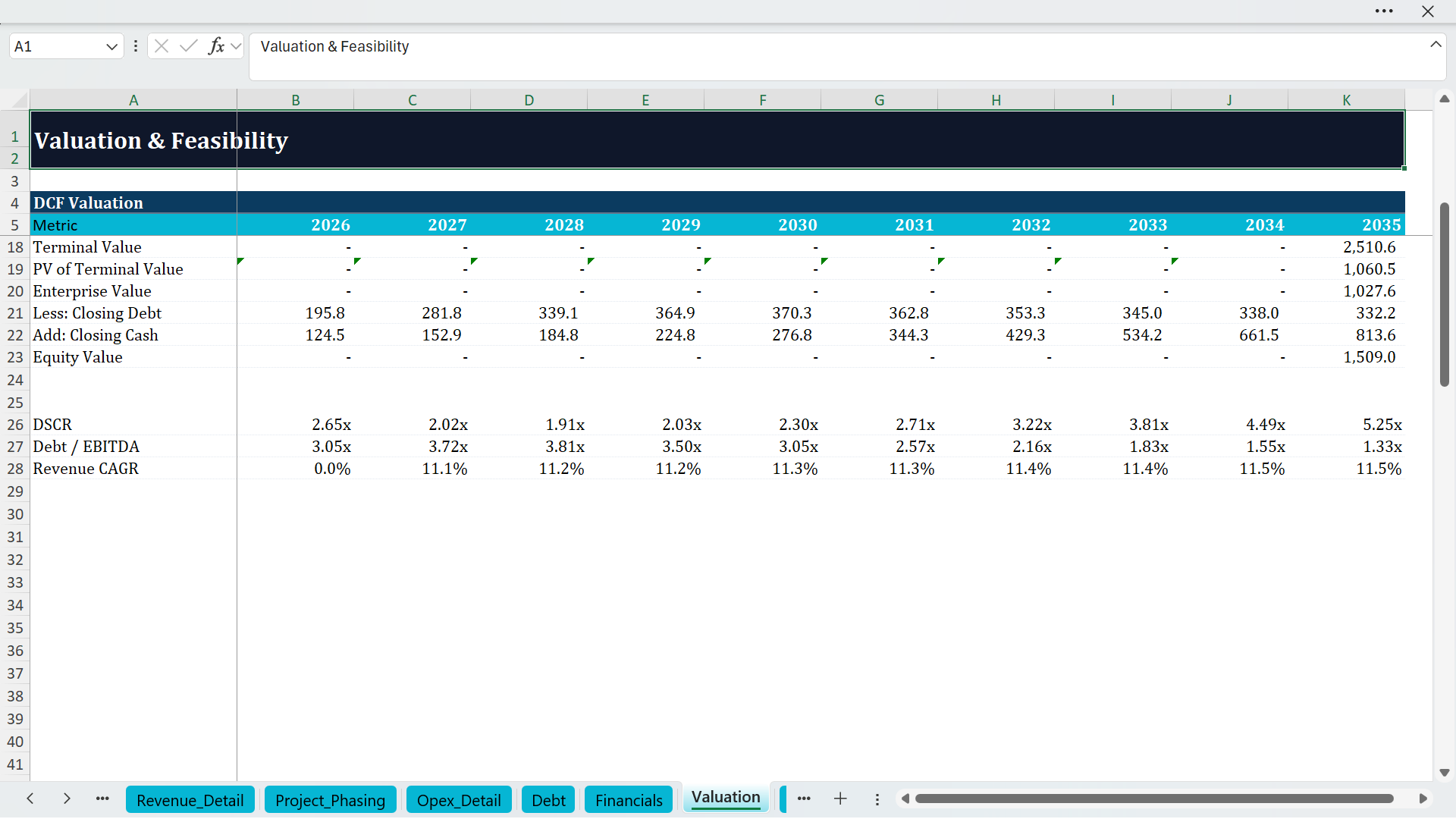
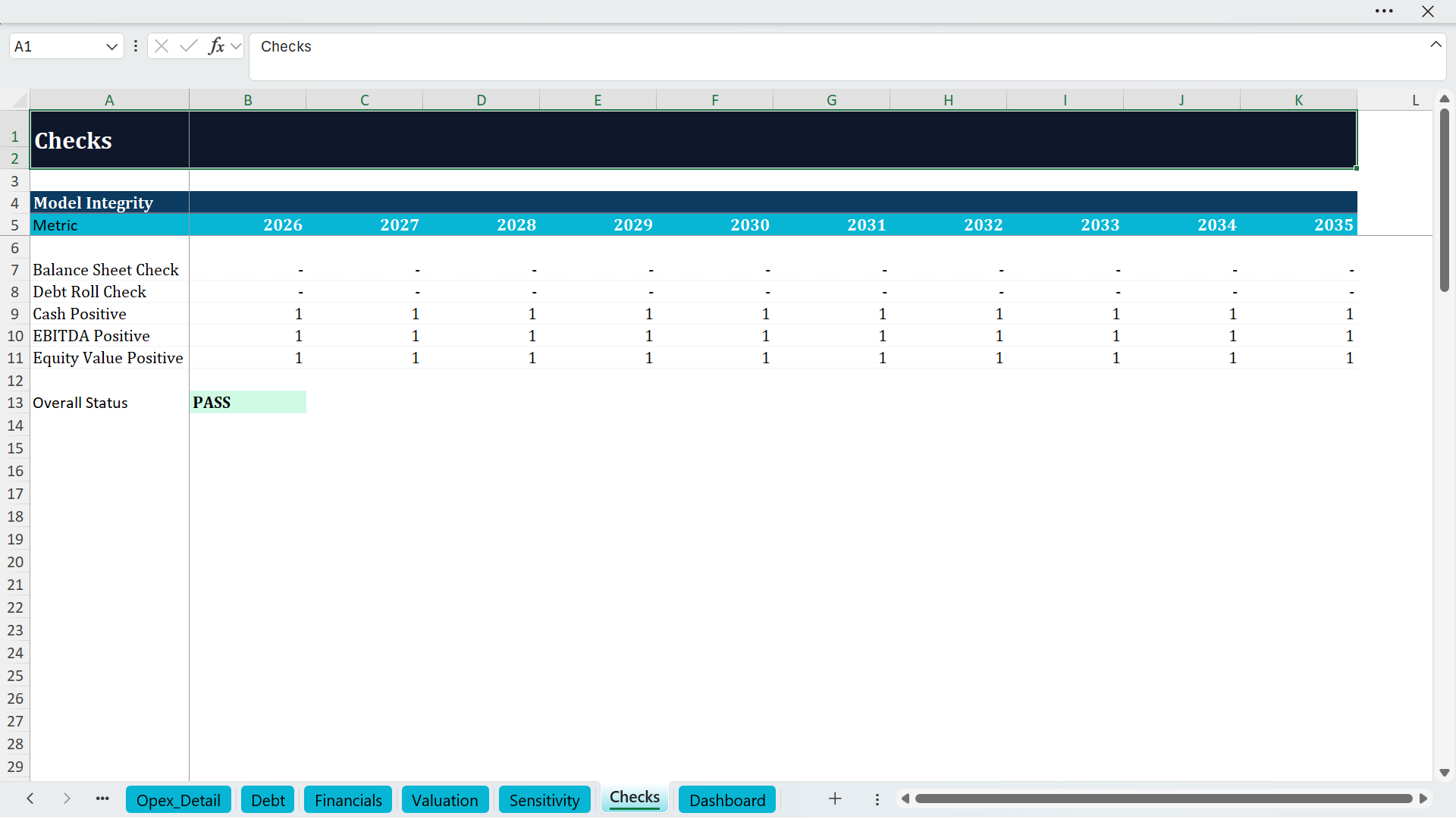
This model suite helps users assess whether an airport project is financially attractive by combining the main value drivers of the business into one integrated model. It captures passenger traffic, aero revenue, non-aero revenue, operating expenses, capex, funding, debt, financial statements, DCF valuation, dashboard reporting, and model checks in a clear and decision-friendly structure.

What is this model used for?

  • Airport feasibility analysis

  • 10-year financial forecasting

  • Passenger traffic planning

  • Aero and non-aero revenue forecasting

  • Opex, capex, and debt analysis

  • Valuation and investment review

  • Scenario, sensitivity, and dashboard reporting

What’s included?

  • Lite version for streamlined airport analysis

  • Ultimate version for deeper and more detailed review

  • 10-year forecast structure

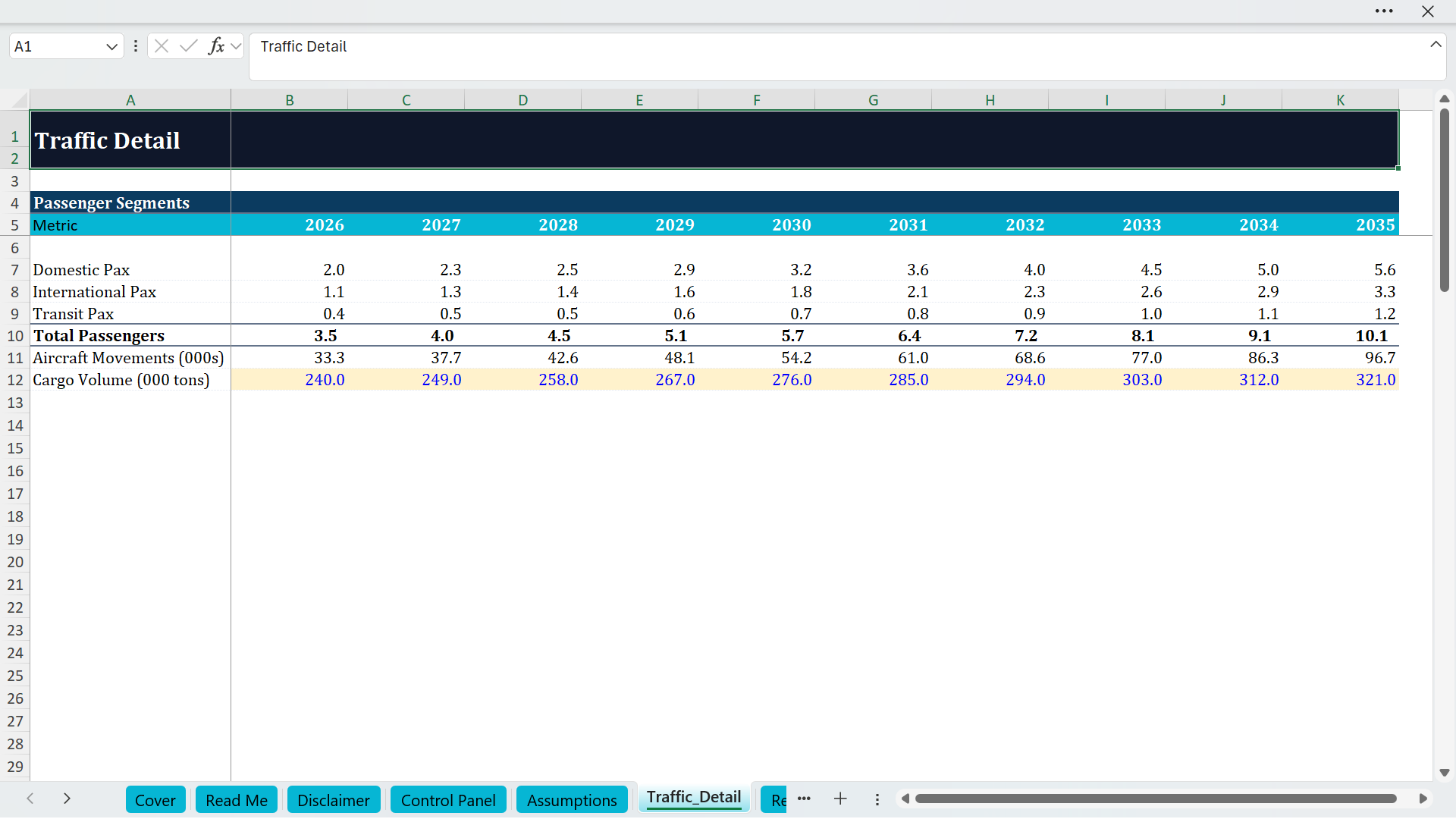
  • Passenger traffic build-up

  • Aero and non-aero revenue modeling

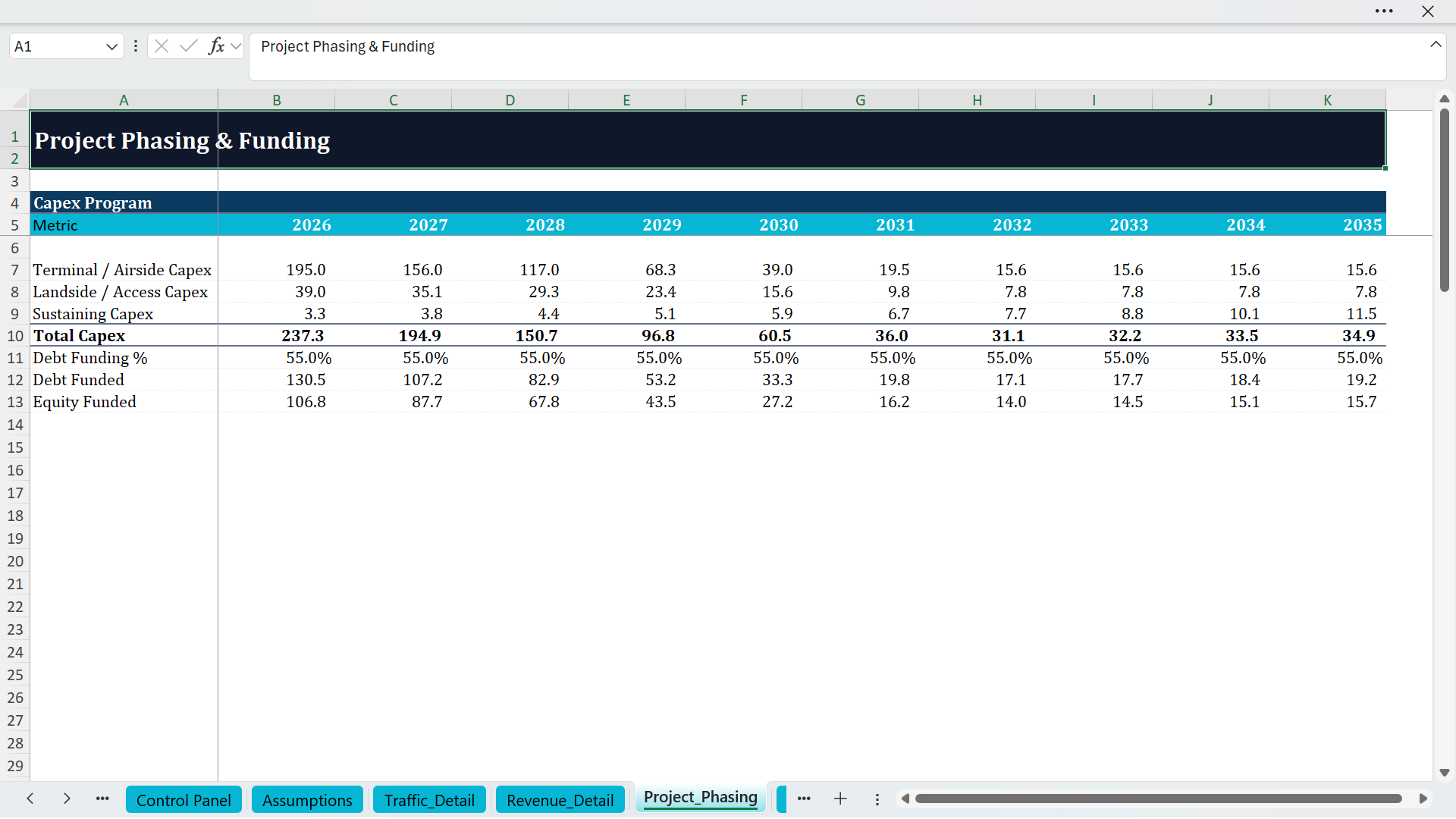
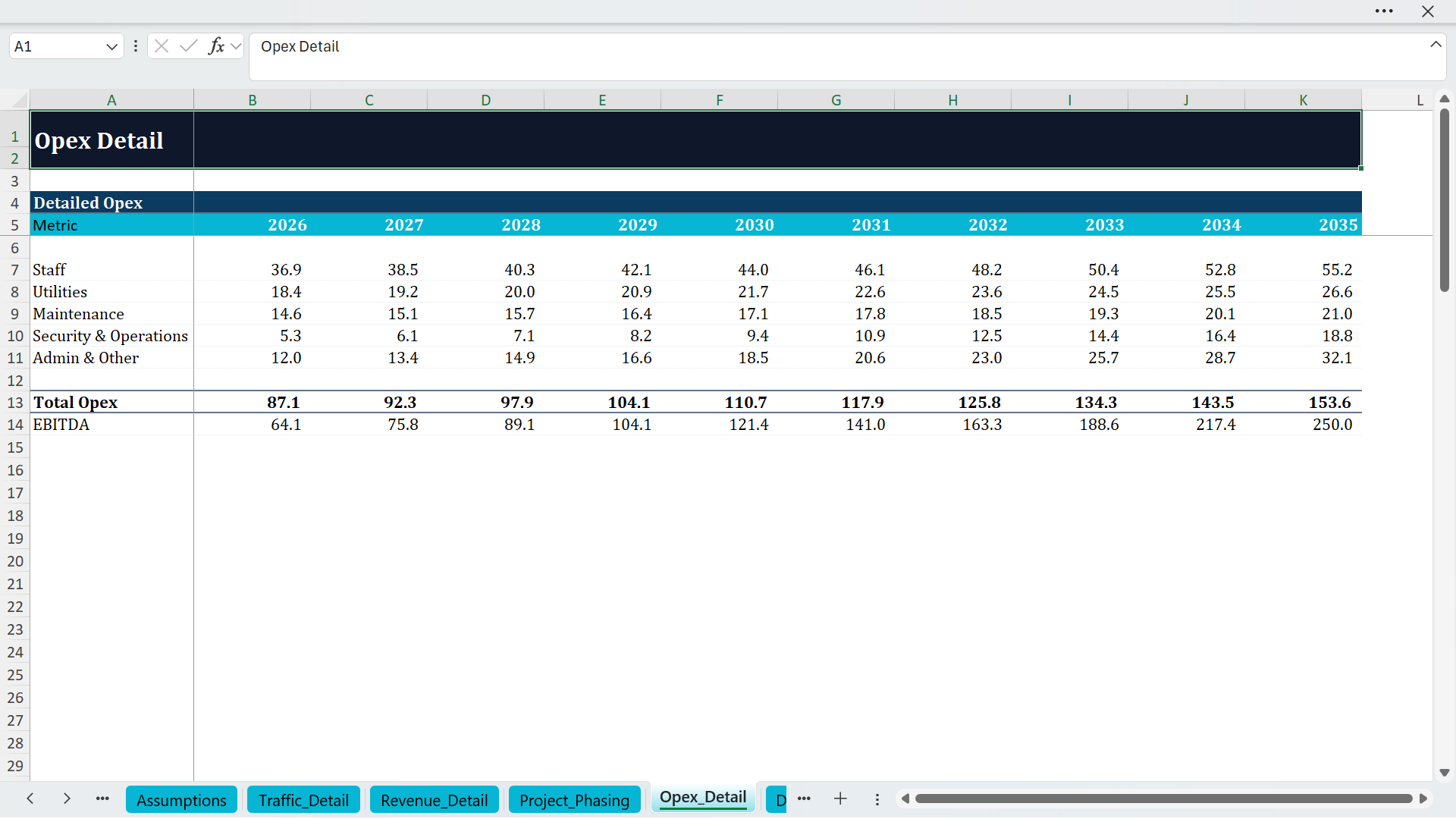
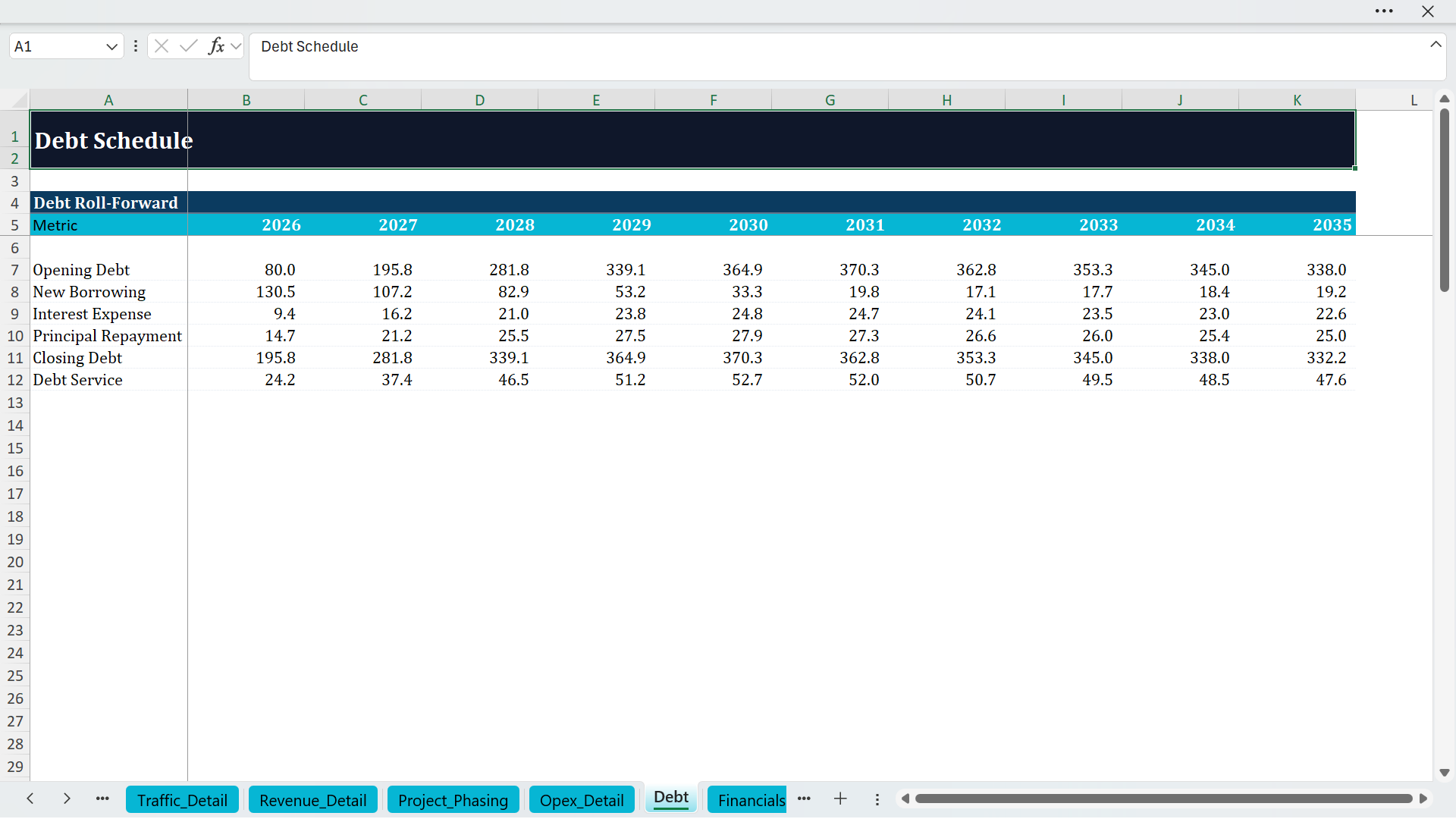
  • Opex, capex, funding, and debt schedules

  • Financial statements and valuation outputs

  • Dashboard and integrated checks

Lite + Ultimate structure
The Lite version is ideal for users who want a simpler and faster airport model with a practical workflow. It includes sheets for assumptions, traffic, revenue, opex, capex & funding, debt, financials, valuation, checks, and dashboard.

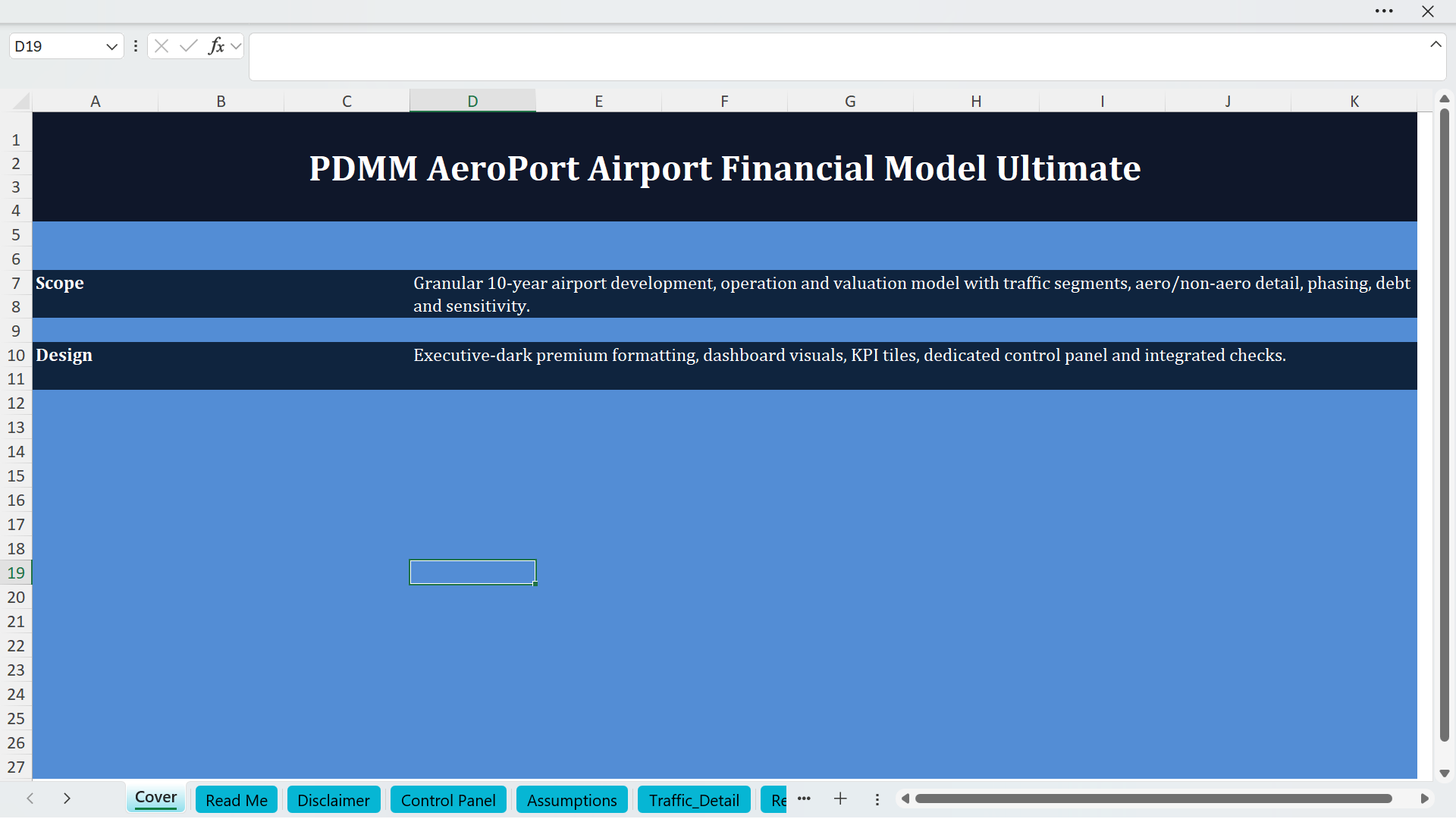
The Ultimate version is more advanced and gives users a stronger analytical setup. It includes a control panel, more granular assumptions, traffic detail, revenue detail, project phasing, detailed opex, debt, financials, valuation, sensitivity, checks, and dashboard. This makes it more suitable for professional review, internal planning, investment analysis, and presentation purposes.

How to best work with this template
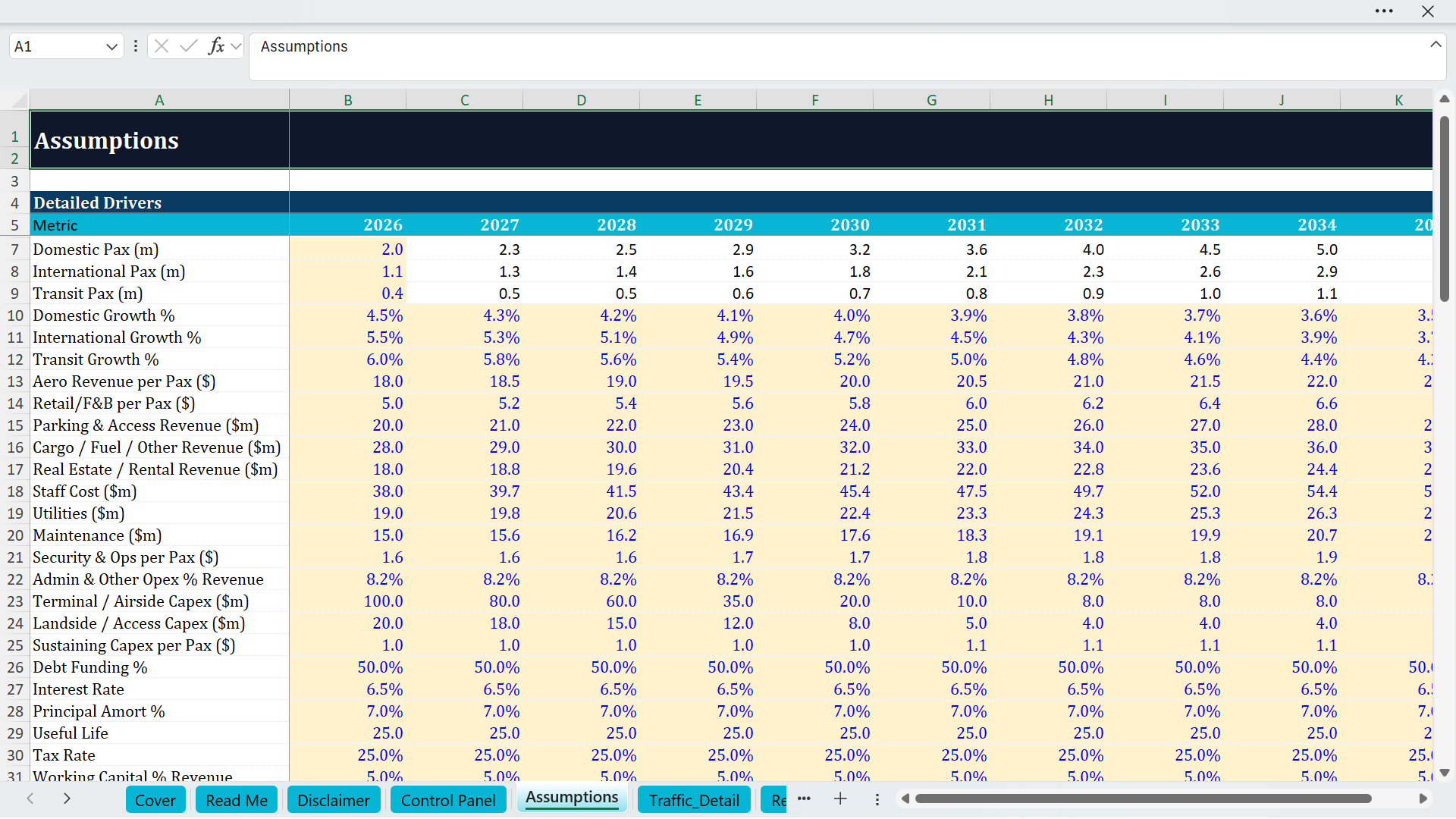
Start by updating the main assumptions, such as:

  • passenger traffic assumptions

  • domestic and international traffic mix

  • aero charges

  • retail / F&B and other non-aero revenue drivers

  • staff and utilities costs

  • development and sustaining capex

  • debt and funding assumptions

  • tax and discount rate assumptions

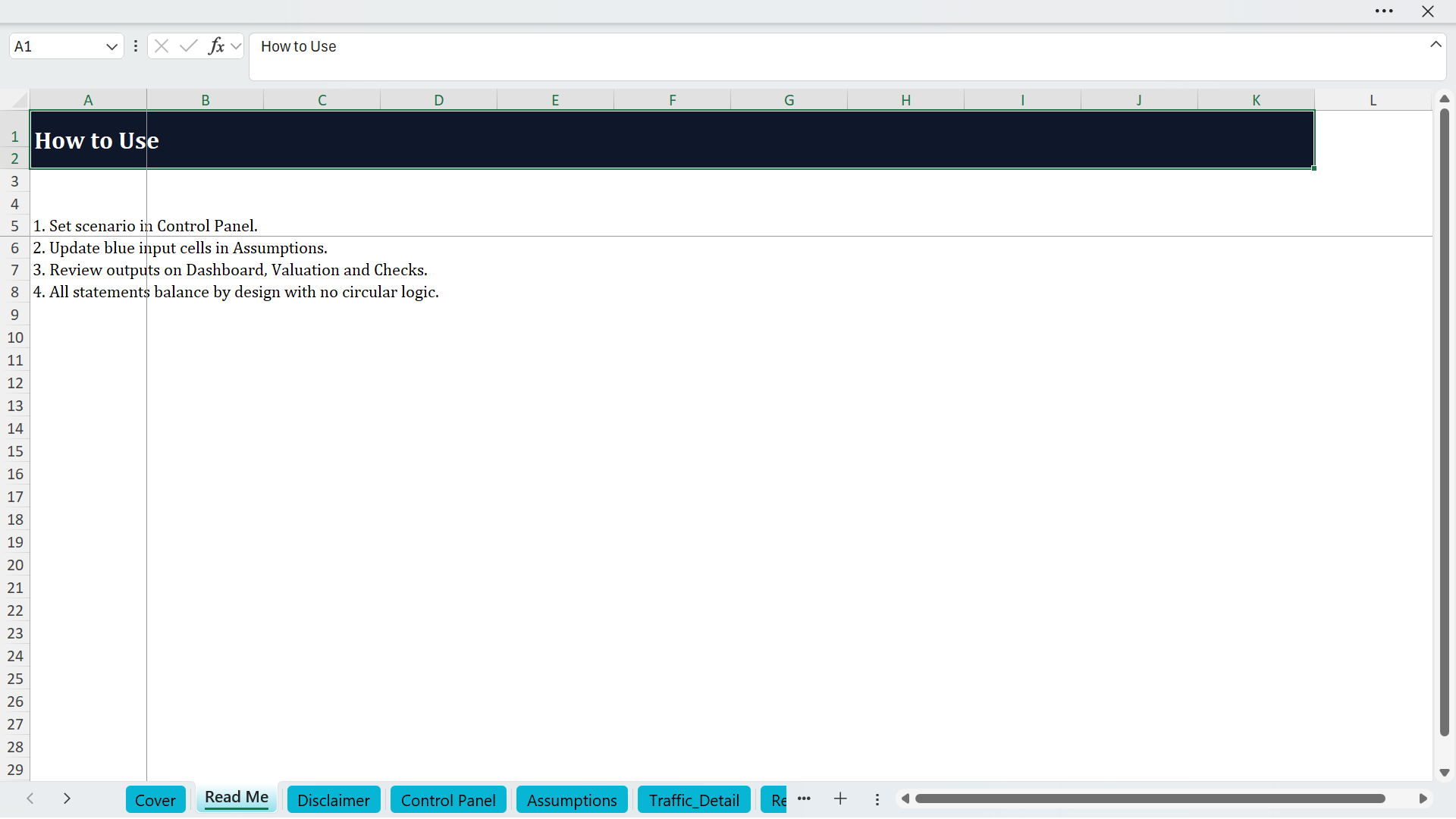
Once the inputs are updated, the model automatically flows through traffic forecasts, revenue build-up, expense schedules, financial statements, valuation outputs, and dashboard metrics.

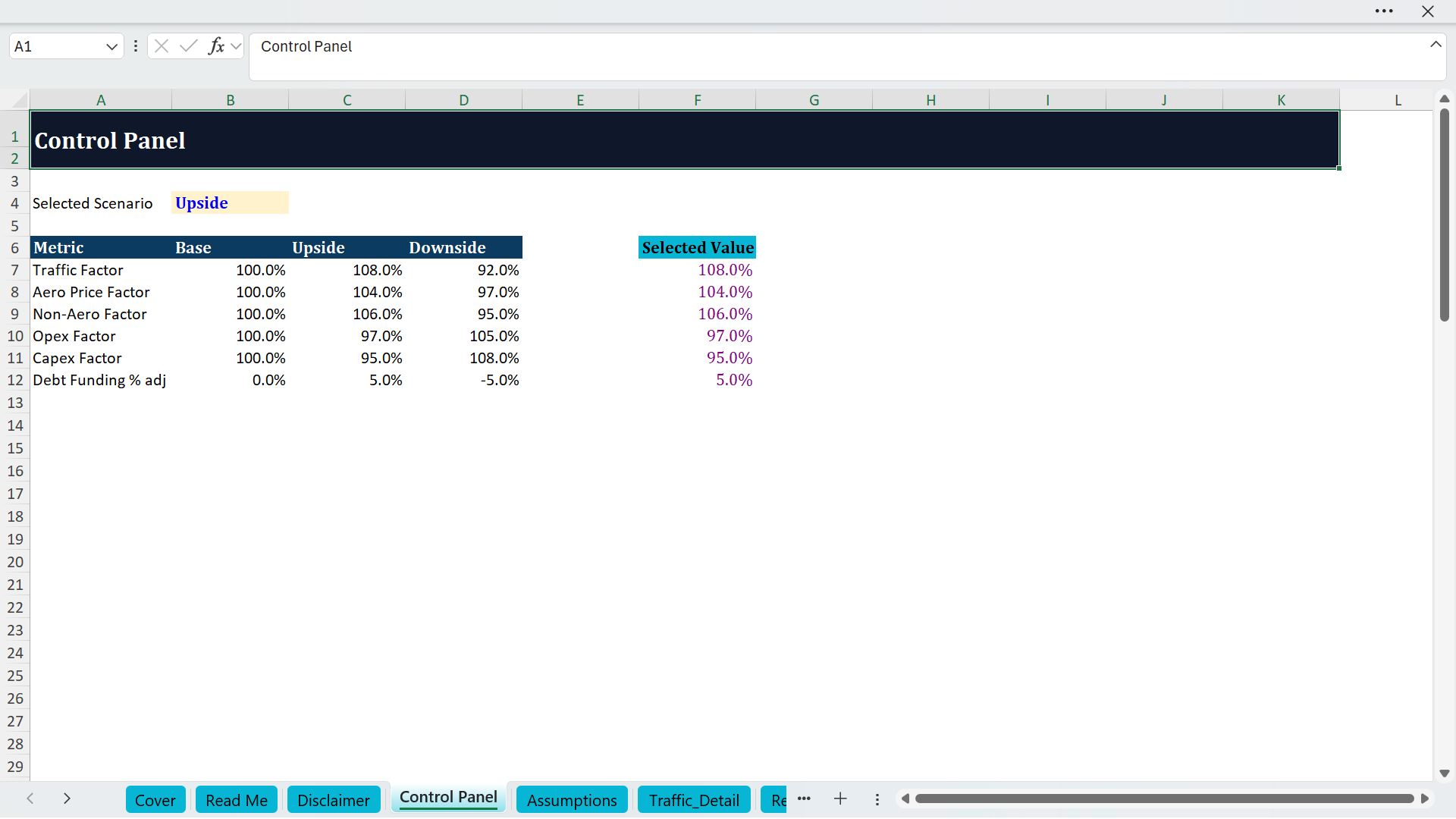
In the Ultimate version, users can also select scenarios through the Control Panel and test Base, Upside, and Downside cases.

Main highlights

  • Professional Excel structure

  • 10-year airport forecast model

  • Passenger traffic and segment build-up

  • Aero + non-aero revenue analysis

  • Project phasing, capex, funding, and debt support

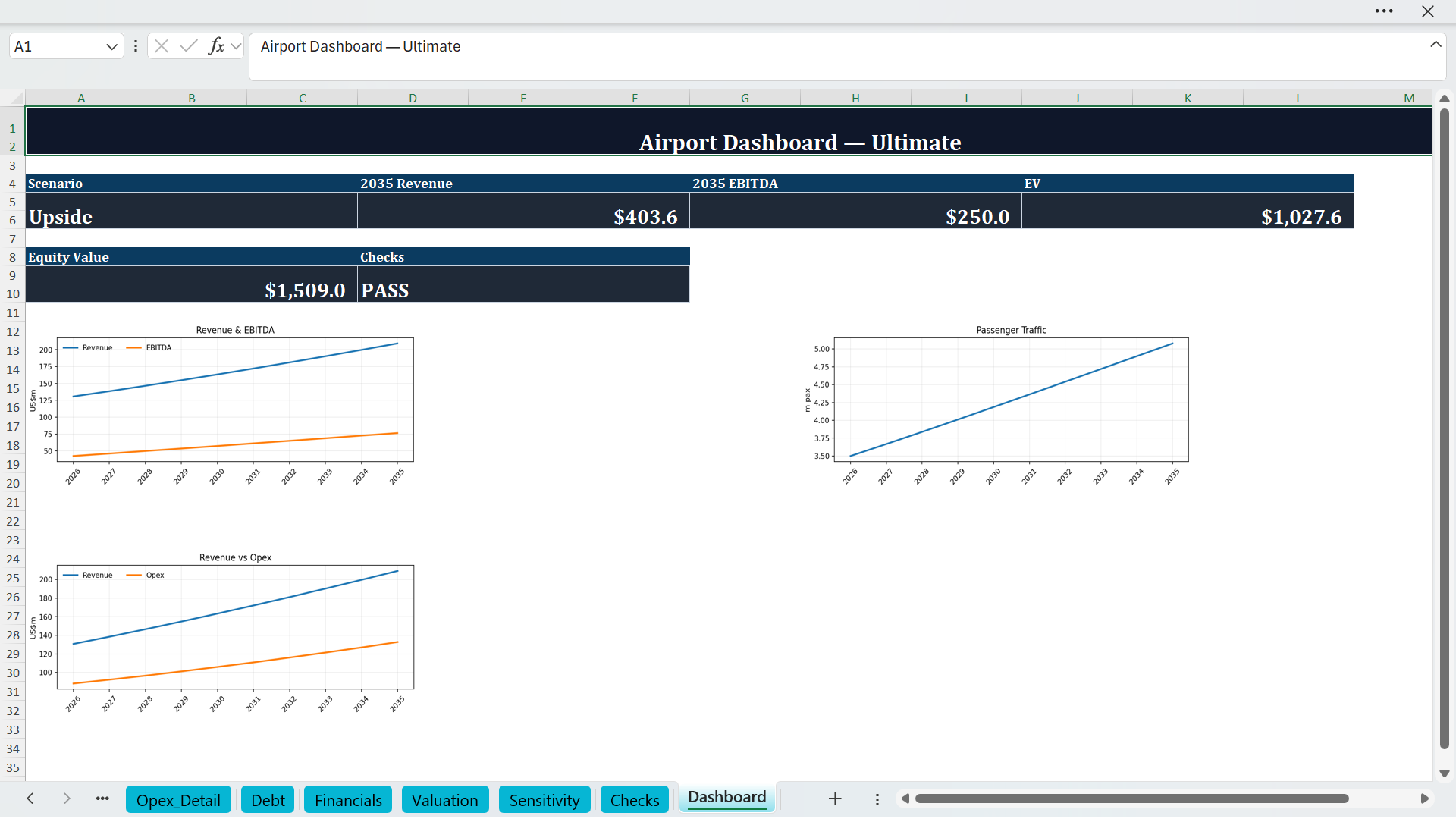
  • Dashboard with KPIs

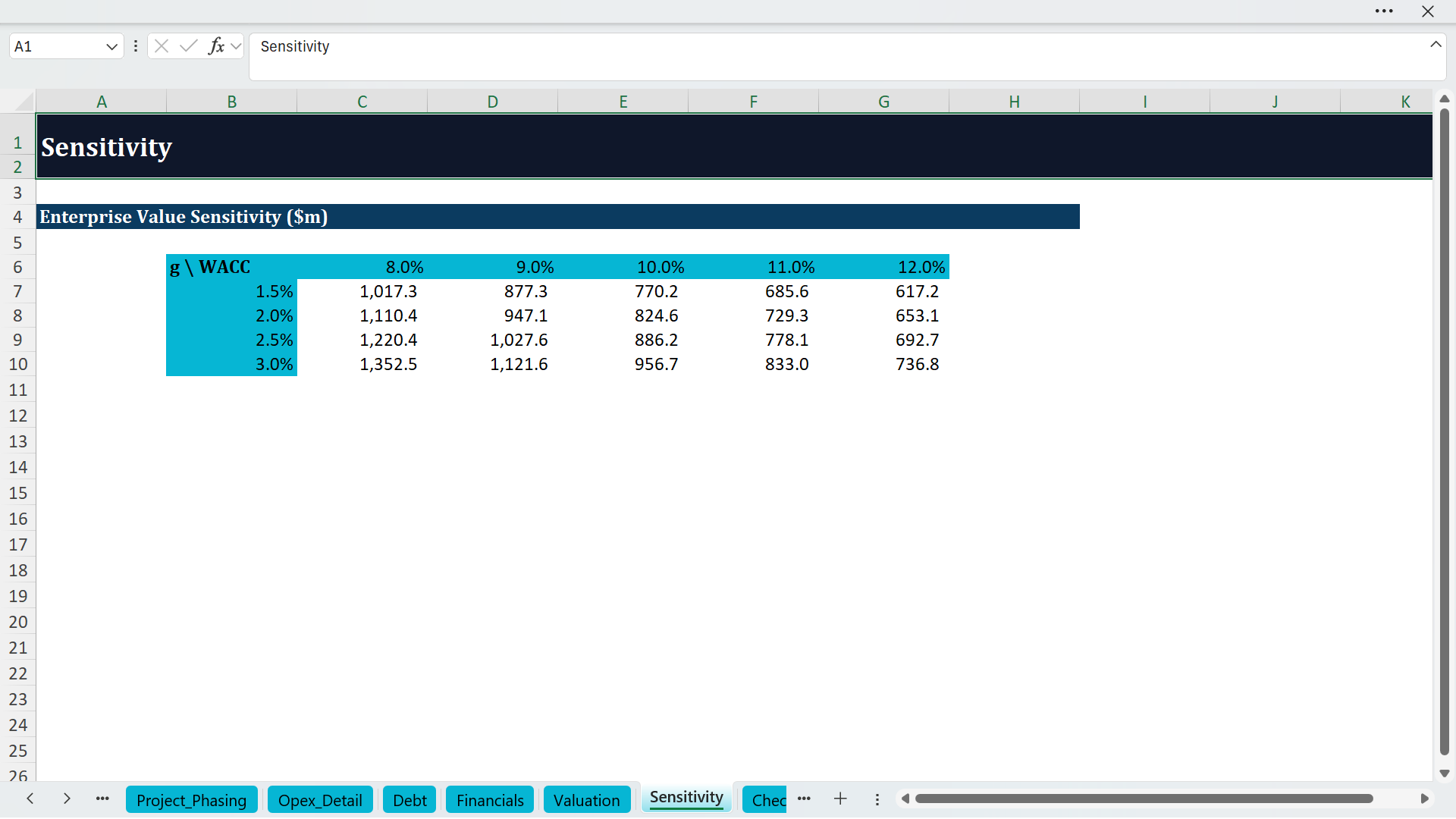
  • Sensitivity and scenario analysis

  • Built-in checks and balanced statements

Why do you need this Financial Model Template?
Airport economics are influenced by multiple moving parts — traffic growth, pricing, commercial revenue, operating costs, infrastructure investment, and capital structure all affect returns. A structured model helps bring these assumptions together in one place so users can review project performance more clearly and make better financing, valuation, and investment decisions.

This template helps you:

  • save modeling time

  • improve consistency

  • analyze traffic and revenue drivers

  • evaluate project and asset feasibility

  • review value and returns more clearly

  • present outputs in a professional format

Who is it best for?

  • Airport investors and operators

  • Infrastructure developers

  • Financial analysts

  • Consultants and advisors

  • Lenders and project finance teams

This Best Practice includes
1 PDF Preview, 1 Excel Model Pro, 1 Excel Model Lite

Acquire business license for $95.00

Add to cart

Add to bookmarks

Discuss

Further information

The Airport Financial Model Suite is a professional Excel-based template designed to evaluate the financial performance, feasibility, and valuation of an airport project or operating airport asset over a 10-year forecast period. It is built for investors, developers, airport operators, consultants, analysts, lenders, and project finance professionals who need a structured and practical framework for airport planning and investment analysis.

This model suite helps users assess whether an airport project is financially attractive by combining the main value drivers of the business into one integrated model. It captures passenger traffic, aero revenue, non-aero revenue, operating expenses, capex, funding, debt, financial statements, DCF valuation, dashboard reporting, and model checks in a clear and decision-friendly structure.

What is this model used for?
🔹 Airport feasibility analysis
🔹 10-year financial forecasting
🔹 Passenger traffic planning
🔹 Aero and non-aero revenue forecasting
🔹 Opex, capex, and debt analysis
🔹 Valuation and investment review
🔹 Scenario, sensitivity, and dashboard reporting

Airport economics are influenced by multiple moving parts — traffic growth, pricing, commercial revenue, operating costs, infrastructure investment, and capital structure all affect returns. A structured model helps bring these assumptions together in one place so users can review project performance more clearly and make better financing, valuation, and investment decisions.

📌 This template helps you:

save modeling time
improve consistency
analyze traffic and revenue drivers
evaluate project and asset feasibility
review value and returns more clearly
present outputs in a professional format
Who is it best for?
👨‍💼 Airport investors and operators
🏗️ Infrastructure developers
📊 Financial analysts
🧾 Consultants and advisors
🏦 Lenders and project finance teams


0.0 / 5 (0 votes)

please wait...