Publication number: ELQ-30846-1
View all versions & Certificate

Capital Allocation & Capex Appraisal Model — 20 Projects, WACC Builder, Risk-Adjusted Hurdles & Portfolio Rationing
A 26-tab capital allocation system for the finance team that has more worthwhile projects than budget: twenty projects over twenty-five years, a WACC built from
 by Hoda Elmorshidy
Financial Controller & Fractional CFO, in senior finance since 2017: IFRS reporting, FP&A, finance automation, Quantitative Analysis, Financial ModelingFollow
Further information
• Decide which capital projects to fund when the budget will not cover all of them, and defend that
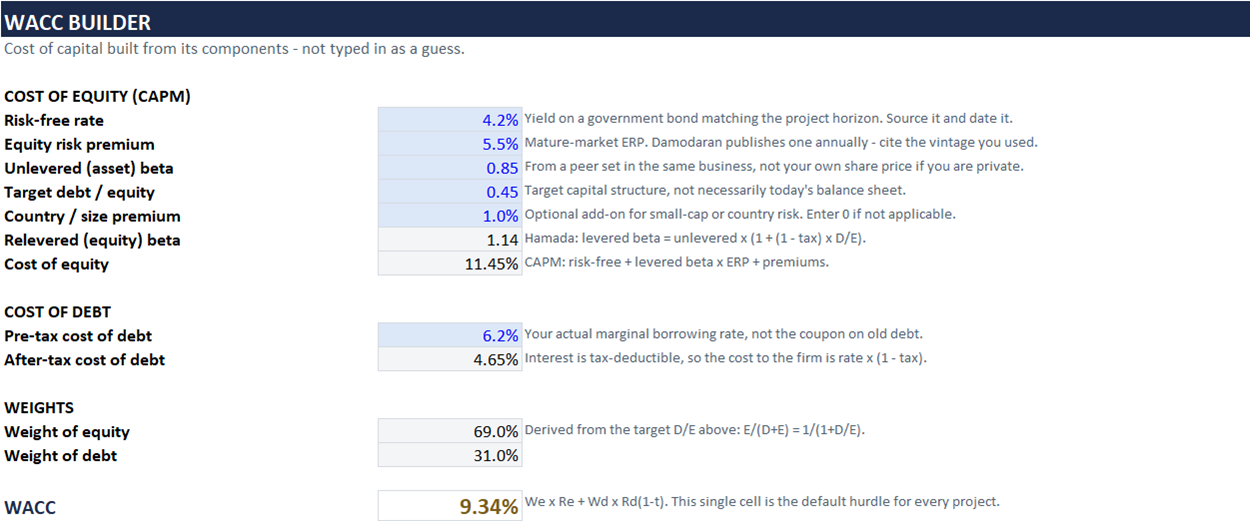
• decision. The model builds a cost of capital from CAPM and the target capital structure, assigns
• each project a hurdle rate reflecting its risk class, builds after-tax free cash flow from drivers
• with full tax depreciation including MACRS, computes NPV, IRR, MIRR, profitability index,
• equivalent annual cost, payback and discounted payback for up to twenty projects over twenty-five
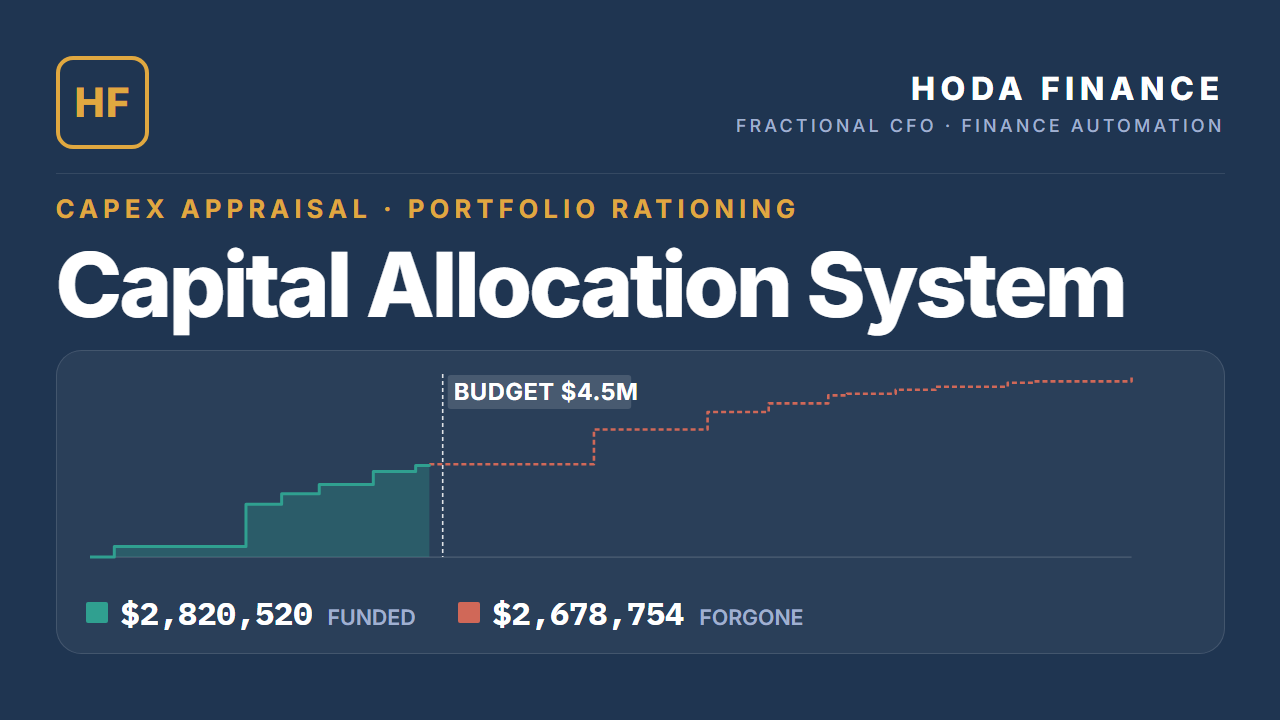
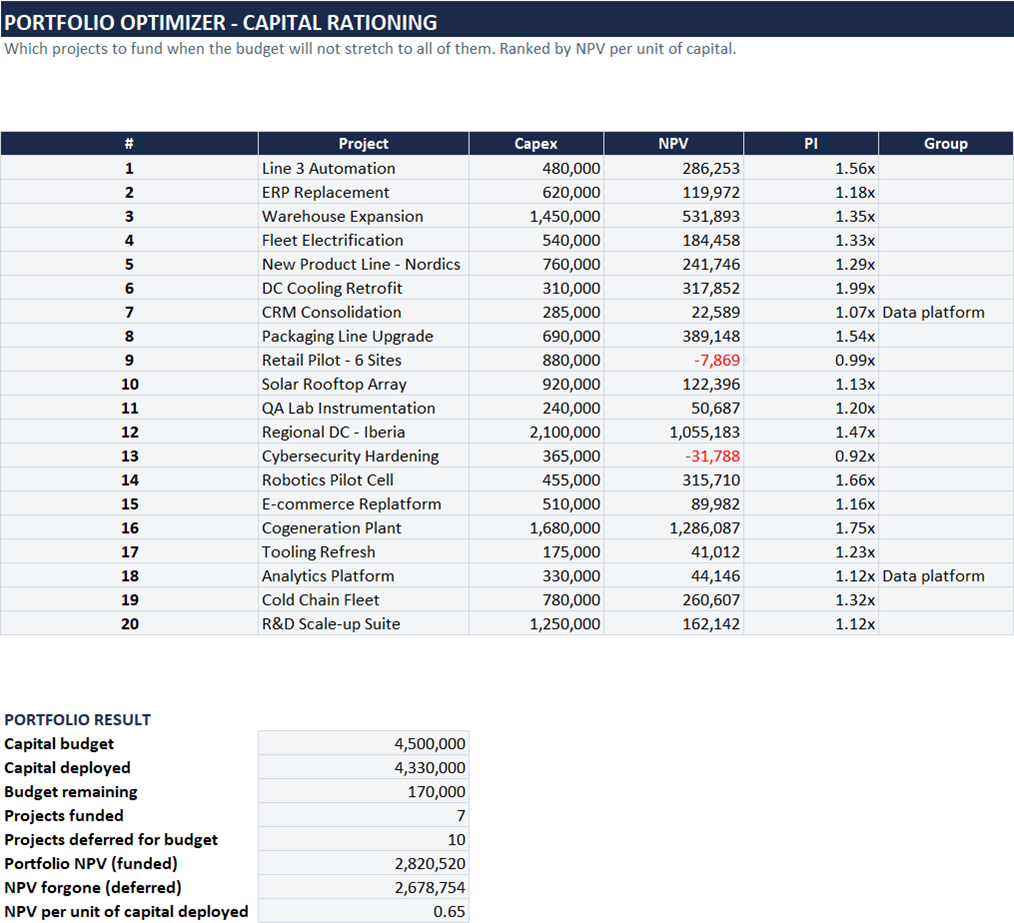
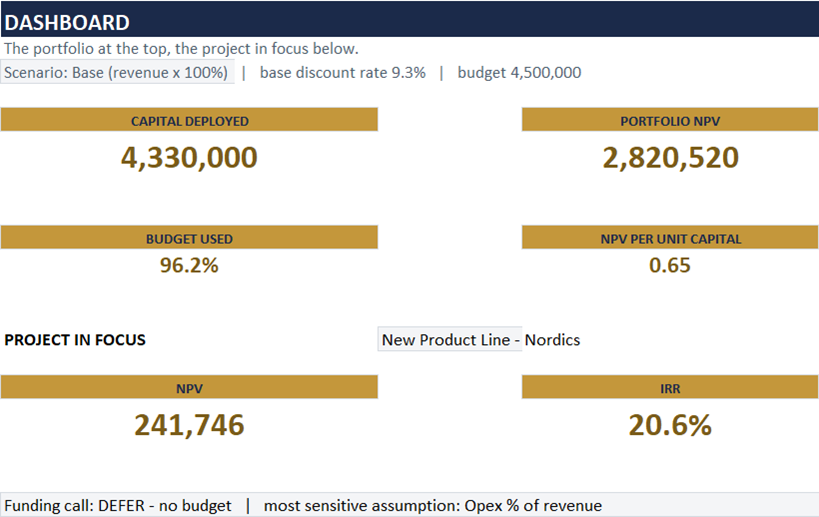
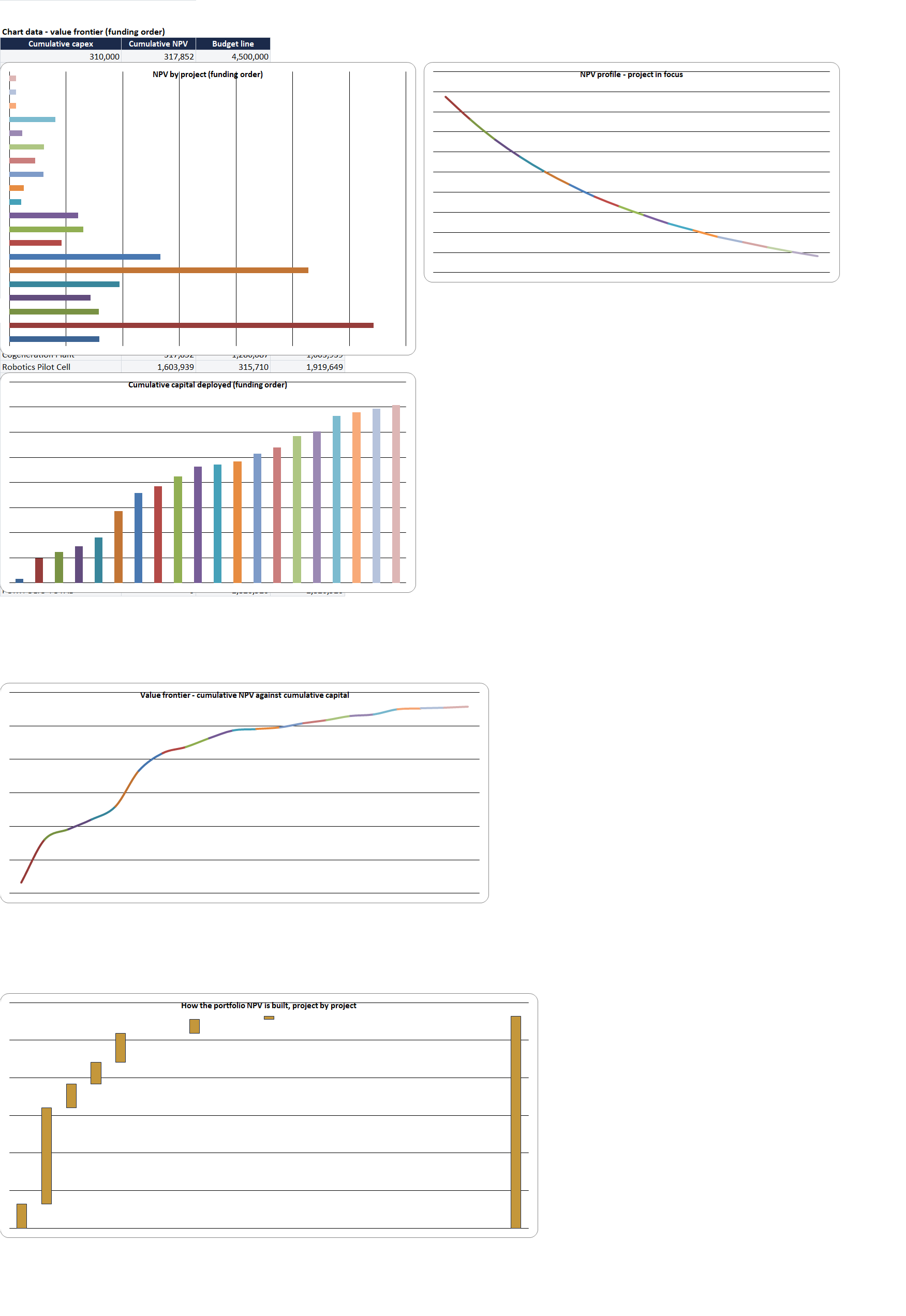
• years, and then allocates a fixed capital budget across them by NPV per unit of capital. It
• produces the funded list, the deferral list with the NPV forgone, a category and risk-class
• roll-up, an auto-filled capex approval memo and a printable executive summary.
• An annual or periodic capital cycle in which multiple project submissions compete for a fixed
• budget. Corporate or mid-market rather than project-finance or fund contexts. Projects that can
• be described as a Year-0 capital outlay followed by operating cash flows over a defined life.
• Situations where the finance team must justify both what was funded and what was not, and where
• the hurdle rate itself is likely to be challenged. Equally useful where the process needs
• discipline rather than sophistication: explicit risk premiums, a documented cost of capital, and
• a post-investment review that closes the loop.
• Not a three-statement model — it will not show the financing, covenant or balance-sheet
• consequences of the capital programme as a whole. Not project finance: there is no debt sizing,
• no DSCR sculpting and no non-recourse structure. Capex is a single Year-0 outlay, so genuinely
• phased or multi-year construction spend needs the manual cash-flow row rather than the driver
• builder. Single currency, with no FX translation. Projects are treated as independent unless
• explicitly grouped as mutually exclusive, so it will not model one project's benefit depending on
• another being built. Section 179, bonus depreciation and MACRS are US federal concepts and should
• be set to zero outside the US. It cannot assess whether the underlying forecasts are realistic.