

Buy Now, Pay Later (BNPL) Excel Financial Model Template for Startups
Originally published: 31/03/2025 07:22
Publication number: ELQ-34479-1
View all versions & Certificate
certified

Buy Now, Pay Later (BNPL) Excel Financial Model Template for Startups

Simulate the startup and operations / exit of a Buy Now, Pay Later business. Includes a robust set of assumptions for all aspects of the business.

Description

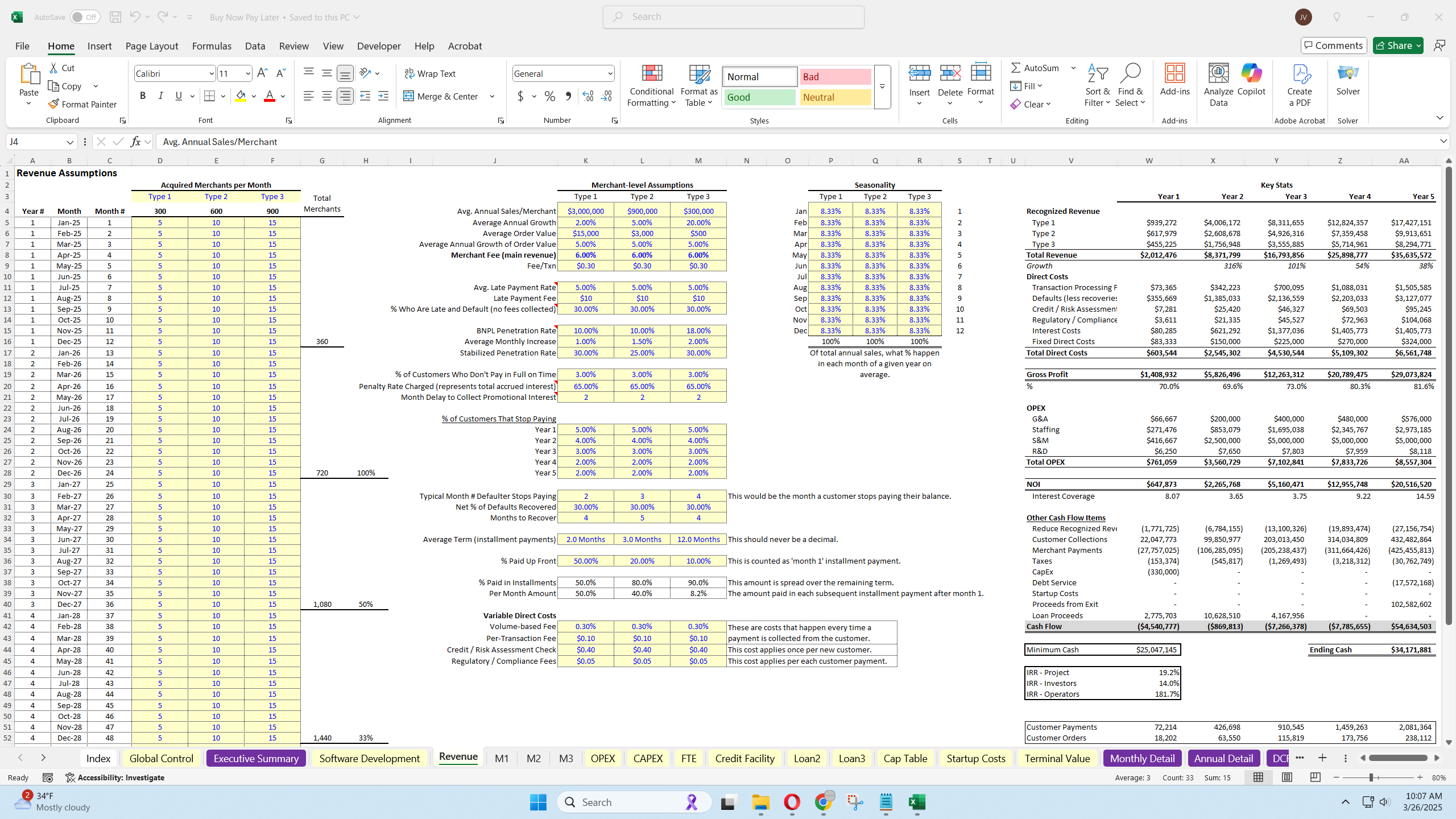
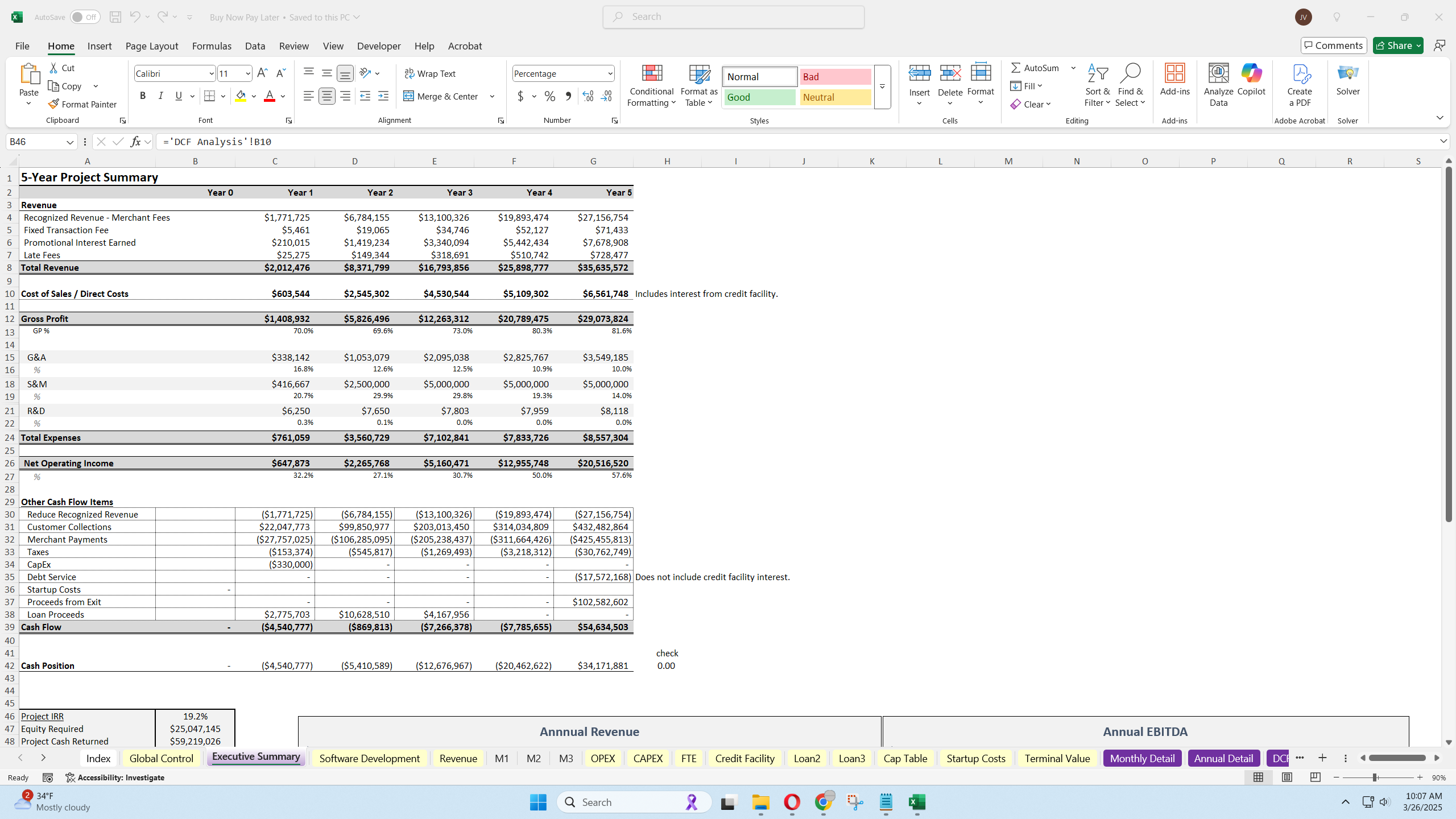
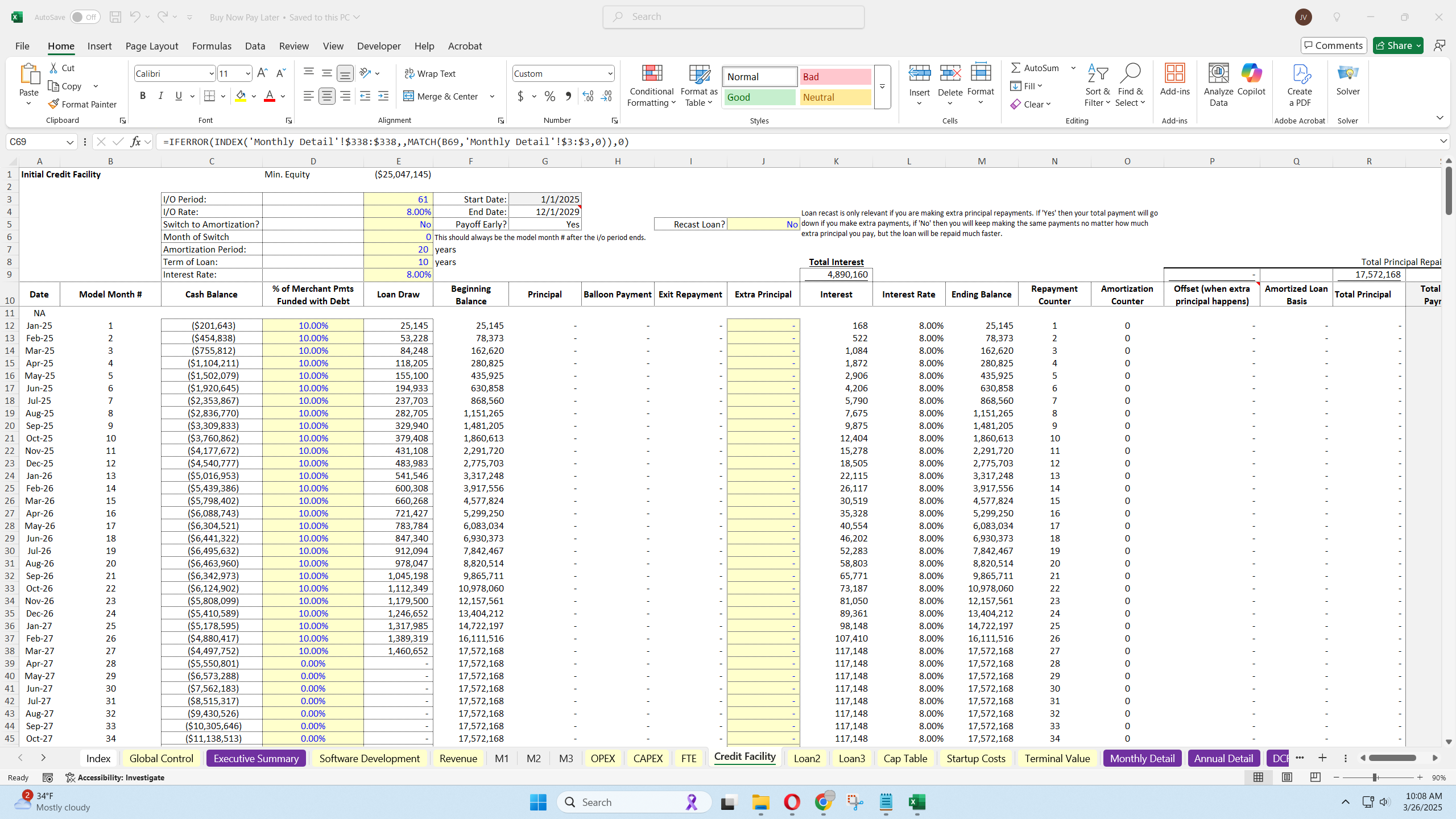
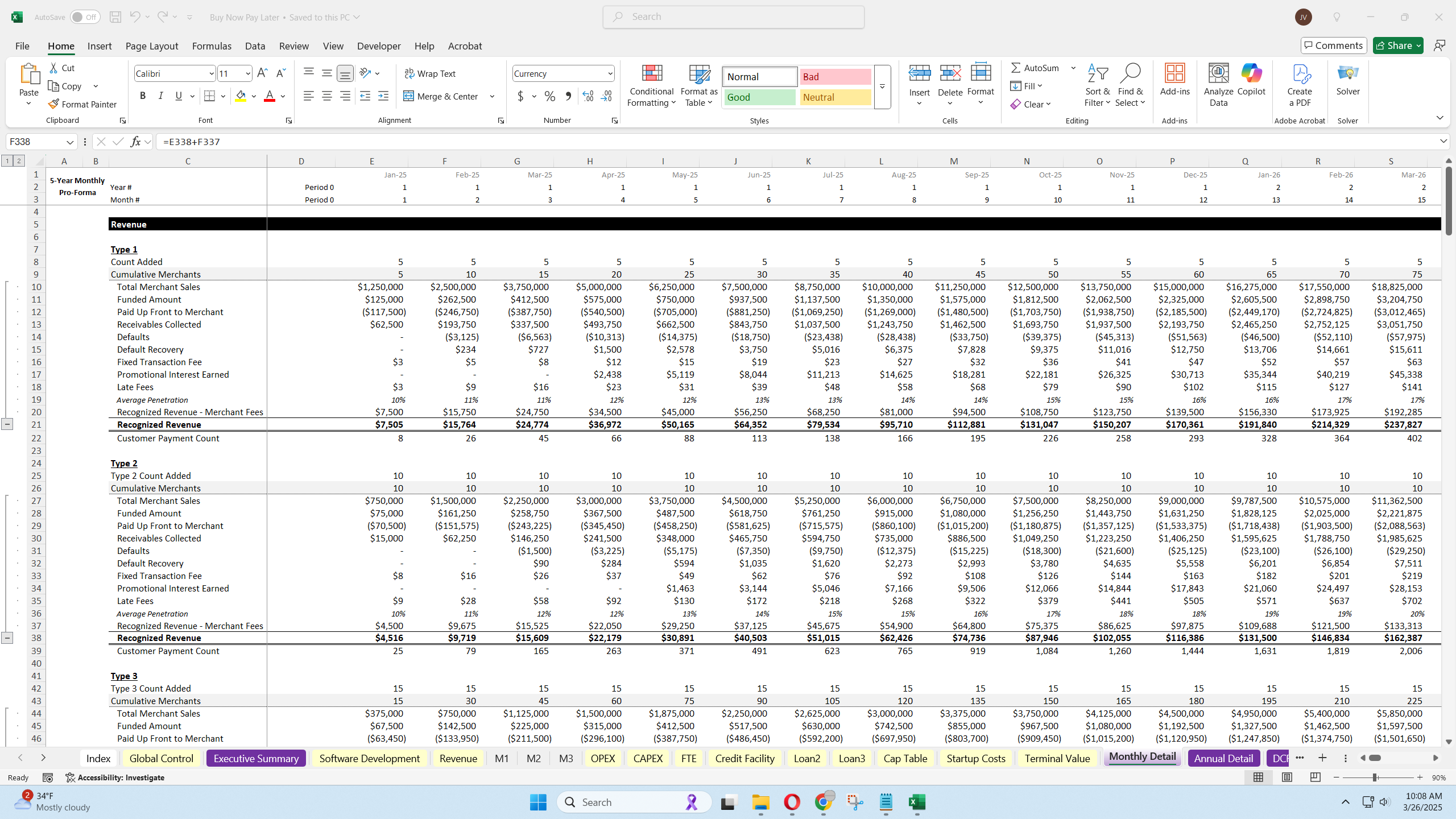
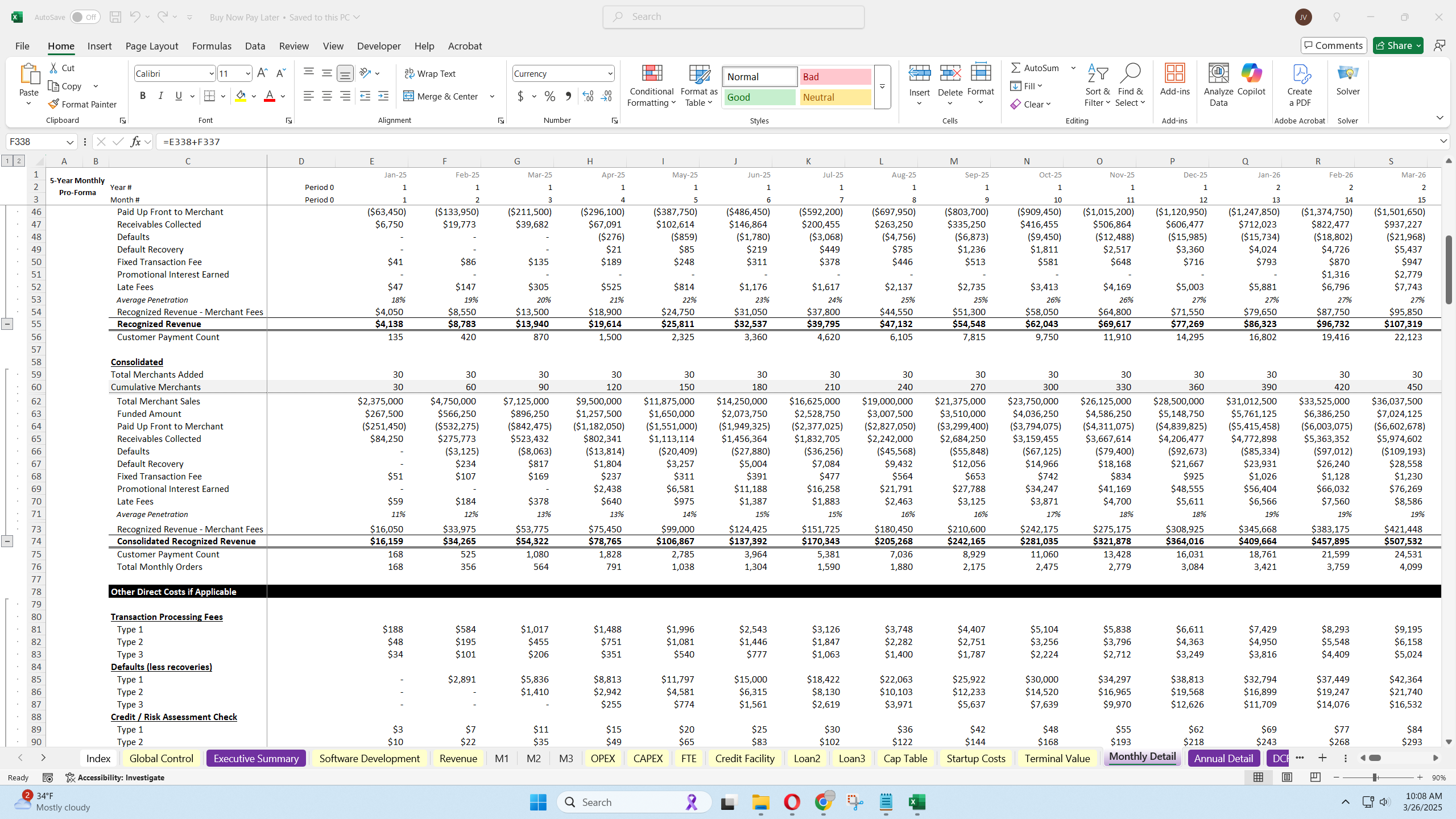
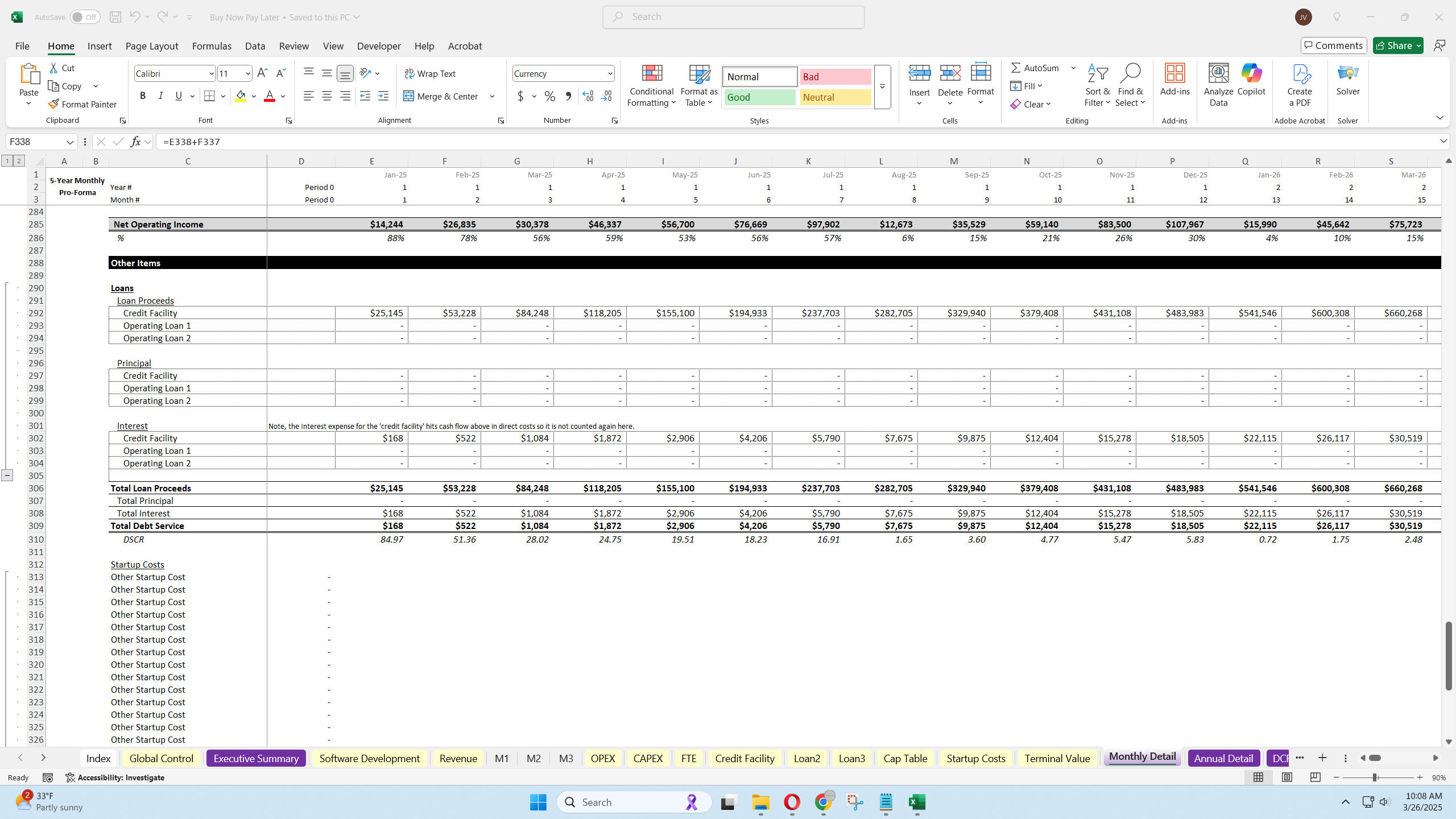
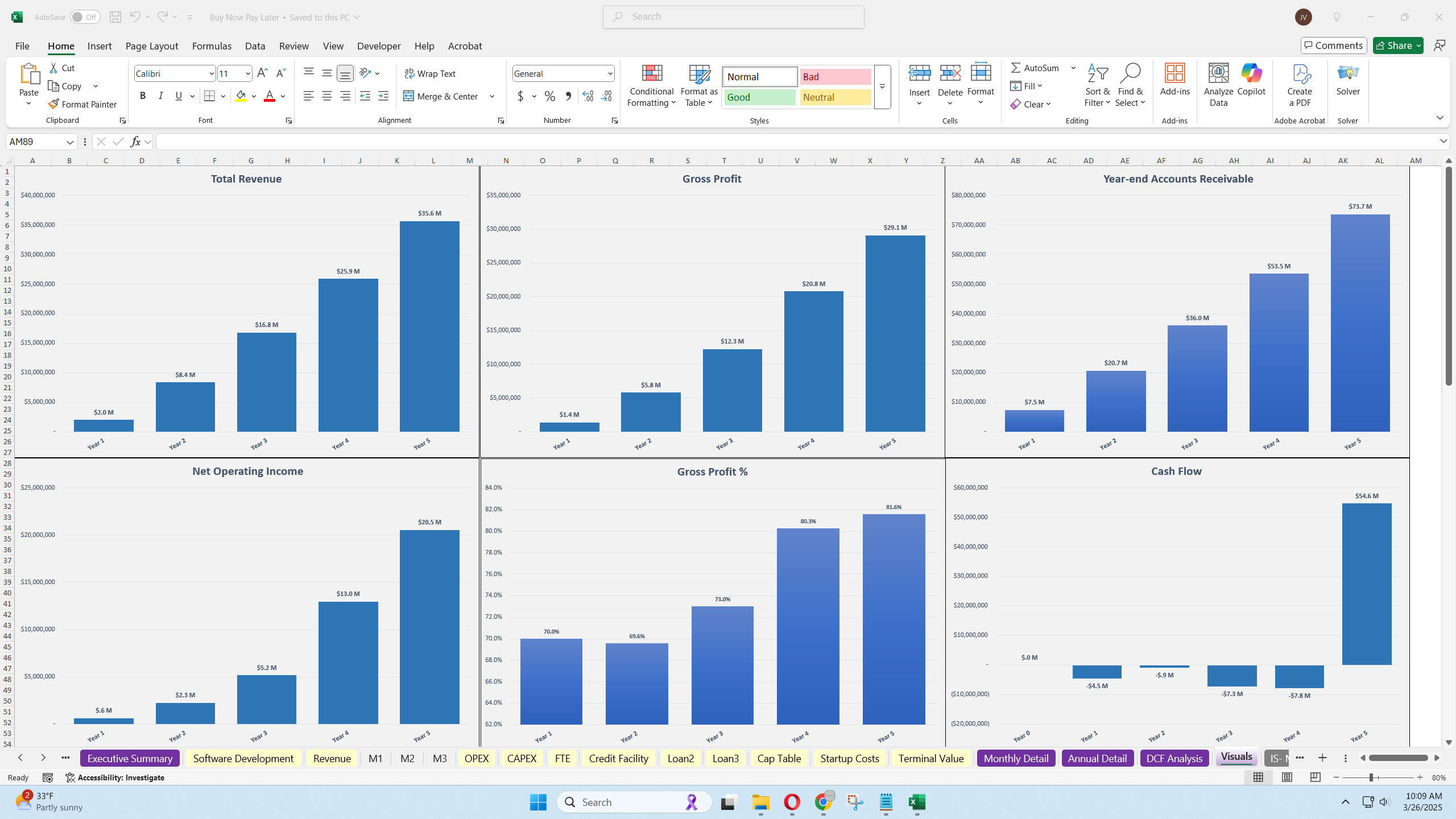
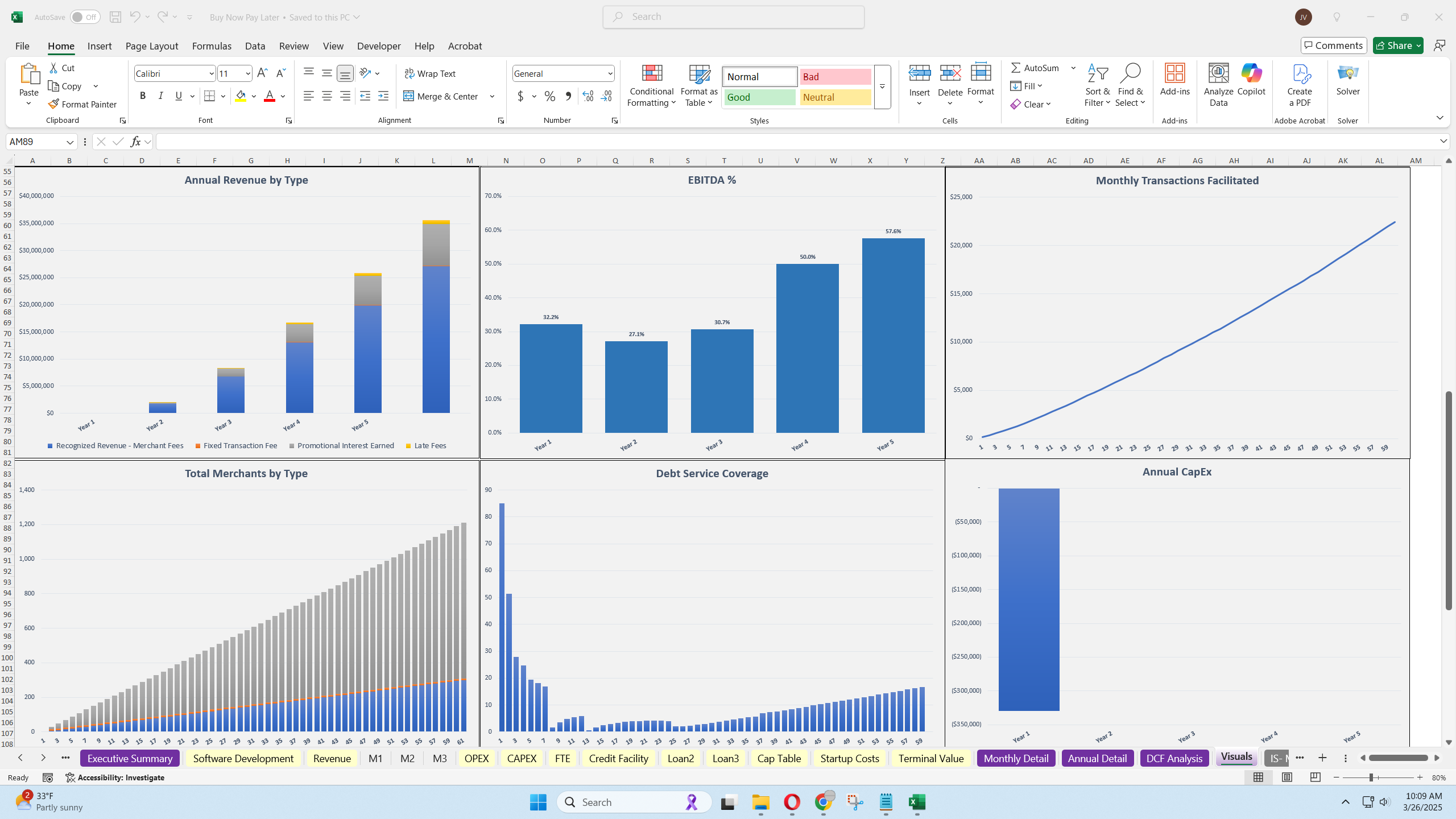
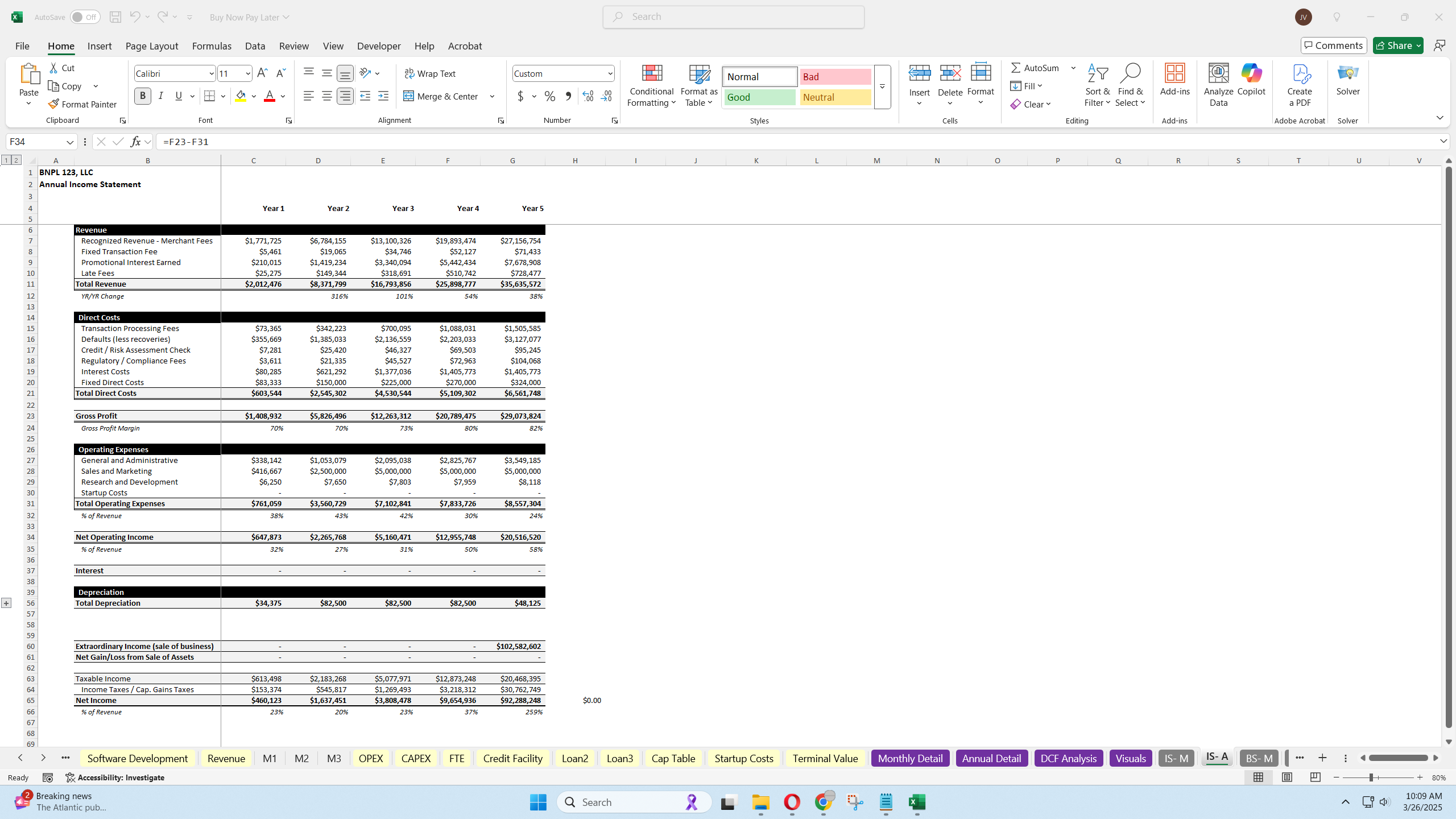
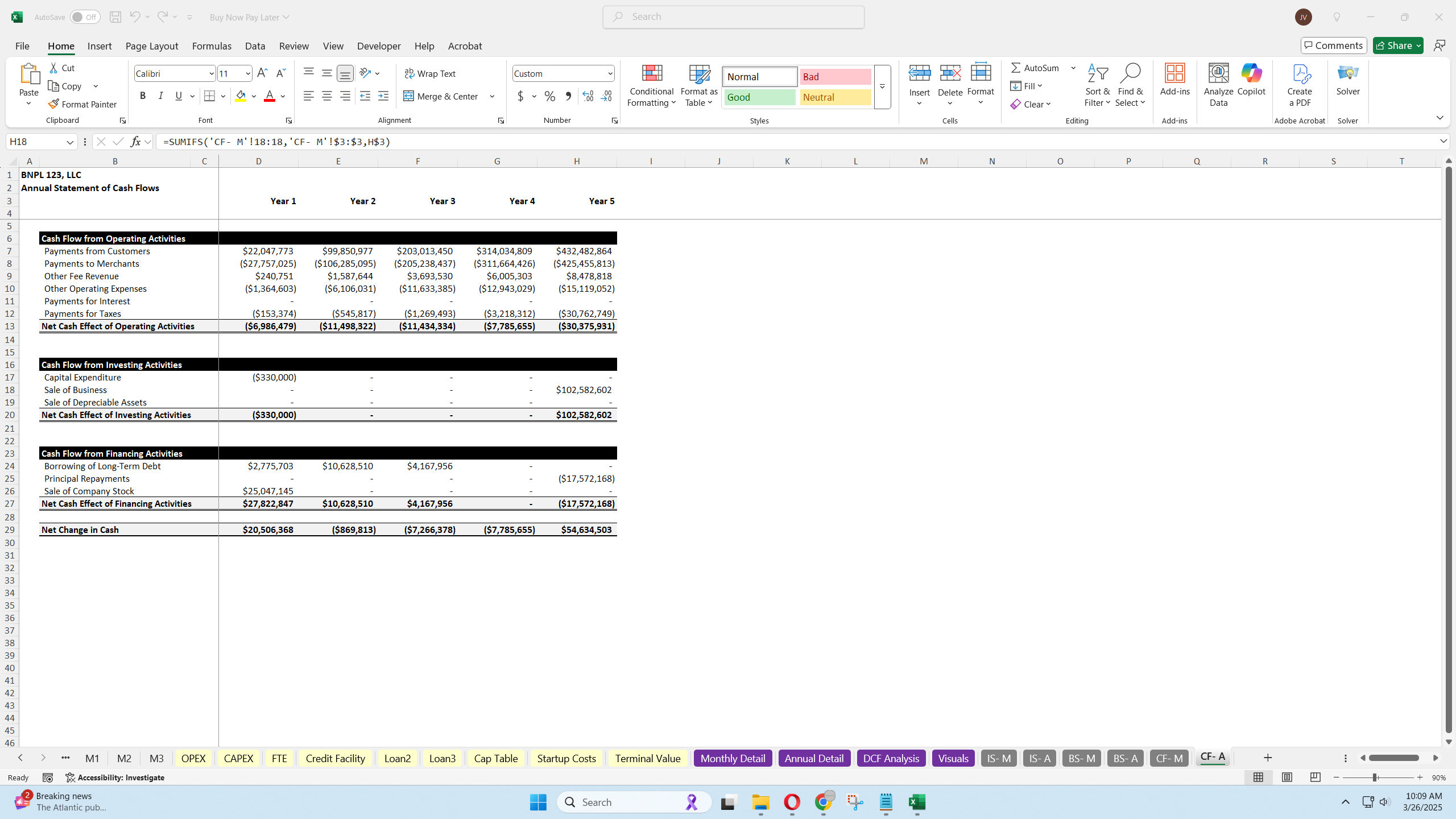
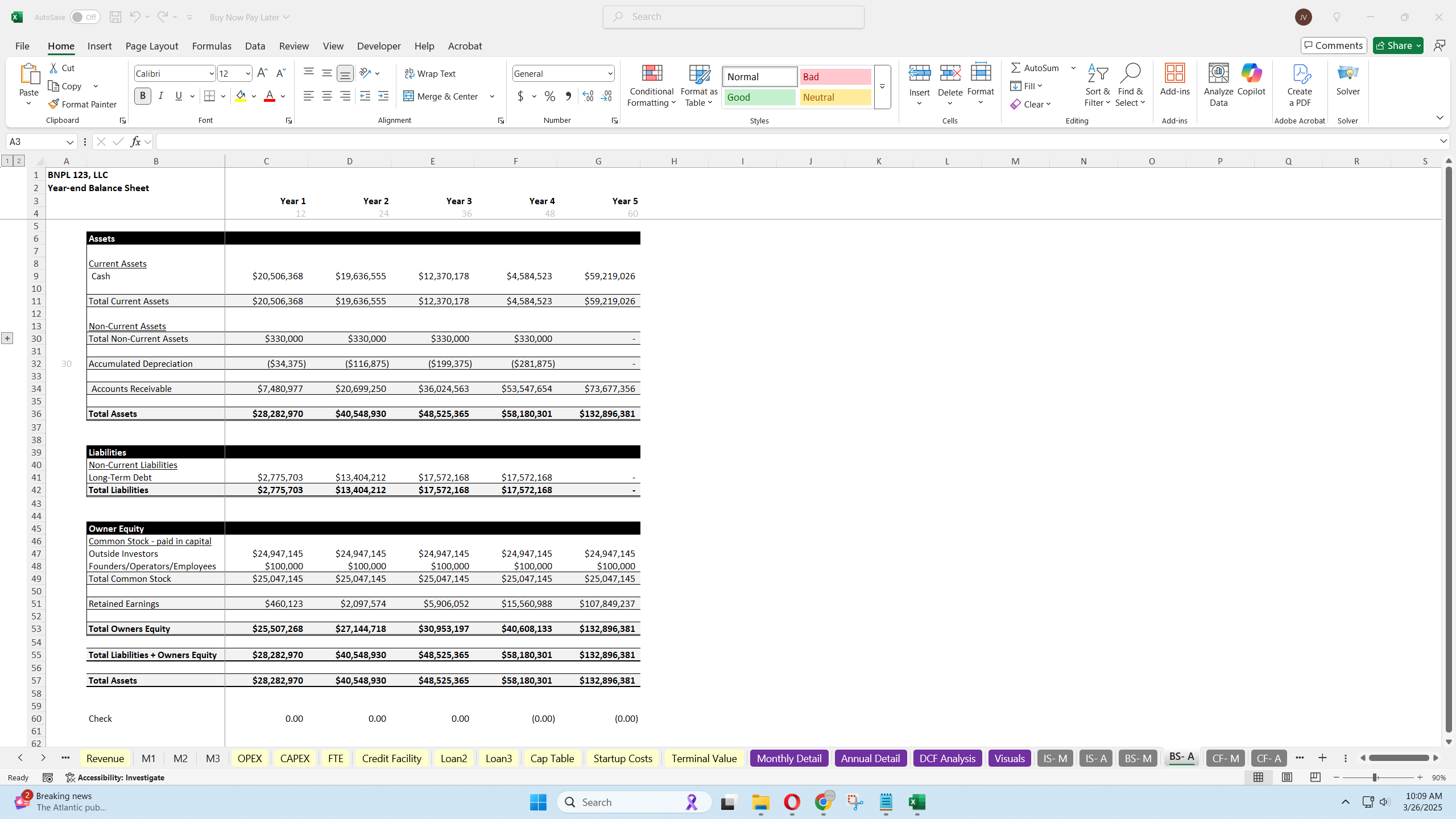
All of the assumptions in this BNPL financial model work in tandem to create a cohesive simulation tool that accurately reflects the real-world dynamics of a buy now, pay later operation. By segmenting merchant types, growth rates, default probabilities, and repayment terms, the model gives users the granularity needed to forecast revenue and cash flow on a highly detailed level. Each merchant type can have its own set of sales and order value patterns, which flow into the overall transaction volume. This, in turn, directly affects the credit facility utilization, as a greater share of financed transactions will increase the interest expense—a cost of revenue. Users can easily adjust all these variables in real time and see the immediate impact on the Income Statement, Balance Sheet, and Cash Flow Statement.


The late fee revenue, promotional interest, and default assumptions help capture the variation in repayment behavior among customers. When these rates or fees change, the adjustments flow through the rest of the model: the Income Statement reflects a change in top-line income, while the Balance Sheet records how much is still owed, shifting the Accounts Receivable balance. In parallel, the monthly allocation of payments between upfront vs. installments determines how quickly the BNPL firm recoups the merchant funding. This interplay is crucial for understanding short-term liquidity needs and long-term profitability.


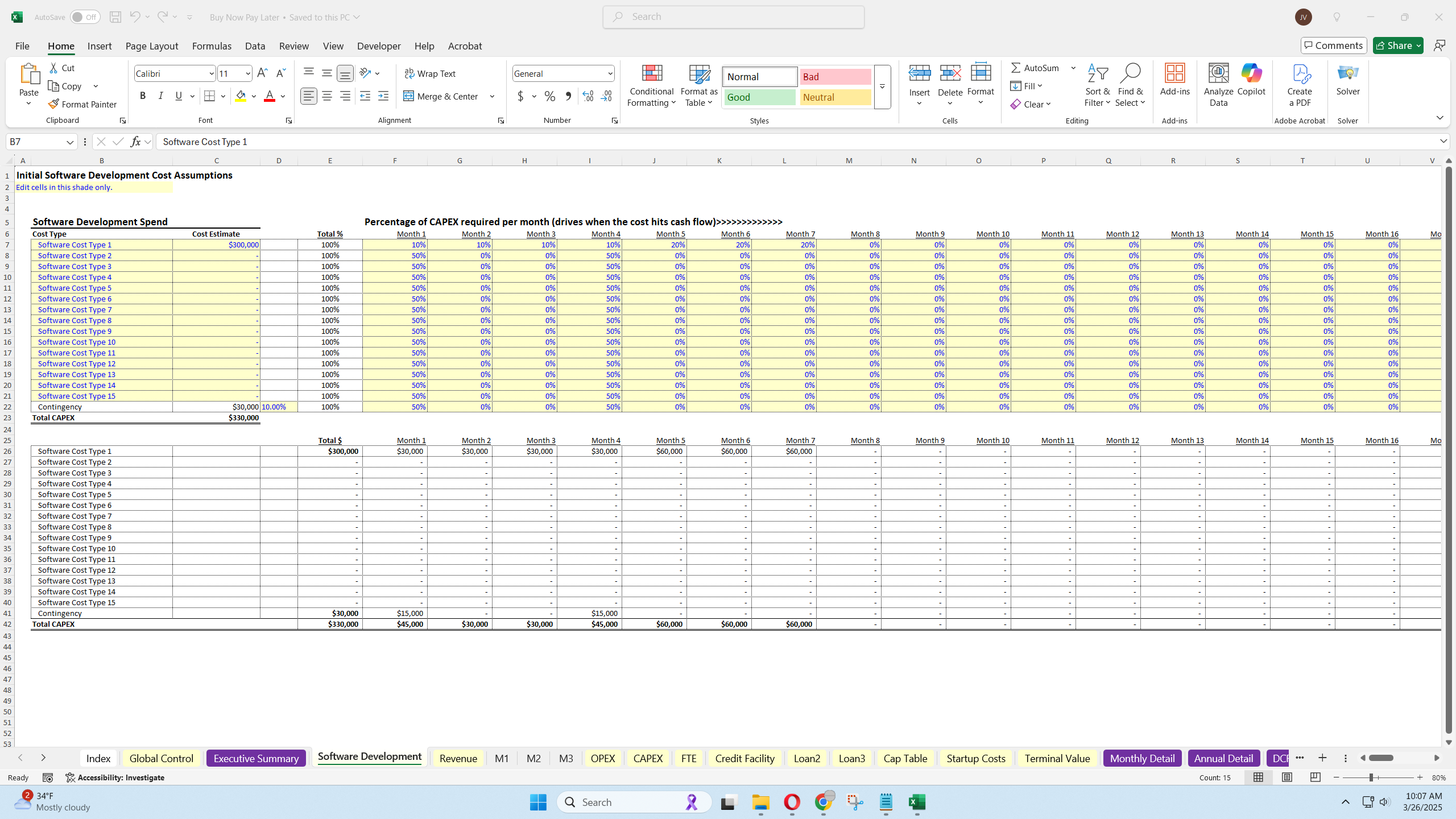
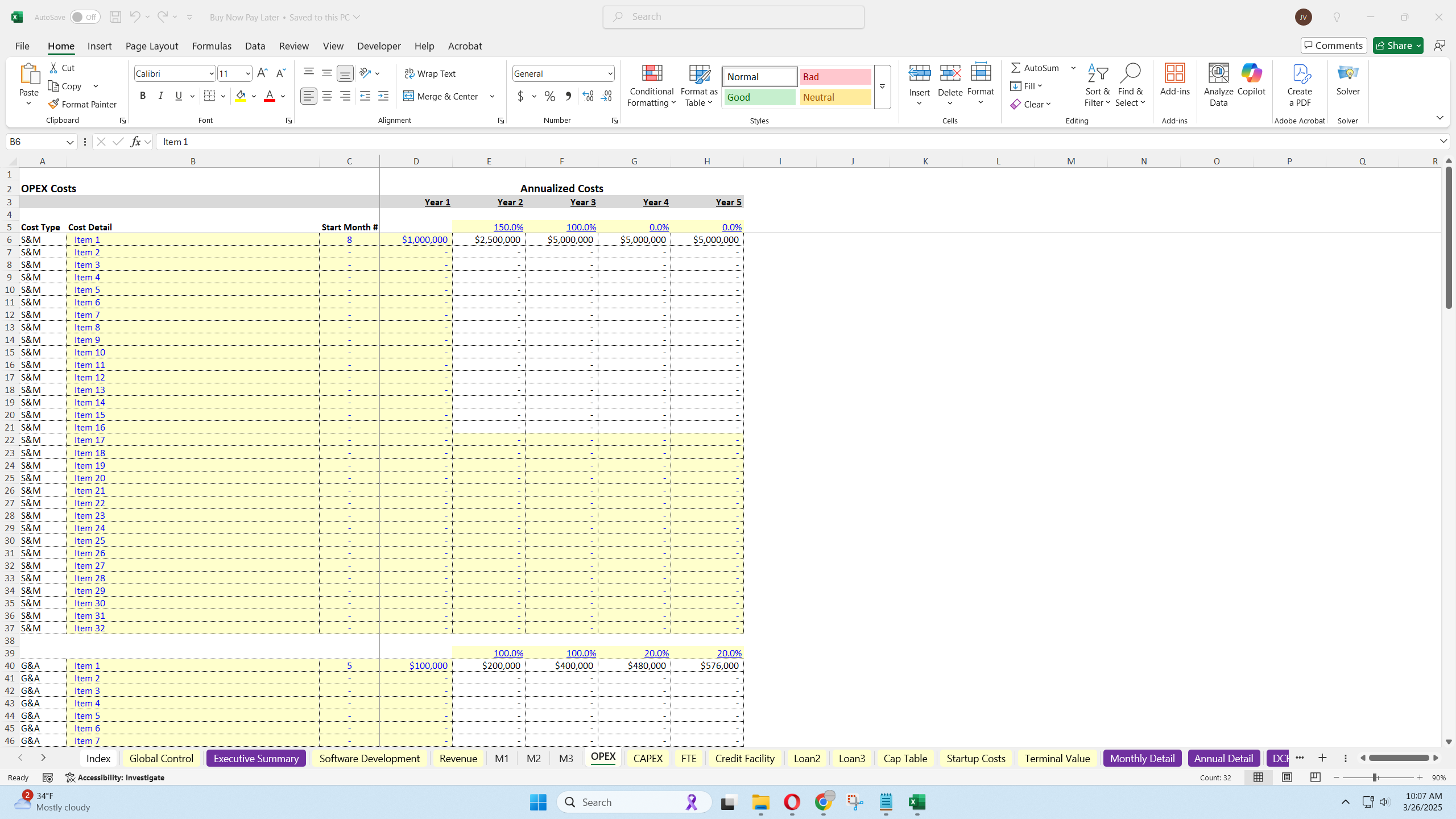
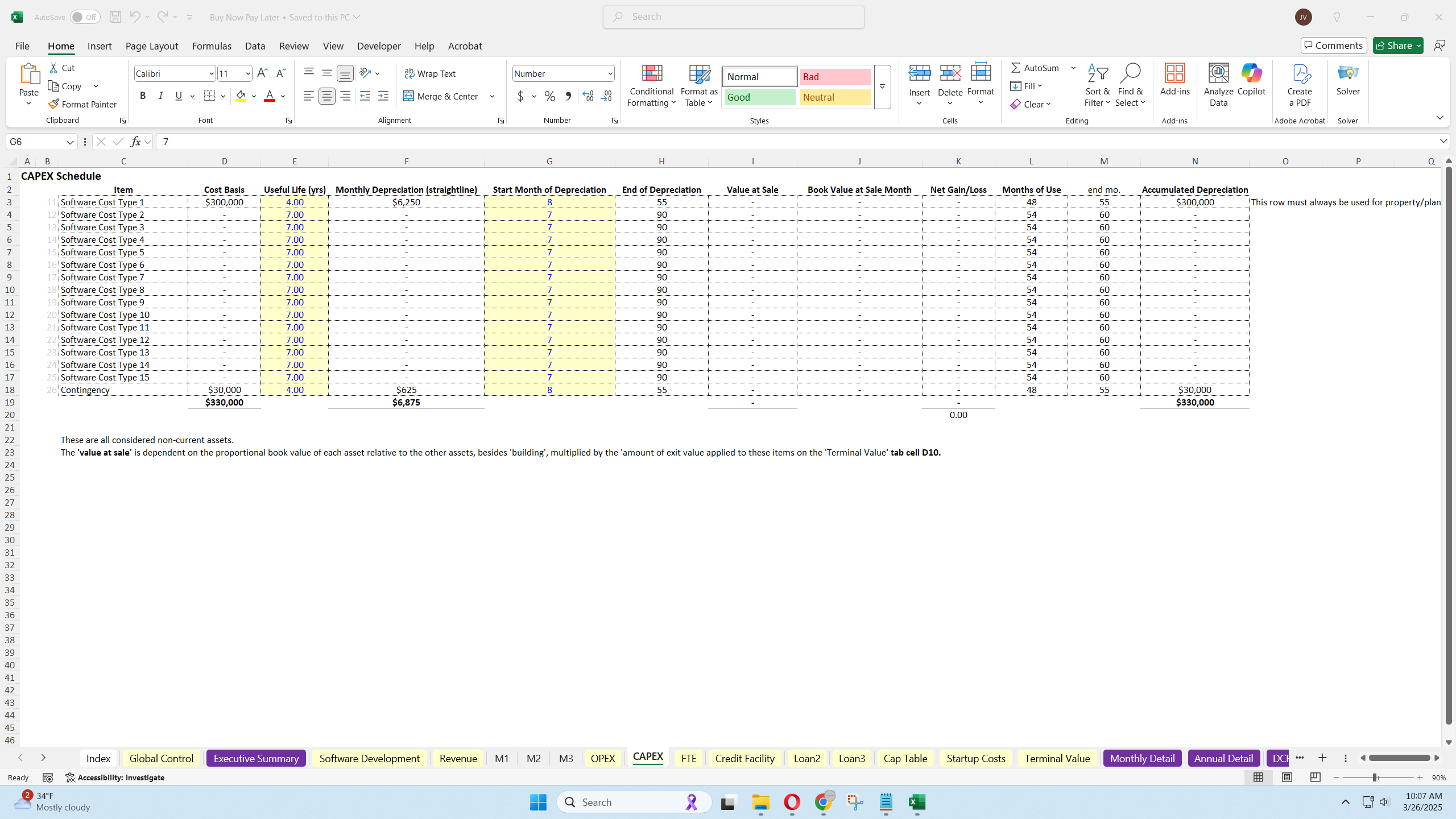
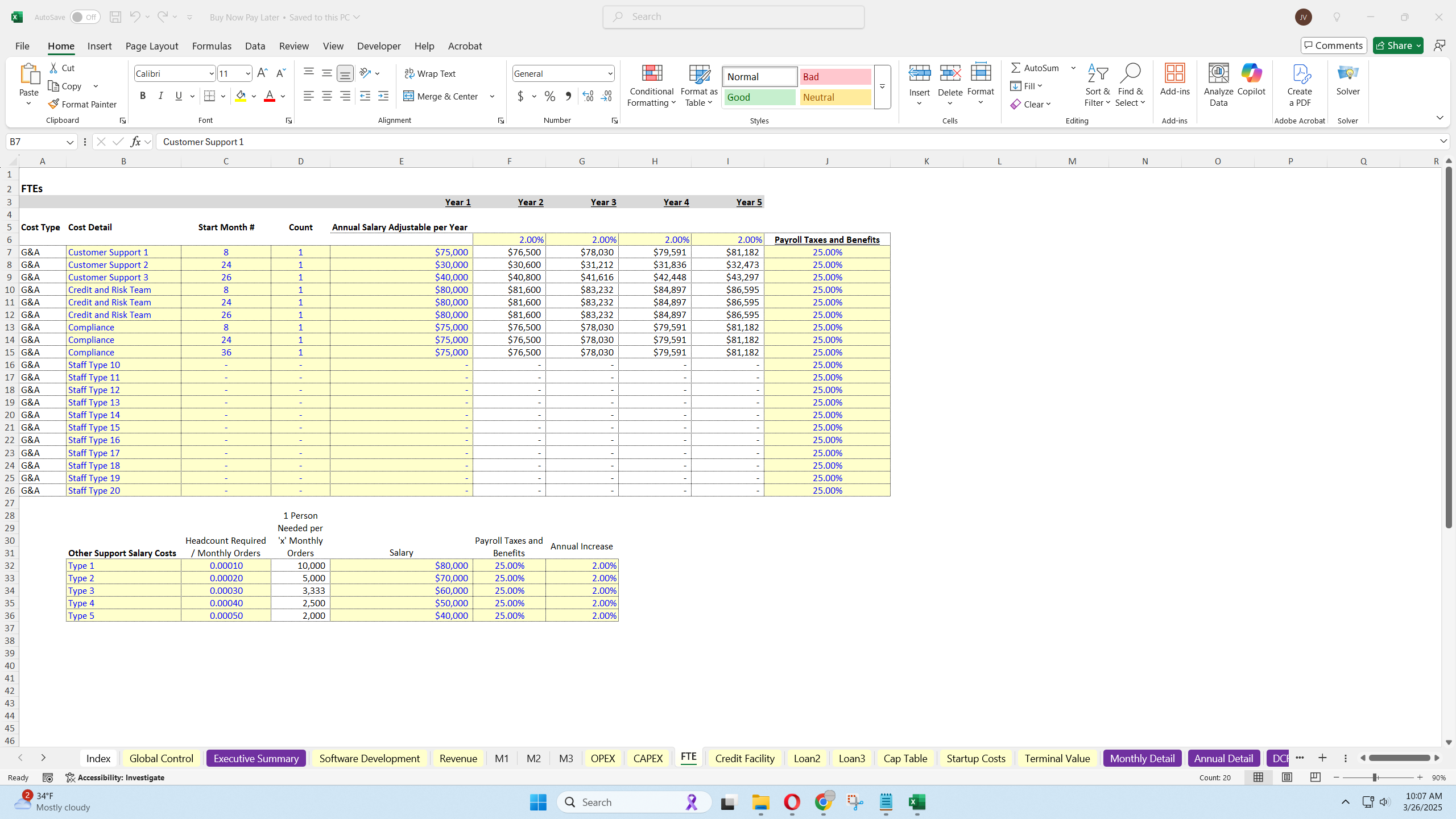
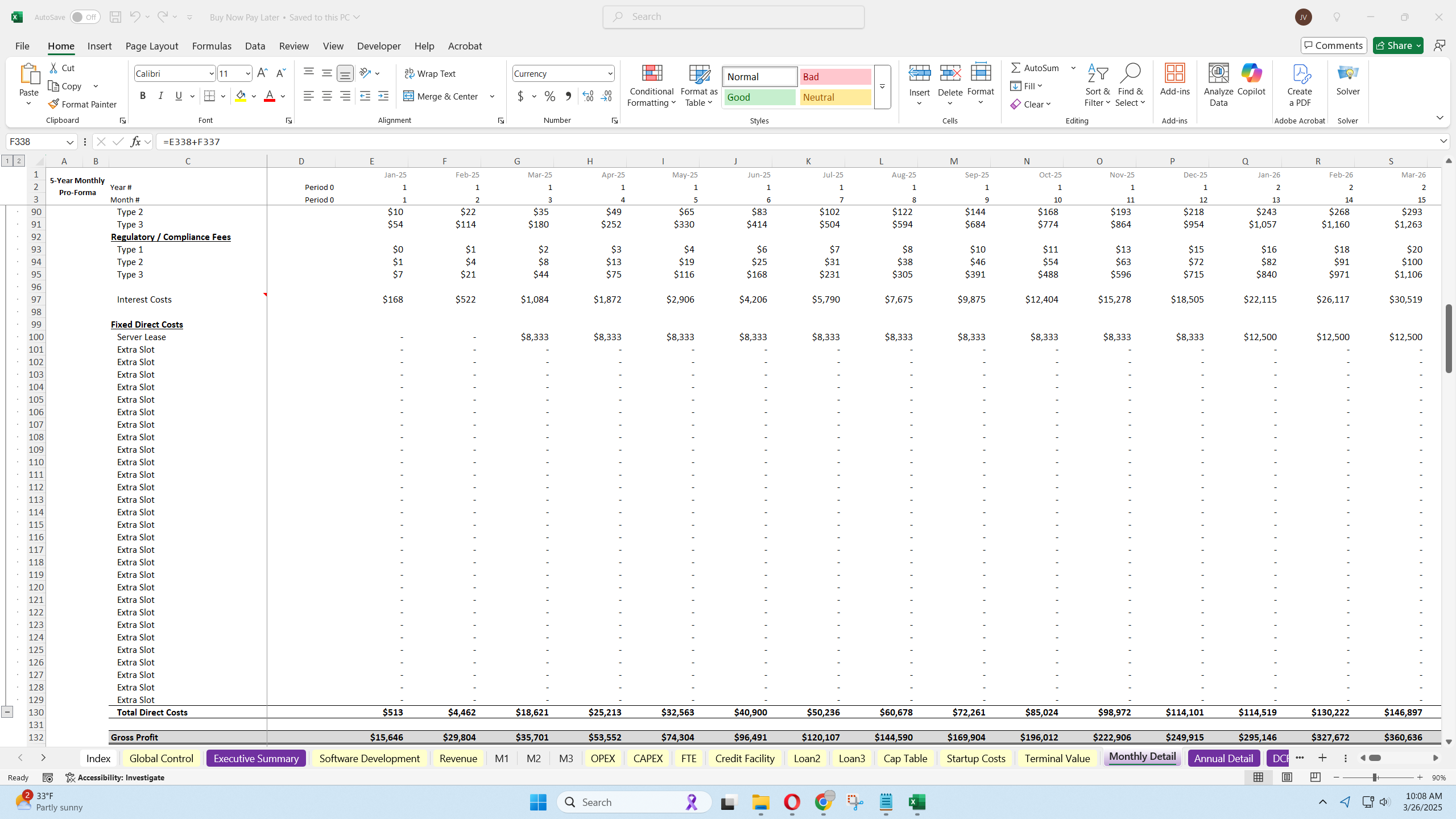
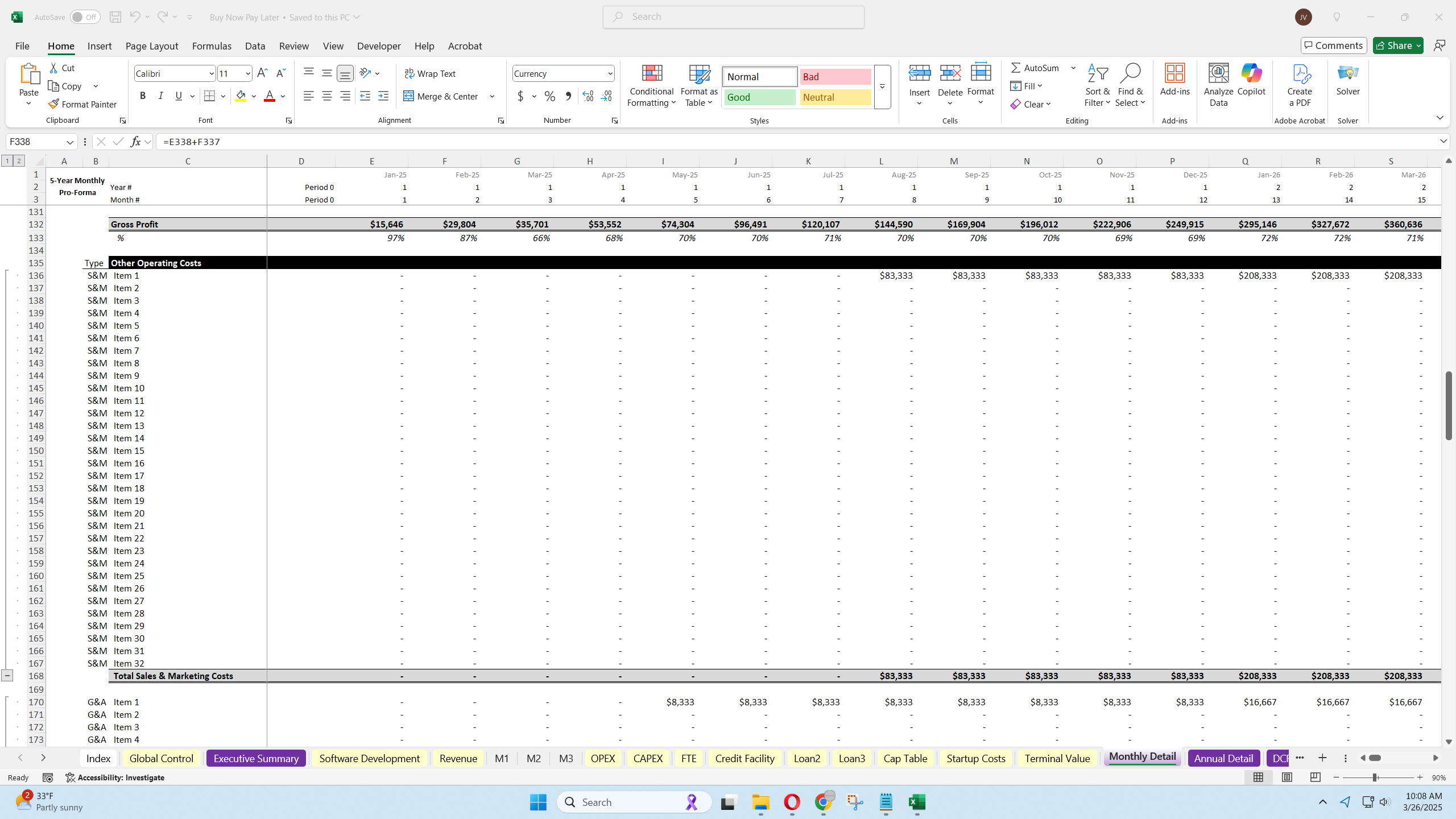
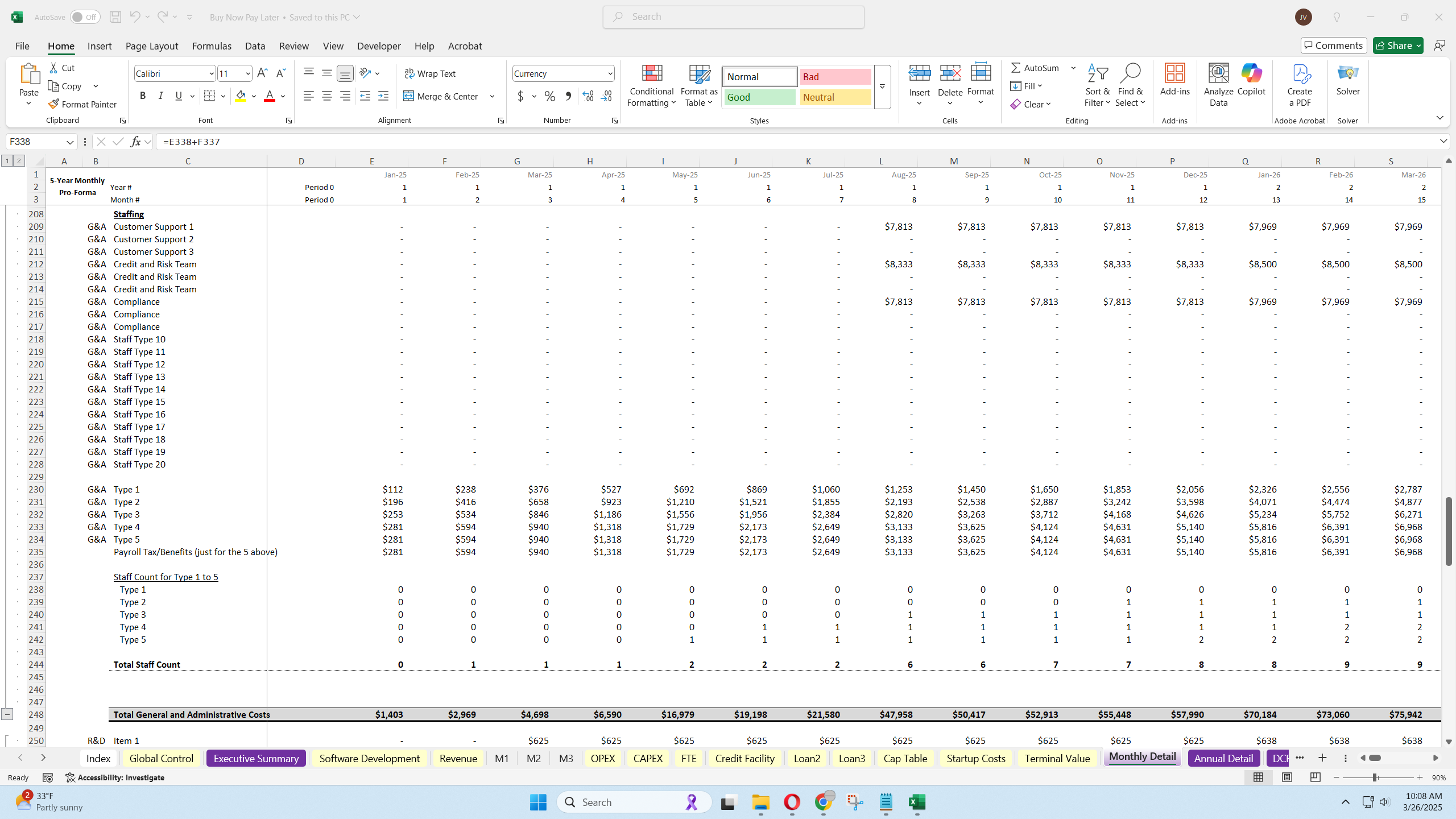
On the operating expense side, scaling employee costs provide a realistic view of how headcount will grow in relation to expanding transaction volumes. Users can input the ratio of orders per employee type, define salary and benefit structures, and determine how these evolve over time. This not only offers a detailed operating cost projection but also clarifies the timing of when additional staffing might be required based on rising transaction flow. Meanwhile, the software development and fixed costs schedules ensure that any capitalized buildout costs and ongoing fixed expenses are consistently tracked and depreciated, reflecting both the immediate and long-term financial implications of launching and expanding a BNPL platform.


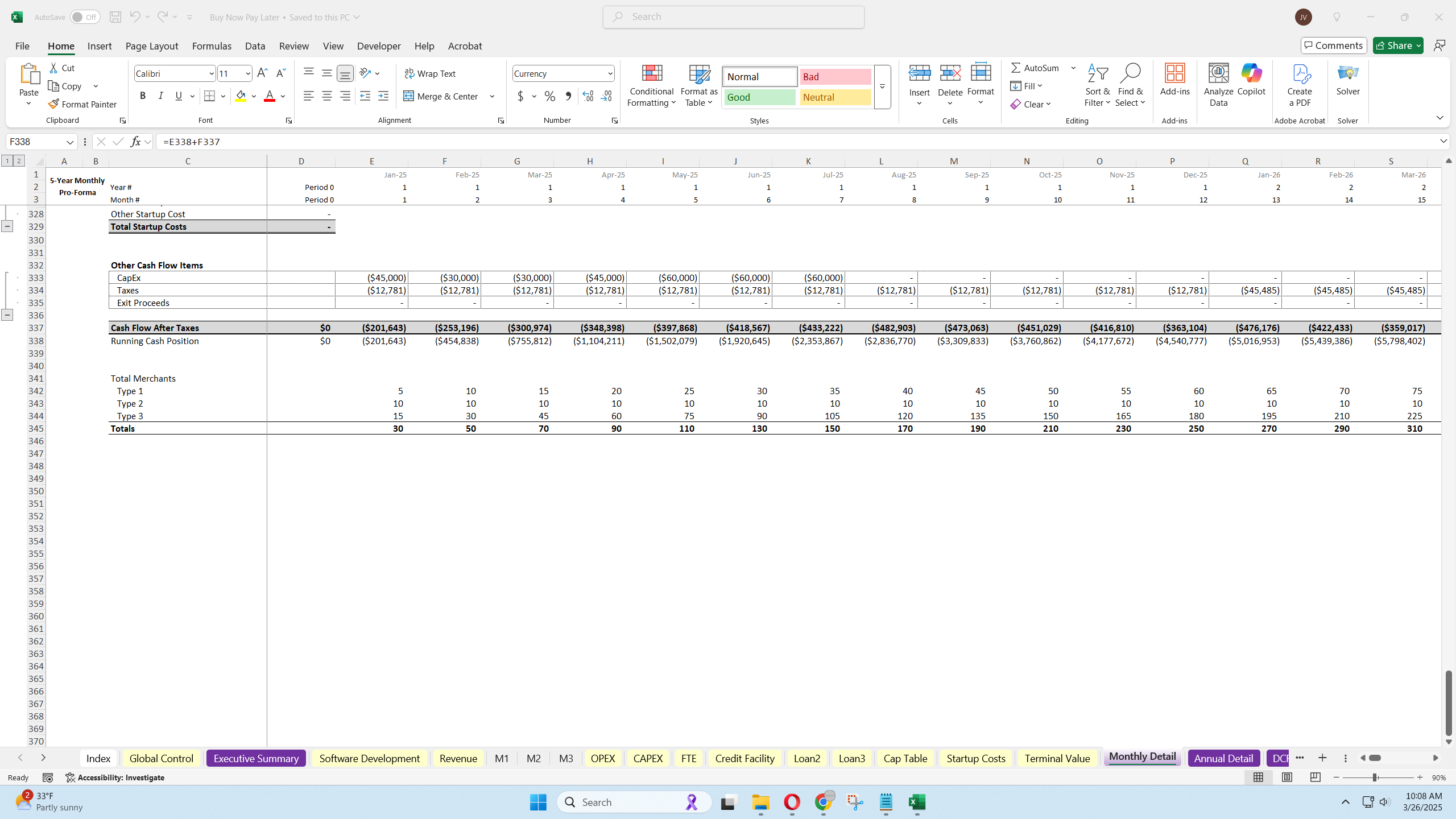
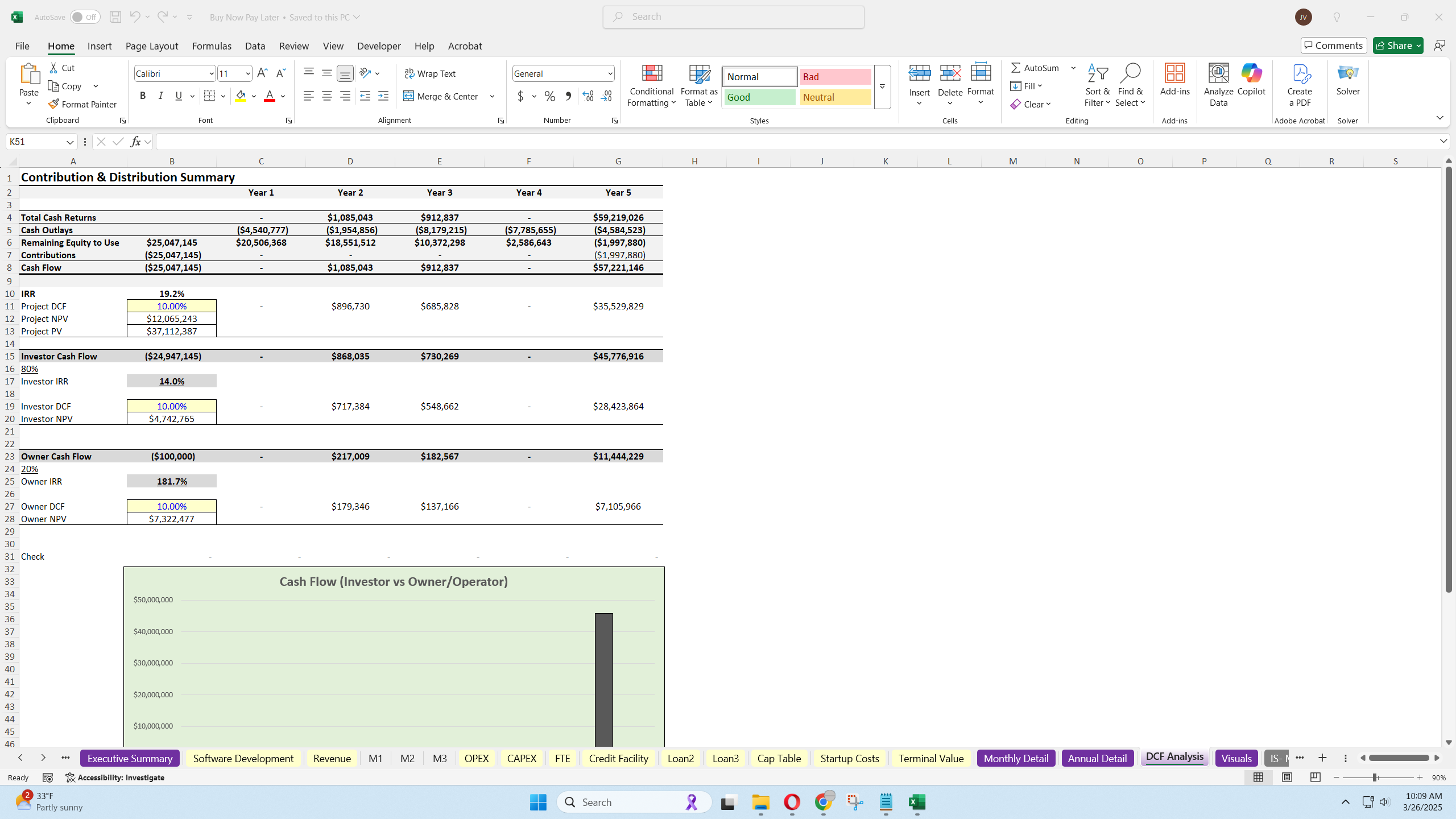
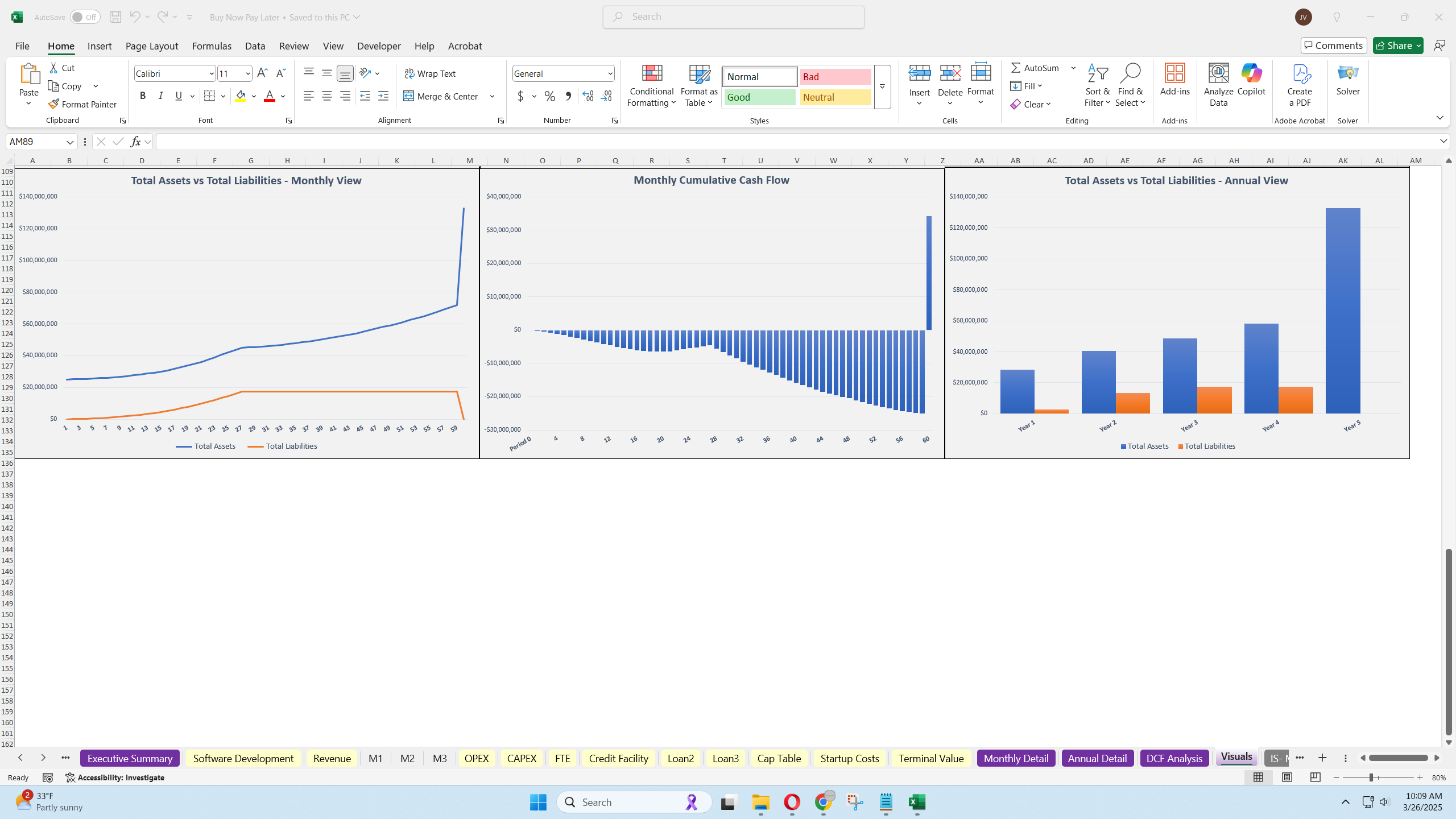
Because each assumption is fully linked into the integrated three-statement model, changing any driver automatically ripples through all key outputs—from revenue projections and operating margins to cash burn and funding requirements. This dynamic design makes the model an invaluable tool for scenario analysis. Users can tweak assumptions, test new strategies (e.g., offering different interest or late fee structures), and forecast the outcomes on everything from monthly cash flow to overall company valuation. By consolidating all these components into one interconnected system, the model remains useful over the entire lifecycle of a BNPL startup or established venture, serving as both a planning instrument and a performance-tracking benchmark.

This Best Practice includes
1 Excel model and 1 Tutorial Video

Acquire business license for $70.00

Add to cart

Add to bookmarks

Discuss

Further information

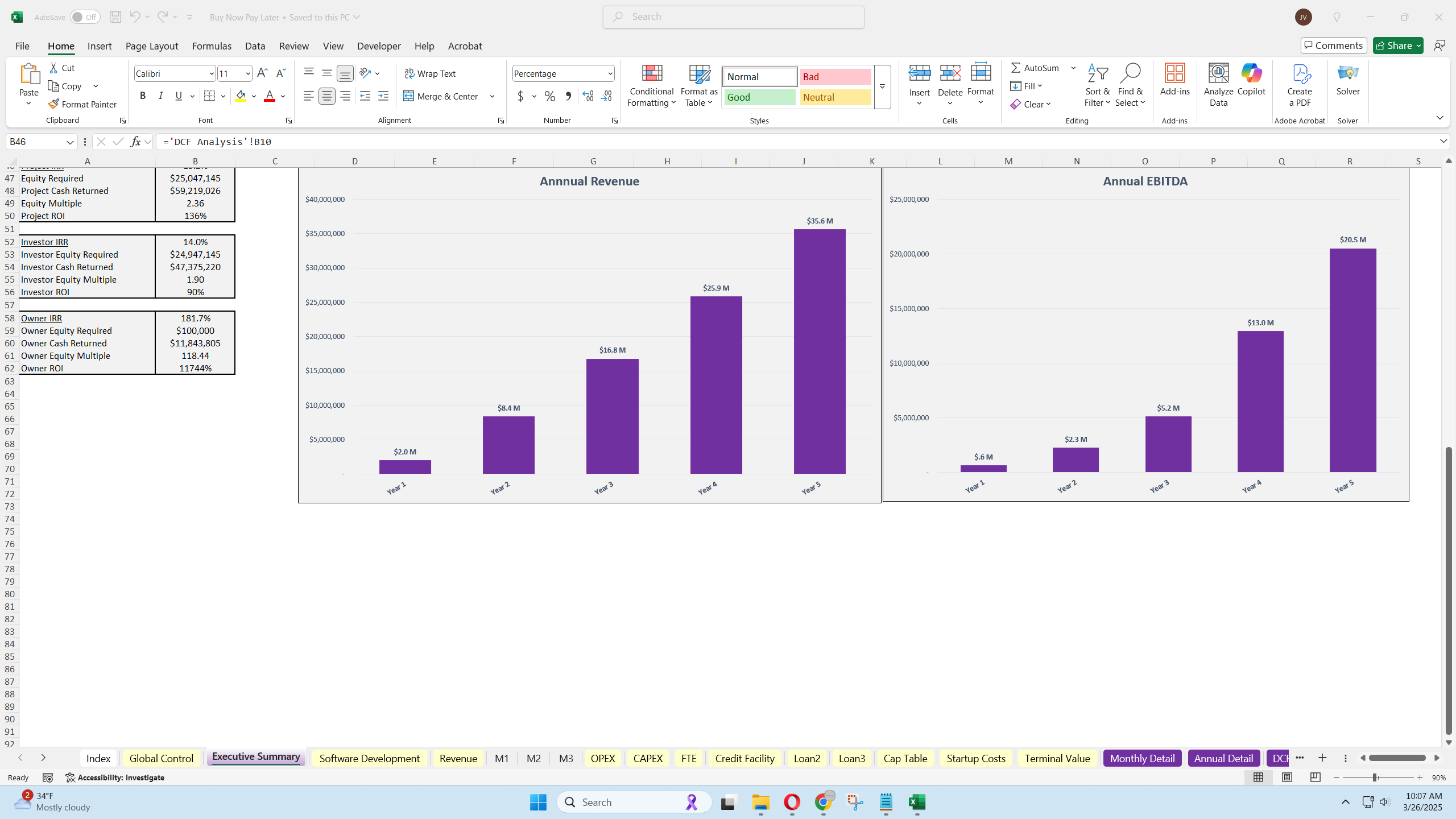
Produce a 5-year financial projection.

Any buy now, pay later with interest-free terms, but promotional interest triggers.


0.0 / 5 (0 votes)

please wait...