

Originally published: 06/02/2026 16:28
Publication number: ELQ-17389-1
View all versions & Certificate
Publication number: ELQ-17389-1
View all versions & Certificate

Private Credit Fund - 10 Year Financial Model
10-year financial model for a private credit fund providing forecasts, cash flow analysis, and insights to evaluate risk-adjusted investor returns.
private credit fundclosed end fundinvestment vehiclebusiness loansprivate equityinterest incomecash flow analysisirr analysisinvestors waterfallfinancial model
Description
A private credit fund is an investment vehicle that provides loans directly to businesses outside of public bond markets, typically targeting middle-market companies and special situations where flexible, customized financing is valued. The fund earns returns primarily through interest income, upfront fees, and sometimes equity-linked upside, while managing risk through underwriting standards, covenants, collateral, and active portfolio monitoring. Private credit strategies can include senior secured lending, unitranche, mezzanine, and distressed debt, often offering investors predictable cash yields with diversification beyond traditional public fixed income.
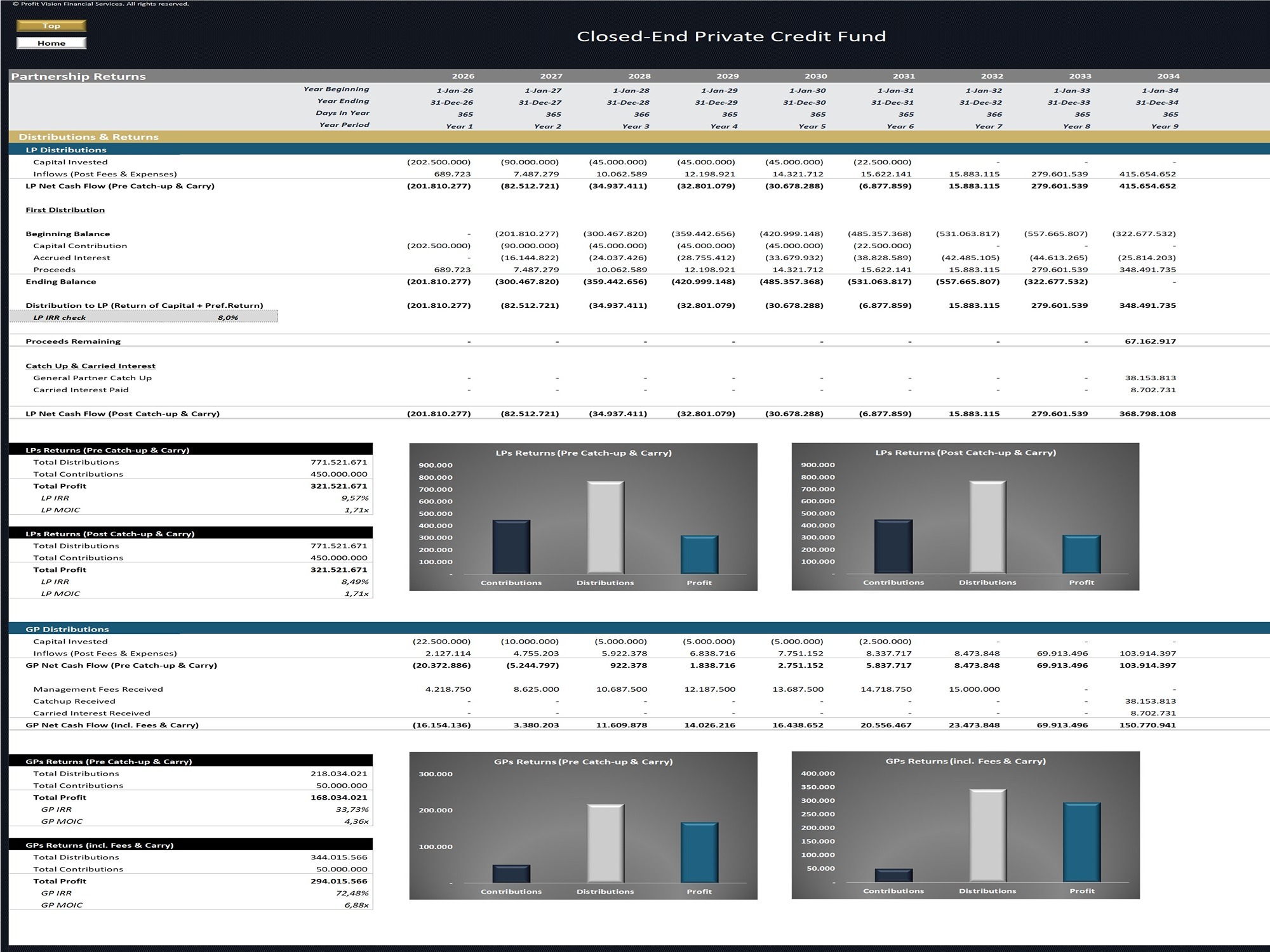
This 10-year Private Credit Fund financial model is built to support fund structuring, fundraising, and investment decision-making from launch through wind-down. It forecasts capital commitments and calls, loan origination and portfolio ramp-up, interest and fee income, defaults and recoveries, operating costs and management fees, and fund liquidity over time. The model also includes a full investor waterfall—preferred return, return of capital, and carried interest—producing clear performance metrics such as IRR, MOIC, and cash distributions to show how value is shared between LPs and the GP.
The model follows Financial Modeling Best Practices and is fully customizable.
Detailed instructions for the use of the model are included in the excel file.
Model Assumptions:
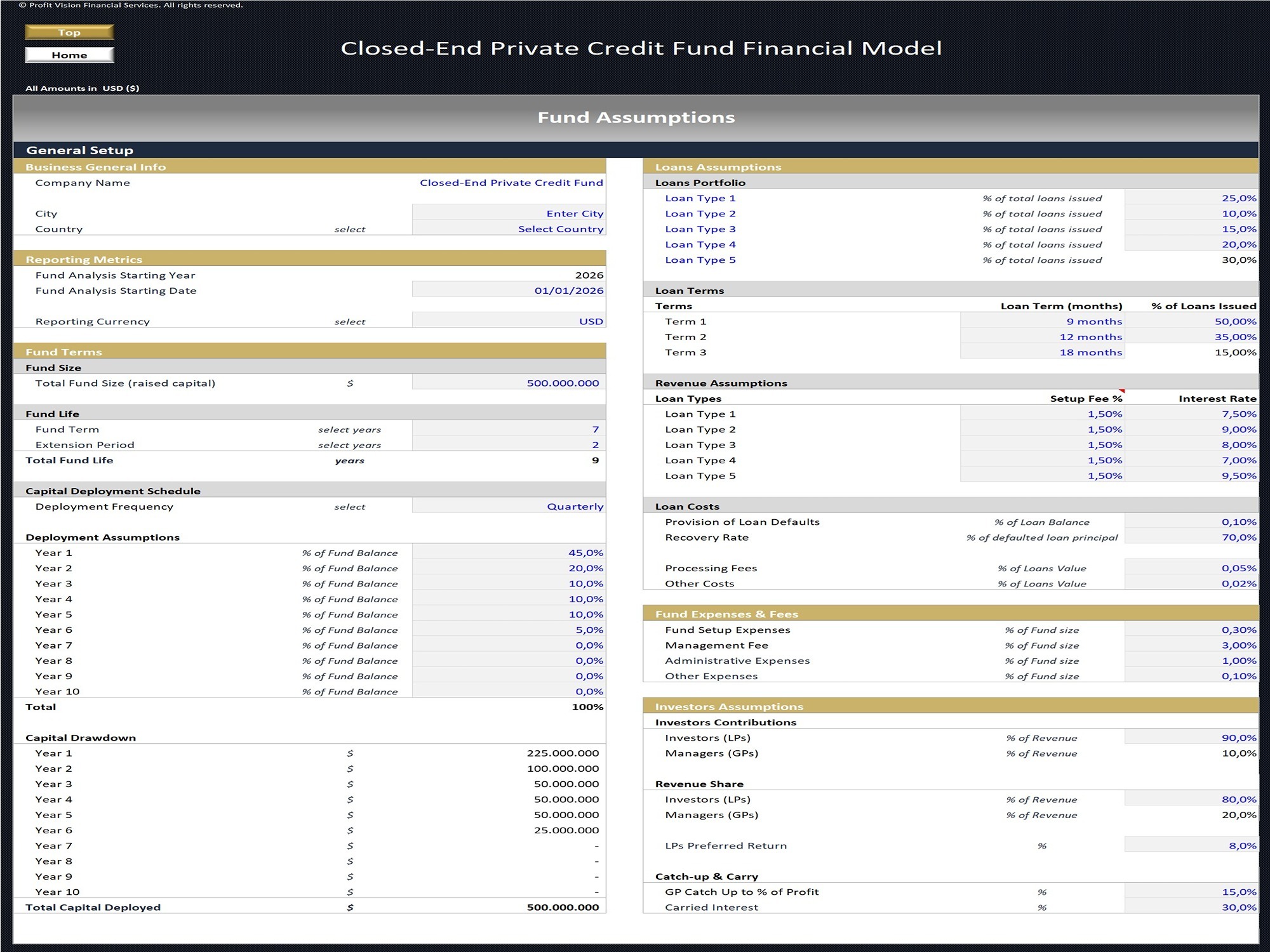
• Fund Terms (Fund Size, Fund Length and Extension Periods)
• Capital Deployment Frequency (monthly, quarterly, annual) and Capital Drawdown assumptions
• Loans Portfolio (5 different loan types), Loan Terms, Loan Fees (interest rates and setup fees), Loan Costs (defaults, processing fees)
• Fund Fees & Expenses (Set up Expenses, Management Fees, Administrative Expenses, Other Fees)
• Investors Assumptions (LPs and GPs Equity and Revenue Share, Preferred Return, Carried Interest, GP Catch Up)
Model Outputs:
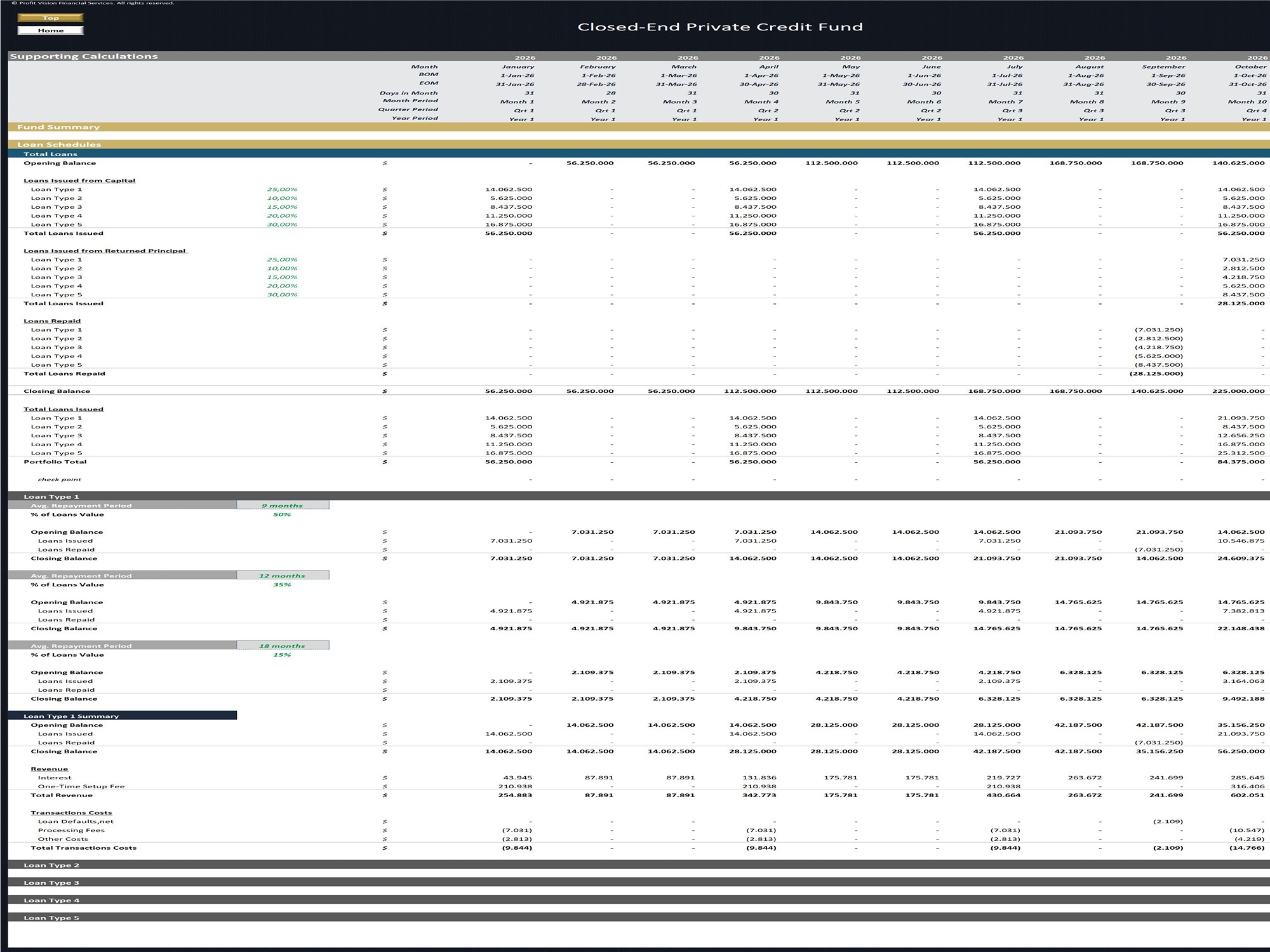
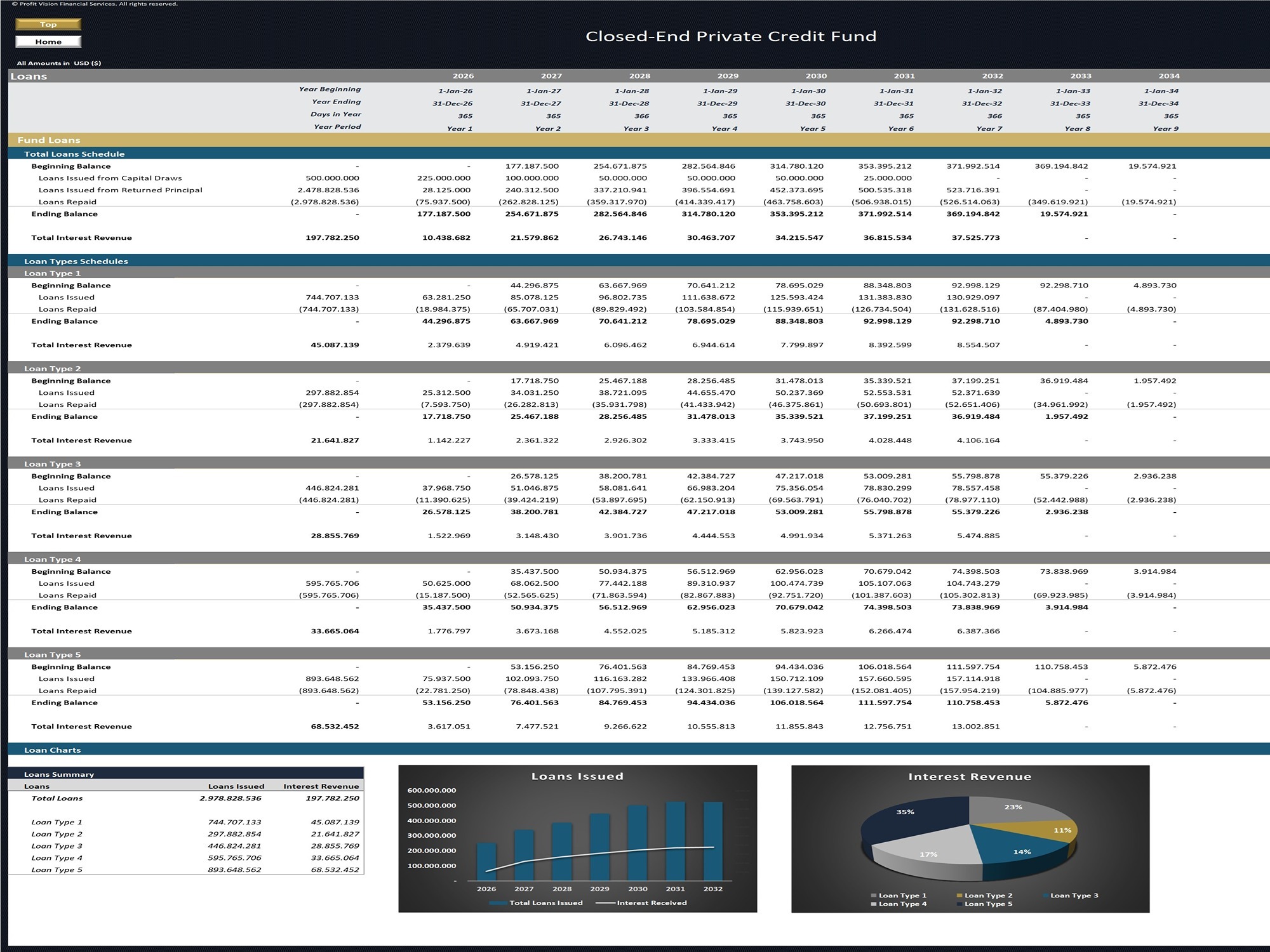
• Loan Schedules per loan type
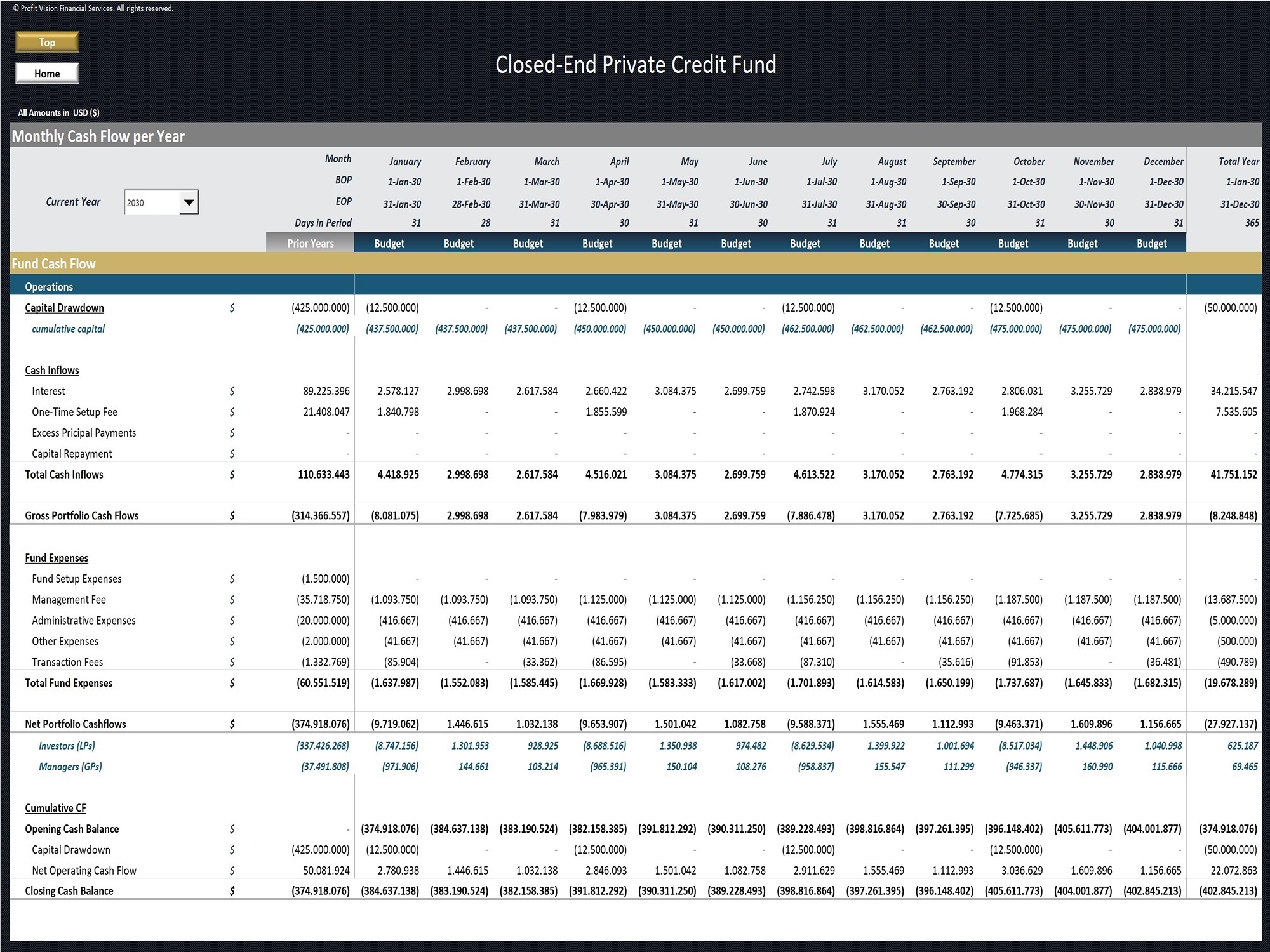
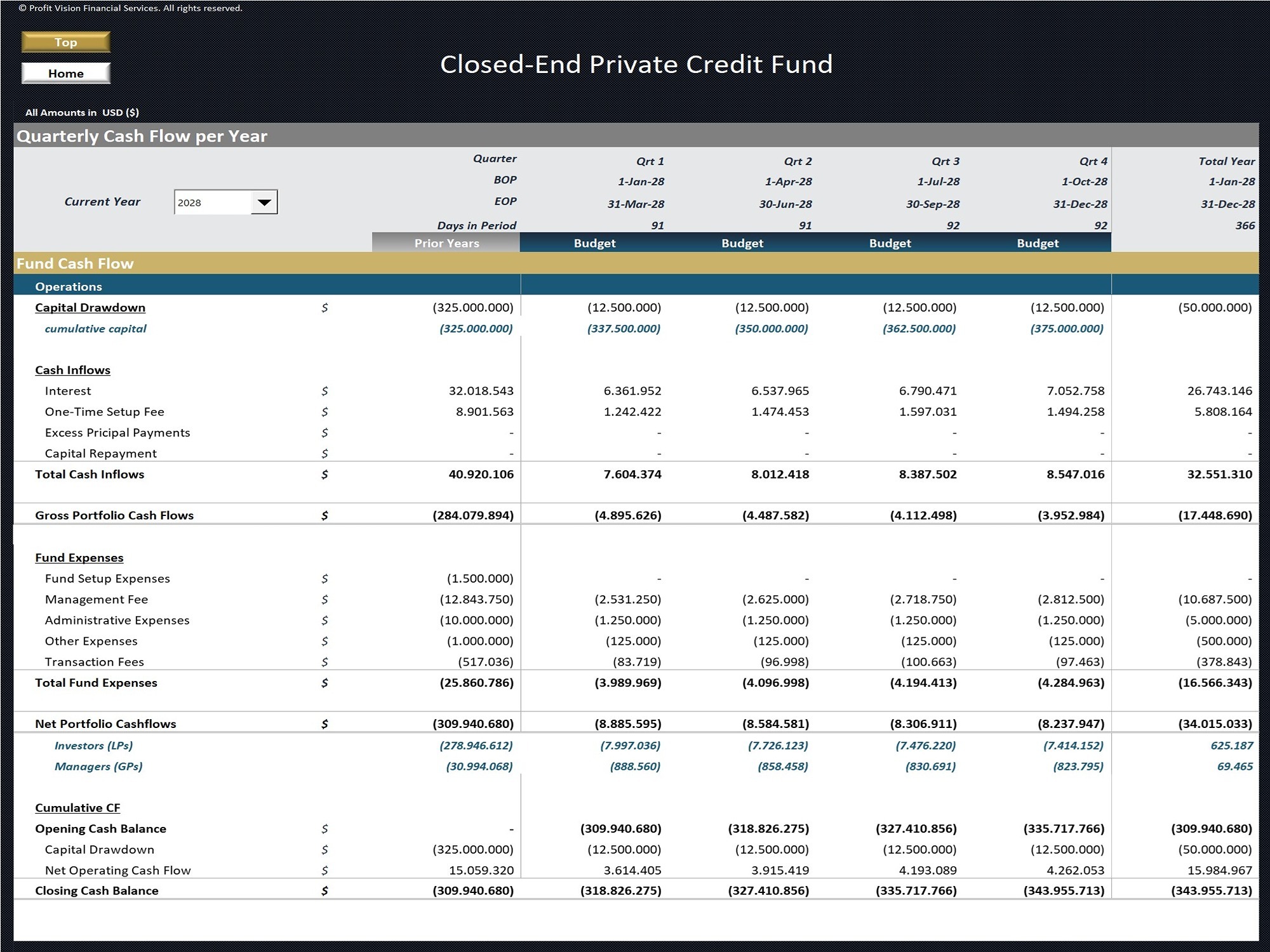
• Fund Monthly and Quarterly Cash Flow Summary per Year
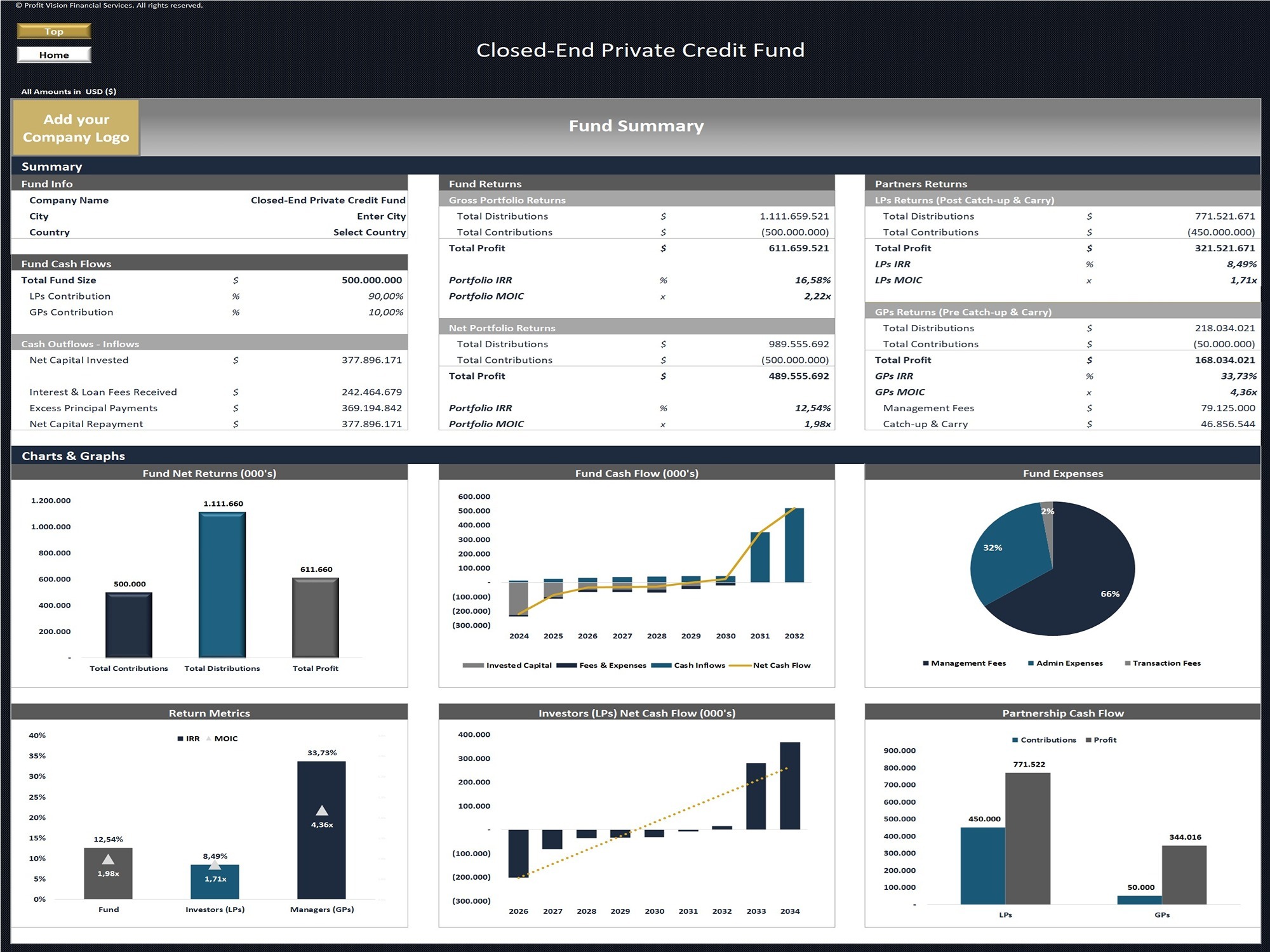
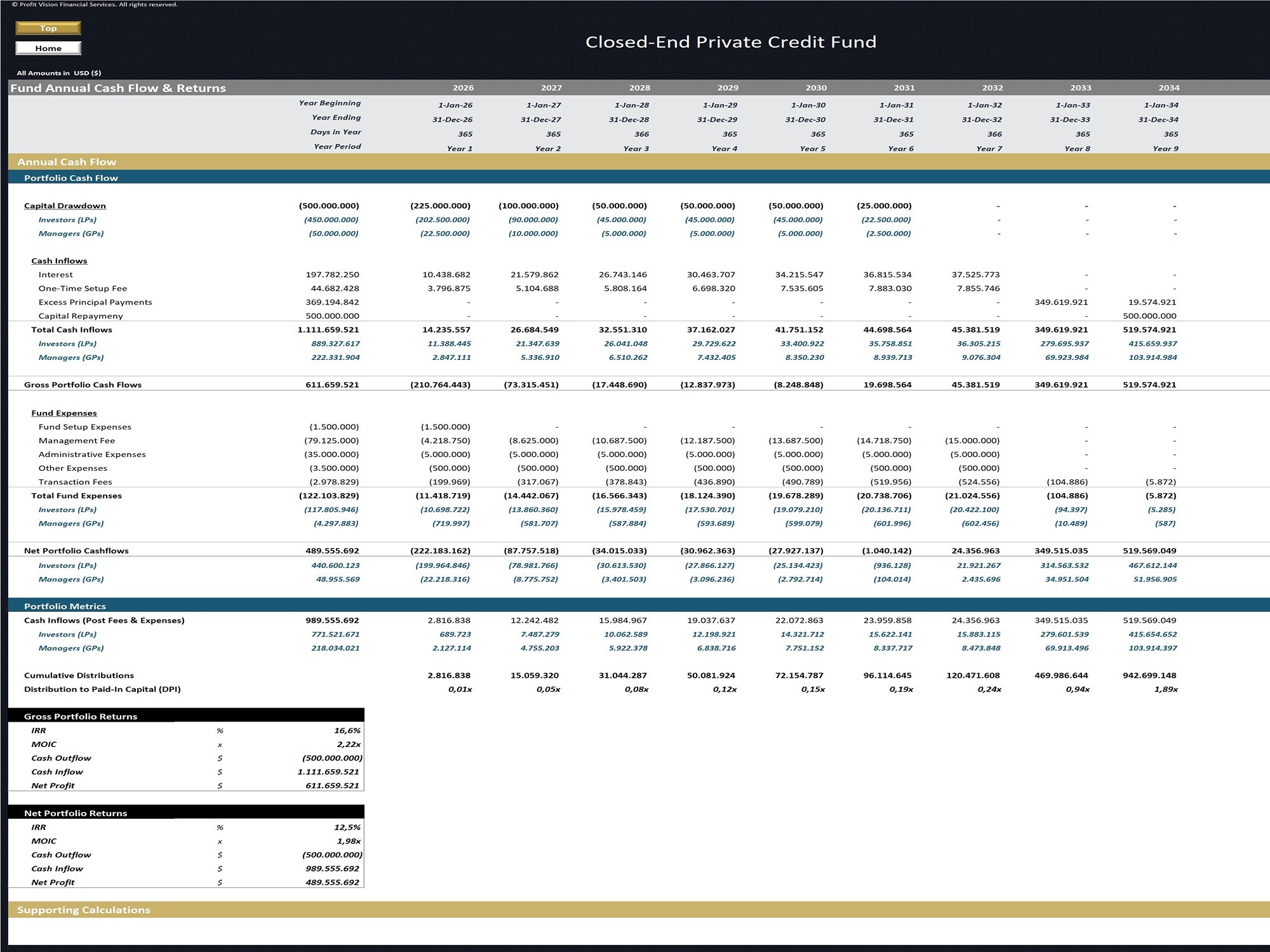
• Fund Annual Cash flow including Capital Drawdowns, Cash Inflows, Fund Fees & Expenses, Gross & Net Fund Returns (IRR, MOIC, DPI)
• Partnership Returns Waterfall analyzing the distribution between LPs and GPs, including calculation of GP Catch up and Carried Interest.
• Executive Summary presenting overall Fund performance
Help & Support
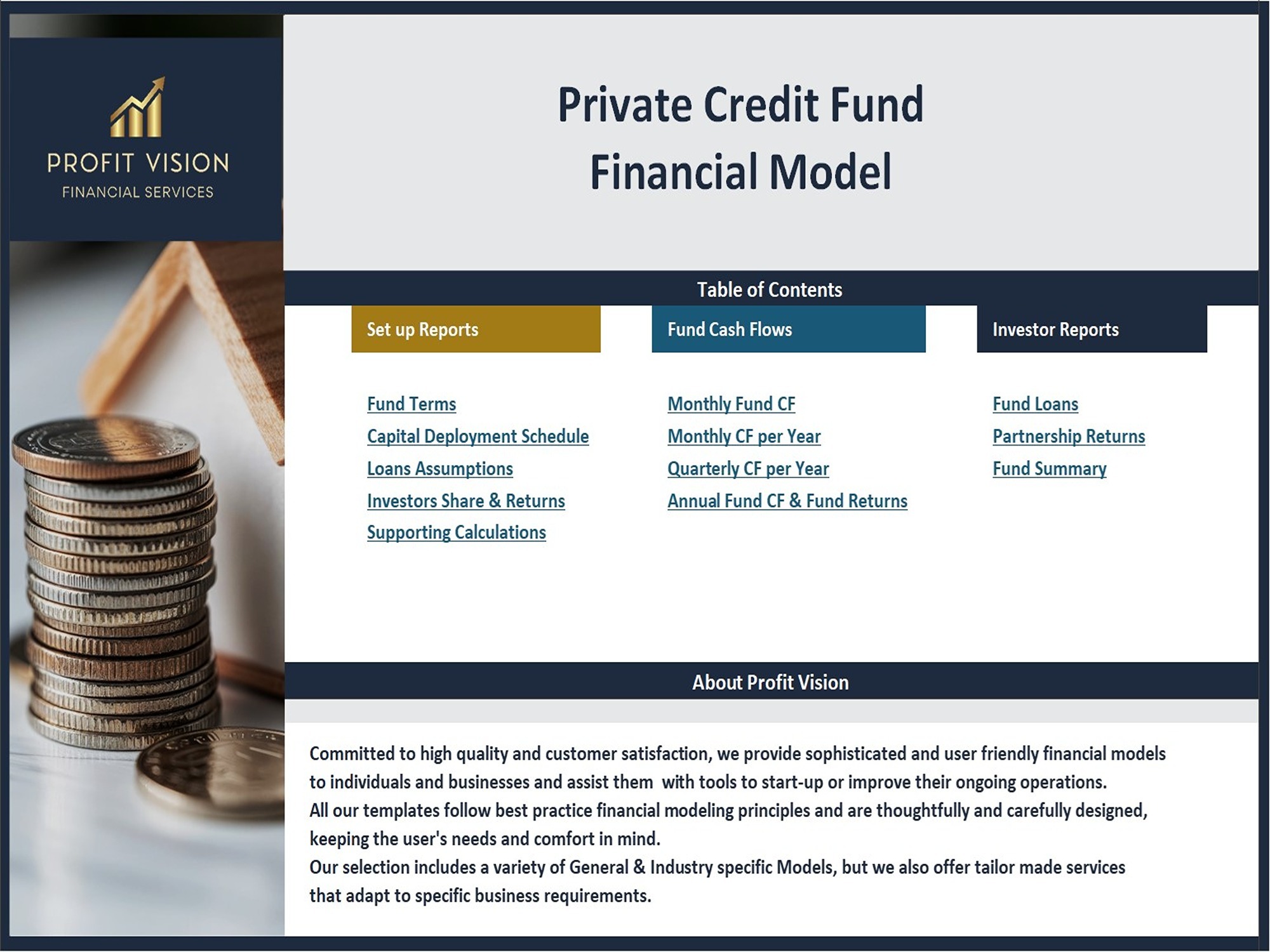
Committed to high quality and customer satisfaction, all our templates follow best-practice financial modeling principles and are thoughtfully and carefully designed, keeping the user’s needs and comfort in mind.
No matter if you have no experience or are well versed in finance, accounting, and the use of Microsoft Excel, our professional financial models are the right tools to boost your business operations!
If you, however, experience any difficulty while using this template and you are not able to find the appropriate guidance in the provided instructions, please feel free to contact us for assistance.
If you need a template customized for your business requirements, please e-mail us and provide a brief explanation of your specific needs.
A private credit fund is an investment vehicle that provides loans directly to businesses outside of public bond markets, typically targeting middle-market companies and special situations where flexible, customized financing is valued. The fund earns returns primarily through interest income, upfront fees, and sometimes equity-linked upside, while managing risk through underwriting standards, covenants, collateral, and active portfolio monitoring. Private credit strategies can include senior secured lending, unitranche, mezzanine, and distressed debt, often offering investors predictable cash yields with diversification beyond traditional public fixed income.
This 10-year Private Credit Fund financial model is built to support fund structuring, fundraising, and investment decision-making from launch through wind-down. It forecasts capital commitments and calls, loan origination and portfolio ramp-up, interest and fee income, defaults and recoveries, operating costs and management fees, and fund liquidity over time. The model also includes a full investor waterfall—preferred return, return of capital, and carried interest—producing clear performance metrics such as IRR, MOIC, and cash distributions to show how value is shared between LPs and the GP.
The model follows Financial Modeling Best Practices and is fully customizable.
Detailed instructions for the use of the model are included in the excel file.
Model Assumptions:
• Fund Terms (Fund Size, Fund Length and Extension Periods)
• Capital Deployment Frequency (monthly, quarterly, annual) and Capital Drawdown assumptions
• Loans Portfolio (5 different loan types), Loan Terms, Loan Fees (interest rates and setup fees), Loan Costs (defaults, processing fees)
• Fund Fees & Expenses (Set up Expenses, Management Fees, Administrative Expenses, Other Fees)
• Investors Assumptions (LPs and GPs Equity and Revenue Share, Preferred Return, Carried Interest, GP Catch Up)
Model Outputs:
• Loan Schedules per loan type
• Fund Monthly and Quarterly Cash Flow Summary per Year
• Fund Annual Cash flow including Capital Drawdowns, Cash Inflows, Fund Fees & Expenses, Gross & Net Fund Returns (IRR, MOIC, DPI)
• Partnership Returns Waterfall analyzing the distribution between LPs and GPs, including calculation of GP Catch up and Carried Interest.
• Executive Summary presenting overall Fund performance
Help & Support
Committed to high quality and customer satisfaction, all our templates follow best-practice financial modeling principles and are thoughtfully and carefully designed, keeping the user’s needs and comfort in mind.
No matter if you have no experience or are well versed in finance, accounting, and the use of Microsoft Excel, our professional financial models are the right tools to boost your business operations!
If you, however, experience any difficulty while using this template and you are not able to find the appropriate guidance in the provided instructions, please feel free to contact us for assistance.
If you need a template customized for your business requirements, please e-mail us and provide a brief explanation of your specific needs.
This Best Practice includes
Excel Financial Model
Further information
Provides a robust financial framework to assess risk-adjusted returns and guide investment strategy.