
Machine learning in predictive stock analysis
Originally published: 29/12/2024 15:33
Publication number: ELQ-58455-1
View all versions & Certificate
certified

Machine learning in predictive stock analysis

Predictive stock analysis (Python-Jupyter)

Description
This stock price prediction model leverages machine learning to predict the Open, High, Low, and Close prices for stocks based on historical data. Built using Python's robust libraries such as yfinance, pandas, and scikit-learn, the model incorporates a multi-output regression approach to forecast next-day price movements.
The historical stock data is fetched using the yfinance library, ensuring accurate and up-to-date financial information. After preprocessing the data, key features (Open, High, Low, Close) are extracted, and target values for the next day's prices are created. The dataset is then split into training and testing sets to train a Linear Regression model, which efficiently handles multi-output predictions.
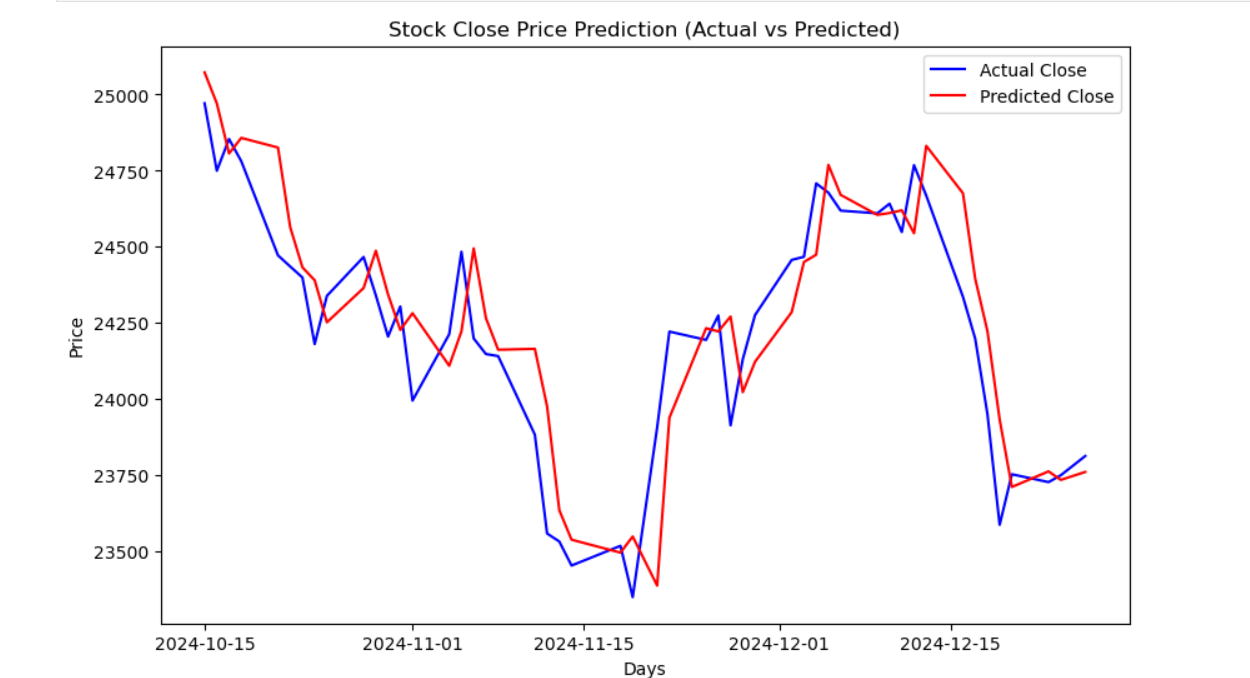
The model evaluates its performance using metrics such as Mean Absolute Error (MAE), Mean Squared Error (MSE), and R² Score, providing insight into its accuracy for each price component. The visualization of actual vs. predicted prices helps assess the model's effectiveness, particularly for closing prices.
Future enhancements may include incorporating technical indicators like moving averages or adopting advanced algorithms such as Random Forests or LSTMs. With further tuning, this model offers a scalable solution for traders and investors to anticipate stock movements and make informed decisions.


I have shared the code in the attachment. Model is easy to use

This Best Practice includes
jupyter notebook, Python

Acquire business license for $99.00

Add to cart

Add to bookmarks

Discuss

Further information

Short term trading

Trading short term

long term trading or investing


0.0 / 5 (0 votes)

please wait...