Development-Deal-Analyzer
Originally published: 02/09/2026 08:06
Publication number: ELQ-11461-1
View all versions & Certificate
certified

Development-Deal-Analyzer

Excel model for ground-up residential development where the exit is sale rather than hold. Built for spec homes, townhomes, condos, and infill projects of rough

Description
A feasibility-stage Excel model for ground-up residential development where the exit is sale rather than hold. Built for spec homes, townhomes, condos, and infill projects of roughly 2 to 20 units.
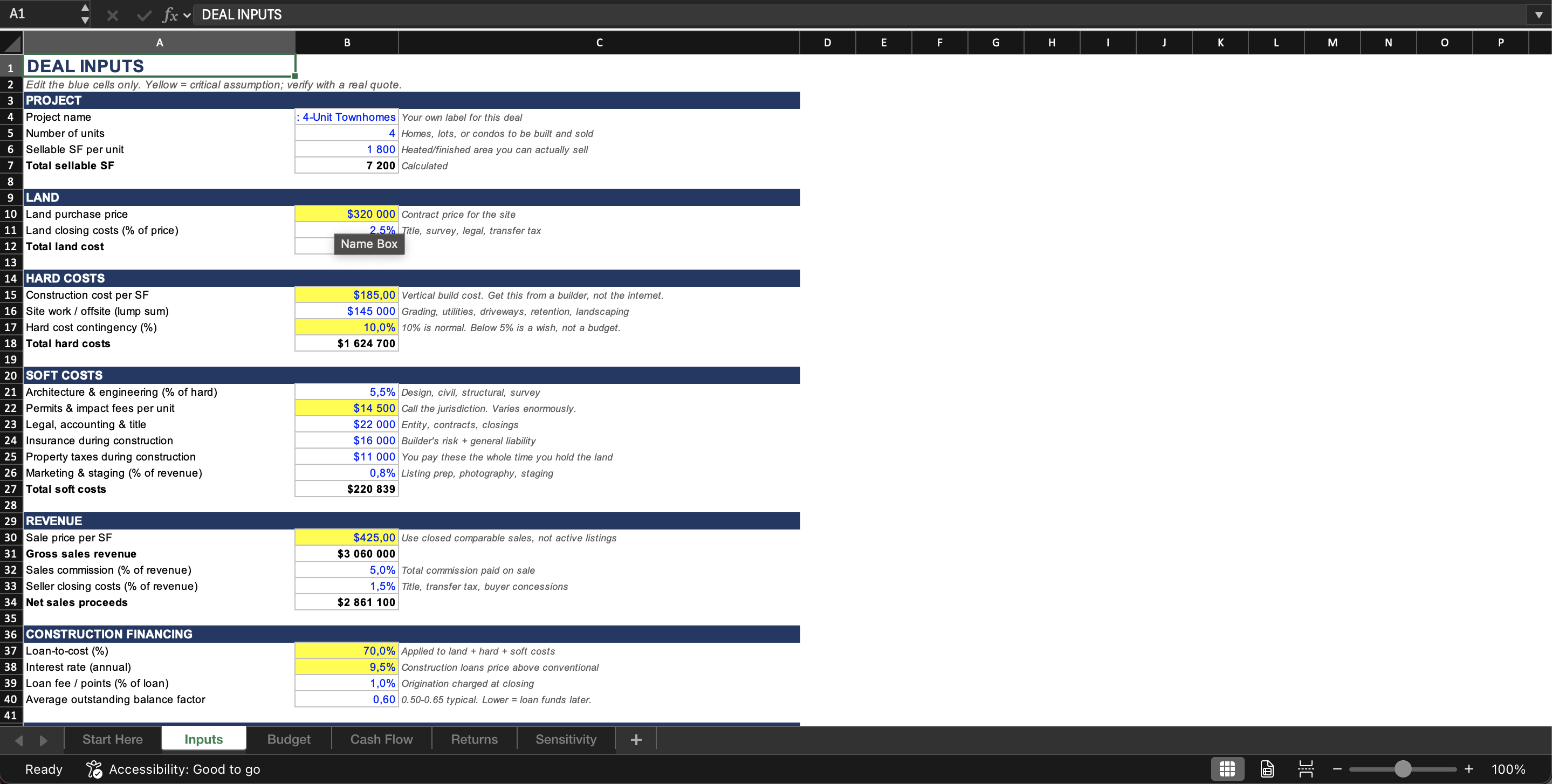
Six tabs, 646 live formulas, no macros or add-ins. You enter assumptions on a single tab — project scale, land, hard costs, soft costs, revenue, construction financing, and schedule — and everything downstream calculates automatically.
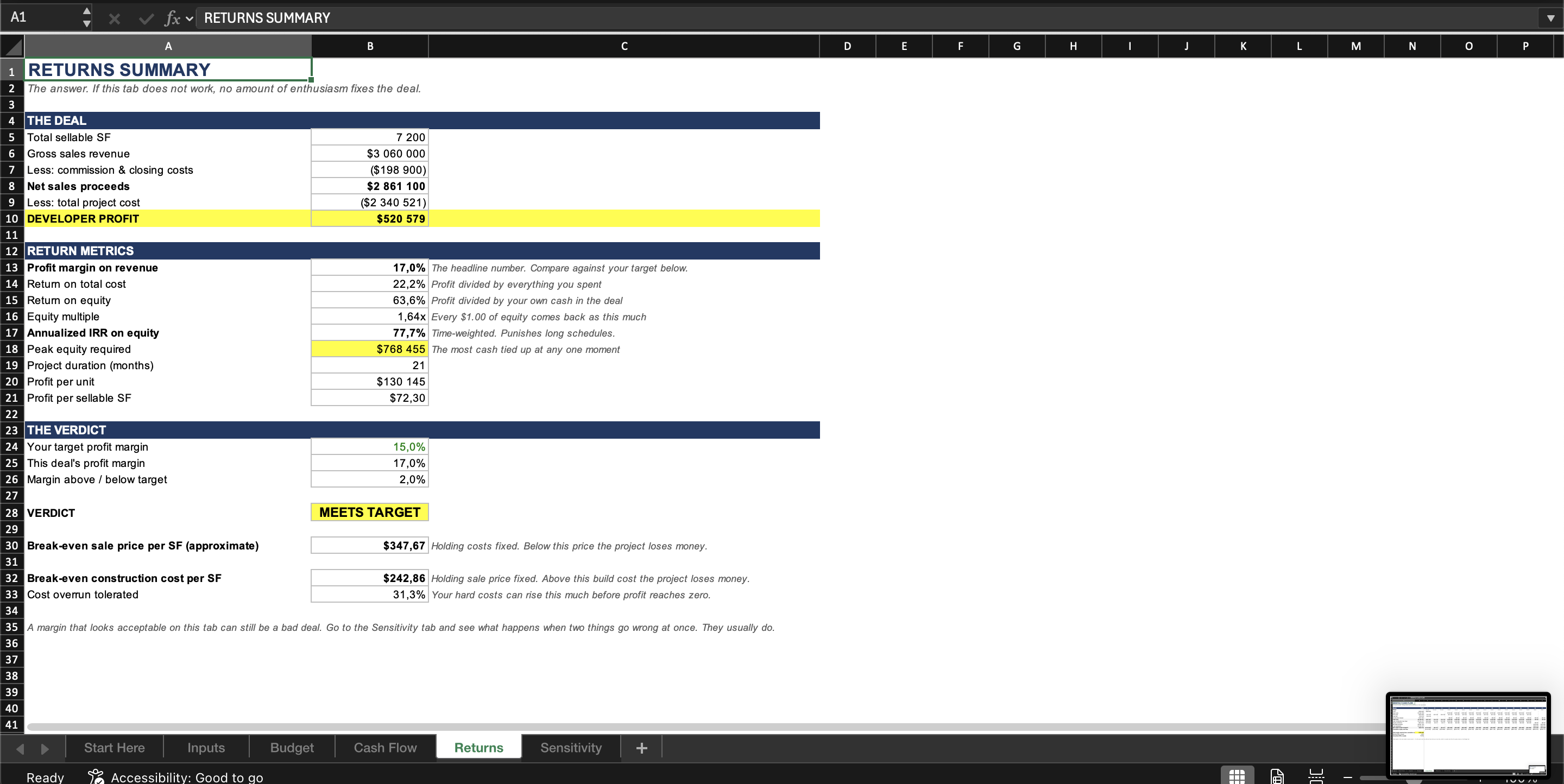
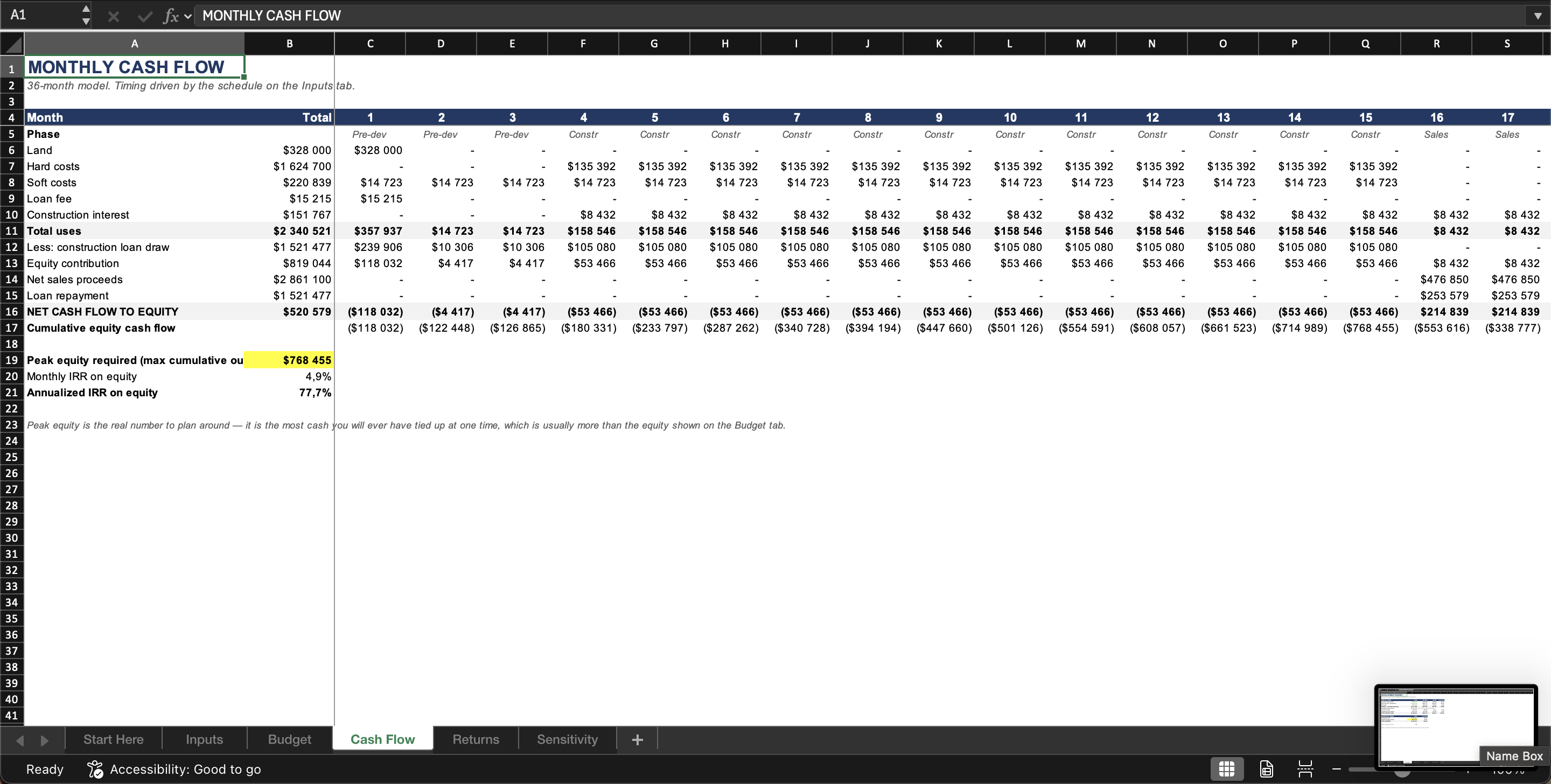
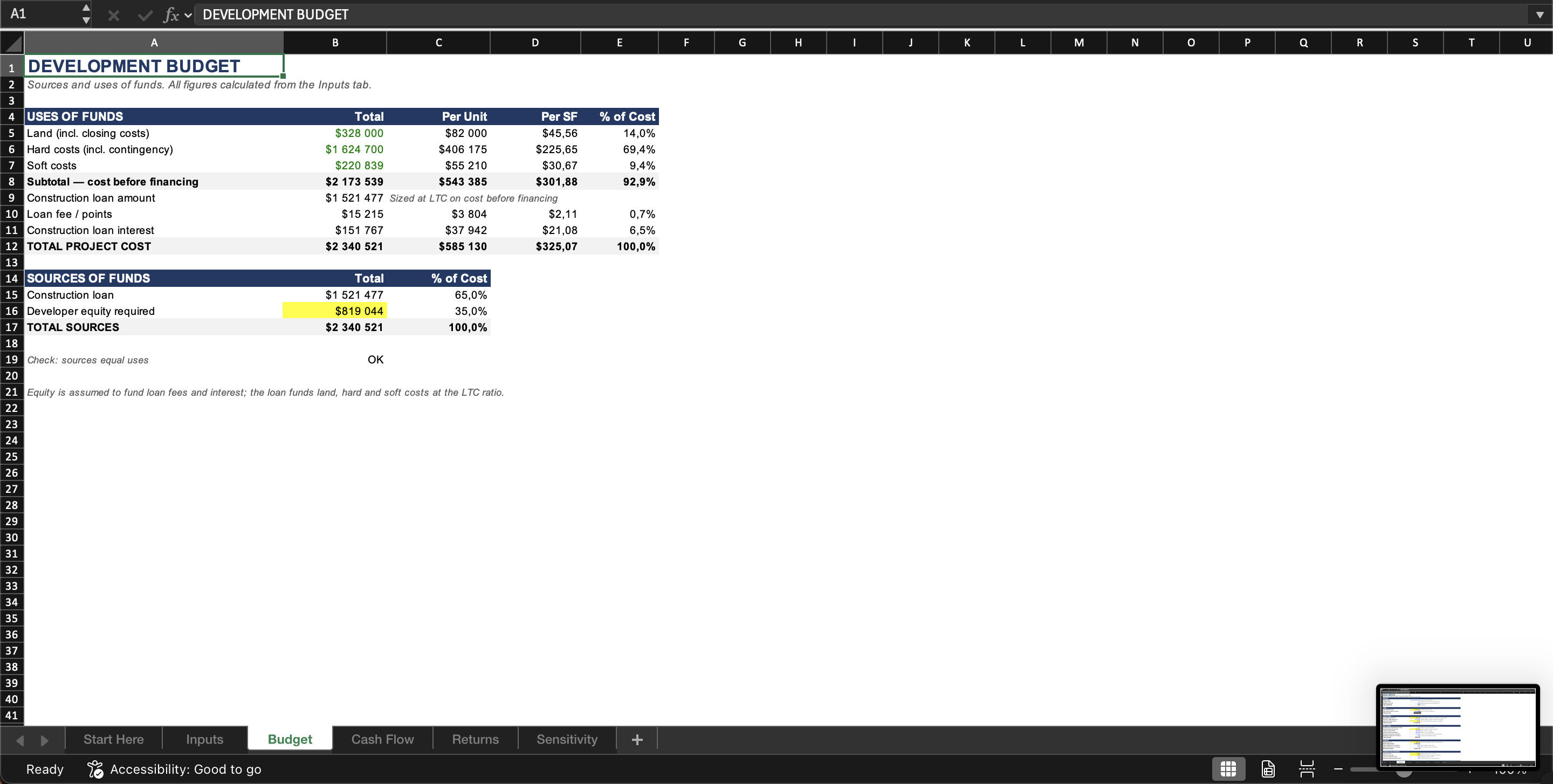
What it produces. A full development budget and sources-and-uses statement, shown in total, per unit, per sellable square foot, and as a percentage of cost, with a reconciliation check. A 36-month cash flow whose phase allocation is driven by your schedule inputs, so changing the construction or absorption period redistributes costs and proceeds automatically. It reports peak equity outstanding, which typically exceeds the static equity requirement and is the number that determines whether a project stalls. Then the full return set: profit, margin on revenue, return on total cost, return on equity, equity multiple, annualized IRR, and profit per unit and per square foot, tested against a margin target you define. It also solves backwards for break-even sale price per SF and break-even construction cost per SF.
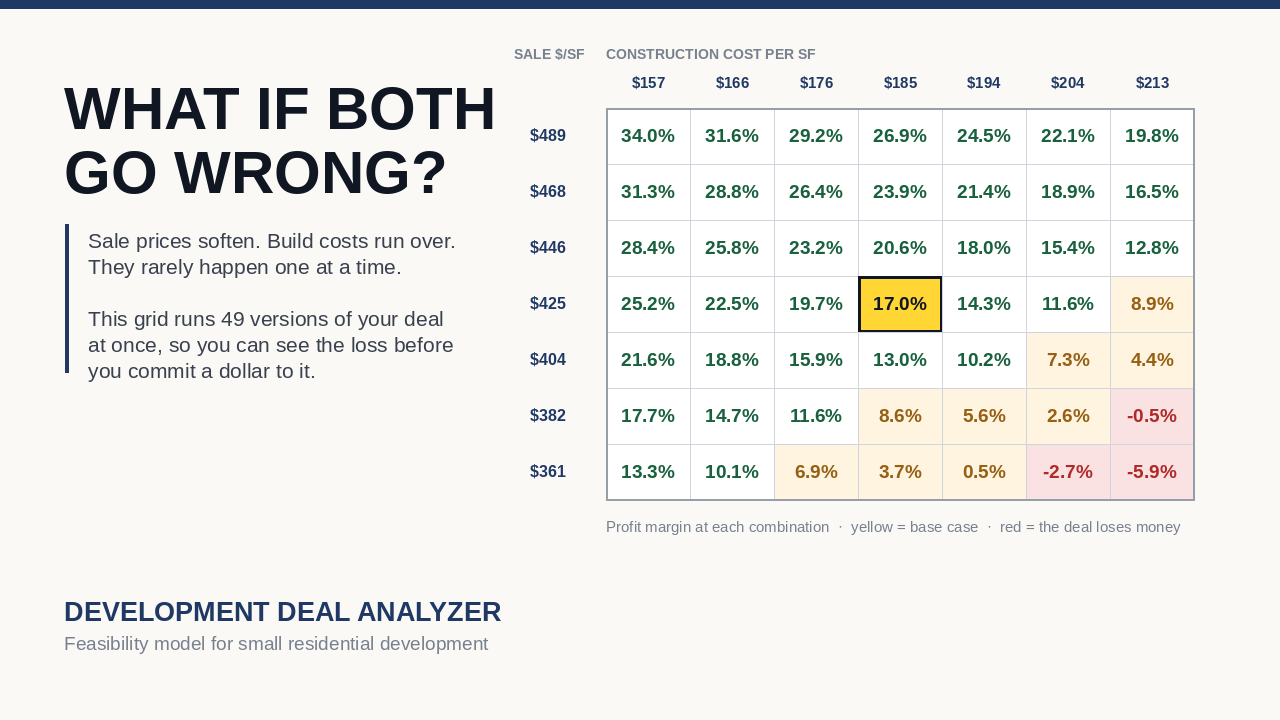
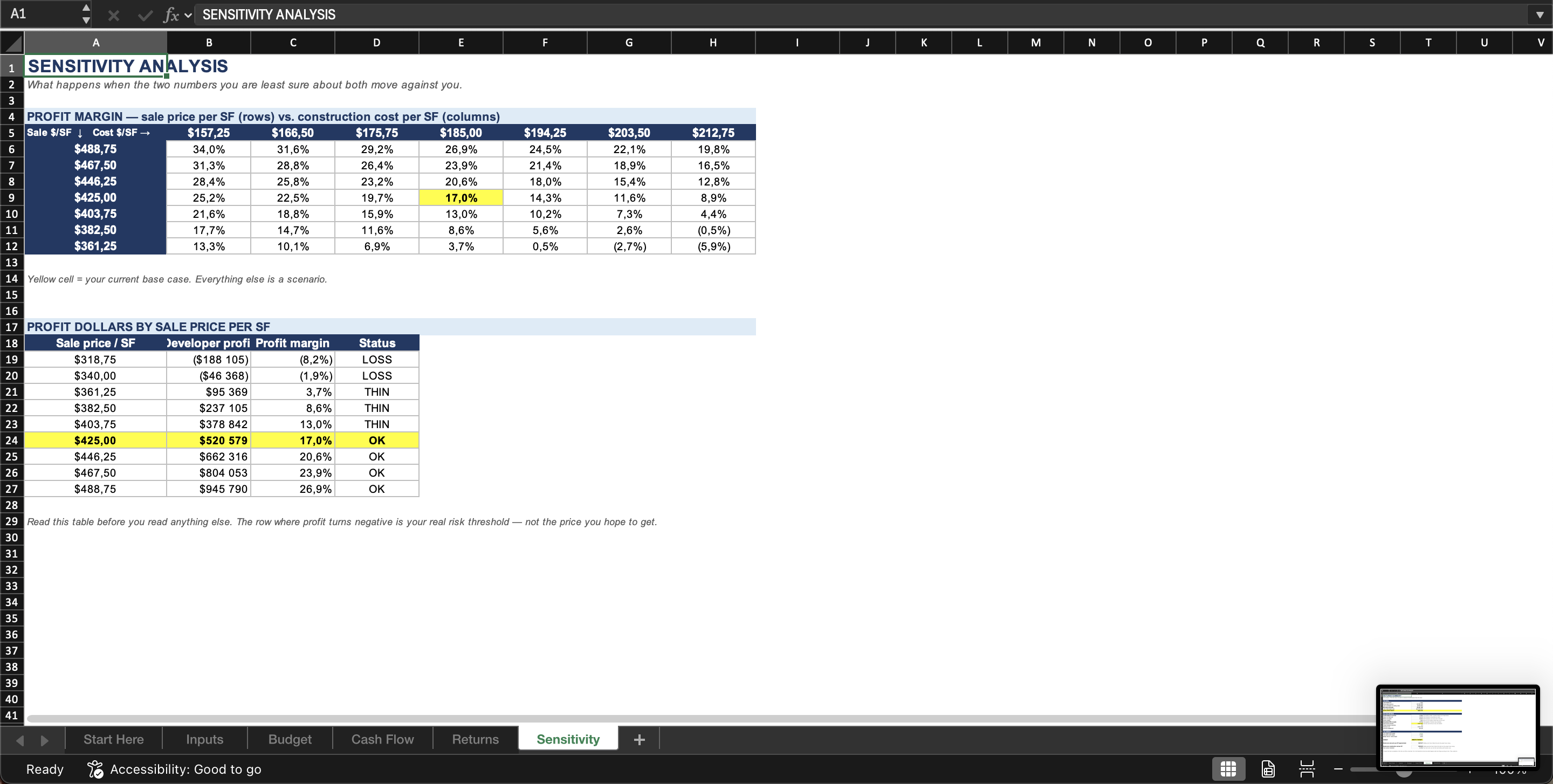
What distinguishes it. Most feasibility models test one variable at a time. Sale price down 10%, still profitable. Build cost up 10%, still profitable. Both green, so the deal reads as robust. But costs and prices frequently move together, and testing them independently conceals that. This model recalculates across a ±15% range on both simultaneously and reports profit margin at all 49 combinations. On the included worked example, a project showing a 17% base-case margin turns negative under a combined 10% price decline and 10% cost overrun — neither individually unusual.
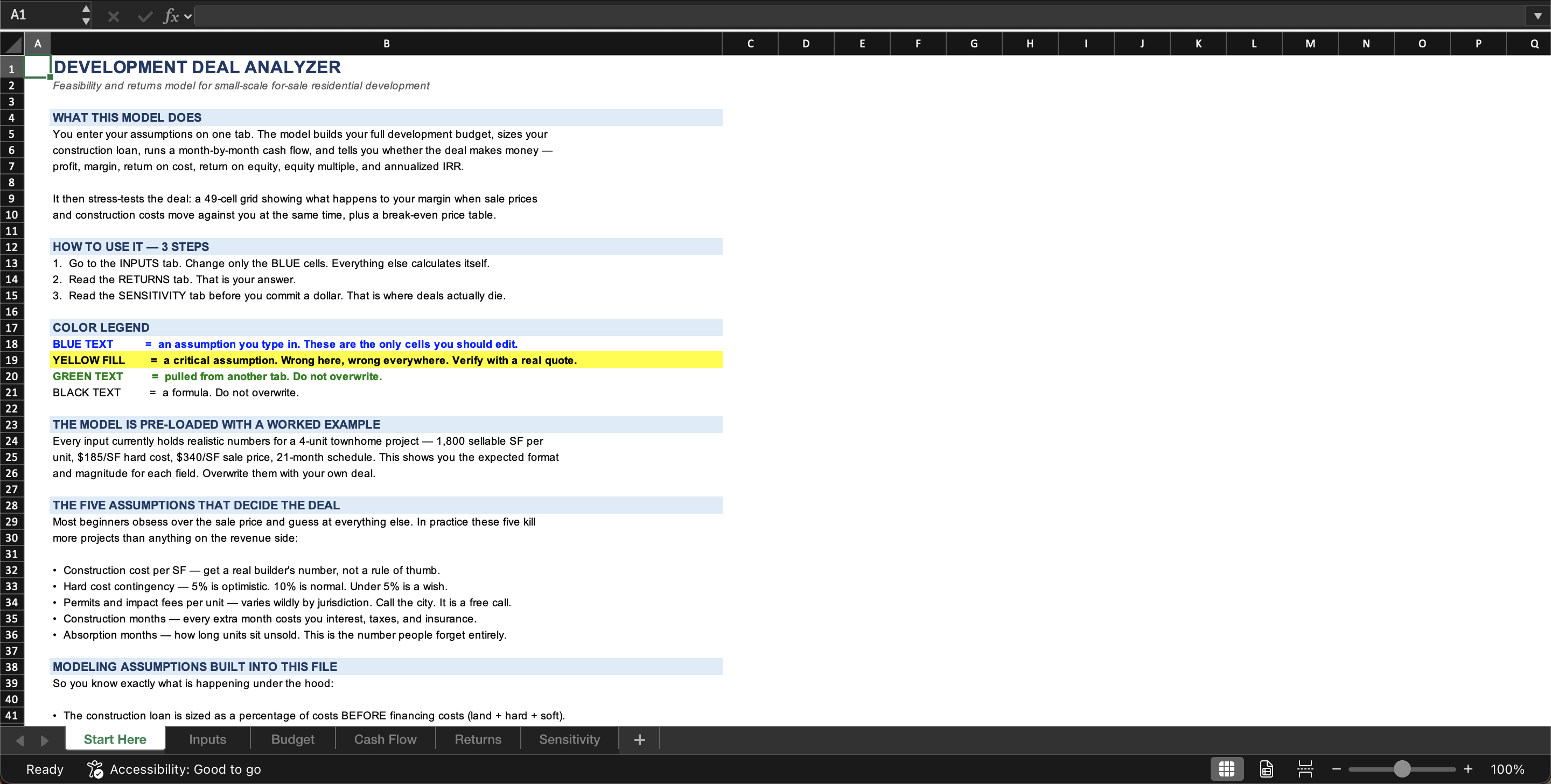
Methodology is stated, not hidden. The first tab documents every simplifying assumption: how the loan is sized, how interest is estimated, how costs are distributed across the schedule. You can evaluate and adjust rather than infer.
Pre-loaded with a complete four-unit townhome example. Excel or Google Sheets.
A feasibility screening tool, not a lender-grade underwriting package.

This Best Practice includes
fully equipped Excel model

Acquire business license for $29.99

Add to cart

Add to bookmarks

Discuss

Further information

Determine whether a small for-sale residential development deal is viable before committing capital. Produce a full budget, monthly cash flow, and complete return metrics from one set of assumptions. Quantify downside by stress testing sale price and construction cost simultaneously across 49 scenarios, and identify break-even on both.

Ground-up residential development with a sale exit — spec homes, townhomes, condos, or infill projects of roughly 2 to 20 units — at the feasibility stage, when you need a go/no-go answer before spending on survey, engineering, or design. Fits deals financed with a single construction loan sized on cost, where revenue is driven by sellable square footage and price per square foot, and the full schedule runs 36 months or less. Especially useful for screening several deals on a consistent basis, or for testing what happens when sale prices and construction costs move against you at the same time.

Not suited to rental holds, build-to-rent, or refinance exits — there is no stabilized NOI or cap rate logic. It does not handle equity waterfalls, LP/GP splits, phased land subdivision, large multifamily, commercial, or hospitality assets, projects beyond 36 months, or multiple and mezzanine debt. Because carry is estimated with an average-balance factor and interest is funded from equity, it will not satisfy a lender requiring a full draw schedule with capitalized interest.


0.0 / 5 (0 votes)

please wait...