Originally published: 12/01/2025 00:22
Publication number: ELQ-93923-1
View all versions & Certificate
Publication number: ELQ-93923-1
View all versions & Certificate

Lighting Equipment Manufacturer Financial Model
Comprehensive editable, 5-year 3 statement MS Excel spreadsheet for tracking a Lighting Equipment Manufacturer's finances.
 by AllFinancialModels
AllFinancialModels offer a curated selection of high-quality yet financial model templates designed to support a wide range of business needs.Follow
lightinglighting equipmentmanufacturermanufacturingexcelfinancefinancial modelelectricald printinglighting equipment manufacturer
Description
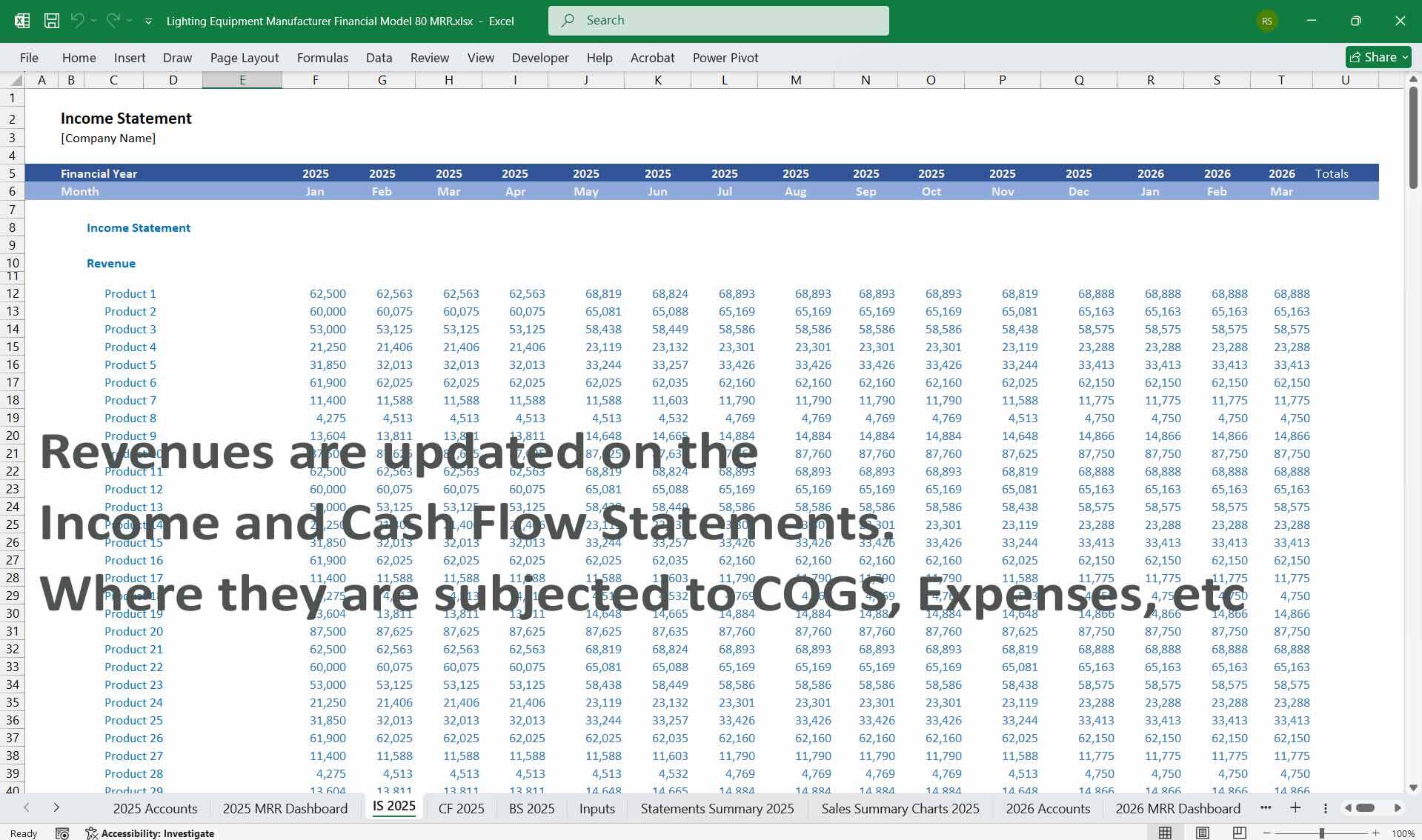
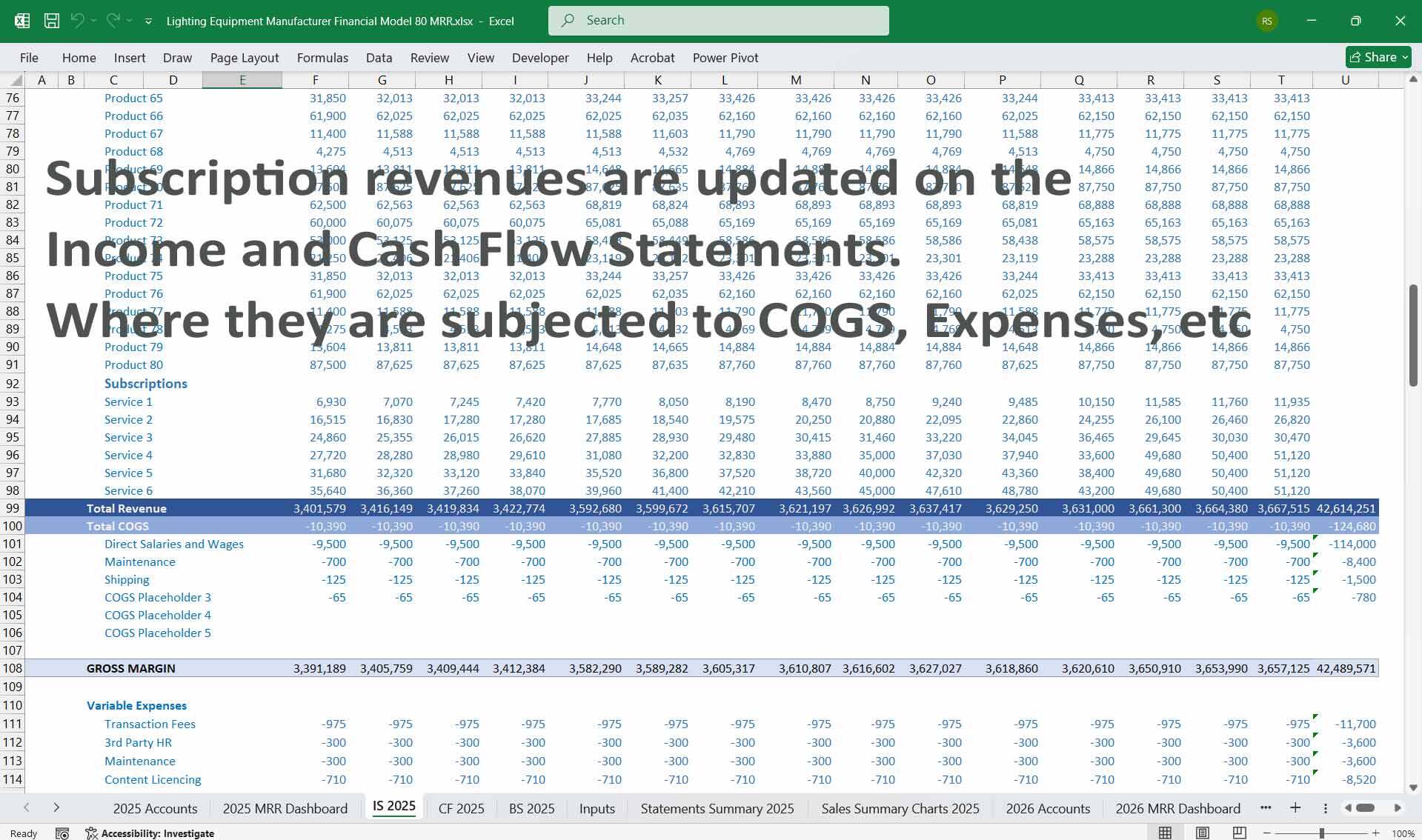
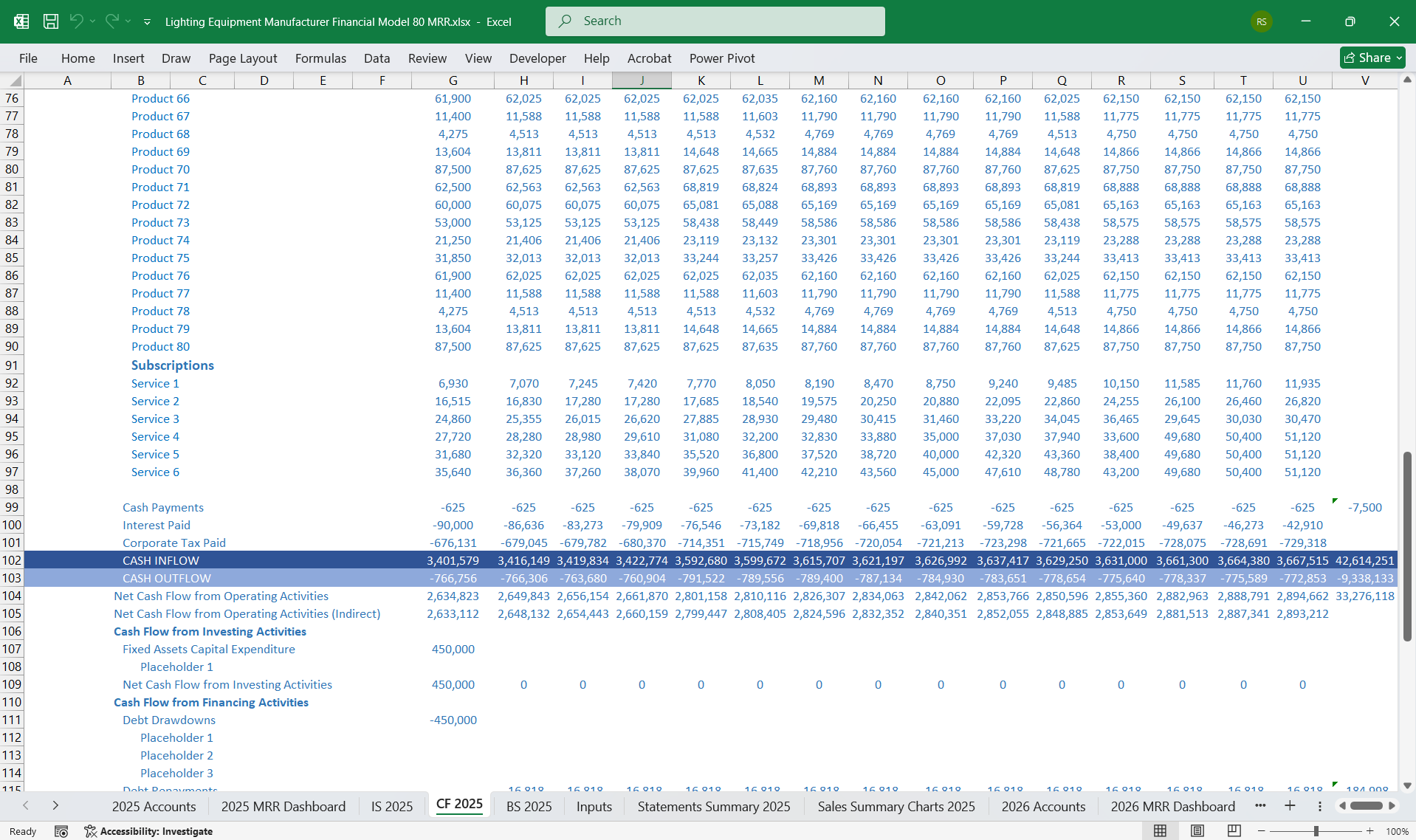
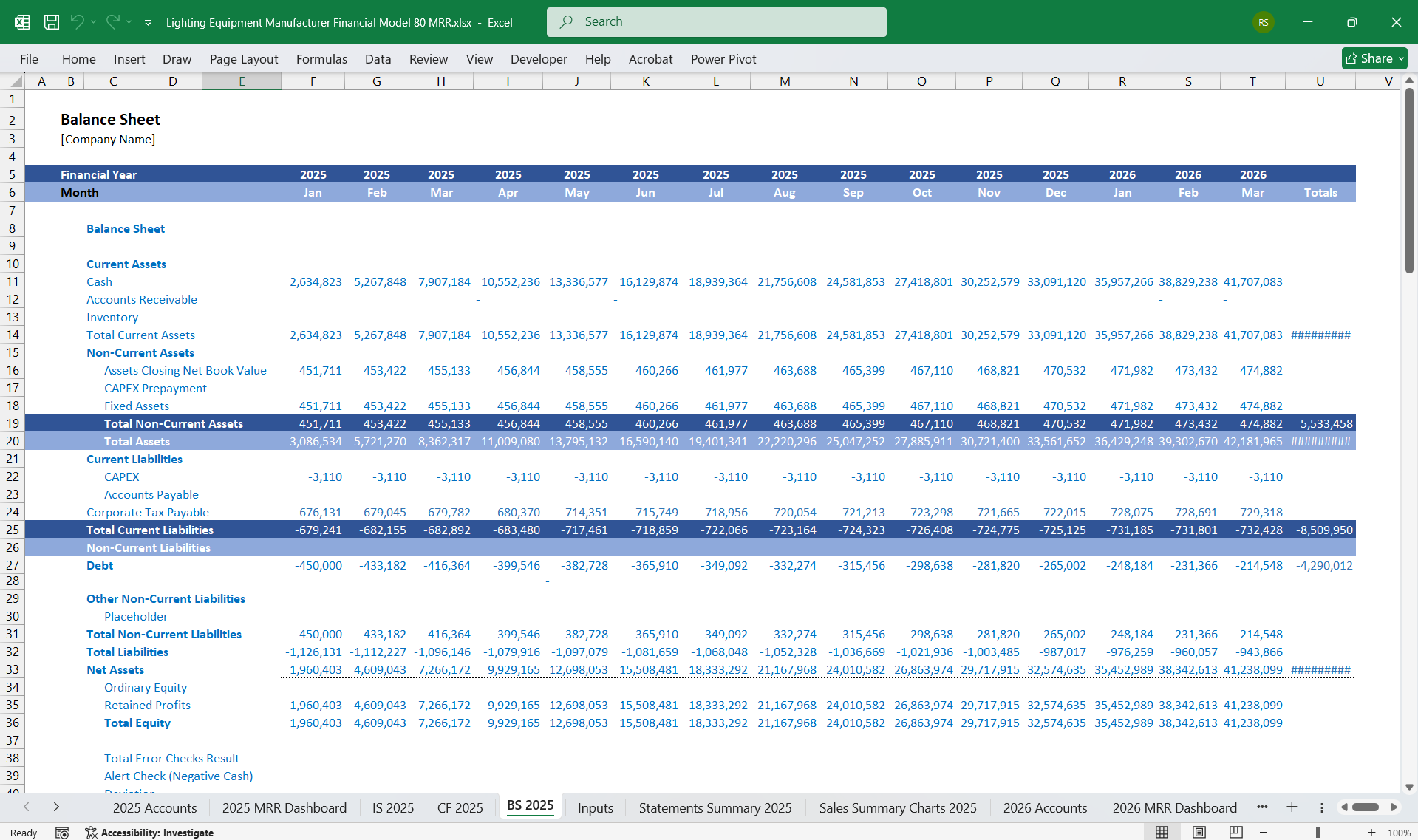
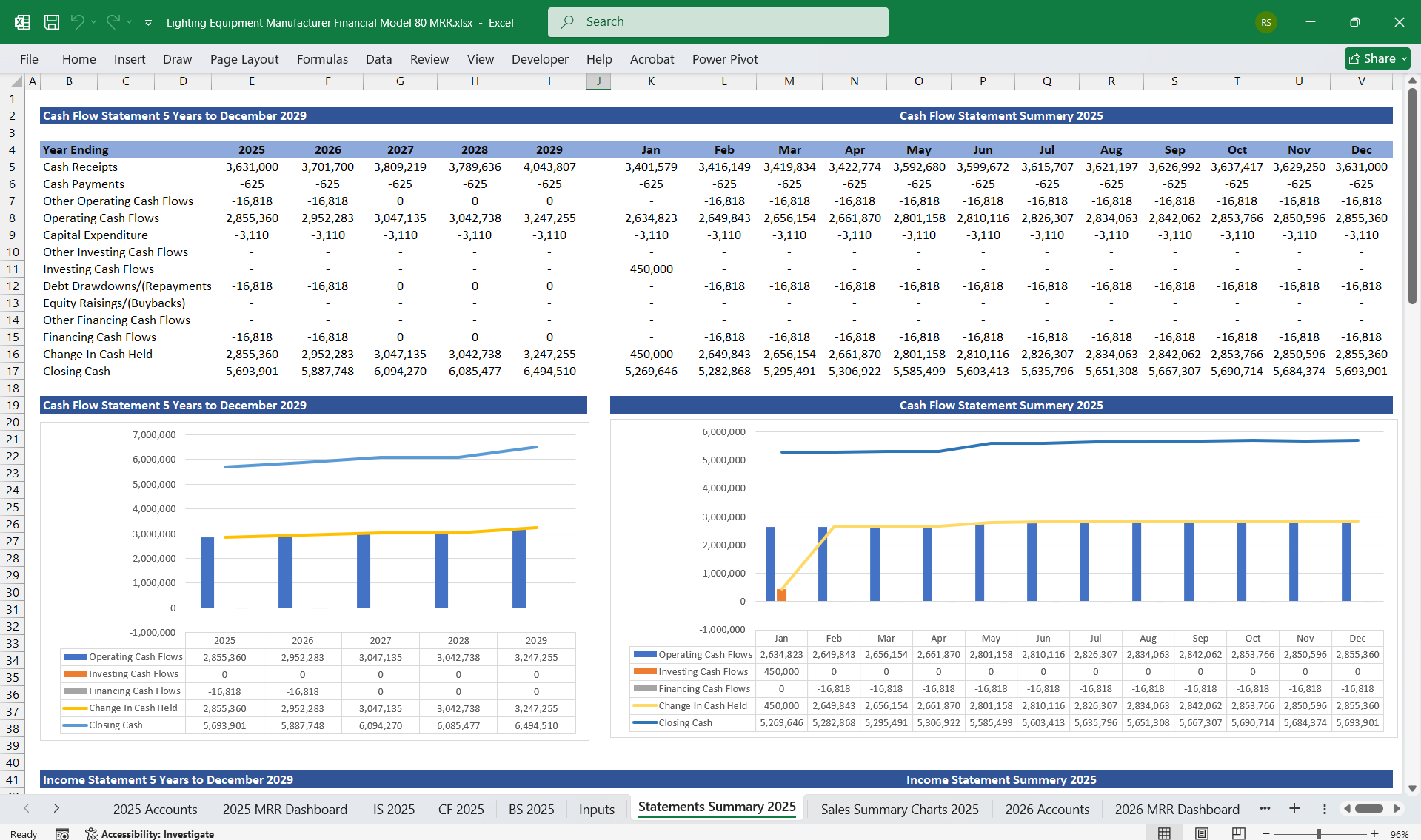
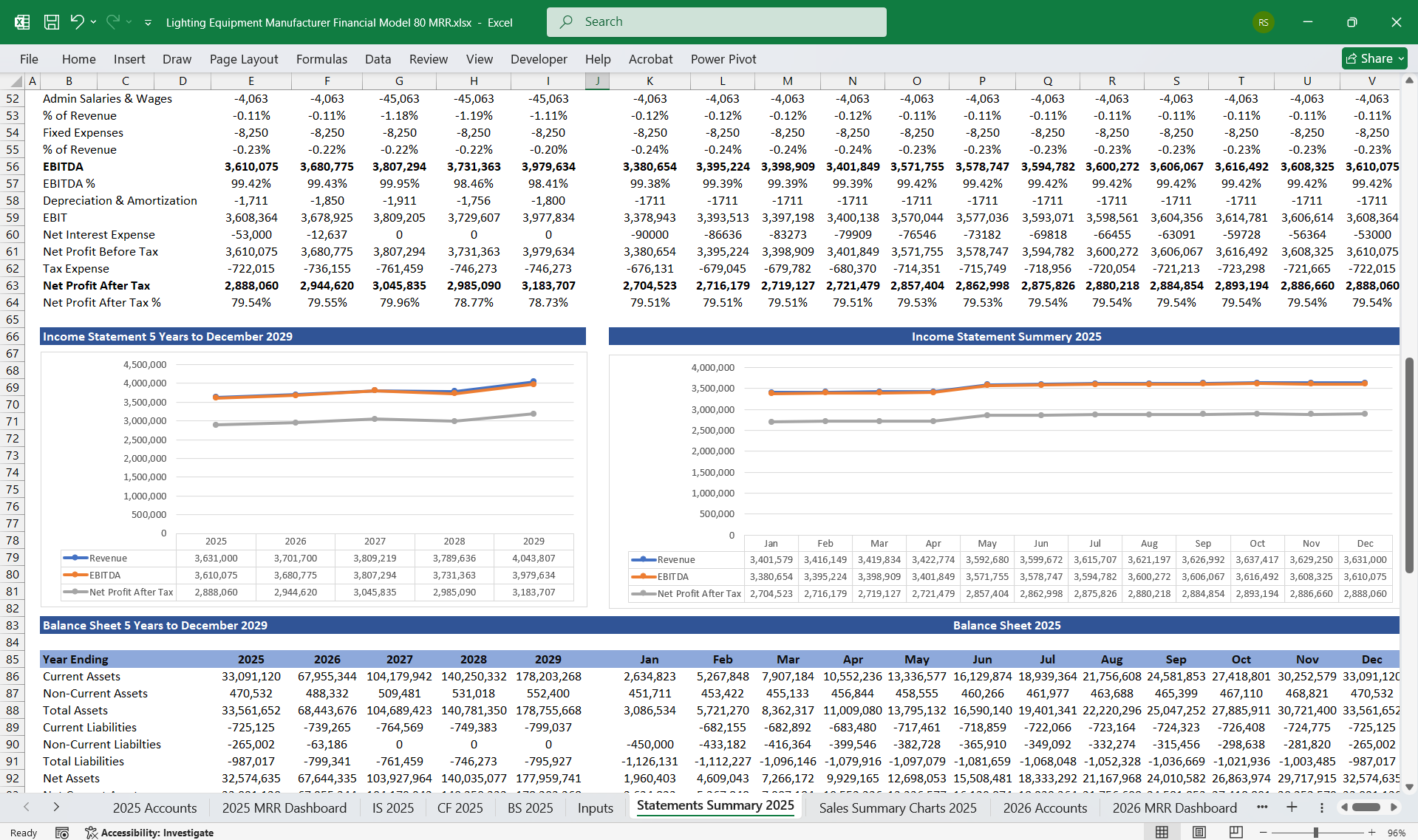
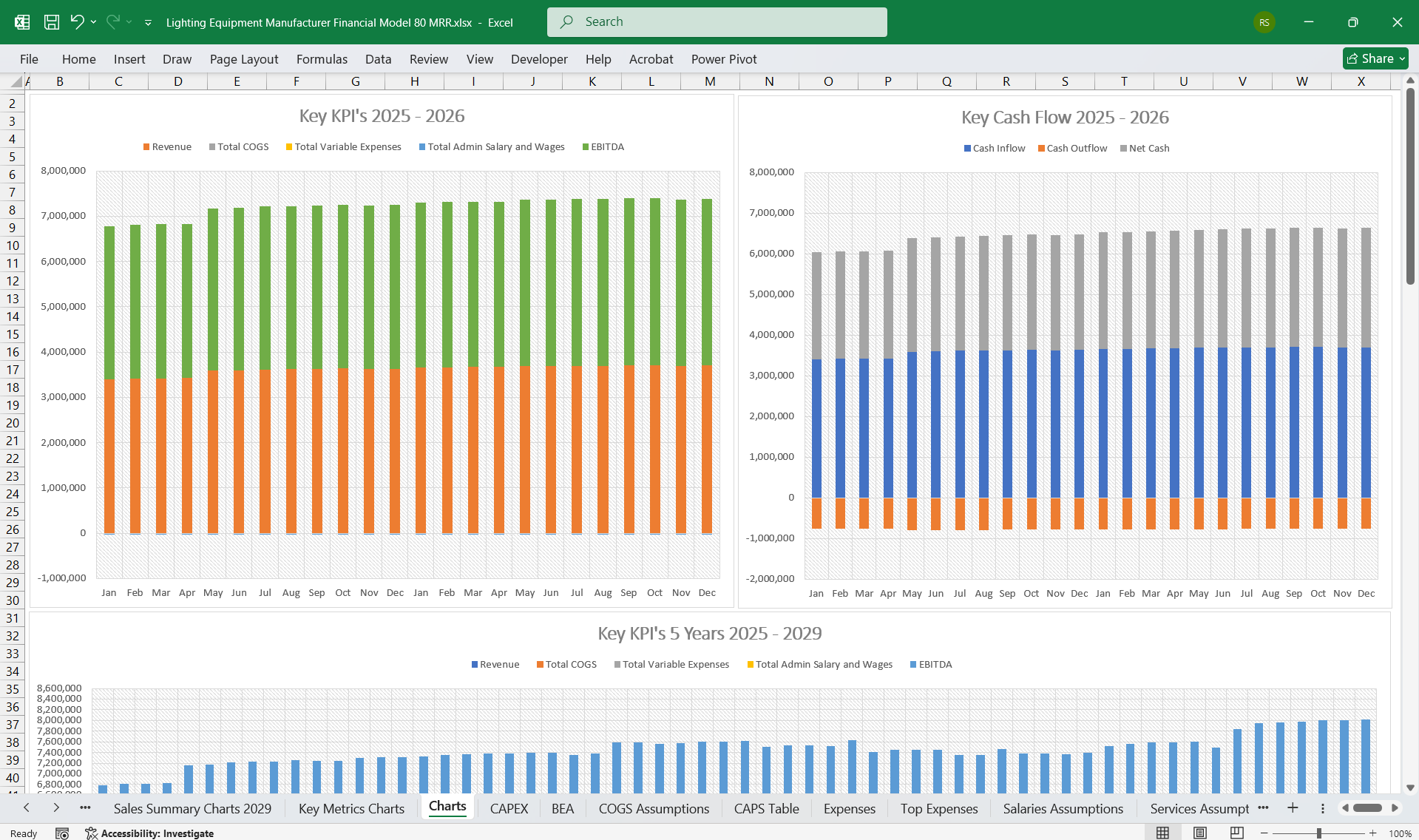
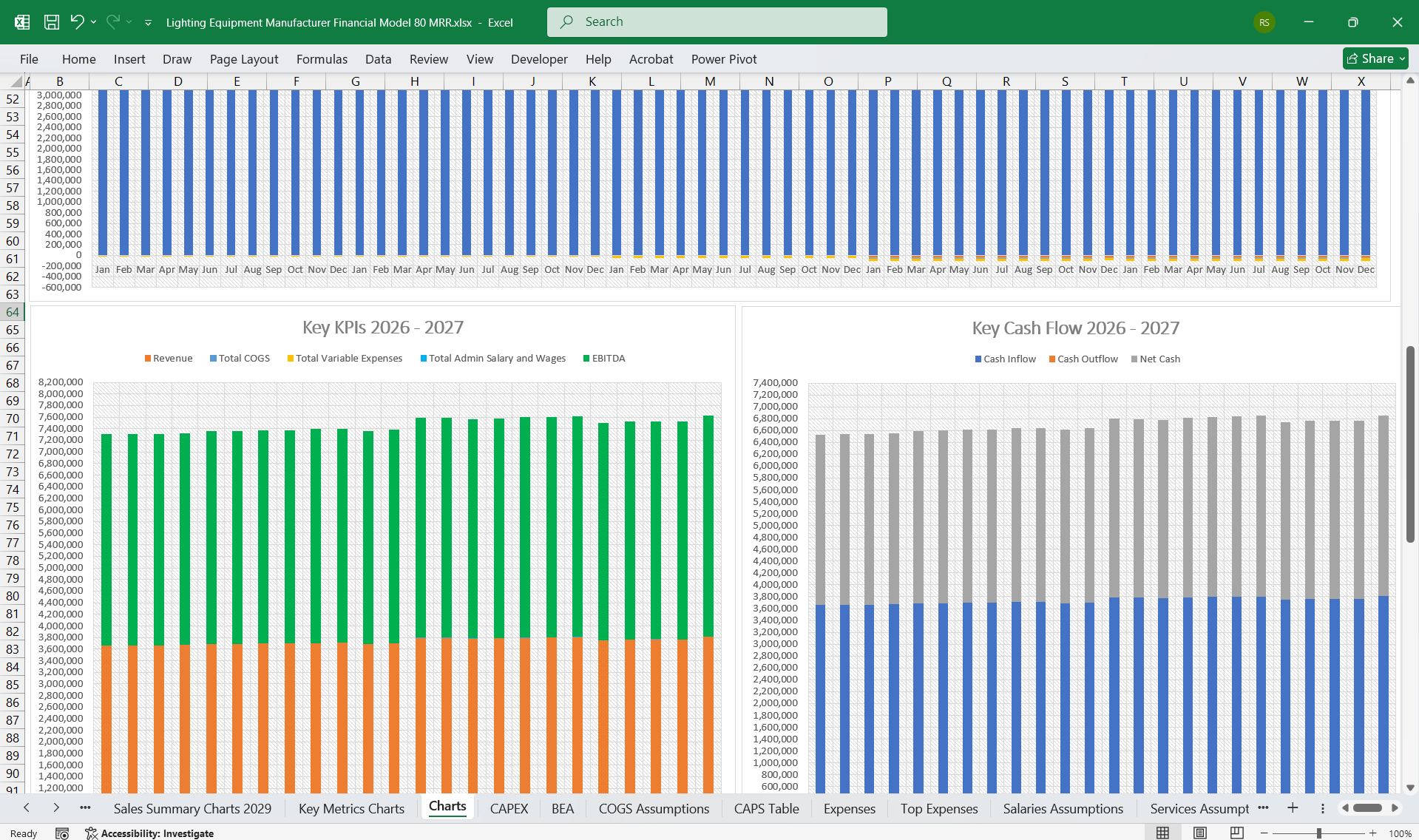
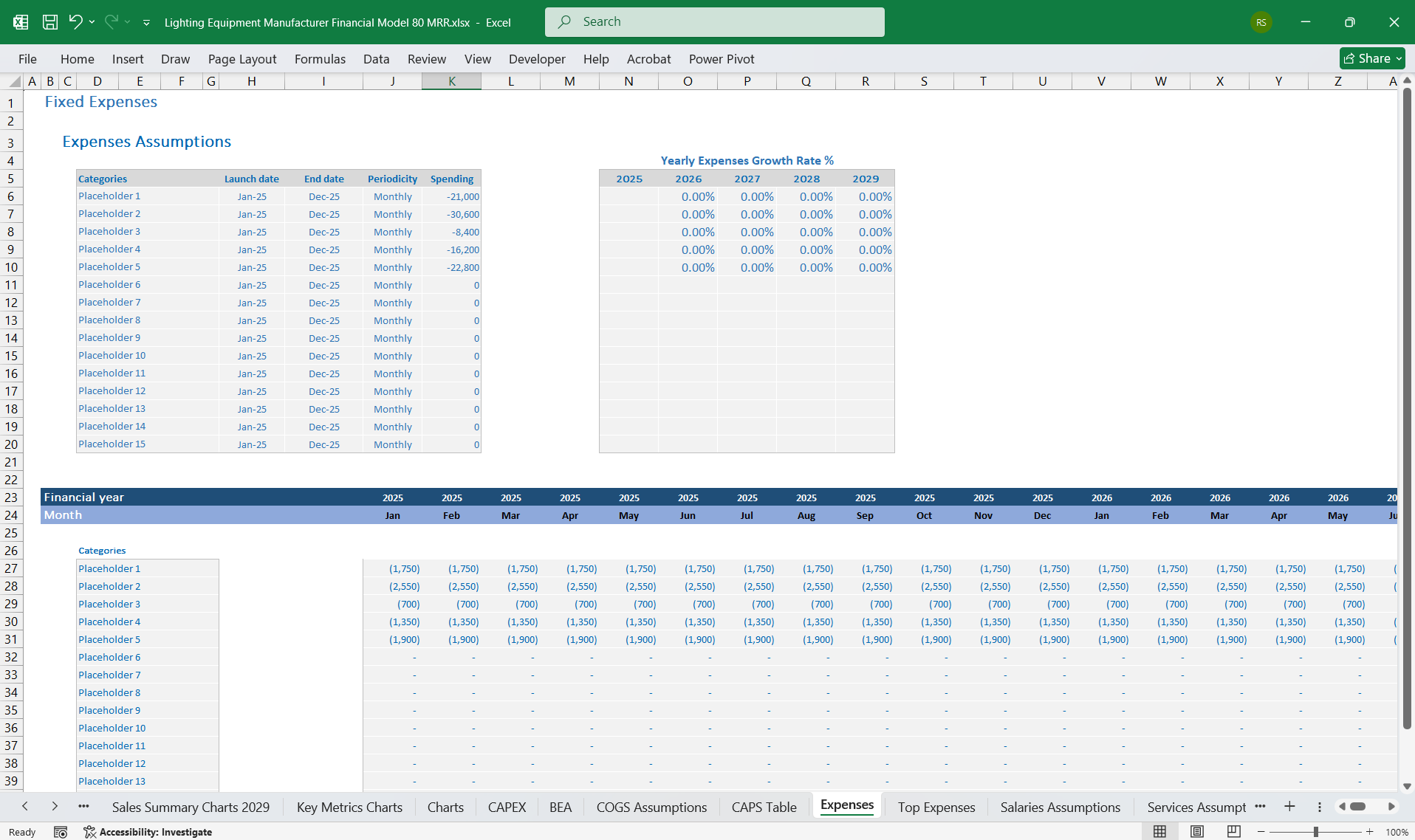
Financial Model for a Lighting Equipment ManufacturerThis detailed financial model provides a comprehensive framework to manage the financial health of a Lighting Equipment Manufacturer, encompassing key elements like the Income Statement, Cash Flow Statement, and Balance Sheet.
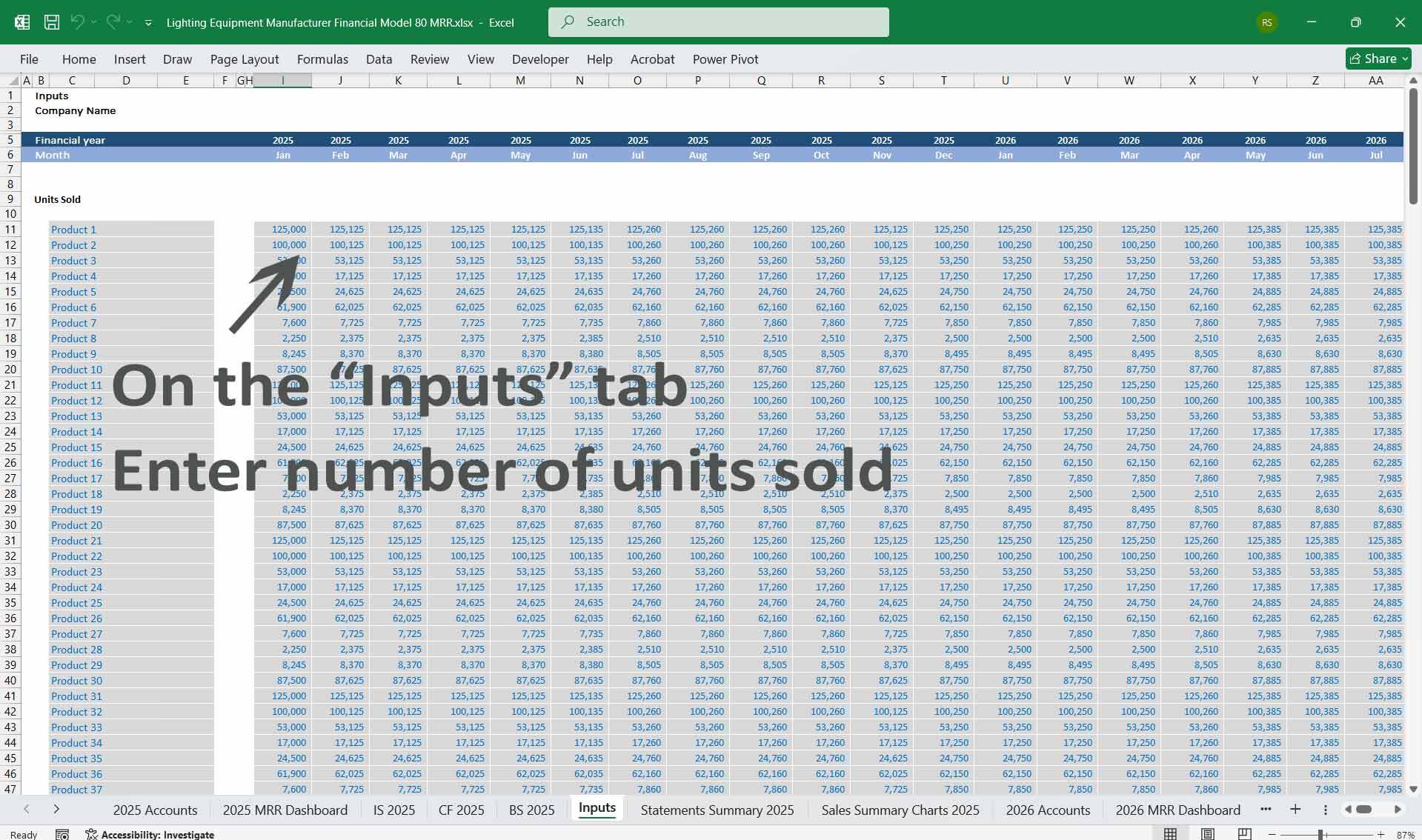
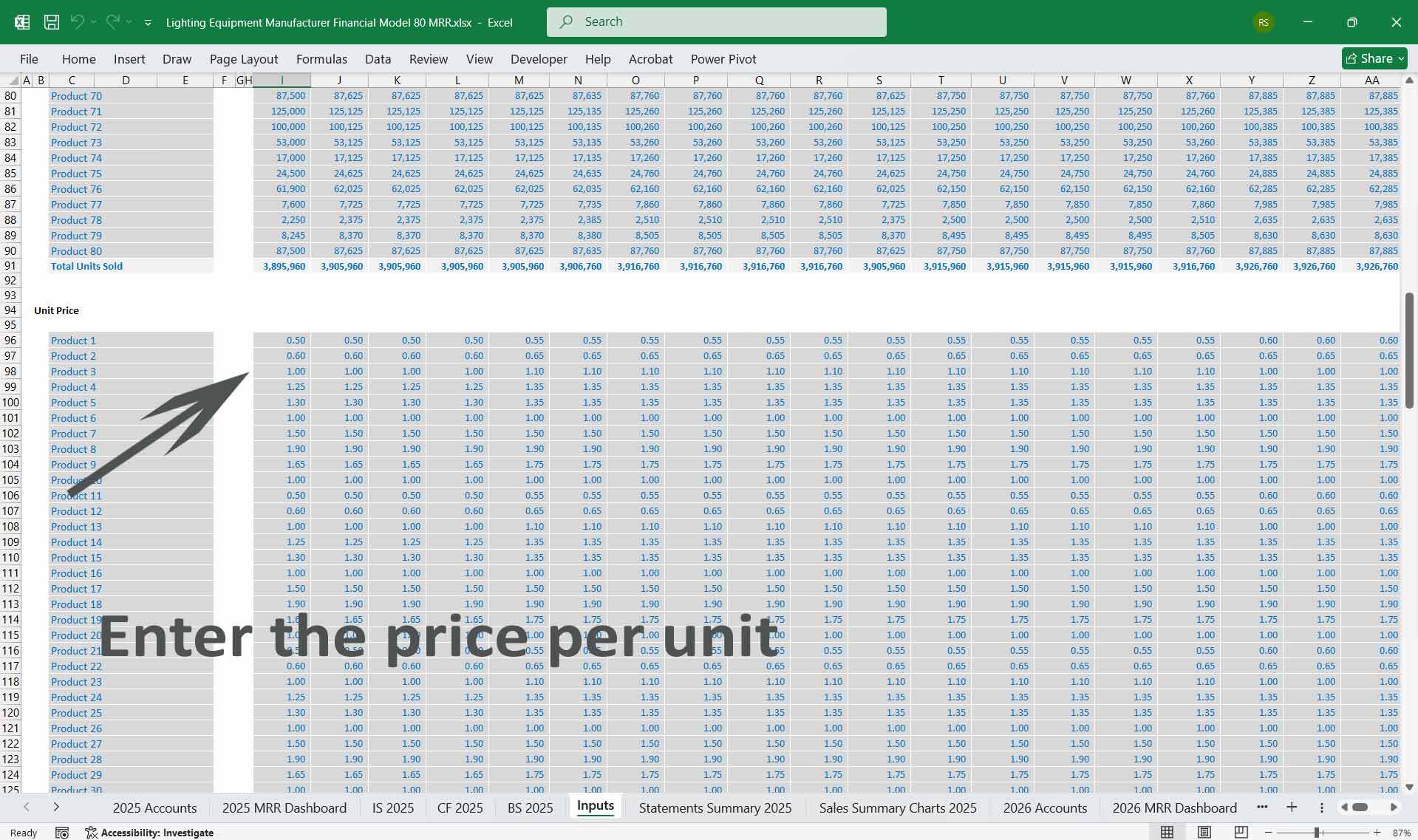
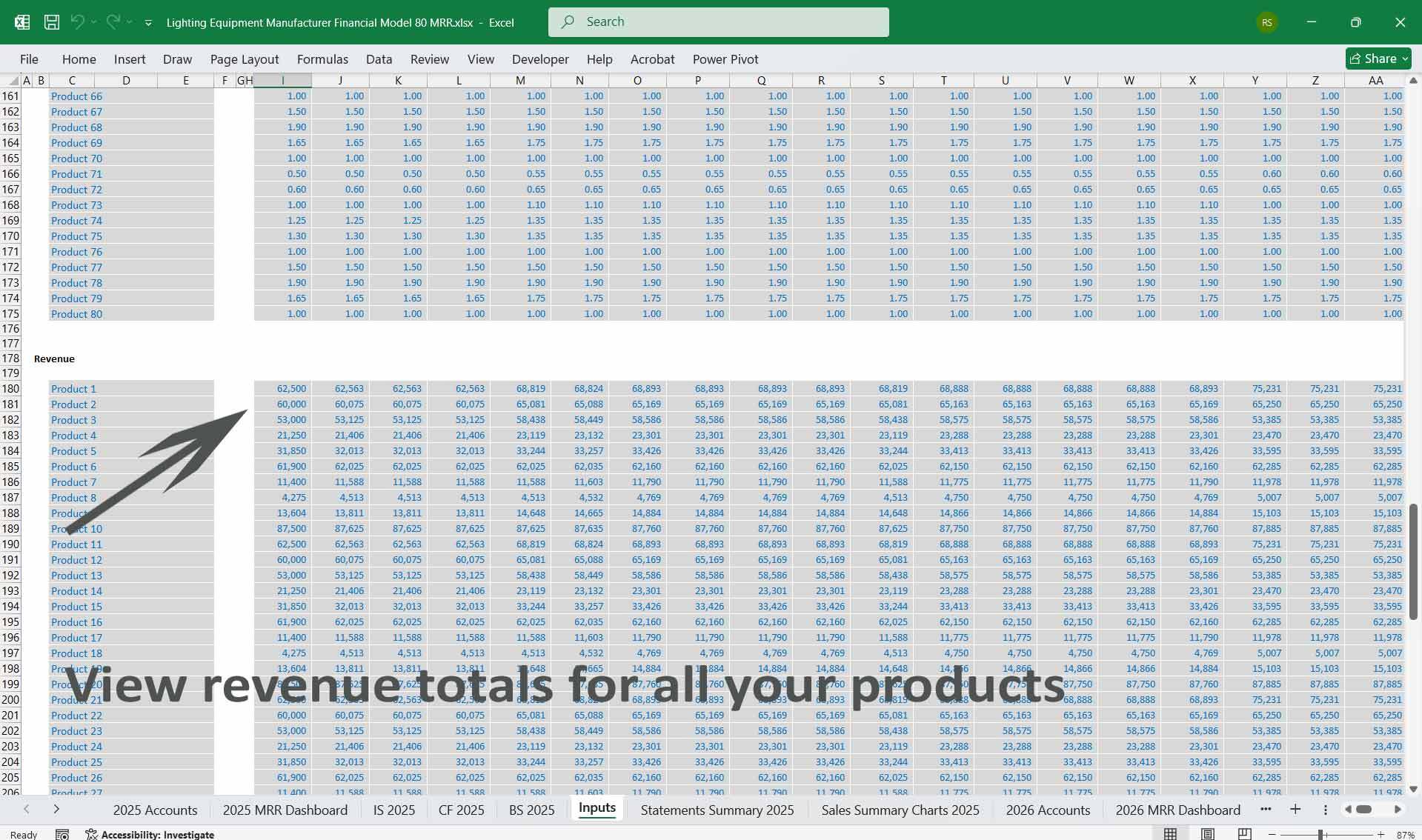
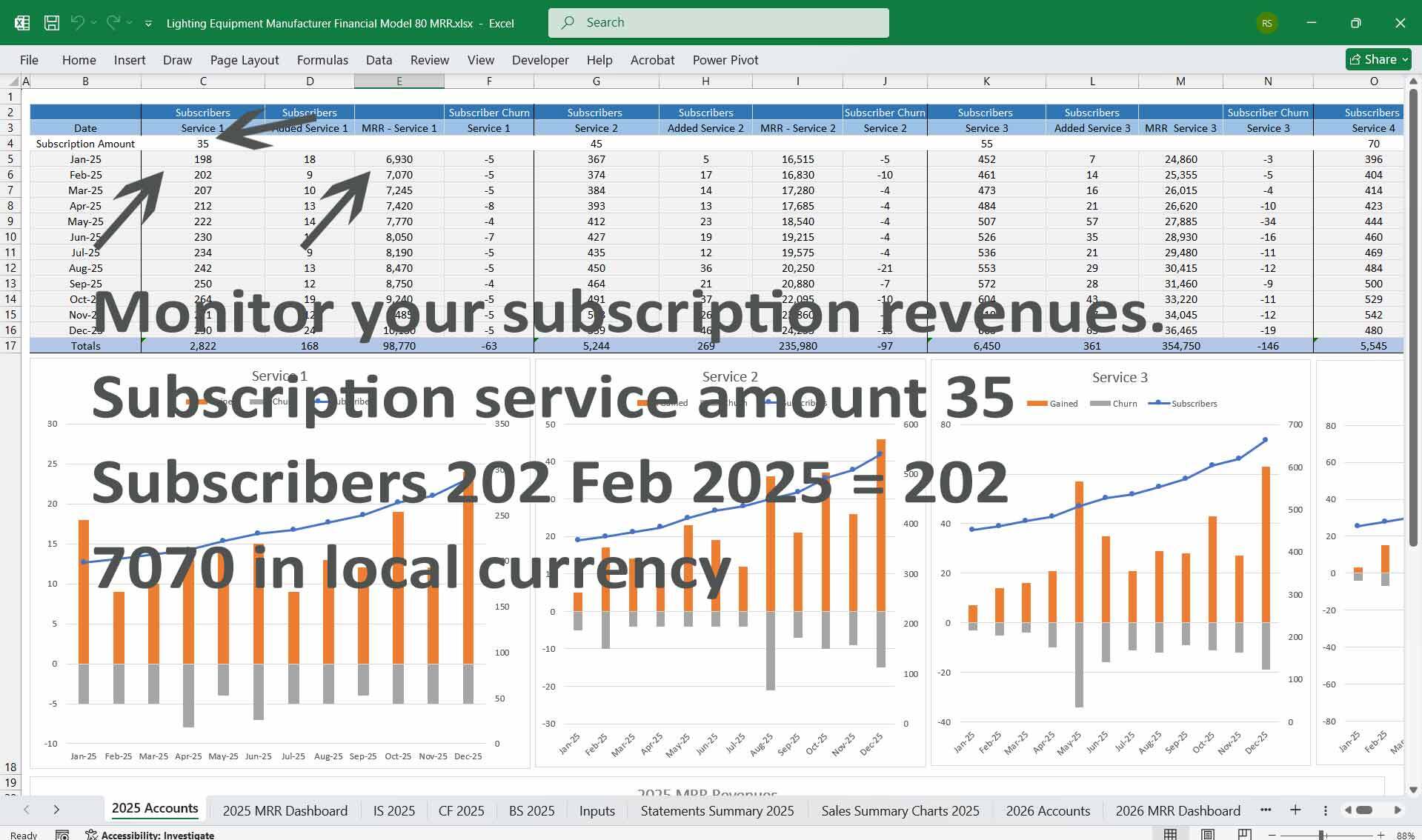
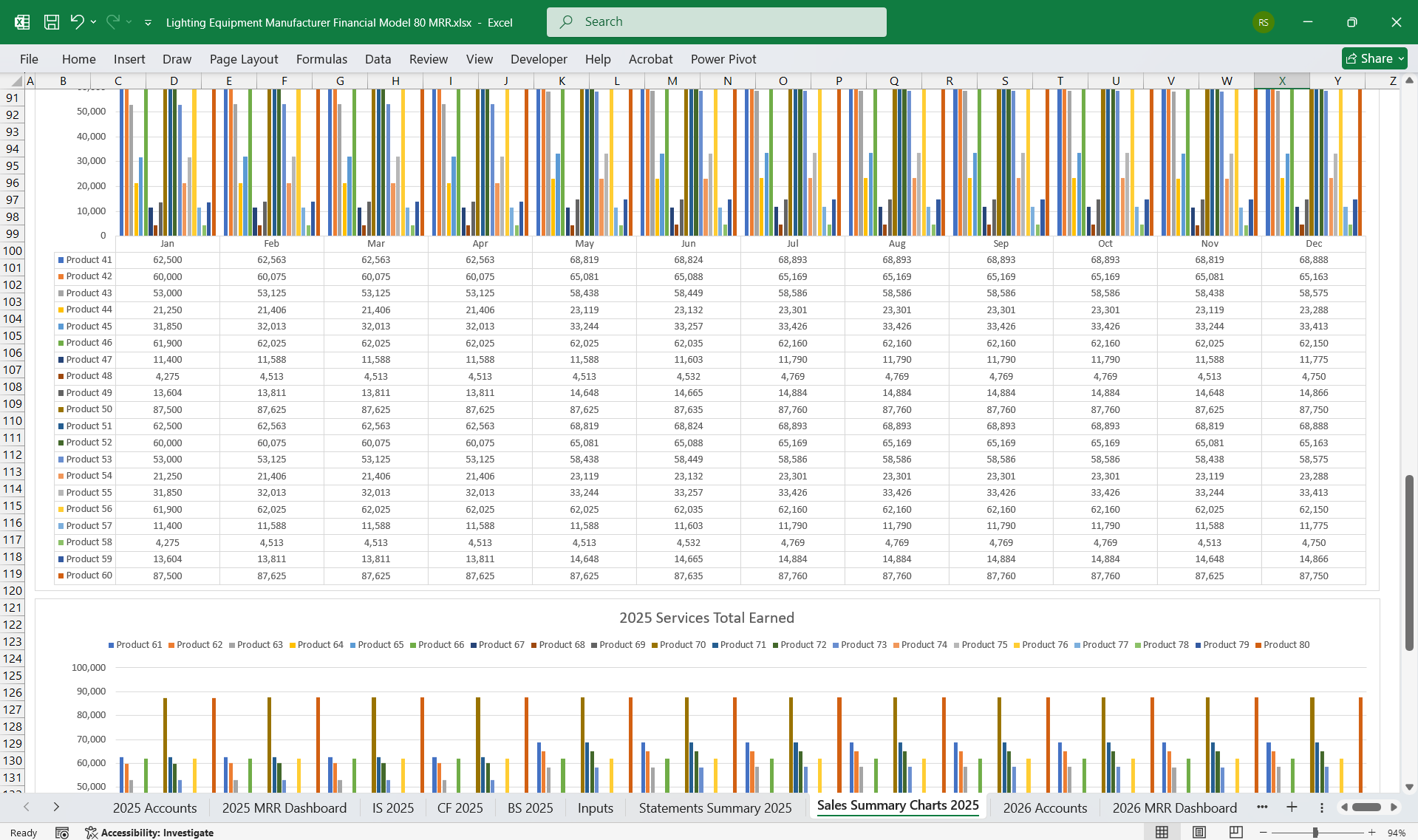
The model includes financial analysis for 80-product line scenarios and a robust 6-Tier Subscription Model Add-on for ongoing customer revenue.
1. Income StatementRevenue Streams
Operating Activities
Assets
A comprehensive approach for catering to diverse and high-value markets.
Tier Structure
Operational Metrics
Financial Model for a Lighting Equipment ManufacturerThis detailed financial model provides a comprehensive framework to manage the financial health of a Lighting Equipment Manufacturer, encompassing key elements like the Income Statement, Cash Flow Statement, and Balance Sheet.
The model includes financial analysis for 80-product line scenarios and a robust 6-Tier Subscription Model Add-on for ongoing customer revenue.
1. Income StatementRevenue Streams
- Product Sales:
- Standard Line: High-volume products like LED bulbs, downlights, and floodlights.
- Premium Line: Specialty lights such as smart lighting systems, solar-powered lights, and architectural lighting.
- Custom Orders: Tailored lighting solutions for large commercial or industrial projects.
- Service Contracts:
- Installation, maintenance, and calibration services for lighting systems.
- Subscription-Based Offerings (explained further below):
- Ongoing access to advanced features and software for smart lighting systems.
- Spare Parts and Consumables:
- Replacement drivers, controllers, and other parts.
- Cost of Goods Sold (COGS):
- Direct Materials: LEDs, housing, wiring, electronics, and packaging.
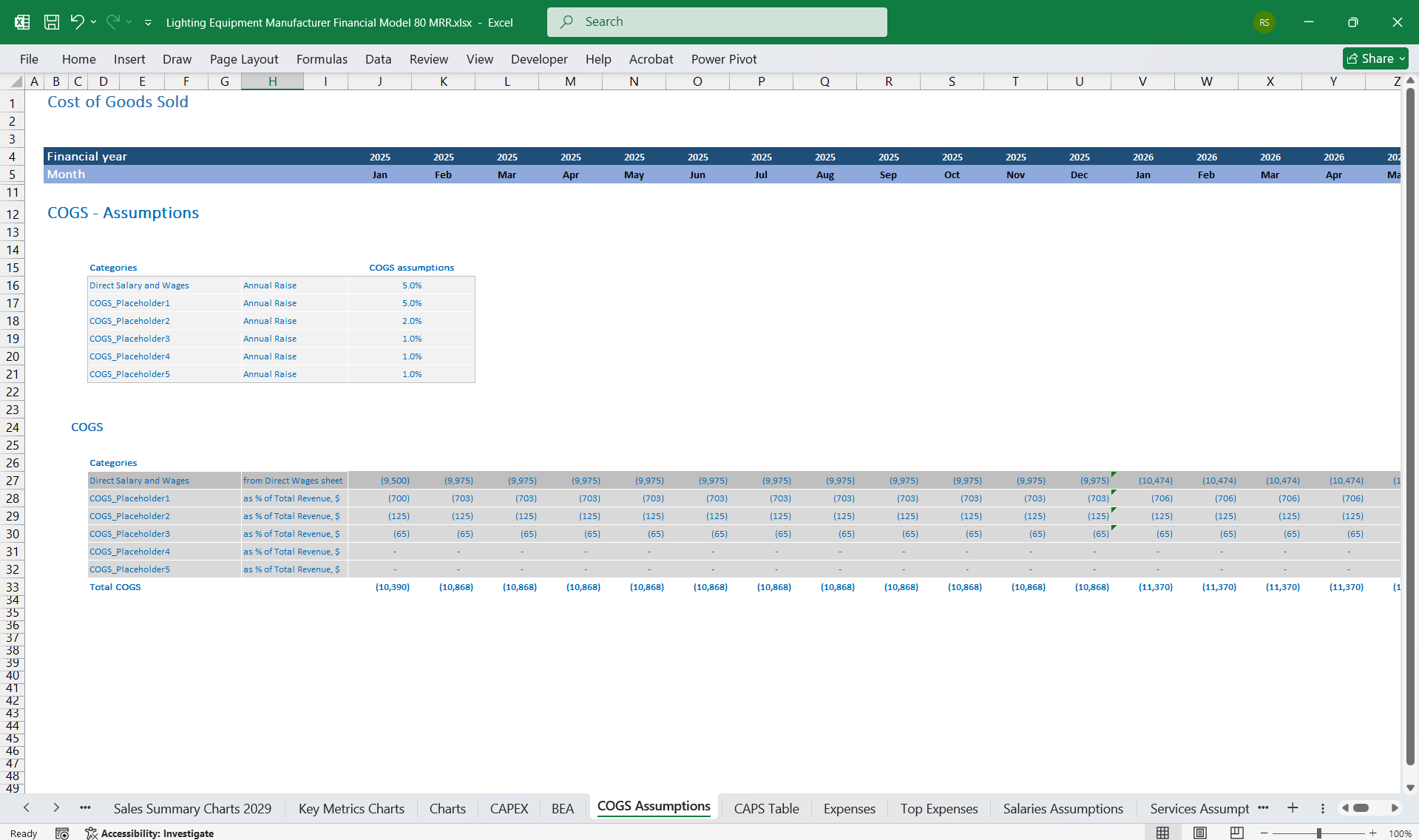
- Labor: Skilled manufacturing workforce.
- Overheads: Depreciation of manufacturing equipment, factory utilities, and testing tools.
- Operating Expenses:
- R&D: Innovation in energy efficiency and smart system technologies.
- Sales and Marketing: Trade show participation, advertising, and distributor management.
- Administrative Costs: Salaries, ERP systems, office costs.
- Miscellaneous Costs:
- Certifications and compliance with safety standards (UL, CE, RoHS).
- Gross Profit = Revenue – COGS.
- Operating Income (EBIT) = Gross Profit – Operating Expenses.
- Net Income = EBIT – Taxes – Interest.
Operating Activities
- Inflows:
- Payments for product sales (bulk orders for standard lines or custom orders).
- Service and subscription revenue.
- Spare parts and replacements.
- Outflows:
- Payments for raw materials and supplier invoices.
- Manufacturing wages and utility bills.
- Marketing and sales expenses.
- Inflows:
- Sale of old equipment or production line assets.
- Outflows:
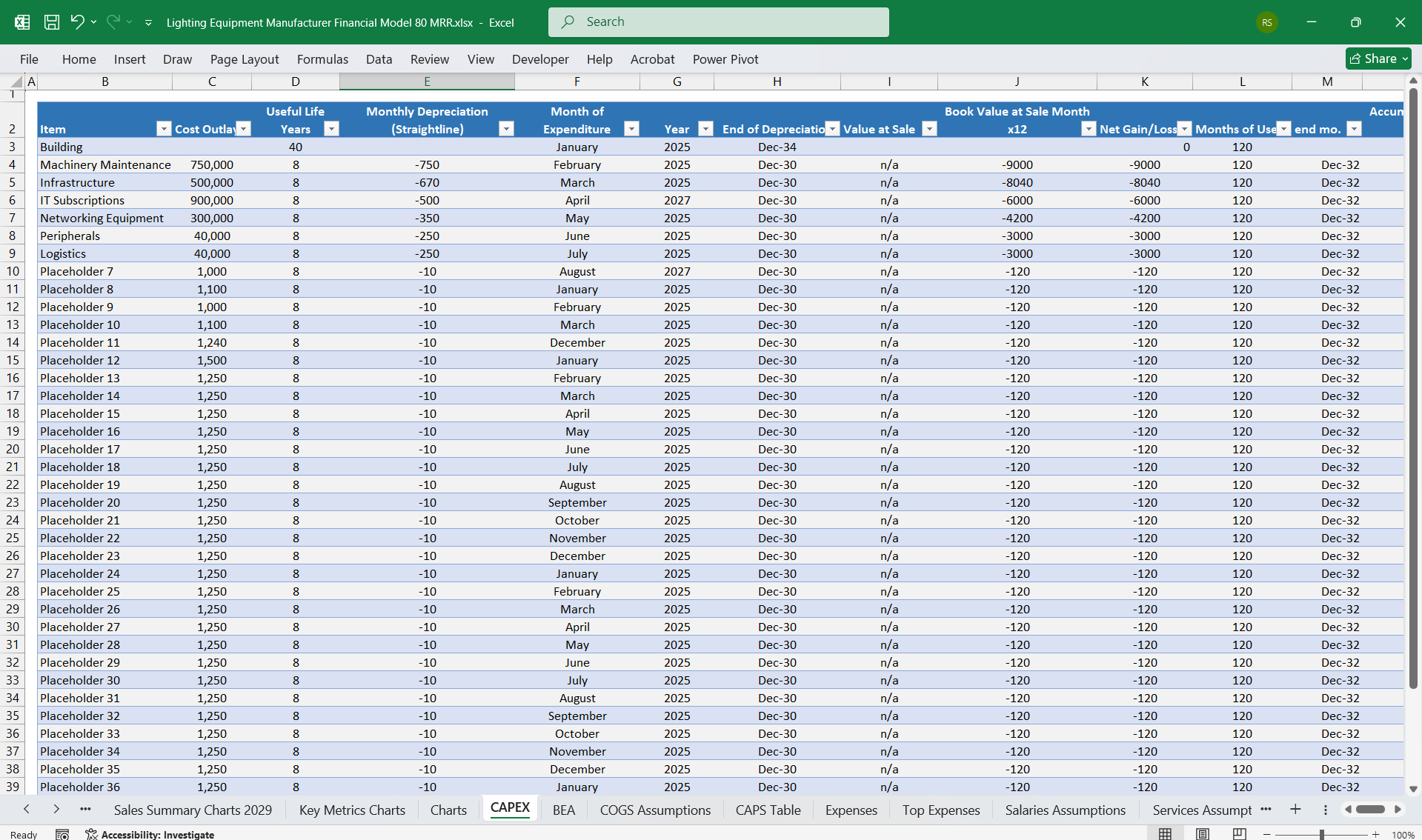
- Purchase of new machinery for production line scalability.
- Investment in proprietary lighting technologies and smart controls.
- Inflows:
- Loans or equity raised for R&D expansion and new manufacturing capabilities.
- Outflows:
- Loan repayments.
- Shareholder dividends.
- Free Cash Flow (FCF): Tracks cash available for growth or dividend distribution.
- Operating Cash Flow Conversion: Assesses liquidity strength.
Assets
- Current Assets:
- Cash and bank balances.
- Accounts receivable from distributor payments.
- Inventory: Raw materials (LED chips, housings), work-in-progress, and finished goods.
- Non-Current Assets:
- Machinery, molds, and equipment for lighting production.
- Intellectual property (smart system software, patents).
- Current Liabilities:
- Accounts payable to suppliers.
- Accrued operating expenses.
- Deferred revenue from prepaid subscriptions.
- Non-Current Liabilities:
- Bank loans or other long-term financial obligations.
- Retained earnings are reinvested into growth areas.
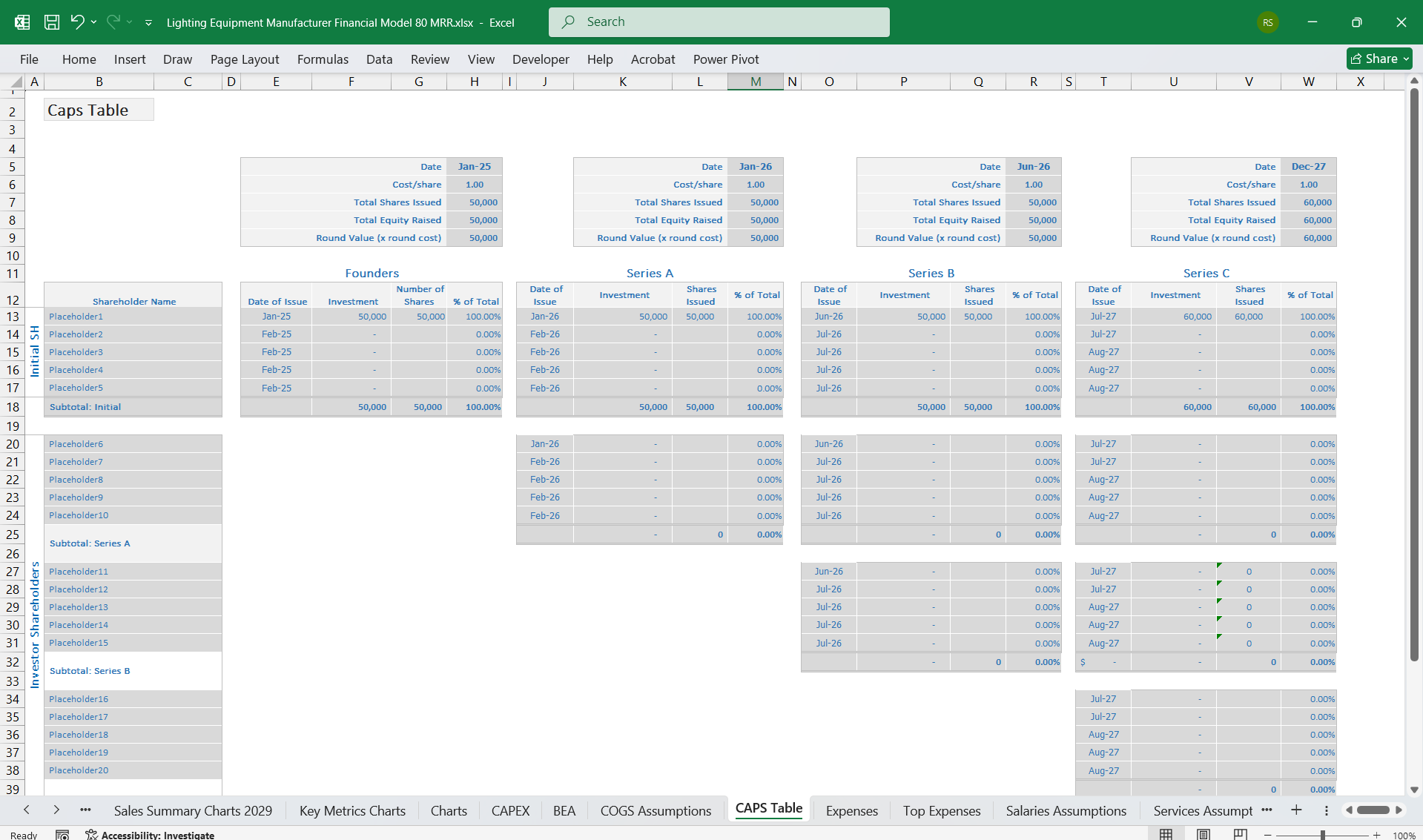
- Equity raised from external stakeholders.
A comprehensive approach for catering to diverse and high-value markets.
- Revenue Generation:
- Expanded portfolio including premium and speciality lighting (smart lighting, high-output industrial systems).
- Custom orders for large commercial projects.
- Cost Management:
- Higher R&D and regulatory costs for cutting-edge technology and custom compliance.
- Increased logistical complexity for material sourcing and distribution.
- Target Audience:
- Large distributors, global markets, and specialized commercial or industrial applications.
- Profit Margins:
- Gross Margin: ~45-55% (premium pricing offsets complexity).
- Net Margin: ~15-20%.
Tier Structure
- Tier 1 (Basic):
- Access to standard system diagnostics.
- Remote firmware updates.
- Tier 2 (Standard):
- Includes Basic features.
- Advanced scheduling and dimming control.
- Tier 3 (Professional):
- Real-time monitoring of energy usage.
- Energy optimization recommendations.
- Tier 4 (Premium):
- Integration with building management systems.
- Predictive maintenance alerts.
- Tier 5 (Enterprise):
- Fully automated systems with AI-driven recommendations.
- Extended support for industrial clients.
- Tier 6 (Custom):
- Dedicated solutions tailored to large-scale projects.
- Includes all features plus on-site consultations.
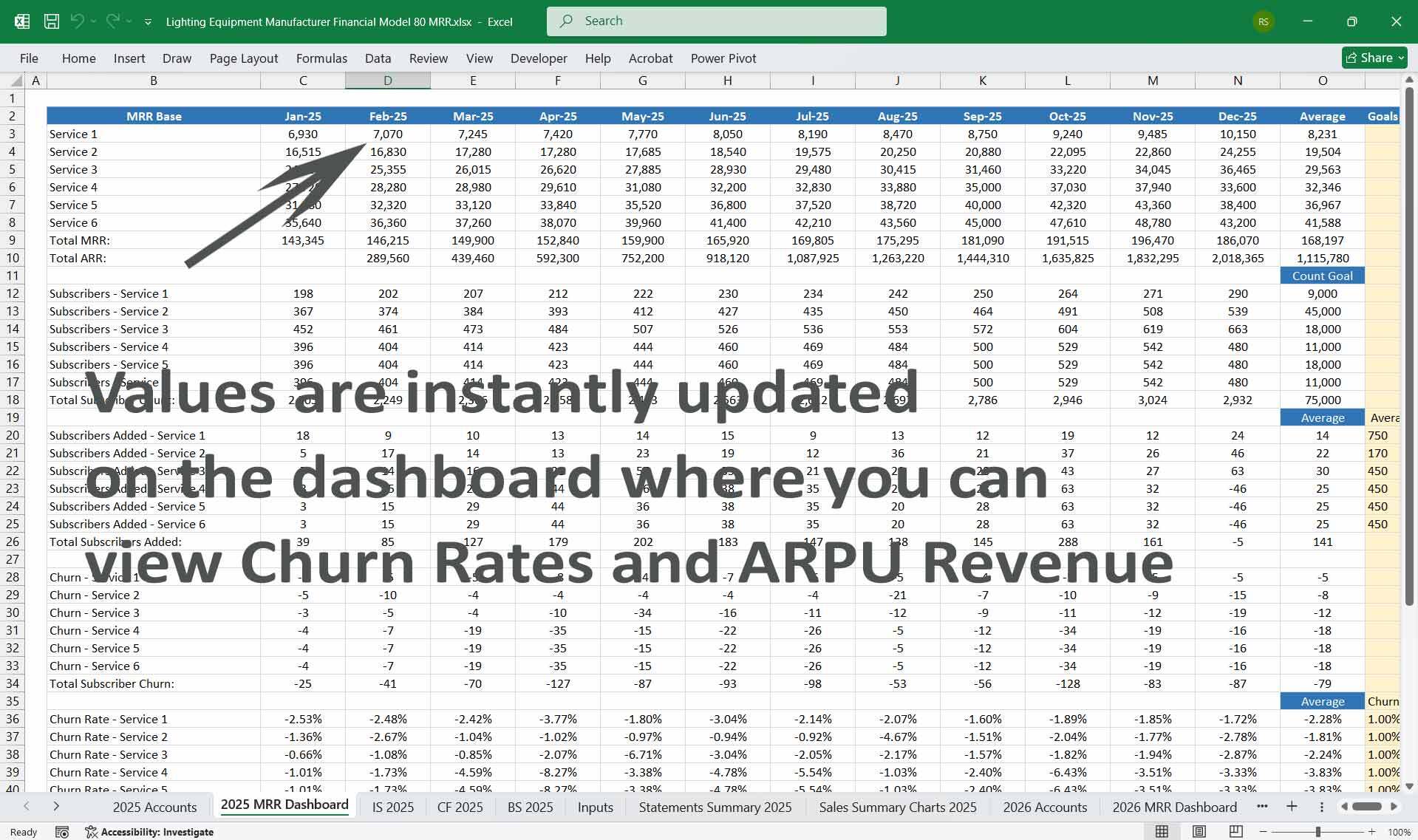
- MRR (Monthly Recurring Revenue):
- Measure subscription revenue consistency.
- ARR (Annual Recurring Revenue):
- MRR × 12.
- Churn Rate:
- Monitors the percentage of users discontinuing subscriptions.
- LTV (Lifetime Value):
- Customer lifetime × average subscription price.
- CAC (Customer Acquisition Cost):
- Marketing and sales expenses per new subscription.
Operational Metrics
- Production efficiency: % capacity utilization.
- Inventory turnover: How quickly inventory is sold and replaced.
- Contribution margin by product line.
- Gross margin performance across scenarios (80-product lines).
- Growth rate in tiered subscribers.
- Average subscription upgrade frequency.
This Best Practice includes
1 Excel Financial Model
Further information
Provides thorough oversight, tracking, and reporting of a Lighting Equipment Manufacturer's finances, including updates on budget utilisation and projections.