Publication number: ELQ-58173-1
View all versions & Certificate

SAIL (Steel Authority of India) Financial Model — 3-Statement, FCFF/WACC DCF Valuation & Dashboard
3-statement steel-sector model with FCFF/WACC DCF valuation, working capital schedules, and interactive dashboard.
Further information
Provide a ready-to-use, fully-linked 3-statement financial model for SAIL (Steel Authority of India) as a template for steel/metals-sector equity research
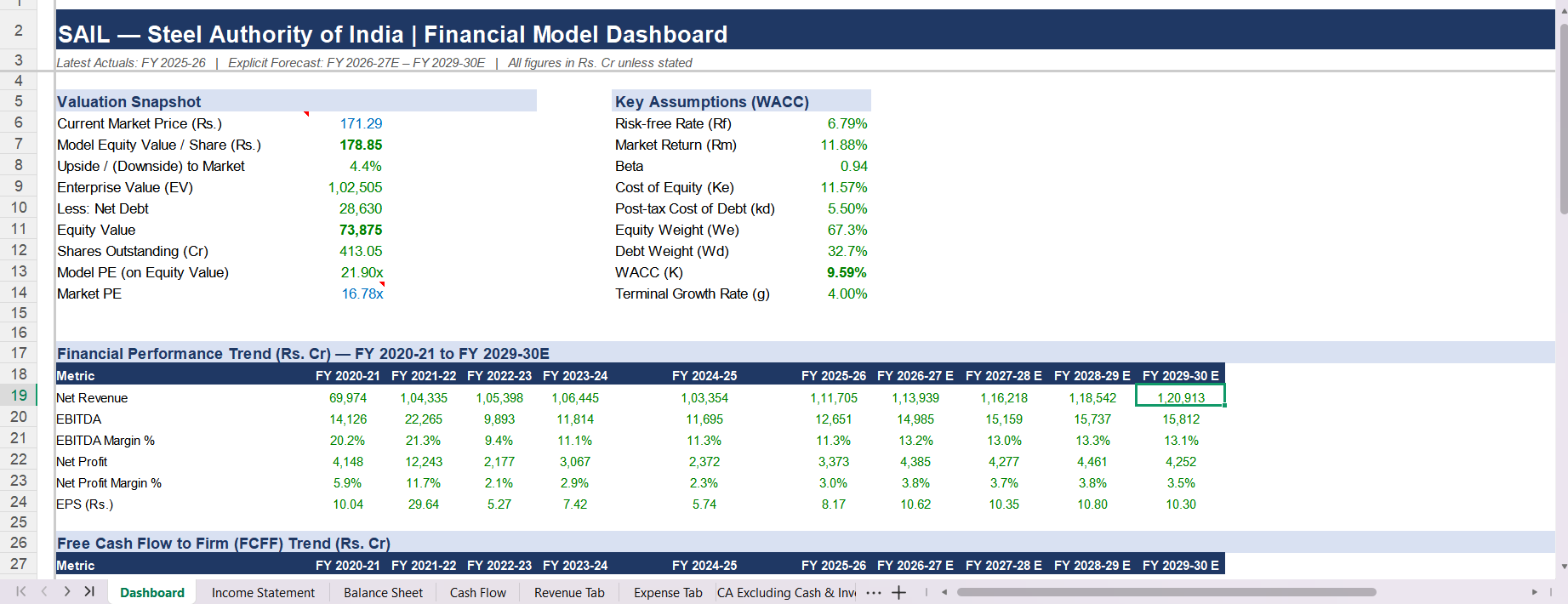
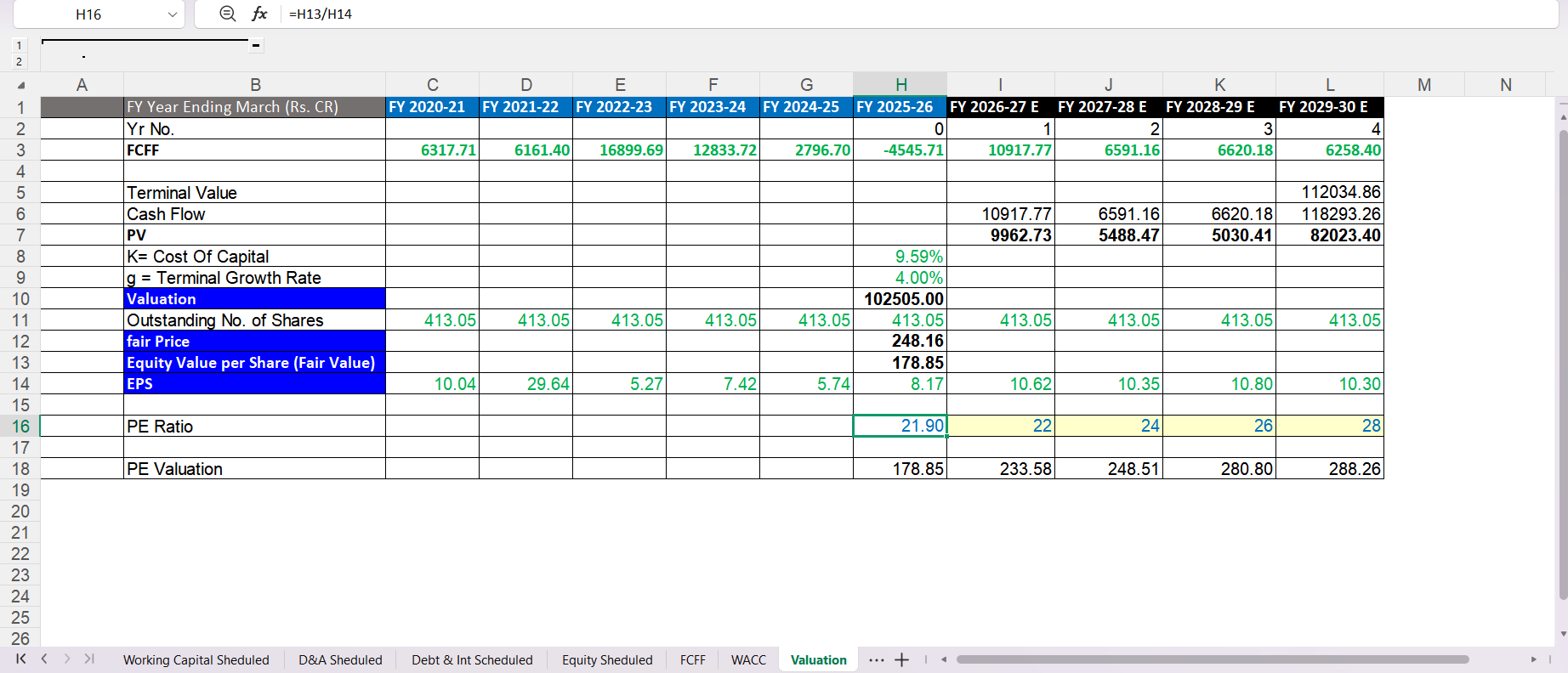
Demonstrate correct FCFF-based DCF valuation mechanics — including the Enterprise Value → Net Debt → Equity Value bridge that is frequently missed in simpler DCF templates
Illustrate CAPM-based WACC derivation (Beta, risk-free rate, equity risk premium) built up transparently from first principles rather than as a black-box input
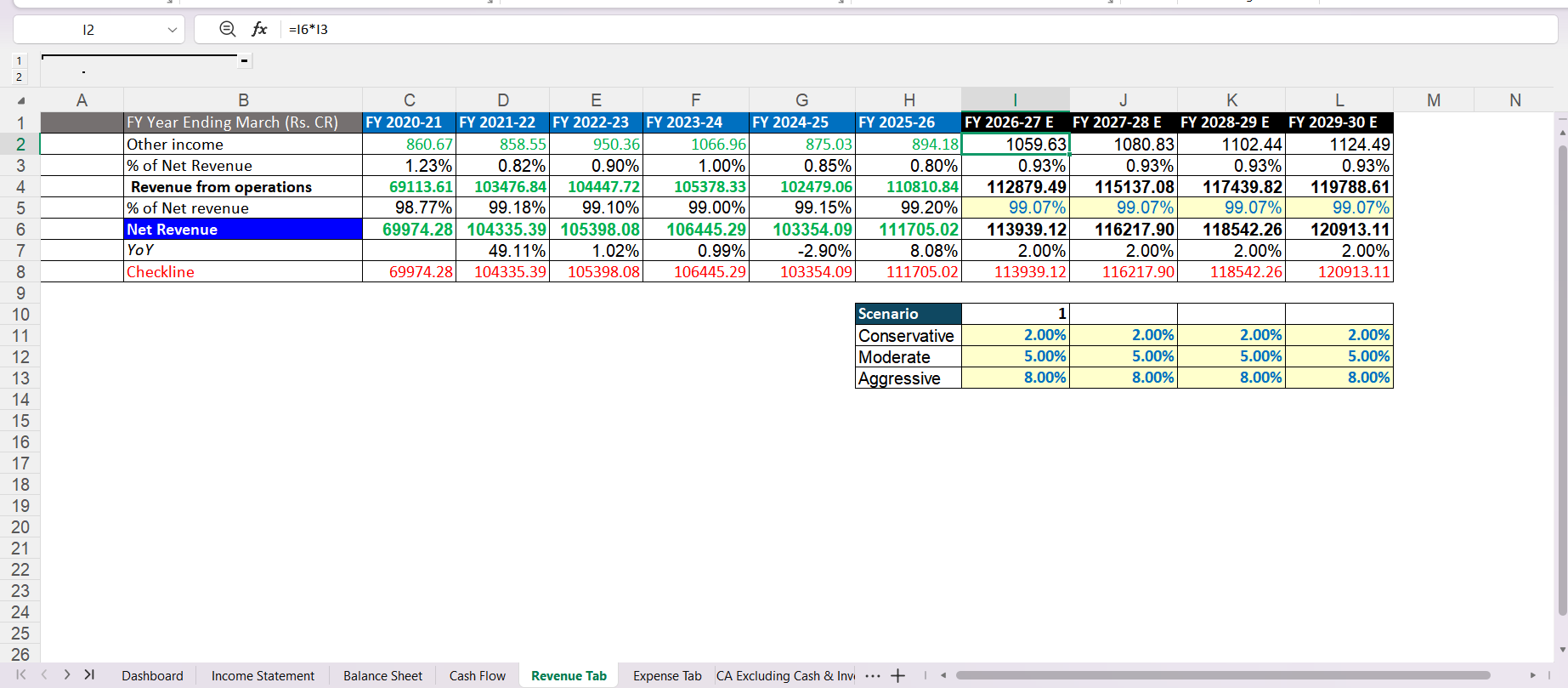
Model the full working-capital cycle (inventory, receivable, and payable days) and D&A/Debt/Equity schedules as linked, rolling schedules rather than static assumptions
Showcase a defensible approach to terminal value assumptions, anchoring long-run growth to structural inflation rather than short-term GDP cycles, to avoid unstable Gordon Growth outputs
Package model outputs into a single-page, chart-driven Dashboard for quick screening alongside the detailed schedules for deep-dive analysis
Valuing capital-intensive, asset-heavy manufacturers (steel, cement, metals & mining) where FCFF/WACC is the appropriate DCF framework, not P/E, P/B, or DDM
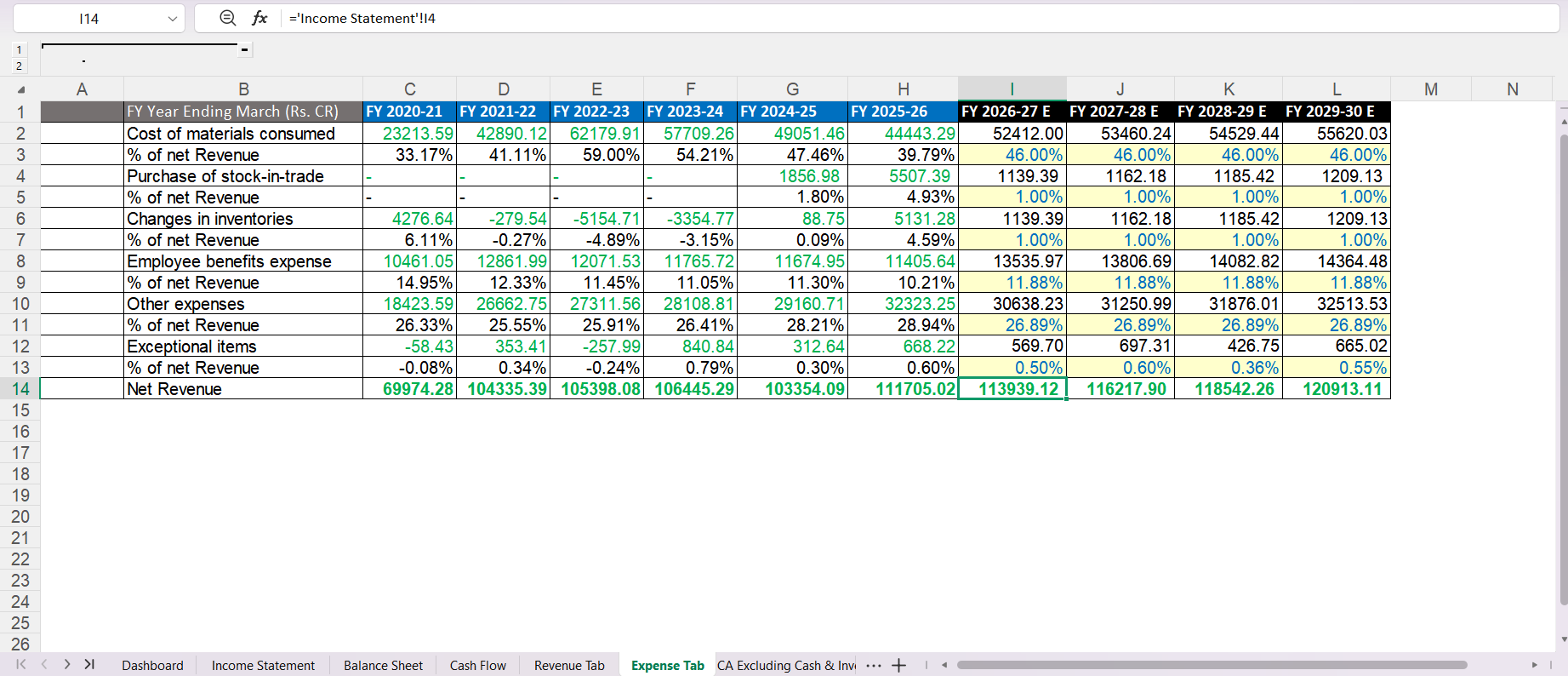
Companies with a clear volume × price revenue driver and a COGS-dominated cost structure
Businesses carrying meaningful leverage, where the Enterprise Value-to-Equity Value bridge (net debt adjustment) materially changes the per-share output
Analysts who want a transparent, auditable WACC build-up (rather than a single hardcoded discount rate) to defend or stress-test assumptions
Use cases where a 4-year explicit forecast plus a single terminal value is an acceptable level of granularity (e.g., screening, coursework, or initiating coverage) rather than institutional-grade multi-stage modeling
Banks, NBFCs, or insurance companies — these require P/E, P/B, or DDM-based valuation and RBI-compliant statement formats (NII/NIM, CASA, asset quality schedules), not FCFF/WACC
Businesses with highly volatile, cycle-driven cash flows where a single terminal growth rate cannot adequately capture multi-year peak-to-trough swings — a longer explicit forecast or multi-stage DCF would be more appropriate
Situations requiring a fully projected (not just historical) balance sheet — this model forecasts capital structure through dedicated Debt & Equity schedules rather than a line-by-line projected balance sheet
Cross-border or multi-currency companies, since the model is built entirely in ₹ Crore with India-specific tax and regulatory assumptions
High-frequency trading or short-term price-target use cases — this is a fundamentals-driven, long-horizon valuation tool, not a technical or momentum-based model