Publication number: ELQ-11706-1
View all versions & Certificate

Universal Straight-Line Schedule Builder - Amortization, Depreciation & Recognition
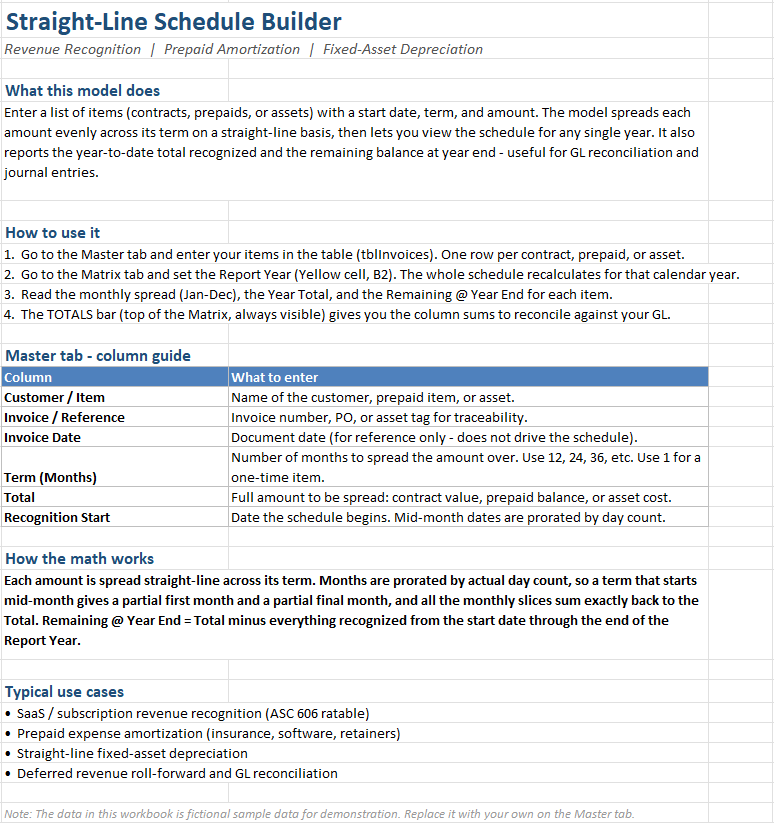
Single formula-driven Excel template that handles amortization, depreciation, and recognition schedules while keeping data easily readable in one view.
Further information
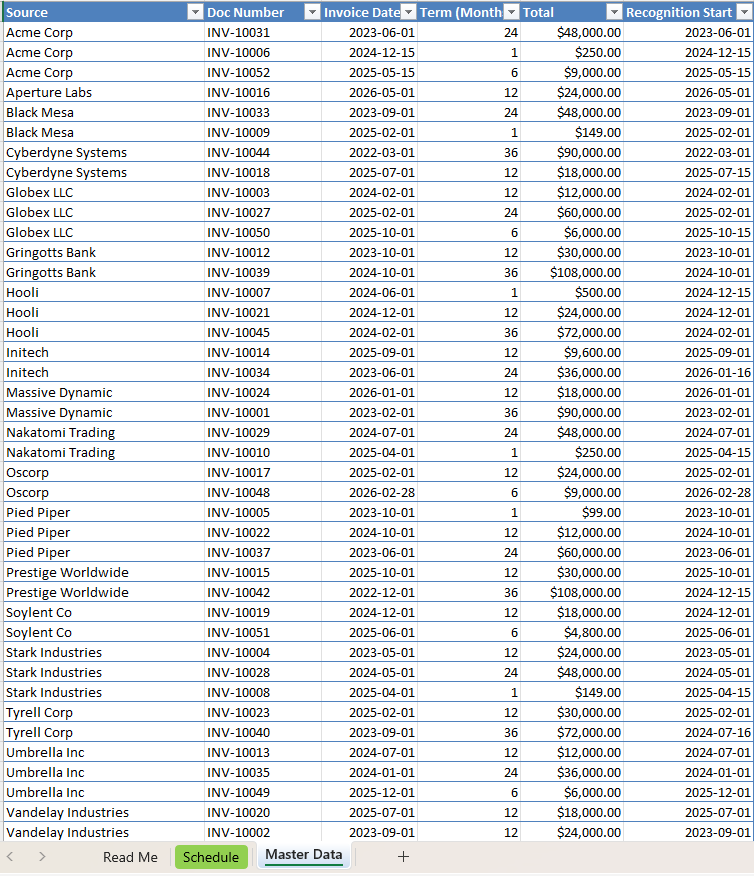
Build a straight-line schedule for any amortizable balance (prepaids, deferred revenue, fixed-asset depreciation, deferred commissions) from a single item list
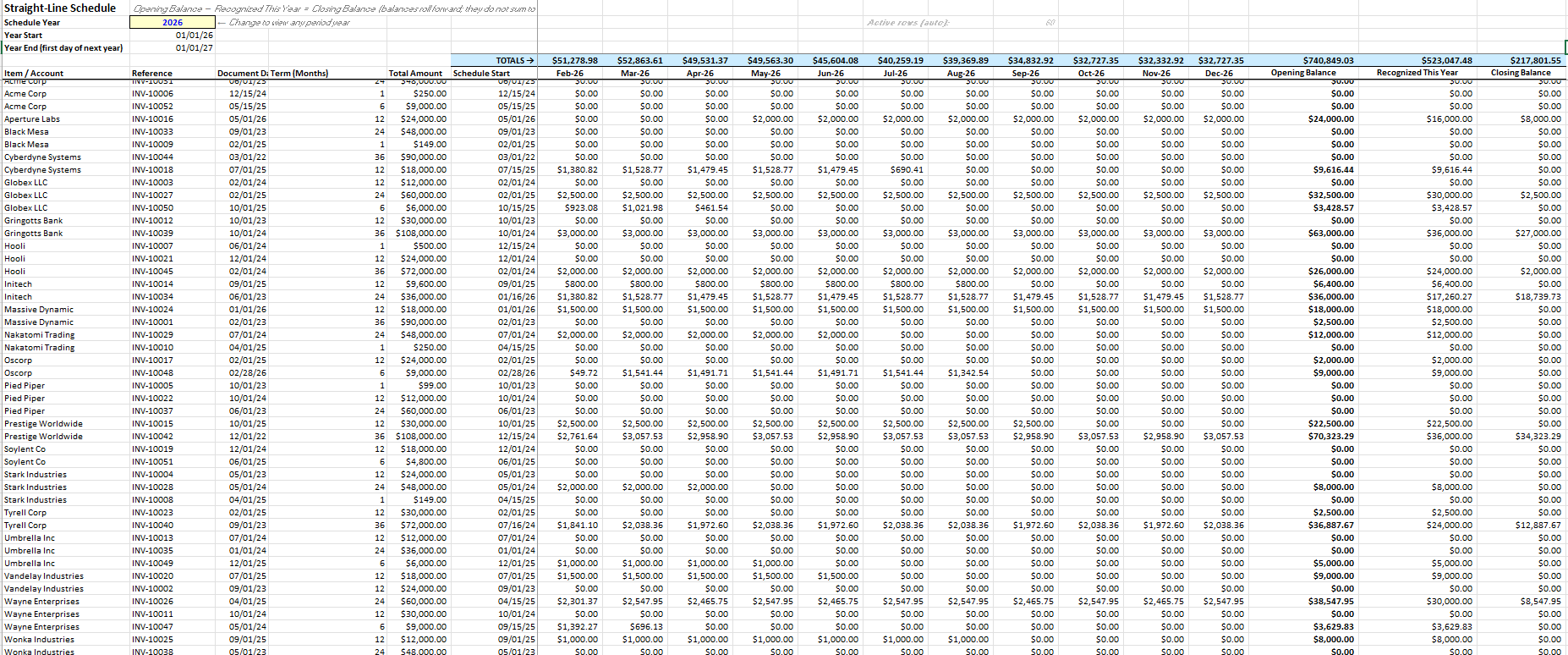
Isolate any fiscal year with one input to see that year's period-by-period recognition without scrolling thousands of rows
Produce an audit-ready Opening / Recognized / Closing roll-forward that ties out year over year for GL reconciliation and journal-entry support
Handle both clean 1st-of-month terms and mid-month starts (day-count proration) with no manual adjustment
Give finance teams a transparent, fully formula-driven tool with no macros or add-ins
Straight-line (even) amortization, recognition, or depreciation over a fixed term in months
Recurring need to view a single reporting year out of a long multi-year schedule
GL reconciliation, month-end / year-end close, journal-entry preparation, or audit support
Prepaid expense amortization, deferred revenue recognition, fixed-asset depreciation, deferred commission (ASC 606 / costs to obtain) schedules
Users who want an auditable, macro-free Excel model they can extend with their own line items
Non-straight-line methods - accelerated/declining-balance or sum-of-years depreciation, or usage/units-of-production
Variable or milestone-based revenue recognition (e.g., percentage-of-completion, consumption-based, variable consideration that changes each period)
Schedules requiring mid-life modifications - contract modifications, partial terminations, impairments, or re-forecasting after start
Sub-monthly granularity (daily/weekly recognition) or terms not expressible in whole months
Multi-currency consolidation, tax-book vs GAAP-book parallel schedules, or anything needing an ERP-grade subledger