

Universal CAPEX Financial Tracker & Budget Management System
Originally published: 27/03/2026 21:36
Publication number: ELQ-58682-1
View all versions & Certificate
certified

Universal CAPEX Financial Tracker & Budget Management System

Automate your Capital Expenditure tracking with a professional, two-tab system that bridges the gap between Engineering POs and Finance Invoicing.

Description

Universal CAPEX Financial Tracker & Management System

Stop the spreadsheet nightmare and take control of your Capital Expenditure with a professional, automated solution.

In high-pressure industrial and manufacturing environments, managing CAPEX is often a source of friction between Engineering and Finance. Traditional trackers are usually "hand-cranked" with dozens of disconnected, fragile tabs that are prone to human error and version-control chaos.

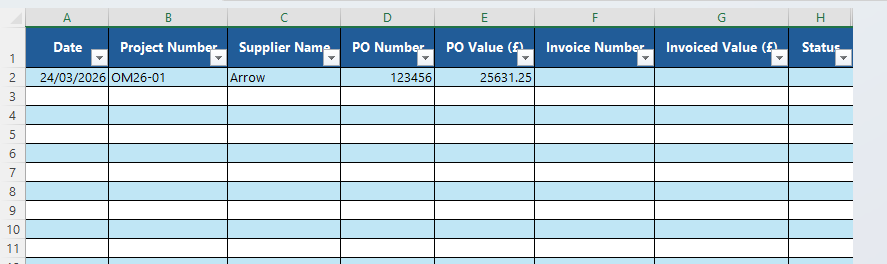
This Universal CAPEX Financial Tracker was built by a senior Engineering Leader to provide a "Single Source of Truth" for multi-site or multi-project portfolios. It moves away from the clunky "one tab per project" model and utilizes a sophisticated, relational Two-Tab Ledger System. This architecture ensures that your data remains clean, scalable, and easy to audit.

Key Features & Management Insights:

  • Executive Portfolio Dashboard: Gain instant, high-level visibility into your entire CAPEX spend. The dashboard automatically calculates your Approved Budget vs. Total Purchase Orders (POs) Raised vs. Total Invoiced Value.

  • Real-Time Accrual & GRNI Tracking: This tool automatically calculates your "Goods Received Not Invoiced" liability. By tracking the gap between committed PO values and actual bank outflows, you provide your Finance Business Partners with the critical accrual data they need for accurate month-end reporting.

  • Automatic "Red-Flag" Budget Alerts: Built-in conditional formatting ensures that any project exceeding its authorized budget flashes red, allowing for immediate corrective action before the overspend escalates.

  • Operational Simplicity: The data entry tab is designed for efficiency on the shop floor. With integrated data validation and dropdown menus, users simply log POs and Invoices as they arrive, and the system handles all the complex math in the background.

  • Professional Read Me Documentation: Includes a clear, step-by-step instruction manual to ensure seamless adoption by your storeman, project leads, and finance team.

Why Choose This Tool? Whether you are managing a single plant or a regional portfolio of sites, this system eliminates "manual reconciliation." It bridges the gap between the technical reality of raising POs and the financial necessity of tracking cash flow.

Format: Microsoft Excel (.xlsx) | Macros: None (Formula-driven for maximum security and compatibility) 

This Best Practice includes
1 excel template

Acquire business license for $65.00

Add to cart

Add to bookmarks

Discuss

Further information

To provide a centralized, real-time "Single Source of Truth" for capital expenditure across multiple sites or project streams.

To bridge the critical communication gap between Engineering (raising Purchase Orders) and Finance (tracking Invoiced payments).

To automate the calculation of month-end accruals and GRNI (Goods Received Not Invoiced) liabilities to save hours of manual reconciliation.

Manufacturing and Engineering Facilities: Specifically those managing a high volume of concurrent capital projects (up to 50 active streams).

Distributed Teams: Where multiple members (Project Leads, Storemen, and Finance Partners) need to input data into a shared, live file simultaneously.

SMEs & Business Units: Organizations that require professional-grade financial tracking but lack the budget or need for a full-scale, complex ERP project module.

Complex Infrastructure Modeling: Projects requiring integrated Gantt charts, resource-loading, or critical path analysis (this tool is strictly a financial tracker).

Fully Integrated ERP Environments: Organizations that already have a perfectly synced, real-time SAP or Oracle project system where manual entry would be redundant.

Single-Item Purchases: Very small, one-off spends that do not involve multiple milestones, staggered POs, or complex invoicing.


0.0 / 5 (0 votes)

please wait...