



Deal-Making 101: How Middlemen Earn by Linking Institutions and Investors
Originally published: 23/05/2025 09:40
Publication number: ELQ-66653-1
View all versions & Certificate
certified

Deal-Making 101: How Middlemen Earn by Linking Institutions and Investors

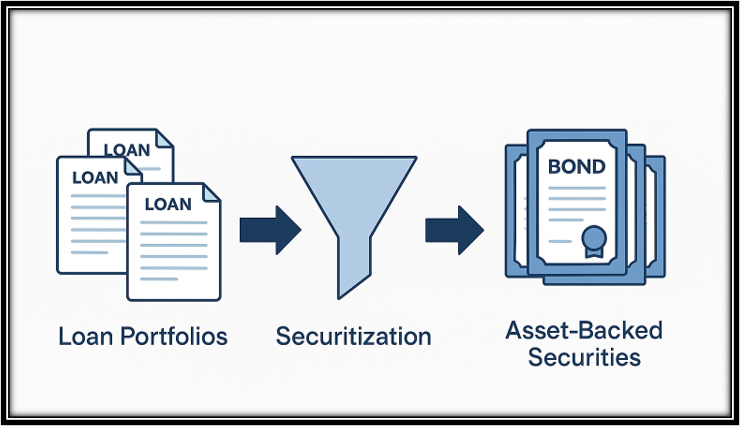
Model the costs and performance of a platform that connects loan basket sellers (banks) with securitization investors in exchange for upfront and ongoing fees.

Description

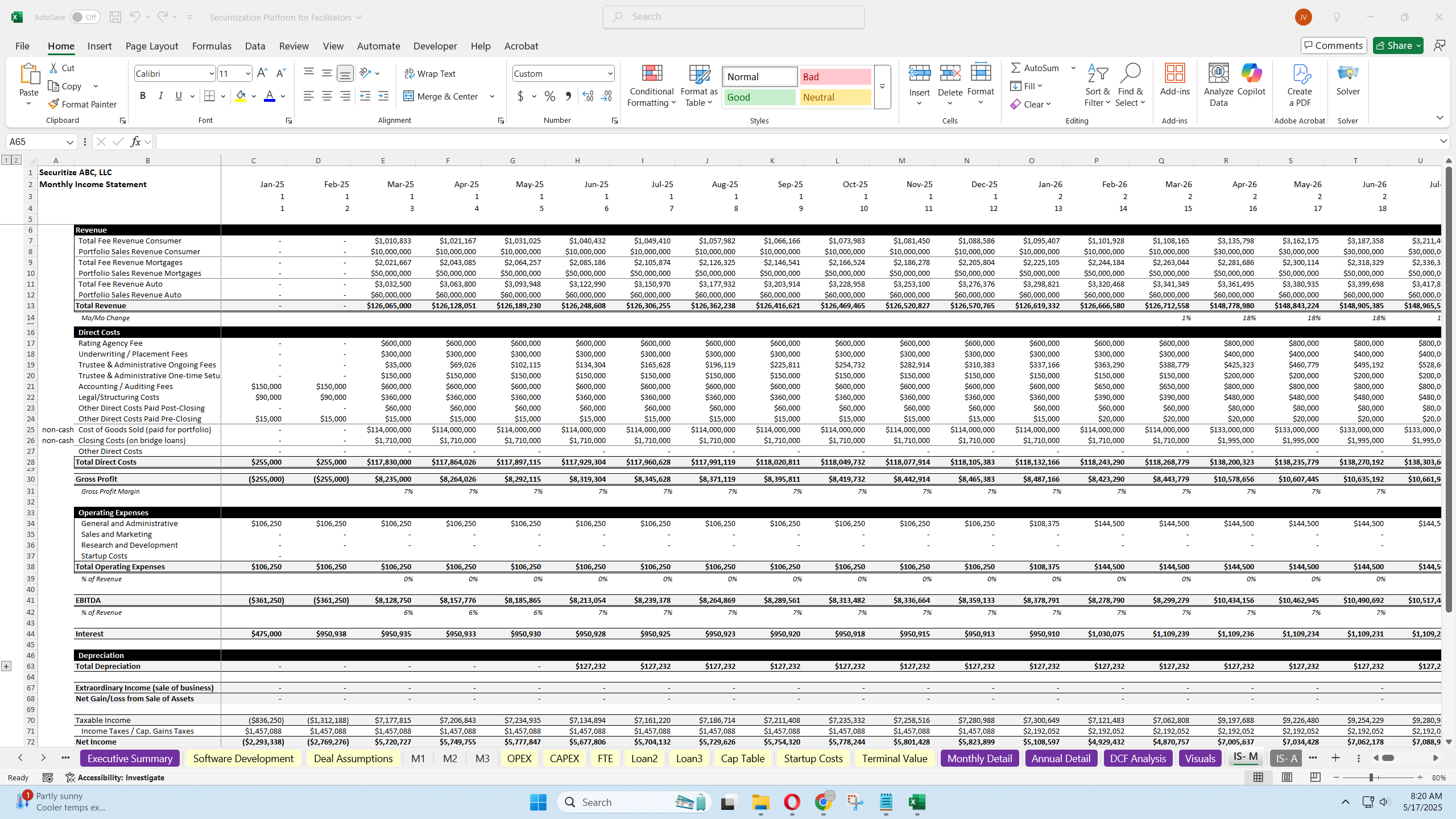
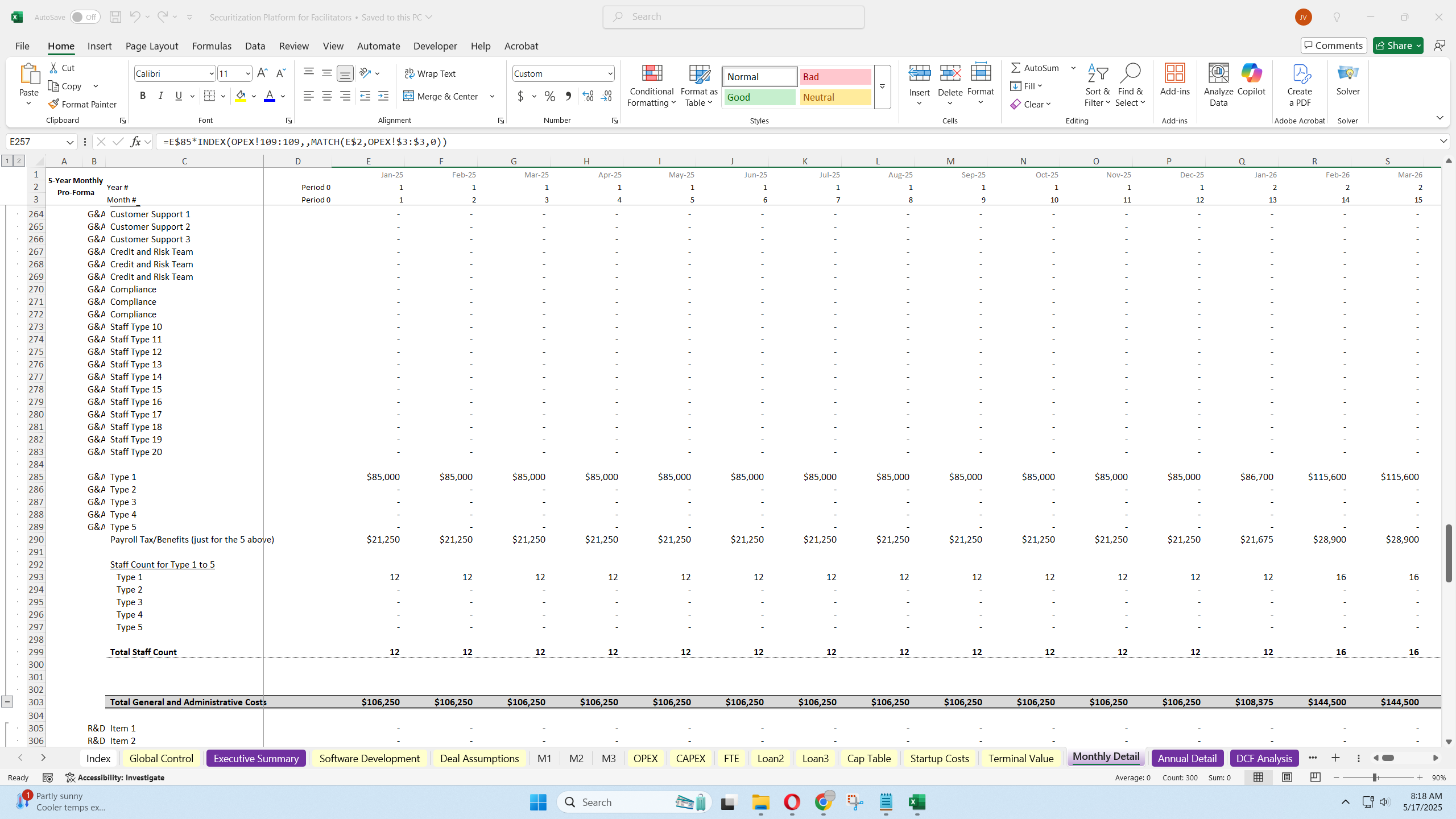
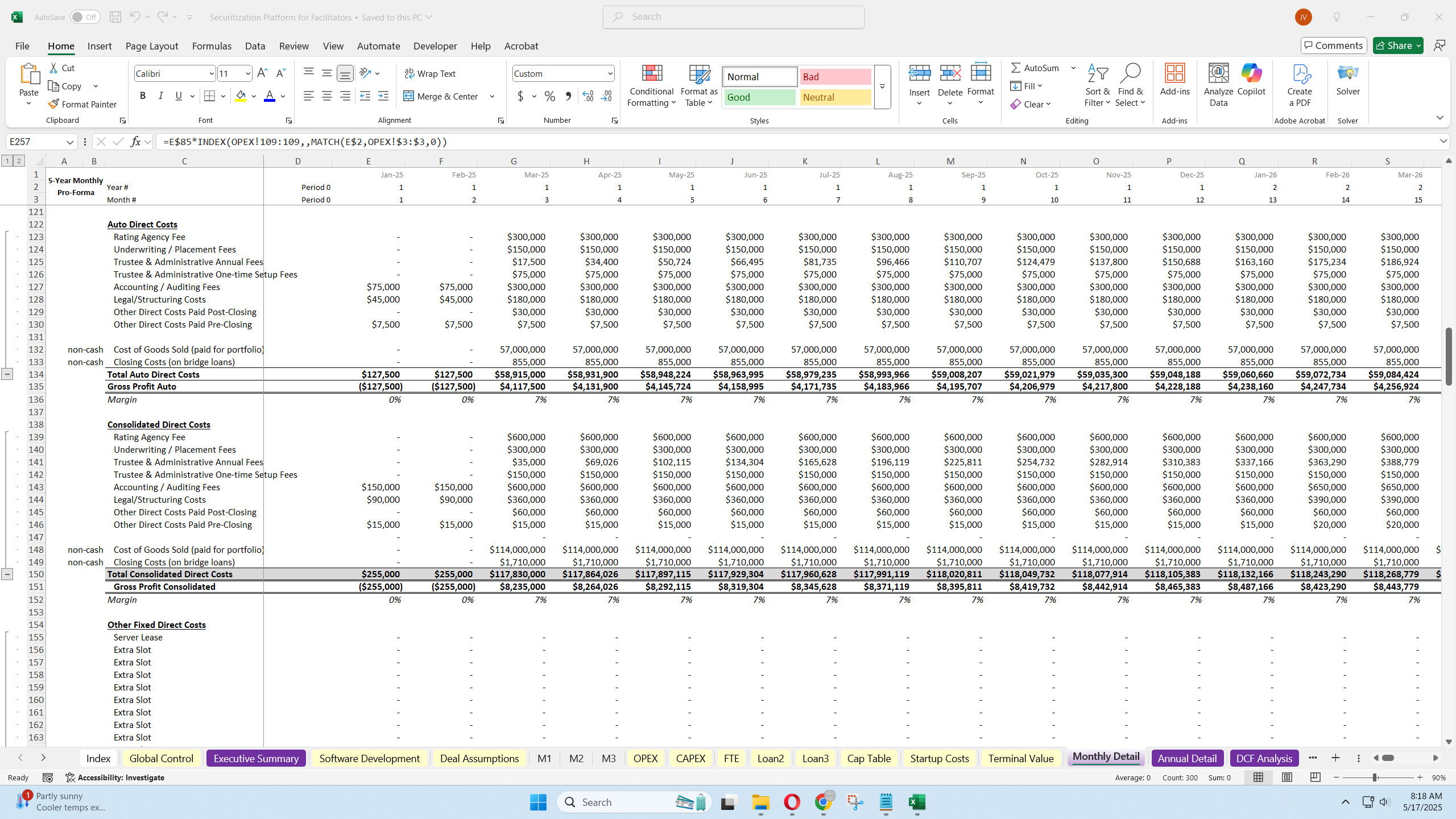
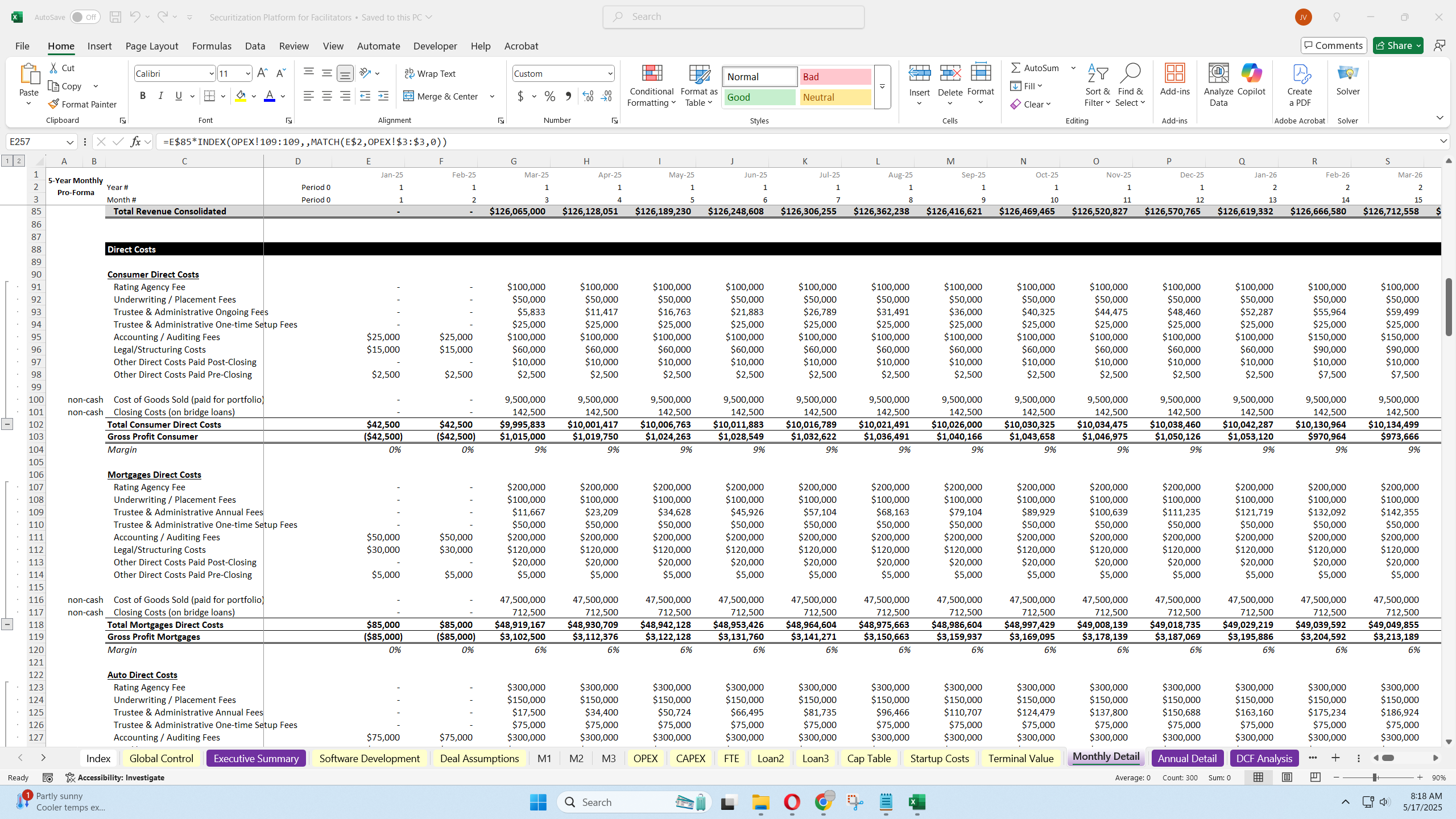
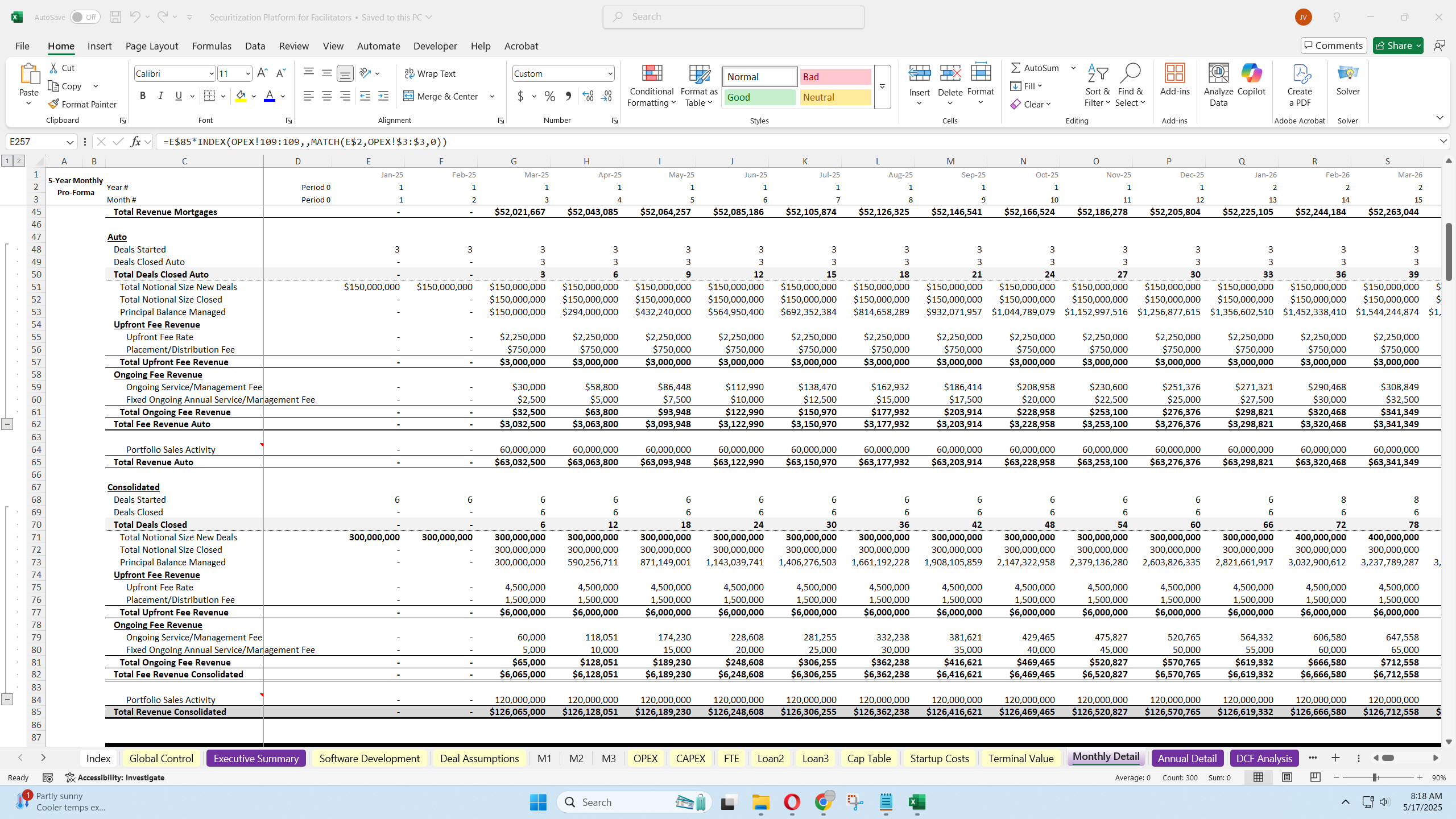
This financial model is a comprehensive toolkit designed to help deal facilitators—who connect institutions looking to sell loan portfolios with interested investors—plan, forecast, and analyze the profitability and liquidity of their operations. From projecting deal flow and fee income to managing working capital needs and staffing costs, the model provides a dynamic, customizable framework for anyone aiming to understand or optimize this middleman business model.
Key Highlights of the Model

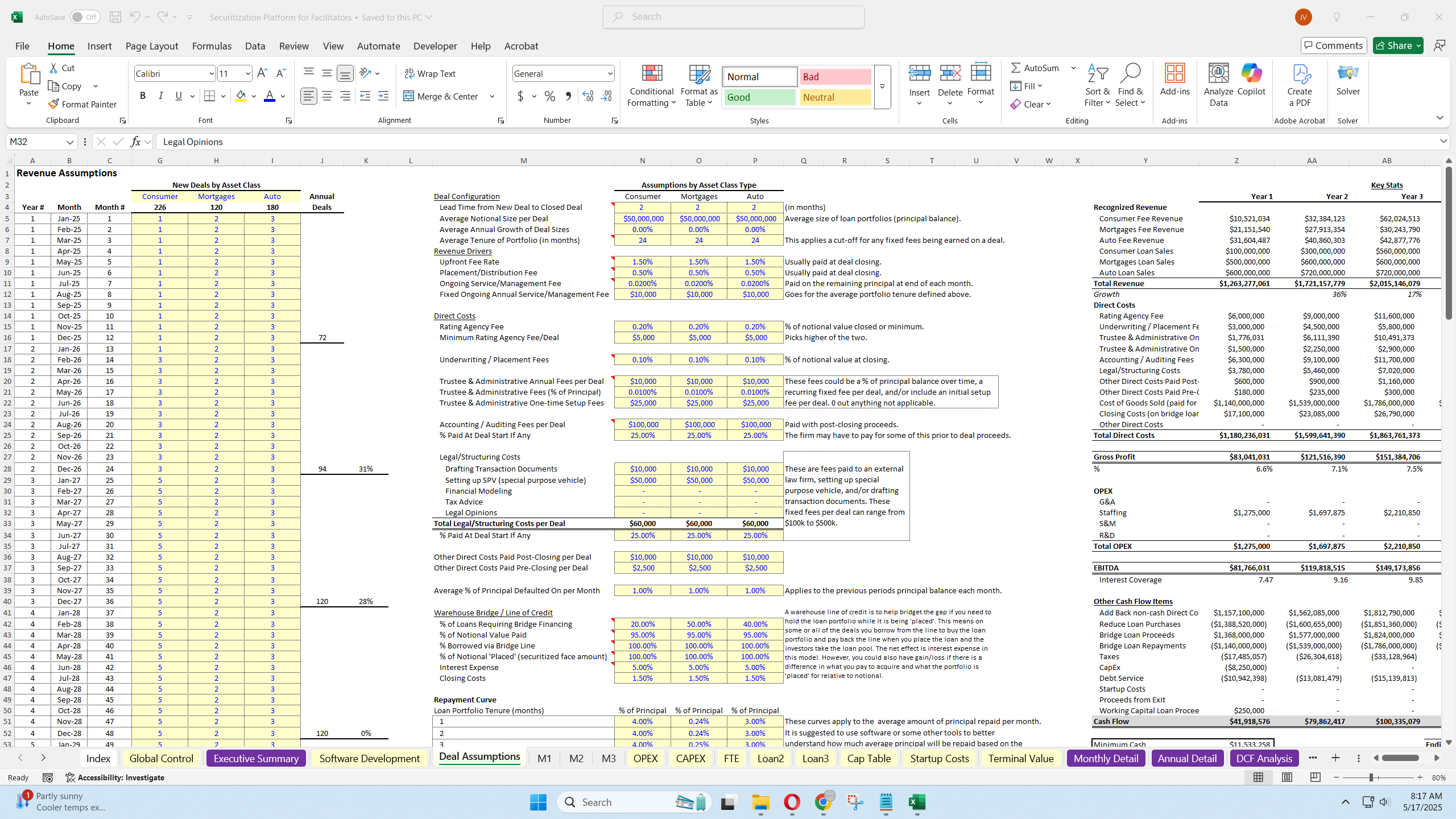
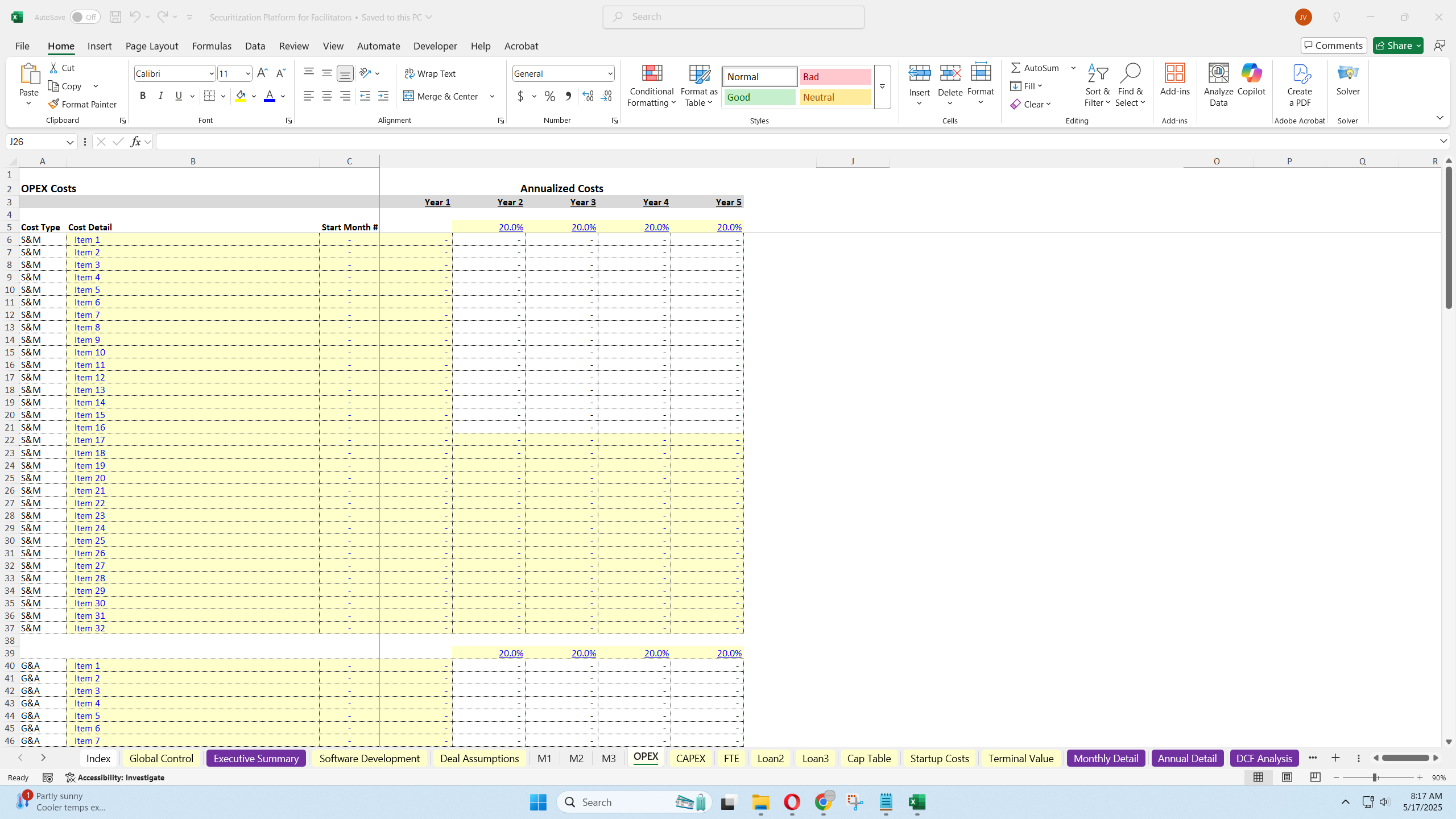
  • Modular Design: Covers up to three asset classes or portfolio types, each with unique revenue and cost assumptions.

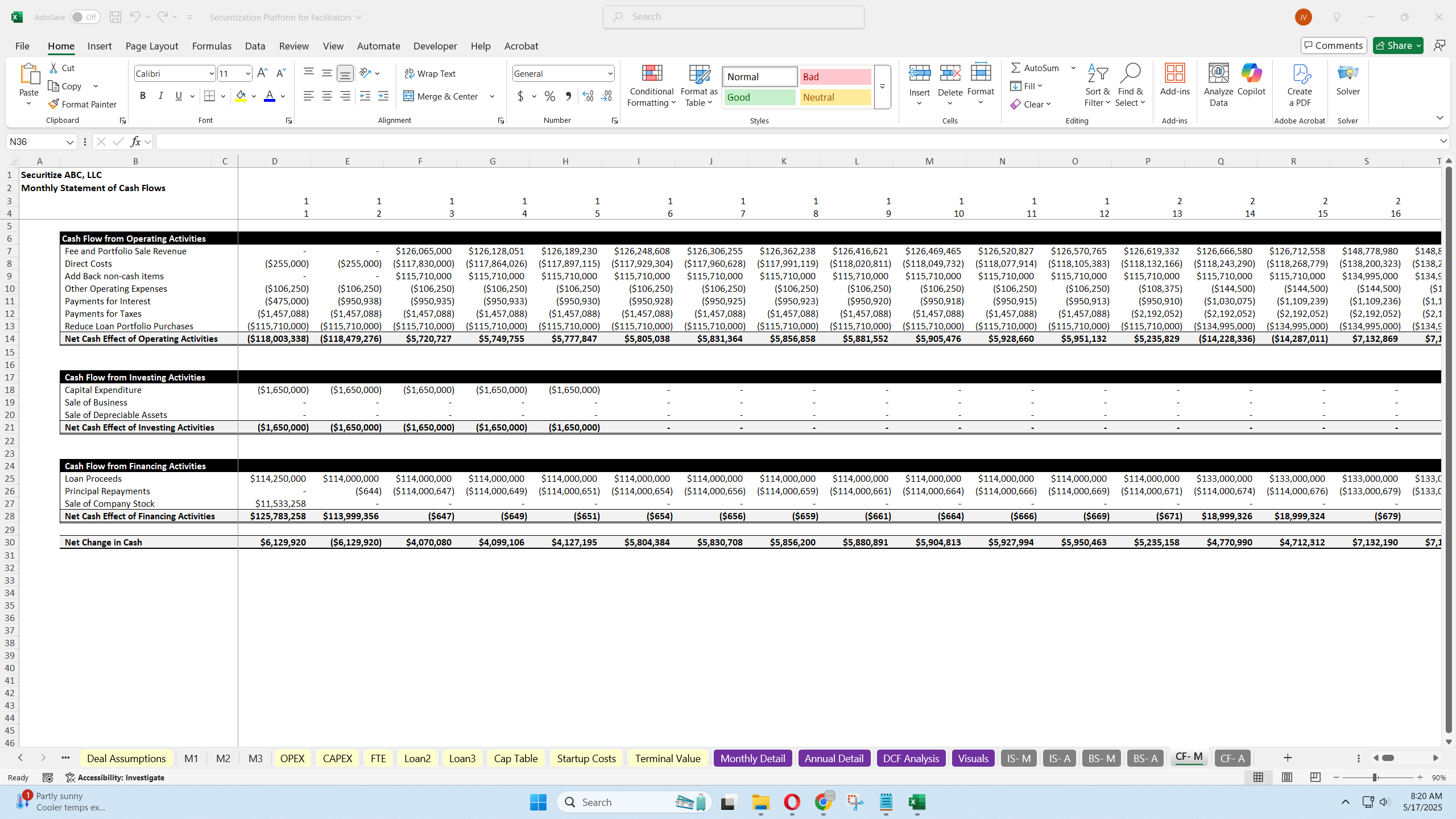
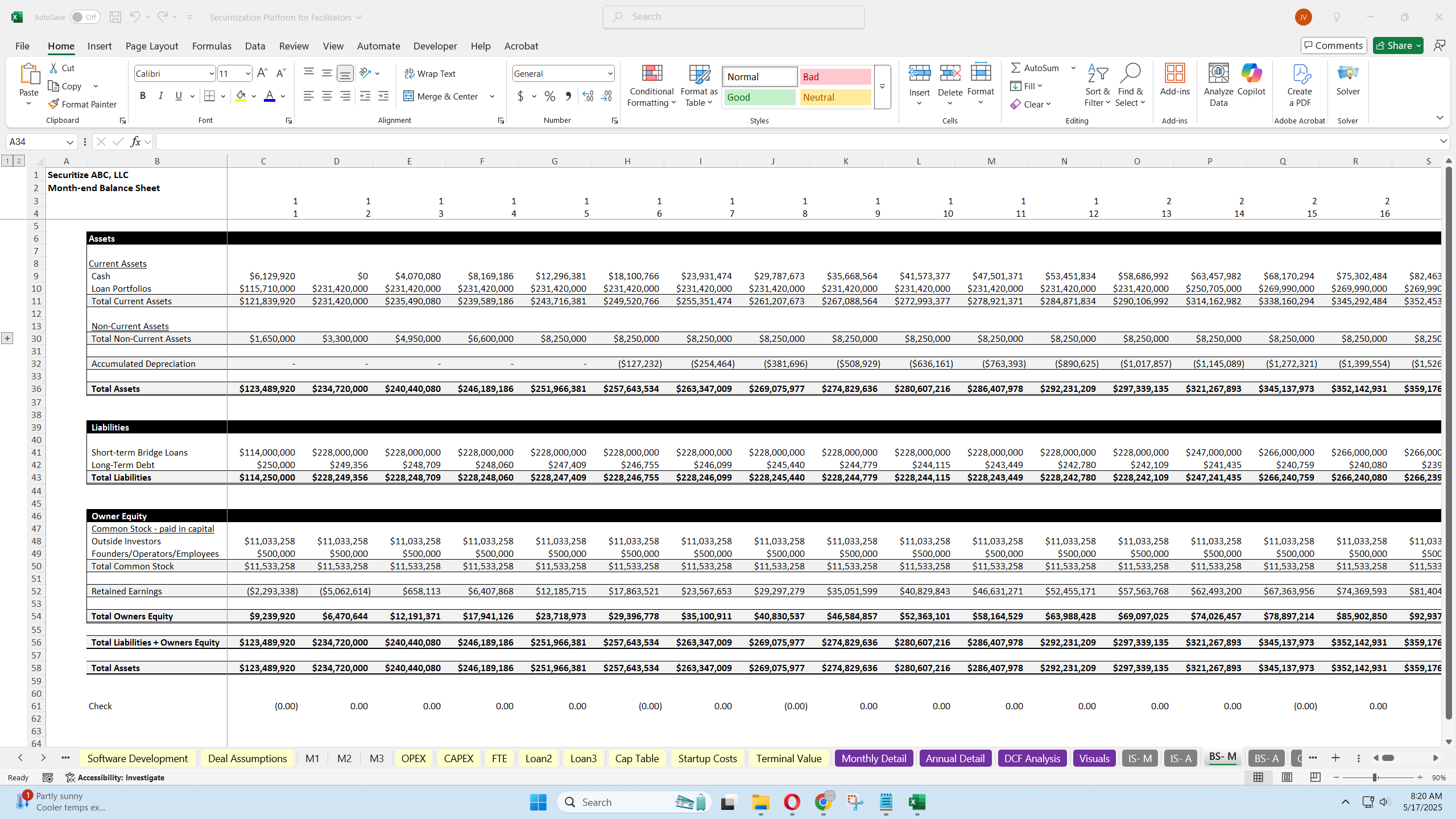
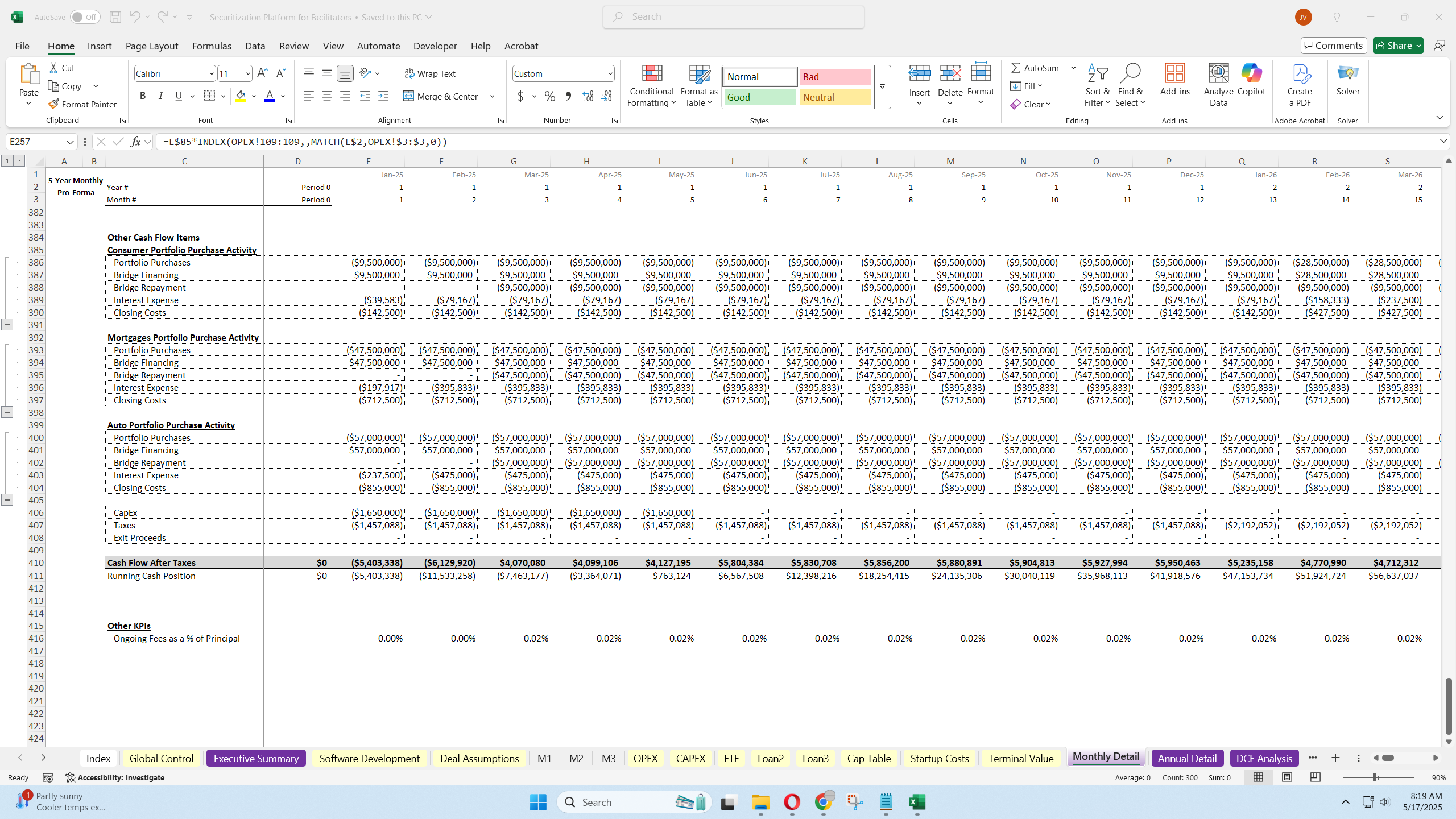
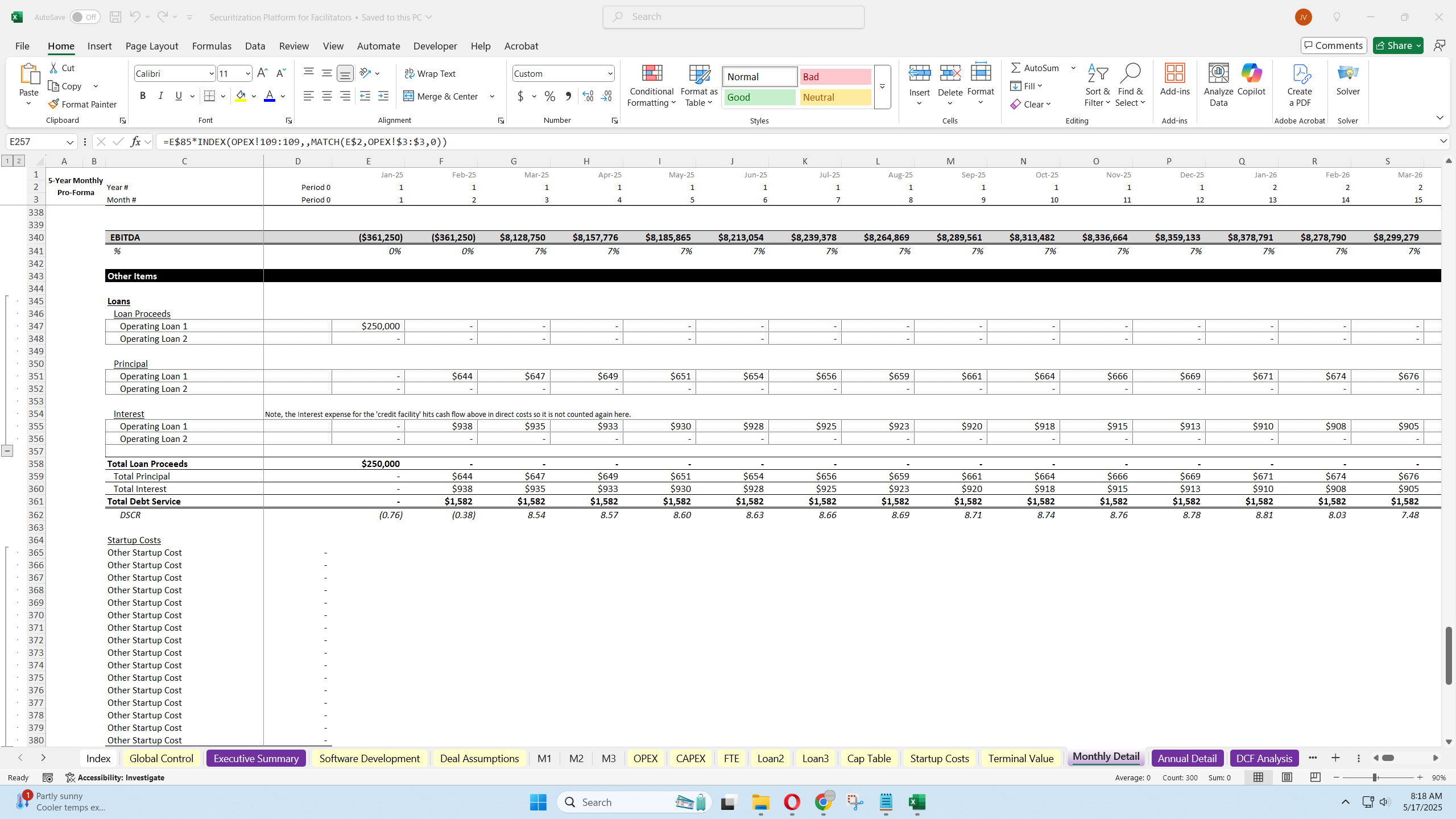
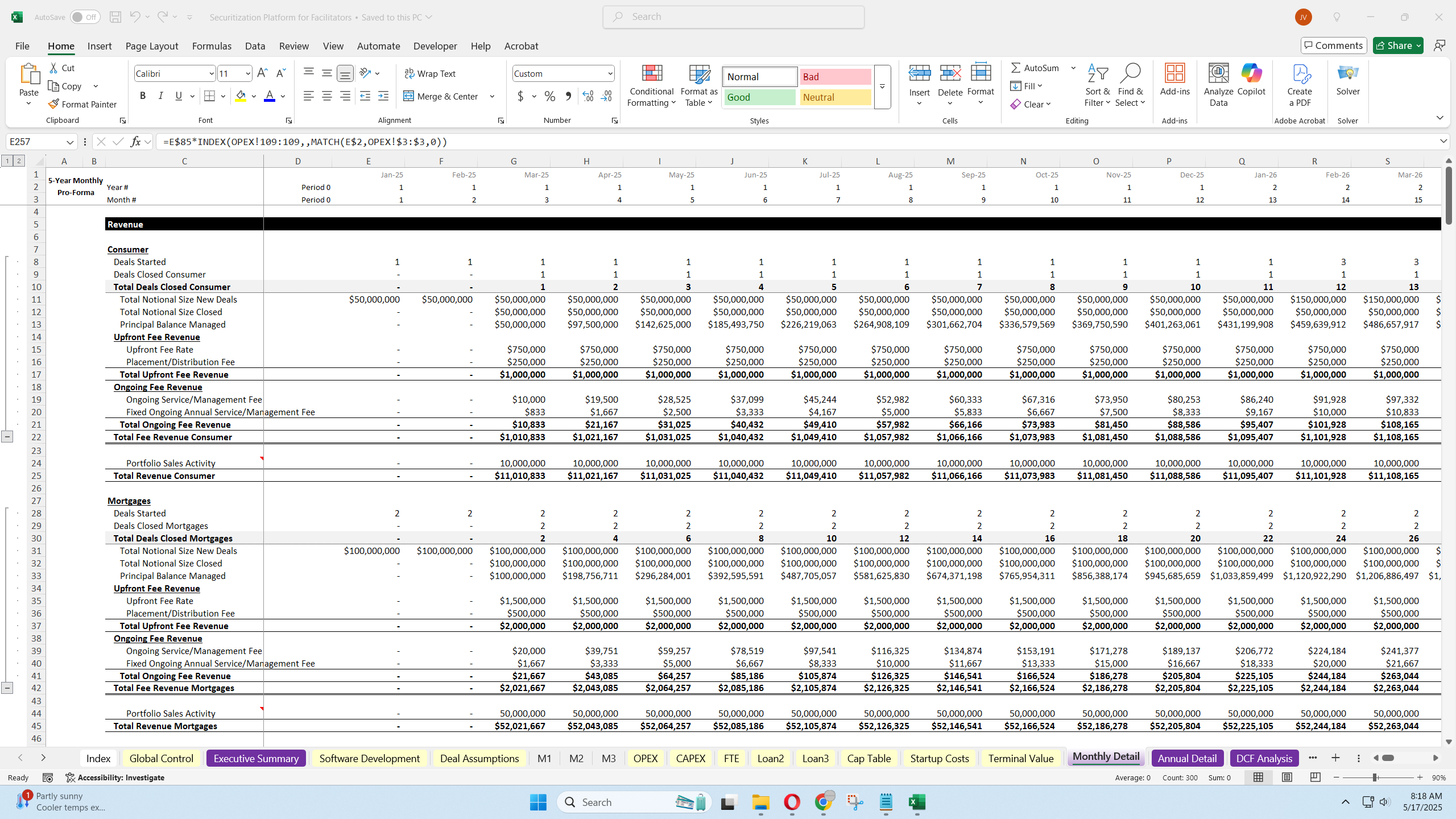
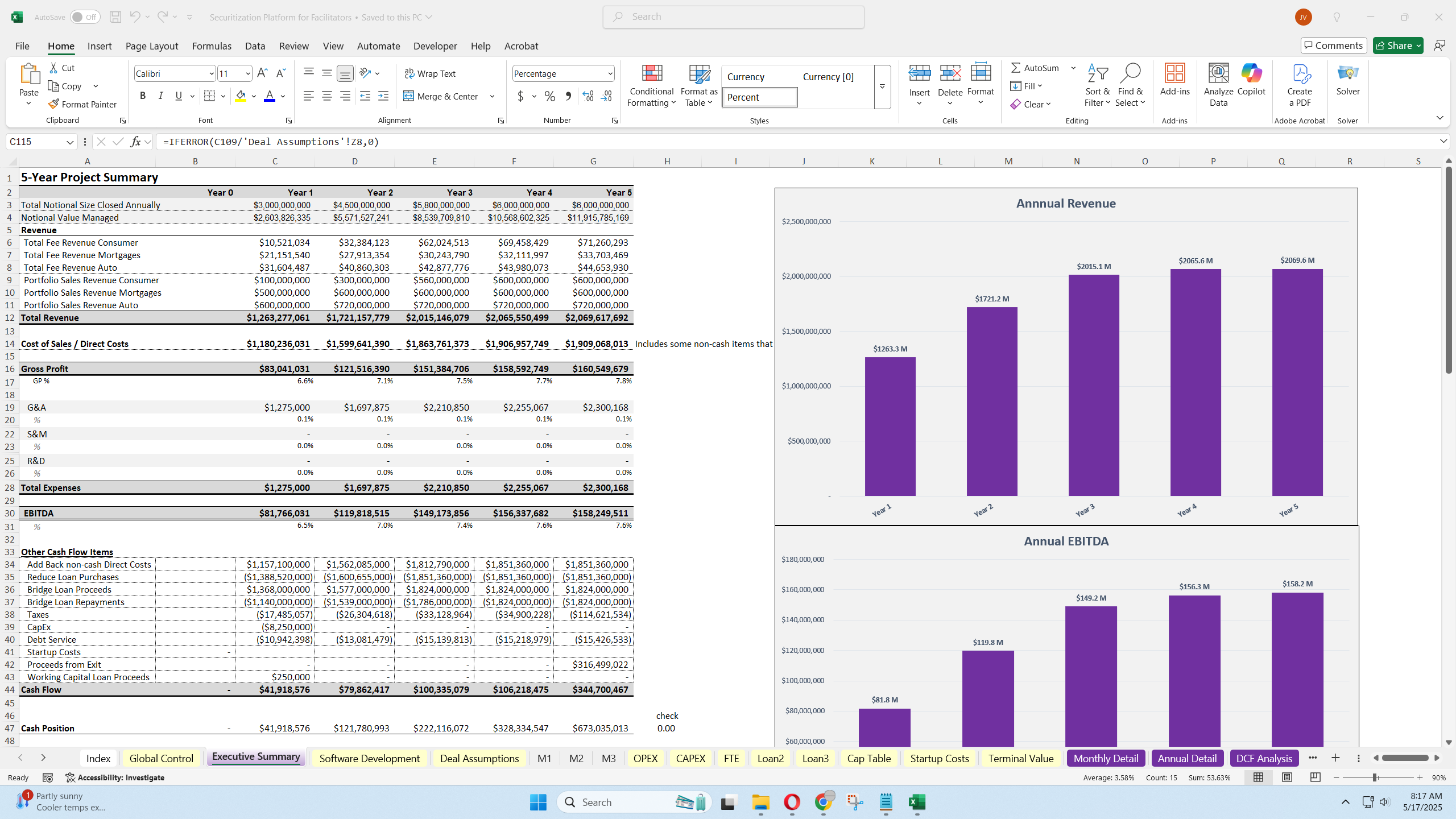
  • Complete Financial Statements: Generates monthly and annual Income Statements, Balance Sheets, and Cash Flow Statements for a full 5-year horizon.

  • Timing Assumptions: Accounts for lead times and pre- vs. post-closing expenses, helping forecast cash requirements accurately.

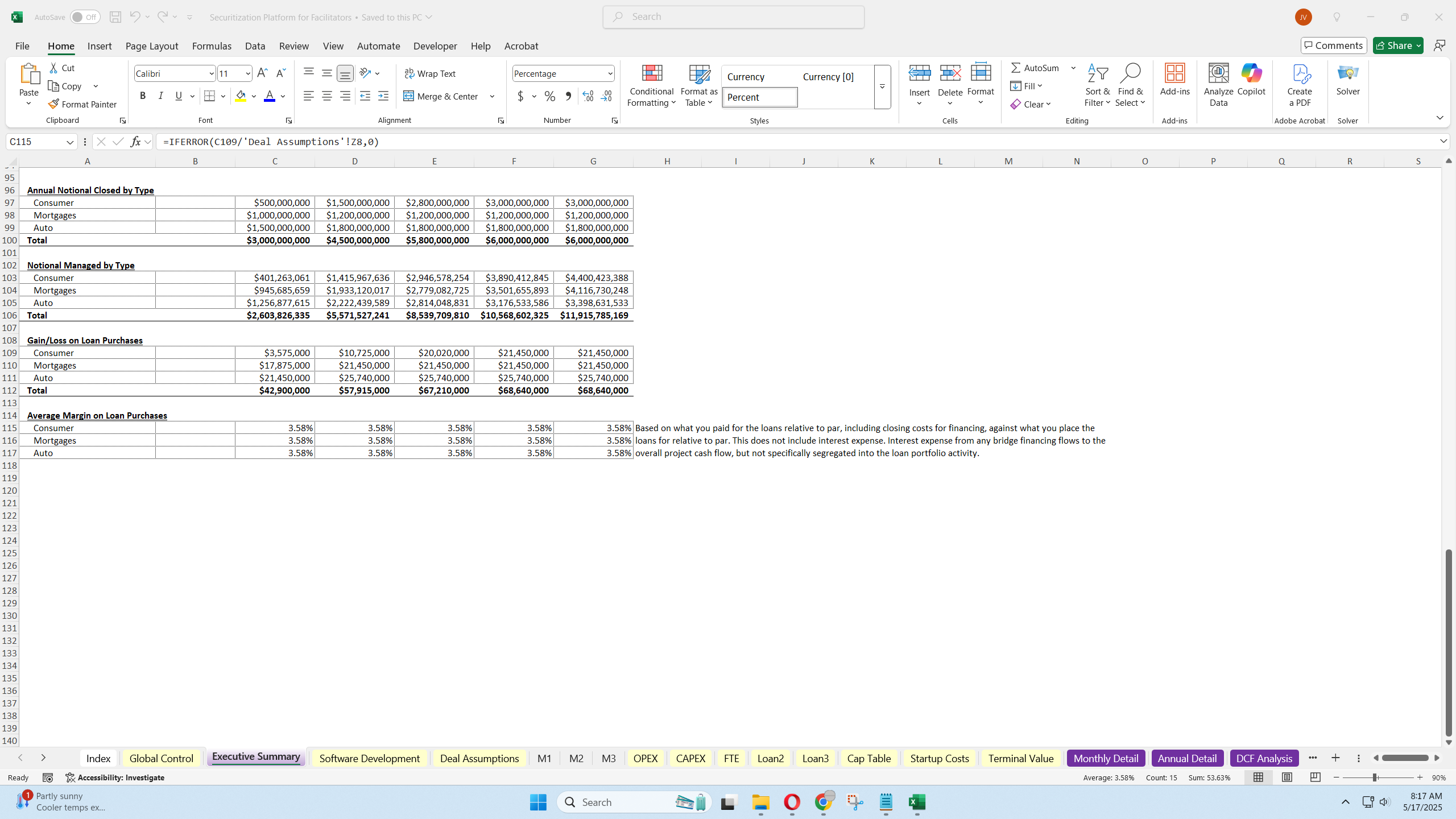
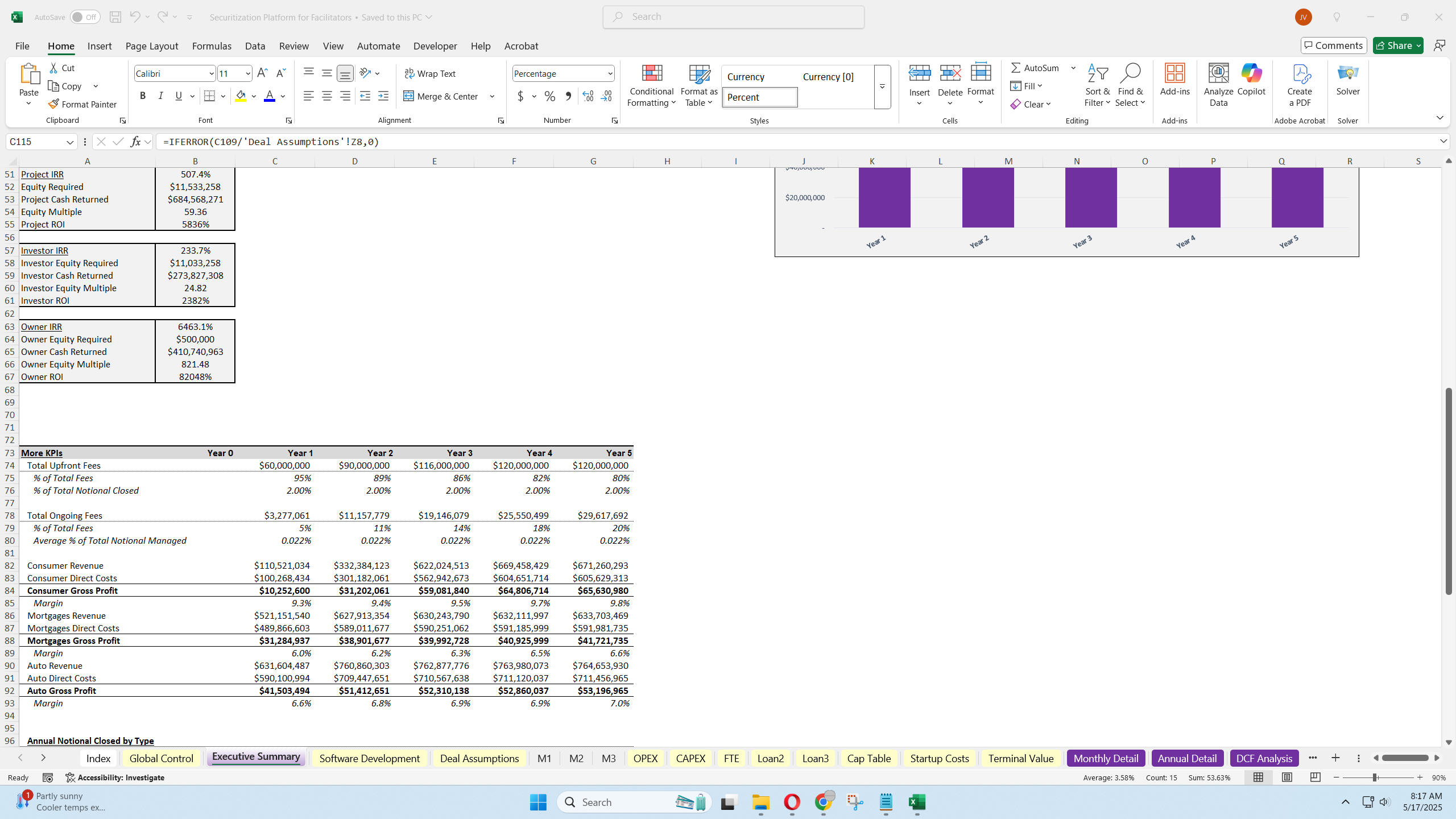
  • Flexible Fee Structures: Allows for upfront fees, ongoing management fees, and optional buy-and-resell profit margins.

  • Working Capital Management: Captures bridge financing and interest expenses to ensure sufficient cash flow before deals close.

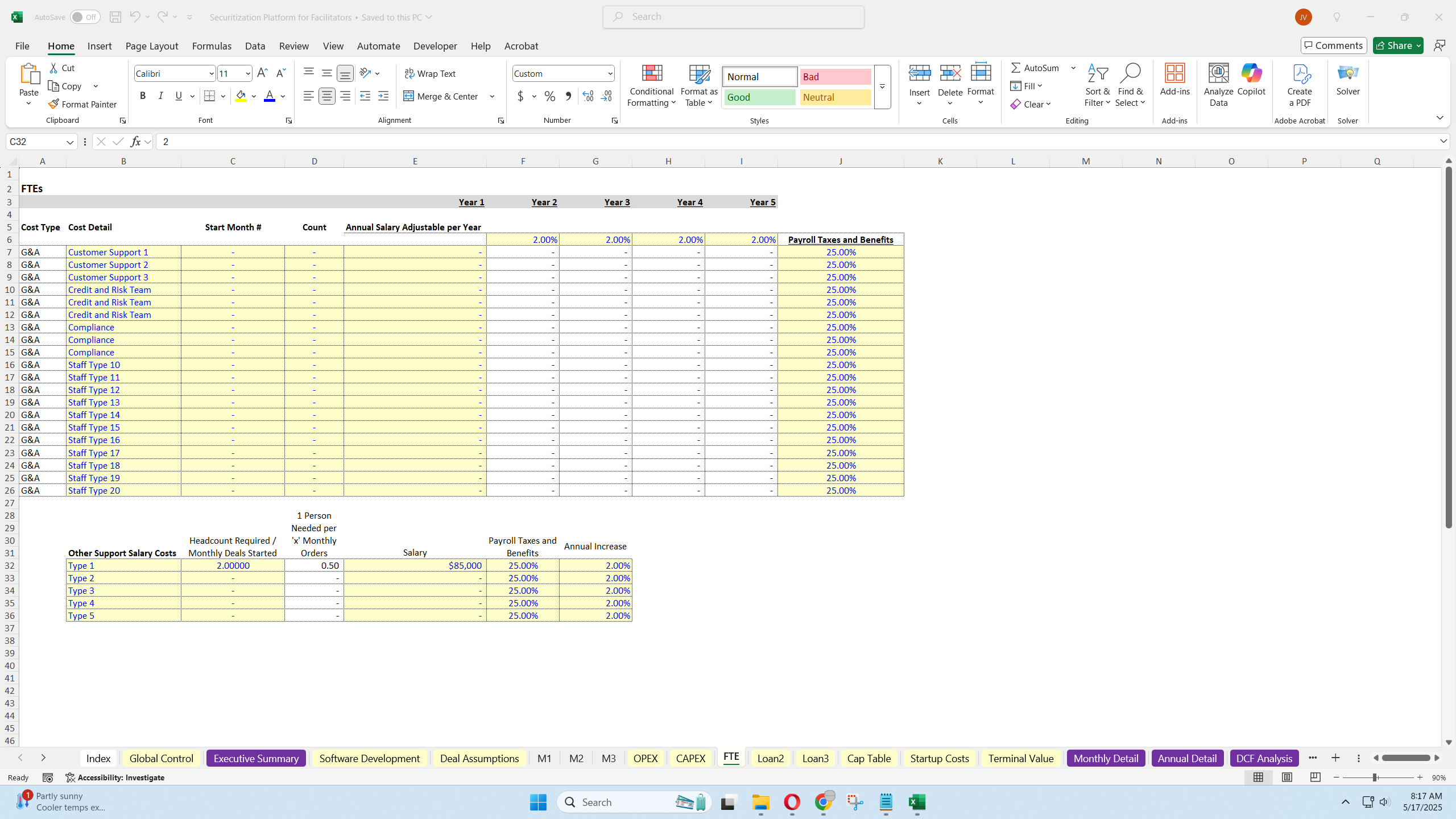
  • FTE Scaling: Dynamically adjusts staffing costs based on the number of deals, including salaries, benefits, and payroll taxes.

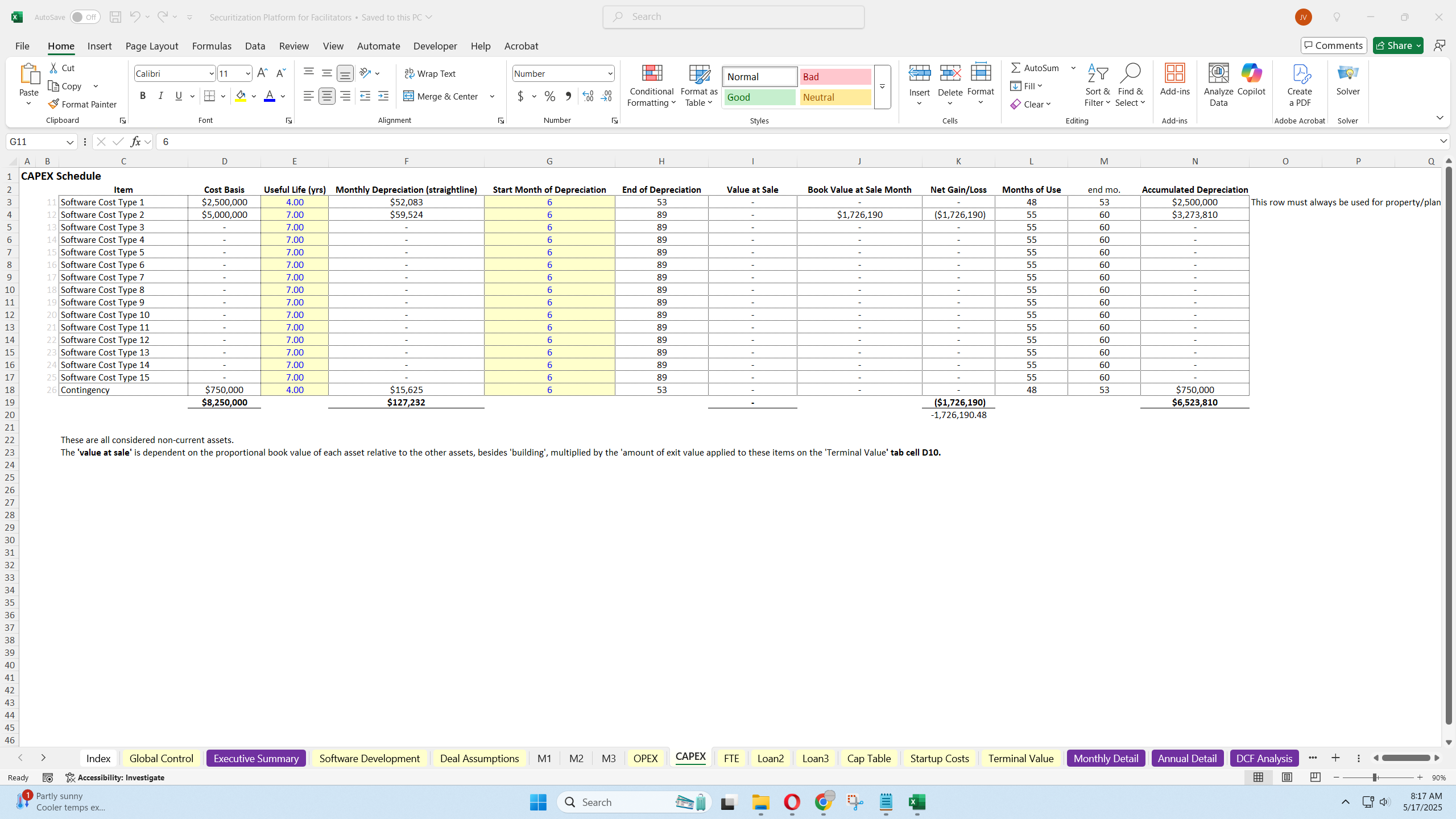
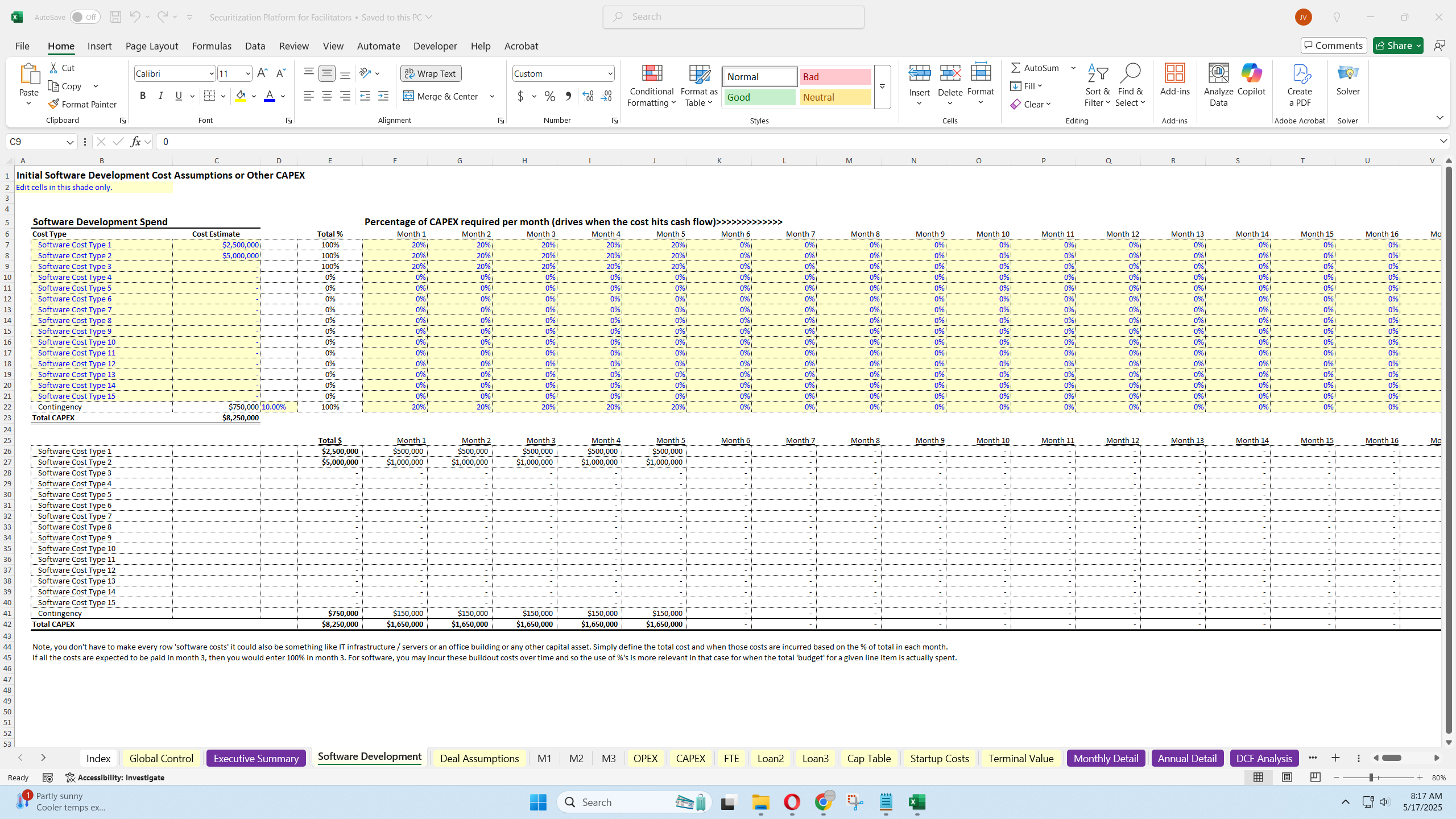
  • Overhead & Fixed Costs: Separates out non-scalable expenses (like rent, software, and general administrative costs).

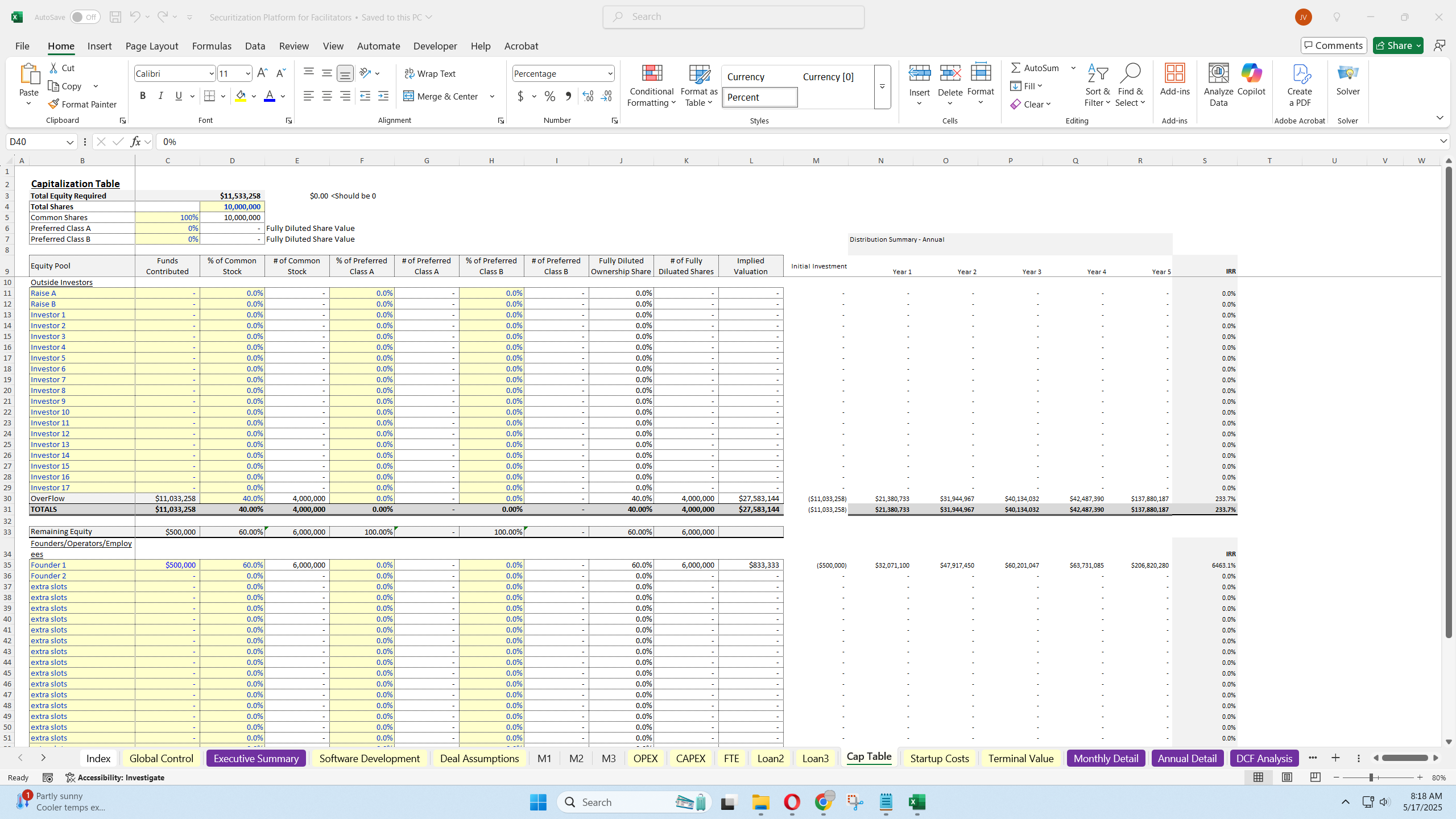
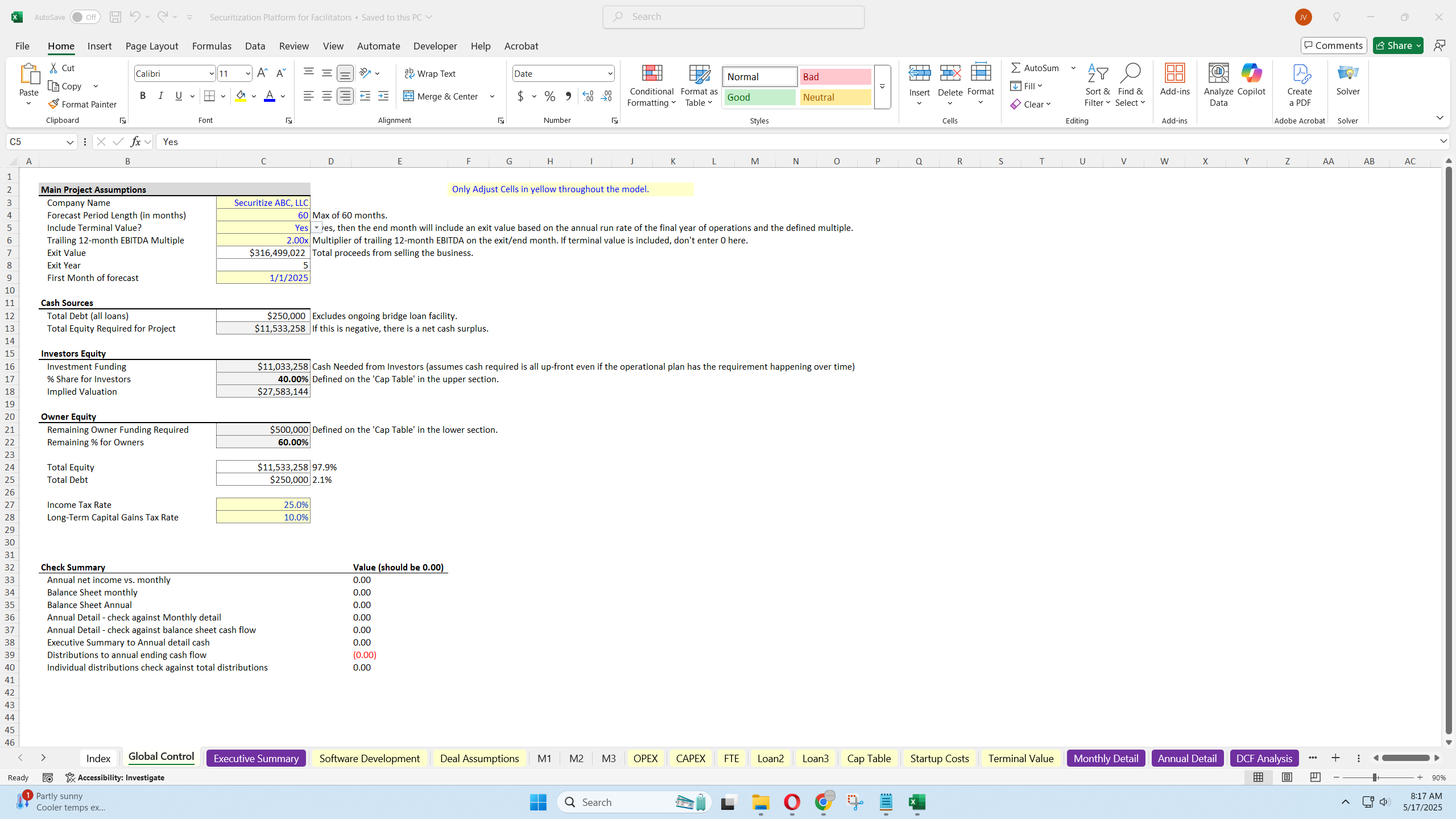
  • Equity Planning: Solves for minimum equity required and models different investor participation options.

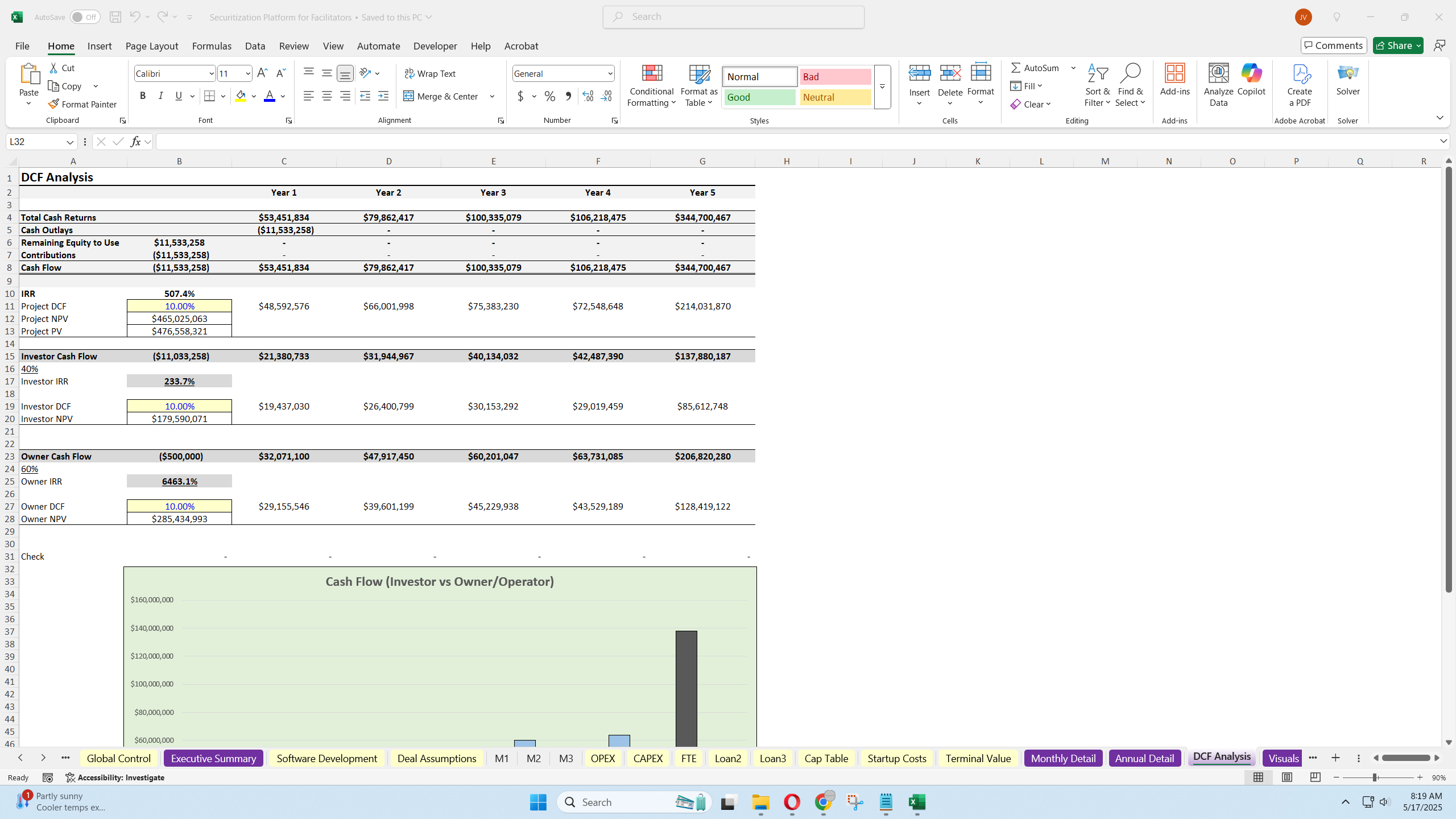
  • Valuation Metrics: Includes DCF analysis, IRR, exit multiple calculations, and optional trailing 12-month EBITDA exit valuation.

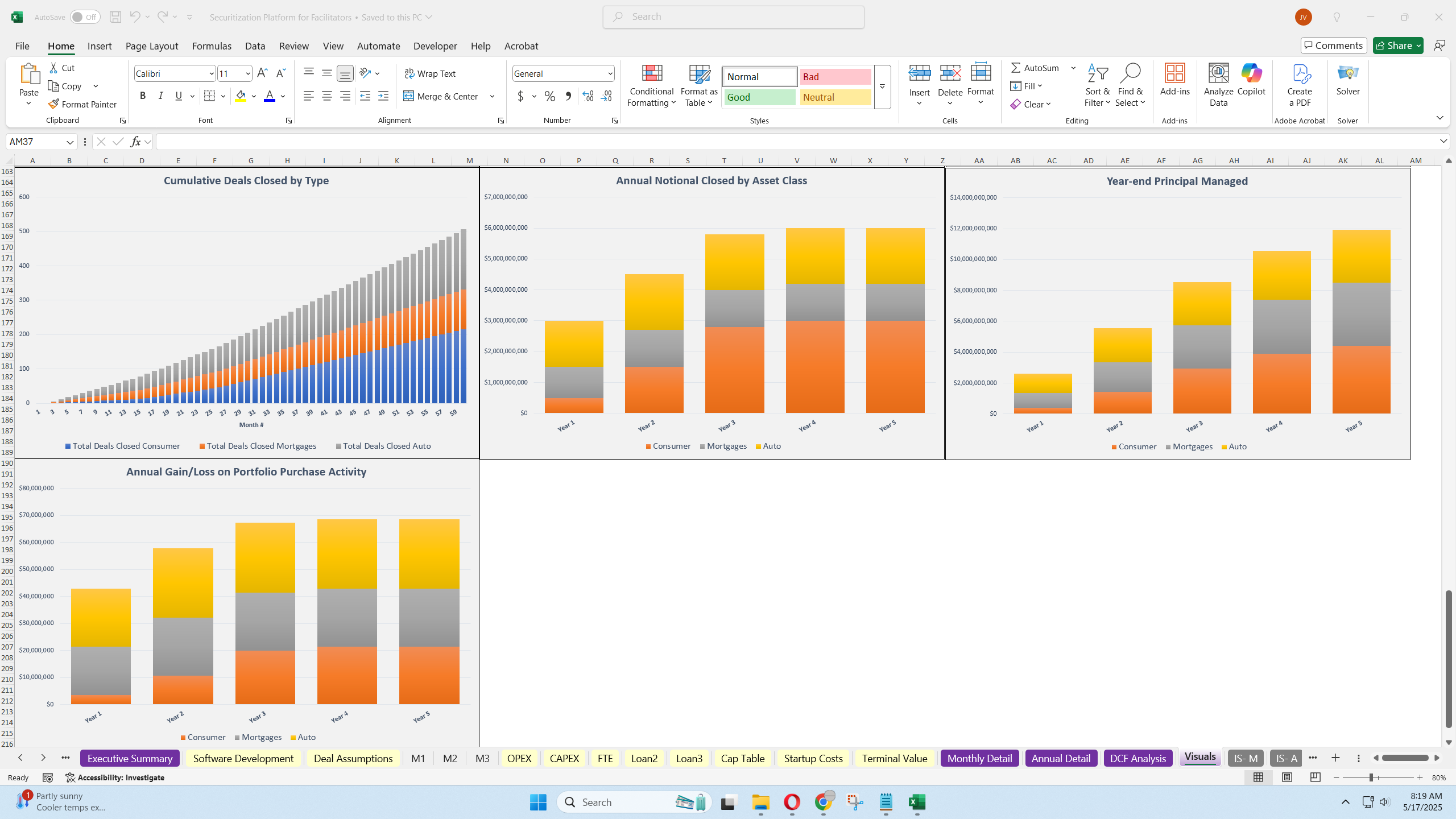
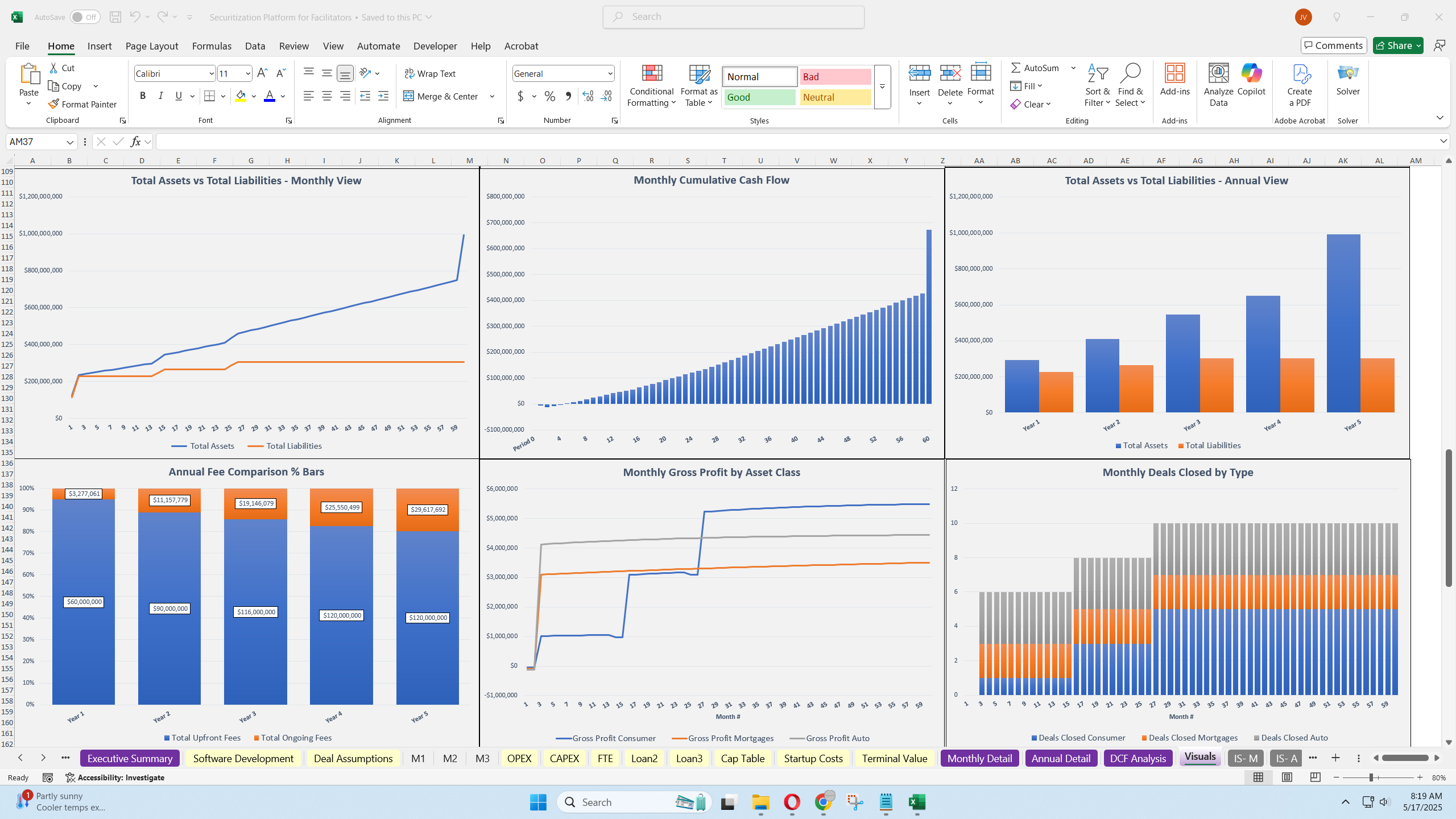
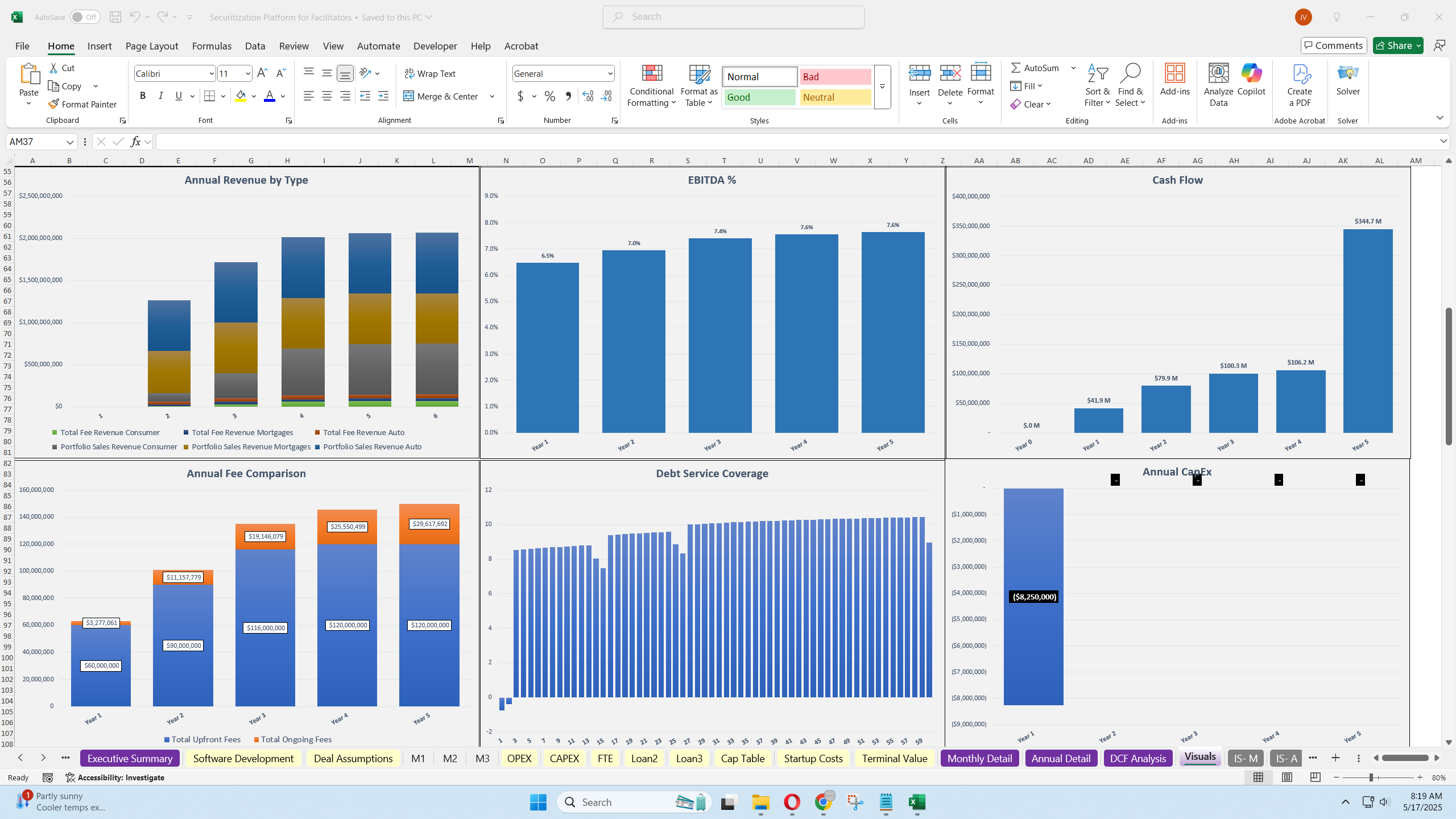
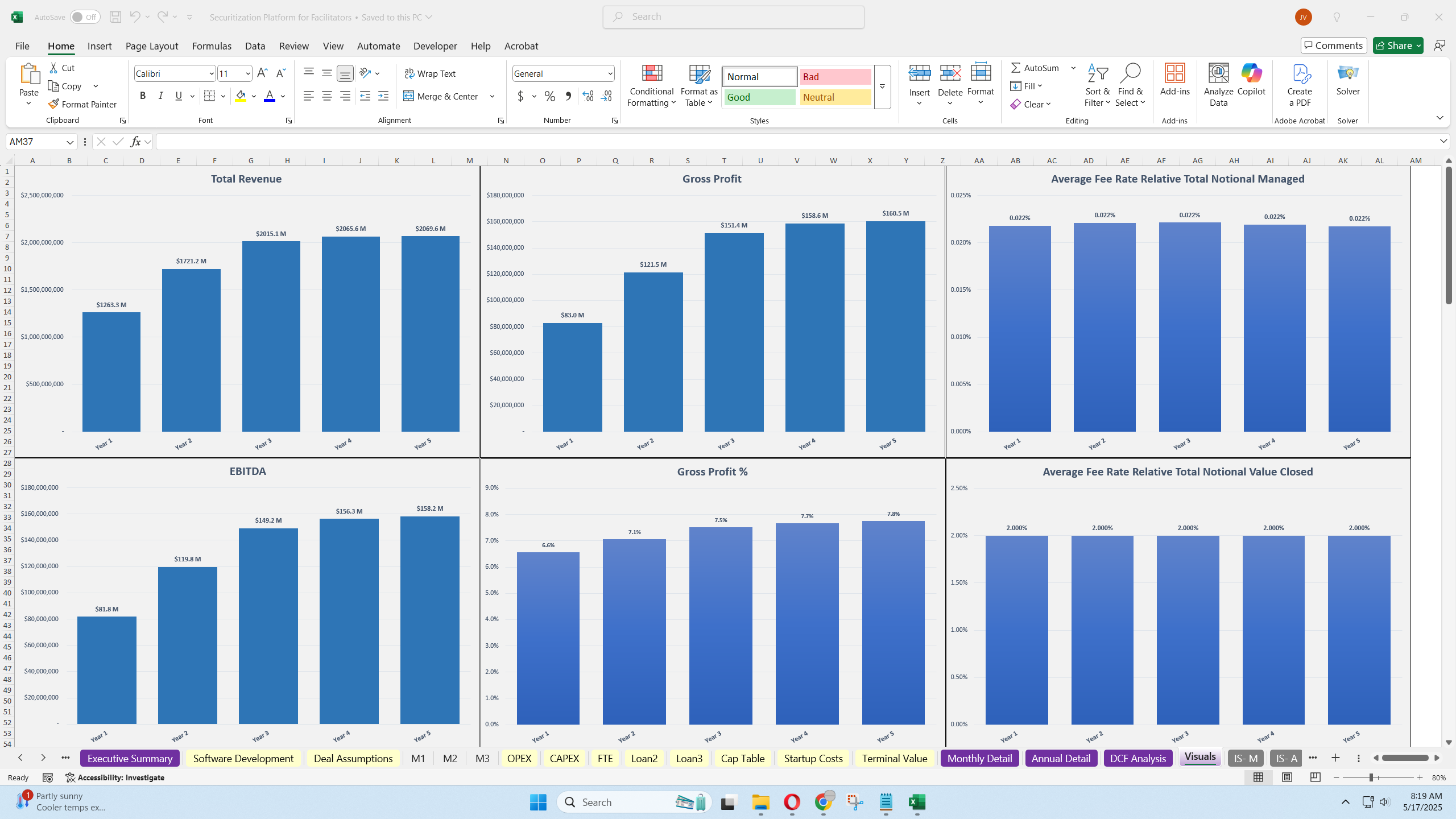
  • Extensive Visualization: Features 22 charts and KPI dashboards to quickly track performance and identify trends.

  • Optional Portfolio Purchase: If the user wants to buy and resell portfolios, the model factors in purchase price, carrying costs, and profit recognition.

Fully unlocked and editable.

This Best Practice includes
1 Excel model and 1 Tutorial Video

Acquire business license for $70.00

Add to cart

Add to bookmarks

Discuss

Further information

Provide a financial planning tool for startup loan securitization dealmakers.

Up to 3 asset classes.


0.0 / 5 (0 votes)

please wait...