Originally published: 08/07/2024 07:34
Publication number: ELQ-58143-1
View all versions & Certificate
Publication number: ELQ-58143-1
View all versions & Certificate

AgTech Startup Financial Model
A comprehensive editable, Excel spreadsheet for tracking AgTech Startup finances, including Income Statements, Balance Sheets, & Cash Flow Statements.
AllFinancialModels offer a curated selection of high-quality yet financial model templates designed to support a wide range of business needs.Follow
Description
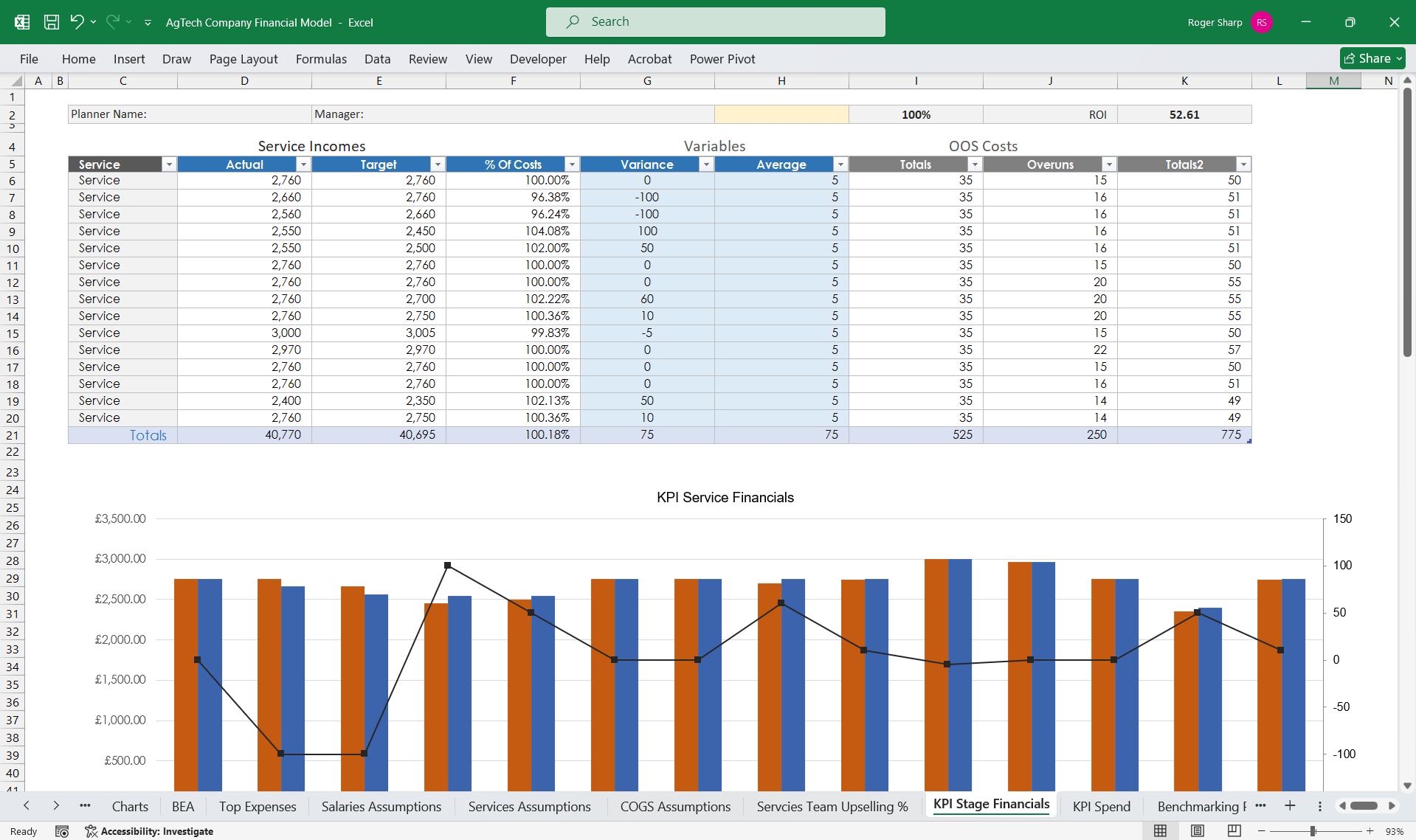
This financial model is designed to provide a comprehensive analysis of an AgTech startup's financial health and projections. The model includes key financial statements such as the Income Statement, Cash Flow Statement, and Balance Sheet. It also highlights critical metrics for evaluating the company's performance and financial sustainability.
Additionally, the model can incorporate detailed funding requirements for various strategic initiatives.
Components:
Marketing Expenditure:
Additional Features:
This financial model is designed to provide a comprehensive analysis of an AgTech startup's financial health and projections. The model includes key financial statements such as the Income Statement, Cash Flow Statement, and Balance Sheet. It also highlights critical metrics for evaluating the company's performance and financial sustainability.
Additionally, the model can incorporate detailed funding requirements for various strategic initiatives.
- Cost of Production: Capital required for raw materials, labor, and manufacturing overheads.
- Tower Farms (Vertical Farming): Investment in infrastructure, technology, and operational setup for vertical farming units.
- Drone Seeding: Funding for the development and deployment of drone technology for precision seeding and crop management.
- Carbon Audit: Resources allocated for carbon footprint analysis and sustainable practices implementation.
- Biodiversity: Investment in biodiversity initiatives to enhance ecosystem services and agricultural resilience.
- Water Protection: Funds dedicated to water conservation technologies and practices to ensure sustainable water usage.
- Agroforestry: Capital for integrating trees and shrubs into agricultural landscapes to enhance productivity and sustainability.
Components:
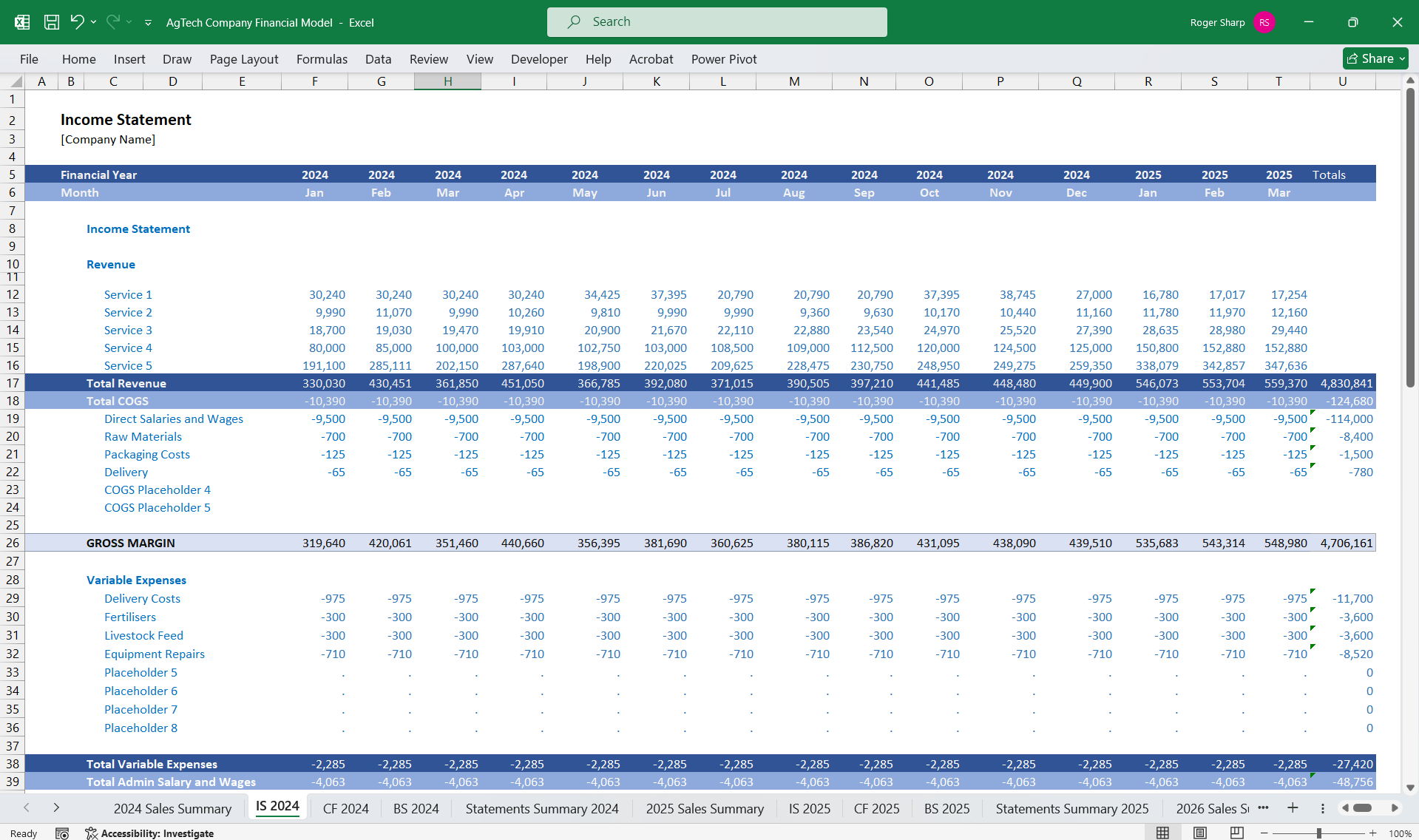
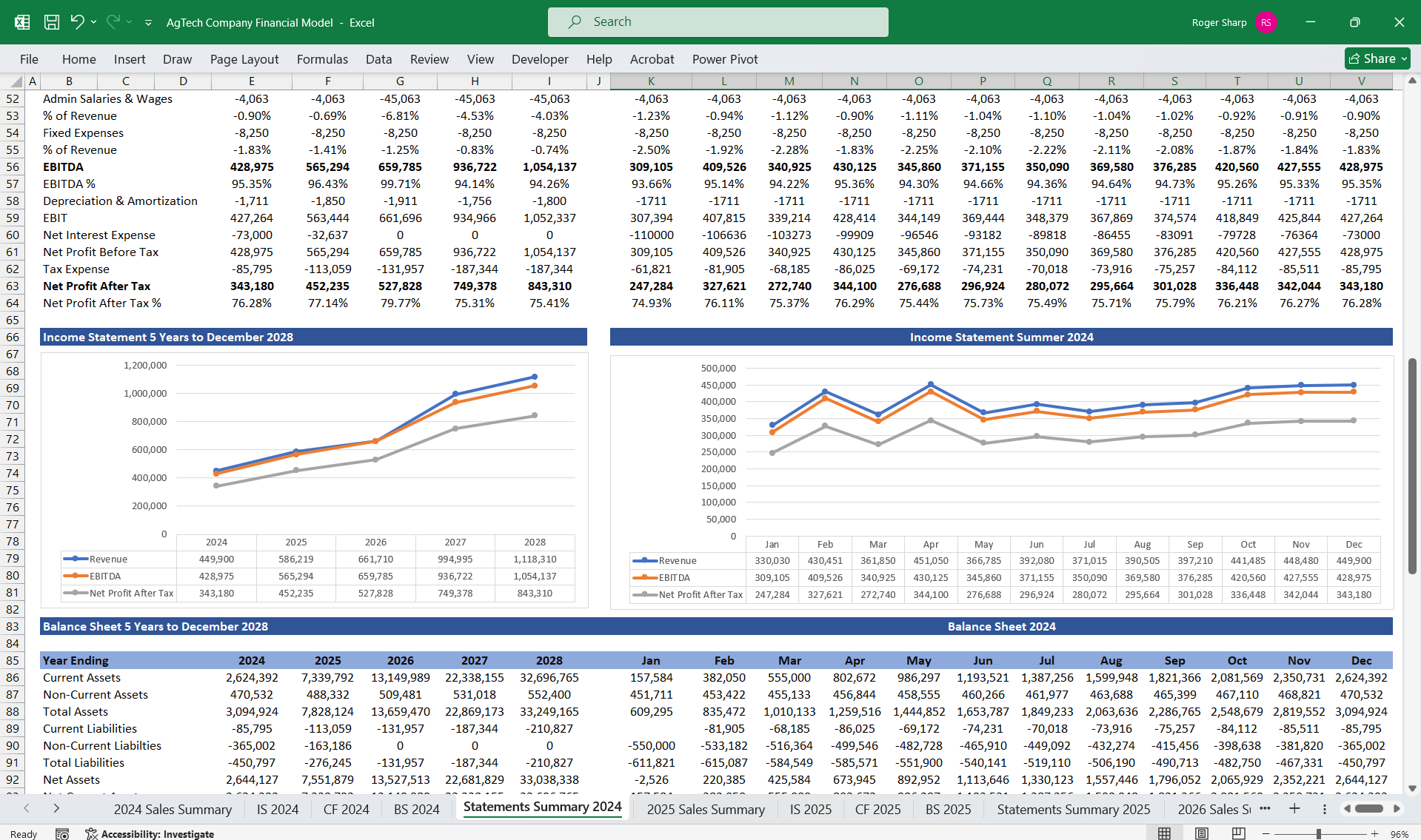
- Income Statement:
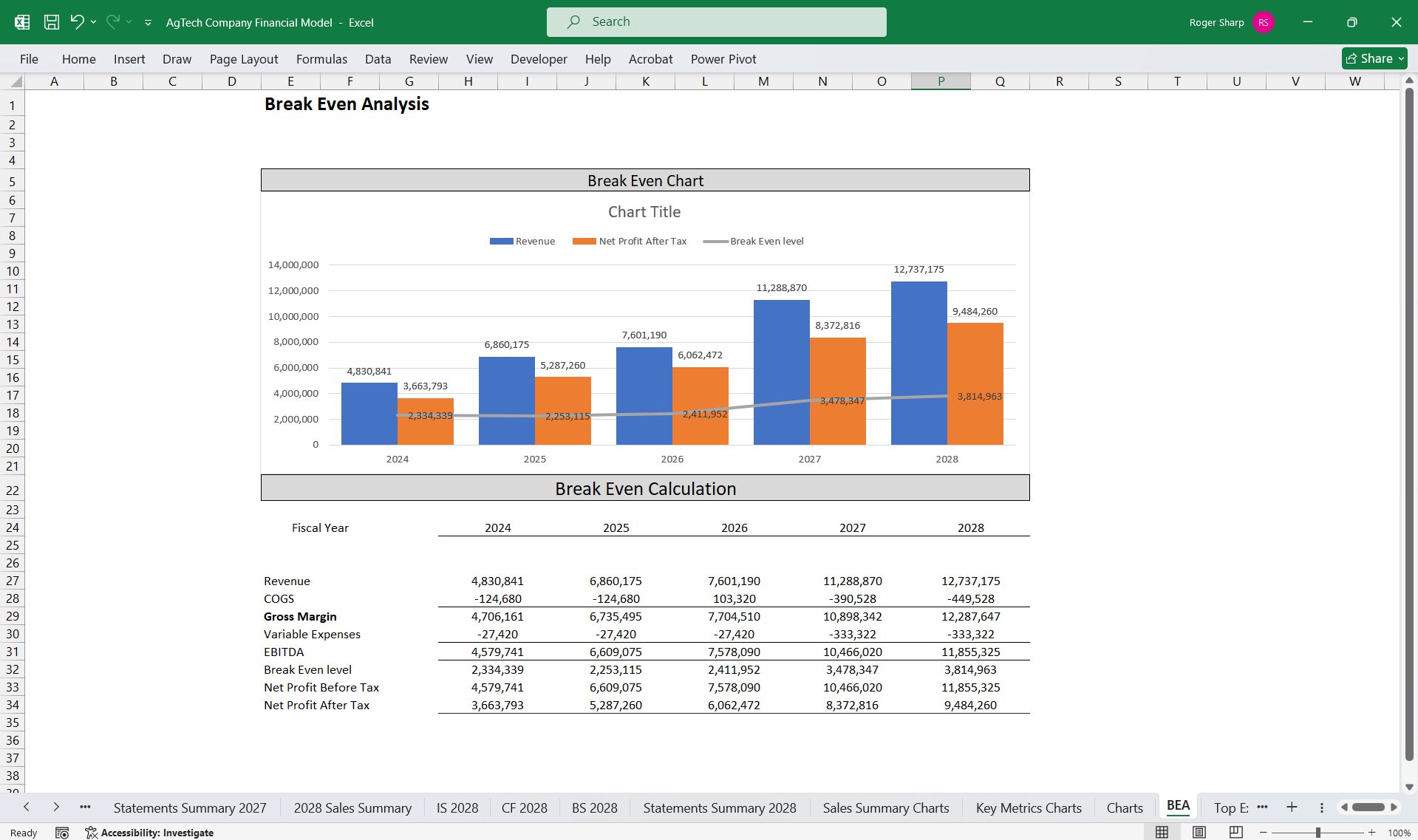
- Revenue: Revenue projections based on product sales, service contracts, and other income streams.
- Cost of Goods Sold (COGS): Direct costs attributable to the production of the goods sold by the company.
- Gross Profit: Revenue minus COGS.
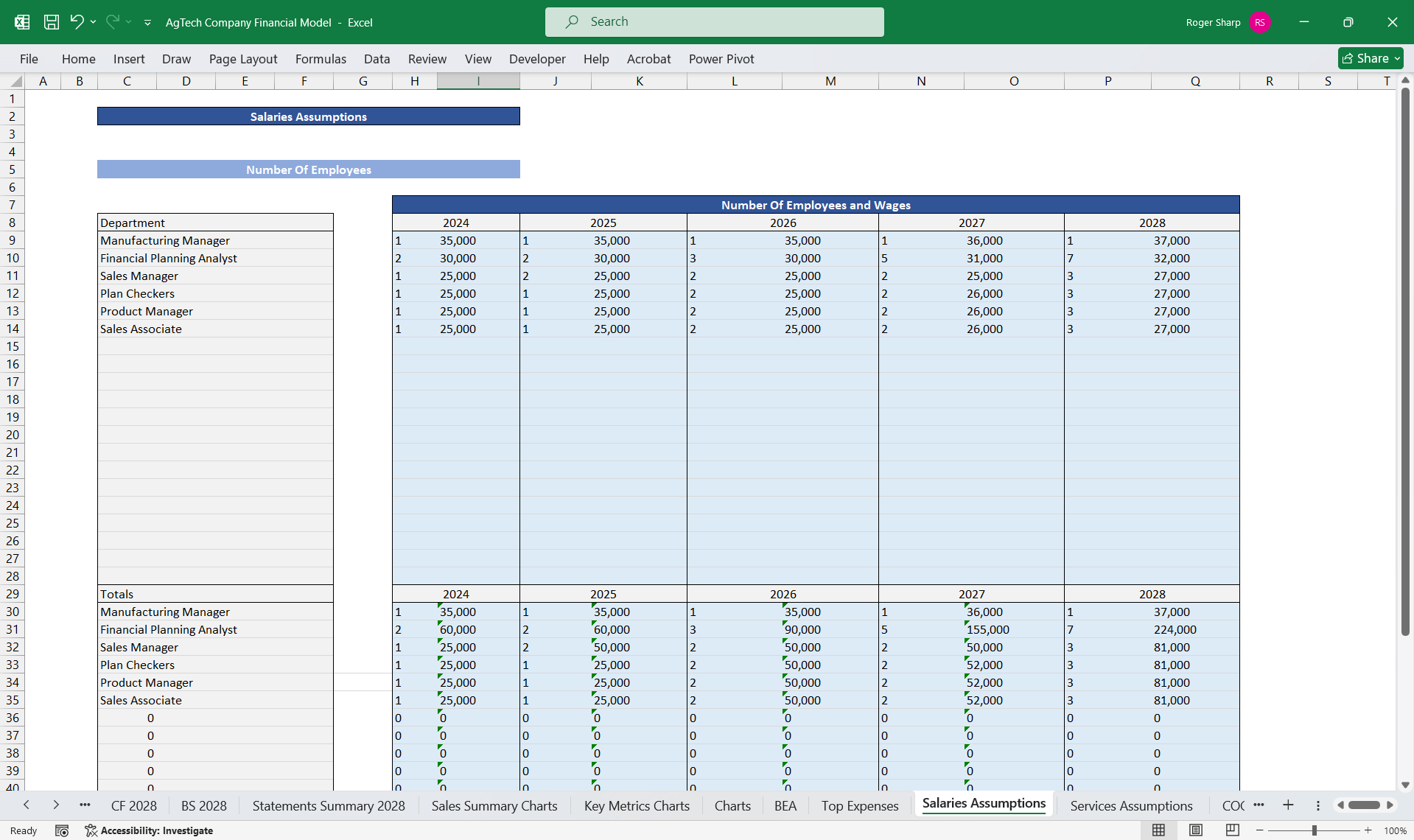
- Operating Expenses: Salaries, R&D, marketing, administrative expenses, etc.
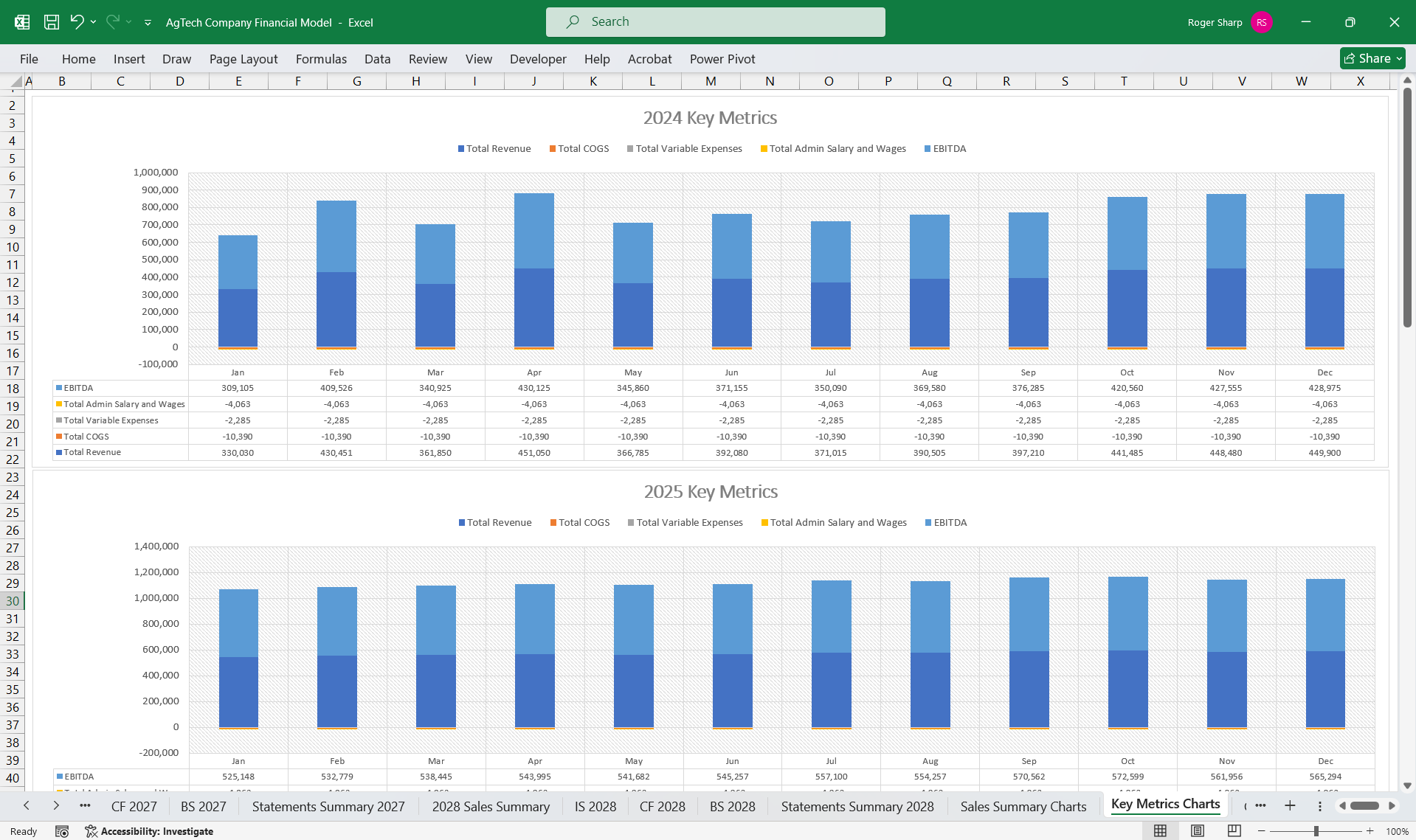
- EBITDA: Earnings Before Interest, Taxes, Depreciation, and Amortization.
- Net Income: Final profit after all expenses, taxes, and interest.
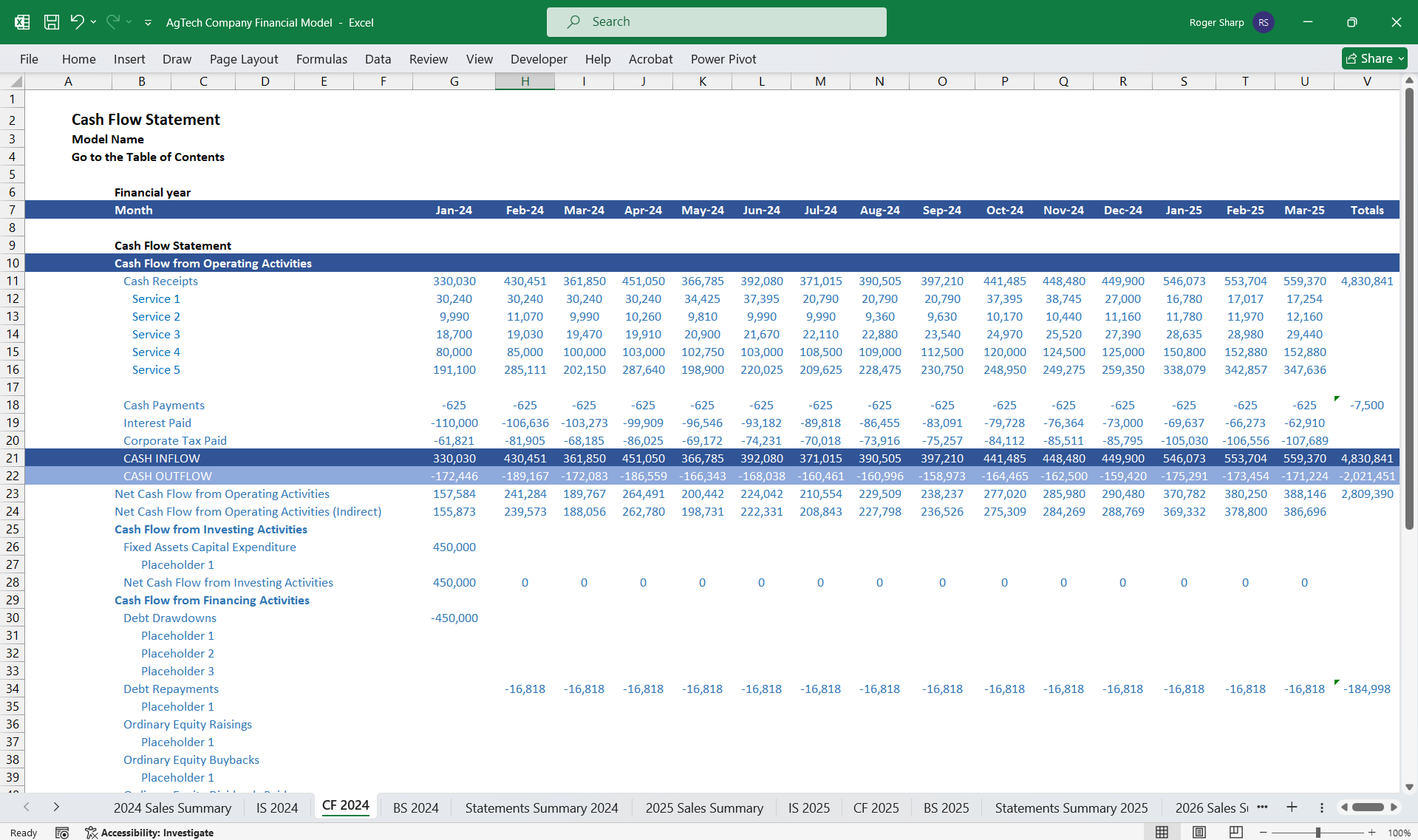
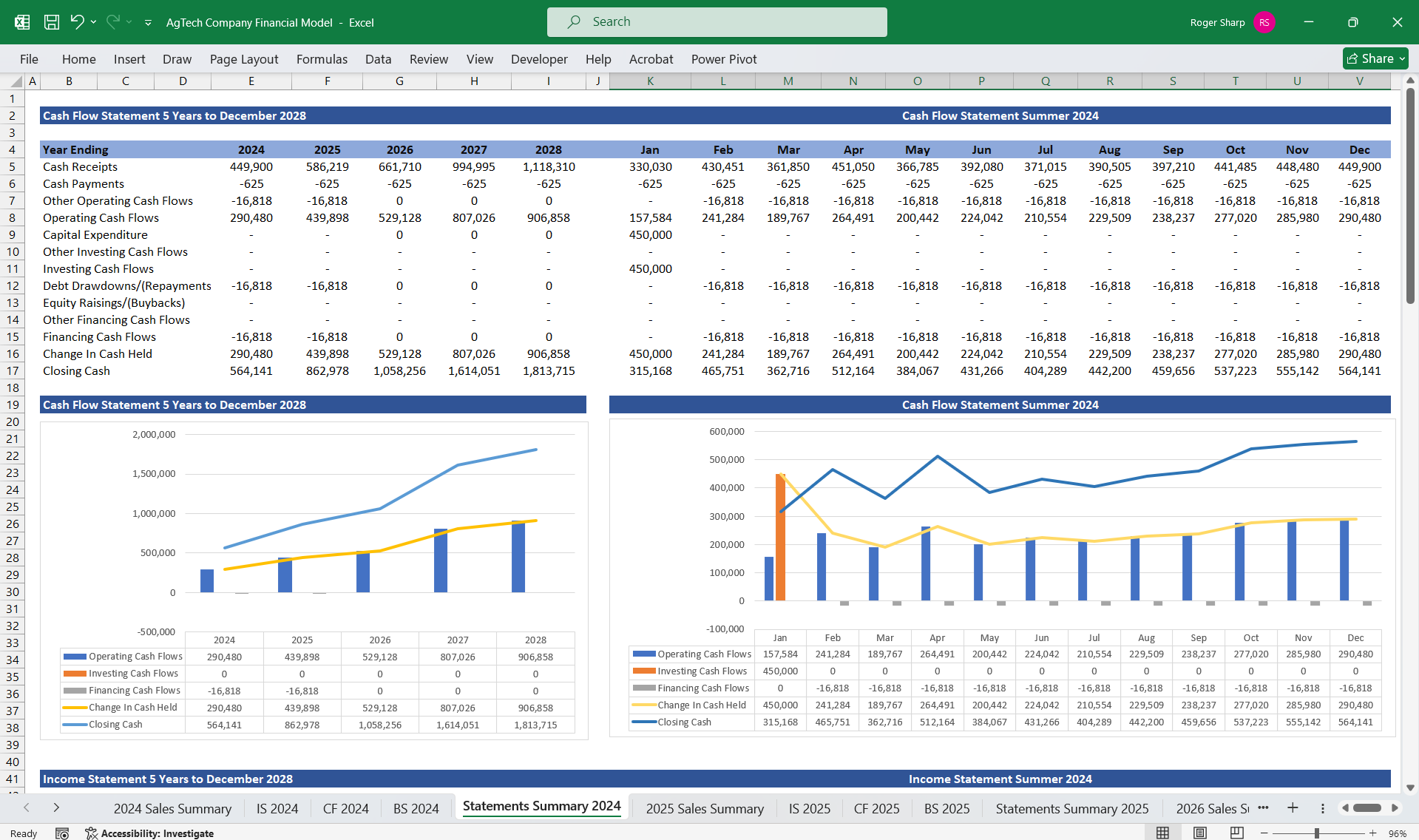
- Cash Flow Statement:
- Operating Activities: Cash generated or spent on core business operations.
- Investing Activities: Cash flow from purchases and sales of assets, including capital expenditures.
- Financing Activities: Cash flow from issuing and repaying debt, equity financing, and dividend payments.
- Net Cash Flow: Overall change in cash position over the period.
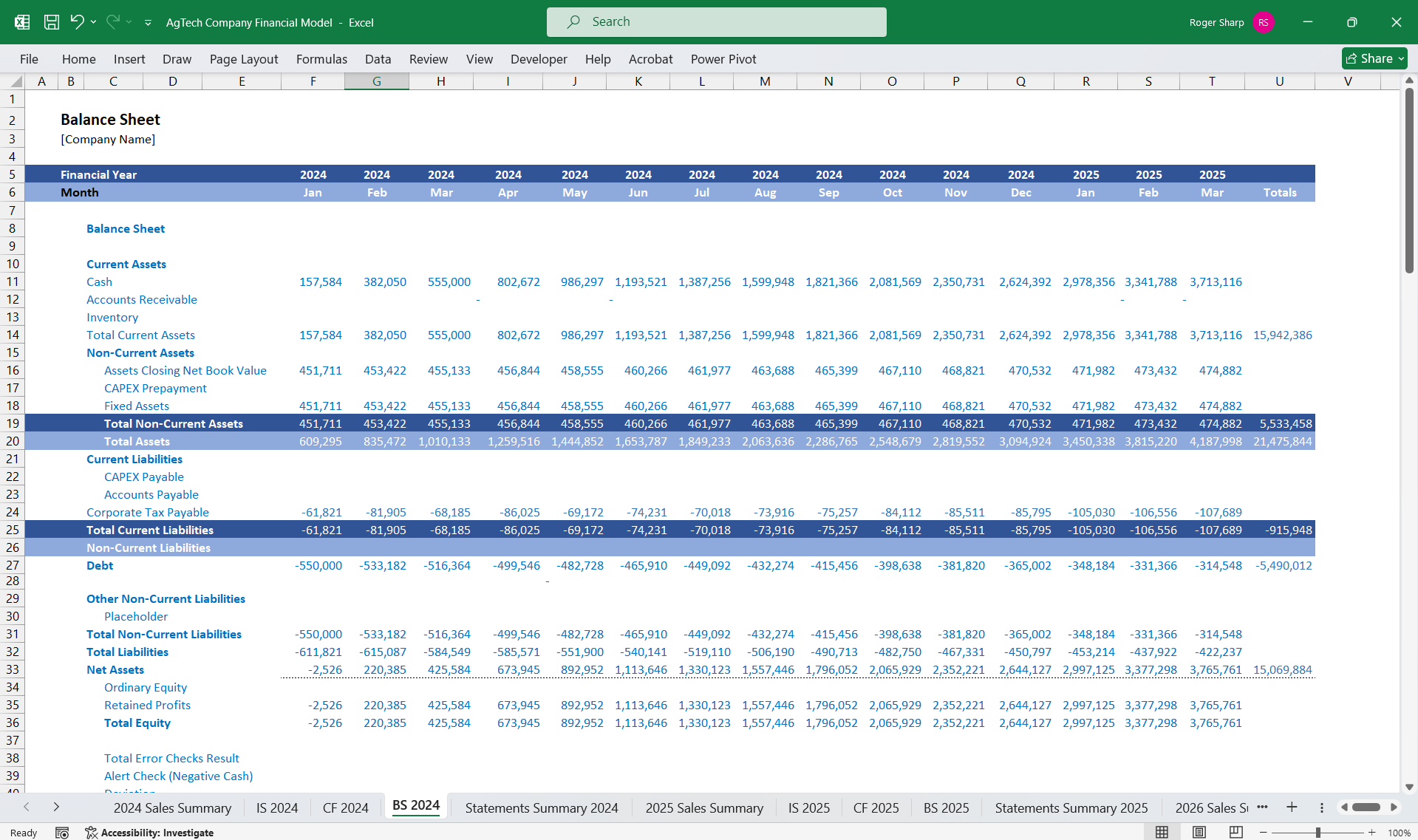
- Balance Sheet:
- Assets: Current assets (cash, receivables, inventory) and long-term assets (property, equipment, intellectual property).
- Liabilities: Current liabilities (accounts payable, short-term debt) and long-term liabilities (long-term debt, deferred taxes).
- Equity: Shareholder equity, retained earnings, and additional paid-in capital.
- Revenue Growth Rate: Percentage increase in revenue over specified periods.
- EBITDA Margin: EBITDA as a percentage of total revenue, indicating operational efficiency.
- COGS as a Percentage of Revenue: Measurement of production cost efficiency.
Marketing Expenditure:
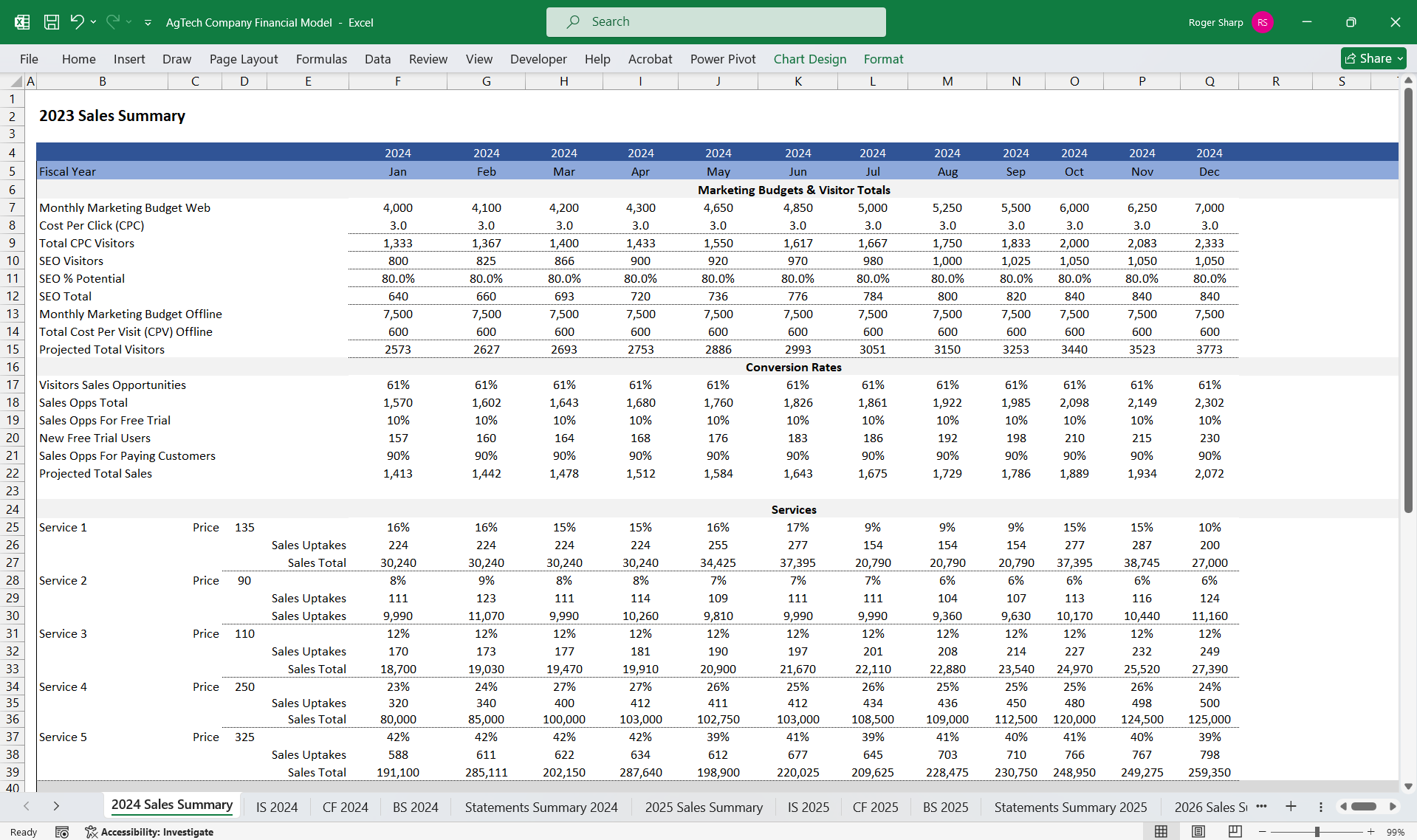
- Online Marketing: Costs associated with digital advertising, social media campaigns, search engine marketing, and influencer partnerships.
- Offline Marketing: Expenses related to traditional media advertising, event sponsorships, and physical promotional materials.
Additional Features:
- Scenario Analysis: Tools for modelling different business scenarios and their financial impacts.
- Sensitivity Analysis: Examination of how changes in key assumptions affect the financial outcomes.
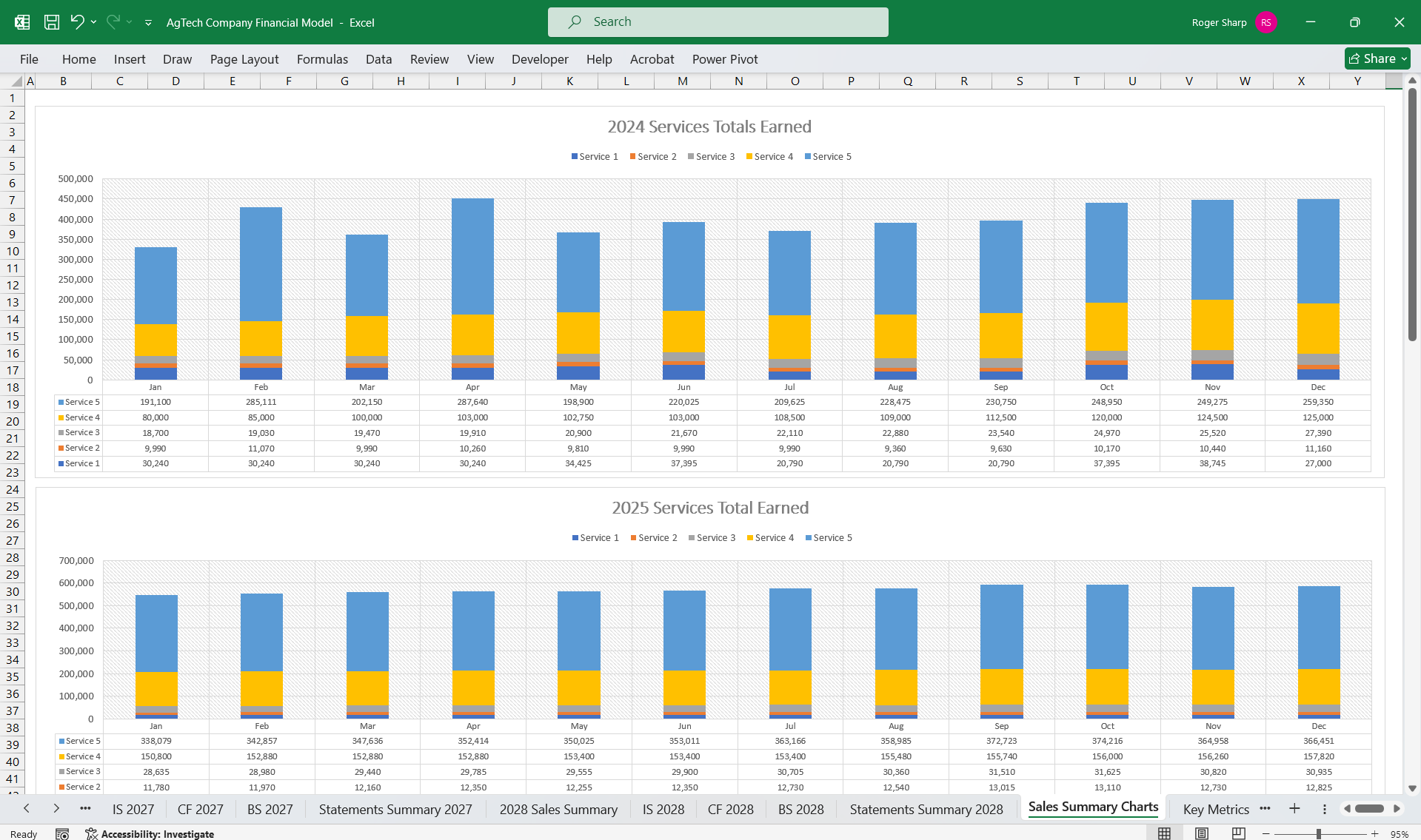
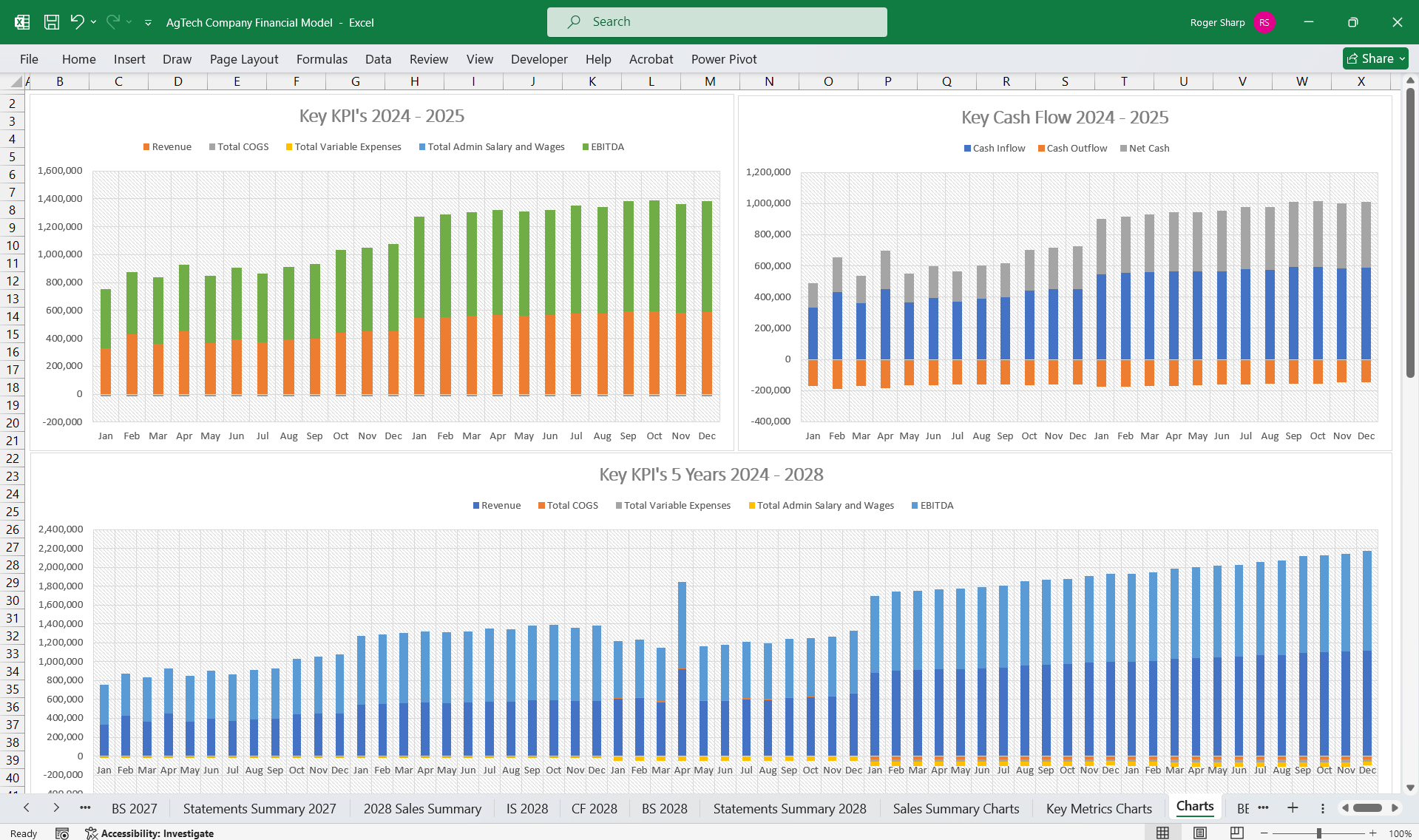
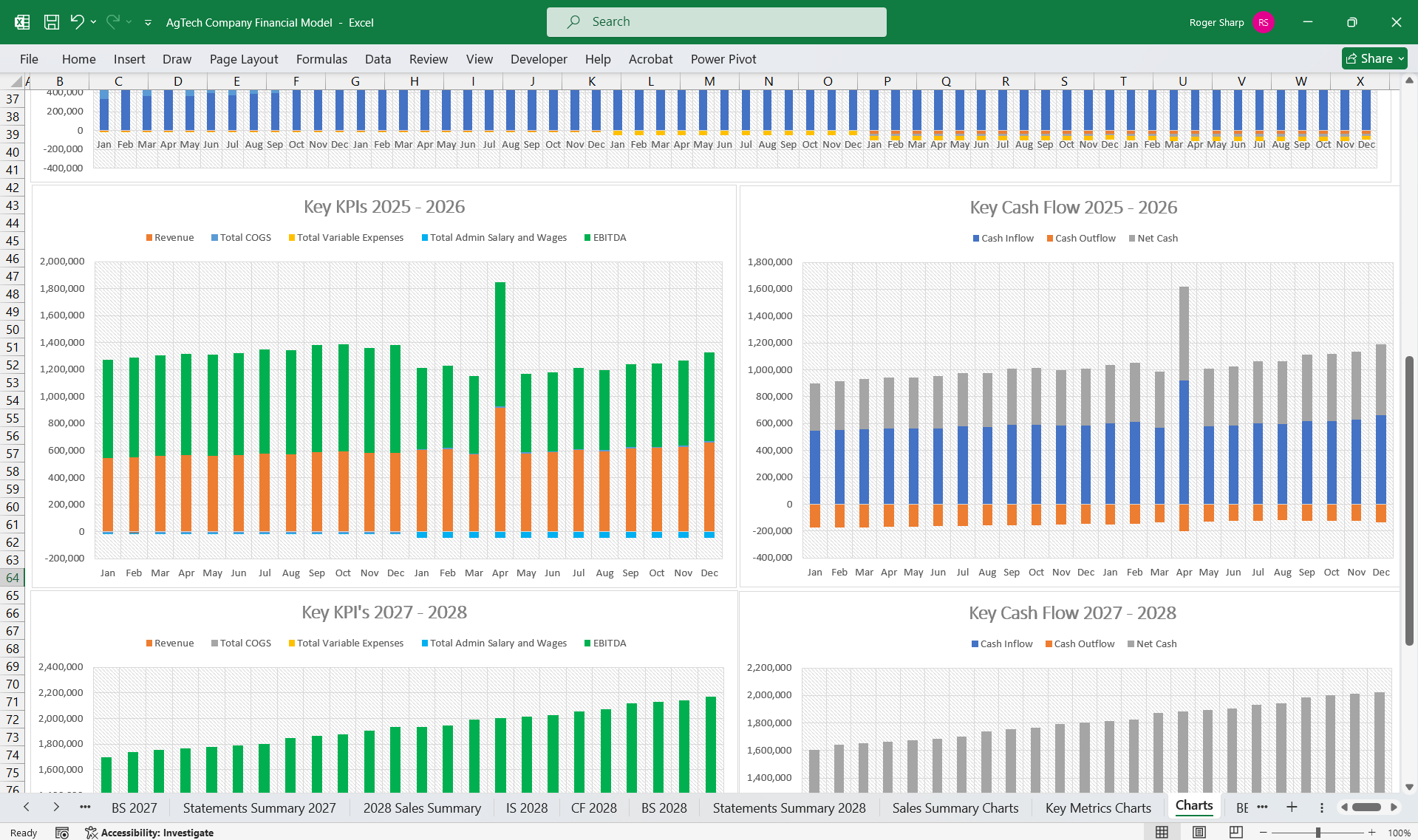
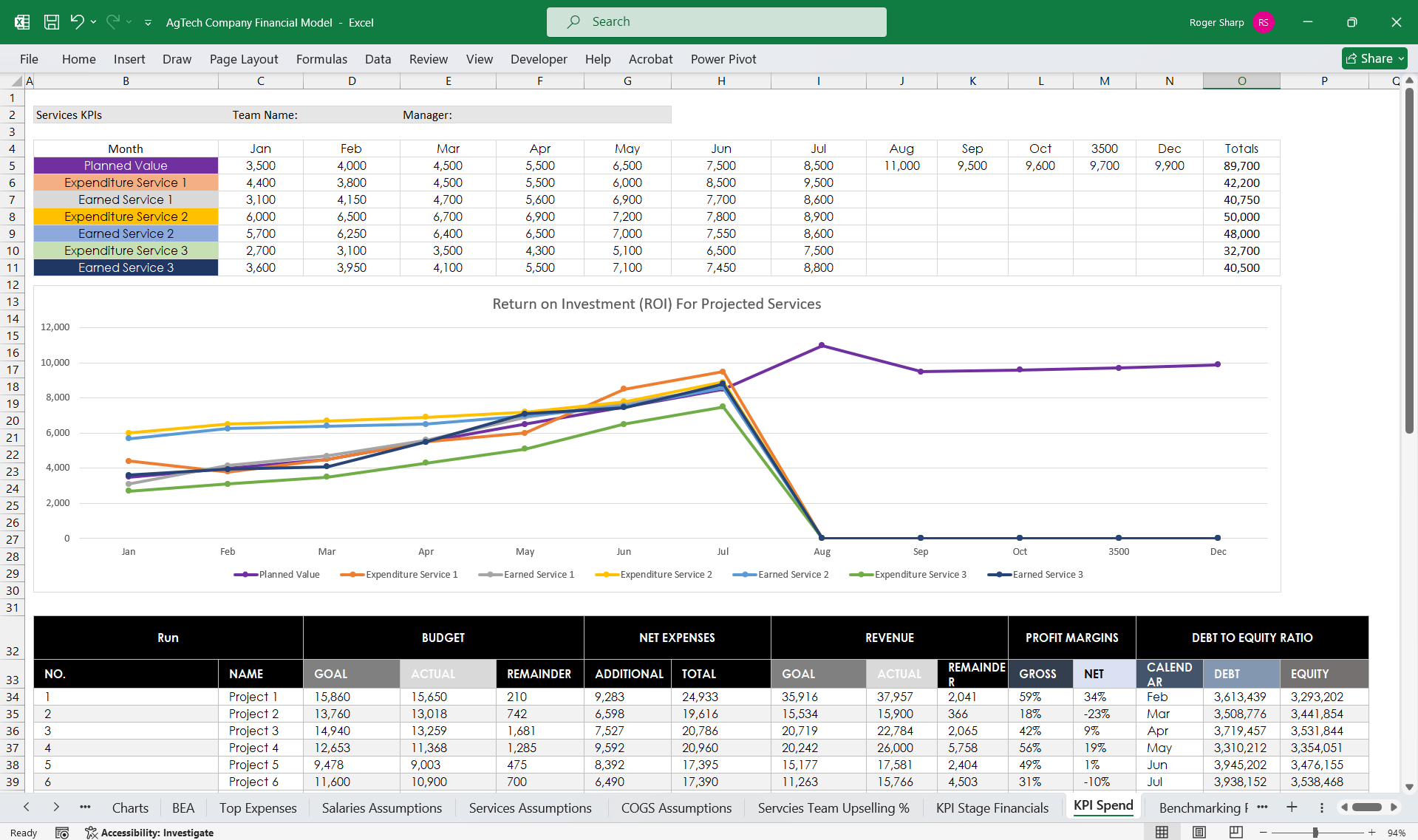
- Dashboards: Visual representations of key metrics and financial statements for quick insights and decision-making.
This Best Practice includes
Excel Financial Model
Further information
Provides thorough oversight, tracking, and reporting of AgTech Startup financials, including updates on budget utilisation and projections.