Originally published: 16/11/2024 00:26
Last version published: 05/01/2026 21:47
Publication number: ELQ-56531-5
View all versions & Certificate
Last version published: 05/01/2026 21:47
Publication number: ELQ-56531-5
View all versions & Certificate

Data Centre Financial Model Excel Template
A comprehensive editable 5 Year 3 Statement, MS Excel spreadsheet for tracking Data Centre finances.
 by AllFinancialModels
AllFinancialModels offer a curated selection of high-quality yet financial model templates designed to support a wide range of business needs.Follow
Description
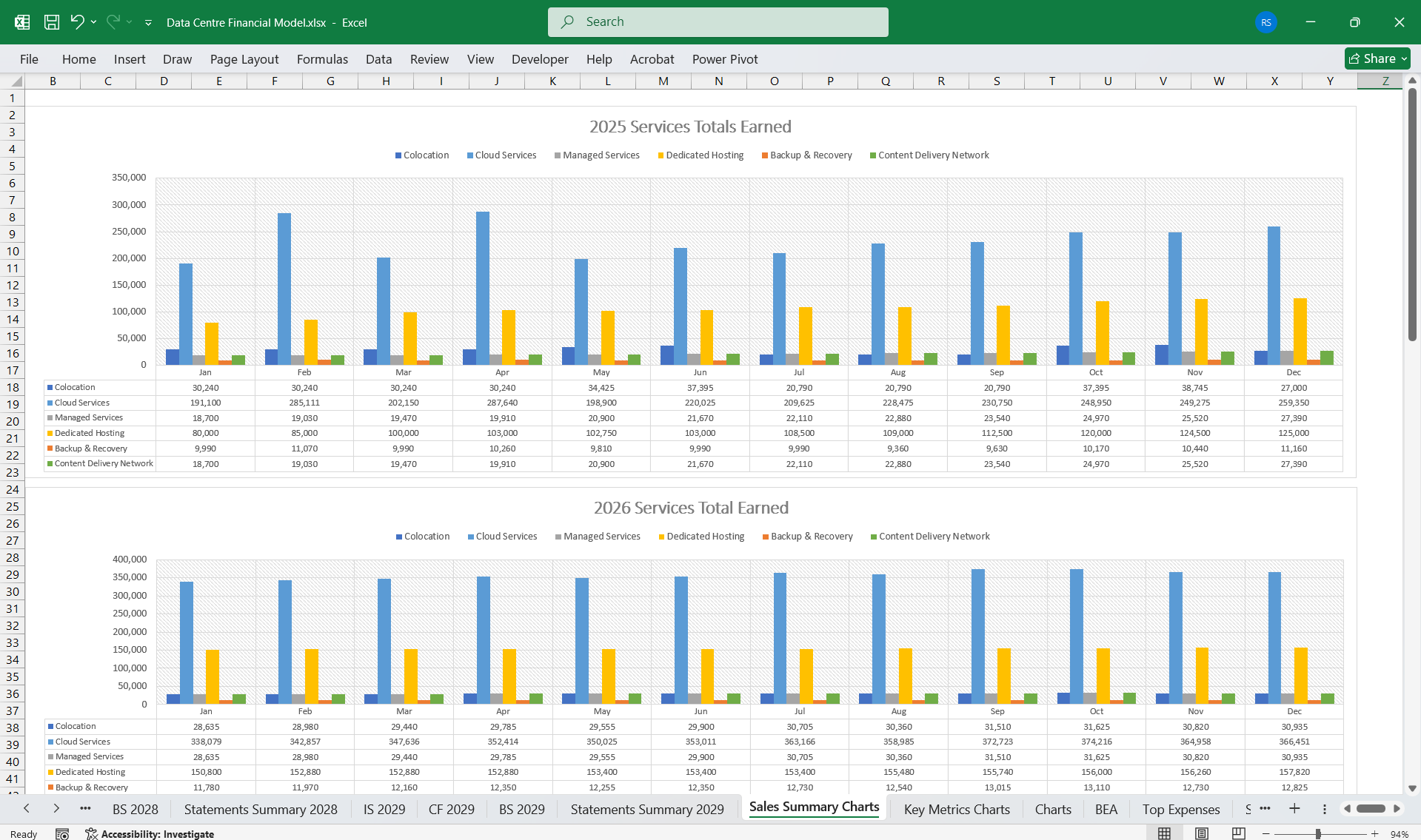
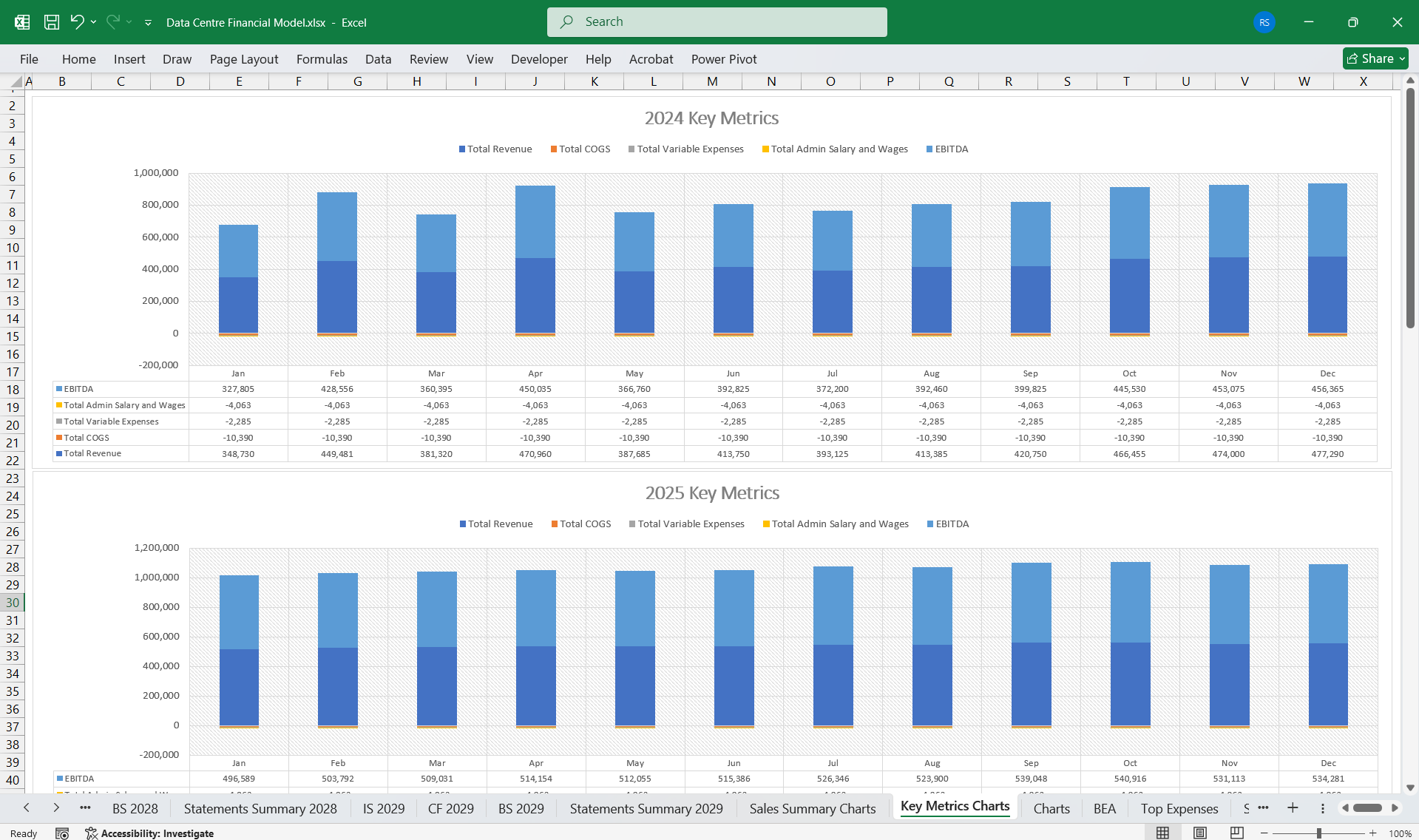
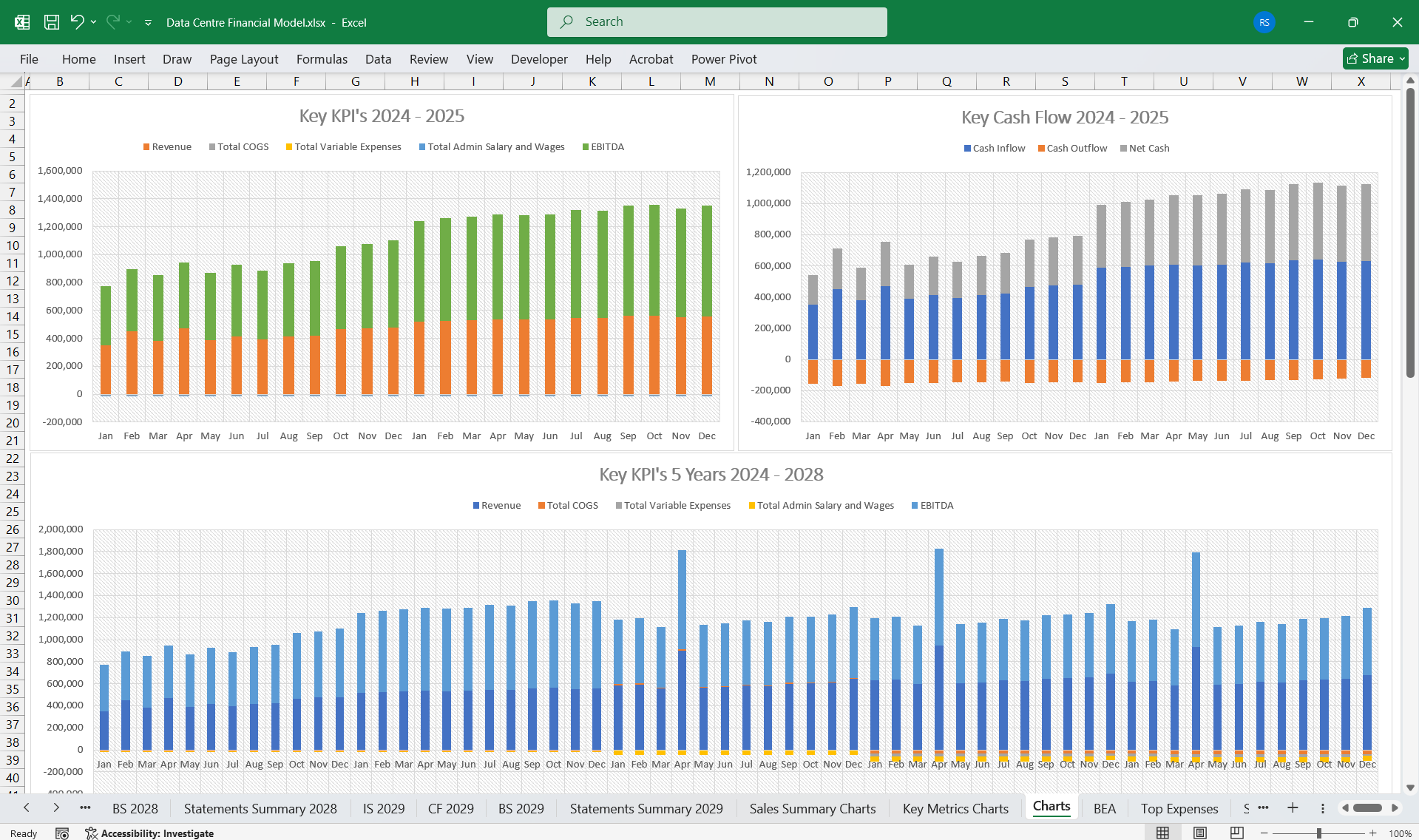
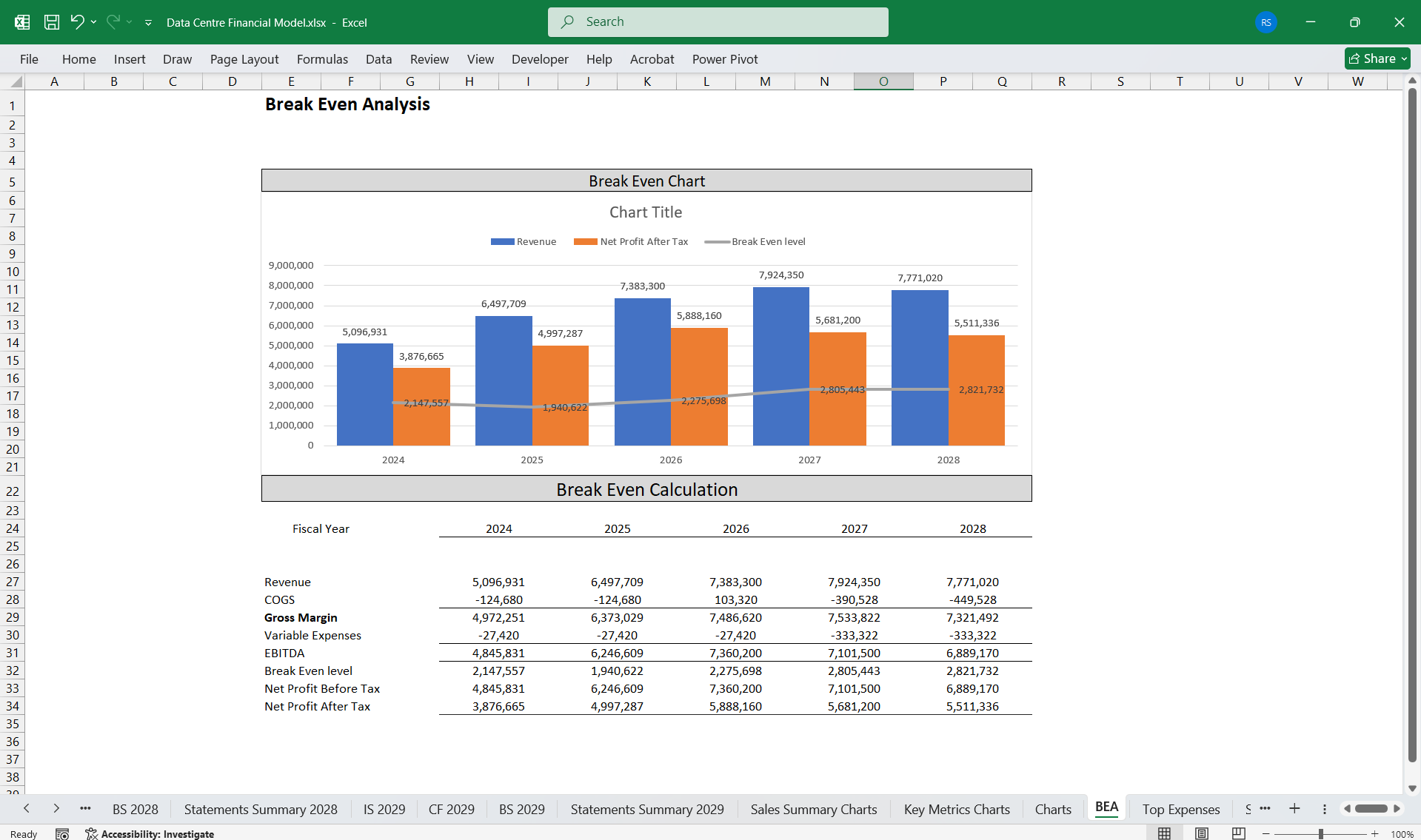
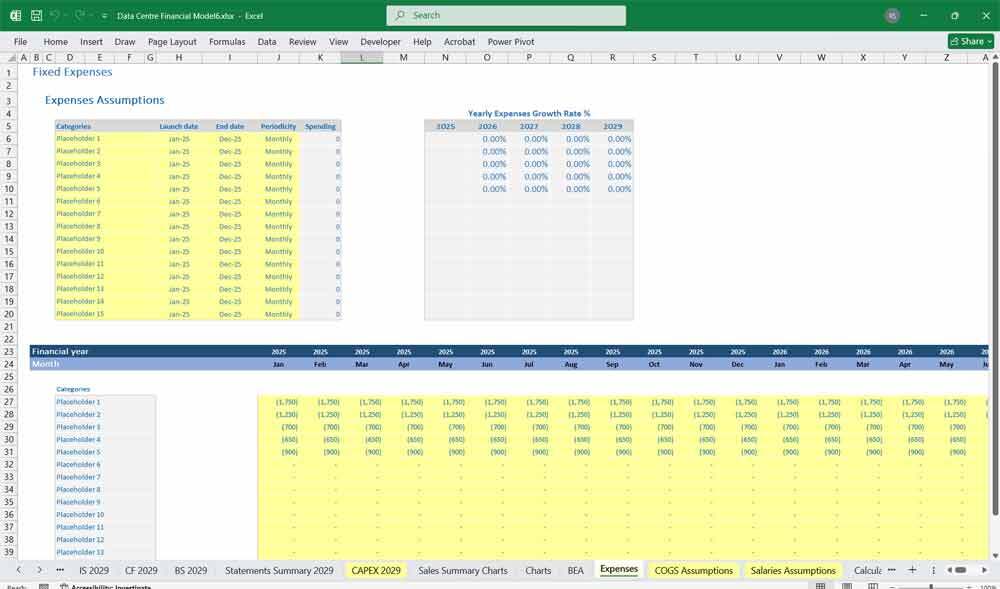
This financial model for a data centre captures all the critical financial metrics and revenue streams while integrating the operating and capital expenditures involved in running the data center.
Below is a detailed description of the model, including Income Statement, Cash Flow Statement, and Balance Sheet, with the specified revenue streams:
---
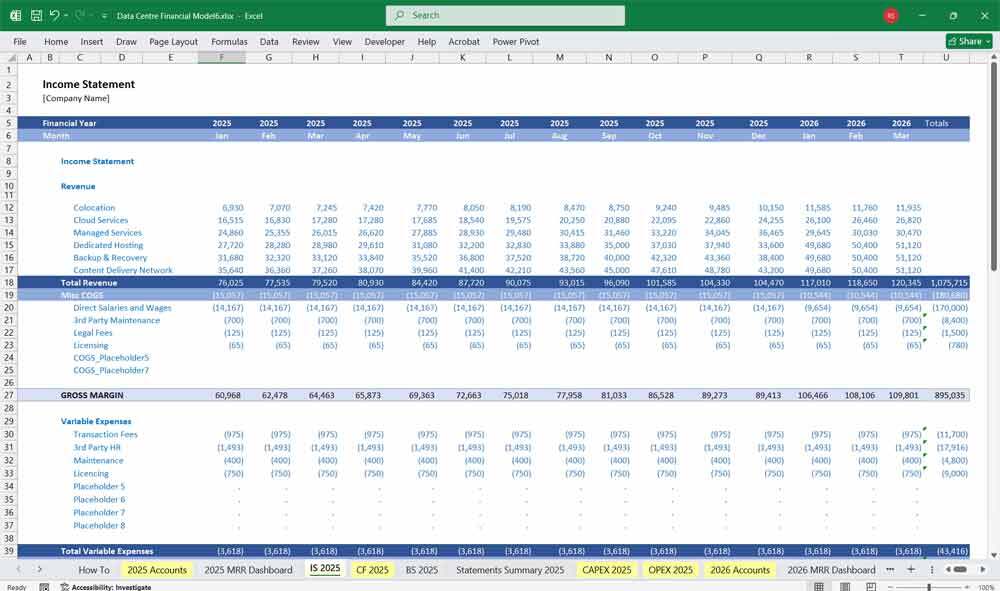
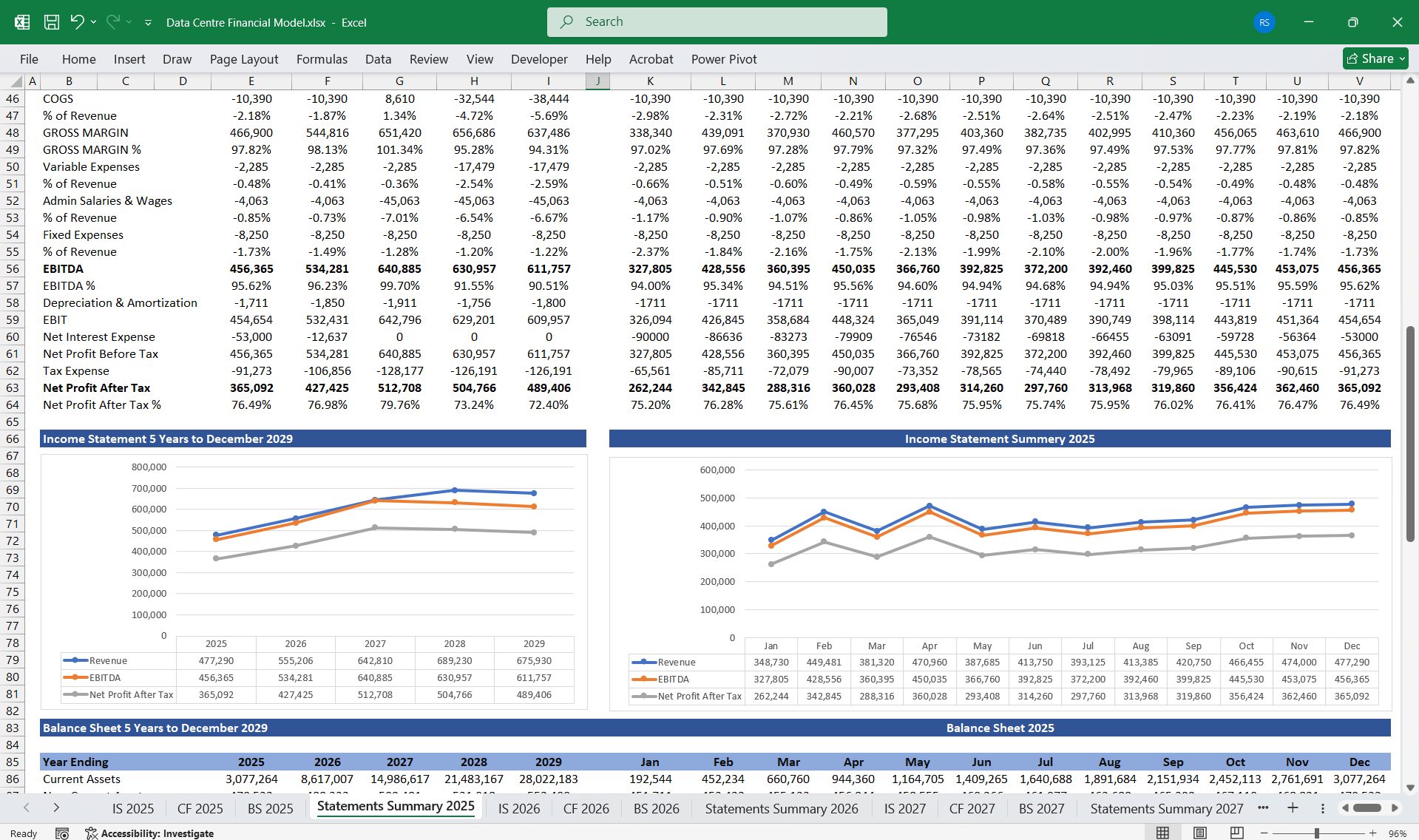
"1. Income Statement"
The Income Statement captures the profitability of the data centre. It includes the following sections:
"Revenue Streams:" (All fully editable)
1. Colocation:
- Revenue from renting physical space, power, and cooling in the data centre.
- Pricing is typically based on rack units, cabinets, or floor space.
2. "Cloud Services:"
- Revenue from Infrastructure-as-a-Service (IaaS) or Platform-as-a-Service (PaaS).
- Billed on a consumption basis (e.g., storage, compute, bandwidth usage).
3. "Managed Services:"
- Fees from providing IT management and operational support, such as monitoring, patching, and system optimization.
- Typically offered as a subscription or hourly billing model.
4. "Dedicated Hosting:"
- Revenue from leasing entire servers to customers for exclusive use.
- Includes setup fees, monthly recurring charges, and customization.
5. "Backup & Recovery:"
- Revenue from data backup, disaster recovery planning, and execution services.
- Maybe subscription-based or charged per GB of data stored/recovered.
6. "Content Delivery Network (CDN):"
- Revenue from distributing web content, videos, and other assets to end users via a CDN service.
- Charged per TB of content delivered or based on monthly plans.
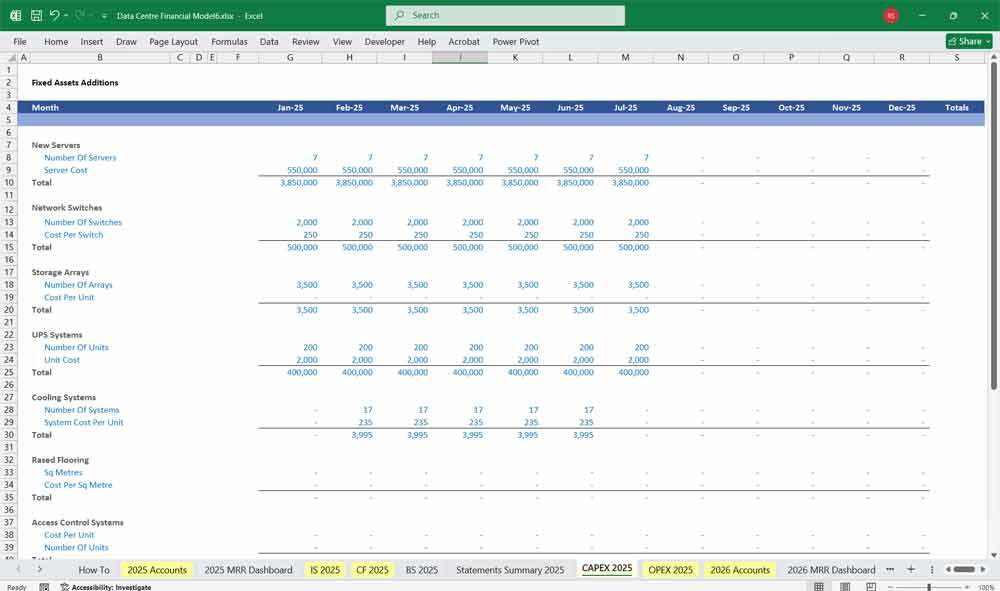
CAPEX: 10 Editable
1. New Servers.
2. Network Switches.
3. Storage Arrays.
4. UPS Systems.
5. Cooling Systems.
Gross Profit:
Revenue - COGS.
Operating Expenses (OPEX): 10 Editable
1. Salaries and Wages: Administrative and non-operational staff.
2. Marketing and Sales: Customer acquisition costs, digital marketing, and client relations.
3. General and Administrative (G&A): Rent, insurance, office supplies, etc.
4. Research & Development (R&D): Investments in new service offerings or technology upgrades.
EBITDA:
Gross Profit - OPEX.
Depreciation & Amortization:
Accounting for fixed assets and intangible investments like software.
Operating Income:
EBITDA - Depreciation & Amortization.
Interest Expense:
Interest paid on loans or other financing.
Net Income Before Tax:
Operating Income - Interest Expense.
Taxes:
Corporate taxes are applied to pre-tax income.
Net Income:
Final profitability metric.
---
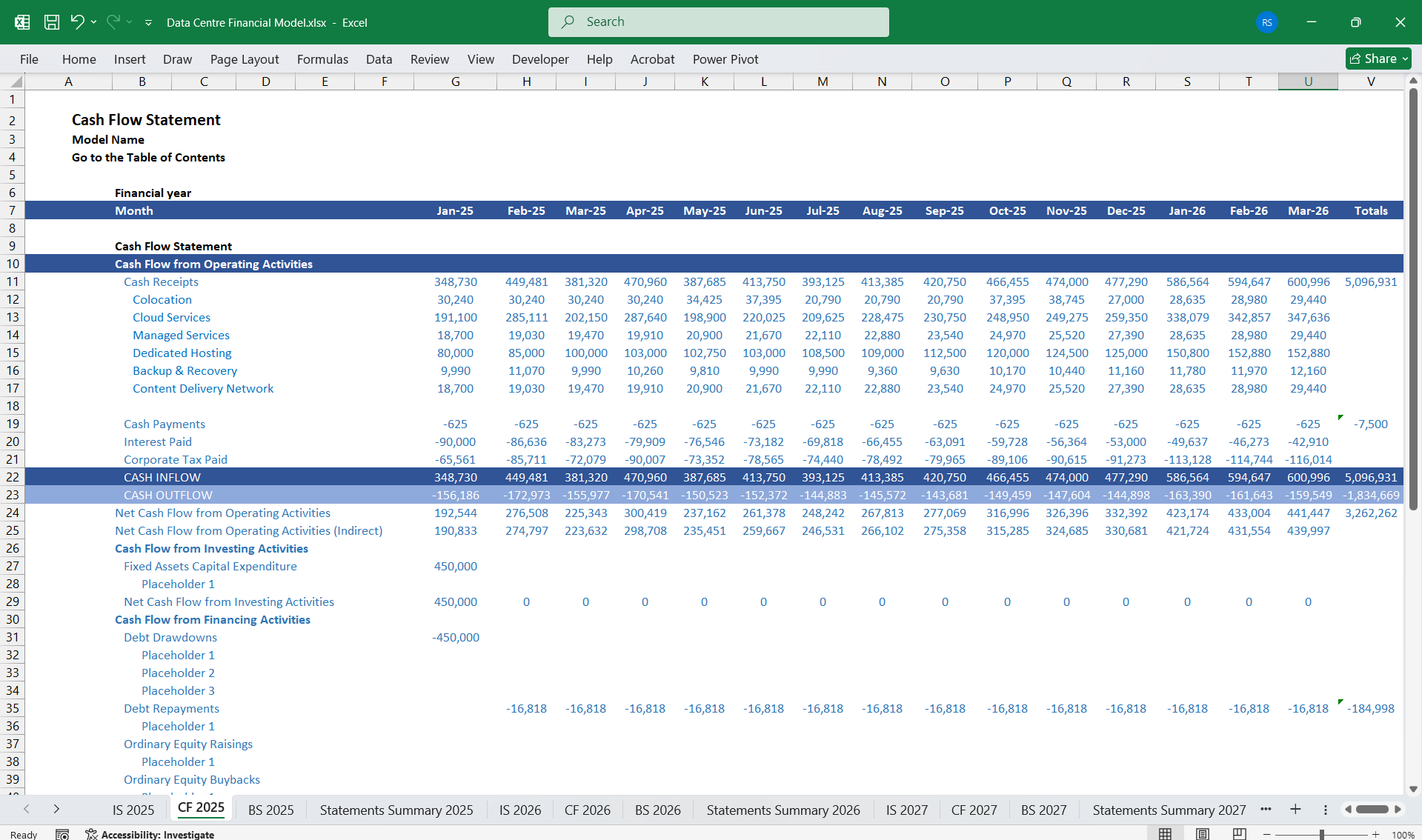
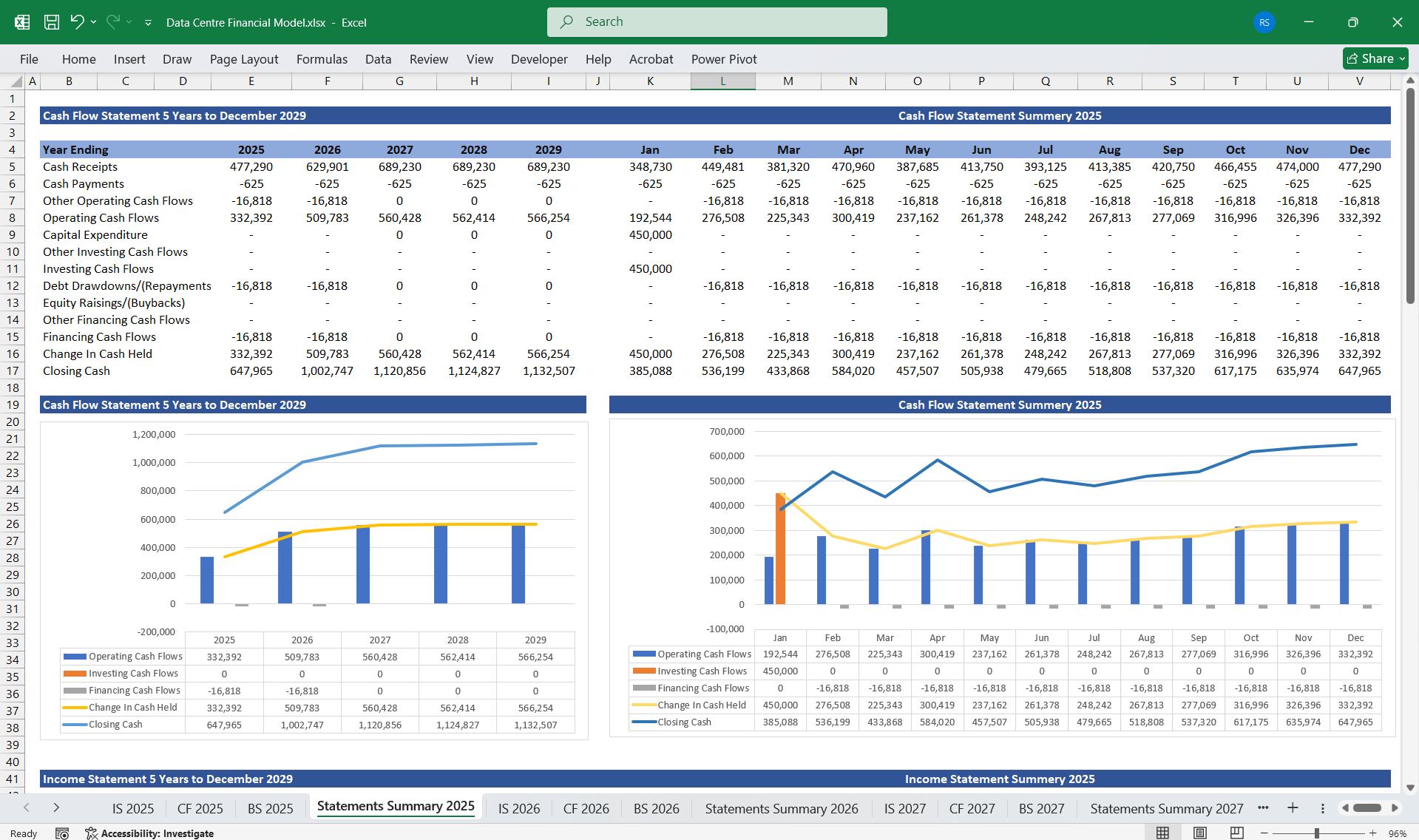
"2. Cash Flow Statement"
This outlines cash inflows and outflows and is divided into three main sections:
Operating Activities:
1. Net Income: Start with the net income from the Income Statement.
2. Adjustments for Non-Cash Items:
- Depreciation & Amortization.
- Changes in Deferred Revenue.
3. Working Capital Changes:
- Accounts Receivable: Cash impact from revenue collection.
- Accounts Payable: Payments for operational expenses.
- Inventory: Primarily for hardware, if any.
Investing Activities:
1. Capital Expenditures (CapEx):
- Purchases of new servers, routers, and storage devices.
- Facility upgrades and expansions.
2. Software and Licensing Investments:
- Investments in cloud platforms or proprietary software.
3. Proceeds from Asset Sales:
- Sale of old or unused equipment.
Financing Activities:
1. Debt Proceeds/Repayments:
- Loans taken for facility construction or equipment purchase.
- Repayments of existing loans.
2. Equity Transactions:
- Funds raised via equity issuance.
- Dividend payments.
#### Net Cash Flow:
The sum of cash from Operating, Investing, and Financing Activities.
---
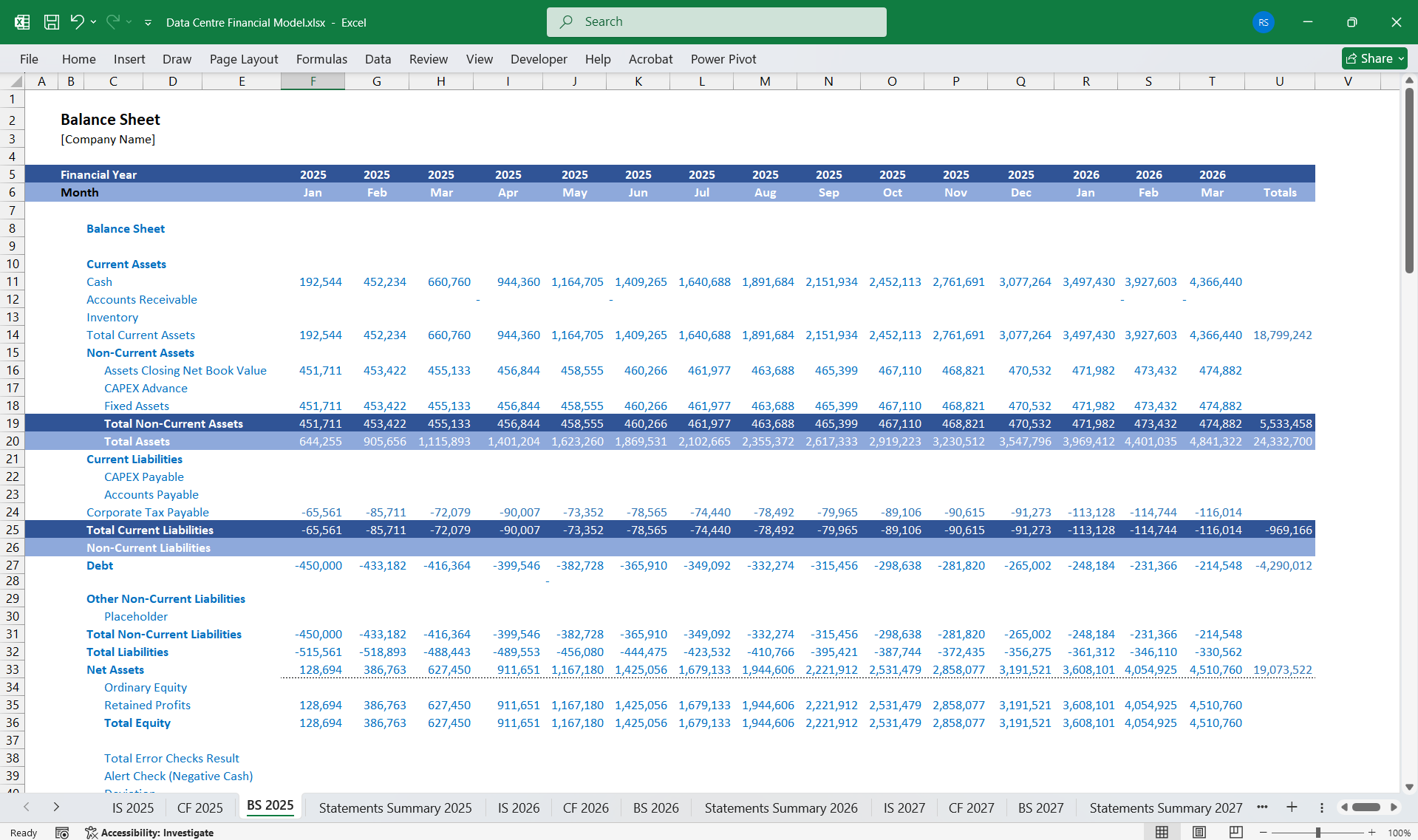
"3. Balance Sheet"
The Balance Sheet reflects the financial position of the data centre business:
#### Assets:
1. Current Assets:
- Cash and Cash Equivalents: Available liquidity.
- Accounts Receivable: Customer payments due.
- Prepaid Expenses: Advance payments for licenses, insurance, or rent.
2. Non-Current Assets:
- Property, Plant, and Equipment (PP&E):
- Servers, storage devices, networking equipment.
- Depreciated over time.
- Intangible Assets:
- Software licenses and intellectual property.
- Construction in Progress:
- For data centres under development.
Liabilities:
1. Current Liabilities:
- Accounts Payable: Vendor and supplier payments.
- Short-Term Debt: Loan repayments due within a year.
- Deferred Revenue: Prepaid service income yet to be earned.
2. Non-Current Liabilities:
- Long-Term Debt: Loans for infrastructure and expansions.
- Lease Liabilities: Obligations for long-term facilities.
Equity:
1. Shareholders’ Equity:
- Common stock and additional paid-in capital.
2. Retained Earnings:
- Accumulated profits reinvested in the business.
---
Additional Notes for Customization:
1. Scalability Assumptions: Build the model with parameters for scaling revenue with customer acquisition, server utilization, and geographic expansion.
2. Service-Specific Margins: Incorporate varied margins for different services (e.g., higher margin on Cloud Services vs. CDN).
3. Capital Intensity: Highlight significant upfront investments and their long payback periods.
This comprehensive financial model enables decision-making by providing insights into the profitability, liquidity, and solvency of the data centre business.
20-year 3 statement model.
https://www.eloquens.com/tool/N9v7UXrL/roger-sharp/data-centre-center-financial-model-20-years
This financial model for a data centre captures all the critical financial metrics and revenue streams while integrating the operating and capital expenditures involved in running the data center.
Below is a detailed description of the model, including Income Statement, Cash Flow Statement, and Balance Sheet, with the specified revenue streams:
---
"1. Income Statement"
The Income Statement captures the profitability of the data centre. It includes the following sections:
"Revenue Streams:" (All fully editable)
1. Colocation:
- Revenue from renting physical space, power, and cooling in the data centre.
- Pricing is typically based on rack units, cabinets, or floor space.
2. "Cloud Services:"
- Revenue from Infrastructure-as-a-Service (IaaS) or Platform-as-a-Service (PaaS).
- Billed on a consumption basis (e.g., storage, compute, bandwidth usage).
3. "Managed Services:"
- Fees from providing IT management and operational support, such as monitoring, patching, and system optimization.
- Typically offered as a subscription or hourly billing model.
4. "Dedicated Hosting:"
- Revenue from leasing entire servers to customers for exclusive use.
- Includes setup fees, monthly recurring charges, and customization.
5. "Backup & Recovery:"
- Revenue from data backup, disaster recovery planning, and execution services.
- Maybe subscription-based or charged per GB of data stored/recovered.
6. "Content Delivery Network (CDN):"
- Revenue from distributing web content, videos, and other assets to end users via a CDN service.
- Charged per TB of content delivered or based on monthly plans.
CAPEX: 10 Editable
1. New Servers.
2. Network Switches.
3. Storage Arrays.
4. UPS Systems.
5. Cooling Systems.
Gross Profit:
Revenue - COGS.
Operating Expenses (OPEX): 10 Editable
1. Salaries and Wages: Administrative and non-operational staff.
2. Marketing and Sales: Customer acquisition costs, digital marketing, and client relations.
3. General and Administrative (G&A): Rent, insurance, office supplies, etc.
4. Research & Development (R&D): Investments in new service offerings or technology upgrades.
EBITDA:
Gross Profit - OPEX.
Depreciation & Amortization:
Accounting for fixed assets and intangible investments like software.
Operating Income:
EBITDA - Depreciation & Amortization.
Interest Expense:
Interest paid on loans or other financing.
Net Income Before Tax:
Operating Income - Interest Expense.
Taxes:
Corporate taxes are applied to pre-tax income.
Net Income:
Final profitability metric.
---
"2. Cash Flow Statement"
This outlines cash inflows and outflows and is divided into three main sections:
Operating Activities:
1. Net Income: Start with the net income from the Income Statement.
2. Adjustments for Non-Cash Items:
- Depreciation & Amortization.
- Changes in Deferred Revenue.
3. Working Capital Changes:
- Accounts Receivable: Cash impact from revenue collection.
- Accounts Payable: Payments for operational expenses.
- Inventory: Primarily for hardware, if any.
Investing Activities:
1. Capital Expenditures (CapEx):
- Purchases of new servers, routers, and storage devices.
- Facility upgrades and expansions.
2. Software and Licensing Investments:
- Investments in cloud platforms or proprietary software.
3. Proceeds from Asset Sales:
- Sale of old or unused equipment.
Financing Activities:
1. Debt Proceeds/Repayments:
- Loans taken for facility construction or equipment purchase.
- Repayments of existing loans.
2. Equity Transactions:
- Funds raised via equity issuance.
- Dividend payments.
#### Net Cash Flow:
The sum of cash from Operating, Investing, and Financing Activities.
---
"3. Balance Sheet"
The Balance Sheet reflects the financial position of the data centre business:
#### Assets:
1. Current Assets:
- Cash and Cash Equivalents: Available liquidity.
- Accounts Receivable: Customer payments due.
- Prepaid Expenses: Advance payments for licenses, insurance, or rent.
2. Non-Current Assets:
- Property, Plant, and Equipment (PP&E):
- Servers, storage devices, networking equipment.
- Depreciated over time.
- Intangible Assets:
- Software licenses and intellectual property.
- Construction in Progress:
- For data centres under development.
Liabilities:
1. Current Liabilities:
- Accounts Payable: Vendor and supplier payments.
- Short-Term Debt: Loan repayments due within a year.
- Deferred Revenue: Prepaid service income yet to be earned.
2. Non-Current Liabilities:
- Long-Term Debt: Loans for infrastructure and expansions.
- Lease Liabilities: Obligations for long-term facilities.
Equity:
1. Shareholders’ Equity:
- Common stock and additional paid-in capital.
2. Retained Earnings:
- Accumulated profits reinvested in the business.
---
Additional Notes for Customization:
1. Scalability Assumptions: Build the model with parameters for scaling revenue with customer acquisition, server utilization, and geographic expansion.
2. Service-Specific Margins: Incorporate varied margins for different services (e.g., higher margin on Cloud Services vs. CDN).
3. Capital Intensity: Highlight significant upfront investments and their long payback periods.
This comprehensive financial model enables decision-making by providing insights into the profitability, liquidity, and solvency of the data centre business.
20-year 3 statement model.
https://www.eloquens.com/tool/N9v7UXrL/roger-sharp/data-centre-center-financial-model-20-years
This Best Practice includes
1 Excel Financial Model
Further information
Provides thorough oversight, tracking, and reporting of Data Centre finances, including budget utilisation and projections updates.