



HVAC Contractor 5-Year Financial Model Excel | Cash Flow, Technician Capacity, Break-Even, Scenarios & Investor Deck

5-year HVAC financial model with service calls, technician capacity, three statements, break-even, scenarios, funding analysis, deck and PDF guide.

Description

๐Ÿ”ง HVAC CONTRACTOR โ€“ 5-YEAR FINANCIAL MODEL & BUSINESS FORECAST


Plan service revenue, installation projects, maintenance contracts, technician capacity, payroll, operating costs, capital investment, financing, liquidity, and funding requirements with an integrated financial model built specifically for HVAC contractors and service businesses.


This professional package combines a 27-worksheet Excel Financial Model, a 15-slide Investor / Management PowerPoint Deck, and a detailed 28-page How-to-Use PDF Guide.


The model connects key HVAC operating drivers with a complete 2029โ€“2033 Three-Statement Forecast, helping owners, founders, finance professionals, consultants, and management teams understand how service volume, pricing, installation activity, recurring contracts, technician utilization, job costs, staffing, OPEX, CapEx, and debt can influence future performance.


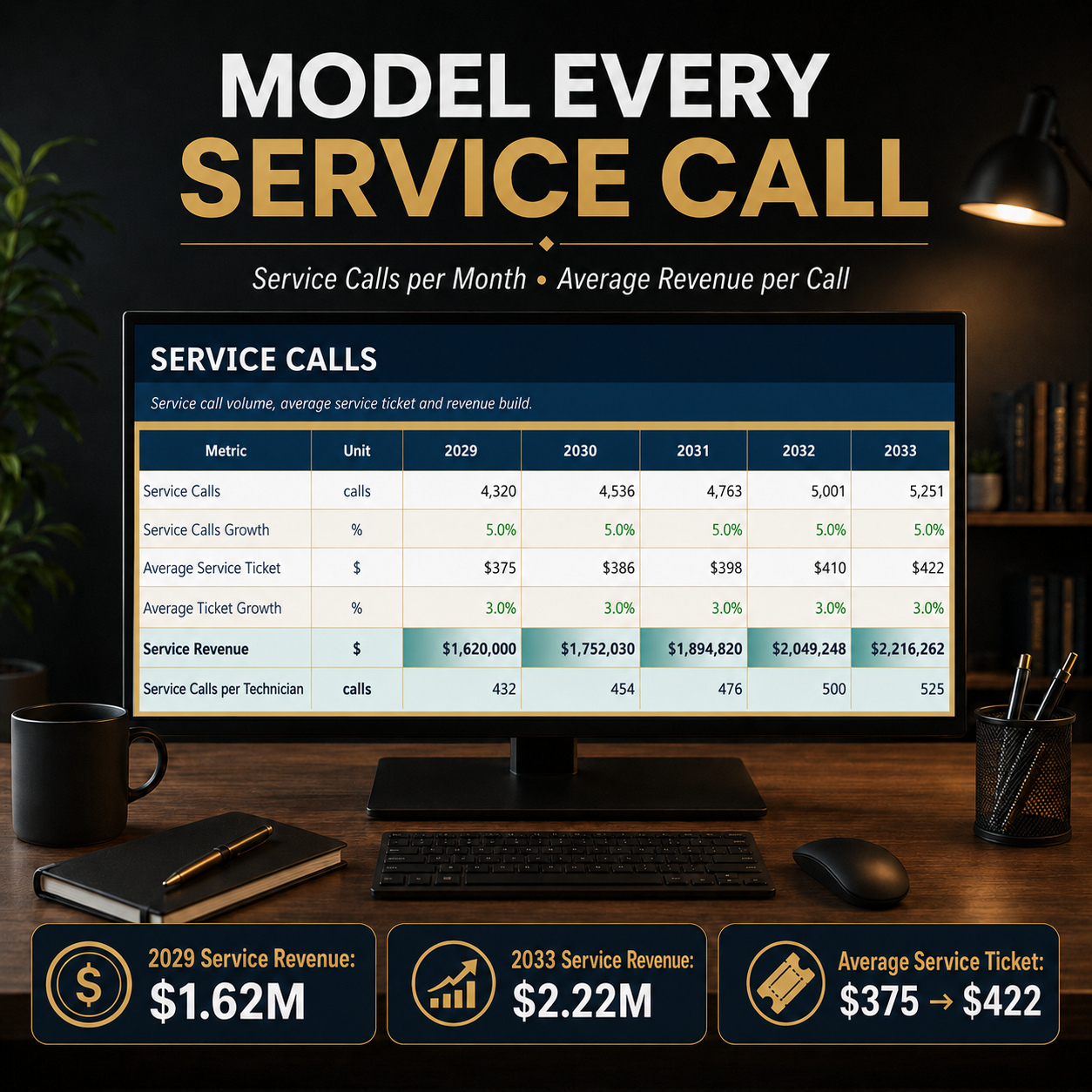
๐Ÿ”ง SERVICE CALLS & SERVICE REVENUE

Model:

โœ… Service Calls per Month โœ… Annual Service Call Growth โœ… Average Service Ticket โœ… Annual Ticket Growth โœ… Annual Service Calls โœ… Service Revenue

Service activity also connects directly with technician capacity, billable hours, and operational productivity.


๐Ÿ—๏ธ INSTALLATION PROJECTS

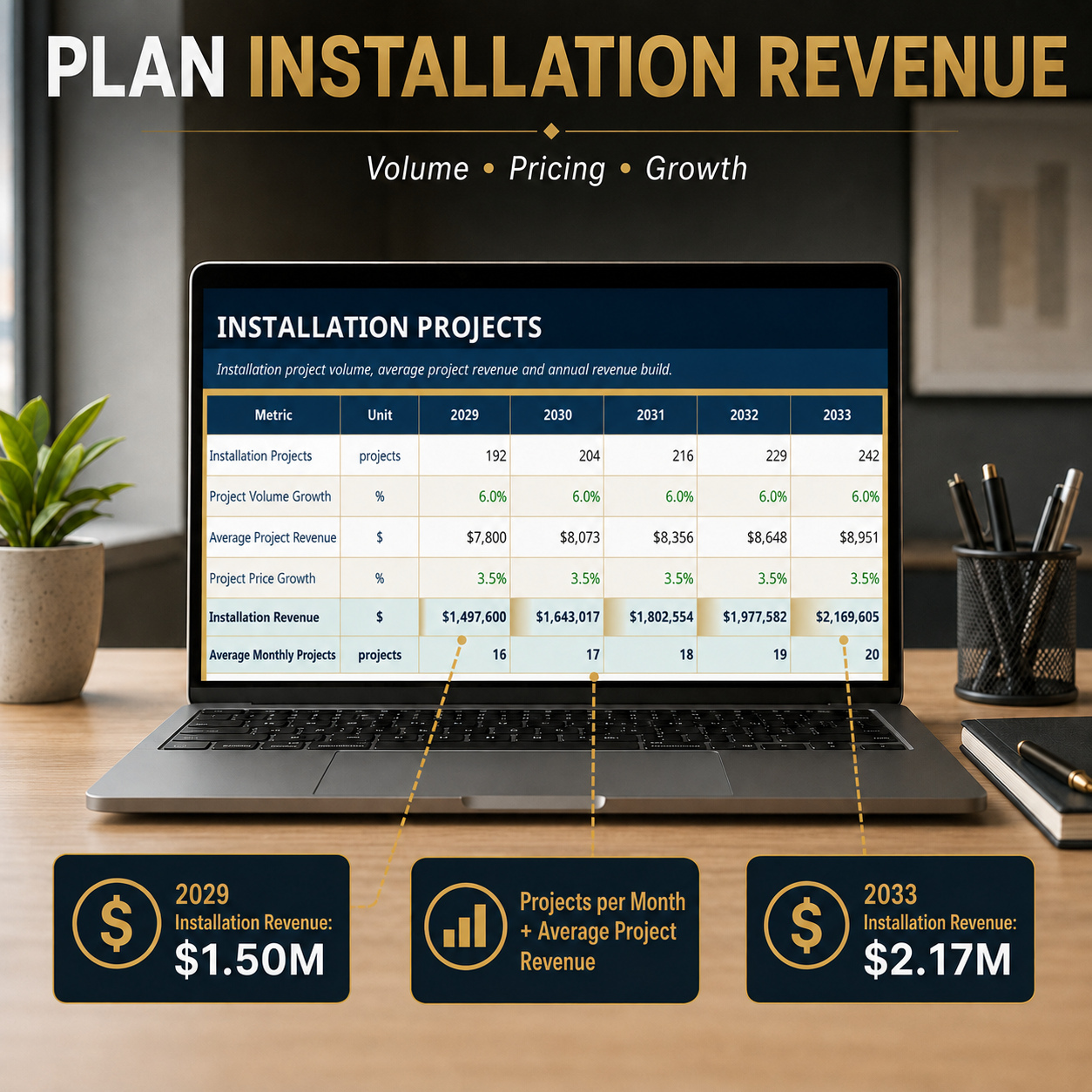
Plan installation work independently from service revenue using:

โœ… Installation Projects per Month โœ… Project Volume Growth โœ… Average Project Revenue โœ… Project Price Growth โœ… Annual Project Volume โœ… Installation Revenue

Required installation hours feed into the technician-capacity model, providing a direct connection between planned project activity and available operational resources.


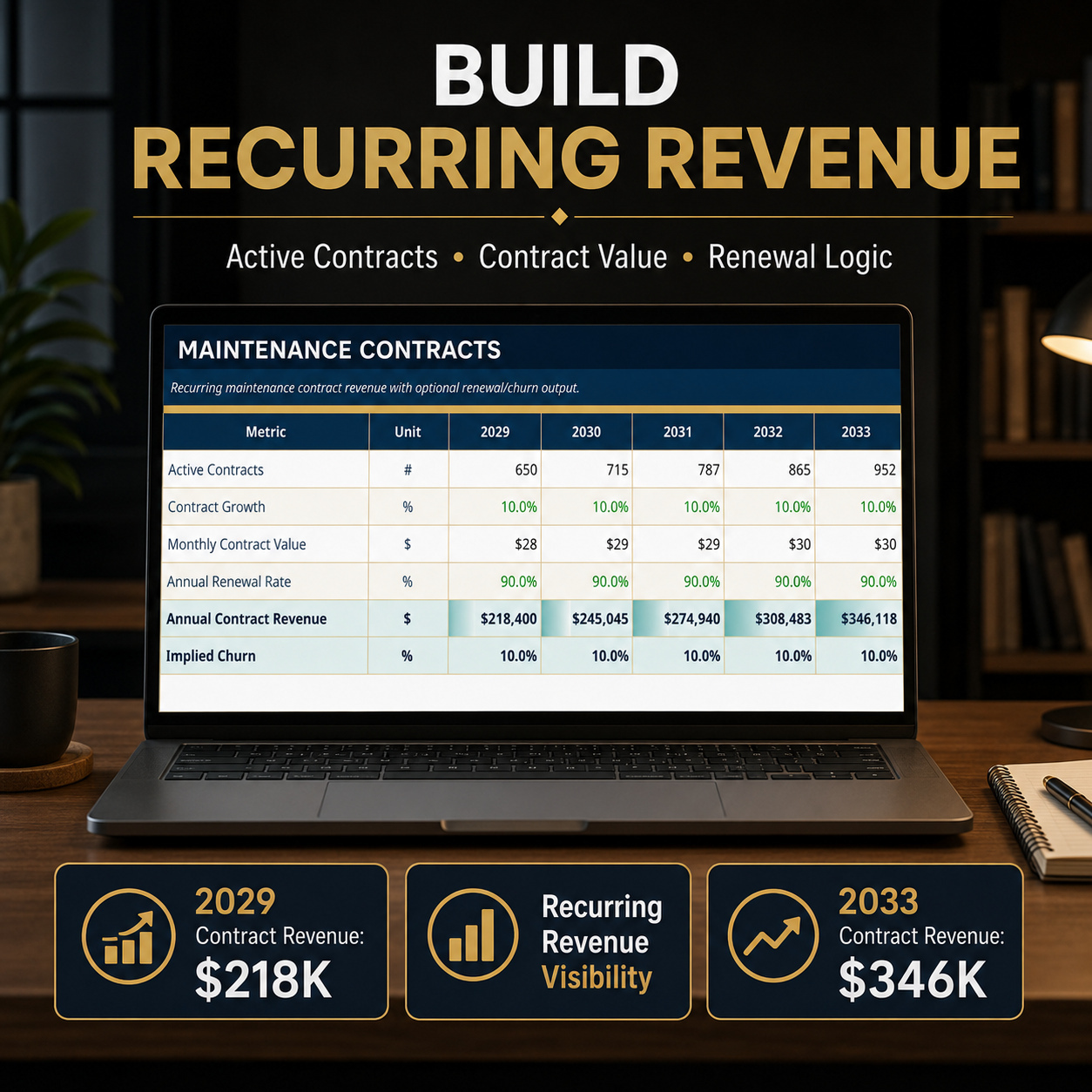
๐Ÿ” MAINTENANCE CONTRACTS & RECURRING REVENUE

Model the recurring-revenue component of the HVAC business through:

โœ… Active Maintenance Contracts โœ… Monthly Contract Value โœ… Contract Growth โœ… Annual Renewal Rate โœ… Contract Revenue

Other revenue can also be planned separately, including:

โœ… Parts Revenue โœ… Emergency Services โœ… Other Revenue


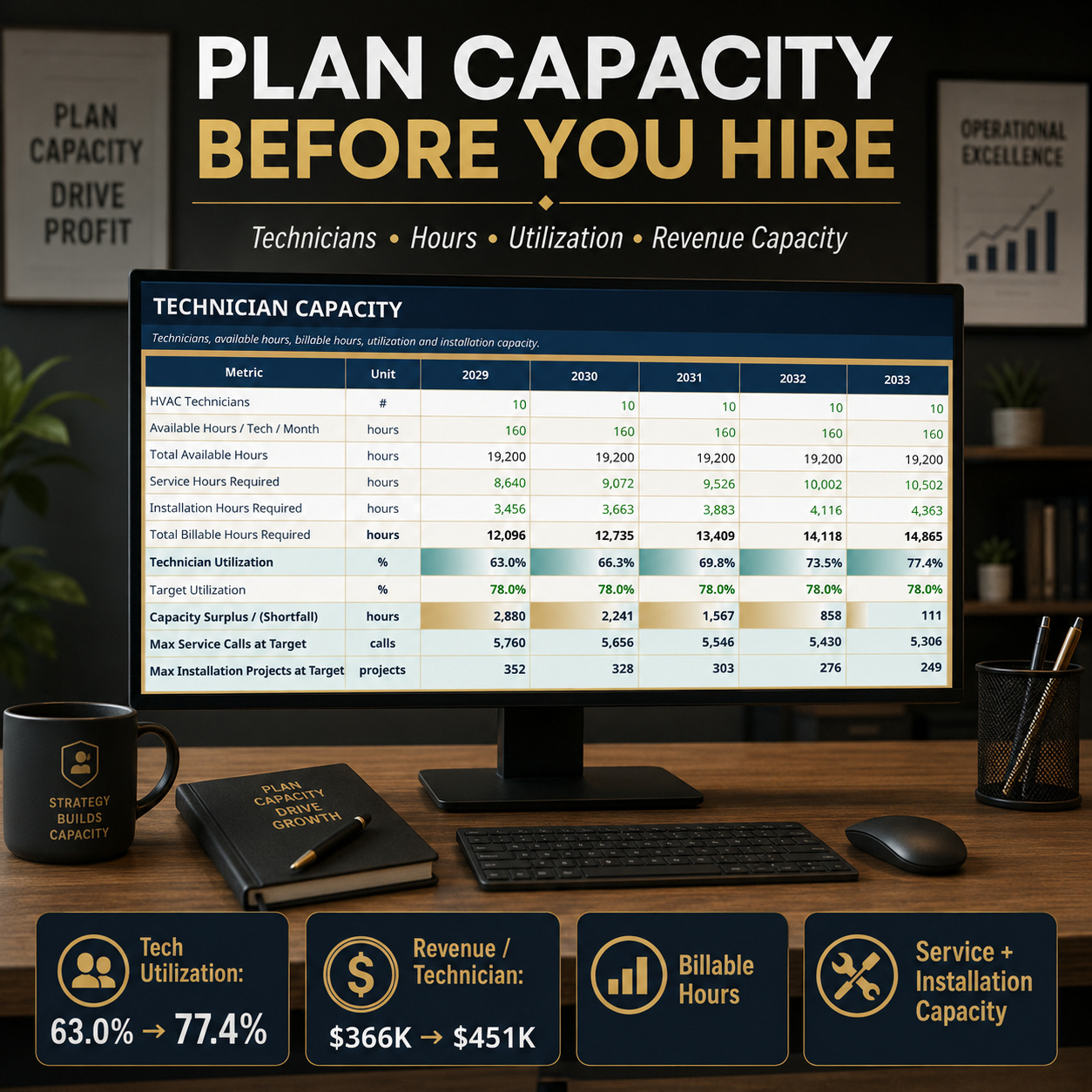
๐Ÿ‘จโ€๐Ÿ”ง TECHNICIAN CAPACITY

The dedicated capacity model evaluates whether the planned workload is operationally achievable.

Review:

โœ… HVAC Technician Headcount โœ… Available Hours per Technician โœ… Total Available Hours โœ… Service Hours Required โœ… Installation Hours Required โœ… Total Billable Hours Required โœ… Technician Utilization โœ… Target Utilization โœ… Capacity Surplus / Shortfall โœ… Maximum Service Calls at Target Utilization โœ… Maximum Installation Projects at Target Utilization

This provides a transparent link between sales growth, workload, technician resources, and capacity pressure.


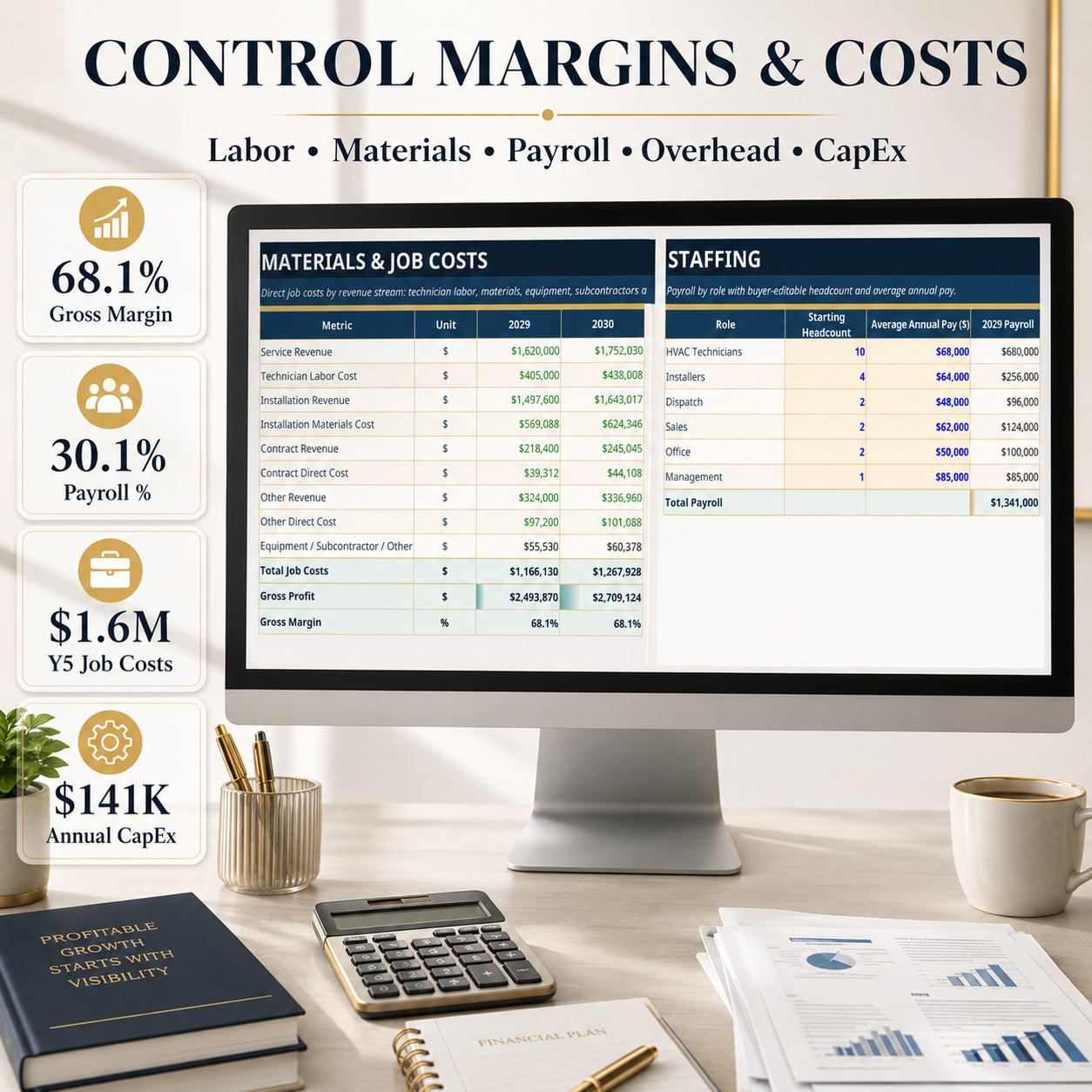
๐Ÿงฐ MATERIALS, JOB COSTS & STAFFING

Direct job-cost planning covers service labor, installation materials, maintenance-contract costs, and costs associated with other revenue.

Staffing planning includes:

โœ… HVAC Technicians โœ… Installers โœ… Dispatch โœ… Sales โœ… Office โœ… Management

Users can plan headcount, compensation, payroll, and annual wage development across the forecast period.


๐Ÿš VEHICLES, EQUIPMENT & OPERATING EXPENSES

Plan the operational asset base and recurring overhead, including service vans, tools, diagnostic equipment, warehouse equipment, IT, replacements, and other equipment requirements.

Operating expenses are modeled separately for greater transparency.


๐Ÿ—๏ธ CAPEX, DEPRECIATION & DEBT

Capital expenditure, depreciation, existing debt, interest expense, and principal repayments are linked into the financial statements.

This allows investments and financing decisions to flow through profitability, the balance sheet, cash flow, and liquidity.


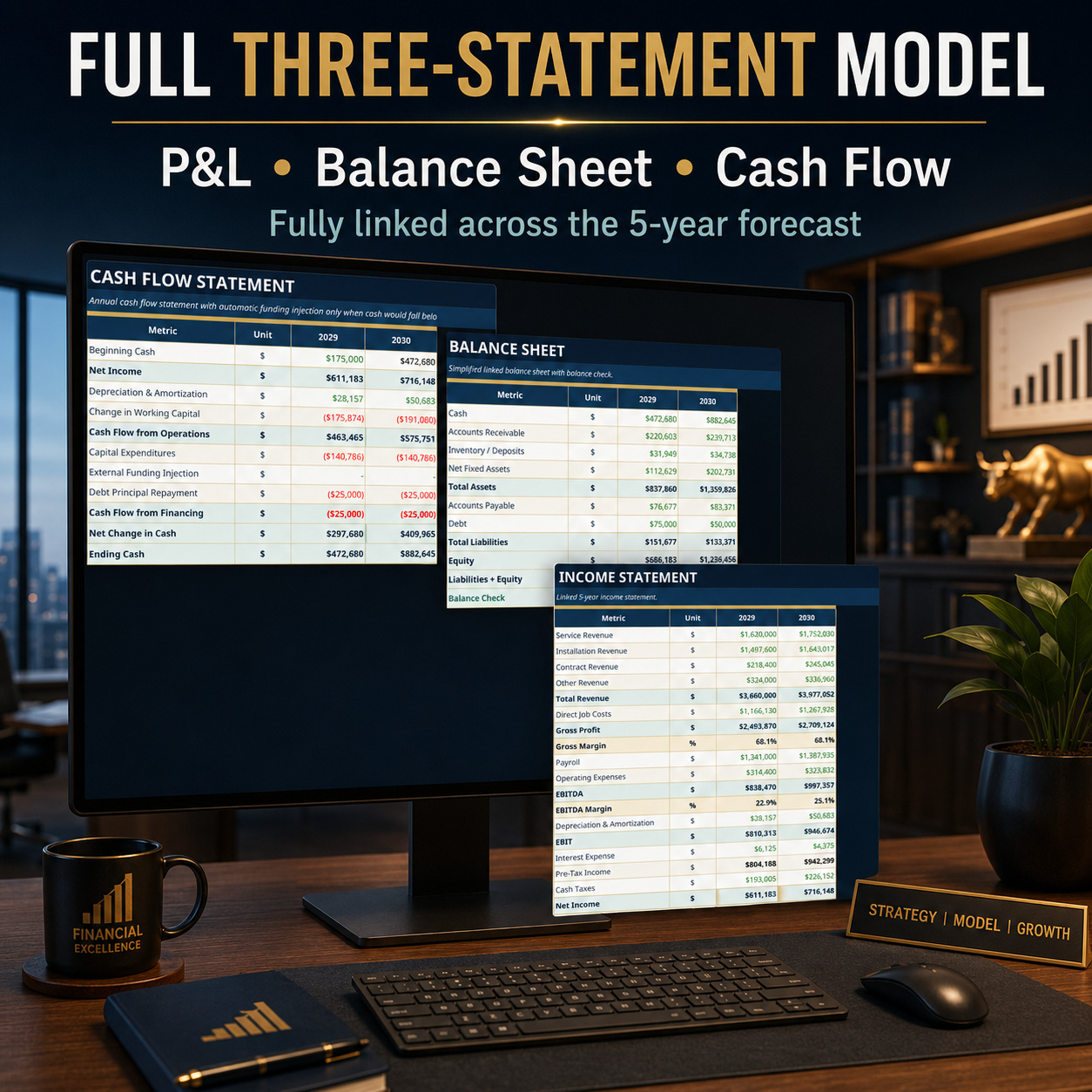
๐Ÿงพ FULL THREE-STATEMENT FINANCIAL MODEL

The workbook integrates:

โœ… Income Statement โœ… Balance Sheet โœ… Cash Flow Statement

The operating schedules connect revenue, direct costs, payroll, OPEX, CapEx, depreciation, working capital, debt, taxes, and financing into one structured model.

A Balance Check supports model QA and financial consistency.


๐Ÿ“… MONTHLY + FIVE-YEAR FORECAST

The workbook includes:

โœ… Monthly Forecast โ€” Year 1 โœ… Annual Forecast โ€” Years 1โ€“5 โœ… Illustrative forecast period 2029โ€“2033

The five-year forecast summarizes Revenue, Gross Profit, Gross Margin, Payroll, Payroll %, EBITDA, EBITDA Margin, Net Income, Ending Cash, and Funding Required.


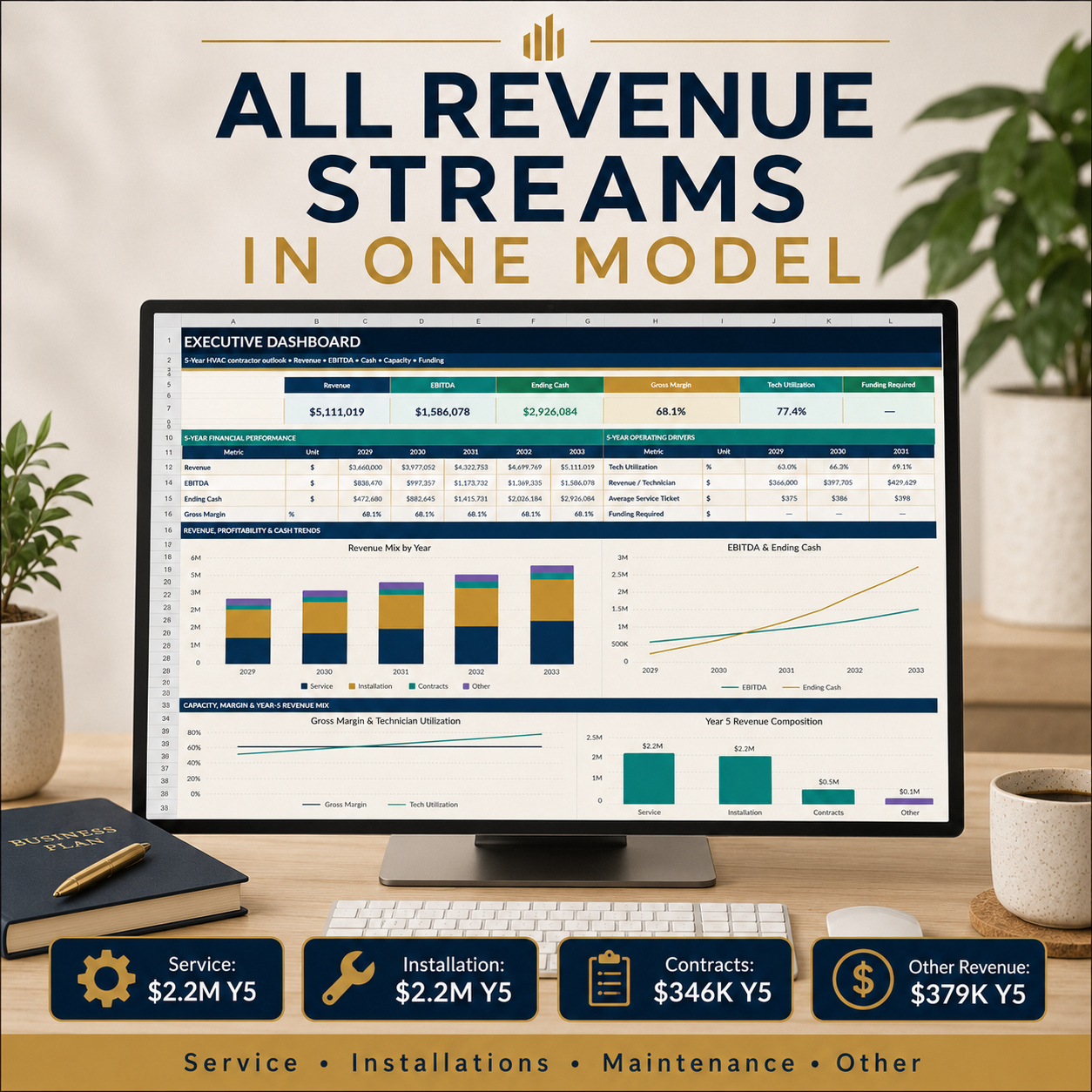
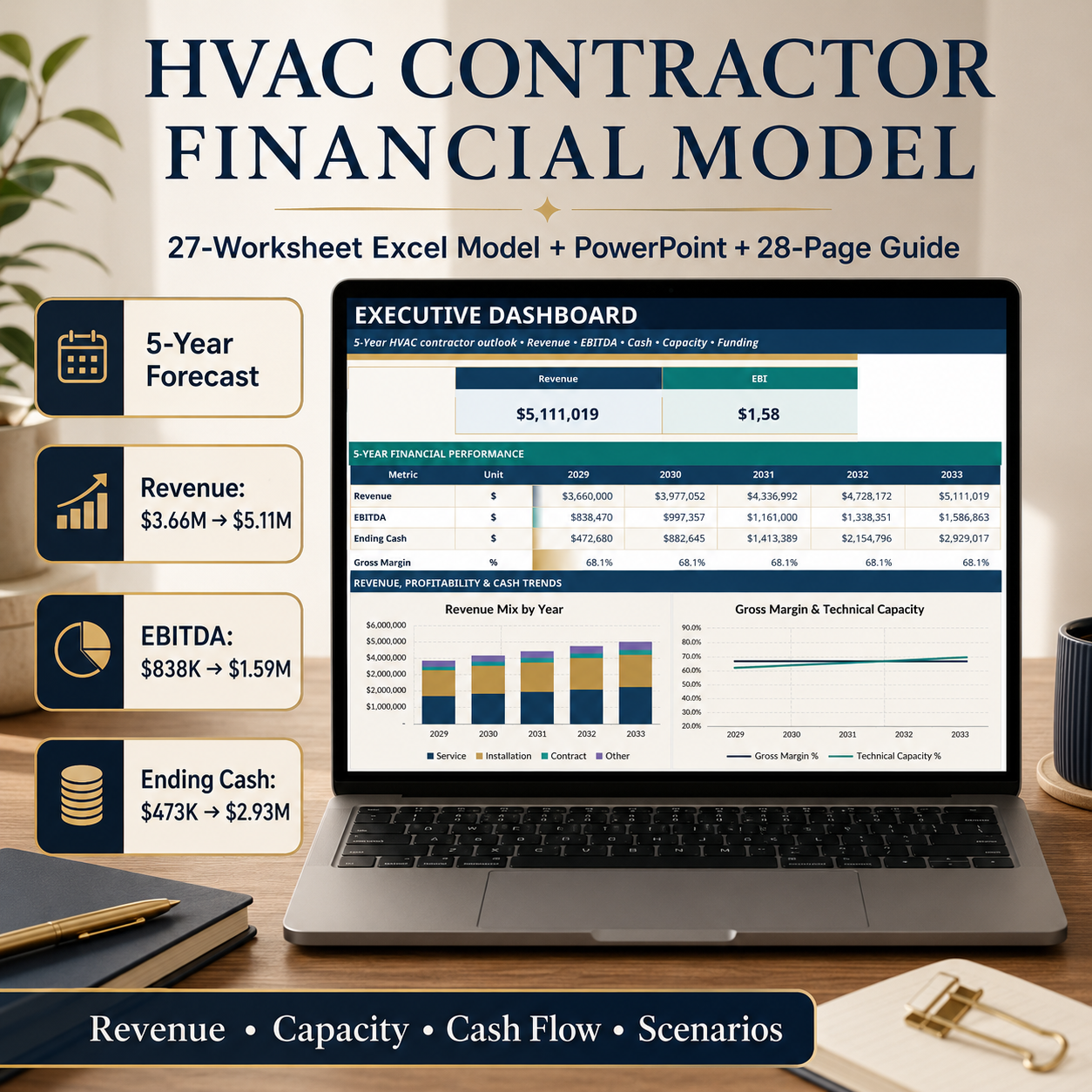
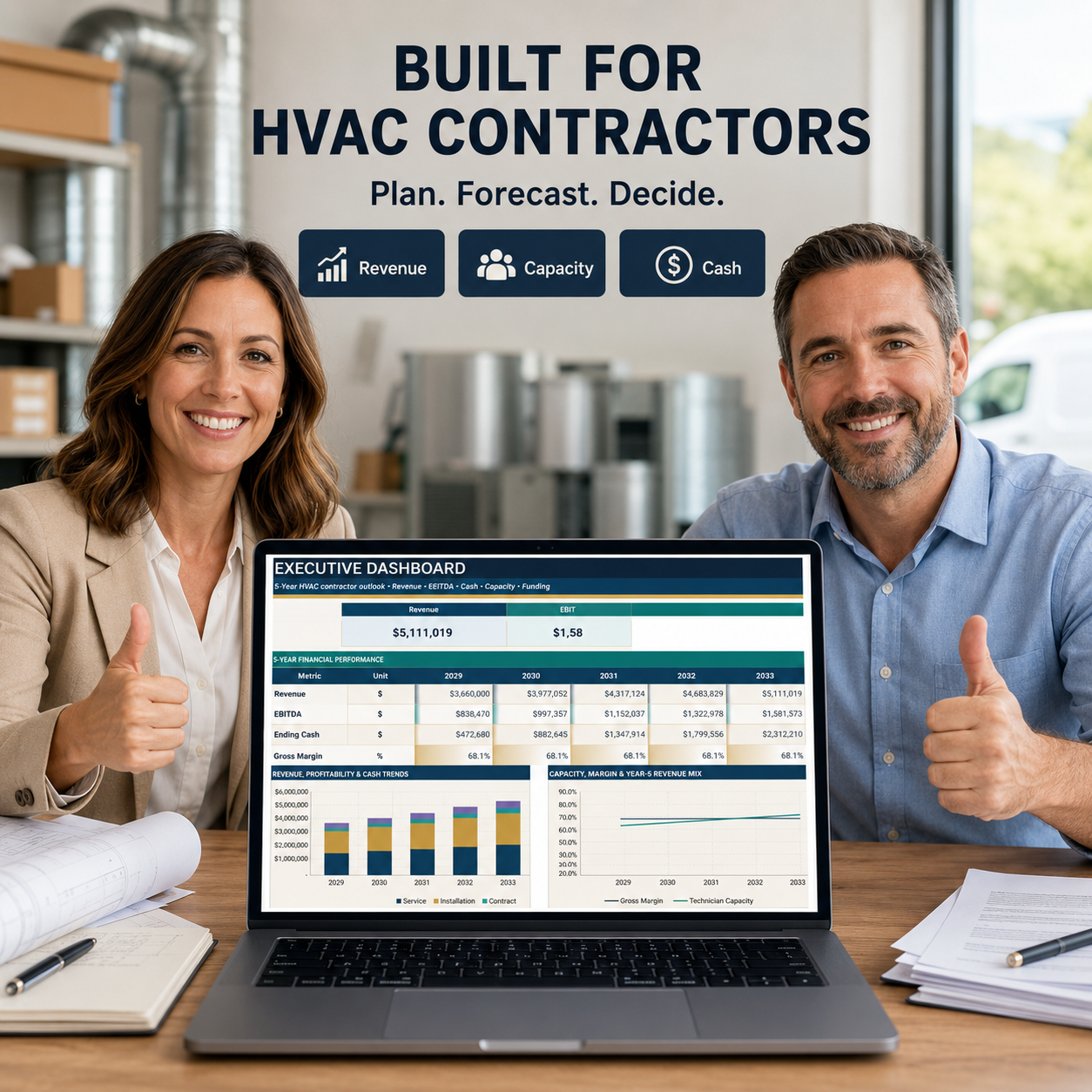
๐Ÿ“Š EXECUTIVE DASHBOARD & KPI ANALYSIS

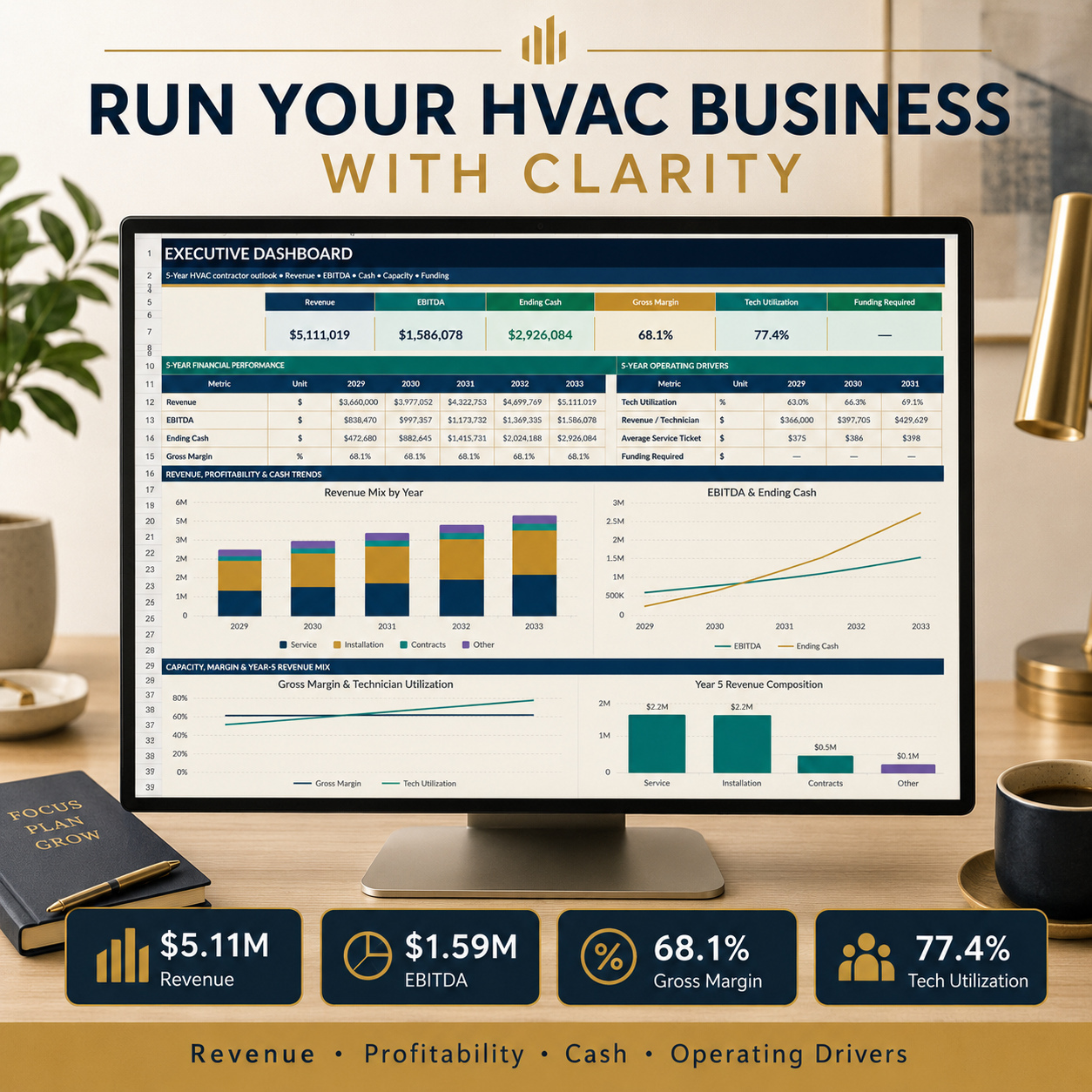
The Executive Dashboard highlights six key management indicators:

๐Ÿ’ฐ Revenue ๐Ÿ“ˆ EBITDA ๐Ÿ’ต Ending Cash ๐Ÿ’Ž Gross Margin ๐Ÿ‘จโ€๐Ÿ”ง Technician Utilization ๐Ÿฆ Funding Required

The dashboard also provides five-year financial and operating tables covering Revenue, EBITDA, Ending Cash, Gross Margin, Technician Utilization, Revenue per Technician, Average Service Ticket, and Funding Required.

Four integrated charts visualize:

๐Ÿ“Š Revenue Mix by Year ๐Ÿ’ต EBITDA & Ending Cash ๐Ÿ‘จโ€๐Ÿ”ง Gross Margin & Technician Utilization ๐Ÿ’ฐ Year 5 Revenue Composition

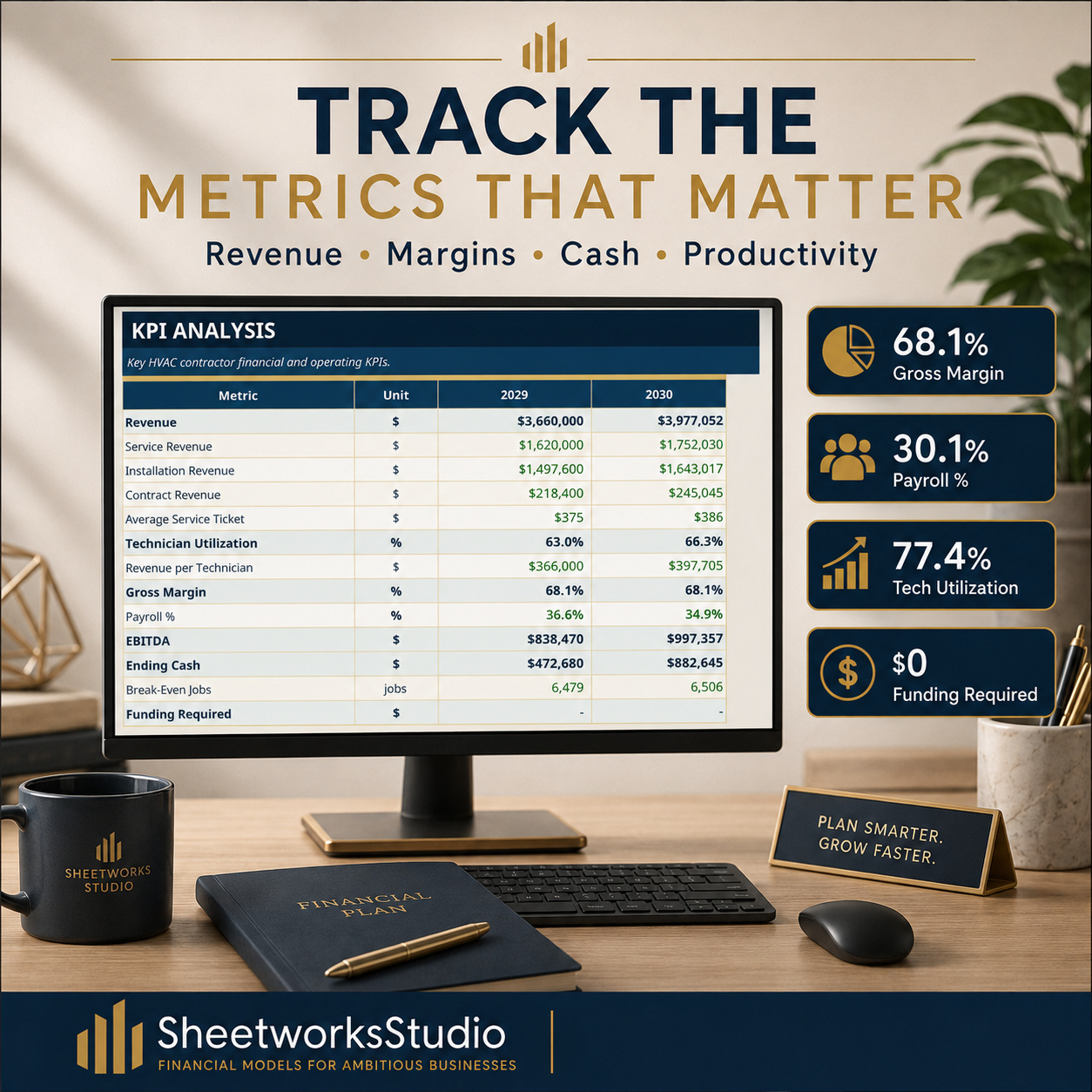
The dedicated KPI Analysis expands the review with:

โœ… Service Revenue โœ… Installation Revenue โœ… Contract Revenue โœ… Average Service Ticket โœ… Technician Utilization โœ… Revenue per Technician โœ… Gross Margin โœ… Payroll % โœ… EBITDA โœ… Ending Cash โœ… Break-Even Activity โœ… Funding Required


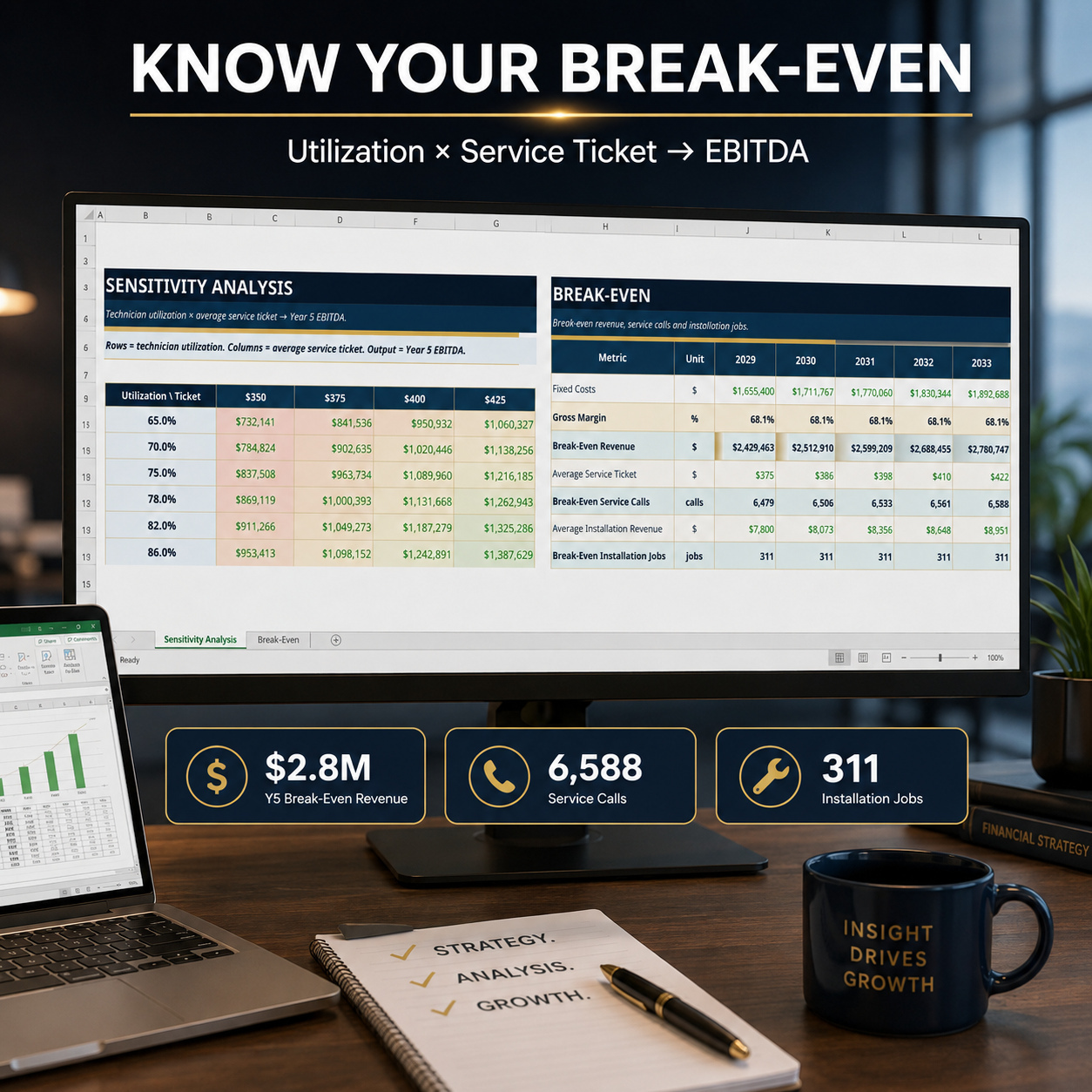
๐ŸŽฏ BREAK-EVEN ANALYSIS

The model translates fixed costs and gross margin into clear operating thresholds.

Analyze:

โœ… Fixed Costs โœ… Gross Margin โœ… Break-Even Revenue โœ… Average Service Ticket โœ… Break-Even Service Calls โœ… Average Installation Revenue โœ… Break-Even Installation Jobs

This helps users understand the level of activity required under their own revenue and cost assumptions.


๐Ÿ”„ DOWNSIDE โ€ข BASE CASE โ€ข UPSIDE

Compare three transparent scenarios using different assumptions for:

โœ… Service Volume โœ… Average Service Ticket โœ… Installation Volume โœ… Materials Cost % โœ… Payroll

Outputs show the impact on:

๐Ÿ“ˆ Year 5 EBITDA ๐Ÿ’ต Year 5 Ending Cash

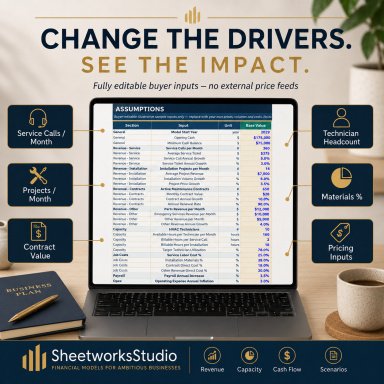
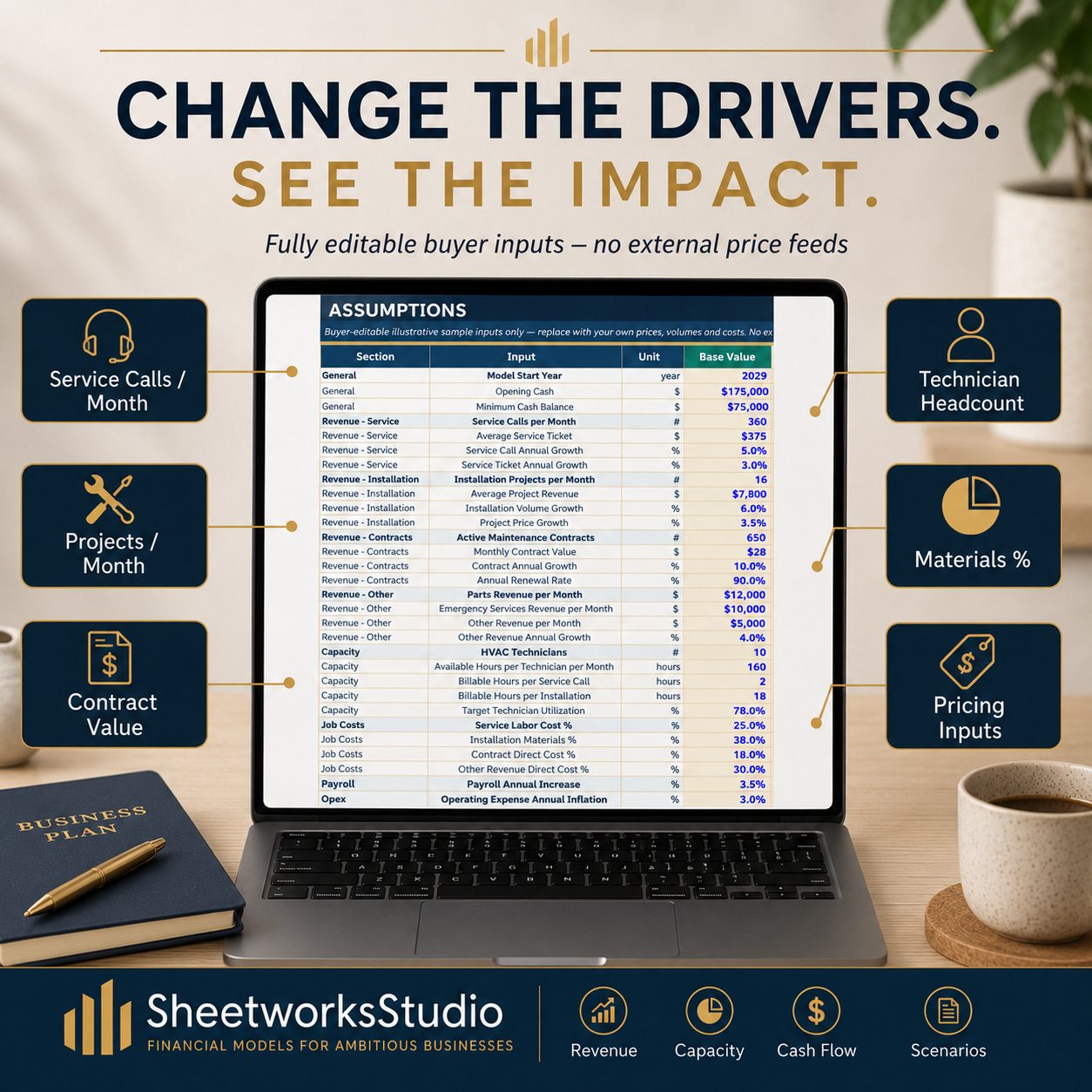
Additional operating assumptions, including technician resources, remain editable within the broader model assumptions.


๐ŸŒก๏ธ TECHNICIAN UTILIZATION ร— SERVICE TICKET SENSITIVITY

The Sensitivity Analysis evaluates how different combinations of:

Technician Utilization ร— Average Service Ticket

may influence Year 5 EBITDA.

The matrix allows users to compare utilization levels from 65% to 86% against service-ticket assumptions ranging from $350 to $475 in the included illustrative example.


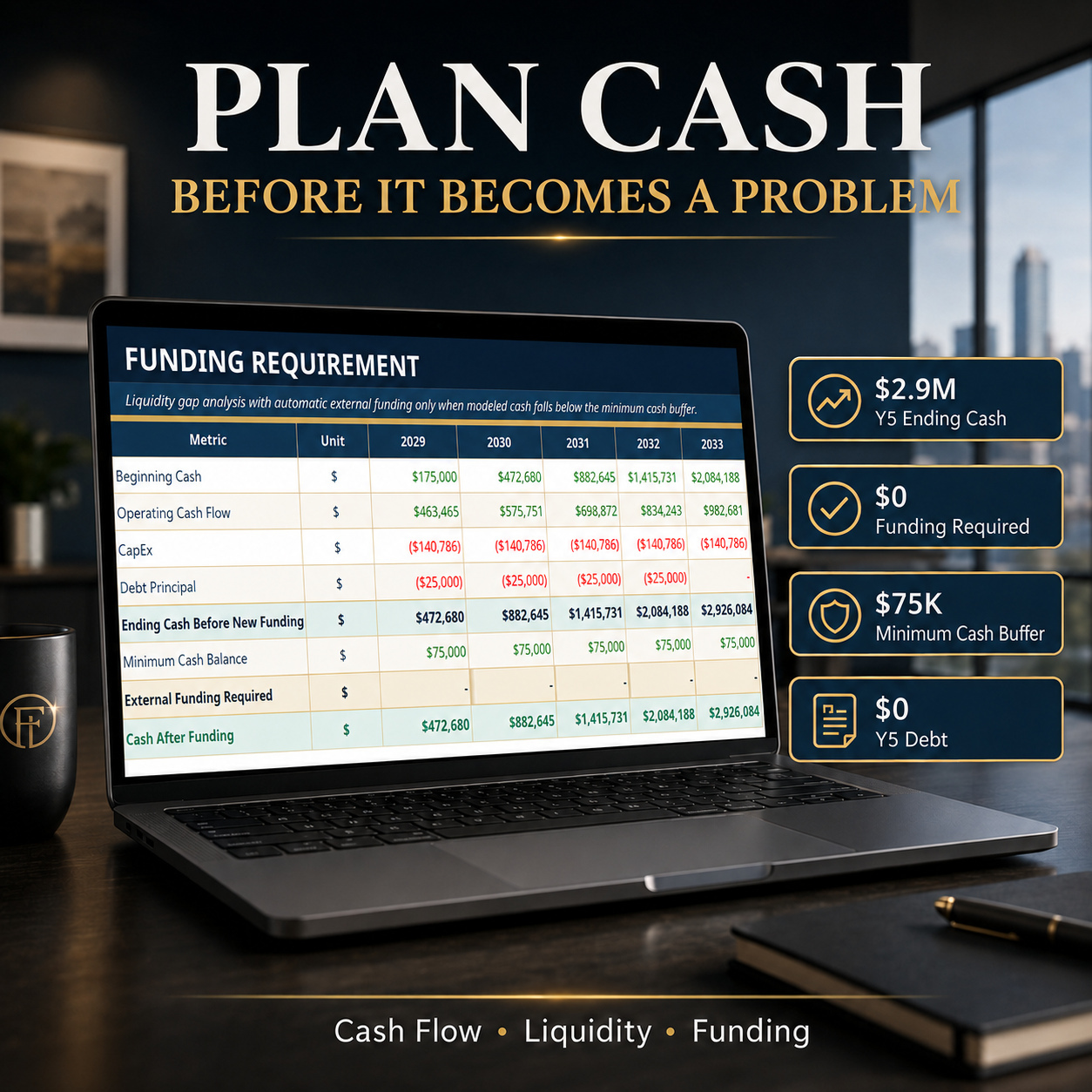
๐Ÿฆ FUNDING REQUIREMENT

The liquidity analysis evaluates:

โœ… Beginning Cash โœ… Operating Cash Flow โœ… CapEx โœ… Debt Principal โœ… Ending Cash Before Funding โœ… Minimum Cash Balance โœ… External Funding Required โœ… Cash After Funding

External funding is calculated only when modeled liquidity would otherwise fall below the defined minimum cash buffer.


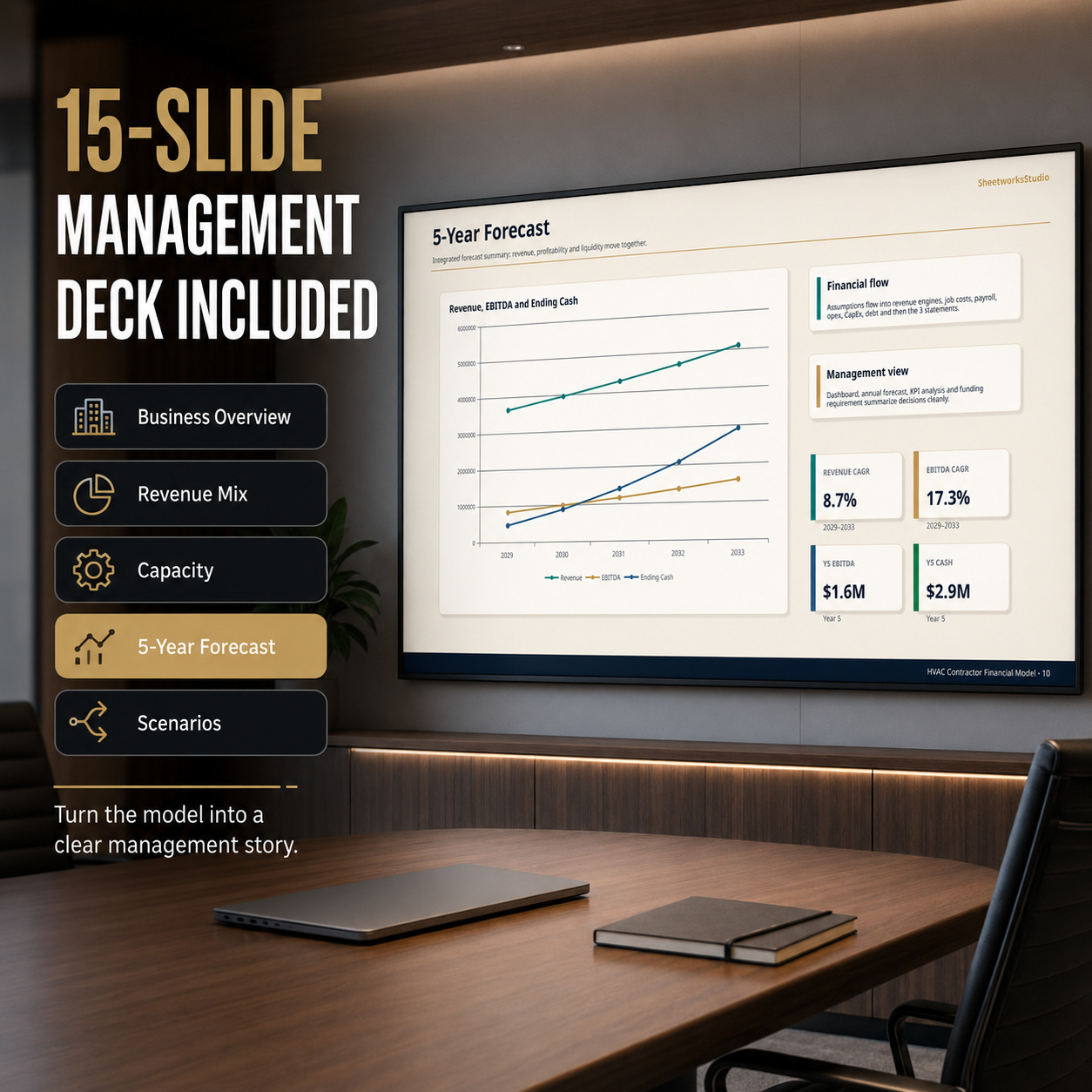
๐ŸŽค 15-SLIDE INVESTOR / MANAGEMENT POWERPOINT

The included professional deck covers areas including:

๐Ÿ”ง HVAC Business Overview โš™๏ธ Workbook Architecture ๐Ÿ’ฐ Revenue Mix ๐Ÿ”ง Service Calls ๐Ÿ—๏ธ Installation Projects ๐Ÿ” Maintenance Contracts ๐Ÿ‘จโ€๐Ÿ”ง Technician Capacity ๐Ÿงพ Cost Structure ๐Ÿ“Š 5-Year Forecast ๐Ÿ’Ž EBITDA & Margin Development ๐Ÿ’ต Cash & Funding ๐ŸŽฏ Break-Even & Sensitivity ๐Ÿ”„ Scenario Analysis โš ๏ธ Risks, QA & Buyer Responsibility

The presentation is suitable for internal management reviews, business planning, consulting engagements, financing preparation, and structured stakeholder discussions.


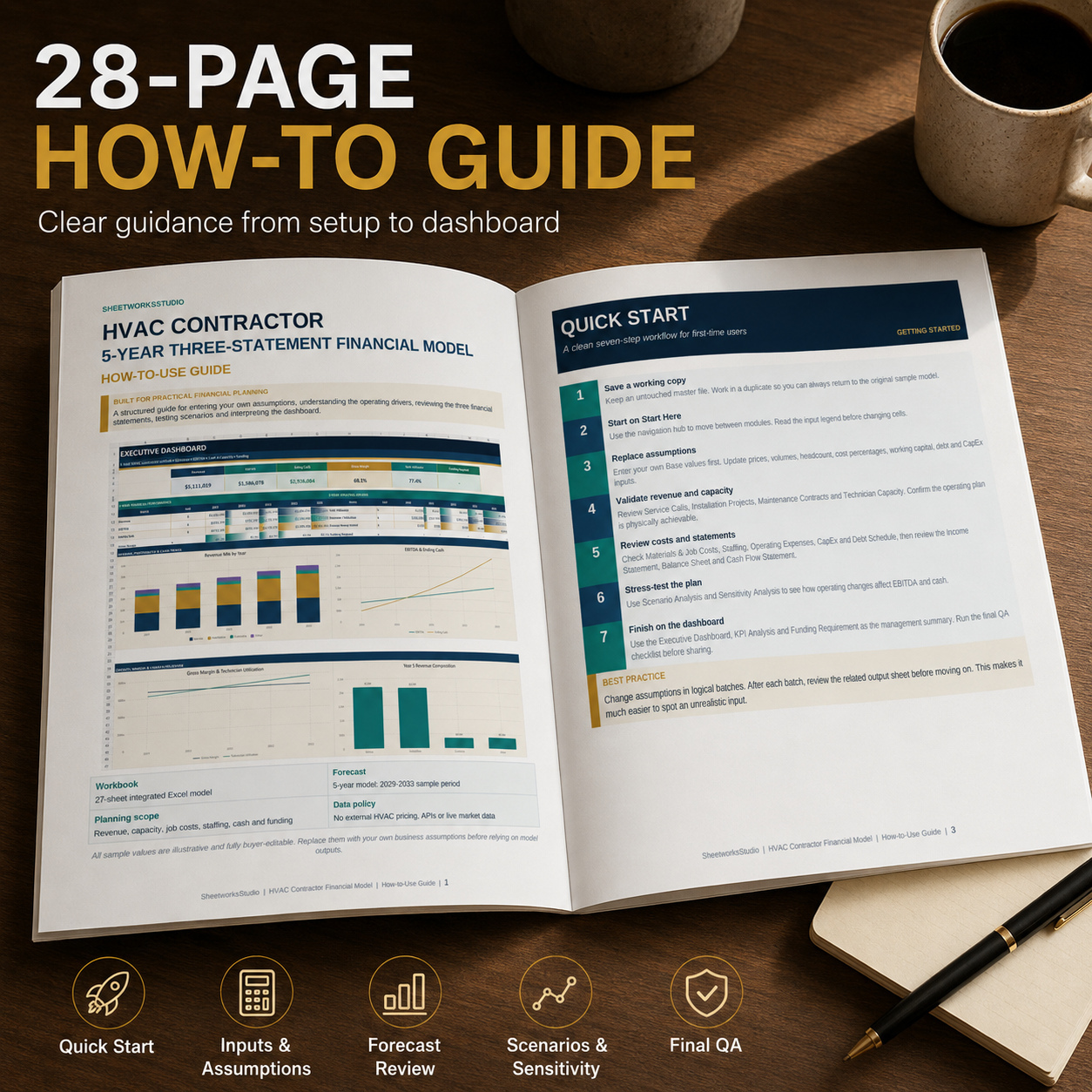
๐Ÿ“˜ 28-PAGE HOW-TO-USE GUIDE

The detailed PDF guide walks users through the entire model, including:

โœ… Quick Start โœ… 27-Sheet Workbook Map โœ… Input Legend & Editing Rules โœ… Assumptions โœ… Service Calls โœ… Installation Projects โœ… Maintenance Contracts & Other Revenue โœ… Technician Capacity โœ… Materials & Job Costs โœ… Staffing โœ… Vehicles, Equipment & OPEX โœ… CapEx, Depreciation & Debt โœ… Income Statement โœ… Balance Sheet โœ… Cash Flow Statement โœ… Monthly Forecast Year 1 โœ… Annual Forecast & KPI Analysis โœ… Break-Even โœ… Scenario Analysis โœ… Sensitivity Analysis โœ… Executive Dashboard โœ… Funding Requirement โœ… Google Sheets Usage โœ… Final QA Checklist โœ… Troubleshooting โœ… Buyer Responsibility


๐Ÿ’ป TECHNICAL COMPATIBILITY

โœ… Microsoft Excel (.xlsx) โœ… Microsoft PowerPoint (.pptx) โœ… PDF Guide โœ… Google Sheets import supported โœ… No macros or VBA โœ… No APIs โœ… No live market data โœ… No external material or industry pricing โœ… No external Excel data connections


๐Ÿ“Œ Microsoft Excel remains the reference environment. The workbook can be imported into Google Sheets, although formatting, charts, or certain visual elements may vary.


โš–๏ธ IMPORTANT DISCLAIMER

This product is an editable financial planning and business-modeling template. It does not contain technical HVAC instructions and does not provide external material prices, labor rates, or industry benchmarks.

All sample values are illustrative and should be replaced with business-specific service volumes, pricing, costs, staffing, tax, financing, capacity, and operating assumptions. The template does not constitute financial, tax, legal, investment, accounting, lending, HVAC technical, or professional business advice. Forecasts and model outputs do not guarantee future performance, profitability, financing availability, or business outcomes.


๐Ÿ“Š This complete planning system brings HVAC revenue drivers, technician capacity, cost structure, financial forecasting, break-even analysis, liquidity, and funding requirements into one connected framework. It is designed to help owners, managers, consultants, and finance professionals evaluate growth assumptions more clearly, identify potential capacity or financial pressure points, and prepare more structured management and financing discussions.

This Best Practice includes
1 HVAC Contractor Financial Model (.xlsx), 1 Investor / Management Deck (.pptx), 1 How-to-Use Guide (.pdf)

Acquire business license for $79.90

Add to cart

Add to bookmarks

Discuss

Further information

The objective of this model is to provide HVAC contractors, business owners, finance professionals, consultants, and management teams with a structured framework for connecting operational activity with financial performance, capacity, liquidity, and funding requirements.

Users can model service-call volume, average service-ticket values, installation projects, recurring maintenance contracts, technician utilization, direct job costs, staffing, operating expenses, vehicles and equipment, CapEx, working capital, debt, and financing assumptions within one connected planning system.

The model is designed to help users evaluate whether planned growth is operationally achievable, understand how service volume and pricing influence profitability, identify break-even activity levels, compare downside and upside scenarios, and assess future cash and potential funding requirements.

Its integrated statements, dashboard, KPI analysis, scenario tools, sensitivity matrix, and presentation deck also provide a consistent framework for recurring management reviews and structured financing or stakeholder discussions.

This model is particularly suitable for:

HVAC contractors
HVAC service businesses
Small and mid-sized HVAC companies
HVAC startups and founders
Established service companies
Business owners and operators
CFOs and finance managers
Management teams
Management consultants
HVAC business consultants
Fractional CFOs
Business planning professionals

It is especially useful when developing a five-year operating plan, forecasting service and installation revenue, reviewing technician capacity, planning payroll and overhead, evaluating equipment and CapEx requirements, calculating break-even activity, comparing business scenarios, or assessing future liquidity and funding needs.

This model does not replace accounting software, field-service management systems, dispatch software, ERP platforms, specialist FP&A software, lender underwriting, or professional business valuations.

It does not contain technical HVAC instructions, equipment specifications, automatic supplier prices, current labor rates, external material pricing, industry benchmarks, APIs, accounting feeds, bank connections, or live operational data.

The template does not constitute financial, investment, accounting, tax, legal, lending, HVAC technical, or professional business advice.

All outputs depend on the assumptions entered by the user. Business-specific pricing, labor conditions, material costs, regulations, taxes, financing arrangements, and other important decisions should be independently reviewed with appropriately qualified professionals where necessary.


0.0 / 5 (0 votes)

please wait...