Publication number: ELQ-25521-1
View all versions & Certificate

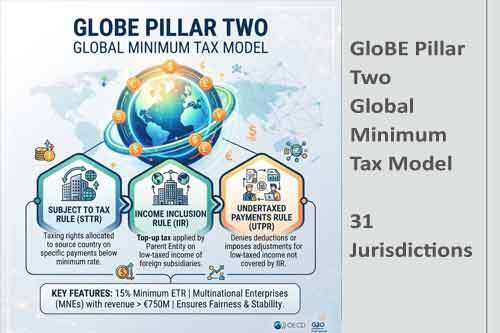
GloBE Pillar Two Global Minimum Tax Model in Excel 30 Jurisdictions
A fully integrated, dynamic model built to calculate, allocate, & report global minimum tax exposure under OECD Pillar 2 rules. 30-jurisdiction architecture.
 by AllFinancialModels
AllFinancialModels offer a curated selection of high-quality yet financial model templates designed to support a wide range of business needs.Follow
Built for multinational enterprises, tax advisory firms, and finance leaders, this institutional-grade financial model provides an end-to-end calculation engine for the 15% Global Minimum Tax (GloBE).
Designed around a robust 31-entity, 30-jurisdiction architecture, the model handles complex mechanics—from entity-level financial inputs and deferred tax recasts to the full QDMTT to IIR to UTPR collection waterfall. Fully auditable and structured with automated integrity checks, it turns a complex compliance burden into a streamlined, board-ready workflow.
Key Features & Model Architecture
The workbook is organized into six functional groupings (Control, Master Data, Input, Calculation Engine, Elections, and Reporting), mapped seamlessly across 26 fully linked tabs:
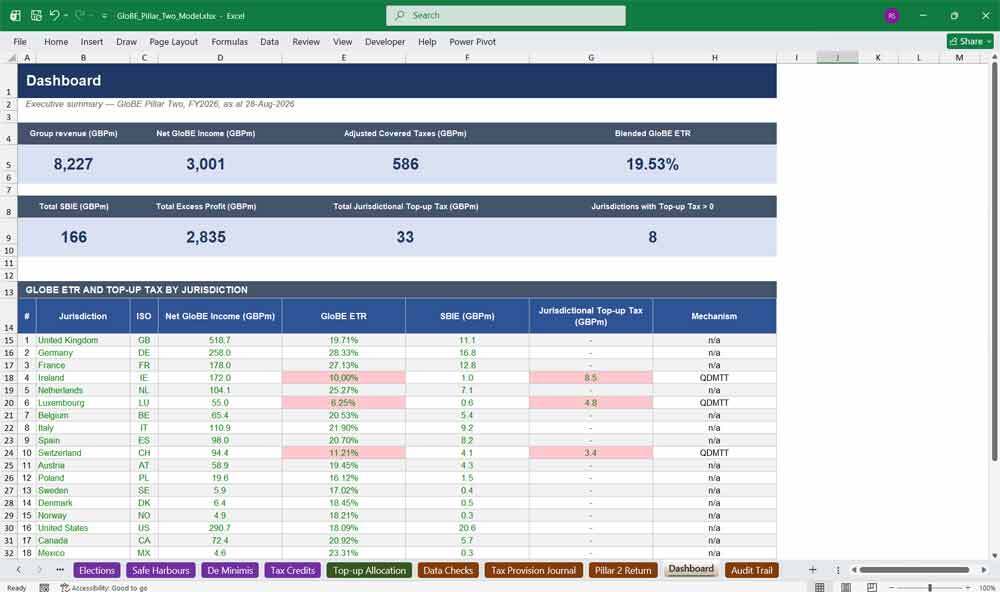
Executive Dashboard: Get a real-time board summary featuring 8 core KPI tiles (including a blended group ETR of 19.5%, £8,227m group revenue, and total Top-up Tax exposure) paired with an interactive 30-jurisdiction breakdown.
Complete Collection Waterfall: Automated sequencing that first intercepts tax locally via QDMTT, pushes residual liability up to the UPE via IIR, and backstops any minority-interest exposure through the UTPR mechanism.
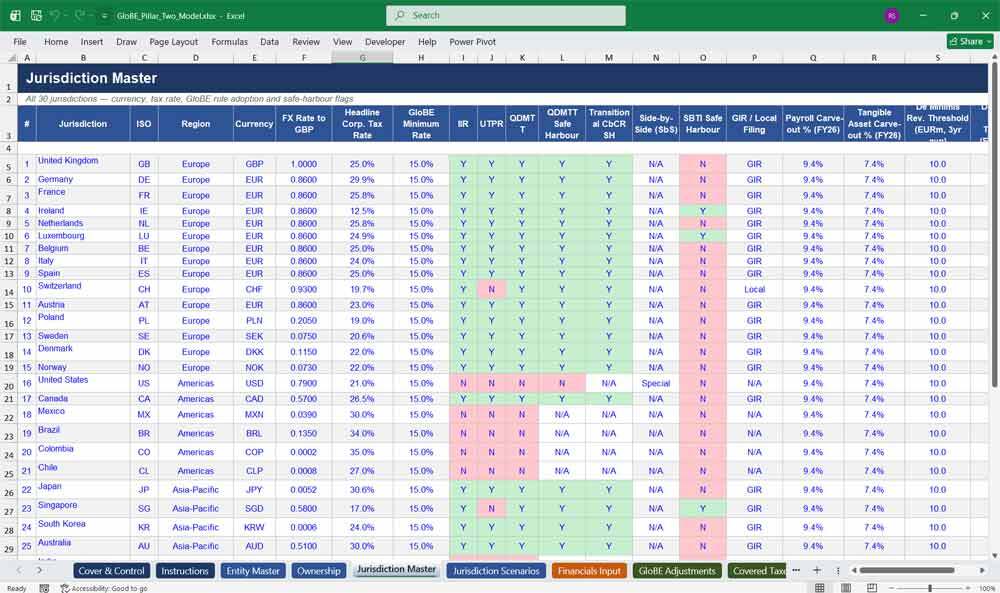
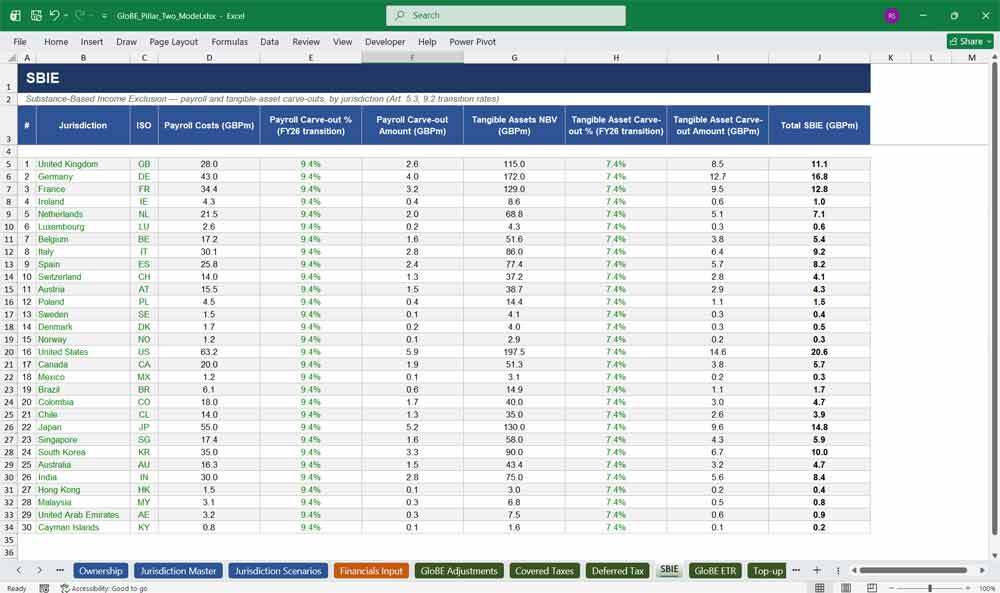
Substance-Based Income Exclusion (SBIE): Calculates jurisdictional exclusions using FY2026 payroll (9.4%) and tangible asset (7.4%) transition carve-outs to shelter excess profits.
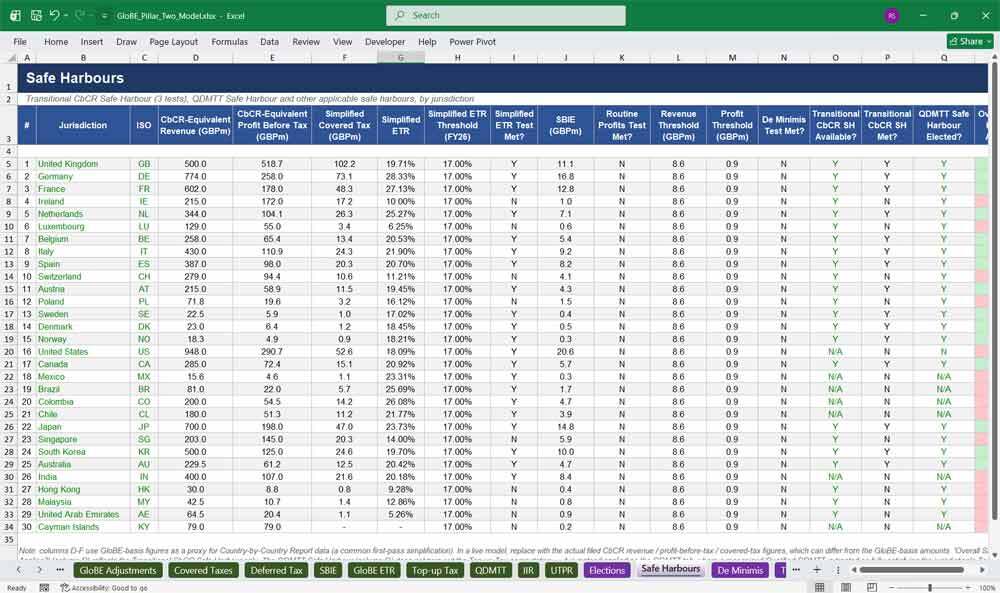
Safe Harbours & Elections Log: Pre-built testing for Transitional CbCR Safe Harbours (Simplified ETR at or above 17%, routine profits, and De Minimis) and a central log tracking 9 major group elections with OECD Article references.
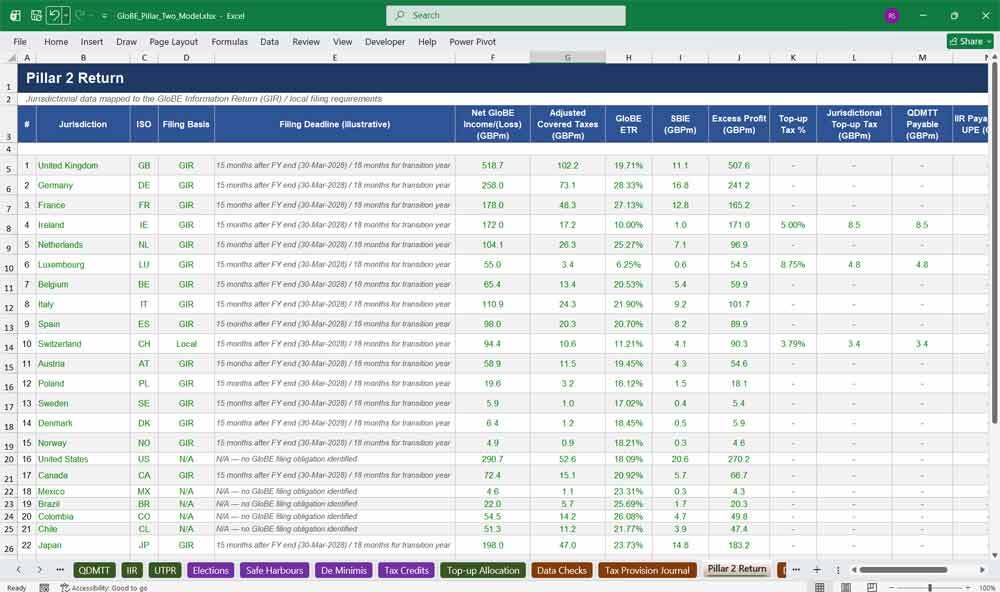
Audit-Ready Output & Journal Entries: Automatically generates complete Tax Provision Journal Entries (split by QDMTT, IIR, and UTPR) and structures the data for the GloBE Information Return (GIR).
1. Control Group
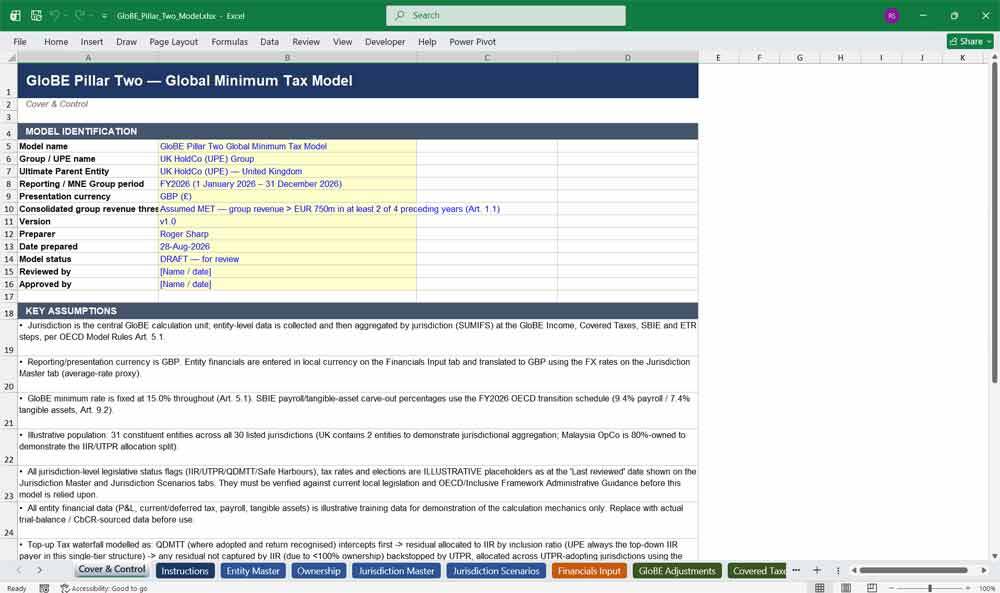
Cover & Control (Tab 1): Sets model identity, FY2026 reporting parameters, 8 core assumptions, and sign-off blocks.
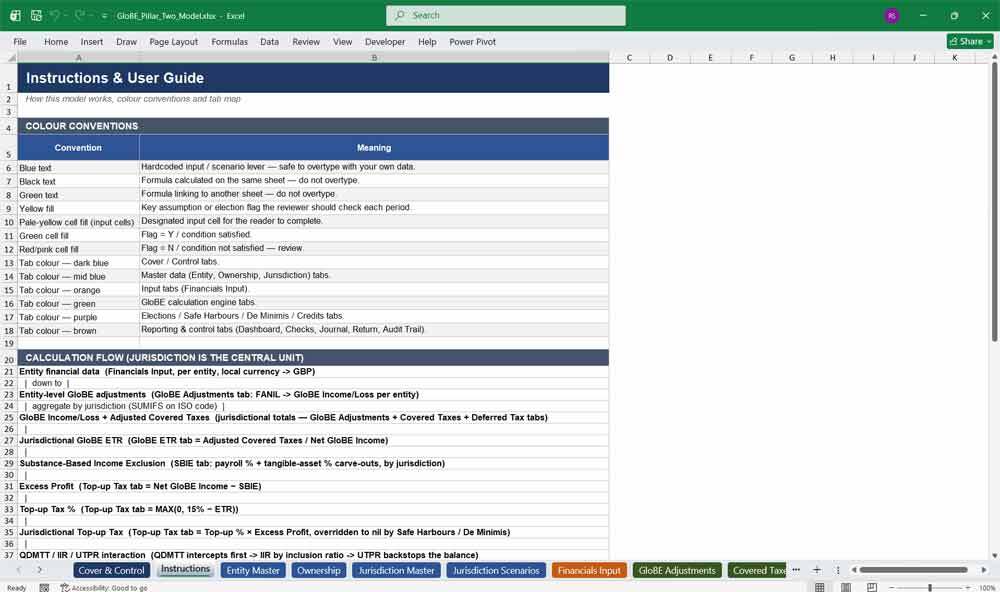
Instructions (Tab 2): User guide explaining color conventions, calculation flows, and tab index.
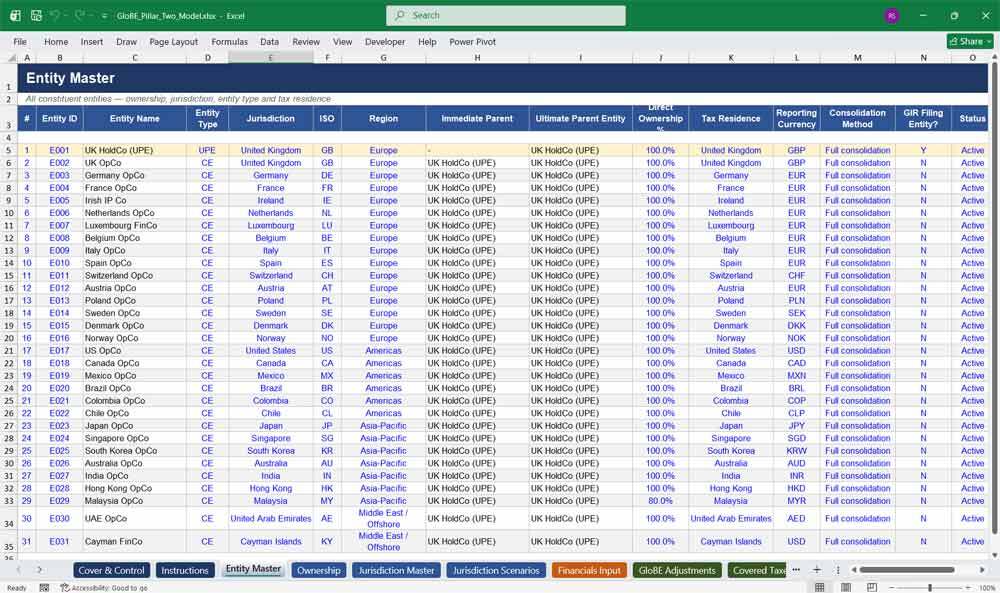
Entity Master (Tab 3): Lists all 31 constituent entities, ownership structures, and tax residences across 30 countries.
Ownership (Tab 4): Traces ownership chains to the UPE and calculates entity-level IIR inclusion ratios.
Jurisdiction Master (Tab 5): Master reference for 30 jurisdictions covering FX rates, headline tax rates, and rule adoptions.
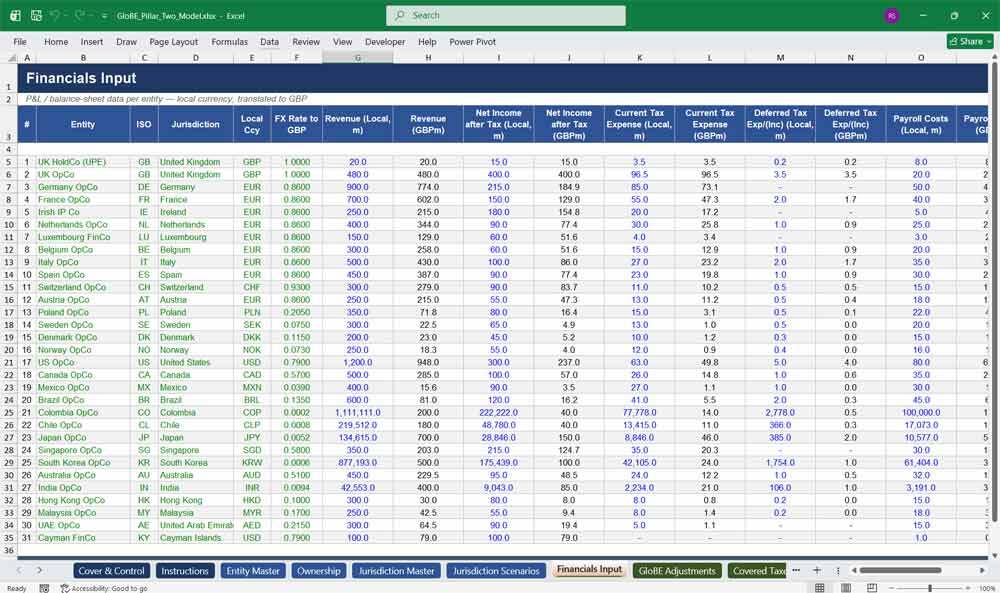
Financials Input (Tab 6): Entity-level P&L and tax entry point with automated local-currency to GBP translation.
GloBE Adjustments (Tab 7): Reconciles accounting net income to GloBE income under Art. 3.2 with 6 optional adjustment columns.
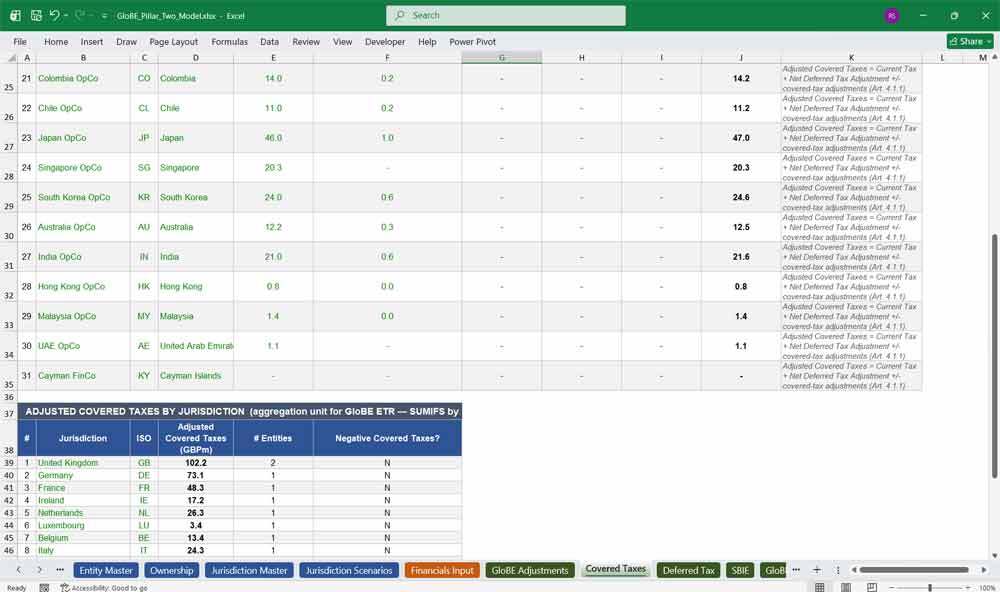
Covered Taxes (Tab 8): Builds Adjusted Covered Taxes per entity and aggregates by jurisdiction.
Deferred Tax (Tab 9): Recasts accounting deferred tax to the 15% minimum rate under Art. 4.4.
SBIE (Tab 10): Computes substance-based income exclusions at the jurisdiction level using transition carve-outs.
GloBE ETR (Tab 11): Produces headline ETRs under Art. 5.1 and flags jurisdictions below the 15% floor.
Top-up Tax (Tab 12): Converts excess profit into jurisdictional top-up tax and applies safe harbour overrides.
QDMTT (Tab 13): Intercepts top-up tax locally where Qualified Domestic Minimum Top-up Taxes are adopted.
IIR (Tab 14): Allocates residual top-up tax to the UPE by inclusion ratio (excluding self-charging).
UTPR (Tab 15): Backstops uncaptured liability across adopting jurisdictions via the 50/50 payroll/asset formula.
Elections (Tab 16): Central log tracking nine group elections with dates and OECD Article references.
Safe Harbours (Tab 17): Evaluates Transitional CbCR Safe Harbour tests (Simplified ETR, SBIE, De Minimis).
De Minimis (Tab 18): Tests standalone Art. 5.5 jurisdictional revenue and income exclusions.
Tax Credits (Tab 19): Structures QRTC, non-qualified, and marketable transferable credit categories.
Top-up Allocation (Tab 20): Pushes final top-up tax back down to constituent entities pro-rata to income share.
Data Checks (Tab 21): Runs 17 automated integrity tests rolling up to a master PASS/FAIL status banner.
Tax Provision Journal (Tab 22): Generates illustrative Dr/Cr accounting entries with built-in balance checks.
Pillar 2 Return (Tab 23): Compiles full jurisdictional data into GloBE Information Return and local-form shapes.
Dashboard (Tab 24): Executive summary tiles and dynamic 30-jurisdiction scan table.
Audit Trail (Tab 25): Documents key modeling decisions, overrides, and scenario designs.
Jurisdiction Scenarios (Tab 26): Flexible scenario-testing layer for alternative group structures and rate changes.
Dynamic Calculations: All downstream engine tabs link dynamically back to the Entity and Jurisdiction Masters.
Built-In Quality Control: Automated checks ensure data integrity across cross-sheet formulas before you present numbers to stakeholders or auditors.
Time-Saving Compliance: Pre-structured for FY2026 transitional rules, saving hours in custom spreadsheet development.
This Best Practice includes
Excel Financial Model
Further information
Saves you from spending a week creating one yourself