ECL IFRS 9

Expected Credit Loss (ECL) is a forward-looking estimate of potential losses from credit risk over the life of a financial asset, required under IFRS 9.

Description

Expected Credit Loss (ECL) is a key concept introduced under IFRS 9 – Financial Instruments, which replaced the previous "incurred loss" model used in IAS 39. Unlike the old approach that required evidence of impairment (such as a default event) before recognizing credit losses, the ECL model is forward-looking, meaning it estimates and recognizes credit losses before a default actually occurs.

The ECL model is designed to provide a more accurate and timely reflection of credit risk by considering a combination of historical loss experience, current conditions, and reasonable and supportable forecasts of future economic conditions. It applies to a wide range of financial assets, including trade receivables, loans, debt securities, and off-balance sheet exposures such as loan commitments and financial guarantees.


Under IFRS 9, entities must assess whether there has been a significant increase in credit risk (SICR) since initial recognition. Based on this assessment, ECL is measured using one of two approaches:

  1. 12-month ECL – if credit risk has not increased significantly.

  2. Lifetime ECL – if credit risk has increased significantly or if the asset is credit-impaired.

The ECL model improves transparency and provides stakeholders with better insight into the credit risk profile and risk management strategies of an entity. It is particularly important for banks, financial institutions, and any business with significant receivables exposure.

This Best Practice includes
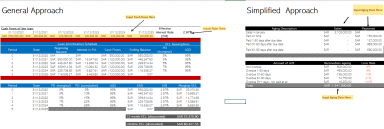
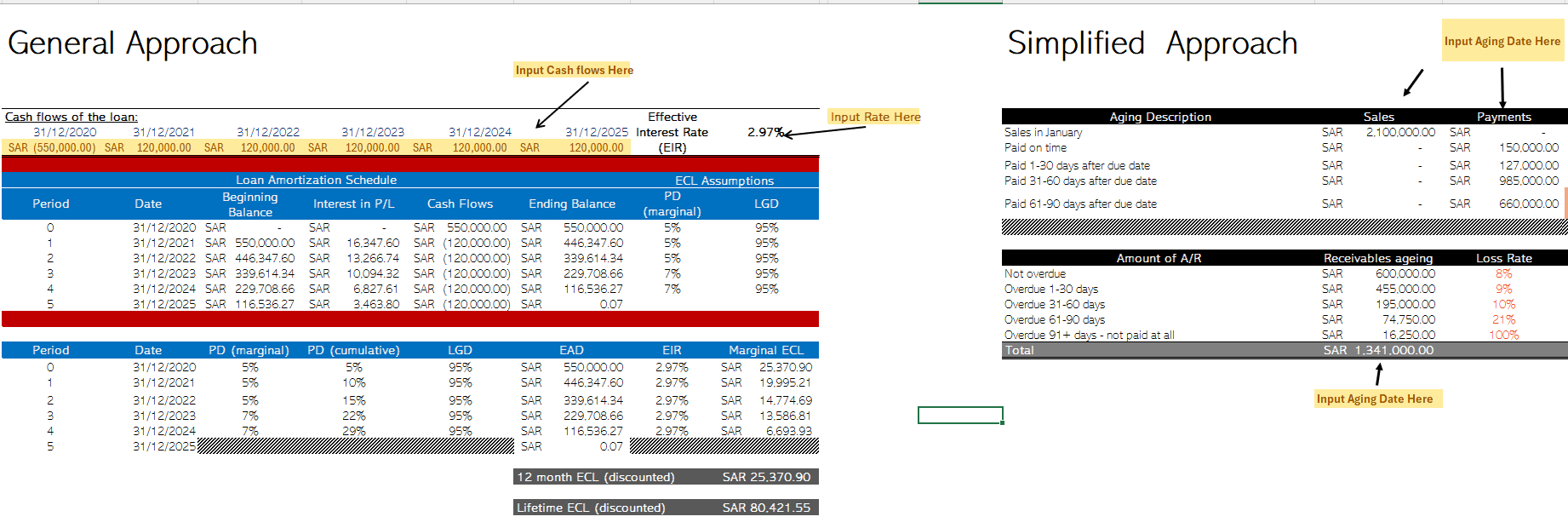
Excel Sheet Calcualte the ECL

Mo ModelPro offers you this Best Practice for free!

download for free

Add to bookmarks

Discuss


4.5 / 5 (4 votes)

please wait...