Discounted Cashflow (DCF) with Scenario Analysis
Originally published: 12/06/2026 12:13
Publication number: ELQ-26613-1
View all versions & Certificate
certified

Discounted Cashflow (DCF) with Scenario Analysis

The discounted cash flow valuation is an intrinsic valuation methodology.

Description
Thediscounted cash flow valuation is an intrinsic valuation methodology. Itincorporates the future free cash flow projections of the business to determinethe present value of the business. The cash flows are discounted to the presentusing the weighted average cost of capital (WACC).

Key Assumptions
Macro Assumptions: Currency, GDP growth rate, inflation rate, interest policy
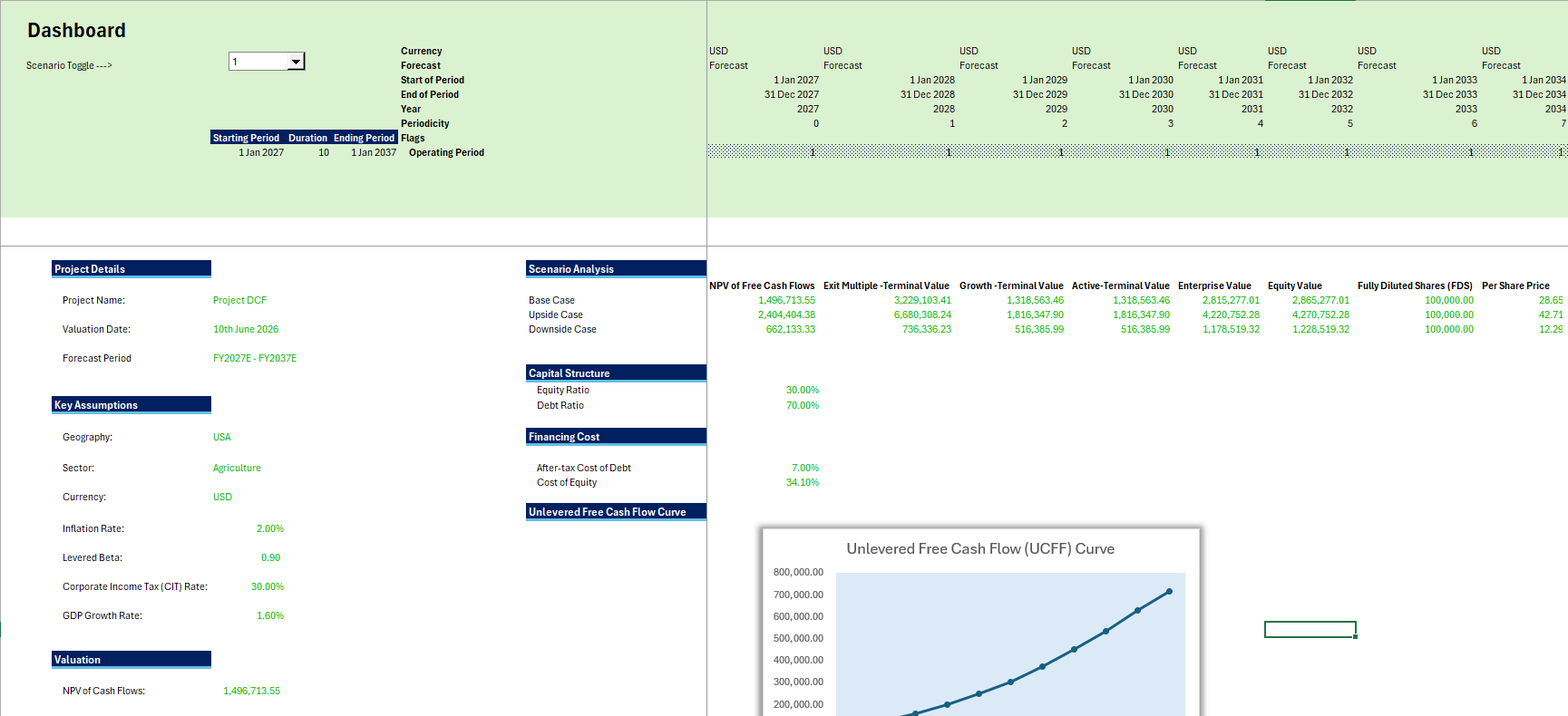
Capital Structure: Equity ratio, debt ratio
Cost of Capital: determine WACC by using the cost of debt and the cost of equity
Business Operations: initial revenue, revenue CAGR, COGS ratio, OPEX ratios
Working Capital: receivable days, inventory days, payable days
Capex: purchase date, purchase amount, salvage value, economic life, depreciation methodology
Debt Schedule: loan principal amount, drawdown date, interest rate, tenor, principal amortisation approach

DCF Analysis: EBITDA multiple, perpetuity growth rate, fully diluted shares (FDS), closing cash balance.

Unlevered Free Cash Flows
The projected free cash flows from the business operations.
It is the free cash flow that accrues to both equity shareholders and debt investors.
It's the cash flow after deducting tax, working capital and maintenance capital expenditure from the EBITDA amount.

EBITDA is utilised as a proxy for cash flow from operations.

Tools
Utilise these tools:
· CAPM formula
· the Hamada equation (to unlever market beta)
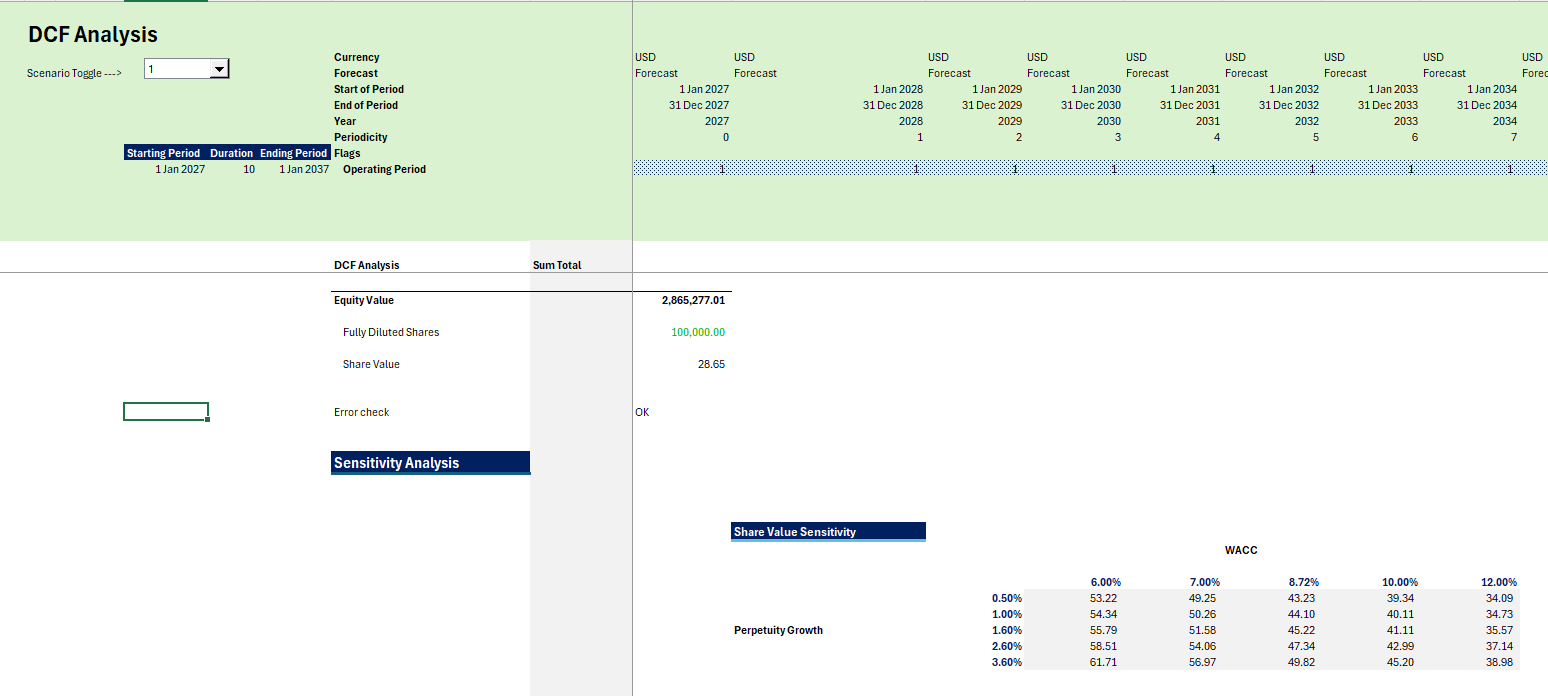
· Sensitivity analysis tools (data table)

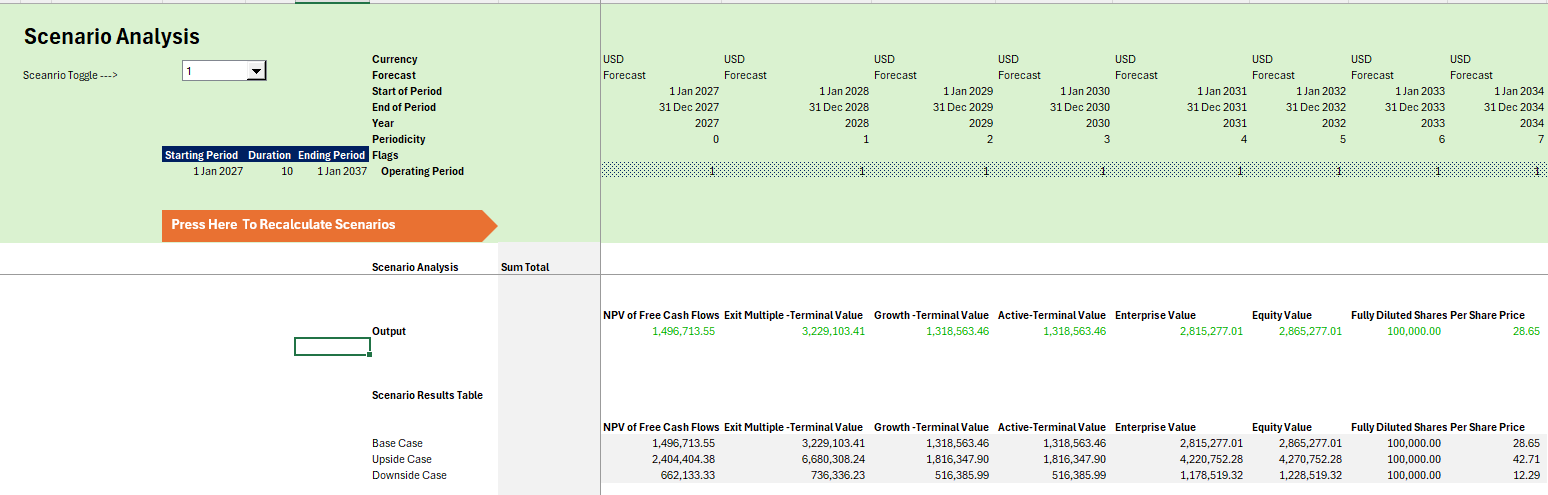
· Scenario analysis (VBA macro)

This Best Practice includes
1 PDF file, 1 Excel DCF model

Dennis Onyango offers you this Best Practice for free!

download for free

Add to bookmarks

Discuss

Further information

Determine the cash flows from operations using EBITDA as the proxy.
Determine the unlevered free cash flows by deducting tax, working capital and maintenance capital expenditures from EBIT.
Discount the unlevered free cash flows using the implied WACC.
Determine the terminal value of cash flows by using the exit multiple approach or the perpetuity growth approach.
Sum the NPV of unlevered free cash flows with the terminal value to derive the enterprise value.
Subtract the net debt from the enterprise value to arrive at the equity value.

This model applies best to an asset, project or company with stable cash flows.

DCF analysis is prone to errors due to:
• Overstated or understated CAGR
• the WACC not being properly computed.
• the terminal value methodology not being validated with market data.
• the operational cost estimates being unrealistic


0.0 / 5 (0 votes)

please wait...