

Originally published: 12/06/2024 07:21
Last version published: 09/12/2024 08:27
Publication number: ELQ-83736-2
View all versions & Certificate
Last version published: 09/12/2024 08:27
Publication number: ELQ-83736-2
View all versions & Certificate

Interior Design Company Financial Model
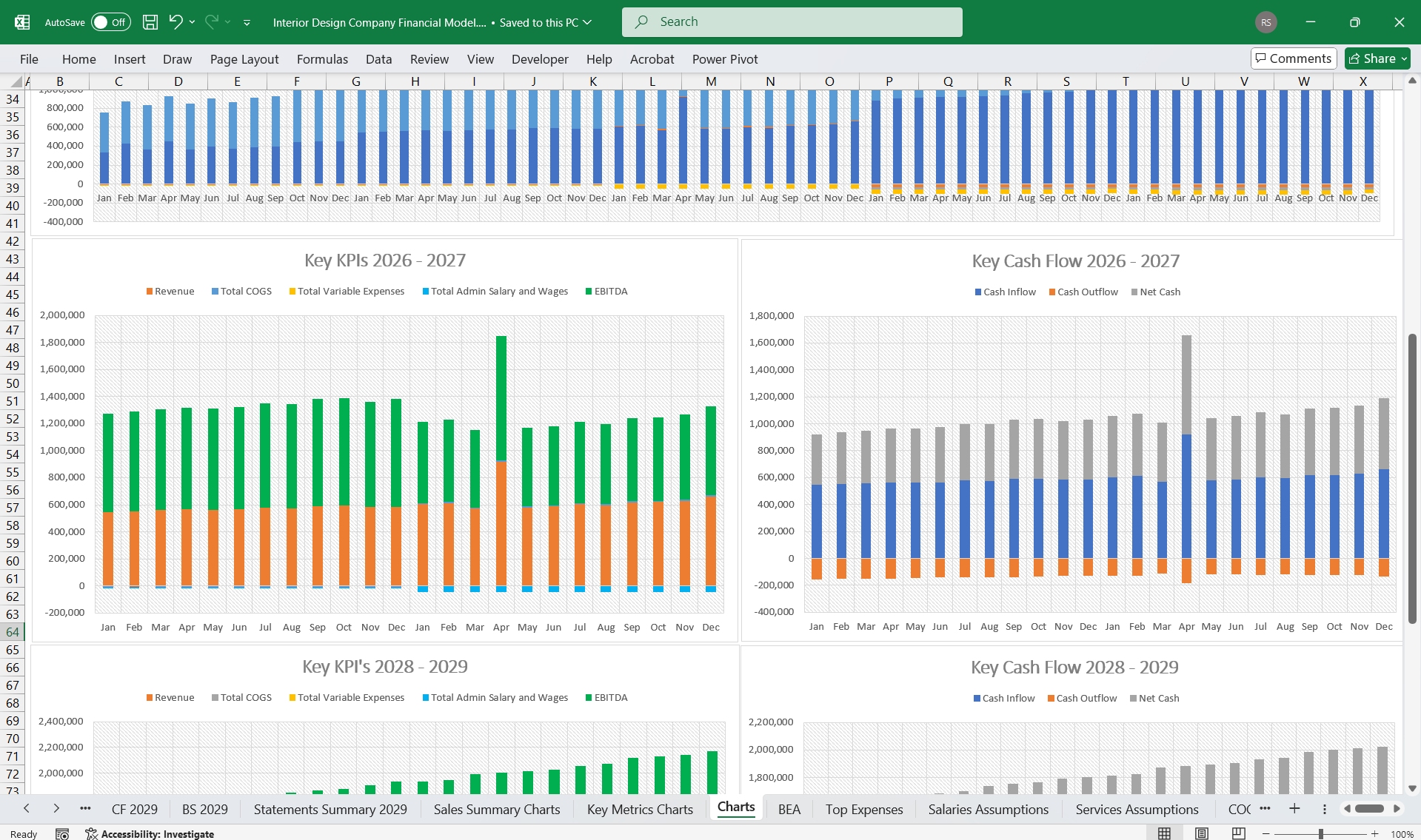
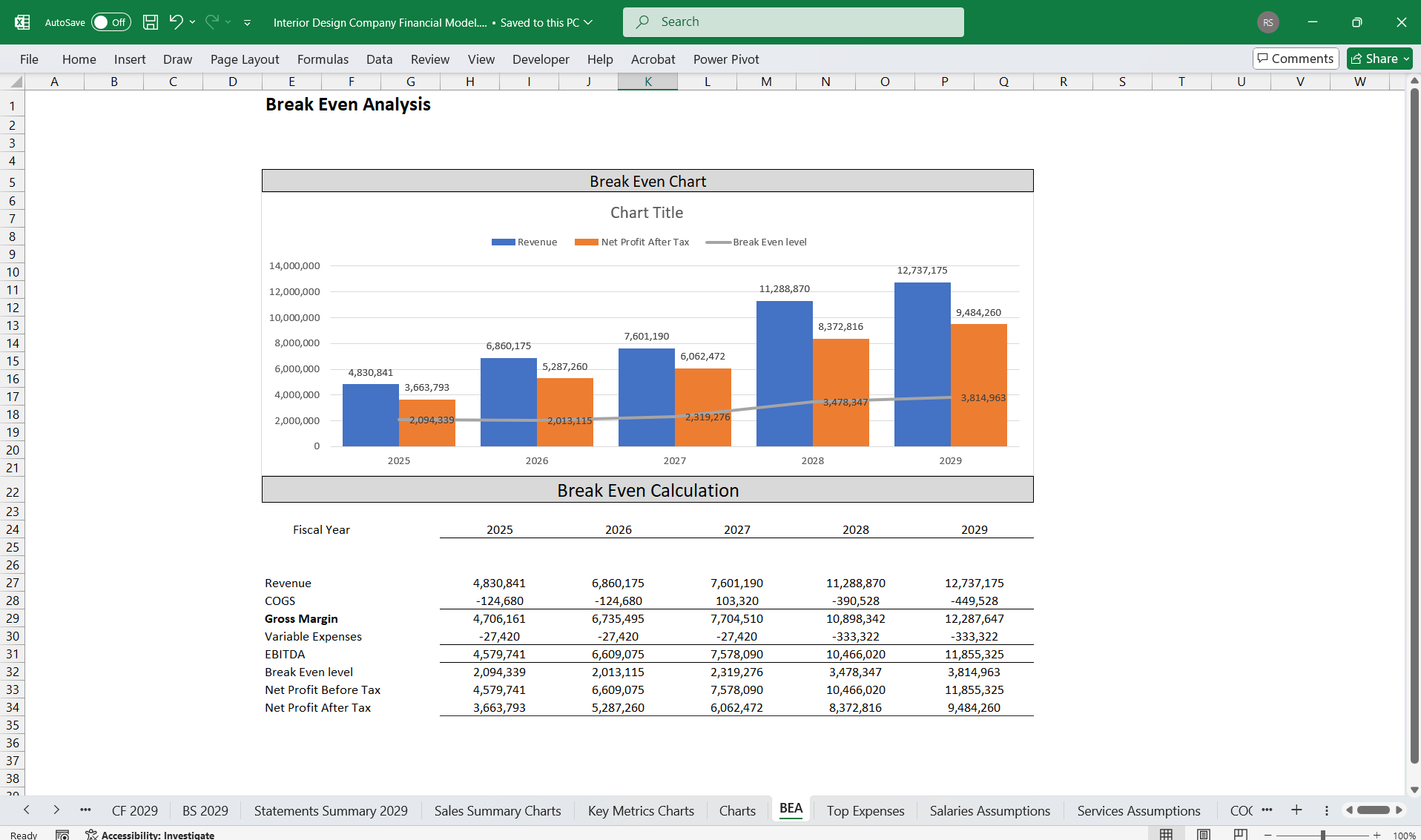
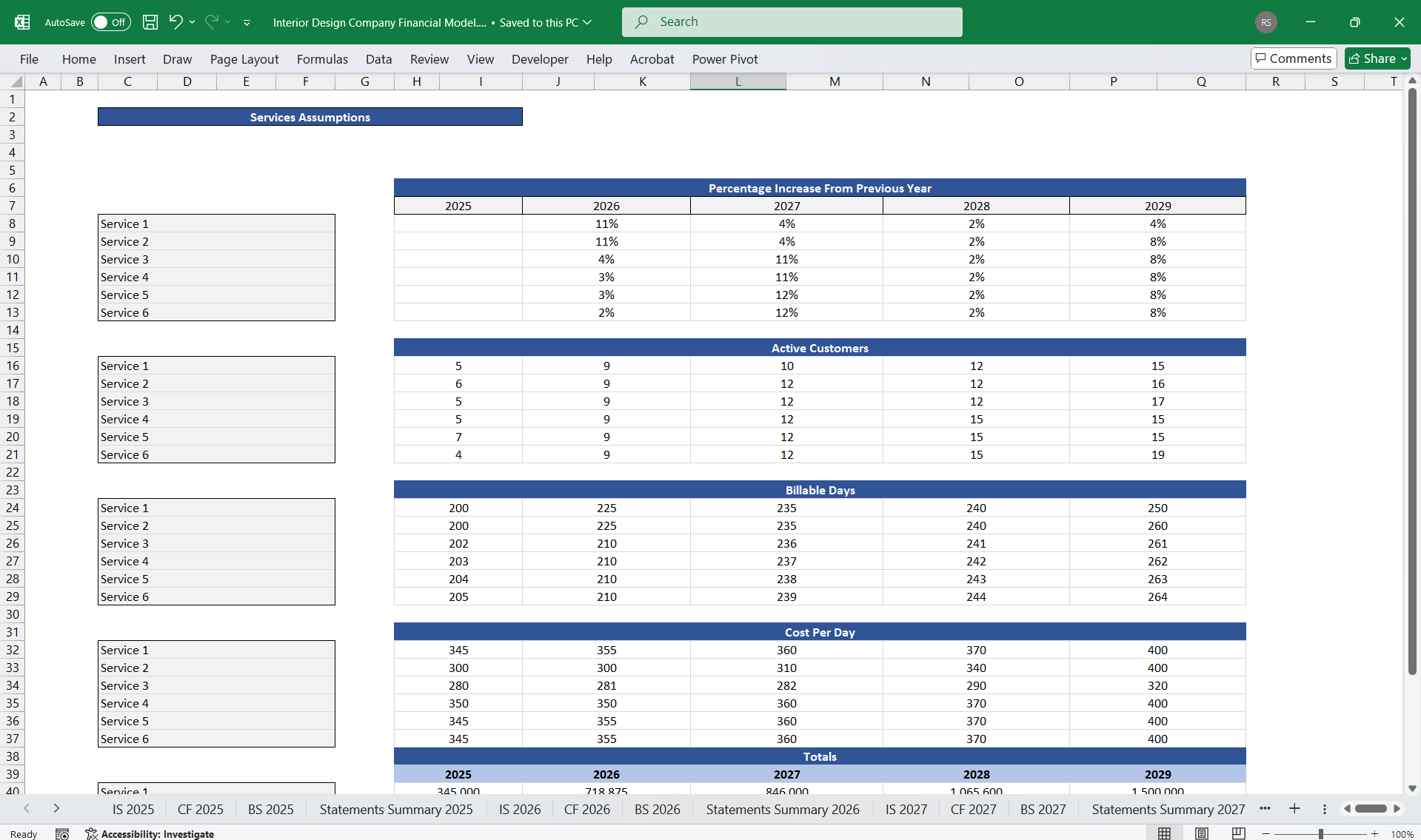
Comprehensive editable, 5 Year 3 Statement MS Excel spreadsheet for tracking Interior Design Company finances.
 by AllFinancialModels
AllFinancialModels offer a curated selection of high-quality yet financial model templates designed to support a wide range of business needs.Follow
interior designinterior design companyfinancial modelfinance modelexcelfinancialmodelinteriordesigncompany
Description
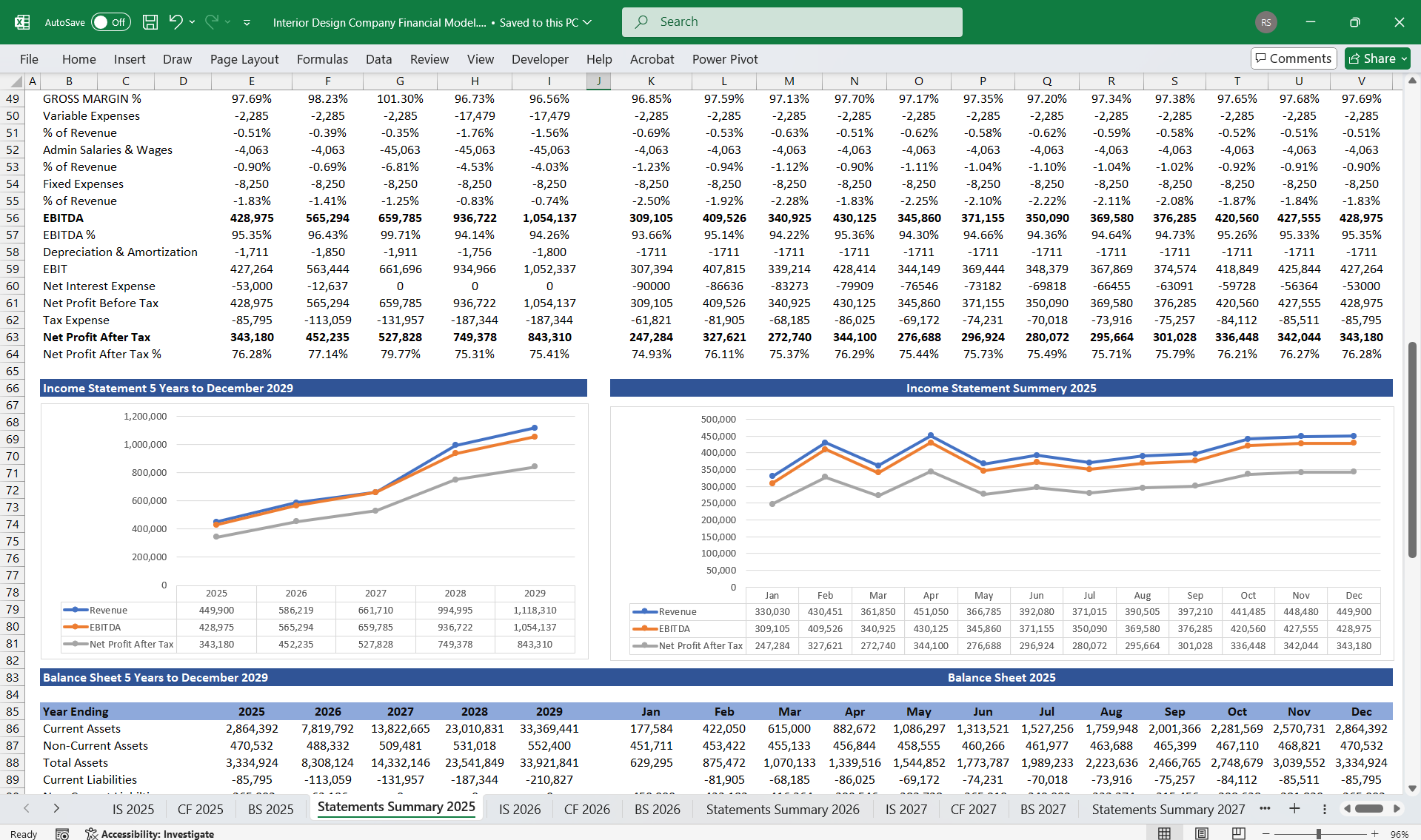
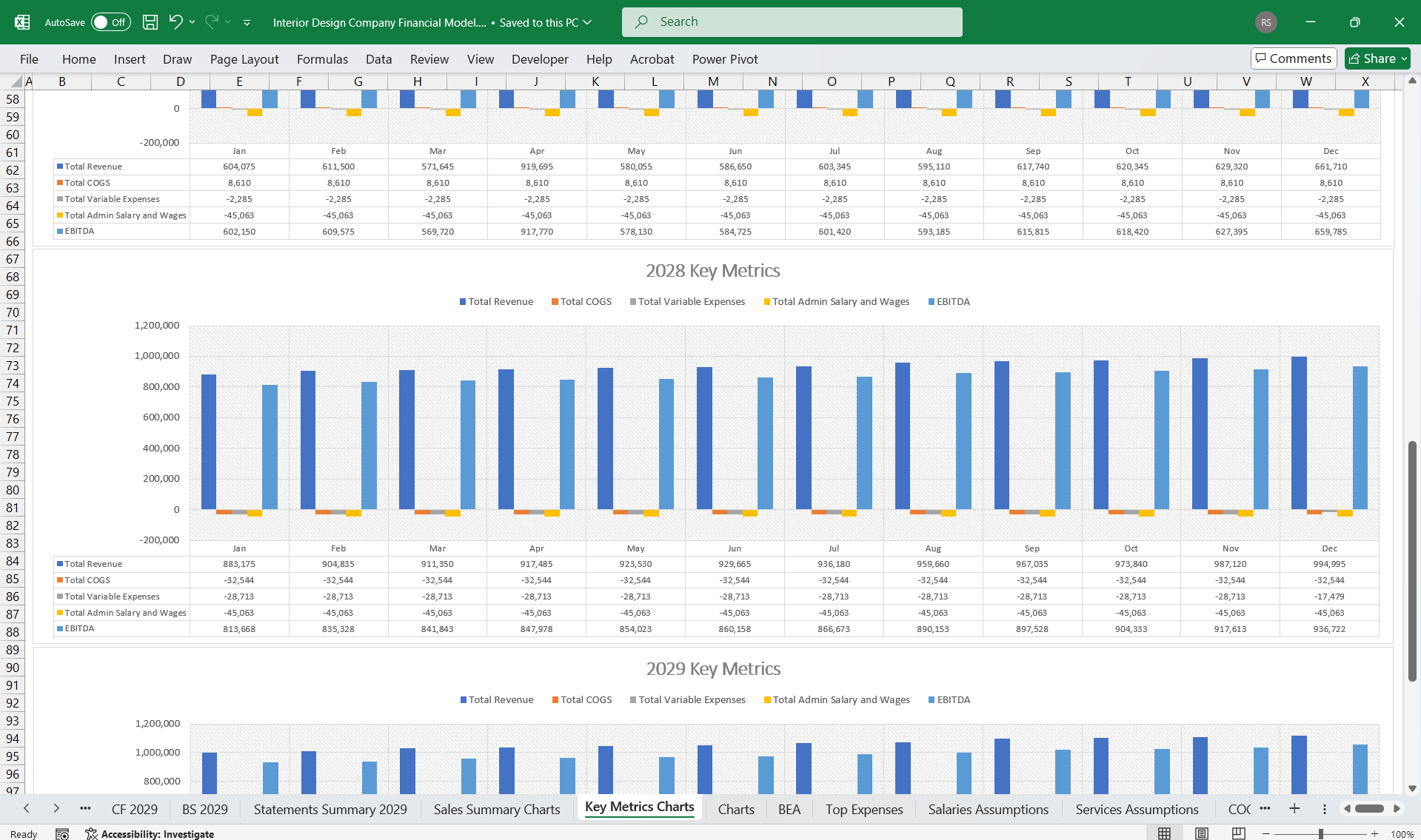
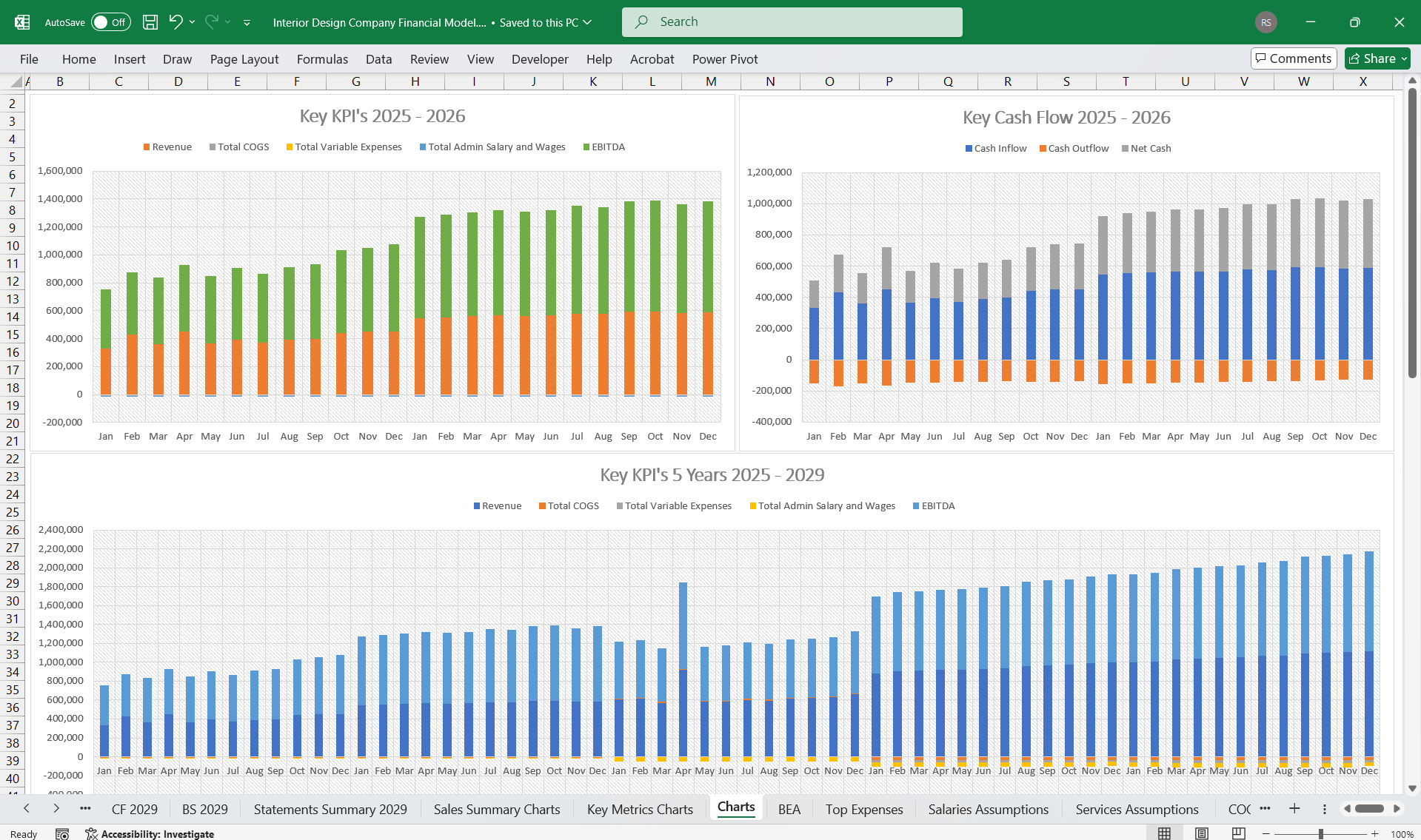
This financial model for an interior design company involves projecting its financial performance through an Income Statement, Cash Flow Statement, and Balance Sheet. Below is a detailed description of what each component should include, tailored to an interior design business:
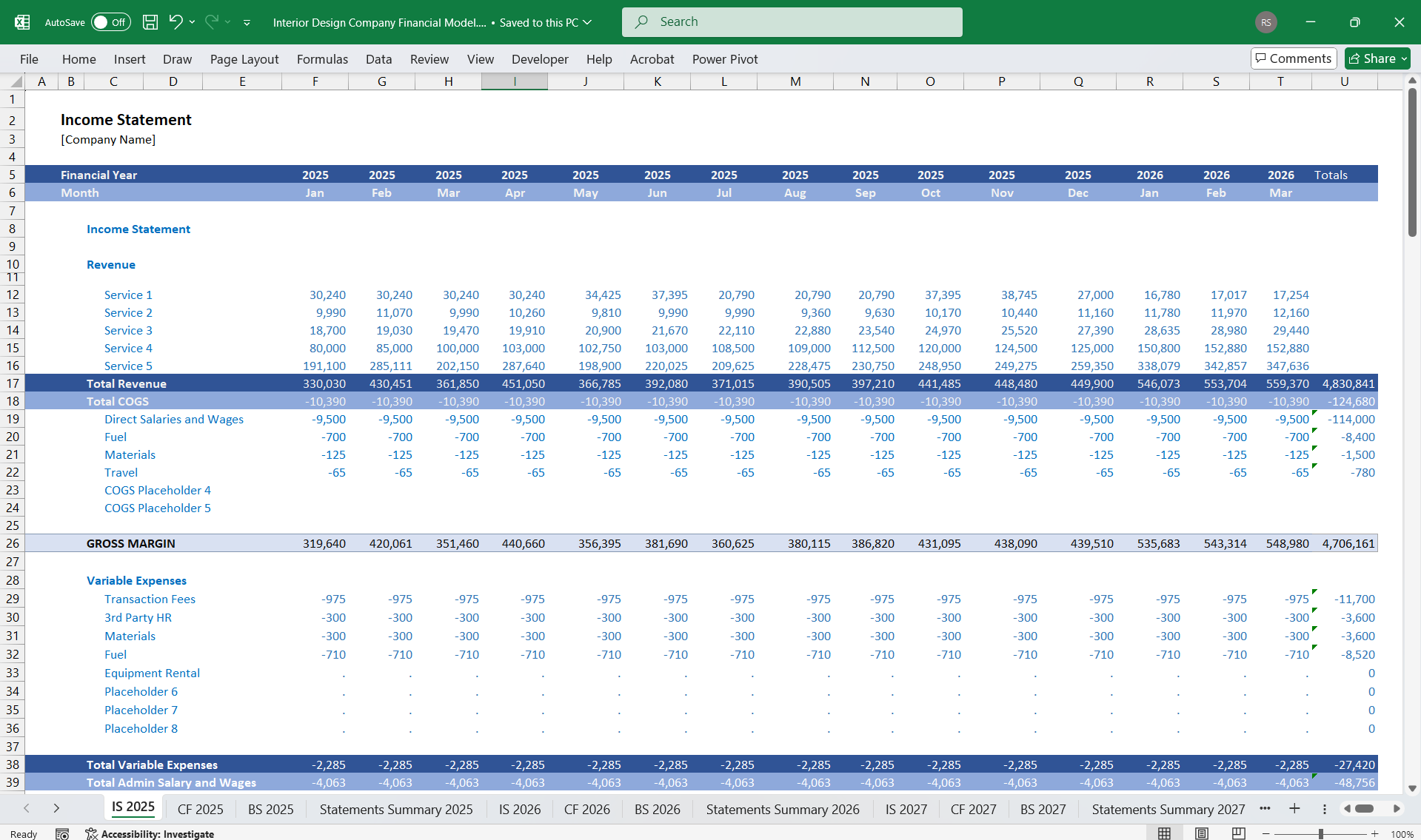
1. Income Statement
The Income Statement projects revenues, costs, and profitability over time. For an interior design company, it would include:
Revenue Streams
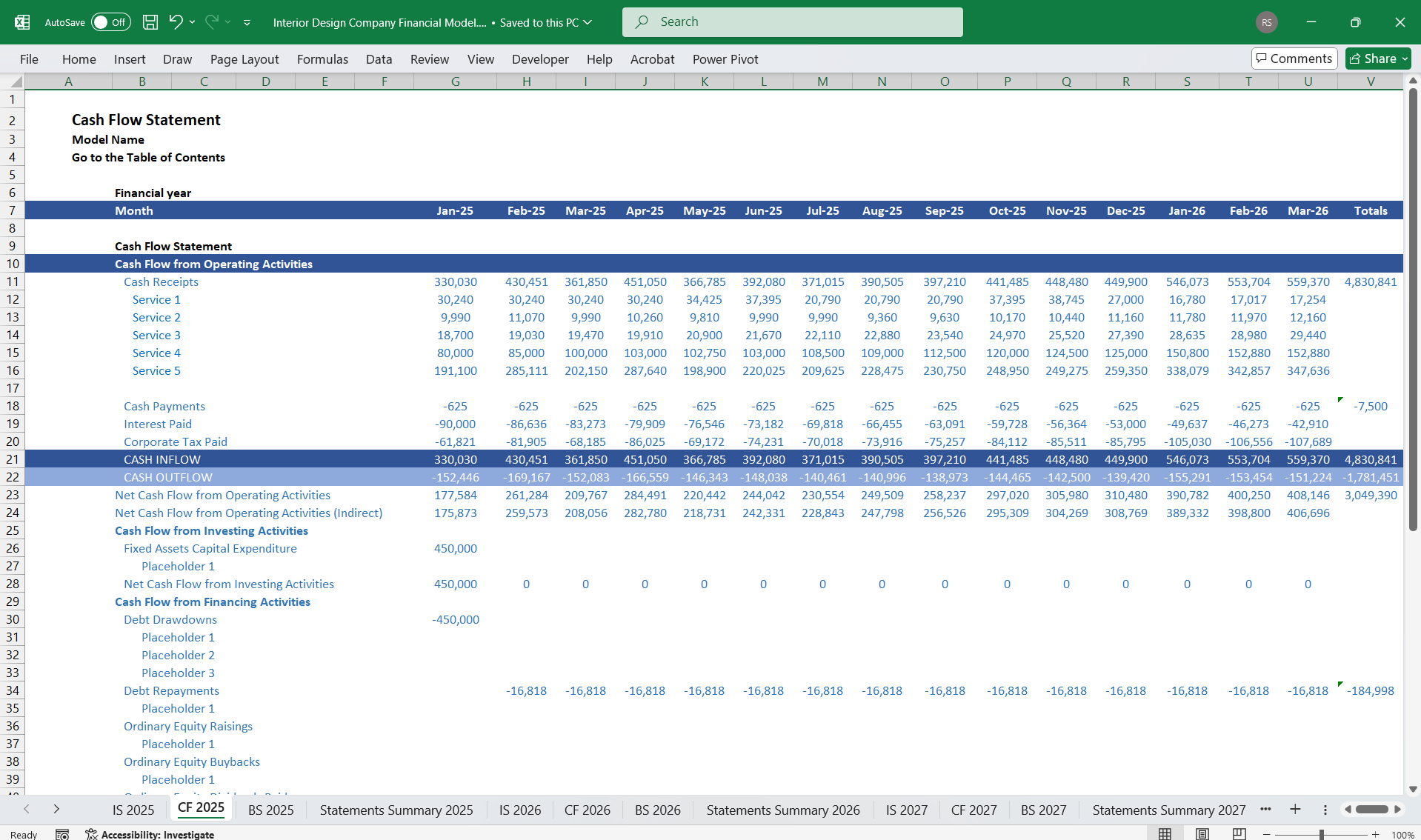
2. Cash Flow Statement
The Cash Flow Statement tracks cash inflows and outflows to determine liquidity. For an interior design company, it includes:
Cash Inflows
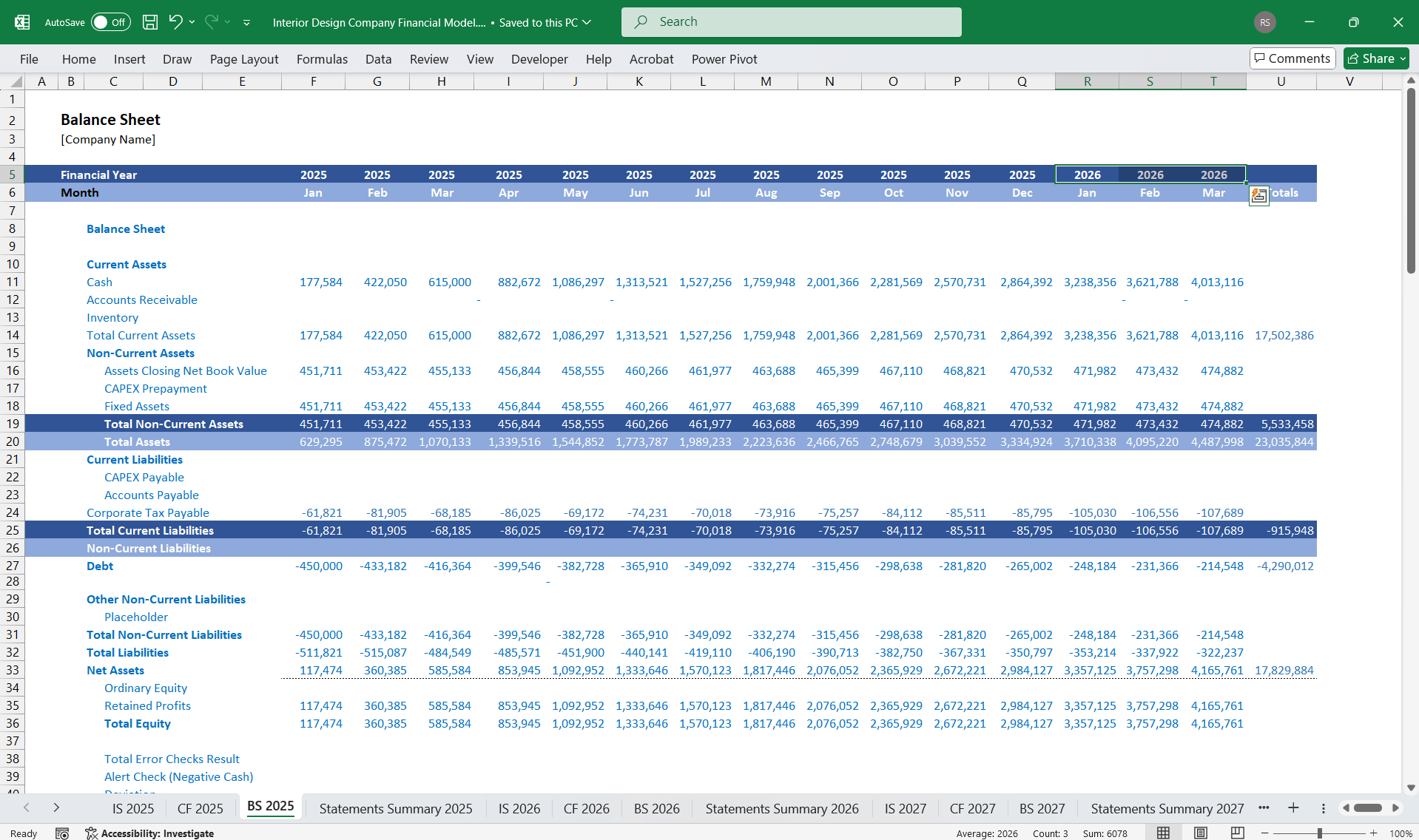
3. Balance Sheet
The Balance Sheet summarizes the company’s financial position at a point in time. For an interior design company, it would include:
Assets
This financial model for an interior design company involves projecting its financial performance through an Income Statement, Cash Flow Statement, and Balance Sheet. Below is a detailed description of what each component should include, tailored to an interior design business:
1. Income Statement
The Income Statement projects revenues, costs, and profitability over time. For an interior design company, it would include:
Revenue Streams
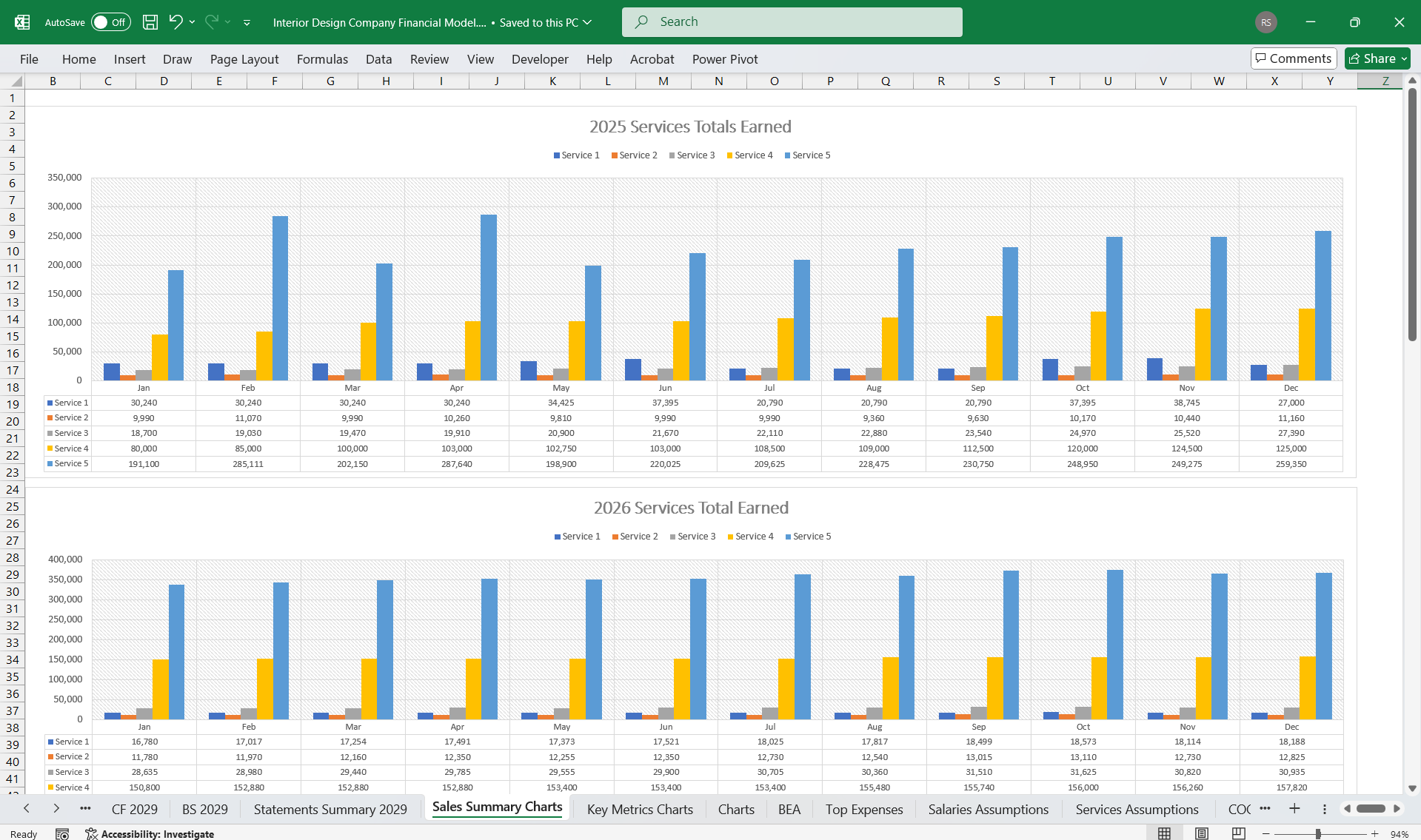
- Design Services Income: Revenue from consulting and creating interior design plans for residential, commercial, or hospitality spaces.
- Product Sales: Commission or markup income from furniture, decor, or material sales.
- Project Management Fees: Income from overseeing renovation or installation projects.
- Miscellaneous Income: Income from workshops, courses, or collaborations.
- Material Costs: Costs of purchasing furniture, decor, and other items resold to clients.
- Subcontractor Costs: Payments to contractors like painters, carpenters, or electricians involved in projects.
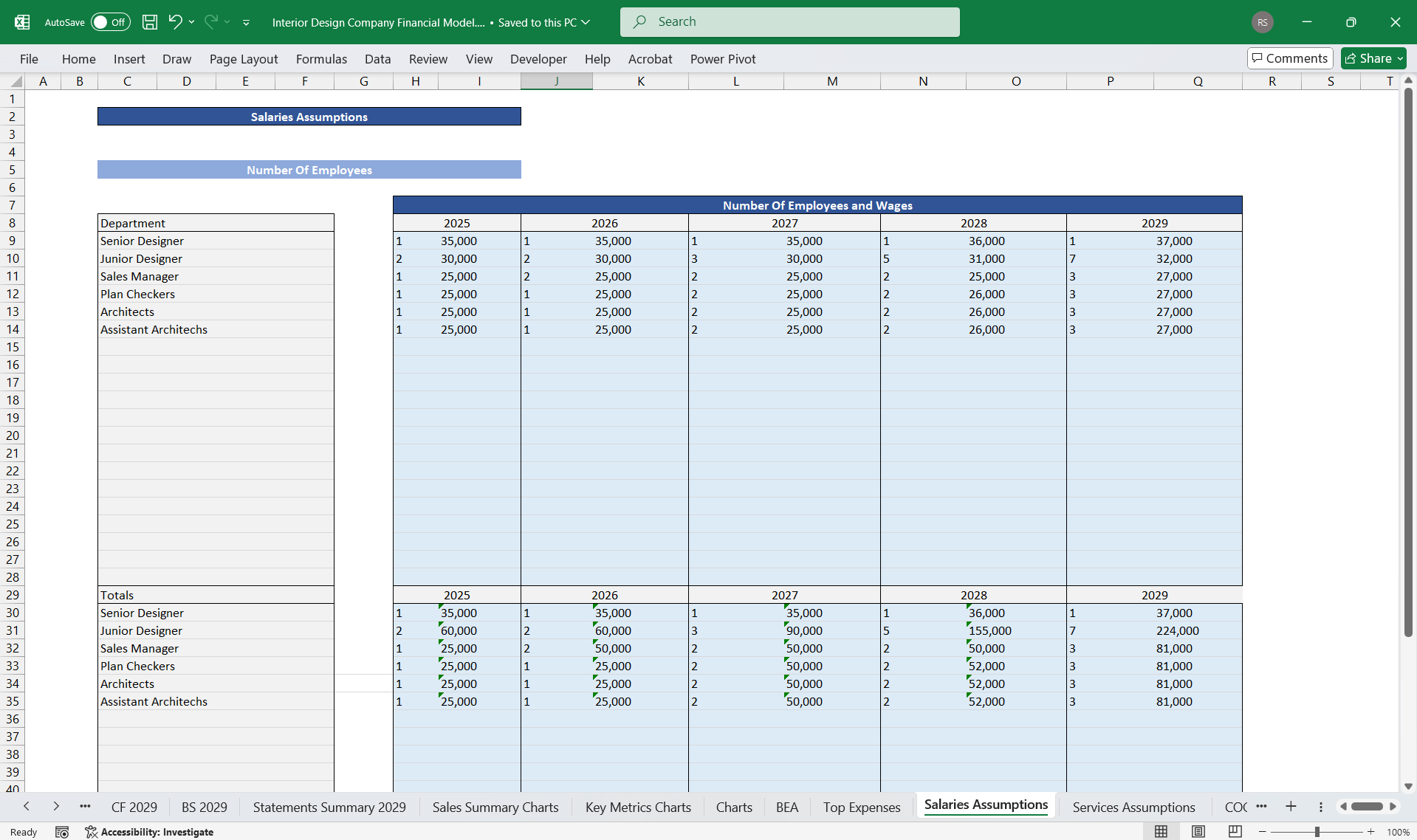
- Salaries and Wages: Payments to designers, administrative staff, and project managers.
- Office Rent and Utilities: Costs of maintaining a design studio or office space.
- Marketing and Advertising: Expenditure on online ads, print ads, events, or promotional campaigns.
- Technology and Software: Expenses for design software (e.g., AutoCAD, SketchUp), customer relationship management (CRM) tools, or other digital tools.
- Transportation Costs: Costs of travelling to client sites.
- Professional Fees: Legal, accounting, or consultancy expenses.
- Gross Profit: Revenue - COGS.
- Operating Profit: Gross Profit - Operating Expenses.
- Net Profit: Operating Profit - Taxes and Interest.
2. Cash Flow Statement
The Cash Flow Statement tracks cash inflows and outflows to determine liquidity. For an interior design company, it includes:
Cash Inflows
- Customer Payments: Cash collected from design services, product sales, and project management.
- Upfront Deposits: Advance payments received before project initiation.
- Loan Proceeds: Funds from business loans or lines of credit.
- Other Income: Refunds, tax rebates, or other incidental income.
- Operating Costs: Payments for rent, salaries, software subscriptions, marketing, and utilities.
- Material Purchases: Payments for furniture, decor items, or construction materials.
- Subcontractor Payments: Outflows for external contractors.
- Loan Repayments: Principal and interest on any business loans.
- Capital Expenditures: Investments in office furniture, equipment, or vehicles.
- Operating Activities: Cash from operations, including net profit adjusted for working capital changes (e.g., accounts receivable and payable).
- Investing Activities: Cash is used to purchase assets or invest in tools and office upgrades.
- Financing Activities: Cash from or used in loans, investments by owners, or dividend payouts.
- Shows the net change in cash and reconciles with the cash balance at the start of the period.
3. Balance Sheet
The Balance Sheet summarizes the company’s financial position at a point in time. For an interior design company, it would include:
Assets
- Current Assets:
- Cash and Cash Equivalents: Available liquid cash.
- Accounts Receivable: Amounts due from clients for completed projects.
- Inventory: Furniture, decor, or materials held for resale or future use.
- Prepaid Expenses: Advance payments for rent, insurance, or subscriptions.
- Non-Current Assets:
- Office Furniture and Equipment: Computers, desks, design tools, and other office infrastructure.
- Leasehold Improvements: Investments in modifying office or studio spaces.
- Current Liabilities:
- Accounts Payable: Payments due to suppliers or subcontractors.
- Short-term Loans: Repayments due within the next year.
- Unearned Revenue: Deposits or prepayments from clients for uncompleted projects.
- Non-Current Liabilities:
- Long-term Loans: Loan balances payable after one year.
- Owner’s Equity: Owner’s initial investment and retained earnings.
- Net Income: Profit retained after dividends or owner withdrawals.
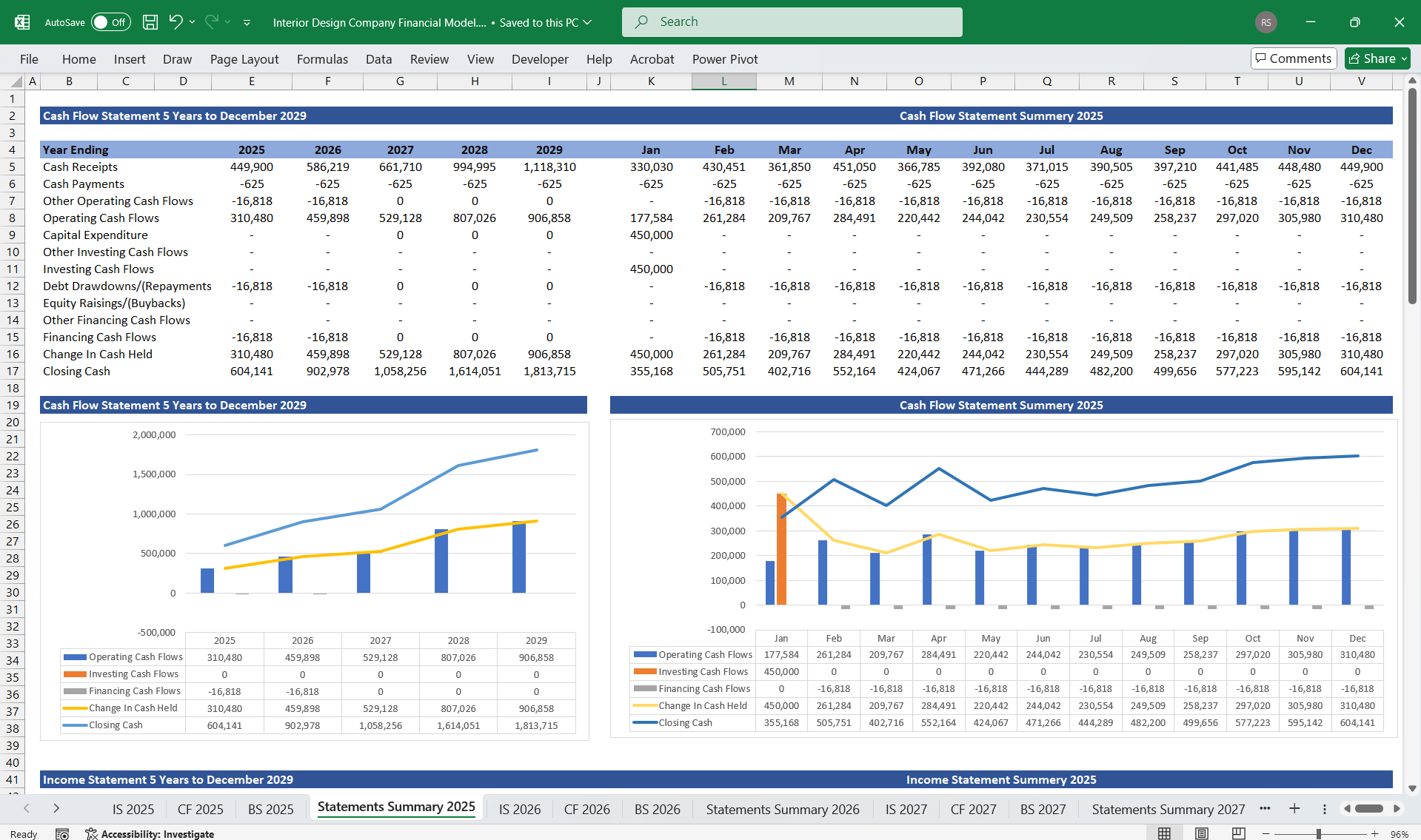
- Income Statement: Net Profit flows into retained earnings on the Balance Sheet.
- Cash Flow Statement: Changes in cash from operations, investing, and financing reconcile with the cash asset on the Balance Sheet.
- Balance Sheet: Assets, liabilities, and equity provide the basis for liquidity and solvency analysis.
- Revenue Recognition: Depending on project timelines, revenue might need to be recognized as milestones are met, not upfront.
- Seasonality: Interior design may have peak seasons (e.g., before holidays or during new construction booms).
- Scenario Analysis: Include different scenarios (e.g., optimistic, realistic, and pessimistic) to account for client demand variability.
This Best Practice includes
1 Excel Financial Model 1 How-to PDF
Further information
Provides thorough oversight, tracking, and reporting of Interior Design company finances, including updates on budget utilisation and projections.