Commercial Real Estate Financial Model Excel Template with DCF Valuation
Originally published: 22/01/2026 19:27
Publication number: ELQ-88708-1
View all versions & Certificate
certified

Commercial Real Estate Financial Model Excel Template with DCF Valuation

A fully integrated Excel Real Estate Financial Model template designed to analyze and value income-generating properties

Description
This Real Estate Financial Model is a comprehensive, fully integrated Excel-based template designed to analyze, forecast, and value income-generating real estate assets. The model is suitable for commercial real estate investments and can be used by investors, developers, asset managers, analysts, and lenders to evaluate project feasibility, financial performance, and valuation.
The model is structured in a clear, modular format, allowing users to input assumptions efficiently while automatically generating financial statements, valuation outputs, key metrics, and visual dashboards.

Link for a video describing the functioning of the model. Youtube 

Model Structure and Key Sections


Dashboard
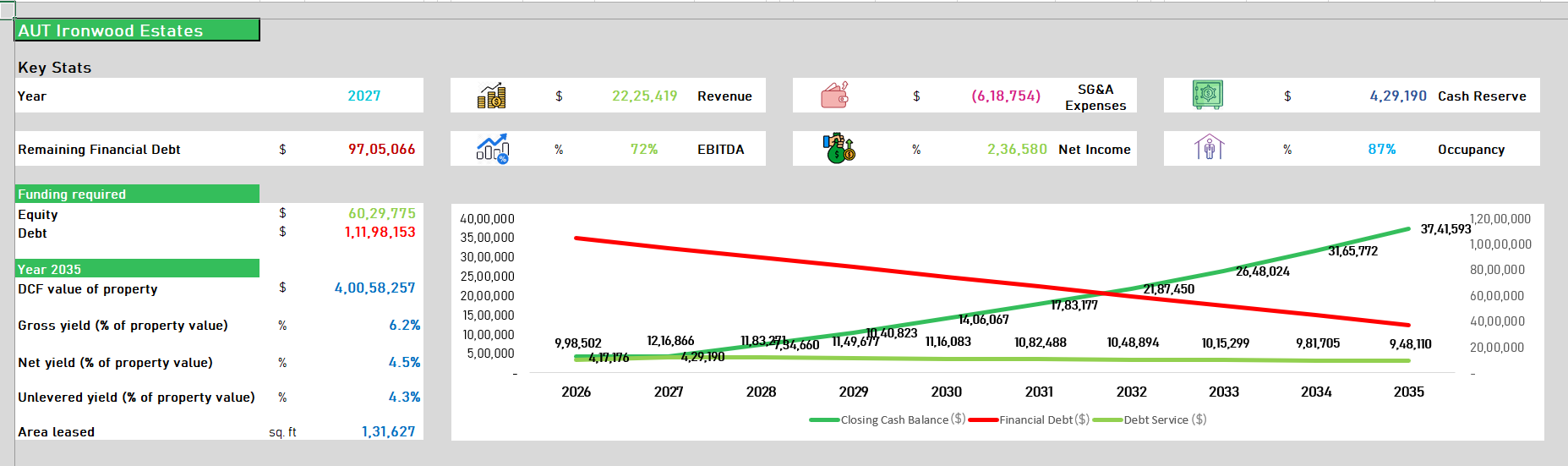
An intuitive dashboard provides a high-level overview of the investment, displaying key performance indicators (KPIs) such as rental income, cash reserve, financial debt, EBITDA, occupancy, gross yield, net yield, and valuation metrics. Charts and summary tables allow for quick decision-making and presentation-ready outputs.
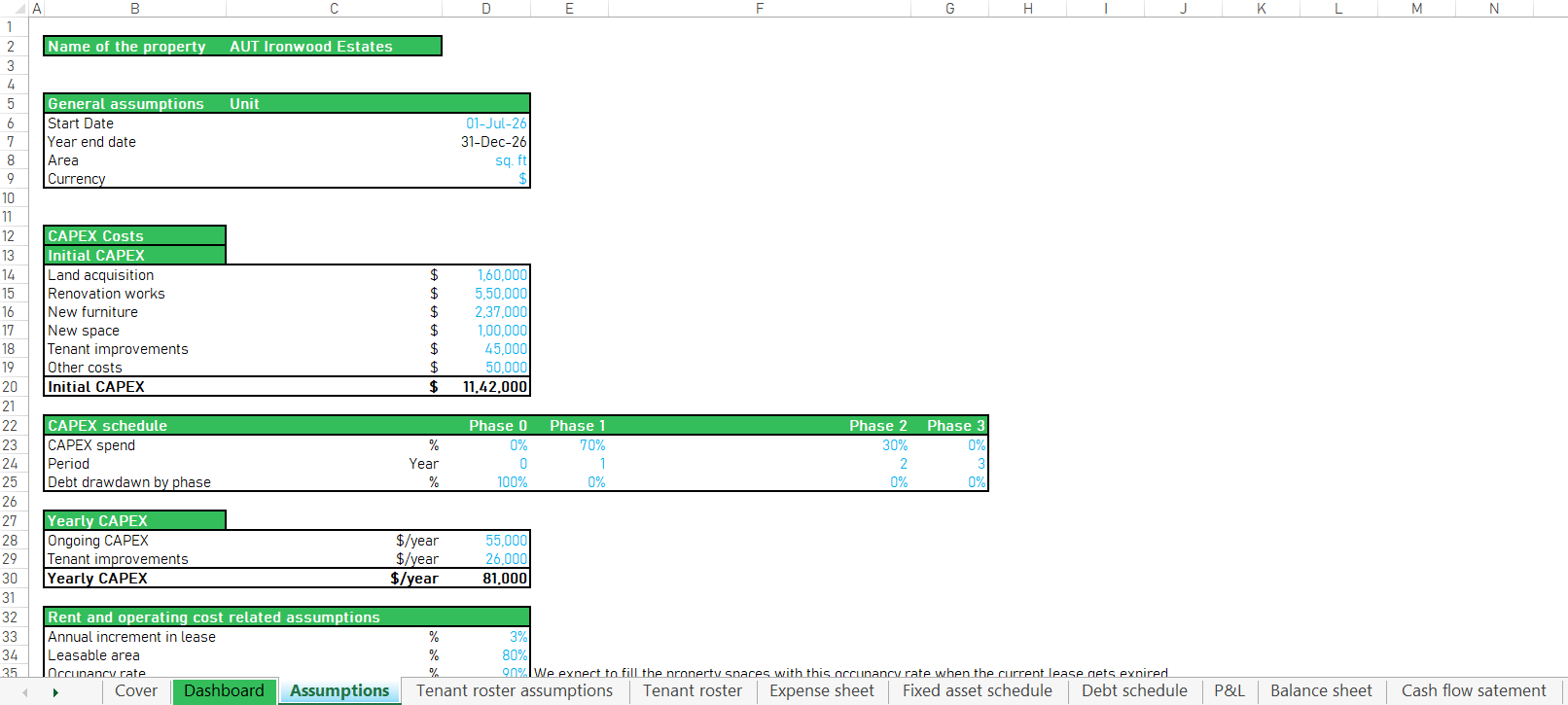
Assumptions Section


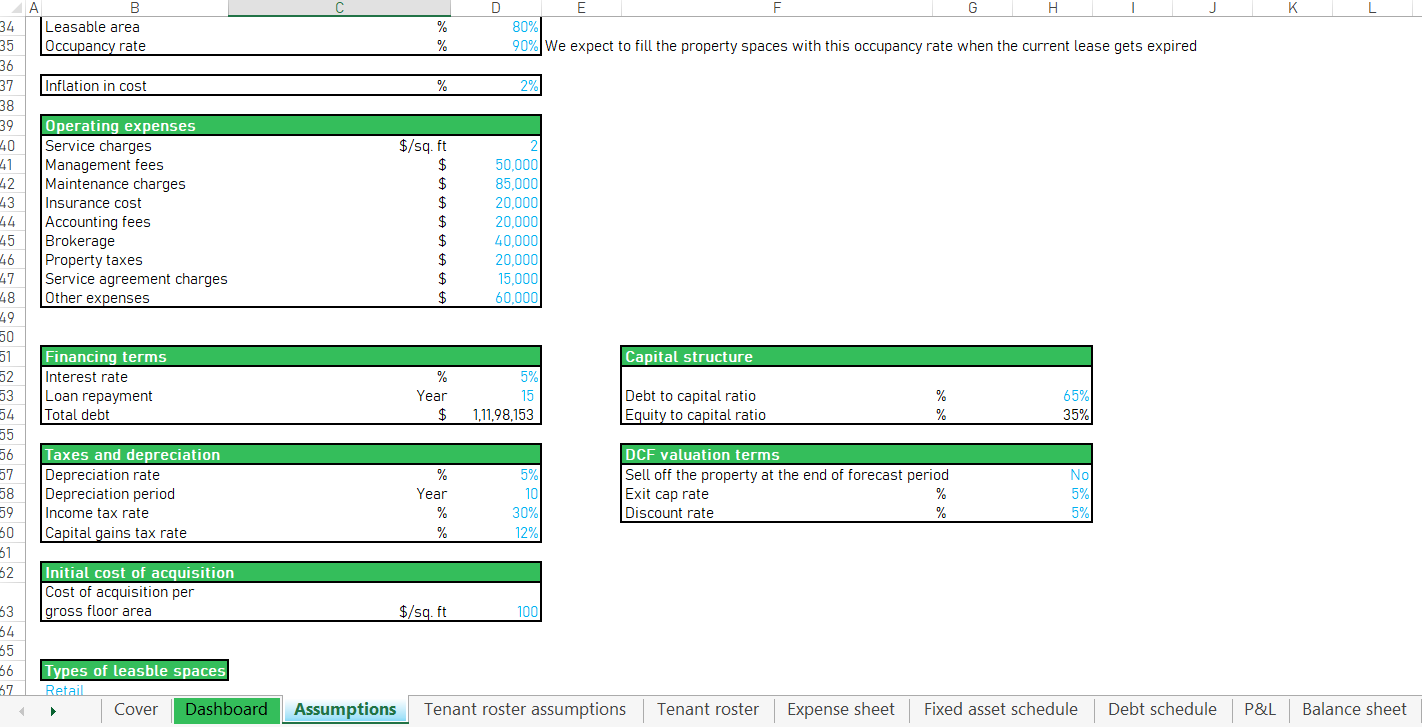
All core model inputs are centralized in a dedicated assumptions section. This includes general property assumptions, timeline settings, inflation rates, growth rates, and other key drivers required to run the model. Clear formatting ensures transparency and ease of use.


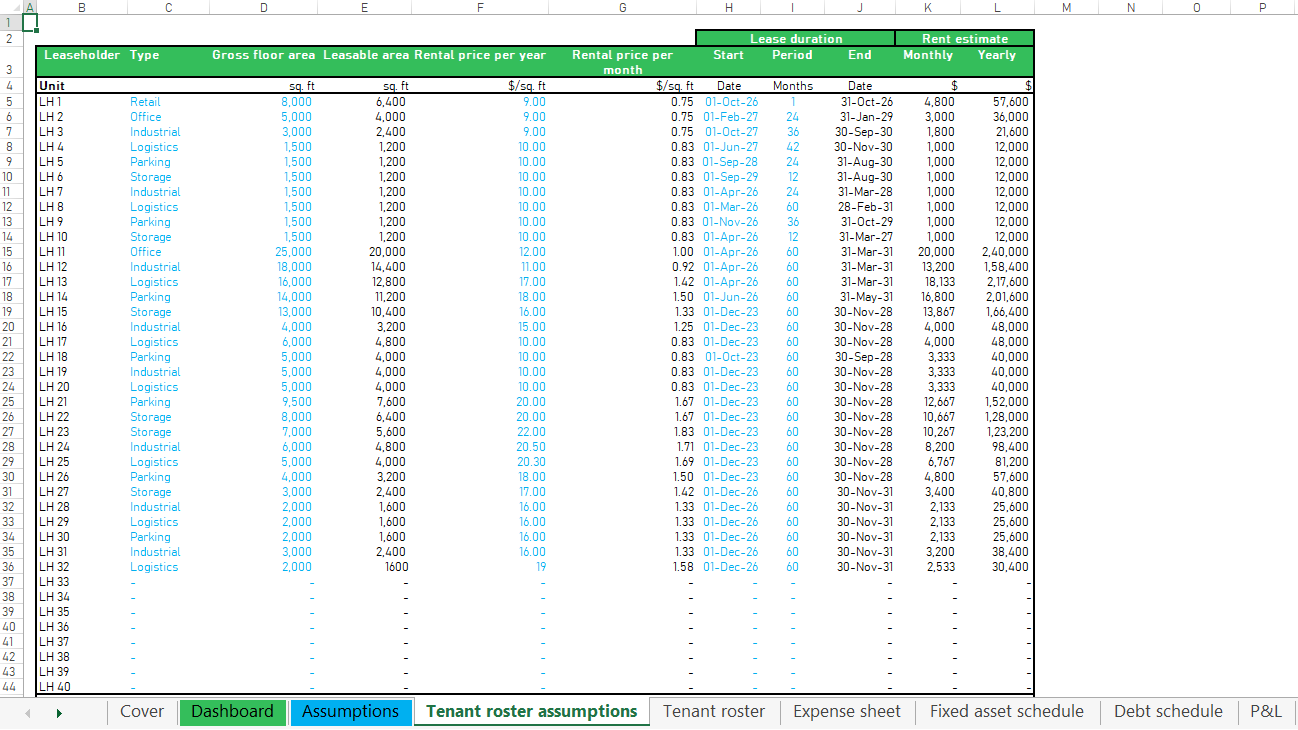
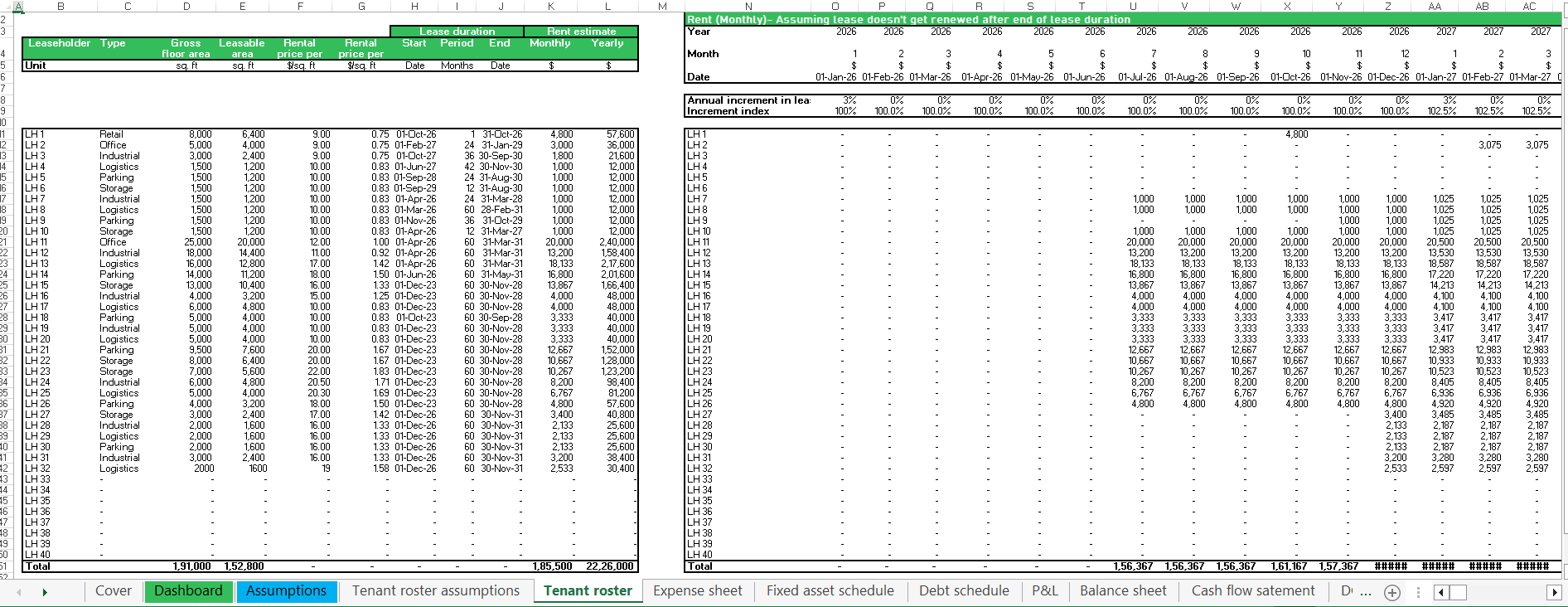
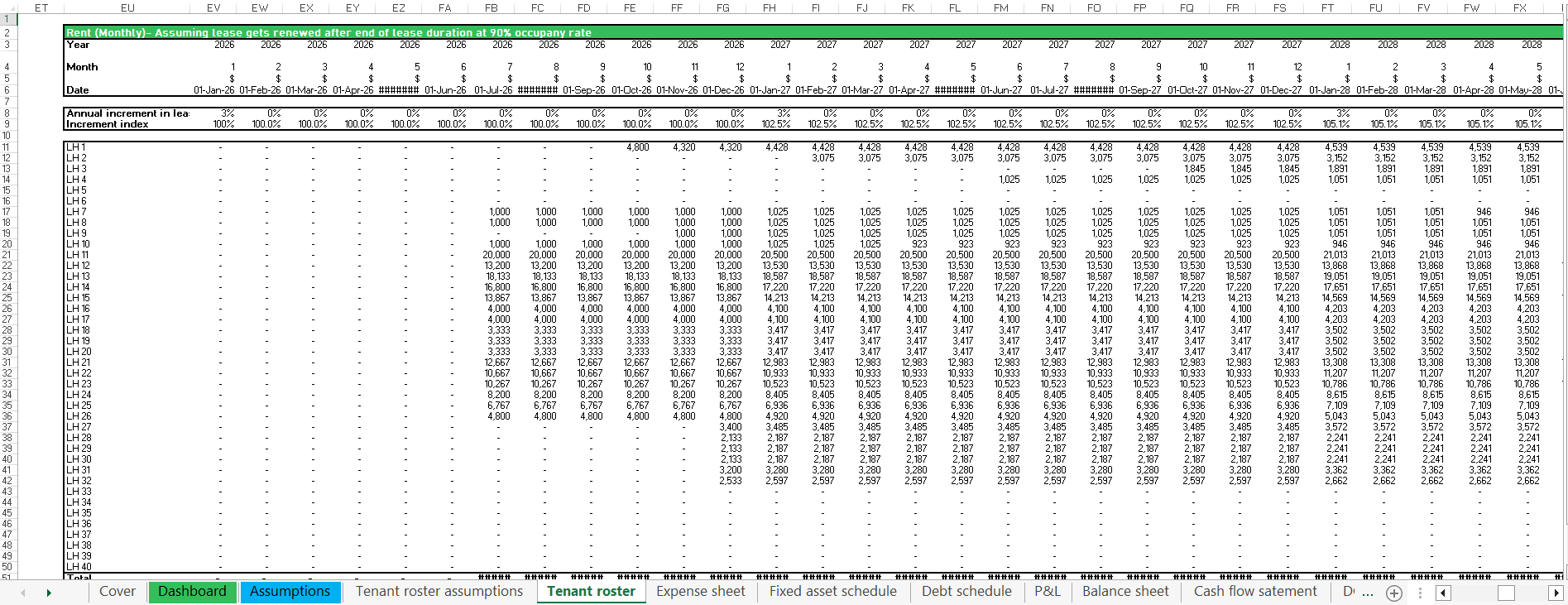
Tenant Roster & Leasing Assumptions
This section captures detailed tenant-level assumptions, including tenant type, leased area, rental rates, lease start and end dates, escalation terms, vacancy assumptions, and renewals. The tenant roster automatically calculates rental income for each tenant and aggregates total rental revenues over the projection period.


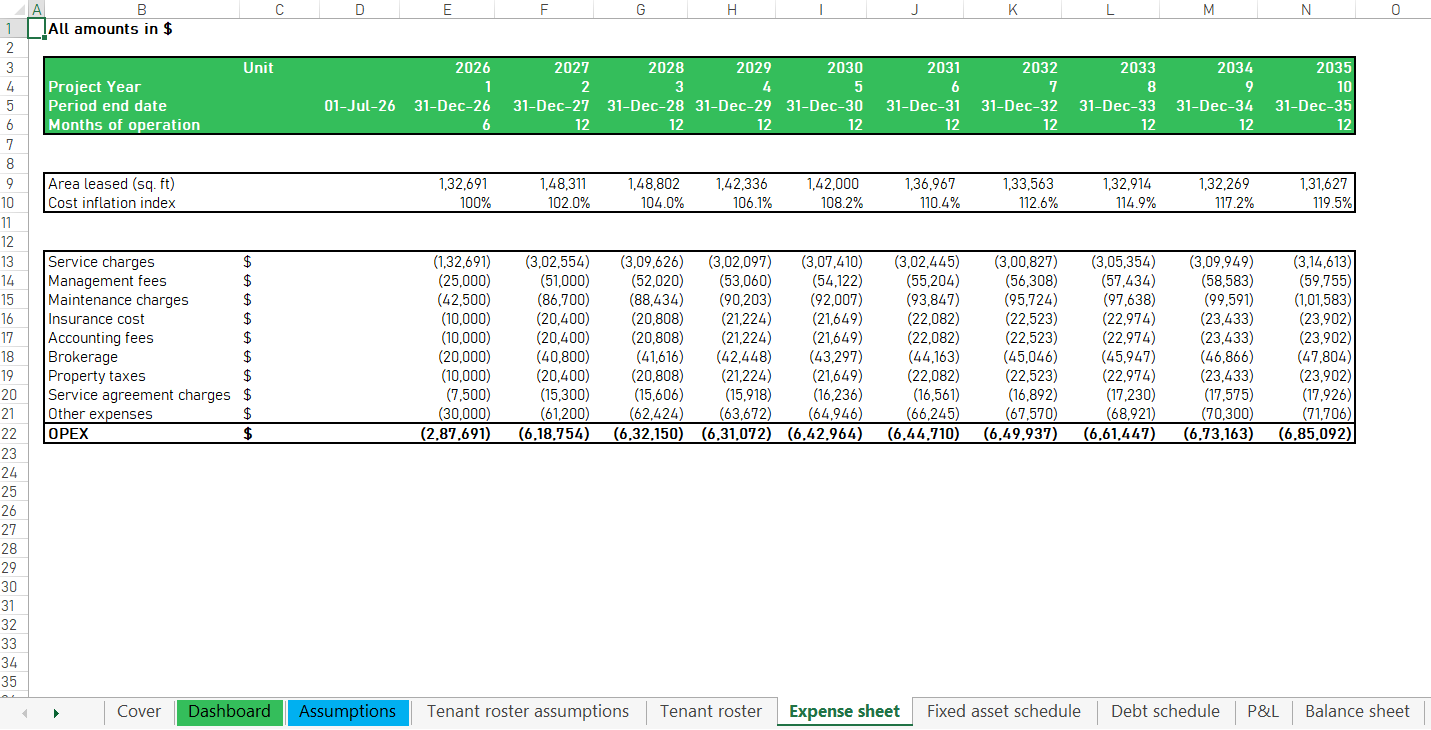
Operating Expenses (OPEX)
The expense sheet models all operating costs associated with the property, such as property management fees, maintenance, utilities, insurance, taxes, and other operating expenses. Expenses can be modeled as fixed amounts, percentages of income, or indexed growth rates.


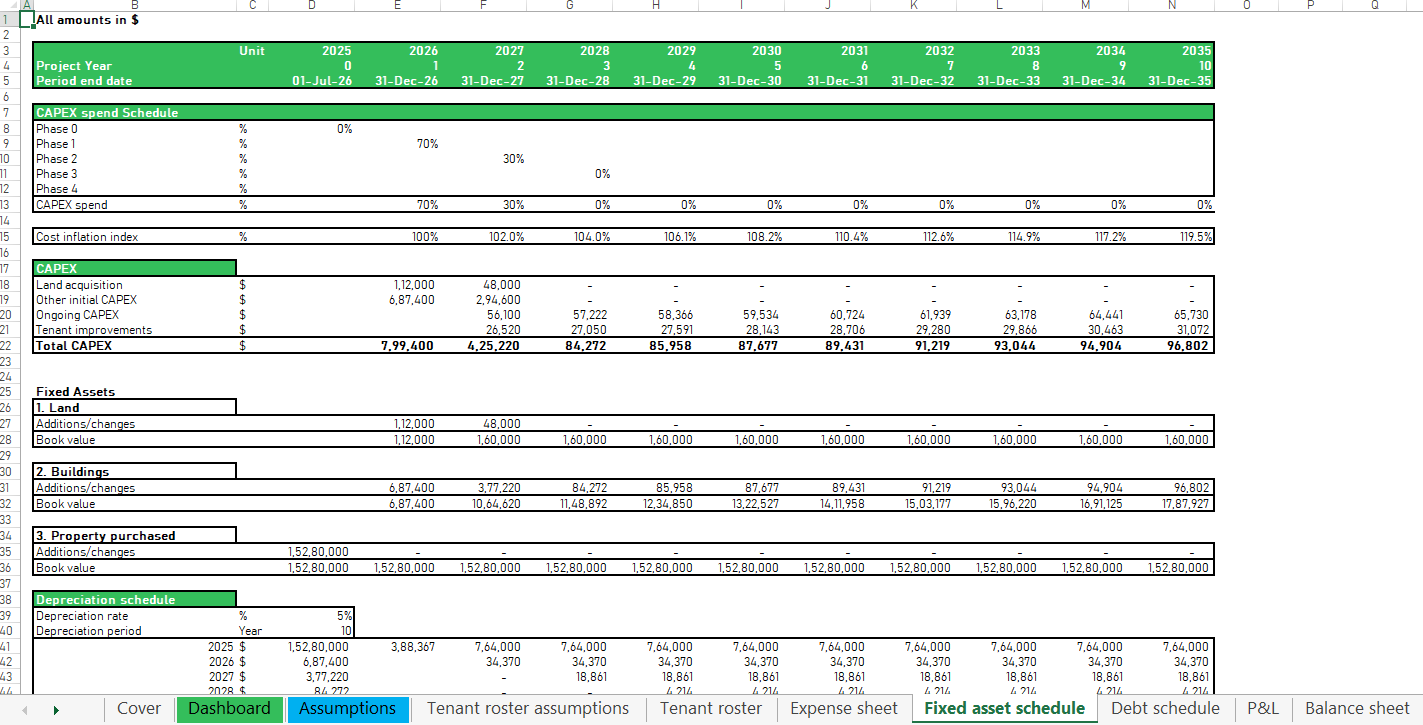
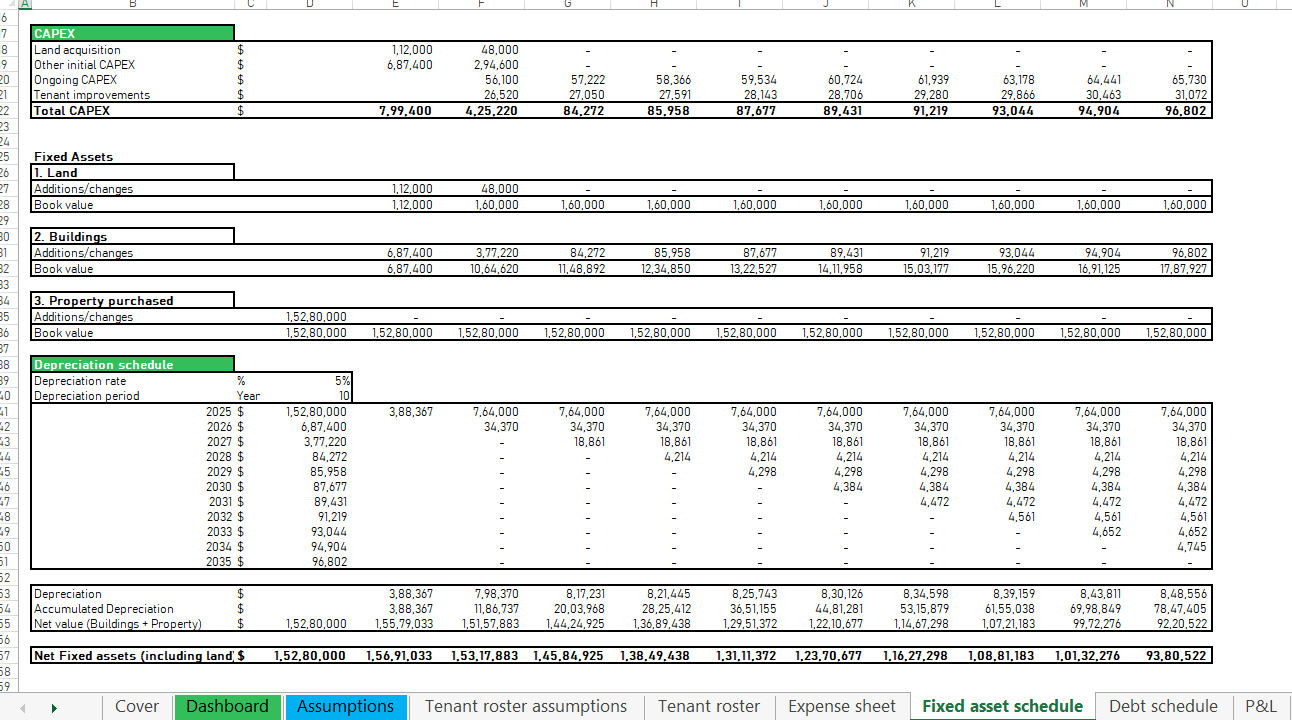
Fixed Asset Schedule (CAPEX & Depreciation)
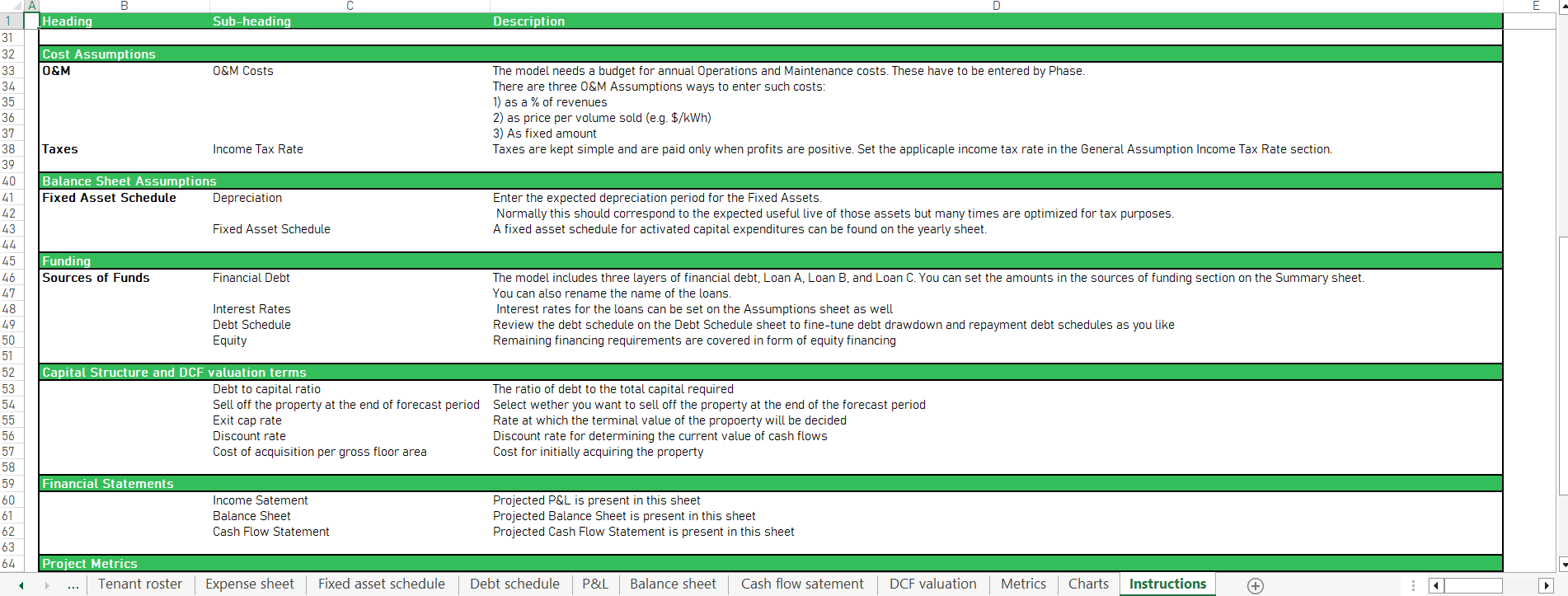
This section tracks capital expenditures related to the property, including initial investment and ongoing capital improvements. It also calculates depreciation based on selected methods and useful lives, fully integrating depreciation into the financial statements.


Debt Schedule
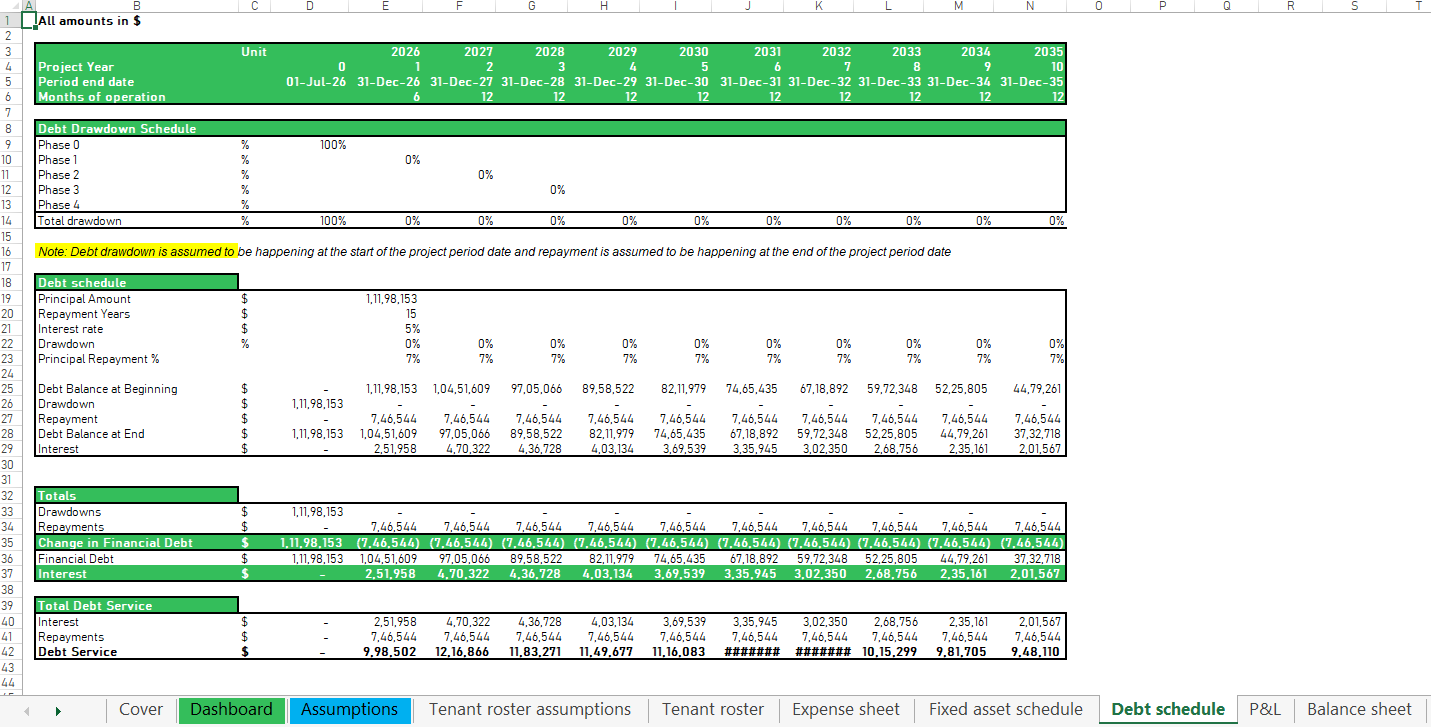
The debt module models financing assumptions, including loan drawdowns, interest rates, repayment schedules, amortization, and outstanding balances. Interest expense and principal repayments flow seamlessly into the financial statements and cash flow analysis.


Financial Statements
The model automatically generates fully integrated:
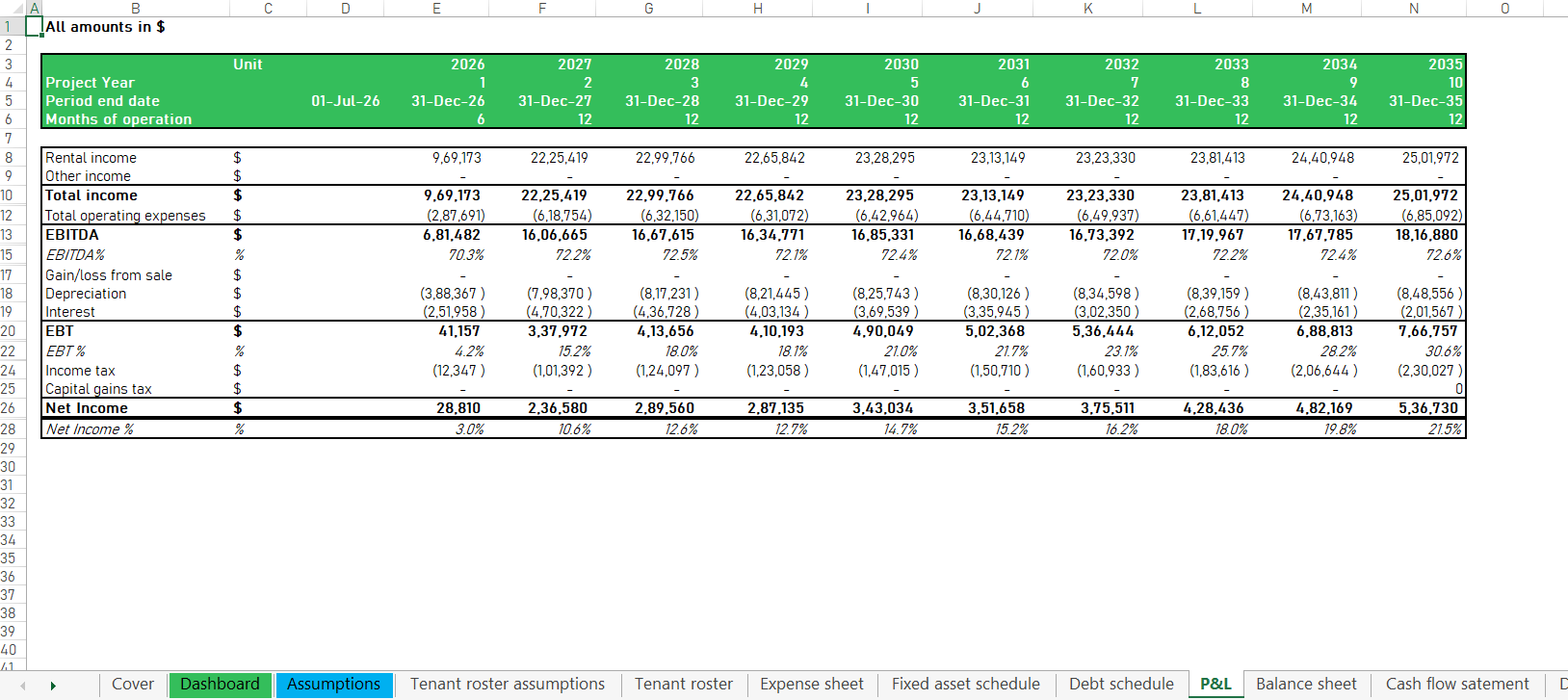
  • Profit & Loss Statement
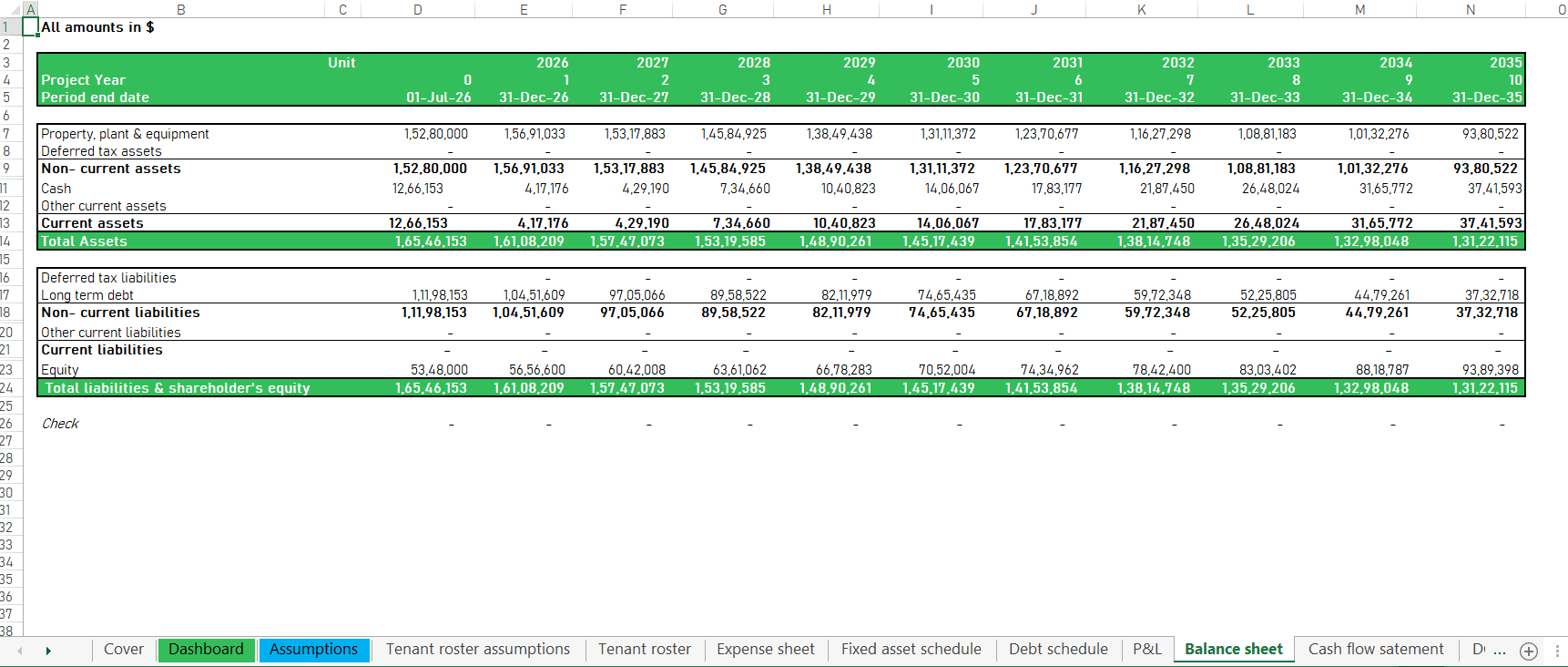
  • Balance Sheet
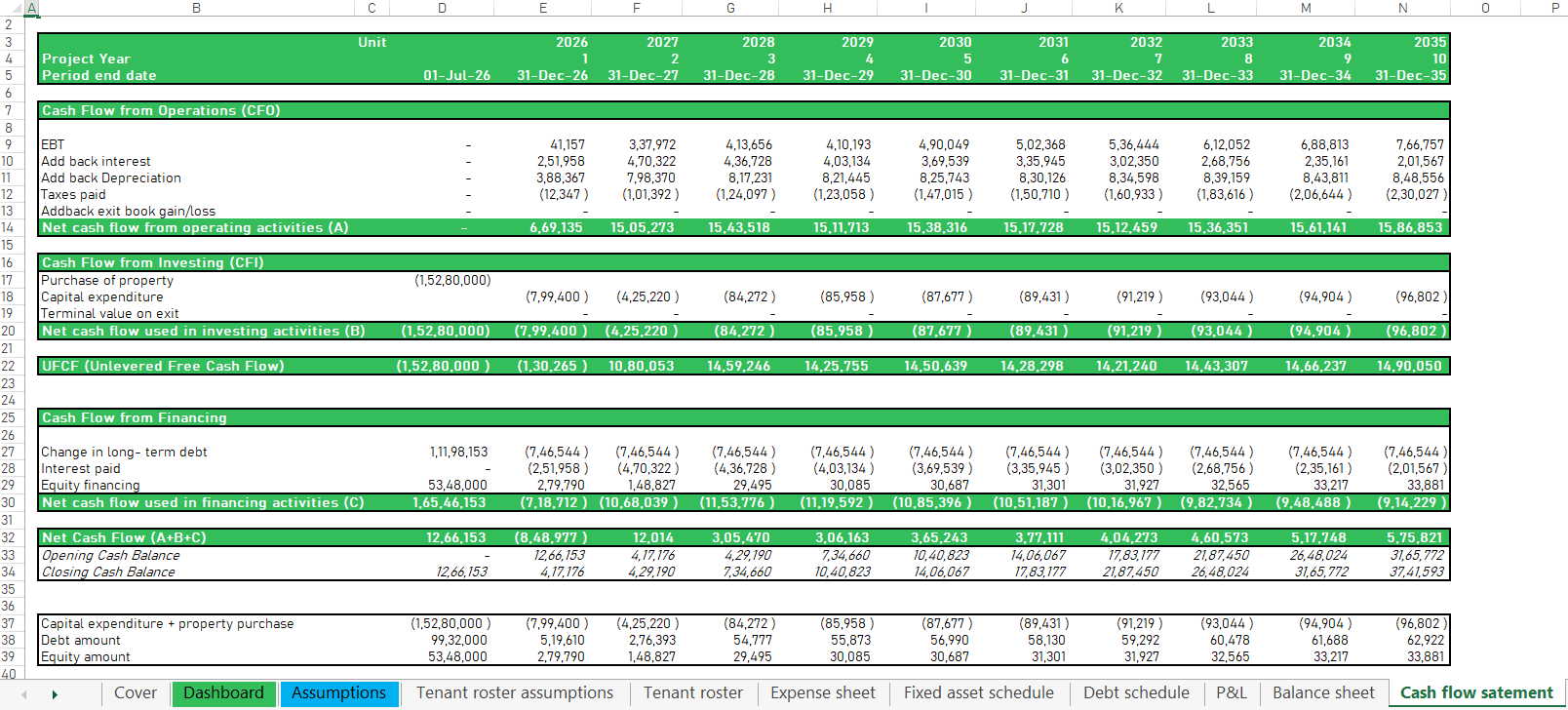
  • Cash Flow Statement

All statements are dynamically linked to assumptions, tenant income, expenses, CAPEX, and financing, ensuring consistency and accuracy.


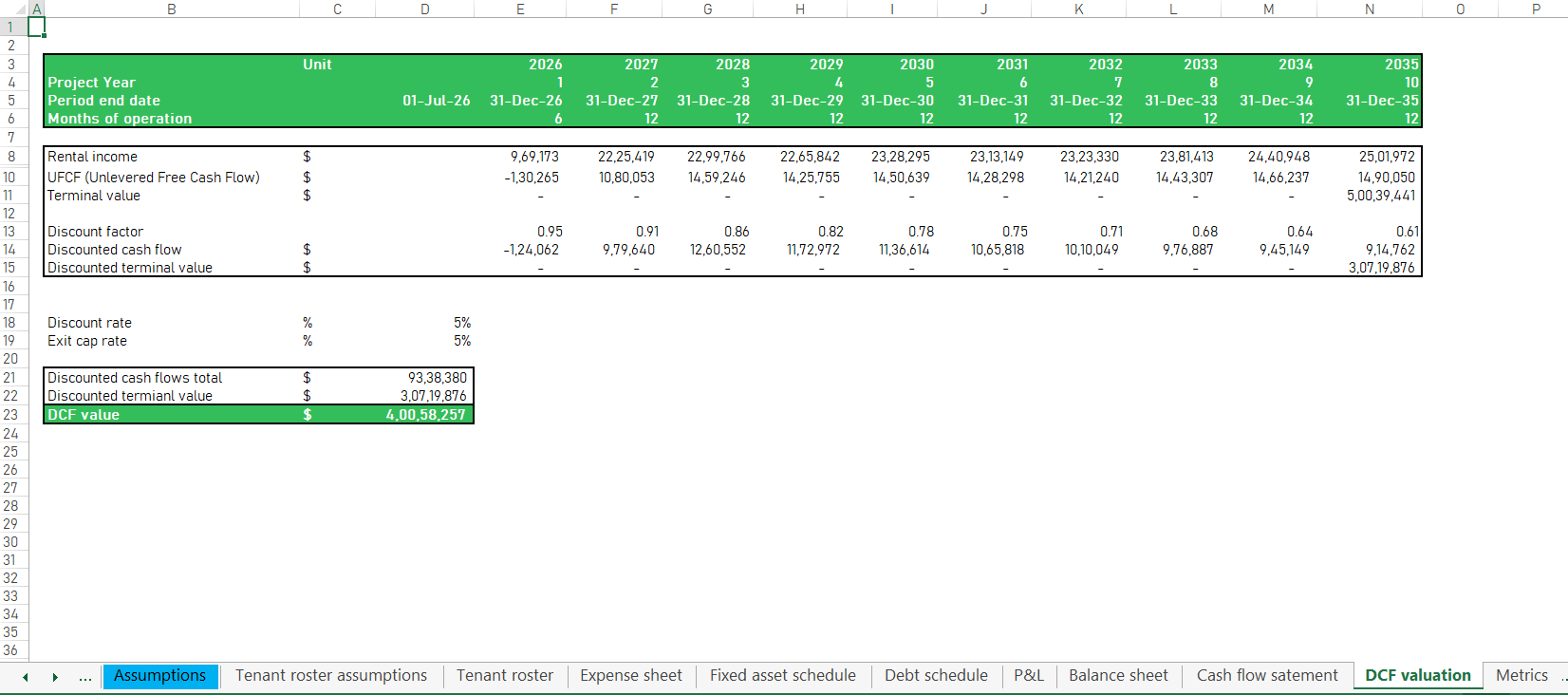
DCF Valuation
A discounted cash flow (DCF) valuation module calculates the present value of projected cash flows and the terminal value of the property. Users can adjust discount rates, exit cap rates, and valuation assumptions to perform sensitivity analysis.


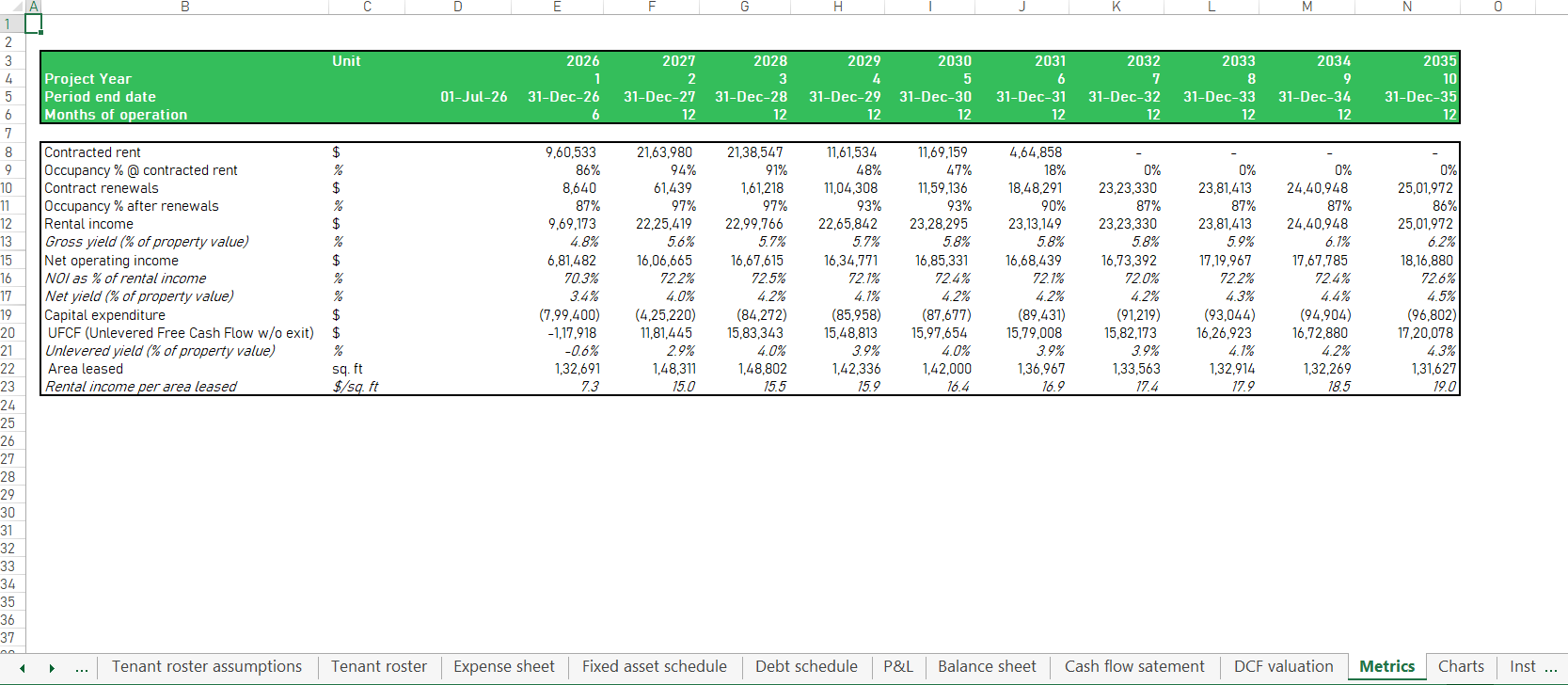
Metrics & Ratios
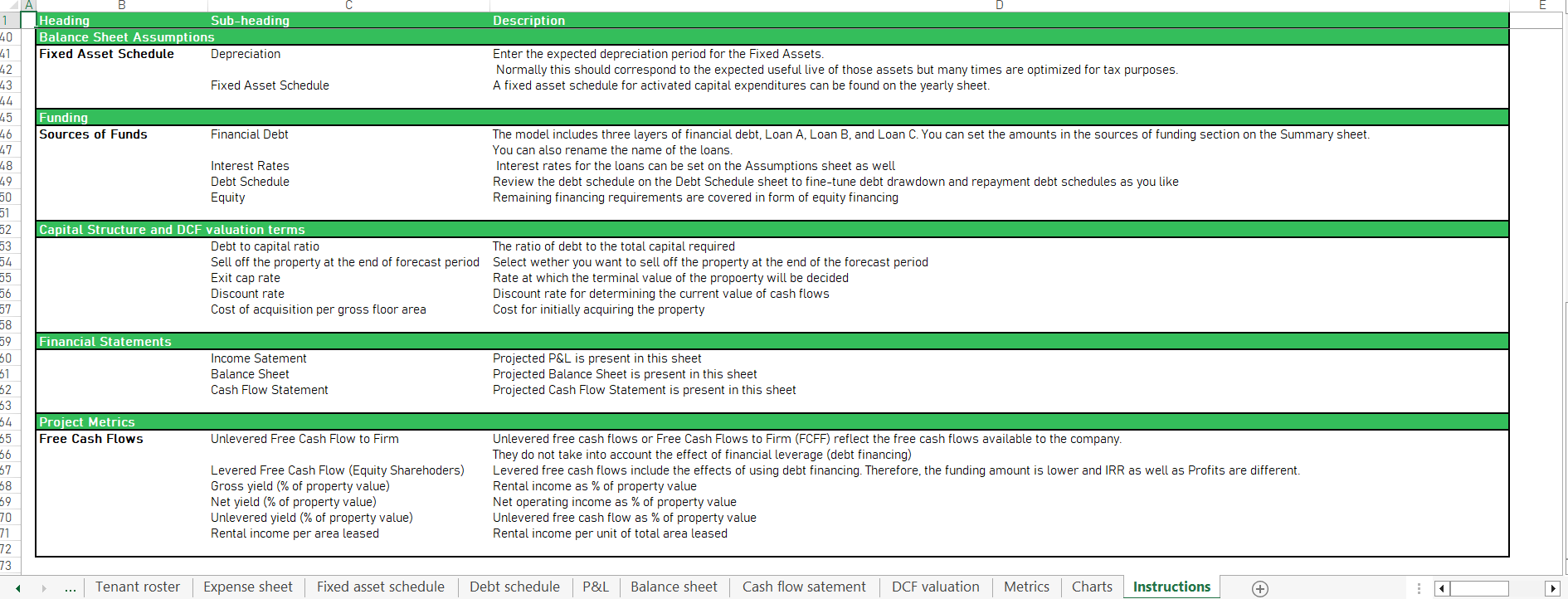
Key investment metrics such as debt service coverage ratio (DSCR), gross yield, net yield, unlevered yield, and rental income per unit area leased are calculated automatically to support investment decision-making.


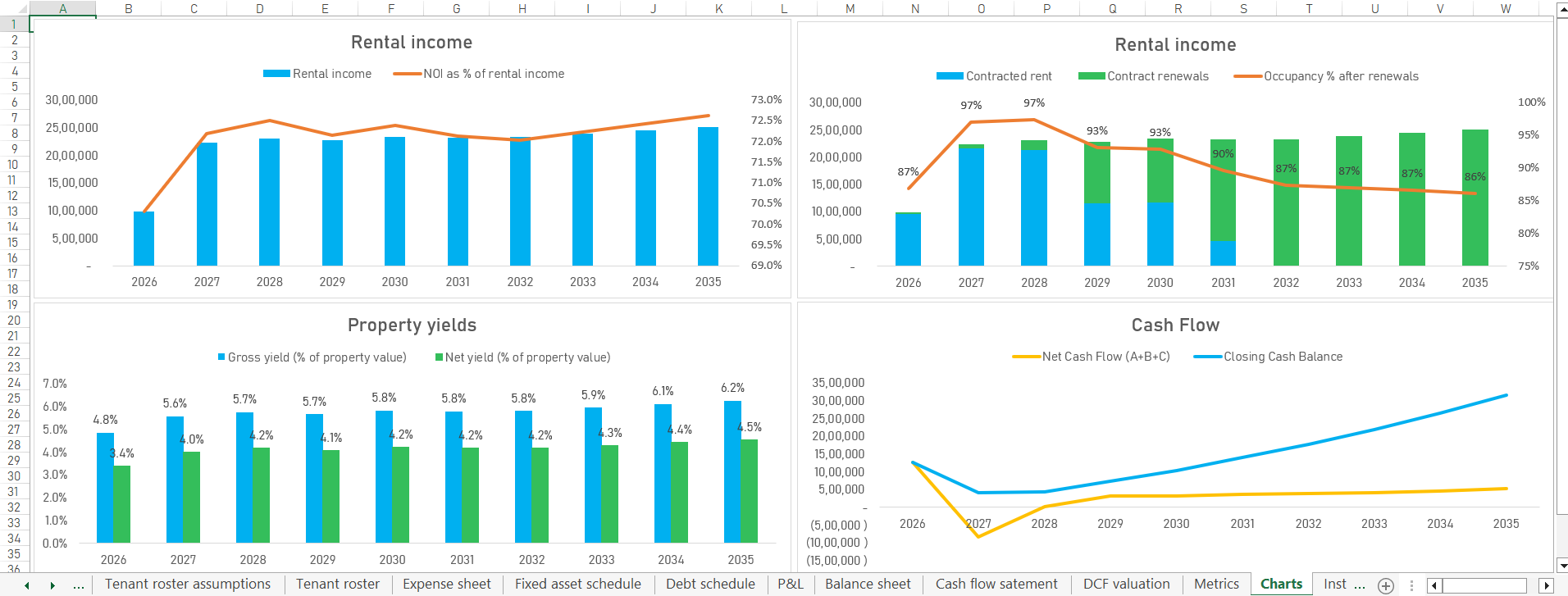
Charts & Visuals
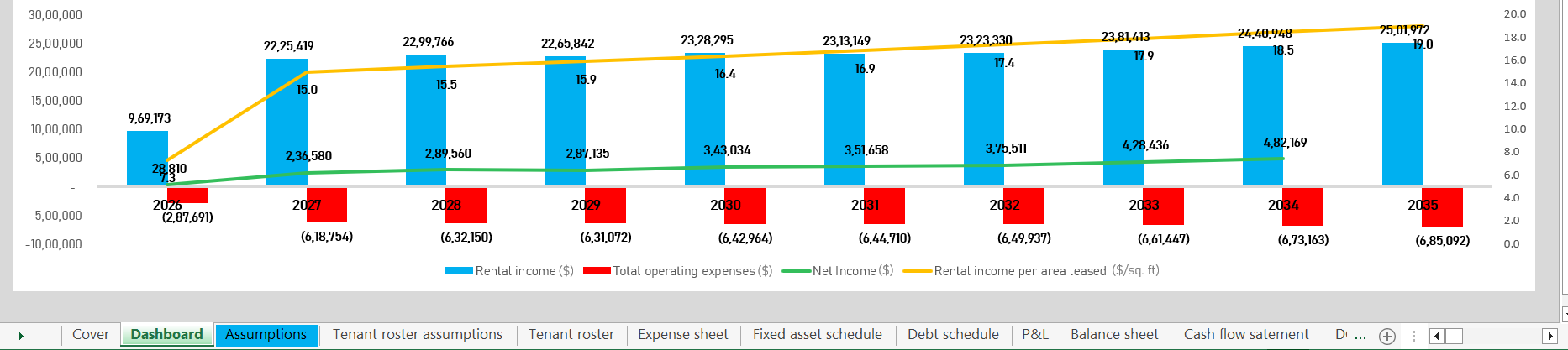
A dedicated charts section provides visual representations of revenue, expenses, cash flows, and valuation outputs, enhancing clarity and presentation quality.


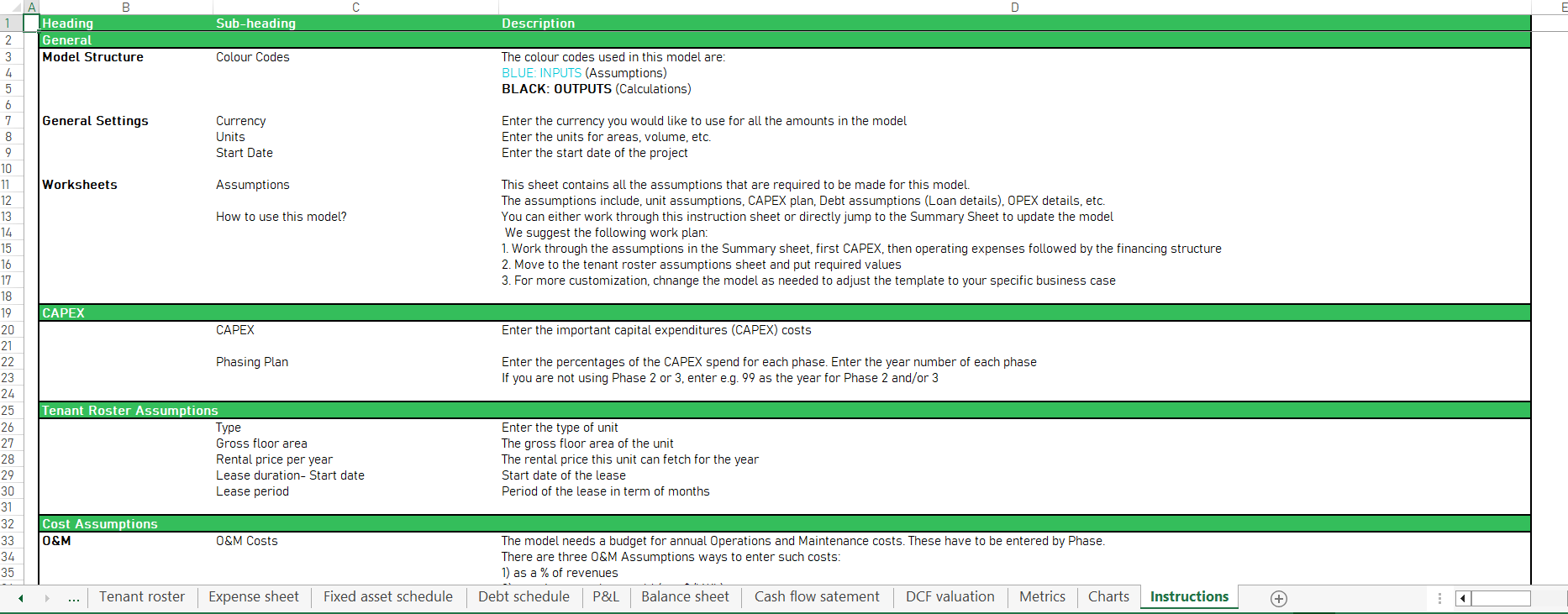
Instructions Section
A user-friendly instructions sheet guides users through the model structure, input methodology, and key assumptions, making the template accessible to both beginners and advanced users.

Please reach out to us in case of any queries or help regarding the working of the model. Your feedback is valuable to us and helps us to develop better products.

This Best Practice includes
1 Excel template

Acquire business license for $49.99

Add to cart

Add to bookmarks

Discuss

Further information

The objective of this financial model is to provide a comprehensive, transparent, and dynamic framework for evaluating the financial performance, cash flows, and valuation of a real estate investment. It is designed to support informed decision-making by modeling tenant income, operating costs, capital expenditures, financing, and key investment metrics under varying assumptions and scenarios.

This financial model is best suited for:

Income-generating real estate assets with multiple tenants and defined lease structures

Detailed cash flow forecasting and long-term investment analysis

Evaluating acquisitions, refinancing, or hold-sell decisions

DCF-based valuation and sensitivity analysis on key assumptions

Assets with operating expenses, capital expenditures, and debt financing

Professional use cases such as investment committees, lenders, asset managers, and analysts

It is most effective when reliable lease, cost, and financing assumptions are available and scenario analysis is required to assess risk and return.

This model may be less suitable for:

Single-tenant or very simple properties where a full tenant-level and DCF model is unnecessary

Short-term trading, flipping, or development-only projects without stabilized cash flows


0.0 / 5 (0 votes)

please wait...