


Event Venue Acquisition & Operations Pro Forma
Originally published: 08/09/2025 19:44
Publication number: ELQ-16306-1
View all versions & Certificate
certified

Event Venue Acquisition & Operations Pro Forma

A detailed financial model with configurations for various event types, direct costs, and build or acquire frameworks.

Description
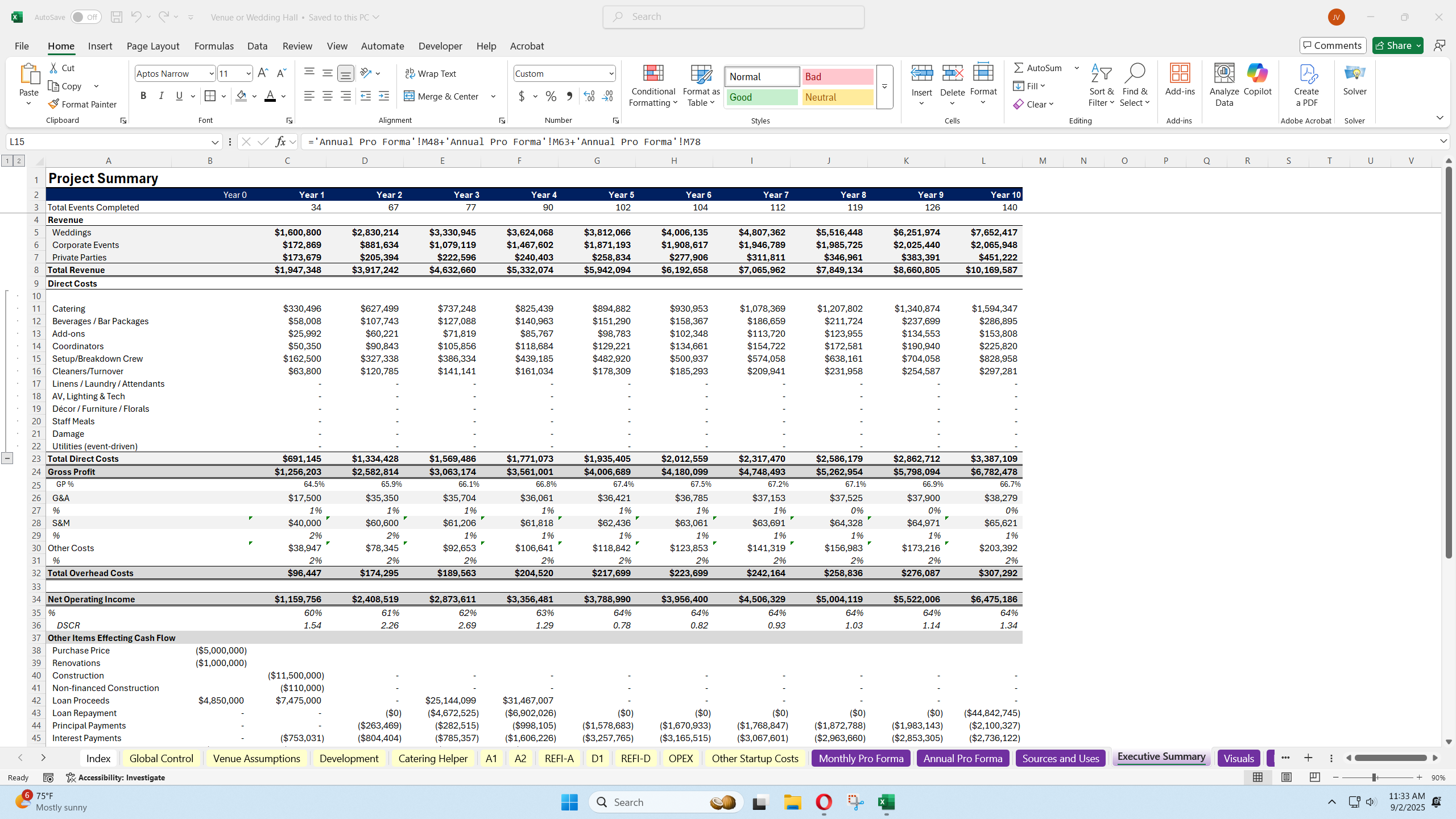
This template bridges hospitality operations and real estate finance so you can underwrite, launch, and run an event venue—whether you plan to buy, build, or lease the property. It models the full lifecycle from day‑one capital needs through stabilization, refinancing, and exit, while letting you tailor event mix and pricing for weddings, corporate events, and private parties. The structure is modular, so you can hide tabs you don’t need, and everything rolls up to a clean Global Control summary for quick decision‑making.


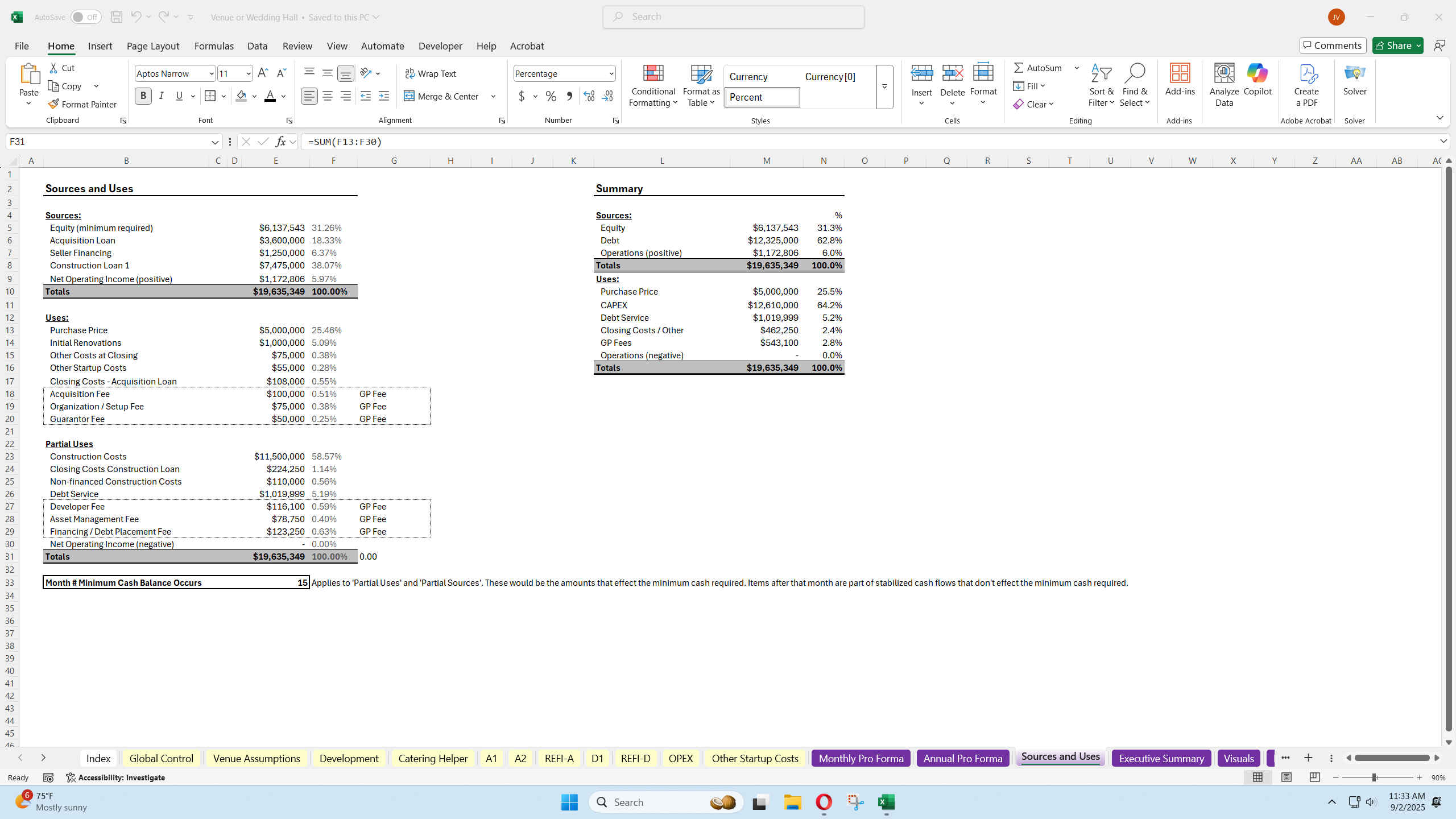
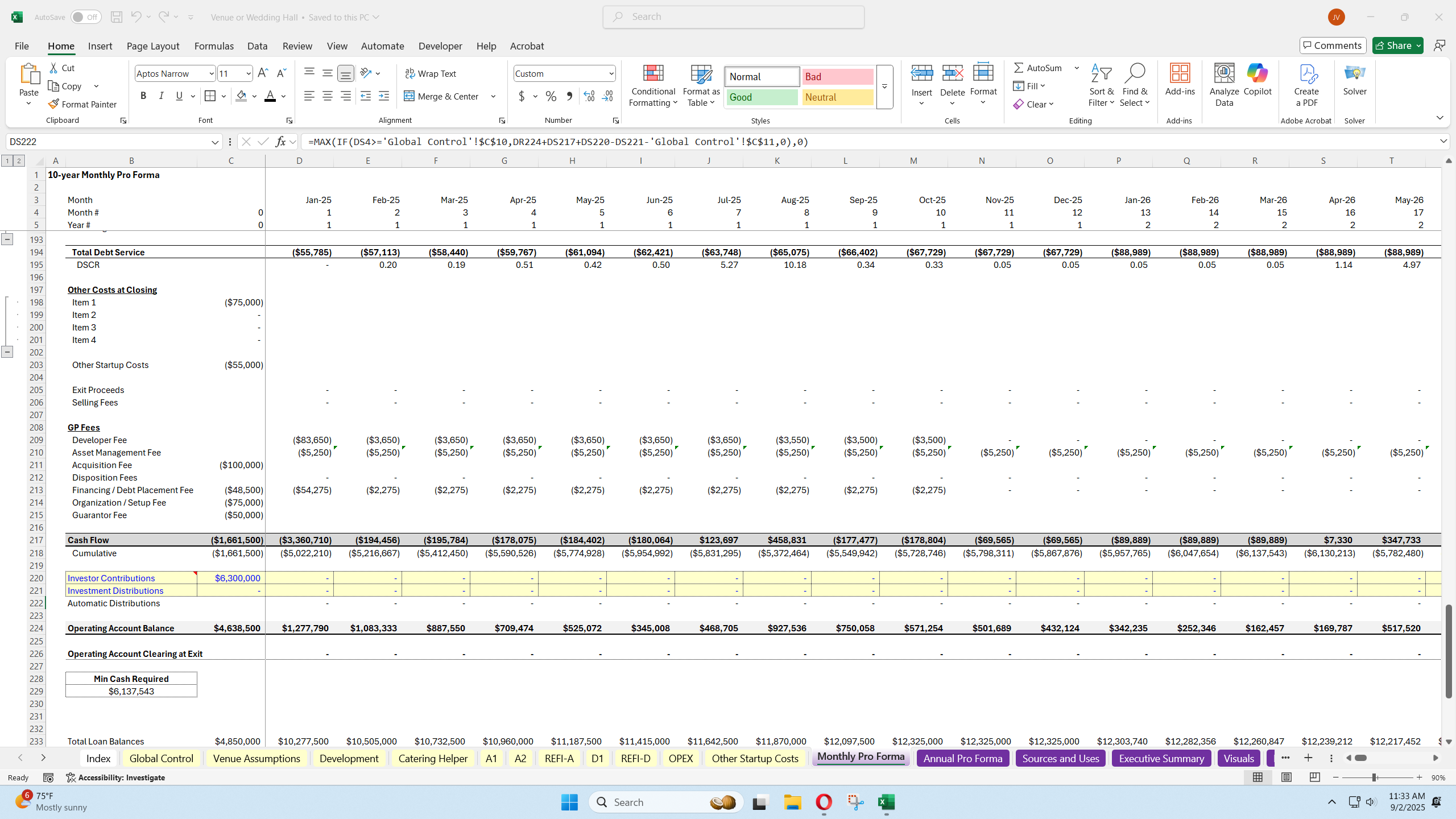
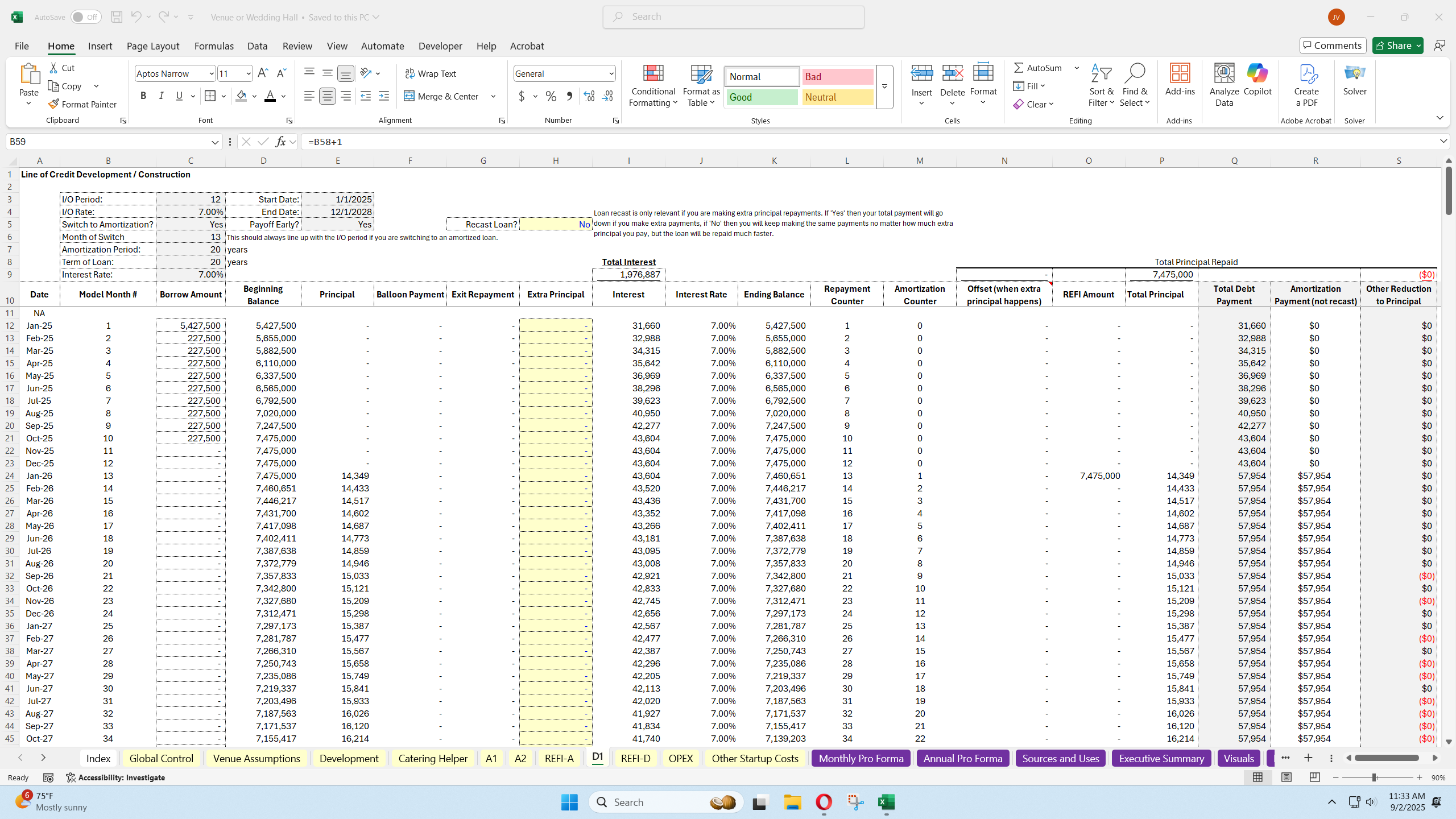
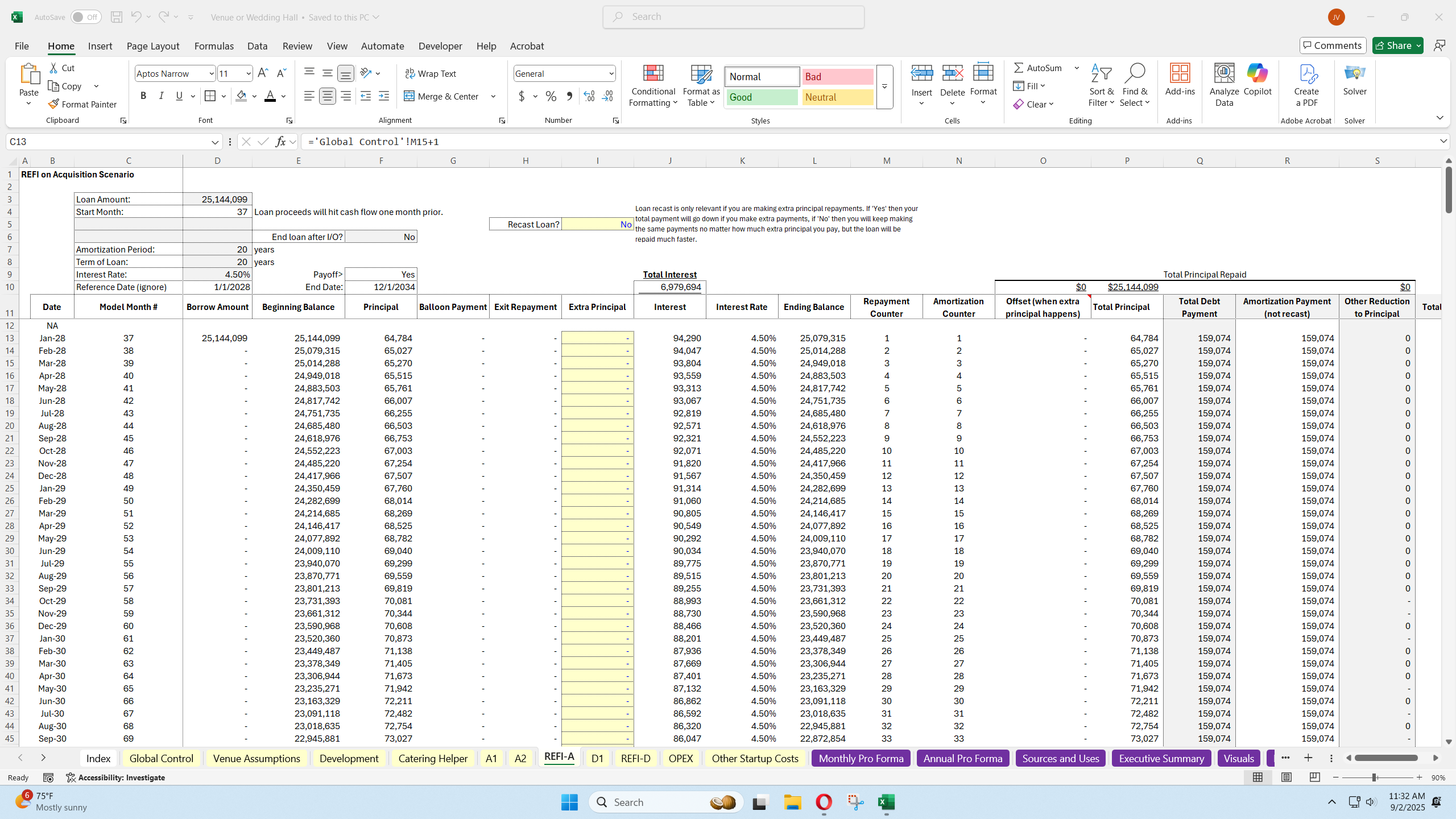
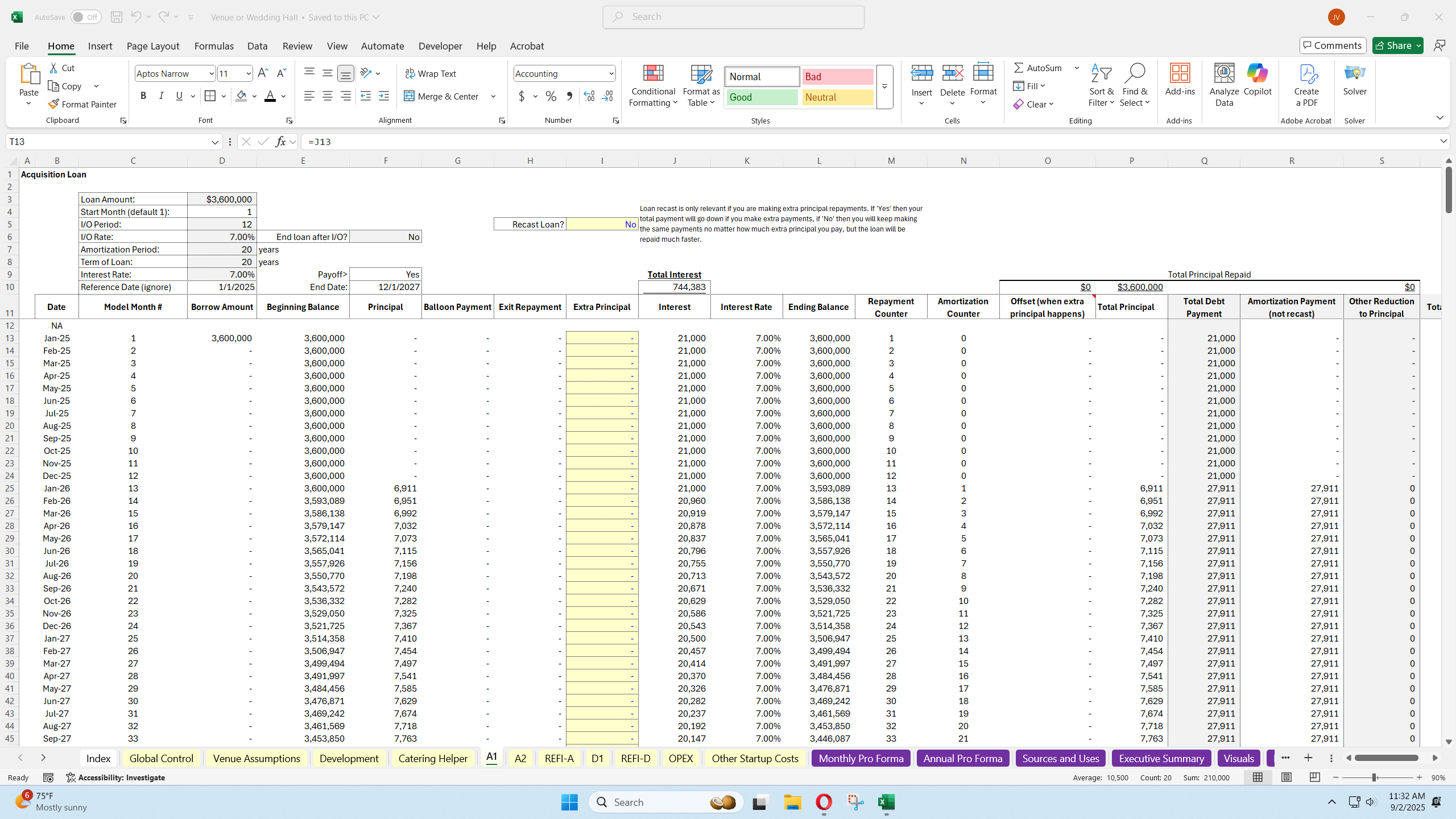
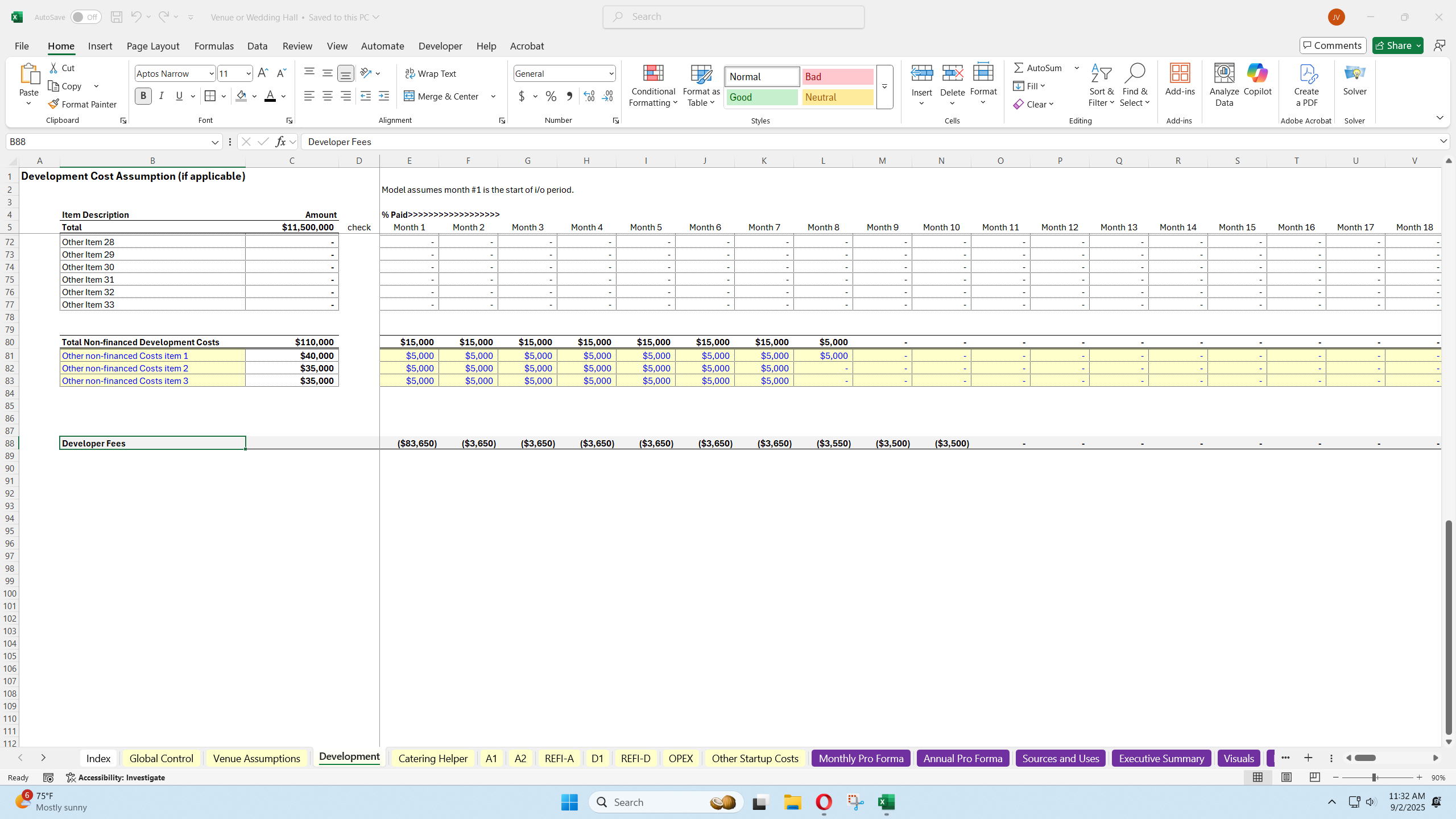
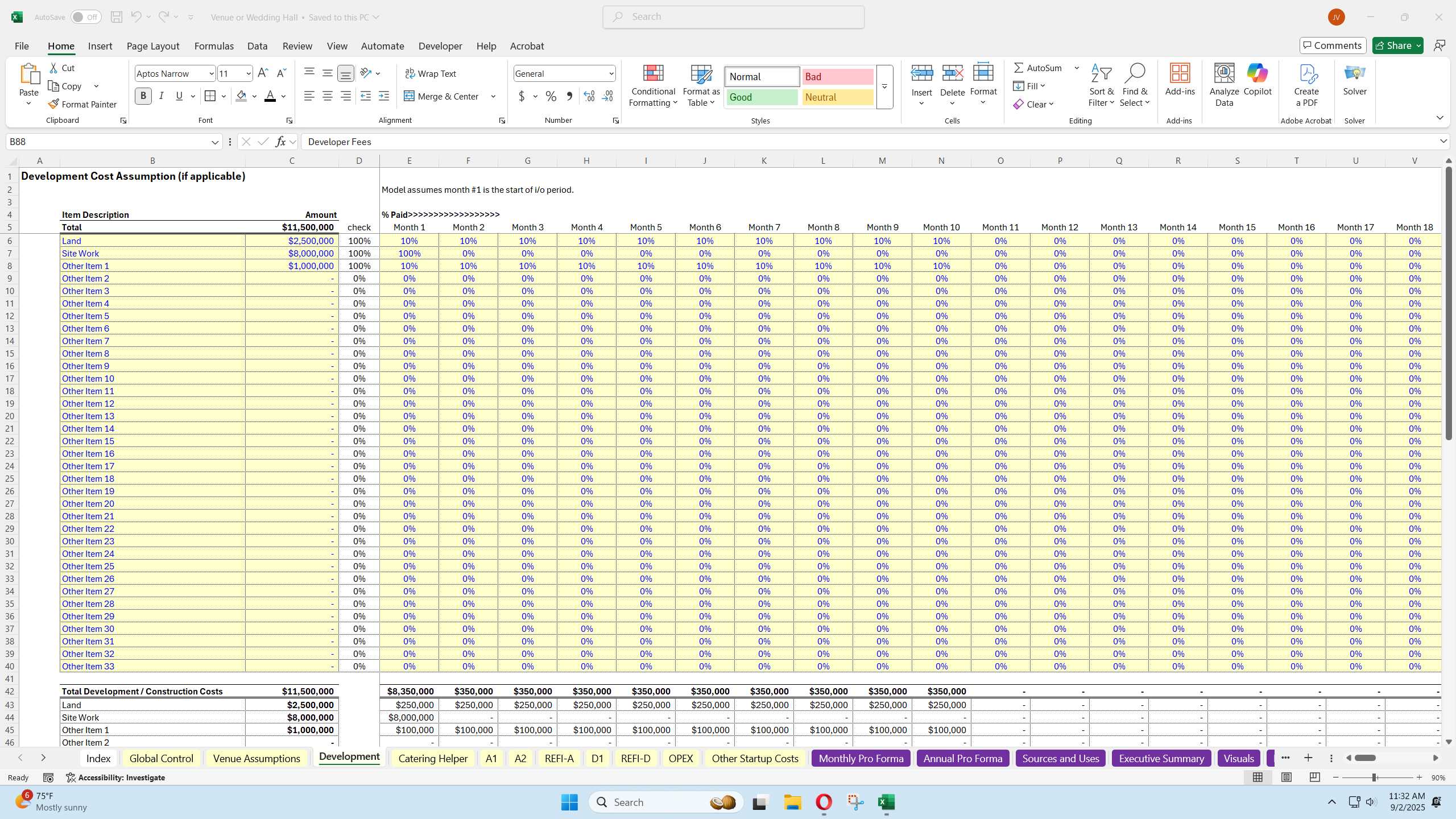
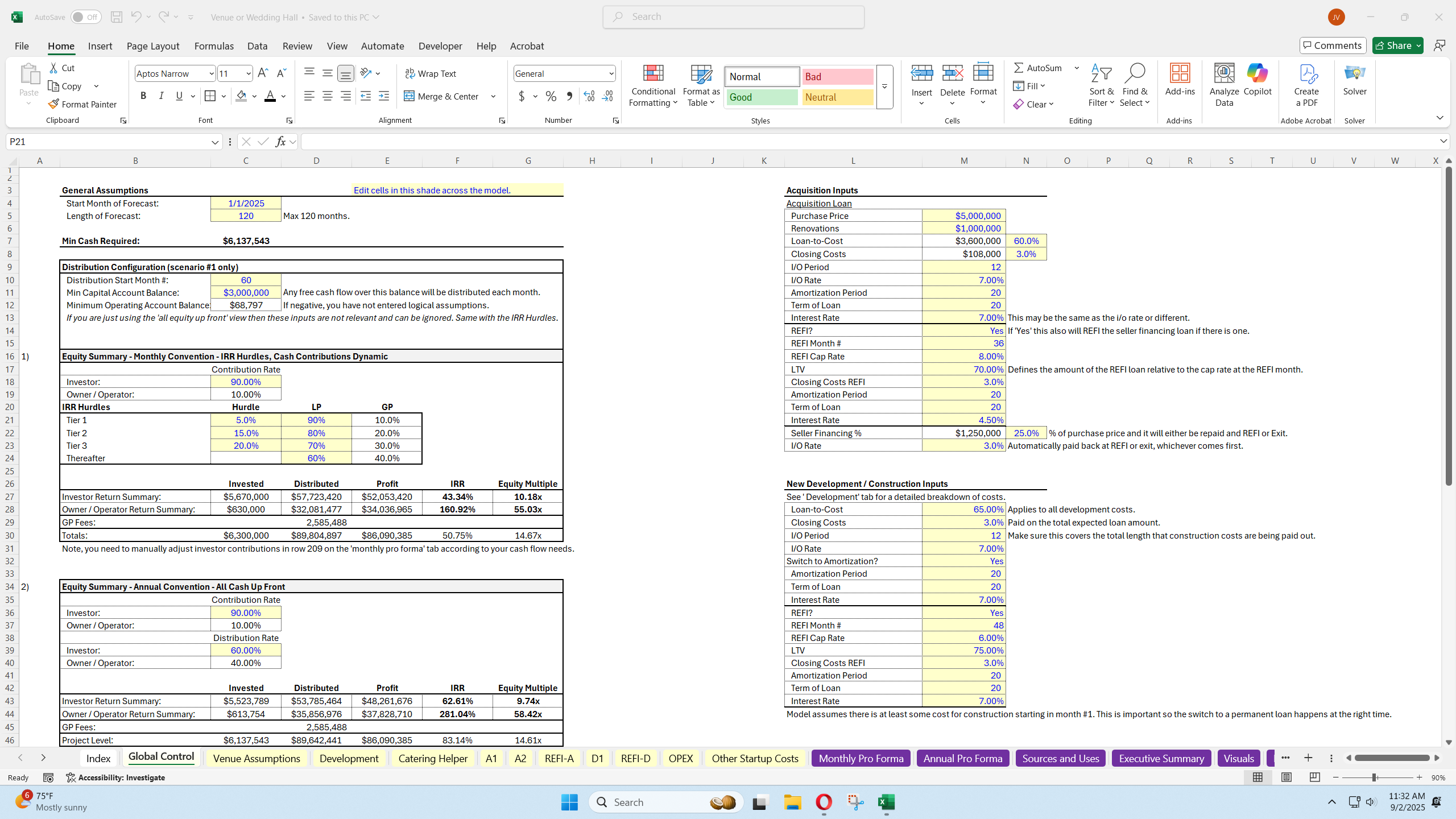
On the capital side, you can run an acquisition with senior debt and optional seller financing, or a ground‑up development using a detailed hard/soft cost budget, spend curve, and loan‑to‑cost target. The construction facility handles an interest‑only period and a defined month to convert to permanent debt, with the option to refinance again later. Refinances are sized using a cap rate applied to trailing‑12 NOI at the refi month and an LTV constraint, so proceeds reflect real operating performance. JV/GP fees and other up‑front costs are supported out of the box.


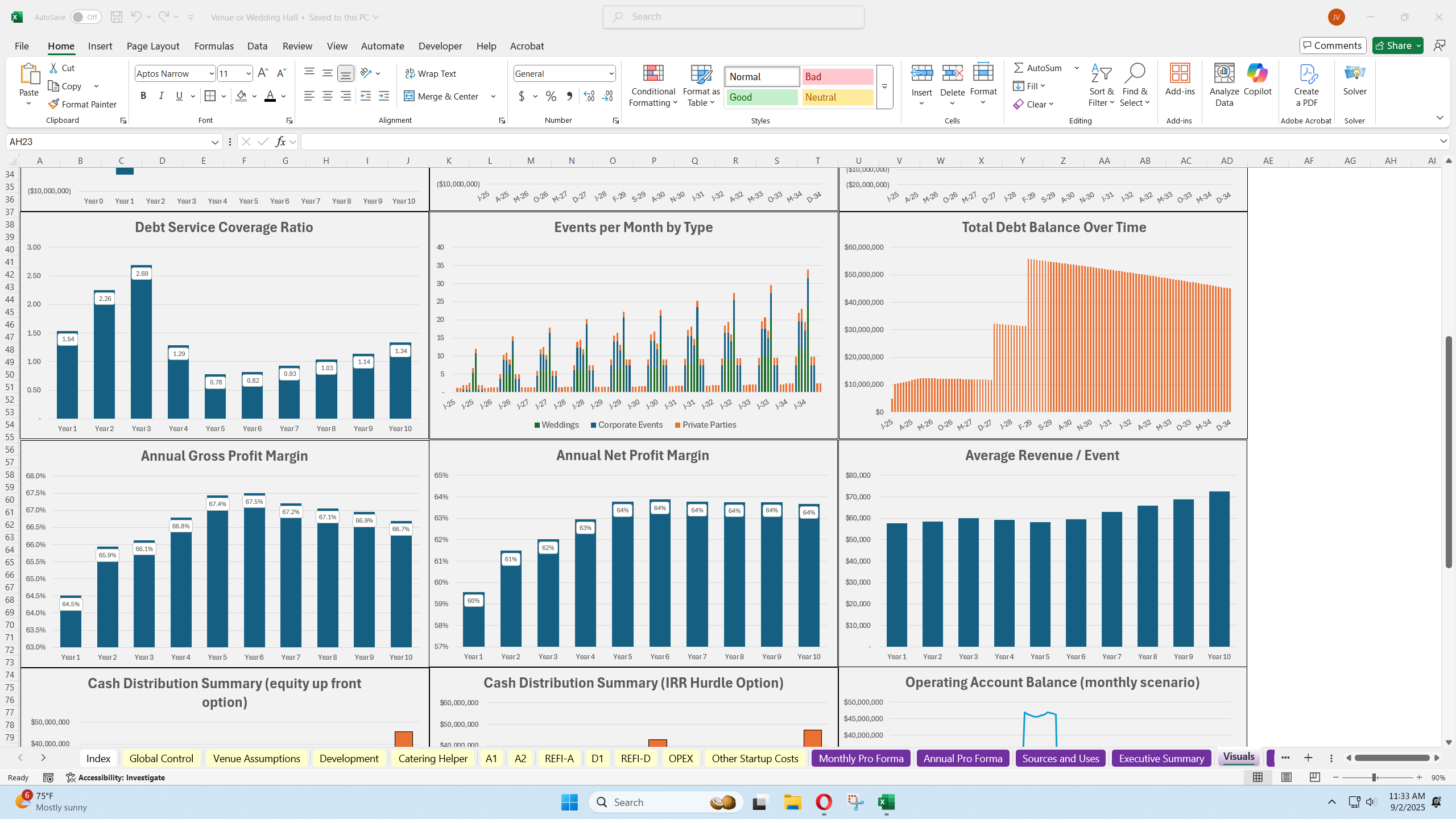
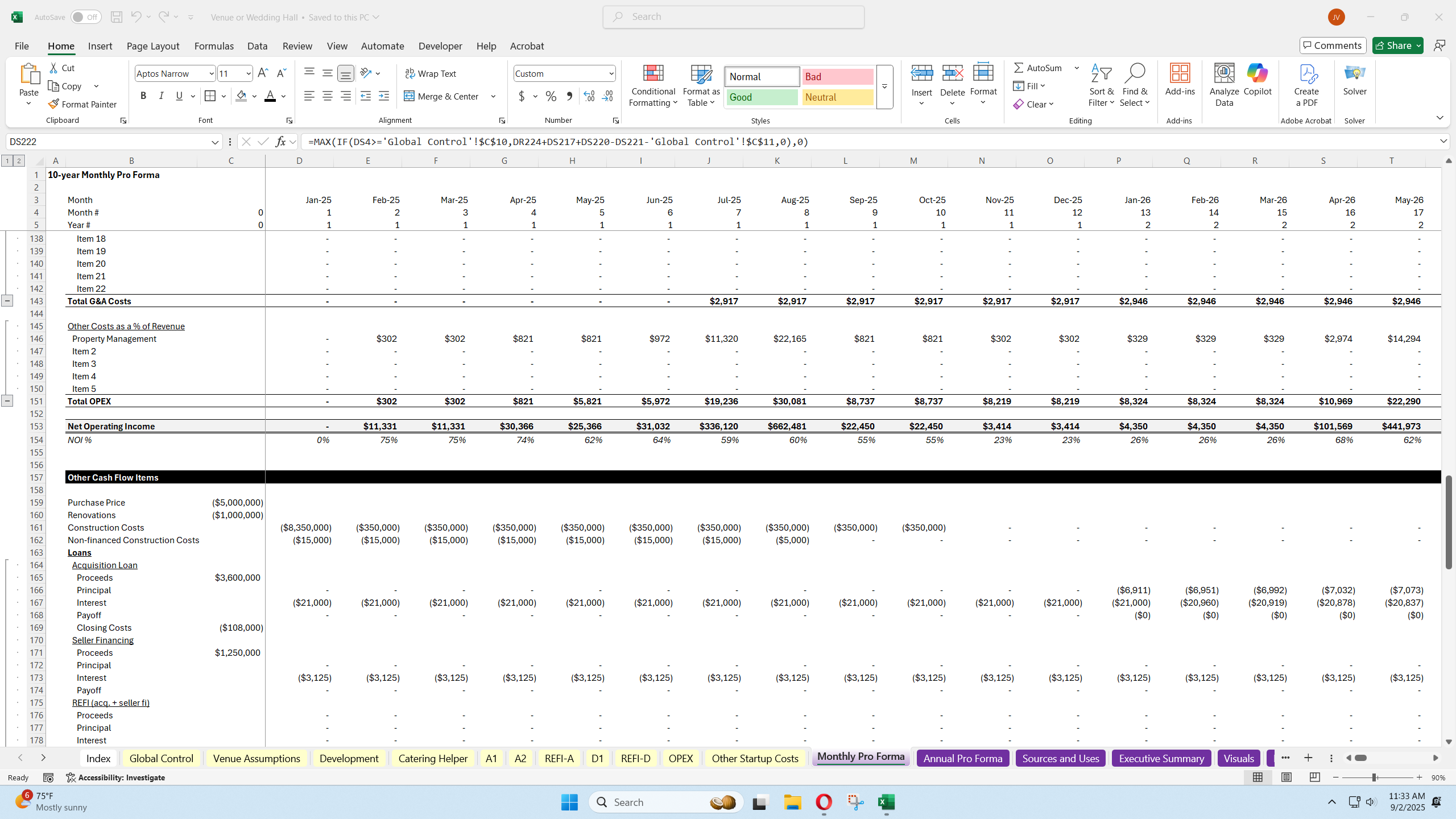
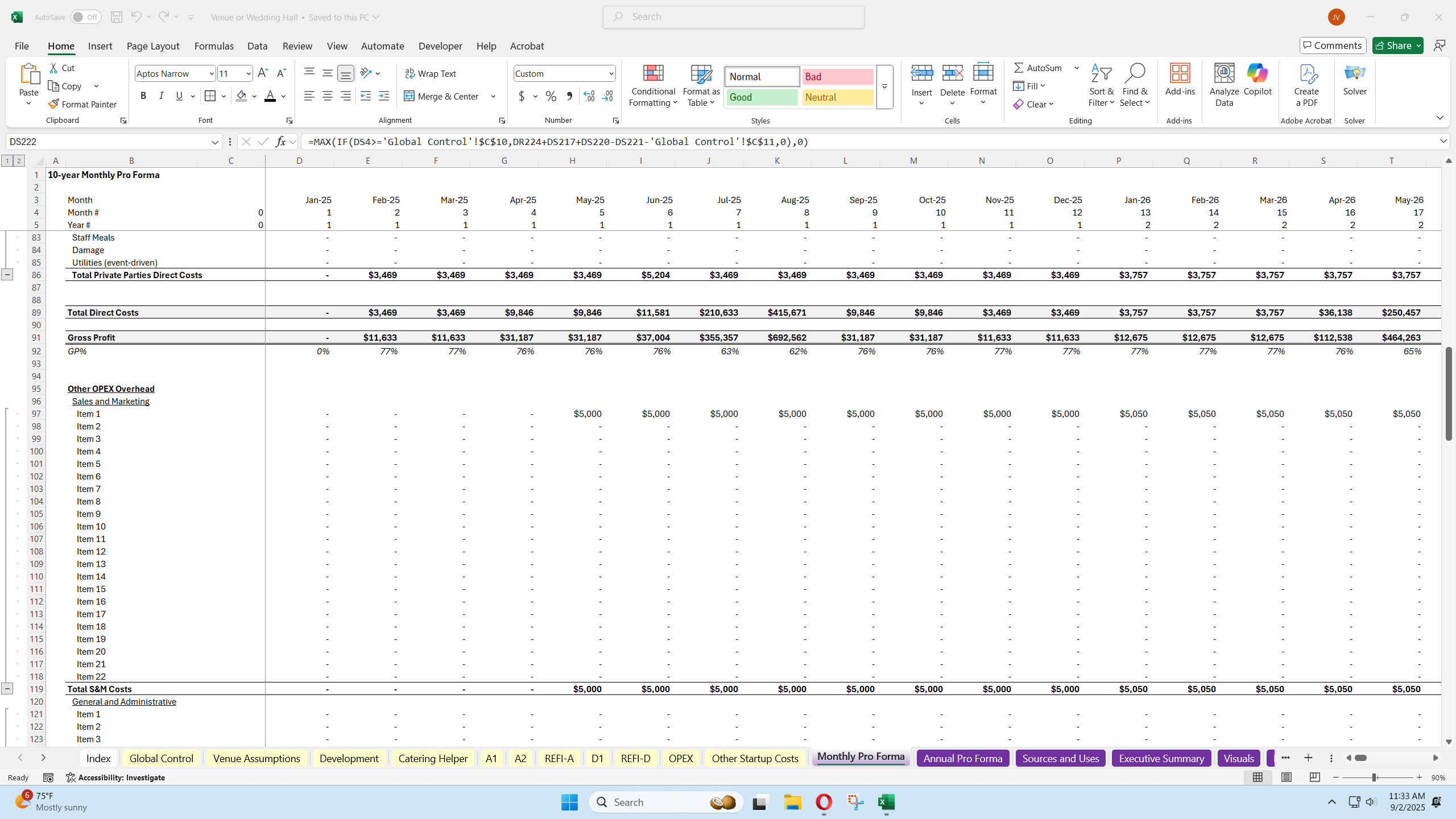
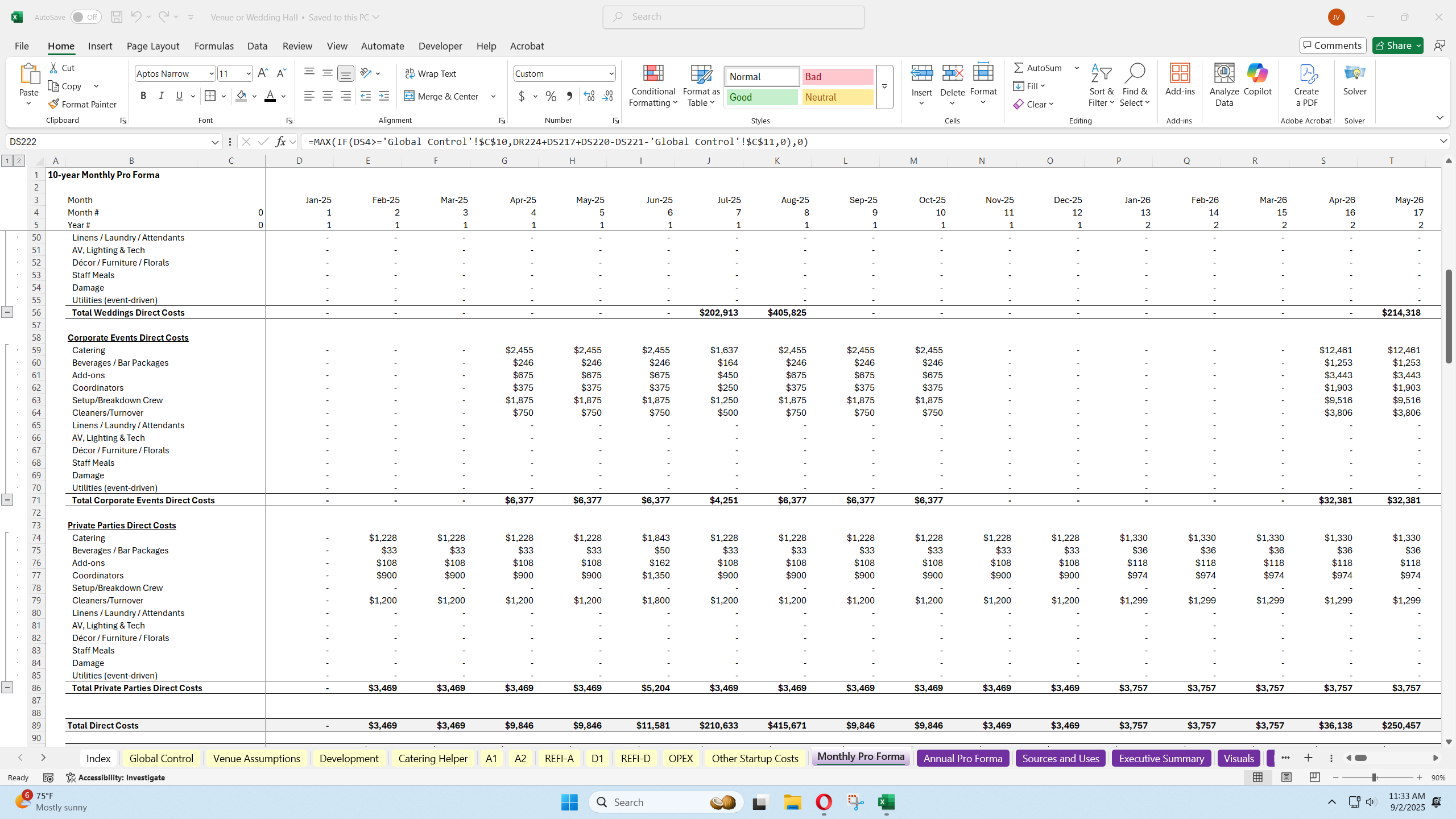
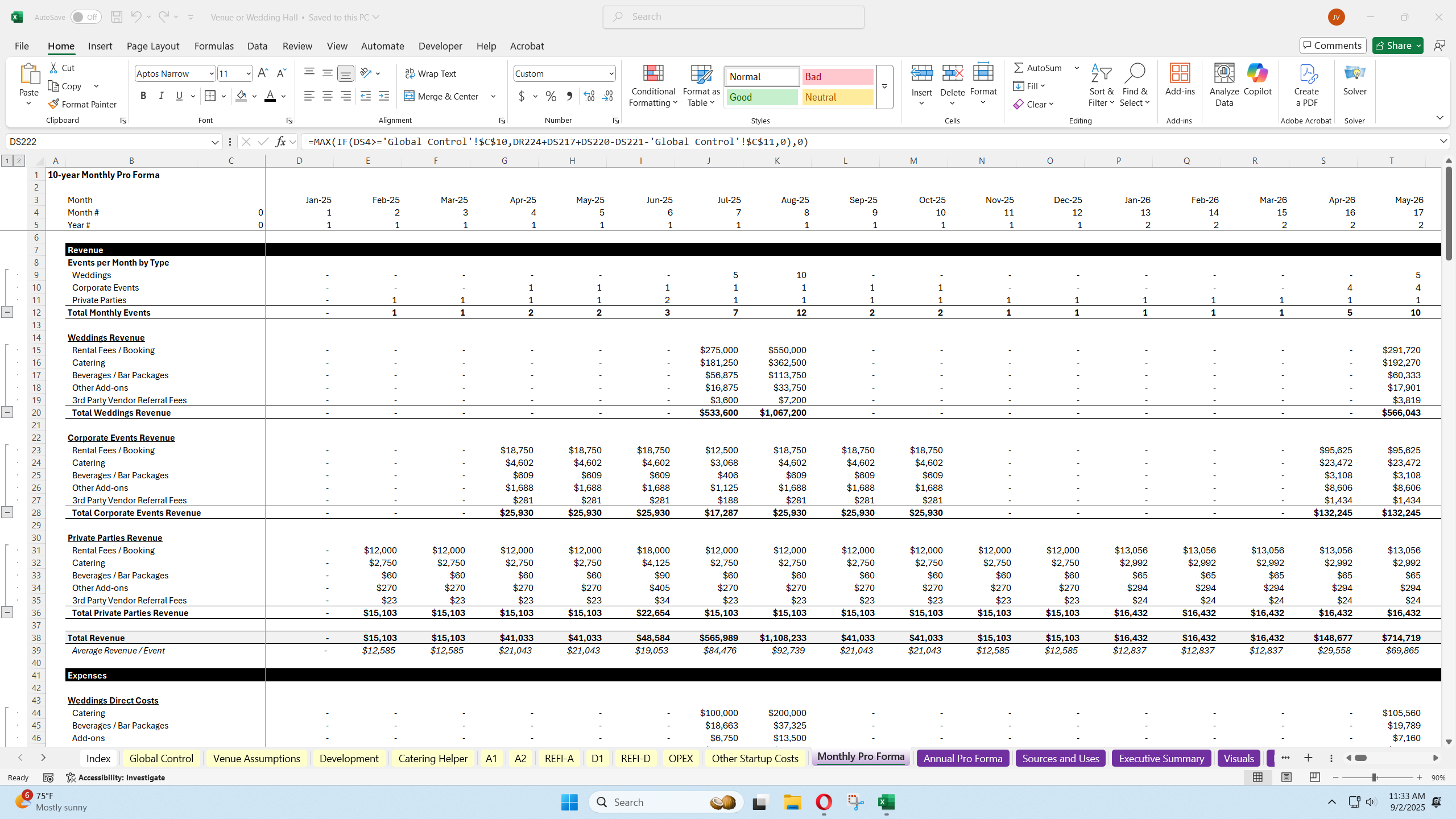
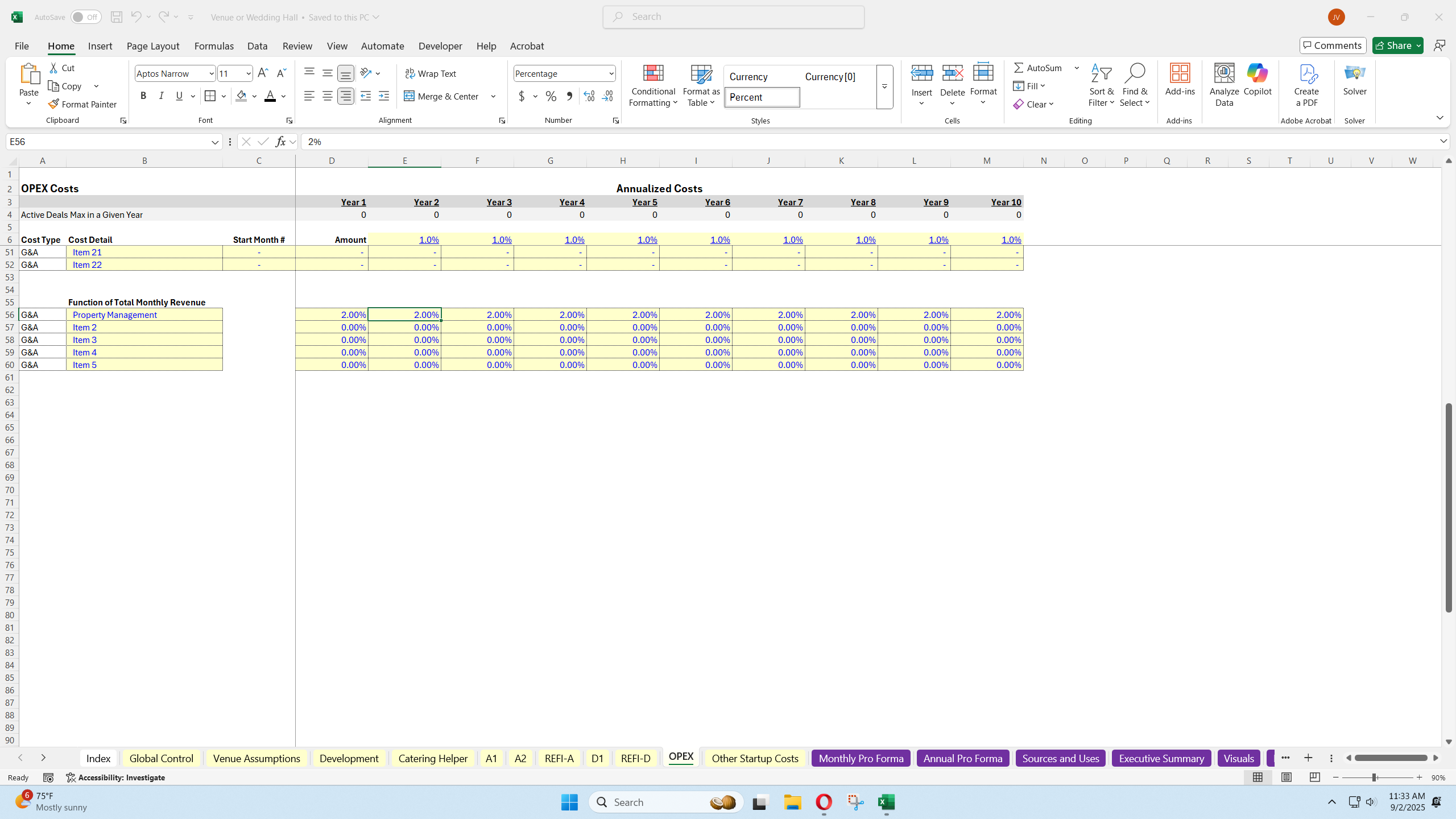
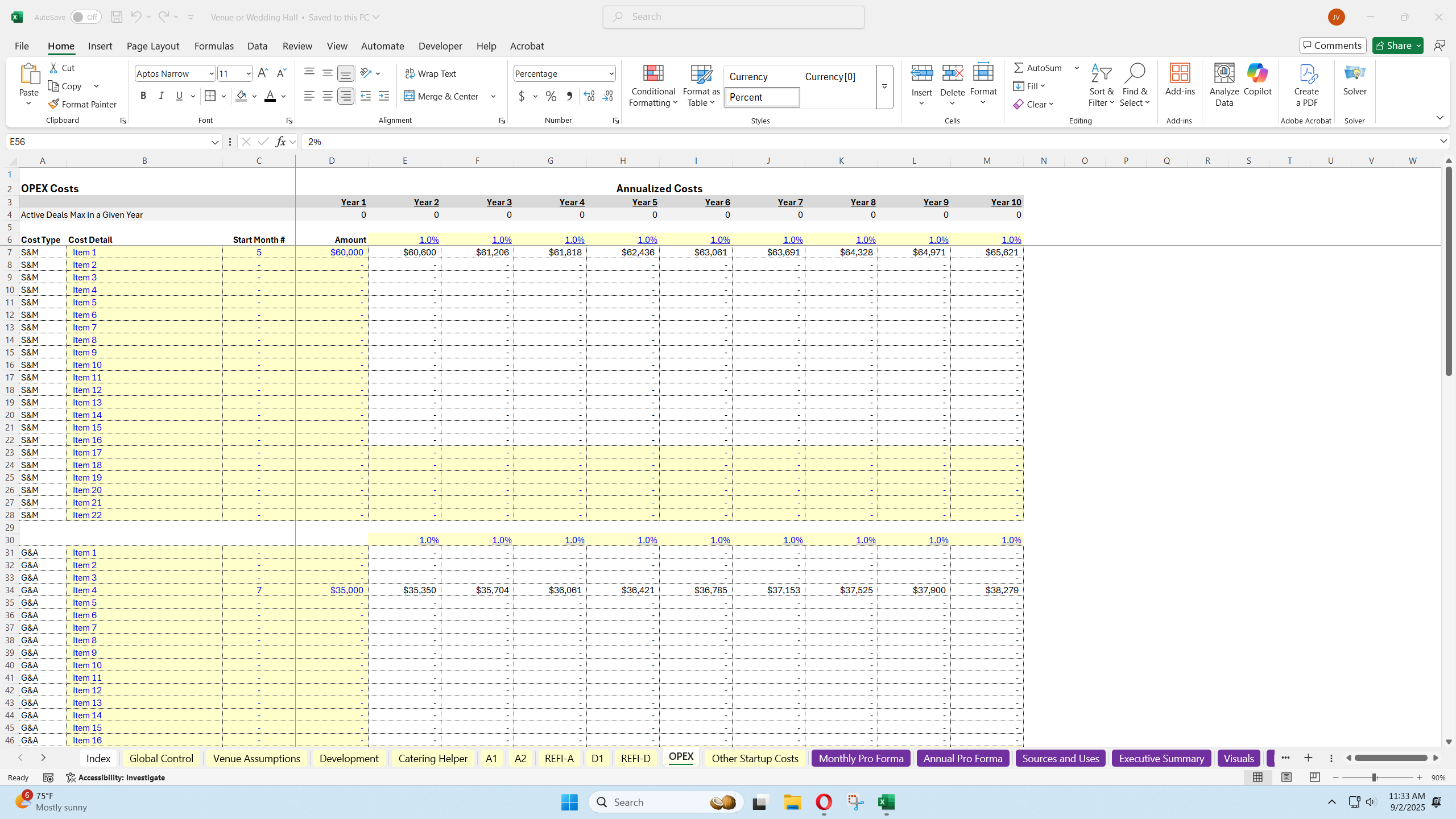
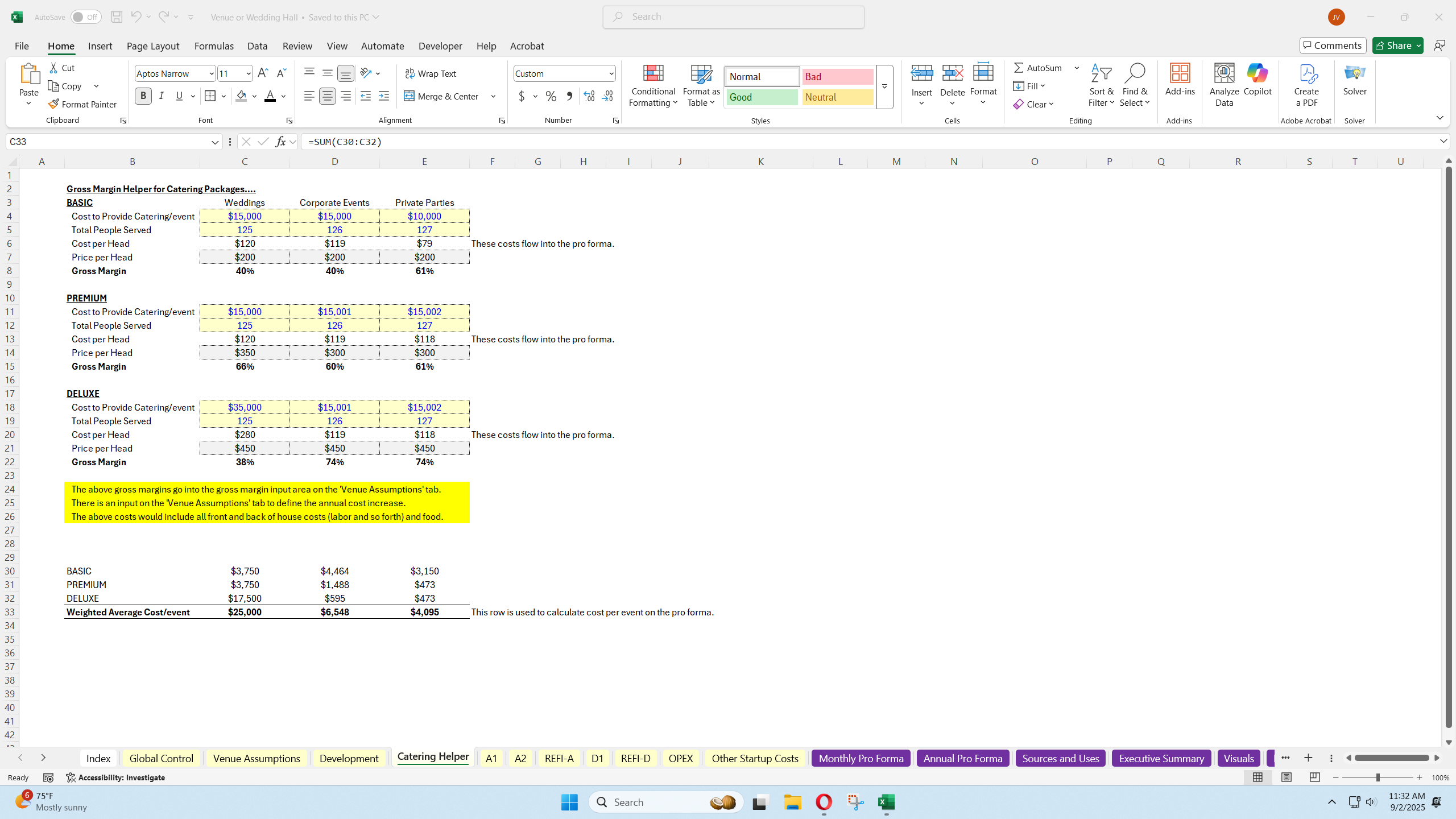
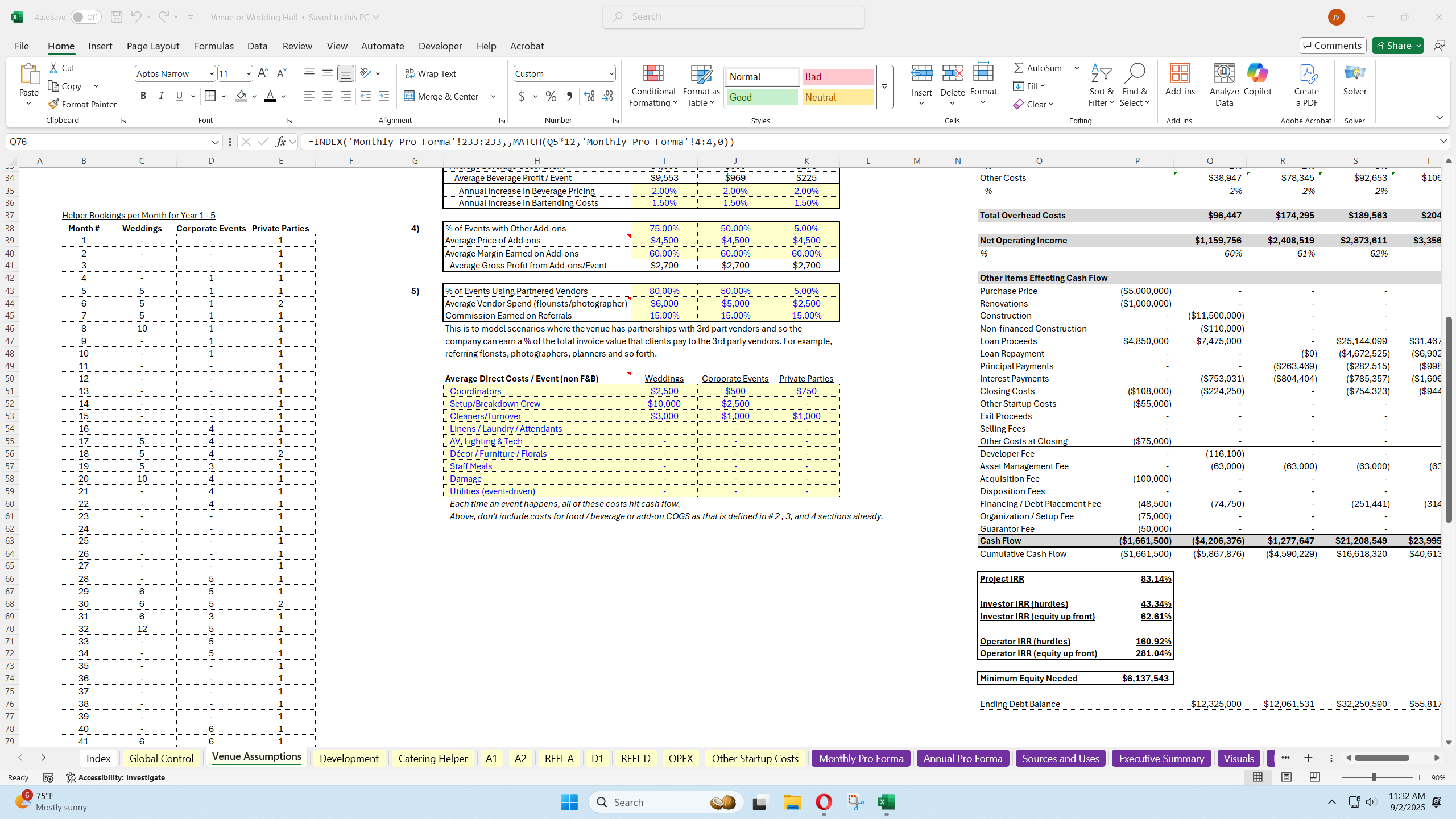
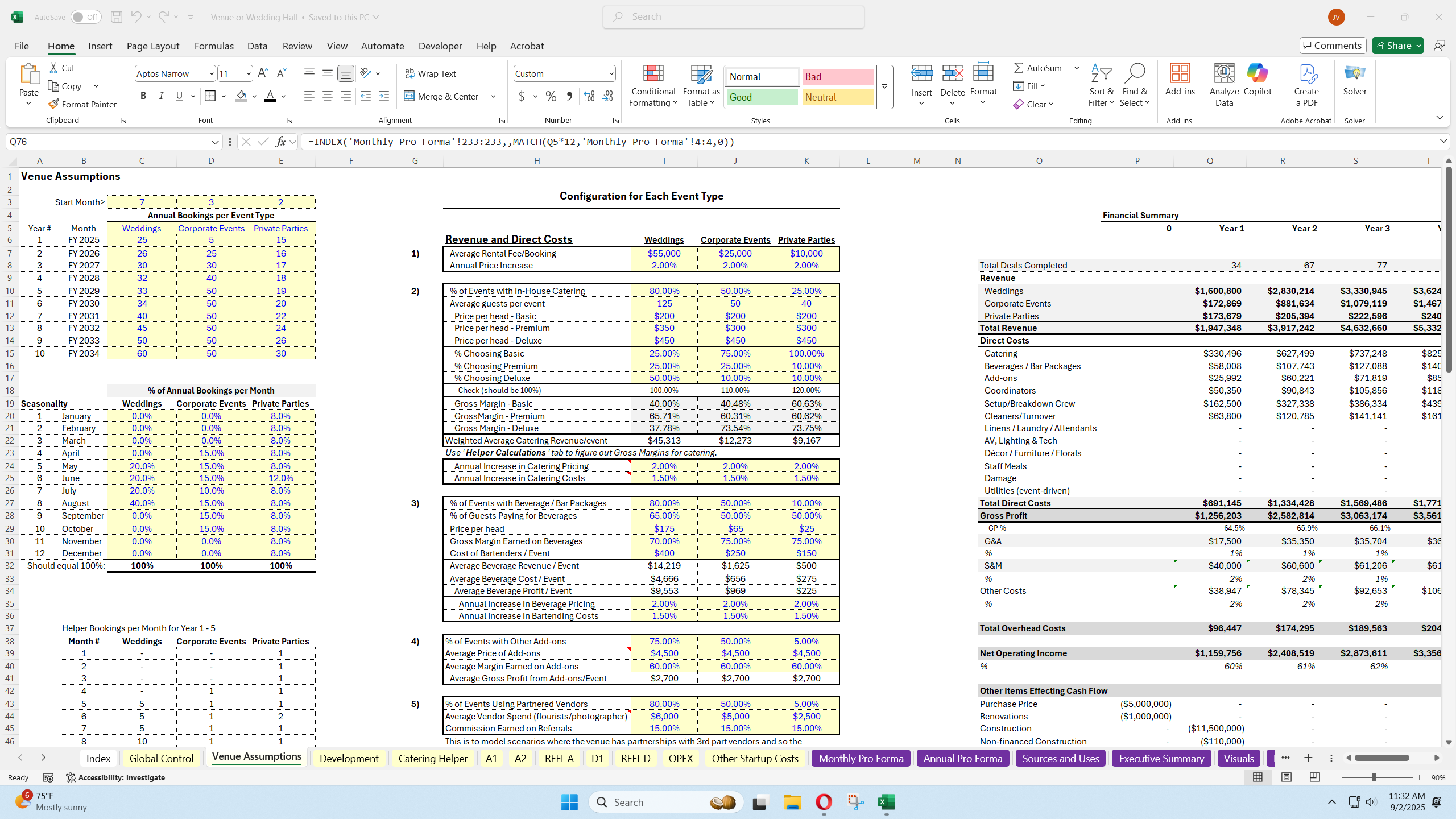
The operating engine lets you define up to three event types with annual counts and month‑by‑month seasonality, then configure five revenue streams: rental, catering, bar packages, add‑ons, and third‑party referral fees. A helper tab sets margins for three catering tiers and drives bar/add‑on costs (including bartender costs), plus you can specify up to nine direct fixed costs per event type. OPEX is calendarized with start month, base amount, and growth, and also supports percent‑of‑revenue items like property management. If you’re leasing instead of owning, set purchase/development to zero and model the lease in OPEX—the exit value still keys off operating income. Operating cash, Sources & Uses, and the minimum cash position month update dynamically to separate stabilization funding from ongoing operations.


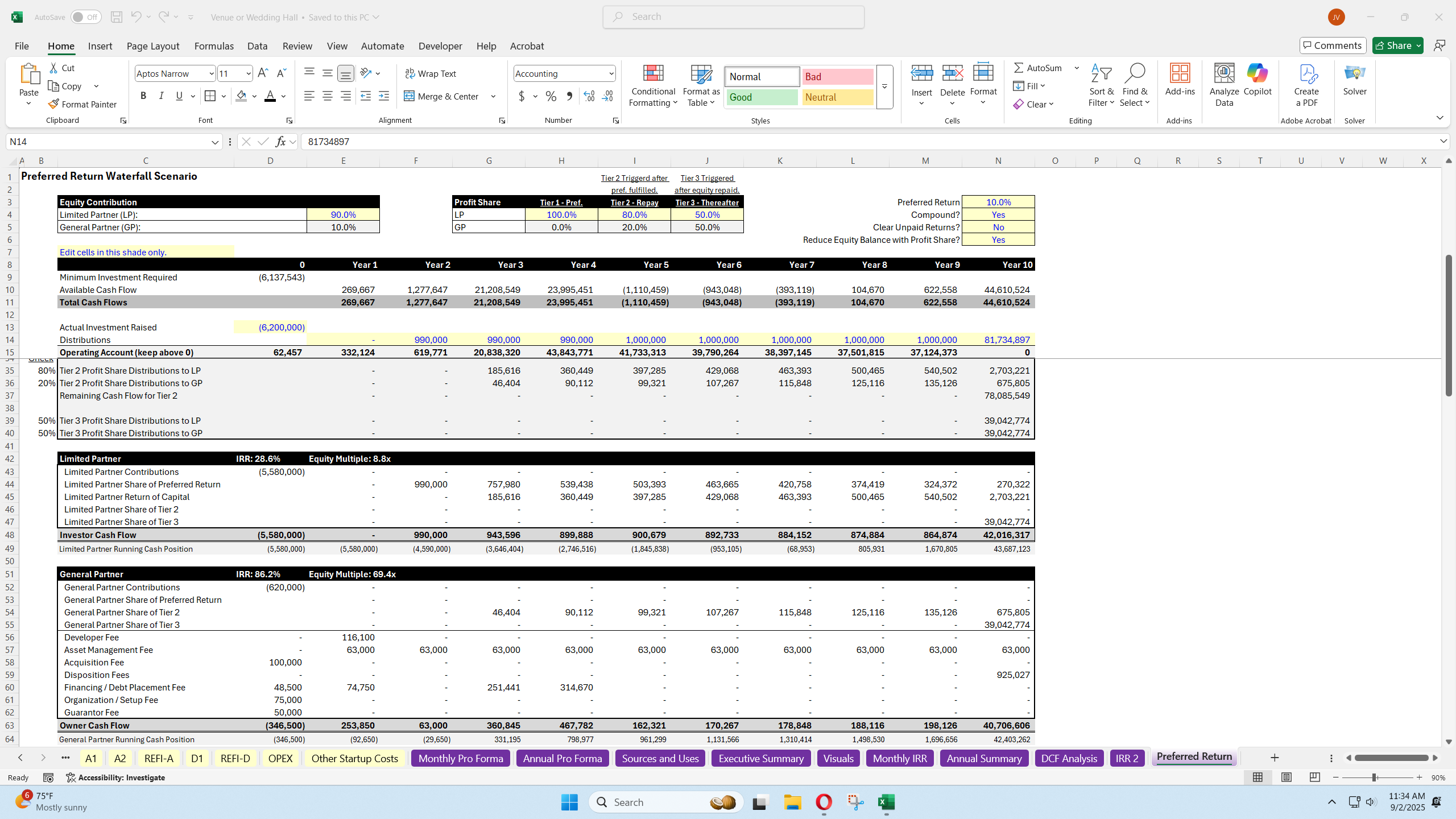
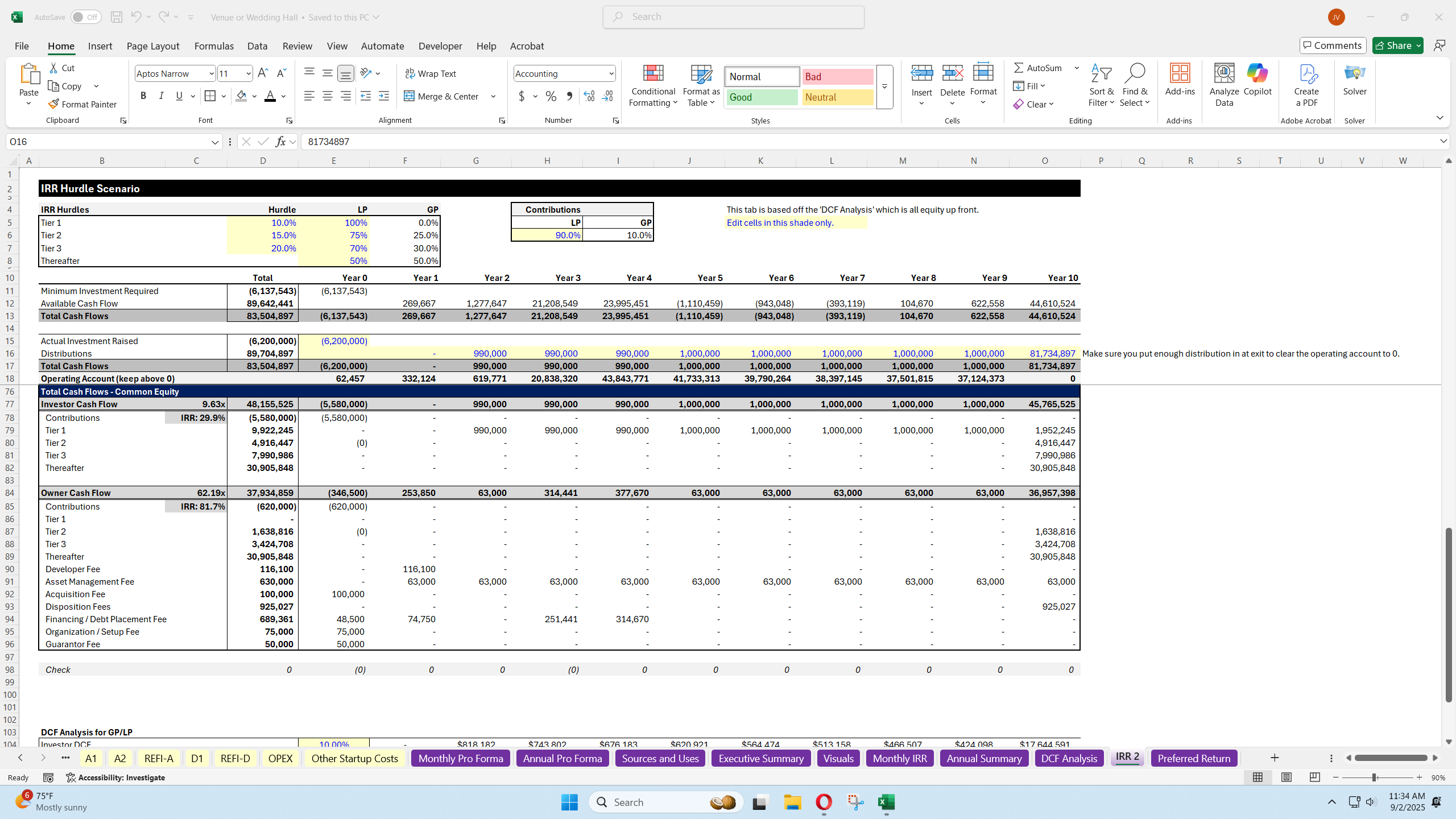
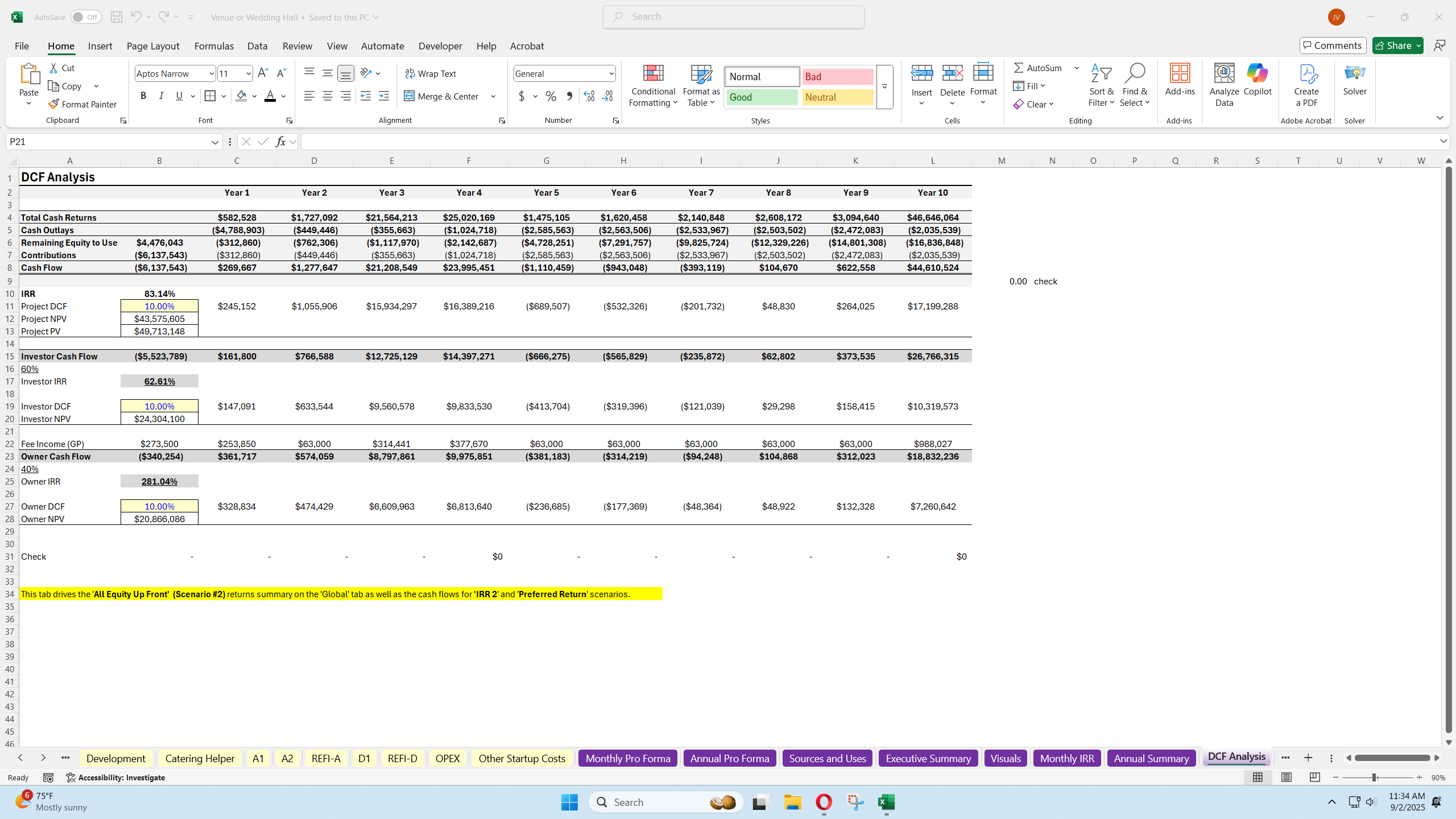
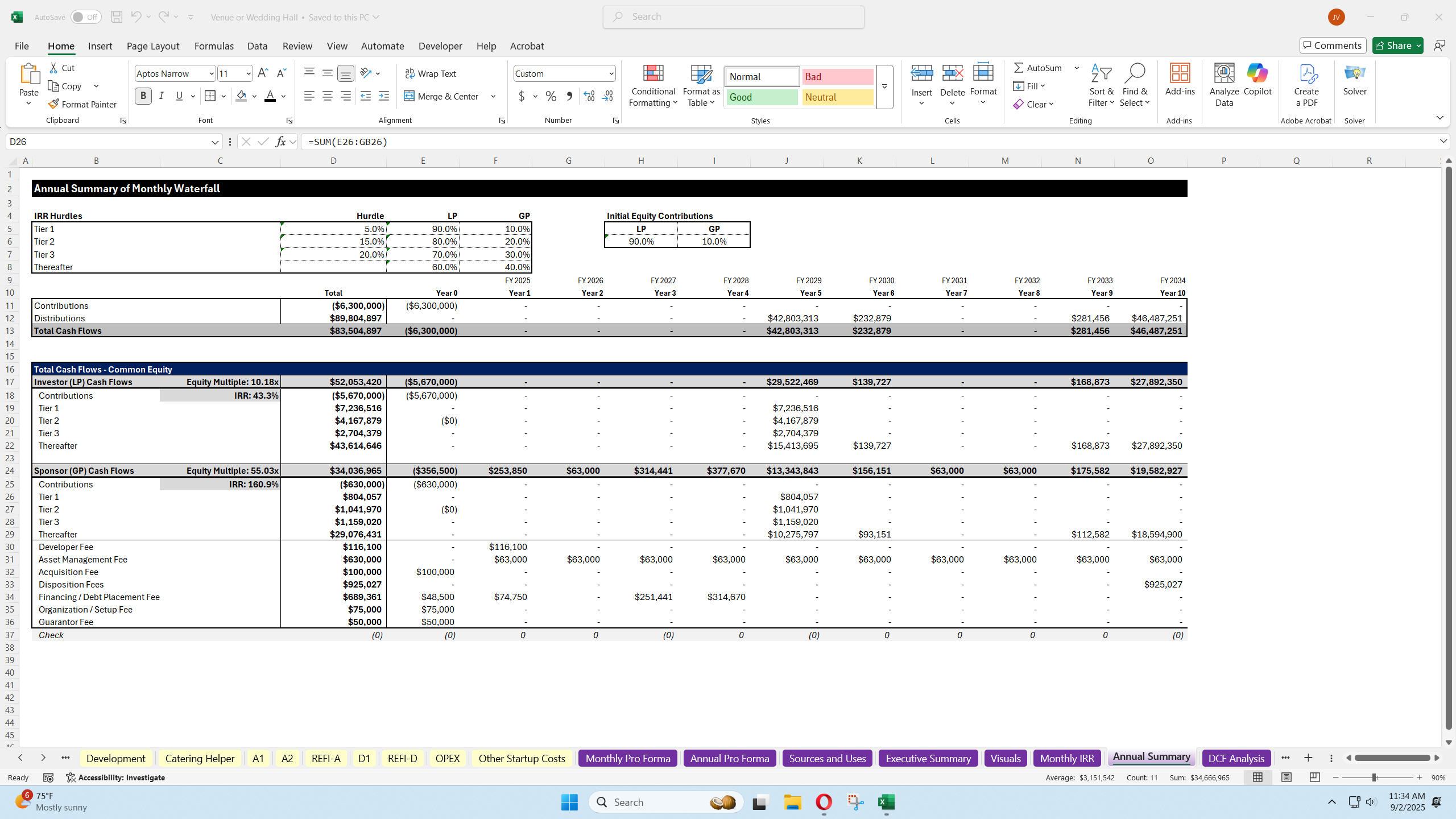
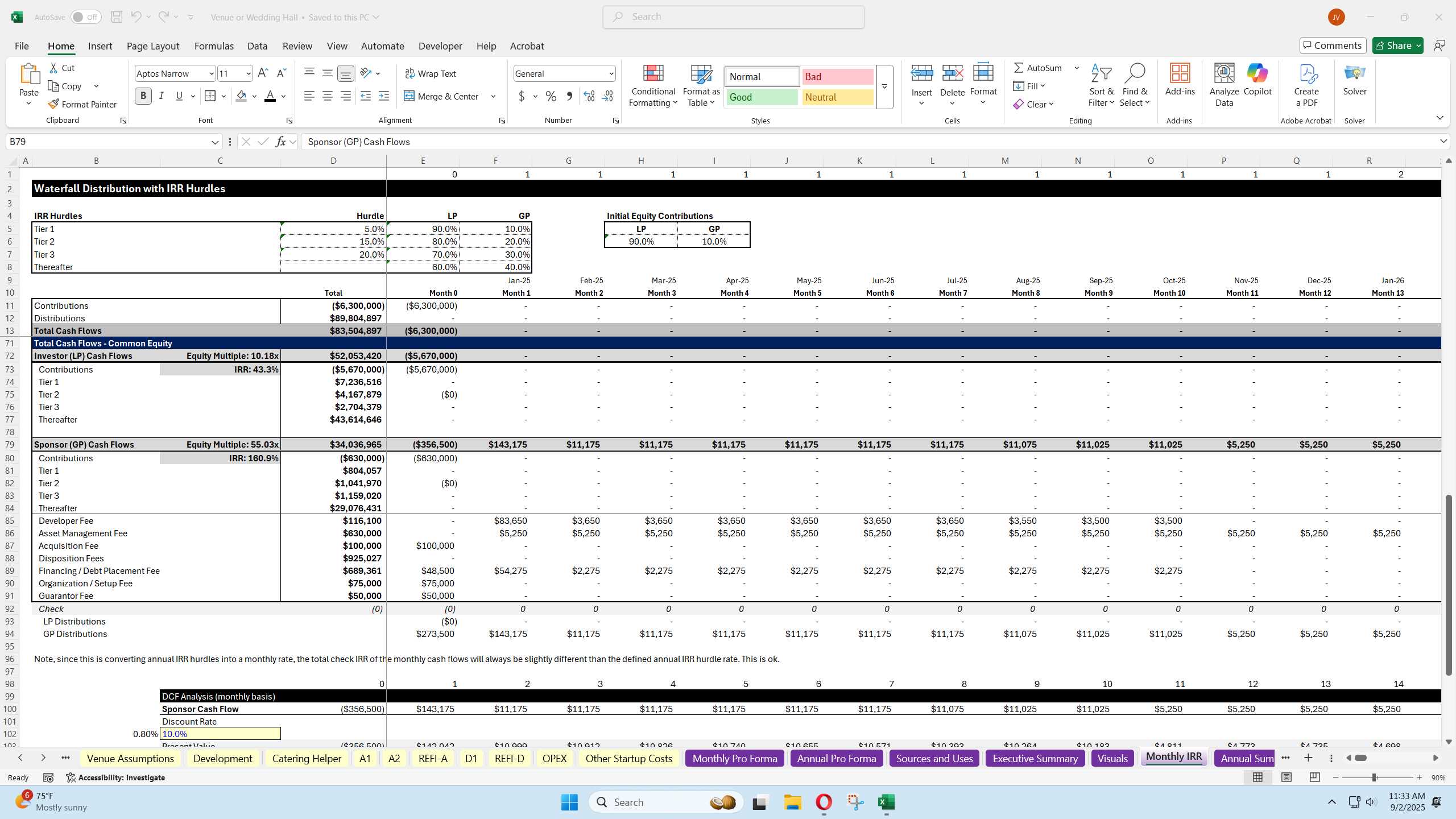
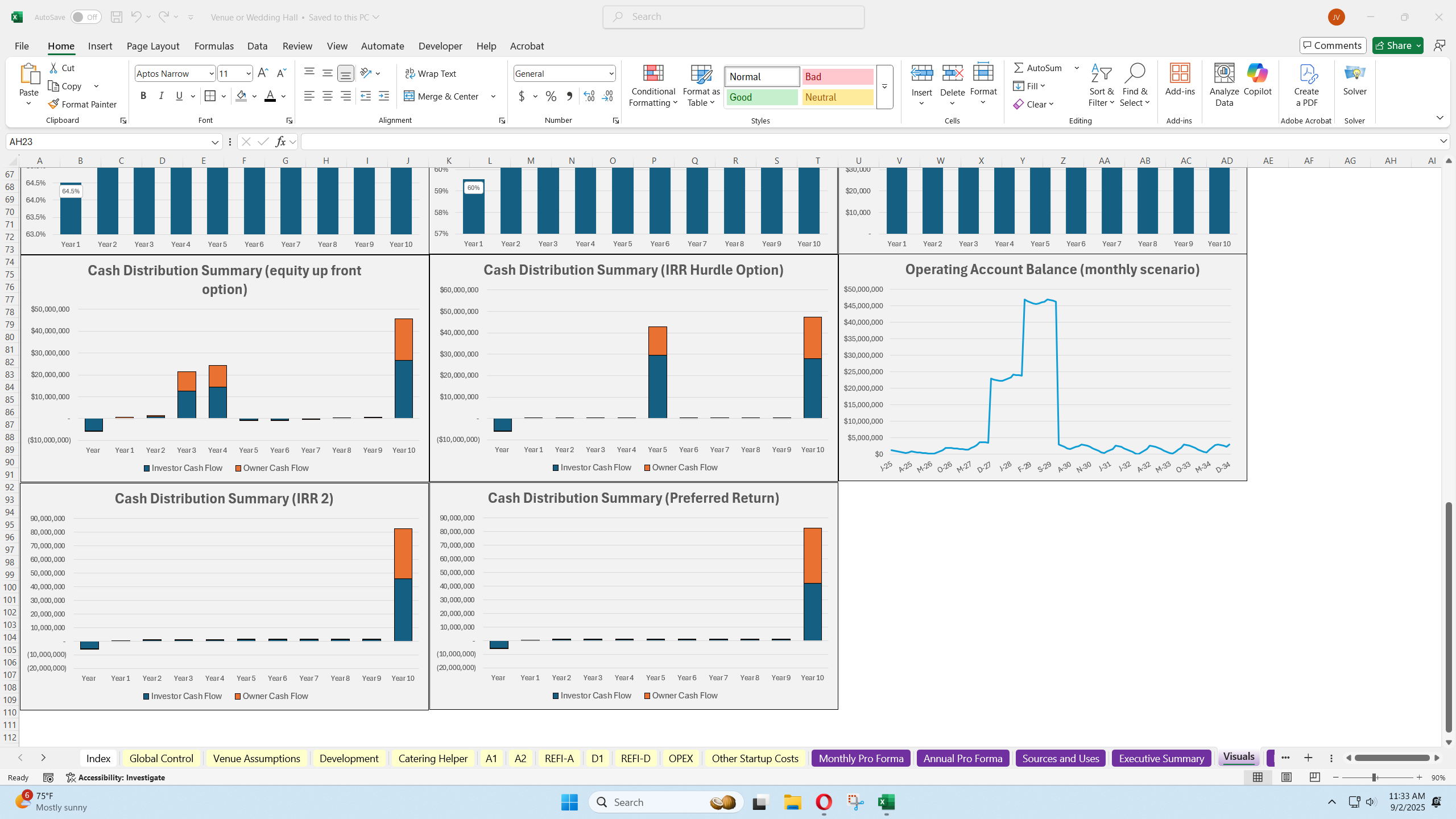
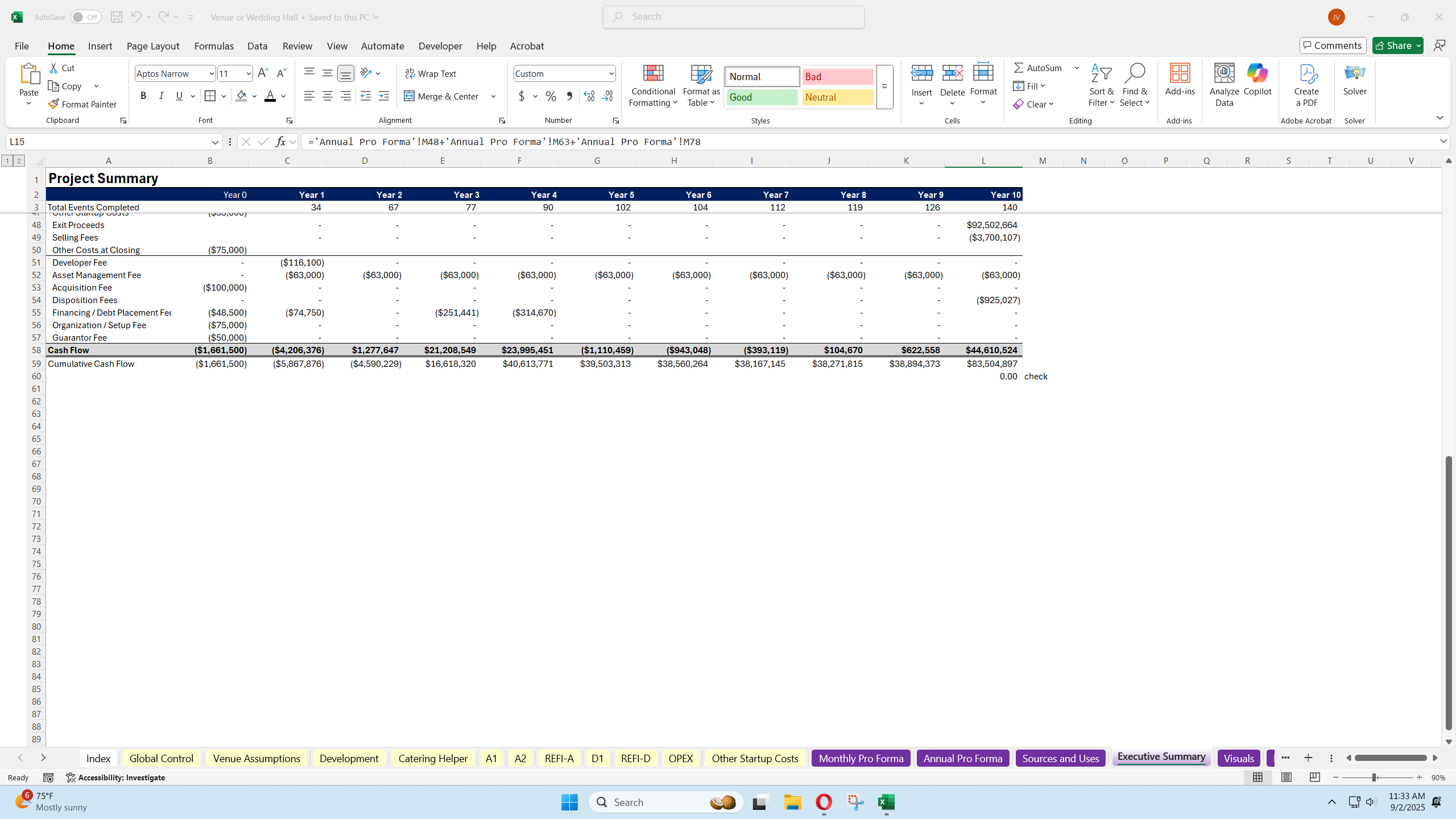
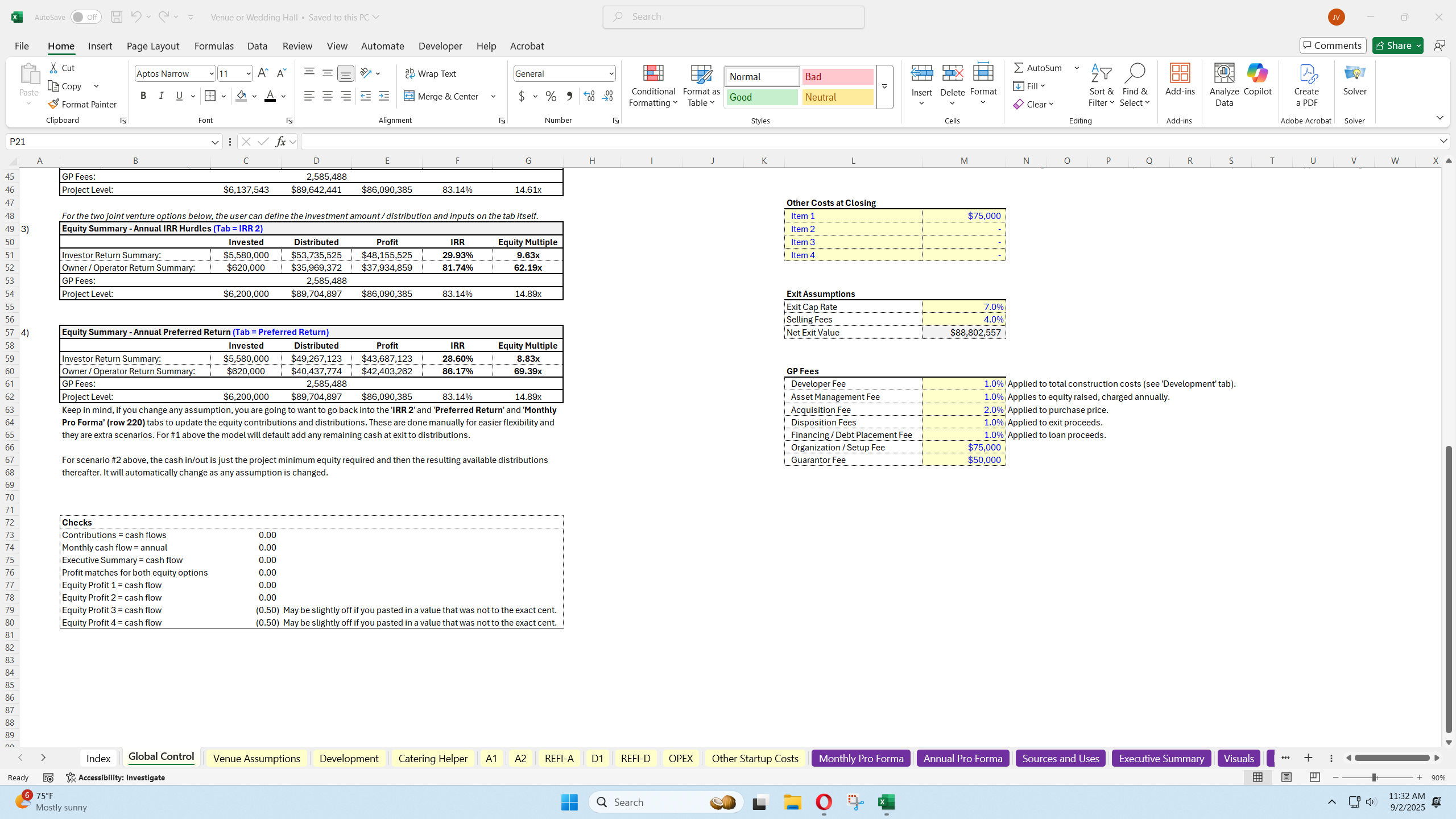
For investor returns, the model includes four standalone waterfalls—monthly IRR hurdles, a simple pro‑rata split, annual IRR hurdles (driven off the DCF Analysis), and a preferred return structure—and each is summarized alongside IRR and Equity Multiple reporting. Scenario 2 (simple split) is fully automated; Scenario 1 automates distributions once equity is set; Scenarios 1, 3, and 4 require updating equity invested as assumptions change, and Scenarios 3 and 4 also require updating distributions. Executive outputs include an Annual Executive Summary and detailed Monthly and Annual Pro Formas covering revenue, expenses, NOI, debt service, refi/exit, and final cash flow. The result is a clear, investor‑ready view of economics that helps sponsors, developers, operators, and lenders see how strategy and capital structure translate into returns.

This Best Practice includes
1 Excel model, 1 overview video

Acquire business license for $70.00

Add to cart

Add to bookmarks

Discuss

Further information

Produce a proforma that shows cash requirements and potential returns of a single property that monetizes events.

Single property and build, lease, or new development scenarios.


0.0 / 5 (0 votes)

please wait...