
Last version published: 28/08/2026 15:08
Publication number: ELQ-41187-2
View all versions & Certificate

Startup SAAS Financial Model with Discounted Cash Flow (DCF) Valuation + IPO
It is a comprehensive SaaS business financial model, financial forecasting model, business valuation model, investor returns model, and IPO analysis tool.
Launching a SaaS startup without a robust financial model is like building a rocket without knowing how much fuel you need.
You may have an amazing software product, strong user-growth potential, and an ambitious vision—but without a clear financial strategy, it can be incredibly difficult to understand how much cash you need, when your business will break even, how profitable your SaaS model can become, or what your company could ultimately be worth.
Startup founders commonly struggle with unpredictable cash flow, unrealistic user-growth assumptions, complicated subscription revenue models, unclear operating costs, difficult business valuation, and the challenge of presenting credible financial projections to investors.
And when you add the cost of hiring financial consultants or the complexity of building a sophisticated financial model from scratch, financial planning can quickly become overwhelming.
Introducing the Startup SaaS Financial Model 10-Years + IPO Excel Template—a comprehensive financial modelling solution designed to help SaaS founders, entrepreneurs, financial analysts, and investors turn business assumptions into a structured financial plan.
This isn't just a simple revenue-and-expense spreadsheet.
It is a comprehensive SaaS business financial model, financial forecasting model, business valuation model, investor returns model, and IPO analysis tool designed to help you understand the complete financial journey of a software business—from acquiring users and generating recurring revenue to achieving profitability, raising capital, valuing the company, and potentially going public.
With up to 10 years of financial projections, scenario analysis, user acquisition modelling, subscription modelling, 3-statement financial statements, DCF valuation, WACC calculation, investor return analysis, and IPO modelling, you can evaluate your SaaS business from multiple financial perspectives in one Excel workbook.
## Why This SaaS Financial Model Is a Game-Changer for Startup Founders
Running a SaaS business involves much more than predicting subscription revenue. You need to understand how users become customers, how customers generate recurring revenue, how much it costs to serve them, how operating expenses evolve, when the business reaches breakeven, and how investors may ultimately earn a return.
This model is designed to help you answer those questions.
## + Unpredictable User Growth and Customer AcquisitionSaaS businesses depend heavily on user acquisition and conversion.But simply assuming that users will "grow by 20%" doesn't tell you where those users come from or how sustainable that growth really is.
This model includes detailed user acquisition modelling across multiple channels, including:
* Organic signups
* Influencer campaigns
* Social media
* Affiliate partners
* Paid advertising
* Word-of-mouth
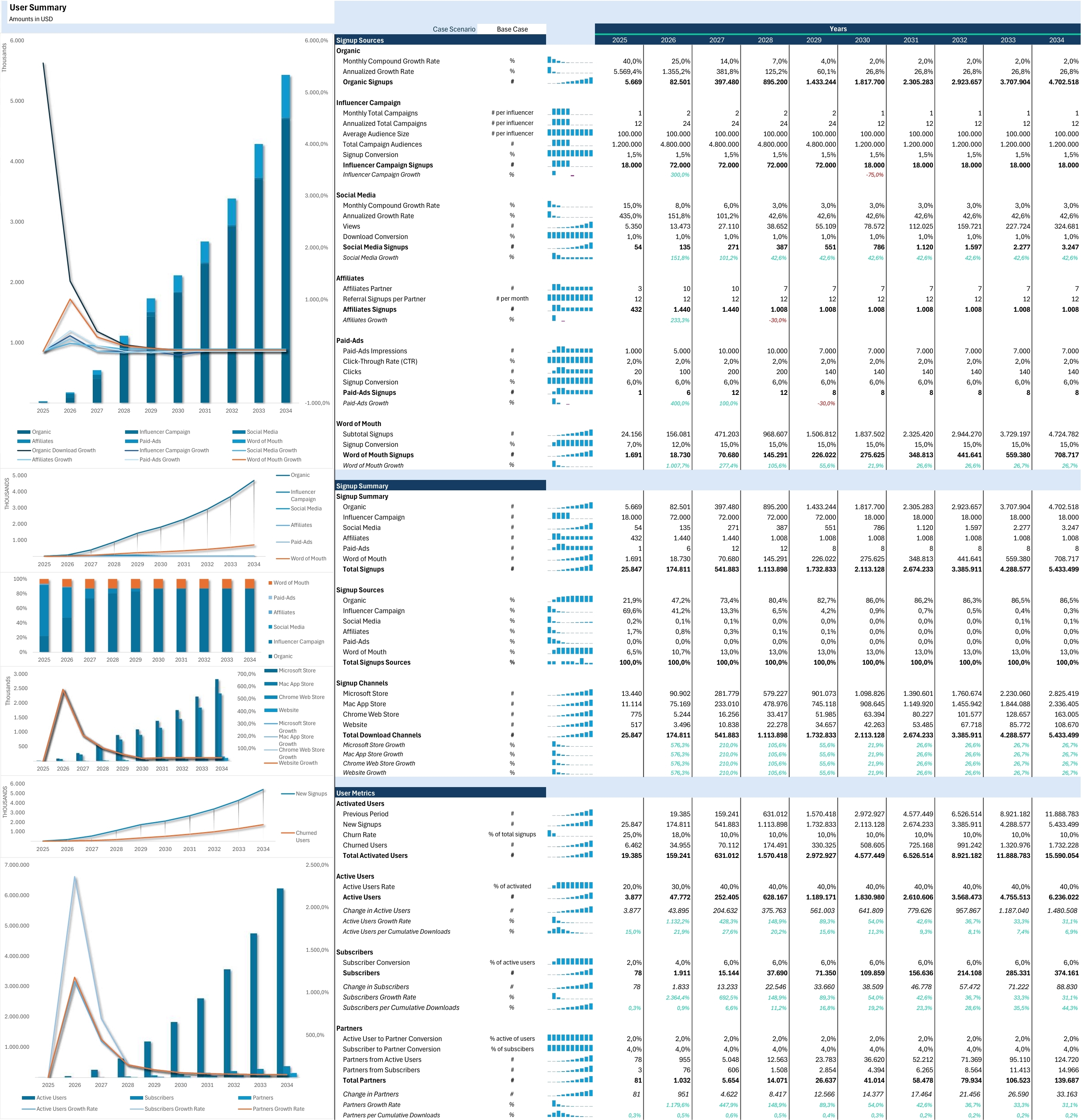
You can model campaign activity, audience size, conversion rates, referral activity, advertising impressions, CTR, signup conversion, churn, active users, and subscriber conversion.
This allows you to connect marketing assumptions directly to financial performance.
## + Complicated SaaS Revenue ModellingSaaS revenue can come from multiple products, plans, and payment structures.
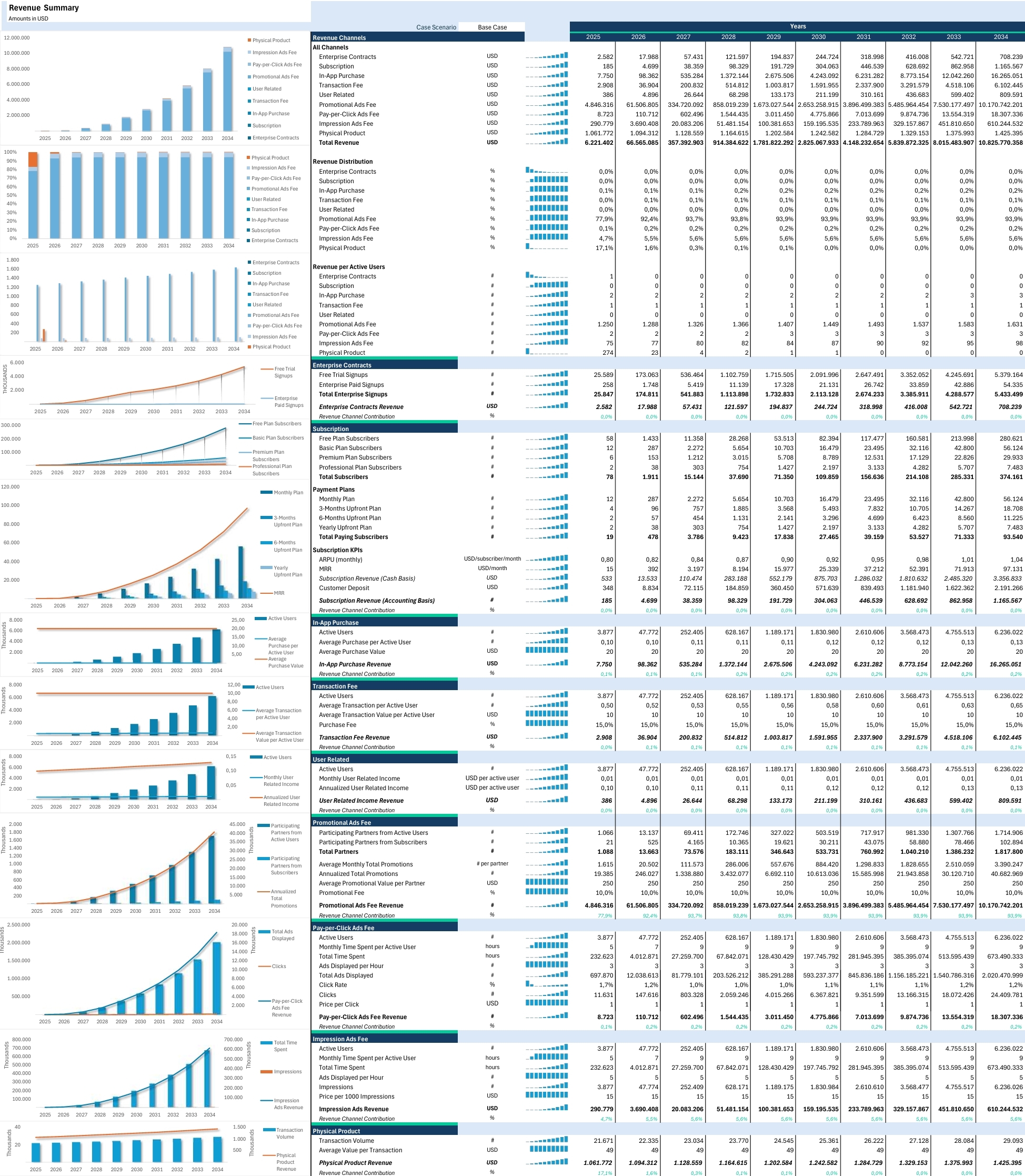
This model allows you to analyze revenue from multiple channels and subscription structures, including different subscription plans, payment periods, enterprise contracts, advertising-related income, in-app purchases, transaction-related income, and other SaaS revenue streams.
You can also analyze:
* Monthly subscription plans
* 3-month upfront plans
* 6-month upfront plans
* Yearly upfront plans
* ARPU
* MRR
* Paying subscribers
* Revenue per active user
* Revenue channel contribution
Instead of simply forecasting "sales," you can understand the underlying drivers behind your SaaS revenue.
## + Cash Flow and Liquidity Problems
A profitable SaaS business can still run out of cash.
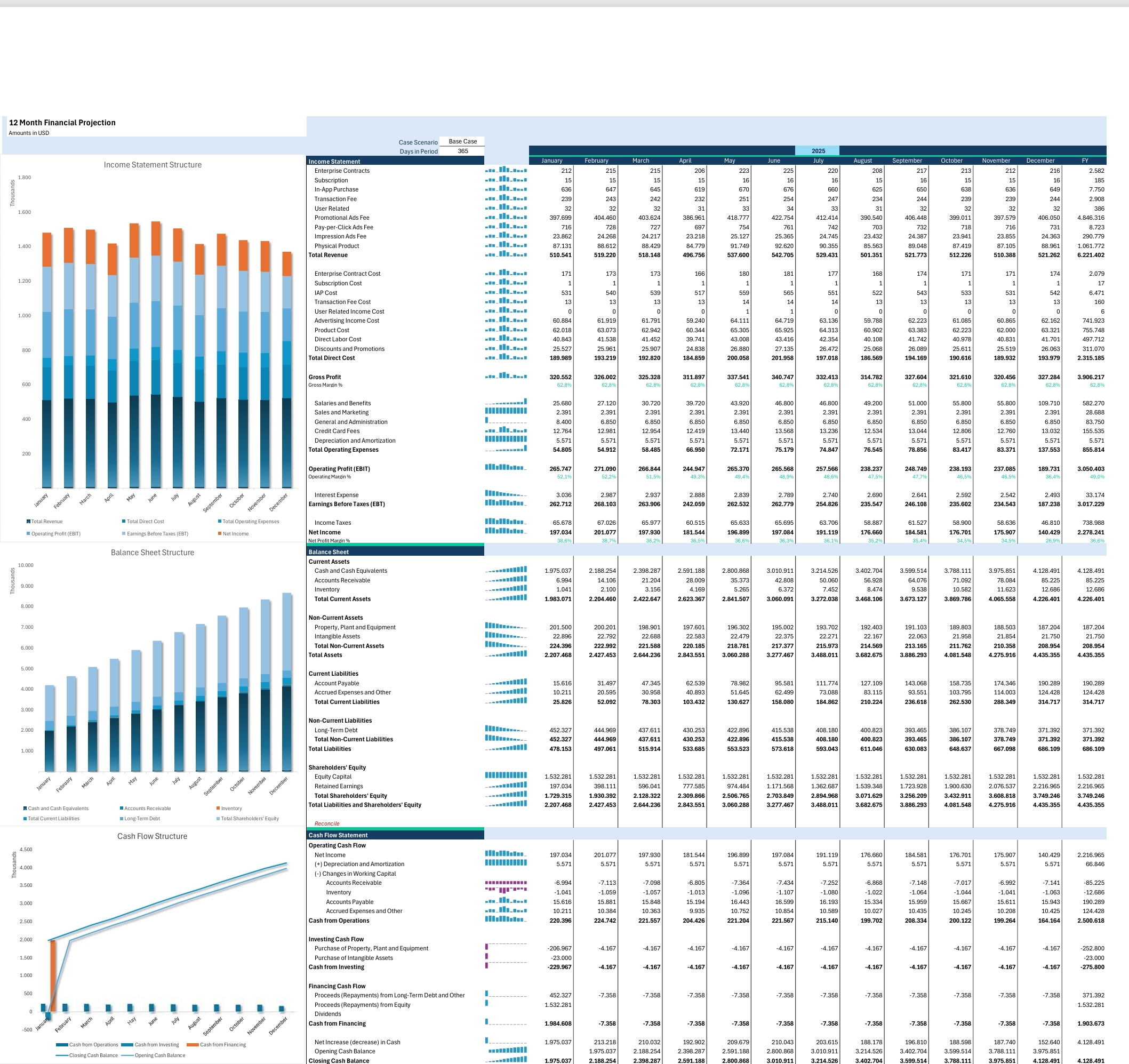
That is why this model includes integrated financial statements and cash-flow forecasting to help you understand how revenue, operating expenses, working capital, capital expenditures, financing, and profitability affect your cash position.
The model includes a 3-statement financial model covering:
* Income Statement
* Balance Sheet
* Cash Flow
This gives you a more complete picture of the financial health of your startup.
## + Difficulty Forecasting the Next 10 YearsMost startup spreadsheets stop after a few years.
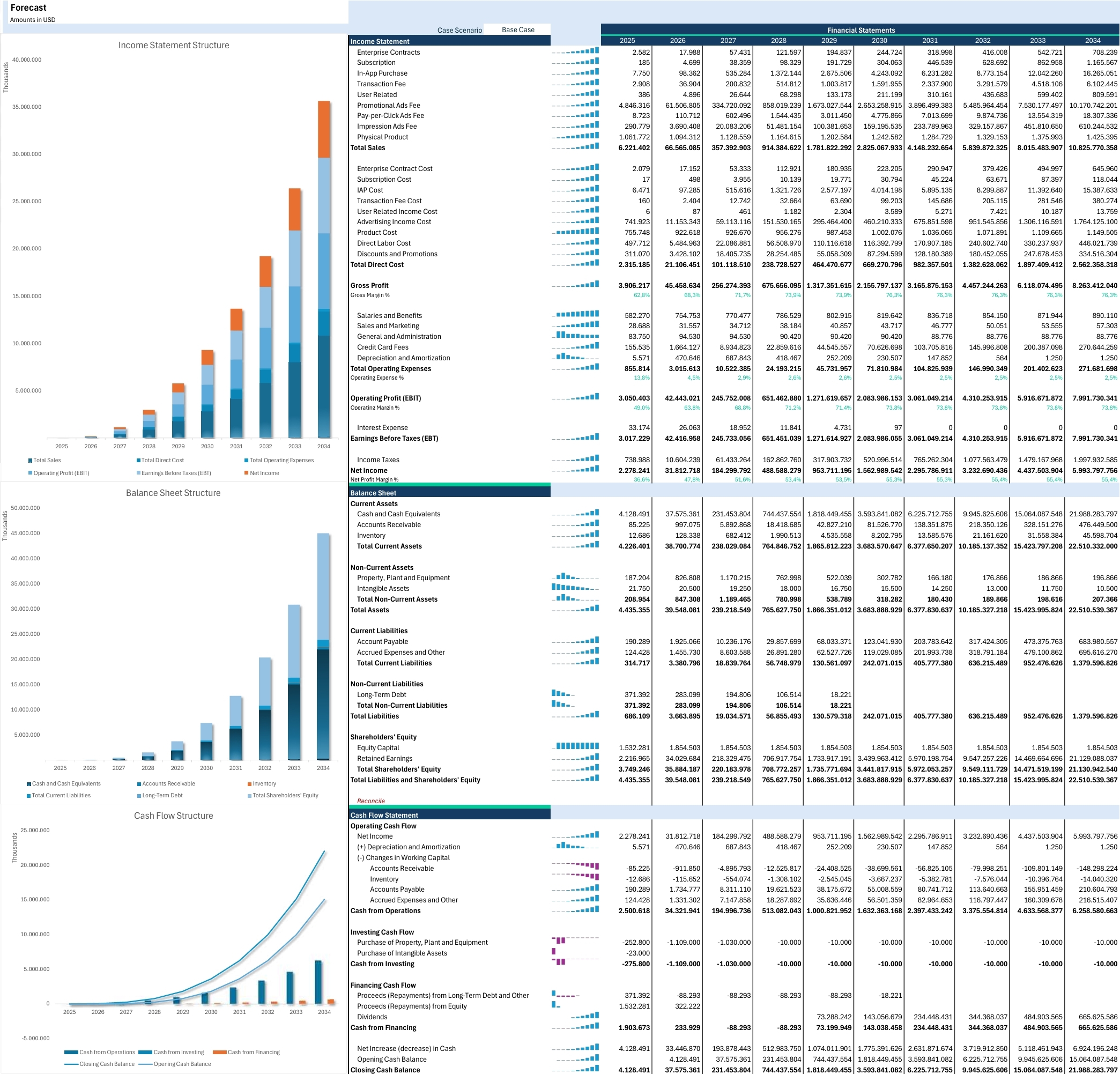
This model provides up to 10 years of financial forecasting, allowing you to evaluate your business beyond the initial launch period.
You can analyze long-term trends in:
* Revenue
* Gross profit
* Operating expenses
* EBITDA
* EBIT
* Net income
* Assets
* Liabilities
* Equity
* Cash flow
* Free cash flow
* Key financial ratios
This makes the model useful not only for launch planning but also for long-term strategic planning and fundraising discussions.
## + Business Valuation NightmaresHow much is your SaaS company actually worth?
That's one of the most difficult questions for founders and investors.
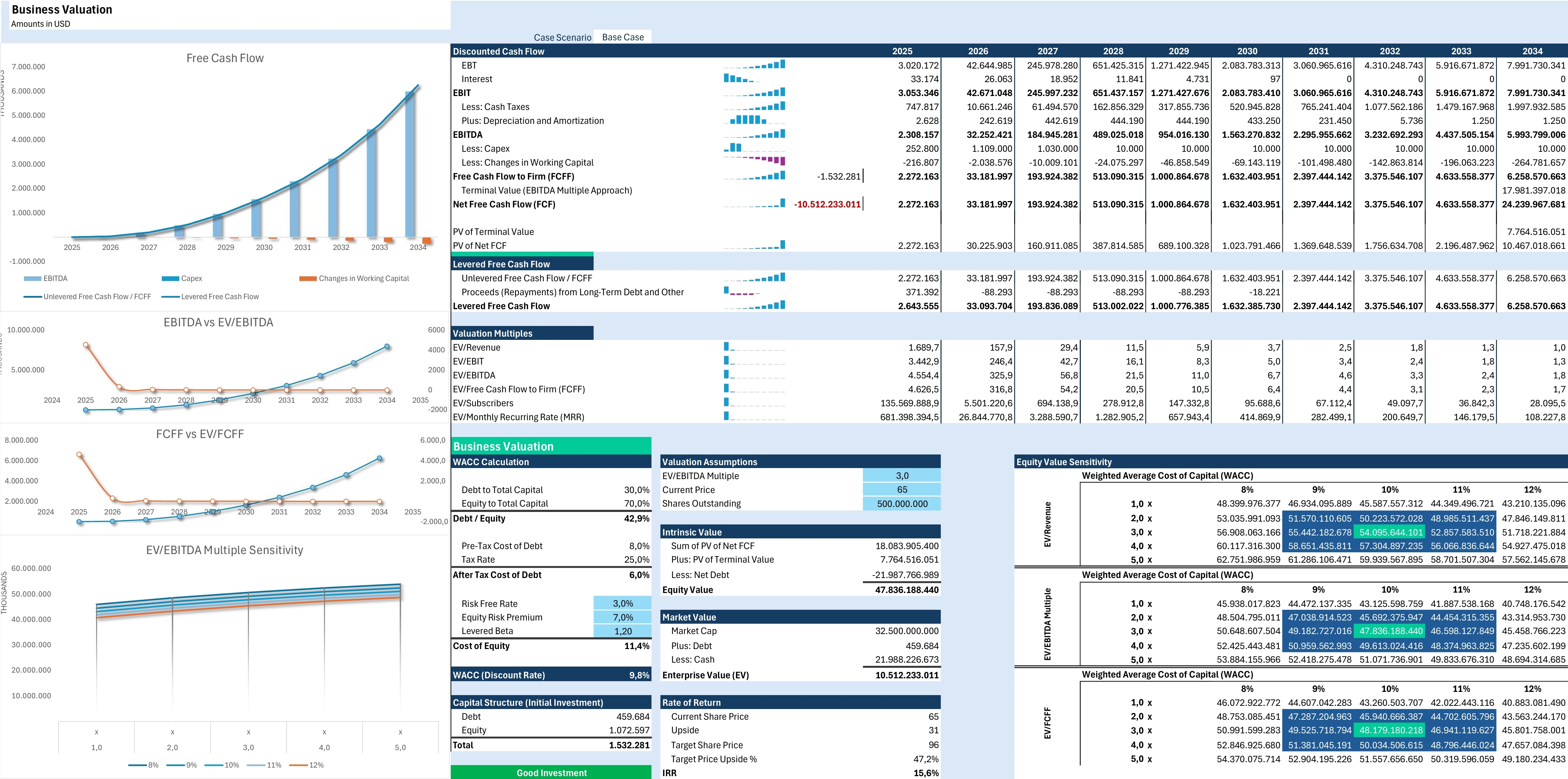
This model includes a dedicated Business Valuation section using discounted cash flow and financial multiples.
You can analyze:
* Free Cash Flow to Firm (FCFF)
* Net Free Cash Flow
* Terminal Value
* Present Value of Free Cash Flow
* Present Value of Terminal Value
* Enterprise Value
* Equity Value
* EV/Revenue
* EV/EBIT
* EV/EBITDA
* EV/FCFF
* EV/Subscribers
* EV/MRR
* WACC
* Cost of Equity
* Cost of Debt
* Target Share Price
* Target Price Upside
* IRR
This helps turn your financial projections into a structured business valuation.
## + Investor Returns Are Difficult to Model
Raising capital isn't only about determining how much money investors put into the business.You also need to understand how investors may receive their returns.
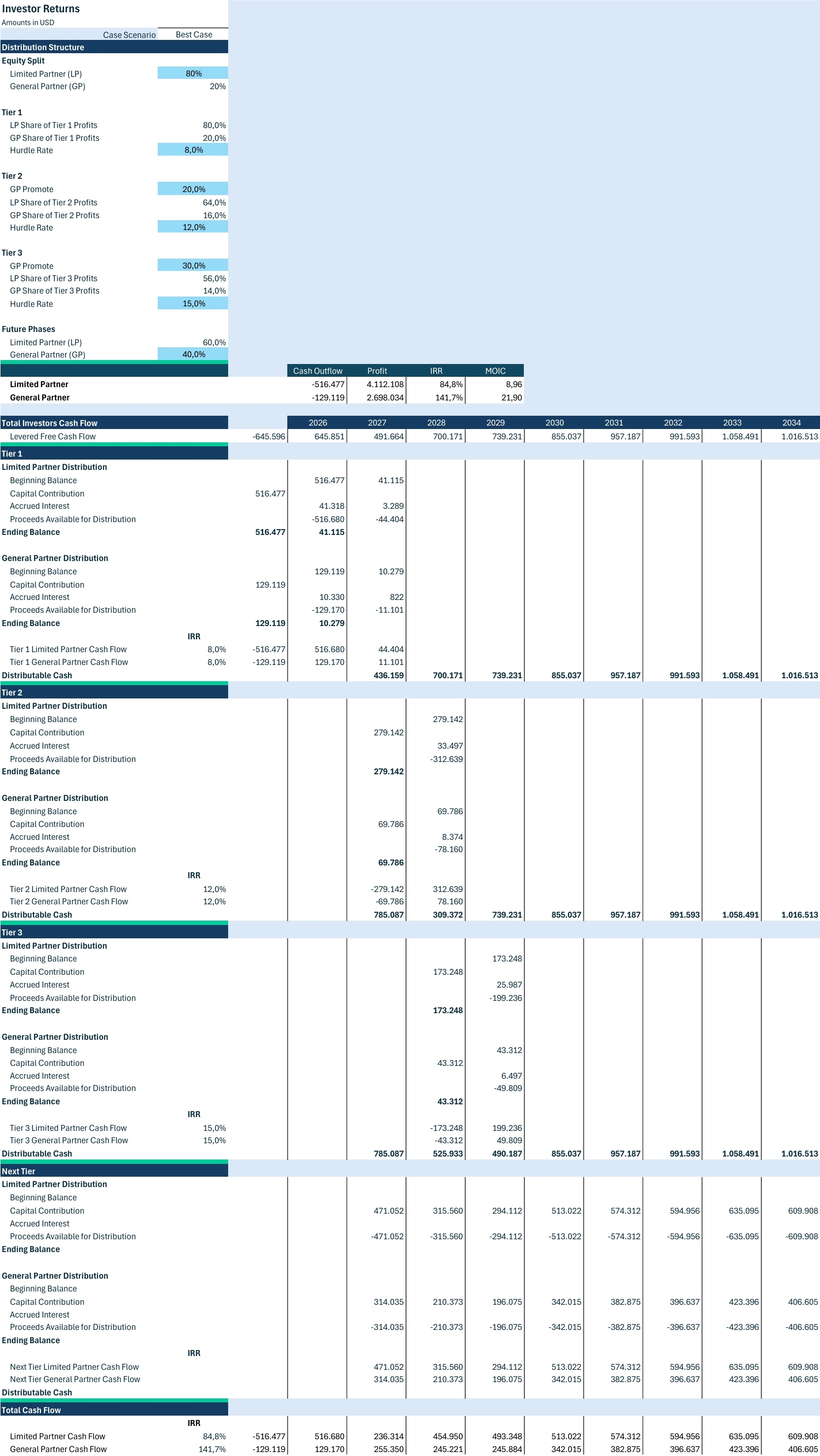
The model includes an Investor Returns analysis with LP/GP distribution structures, hurdle rates, GP promotions, capital contributions, distributions, IRR, and MOIC.
This allows you to evaluate potential investor economics and understand how different return structures may affect investors and founders.
## + Planning for an IPO
For startups with ambitious growth plans, going public may eventually become an important strategic milestone.
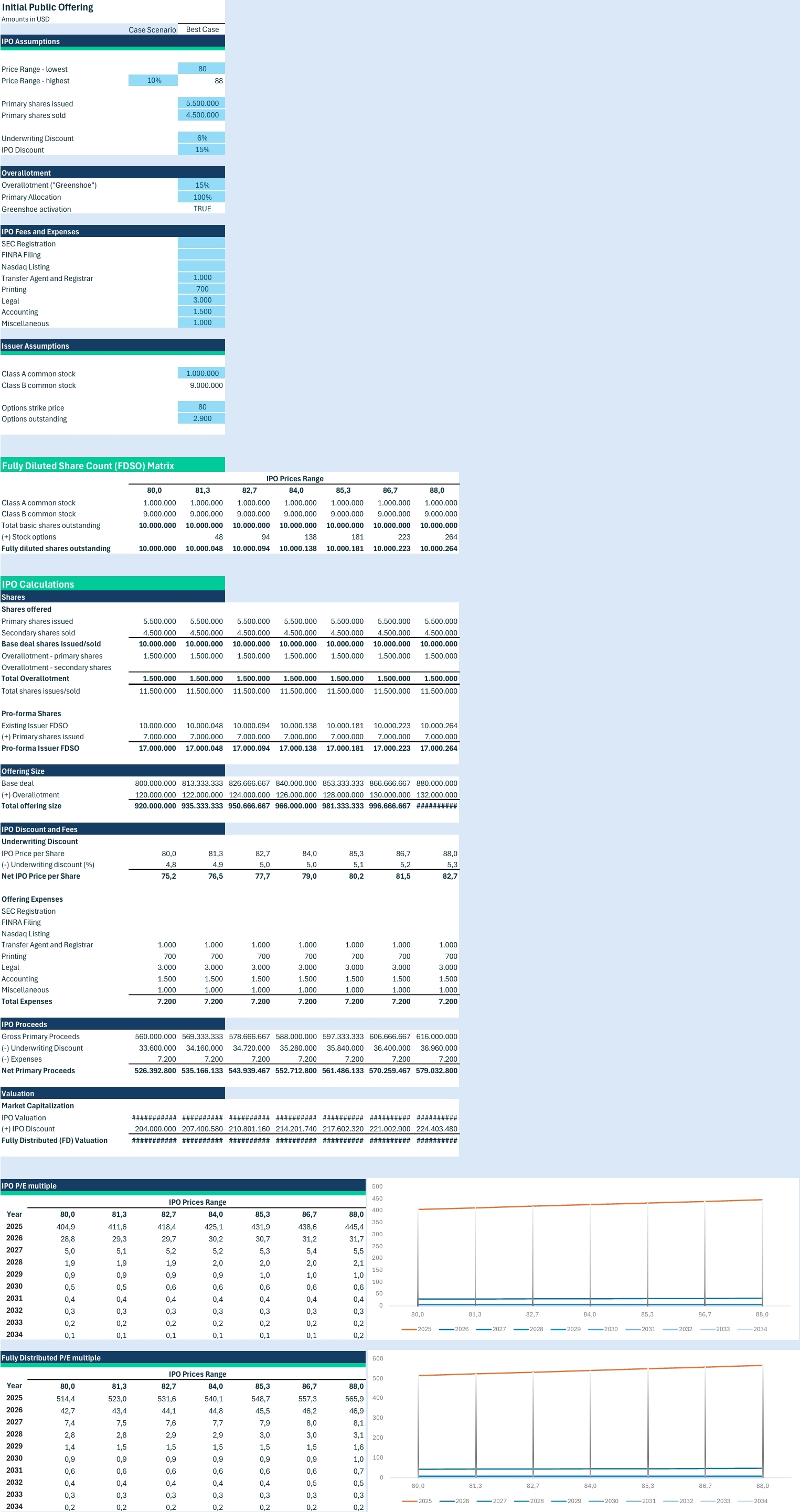
This model includes a dedicated IPO Analysis section to help you explore the financial mechanics of a potential public offering.
The IPO model includes assumptions for:
* IPO price range
* Primary shares issued
* Primary shares sold
* Underwriting discount
* IPO discount
* Greenshoe / overallotment
* IPO fees and expenses
* Class A common stock
* Class B common stock
* Options
* Fully Diluted Share Count
* IPO price sensitivity
This provides a framework for analyzing potential IPO scenarios and their impact on ownership and valuation.
## + Risk Blind SpotsA single forecast rarely tells the whole story.What happens if user growth is slower?
What if churn increases?
What if marketing expenses rise?
What if subscription conversion falls?
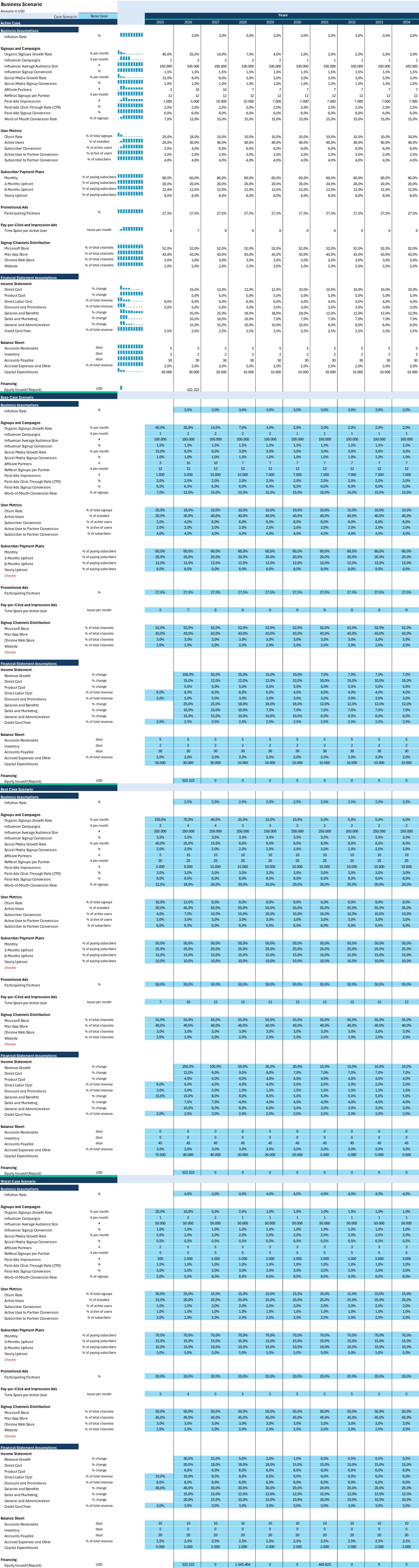
The model includes Business Scenario functionality that allows you to build different cases and evaluate how changing assumptions can affect the business.
You can model assumptions related to:
* Inflation
* Organic growth
* Influencer campaigns
* Social media growth
* Affiliate activity
* Paid advertising
* Conversion rates
* Churn
* Active users
* Subscriber conversion
* Payment plans
* Operating expenses
* Working capita
l* Capital expenditures
* Financing
This allows you to stress-test your SaaS business before making major decisions.
## + Difficulty Measuring Business Performance
Revenue alone doesn't tell you whether your SaaS company is financially healthy.
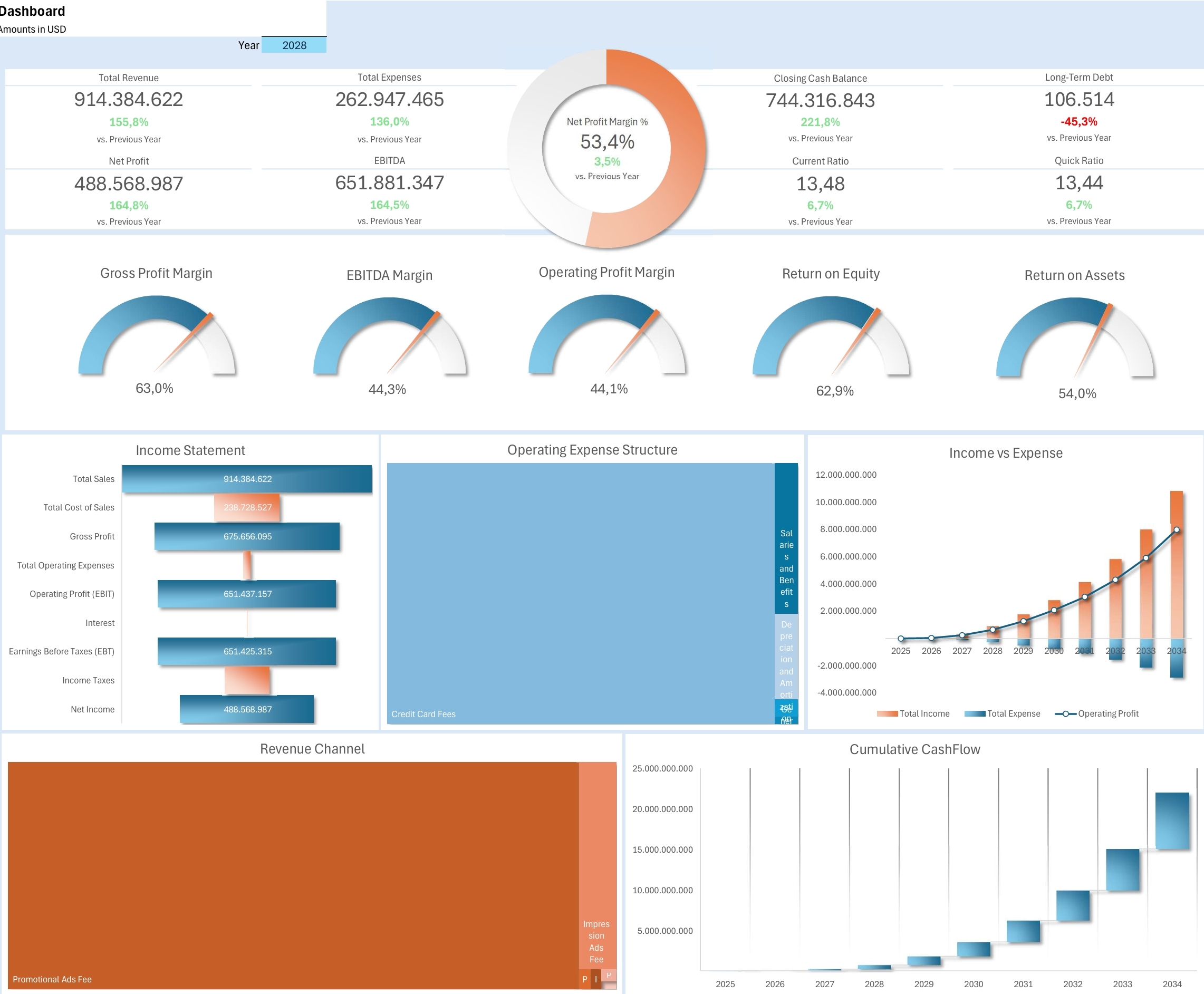
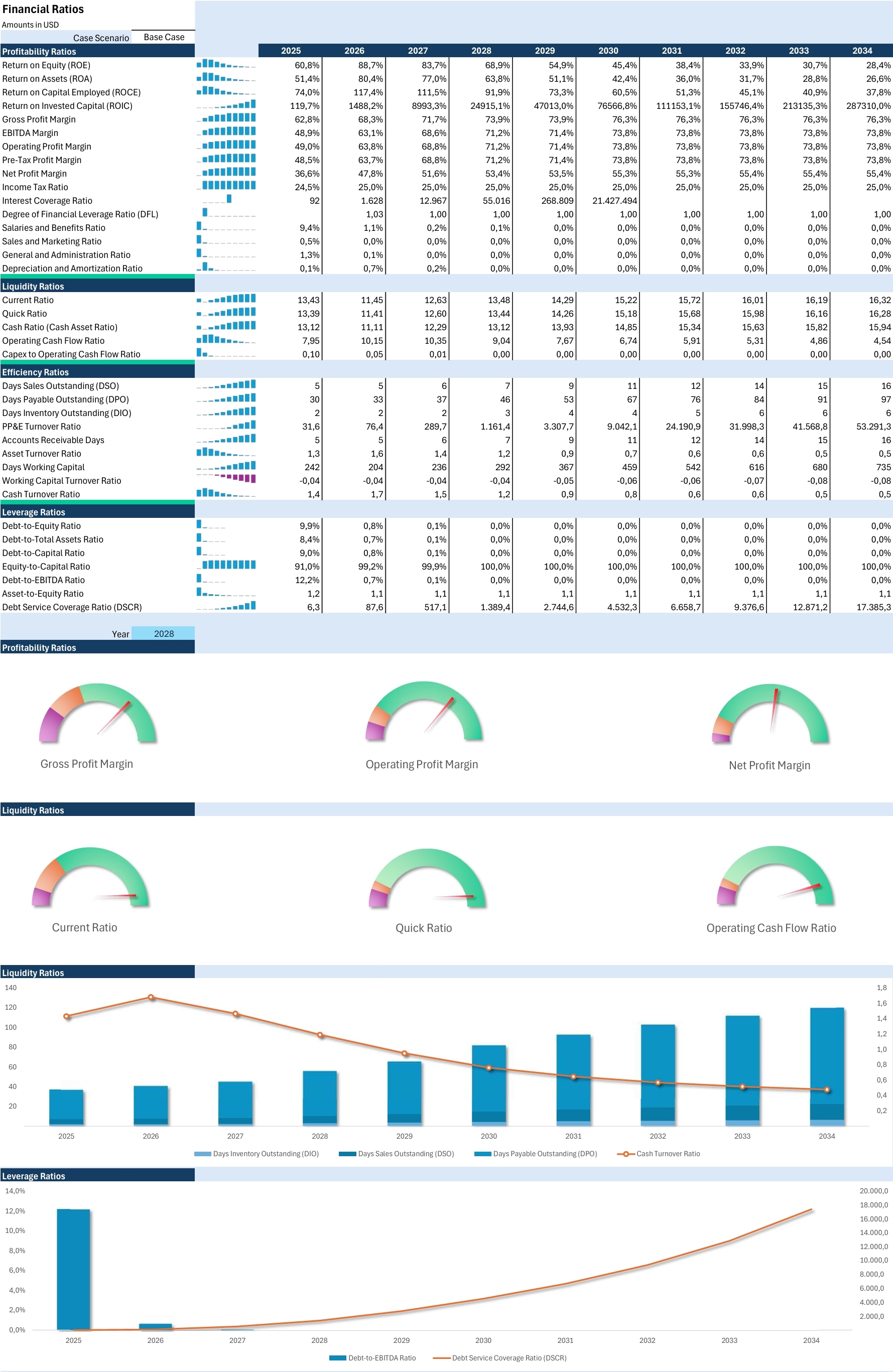
This model includes detailed Profitability Analysis, Ratio Analysis, and DuPont Analysis to help you understand the quality of your financial performance.
Analyze metrics related to:
* Profitability
* Liquidity
* Efficiency
* Solvency
* Operating performance
* Asset efficiency
* Financial leverage
* Return on Equity
* Return on Assets
* Gross Margin
* EBITDA Margin
* Operating Margin
* Net Profit Margin
* Current Ratio
* Quick Ratio
* Operating Cash Flow Ratio
* Asset Turnover
* Debt ratios
* Working capital efficiency
This gives you a much deeper understanding of your business than a basic profit-and-loss spreadsheet.
# What's Inside This Startup SaaS Financial Model?
Packed with tools designed to take your SaaS financial planning from guesswork to structured financial analysis.
## + 10-Year Financial Forecast
Build detailed long-term financial projections covering revenue, costs, profitability, assets, liabilities, equity, and cash flow.
## + SaaS User Acquisition Model
Model user acquisition through organic growth, influencers, social media, affiliates, paid advertising, and word-of-mouth.
## + Subscription Revenue ModelAnalyze subscribers, subscription plans, payment structures, ARPU, MRR, and recurring revenue.
## + Business Scenario AnalysisCreate different business cases and adjust assumptions to understand how changes in growth, conversion, churn, costs, and other drivers affect financial performance.
## + 3-Statement Financial ModelBuild integrated Income Statement, Balance Sheet, and Cash Flow projections for comprehensive financial planning.
## + DCF Business ValuationEstimate enterprise value and equity value using discounted cash flow methodology, terminal value, WACC, and free cash flow.
## + SaaS Valuation MultiplesEvaluate the business using EV/Revenue, EV/EBIT, EV/EBITDA, EV/FCFF, EV/Subscribers, and EV/MRR multiples.
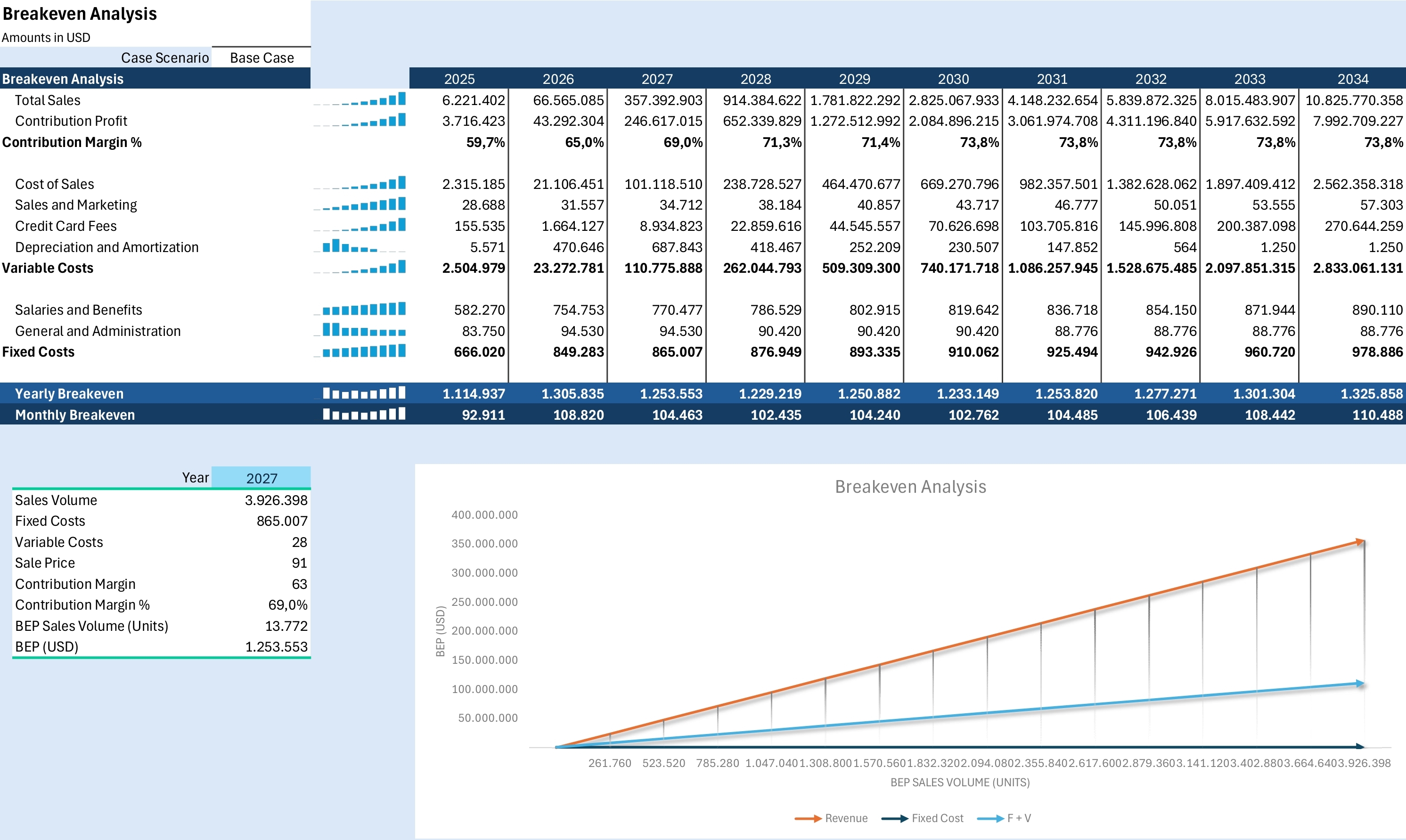
## + Breakeven AnalysisDetermine the revenue level required to cover variable and fixed costs and understand when your SaaS business can reach breakeven.
## + Profitability AnalysisAnalyze revenue, pricing, unit sales, COGS, operating expenses, and profitability across your products and services.
## + Financial Ratio AnalysisEvaluate liquidity, profitability, efficiency, leverage, and other key financial indicators.
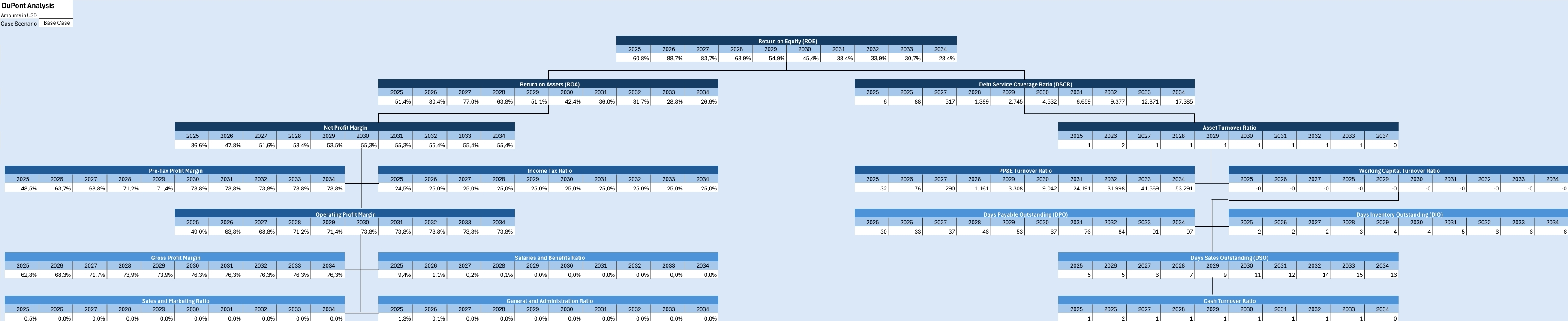
## + DuPont AnalysisBreak down ROE into its core drivers—profitability, asset efficiency, and financial leverage.
## + Investor Returns AnalysisModel LP/GP structures, hurdle rates, promotions, distributions, IRR, and MOIC.
## + IPO AnalysisExplore potential IPO pricing, share issuance, dilution, underwriting discounts, greenshoe allocation, IPO expenses, and fully diluted share count.
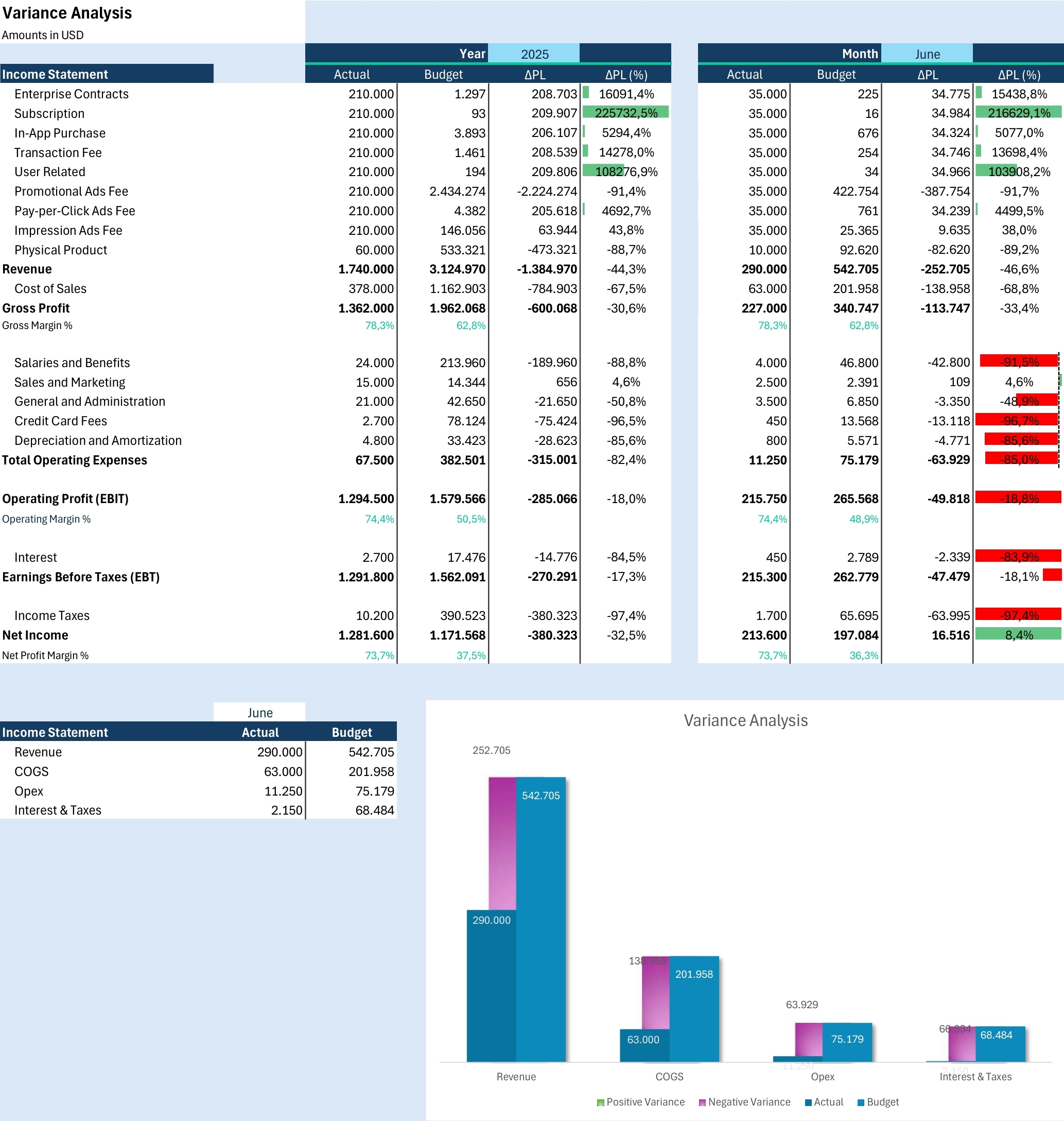
## + Variance AnalysisCompare actual financial performance against projected or budgeted performance to identify important deviations.
## + Monthly and Annual ForecastingUse detailed monthly forecasting alongside long-term annual projections for both operational and strategic planning.
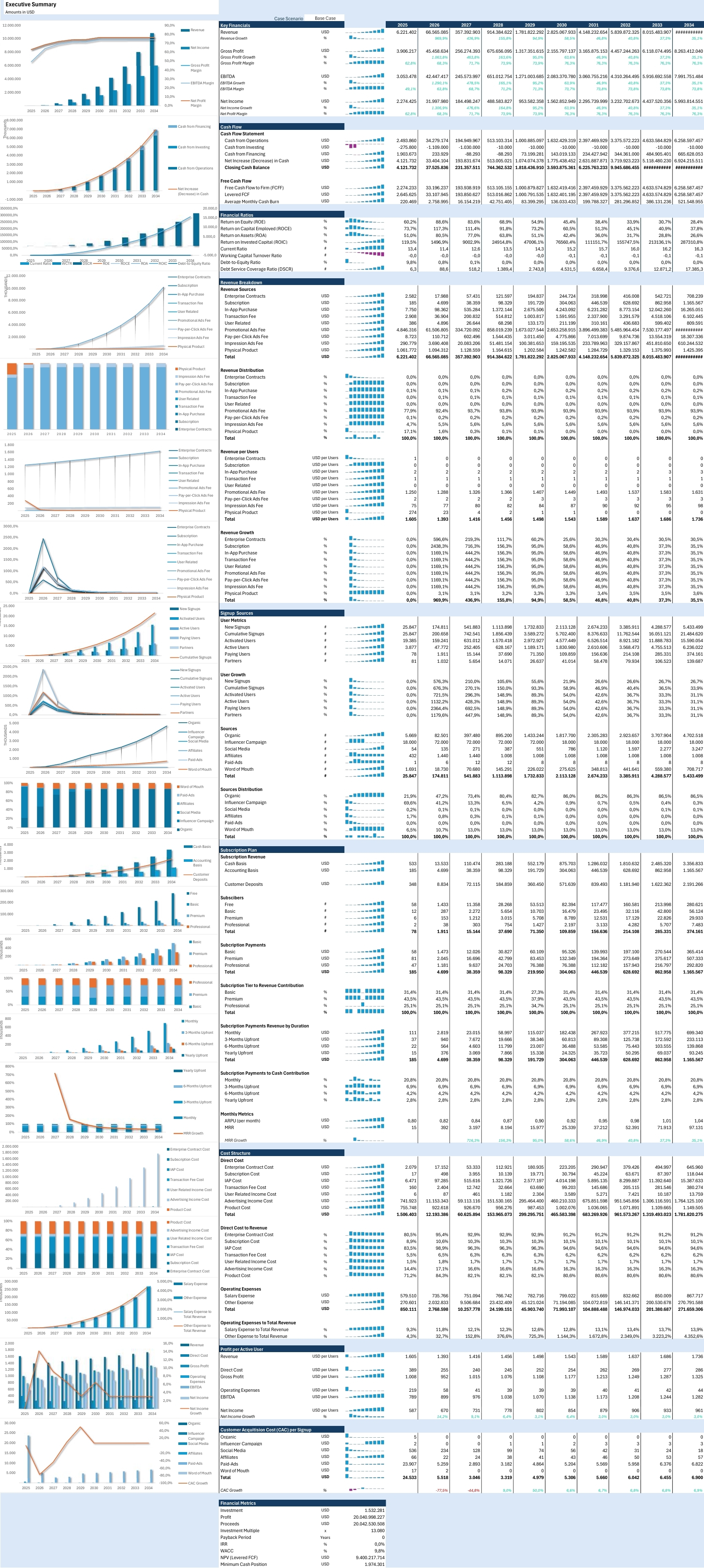
## + Dashboard & Executive SummaryQuickly review key financial and operating insights through dedicated summary and dashboard sections.
# Why It's the Best Deal
Hiring a financial modelling consultant to build a sophisticated SaaS model can cost thousands of dollars
Building one yourself from scratch can take days or even weeks—and requires considerable Excel and financial modelling knowledge.
With this template, you can:
Save Time: Start with a structured financial model instead of building everything from a blank spreadsheet.
Save Money: Get a comprehensive financial modelling framework without the recurring cost of hiring a financial consultant.
Gain Visibility: Understand how users, subscriptions, revenue, expenses, cash flow, and profitability interact.
Make Better Decisions: Test different scenarios before committing significant capital.
Prepare for Investors: Use structured financial projections, valuation analysis, and investor return calculations to support fundraising discussions.
Plan for Growth: Model your business from startup stage through long-term growth and potential IPO.
No Macros Required: The model is designed as an Excel-based financial model without relying on VBA macros.
# What You'll Get?
File 1 (.xlsx): Startup SaaS Financial Model — 10-Year Financial Projection + Investor Returns + IPO Analysis
This is an editable Excel financial model designed for SaaS startups, software companies, mobile applications, subscription businesses, entrepreneurs, founders, financial analysts, and investors.
# List of Tabs
1. License — License and usage information
2. Table of Contents — Model navigation and overview
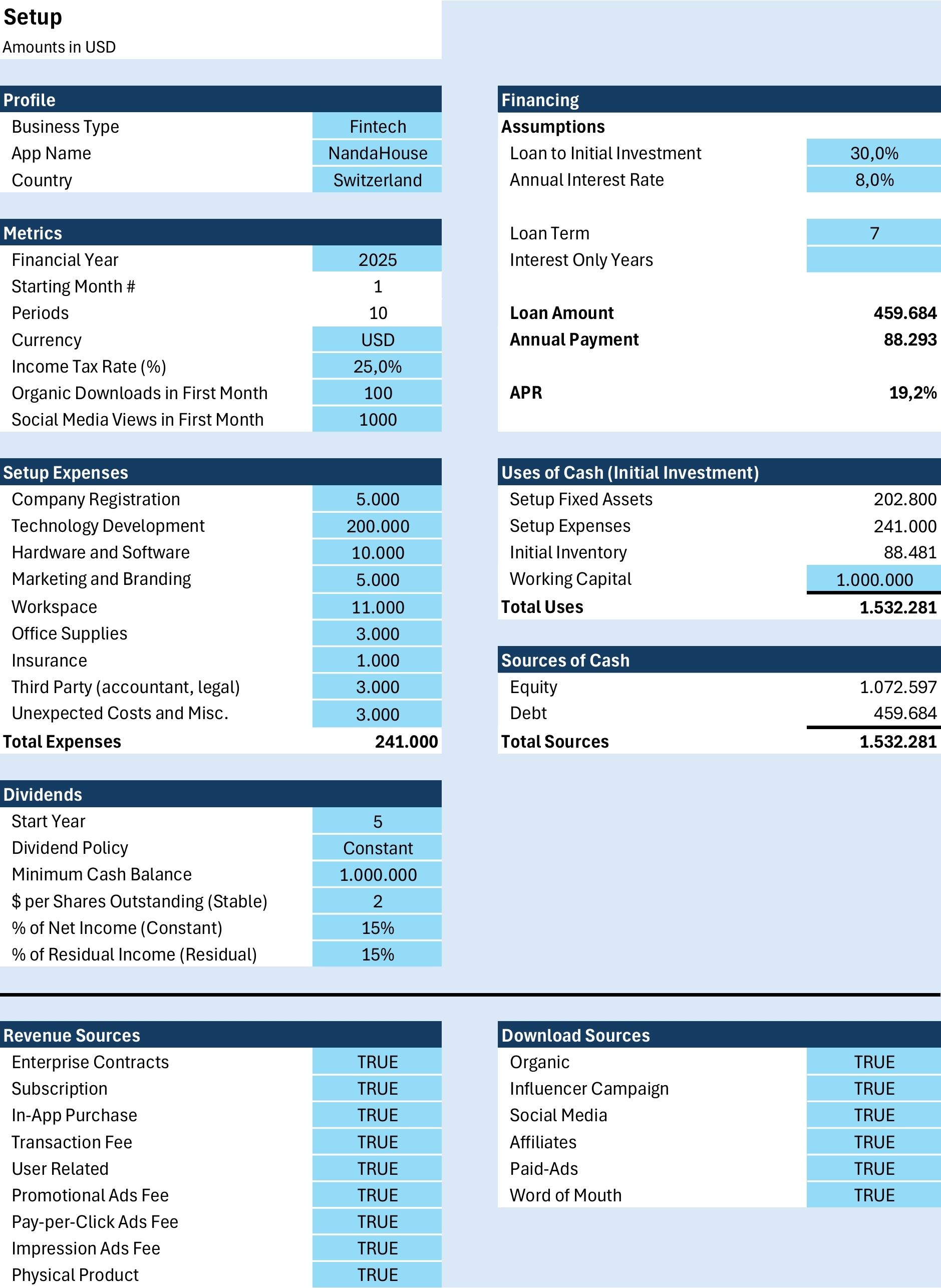
3. Setup — Foundational assumptions and global model parameters
4. Executive Summary — High-level financial and business insights
5. User Summary — User acquisition, signup sources, active users, and subscriber metrics
6. Revenue Summary — Revenue channels, subscribers, ARPU, MRR, and revenue contribution
7. Valuation — DCF valuation, WACC, valuation multiples, enterprise value, equity value, and target price
8. Business Scenario — Base, best, and alternative business assumptions and scenario analysis
9. Dashboard — Visual financial and operating performance overview
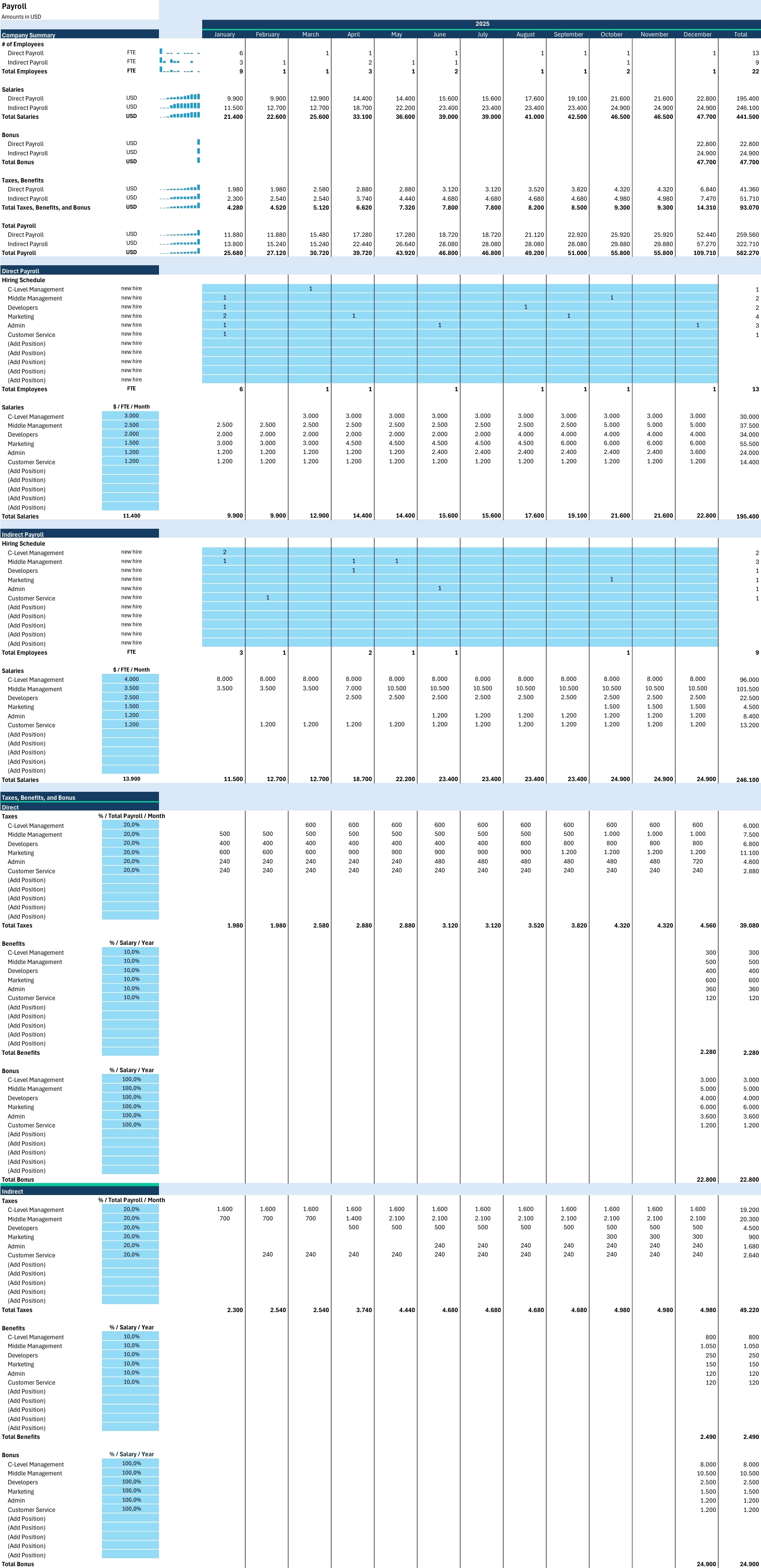
10. Payroll — Employee compensation, salaries, benefits, and payroll-related costs
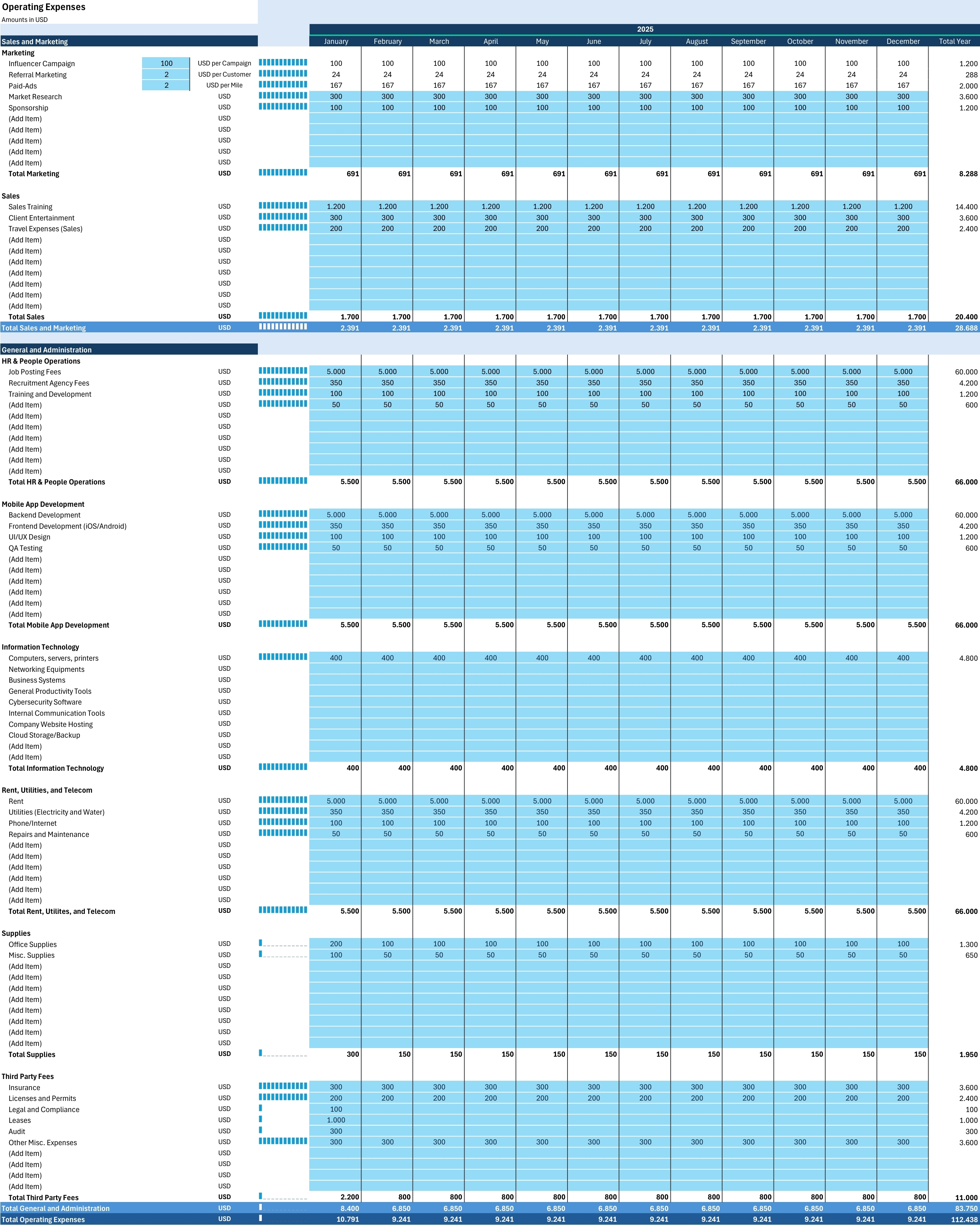
11. Operating Expenses — Detailed operating expense assumptions and projections
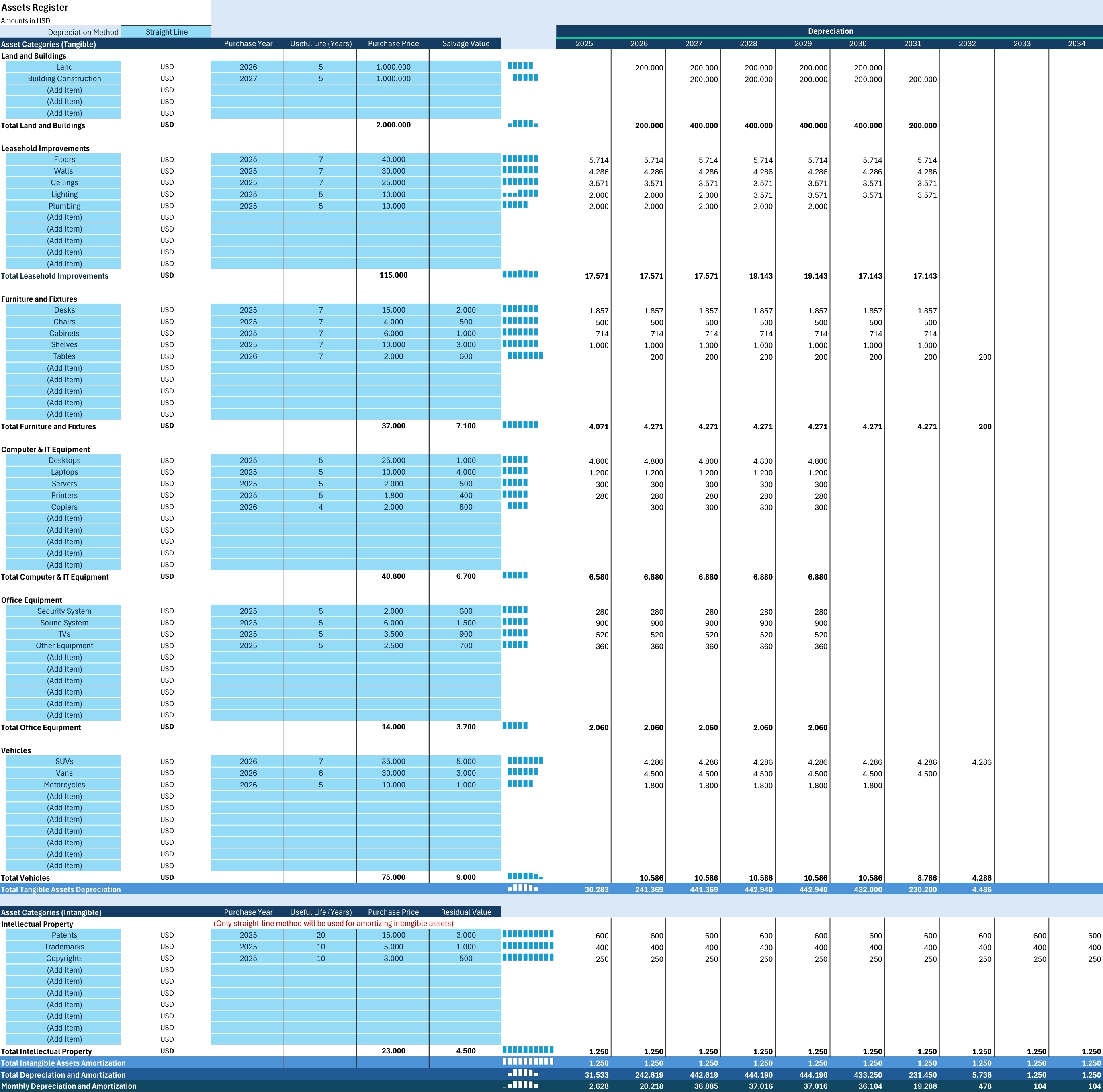
12. Assets Register — Long-term asset and capital expenditure tracking
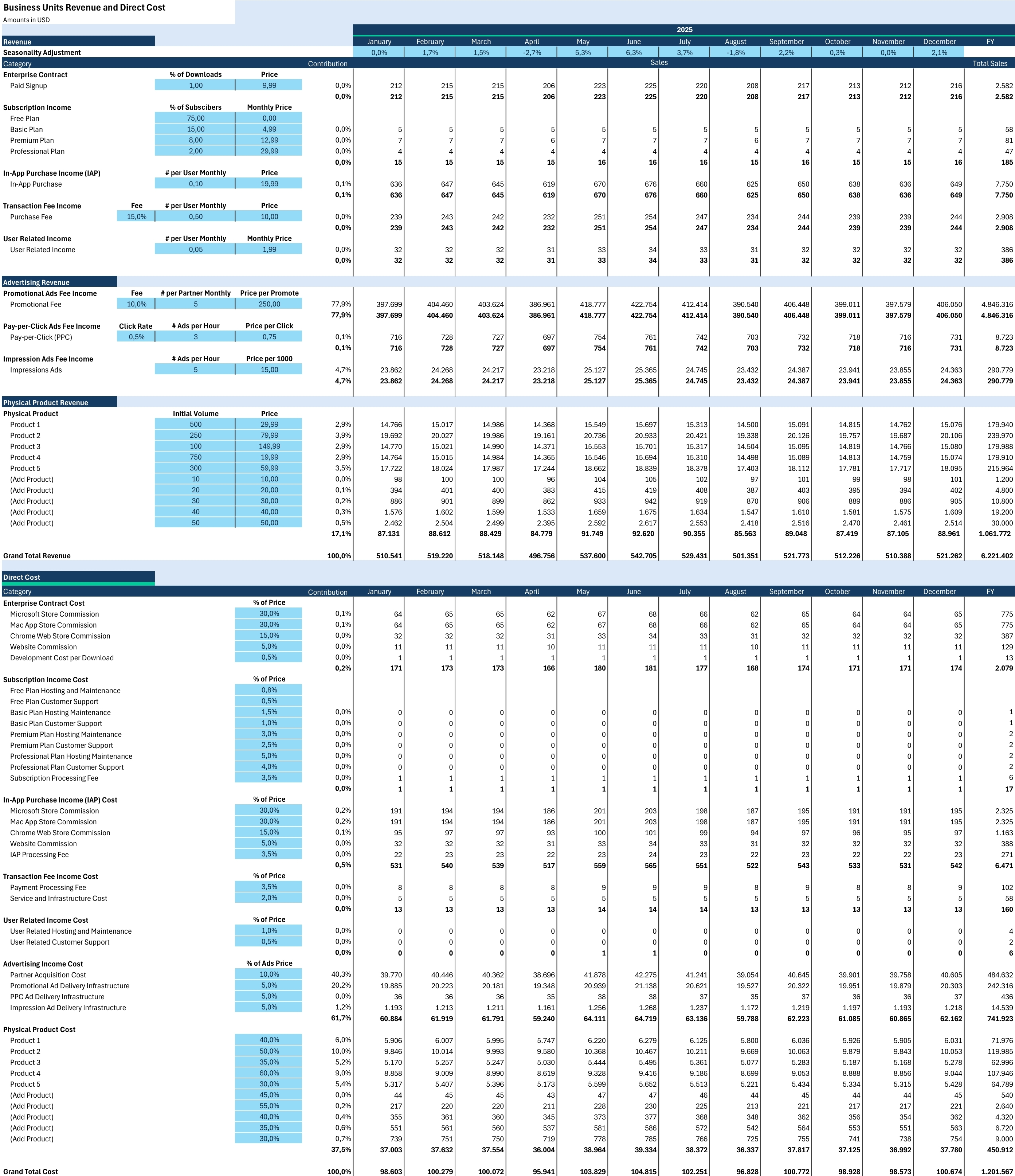
13. Revenue — Detailed revenue streams, pricing, subscription plans, and revenue drivers
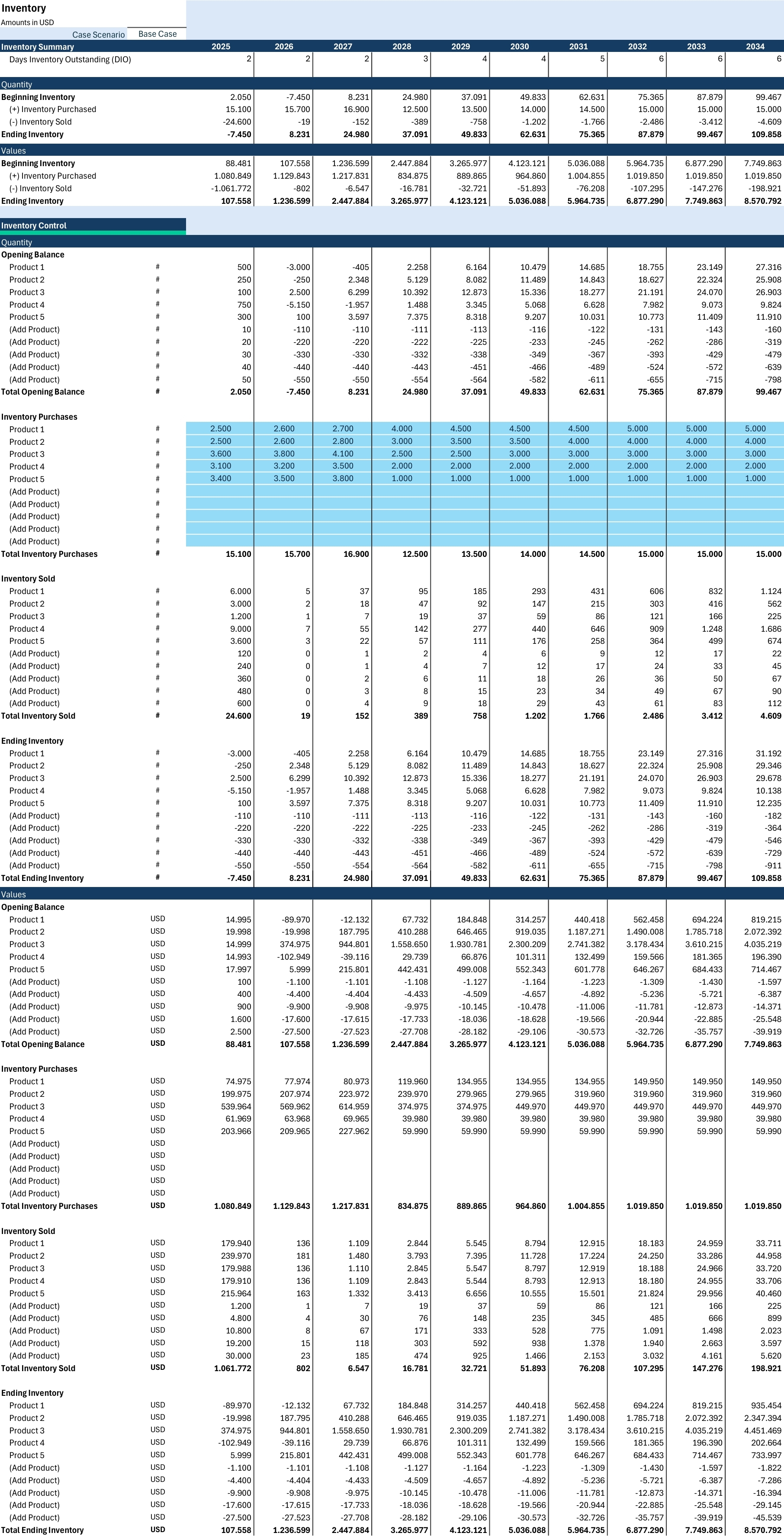
14. Inventory Control — Inventory quantity and value tracking
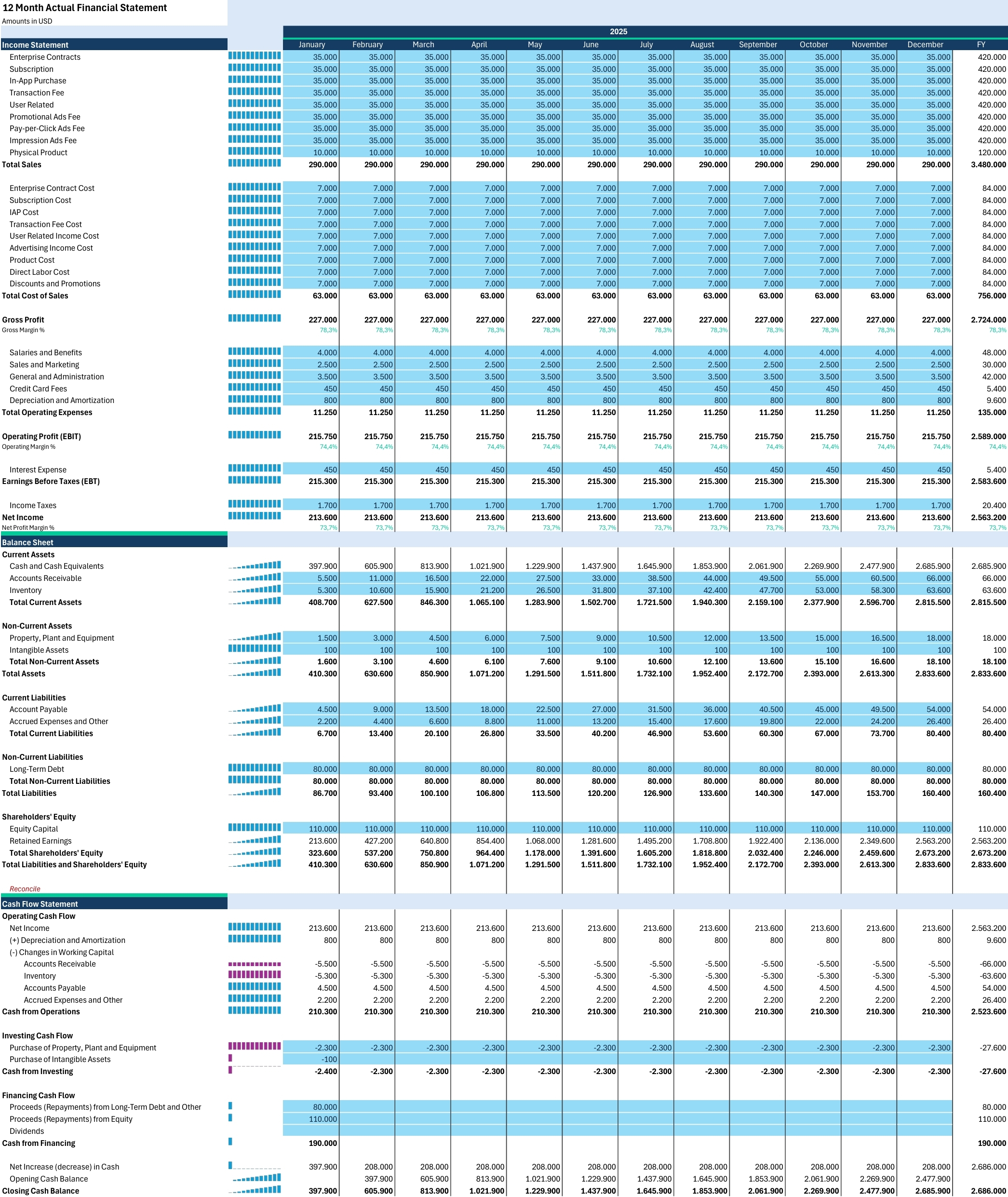
15. Actual Financial Statement — Actual historical financial performance
16. Annual Forecast — Long-term annual financial projections
17. Variance — Actual vs. forecast/budget variance analysis
18. Monthly Forecast — Detailed 12-month financial projections
19. Breakeven — Breakeven revenue, contribution margin, variable costs, and fixed costs
20. Profitability — Product/service profitability and operating performance analysis
21. Ratios — Comprehensive financial ratio analysis
22. DuPont — DuPont ROE decomposition and performance analysis
23. Investor Returns — LP/GP distribution waterfall, IRR, and MOIC analysis
24. IPO — Initial Public Offering assumptions, share structure, pricing, dilution, and IPO analysis
# Who Is This Template For?
This financial model is particularly useful for:
* SaaS startup founders
* Software entrepreneurs
* Mobile app founders
* Subscription businesses
* Startup financial analysts
* Business consultants
* Financial planners
* Startup investors
* Venture capital professionals
* Entrepreneurs preparing for fundraising
* Businesses planning long-term growth
* Companies exploring a future IPO
Whether you're validating a SaaS idea, preparing a fundraising pitch, planning your next growth phase, analysing investor returns, or exploring a potential IPO, this model gives you a structured financial framework to work from.
Stop guessing. Start modelling. Build your SaaS business with numbers you can understand, test, and defend.Start your SaaS financial modelling journey today!
This Best Practice includes
1 Excel file
Further information
Turn your SAAS idea from a hopeful pitch deck into an investor-grade, fully quantified business before you write a single line of production code.
Model every realistic (and nightmare) monetization mix — freemium, in-app purchases, subscriptions (monthly + annual), ads (CPM/RPM), paid upfront, hybrid — and instantly see which one actually makes you rich.
Pre-revenue or early-revenue mobile app / SaaS / digital product.
Micro-SaaS, niche B2B tools, or content apps.
Free, open-source, or donation-only apps.
Pure cryptocurrency / web3 / NFT projects.