Publication number: ELQ-59702-1
View all versions & Certificate

IFRS Fixed Asset & Depreciation Model – IAS 16 PPE Register, Revaluation, Impairment, Tax, Deferred Tax, Journals & Disc
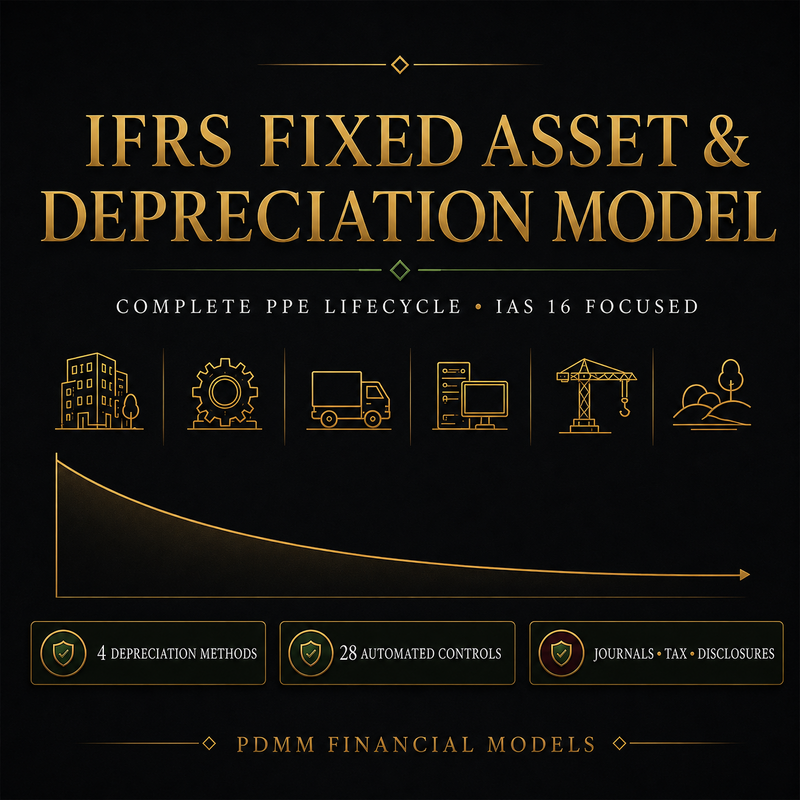
Complete IFRS fixed-asset model with four depreciation methods, revaluation, impairment, tax, journals, disclosures and 28 live controls.
Further information
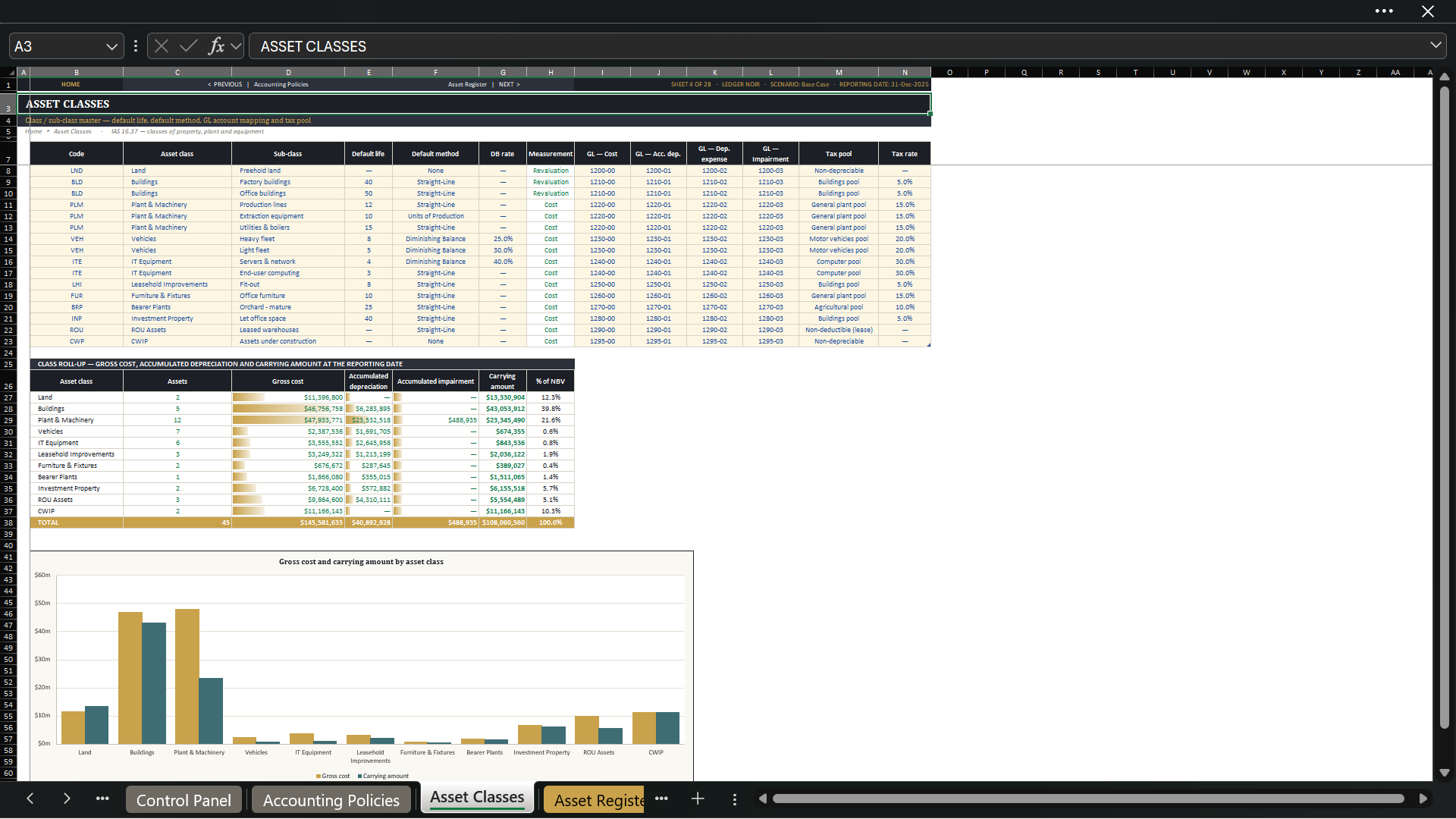
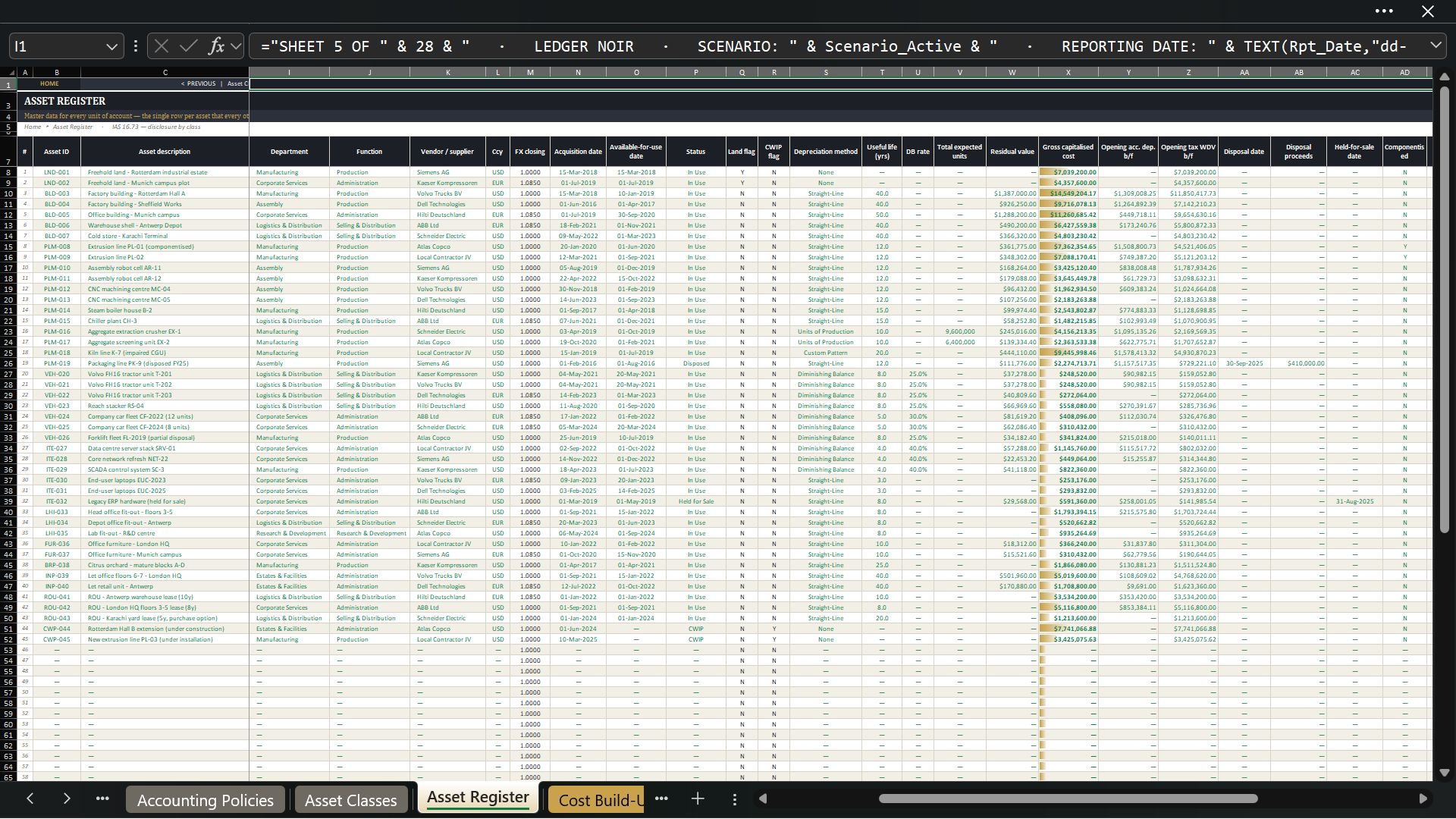
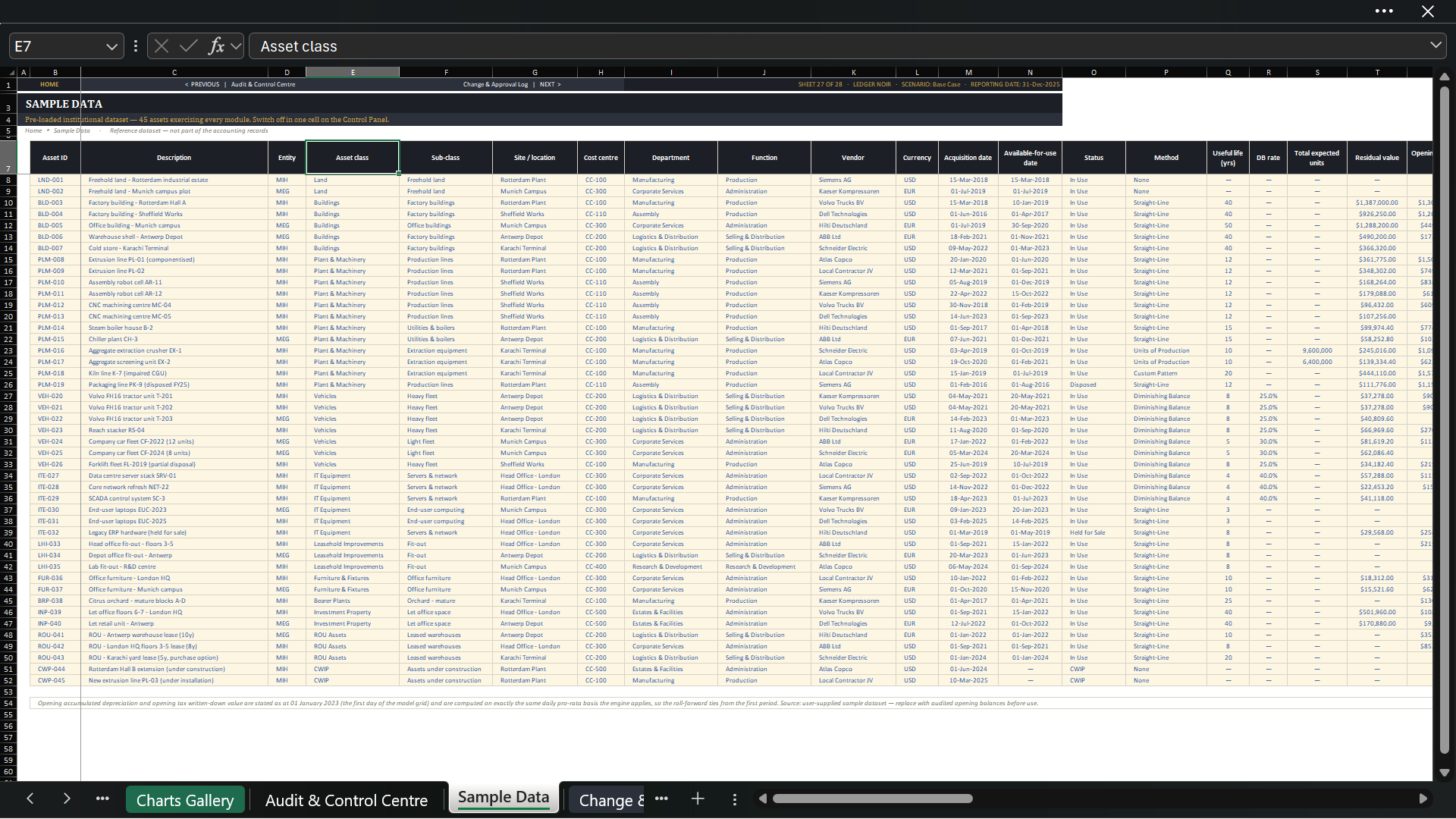
Maintain a structured multi-entity fixed-asset register.
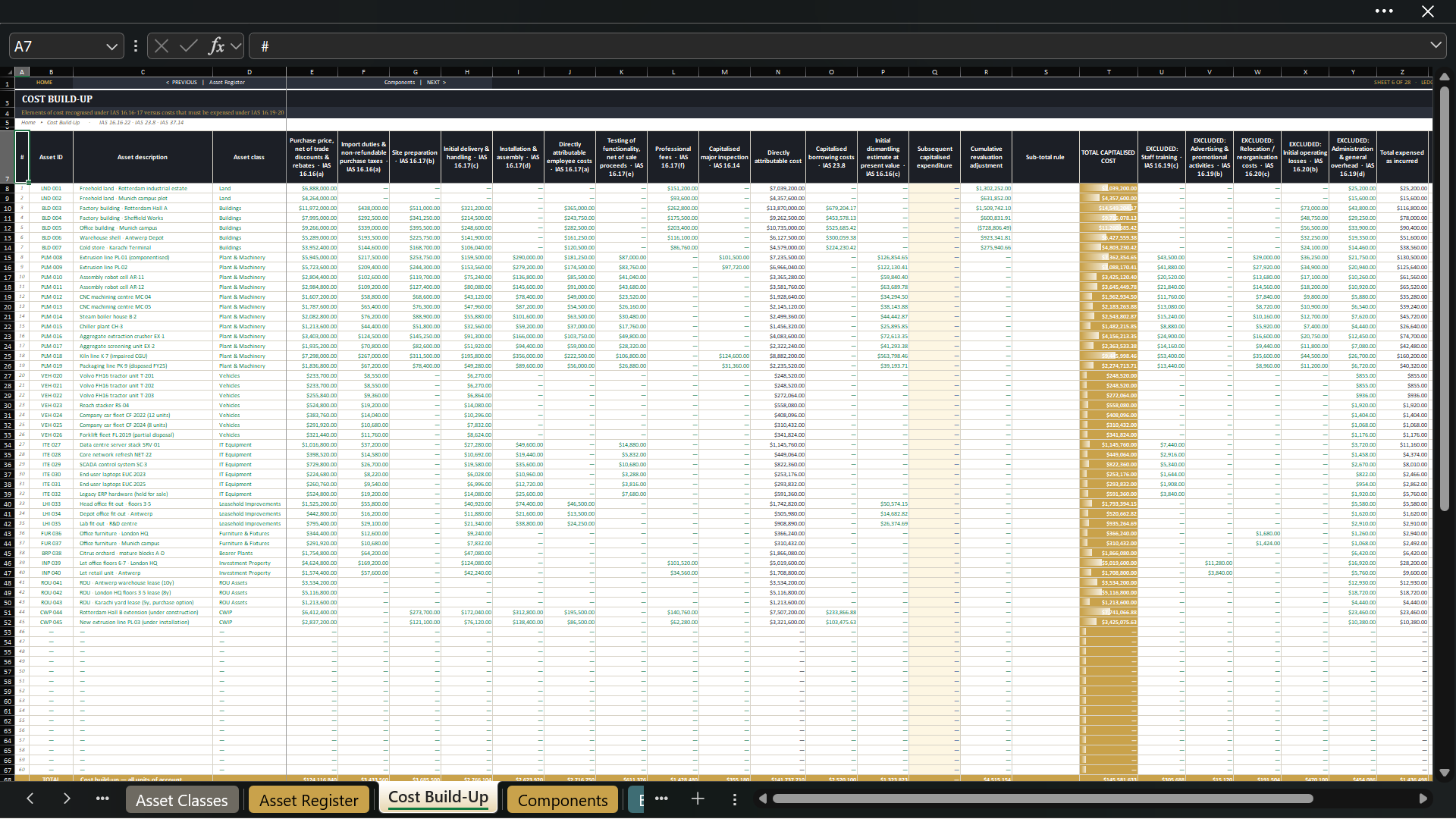
Separate capitalizable asset costs from expenditure recognized as incurred.
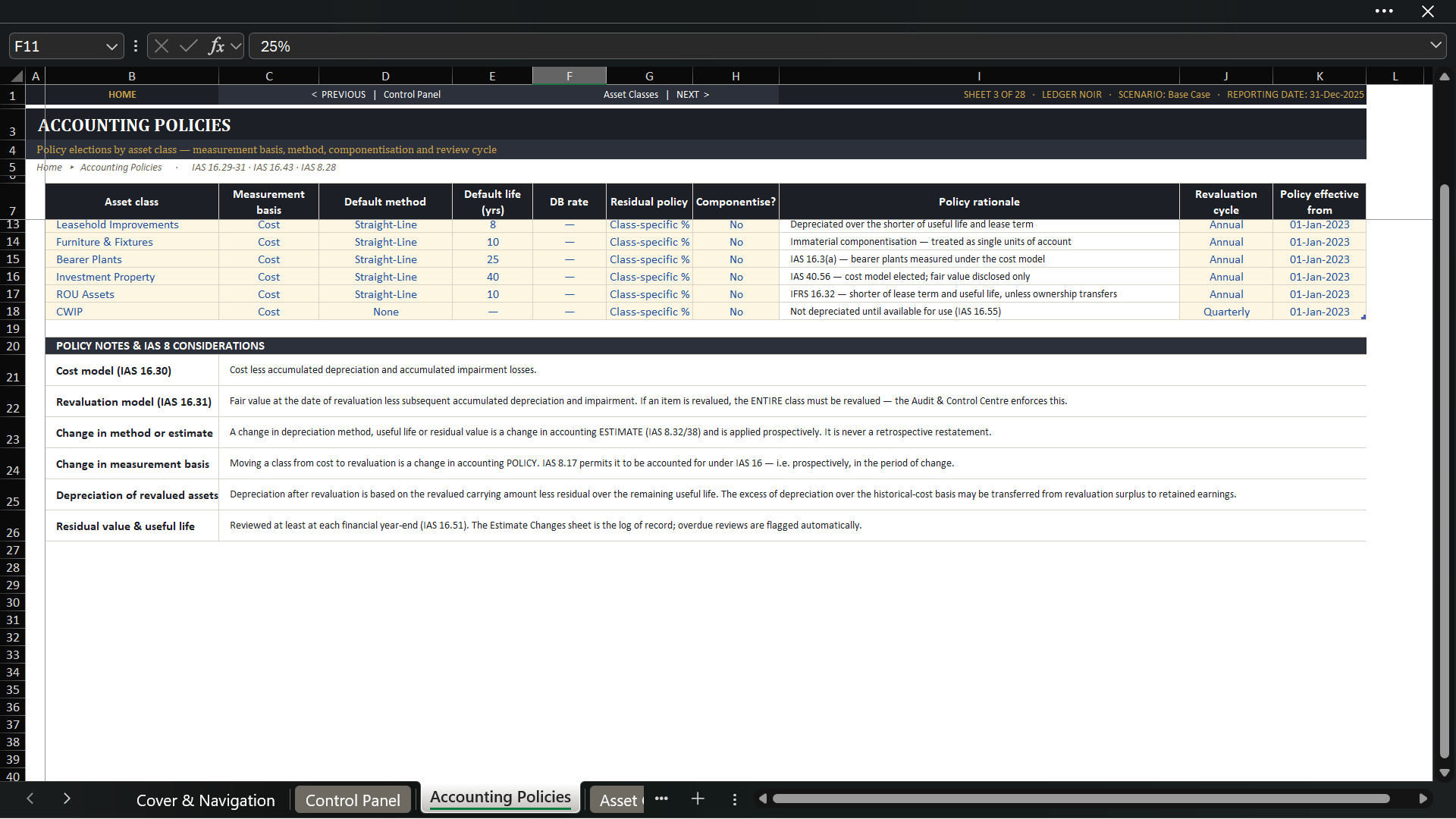
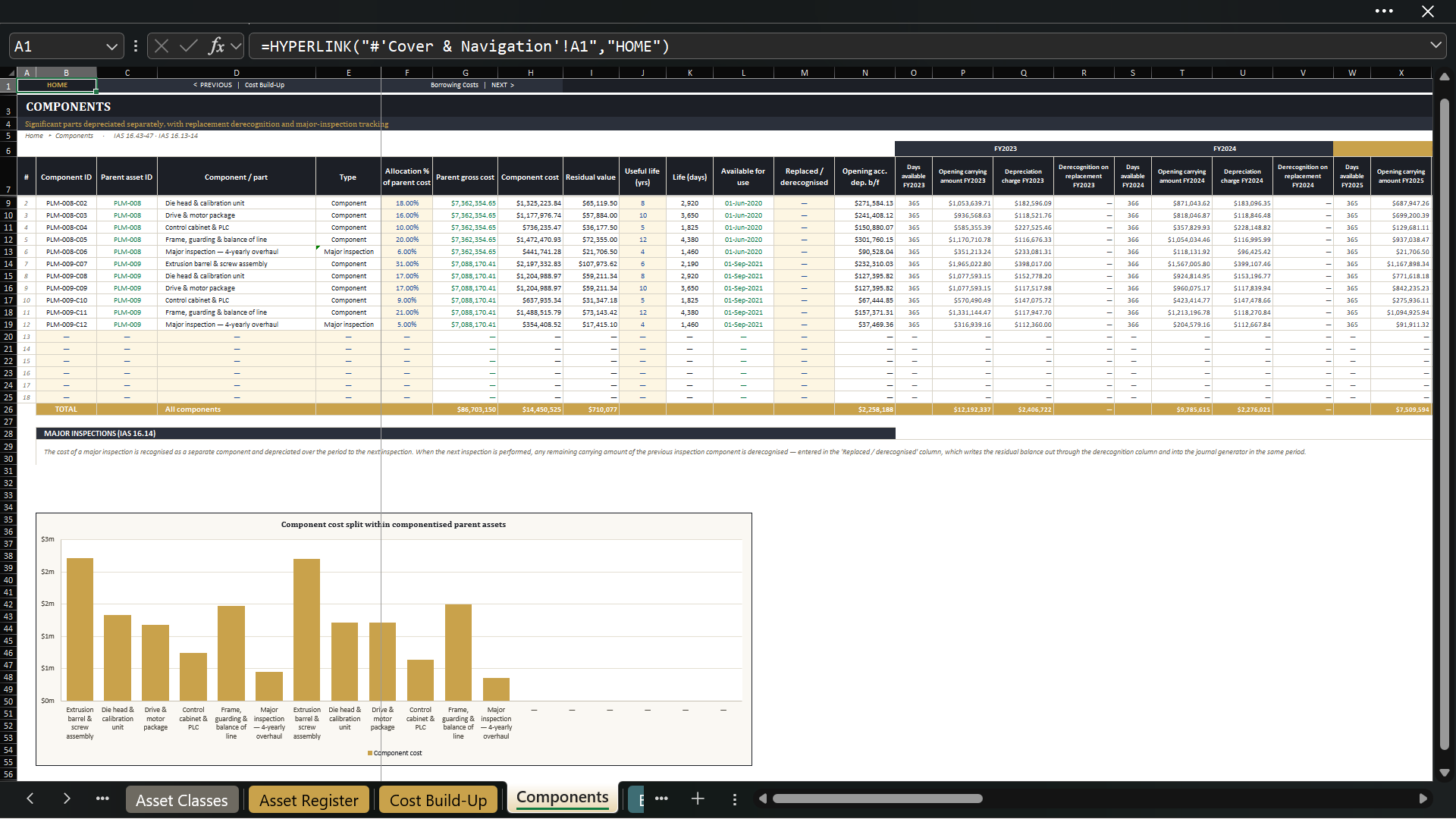
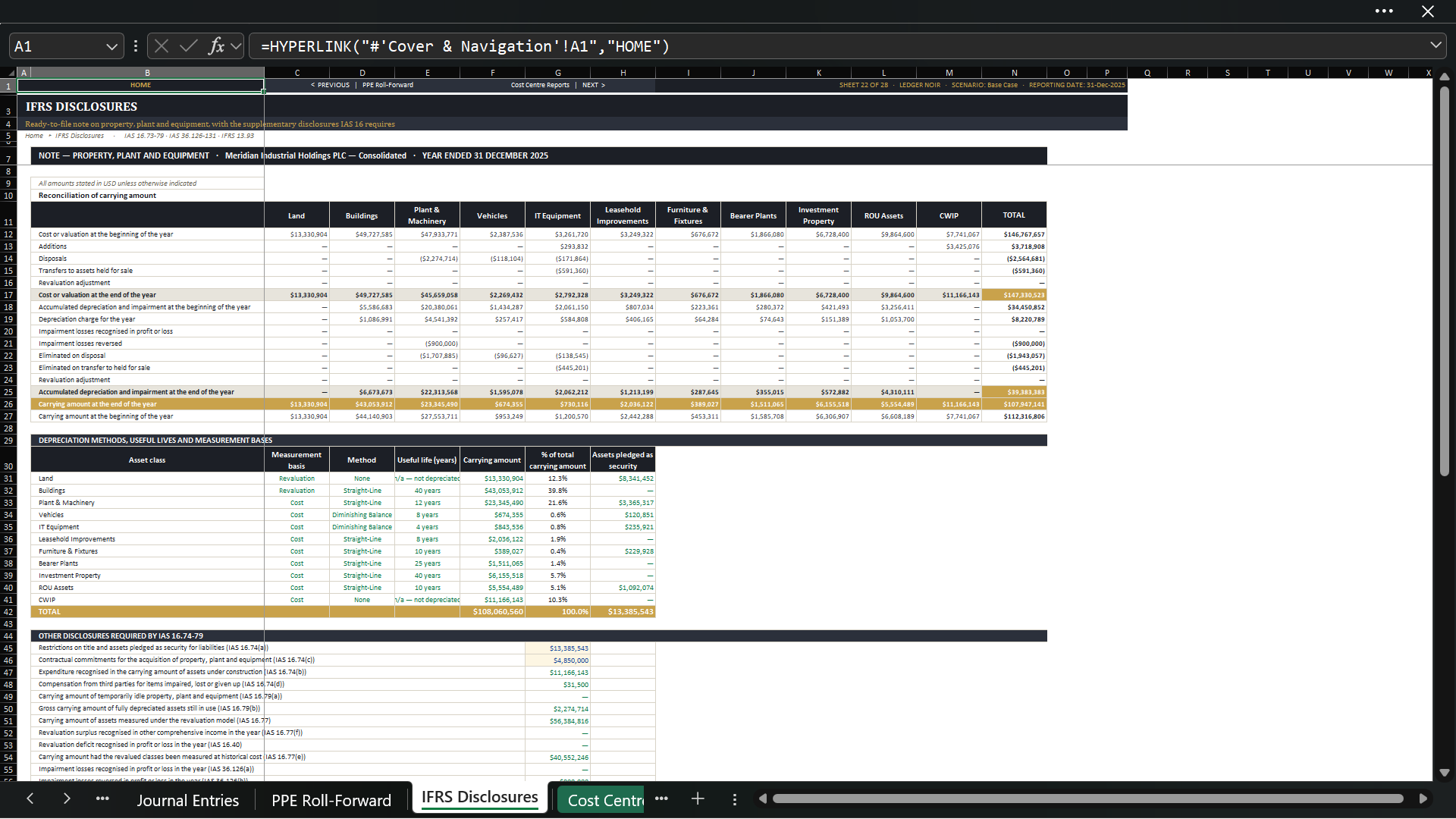
Depreciate significant components and major inspections separately.
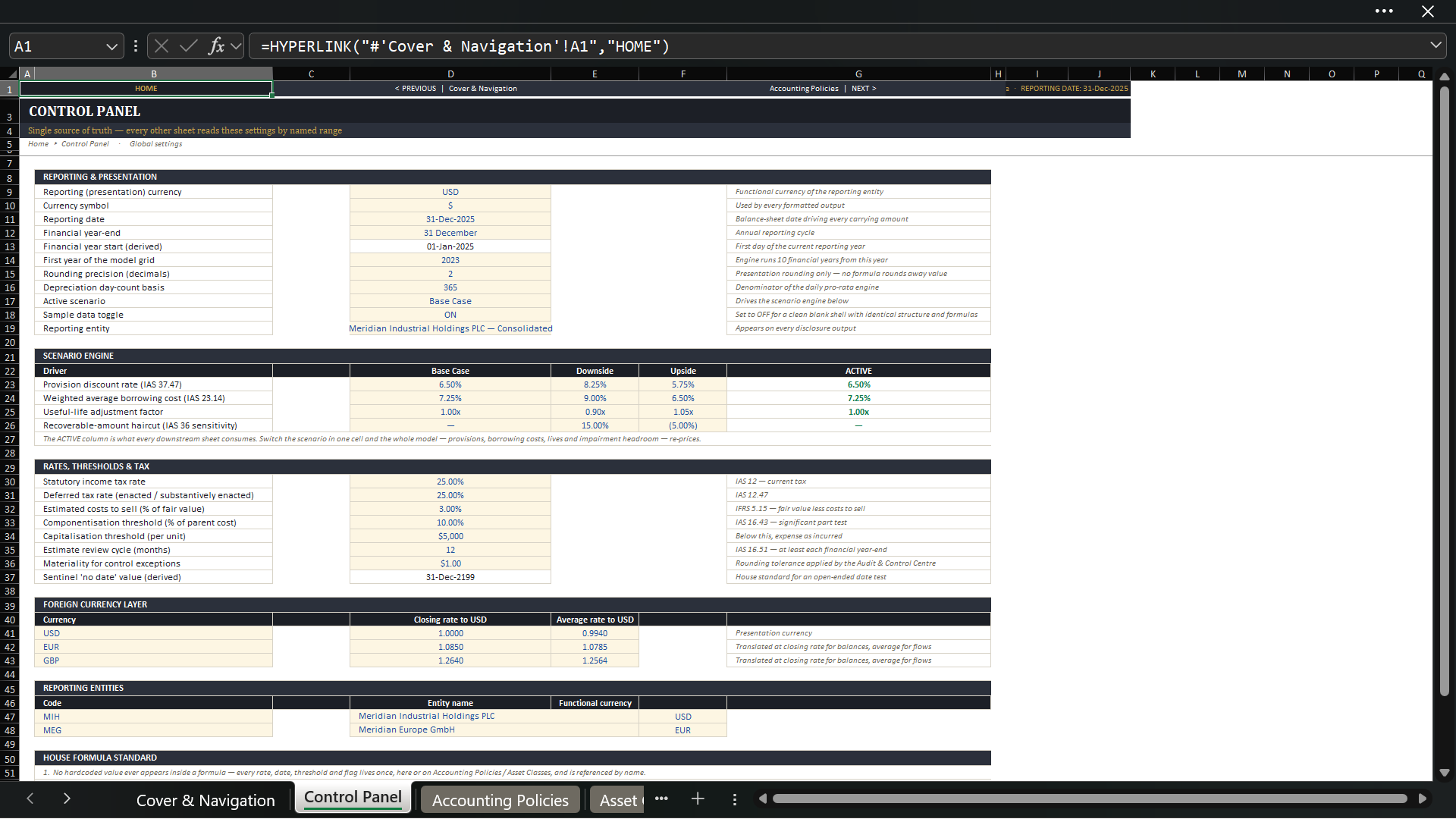
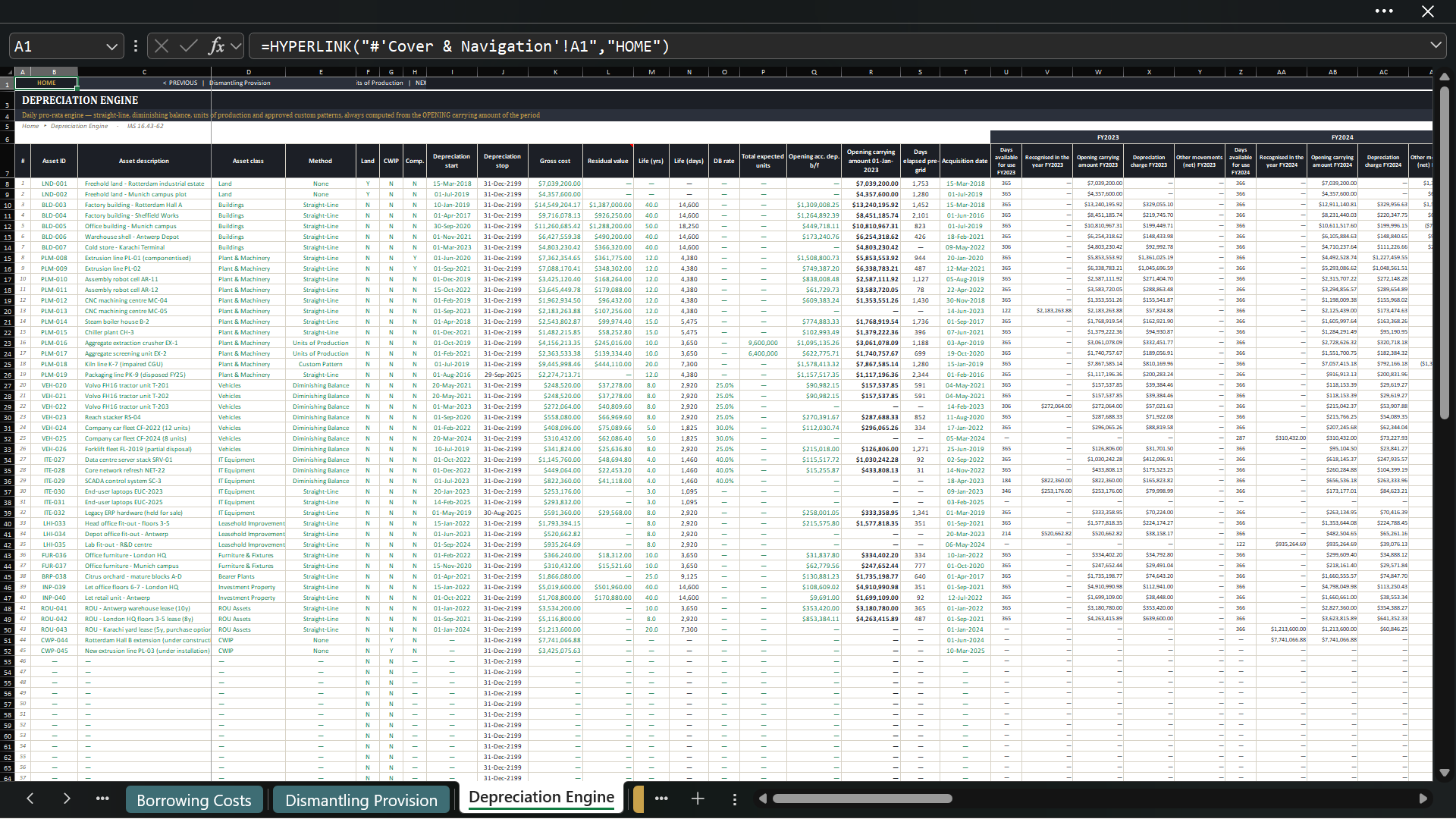
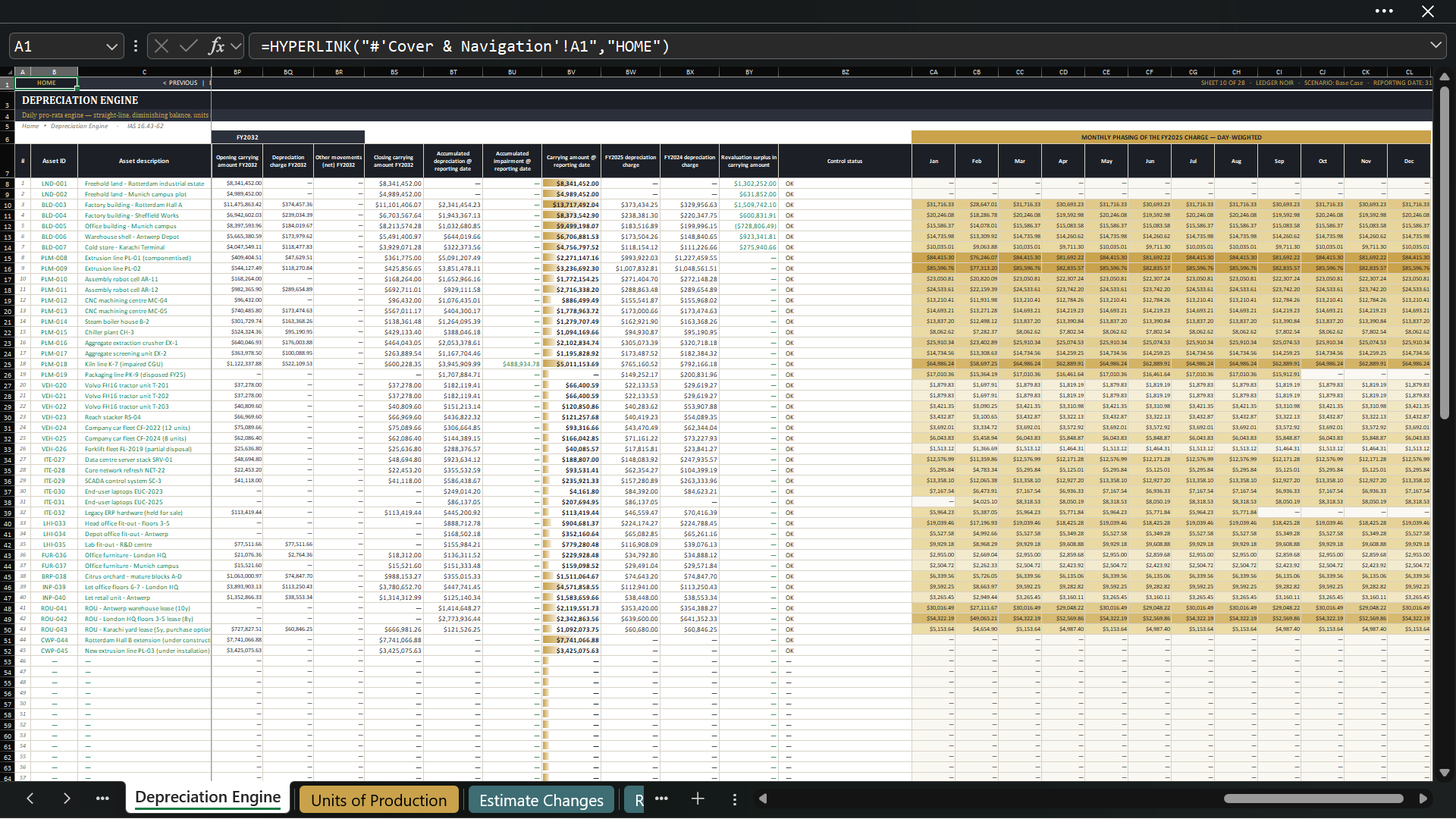
Calculate daily pro-rata depreciation across a ten-year grid.
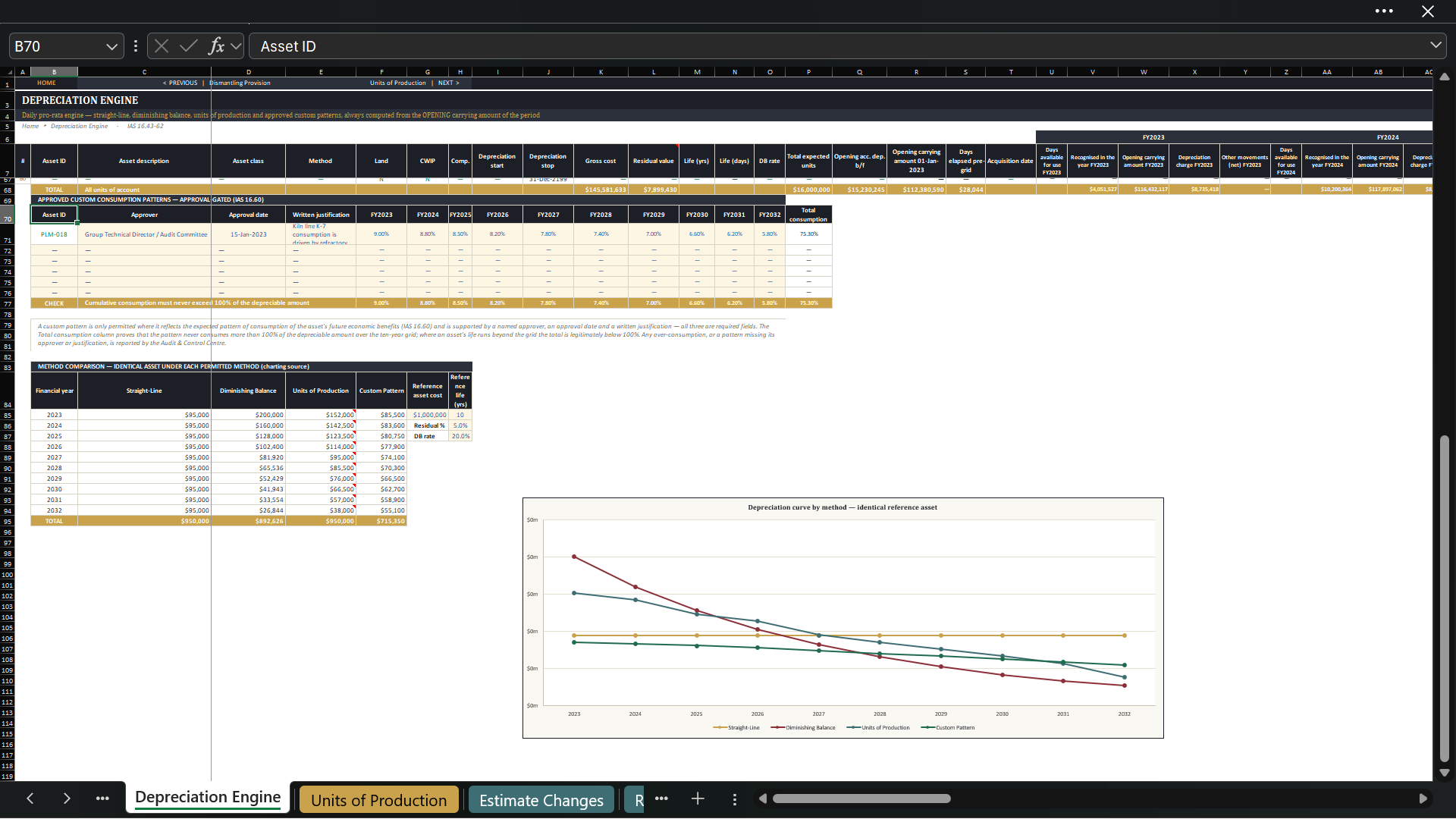
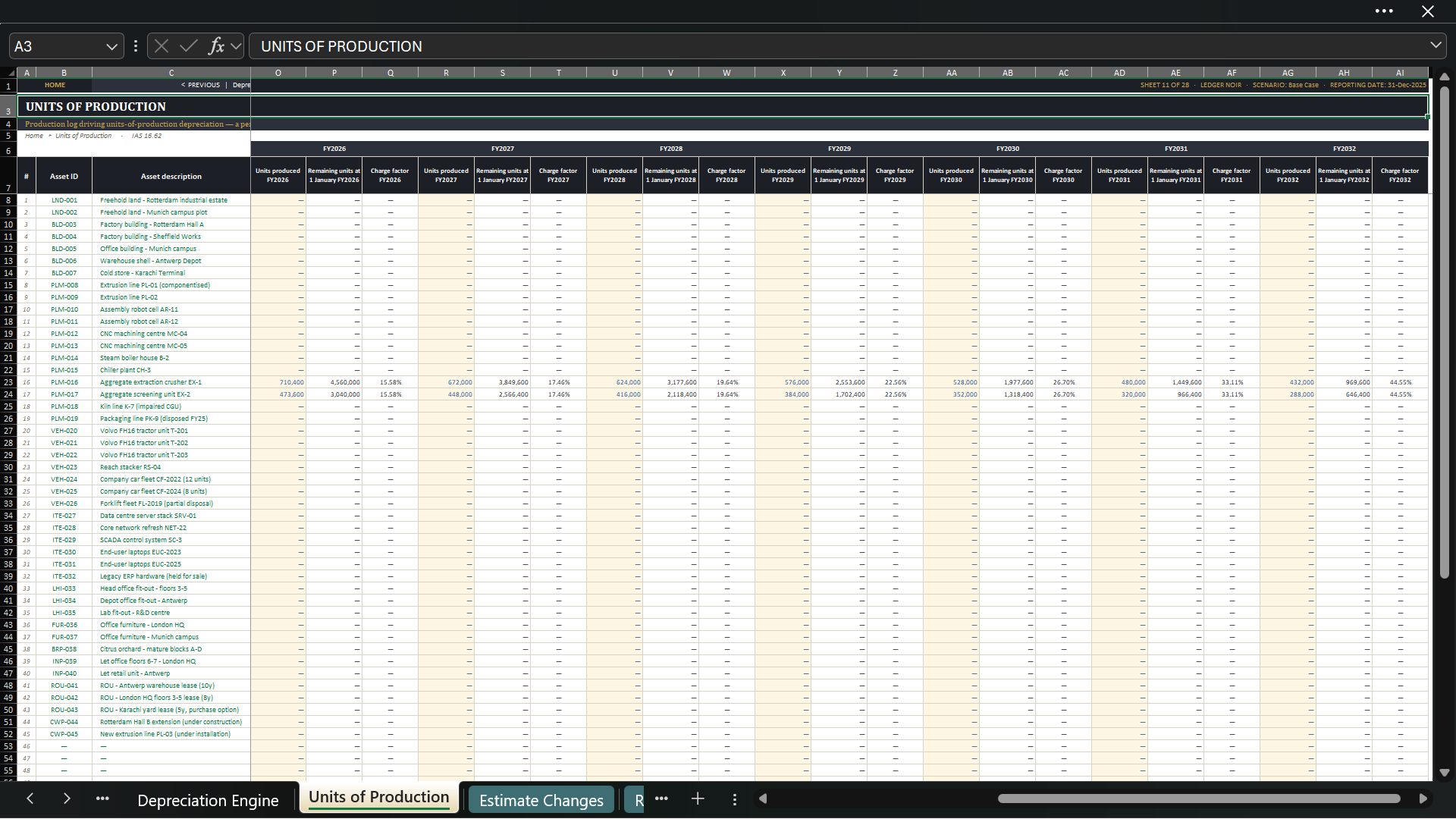
Support straight-line, diminishing-balance, units-of-production, and approved custom methods.
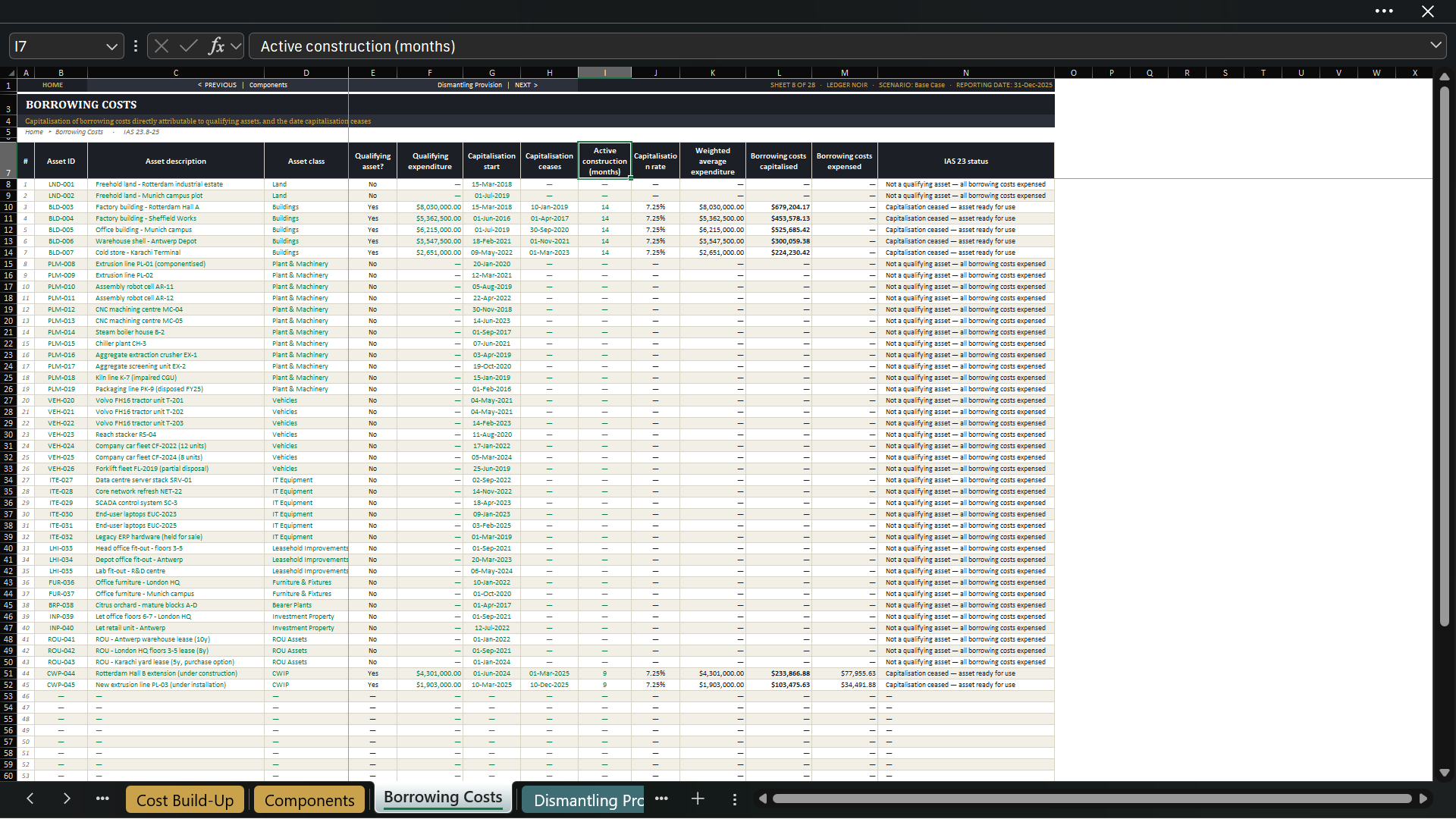
Capitalize eligible borrowing costs for qualifying assets.
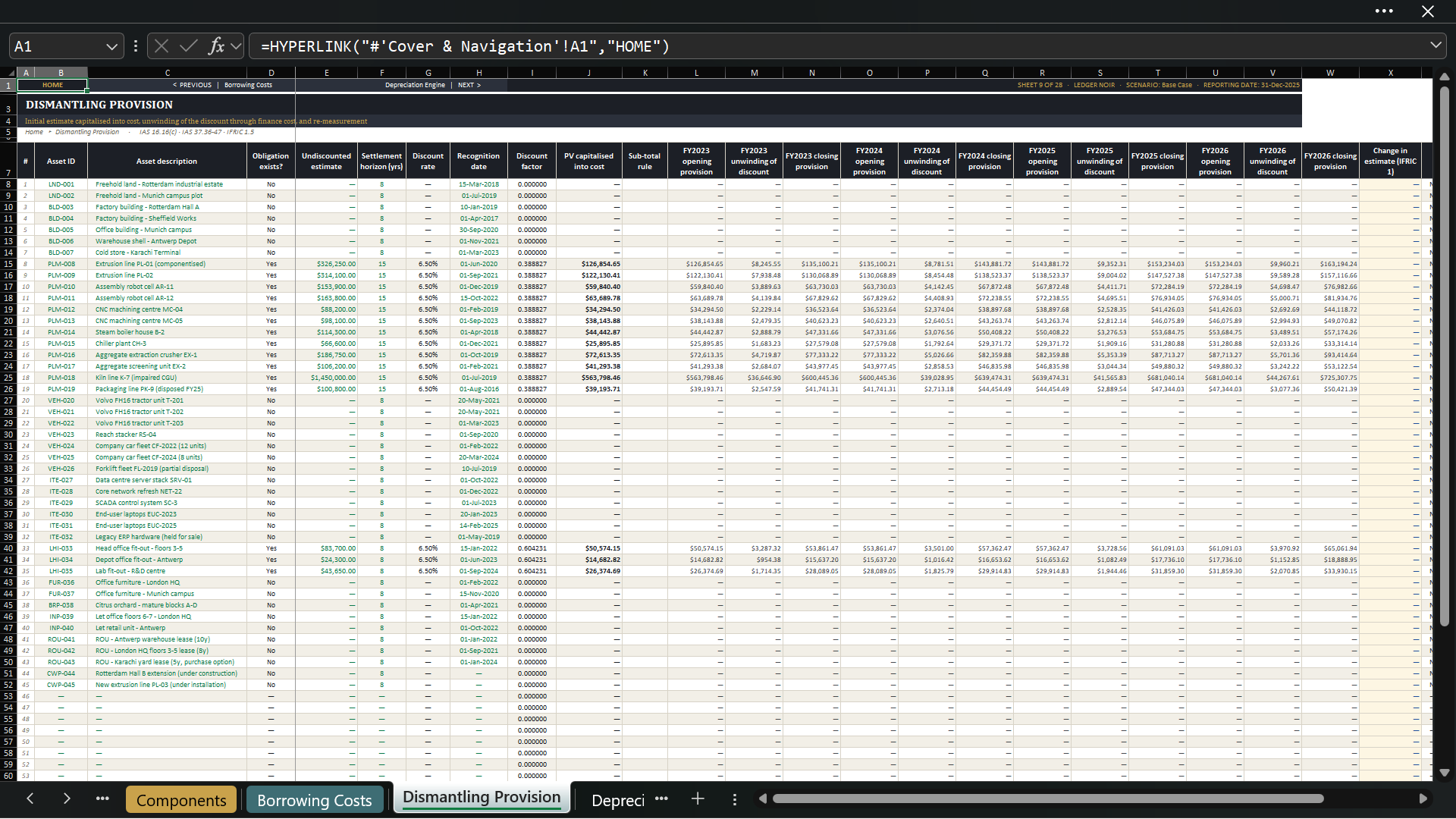
Model dismantling and restoration provisions and discount unwinding.
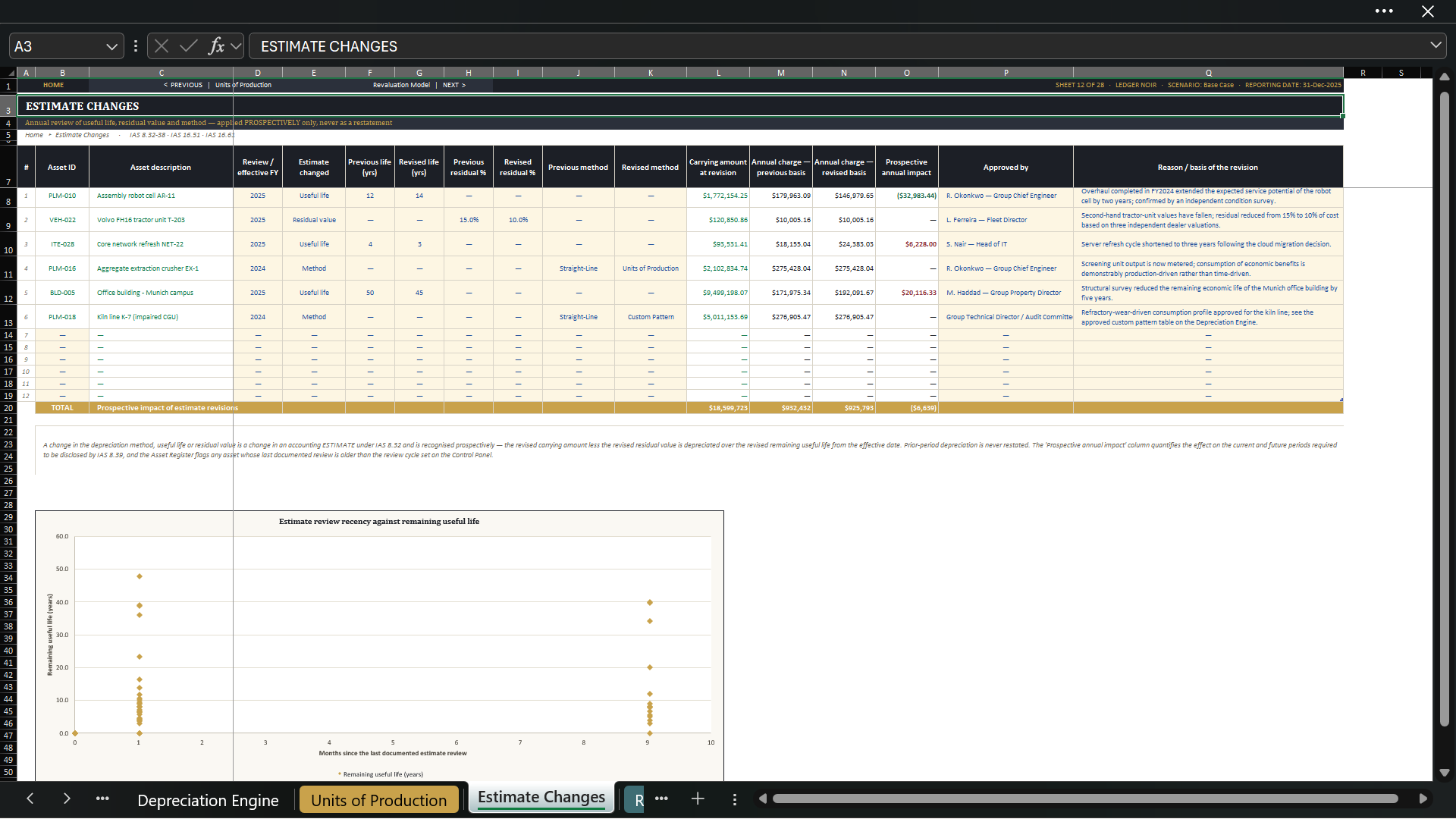
Apply useful-life, residual-value, and method changes prospectively.
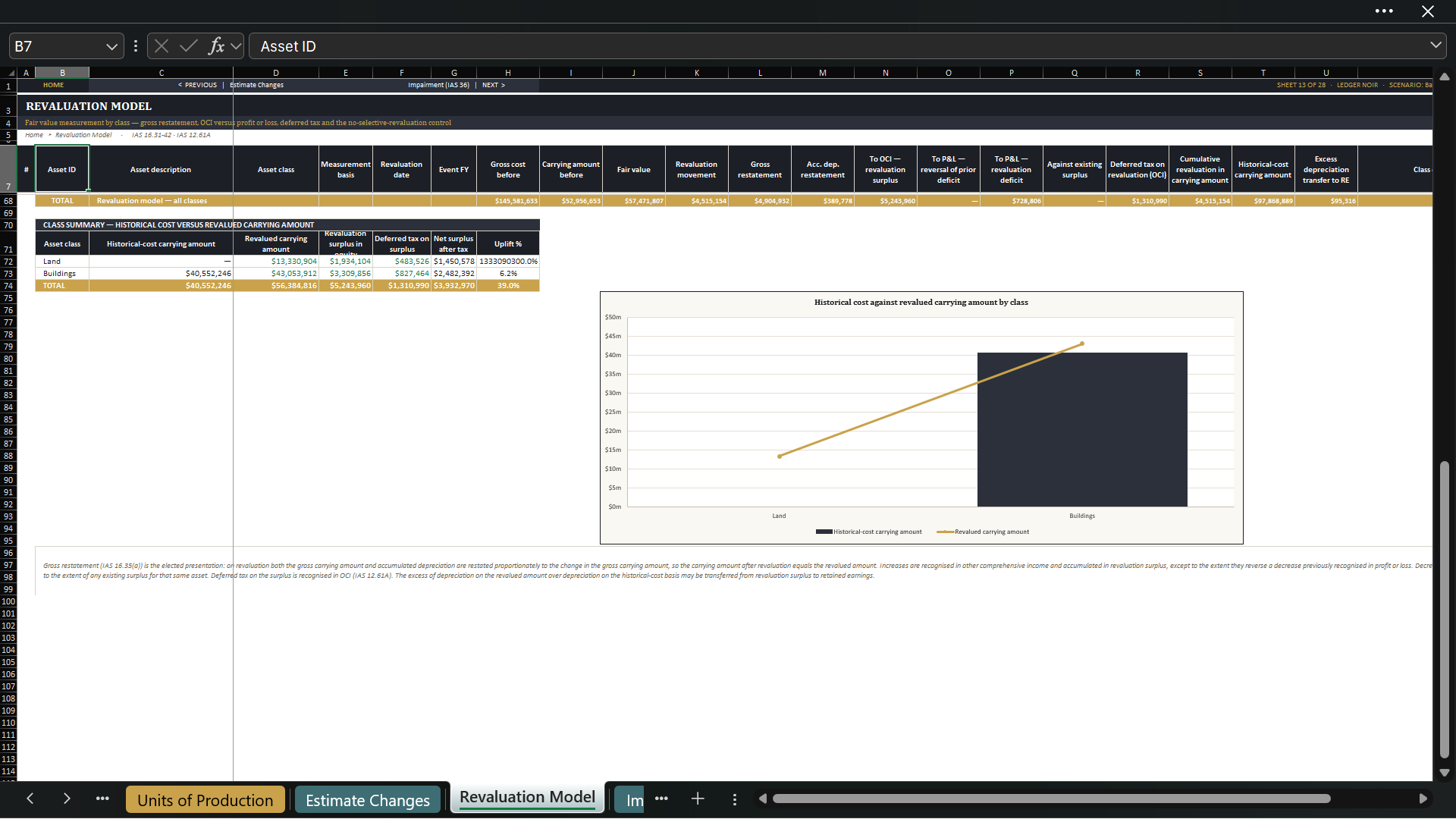
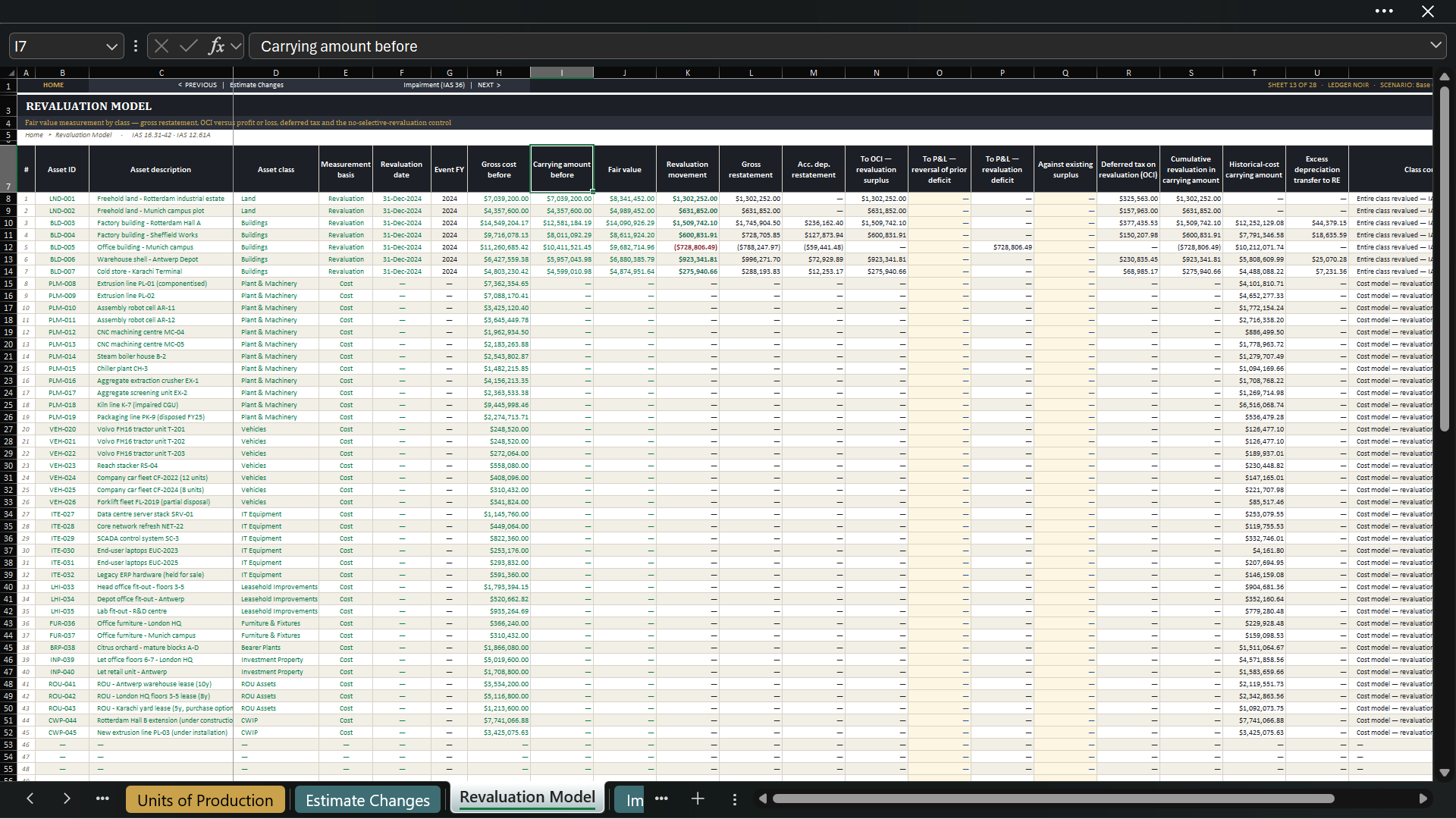
Calculate revaluation increases, decreases, OCI, profit-or-loss, deferred-tax, and equity movements.
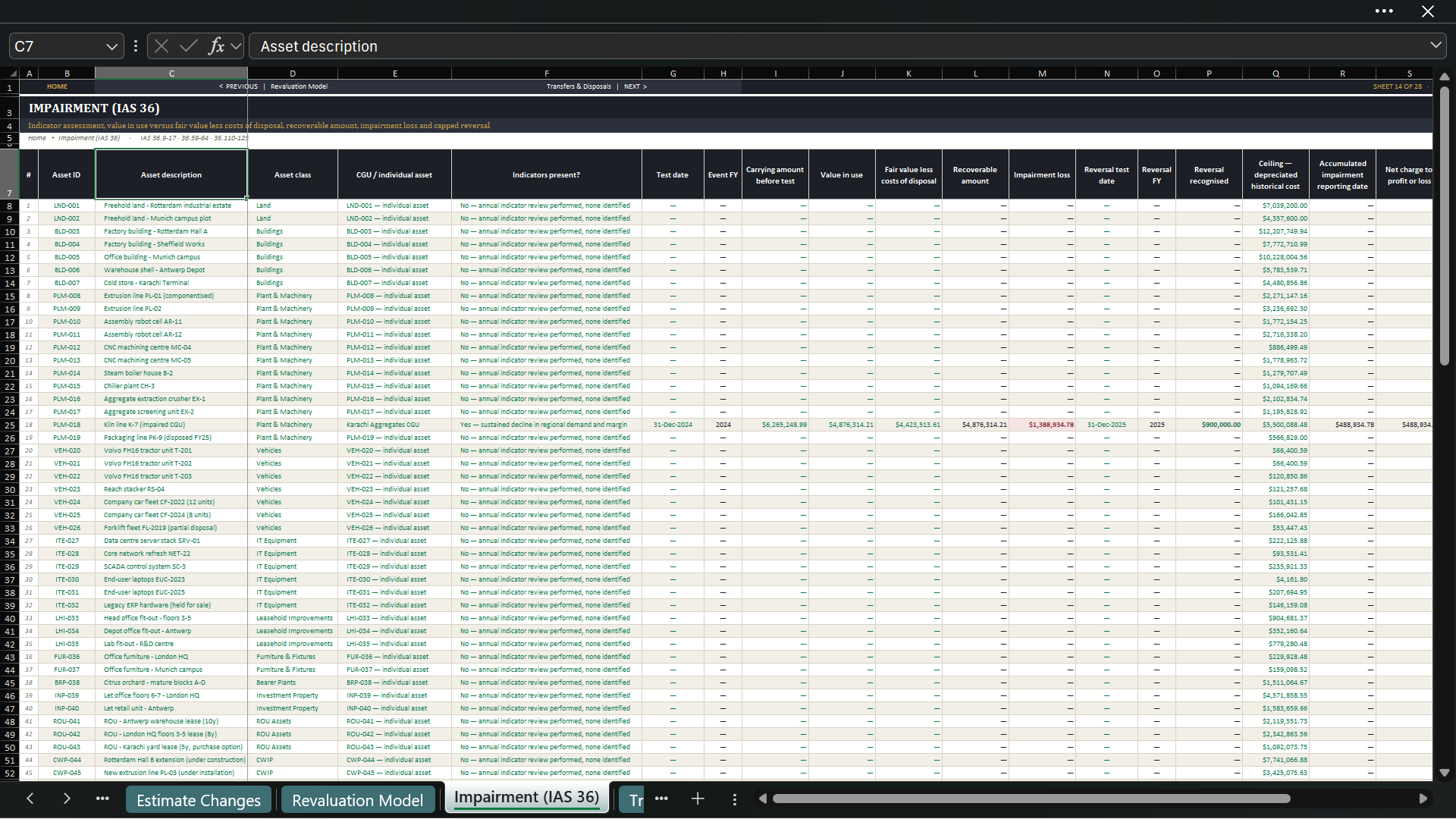
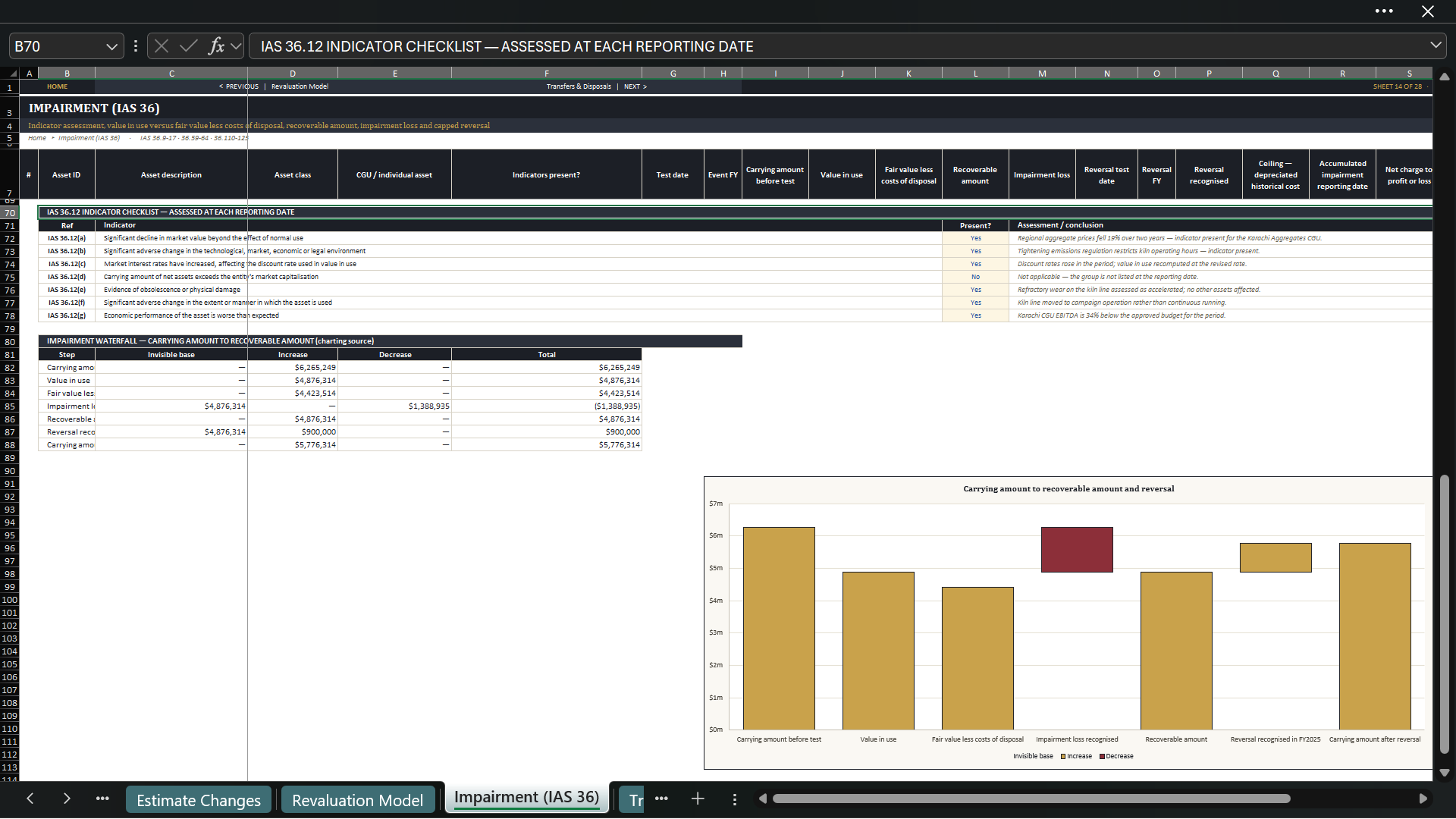
Test impairment and reversals using recoverable amount and reversal ceilings.
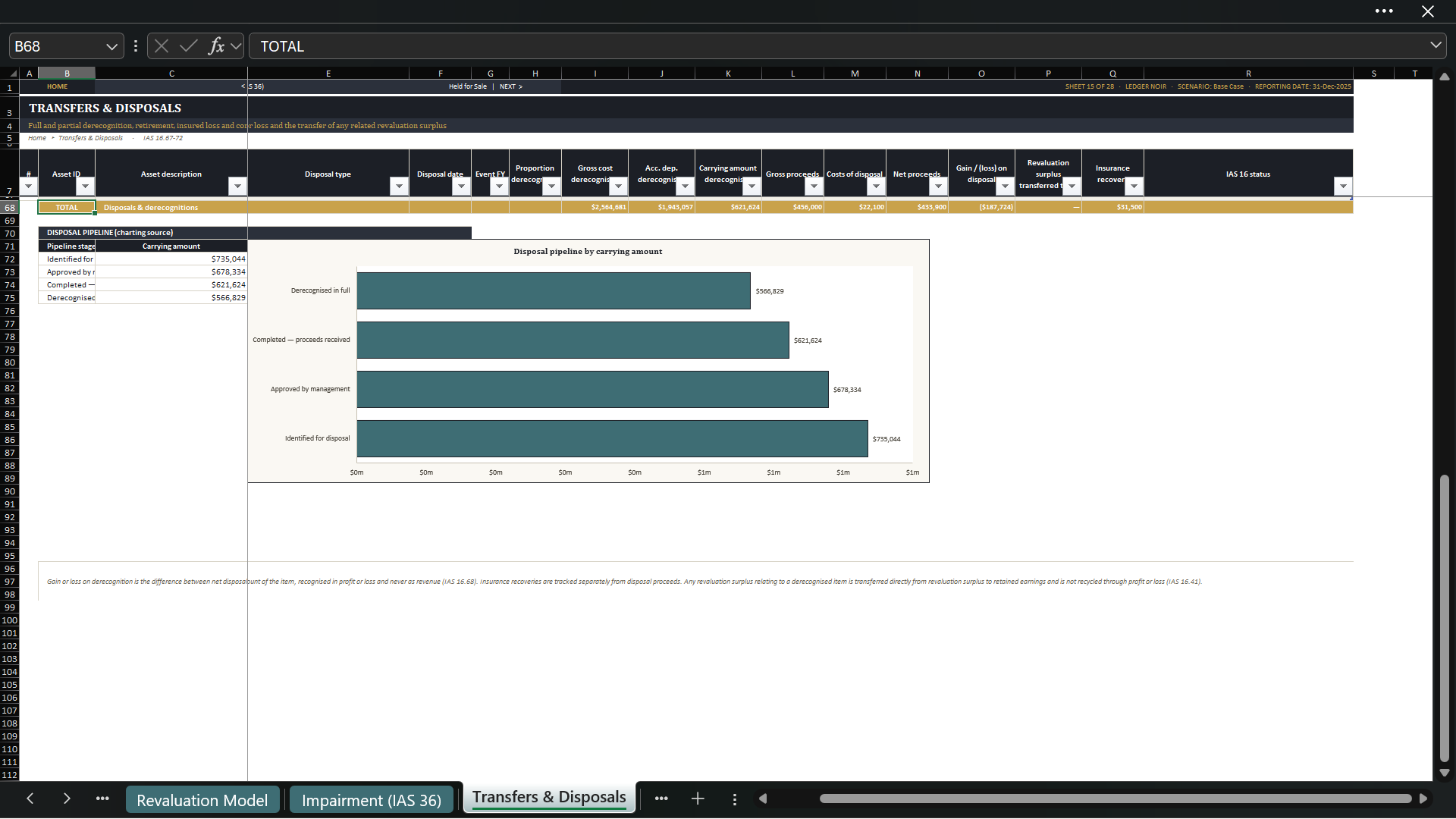
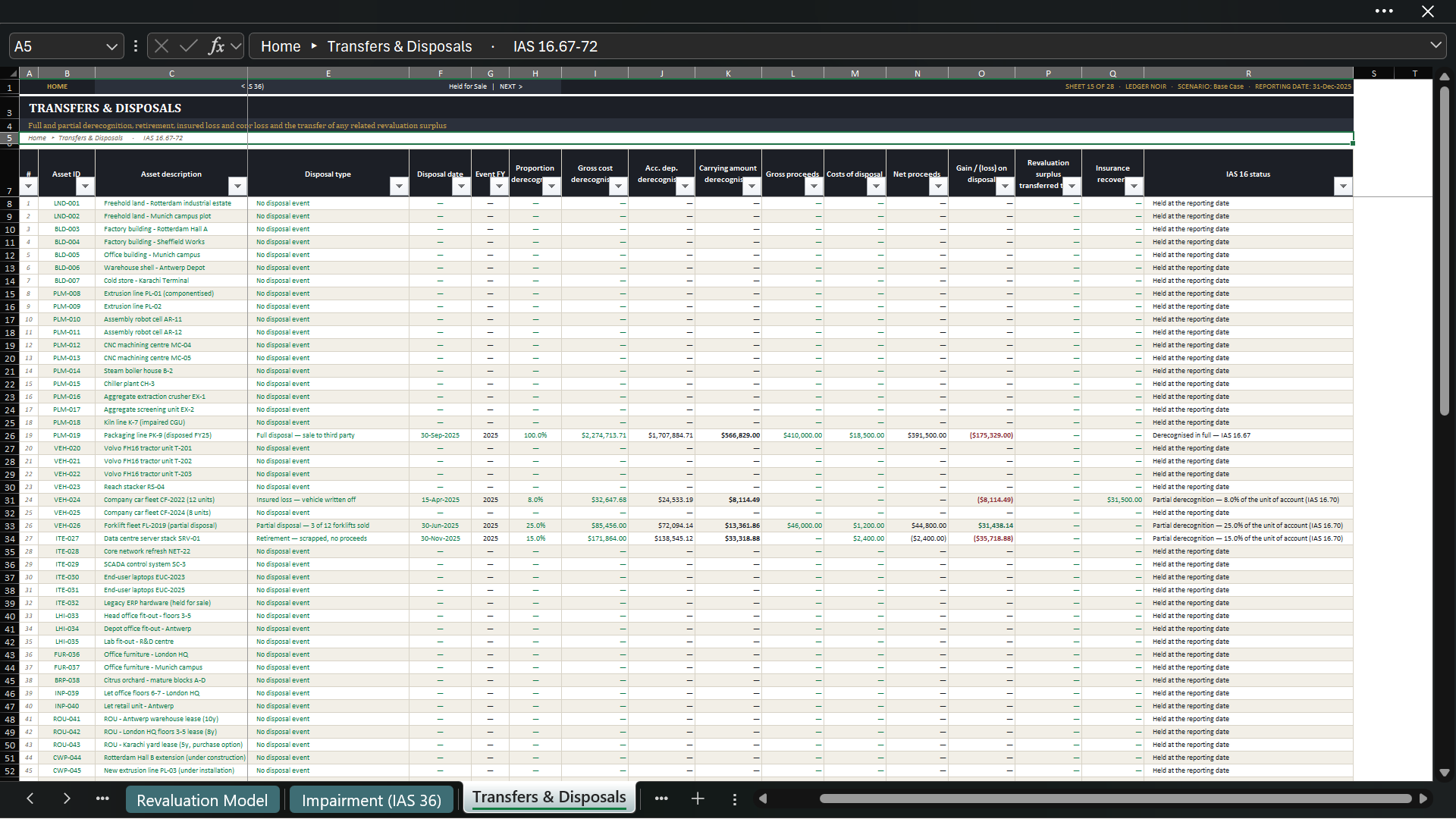
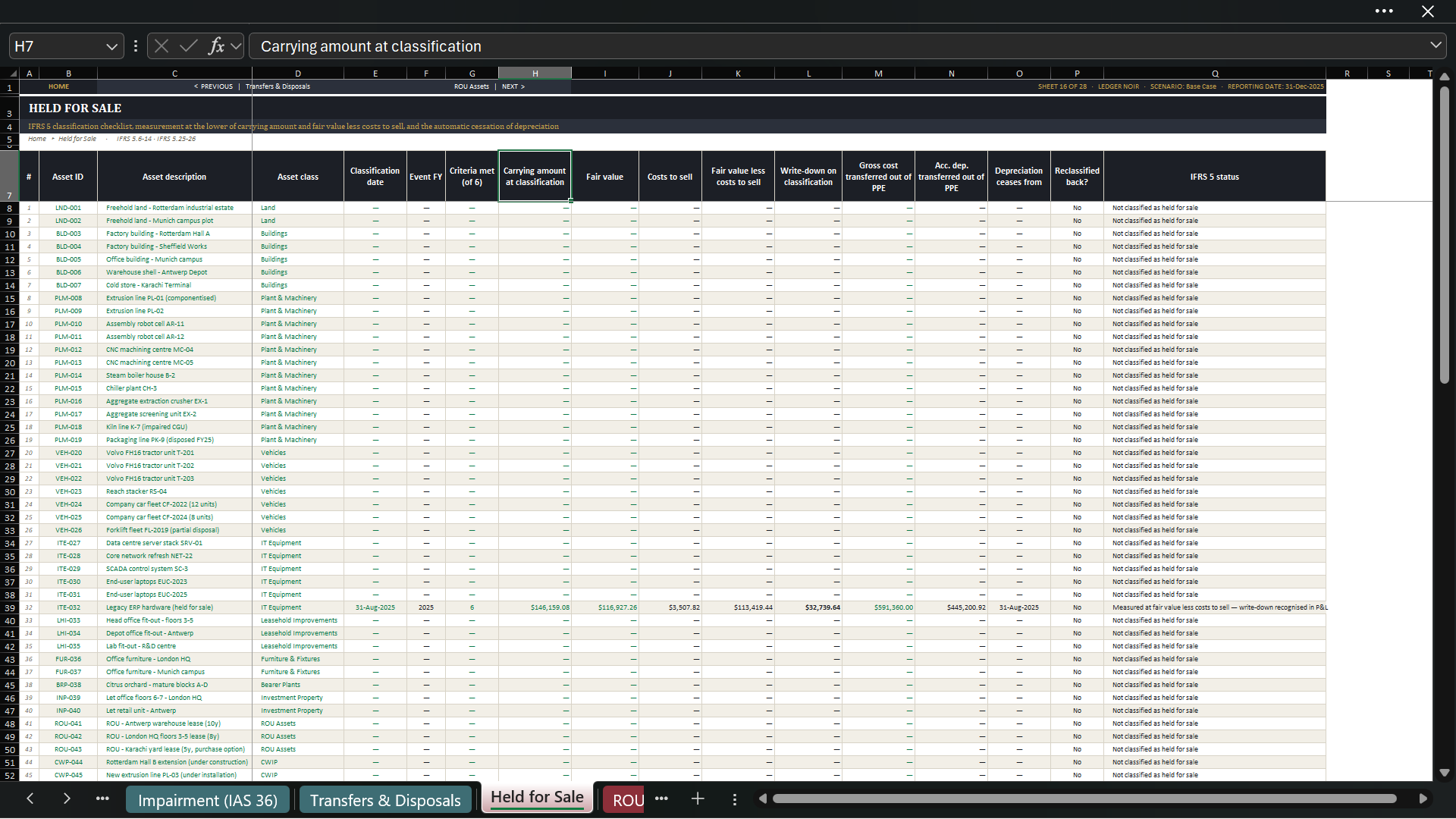
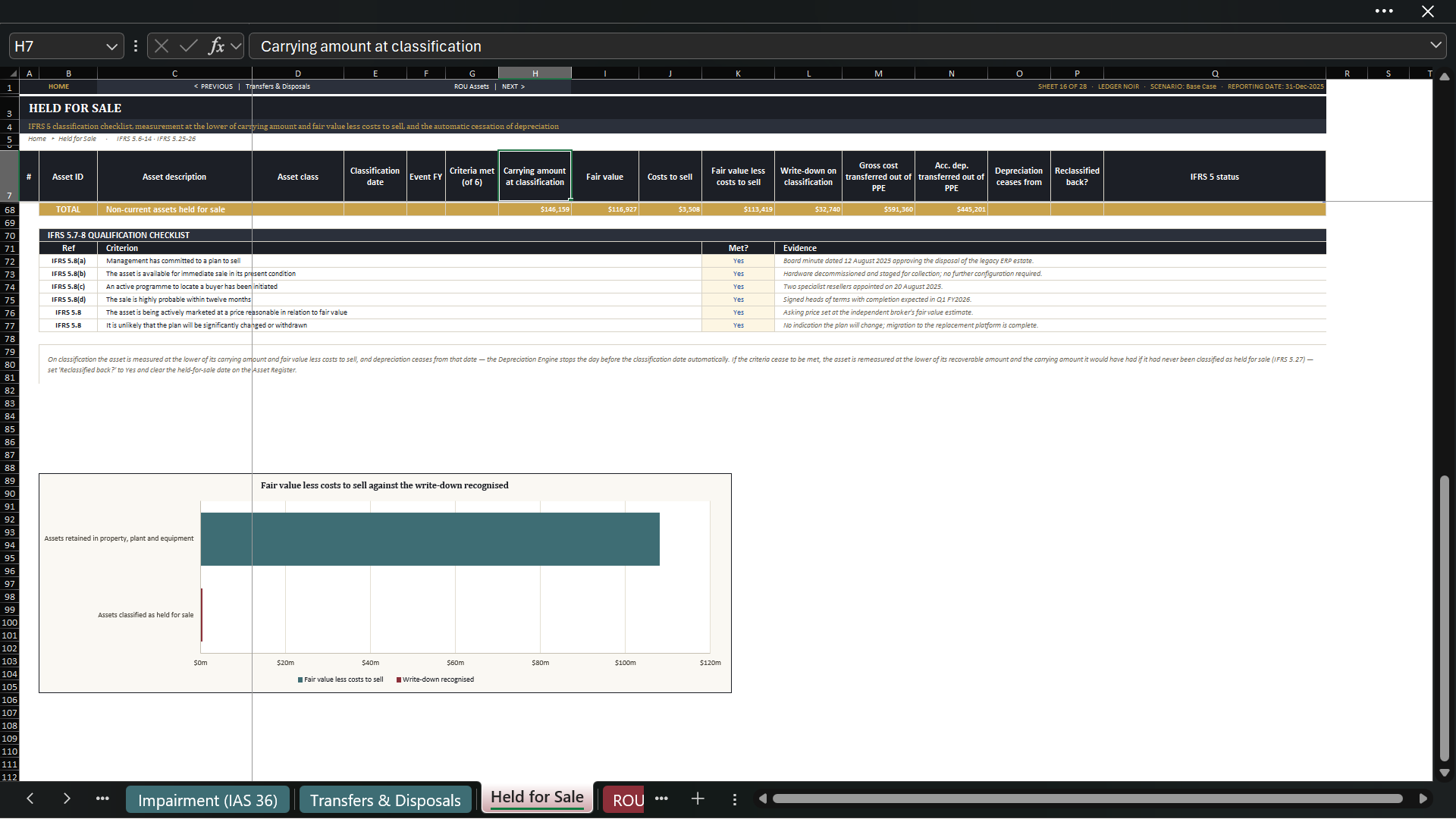
Process full and partial disposals, insurance recovery, and held-for-sale classification.
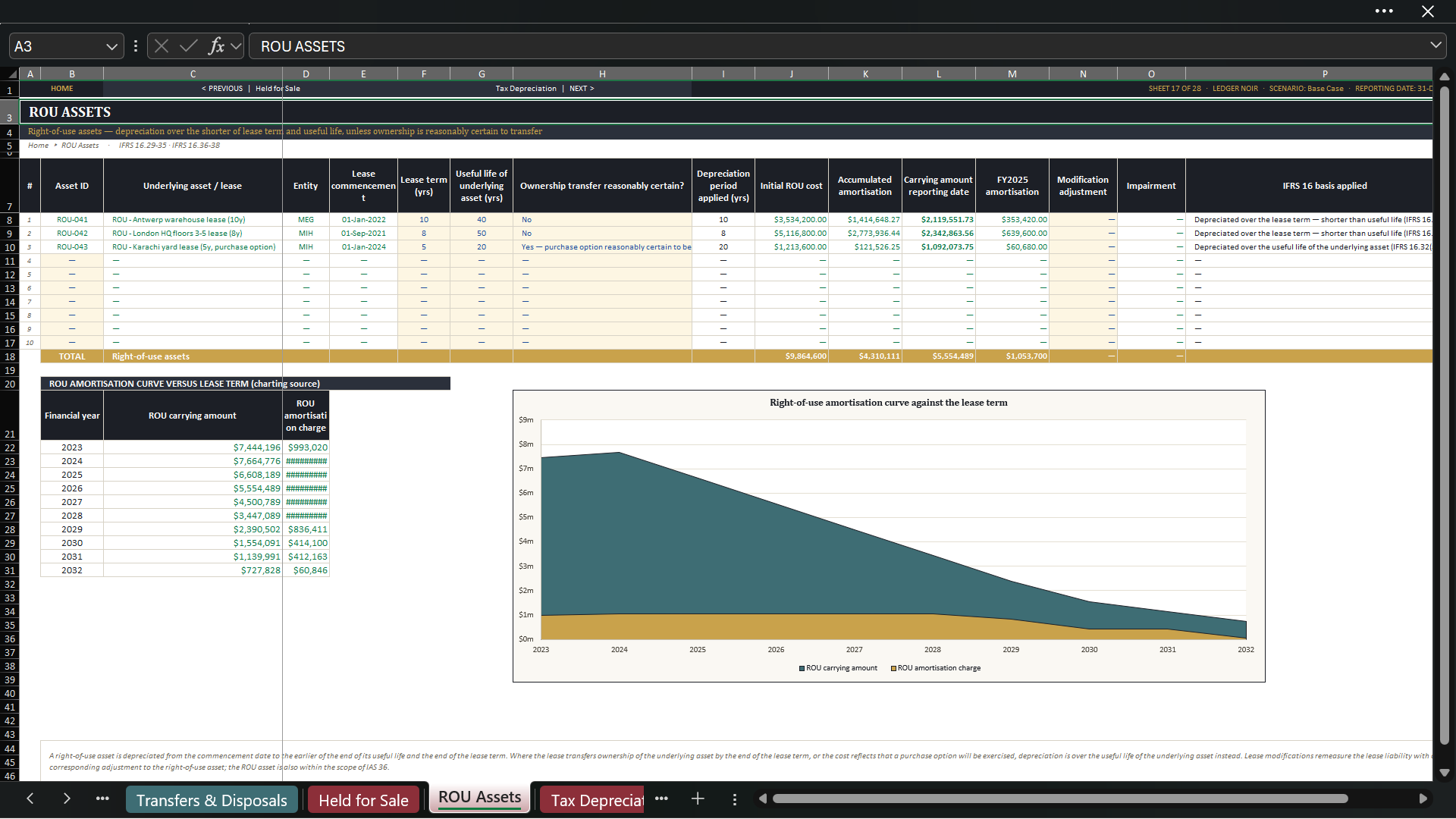
Calculate ROU-asset depreciation under the applicable lease-period logic.
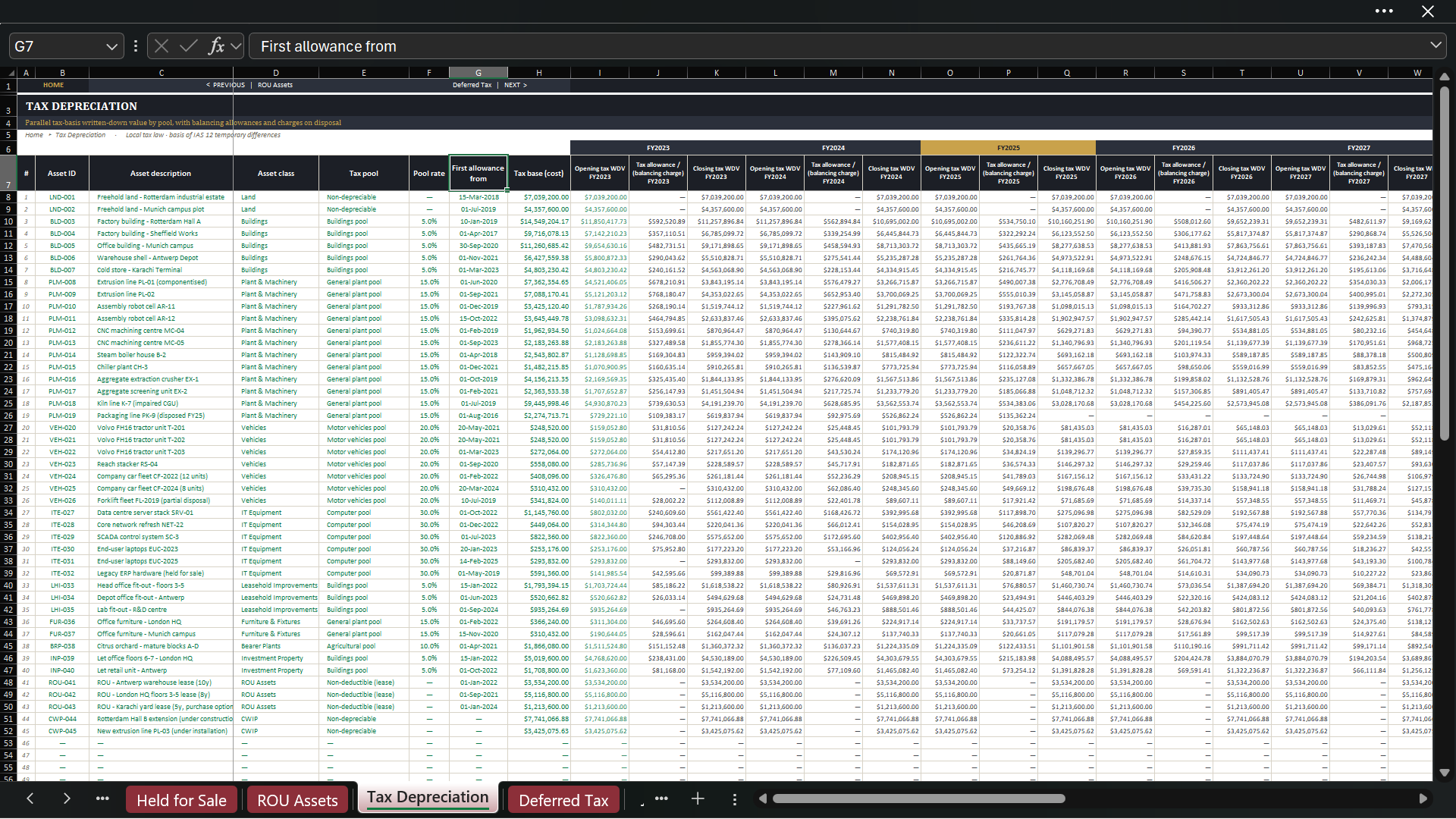
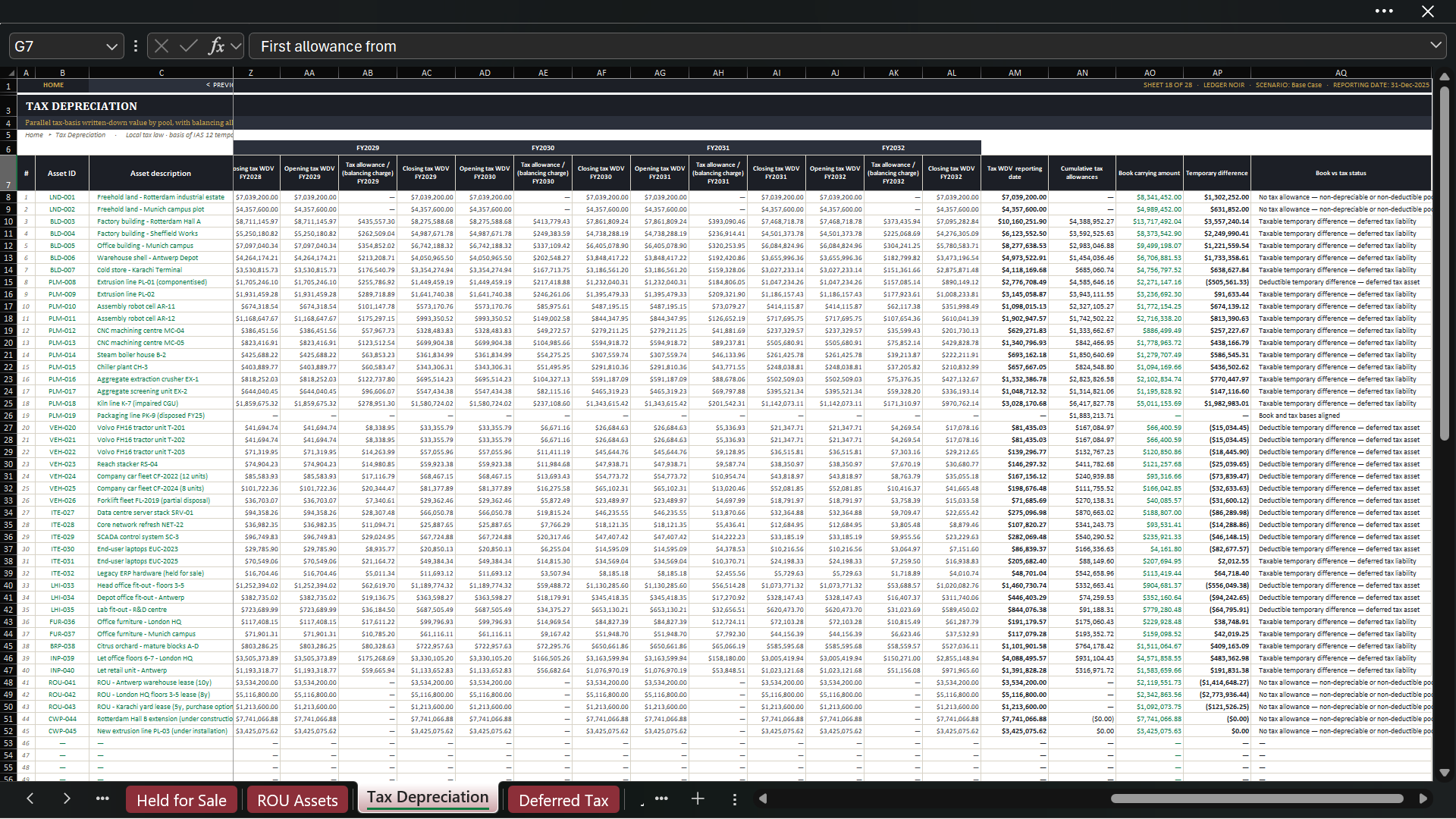
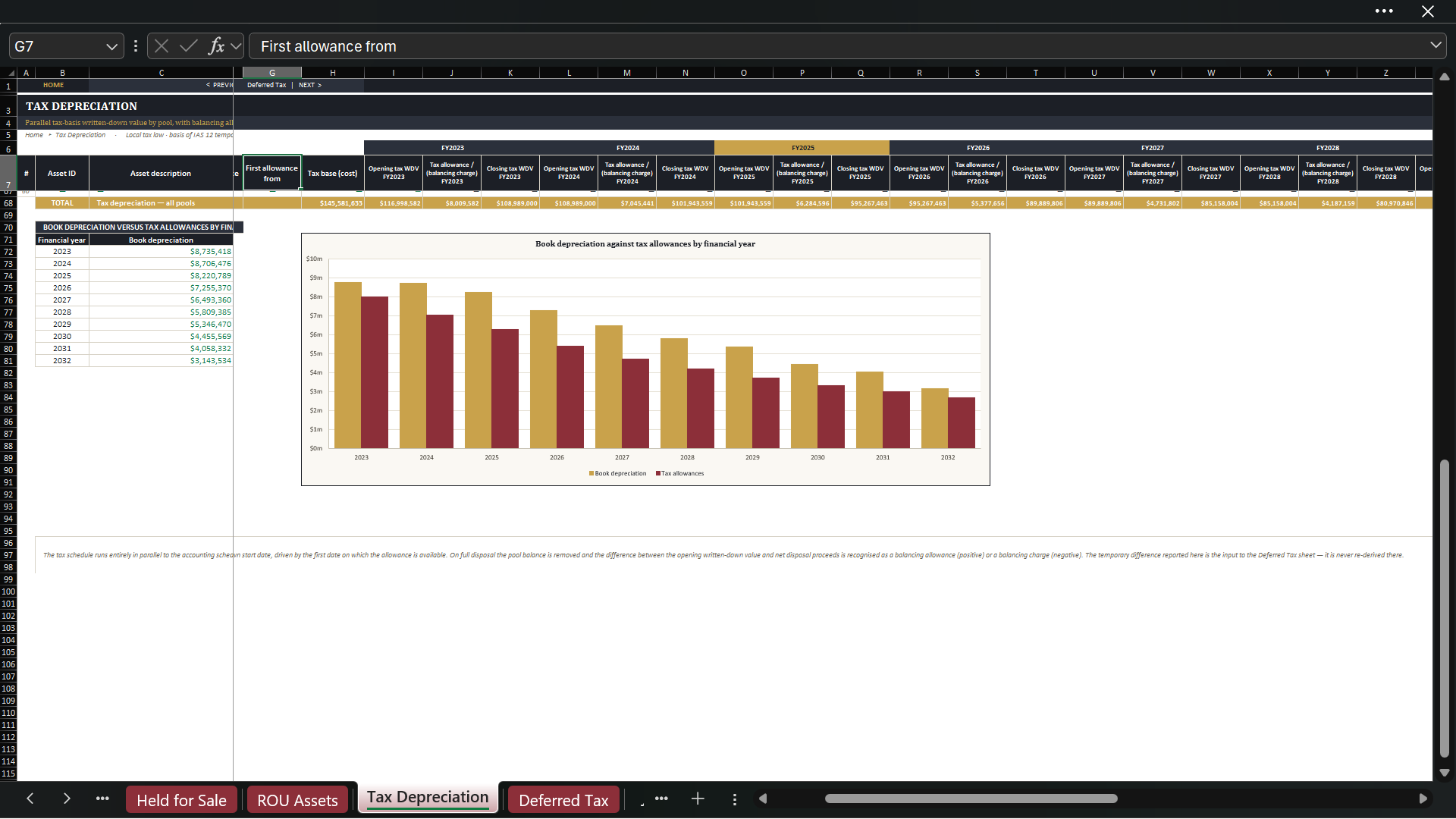
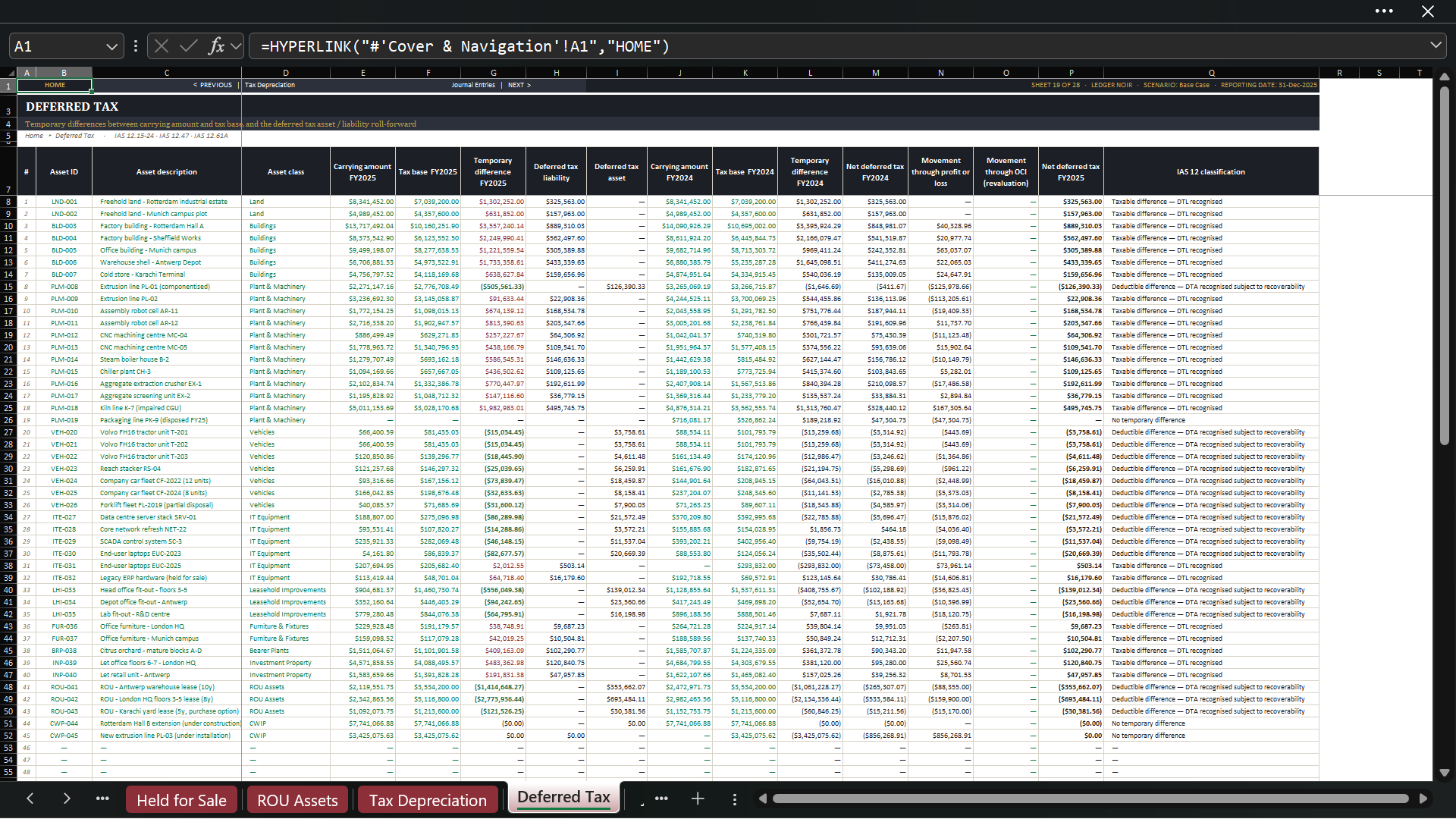
Compare book carrying amounts with tax bases and calculate deferred tax.
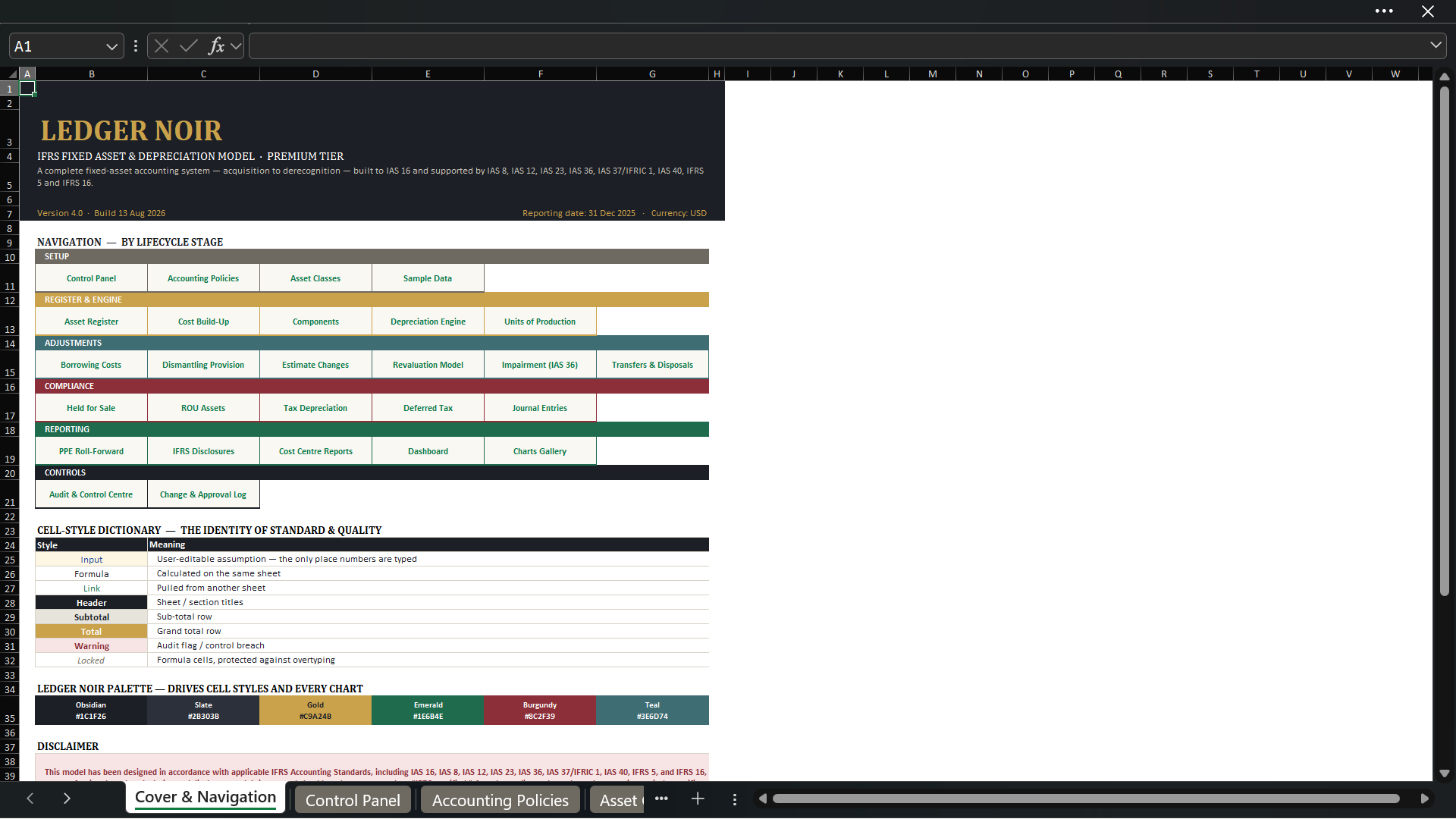
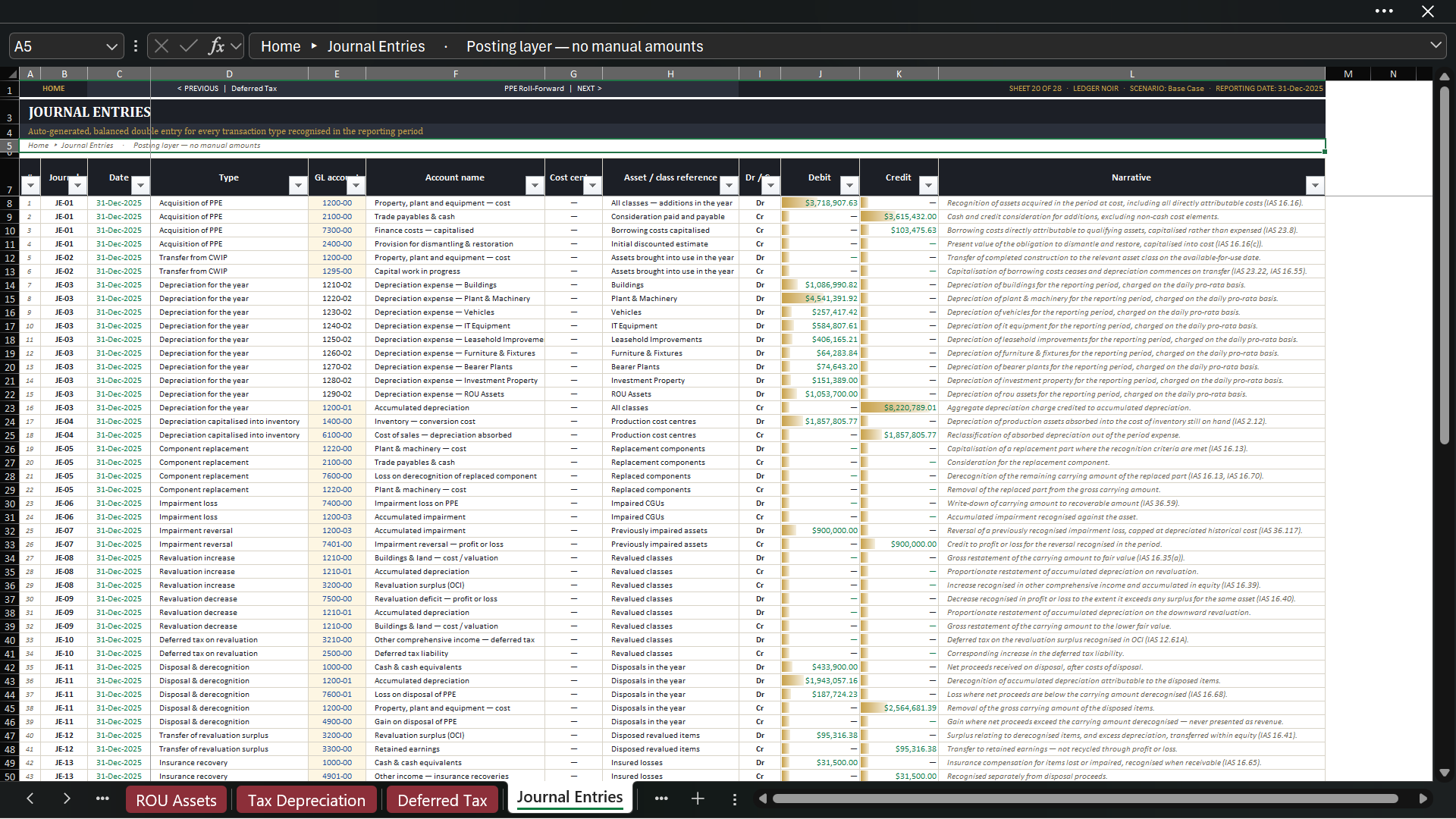
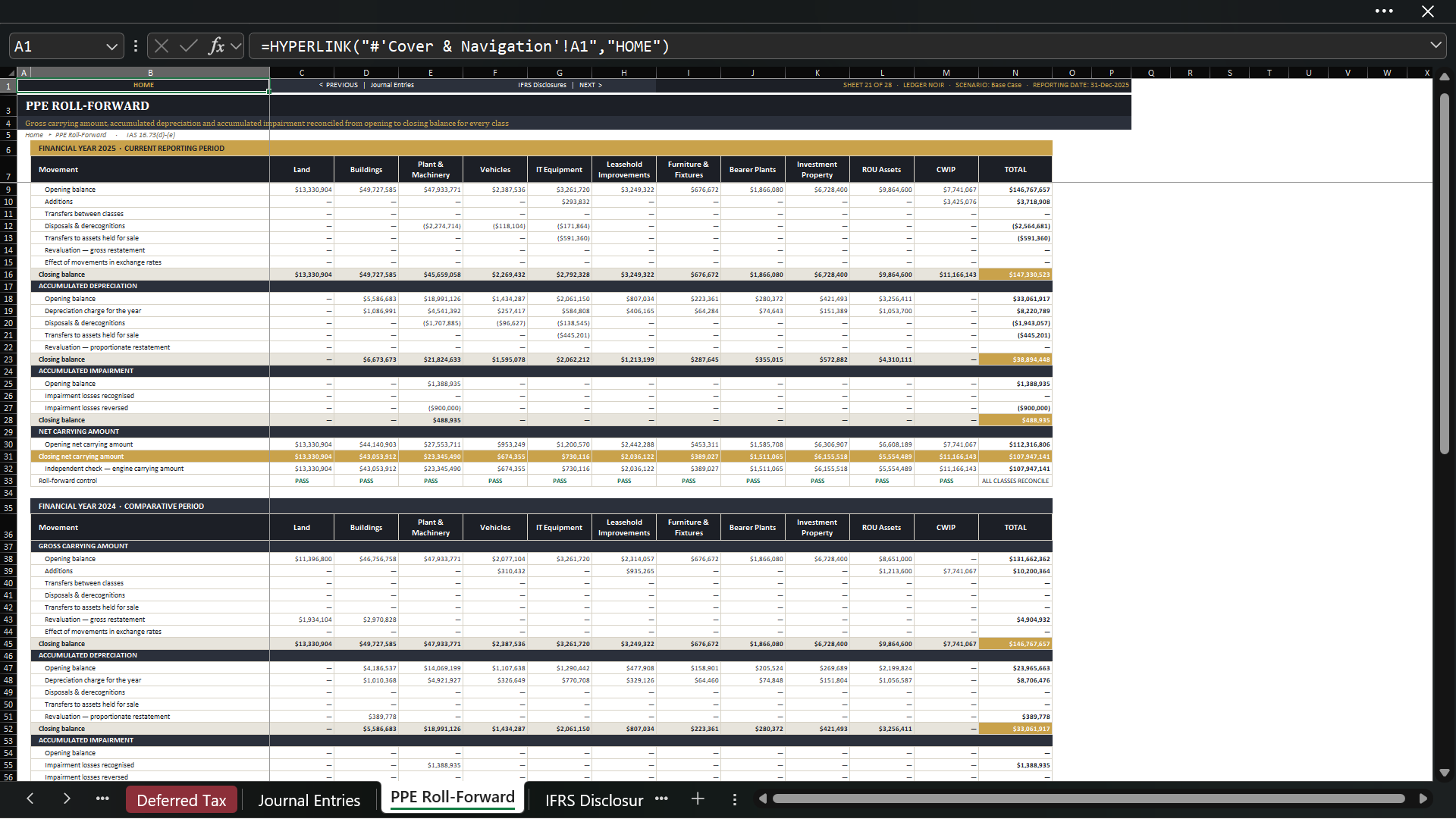
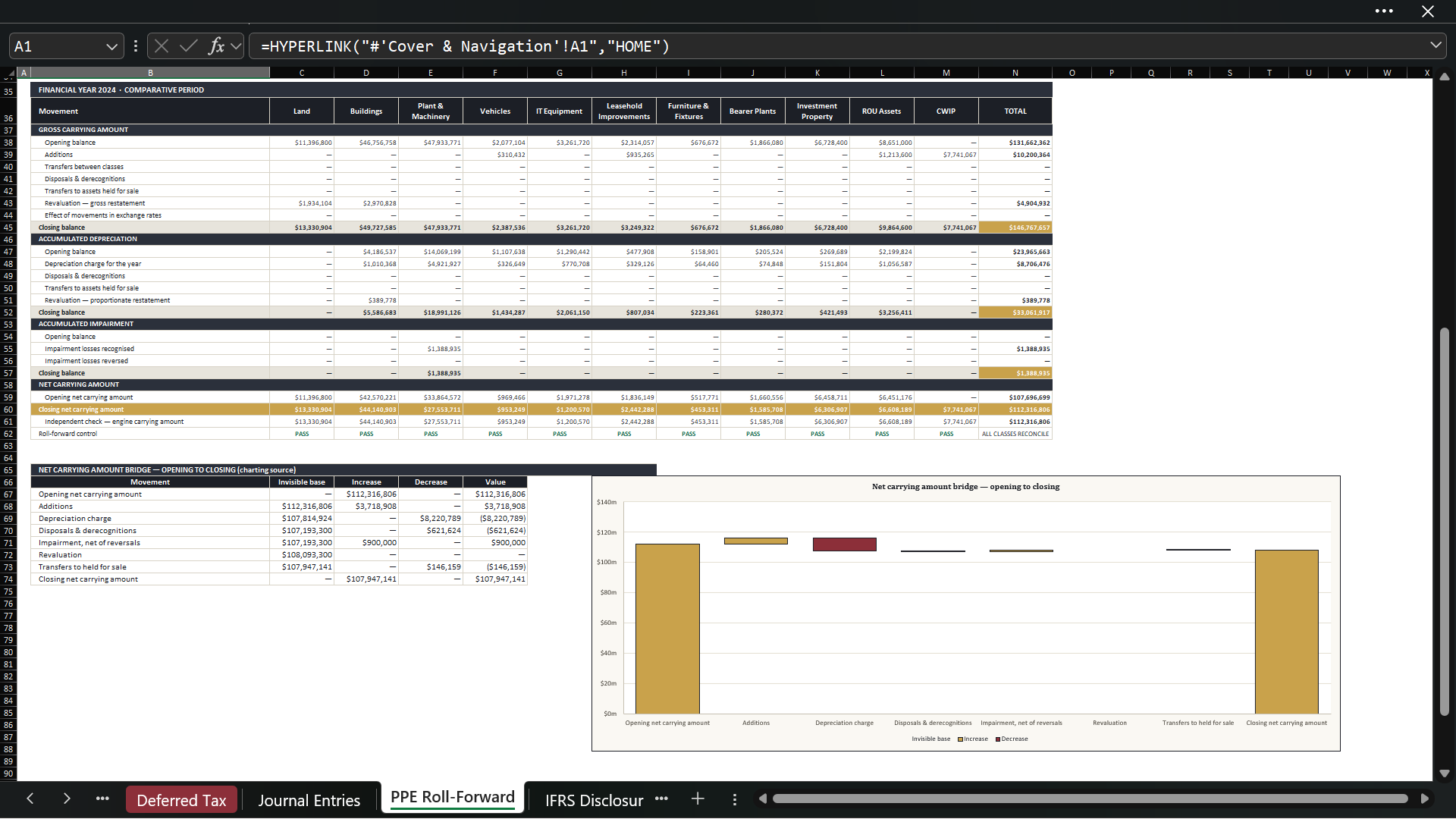
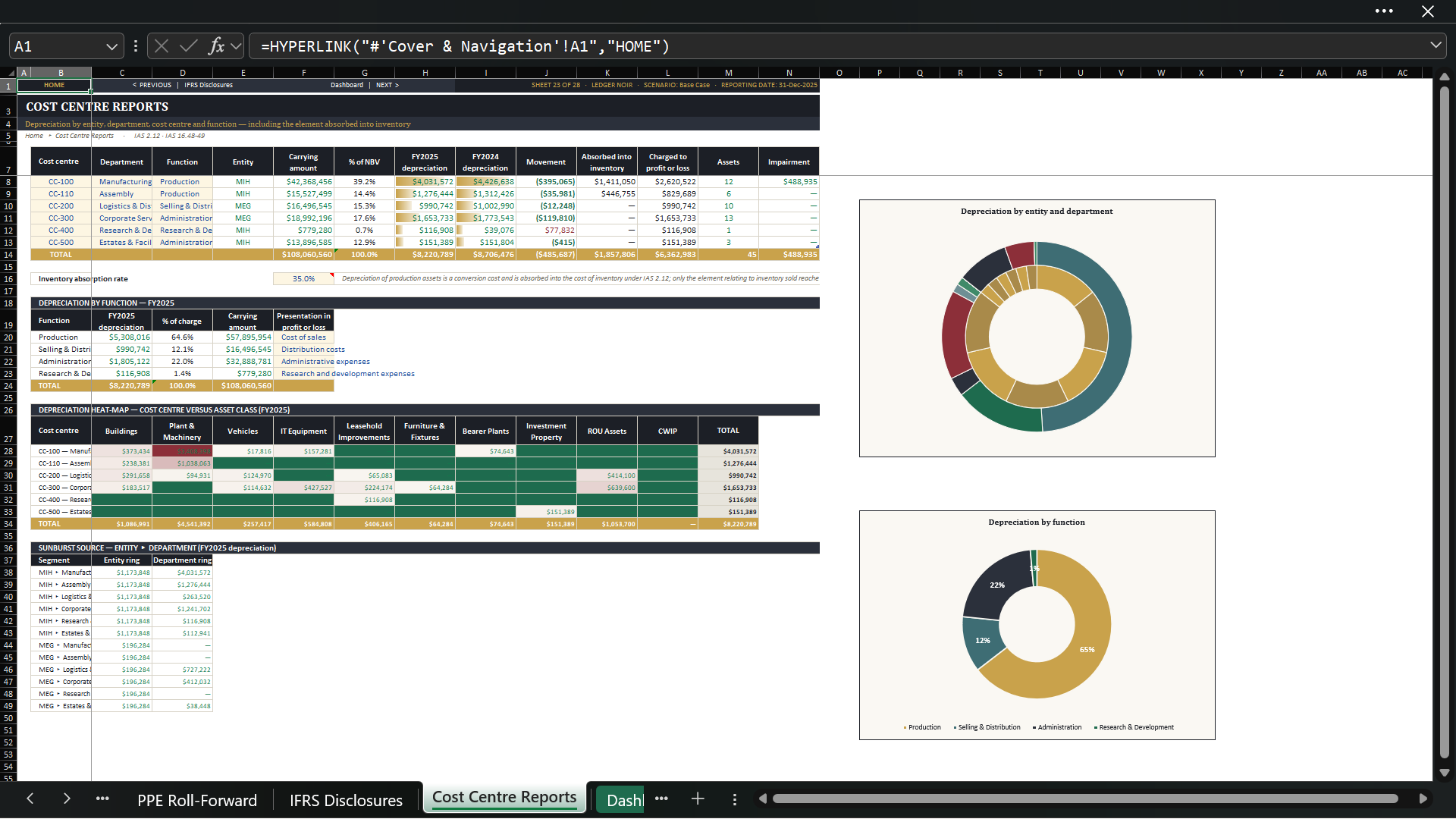
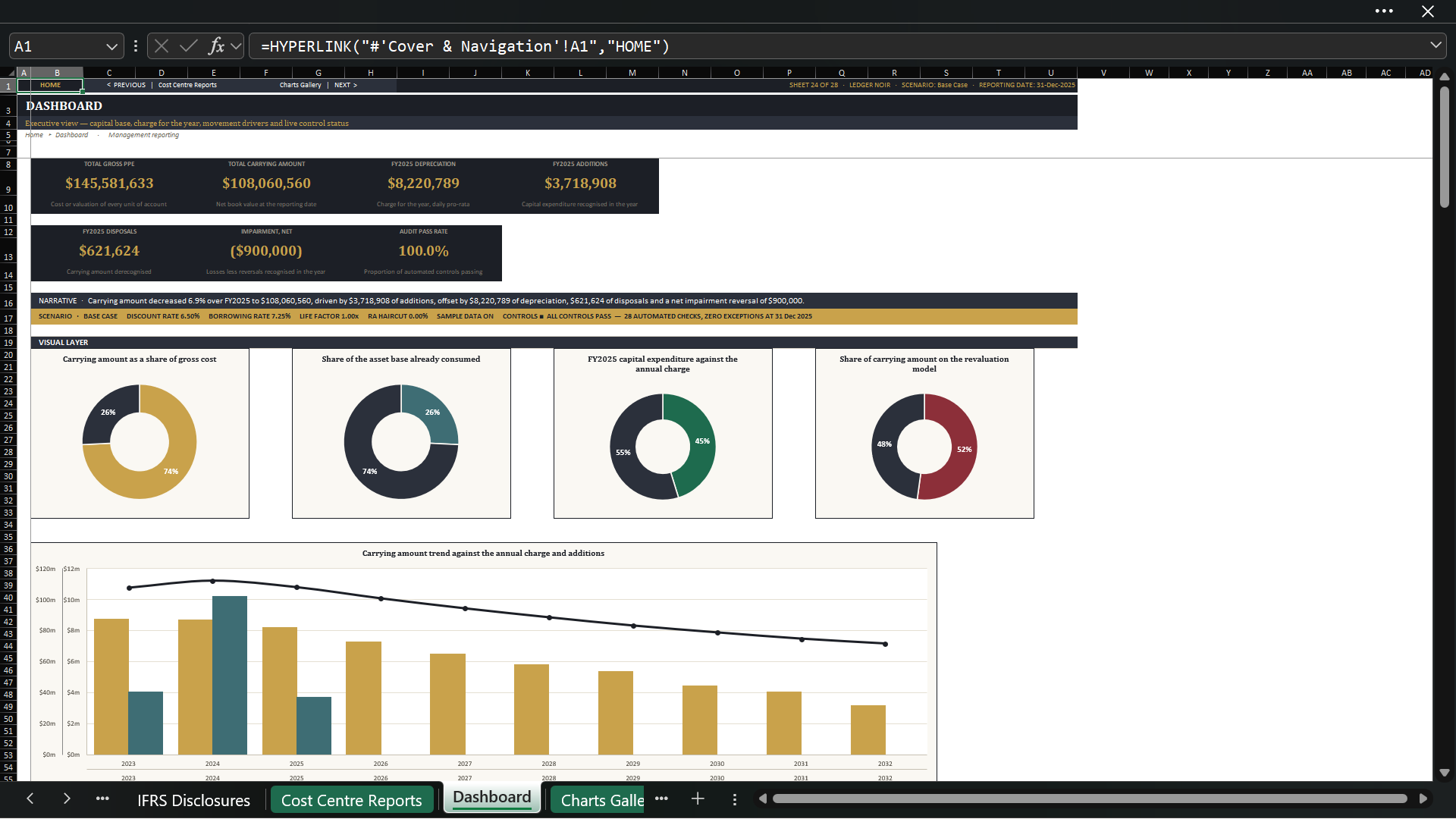
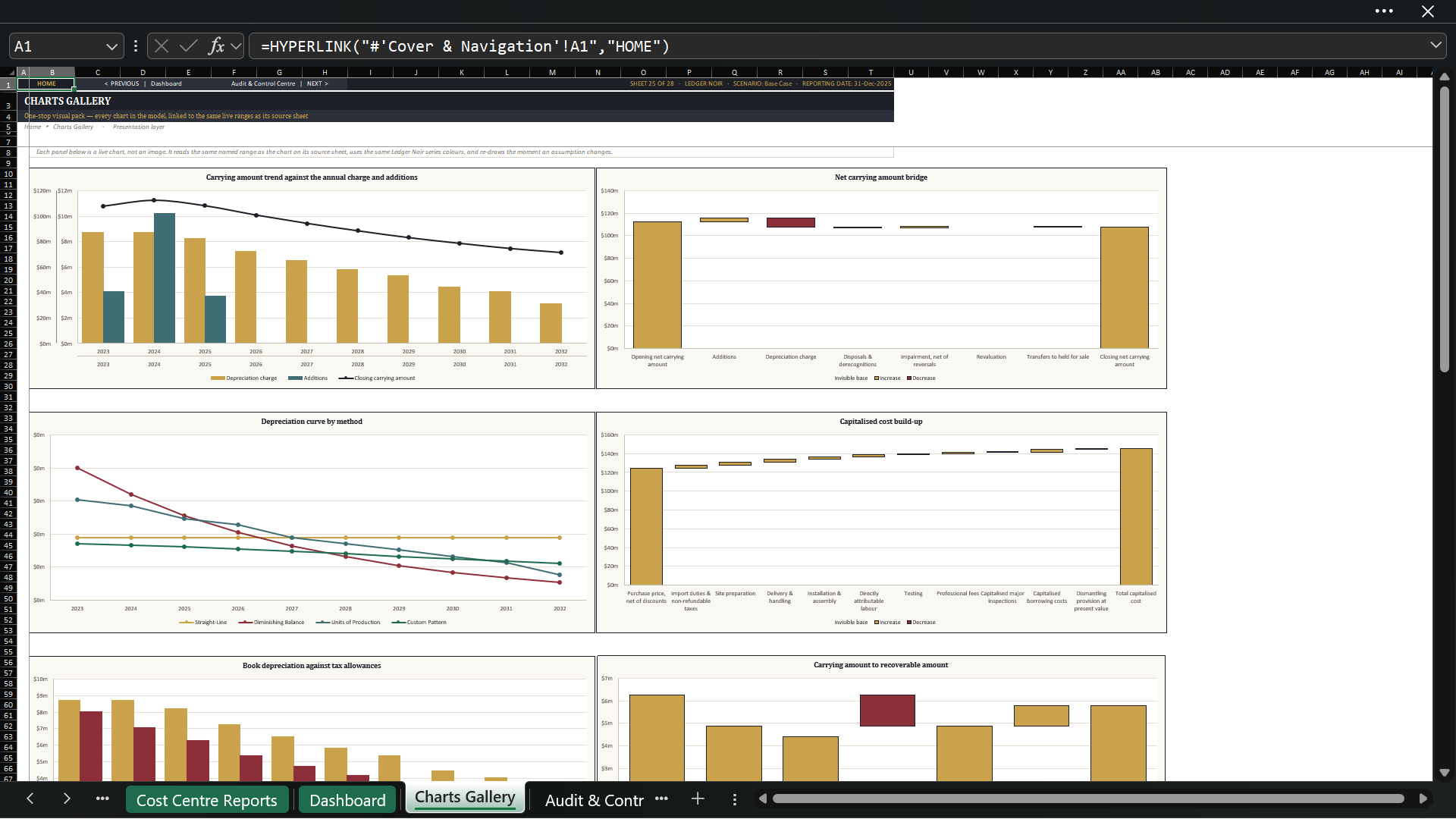
Generate balanced journal entries, PPE roll-forwards, disclosure notes, and management reports.
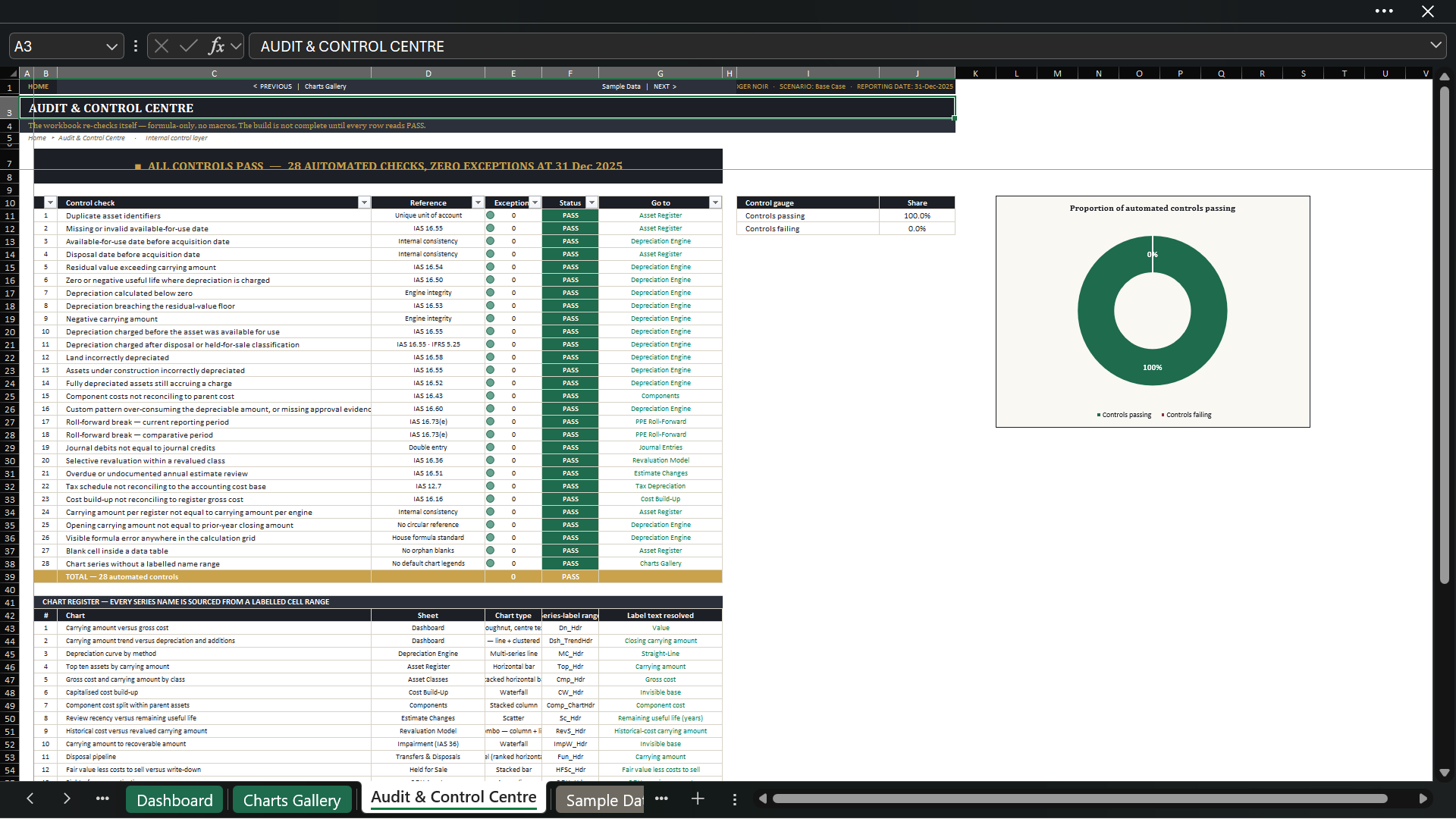
Detect integrity issues through 28 automated controls.
An entity holds material property, plant and equipment across multiple classes.
Finance teams need one linked register, depreciation engine, accounting workflow, and reporting pack.
Assets inclde components, CWIP, qualifying assets, decommissioning obligations, revalued classes, impairment indicators, ROU assets, or tax-book differences.
Daily pro-rating and a multi-year view are required.
The organization reports under IFRS Accounting Standards or uses IFRS-based internal policies.
Users need transparent formulas and auditable schedules rather than a black-box application.
The model will support year-end close, audit preparation, policy documentation, disclosure preparation, management reporting, consulting, or training.
The user needs a live ERP subledger with barcode scanning, procurement integration, automated postings, or user-access workflows.
The requirement is a complete IFRS 16 lease-liability, reassessment, payment, and modification engine.
The entity needs automatic local-tax compliance without configuring jurisdiction-specific pools, rates, and rules.
A revaluation or impairment conclusion must be produced without independent valuation evidence or a supported cash-flow model.
The asset population requires database-scale processing without adapting and testing the workbook architecture.
The user wants an “IFRS-certified” output or a substitute for management judgment, audit procedures, or professional advice.
The reporting framework is US GAAP, statutory tax accounting, or another basis requiring different recognition and measurement rules.