Originally published: 12/01/2025 00:17
Publication number: ELQ-93516-1
View all versions & Certificate
Publication number: ELQ-93516-1
View all versions & Certificate

Construction Materials Manufacturer Financial Model
A comprehensive editable, 5-year 3 statement MS Excel spreadsheet for tracking a Construction Materials Manufacturer's finances.
 by AllFinancialModels
AllFinancialModels offer a curated selection of high-quality yet financial model templates designed to support a wide range of business needs.Follow
constructionconstruction materialsbuildingexcelfinancefinancial modelarchitectbuilding materialsmanufacturingmanufacturer
Description
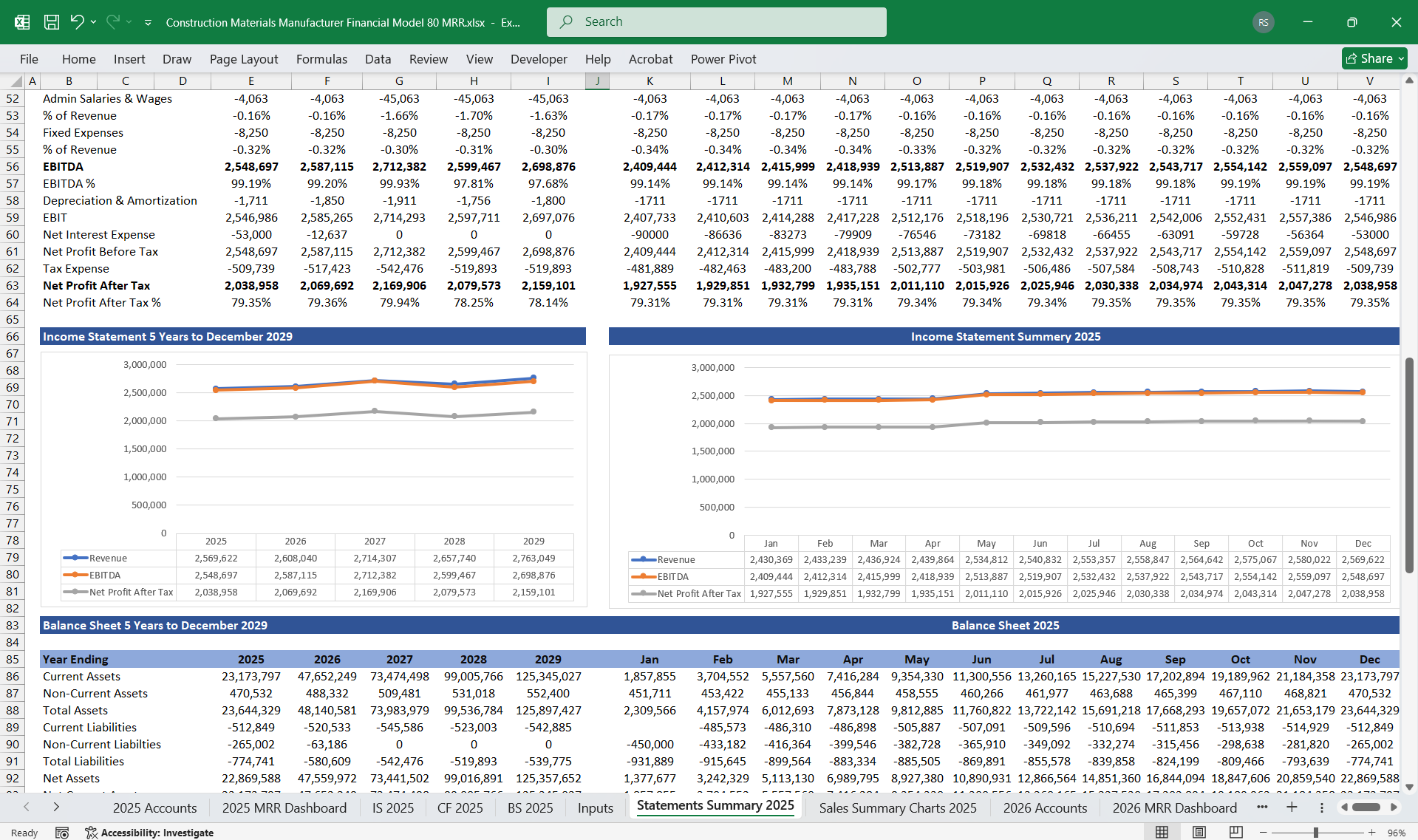
Financial Model for a Construction Materials Manufacturer.This comprehensive financial model focuses on managing the financial aspects of a Construction Materials Manufacturer, which produces items like cement, concrete mixes, bricks, roofing materials, and advanced composites.
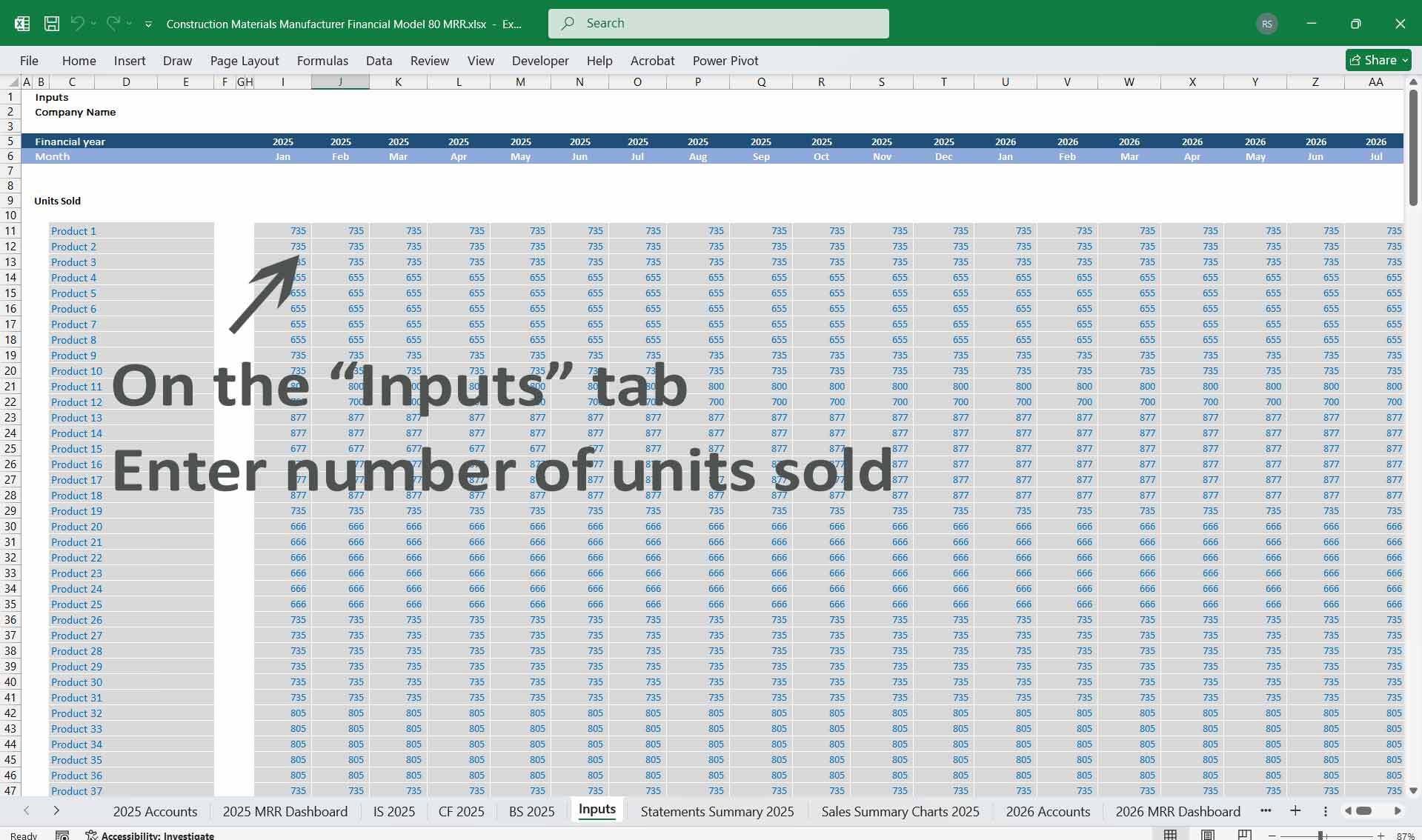
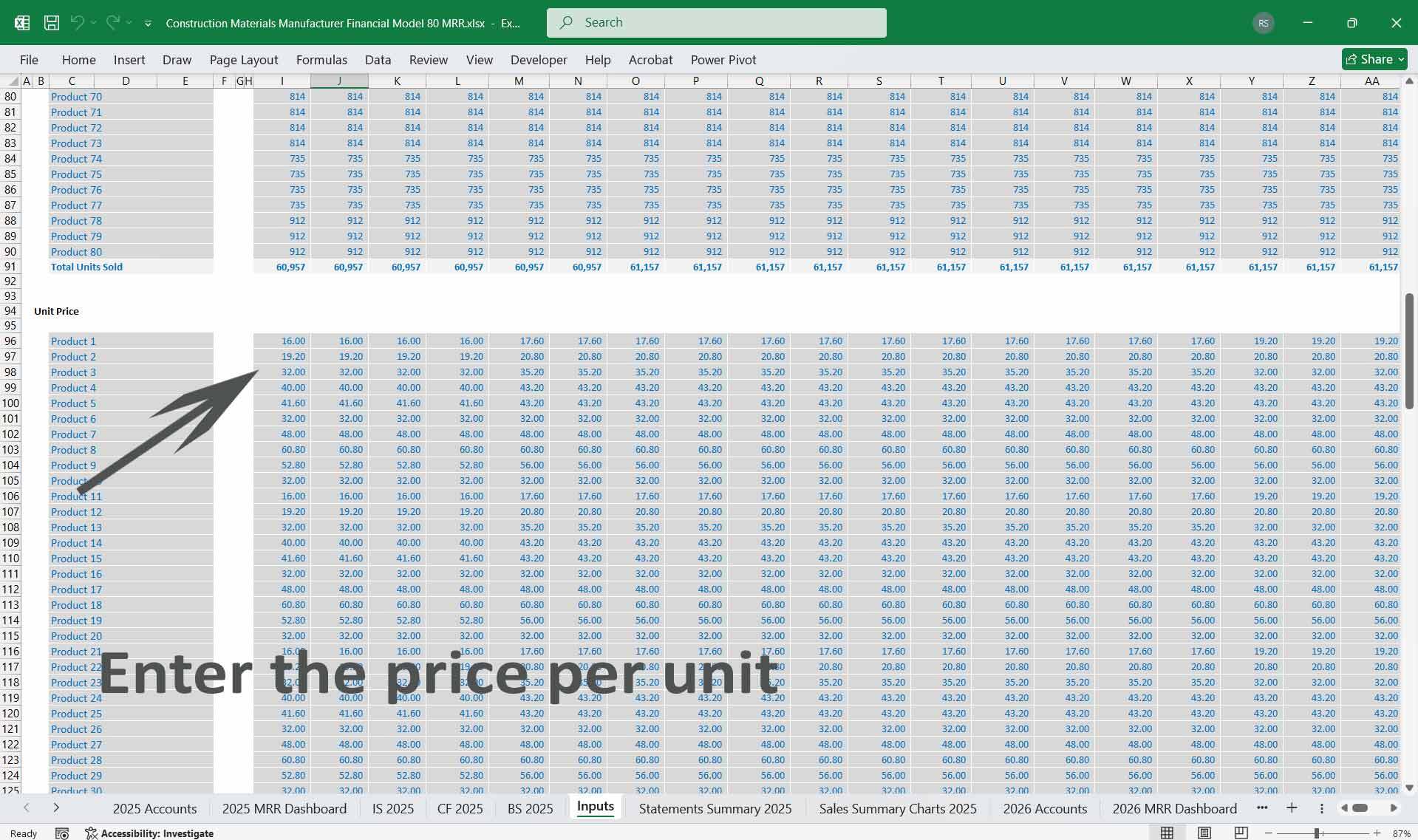
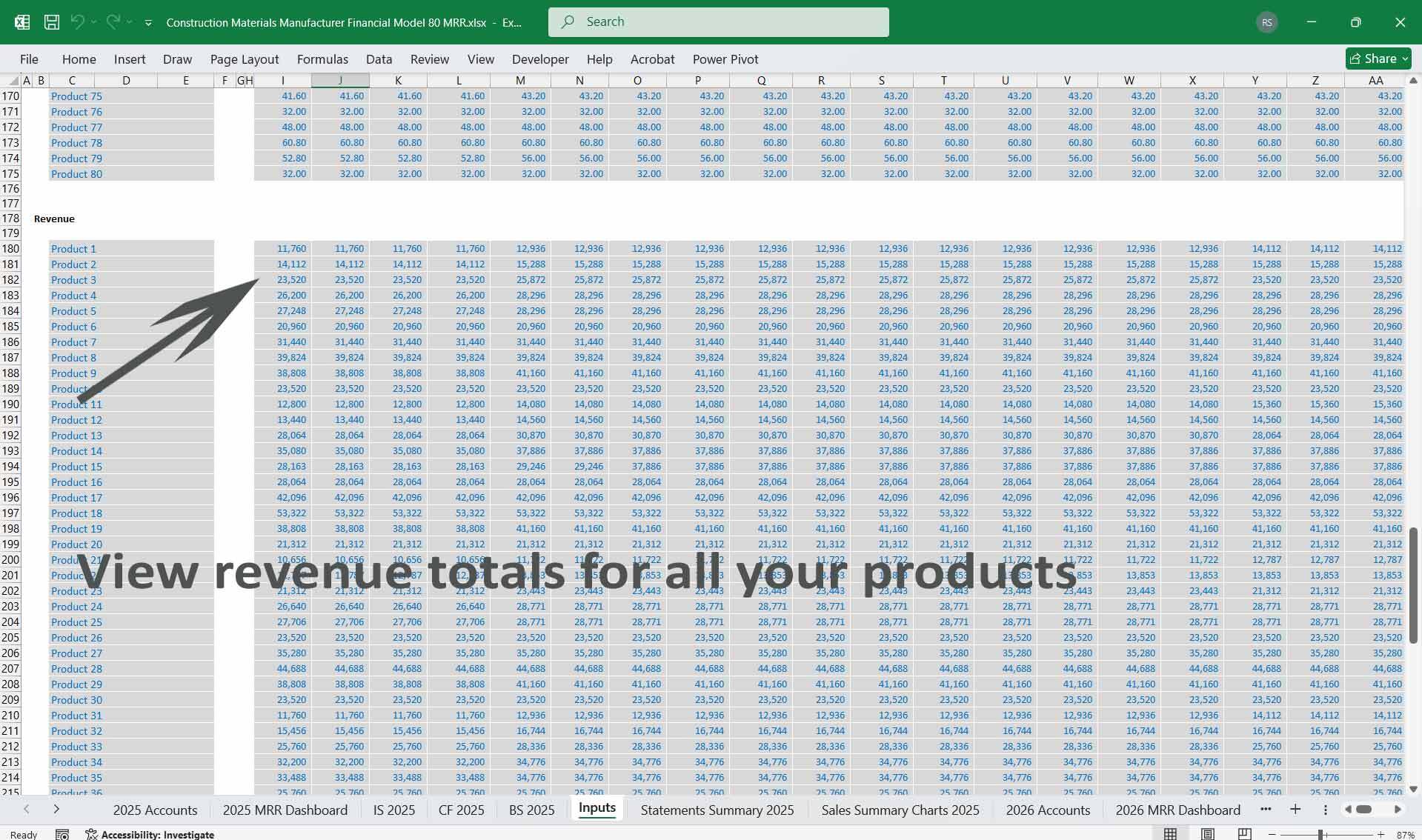
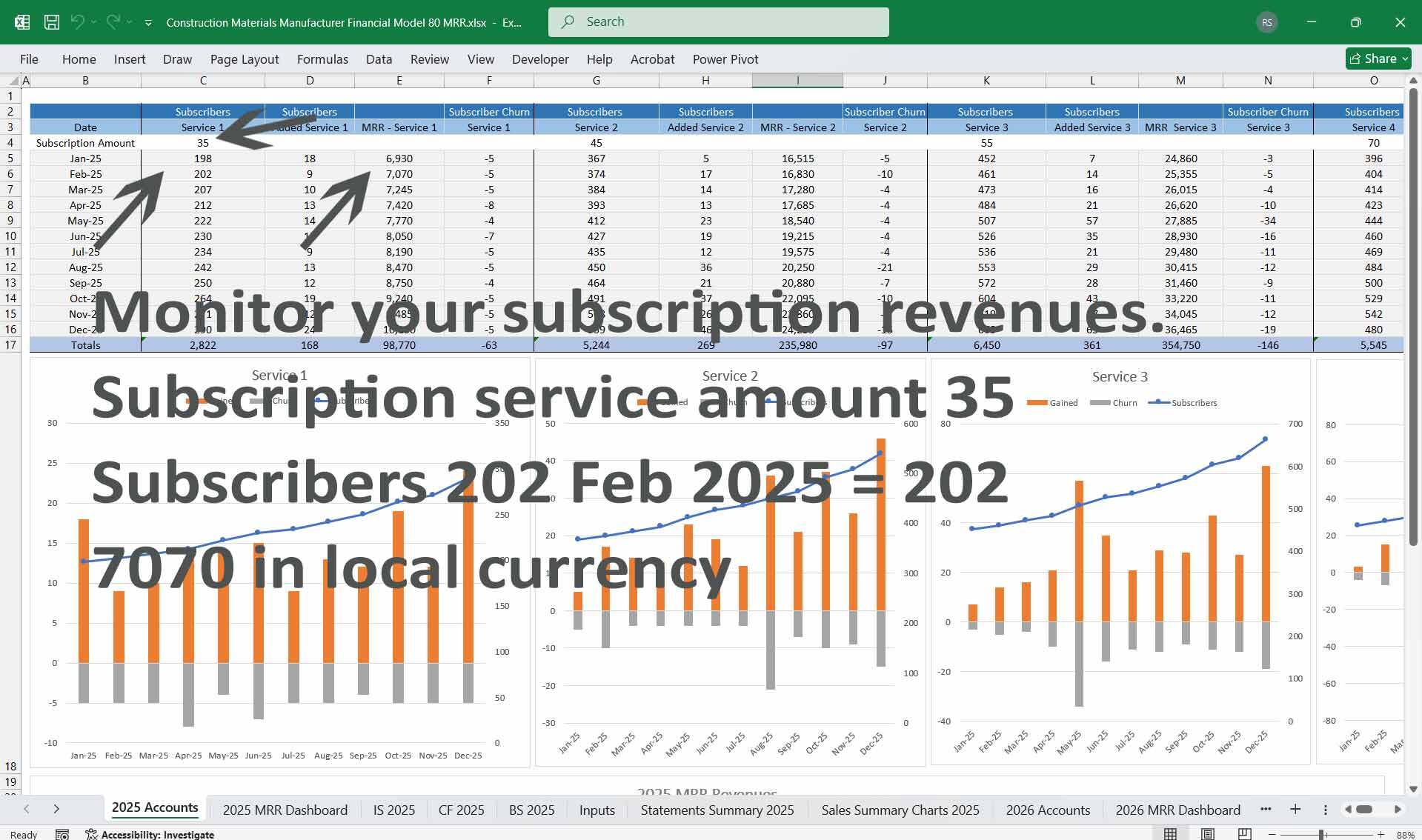
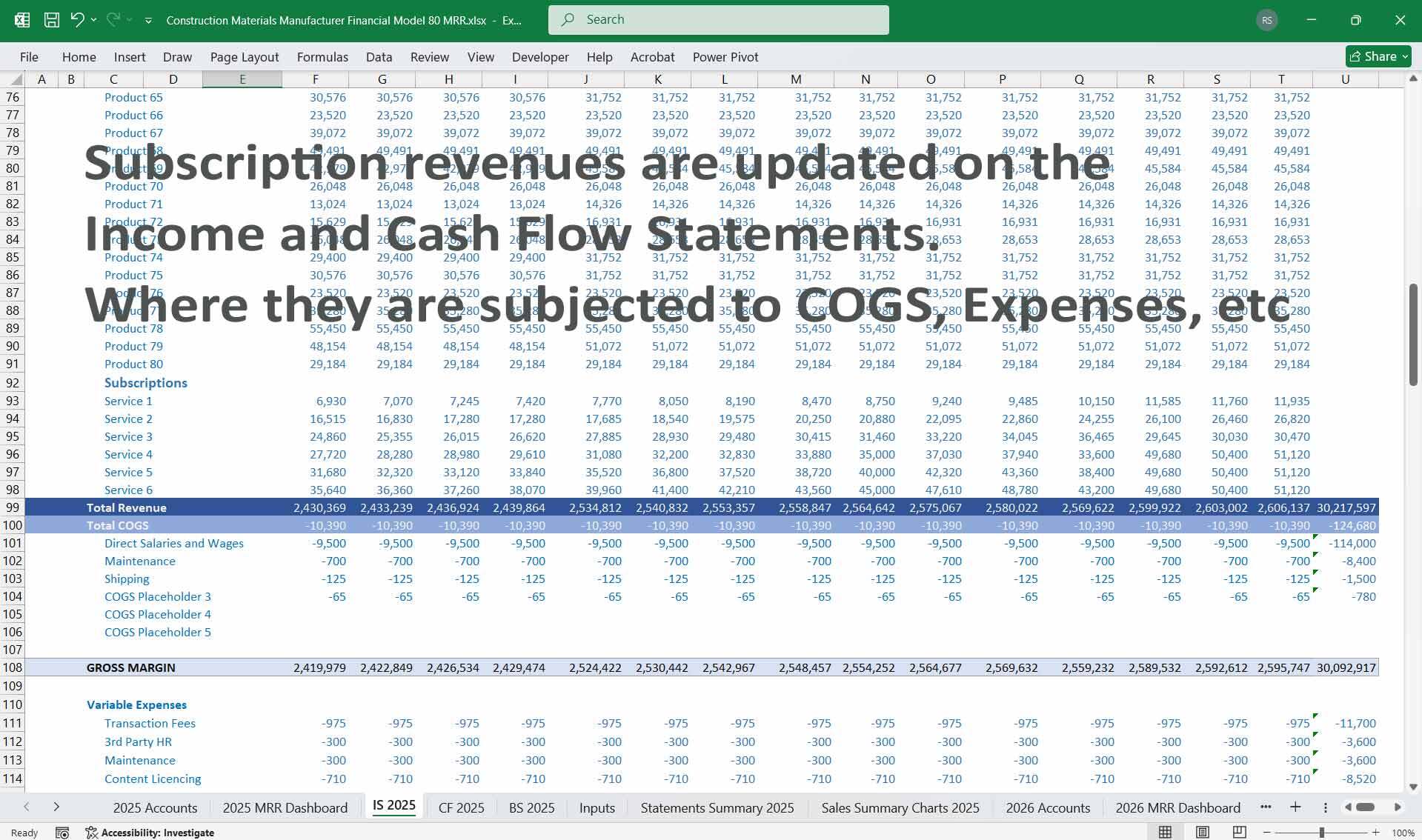
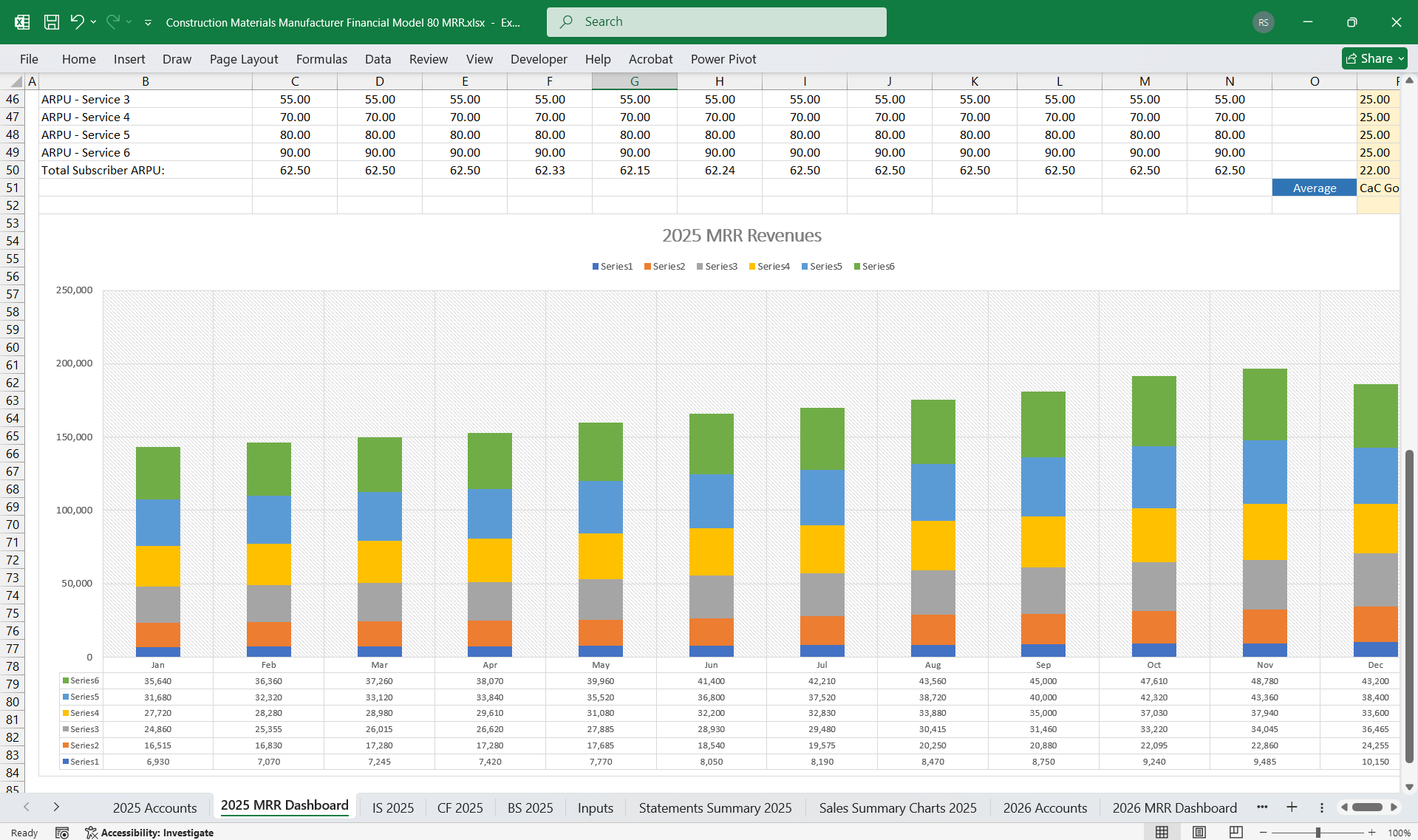
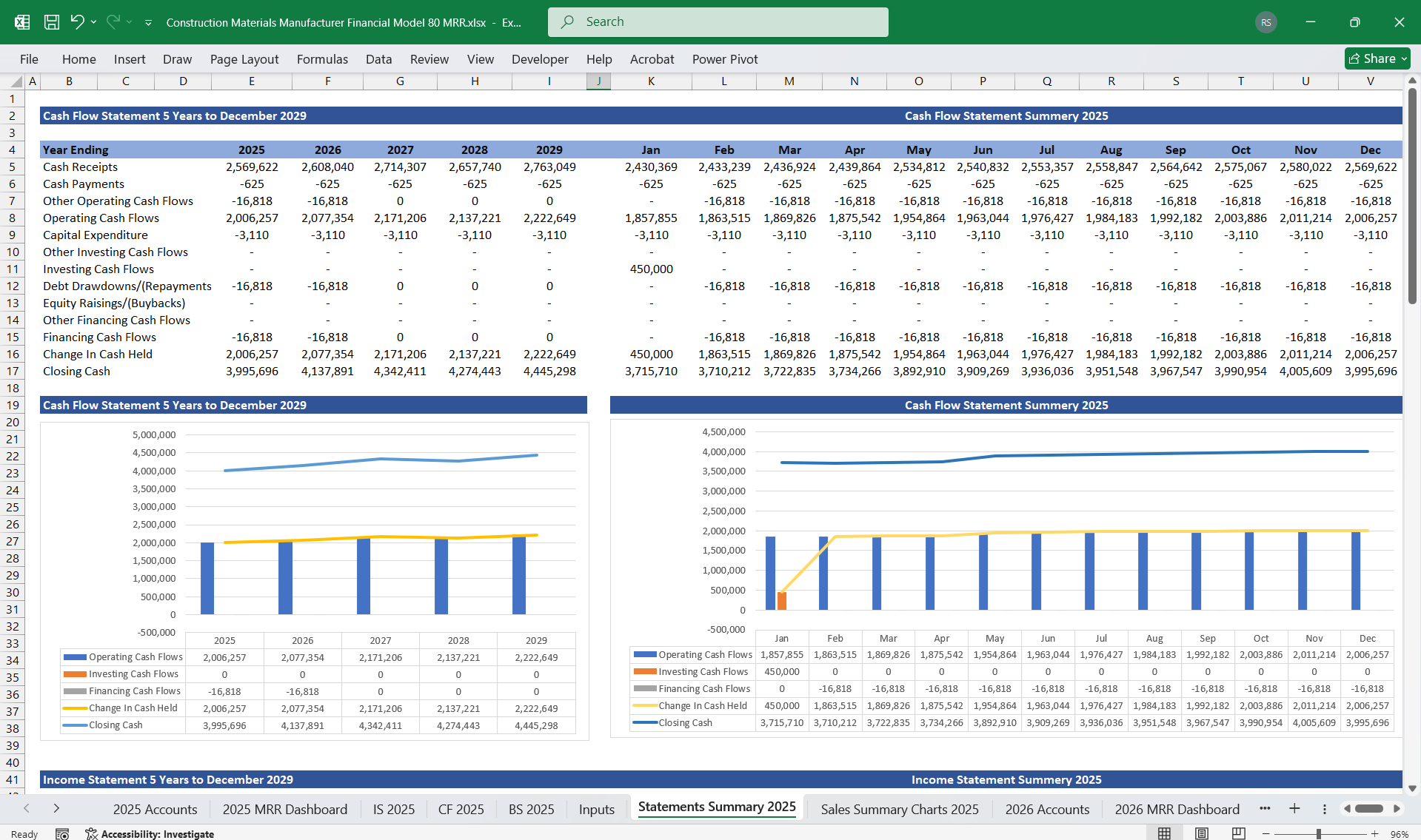
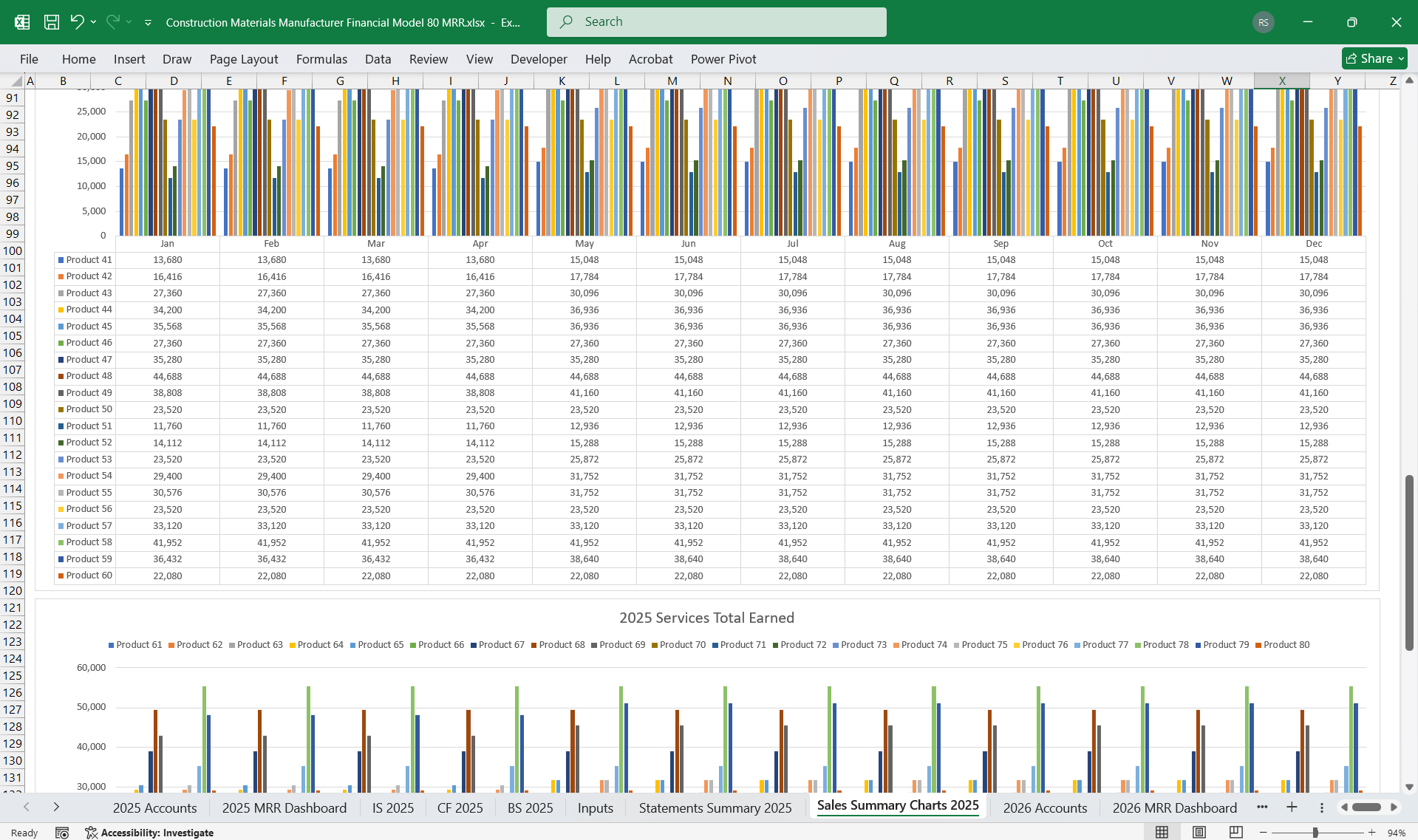
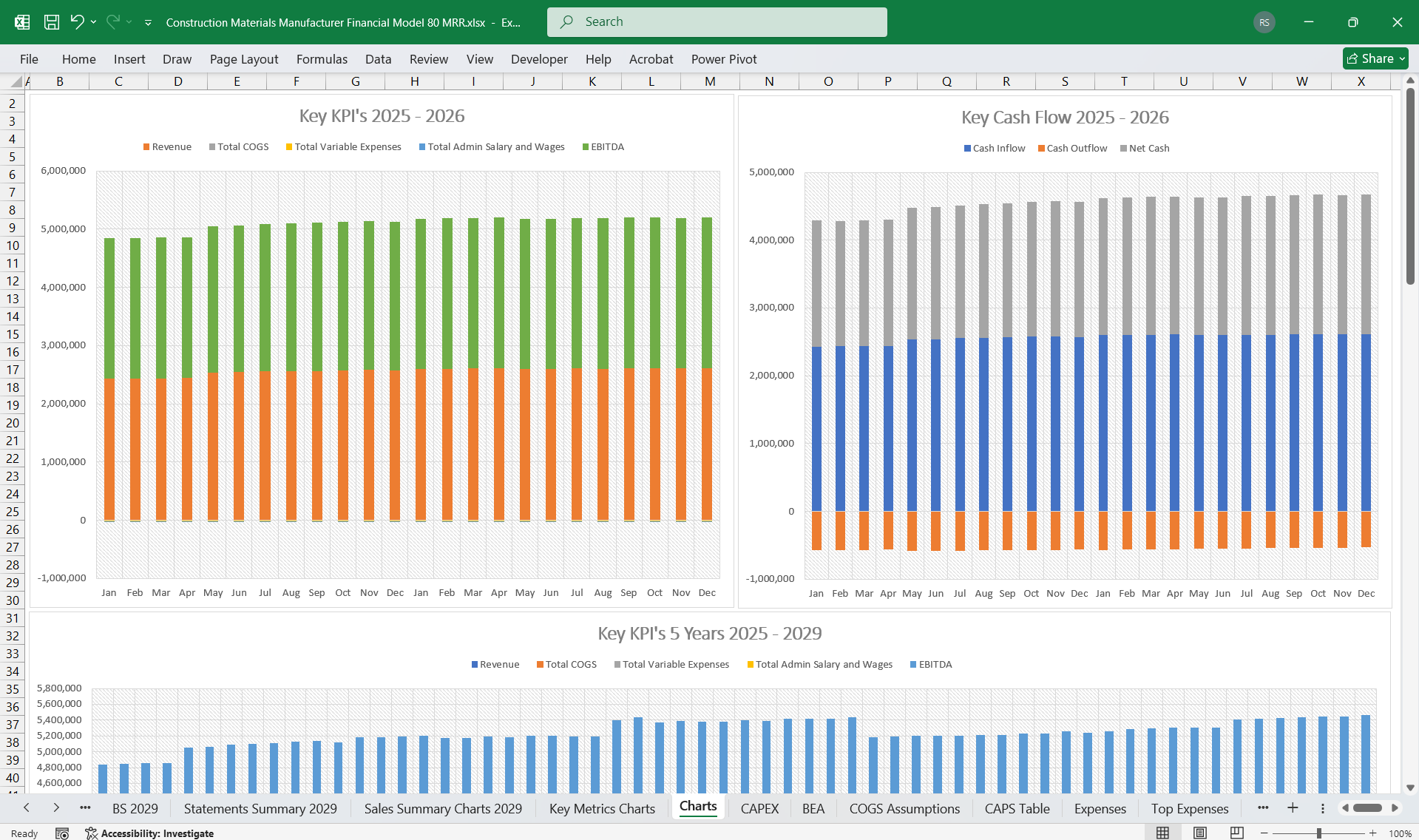
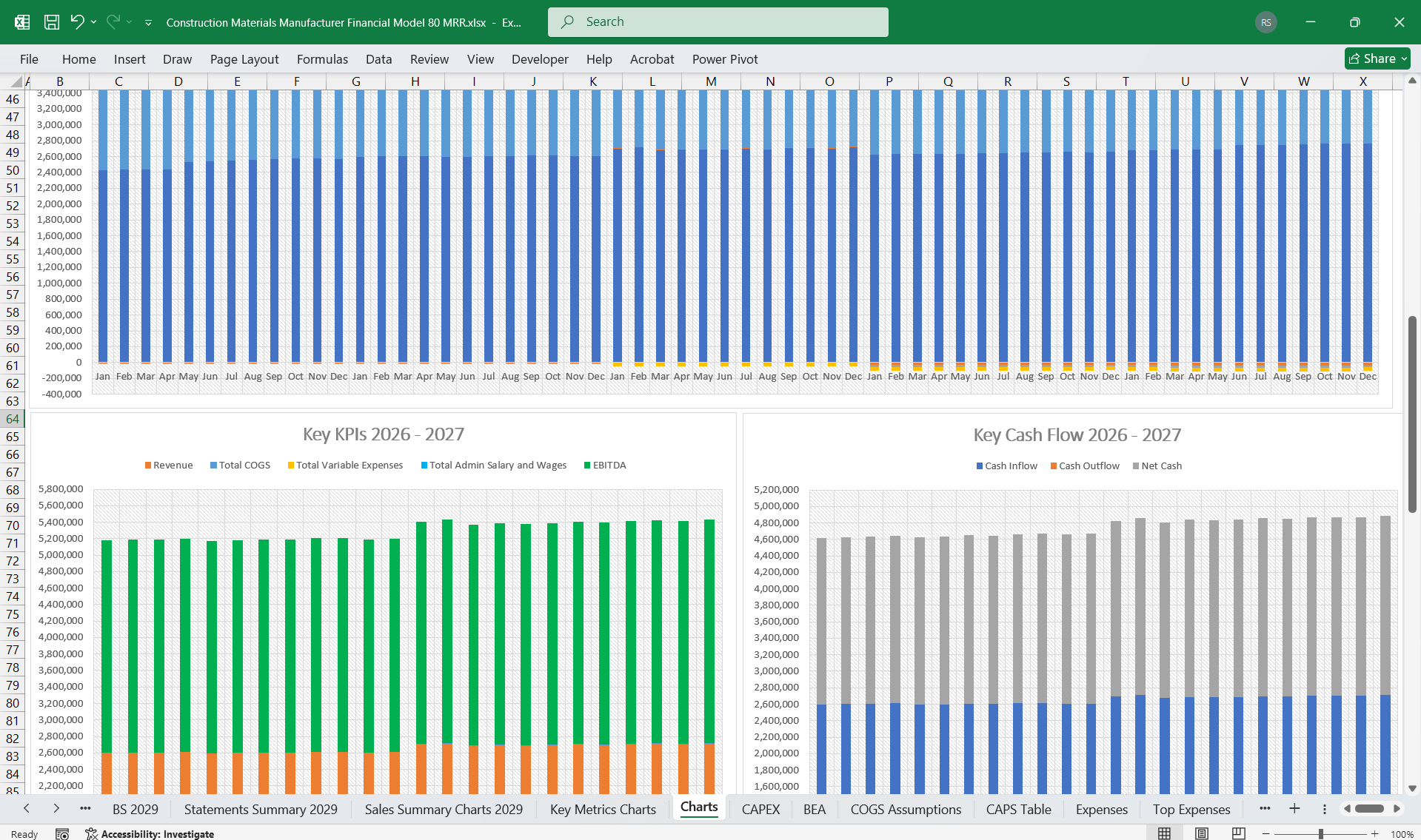
It includes Income Statement, Cash Flow Statement, and Balance Sheet, alongside a section for 80 product lines and a 6-Tier Subscription Model tailored for added customer services like inventory forecasting, delivery tracking, and quality certifications.
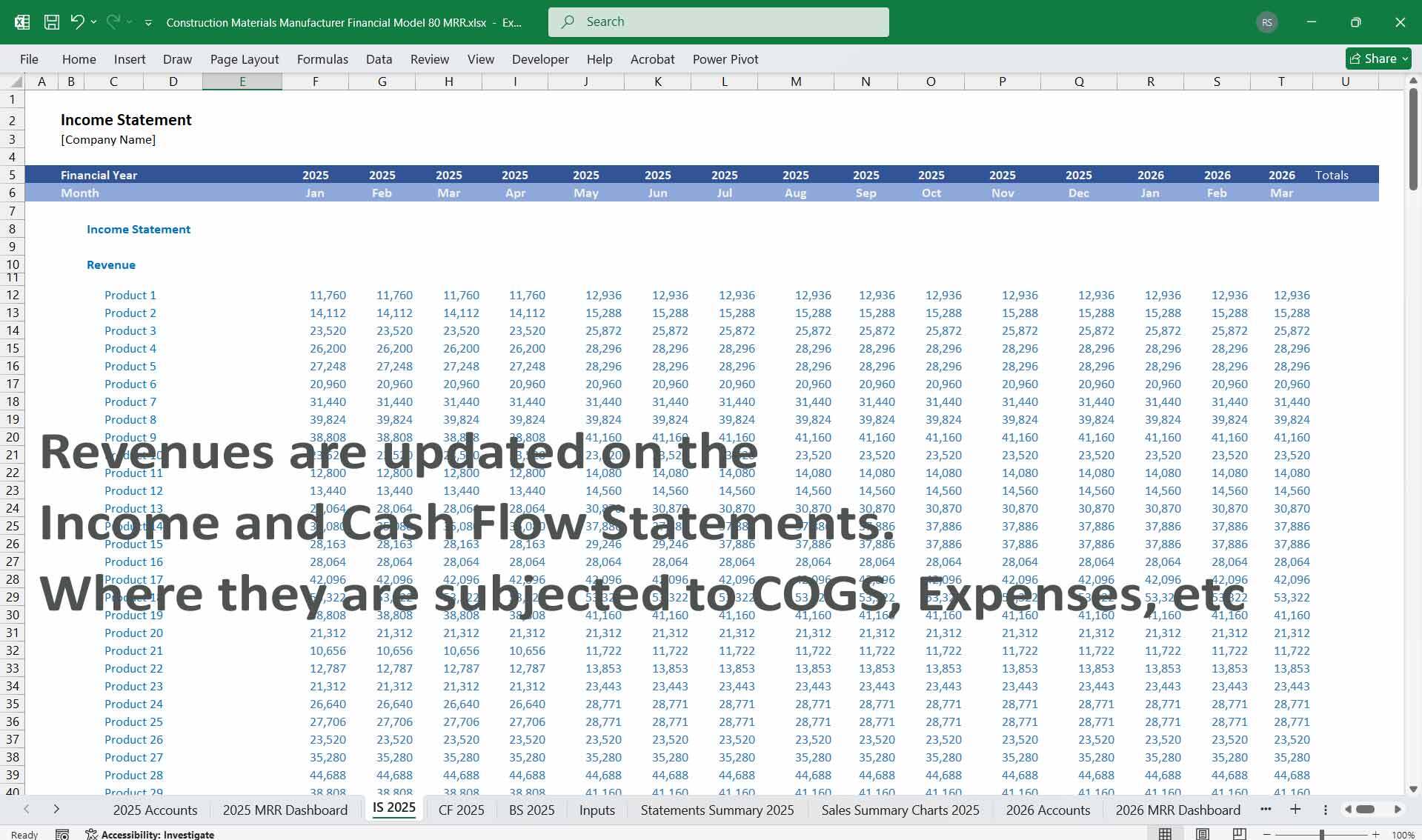
1. Income StatementRevenue Streams
Tier Structure
Financial Model for a Construction Materials Manufacturer.This comprehensive financial model focuses on managing the financial aspects of a Construction Materials Manufacturer, which produces items like cement, concrete mixes, bricks, roofing materials, and advanced composites.
It includes Income Statement, Cash Flow Statement, and Balance Sheet, alongside a section for 80 product lines and a 6-Tier Subscription Model tailored for added customer services like inventory forecasting, delivery tracking, and quality certifications.
1. Income StatementRevenue Streams
- Product Sales:
- Core Products: High-volume items like cement, aggregates, bricks, and basic construction mixes.
- Premium Products: Specialty products such as self-healing concrete, lightweight bricks, or precast components.
- Custom Products: Tailored solutions for large-scale construction projects, including specific grade mixes.
- Value-Added Services:
- Delivery and logistical services.
- Installation and consultation for advanced materials.
- 6-Tier Subscription Model (see section below for details):
- Recurring revenue from software tools, analytics, and customer support systems.
- Recycling Revenue:
- Selling recycled materials (e.g., crushed concrete, reclaimed aggregates).
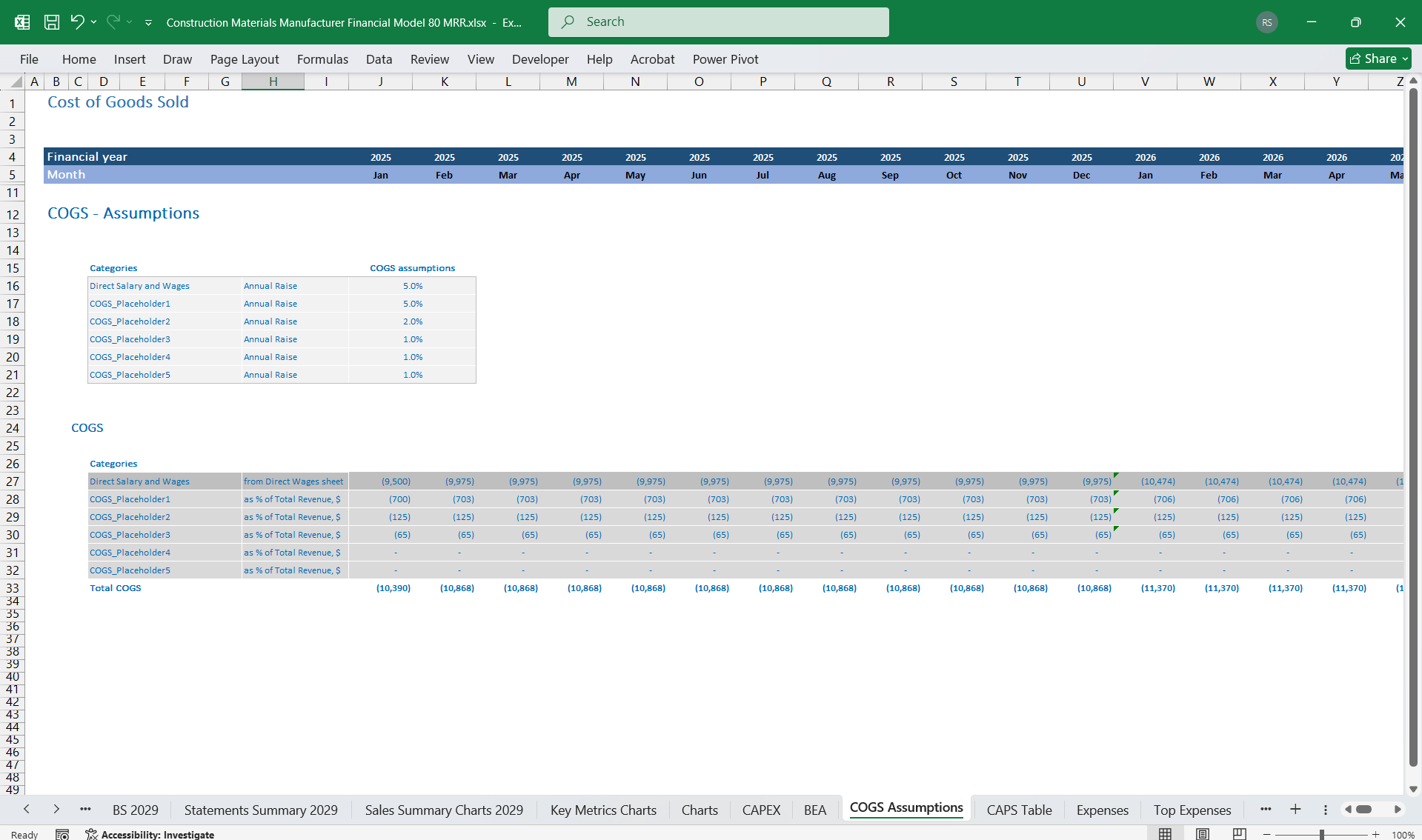
- Cost of Goods Sold (COGS):
- Materials: Cement, sand, water, lime, polymers, or other additives.
- Labor: Machine operators, quality testers, logistics staff.
- Overhead: Machinery operation costs, utilities, and maintenance.
- Operating Expenses:
- R&D: Developing eco-friendly materials or advanced composites.
- Sales and Marketing: Targeting builders, construction firms, and distributors.
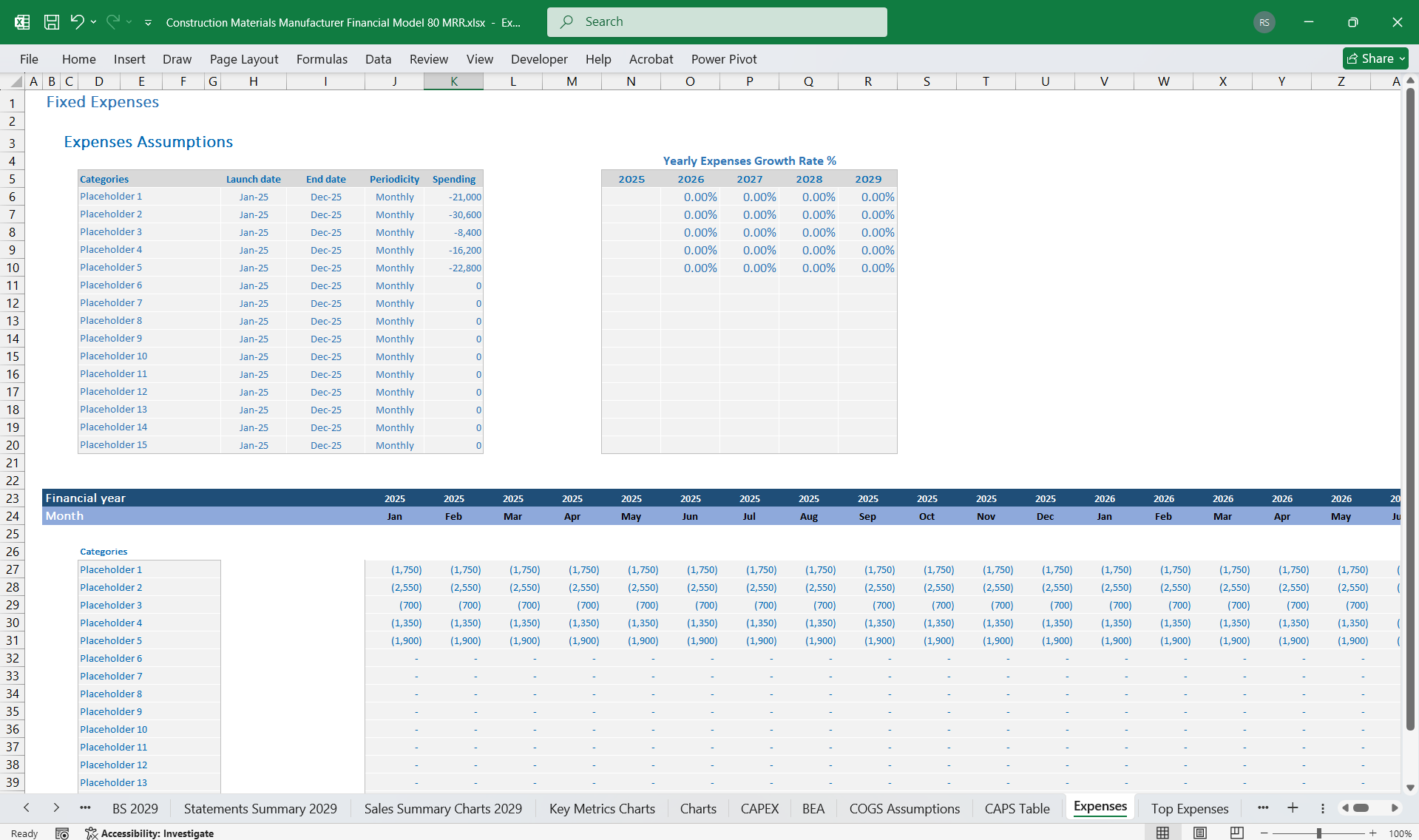
- Administration: Office salaries, ERP systems, compliance, and regulatory fees.
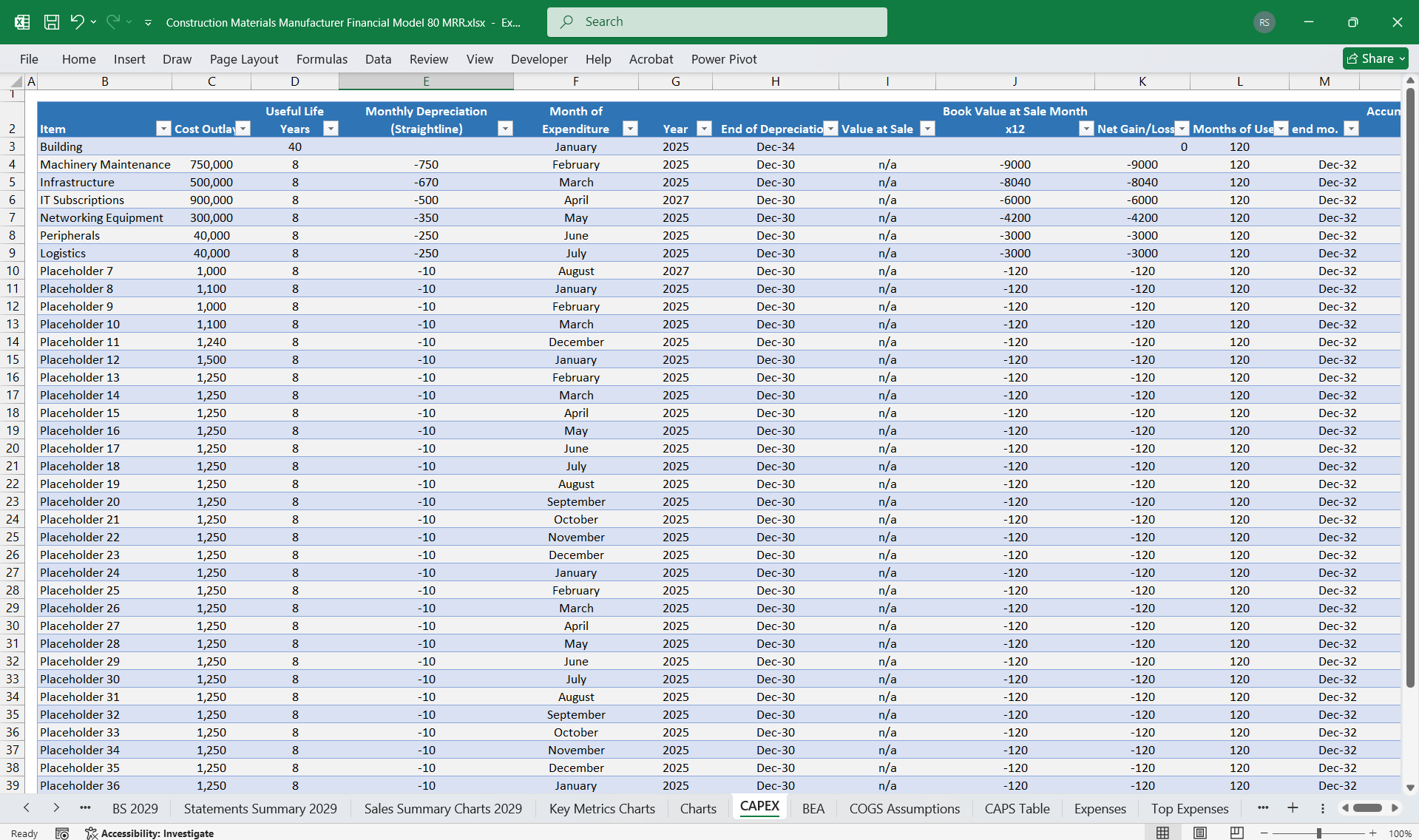
- Depreciation and Amortization:
- Depreciation of heavy machinery (e.g., mixers, kilns) and amortization of licenses or software.
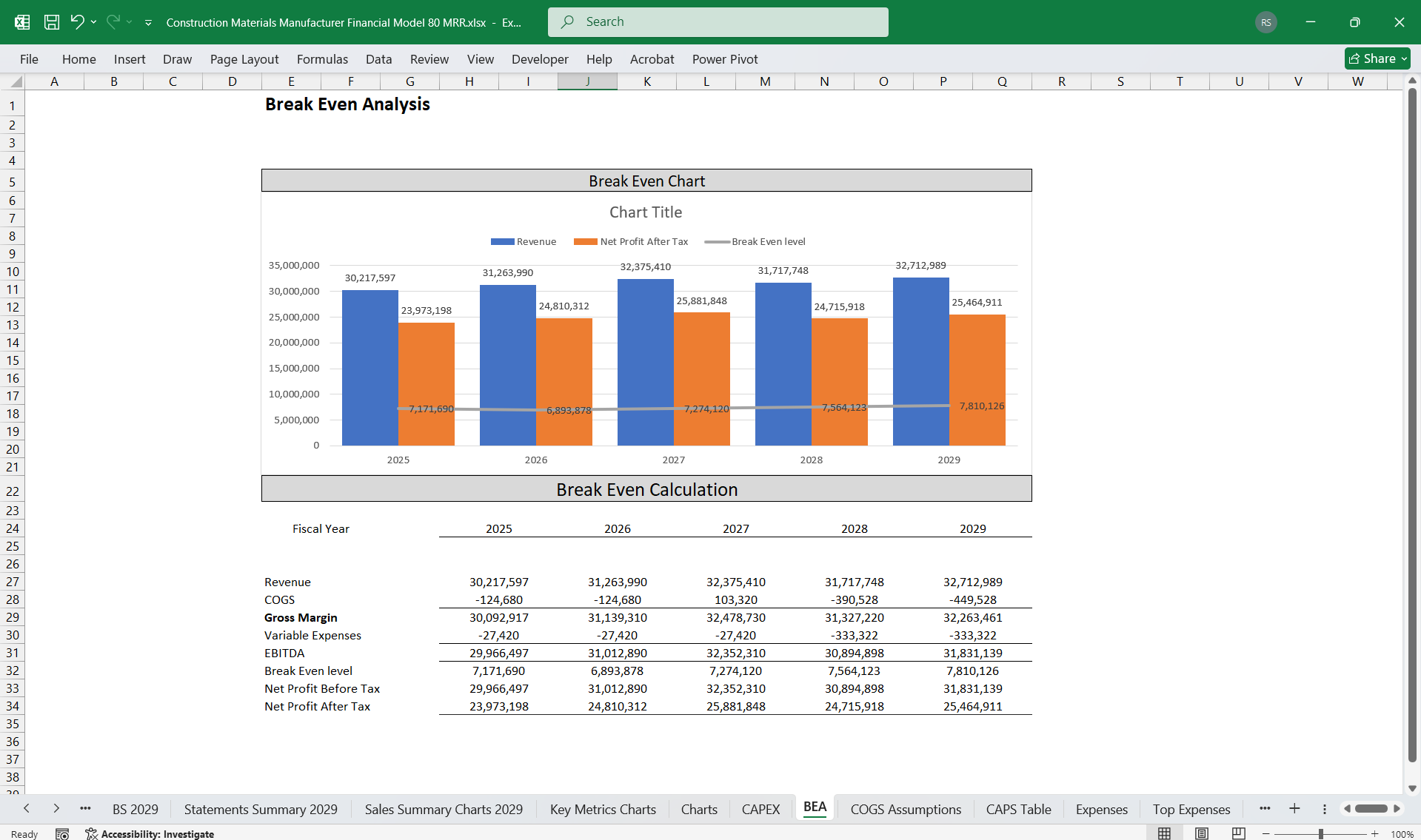
- Gross Profit = Revenue - COGS.
- Operating Profit (EBIT) = Gross Profit - Operating Expenses.
- Net Profit = EBIT - Taxes - Interest.
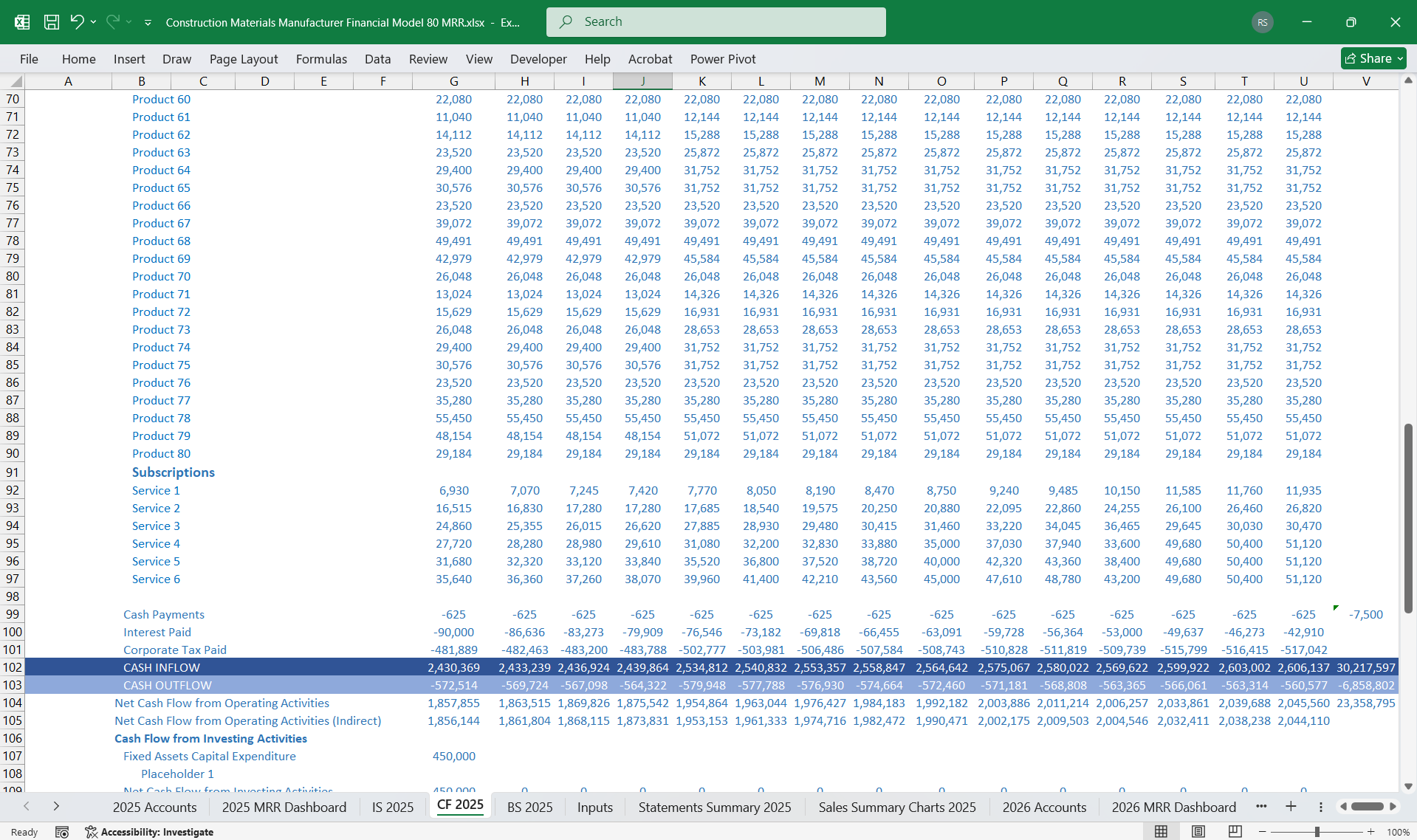
- Inflows:
- Payments from construction firms, distributors, or individual buyers.
- Subscription-based recurring payments.
- Outflows:
- Procurement of raw materials like lime, sand, and aggregates.
- Payroll for production staff, engineers, and logistics.
- Factory operational costs such as electricity, gas, and water.
- Working Capital Adjustments:
- Changes in inventory levels, accounts receivable, and payable.
- Inflows:
- Sale of outdated equipment or surplus assets.
- Government grants for eco-friendly manufacturing initiatives.
- Outflows:
- Purchase of new machinery for manufacturing, drying, or cutting.
- Expanding plant capacity to accommodate additional product lines.
- Inflows:
- Loans or equity raised for expansion.
- Outflows:
- Repayment of existing loans.
- Dividend payouts.
- Free Cash Flow (FCF): Measures the cash available for growth or distribution.
- Operating Cash Flow: Assesses core business efficiency in cash generation.
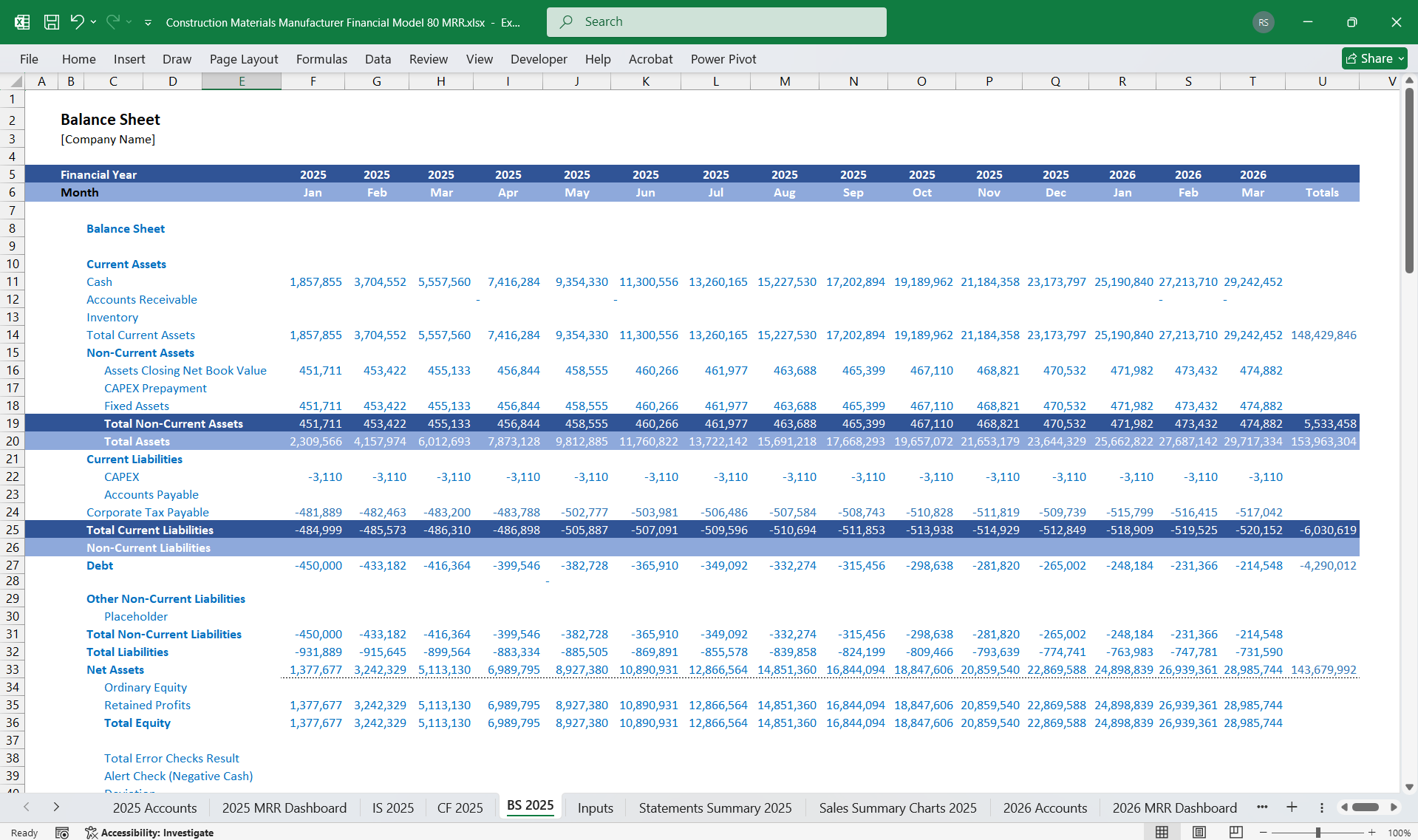
- Current Assets:
- Cash and bank balances for liquidity.
- Accounts receivable from construction firms and distributors.
- Inventories:
- Raw materials like sand, cement, polymers.
- Work-in-progress mixes.
- Finished goods such as bricks and panels.
- Non-Current Assets:
- Manufacturing machinery: Kilns, mixers, and transport vehicles.
- Land and buildings for production and storage.
- Intellectual property: Patents for advanced materials or formulations.
- Current Liabilities:
- Accounts payable for suppliers.
- Accrued payroll and operational costs.
- Non-Current Liabilities:
- Long-term debt used for capital investment.
- Retained earnings reinvested into scaling operations.
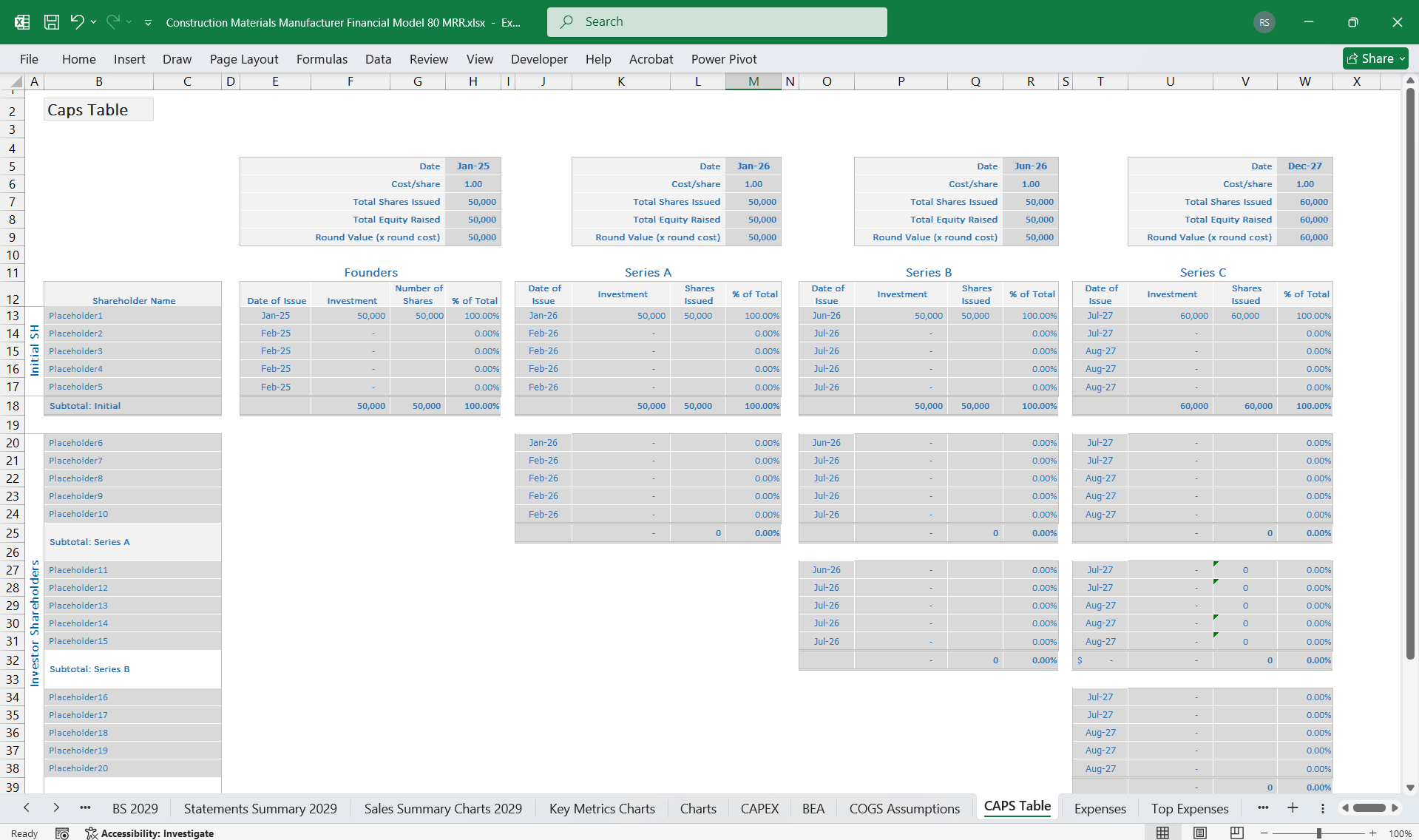
- Shareholder equity from previous funding rounds.
- Product Categories:
- Basic construction materials (e.g., cement, bricks, blocks).
- Eco-friendly alternatives (e.g., low-carbon concrete, recycled composites).
- Specialty items for specific sectors:
- Lightweight blocks for high-rise buildings.
- Acoustic tiles for soundproofing.
- Advanced prefabricated units.
- Revenue Dynamics:
- Increased diversification across sectors like residential, commercial, and industrial projects.
- Higher-margin specialty items offsetting lower margins in basic materials.
- Cost Management:
- Optimized bulk procurement to achieve economies of scale.
- Advanced logistics planning to handle SKU proliferation.
- Target Audience:
- Major construction firms, industrial developers, and government infrastructure projects.
- Profit Margins:
- Gross Margin: ~35-50%, with premium products offering higher profitability.
- Net Margin: ~10-20%, depending on product complexity and delivery terms.
Tier Structure
- Tier 1 (Basic):
- Access to material usage reports.
- Alerts for new inventory availability.
- Price: $50/month.
- Tier 2 (Standard):
- Includes Tier 1 features.
- Basic delivery tracking tools.
- Price: $100/month.
- Tier 3 (Professional):
- Integration with project management systems for small firms.
- Advanced cost forecasting tools.
- Price: $250/month.
- Tier 4 (Premium):
- QA reports and certifications for batches of products.
- AI-driven delivery scheduling based on project progress.
- Price: $500/month.
- Tier 5 (Enterprise):
- Customizable software integrations for larger projects.
- Detailed sustainability metrics.
- Price: $1,000/month.
- Tier 6 (Custom):
- Tailored consultancy services for megaprojects.
- Dedicated supply chain management and custom reports.
- Price: $2,500/month.
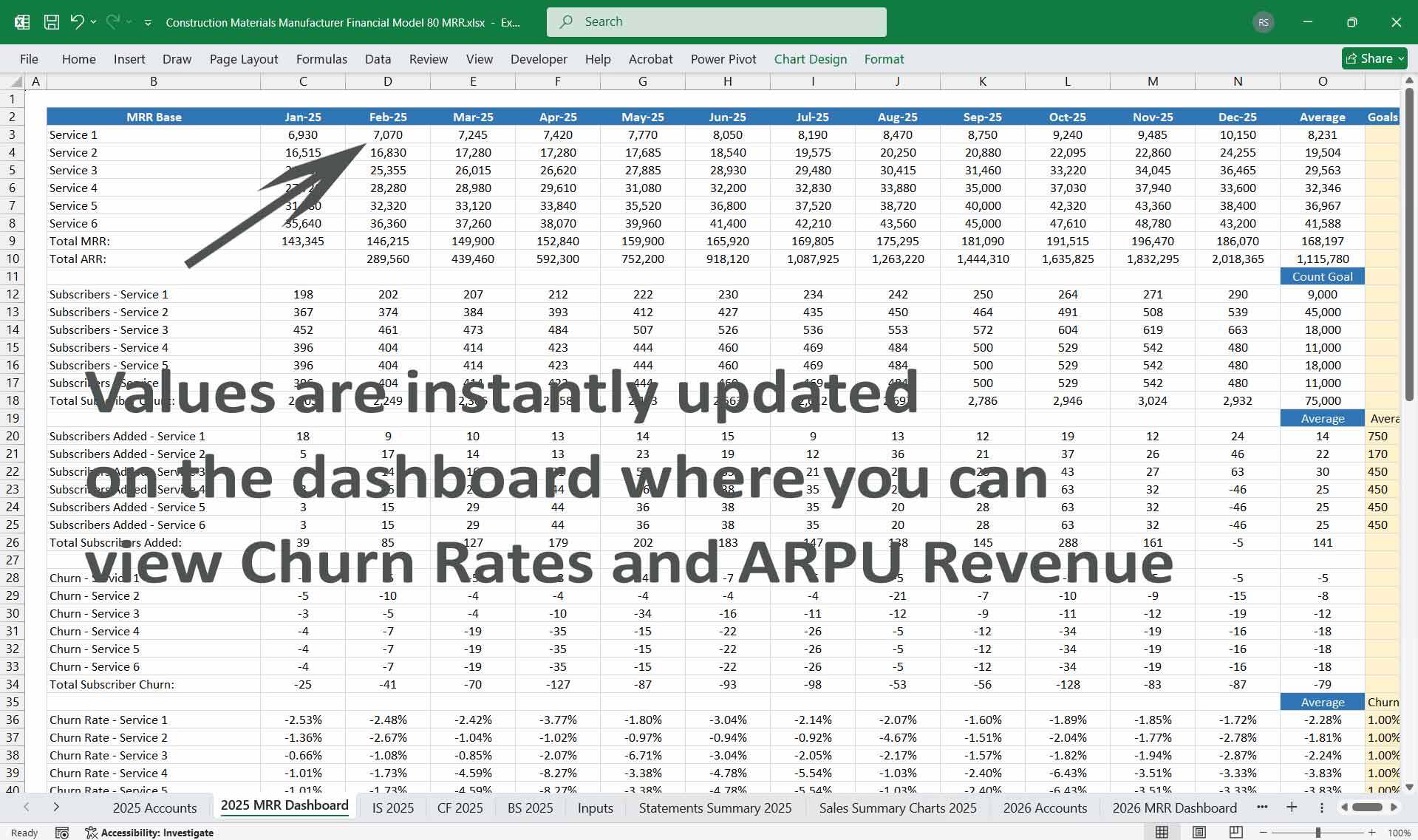
- Monthly Recurring Revenue (MRR): Track consistent cash inflows from clients.
- Annual Recurring Revenue (ARR): Monitor long-term revenue reliability.
- Customer Acquisition Cost (CAC): Measure the cost to acquire subscription clients.
- Churn Rate: Percentage of clients unsubscribing from services.
- Operational KPIs:
- Capacity Utilization Rate: How efficiently production facilities are used.
- Inventory Turnover Ratio: Frequency of stock cycling.
- Profitability KPIs:
- Contribution Margin by Product Line.
- Return on Invested Capital (ROIC).
- Subscription KPIs:
- Upgrade Rates: Share of users moving to higher-tier plans.
- Subscription Retention: Tracks service stickiness.
- Scenario Analysis:
- Compare profitability across product lines and subscription offerings.
- Assess scalability between 40- and 80-product lines.
This Best Practice includes
1 Excel Financial Model
Further information
Provides thorough oversight, tracking, and reporting of Construction Materials Manufacturer's finances, including updates on budget utilisation and projections.