

Publication number: ELQ-88011-1
View all versions & Certificate

PGM Mining Valuation Studio – Advanced DCF, Scenarios, Monte Carlo & Risk Analysis
Advanced Excel PGM mining valuation model with DCF, scenarios, Monte Carlo simulation, debt analysis and integrated risk dashboards.
Further information
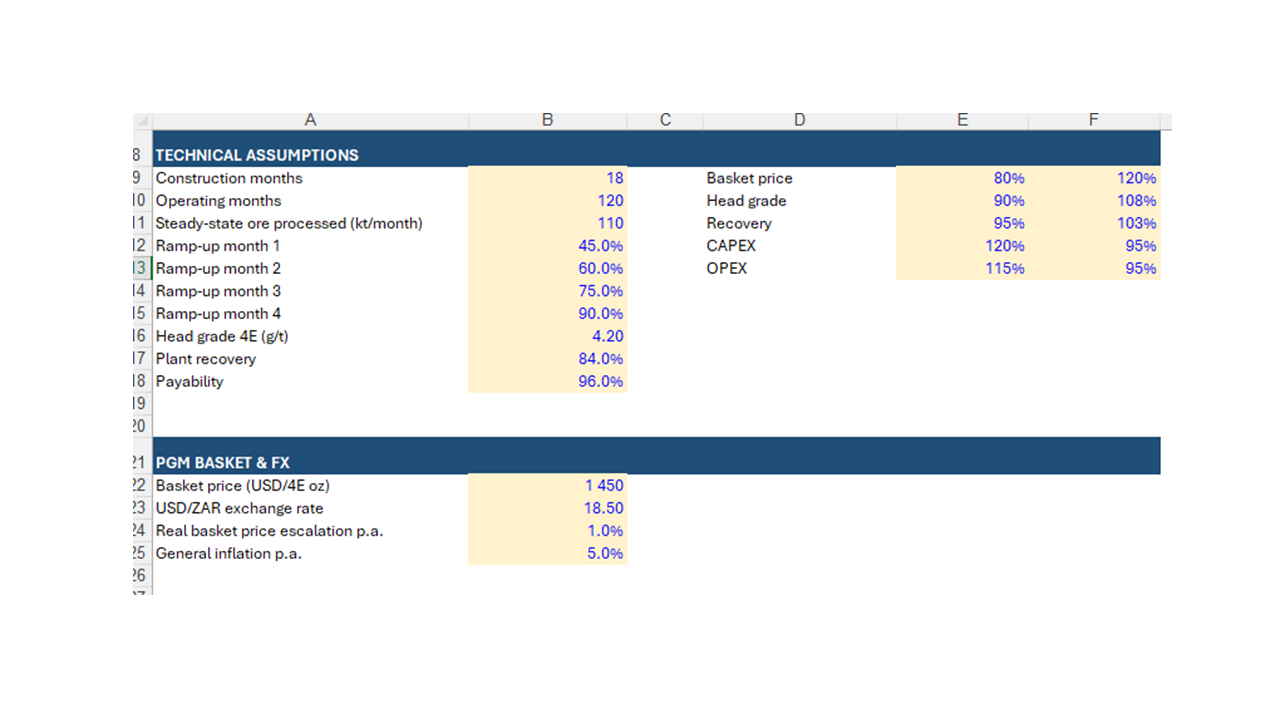
* Build a complete monthly and annual discounted cash-flow valuation for a PGM mining project.
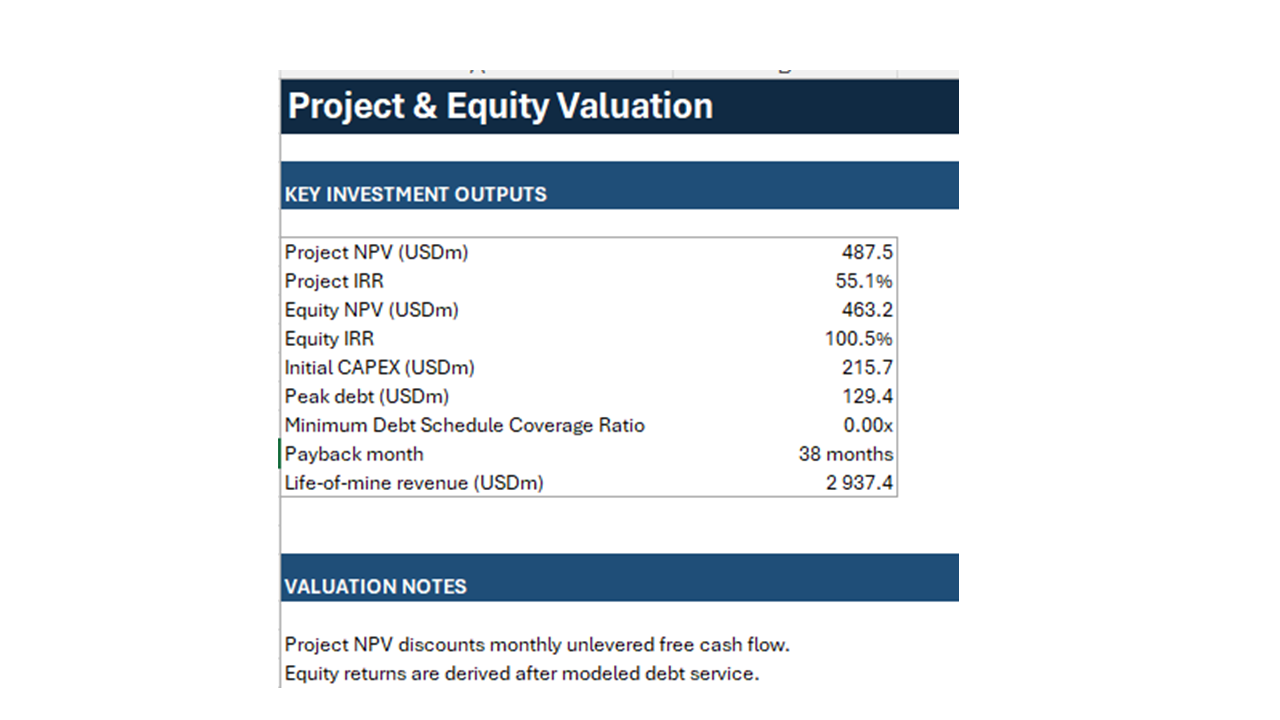
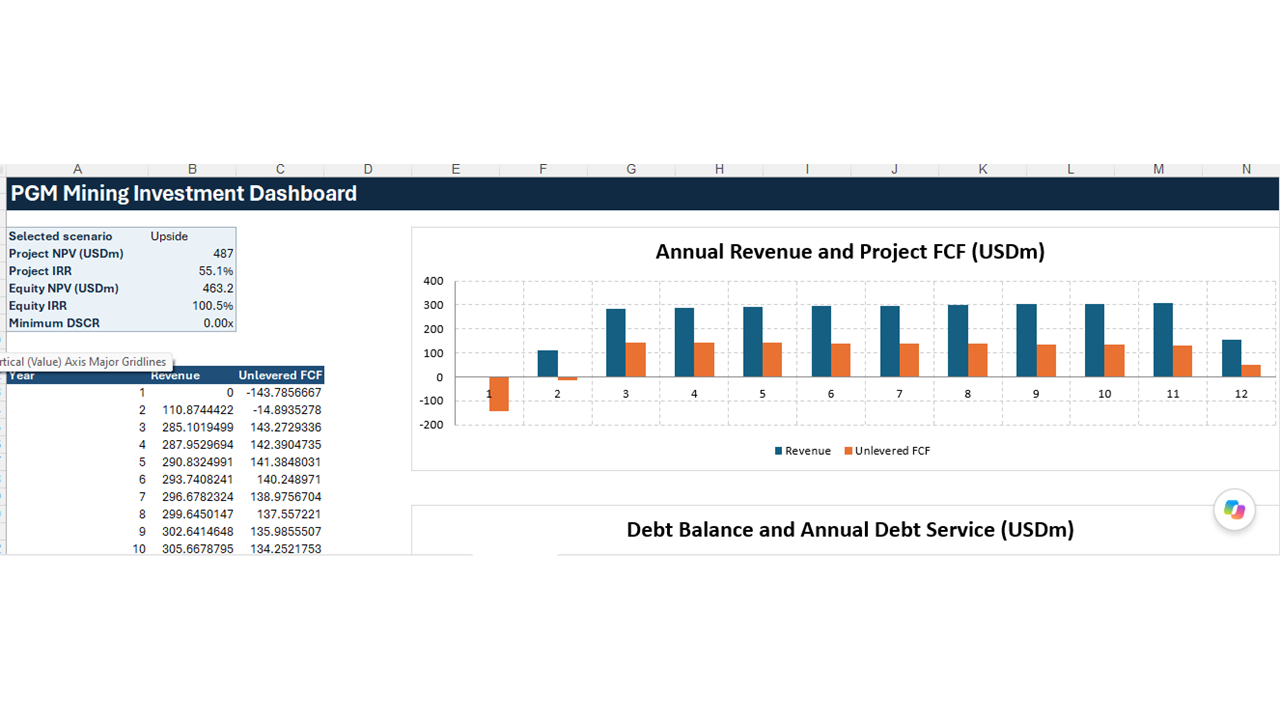
* Estimate project and equity NPV, IRR, payback period, debt requirements and minimum DSCR.
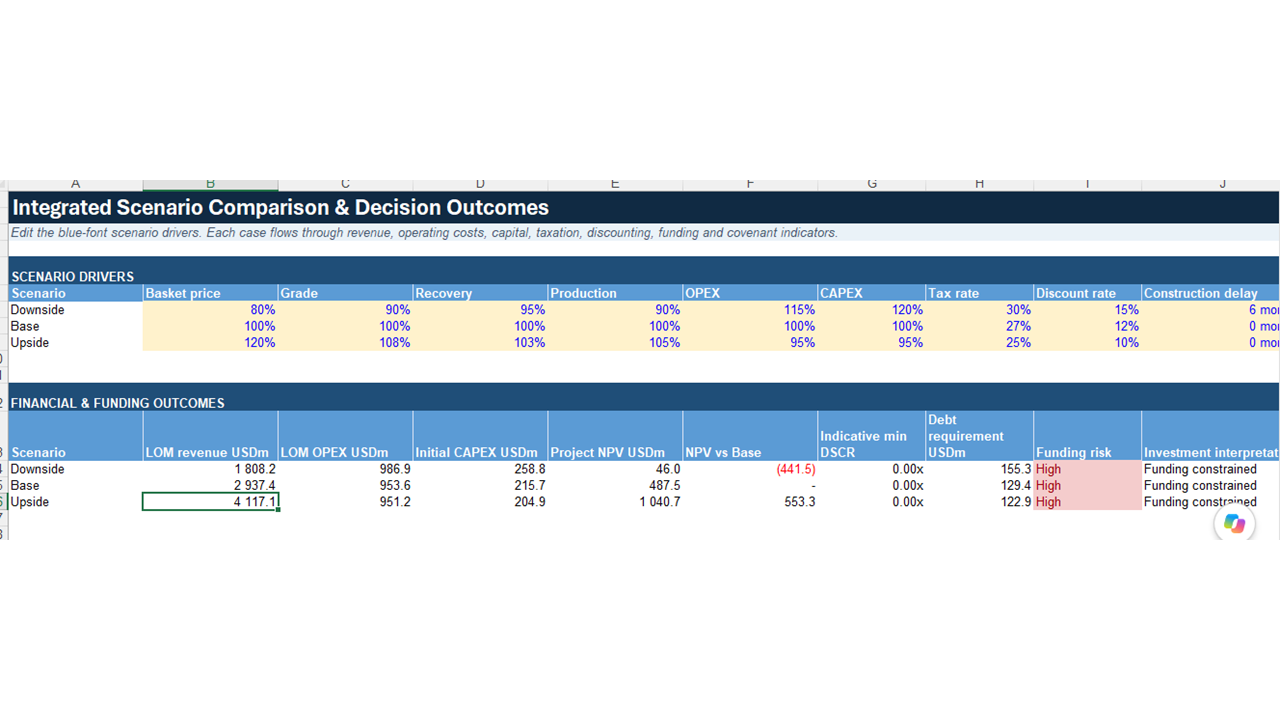
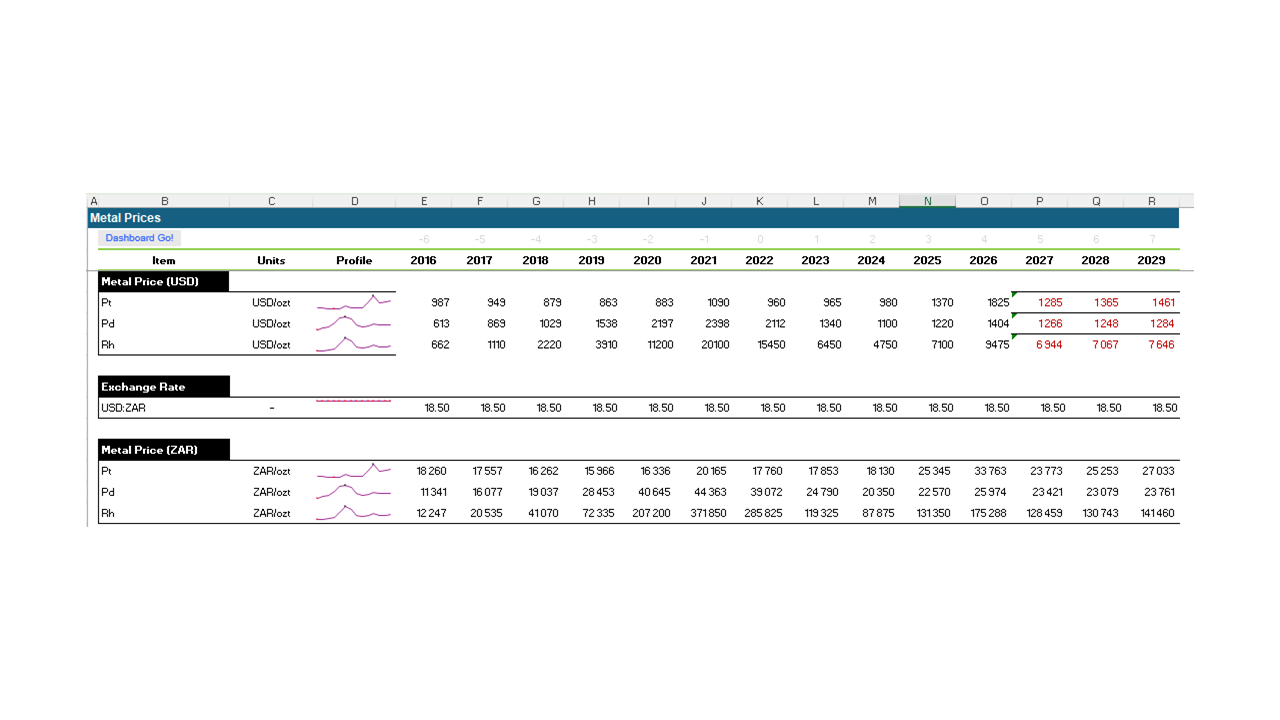
* Evaluate downside, base and upside cases across commodity prices, grade, recovery, production, OPEX, CAPEX, taxation and construction timing.
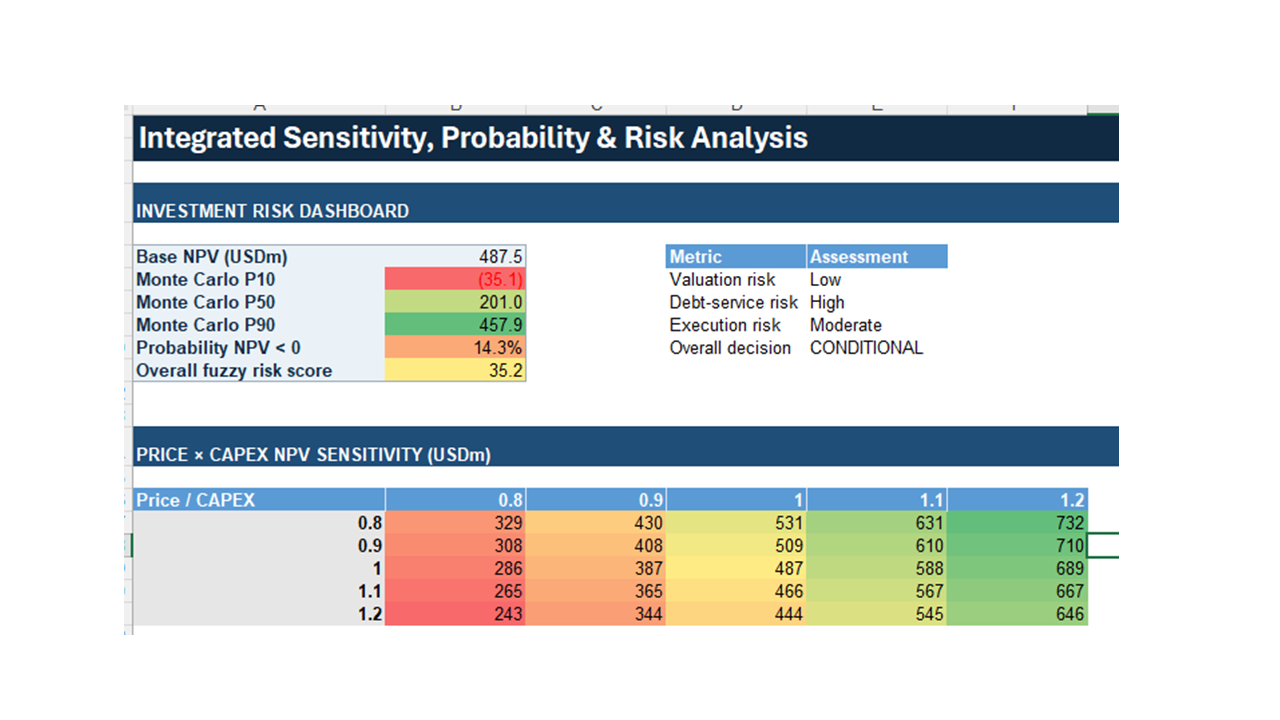
* Measure valuation sensitivity to the project’s principal technical, operating and financial drivers.
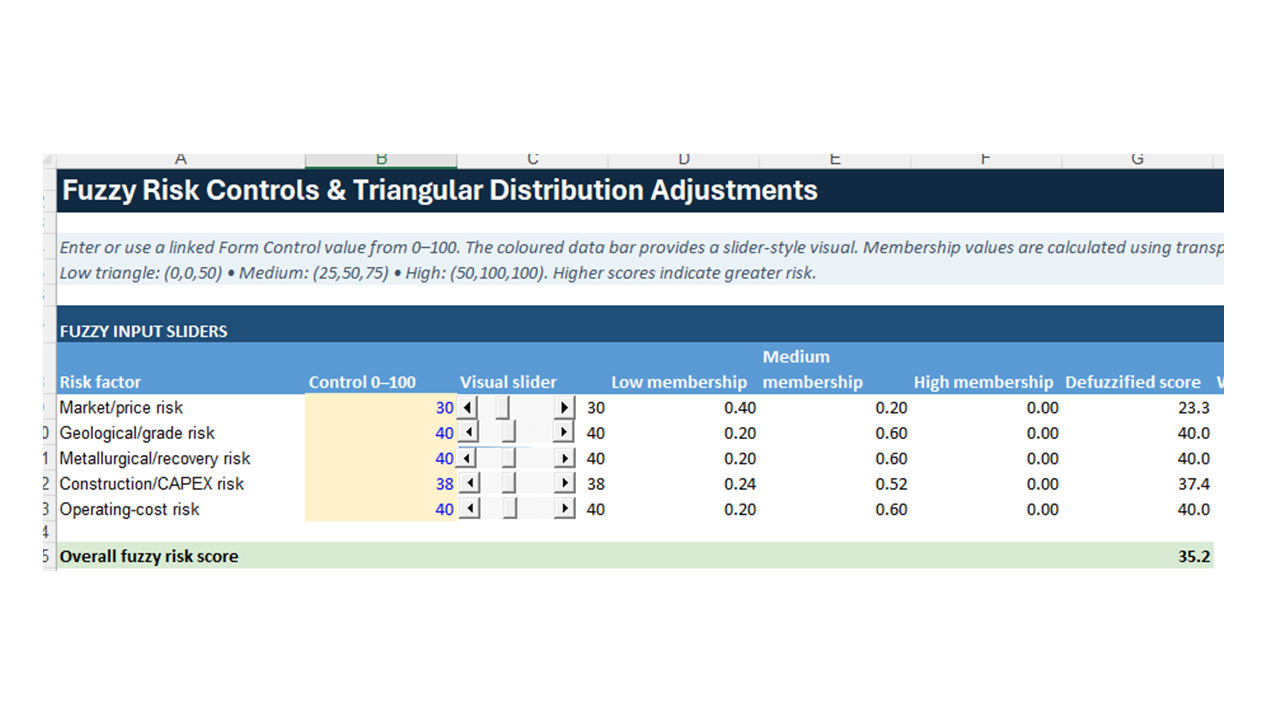
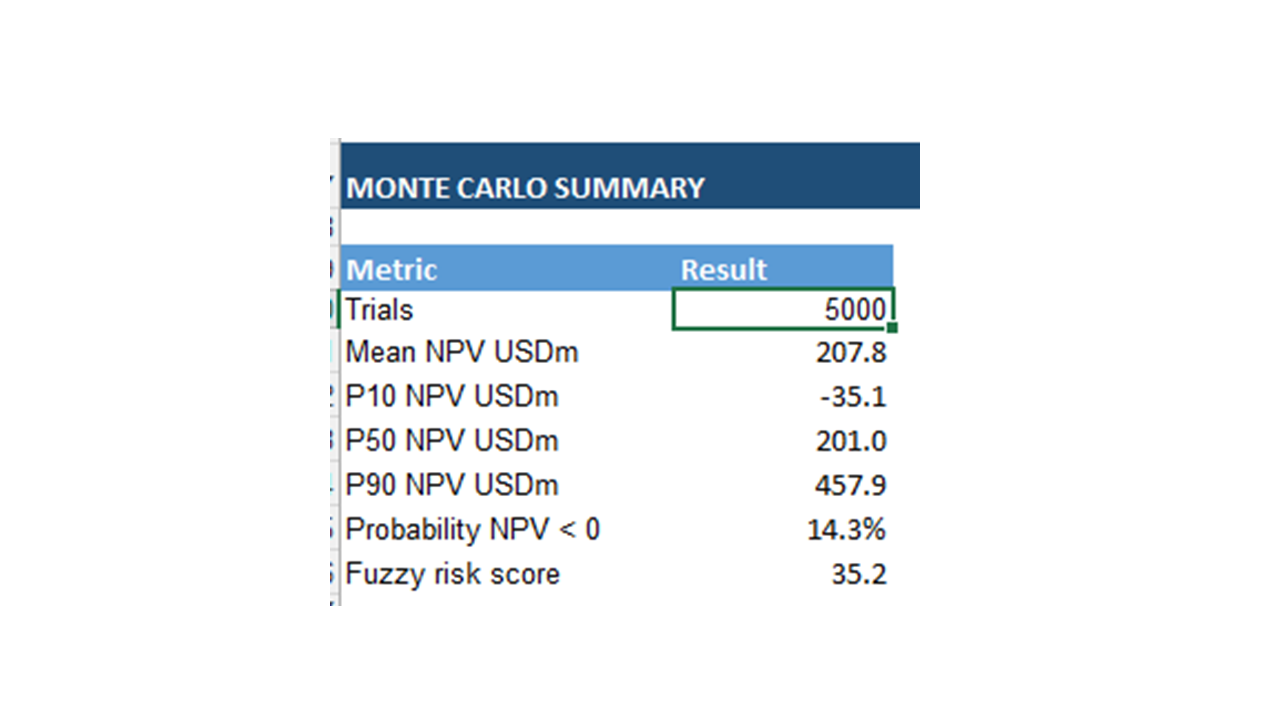
* Quantify uncertainty through Monte Carlo simulation, fuzzy-logic risk scoring and probability-based analysis.
* Examine debt drawdowns, interest, principal repayments, cash available for debt service and covenant resilience.
* Compare scenarios through integrated financial outcomes, variance bridges and investment-risk indicators.
* Provide clear dashboards, charts and integrity checks to support investment screening, project evaluation and decision-making.
This best practice is most effectively applied when:
* Screening or comparing prospective PGM mining investments.
* Preparing preliminary economic assessments, feasibility studies or investment committee evaluations.
* Testing project viability under uncertain metal prices, grades, recoveries, operating costs and capital requirements.
* Evaluating alternative financing structures and debt-service capacity.
* Assessing downside resilience, covenant headroom and funding risk.
* Comparing base, downside and upside development strategies.
* Quantifying uncertainty through scenario, sensitivity, Monte Carlo and fuzzy-risk analysis.
* Reviewing acquisition opportunities, mine expansions, redevelopment projects or operational improvement programmes.
* Communicating valuation assumptions and investment risks to management, investors, lenders or advisers.
The model is best used when credible technical, operating, capital and market assumptions are available. It provides structured decision support and preliminary valuation analysis but should complement—not replace—geological, metallurgical, engineering, legal, tax and environmental due diligence.
This best practice is not intended for:
* Final investment, lending or acquisition decisions without independent professional due diligence.
* Projects lacking credible geological, metallurgical, production, cost or capital assumptions.
* Detailed mineral-resource or reserve estimation.
* Mine planning, pit optimisation, production scheduling or equipment selection.
* Metallurgical process design or engineering calculations.
* Environmental, social, permitting, legal or regulatory assessments.
* Detailed tax structuring, royalty interpretation or jurisdiction-specific accounting.
* Short-term trading or forecasting daily PGM prices.
* Valuing non-mining businesses without substantial modification.
* Projects requiring complex tax-loss carry-forwards, multiple currencies, hedging instruments, streaming agreements or highly specialised financing structures not represented in the model.
Outputs are only as reliable as the assumptions entered. The model should therefore be treated as a structured valuation, scenario and risk-analysis tool—not as certified technical, legal, tax or investment advice.