

Publication number: ELQ-36841-1
View all versions & Certificate

Hair & Beauty Salon Financial Model: 10-Year Forecast, Scenarios and DCF Valuation
Premium 10-year salon financial model with revenue, staffing, 3 statements, scenarios, break-even, KPIs, debt schedules and DCF valuation.
Further information
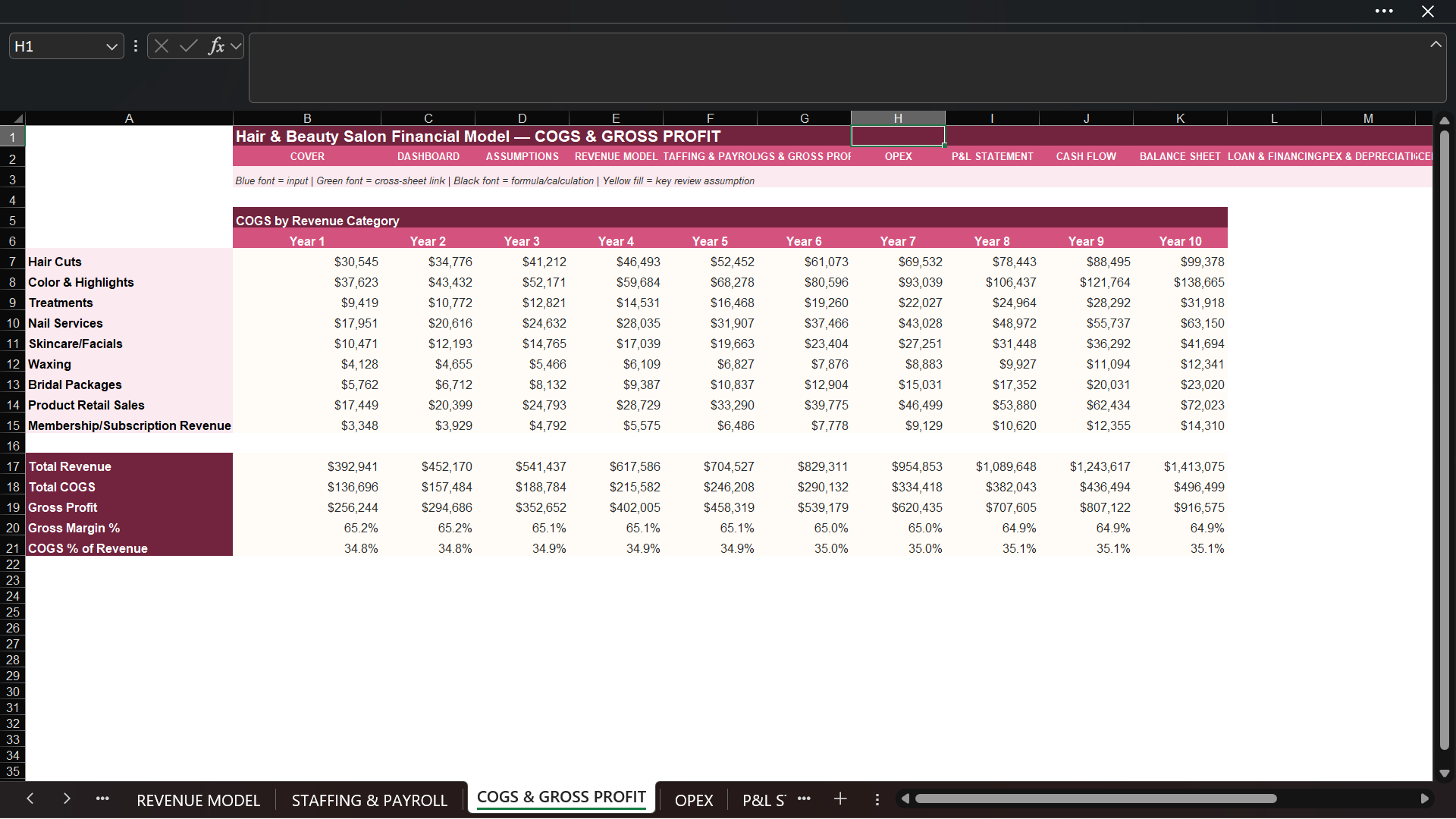
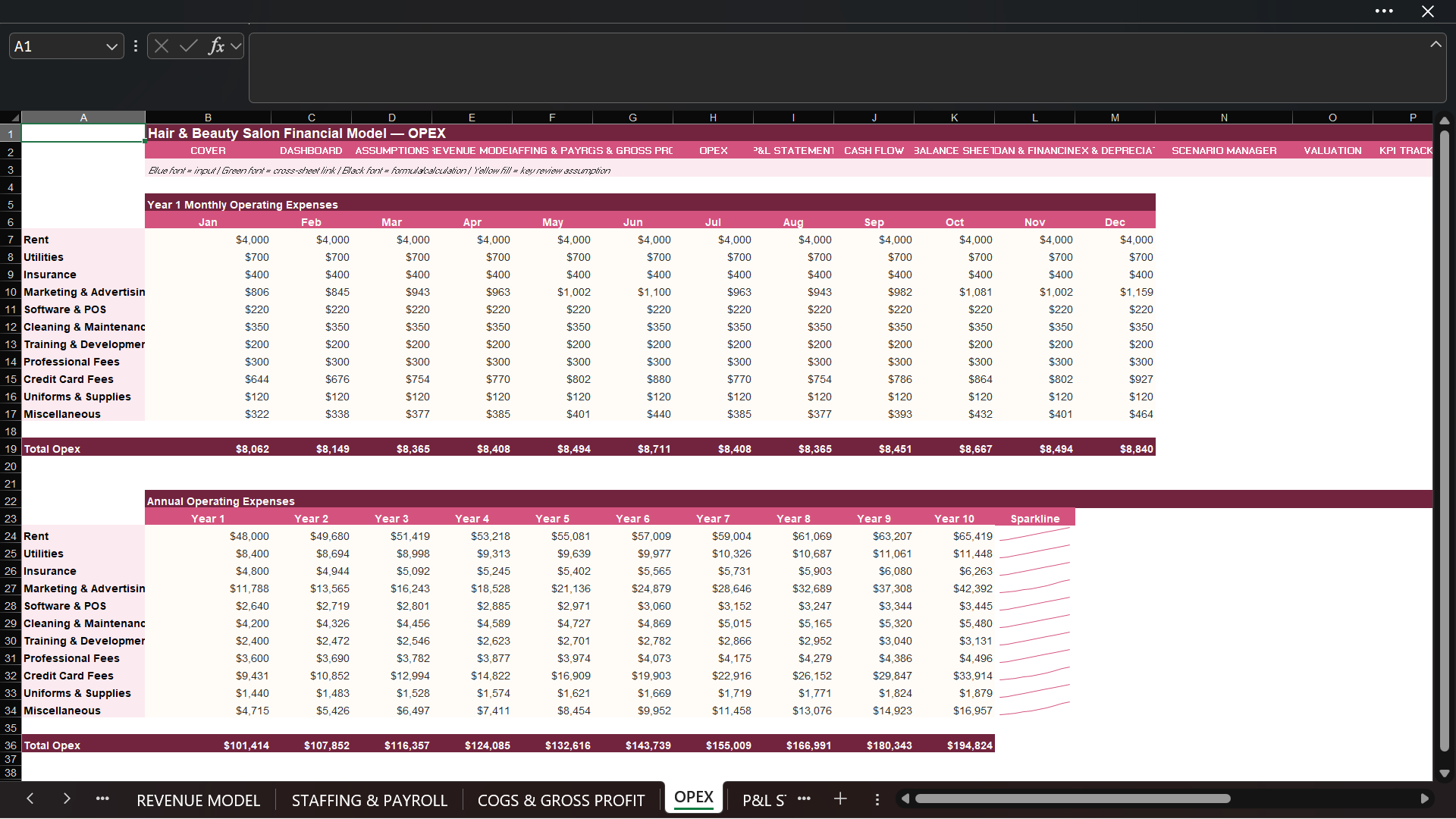
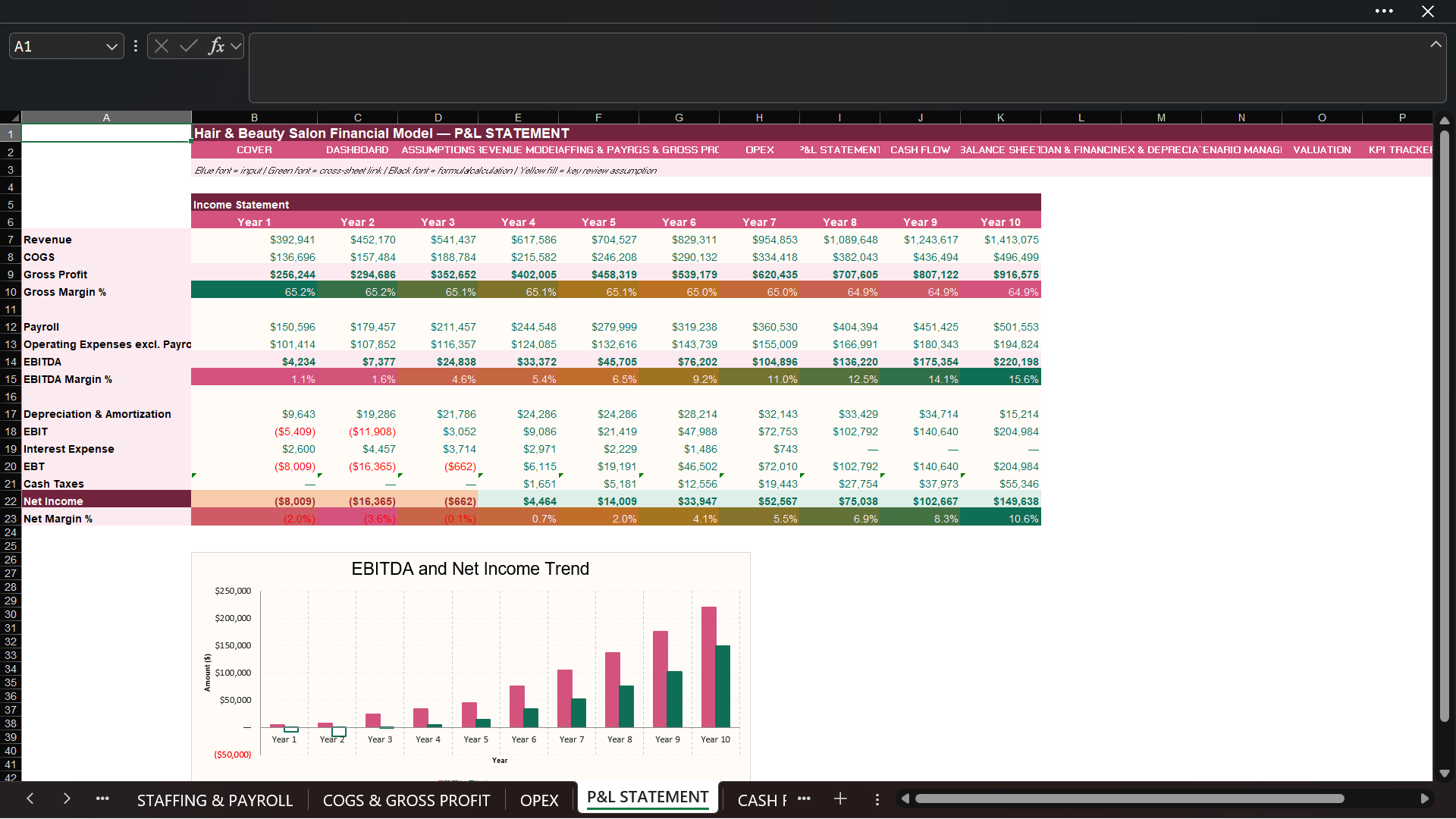
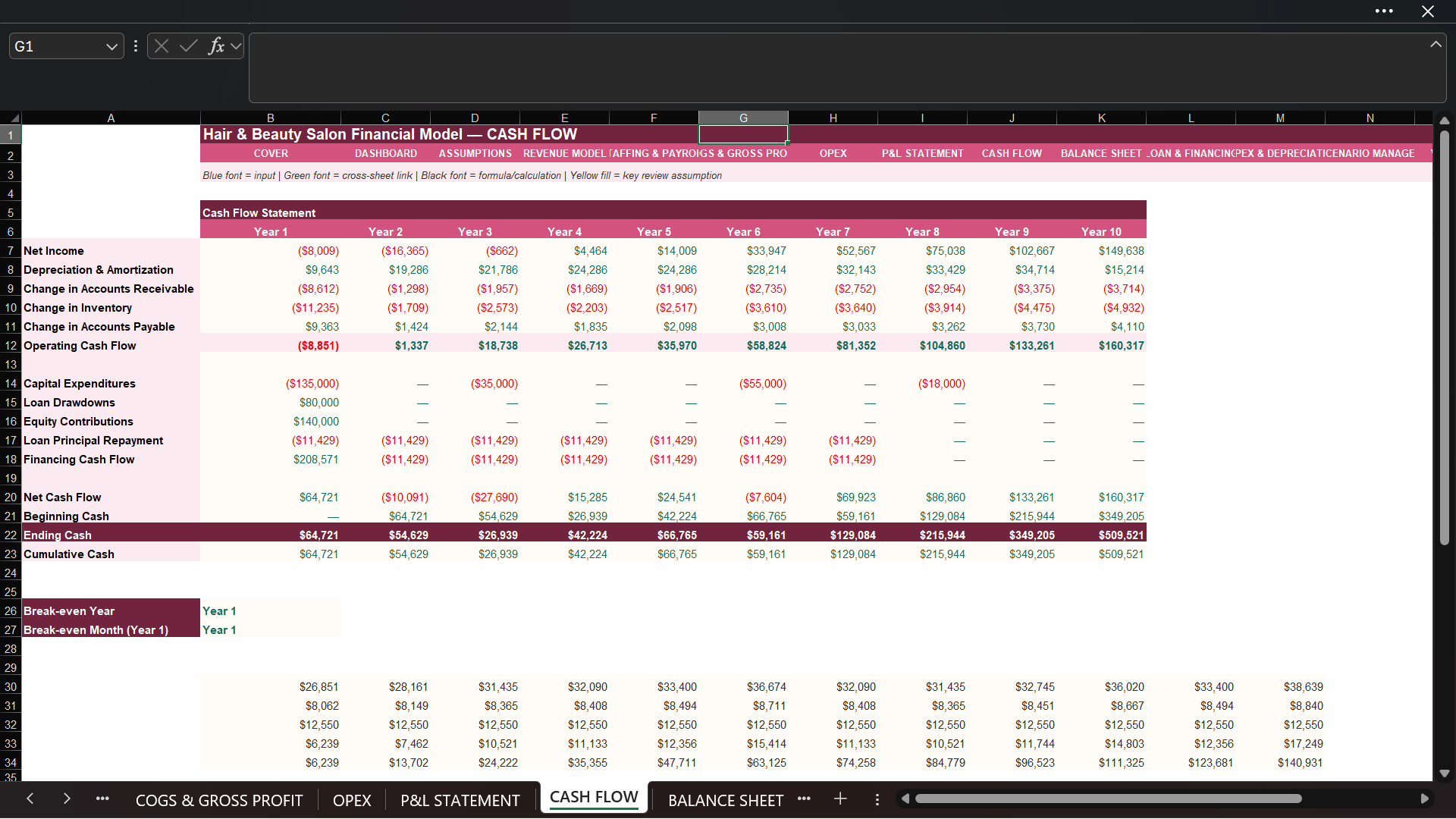
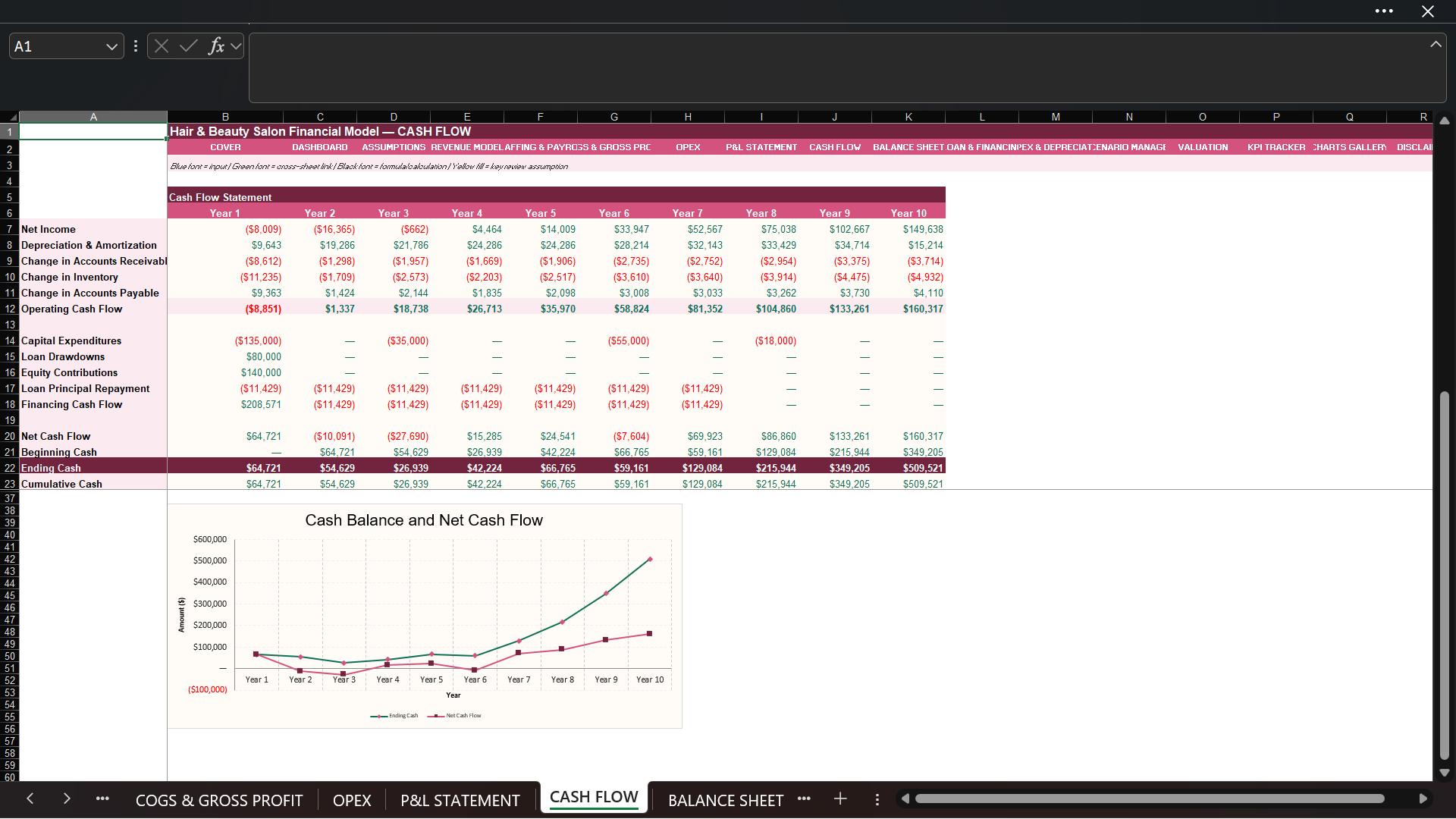
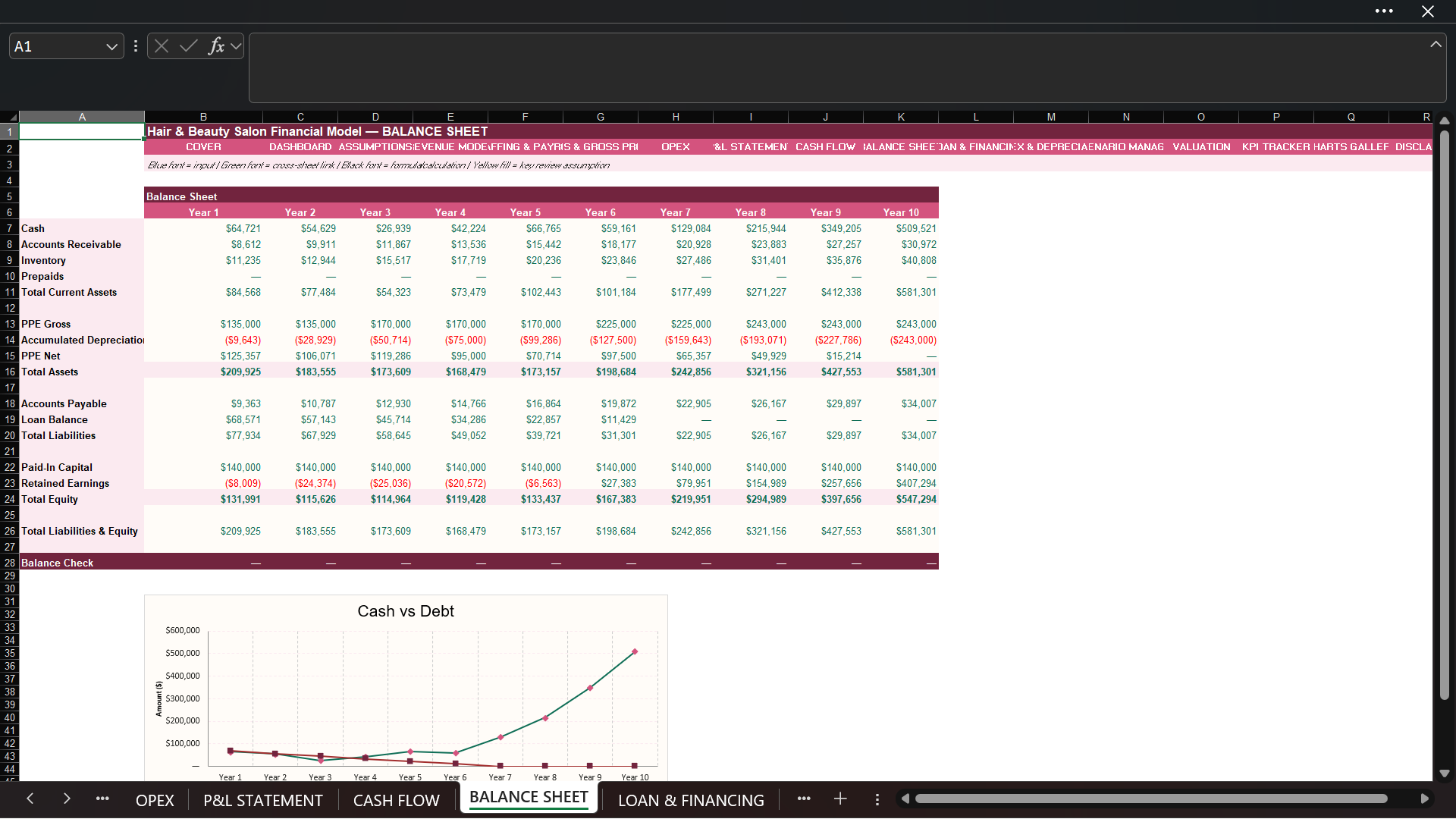
Forecast salon revenue, costs, staffing, profitability, cash flow, financial position, and value over 10 years.
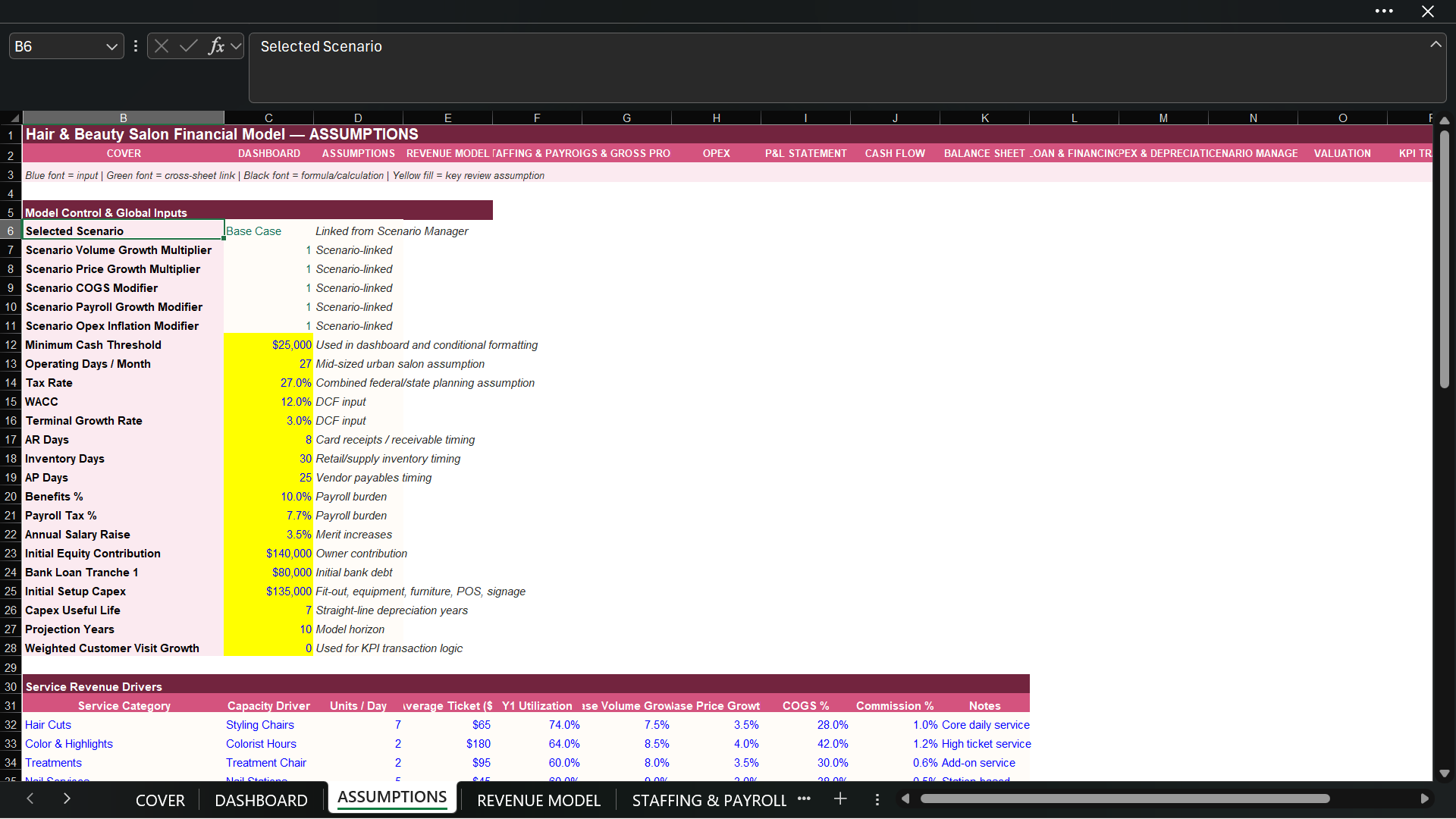
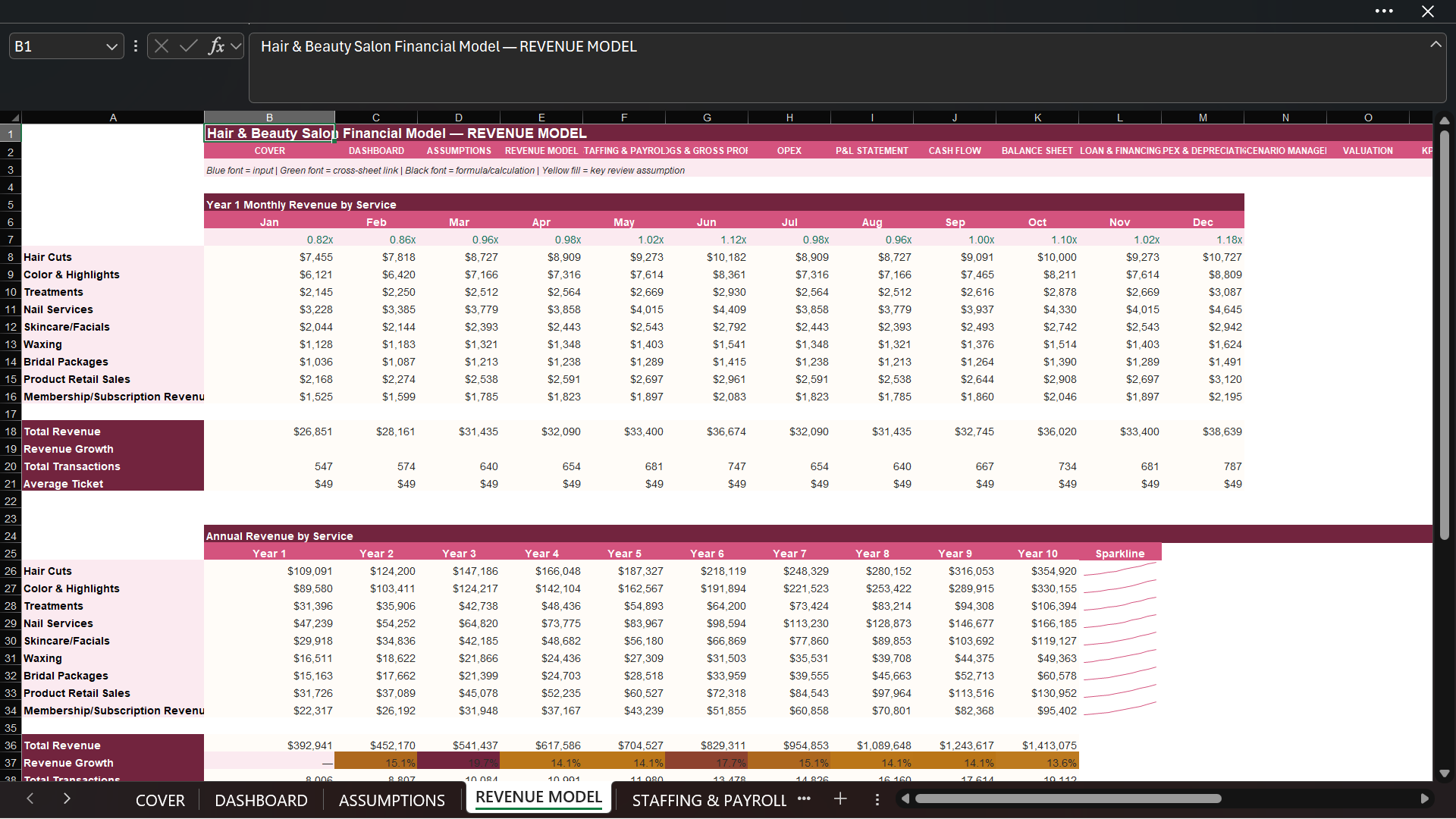
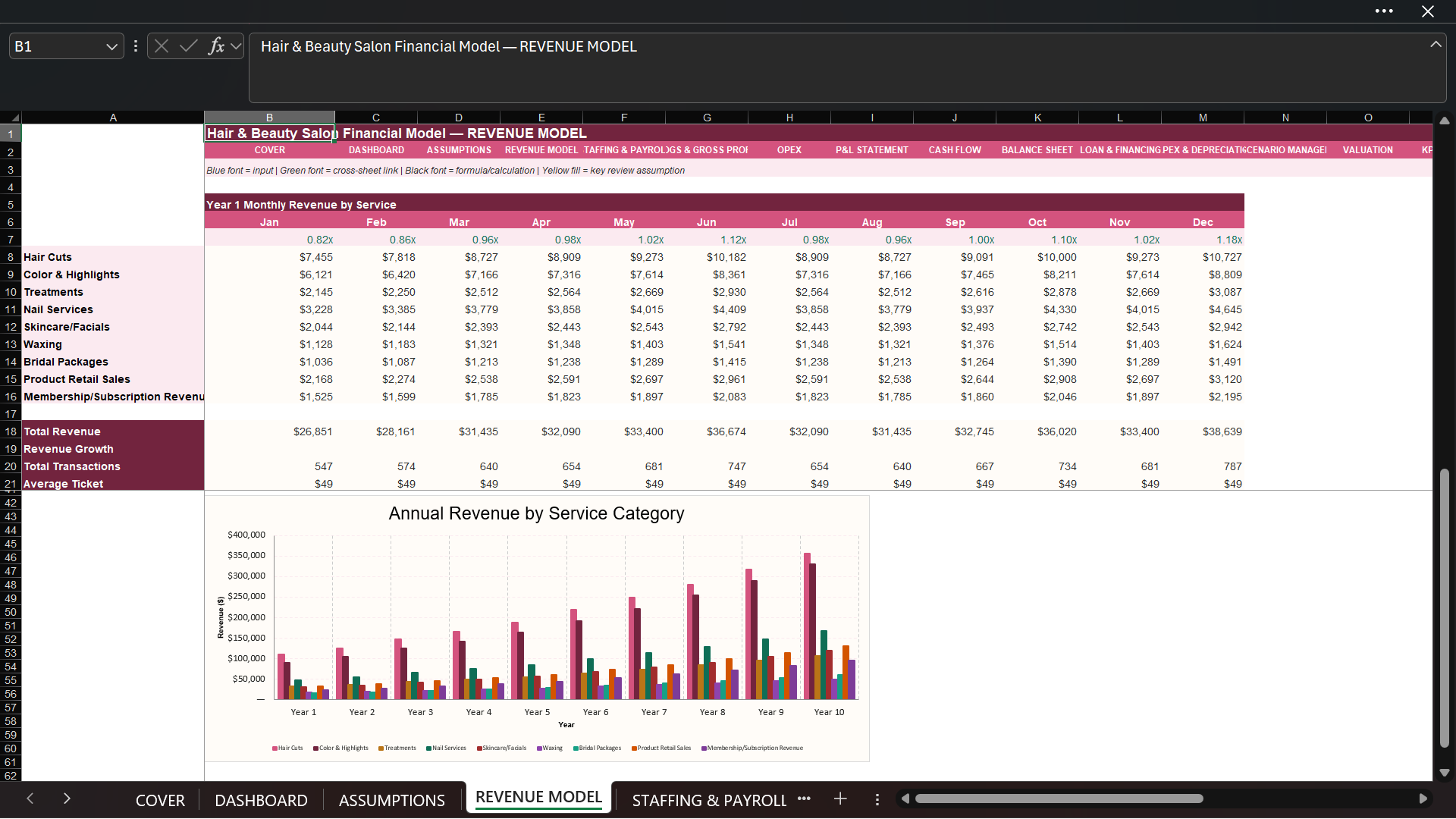
Translate salon operating drivers—service volume, pricing, utilization, seasonality, service mix, staffing, commissions, and overhead—into connected financial outputs.
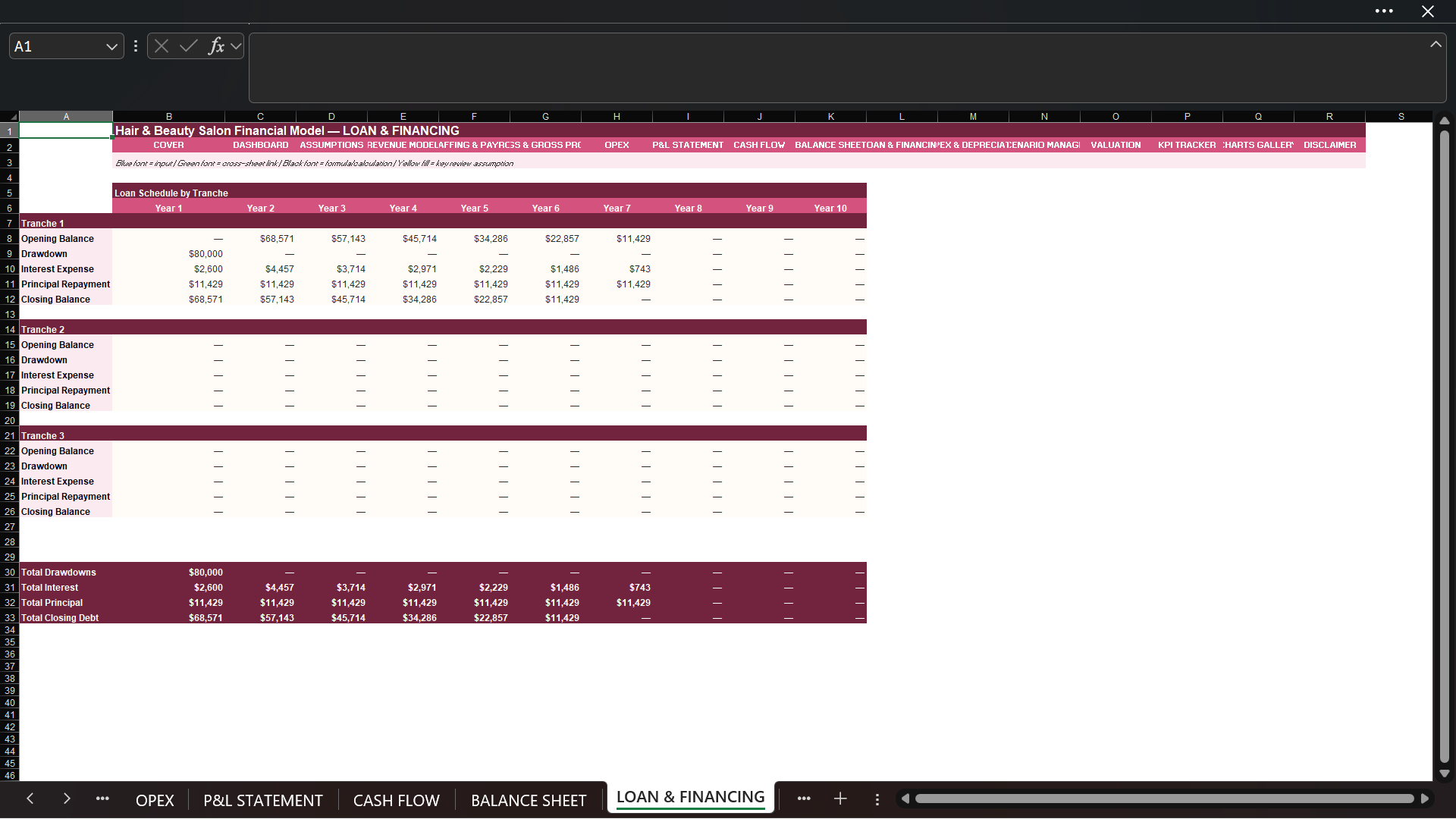
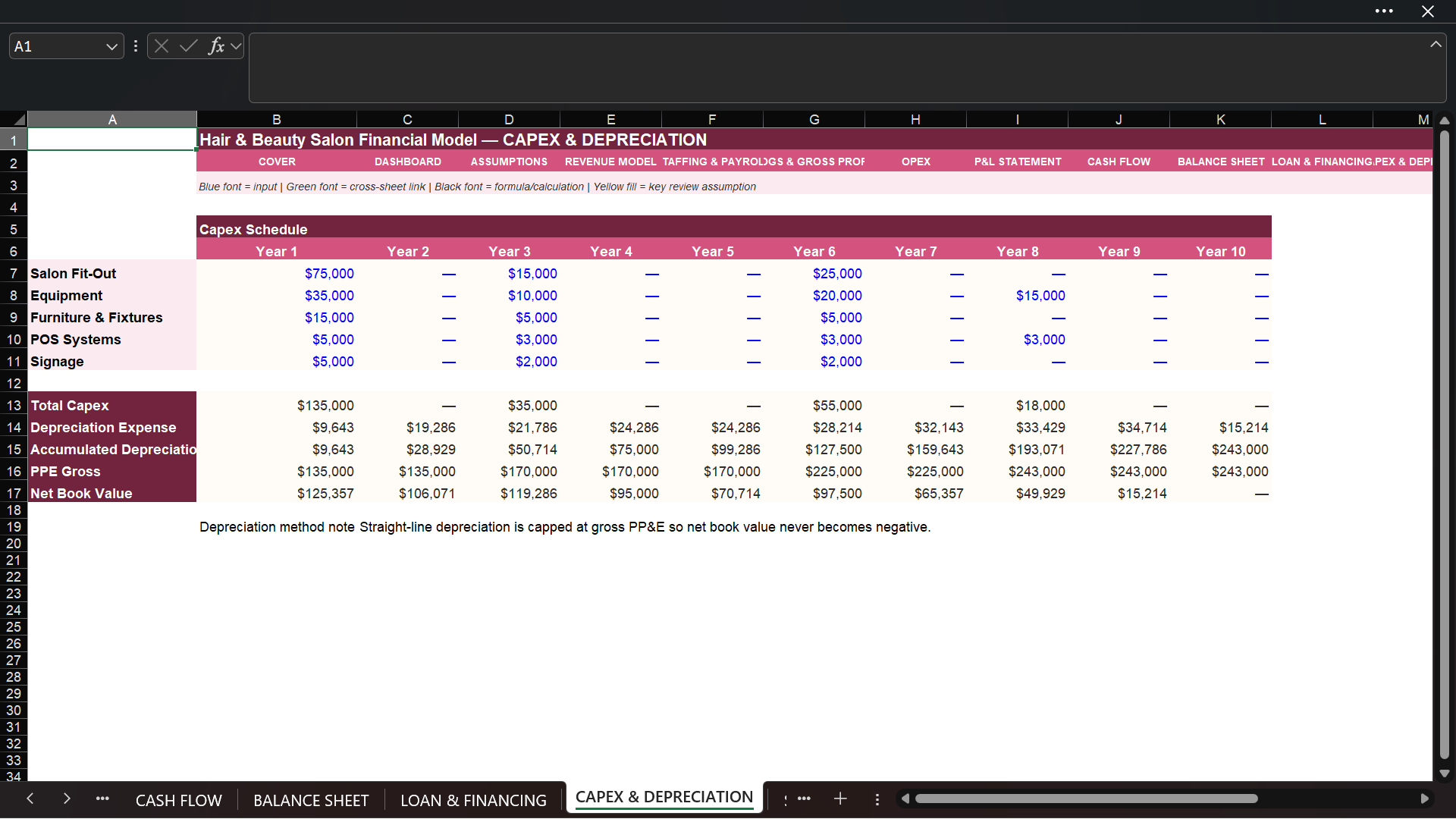
Evaluate startup capital, capex, working capital, equity funding, and up to three debt tranches.
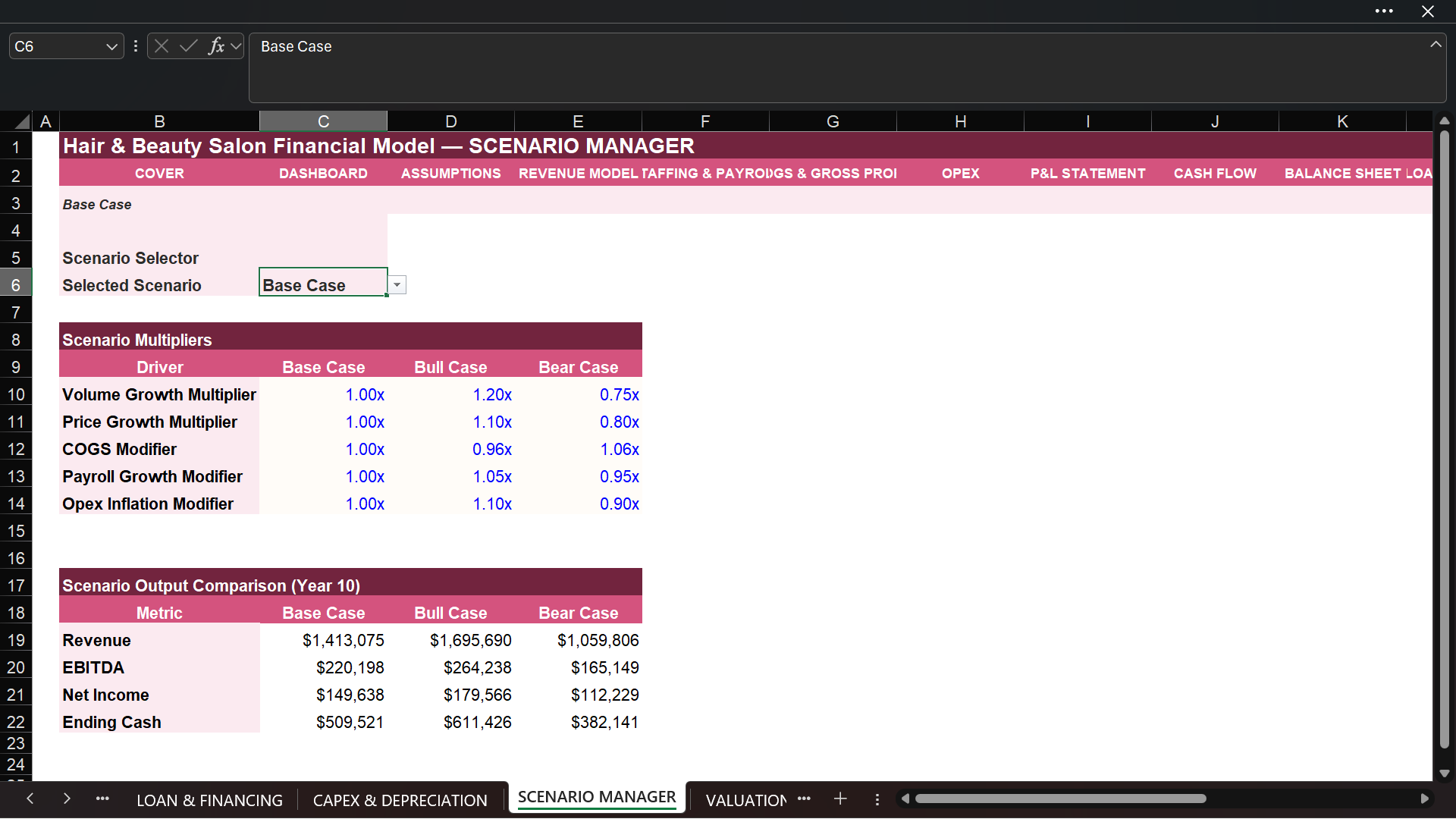
Compare Base, Bull, and Bear cases and understand the effect on Revenue, EBITDA, Net Income, and Ending Cash.
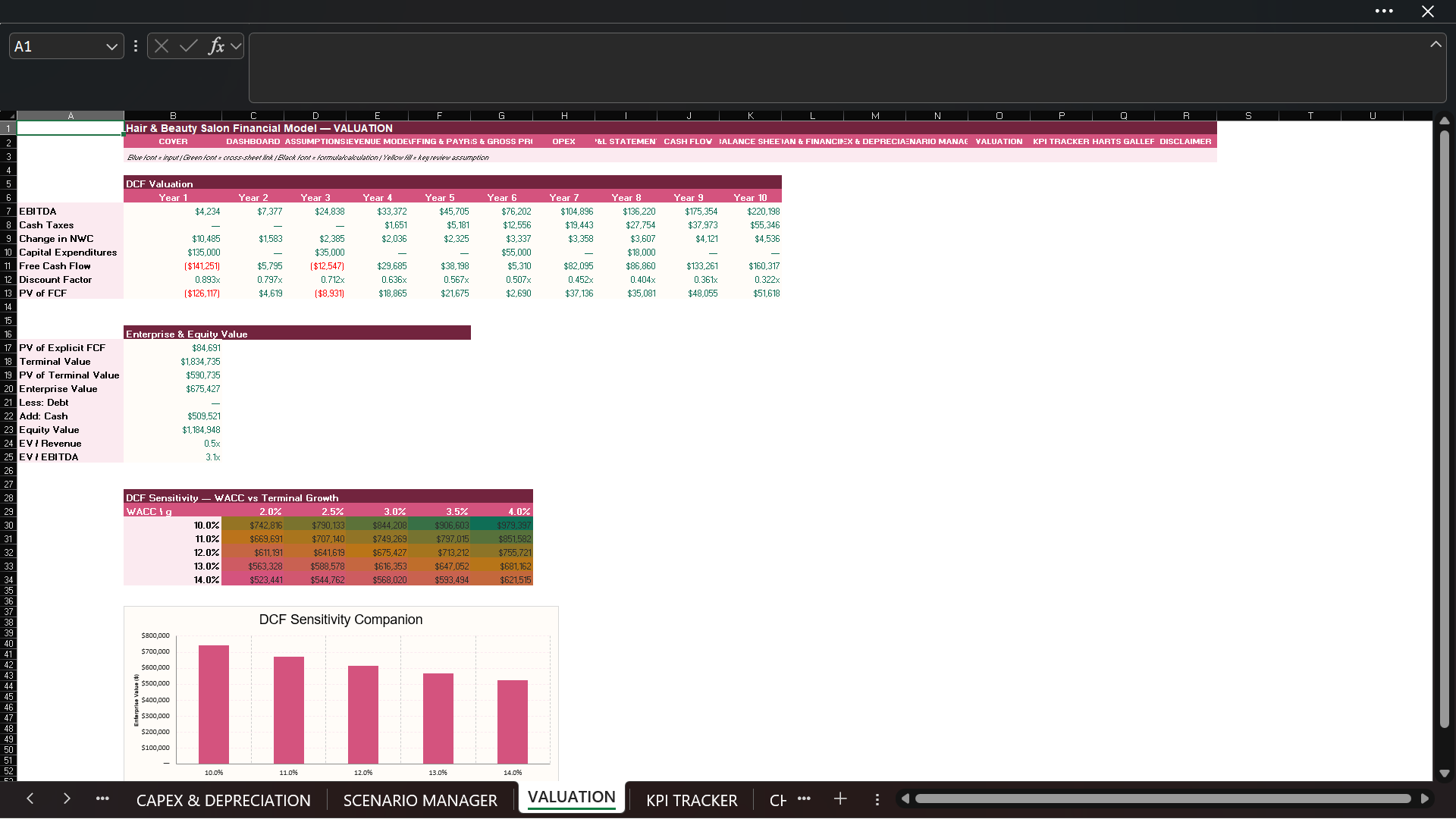
Estimate enterprise and equity value using a DCF and test valuation sensitivity to WACC and terminal growth.
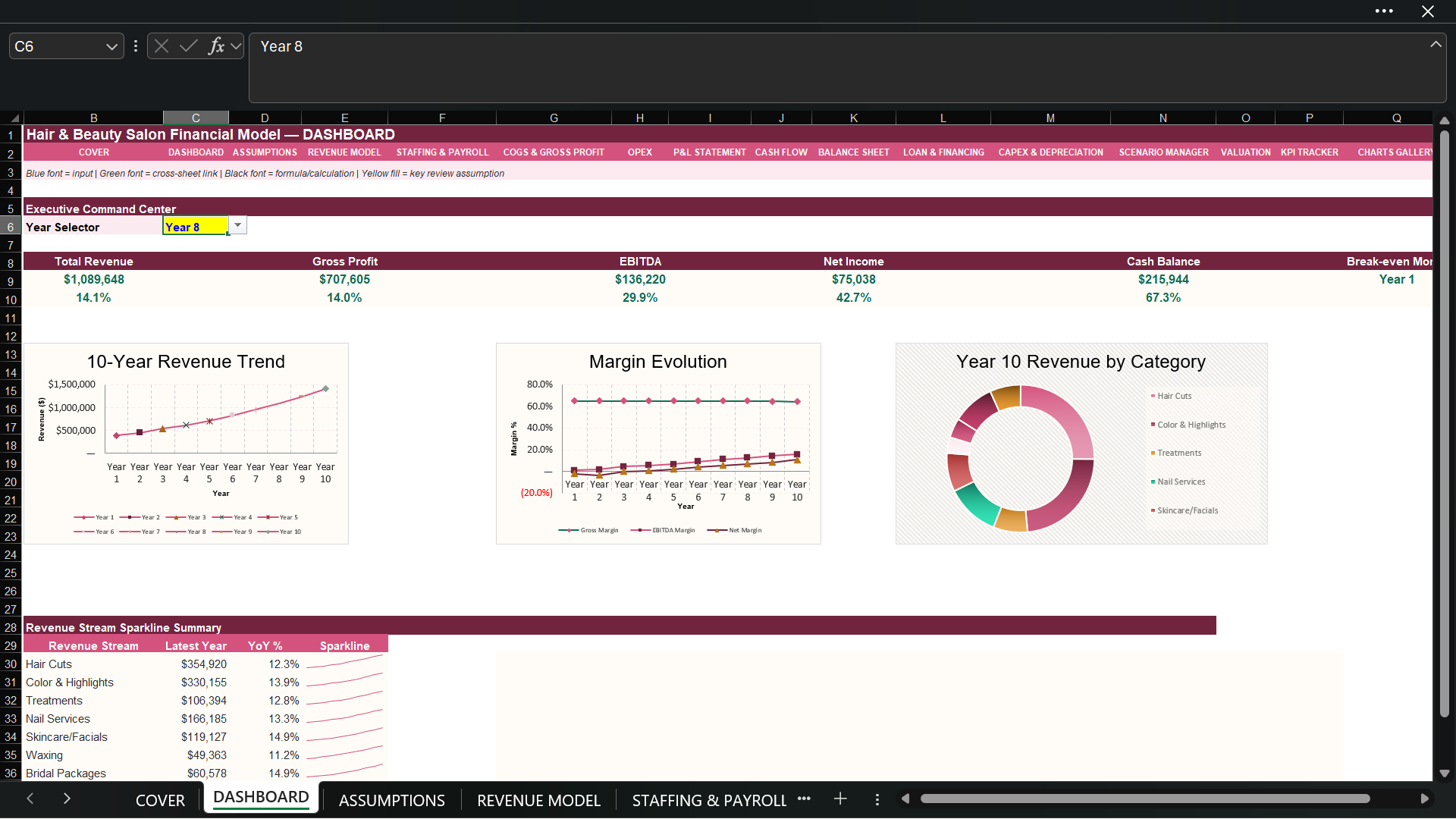
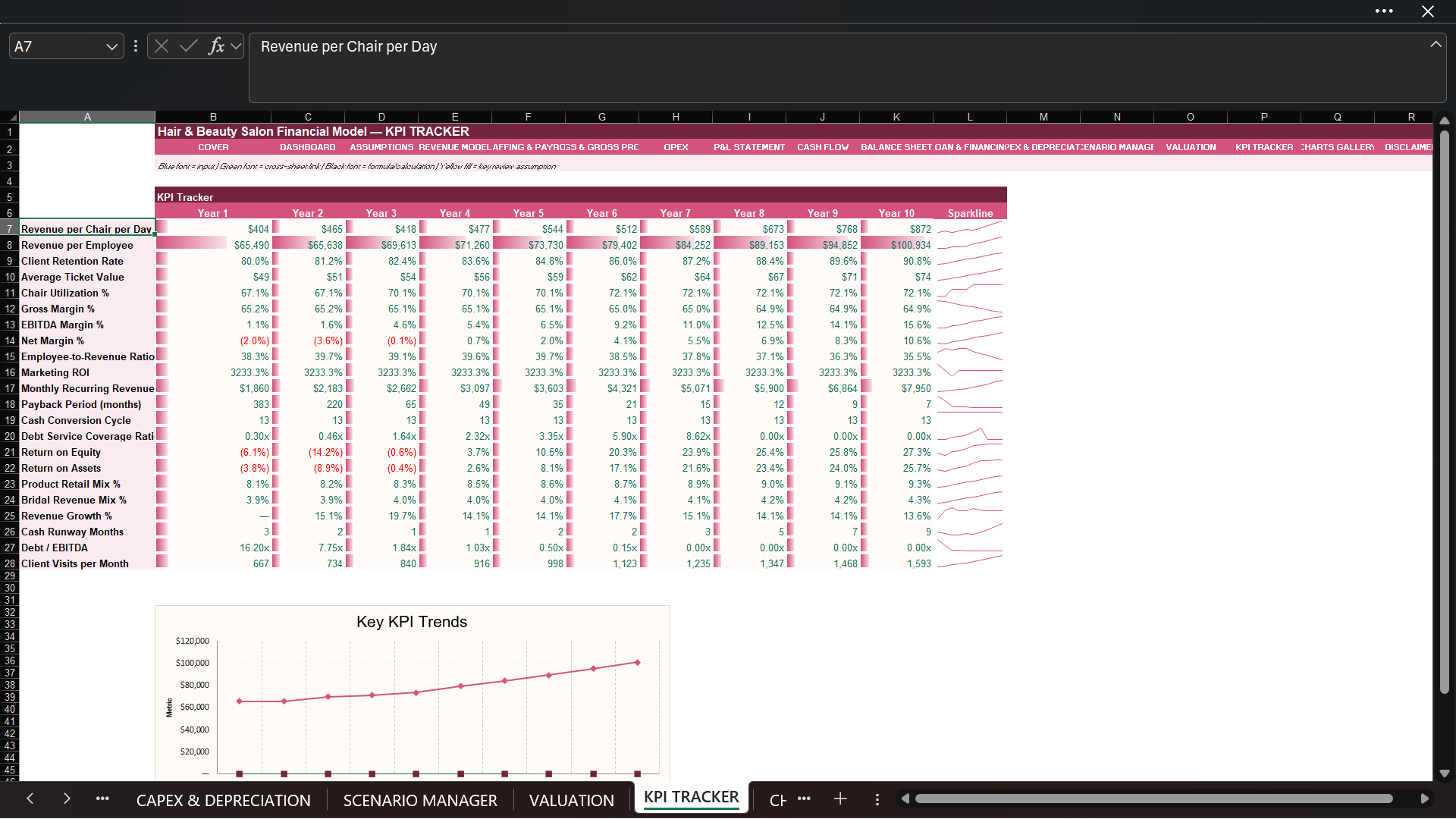
Monitor 22 salon and financial KPIs and support business planning, lender review, expansion analysis, and management decisions.
Planning a new hair, beauty, nail, skincare, or multi-service salon.
Preparing a salon business plan, funding request, or lender presentation.
Testing service prices, client volumes, utilization, seasonality, and revenue mix.
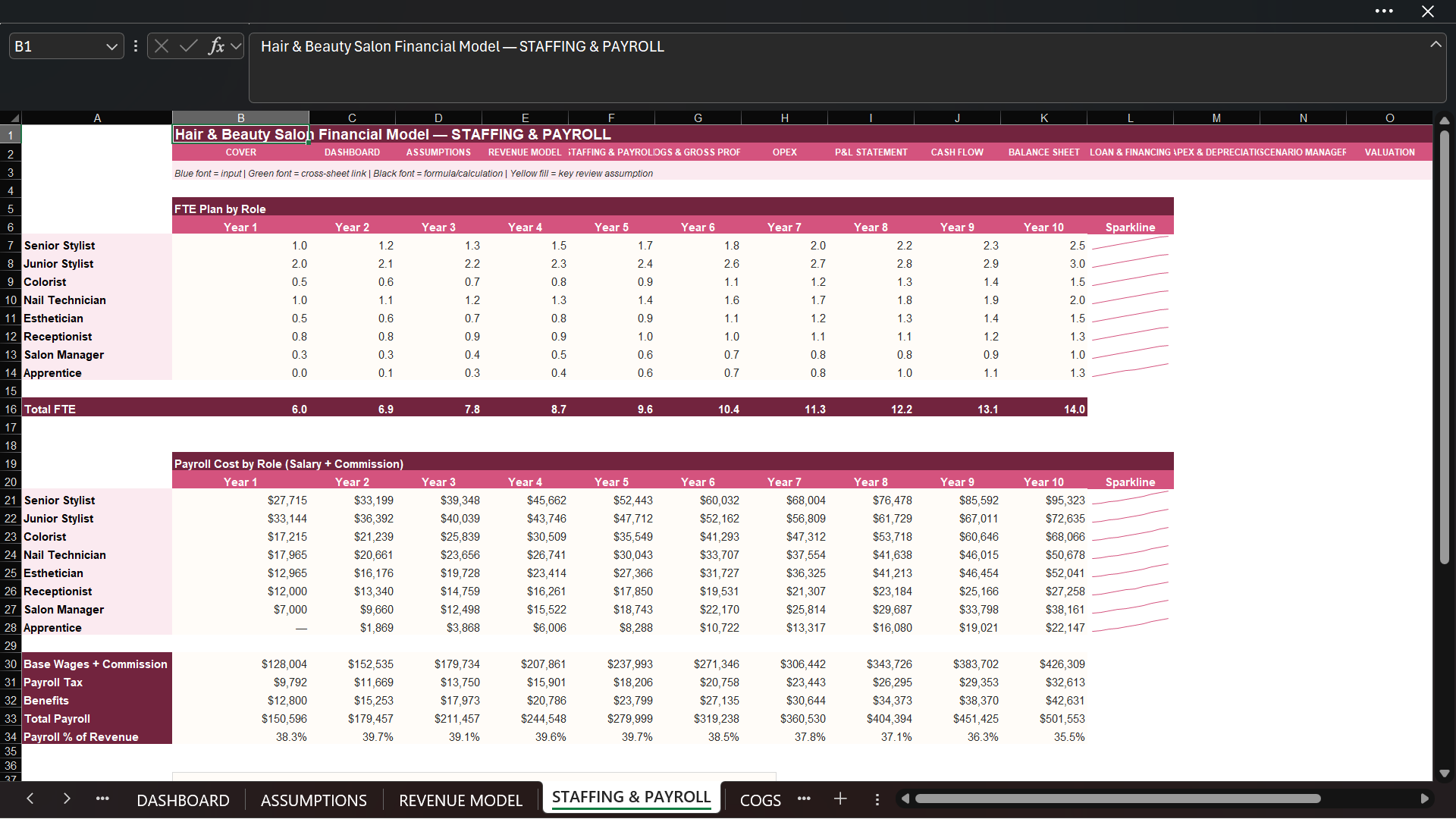
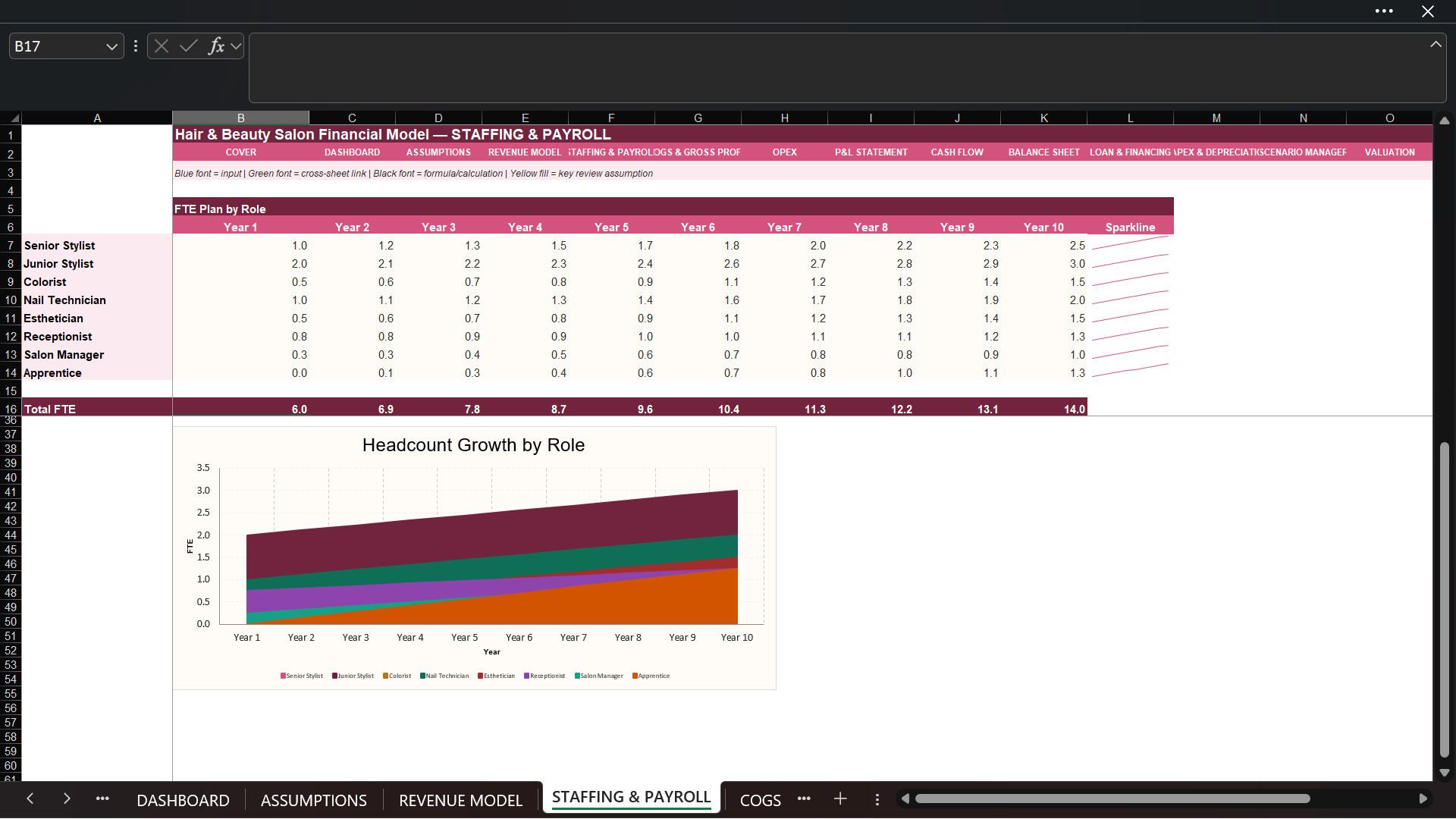
Planning staffing levels, salaries, commissions, payroll taxes, and benefits.
Evaluating a salon acquisition, renovation, capacity expansion, or new service offering.
Comparing management scenarios and assessing profitability, cash runway, debt capacity, break-even timing, and DCF value.
Managing a business with broadly similar salon revenue streams and an annual 10-year planning horizon, with detailed monthly planning required for Year 1.
A user needs a full monthly three-statement forecast for all 10 years; this model provides monthly detail for Year 1 revenue and operating expenses and annual statements through Year 10.
A salon requires appointment-level scheduling, employee shift rostering, payroll processing, inventory SKU management, point-of-sale integration, CRM, or bookkeeping functions.
The business is a multi-location chain requiring separate statements, consolidation, intercompany eliminations, or location-by-location dashboards without further customization.
The transaction requires investor waterfall distributions, cap-table dilution, IRR, or detailed acquisition financing and exit-waterfall mechanics.
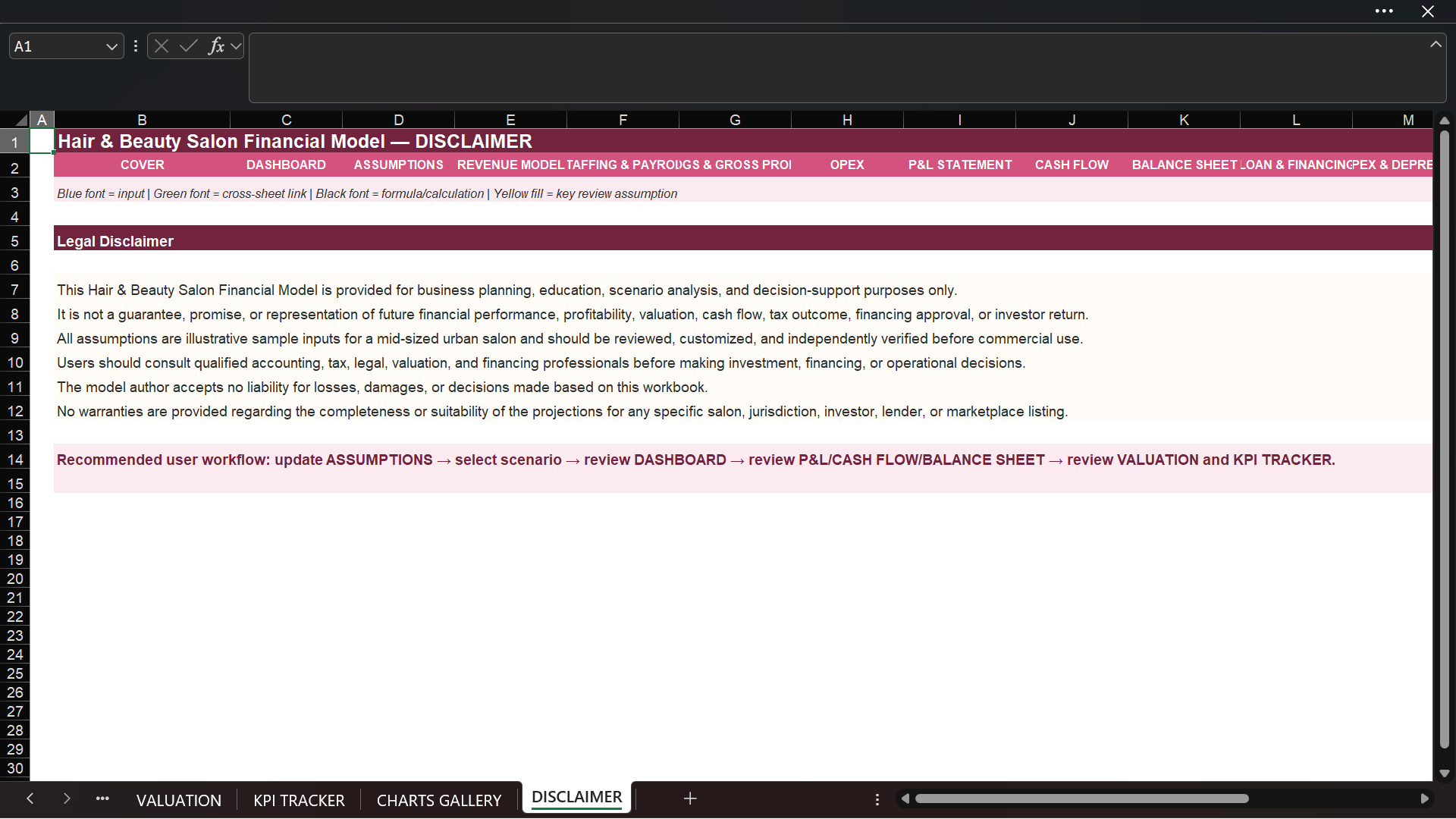
The user wants guaranteed forecasts or jurisdiction-specific accounting, tax, legal, or lending advice.
The buyer does not intend to replace the illustrative sample assumptions with verified inputs relevant to the actual business and market.