
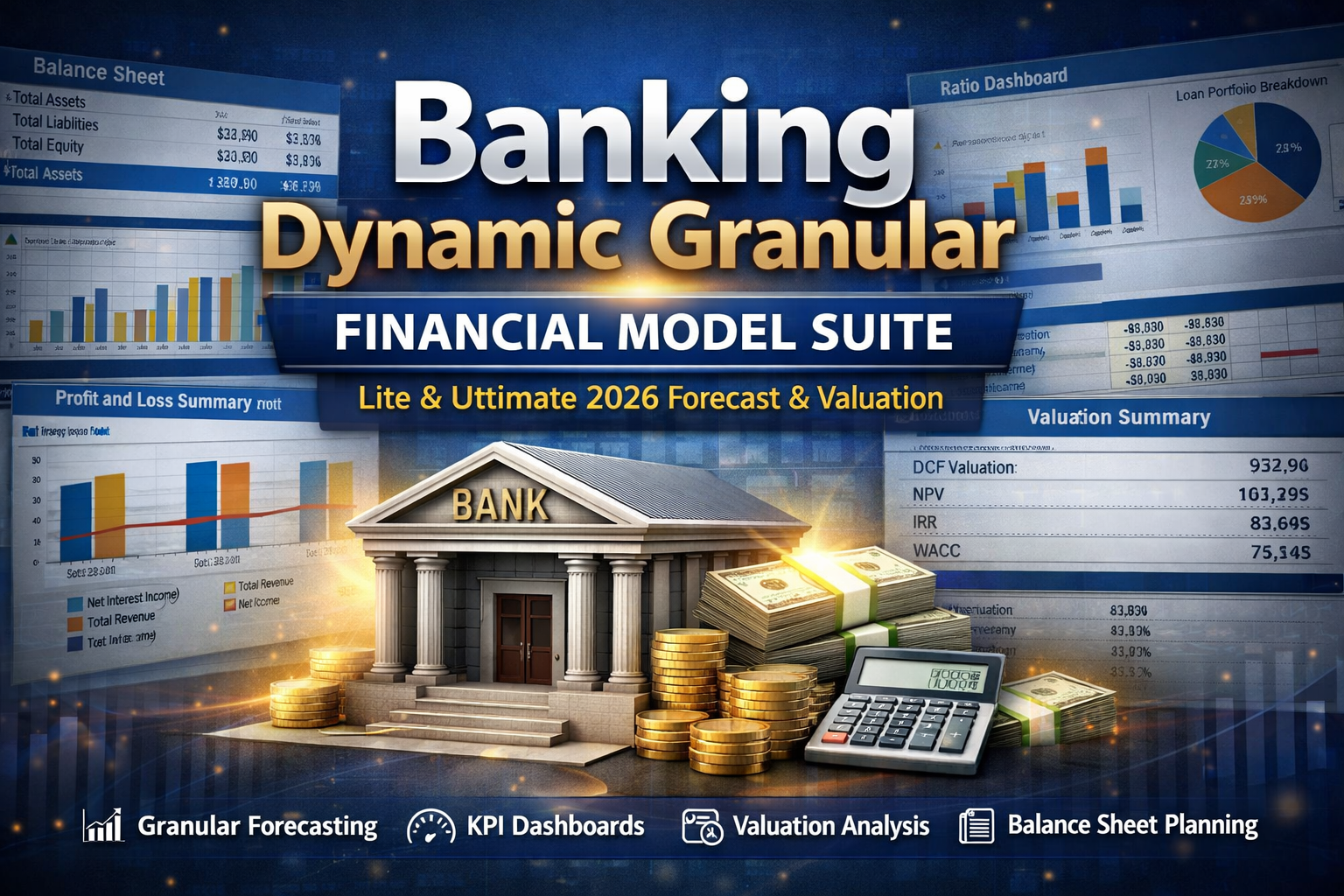
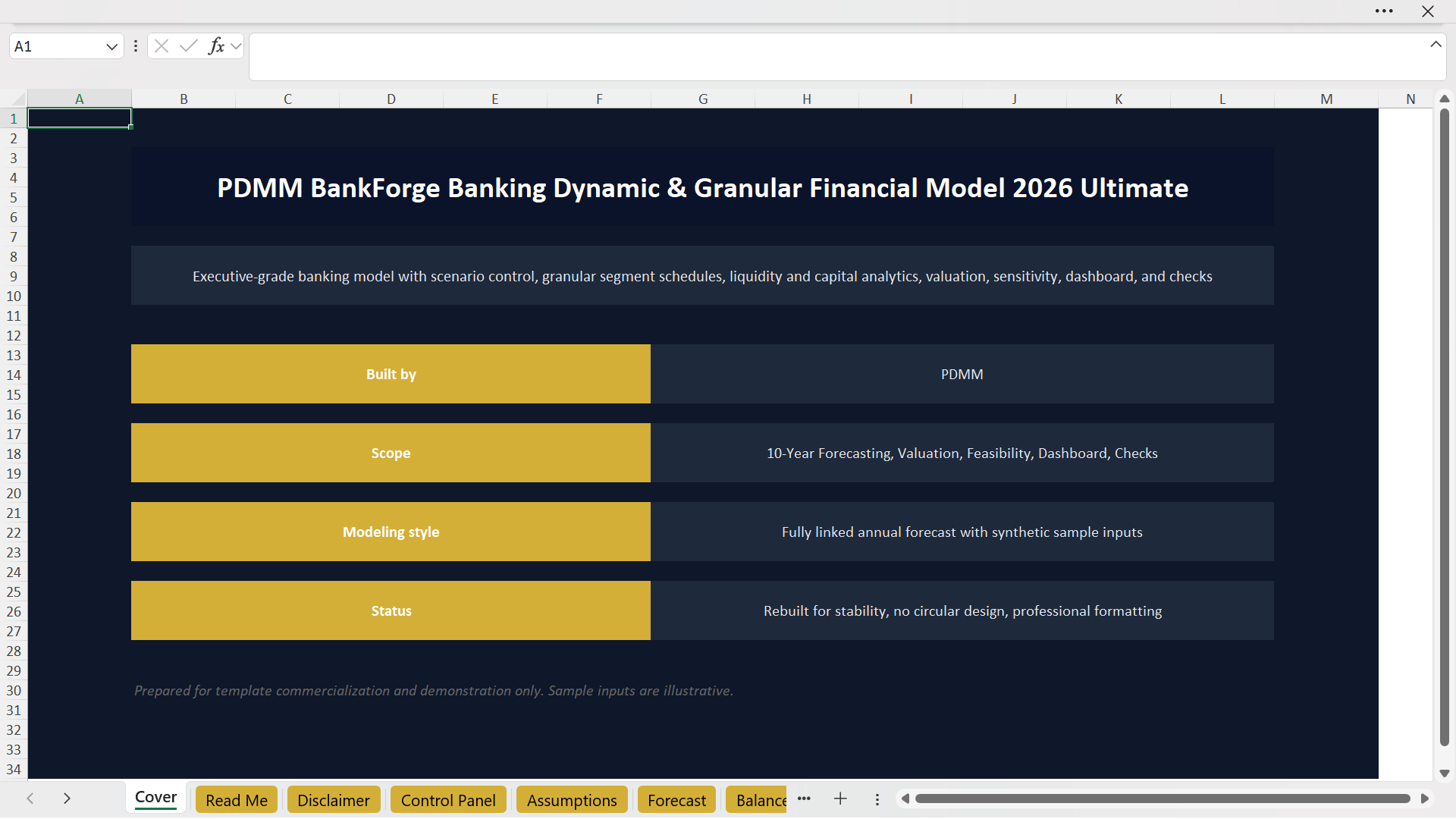
Banking Dynamic Granular Financial Model Suite – 10 Year Forecast, Valuation & Dashboard
Originally published: 27/03/2026 21:49
Publication number: ELQ-13943-1
View all versions & Certificate
certified

Banking Dynamic Granular Financial Model Suite – 10 Year Forecast, Valuation & Dashboard

A professional Excel financial model suite for banking and financial institutions, built for granular forecasting, balance sheet planning, income analysis, valu

Description
The Banking Dynamic Granular Financial Model Suite is a professional Excel-based template designed to evaluate the financial performance, forecasting assumptions, and valuation of a banking institution or banking-focused financial business. It is built for banking analysts, finance teams, consultants, investors, founders, and advisory professionals who need a structured and practical framework for detailed financial planning and performance review.

This model suite helps users assess a banking business through a more detailed and dynamic planning approach. It is intended to support the analysis of income generation, funding structure, cost behavior, balance sheet development, profitability, valuation, and KPI monitoring within one integrated workbook. The “dynamic granular” structure makes the model more useful for users who want greater control over assumptions and more transparency in how outputs are built.

What is this model used for?
  • Banking financial forecasting
  • Income and profitability analysis
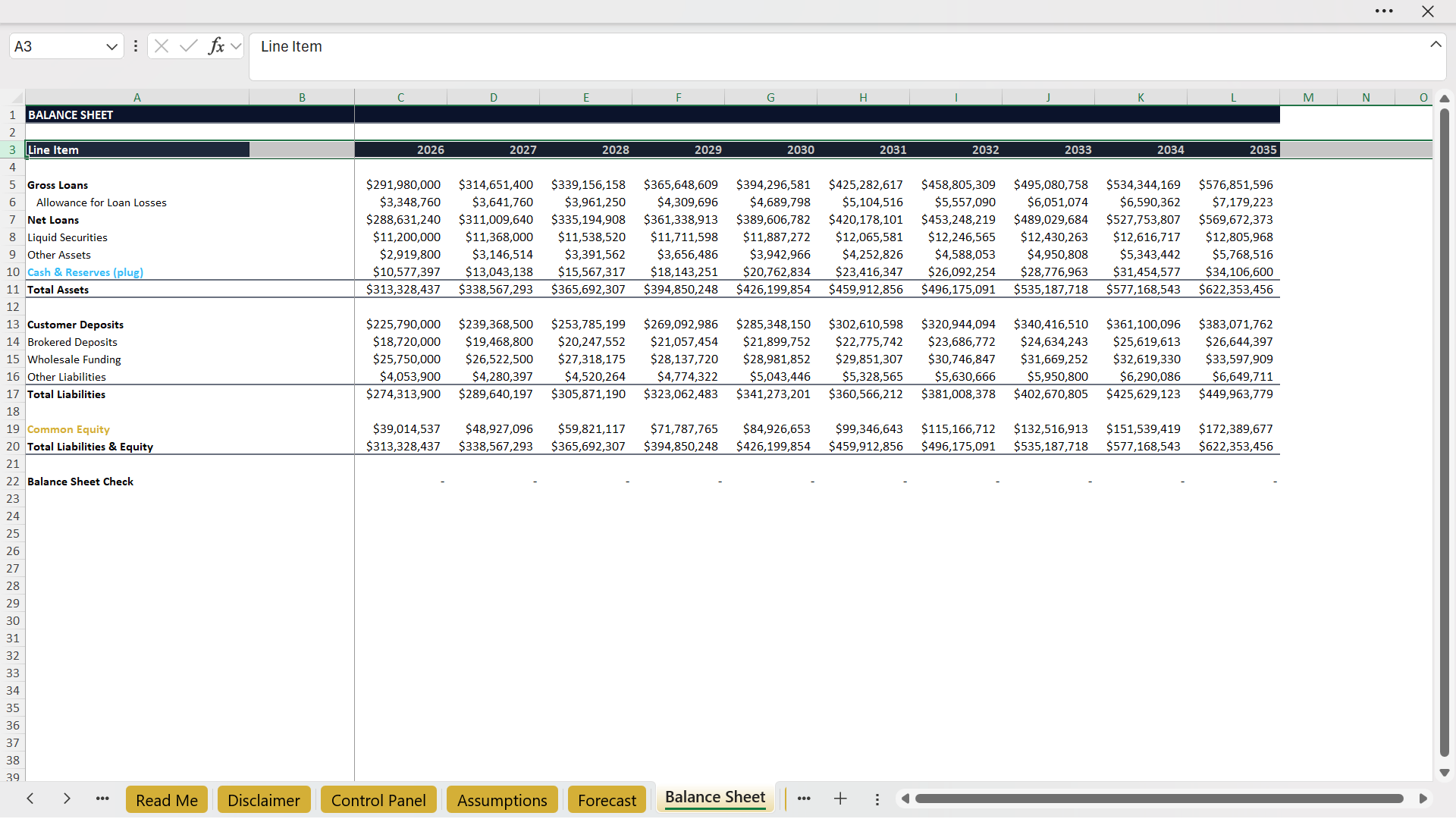
  • Balance sheet planning
  • KPI and dashboard review
  • Valuation and performance assessment
  • Strategic planning and budgeting
  • Investor, management, or advisory presentation support

What’s included?
  • Lite version for structured and efficient analysis
  • Ultimate version for deeper and more granular review
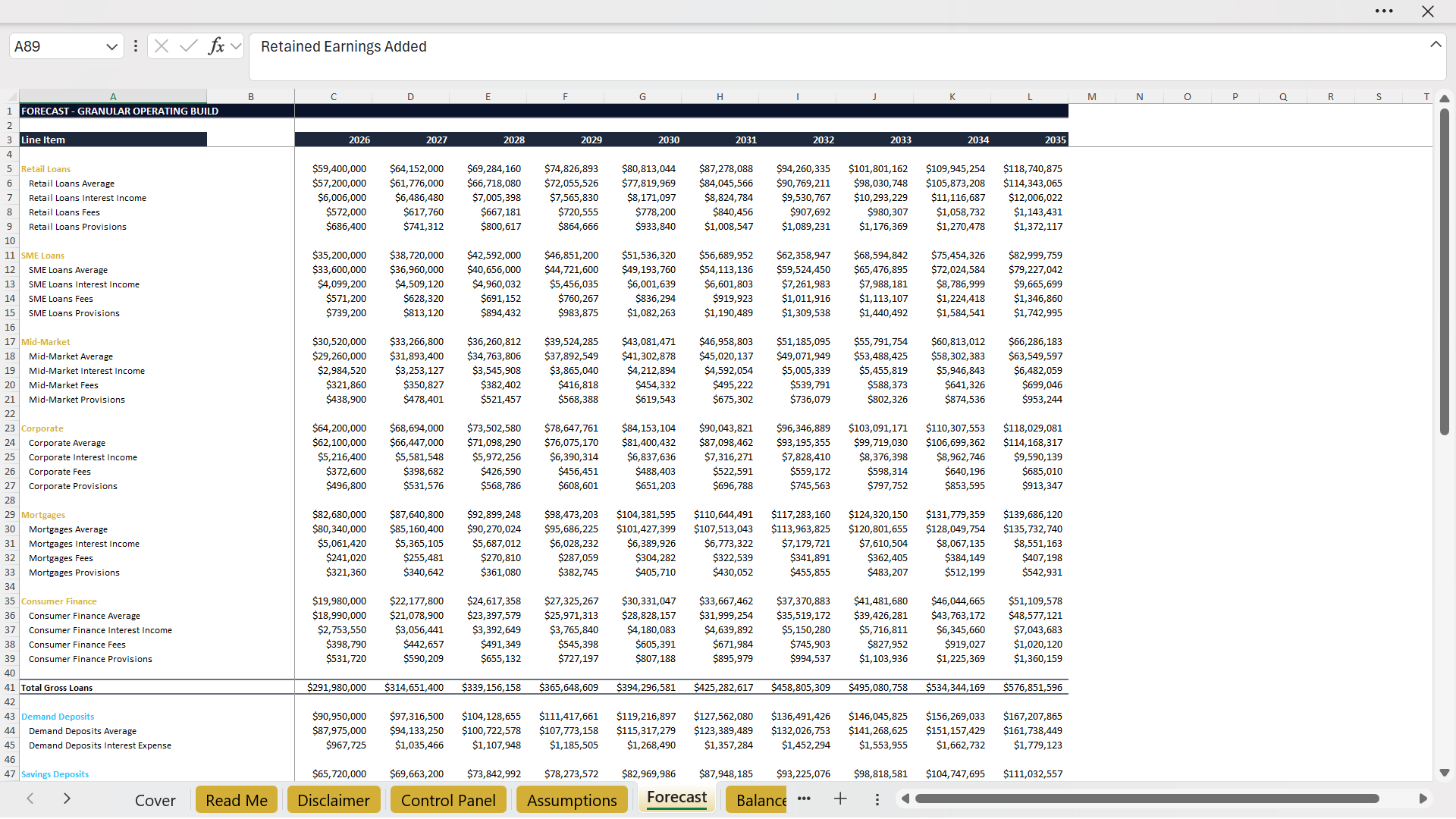
  • Dynamic forecast-driven banking model
  • Detailed assumptions framework
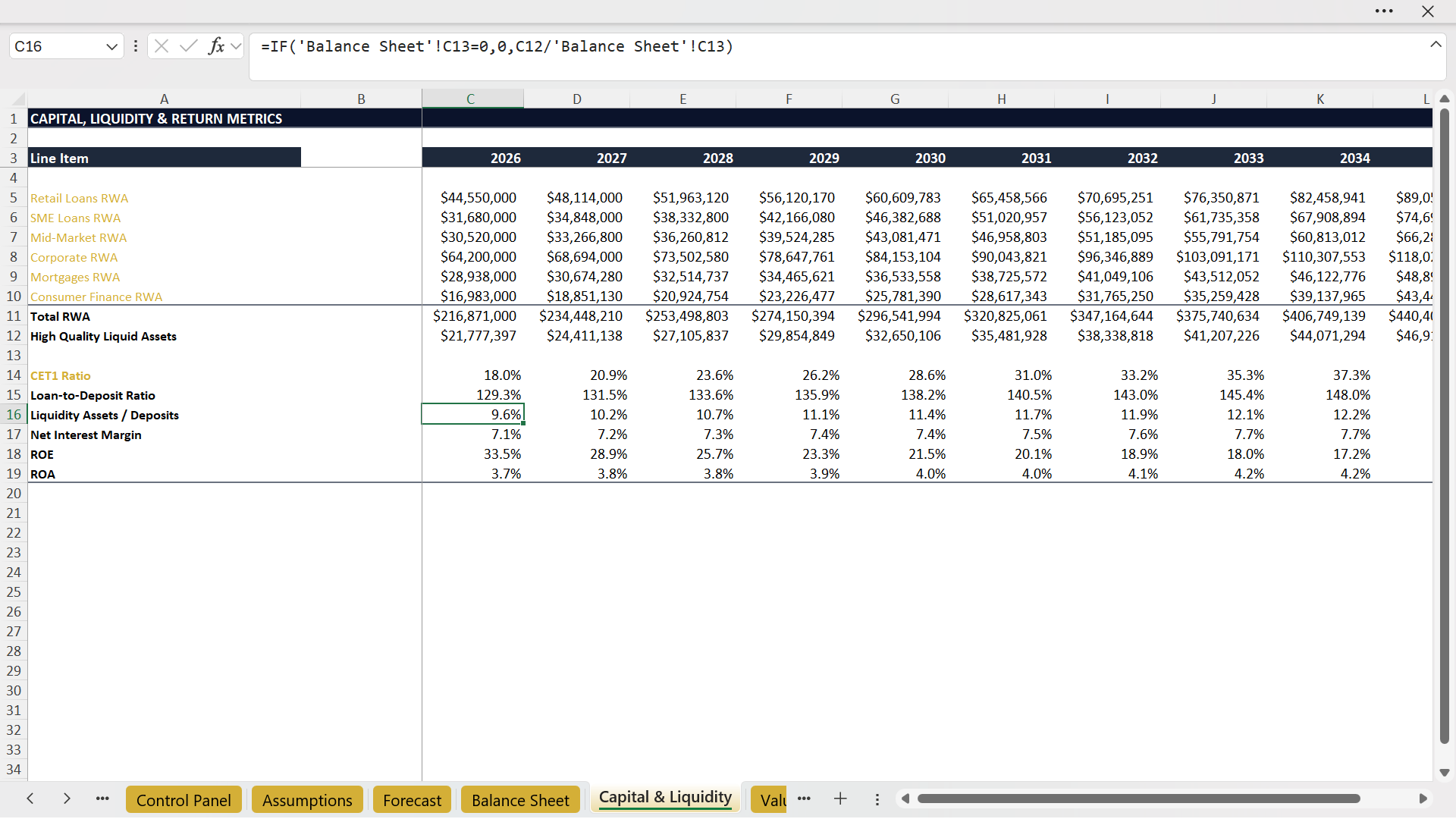
  • Financial statement and performance outputs
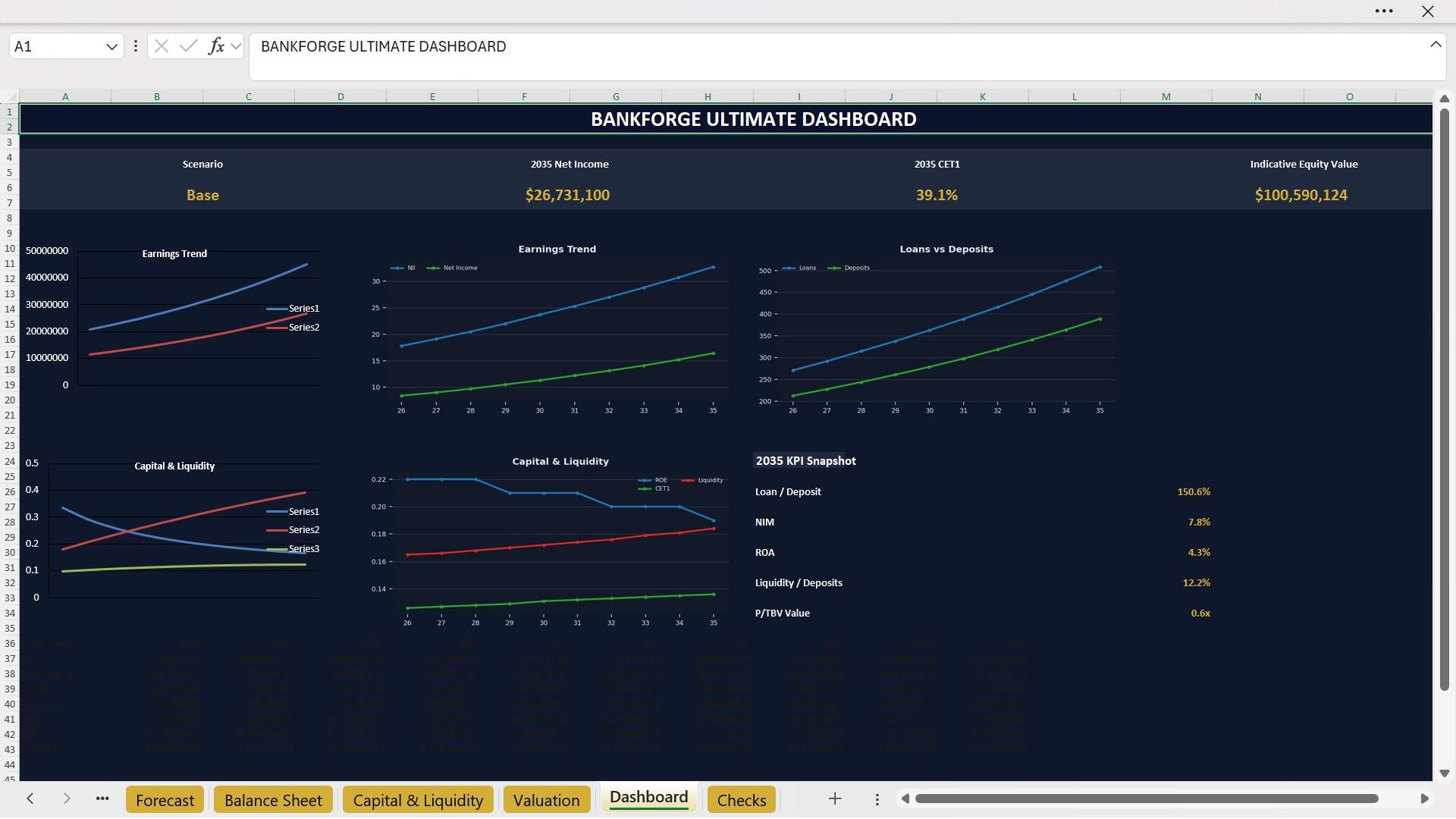
  • KPI dashboard support
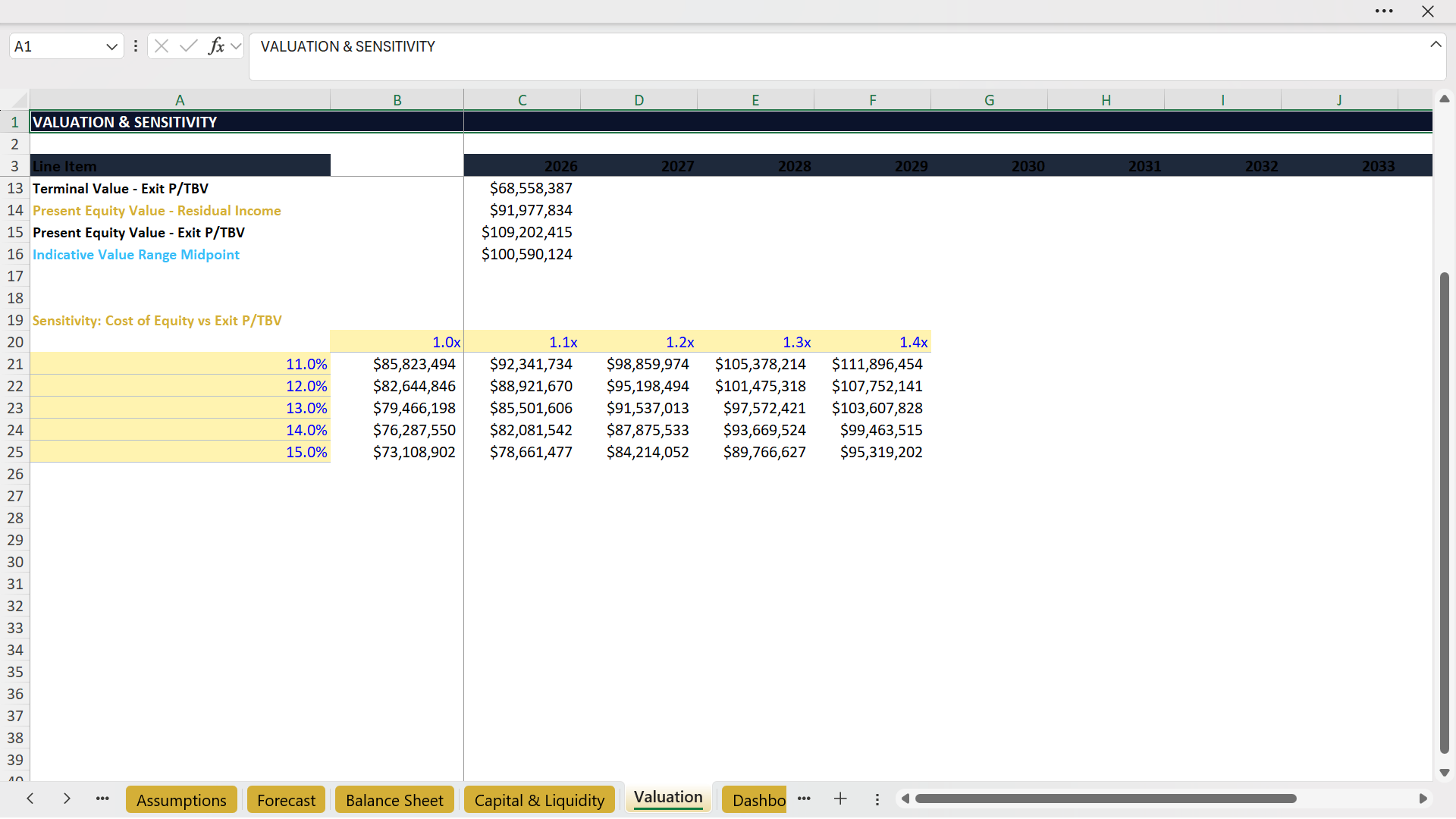
  • Valuation review
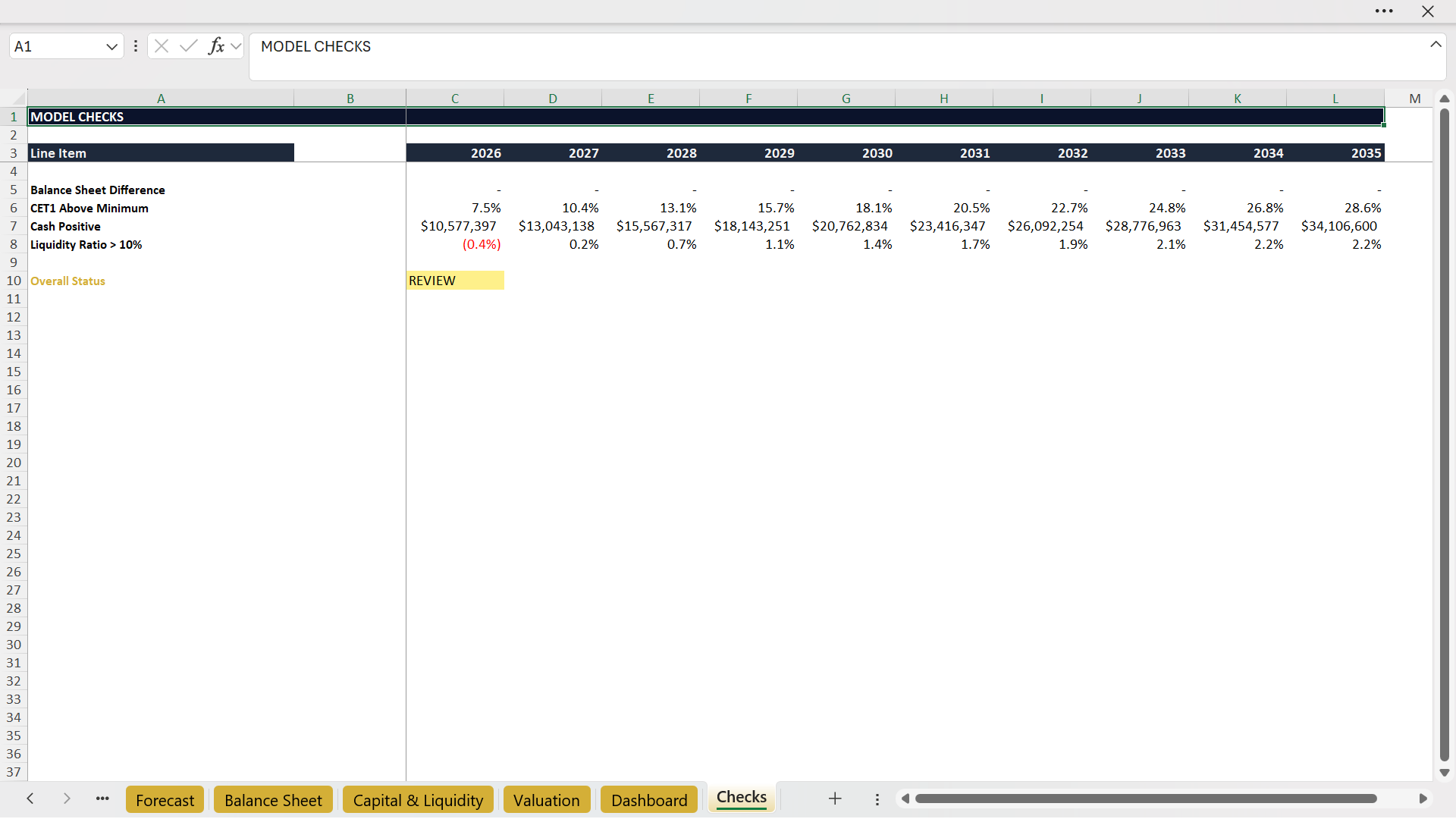
  • Built-in checks and professional presentation structure

Lite + Ultimate structure

- The Lite version is ideal for users who want a practical and more streamlined banking model for forecasting and financial review. It works well for quicker planning exercises, structured analysis, and efficient presentation of results.
- The Ultimate version is more advanced and is better suited for users who need stronger model depth, broader assumptions, more granular logic, richer dashboard outputs, and more robust performance review for internal management, consulting work, or investor-facing analysis.

How to best work with this template
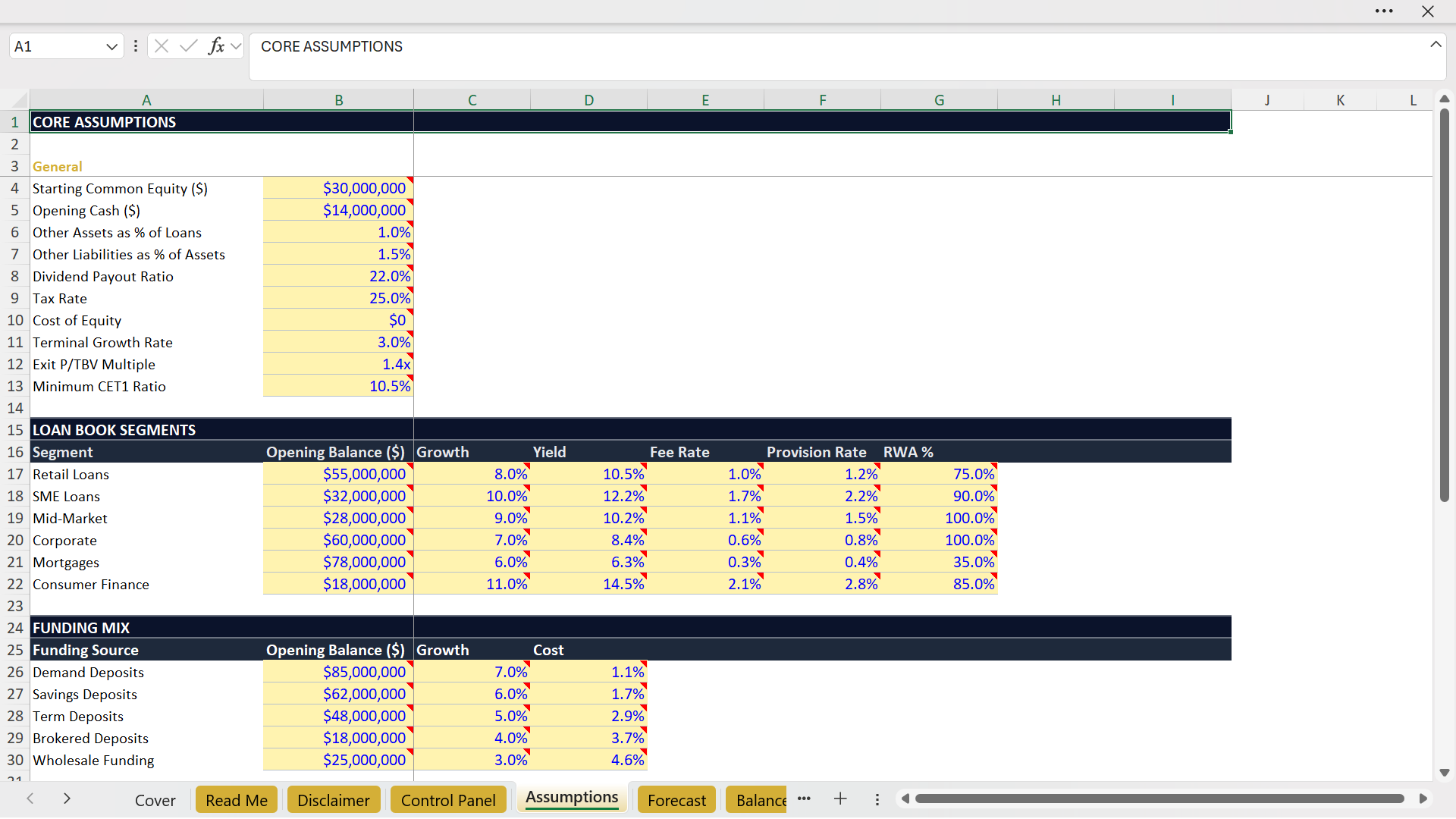
Start by updating the main assumptions, such as:
  • growth assumptions
  • interest income and funding assumptions
  • fee and non-interest income drivers
  • operating cost assumptions
  • balance sheet growth assumptions
  • profitability drivers
  • valuation inputs
  • dashboard and KPI assumptions
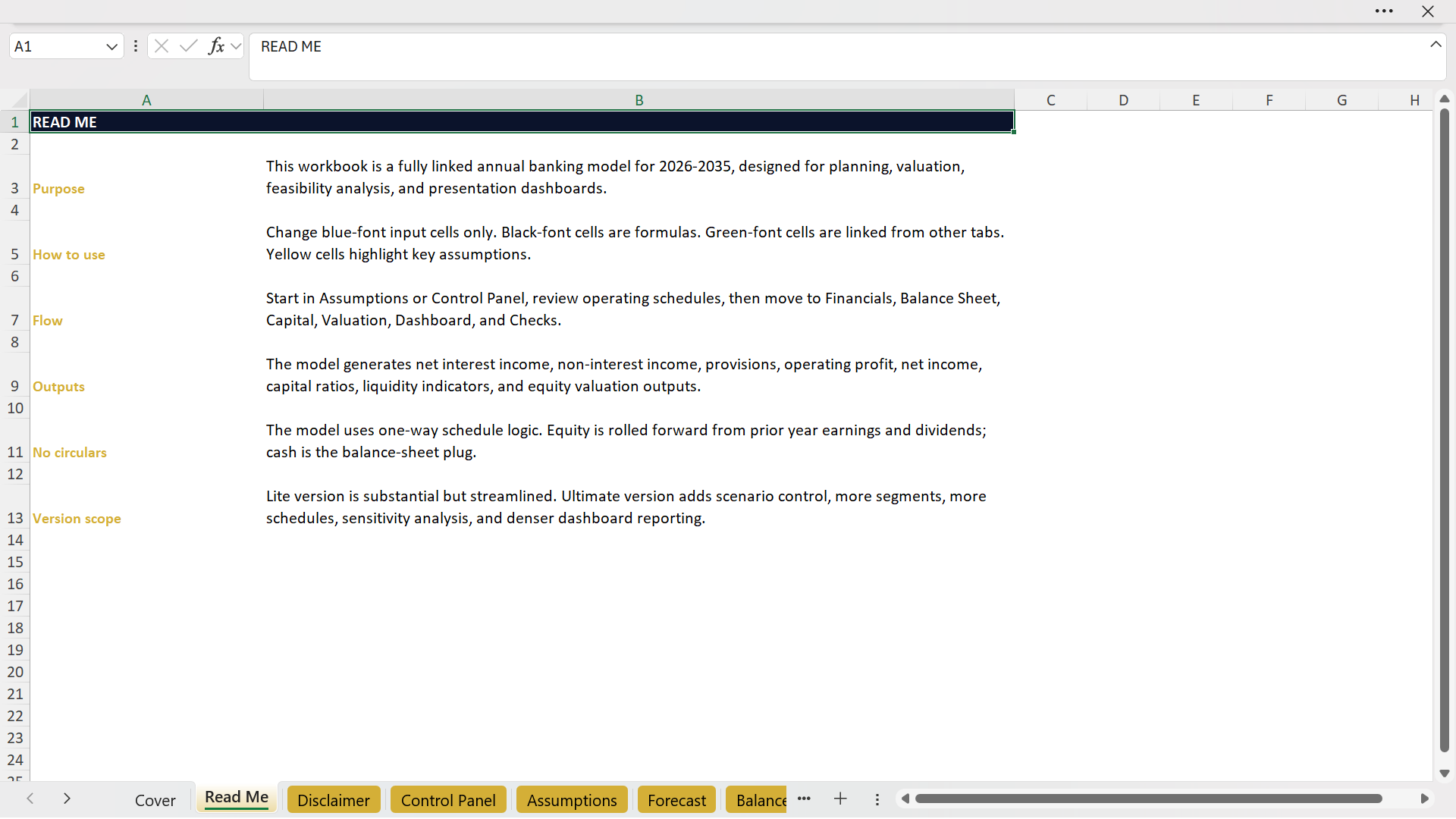
Once the assumptions are updated, the model automatically flows through the financial outputs, forecasts, KPI tracking, and valuation sections.

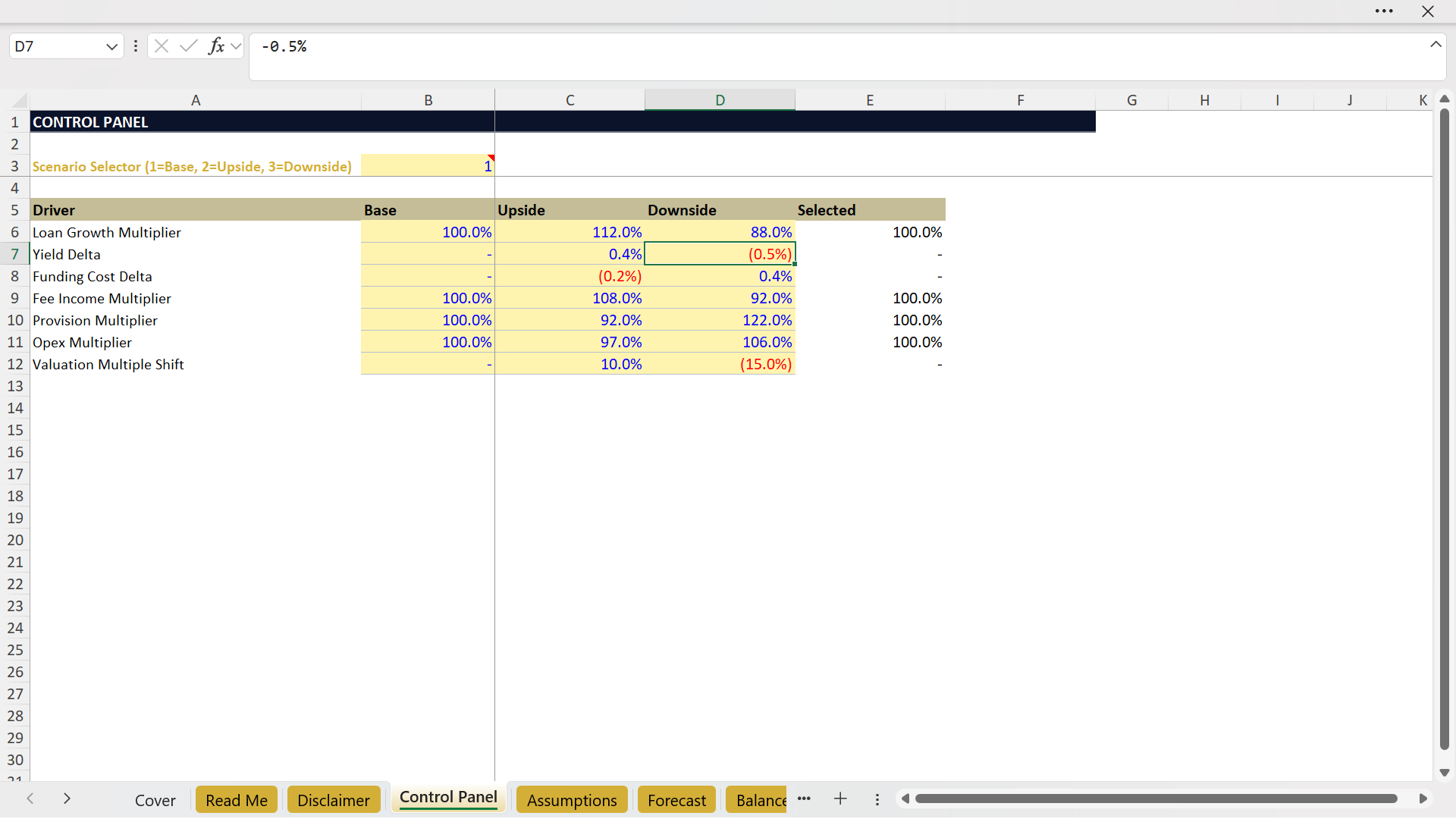
This helps users test different banking scenarios and understand how changes in growth, margins, costs, or funding assumptions affect performance.

Main highlights
  • Professional Excel structure
  • Dynamic and granular forecasting logic
  • Banking-focused financial planning
  • Income, cost, and profitability analysis
  • KPI dashboard outputs
  • Valuation and scenario review
  • Built-in checks for consistency and model integrity

Why do you need this Financial Model Template?
Banking models are more complex than standard operating business models because performance depends on multiple linked drivers such as asset growth, funding mix, margins, fees, expenses, and overall financial structure. A dynamic granular model helps users break down these moving parts in a clearer and more structured way.

This template helps you:
  • save modeling time
  • improve forecasting consistency
  • test performance assumptions more clearly
  • review profitability and valuation in a structured format
  • support better management and investment decisions
  • present outputs professionally

Who is it best for?
  • Banking analysts and finance teams
  • Financial institutions and founders
  • Consultants and advisors
  • Investors and valuation professionals
  • Strategy and planning teams

In short
The Banking Dynamic Granular Financial Model Suite provides a professional Excel framework for evaluating forecasting assumptions, financial performance, profitability, KPIs, and valuation for a banking-focused business. It is suitable for both efficient review and more advanced granular analysis through its Lite and Ultimate versions.

This Best Practice includes
1 PDF Preview, 1 Excel Model Lite, 1 Excel Model Ultimate

Acquire business license for $95.00

Add to cart

Add to bookmarks

Discuss

Further information

The Banking Dynamic Granular Financial Model Suite is a professional Excel-based template designed to evaluate the financial performance, forecasting assumptions, and valuation of a banking institution or banking-focused financial business. It is built for banking analysts, finance teams, consultants, investors, founders, and advisory professionals who need a structured and practical framework for detailed financial planning and performance review.

This model suite helps users assess a banking business through a more detailed and dynamic planning approach. It is intended to support the analysis of income generation, funding structure, cost behavior, balance sheet development, profitability, valuation, and KPI monitoring within one integrated workbook. The “dynamic granular” structure makes the model more useful for users who want greater control over assumptions and more transparency in how outputs are built.

What is this model used for?
🔹 Banking financial forecasting
🔹 Income and profitability analysis
🔹 Balance sheet planning
🔹 KPI and dashboard review
🔹 Valuation and performance assessment
🔹 Strategic planning and budgeting
🔹 Investor, management, or advisory presentation support

⚙️ Start by updating the main assumptions, such as:

growth assumptions
interest income and funding assumptions
fee and non-interest income drivers
operating cost assumptions
balance sheet growth assumptions
profitability drivers
valuation inputs
dashboard and KPI assumptions
Once the assumptions are updated, the model automatically flows through the financial outputs, forecasts, KPI tracking, and valuation sections.

📌 This helps users test different banking scenarios and understand how changes in growth, margins, costs, or funding assumptions affect performance.


0.0 / 5 (0 votes)

please wait...