Dance Studio Financial Model
Originally published: 27/11/2026 09:54
Publication number: ELQ-90086-1
View all versions & Certificate
certified

Dance Studio Financial Model

10-year, 3-statement Excel financial model for a dance studio: student-months, pricing and program mix, margin by program, teacher labor, scenarios, monthly...

Description
DESCRIPTION:
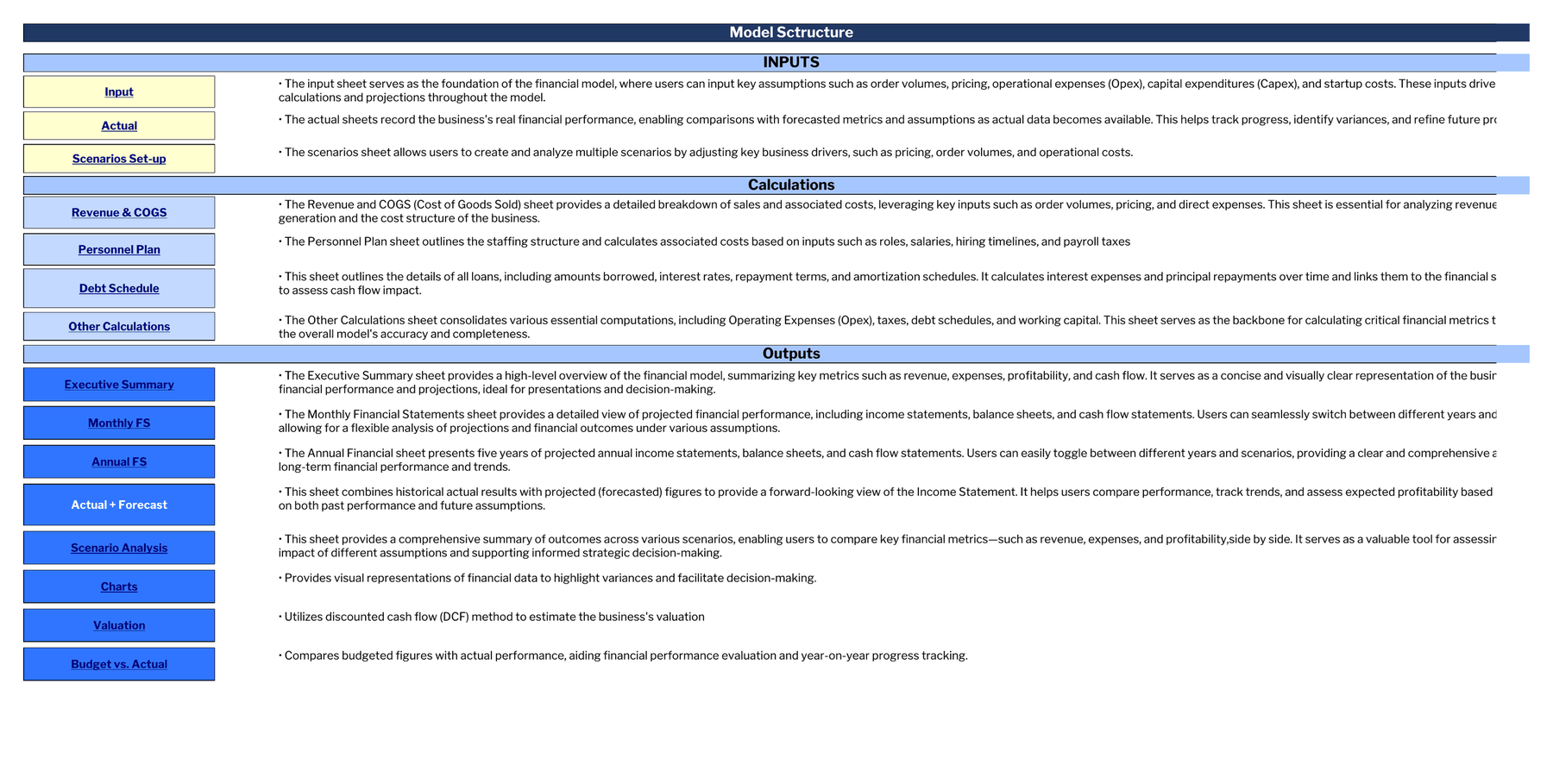
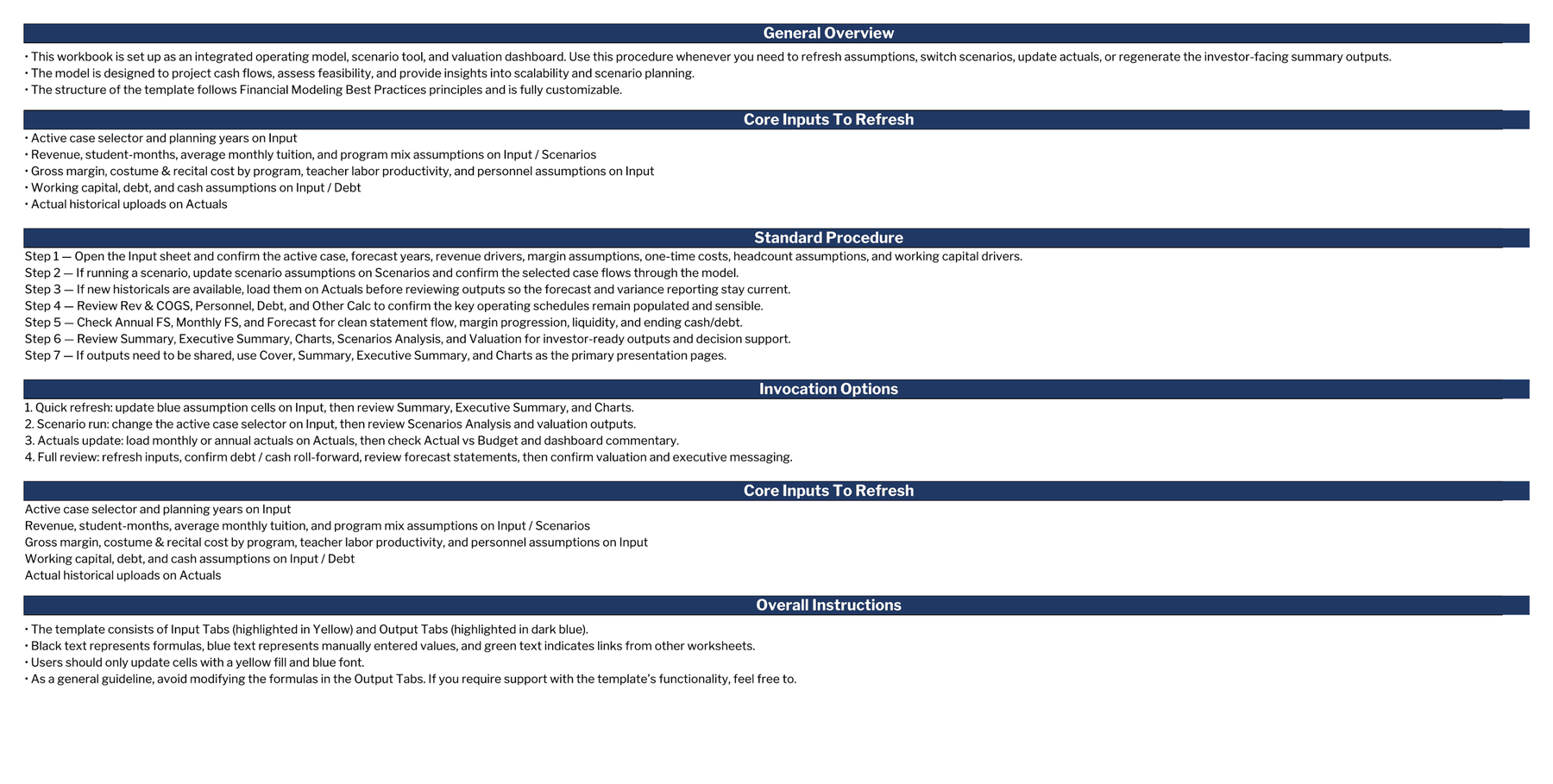
The Dance Studio Financial Model is a fully integrated Excel workbook for planning, funding and running a dance studio. It turns a short list of operating assumptions (student-months, program mix, average monthly tuition, cost of goods by program, staff productivity and wages) into a 10-year income statement, balance sheet and cash flow statement, with monthly detail, three scenarios and a discounted cash flow valuation.
Revenue is built the way a dance studio actually earns it: student-months split between recreational classes, competition team, and adult and drop-in classes, each with its own average monthly tuition, less sibling discounts and scholarships, plus recital, costume and registration fees, summer camps and studio rental. Direct costs follow the class: dance teacher pay that scales with student-months, costume and recital costs by program, and payment processing fees, with the school-year season and summer dip built into the monthly statements.
Whether you are opening a new studio, buying an existing one, applying for an SBA or bank loan, negotiating a lease or preparing next year's budget, the model gives you professional statements, KPIs and charts in minutes instead of weeks.
WHAT'S INCLUDED:
  • 10-year projections with a full income statement, balance sheet and cash flow statement that always balance.
  • Dance-studio revenue build: recreational classes, competition team, and adult and drop-in classes, each by share of student-months and average monthly tuition, plus recital and costume fees.
  • Costume & Recital cost modelled separately for each program, so a change in sales mix flows straight into gross margin.
  • Teacher staffing driven automatically by student-months and productivity per team member.
  • Studio KPIs on the Executive Summary: average monthly tuition, tuition margin %, labor %, occupancy cost % and revenue per employee.
  • Base, Best and Worst scenarios on every driver, switched from a single drop-down.
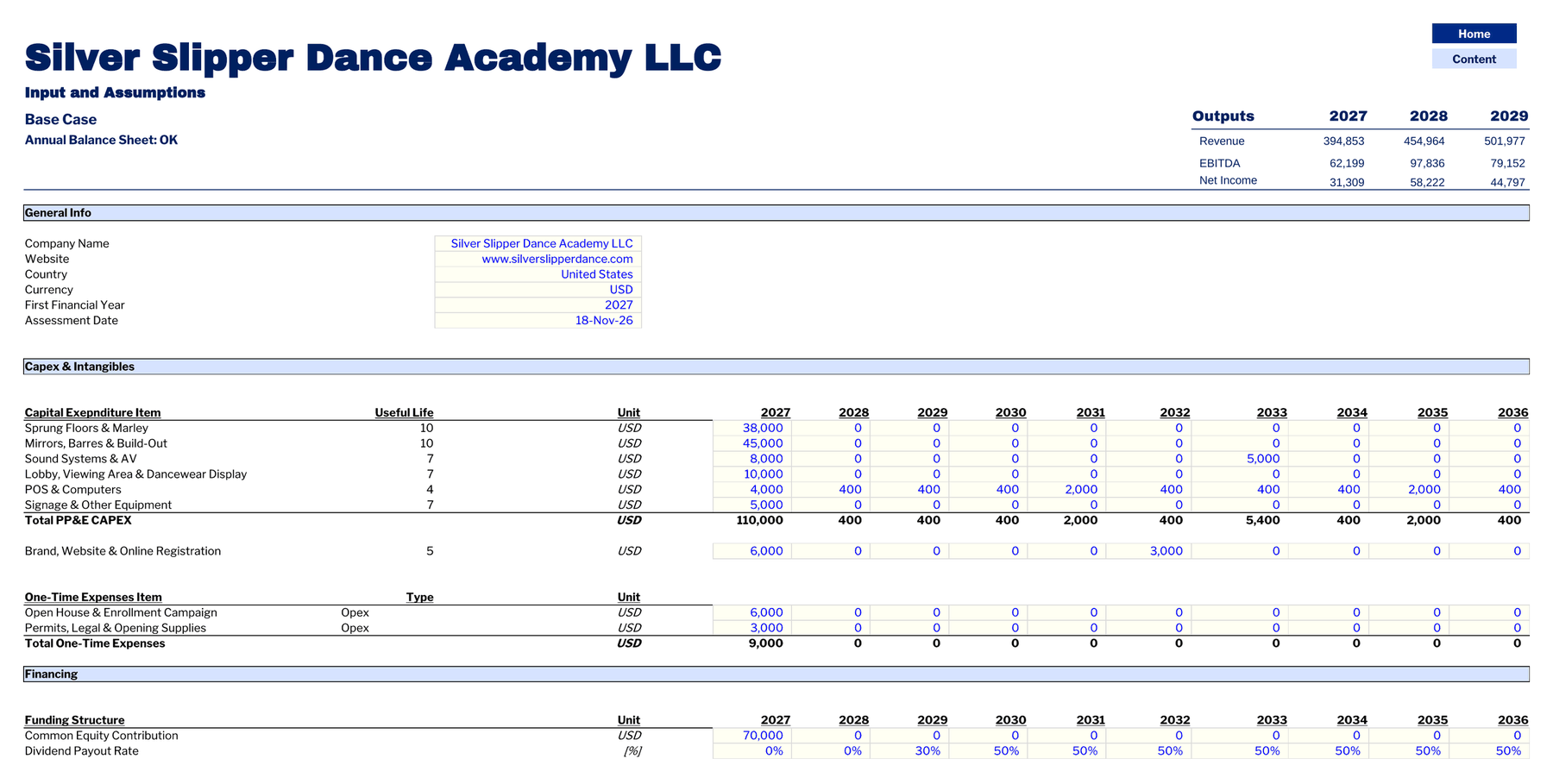
  • Capex plan for sprung floors, mirrors and barres, sound systems and lobby with automatic depreciation; two term loans and a revolving credit line.
  • Inventory, payables and receivables driven by days; monthly statements with seasonality, actual vs budget tracking and a rolling forecast.
  • DCF valuation with enterprise value, equity value, IRR, MOIC, payback and a WACC / growth sensitivity table.
KEY SPECS:
Sheets: 19
Forecast horizon: 10 years
Scenarios: 3 (Base, Best, Worst)
Valuation: DCF + IRR + MOIC + Payback Period
Frequency: Annual + Monthly
Software: Microsoft Excel (no macros, no add-ins)
Fully editable and unlocked
WHO IS THIS FOR:
  • Owners and founders planning to open or expand a dance studio.
  • Studio owners preparing an annual budget, lease negotiation or loan application.
  • Buyers, investors and lenders assessing an acquisition or a funding request.
  • Consultants, accountants and fractional CFOs building plans for dance and youth-activity clients.

This Best Practice includes
1 Excel File Template

Acquire business license for $49.00

Add to cart

Add to bookmarks

Discuss

Further information

WHO IS THIS FOR: Owners and founders planning to open or expand a dance studio. Studio owners preparing an annual budget, lease negotiation or loan application. Buyers, investors and lenders assessing an acquisition or a funding request. Consultants, accountants and fractional CFOs building plans for dance and youth-activity clients.

You are opening, buying, expanding or financing a dance studio business and need a credible 10-year plan with 3 integrated statements, monthly cash flow, scenarios and a DCF valuation for banks, SBA lenders, investors or partners, built from your own operating assumptions.

You need a ready-made plan with no input of your own numbers, a multi-entity consolidation, or a model in a tool other than Microsoft Excel.


0.0 / 5 (0 votes)

please wait...