Originally published: 29/07/2025 21:21
Publication number: ELQ-69993-1
View all versions & Certificate
Publication number: ELQ-69993-1
View all versions & Certificate

Business Plan and Entrepreneurship Toolkit
Created by ex-McKinsey, Deloitte and BCG Consultants and Entrepreneurs, after more than 4,000 hours of work
 by Aurelien Domont
Managing Director of Domont Consulting, a global management consulting firm providing Management Consulting Toolkits and Services in 160+ countries.Follow
Description
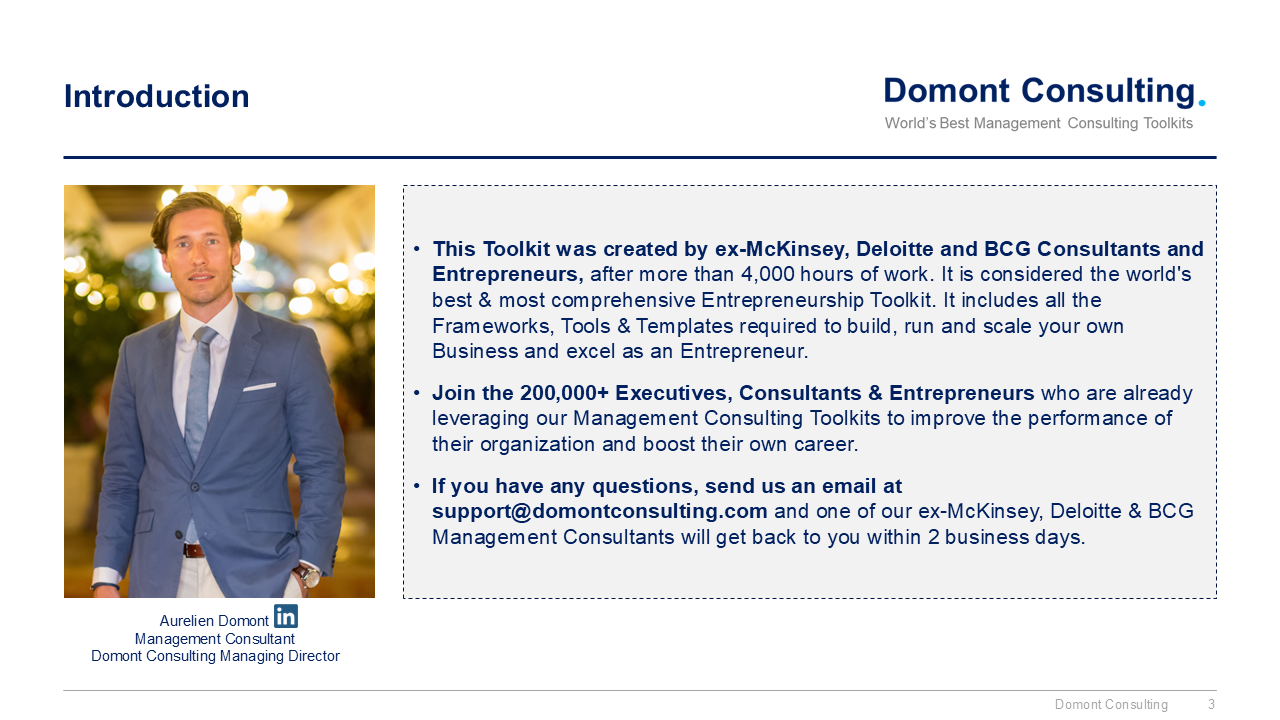
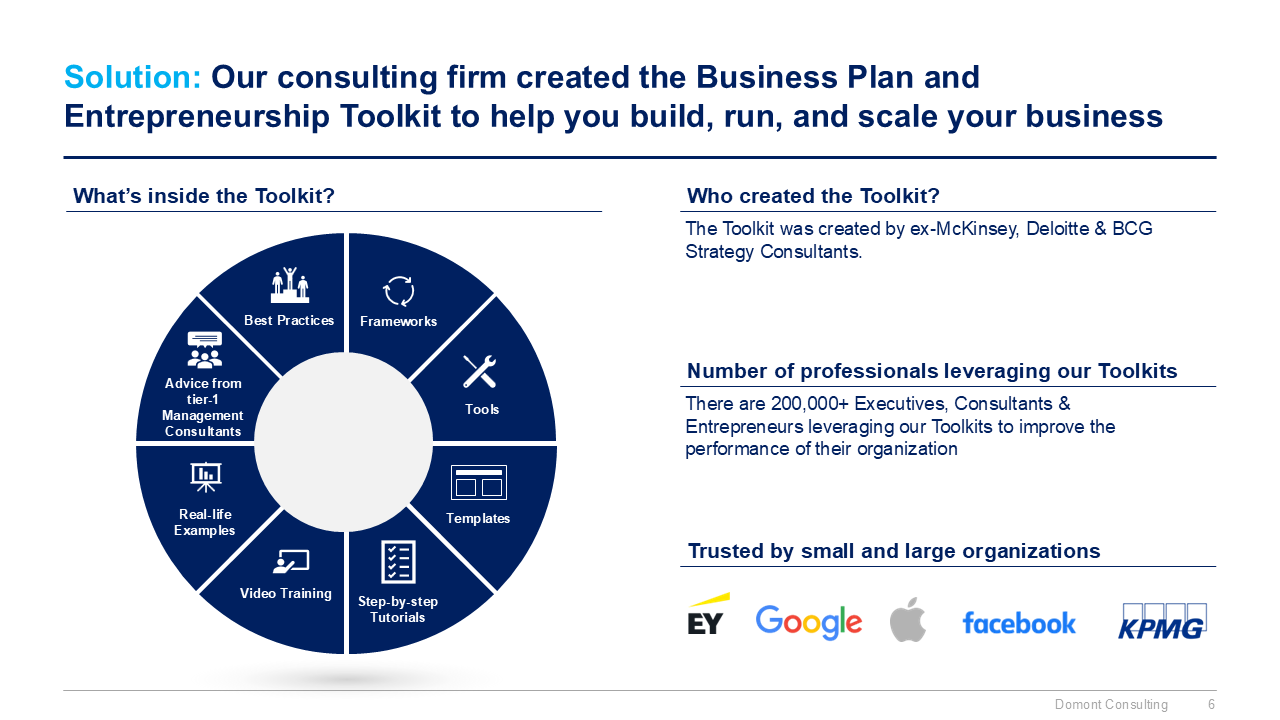
This Toolkit was created by ex-McKinsey, Deloitte and BCG Consultants and Entrepreneurs, after more than 4,000 hours of work. It is considered the world's best & most comprehensive Entrepreneurship Toolkit. It includes all the Frameworks, Tools & Templates required to build, run and scale your own Business and excel as an Entrepreneur.
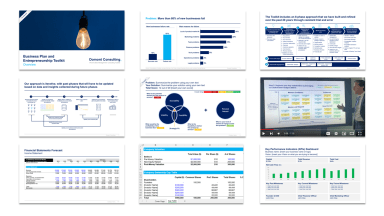
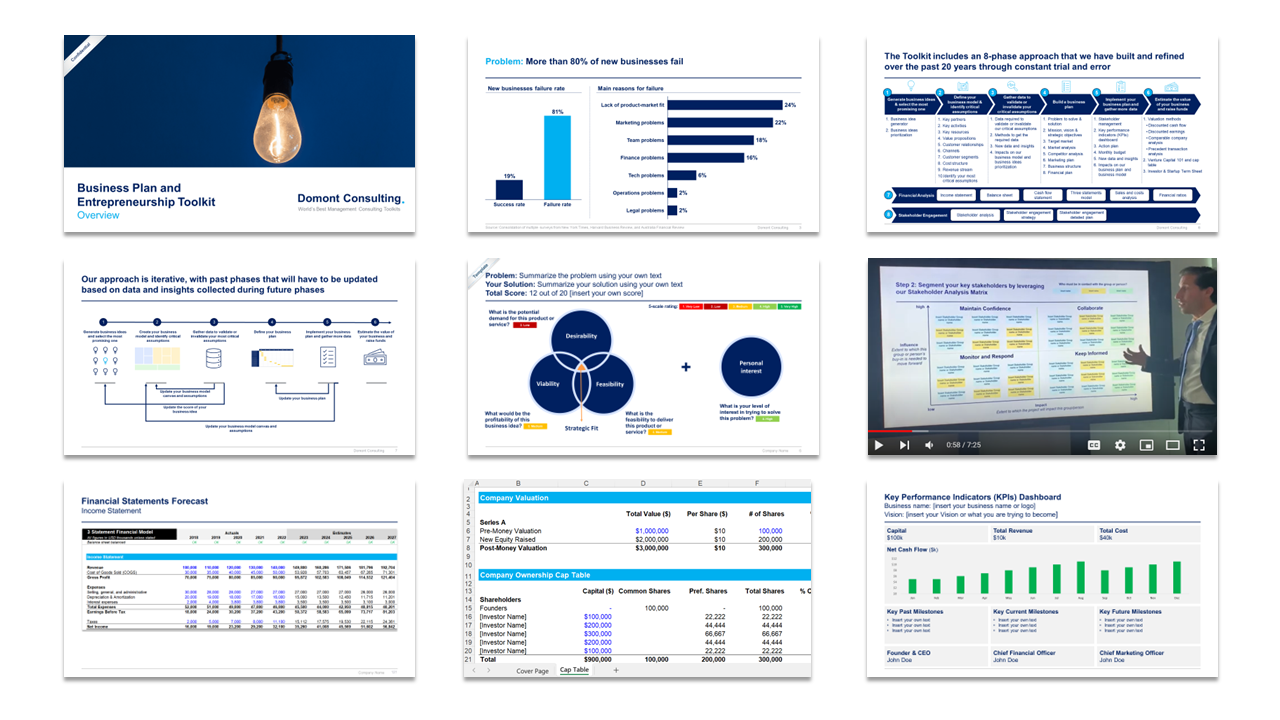
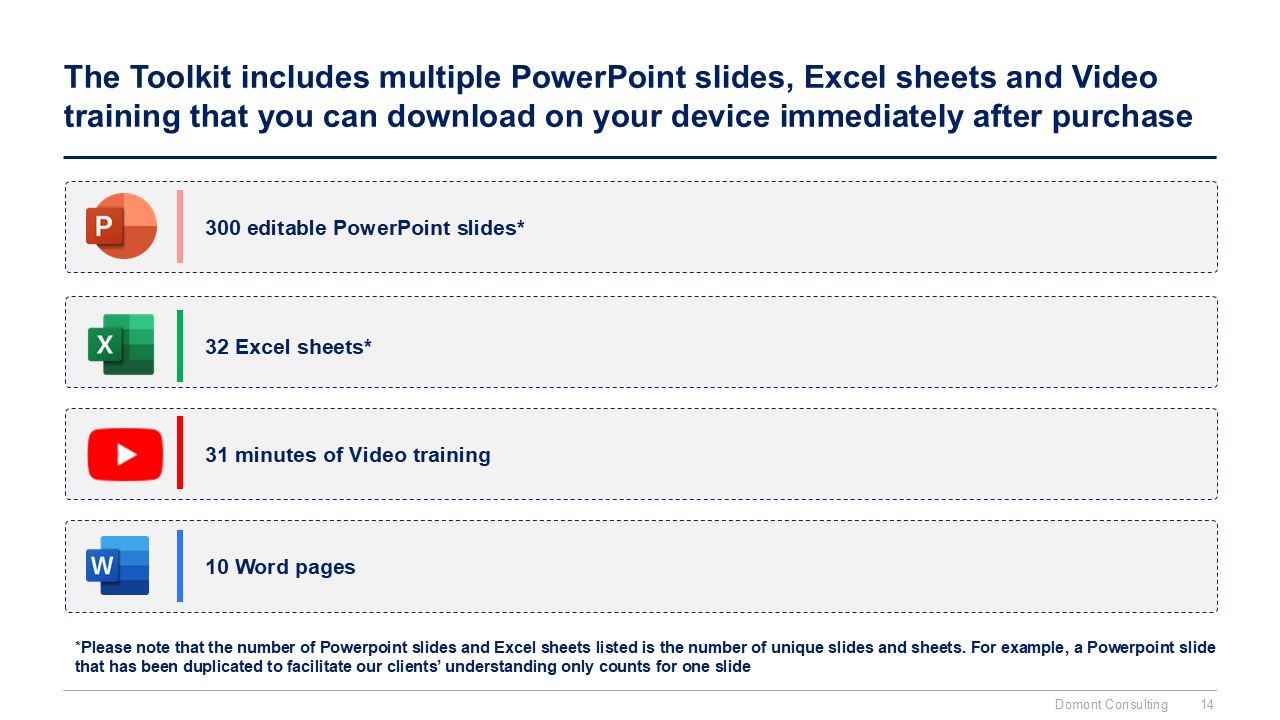
Content: 300 Powerpoint slides | 32 Excel sheets | 10 Word pages | 31 minutes of Video training.
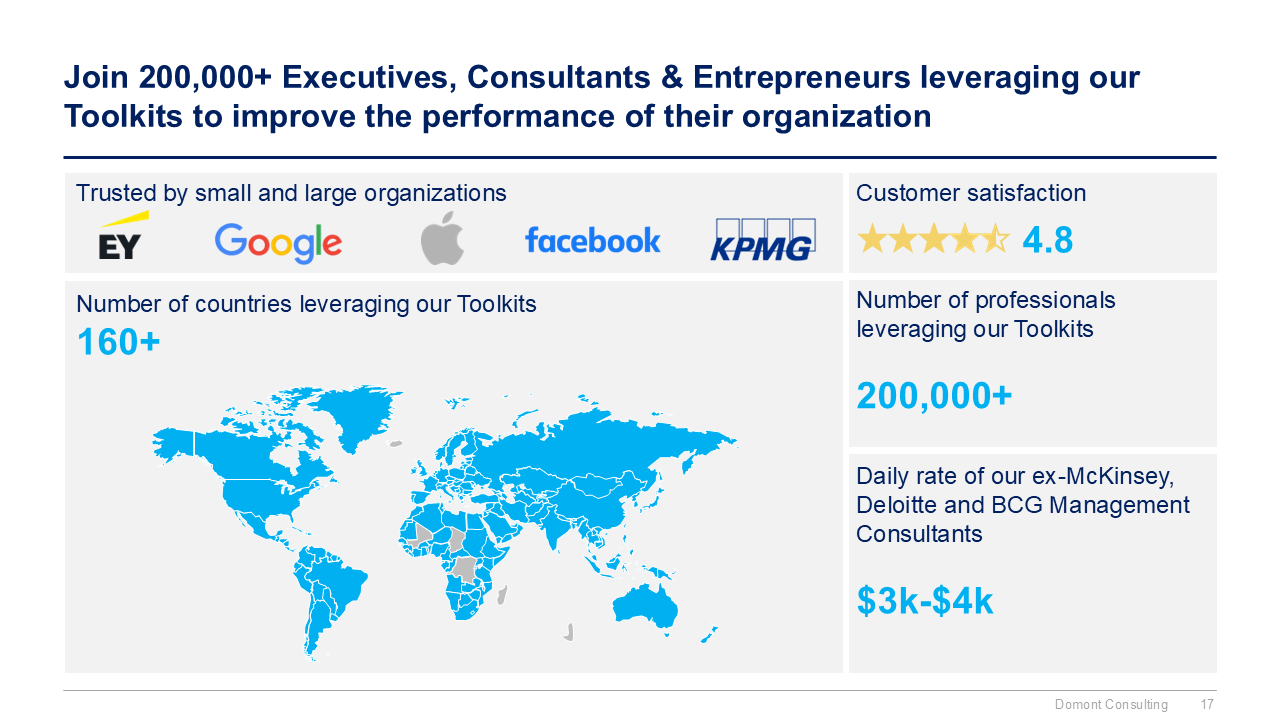
Domont Consulting is trusted by 200,000+ executives, consultants and entrepreneurs from small & large organizations.
This Toolkit includes frameworks, tools, templates, tutorials, real-life examples, best practices, and video training to help you:
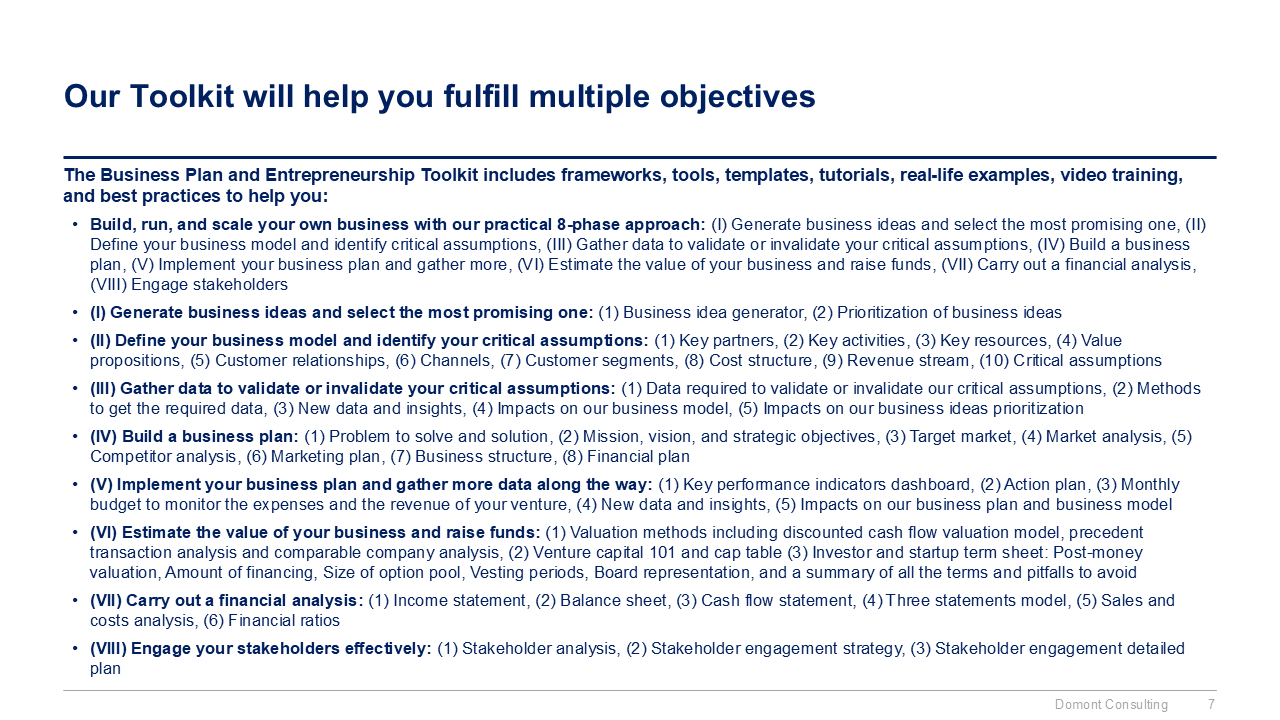
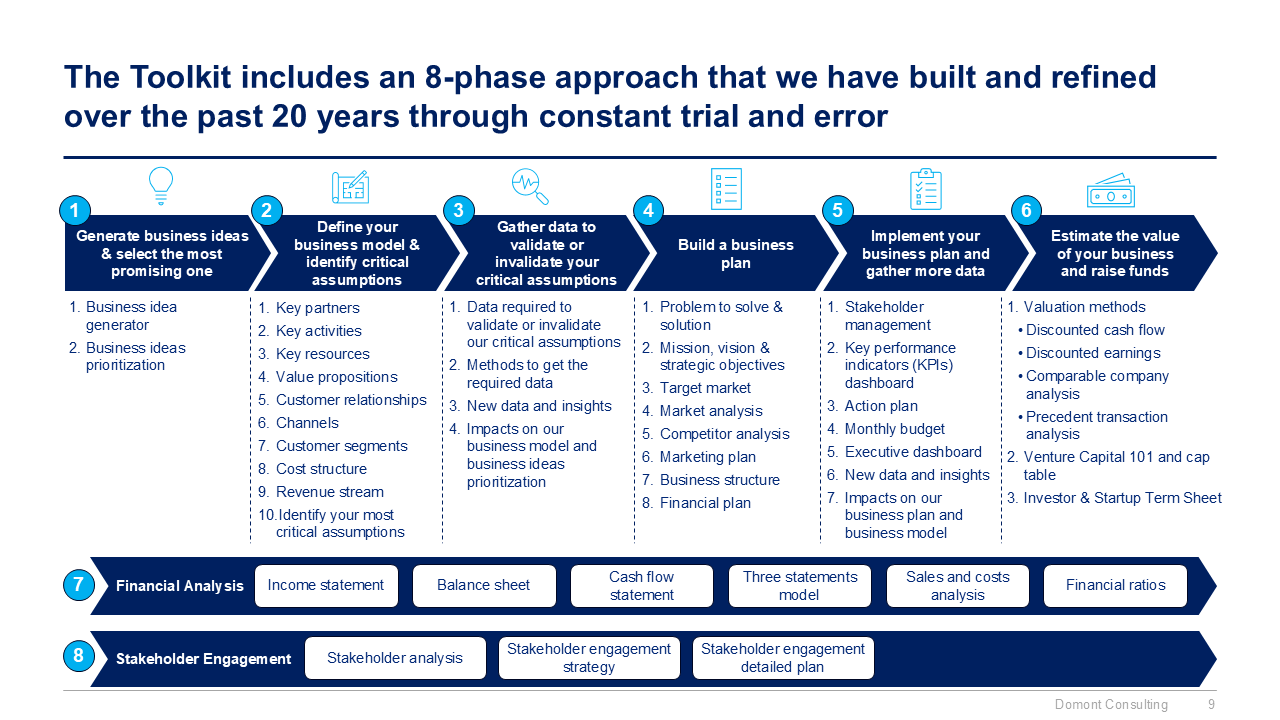
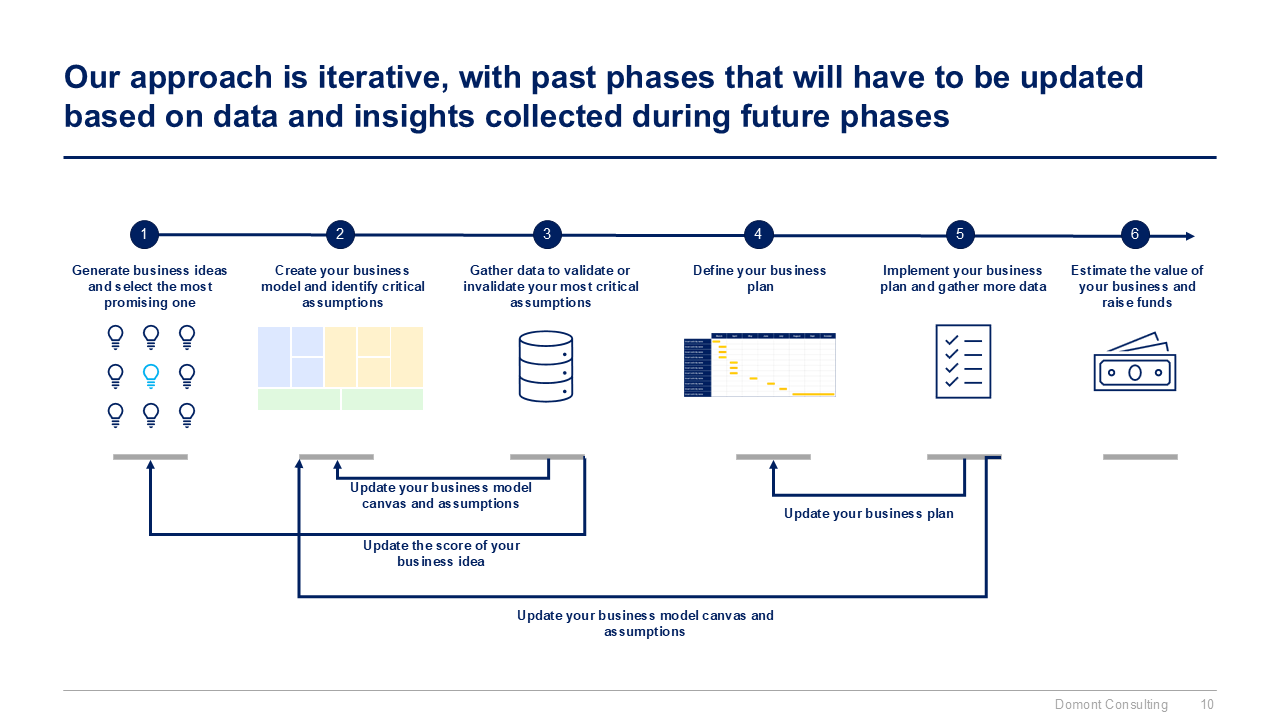
• Build, run, and scale your own business with our practical 8-phase approach: (I) Generate business ideas and select the most promising one, (II) Define your business model and identify critical assumptions, (III) Gather data to validate or invalidate your critical assumptions, (IV) Build a business plan, (V) Implement your business plan and gather more, (VI) Estimate the value of your business and raise funds, (VII) Carry out a financial analysis, (VIII) Engage stakeholders
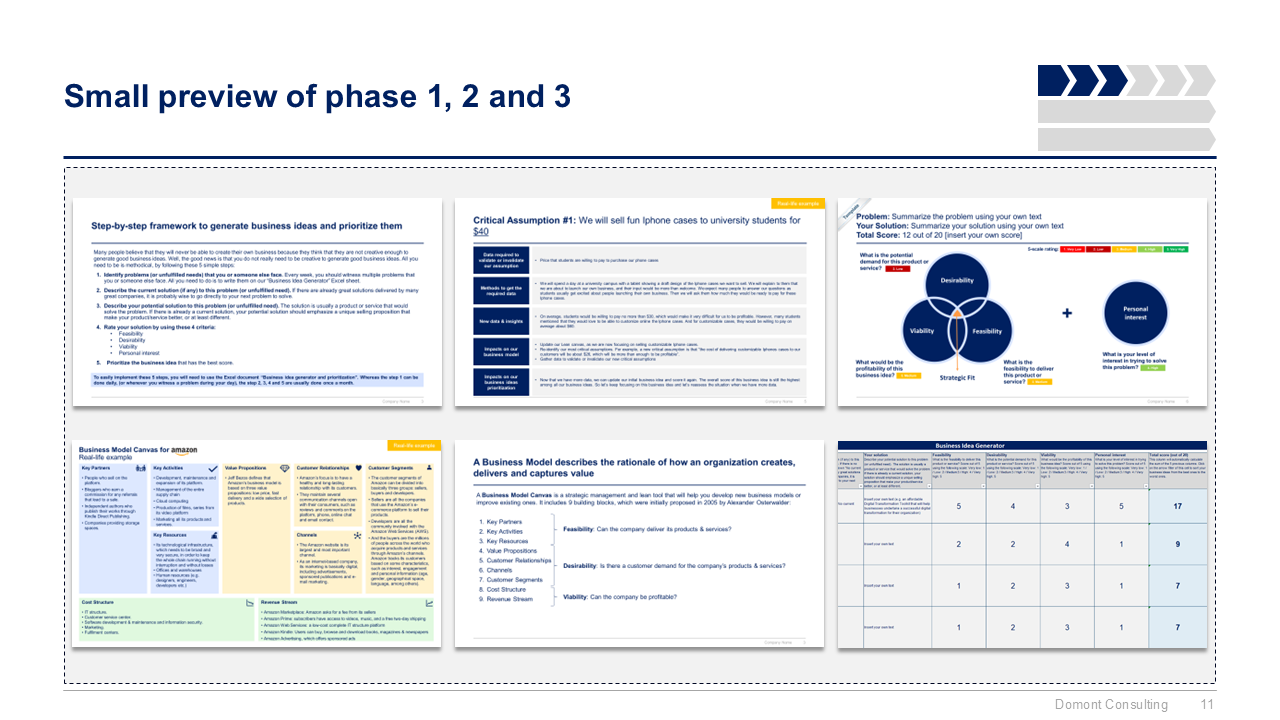
• (I) Generate business ideas and select the most promising one: (1) Business idea generator, (2) Prioritization of business ideas
• (II) Define your business model and identify your critical assumptions: (1) Key partners, (2) Key activities, (3) Key resources, (4) Value propositions, (5) Customer relationships, (6) Channels, (7) Customer segments, (8) Cost structure, (9) Revenue stream, (10) Critical assumptions
• (III) Gather data to validate or invalidate your critical assumptions: (1) Data required to validate or invalidate our critical assumptions, (2) Methods to get the required data, (3) New data and insights, (4) Impacts on our business model, (5) Impacts on our business ideas prioritization
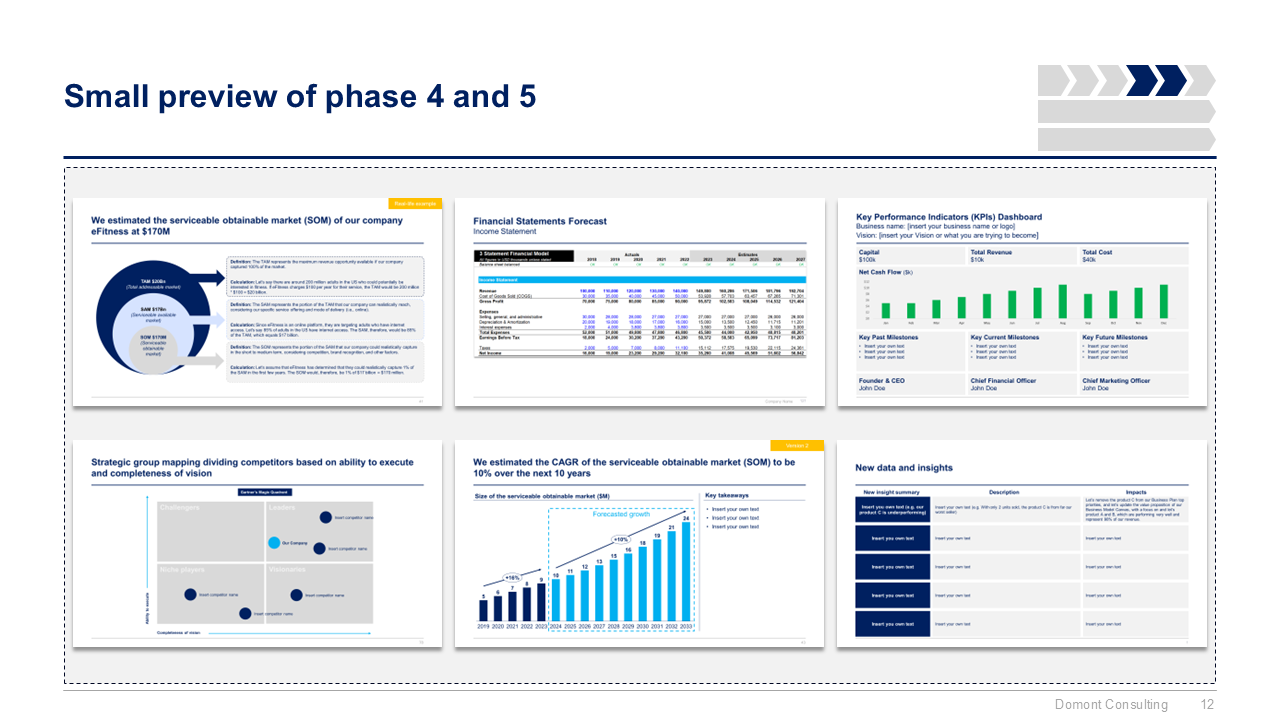
• (IV) Build a business plan: (1) Problem to solve and solution, (2) Mission, vision, and strategic objectives, (3) Target market, (4) Market analysis, (5) Competitor analysis, (6) Marketing plan, (7) Business structure, (8) Financial plan
• (V) Implement your business plan and gather more data along the way: (1) Key performance indicators dashboard, (2) Action plan, (3) Monthly budget to monitor the expenses and the revenue of your venture, (4) New data and insights, (5) Impacts on our business plan and business model
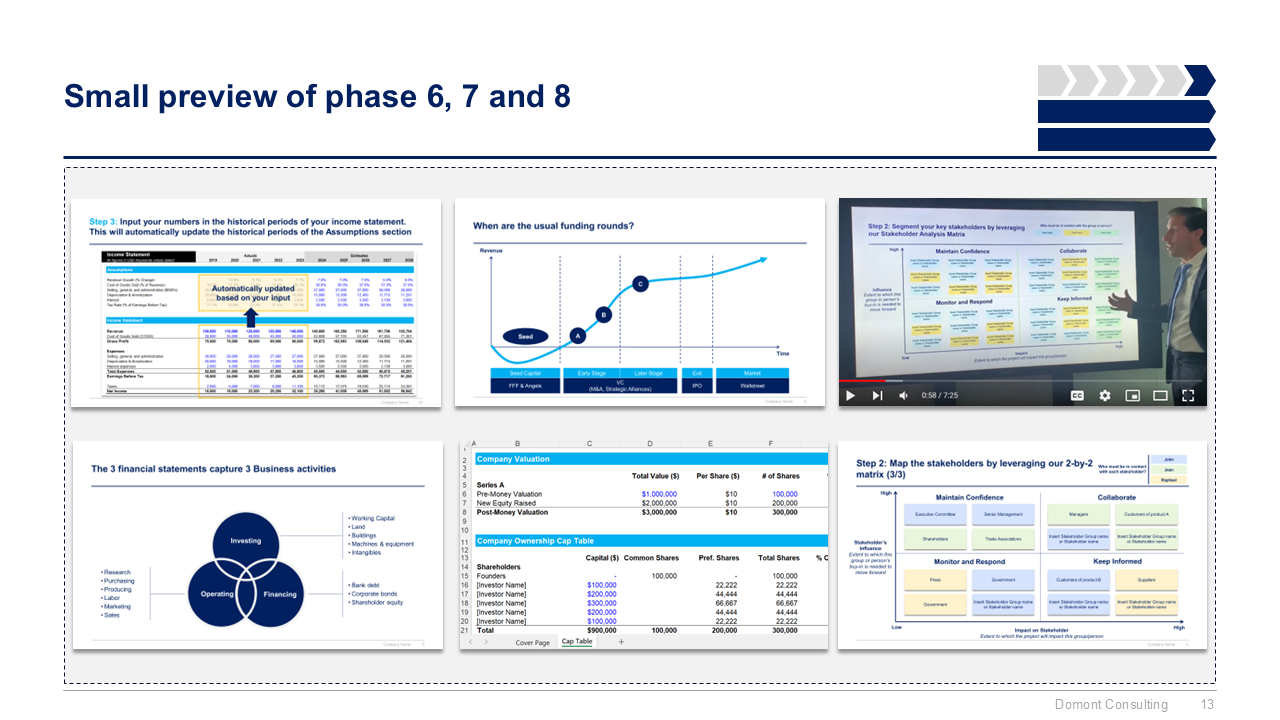
• (VI) Estimate the value of your business and raise funds: (1) Valuation methods including discounted cash flow valuation model, precedent transaction analysis and comparable company analysis, (2) Venture capital 101 and cap table (3) Investor and startup term sheet: Post-money valuation, Amount of financing, Size of option pool, Vesting periods, Board representation, and a summary of all the terms and pitfalls to avoid
• (VII) Carry out a financial analysis: (1) Income statement, (2) Balance sheet, (3) Cash flow statement, (4) Three statements model, (5) Sales and costs analysis, (6) Financial ratios
• (VIII) Engage your stakeholders effectively: (1) Stakeholder analysis, (2) Stakeholder engagement strategy, (3) Stakeholder engagement detailed plan
This Toolkit was created by ex-McKinsey, Deloitte and BCG Consultants and Entrepreneurs, after more than 4,000 hours of work. It is considered the world's best & most comprehensive Entrepreneurship Toolkit. It includes all the Frameworks, Tools & Templates required to build, run and scale your own Business and excel as an Entrepreneur.
Content: 300 Powerpoint slides | 32 Excel sheets | 10 Word pages | 31 minutes of Video training.
Domont Consulting is trusted by 200,000+ executives, consultants and entrepreneurs from small & large organizations.
This Toolkit includes frameworks, tools, templates, tutorials, real-life examples, best practices, and video training to help you:
• Build, run, and scale your own business with our practical 8-phase approach: (I) Generate business ideas and select the most promising one, (II) Define your business model and identify critical assumptions, (III) Gather data to validate or invalidate your critical assumptions, (IV) Build a business plan, (V) Implement your business plan and gather more, (VI) Estimate the value of your business and raise funds, (VII) Carry out a financial analysis, (VIII) Engage stakeholders
• (I) Generate business ideas and select the most promising one: (1) Business idea generator, (2) Prioritization of business ideas
• (II) Define your business model and identify your critical assumptions: (1) Key partners, (2) Key activities, (3) Key resources, (4) Value propositions, (5) Customer relationships, (6) Channels, (7) Customer segments, (8) Cost structure, (9) Revenue stream, (10) Critical assumptions
• (III) Gather data to validate or invalidate your critical assumptions: (1) Data required to validate or invalidate our critical assumptions, (2) Methods to get the required data, (3) New data and insights, (4) Impacts on our business model, (5) Impacts on our business ideas prioritization
• (IV) Build a business plan: (1) Problem to solve and solution, (2) Mission, vision, and strategic objectives, (3) Target market, (4) Market analysis, (5) Competitor analysis, (6) Marketing plan, (7) Business structure, (8) Financial plan
• (V) Implement your business plan and gather more data along the way: (1) Key performance indicators dashboard, (2) Action plan, (3) Monthly budget to monitor the expenses and the revenue of your venture, (4) New data and insights, (5) Impacts on our business plan and business model
• (VI) Estimate the value of your business and raise funds: (1) Valuation methods including discounted cash flow valuation model, precedent transaction analysis and comparable company analysis, (2) Venture capital 101 and cap table (3) Investor and startup term sheet: Post-money valuation, Amount of financing, Size of option pool, Vesting periods, Board representation, and a summary of all the terms and pitfalls to avoid
• (VII) Carry out a financial analysis: (1) Income statement, (2) Balance sheet, (3) Cash flow statement, (4) Three statements model, (5) Sales and costs analysis, (6) Financial ratios
• (VIII) Engage your stakeholders effectively: (1) Stakeholder analysis, (2) Stakeholder engagement strategy, (3) Stakeholder engagement detailed plan
This Best Practice includes
300 Powerpoint slides | 32 Excel sheets | 10 Word pages | 31 minutes of Video training