

Originally published: 19/05/2025 23:07
Last version published: 20/09/2026 08:43
Publication number: ELQ-66006-26
View all versions & Certificate
Last version published: 20/09/2026 08:43
Publication number: ELQ-66006-26
View all versions & Certificate

Professional Services Costing Pricing Model (PSCPM)
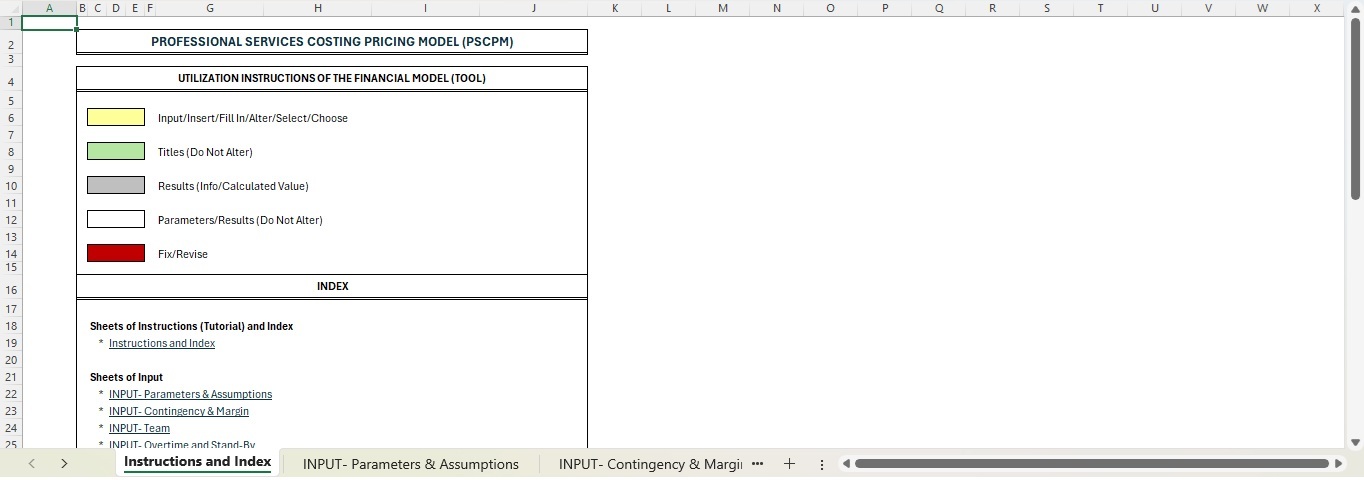
Financial Model (Excel-Developed Tool) for Costing and Pricing of Professional Services
financial modelprofessional servicescosting pricing modeltoolpricing modelcosting modeltechnology pricing modeloutsourcing pricing modelconsulting pricing modelit pricing model
Description
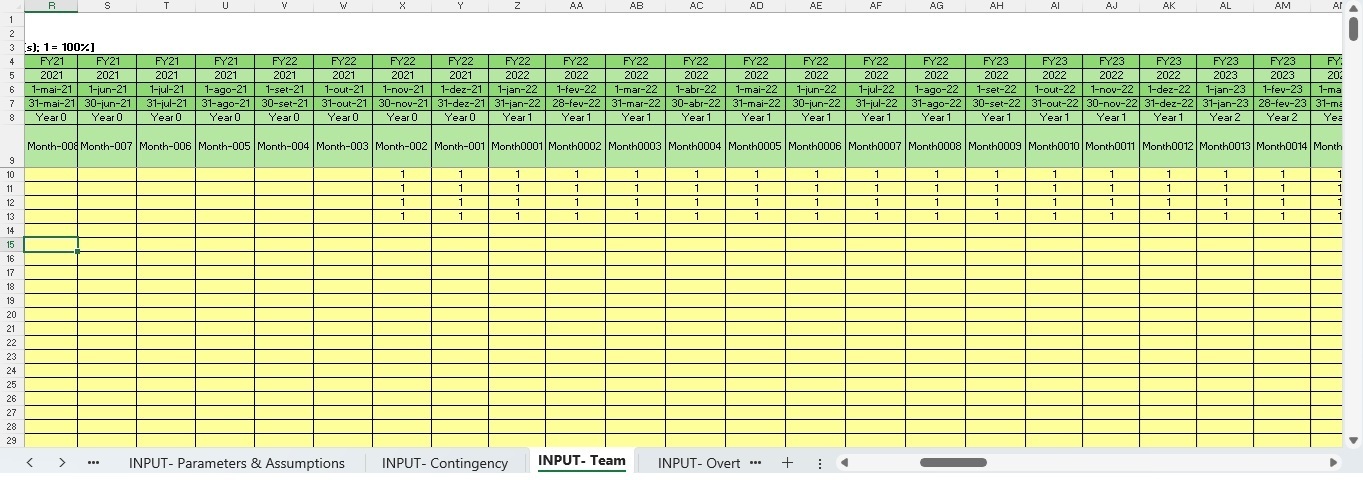
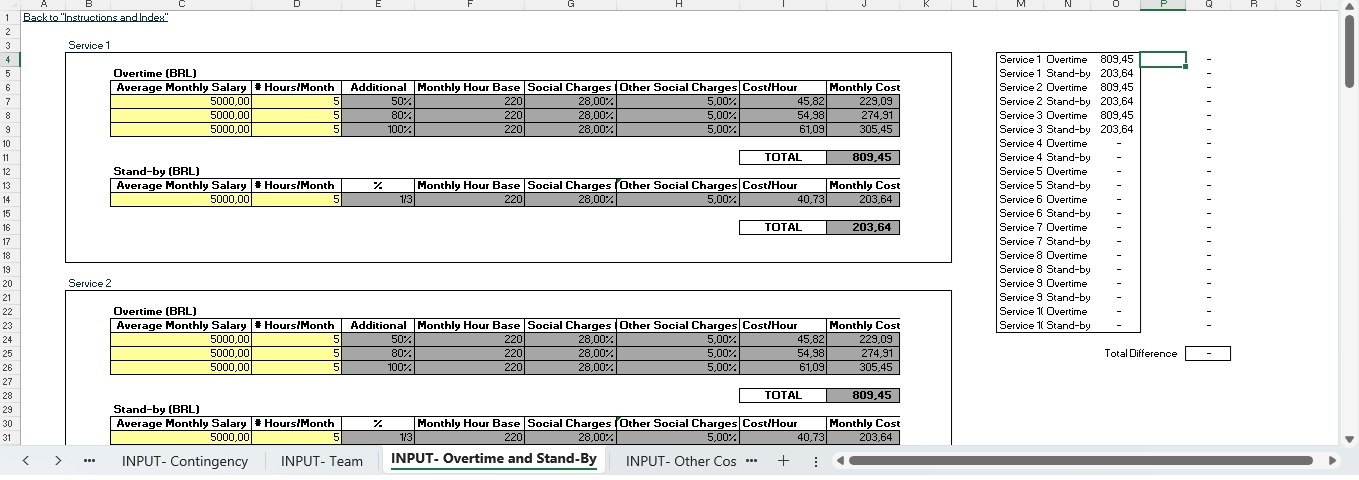
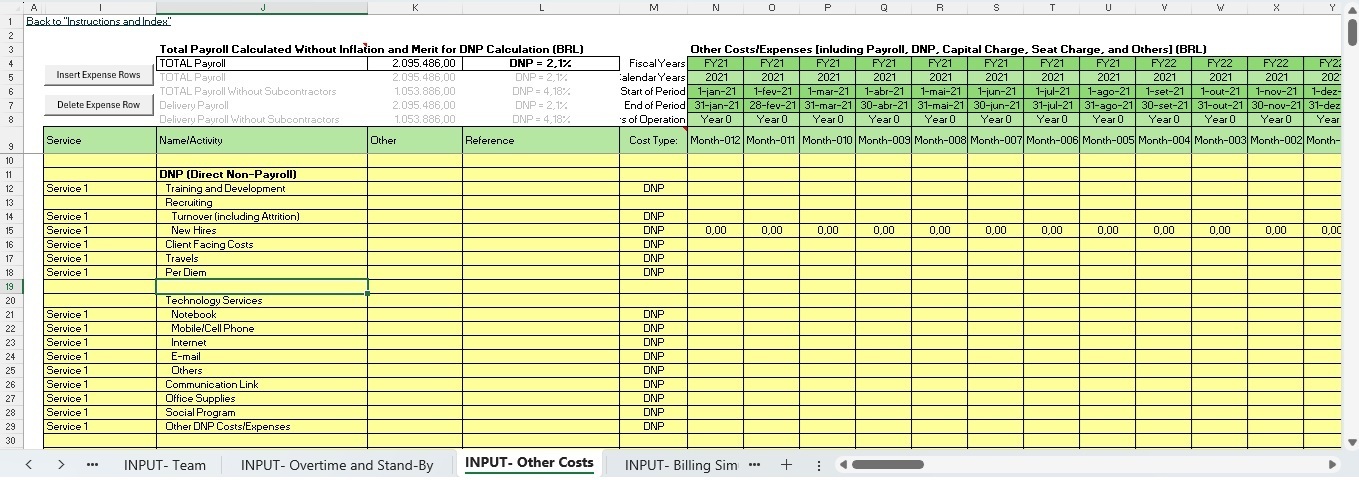
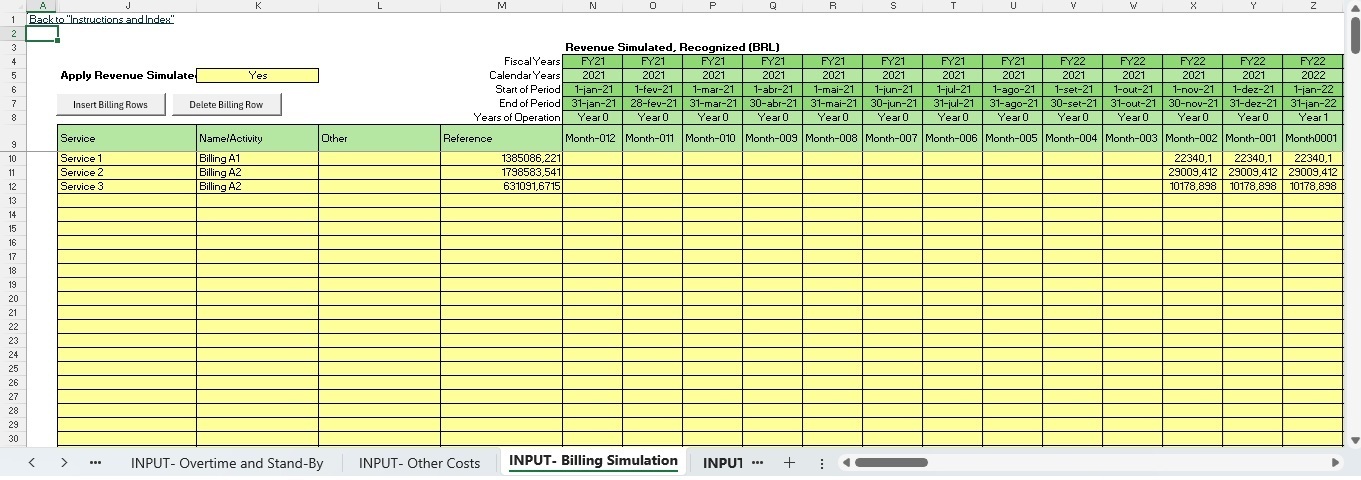
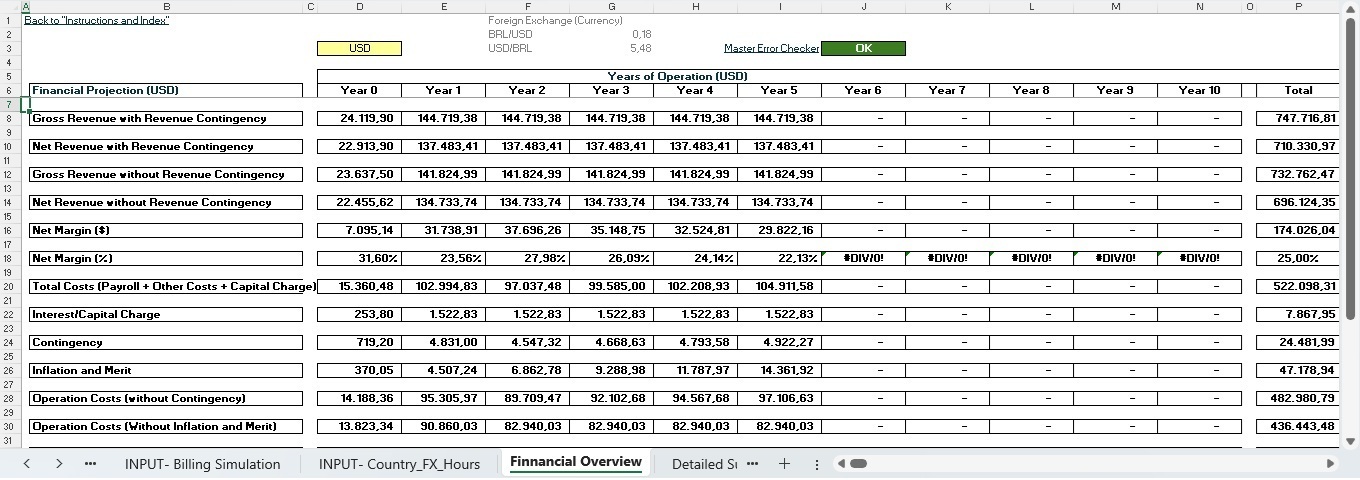
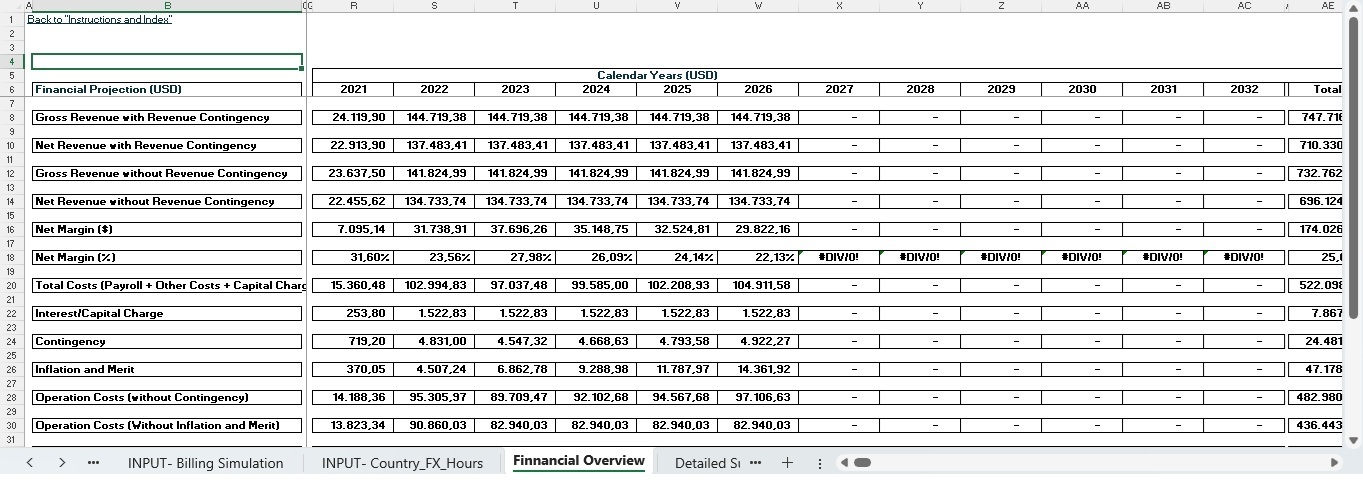
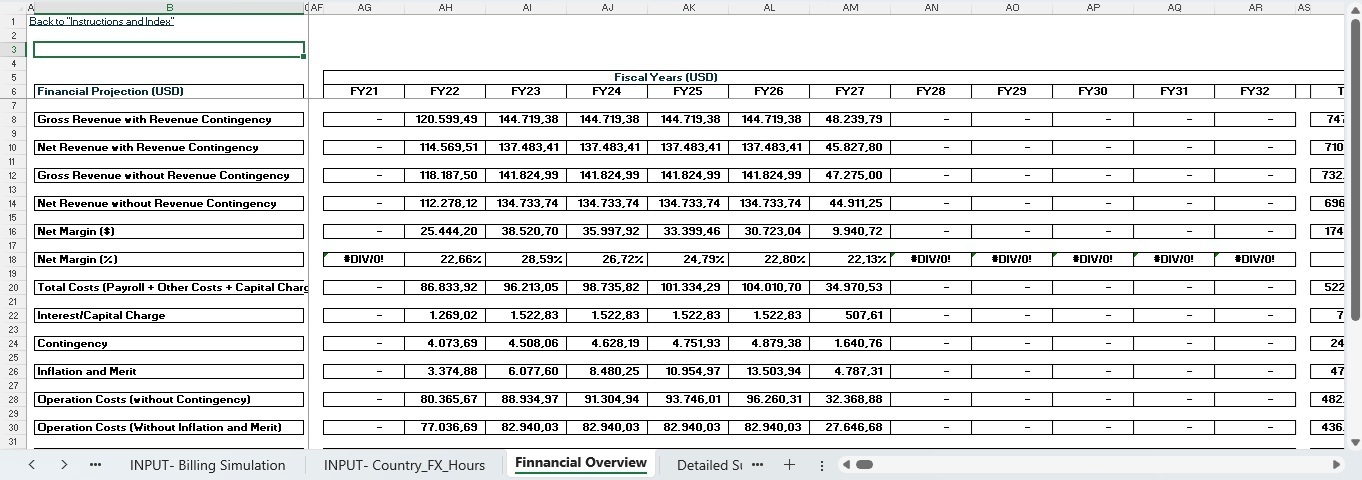
This Financial Model/Tool (Professional Services Costing Pricing Model - PSCPM) is designed to cost, price, and analyze the profitabilityof Large and Complex Professional Services engagements, especially in Outsourcing and Consulting. Despite its advanced capabilities, its core concept and usage remain straightforward (simple). This makes it versatile enough for smaller opportunities and initiatives like Auditing, Architecture and Engineering projects as well. The tool's complexity stems from extensive Excel Financial Modeling applied techniques, numerous input, output, and calculation sheets, and variables such as significant headcount and diverse service delivery models.
Please find below concepts, definitions, and examples of the terms mentioned above.
A Financial Model is a quantitative tool, typically spreadsheet-based (most commonly in Microsoft Excel), that represents the financial performance of a business, project, or asset. It combines historical financial data with a set of assumptions about future performance to forecast financial outcomes and help in decision-making. In essence, a financial model is a powerful analytical tool that translates business assumptions into a structured financial forecast, empowering better, data-driven decision-making.
Large and Complex Financial Models (Tools) are sophisticated analytical instruments designed to simulate, forecast, and analyze the financial performance of a business, project, or portfolio under various scenarios. They are characterized by their extensive data inputs, intricate calculations, numerous interconnected variables, and the ability to provide deep insights into financial health, risk, and strategic opportunities.
Here's a breakdown of what makes a financial model "large and complex":
Scale and Scope: Extensive Data Inputs; Multi-Period Forecasting; Granularity; Consolidation Capabilities.
Intricacy and Interdependencies: Complex Formulas and Logic; Interconnected Statements; Circular References; Driver-Based Modeling.
Scenario Analysis and Sensitivity Testing: Multiple Scenarios; Sensitivity Analysis; Simulation Capabilities.
Purpose and Applications: Strategic Planning; Valuation; Mergers & Acquisitions (M&A); Capital Allocation; Budgeting & Forecasting; Performance Management; Risk Management; Professional Services Costing & Pricing.
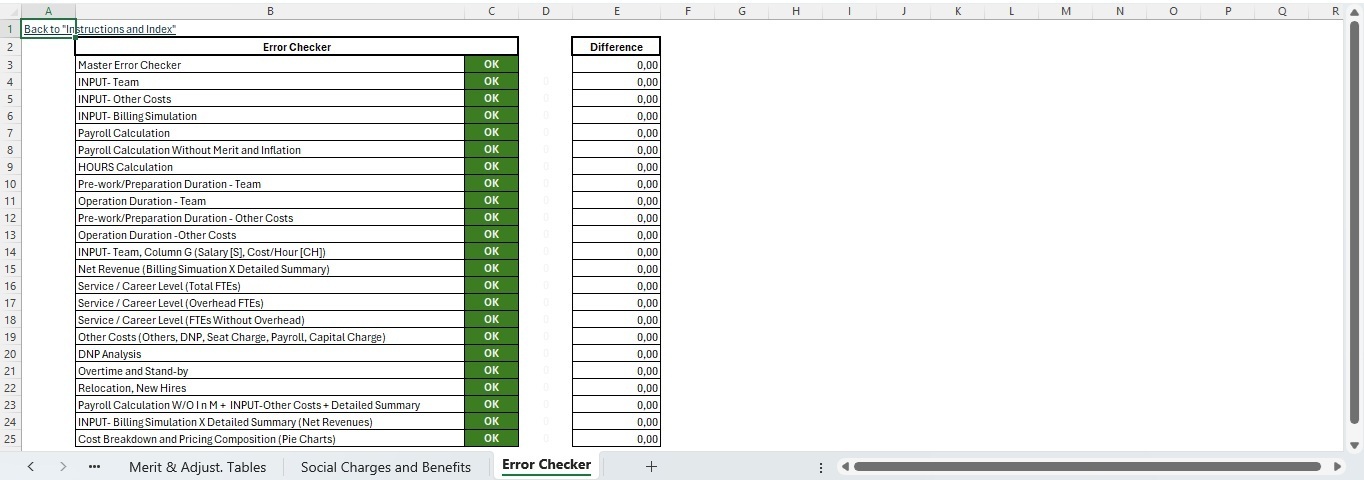
Technical and User Interface Considerations: Robust Structure; Error Checking; User-Friendliness (despite complexity); Scalability;
Professional Services encompass a broad category of businesses and individuals who provide specialized, knowledge-based expertise and solutions to clients, typically other businesses or organizations, but sometimes also individuals. Unlike businesses that sell tangible products, professional services deal in intangible assets like advice, analysis, strategy, and problem-solving. In essence, professional services are about providing specialized knowledge and skills to help clients achieve their objectives, solve problems, and improve their performance. They are a vital part of the modern economy, enabling businesses to access expertise they may not possess internally.
Costing of Professional Services is the methodical process of identifying, analyzing, and quantifying all expenses incurred in the delivery of a specific service or project. The primary goal is to determine the true financial outlay for providing a service. Unlike manufacturing, where material costs are prominent, professional services are heavily reliant on human capital, making labor costs and associated overheads the most significant components. The main purpose of costing is to understand the baseline expenses, enabling a firm to assess profitability, monitor efficiency, inform pricing decisions, and make strategic resource allocation choices. Without accurate costing, pricing becomes speculative, risking either underpricing (leading to losses) or overpricing (losing competitiveness).
Pricing of Professional Services is the strategic determination of the monetary amount a firm charges its clients for the services rendered. It's not just about covering costs; it's about capturing value, reflecting market dynamics, and achieving business objectives (e.g., profitability, market share, brand positioning). Pricing considers both the firm's internal costs and external factors like client perception of value, competitor rates, and market demand.
Relationship between Costing and Pricing:
Relationship between Costing and Pricing:
Costing is a prerequisite for effective pricing. A firm must first understand its costs to ensure that its chosen price point covers those costs and generates a desired profit margin. While costing provides a floor for pricing, pricing strategy then layers on considerations of value, market competition, and client willingness to pay to determine the optimal charge.
Profitability in Professional Services refers to the ability of a firm to generate a financial surplus after covering all its costs associated with delivering services. Unlike product-based businesses that sell tangible goods, professional services firms (PSFs) primarily sell expertise, time, and intellectual capital. Therefore, profitability in this sector is intrinsically linked to how efficiently and effectively these intangible assets are managed and monetized. Profitability Analysis of Professional Services is the systematic examination and evaluation of a firm's financial performance to understand how efficiently and effectively it generates profit from its service offerings. It goes beyond simply looking at the total profit figure and delves into the underlying drivers of that profit, identifying strengths, weaknesses, and opportunities for improvement.
The definition of Large and Complex Professional Services may also refer to engagements that involve significant scope, numerous stakeholders, intricate interdependencies, substantial financial investment, and a high degree of uncertainty or novelty. These contracts/projects typically address critical strategic or operational challenges for organizations, often leading to fundamental transformations or the creation of entirely new capabilities.
Here are the key characteristics that define large and complex professional services:
Scale and Scope: Significant Budget; Long Duration; Large Teams; Broad Organizational Impact; Global/Multi-geography.
Complexity and Interdependencies: Ambiguity and Uncertainty; Multiple Stakeholders; Interconnected Systems/Processes; Technical and Domain Intricacy; Risk and Volatility
Strategic Importance and Transformational Impact: High Stakes; Strategic Alignment; Transformational Change; Unprecedented Nature
Specialized Skill Sets Required: Advanced Problem-Solving; Exceptional Communication; Change Management Expertise; Program/Portfolio Management; Political Acumen.
Large and Complex Professional Services are not just about delivering a solution; they are about orchestrating significant change, managing intricate relationships, and navigating high levels of uncertainty to achieve profound and lasting impact for the client. The concept of large and complex professional services describes major, high-stakes engagements that are strategically critical, involve significant resources over an extended period, and are inherently challenging due to their multifaceted nature, interconnectedness, and the often undefined path to a tailored solution. Delivering these services requires not only deep expertise but also exceptional program management, change management, stakeholder engagement, and risk mitigation capabilities.
Difference between Outsourcing and Consulting:
While both outsourcing contracts and consulting projects involve engaging external expertise, they differ significantly in their fundamental purpose, scope, relationship dynamics, and desired outcomes. Here's a breakdown of the key distinctions:
Outsourcing Contracts
Purpose: To delegate a specific, often repetitive or well-defined business function or process to an external provider. The primary drivers are typically cost reduction, efficiency gains, access to specialized resources, or the desire to focus on core competencies.
Scope of Work: Well-defined and operational; Well-defined; Often Ongoing (Many outsourcing relationships are long-term, continuous arrangements for a specific function [e.g., ongoing maintenance, customer support])
Relationship Dynamics: Vendor-Client; Less Strategic Input; Focus on SLAs and KPIs; Control is Externalized (Operationally)
Desired Outcomes: Cost Savings; Increased Efficiency; Focus on Core Business; Access to Specialized Skills;
Consulting Projects
Purpose: To provide expert advice, analysis, and recommendations to help a client solve complex business problems, improve performance, or achieve strategic objectives. The primary drivers are typically a need for specialized knowledge, an objective external perspective, or a temporary surge in strategic workload.
Scope of Work: Problem-Solving and Strategic; Advisory and Co-Creative; Project-Based and Finite.
Relationship Dynamics: Partnership/Advisory; Strategic Input; Focus on Insights and Recommendations; Client Retains Control for Implementation.
Desired Outcomes: Improved Decision-Making; Problem Resolution; Organizational Change; Knowledge Transfer; Innovation.
Examples and types of Outsourcing Contracts/Deals:
-> Application Outsourcing:
o Application Management Services (AMS)
o Application Development:
§ Software Factory
§ Test Factory
o Staff Augmentation
-> Infrastructure Outsourcing;
o Network Outsourcing
o Server and Storage Outsourcing
o Desktop and End-User Support
o Cybersecurity Outsourcing
o Cloud Services Management
o Staff Augmentation
-> Business Process Outsourcing (BPO):
o Finance and Accounting (F&A)
o Human Resources (HR)
o Customer Care/Support
o Shared Services Center
-> Mobilization and Transition Services, which begin before the outsourcing operations, may have the following phases:
o Planning and Preparation (including Due Diligence);
o Staff Recruiting, Onboarding, and Allocation
o Knowledge Transfer and Training;
o Operation Implementation
o Operation Stabilization
Mobilization and Transition are crucial phases or types of projects, especially prevalent in large-scale professional services, outsourcing, and significant organizational changes. They represent distinct, yet often sequential and interconnected, efforts aimed at preparing for or executing a shift in operations or responsibility.
A mobilization project or initiative is the preparatory phase and set of activities required to assemble, organize, and activate all necessary resources, personnel, equipment, technology, and infrastructure to commence a new project, a new contract, or a new phase of work effectively and efficiently. It's about getting everything in place to start the actual execution.
A transition project or initiative is the structured process of moving from an existing "as-is" state to a new "to-be" state. This often involves transferring ownership, knowledge, responsibilities, or entire operational functions from one entity (e.g., an internal team) to another (e.g., an external service provider, or a new internal team), or the deployment of a new solution from development to live operation. It is inherently about managing change and ensuring continuity and stability during the shift.
Examples and types of ->Consulting Projects:
o Strategy Consulting;
o Management Consulting;
o Financial Consulting (including Shared Services Implementation);
o Human Resources Consulting (including Change Management [CM] and Talent and Organization Performance [TOP]);
o Operations Consulting;
o IT Consulting;
o Marketing Consulting;
o Sustainability Consulting.
-> Integrated Solutions (both Consulting projects and Outsourcing engagements):
o DBR [Design, Build and Run], such as ERP/CRM implementations;
o Bundled Opportunities (Consulting and Outsourcing resources combined in order to achieve a common goal/solution).
Financial modeling is the process of creating a numerical representation of a company, project, or asset's past, present, and future financial performance. It primarily involves building detailed, dynamic spreadsheets (most commonly in Microsoft Excel) that integrate historical financial data with assumptions about future variables to forecast financial outcomes. In essence, financial modeling is the art and science of translating business operations, strategic decisions, and market conditions into quantifiable financial projections.
Specific use of the PSCPM Tool
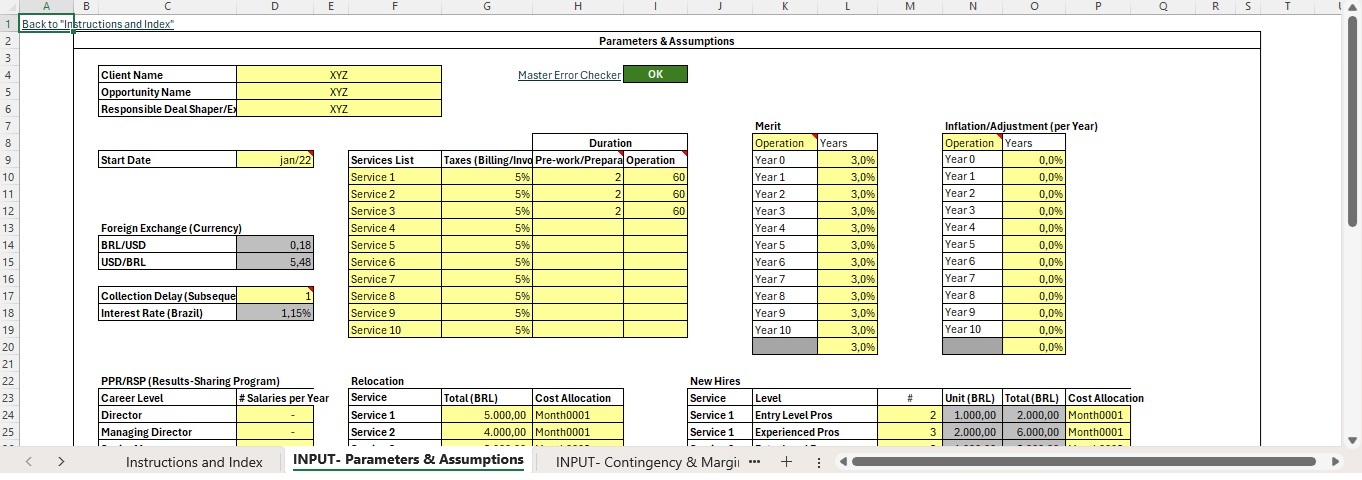
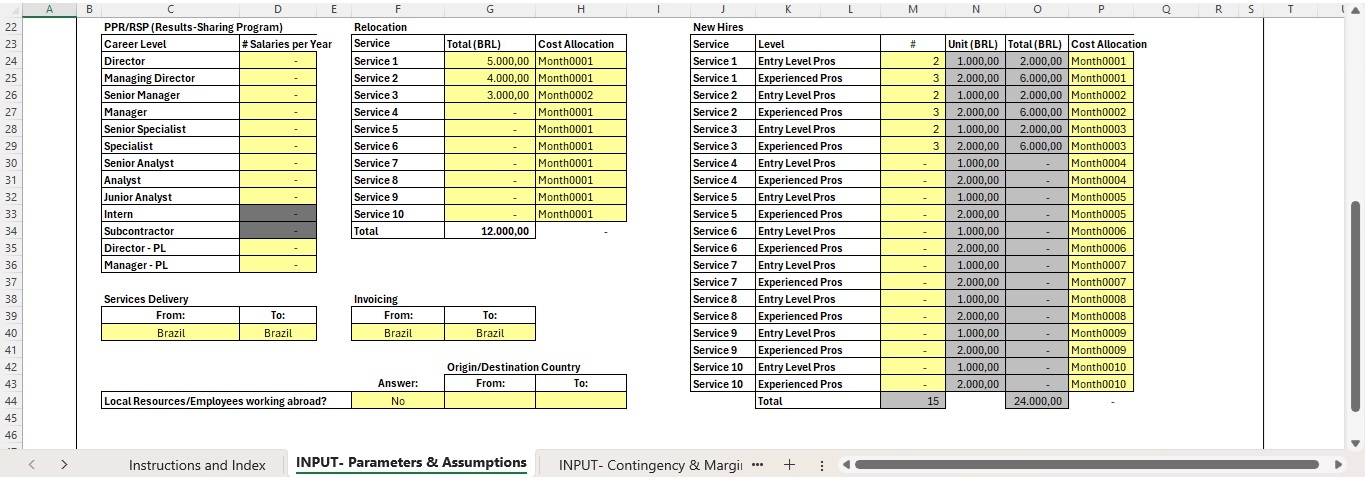
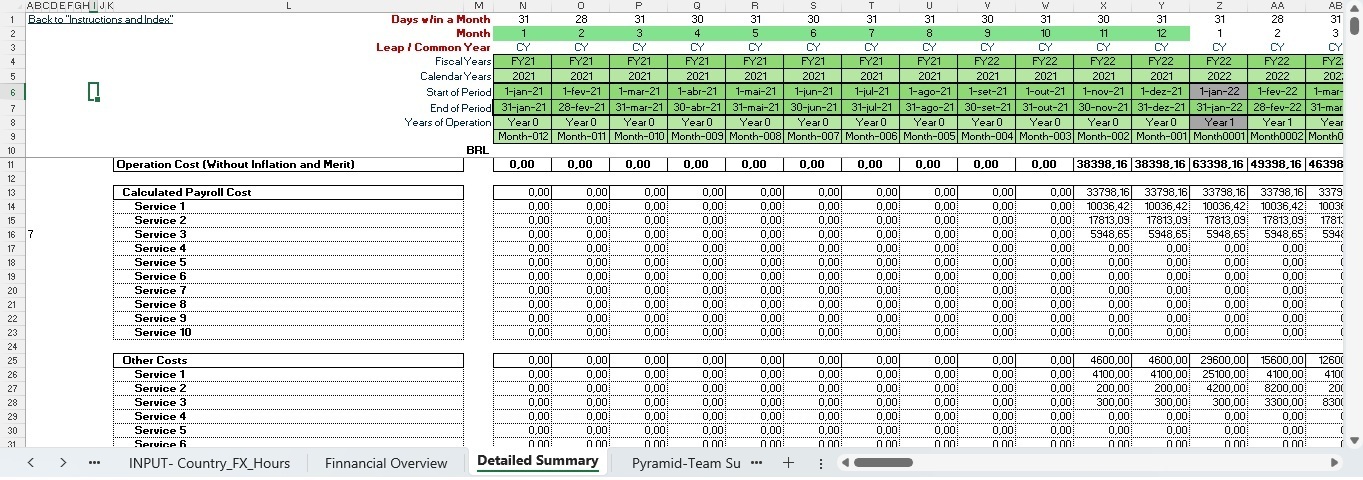
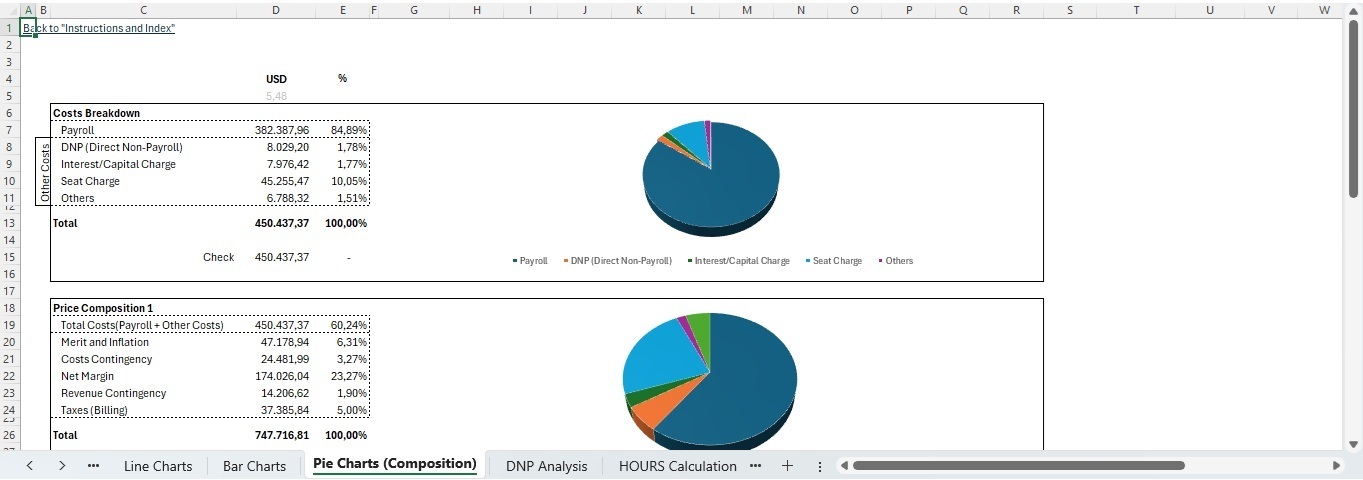
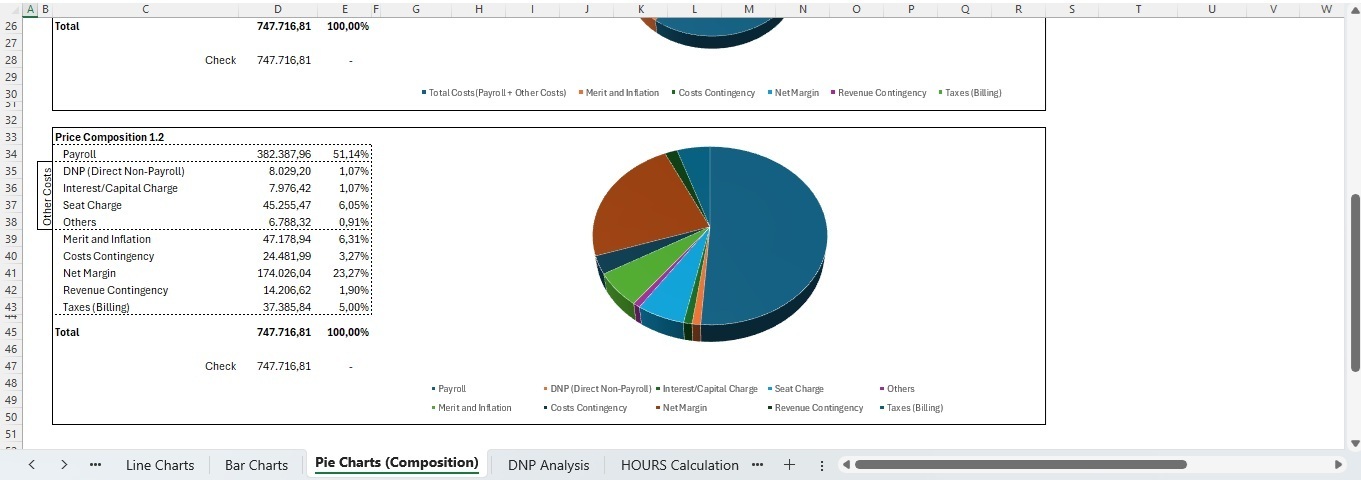
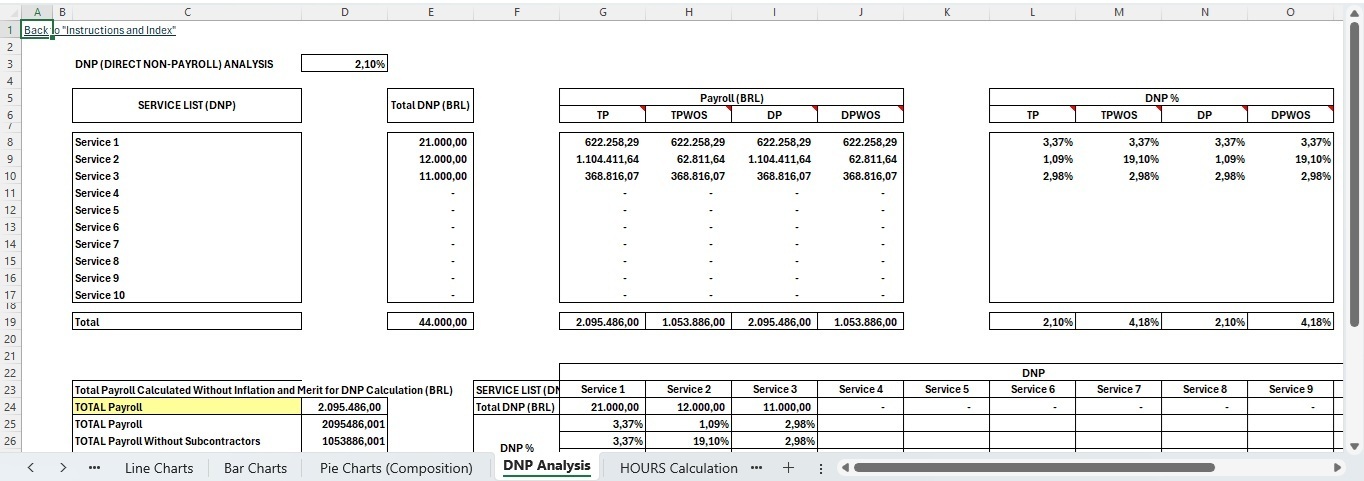
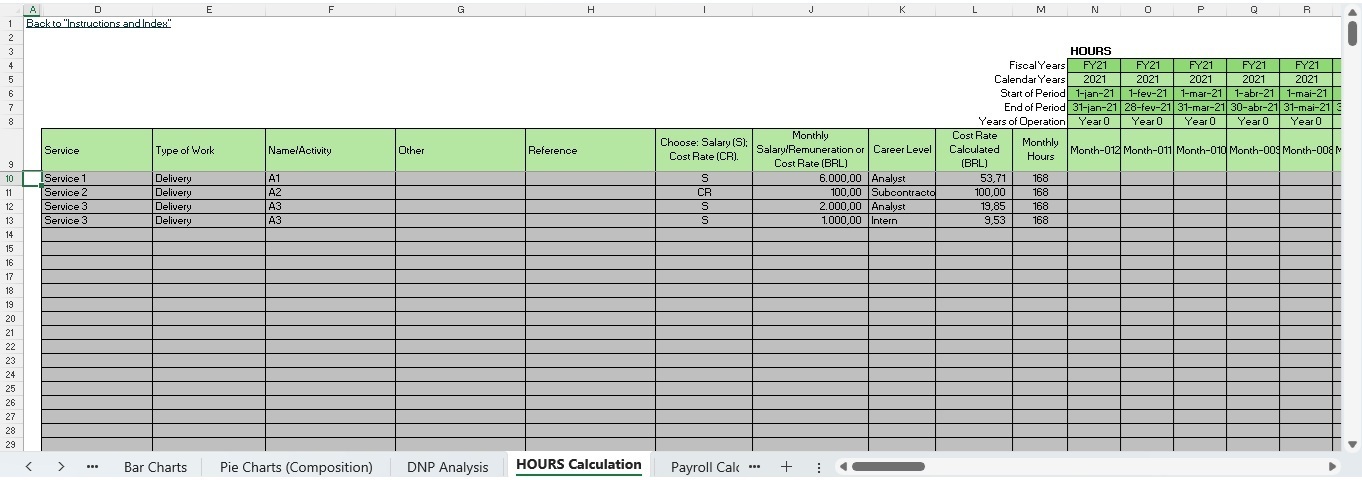
In the Financial Model (Tool) the names of the services can be defined in the sheet “INPUT- Parameters & Assumptions”, Cells Range: F9-F18, “Services List”.
The Country, from which Services are rendered, together with currency, can also be defined in the sheet “INPUT- Parameters & Assumptions”, Cells Range: C40-D40, “Services Delivery”; so is the Invoicing Model on Cell Range Cells Range: F40-G40.
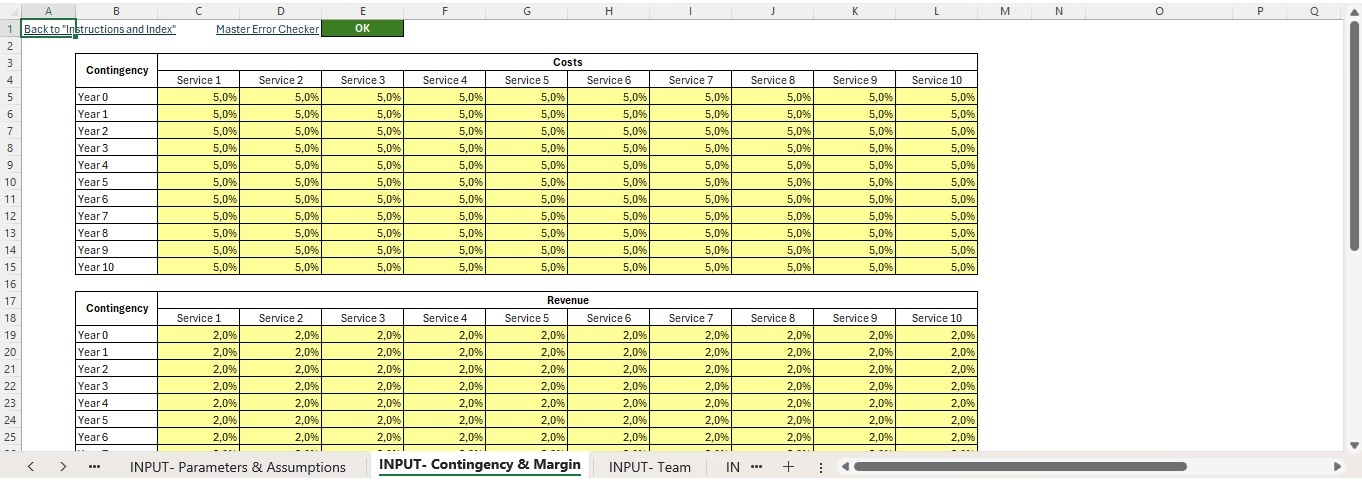
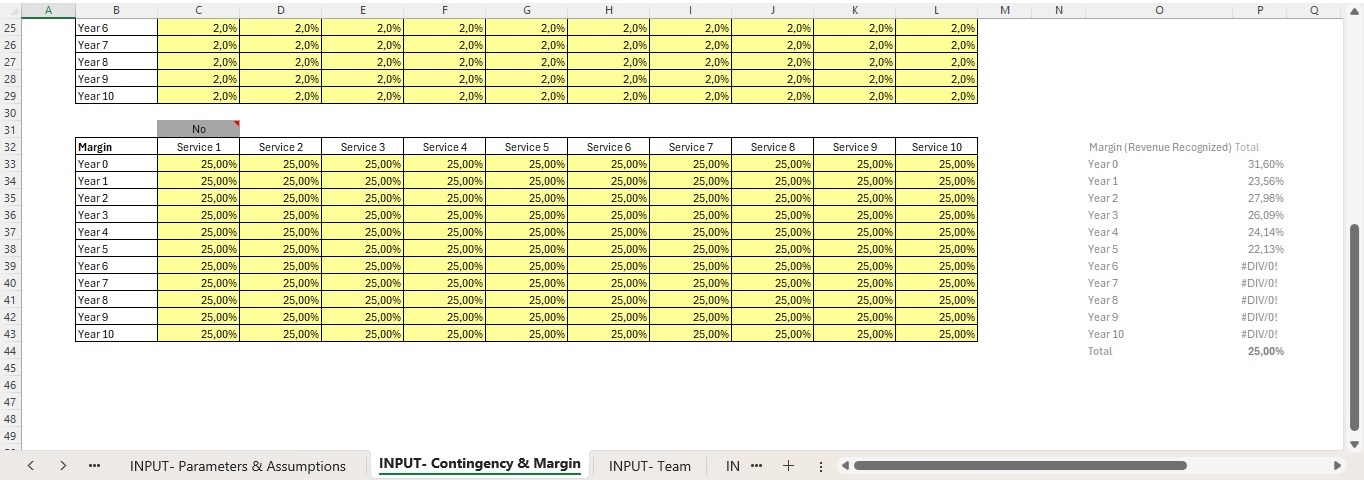
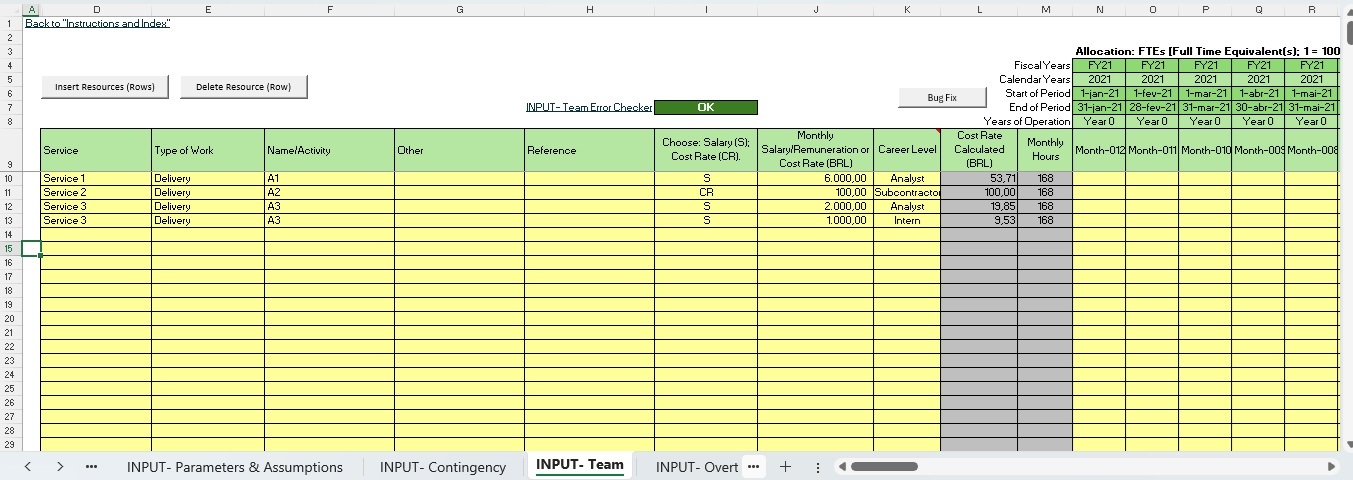
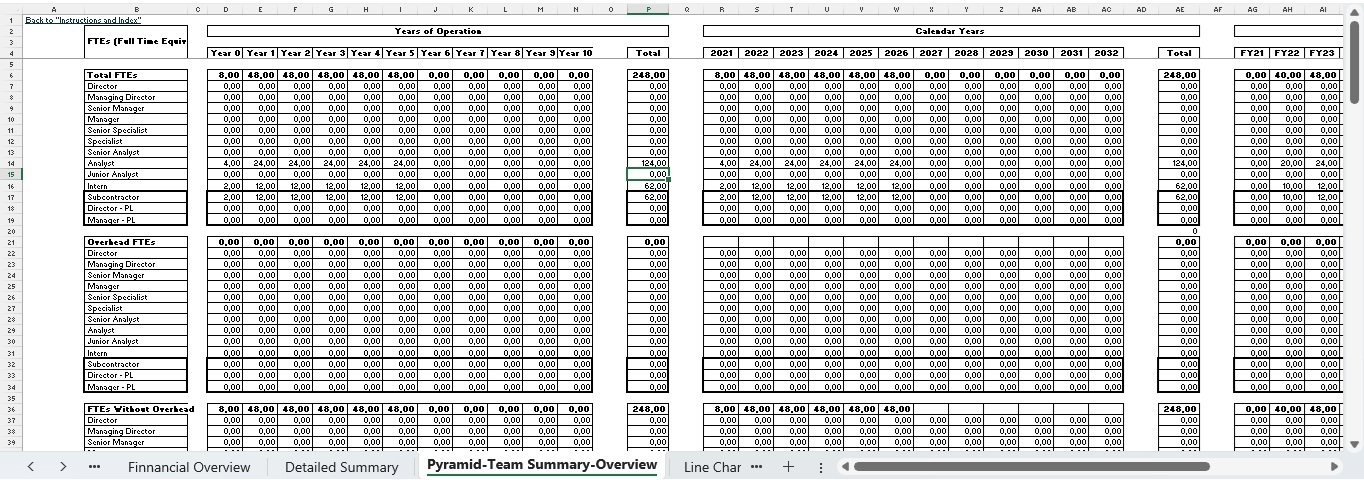
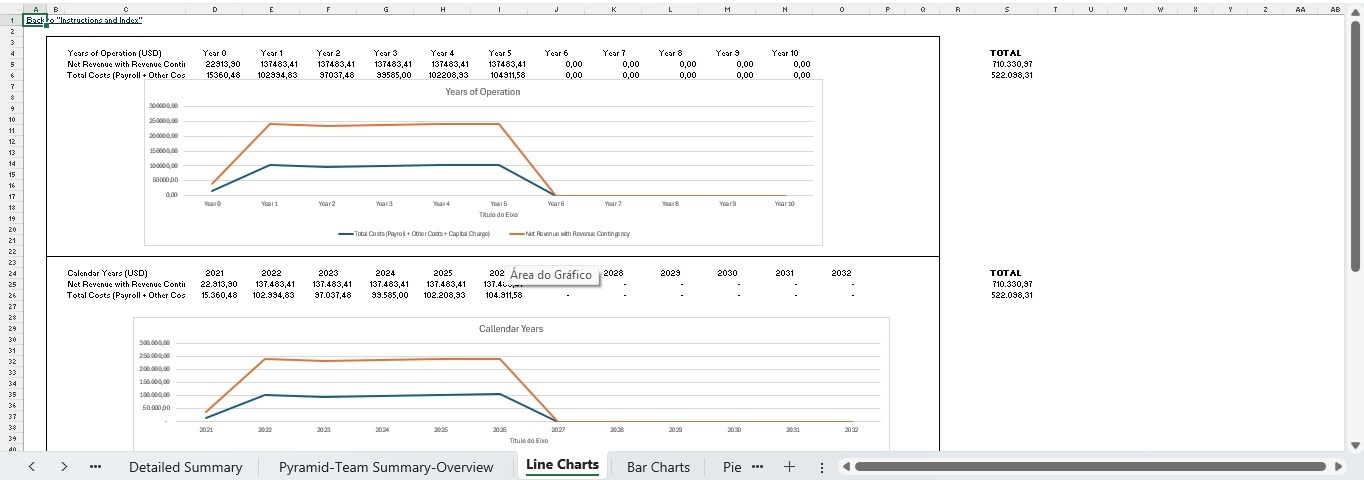
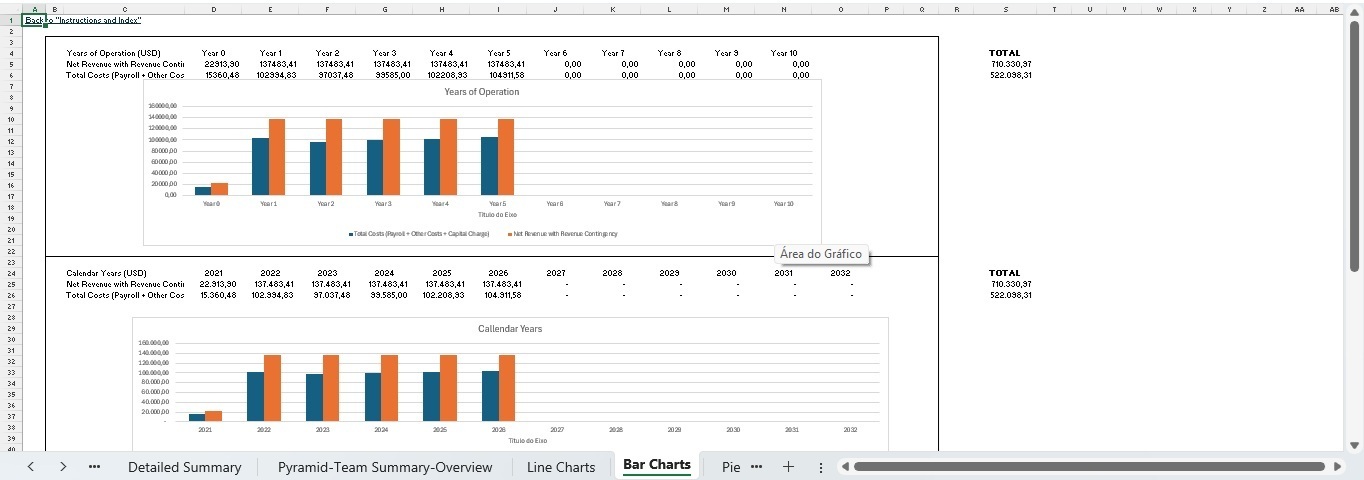
Please find attached two Excel workbooks, which you can download. One is an "Example" that shows how to use the Financial Model, while the other one is a "Template" for costing and pricing new deals from the ground up.
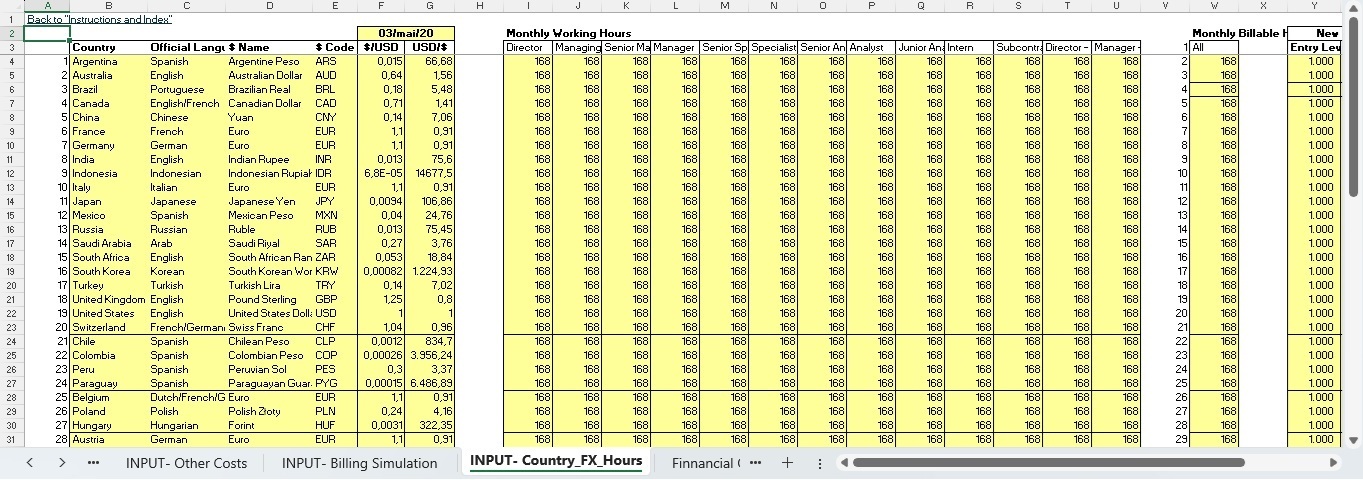
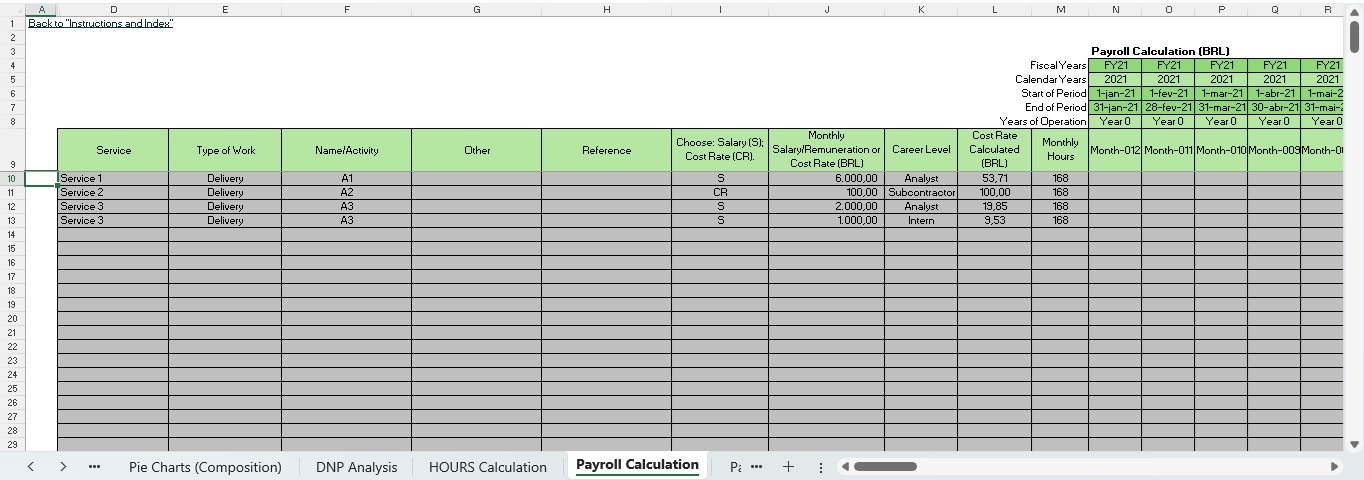
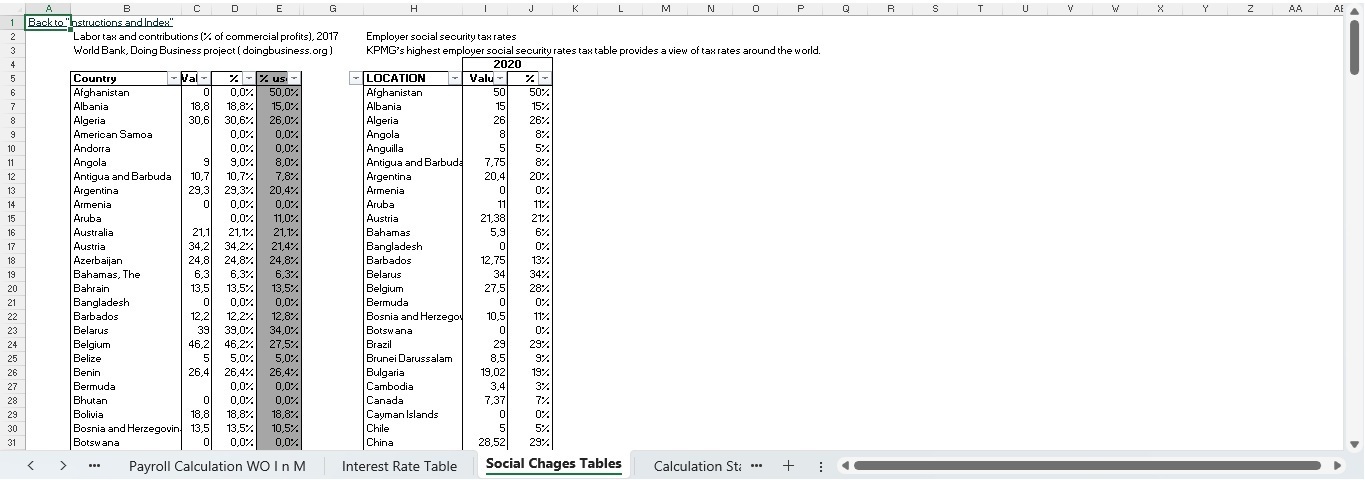
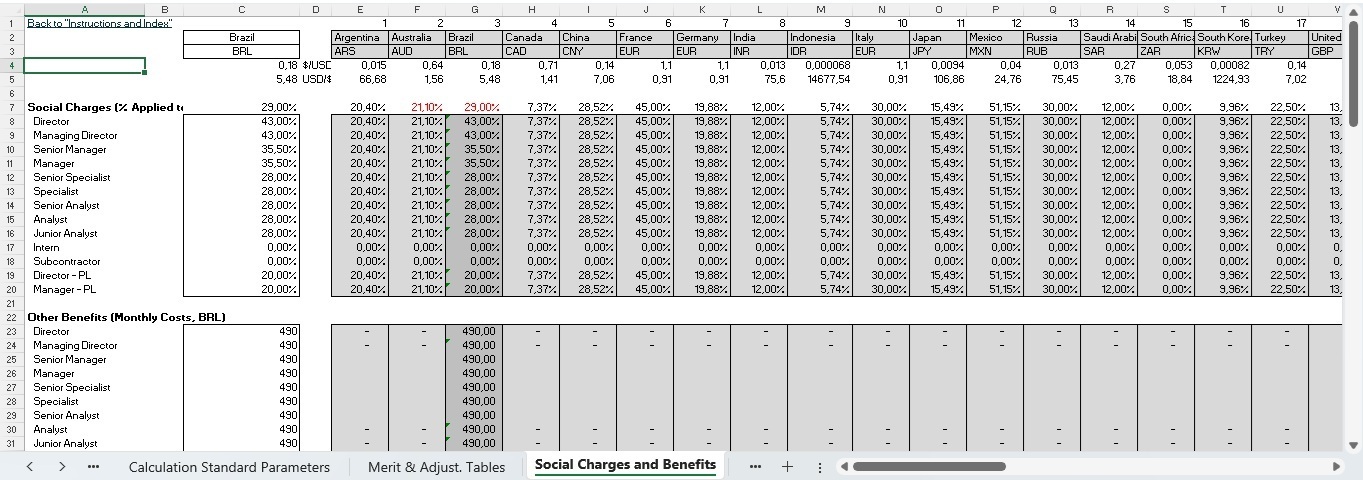
This Financial Model (Tool) is always evolving. Its Author is actively seeking partnerships and welcomes your feedback on potential enhancements or customizations. Right now, a key focus is to confirm and validate the Social Charges (Payroll Burden) and Benefits employers must pay in addition to regular salaries (compensations) across 60 different countries (Argentina, Australia, Brazil, Canada, China, France, Germany, India, Indonesia, Italy, Japan, Mexico, Russia, Saudi Arabia, South Africa, South Korea, Turkey, United Kingdom, United States, Switzerland, Chile, Colombia, Peru, Paraguay, Belgium, Poland, Hungary, Austria, Denmark, Iceland, Ireland, Netherlands, Sweden, Singapore, Costa Rica, Ecuador, Panama,Uruguay, Bolivia, Venezuela, Suriname, Guyana, Israel, Taiwan, Egypt, Nigeria, Algeria, Morocco, Ethiopia, Ghana, Angola, Kenya, Libya, Tanzania, Sudan, Tunisia, Thailand, Malaysia, Philippines, and Vietnam.). This is crucial as the tool is designed to cost and price services globally, using various currencies. Please refer to the "Social Charges and Benefits" sheet for more details.
For support and questions, please contact me on my Eloquens channel.
This Financial Model/Tool (Professional Services Costing Pricing Model - PSCPM) is designed to cost, price, and analyze the profitabilityof Large and Complex Professional Services engagements, especially in Outsourcing and Consulting. Despite its advanced capabilities, its core concept and usage remain straightforward (simple). This makes it versatile enough for smaller opportunities and initiatives like Auditing, Architecture and Engineering projects as well. The tool's complexity stems from extensive Excel Financial Modeling applied techniques, numerous input, output, and calculation sheets, and variables such as significant headcount and diverse service delivery models.
Please find below concepts, definitions, and examples of the terms mentioned above.
A Financial Model is a quantitative tool, typically spreadsheet-based (most commonly in Microsoft Excel), that represents the financial performance of a business, project, or asset. It combines historical financial data with a set of assumptions about future performance to forecast financial outcomes and help in decision-making. In essence, a financial model is a powerful analytical tool that translates business assumptions into a structured financial forecast, empowering better, data-driven decision-making.
Large and Complex Financial Models (Tools) are sophisticated analytical instruments designed to simulate, forecast, and analyze the financial performance of a business, project, or portfolio under various scenarios. They are characterized by their extensive data inputs, intricate calculations, numerous interconnected variables, and the ability to provide deep insights into financial health, risk, and strategic opportunities.
Here's a breakdown of what makes a financial model "large and complex":
Scale and Scope: Extensive Data Inputs; Multi-Period Forecasting; Granularity; Consolidation Capabilities.
Intricacy and Interdependencies: Complex Formulas and Logic; Interconnected Statements; Circular References; Driver-Based Modeling.
Scenario Analysis and Sensitivity Testing: Multiple Scenarios; Sensitivity Analysis; Simulation Capabilities.
Purpose and Applications: Strategic Planning; Valuation; Mergers & Acquisitions (M&A); Capital Allocation; Budgeting & Forecasting; Performance Management; Risk Management; Professional Services Costing & Pricing.
Technical and User Interface Considerations: Robust Structure; Error Checking; User-Friendliness (despite complexity); Scalability;
Professional Services encompass a broad category of businesses and individuals who provide specialized, knowledge-based expertise and solutions to clients, typically other businesses or organizations, but sometimes also individuals. Unlike businesses that sell tangible products, professional services deal in intangible assets like advice, analysis, strategy, and problem-solving. In essence, professional services are about providing specialized knowledge and skills to help clients achieve their objectives, solve problems, and improve their performance. They are a vital part of the modern economy, enabling businesses to access expertise they may not possess internally.
Costing of Professional Services is the methodical process of identifying, analyzing, and quantifying all expenses incurred in the delivery of a specific service or project. The primary goal is to determine the true financial outlay for providing a service. Unlike manufacturing, where material costs are prominent, professional services are heavily reliant on human capital, making labor costs and associated overheads the most significant components. The main purpose of costing is to understand the baseline expenses, enabling a firm to assess profitability, monitor efficiency, inform pricing decisions, and make strategic resource allocation choices. Without accurate costing, pricing becomes speculative, risking either underpricing (leading to losses) or overpricing (losing competitiveness).
Pricing of Professional Services is the strategic determination of the monetary amount a firm charges its clients for the services rendered. It's not just about covering costs; it's about capturing value, reflecting market dynamics, and achieving business objectives (e.g., profitability, market share, brand positioning). Pricing considers both the firm's internal costs and external factors like client perception of value, competitor rates, and market demand.
Relationship between Costing and Pricing:
Relationship between Costing and Pricing:
Costing is a prerequisite for effective pricing. A firm must first understand its costs to ensure that its chosen price point covers those costs and generates a desired profit margin. While costing provides a floor for pricing, pricing strategy then layers on considerations of value, market competition, and client willingness to pay to determine the optimal charge.
Profitability in Professional Services refers to the ability of a firm to generate a financial surplus after covering all its costs associated with delivering services. Unlike product-based businesses that sell tangible goods, professional services firms (PSFs) primarily sell expertise, time, and intellectual capital. Therefore, profitability in this sector is intrinsically linked to how efficiently and effectively these intangible assets are managed and monetized. Profitability Analysis of Professional Services is the systematic examination and evaluation of a firm's financial performance to understand how efficiently and effectively it generates profit from its service offerings. It goes beyond simply looking at the total profit figure and delves into the underlying drivers of that profit, identifying strengths, weaknesses, and opportunities for improvement.
The definition of Large and Complex Professional Services may also refer to engagements that involve significant scope, numerous stakeholders, intricate interdependencies, substantial financial investment, and a high degree of uncertainty or novelty. These contracts/projects typically address critical strategic or operational challenges for organizations, often leading to fundamental transformations or the creation of entirely new capabilities.
Here are the key characteristics that define large and complex professional services:
Scale and Scope: Significant Budget; Long Duration; Large Teams; Broad Organizational Impact; Global/Multi-geography.
Complexity and Interdependencies: Ambiguity and Uncertainty; Multiple Stakeholders; Interconnected Systems/Processes; Technical and Domain Intricacy; Risk and Volatility
Strategic Importance and Transformational Impact: High Stakes; Strategic Alignment; Transformational Change; Unprecedented Nature
Specialized Skill Sets Required: Advanced Problem-Solving; Exceptional Communication; Change Management Expertise; Program/Portfolio Management; Political Acumen.
Large and Complex Professional Services are not just about delivering a solution; they are about orchestrating significant change, managing intricate relationships, and navigating high levels of uncertainty to achieve profound and lasting impact for the client. The concept of large and complex professional services describes major, high-stakes engagements that are strategically critical, involve significant resources over an extended period, and are inherently challenging due to their multifaceted nature, interconnectedness, and the often undefined path to a tailored solution. Delivering these services requires not only deep expertise but also exceptional program management, change management, stakeholder engagement, and risk mitigation capabilities.
Difference between Outsourcing and Consulting:
While both outsourcing contracts and consulting projects involve engaging external expertise, they differ significantly in their fundamental purpose, scope, relationship dynamics, and desired outcomes. Here's a breakdown of the key distinctions:
Outsourcing Contracts
Purpose: To delegate a specific, often repetitive or well-defined business function or process to an external provider. The primary drivers are typically cost reduction, efficiency gains, access to specialized resources, or the desire to focus on core competencies.
Scope of Work: Well-defined and operational; Well-defined; Often Ongoing (Many outsourcing relationships are long-term, continuous arrangements for a specific function [e.g., ongoing maintenance, customer support])
Relationship Dynamics: Vendor-Client; Less Strategic Input; Focus on SLAs and KPIs; Control is Externalized (Operationally)
Desired Outcomes: Cost Savings; Increased Efficiency; Focus on Core Business; Access to Specialized Skills;
Consulting Projects
Purpose: To provide expert advice, analysis, and recommendations to help a client solve complex business problems, improve performance, or achieve strategic objectives. The primary drivers are typically a need for specialized knowledge, an objective external perspective, or a temporary surge in strategic workload.
Scope of Work: Problem-Solving and Strategic; Advisory and Co-Creative; Project-Based and Finite.
Relationship Dynamics: Partnership/Advisory; Strategic Input; Focus on Insights and Recommendations; Client Retains Control for Implementation.
Desired Outcomes: Improved Decision-Making; Problem Resolution; Organizational Change; Knowledge Transfer; Innovation.
Examples and types of Outsourcing Contracts/Deals:
-> Application Outsourcing:
o Application Management Services (AMS)
o Application Development:
§ Software Factory
§ Test Factory
o Staff Augmentation
-> Infrastructure Outsourcing;
o Network Outsourcing
o Server and Storage Outsourcing
o Desktop and End-User Support
o Cybersecurity Outsourcing
o Cloud Services Management
o Staff Augmentation
-> Business Process Outsourcing (BPO):
o Finance and Accounting (F&A)
o Human Resources (HR)
o Customer Care/Support
o Shared Services Center
-> Mobilization and Transition Services, which begin before the outsourcing operations, may have the following phases:
o Planning and Preparation (including Due Diligence);
o Staff Recruiting, Onboarding, and Allocation
o Knowledge Transfer and Training;
o Operation Implementation
o Operation Stabilization
Mobilization and Transition are crucial phases or types of projects, especially prevalent in large-scale professional services, outsourcing, and significant organizational changes. They represent distinct, yet often sequential and interconnected, efforts aimed at preparing for or executing a shift in operations or responsibility.
A mobilization project or initiative is the preparatory phase and set of activities required to assemble, organize, and activate all necessary resources, personnel, equipment, technology, and infrastructure to commence a new project, a new contract, or a new phase of work effectively and efficiently. It's about getting everything in place to start the actual execution.
A transition project or initiative is the structured process of moving from an existing "as-is" state to a new "to-be" state. This often involves transferring ownership, knowledge, responsibilities, or entire operational functions from one entity (e.g., an internal team) to another (e.g., an external service provider, or a new internal team), or the deployment of a new solution from development to live operation. It is inherently about managing change and ensuring continuity and stability during the shift.
Examples and types of ->Consulting Projects:
o Strategy Consulting;
o Management Consulting;
o Financial Consulting (including Shared Services Implementation);
o Human Resources Consulting (including Change Management [CM] and Talent and Organization Performance [TOP]);
o Operations Consulting;
o IT Consulting;
o Marketing Consulting;
o Sustainability Consulting.
-> Integrated Solutions (both Consulting projects and Outsourcing engagements):
o DBR [Design, Build and Run], such as ERP/CRM implementations;
o Bundled Opportunities (Consulting and Outsourcing resources combined in order to achieve a common goal/solution).
Financial modeling is the process of creating a numerical representation of a company, project, or asset's past, present, and future financial performance. It primarily involves building detailed, dynamic spreadsheets (most commonly in Microsoft Excel) that integrate historical financial data with assumptions about future variables to forecast financial outcomes. In essence, financial modeling is the art and science of translating business operations, strategic decisions, and market conditions into quantifiable financial projections.
Specific use of the PSCPM Tool
In the Financial Model (Tool) the names of the services can be defined in the sheet “INPUT- Parameters & Assumptions”, Cells Range: F9-F18, “Services List”.
The Country, from which Services are rendered, together with currency, can also be defined in the sheet “INPUT- Parameters & Assumptions”, Cells Range: C40-D40, “Services Delivery”; so is the Invoicing Model on Cell Range Cells Range: F40-G40.
Please find attached two Excel workbooks, which you can download. One is an "Example" that shows how to use the Financial Model, while the other one is a "Template" for costing and pricing new deals from the ground up.
This Financial Model (Tool) is always evolving. Its Author is actively seeking partnerships and welcomes your feedback on potential enhancements or customizations. Right now, a key focus is to confirm and validate the Social Charges (Payroll Burden) and Benefits employers must pay in addition to regular salaries (compensations) across 60 different countries (Argentina, Australia, Brazil, Canada, China, France, Germany, India, Indonesia, Italy, Japan, Mexico, Russia, Saudi Arabia, South Africa, South Korea, Turkey, United Kingdom, United States, Switzerland, Chile, Colombia, Peru, Paraguay, Belgium, Poland, Hungary, Austria, Denmark, Iceland, Ireland, Netherlands, Sweden, Singapore, Costa Rica, Ecuador, Panama,Uruguay, Bolivia, Venezuela, Suriname, Guyana, Israel, Taiwan, Egypt, Nigeria, Algeria, Morocco, Ethiopia, Ghana, Angola, Kenya, Libya, Tanzania, Sudan, Tunisia, Thailand, Malaysia, Philippines, and Vietnam.). This is crucial as the tool is designed to cost and price services globally, using various currencies. Please refer to the "Social Charges and Benefits" sheet for more details.
For support and questions, please contact me on my Eloquens channel.
This Best Practice includes
2 Excel files
Thiago Brandini de Jesus offers you this Best Practice for free!
download for free
Add to bookmarks