


Junk Removal Profit and Cash Flow Model | Franchise or Independent Setup
Originally published: 03/11/2025 13:21
Publication number: ELQ-94250-1
View all versions & Certificate
certified

Junk Removal Profit and Cash Flow Model | Franchise or Independent Setup

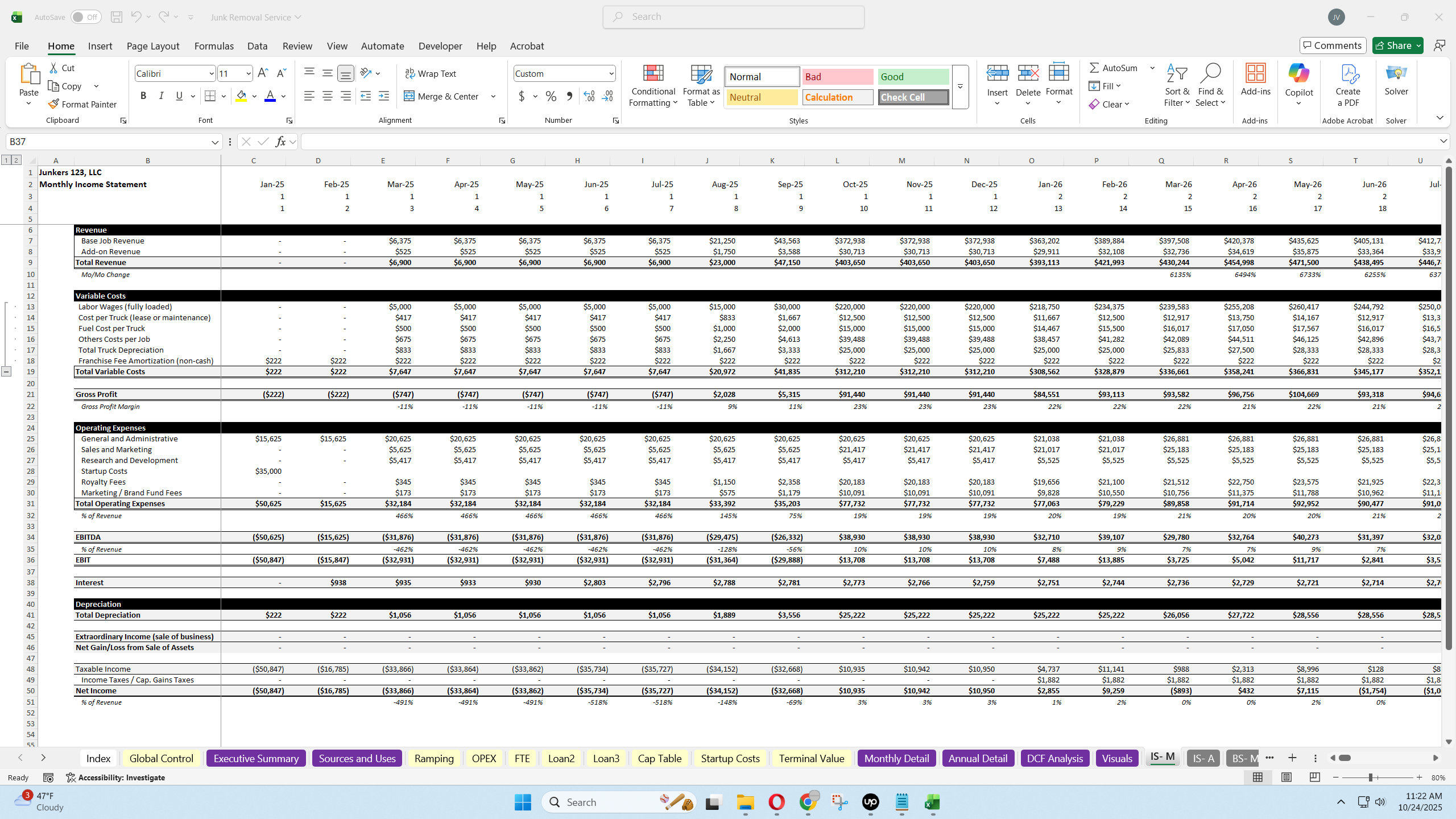
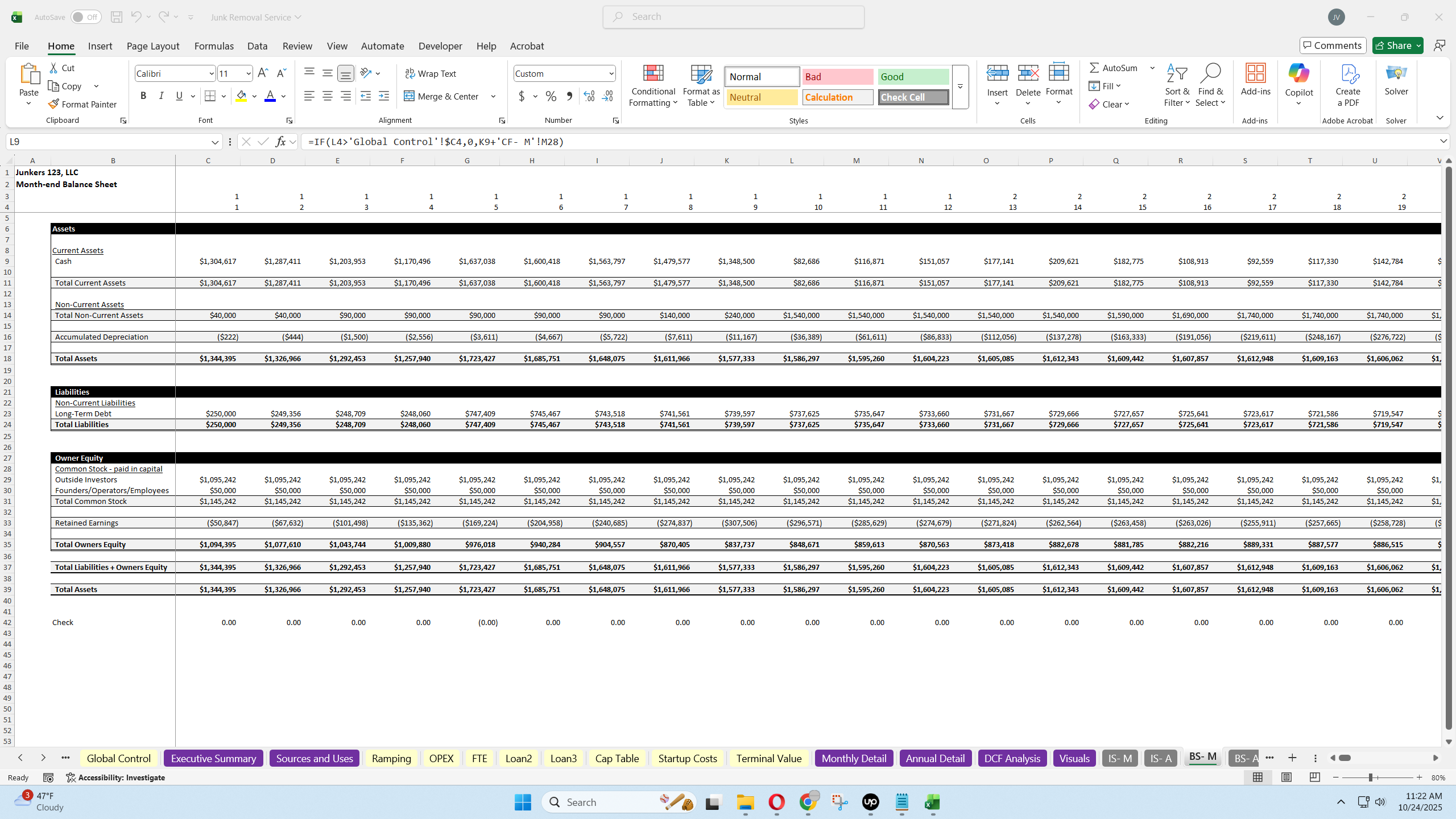
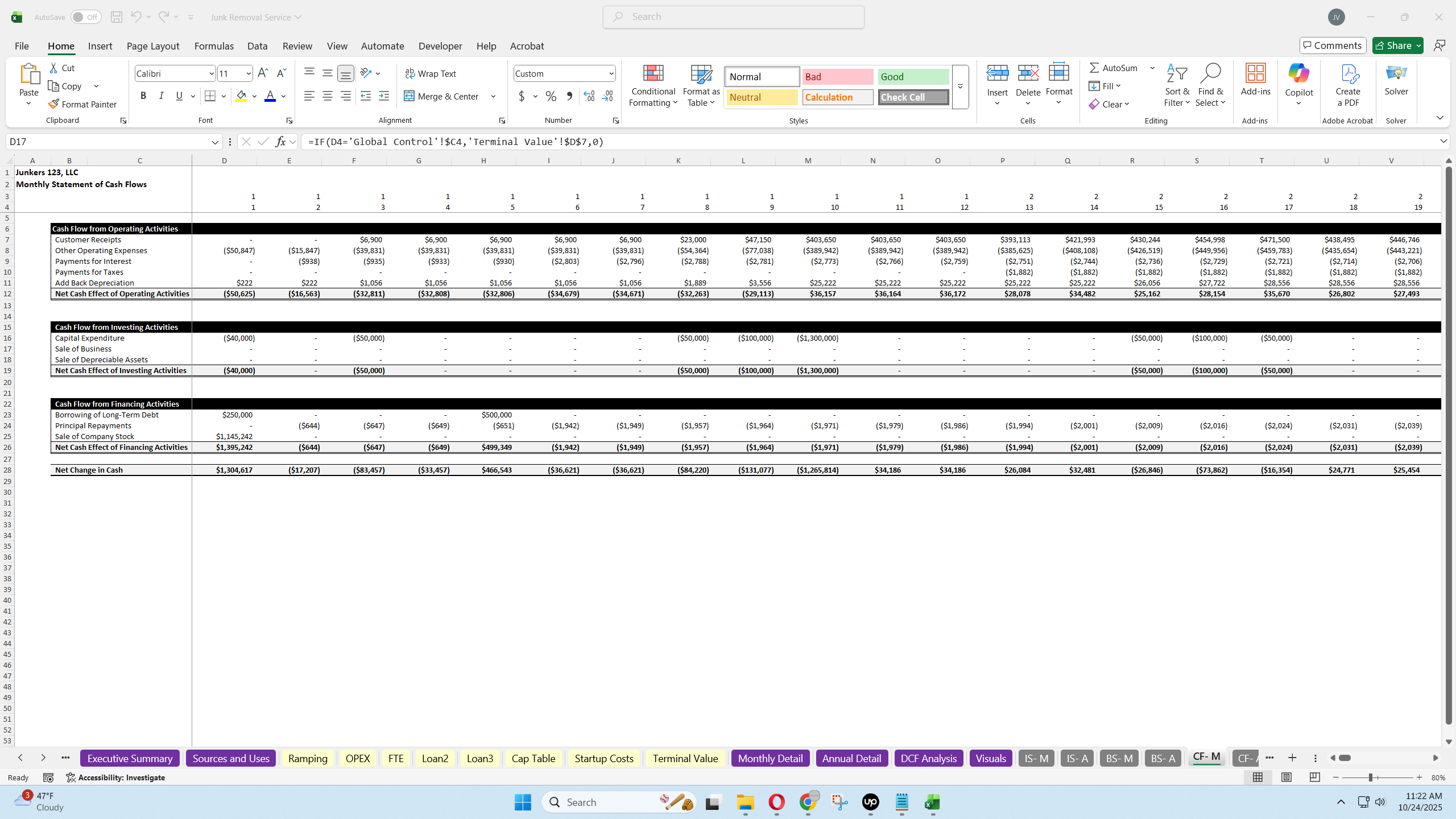
Bottom-up assumptions to drive a financial forecast specifically tailored to a startup junk removal service. Includes financial statements.

Description
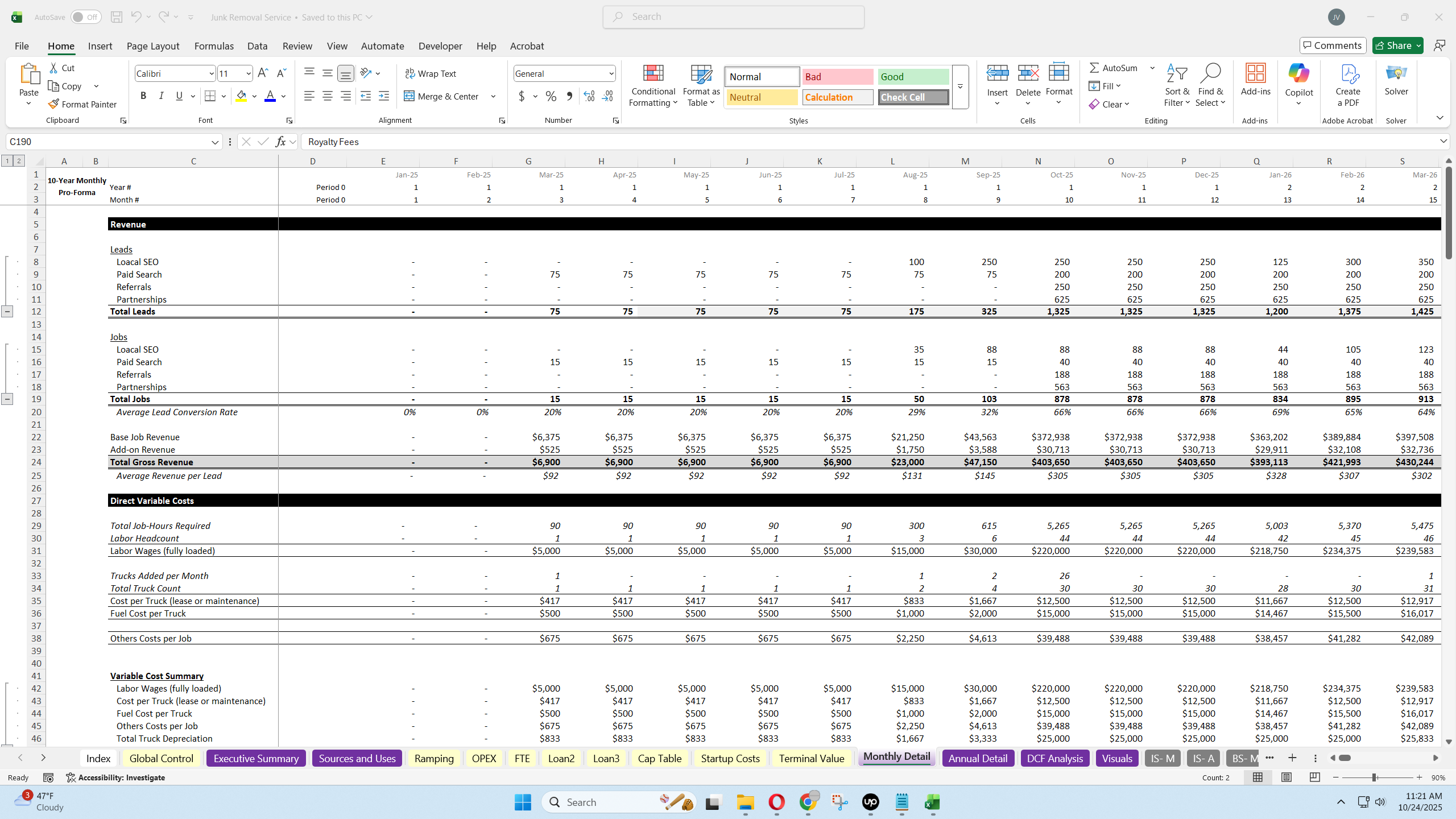
This Junk Removal Service Financial Model Template gives owners, operators, and investors a clear, driver‑based view of how a junk hauling business makes money and uses cash. It consolidates lead generation, pricing, labor capacity, trucks, and overhead into a single spreadsheet that rolls up to full financial statements and valuation outputs. The structure is intentionally straightforward—no matrix‑style input grid is required for revenue and direct costs (depreciation is the only matrix‑style schedule)—so you can focus on decisions rather than wrestling with the model.


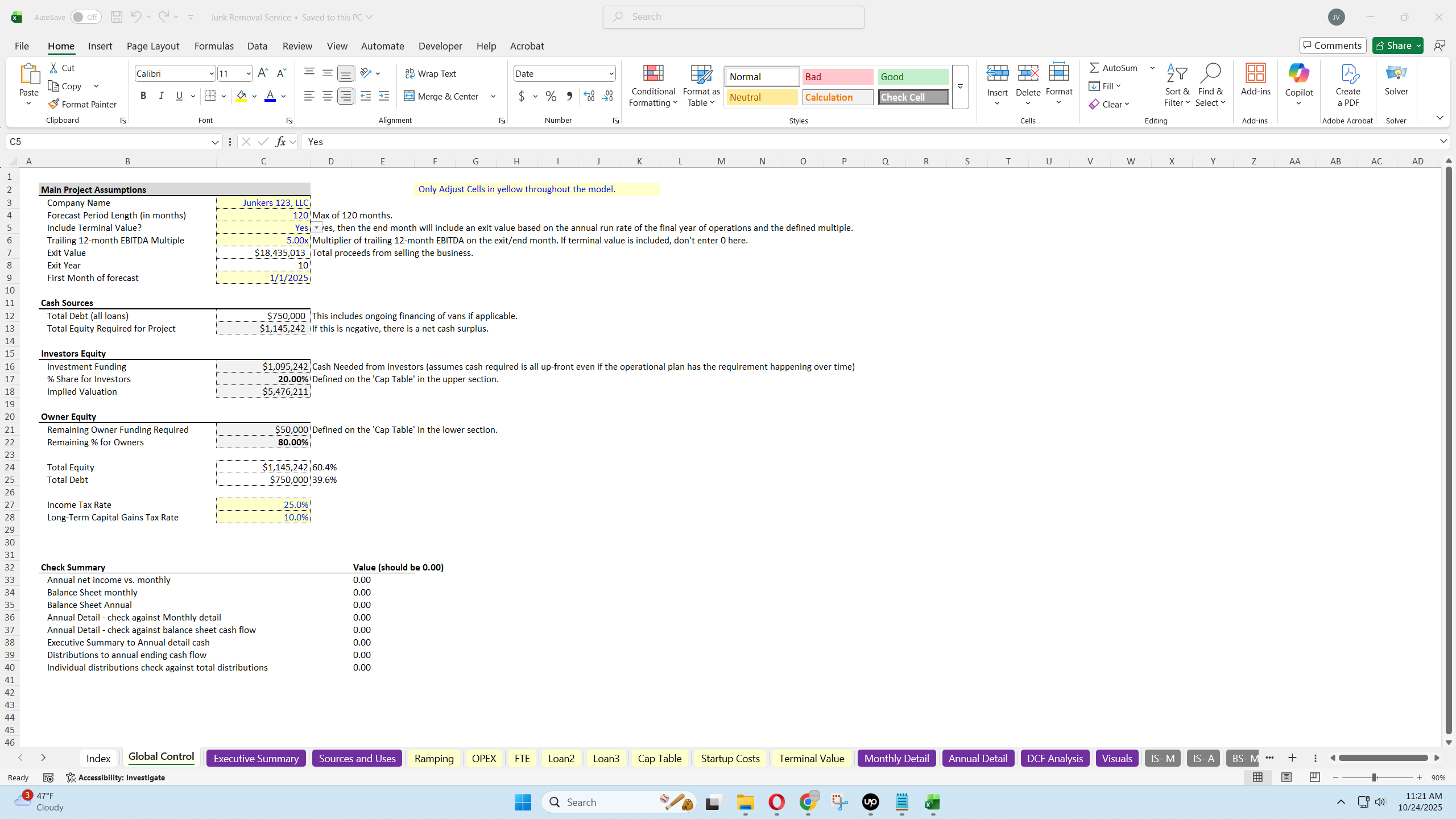
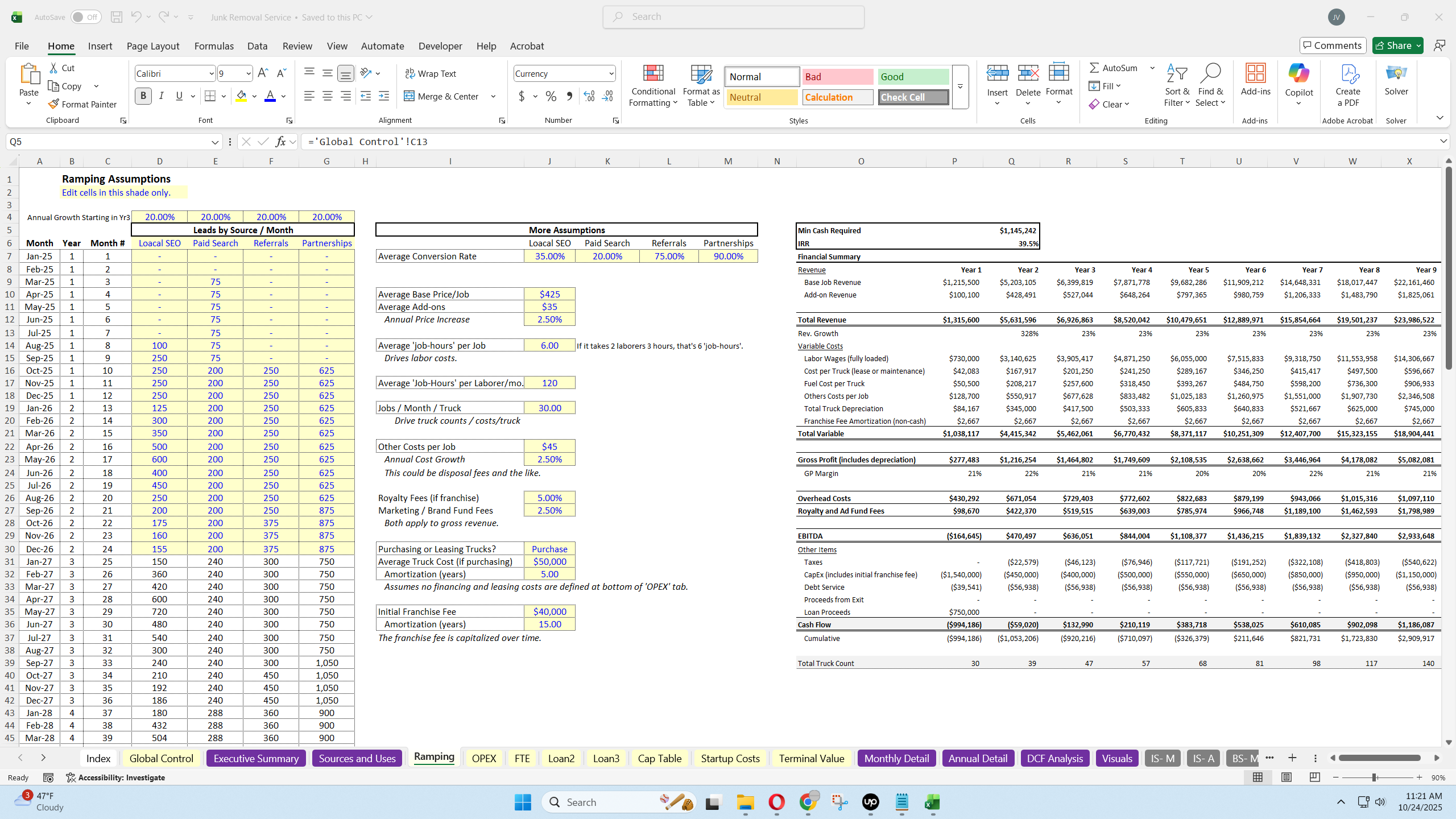
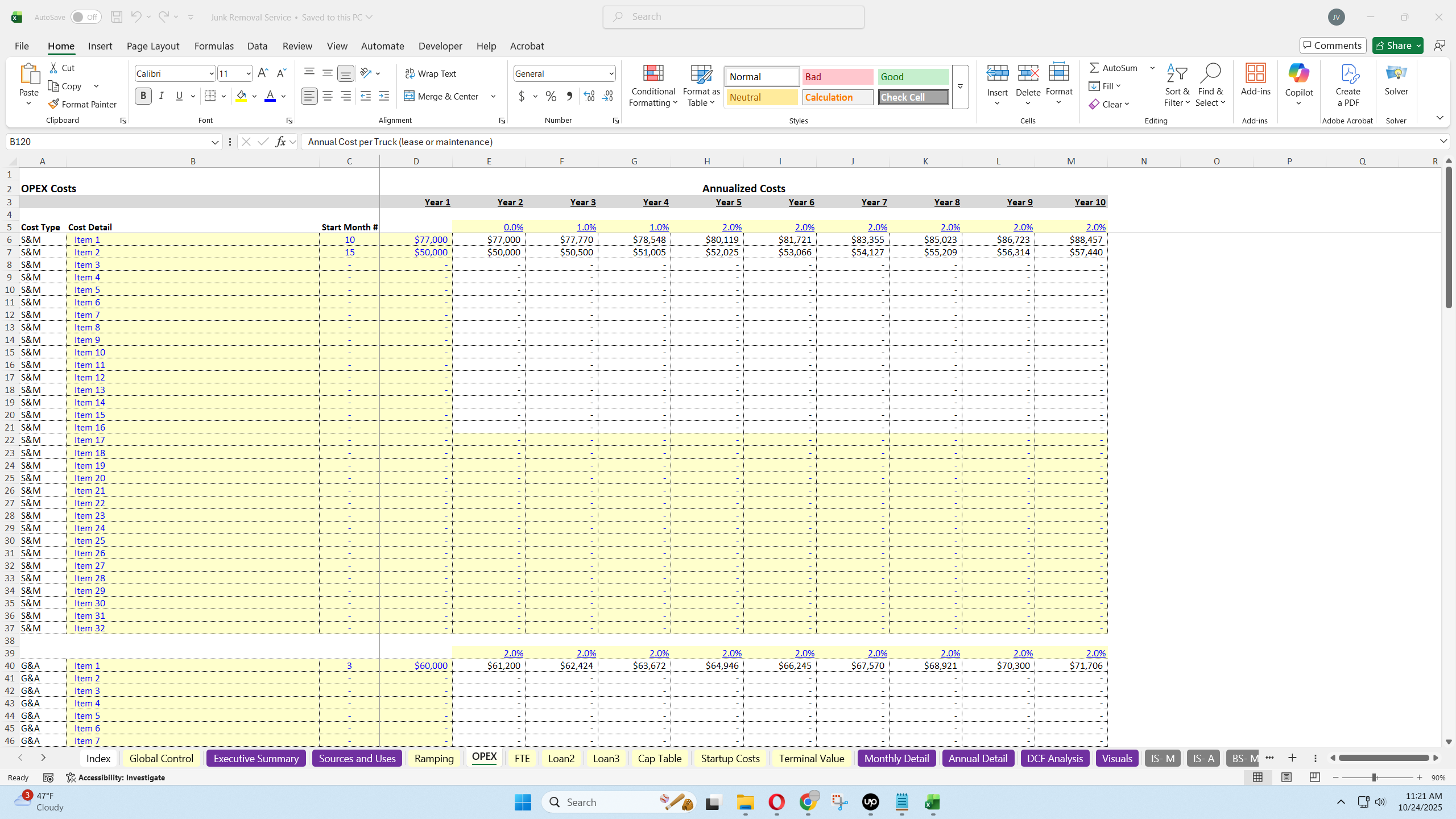
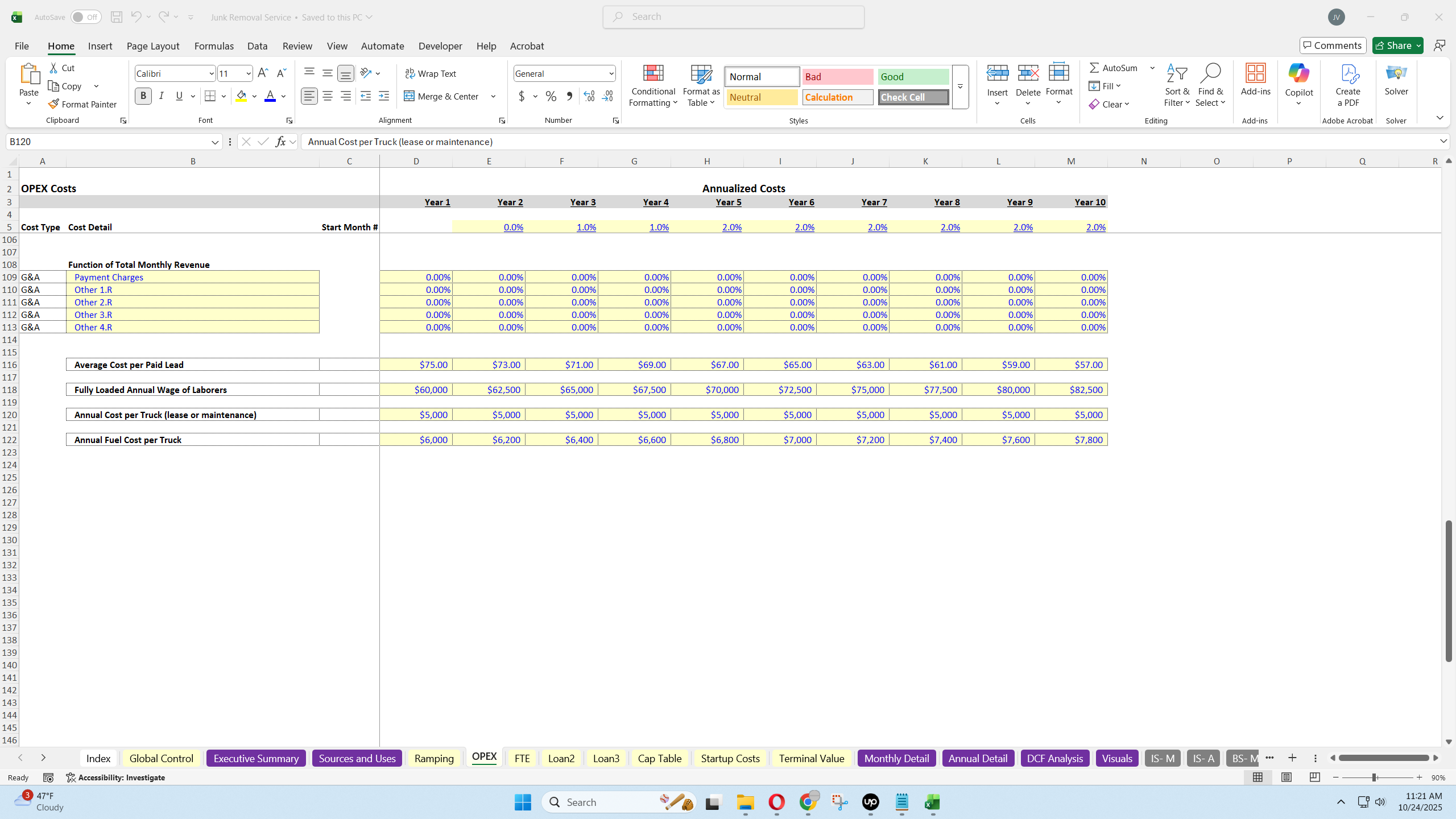
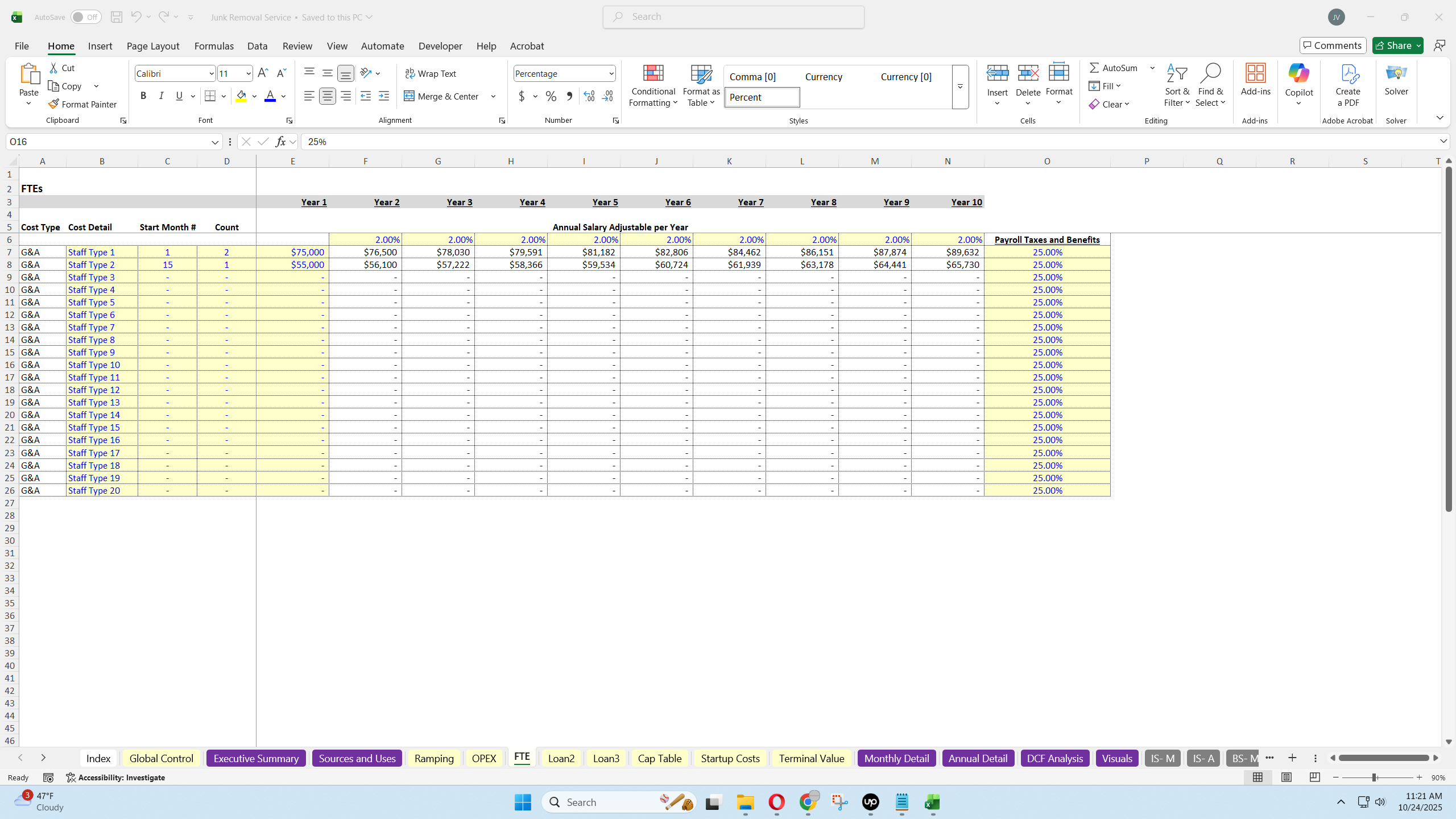
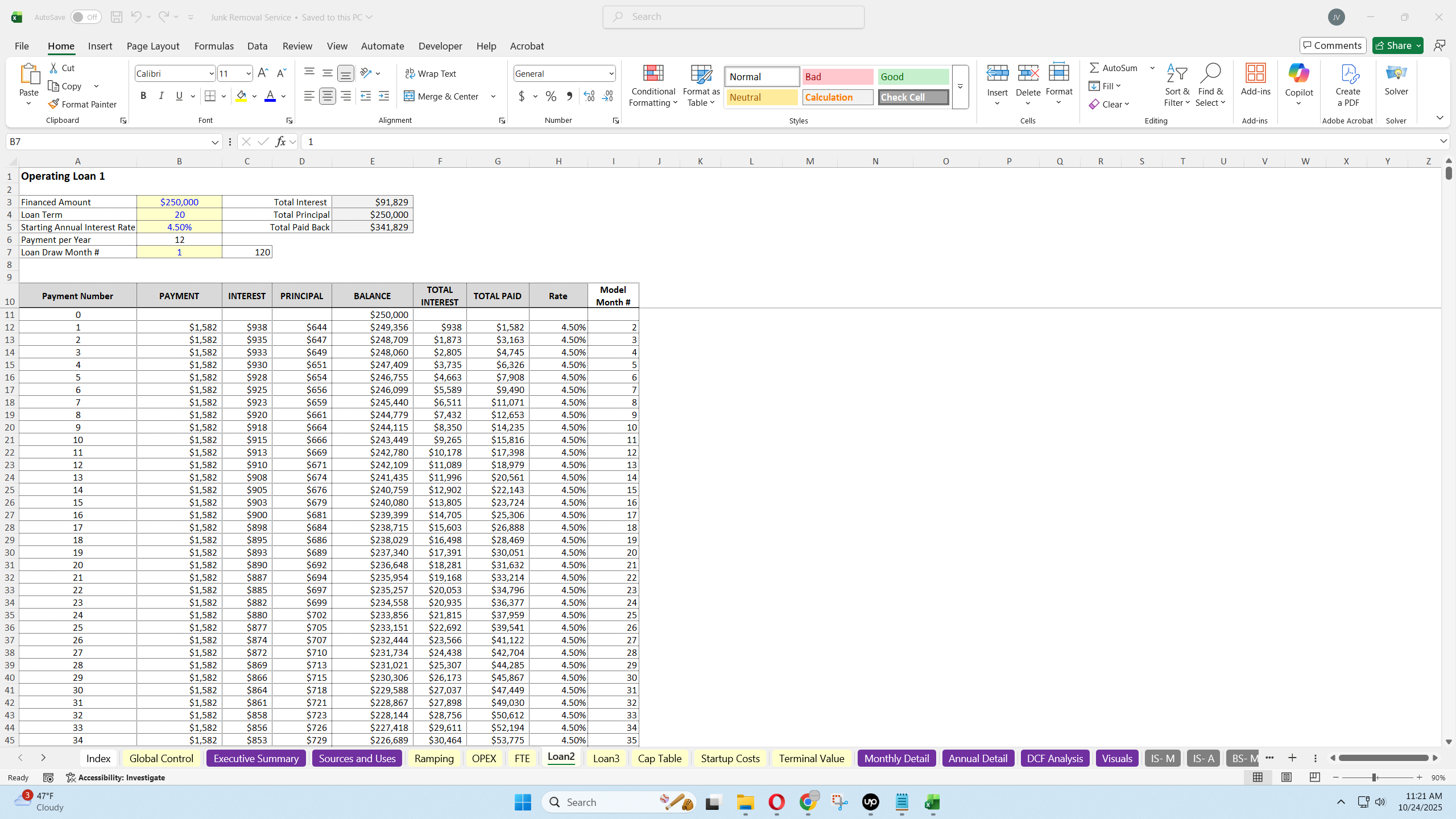
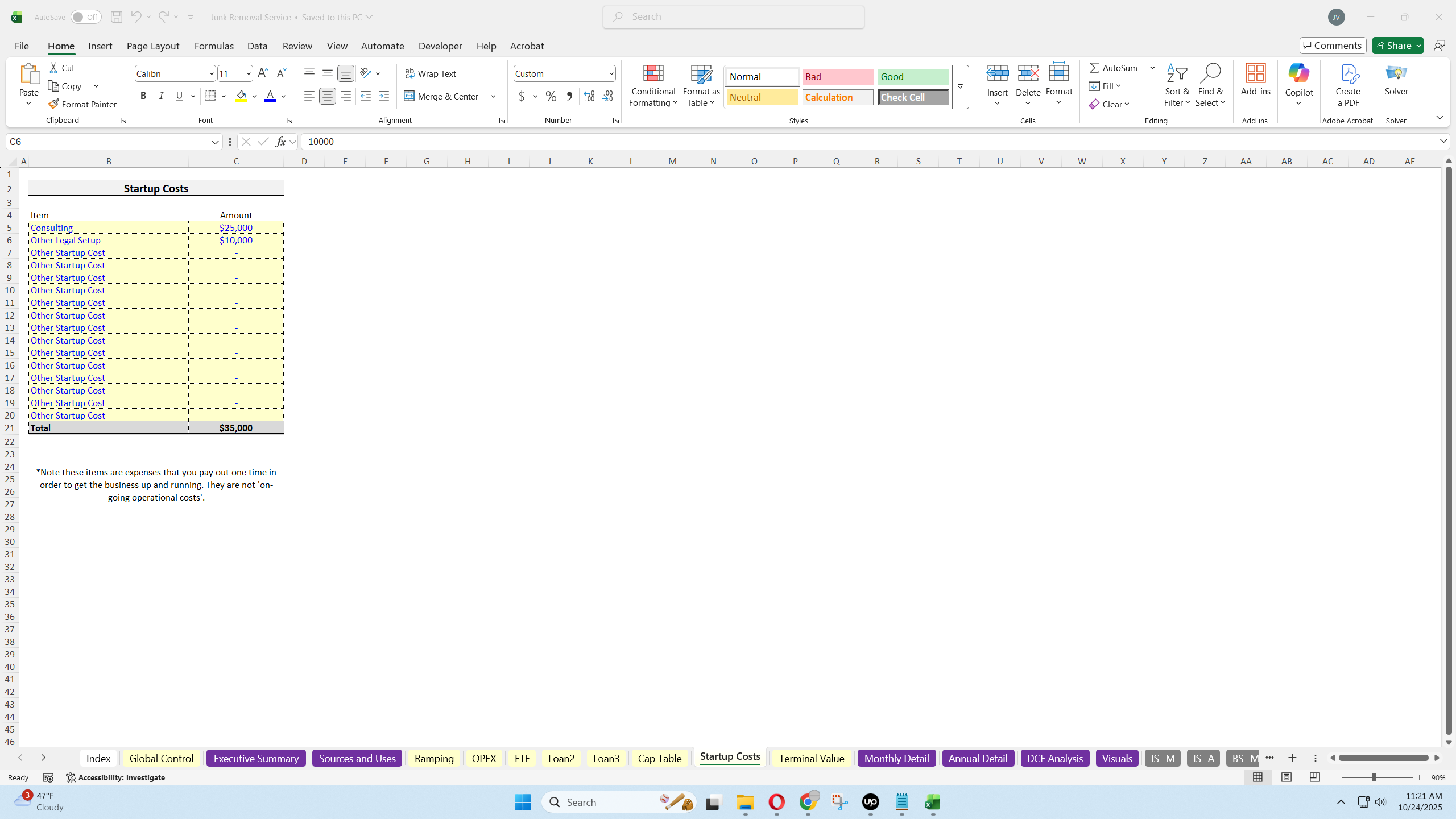
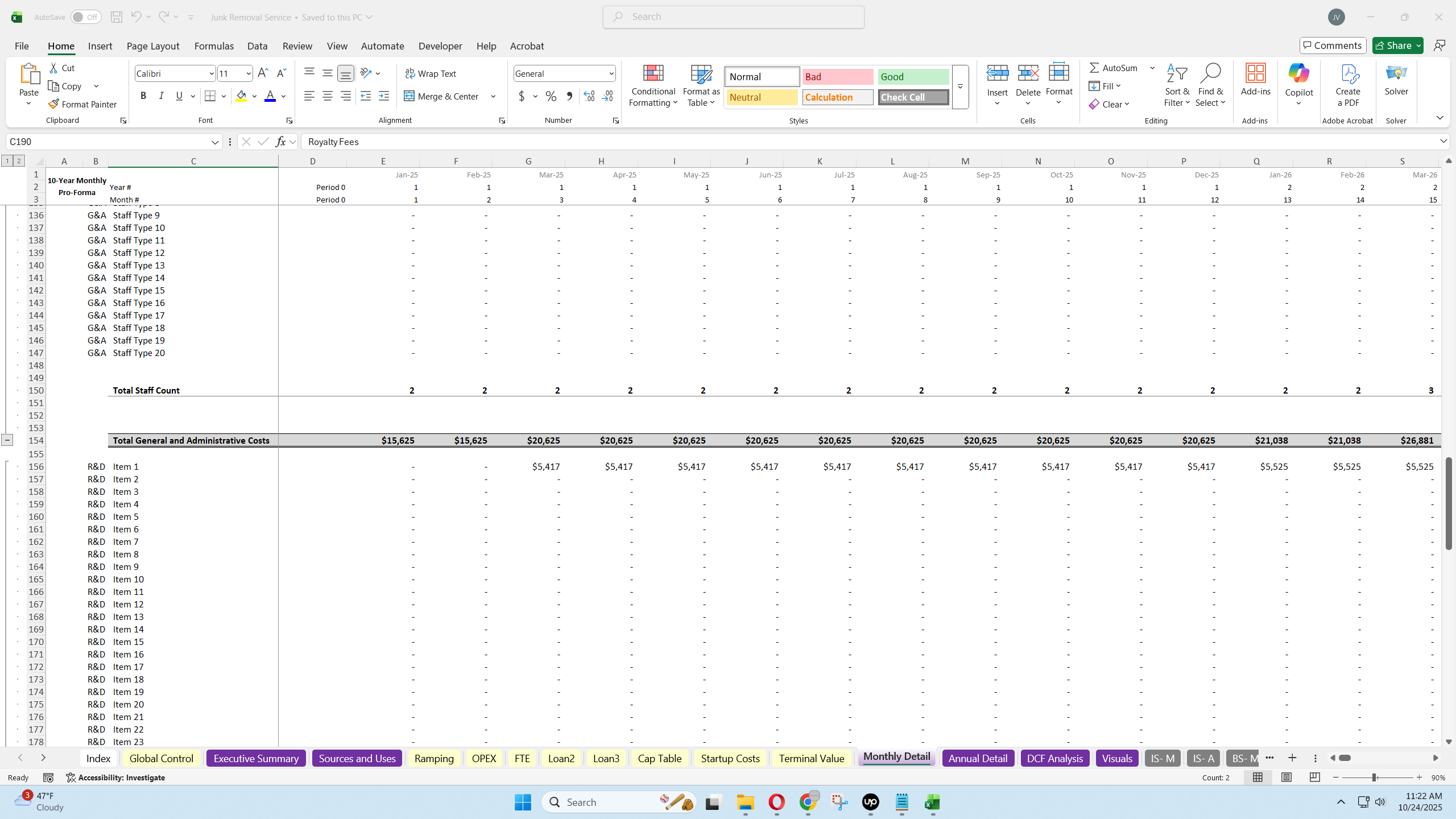
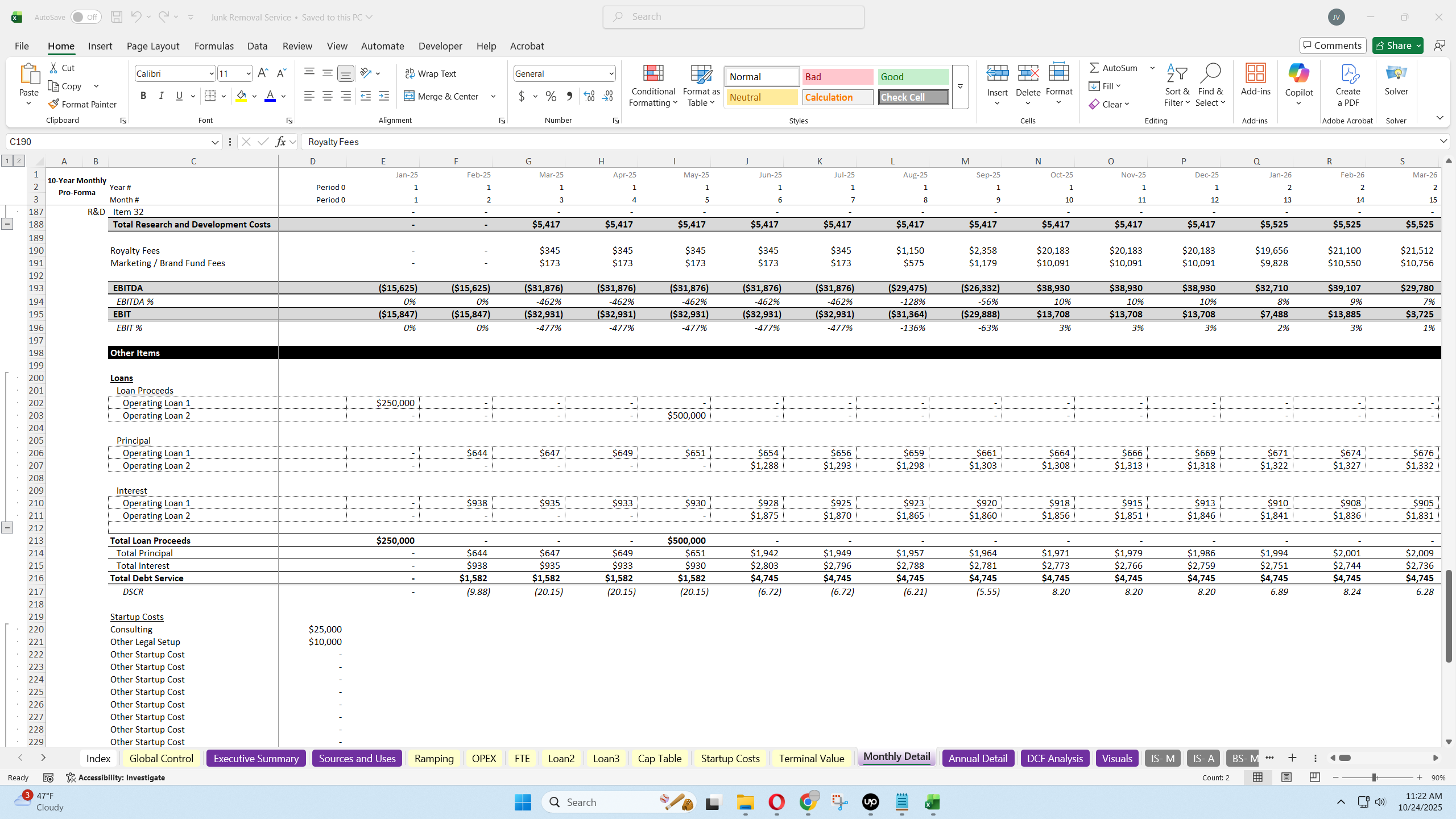
Using the template is simple: enter expected monthly leads from up to four sources for the first 24 months, then let defined growth rates extend the out‑years to capture seasonality. Set conversion rates by lead type, average price per job and add‑ons (with annual price growth), and the operational levers that really matter: job‑hours per job, job‑hours a laborer can deliver per month, fully loaded wages (and growth), and the number of jobs a single truck can handle monthly. Choose whether you’re leasing or purchasing trucks—lease costs flow through OPEX, while purchased trucks bring maintenance/taxes/insurance and a depreciation expense that is treated as a non‑cash direct cost hitting gross profit. Layer in fuel, cost per paid lead, franchise royalties/ad fund and the amortized initial fee if applicable, plus a full corporate overhead section with an FTE schedule, two operating loans, and other startup costs.


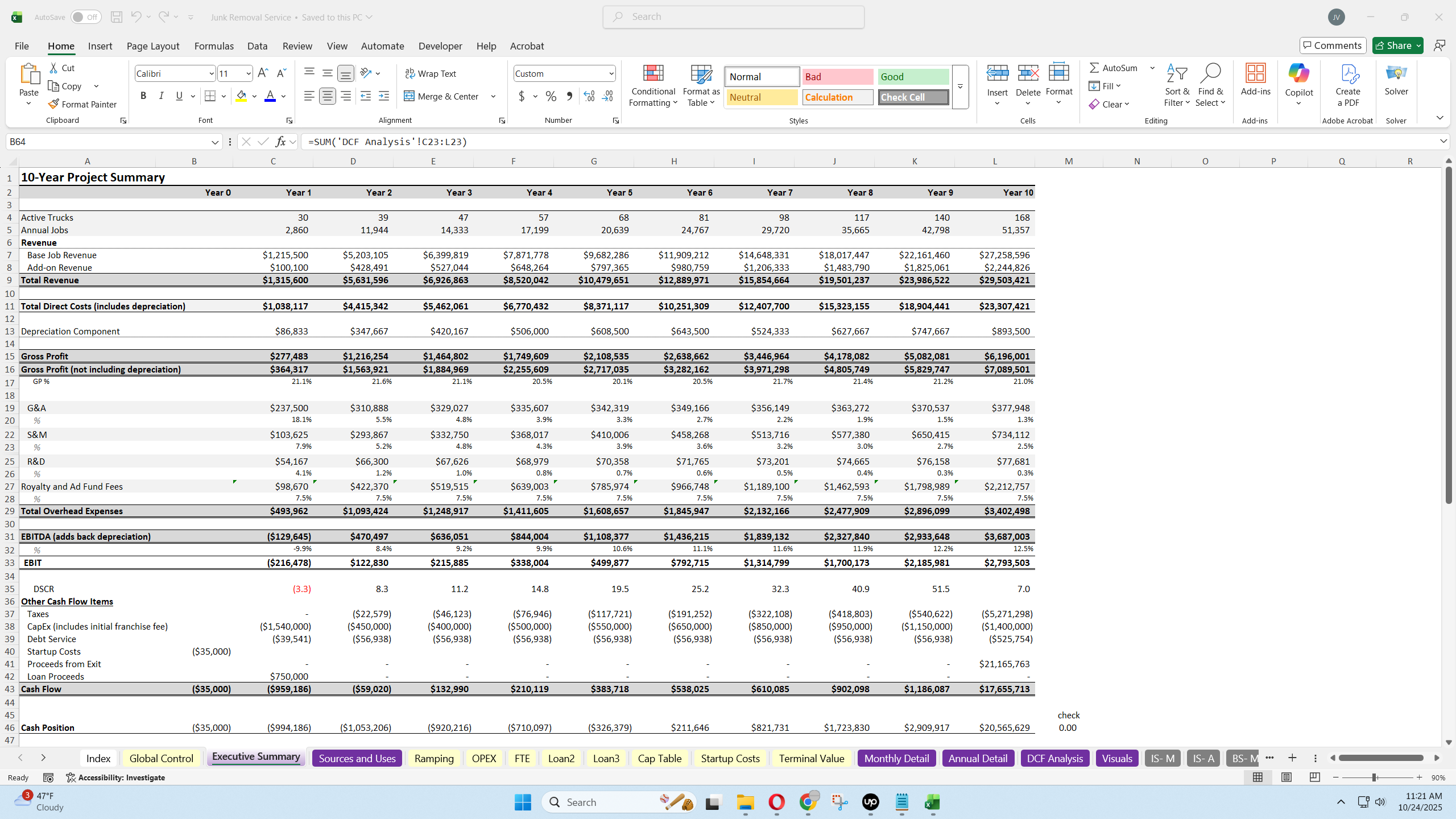
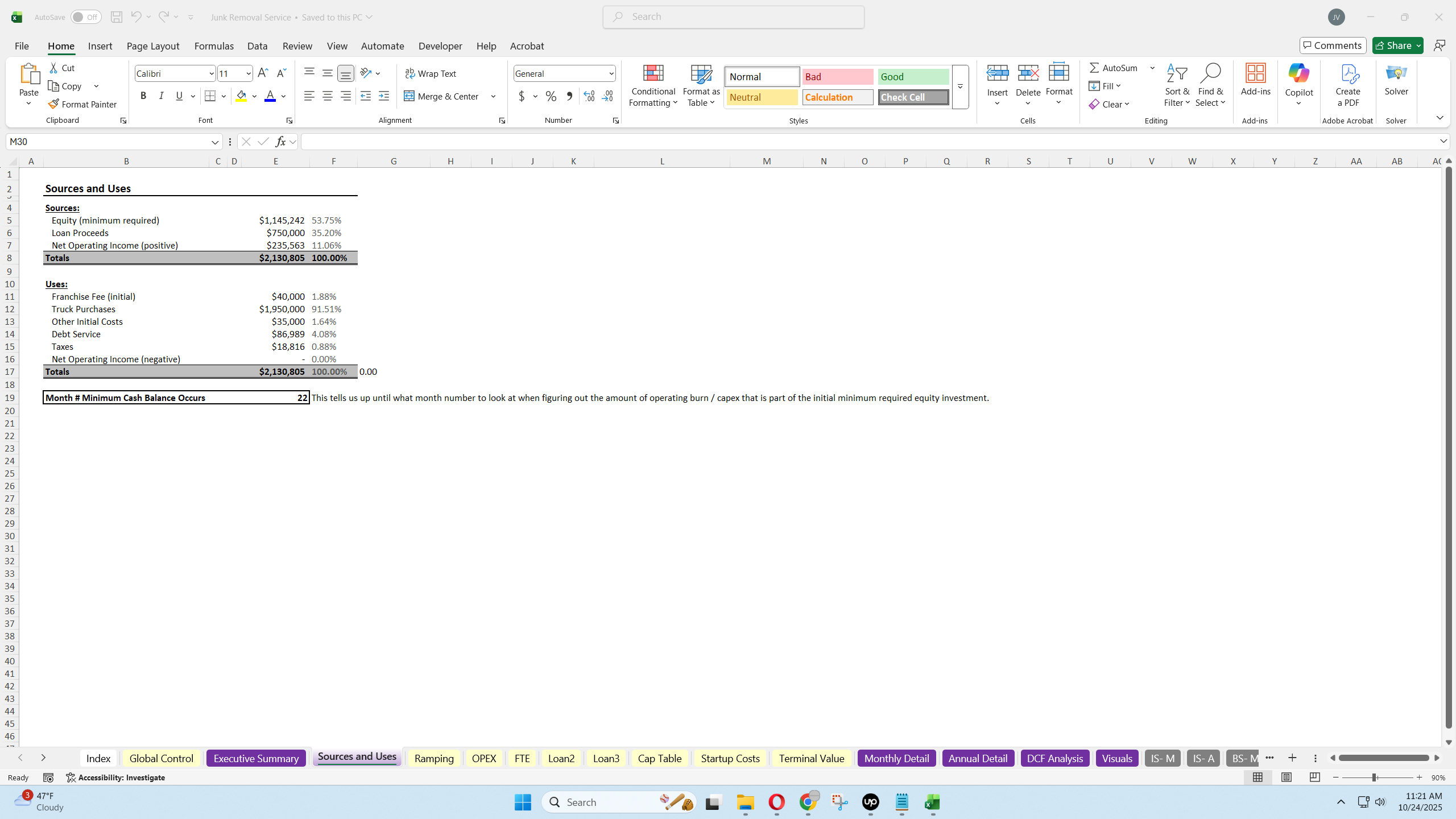
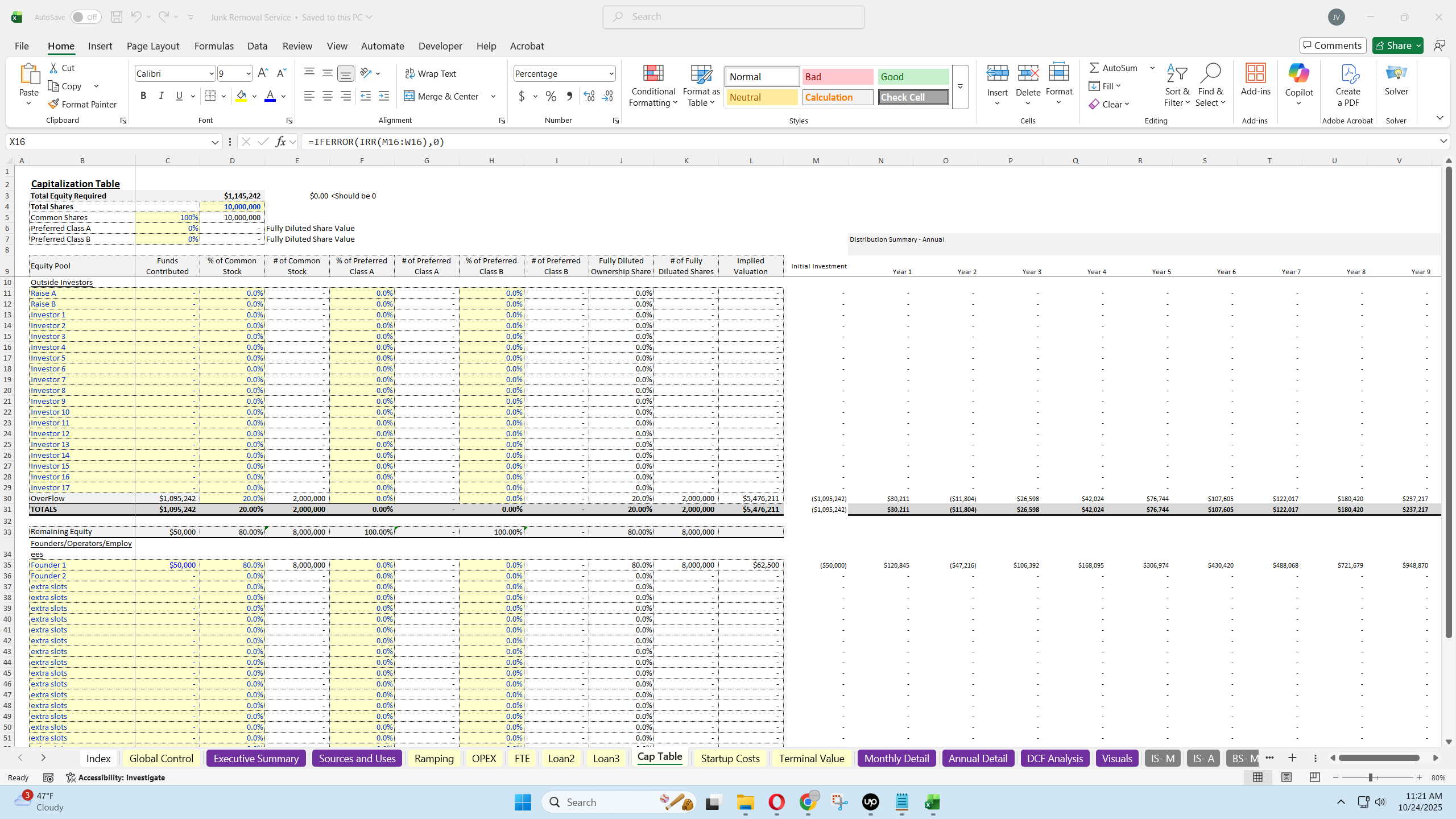
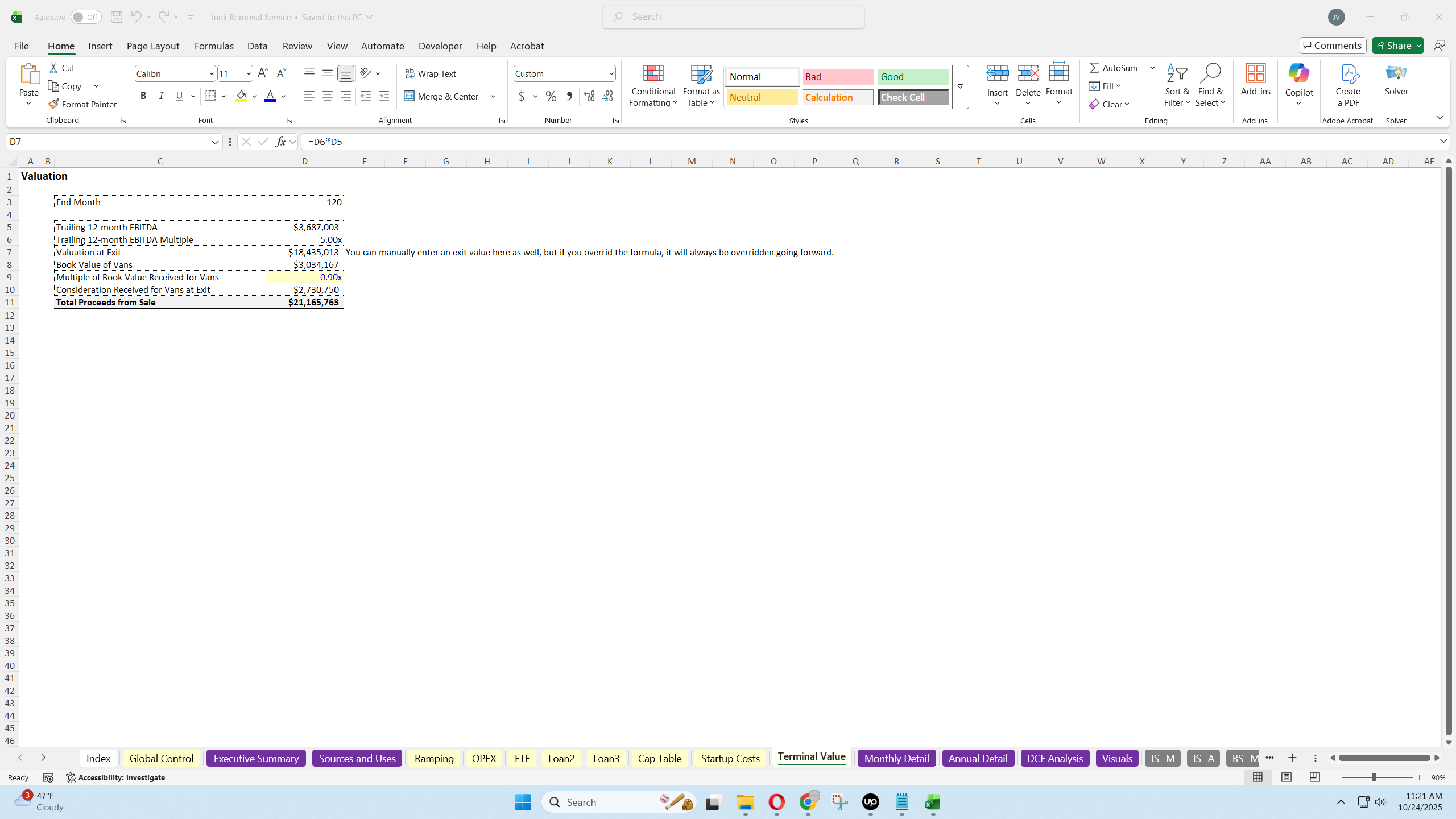
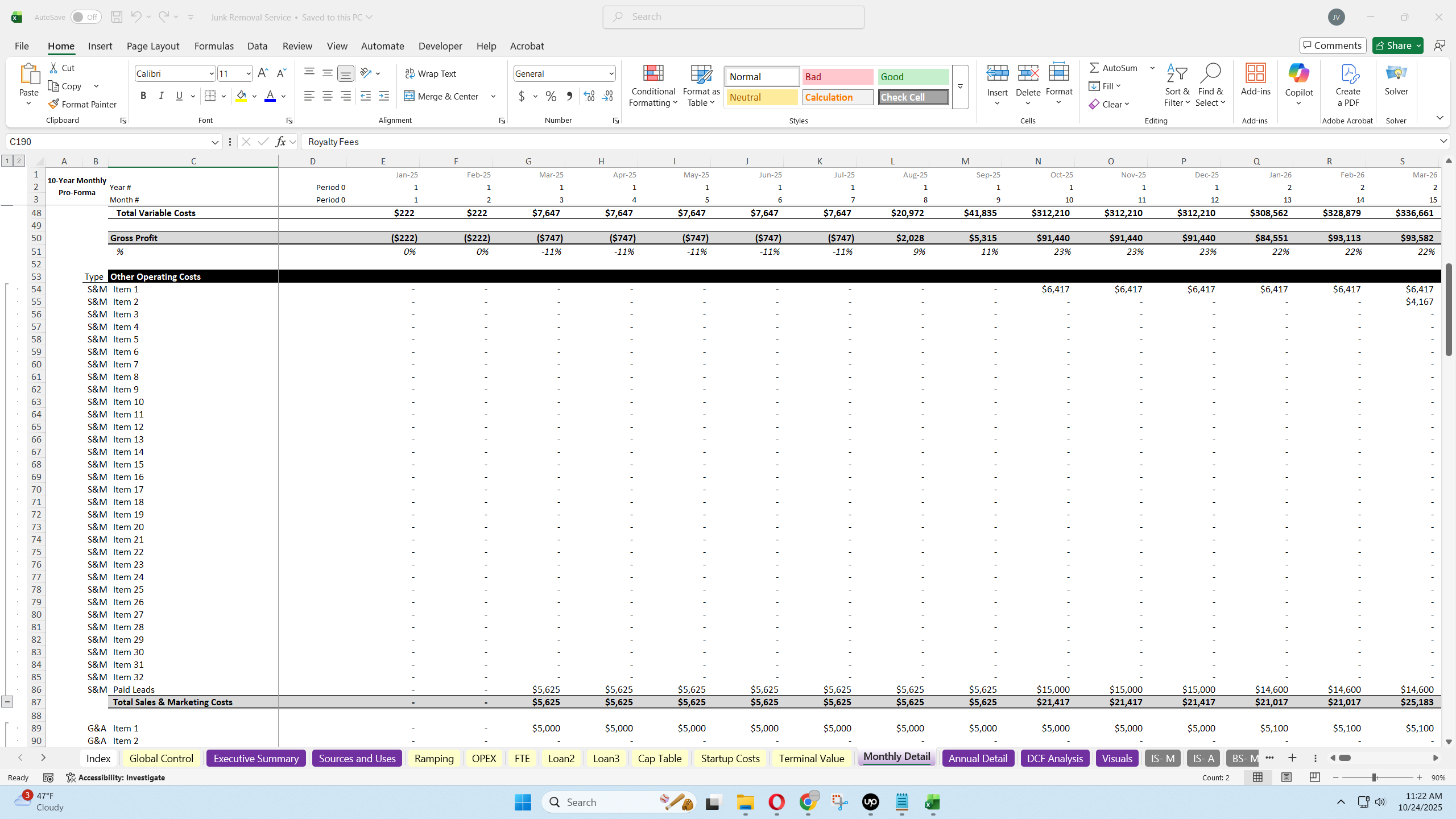
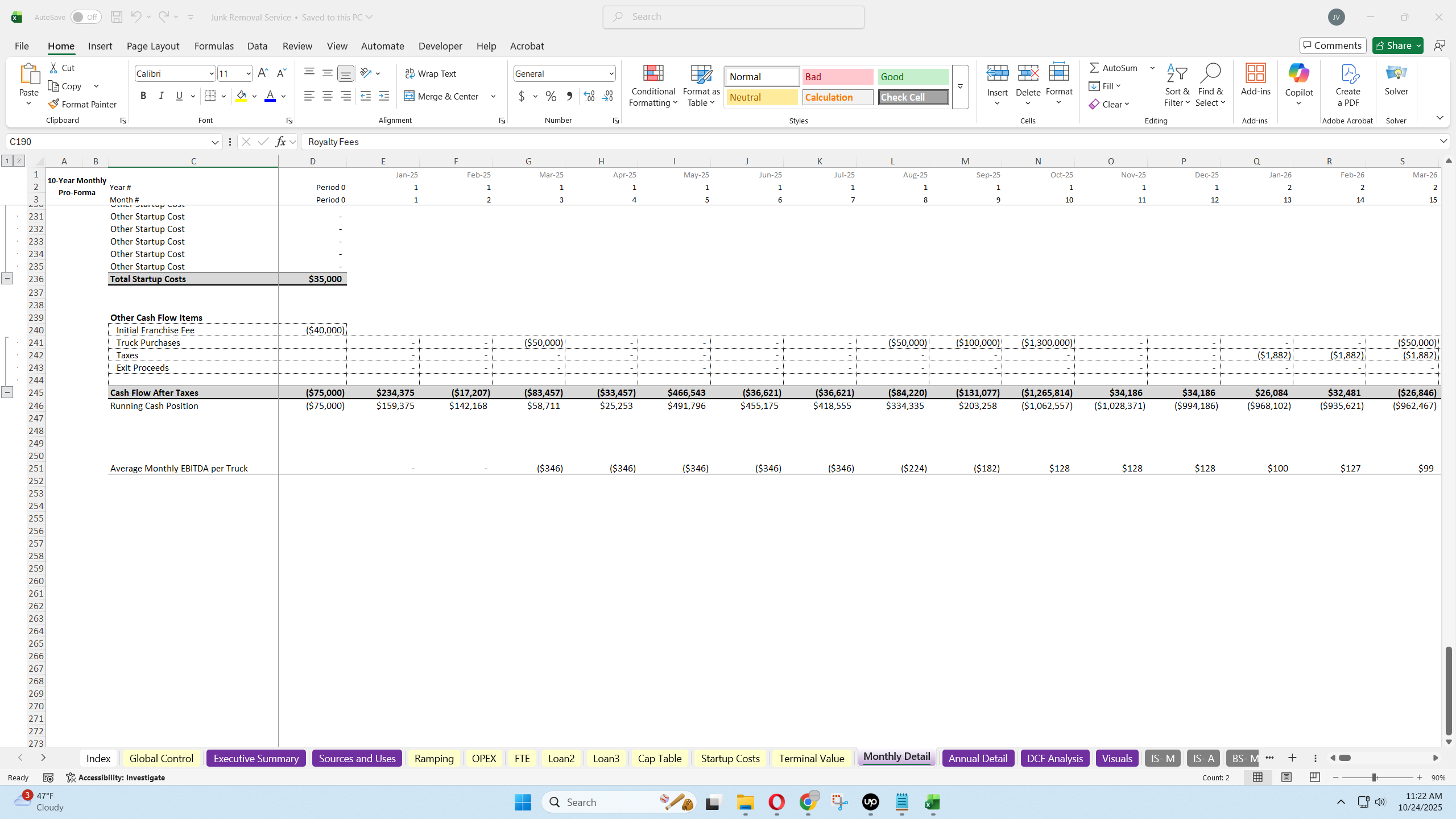
The model then produces dynamic monthly and annual 3‑statement financials (Income Statement, Balance Sheet, Cash Flow), an executive summary, and charts for primary line items and KPIs. It includes a complete DCF analysis with a user‑defined discount rate, return metrics (IRR, Equity Multiple, total ROI), and detailed monthly and annual pro formas down to cash flow. Exit and valuation are built in: toggle a terminal value, set the EBITDA multiple, specify expected truck values relative to book at exit, and the model assumes debt is repaid in the exit scenario. DCF views are presented for investor, operator, and project perspectives, and Sources & Uses (including partial burn and other cash items) quantify the minimum equity required.


What’s especially nice is how the capacity and pricing logic tie directly to funding and returns. You can quickly test seasonality, staffing plans, and lease‑vs‑buy choices, see the effect on gross profit and cash flow, and understand exactly how much equity is needed—and how contributions translate to profit share. The template saves time, reduces spreadsheet errors, and creates a common language for conversations with managers, lenders, and potential stakeholders. Enter your assumptions once, and you’ll have a clean, professional set of forecasts, KPIs, and valuation outputs to guide better, faster decisions.

This Best Practice includes
1 Excel model, 1 overview video

Acquire business license for $70.00

Add to cart

Add to bookmarks

Discuss

Further information

Produce financial projections based on assumptions and provide internal and external stakeholders with an idea of the startups financial plan.

Single average price per job and one add-on revenue item. Driven by lead conversions.


0.0 / 5 (0 votes)

please wait...