Publication number: ELQ-86214-1
View all versions & Certificate

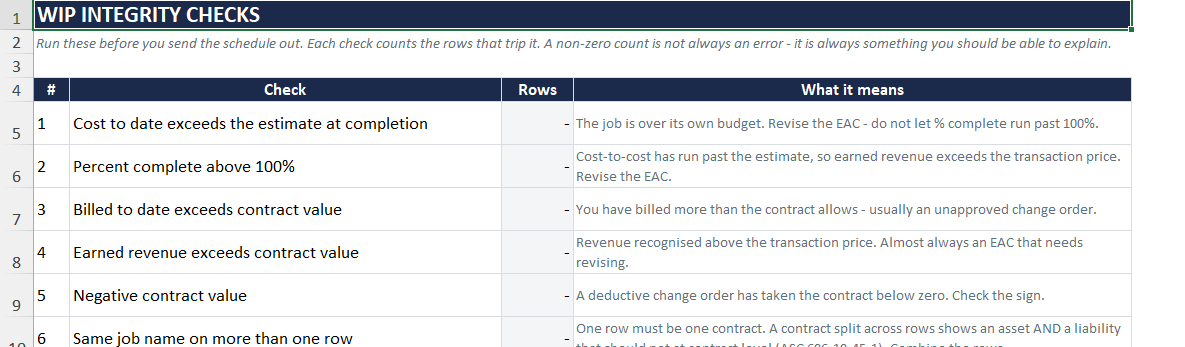
Construction WIP Schedule, Bonding Capacity & Bank Covenant Model (Excel + Google Sheets)
A 14-tab contractor finance model: cost-to-cost percentage-of-completion, contract asset/liability, EAC fade analysis, working-capital bonding capacity, four ba
 by Hoda Elmorshidy
Financial Controller & Fractional CFO, in senior finance since 2017: IFRS reporting, FP&A, finance automation, Quantitative Analysis, Financial ModelingFollow
Further information
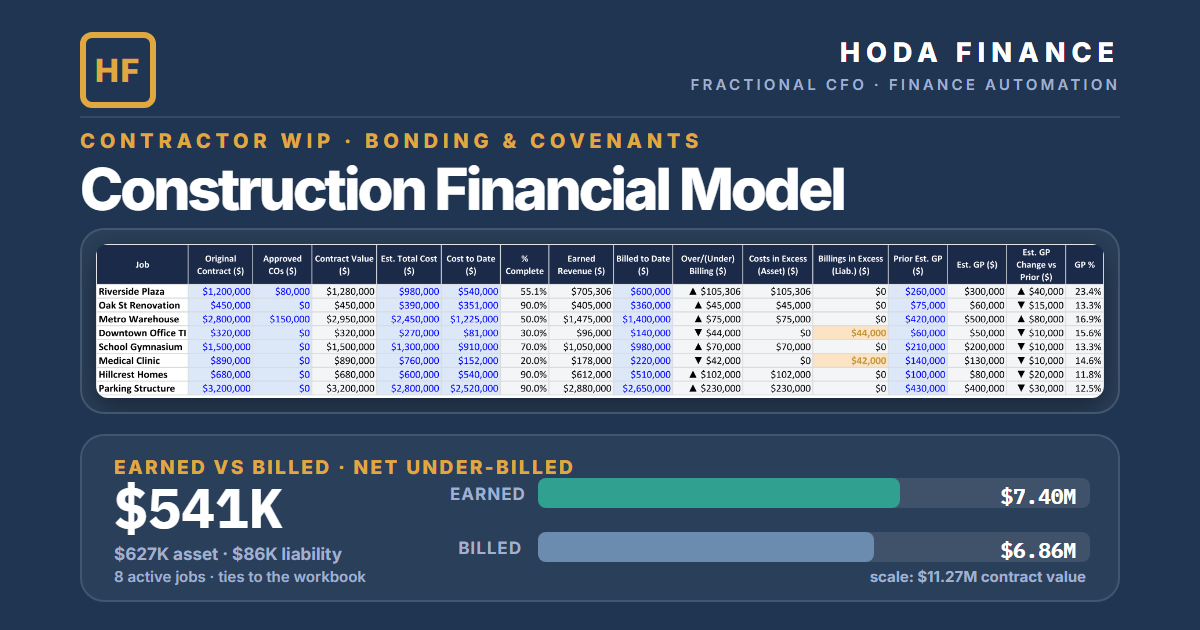
• Produce a bank- and surety-ready work-in-progress schedule on the cost-to-cost
percentage-of-completion basis (ASC 606-10-55-20/21)
• Derive the contract asset and contract liability per contract (ASC 606-10-45-1) so the
WIP ties to the balance sheet
• Separate current-period revenue and gross profit from inception-to-date, and explain
gross-profit fade against the original estimate at completion
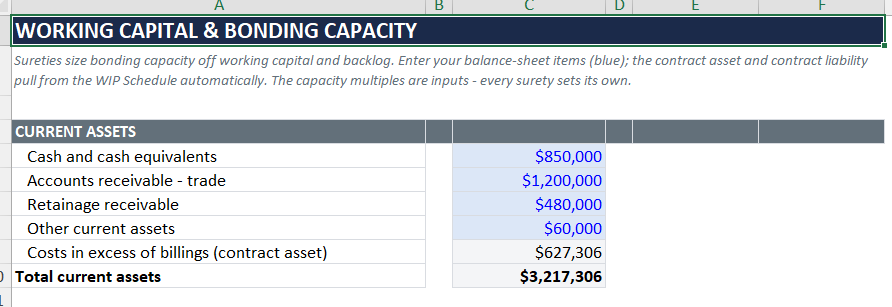
• Translate the portfolio into working capital, indicative bonding capacity and the four
covenant ratios a credit agreement tests
• Produce an AIA-style progress billing with retainage and a one-page bank/surety package
• A general contractor or specialty subcontractor with up to ~20 concurrent contracts
• Revenue recognised over time (IFRS 15.35 / ASC 606 criteria met), measured cost-to-cost
• One contract per row — a single, identifiable contract with its own estimate at completion
• A contractor preparing for a bank renewal, a bonding programme review, or a CPA-reviewed
year end
• An accounting system already exists and supplies cost-to-date and billings
• Cost-code-level job costing within a job (labour / material / subcontractor detail) —
that belongs in the accounting system or ERP
• Payroll, union fringes or certified payroll reporting
• Equipment depreciation or internal equipment rate build-ups
• Retainage receivable aging
• Multi-entity or joint-venture consolidation
• Percentage-of-completion for income tax purposes, including the look-back method
• Multi-currency contracts
• A contract deliberately split across multiple rows (this breaks the per-contract
contract-asset/liability presentation)