DCF Valuation Excel Model — WACC, Terminal Value & Sensitivity
Originally published: 13/07/2026 20:07
Publication number: ELQ-63820-1
View all versions & Certificate
certified

DCF Valuation Excel Model — WACC, Terminal Value & Sensitivity

A 9-sheet Excel DCF model with WACC calculation, dual terminal value methods, sensitivity analysis, and built-in validation checks.

Description

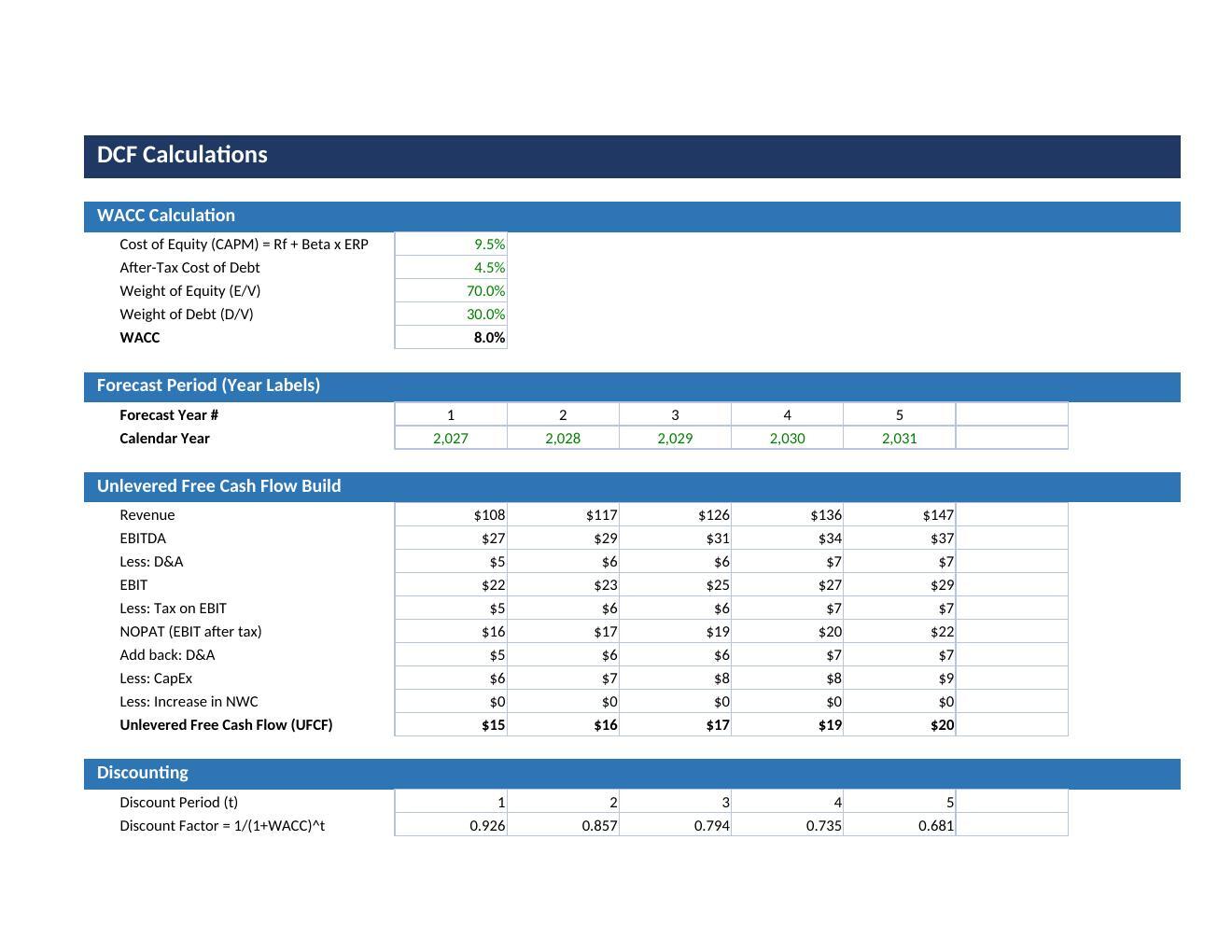
This Excel DCF Valuation model builds a complete unlevered free cash flow valuation over a 5 to 10 year explicit forecast period. It calculates the Weighted Average Cost of Capital (WACC) using CAPM for cost of equity and an after-tax cost of debt, then discounts projected free cash flows to present value. Terminal value is calculated two ways for cross-validation: the Gordon Growth Method and the Exit Multiple (EV/EBITDA) Method. The model bridges Enterprise Value to Equity Value and derives an implied Value per Share.

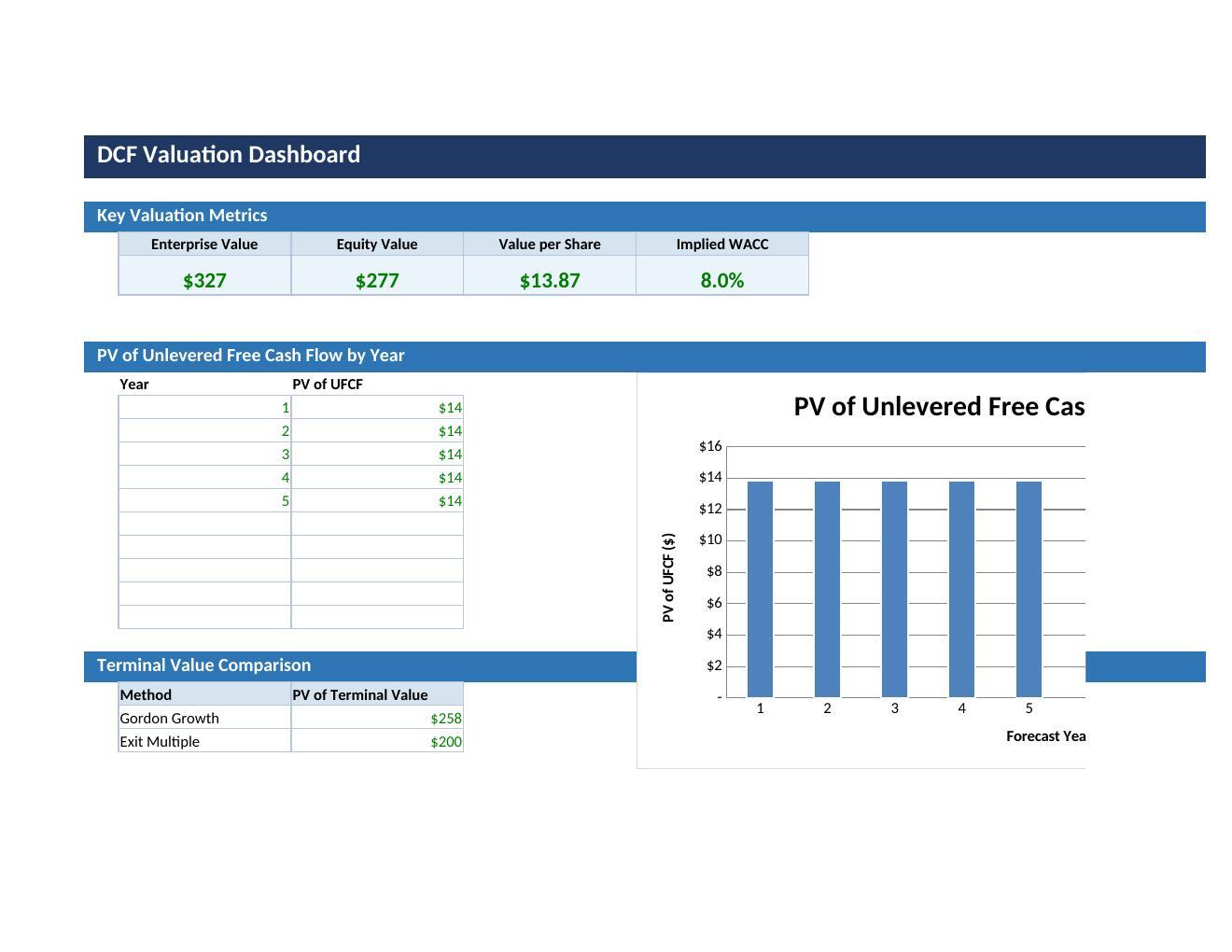
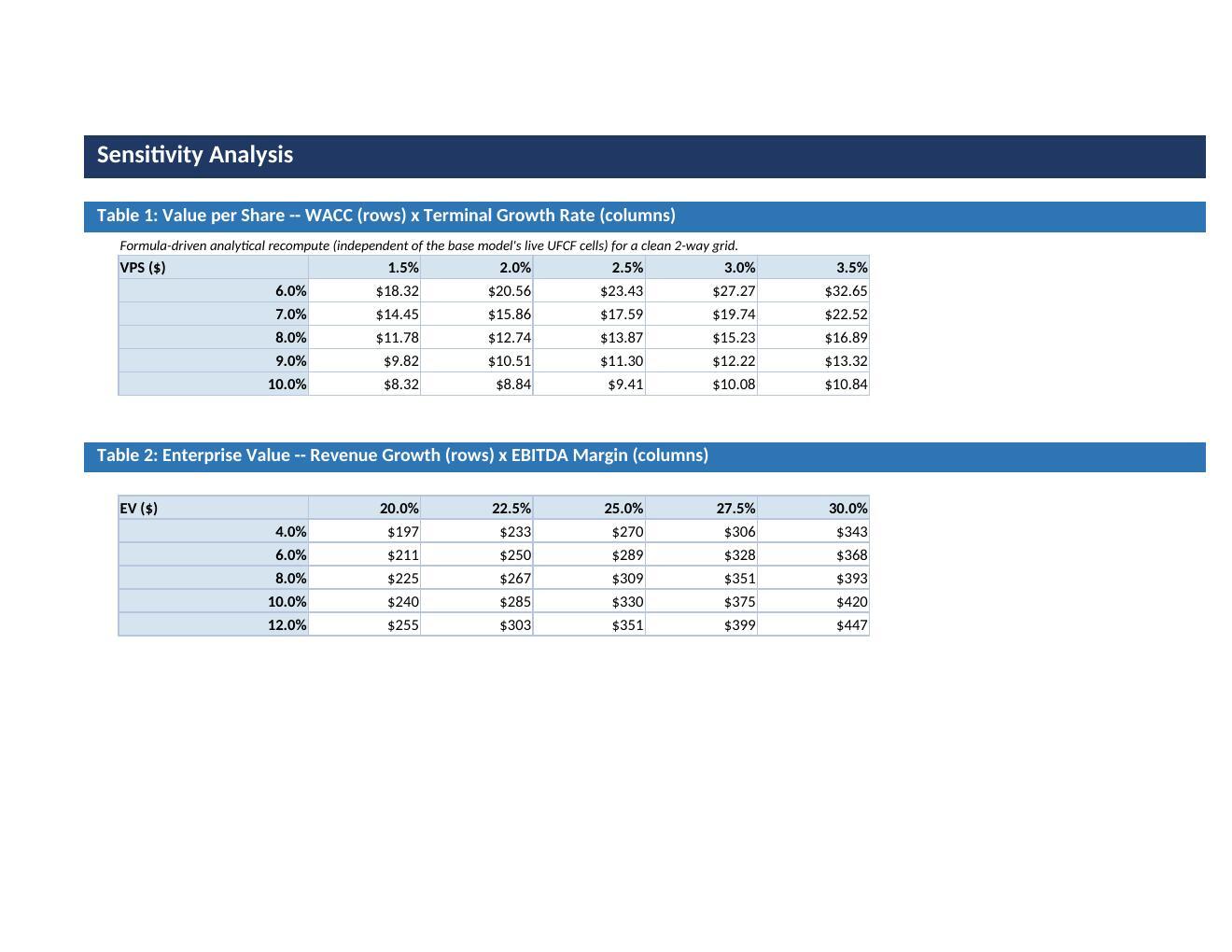
A Sensitivity sheet stress-tests the valuation across a WACC and terminal growth rate grid, and a Dashboard summarizes key outputs and implied metrics in one view.

Who It Is For

Built for:

  • Financial analysts,

  • Corporate finance and FP&A professionals,

  • Investment banking and private equity associates,

  • Equity research analysts,

  • Startup founders preparing for fundraising,

  • Finance students who need a clean, transparent, formula-driven DCF valuation without building one from scratch.

It suits anyone needing a defensible valuation backed by a clear audit trail.

What Is Included

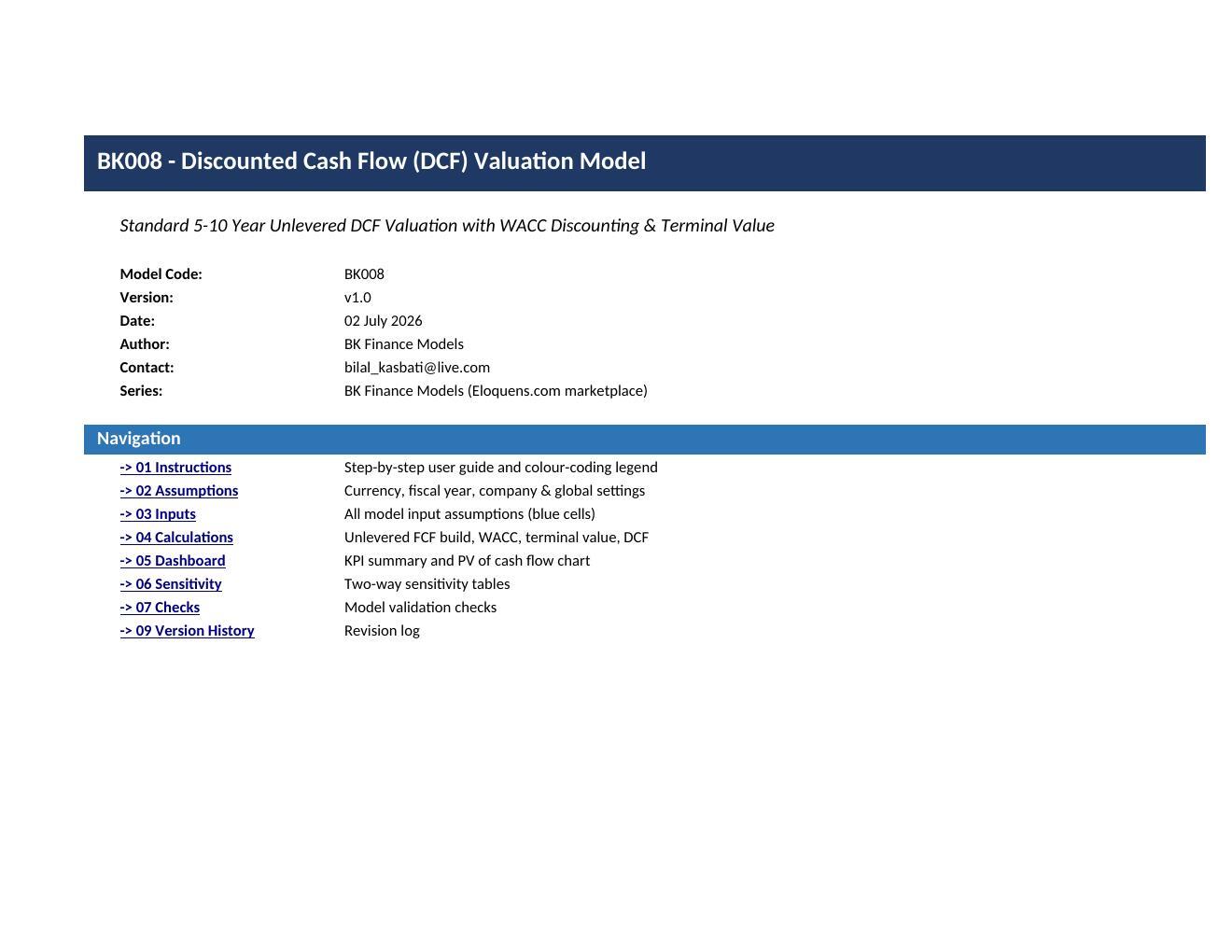
The workbook follows a 9-sheet architecture:

  • Cover,

  • Instructions (colour-coding convention),

  • Assumptions,

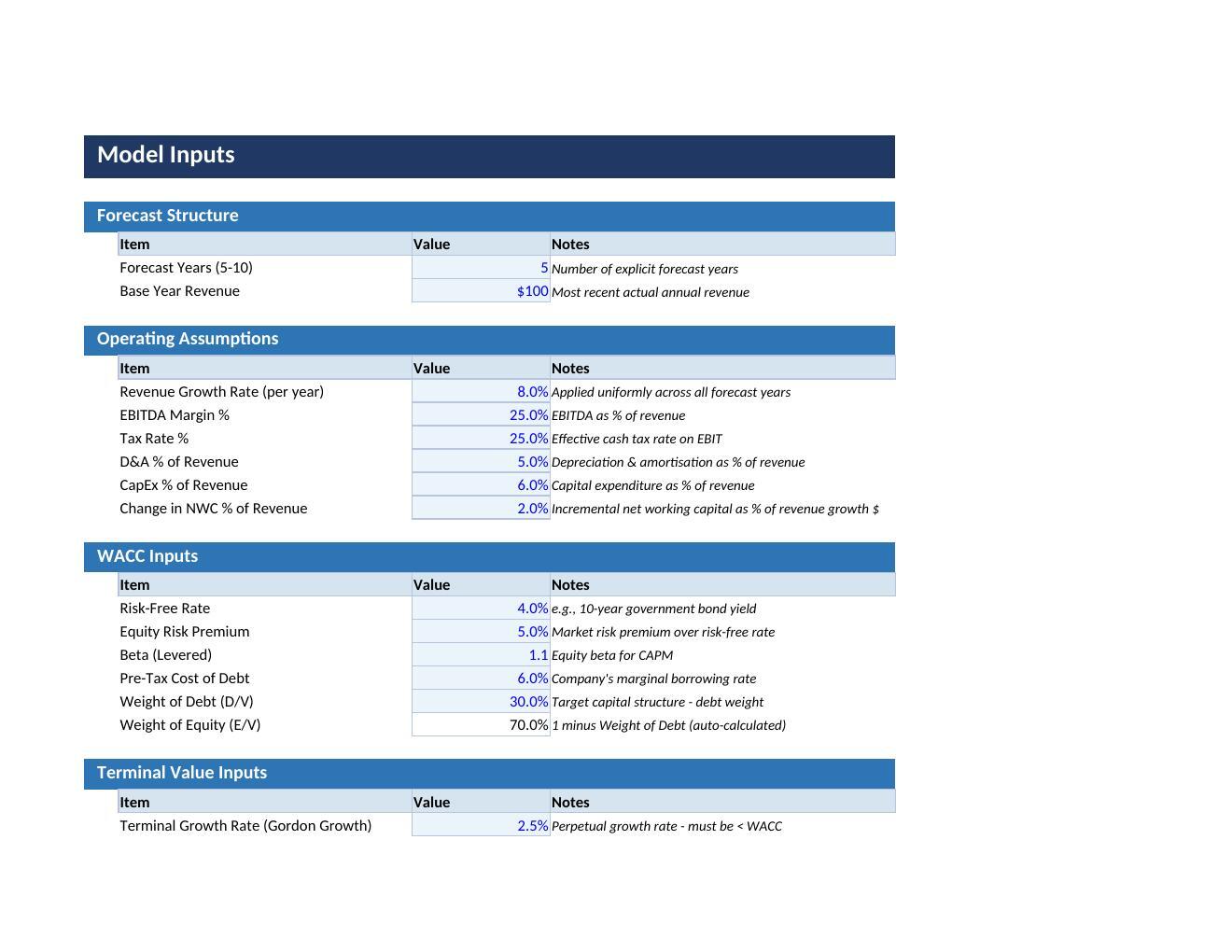
  • Inputs (forecast drivers),

  • Calculations (full WACC, unlevered free cash flow, discounting, and terminal value build),

  • Dashboard (key valuation metrics),

  • Sensitivity (two-way data table on WACC and growth rate),

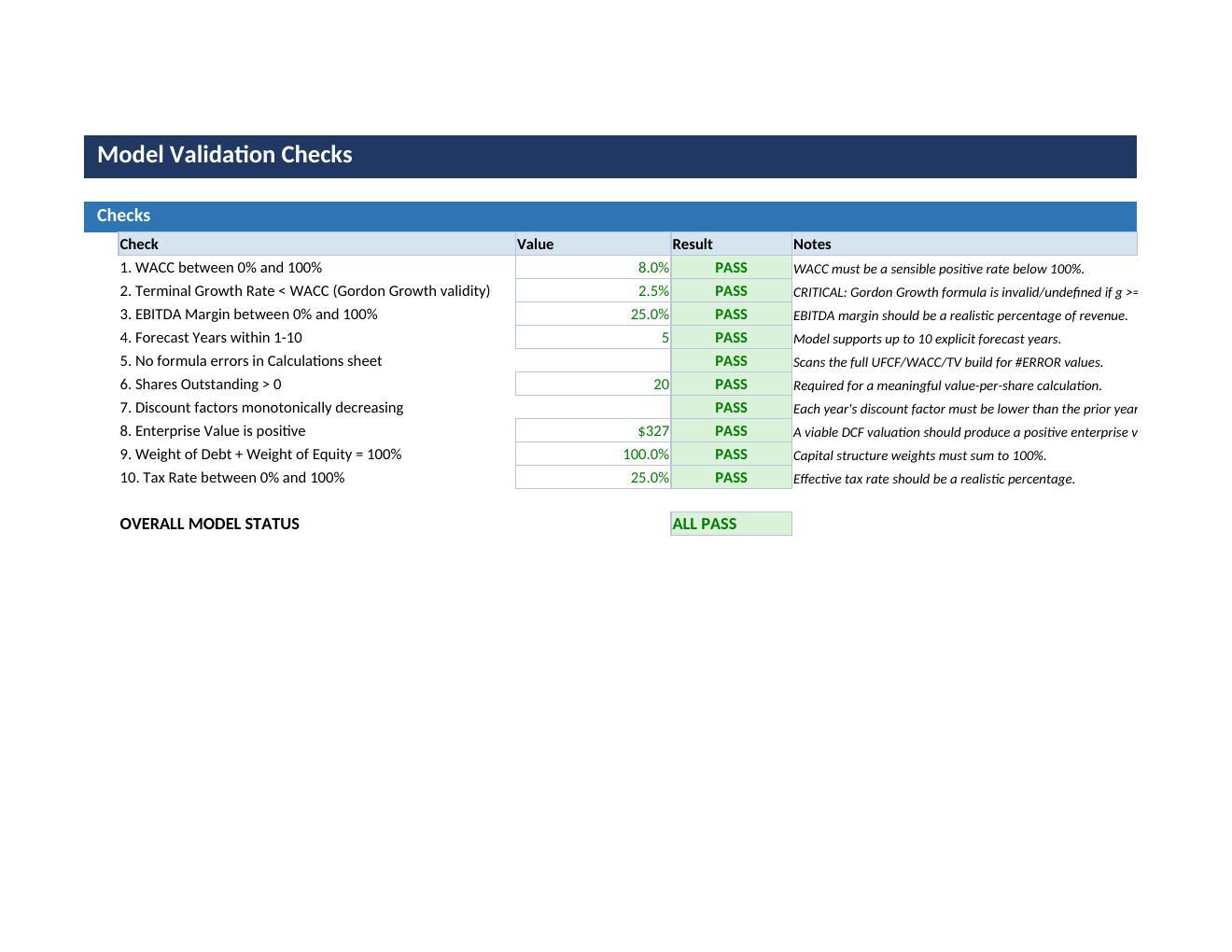
  • Checks (ten automated validation tests covering WACC range, Gordon Growth validity, EBITDA margin, forecast years, formula errors, shares outstanding, discount factor monotonicity, enterprise value, capital structure weights, and tax rate),

  • Version History.

All formulas are fully visible and editable, with colour-coded cells distinguishing inputs from calculations.

This Best Practice includes
1 Excel workbook (.xlsx), 9 sheets: Cover, Instructions, Assumptions, Inputs, Calculations, Dashboard, Sensitivity, Checks, Version History

Acquire business license for $24.99

Add to cart

Add to bookmarks

Discuss


0.0 / 5 (0 votes)

please wait...